period 5 - APUSH
 Call Kai
 Learn
Learn Practice Test
 Spaced Repetition
 Match
Match Flashcards
 Knowt Play
1/159

There's no tags or description
Looks like no tags are added yet.
Name | Mastery | Learn | Test | Matching | Spaced | Call with Kai |
|---|
No analytics yet
Send a link to your students to track their progress
160 Terms
lincoln's backgroun
- humble beginnings
- grew up involved in policts
- Hyman family (original whig > republican)
lincoln original position on slavery
felt that human slavery was bad, but left alone just wanted to stop spreading
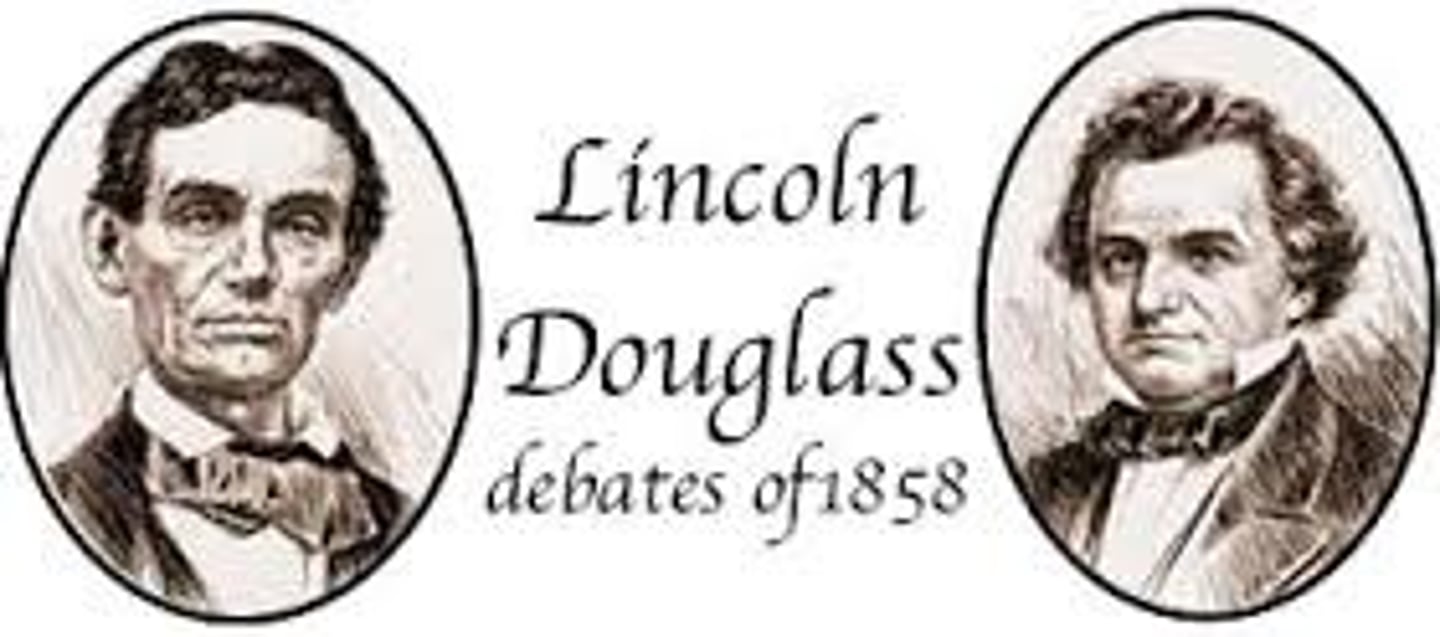
lincoln douglas-debates (1858) big issue
lincoln douglas-debates (1858) summariezed
- run against each other for senate seat in illonis
- lincoln: danger of slave power, how SCOTUS could decide the states could not ban slavery like territories
- douglas: ur an abolitionist and want total equality (he never said this)
- lincoln: attacked Douglas' popular soverignty bc now unconstitutional
- linoln: what is your plan to stop slavery
- douglas: Freeport Doctrine - make taxes so high to stop
DOUGLAS WON (somehow???)
Freeport Doctrine
Douglas idea said that territories could exclude slavery with local legislation that would make it inconvenient and expensive to own slaves so that no one would want to do it
SIMPLY: that local governments could increase taxes for slaveholders or they could not provide police protection for slave owners
election of 1858 winner for senate seat
douglas
john brown's raid on harper's ferry, va
1. john brown was radical abolitionist (fred many slaves in many towns)
2. after bleeding Kansas led raid on federal arsenal at Harper's Ferry to ESTABLISH a new NATION in the south where African Americans free
3. raid put down and captured treason and hanged
north vs south reaction to john brown
northerners: admired his attack of sllavery but not approve of method)
southerners: pointed to brown as crazy abolitionist who was traitor to country,
election of 1860 winner + nominated
- DEM douglas (north), breckendrige (South)
- REP lincoln
1860 democrat nominees
(currently in two factions over slavery)
NORTH: Steven Douglas
SOUTH: John C. Breckenridge
1860 republican nominees + platform
(felt confident w democrat division)
Abraham Lincoln
Platform: stopping the spread of slavery, but leaving it alone in the south
what was the constitutional union party + nominee
new party by border states (between north and south) with slavery but NOT backbone of economy
realized war would destroy them as between, nominated compromised candidate
John Bell
results of the 1860 election
lincoln with all north states (not a single south and many south did not put him on ballot)
south thought he was abolitionist and didnt trust
effect of 1860 election
SECESSION
soon after election began to seced (Buchanan still president at time for some)
SC in December of 1860, Mississippi, Florida, Alabama, Georgia, and Louisiana all in January of 1861, then Texas, Virginia, Arkansas, North Carolina, and Tennessee between February and June of 1861
confederate states of america (CSA)
the union, formed in April 1861, of seven (eventually eleven) slave states that had seceded from the United States beginning shortly after the election of Abraham Lincoln in 1860
CSA capital
Richmond VA
CSA leaders
pres: Davis
VP: Alexander Stephens
fort sumter, SC
1) december 1860, Buchanan declared secession illegal but federal does not have authority
2) SC saw as independence recognition and ask for union troops to leave fort sumpter to allow confederate
3) buchanan ignored and sent merchant ship with supplies for the union
4) confederate forces fire at merchant and buchanan backs down
first shots of civil war
crittenden plan provisions
post fort-sumpter buchanan attempt for peace
1) offered to amend the Constitution to prevent the federal government from interfering with slavery in states where it already exists
2) offered to bring back the Missouri Compromise line and extend it all the way to California
4) he promised to up hold the Fugitive Slave Act
April 12, 1861 (and what caused)
1) The drama at Fort Sumpter continues...American forces have still not left Fort Sumpter and now they were in need of supplies...Lincoln, after his inauguration, sent supplies and troops to protect those supplies to the fort
2) He said he would not use the troops unless the delivery of the supplies was interrupted
Jefferson Davis used this as an opportunity to demand US leaders surrender the fort to the Confederate States...
3) when they refused fighting broke out on April 12th, 1861 This battle at Fort Sumpter lasted 2 days until the American forces surrendered and the Civil War had begun
lincoln's reconstruction plan
Ten Percent Plan
10 percent plan
1) Granted amnesty to ex-confederates (pardons)
2) A state could re-enter the union as soon as 10 percent of their voting population swore oath of allegiance to the US (Lincoln wants it to be easy to quickly gain back)
Most southern states rejected this plan even in the face of defeat
tougher substitute for lincoln's plan
wade davis billl
wade davis-bill
1) Oath of allegiance from majority (over 50 percent) of a state's adult white men
2) Any new government formed in south (state/local) could only be made of those who did not fight in the war
(Leaving the wealthy and not much else)
3) Confederate leaders (Davis) would be permanently disfranchised (not be allowed to vote)
confederate vs union goals
confederacy wanted independence/self-gov / union wanted to preserve the union and stop secession
battle of bull run (1861)
first major battle / confederate victory showed strength / union retreated to dc
new union general
mcdowell replaced by george mcclellan
battle of antietam (1862)
lee vs mcclellan / bloodiest day / union "victory" but lee escaped / lincoln fired mcclellan
lincoln's claim after antietam
publicized as union victory
war in mississippi valley
union more successful in south / weakened confederate control / gained plantations and slaves
total war
all resources (economic, political, cultural) used to destroy enemy's ability to fight
leaders using total war
union generals ulysses s. grant and william t. sherman
conscription differences
south—18-35 yrs / 3 yr service / "20 negro law" for rich / north—bounties and $300 fee to avoid draft / poor riots
writ of habeas corpus
lincoln suspended it / jailed 15,000 southern sympathizers
mobilizing resources
union—2/3 pop and industry / confederacy—used "king cotton" and enslaved labor
republican economic policies
neo-mercantilism / high tariffs / homestead act 1862 (160 acres free after 5 yrs) / national banking system / infrastructure
southern economy
collapsed / inflation 92x / loss of free labor
contraband of war
enslaved people treated as enemy property / seized and freed by union
radical republicans
anti-slavery / pro-civil rights faction in congress
emancipation proclamation (2 parts)
- 1st one executive said that the southern had 100 days to return to union and if did, they would keep their slaves, but they did not return believed Lincoln an abolitionist
- 2nd declared all the slaves that are free in the south; but the union had to win because he was not president of the south (rather Davis is the president); therefore, the confederacy did not follow the flaw. Lincoln did NOT set free the slave border states to not anger the border states
effects of emancipation proclamation
shifted war goal to abolish slavery / boosted union morale / kept border states loyal
battle of gettysburg (1863)
union victory / turning point / confederate losses / britain stopped aiding south
african american contribution
200k served in union segregated units / morale boost / confederates forced blacks into labor
ulysses s. grant's role
commanding general 1864 / total war tactics / led to union victory
election of 1864
abraham lincoln re-elected / aided by sherman's march victories
sherman's march to the sea (1864)
atlanta to atlantic / destroyed infrastructure / burned atlanta / lived off land
end of war
april 1865 / lee surrendered to grant at appomattox court house, virginia
how does lincoln react to the wade davis bill
uses pocket veto
lincolns assasination
a. April 18th, 1865, Lincoln attends play at Ford's Theater in Washington DC called "our American Cousin"
b. He was shot in head by Confederate sympathizer and actor John Wilkes Booth
The VP is Andrew Johnson (not as good of politician as Lincoln
John Wilkes Booth
Assassinated Abraham Lincoln
explain johnson's background (VP of lincoln)
a. Not fan of wealthy southern plantation owners - but her owned slaves himself, so not a fan of African Americans freed; therefore, he favors the poor white men
a. Self-made man from Tennessee frontier
b. Was a tailor by trade but gets involved with politics with support from farmers and laboroers
c. Democrat (however) remained loyal to the Union when Tennessee seceded
d. Senate seat of Tennessee even when part of Confederacy, then Military governor of Tennessee after captured by union forces
e. Chosen as Lincolns (republican) VP running mate in 1864 to balance the ticket to show unity - but the unity will not last
johnson reconstruction plan
1) Pardon all confederates that pledged oath of allegiance to the union except for confederate leaders and the wealthy southern plantation owners
2) Disfranchised (not allowed to vote) confederate leaders and the wealthy southern plantation owners
3) States had to retract their ordinances of secession
4) States had to ratify the 13th amendment: outlawed slavery in the US (passed when Lincoln was president)
5) States' duty to determine the rights of the newly freed men (won't go well since used to enslave - so give no rights)
how was johnson only talk
was all talk: pardoned many confederate leaders, even the VP of the confederacy Alexander Stephens was pardoned
explain the newlife for the freedmen
black codes, freedmans beurau, civil rights act
black codes
state laws restricting the freed men:
Restricted mobility (travel), prohibited from having weapons, and not allowed to vote
why were black codes passed?
1. because both unionists (in south that supported reconstruction) AND confederates wanted to keep African Americans in an inferior position
explain why southern change is slow and difficult
unionists had control of southern governments but as Johnson pardoned more confederates, returned to their old government positions, making a government run by the same prior-civil war government in south
freedman's bureau
a. a government organization meant to help the freedmen transition into free life
b. Helped them find homes, get jobs, and get an education
civil rights act of 1865
a. Granted African American's citizenship and equal protection under the law
(johnson vetoed )
14th amendment
a. declared all persons born or naturalized in the US were citizens and the rights of citizens could not be taken away by the states
40 acres and a mule
during as union forces swept across south, plantation owners fled, leaving the enslaved population behind
Sherman (march to the sea) began DIVIDING the land and giving it to the slaves left behind meaning each got 40 acres and the use of army mules to plow
as Johnson pardoned more confederates, he said they were ENTITLED to get their land back (going against not liking southern land owners), so often reclaimed their land
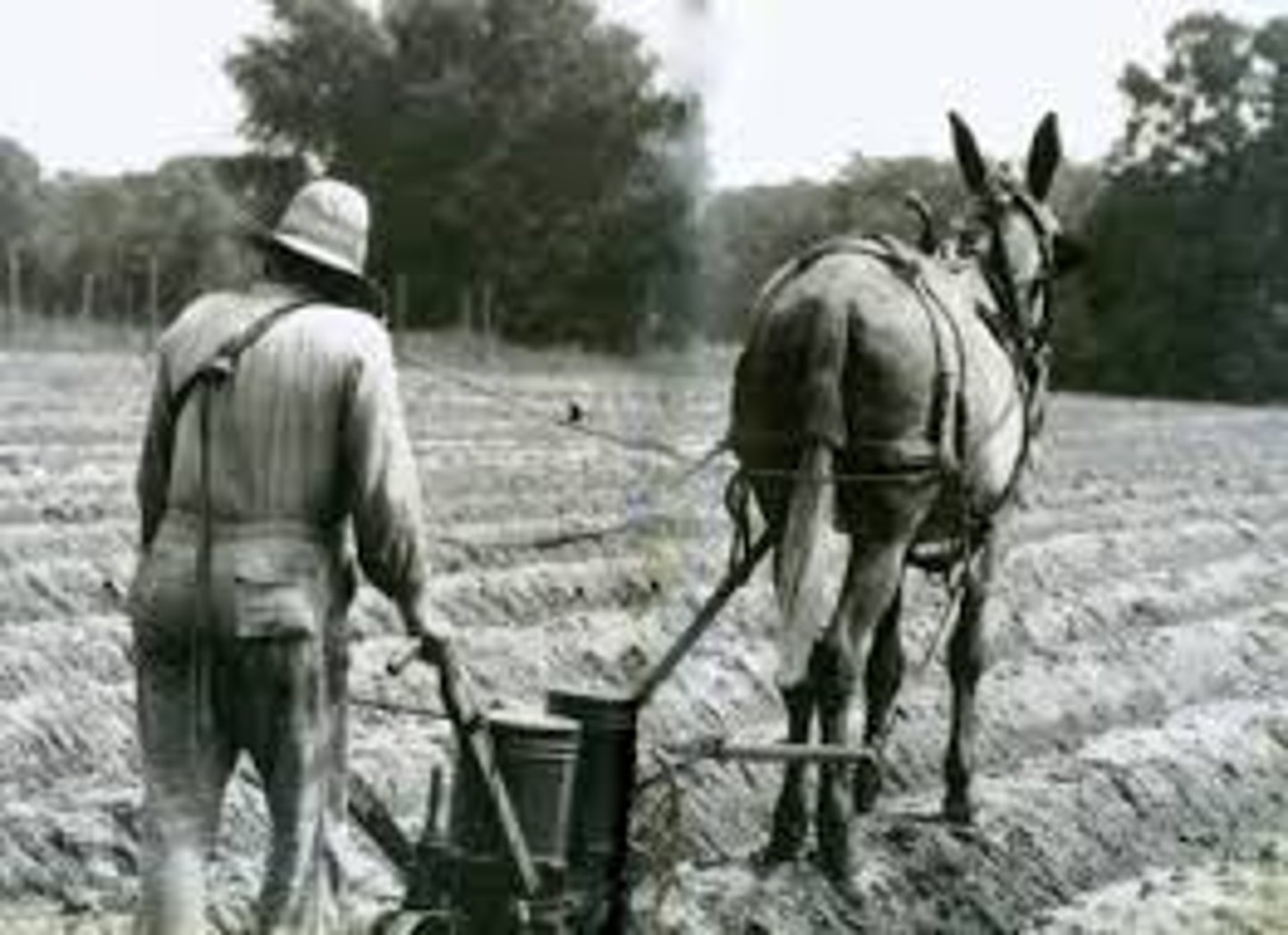
explain post-freedom work for slaves
- owners wanted gang labor but must compensate = free contracts
free-contracts
where "freed" slaves would work for the plantation owner for minimal pay (no set wage for workers so could be paid very little)
share-cropping system
1) many already agricultural talents
2) plantatio would allow to live, cultivate
3) give large (majority) of crop and have none left to sell
4) had to buy seeds adn toils FROm the plantation
around until 1960s due to terrible cycle
freedslave religion
1. After the war, the freed leave the segregated white churches and start their own, which were more than places of worship but also social centers, place to discuss politics and schools
reconstruction act of 1867 (radical republicans)
Divided the south into military districts where federal troops were sent in and a general was placed in command of each district = martial law
Troops were placed to ensure that change occurred:
1) Ensure voting rights for African Americans
2) Ensure the south ratified the 14th amendment
3) Ensure the new state constitutions were acceptable
4) Meant to prevent confederate leaders from voting
johnson impeachment situation
1) johson anged radical republicans by vetoing/firing ractical republican people/ bills
2) congress attempt to protect edwin stanton (last radical republican) who was secretary of war with tenure of office act
3) johnson defies the office act firing him - therefore impeached
4) johnson impeached by house tried in senate = democrats and moderate republicans side with him
RESULT: aquitted (one vote short) and many believed radical republicans went too far
impeached
formal charge with wrongdoing and put on trial) - could be removed but not all
tenure office act
required the senate's permission to fire people whose appointments had to be approved by the senate in the first place
election of 1868 winner + situation
republican (winner) = ulysses s grant (commanding general)
democrats = still fighting allegations of reputation as disloyal confederates
15th amendment
protected male citizen's right to vote irrespective of the race, color or previous condition of servitude (gave newly freed MALE slaves right to vote)
explain the issue of vague 15th amendment
1. radical wanted it change but left vague, leaving room to establish barriers like the poll tax (must pay to vote), the literacy test (must be able to read/write) which slaves failed
explain reasons for women suffrage denied
1) With African Americans, radical republicans knew who they would support - the Republican party; but women would vote different!
2) a. Some people thought the fight for women's suffrage thought would detract from the fight for civil rights for African Americans - women criticized for being selfish
explain the equal rights association convention
douglass controversy
explain fredrick douglass
1) Fredrick Douglass (had been a abolitionist and a women's right activist) pleaded for white women to consider the situation in the south and allow black male suffrage to take priority
i. Says the women aren't being hunted or hung because women....but happening to African American males (and females) - therefore, need right to vote MORE to protect themselves
reactiosn to douglass (stanton vs stone)
agreed = Stone = American womans suffrage
disagree = stanton =1) that uneducated freedman and immigrants could vote while educated women could not...creating rift = National womens
american woman's suffrage association
Majority of activists led by Lucy Stone recognized not their time and they would keep fighting and supporting Republican party
national women's suffrage association
Several led by Susan B Antony and Cady Stanton went into new direction...didn't feel that women's suffrage was coming in the near future, saying women could not place their trust in men
explain wyoming territory on women's voting
- willing to give women more rights and ability to vote because the women do the same work as the men (all in fields, all in homes)
= 1) 1st to grant women the right to vote in 1869, receiving congratulations from around the world
i. Wyoming pointed out that giving women the right to vote did not appear to make them neglect their homes, abandon their children, or otherwise "unsex" themselves (women stay women)
ii. As a result, women's right no longer able to ignored and dismissed as an absurd notion, serious issue for national debate
explain the southern ex-confederates view of the republican govt
Ex-confederates viewed the new governments as illegitimate
explain ex-confederate insults: scalawags
a. : referred to southern whites who supported the republican party (worthless animal)
explain ex-confederate insults: carpetbagger
a. referred to northern whites who moved south after the war, whose purpose was to profit from rebuilding the south
1) Said to be so poor they could fit all of their belongings in a small carpet bag; therefore, needed to take advantage of south to make a profit
goals of the republican governments
a. Modernize the south (behind in industrialization, internal improvements had not come)
b. Bring reform and protection for African Americans
c. Change the economy - INDUSTRIALIZE (not king cotton)
sucesses of the republican government in the south
a. Changes to state constitutions
1) Abolish slavery
2) Remove property requirements for voting
3) Less appointed and more elected positions
b. Got rid of black codes
c. Property rights for married women
d. Internal improvements
e. Social reforms - improved asylums and orphanages
f. Public schools opened
explain PBS Pichback
a. 1st African American governor in the whole US of Louisiana (not elected)
1) He was elected to the Louisiana senate then the Lieutenant (vice) governor died, so the senate elected Pinchback to take his place
2) The governor was removed from office (corruption) then Pinchback became the governor - completing the governor's term
explain Hiram R Revels
1) 1st African American elected to Senate from Mississippi (meant to fill Jefferson Davis' empty seat)
i. He was born in NC as a free man, got education in the north, and during the civil war, recruited African Americans to serve in the army and he himself served as army chaplain for the black regiment in MS
redeemers
Ex-Confederates that wanted to keep the "Old South". (don't like new south)
General term for those that wanted to restore the Democratic Party in the South.
Led a revolution against radical Republicans.
KKK (Ku Klux Klan)
- secret, white supremacists (redeemers), supported democratic,
- attacked African americans + white republicans
explain how the KKK made republicans scared and democrats rule
it easier for the Democrats to return to power in the South
Republicans were afraid of the consequences for voting;
Often backed down, so the old southern politics would return.
explain how much the reconstruction depended on federal govt?
- once left fell apart
Knew that state and local governments would not be strong enough to offer that kind of protection.
This would only be a temporary fix.
explain eection of 1872
democrats: traitor image
republican: ulysses s gran 2nd term (scandal)
explain decline in the republican party
- northerners losing hope for reconstruction
- propoganda against repubicas showing them as corrupt and against the freedmen showing them as violent - many northerners believed it and so they lost their support for civil rights
explain liberal republicans
Separated themselves from the Radical Republicans
Wanted limited government - less government involvement
Were not concerned with civil rights
Critical of radical reconstruction
Wanted to reconcile with the South - not punish them
grant's second term controversy
1) appointments of favors, family, freinds
2) friends appointed stole govt and whiskey not pay taxes
3) grant defends + lies
4 ) US depression - grant/republicans blames (despite RR company)
election of 1876 explain
republican - rutherford hayes (hurt by reconstruction, depression + Grant scandal)
democratic - samuel tilden
popular vote = Tilden
20 electoral votes (FL, SC, La) disputed
Votes given to Hayes
Democrats blocked final count (filibuster) prevent March 4th inaguration
ARRANGEMENT:
March 1 - dem end filibuster
- hayes inaugurated and REMOVE TROOPS
election of 1876 results vs popular vote
winner = hayes
popular vote = tilden
explain the secrecy of 1876 election
closed doors agreement caused march 1st to end democratic fillibster, hayes inaugurated (republican) and END troop
explain the end of reconstruction
This secret compromise in 1877 ended Reconstruction - Hayes got electoral vote as long as he promised to end reconstruction (immediately pulls troops - ending reconstruction)
who coined the term manifest destiny
John O'Sullivan
A reporter and editor of the Democratic Review in 1845
He said our manifest destiny is to overspread the continent allotted by providence for the free development of our yearly multiplying millions
what is the idea of manifest destiny
- the belief that America and its republican institutions should expand West to the Pacific Ocean America felt that this move was ordained by God The idea was that Anglo-
Americans were superior to Native Americans and Mexicans These people would be subjected to American dominion, taught republicanism, and converted to Protestantism