evr- unique earth
 Call Kai
 Learn
Learn Practice Test
 Spaced Repetition
 Match
Match Flashcards
 Knowt Play
1/46

There's no tags or description
Looks like no tags are added yet.
Name | Mastery | Learn | Test | Matching | Spaced | Call with Kai |
|---|
No analytics yet
Send a link to your students to track their progress
47 Terms
Temperatures that permit liquid water- The unique characteristics of water
Oxygenated atmosphere- The unique characteristics of oxygen
What 2 things are needed for complex life? Why?
A molecule containing two hydrogen atoms (+) and one oxygen atom (-)
H20 (Water)
The positive (hydrogen) and negative (oxygen) poles of the water molecule can each form weak bonds with negative or positive (respectively) ions
What makes water an excellent solvent?
H+. OH-
Water molecules can break apart into ___ and ___ ions
Molecule
Two or more atoms bonded together
Ion
Electrically charged (positive or negative) molecules or atoms
energy
When positive and negative ions combine they release _____
Oxygen is highly attracted to electrons, and like to combine with other molecules in process that release energy
Oxygen is a highly reducing gas. What does this mean?
Organisms store energy in molecules (fats and sugars) that release energy when combined with oxygen
How is oxygen’s highly reducing gas characteristics applied to organisms?
21%
Oxygen gas comprises___ of Earth’s atmosphere
True
T/F: Oxygen gas was almost completely absent from the early Earth’s atmosphere
System
Set of components or parts that function together to act as a whole; responds to inputs and outputs
Open System
Closed System
Isolated System
3 Types of Systems
Open System
Energy or material moves into or out of system
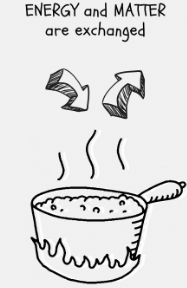
Closed Sysetm
No material moves into or out of the system, but energy (e.g., heat) can move into or out of the system
Isolated System
no heat or energy moves into or out of the system
Static System
System with fixed condition; stays in that condition
Dynamic system
A system that changes continuously over time
Dynamic Equilibrium
A steady state balance between continuing processes; not maintained for very long
True
T/F: Natural systems tend to move towards dynamic equilibrium without influence of people
Average residence time
How long, on average, a quantity of something will remain in a reservoir of a system
Reservoir size and rate of input or output of material
Resident Time depends on
Feedback
When one part of the system changes, and those changes affect another part of the system, which affects the impact of the first change
Negative Feedback
an increase in output leads to a later decrease; self-regulating or stabilizing
Positive feedback
An increase in output leads to a further increase in the output; destabilizing
Positive; it amplifies the reaction, leading to a more impactful affect as opposed to dampening the effect
Is positive or negative feedback typically more serious for the envoirnment?
Stable System
A system that has a condition that it remains in unless disturbed, and returns to that same condition if disturbed from it and the cause of the disturbance stops (negative feedbacks)
Linear Response, Non-linear response, Lag time
System Response Concepts
Linear response
If you add the same amount of anything to a compartment in a system, the change will always be the same
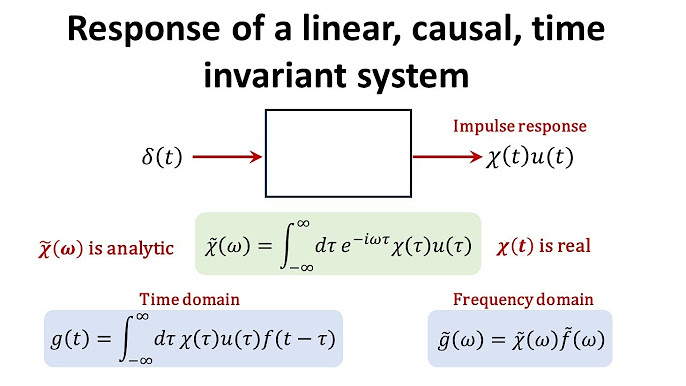
Nonlinear response
A response that shows the effect of adding a specific amount of something changes, depending on how much has been added beforehand
Lag Time
The delay between a cause and the appearance of its
effect
Recurring relationships can be represented with a small number of
graphs
• Include responses of individual organisms, populations and species, &
entire ecosystems
• Each graph
– Has a mathematical equation that can explain the curve
– But, it is the shape of the graph and what that shape represents that are the keys
to understanding environmental systems
Characteristics of System Response Concepts
Linear Growth
add a certain amount of individuals each year; plotted on a graph with form a line
Exponential growth
Add a fixed proportion of the population each year (e.g. doubling every 20 years); plotted on a graph with form a j-shaped curve
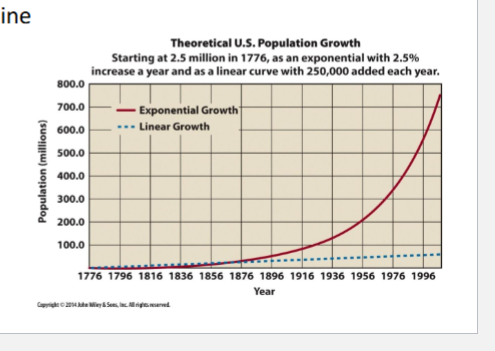
Rate of growth measured as a percentage
Doubling time in years
2 Factors of Calculating Exponential Growth
positive, incompatible
Exponential growth is____ feedback and _____ with sustainability
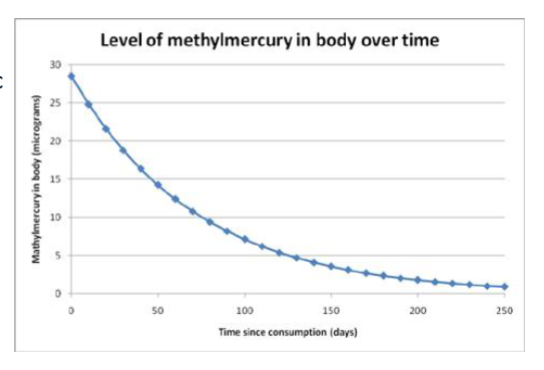
Negative Exponential Curve
Equivalent to removing a fixed proportion of something over a specific
length of time; takes a very long time to return to background conditions
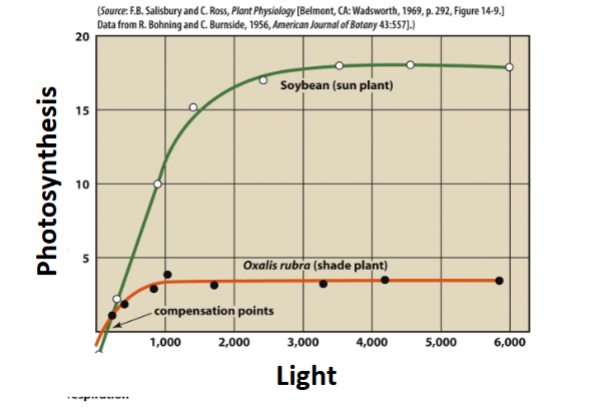
The Saturation Curve (represents the boundary where a system reaches maximum capacity)
What does this graph depict?
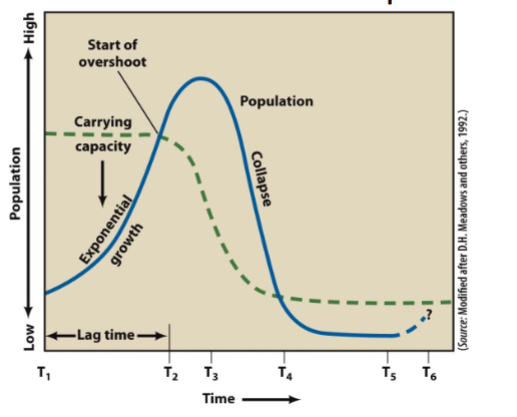
Overshoot and Collapse
What does this graph depict?
Environmental Unity
States it is impossible to change only one thing in the ecosystem; Earth and its ecosystems are complex entities in which any action may have several effects
Unfiromitarianism
By James Hutton (Father of Geology); The geological and biological processes presently forming and modifying Earth are the same now as they were in the past, and vice versa
Geologically short-lived landforms will continue to appear and disappear due to natural disasters
What does the concept of Uniformitarianism include regarding land formations?
Environmental problems are often complex, involving a variety of
linkages among the major components and within each componen
How are environmental problems/changes complex?
Gaia Hypothesis
Life manipulates the environment for the maintenance of life; the planet is capable of physiological self-regulation
The Earth’s atmosphere was primarily nitrogen and carbon dioxide until the evolution of cyanobacteria, which undergo photosynthesis, taking in carbon dioxide releasing oxygen into the atmosphere, gradually decreasing carbon dioxide and increasing oxygen
What caused the Earth’s atmosphere to become oxygenated?
Decreased oxygen concentrations would lead to decreased respiration by animals – and oxygen would begin to increase again
Increased oxygen concentrations would sustain higher frequencies of wildfires – and oxygen would be used up in the fires
How is Earth’s oxygen concentration is controlled by multiple negative feedbacks?
Refer to slides for real life examples of positive/negative feedbacks in Earth’s temperature regulation!!!!
Yes