NR 293 Nutrition Edapt Questions and answers + rationales
 Call Kai
 Learn
Learn Practice Test
 Spaced Repetition
 Match
Match Flashcards
1/58

There's no tags or description
Looks like no tags are added yet.
Name | Mastery | Learn | Test | Matching | Spaced | Call with Kai |
|---|
No analytics yet
Send a link to your students to track their progress
59 Terms
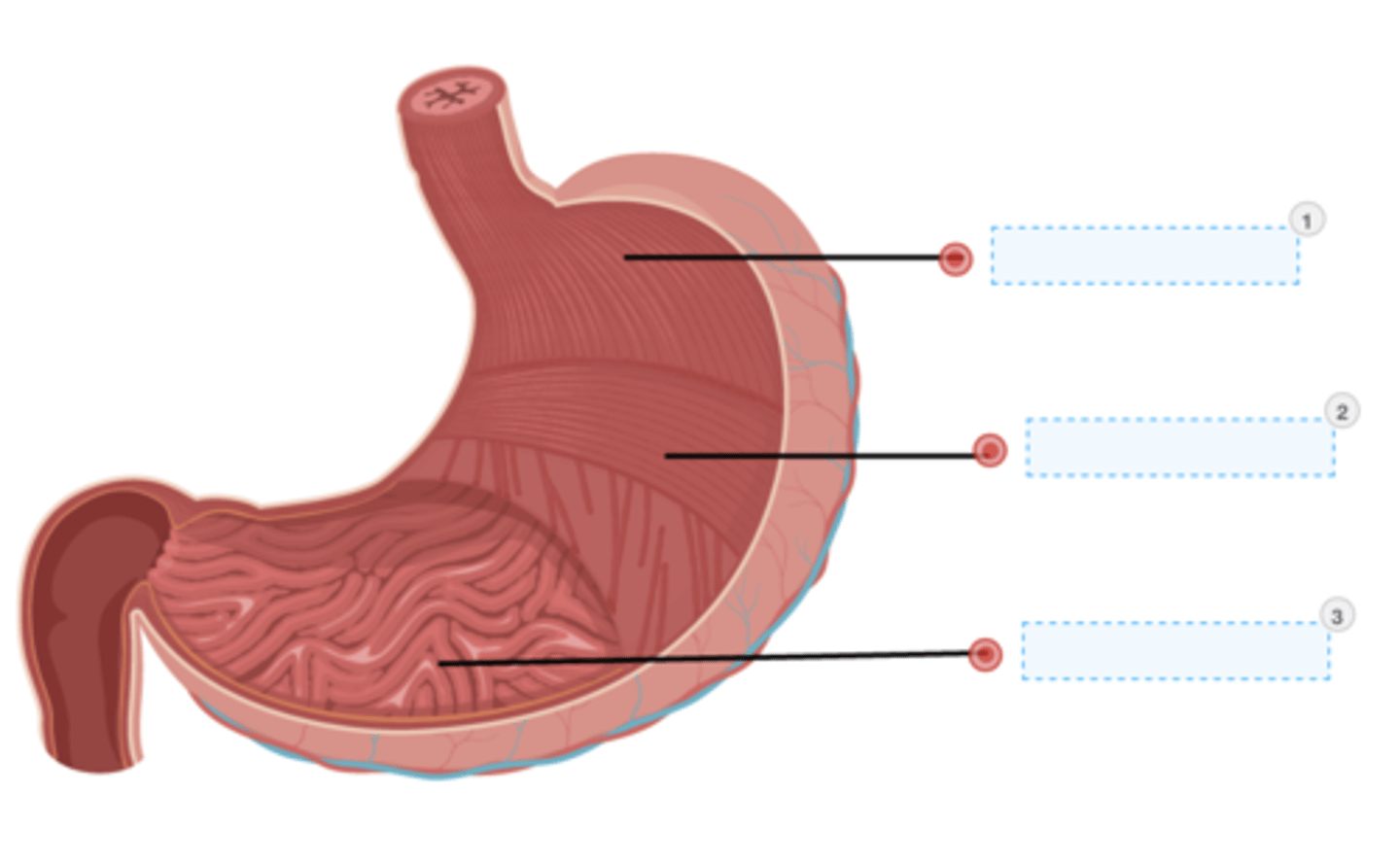
1. Cardiac Zone
2. Fundic Zone
3. Pyloric Zone
Parietal Cells
Produce and secrete hydrochloric acid
Chief cells
Secrete pepsinogen, which is a precursor to pepsin
Mucous cells
Provide a protective coating for the stomach
Which receptors in the stomach are responsible for stimulating the secretion of acid from the parietal cells? SATA
Proton ion
Adenosine triphosphate (ATP) pump
Gastrin
Histamine
Acetylcholine (ACh)
Gastrin
Histamine Acetylcholine
Match the gastric cell type with the substance they secrete:
1. G cells a. Histamine
2. Enterochromaffin-like cells (ECL) b. Mucus
3. Parietal cells c. Pepsinogen
4. Chief cells d. Gastrin
5. Mucous cells e. Hydrochloric acid
1. d
2. a
3. e
4. c
5. b
The ____ produces and secretes hydeochloric acid when stimulated by histamine, gastrin or acetylcholine. This will maintain the stomach environment at a pH of _____
1. a. chief cells. 2. a. 1-4
b. parietal cell b. 5-7
c. g cell c. 7-9
d. mucous cell d. 9-11
1. b parietal cell
2. a. 1-4
Acid-controlling medications are indicated for: SATA
Gastroesophageal reflux
Peptic ulcer disease
Irritable Bowel syndrome
Gastroparesis
Helicobacter pylori infection
Gastroesophageal reflux
Peptic ulcer disease
Helicobacter infectin
Match the acid-controlling drugs with how they work:
1. Antacids
2. Histamine 2 (H2) Blockers (H2 receptor antagonist)
3. Proton Pump Inhibitors
a. Ruduce acid by neutralization within the stomach
b. Reduce acid by blocking signals to the parietal cells
c. Reduce acid by working within the parietal cells
1. Antacids - reduce acid by neutralization within the stomach
2. Histamine 2(H2) Blockers (H2 receptor antagonist) - reduce acid by blocking signals to the parietal cells
3. Proton Pump Inhibitors - reduce acid by working within the parietal cells
Helicobacter pylori (H. pylori) ___ that can infect the ___, causing stomach pain, bloating, and loss of appetite. Usually, ___ are needed to treat this condition
1. a. virus b. bacteria c. fungus d. parasite
2. a. lining of the stomach b. small intestine c. oral pharynx d. pyloric sphincter
3. a. antibiotics b. acid-controlling drugs c. acid-controlling drugs and antivirals d. acid-controlling drugs and antibiotics
1. bacteria
2. lining of stomach
3. acid-controlling drugs and antibiotics
Match the medication with the mechanism of action:
1. Calcium carbonate
2. Famotidine
3. Omeprazole
a. reduces acid by turning off the proton pump
b. reduces acid by acting as a buffer to neutralize stomach acid and increase stomach pH
c. reduces acid by blocking the production of histamine
1. b
2. c
3. a
I have heartburn and I am in the pharmacy. Do all acid-controlling drugs work the same way?
a. "I think acid-controlling drugs all work the same way."
b. "It depends on each person's genetics."
c. "Acid-controlling drugs do not all work the same way."
d. "Yes, acid-controlling drugs all work the same way."
c. "Acid-controlling drugs do not all work the same way."
I take a lot of prescribed daily medication, including digoxin. Is it safe to take any acid-controlling drugs with my medication?
a. "Acid-controlling drugs are generally safe. Check with your healthcare provider for the best choice of acid-controlling drugs for you."
b. "Acid-controlling drugs are safe and should be taken with your nightly medications."
c. "Acid-controlling drugs are safe. You may also need to take an extra dose of your digoxin to stay in your therapeutic range."
d. "Acid-controlling drugs are safe and can be taken with your daily medications."
a. "Acid-controlling drugs are generally safe. Check with your healthcare provider for the best choice of acid-controlling drugs for you."
What lifestyle changes can I start that will prevent/reduce my heartburn (hyperacidity) symptoms?
a. "Chewing gum will prevent your hyperacidity symptoms."
b. "Eating later in the evening so your stomach can digest your food while you sleep."
c. "Changing your diet, reducing stress, and avoiding alcohol can decrease your symptoms."
d. "Drinking more water will prevent your hyperacidity symptoms."
c. "Changing your diet, reducing stress, and avoiding alcohol can decrease your symptoms."
My husband said that smelling his food on the grill will make my stomach secrete digestive fluid. Is this true?
a. "No, food must be present in the stomach for the secretion of digestive enzymes."
b. "Yes. Smelling, seeing, or tasting food can cause your stomach to secrete digestive acids."
c. "Yes, but it only happens with smelling grilled food."
d. "No, only chewing and swallowing food can make you secrete stomach acids."
b. "Yes. Smelling, seeing, or tasting food can cause your stomach to secrete digestive acids."
Do omeprazole and calcium carbonate work the same way to reduce acid in my stomach?
a. "No calcium carbonate neutralizes the acid in the stomach, and omeprazole blocks signals to cells in your stomach."
b. "Yes, they both neutralize the acid present in the stomach."
c. "Yes, they work the same in your stomach; they just have different names."
d. "No, omeprazole neutralizes the acid in the stomach, and the calcium carbonate blocks signals to cells in you stomach."
a. "No calcium carbonate neutralizes the acid in the stomach, and omeprazole blocks signals to cells in your stomach."
@HHSH My Dad was just admitted to the intensive care unit. Why was he given an acid-controlling drug? He is intubated and not eating.
a. "Sorry to hear about your dad. This is not a normal course of treatment."
b. "Sorry to hear about your dad. This is old school care and is outdated and not needed."
c. "Sorry to hear about your dad. It was most likely given to shrink his stomach."
d. "Sorry to hear about your dad. It was most likely given to prevent stress-related ulcers."
d. "Sorry to hear about your dad. It was most likely given to prevent stress-related ulcers."
Uncontrolled or untreated acid reflux can increase the risk of which condition?
a. Esophageal cancer
b. Stomach cancer
c. Ulcerative colitis
d. Hiatal hernia
a. Esophageal cancer
Which salt compounds are used in OTC antacids? SATA
Aluminum
Manganese
Sodium
Chloride
Magnesium
Calcium
Aluminum
Sodium
Chloride
Calcium
What is the indicated use of simethicone?
a. Reduce gas
b. Dialate stomach vessels
c. Reduce gastric motility
d. Promote defecation
Reduce gas
___ antacids can cause the common side effect of diarrhea.
a. Magnesium-containing
b. Aluminum-containing
c. Calcium-containing
a. Magnesium-containing
Which describes a mechanism of action or therapeutic effect of an antacid? SATA
Raise stomach pH
Lower stomach pH
Treat heart disease
Allow ulcers time to heal
Neutralize stomach acid
Provides relief from heartburn
Raise stomach pH
Neutralize stomach acid
Allow ulcers time to heal
Provides relief from heartburn
Neutralize stomach acid
Reduces the ability of the other drug to be absorbed in the body
Adsorption
Chemically inactivates other drugs producing insoluble complexes
Chelation
Increases the absorption of basic drugs and decreases the absorption of acidic drugs
Increased stomach pH
Increases the excretion of acidic drugs and decreases the excretion of basic drugs
Increased urinary pH
Combining two salt compounds in an antacid has what beneficial effect?
a. Prevents side effects from each salt compound.
b.Decres the antacid efficacy
c. Prevents metabolic acidosis
d. Increases absorption of the antacid
a. Prevents side effects from each salt compound
Side effects of each antacid:
1. Magnesium carbonate
2. Aluminum hydroxide
3. Calcium carbonate
4. Sodium bicarbonate
Magnesium carbonate- Diarrhea
Aluminum hydroxide- Constipation
Calcium carbonate- Headaches
Sodium bicarbonate -Belching
Which actions can reduce medication interactions with a client's daily medications?
a. Skip daily medication on days when antacids are taken.
b. Take an antacid two hours before other daily medications.
c. Take an antacid with other daily medications.
d. Take an antacid 30 minutes after other daily medications.
b. Take an antacid two hours before other daily medications.
Which common side effect may a client taking aluminum hydroxide experience?
a. Fluid retention
b. Diarrhea
c. Gastrointestinal upset
d. Constipation
c. Constipation
Mike has chronic renal failure. ___ antacids should be avoided in a client with renal failure.
a. Aluminum hydroxide
b. Sodium bicarbonate
c. Calcium carbonate
d. Magnesium hydroxide
d. Magnesium hydroxide
Match the antacid with the correct contraindication:
1. Magnesium Carbonate
2. Aluminum Hydroxide
3. Calcium Carbonate
4. Sodium Bicarbonate
a. Renal disease
b. Abdominal pain, no bowel sounds
c. Hypernatremia
d. No bowel sounds, renal stone, hypercalcemia
1. Magnesium Carbonate
2. Aluminum Hydroxide - Abdominal pain, no bowel sounds
3. Calcium Carbonate - No bowel sounds, renal stones, hypercalcemia
4. Sodium Bicarbonate - Hypernatremia
Which best describes the mechanism of action of an antacid?
a. Decreases duodenal pH
b. Decreases stomach motility
c. Neutralizes gastric acid
d. Decreases gastric pH
c. Neutralizes gastric acid
Antacids should be administered ___ before or ___ after prescription medications to reduce the risk of drug interactions.
a. 3hrs
b. 1 hour
c. 20 minutes
d. 10 minutes
e. 2 hours
e. 2 hours
b. 1 hour
A client has been taking sodium bicarbonate at a much higher dose than prescribed over the last several weeks. Which sign or symptoms of toxicity is the nurse concerned about?
a. Metabolic alkolosis
b. Milk-alkali syndrome
c. Hypophosphatemia
d. Hypermagnesemia
a. Metabolic alkalosis
Simethicone was prescribed with a sodium bicarbonate antacid. Which side effect will this reduce?
a. Dry mouth
b. Diarrhea
c. Constipation
d. Belching
d. Belching
A client has been diagnosed with hypernatremia. Which antacid should be avoided because it could make the condition worse?
a. Magnesium hydroxide
b. Calcium carbonate
c. Aluminum hydroxide
d. Sodium bicarbonate
d. Sodium bicarbonate
Which statement is true about histamine 2 receptor antagonists?
a. They reduce hyperacidity in the stomach
b. They can cause cancer at high doses
c. They are used to treat ulcers in the sigmoid colon.
d. They reduce flatulence
a. They reduce hyperacidity in the stomach
Through which routes can cimetidine be administered? SATA
IM
IV
PO
Topical
IM
IV
PO
How do histamine 2 (H2) receptor antagonists reduce hyperactivity?
a. Increase mucus production in the small intestine
b. Neutralizing acid secretions
c. Blocking receptors on gastric on gastric parietal cells
d. Suppressing appetite
c. Blocking receptors on gastric on gastric parietal cells
Which type of cells do histamine 2 (H2) receptor antagonists bind to, inhibiting acid production?
a. Mast cells
b. Adipose cells
c. Chromaffin cells
d. Parietal cells
d. Parietal cells
Which are indications for histamine 2 (H2) recptor blockers? SATA
Gastrointestinal reflux disorder
Irritable bowel syndrome
Crohn's disease
Ulcerative colitis
Erosive esophagitis
Gastroesophageal reflux
Erosive esophagitis
____ is metabolized through the cytochrome p450 system. Therefore, there is a drug interaction with warfarin.
a. Cimetidine
b. Famotidine
c. Nizatide
a. Cimetidine
Which statements are correct regarding histamine 2 receptor antagonists? SATA
The therapeutic effect is to decrease stomach pH.
They inhibit gastric acid secretion
They can increase mucus production
They can be administered IV
They block a receptor on the parietal cell in the stomach.
They inhibit gastric acid secretion
They can be administered IV
They block a receptor on the parietal cell in the stomach
A client states they have been taking famotidine OTC as directed for two months, and they noted this seems to be helping their symptoms. What is the best recommendation for this client?
a. "You should stop taking this medication because the effects will not last."
b. "You should try an antacid because it might work better."
c. "You should see a healthcare provider about your symptoms."
d. "You should continue to take this medication if it is working."
c. "You should see a healthcare provider about your symptoms."
Which medications are histamine 2 (H2) receptor antagonists? SATA
Cimetidine
Esomeprazole
Cetirizine
Famotidine
Aluminum hydroxide
Cimetidine
Famotidine
The H2 receptor antagonist may need a dosage adjustment in older adults due to ___
a. increased mucus production
b. decreased renal function
c. increased liver metabolism
d. decreased histamine availability
b. decreased renal function
The client has an order for famotidine once daily. When is the best time to administer the medication?
a. Before lunch
b. At bedtime
c. Before morning breakfast
d. Before dinner
b. At bedtime
Which can reduce the effects of a histamine 2 (H2) receptor antagonist? SATA
Heavy physical exercise
Administration with a laxative
Administration 1 hour before taking sucralfate
Smoking
Administration at the same time as calcium carbonate
Smoking
Administration at the same time as calcium carbonate
Which histamine 2 receptor antagonist has the highest risk for drug interactions?
a. Nizatidine
b. Omeprazole
c. Famotidine
d. Cimetidine
d. Cimetidine
An older adult client is confused and disoriented after receiving medications. Which medication can cause this adverse event in 1% of the population but more in older adults?
a. Calcium carbonate
b. Pantoprazole
c. Misoprostol
d. Famotidine
d. Famotidine
A client is being discharged with prescriptions for aspirin, lisinopril, atorvastatin, and phenytoin. Which histamine 2 (H2) receptor antagonist would be most appropriate?
a. Calcium carbonate
b. Omeprazole
c. Cimetidine
d. Famotidine
d. Famotidine
Cimetidine Pharmacokinetics
Route: Po
Onset
Peak
Half-life
Duration
Route: PO
Onset: 15-60 minutes
Peak: 1-2 hours
Half-life: 2 hours
Duration: 4-5 hours
Which clinical manifestations are indications for proton pump inhibitor (PPI) therapy? SATA
Heartburn
Ulcerative colitis
Diverticulitis
Gastrointestinal bleeding
Constipation
Heartburn
Gastrointestinal bleeding
Proton pump inhibitors (PPI) work on which cells in the body?
a. Gamma receptors
b. histamine receptors
c. Mast cells
d. Parietal cells
d. Parietal cells
Pantoprazole is available for administration in which forms? SATA
Topical
IM
PO
Suppository
IV
PO
IV
Proton pump inhibitors (PPI) reduce acid in the stomach by ___
blocking how hydrogen ions are released
When should the nurse instruct the client to take their proton pump inhibitor (PPI)?
a. 20-30 minutes before meals
b. Daily with morning medication
c. With an antacid
d. With the evening dose of antibiotics
a. 20-30 minutes before meals
The client was prescribed lansoprazole. Which statements indicate additional teaching is needed? SATA
a. "I am glad I can chew this tablet."
b. "If I have more symptoms, I will take some calcium carbonate along with my lansoprazole."
c."I will continue my full course of treatment and take all my pills as instructed."
d."To make sure I remember to take my medications in the morning, I am going to take my lansoprazole and my antibiotic at the same time."
e. "This capsule is large. I am going to sprinkle this lansoprazole capsule in my applesauce. Let me check the package insert and contact the pharmacy."
"I am glad I can chew this tablet."
"To make sure I remember to take my medications in the morning, I am going to take my lansoprazole and my antibiotic at the same time."