Lesson 77 Mammary glands structure and function
 Call Kai
 Learn
Learn Practice Test
 Spaced Repetition
 Match
Match Flashcards
 Knowt Play
1/30

There's no tags or description
Looks like no tags are added yet.
Name | Mastery | Learn | Test | Matching | Spaced | Call with Kai |
|---|
No analytics yet
Send a link to your students to track their progress
31 Terms
Mammary glands
4-5 pairs or 8-12 mammary glands starting from thoracic to inguinal region
Cats mammary glands
around 10. only 1 pair in inguinal region
mammary glands nerve supply
sympathethic→ spincter and blood vessel
sensory of skin→ ventral cutaneous branches of thoracic spinal and lateral cutaneous of lumbar spinal nerves
Lympahtics of mammary gland
drainage via axillary or superficial inguinal lymph nodes
mammary glands in cows
4 teats or 2 pairs. one mammary gland per teat (mamma)/ one lactiferous sinus
base of udder merge with body wall
separated in middle(left and right) by median intermammary groove, has fore and hind quarters
what does the 500:1 milk ratio in dairy cows imply about milk production
extremely high blood circulation is require to sustain high milk yield
what type of cell actively synthesizes milk within th eaveoli of lactating mammary gland
epithelial cells
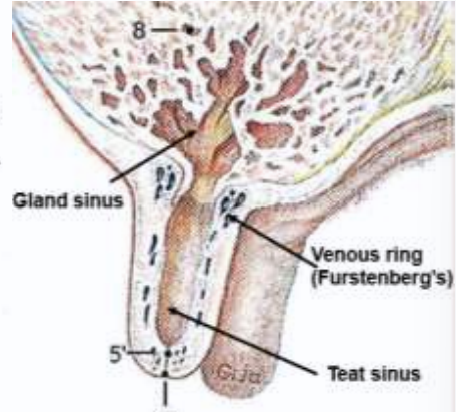
Lactiferous sinus
milk storage compartment + site for cannulation or teat dilators
composed gland sinus and teat sinus
teat canal/ papillary duct has longitudinal folds projecting into the sinus
blood suppy to mammary glands
caudal superficial epigastric vein anastomose with cranial superficial epigastric vein. together they for “milk vein” or subq abdominal vein
why should the milk vein/ subcutaneous abdominal vein not be used from venipuncture
thrombophlebitis/ blood clots
nerves of mammary gland
T13, L1, L2, L3 supply skin of teats, base and cranial parts of udder
-aka costoabdominal, iliohypogastric, ilioinguinal and genitofemoral
Genitofemoral nerve passes through inguinial canal to ___
parenchyma of udder and teat
How do you anesthetize teat for surgery
ring block around base of the teat
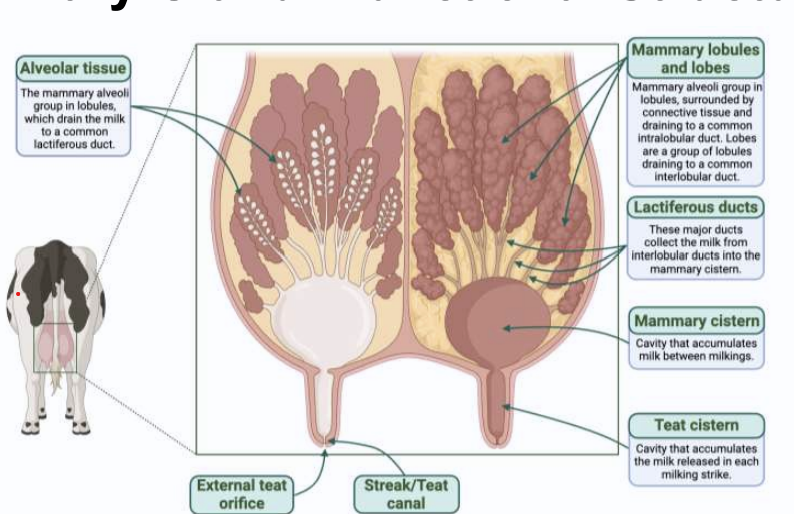
mammary gland function
alveoli
functional unit of mammary gland/ udder
epithelial cells
lines cavity of alveoli and synthesizes milk
myoepithelial cells
surround the secretory epithelial cells in alveoli and help it squeeze to let milk down
alveoli is richly vascularized because it needs nutrients and water for milk. how much is produced in a day?
60L/day which needs 30,000 L of blood circulation through the mammary gland a ratio of 500:1 (blood to milk)
milk composition
proteins, carbs, lipids, minerals ,vitamins, and bioactive substance like immunoglobulins and antimicrobials
what is a determinant factor for milk synthesis
glucose
fat synthesis in each species
non-ruminant: glucose dependent
ruminants: acetate
proteins in milk is synthesized where
epithelial cells
how is lactose synthesized
glucose and galactose→ GLUTs→ into epithelial cell to golgi apparatus→ lactos synthesized→ lactose vesicles released into alveolar lumen
How is the milk composed of mostly water
lactose and salt act as osmotic regulators and draw water from blood into alveolar lumen
phases of milk production
induction phase: onset of milk production
maintenance phase: enhancement of established lactation
lactogenesis/induction phase
milk procution triggered by hormonal changed at parturition
-withdrawal progessterone→ cortisol increases and induce prolactin receptors→ increase prolactin few days before birth
-epithelial cells differentiate into active secretory cells
galactopoeiesis
sustains milk secretion after initiated, suckling/ milking stimulates this phase
-somatotropin change liver, fat, and muscle metabolism to favor milk synthesis
liver: gluconeogenesis
adipocytes: lipolysis
muscle: inhibit glucose utilization
-cortisol: protein synthesis, increased glucose uptake in the glands
-oxytocin: milk let down
prolactin
stimulate alveolar growth and milk production, and milk protein genes
continious milk secretion depends on regular milk removal what are the two reflexes
prolactin reflex for lactogensis
oxytocin reflex for milk let down
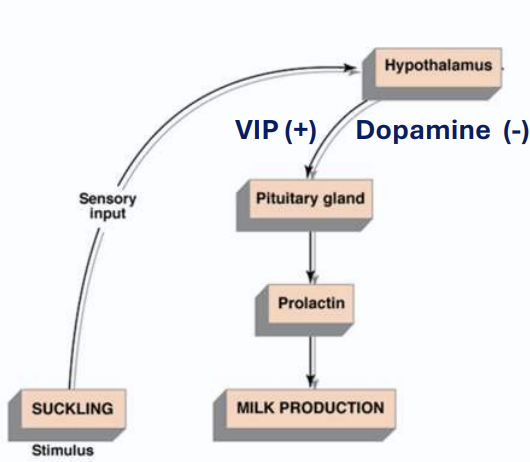
prolactin reflex
VIP-vasoactive intestinal peptide stimulate release of prolactin
dopamine-inhibits prolactin→ no lactation
oxytocin reflex
suckling causes oxytocin release
-intra-alveolar pressure needs to be low for milk production to continue if pressure too high milk production stops