physiology of hearing-1
 Call Kai
 Learn
Learn Practice Test
 Spaced Repetition
 Match
Match Flashcards
 Knowt Play
1/49

There's no tags or description
Looks like no tags are added yet.
Name | Mastery | Learn | Test | Matching | Spaced | Call with Kai |
|---|
No analytics yet
Send a link to your students to track their progress
50 Terms
pats of auditory physiology
outer ear function
middle ear function
inner ear function
- vestibular mechanism
- auditory mechanism
>>>>mechanical energy
>>>>electrical energy
auditory pathways in the brain
conversational pitch as at ____________
1500-4000 Hz
shape of the pinna and EAM determines ____
which sounds are enhanced; how high or low frequency is
other ear function
pinna: collector go sound or a sound funnel
EAM: funnels sound to tympanic membrane
both selectively enhance certain sounds between 1500 Hz and 8000 Hz
the _______ is humans is especially good in collecting sound from the side or front
pinna
you can hear in the range __________ Hz
20-20000 Hz
__________ is the different frequencies of soundless amplified or dampened according to the shape of the tube they're in; deciding which frequencies to be (louder or quieter)
resonance
why does sound get louder at the stapes?
vibrations are harder to create in fluid than in air, so intensity needs to increase so that vibration is carried through
middle ear is ___________ while the inner ear is ________
air-filled; fluid-filled
pressure=
force/area
to increase pressure, we must increase ________ or decrease _________
force; area
sound is measured in __________
pressure
dB
2 big things in sound: __________ and ________
frequency (pitch)
intensity (dB)
tympanic membrane area
55mm^2
oval window area
3.2 mm^2
can't really increase force, but can change area...
decrease area between tympanic membrane and oval window so that pressure increases and vibration continues throughout the ear
____________ is resistance to the flow of energy
impedance
does fluid or air have more impedance?
fluid
impedance analogy
mom yelling at kid who is underwater; few sound waves got through the water
most bounce off--like the middle ear to the inner ear!
# of impedance-matching functions
2
impedance matching function #1
the ratio of the tympanic membrane area to that of the oval window is 17:1. this difference produces an increase of about 2.5 dB
makes sound more intense
area is decreasing so pressure is increasing
the more intense a sound is, the ______ it is
louder
impedance-matching function #2
the length of the manubrium is about 9 mm, that of the stapes is about 7 mm--> this difference in the two "levers" produces a gain of about 2 dB
bigger to smaller area, pressure increases
total gain in impedance-matching functions is ________
27 dB
_________ is the inflammation of the middle ear
otitis media
_________ is the ossification of the middle ear bones, especially the stapes
otosclerosis
otosclerosis in men v women
2x common in women
inner ear functions
vestibular mechanism
auditory mechanism
frequency, intensity, and sound placement is determined by the ______ to determine sounds
brain
auditory mechanism
the inner ear is responsible for performing spectral and temporal acoustic analyses of the incoming acoustical signal (sound waves coming in)
temporal acoustic analysis
ear has to get sounds in right order (and brain needs to interpret in right order)
______________ is the process of extracting defining the various frequency and intensity components of a given signal
spectral analysis
fricatives (hissy) have ________ frequencies, vowels have __________ frequencies
very high; low
high v low frequency hearing loss
high: can't hear fricatives
low: can't hear vowels
______ is a motor programming deficit
apraxia
spectrogram
a graphic representation of the three major parameters that describe the acoustic characteristic of any sound: time, frequency, and intensity
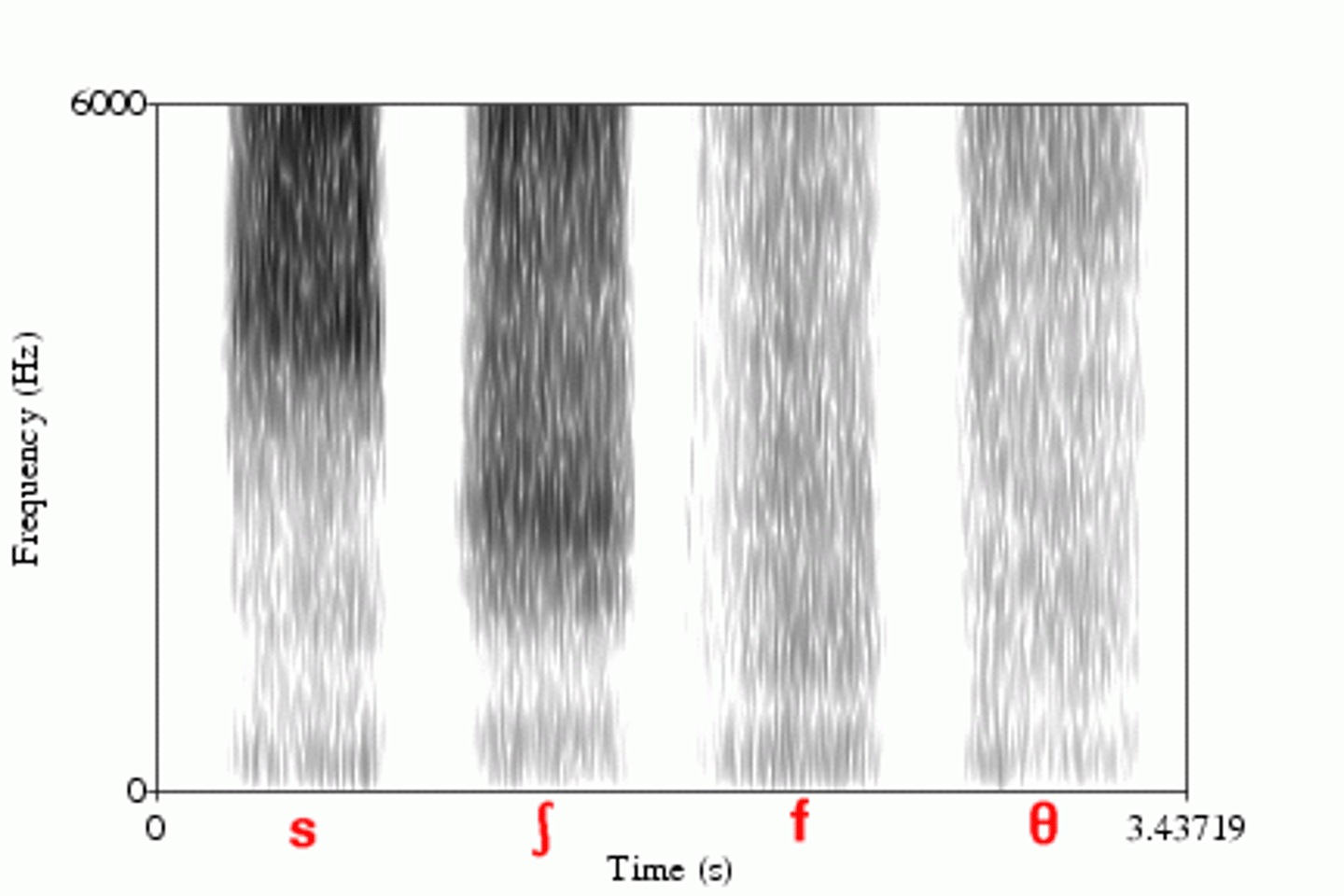
parts of acoustic mechanism
1. mechanical transmission
2. electrical transmission of auditory signal
mechanical transmission (pt 1)
transmission of sound waves from air to fluid
sound waves moving in and out of fluid-filled--motion/waves created
motion goes to basilar membrane and moves it up and down
movement especially in perilymph
mechanical transmission (pt 2)
vibration of oval window creates standing/traveling wave
wave got tot the membrane and makes the membrane move up and down more
because of the frequency of sound, different parts of the wave will react (sorting out sound by frequency starts here)
mechanical transmission (traveling wave; pt 3)
deciphering sounds begins here!
high frequency sounds--> processed at basilar membrane at basal end of cochlea
low frequency sounds--> basilar membrane at apex of cochlea
mechanical transmission (pt 4)
basilar membrane moves up and down because of waves
cilia of the outer hair cells are embedded within the tectorial membrane; they move because the tectorial membrane moves
shearing action
if basilar membrane moves up and down, organ of court will move up and down
little hair cells start bending (inner hair cells transmit sound, outer hair cells are cochlear amplifiers)
inner hair cells are thought to be moved just by the movement of the endolymph
cochlear amplifiers
outer hair cells
make cochlea more sensitive; make sound louder or more intense
electrical transmission of auditory signals (pt 1)
the bending of the stereocilia causes changes within the hair cells that create electrical signals (electrical potentials like action potentials)--> the auditory nerve fibers are below the hair cells and they pass these signals on to the brain
electrical transmission of auditory signals (pt 2)
the movement of a hair cell's cilia bundle opens ion channels at the tops of the cilia
at inner hair cells, sound, motion energy move stereocilia
gates open (Na+, K+, C++ mvmt)--electrochemical
stereocilia are connected by __________
tip-links
tip-link action
bend the hair cells to open the gates and allow movement of ions
Na+ ions are located in _______
perilymph
K+ ions are located in __________
endolymph
C++ moves...
when calcium hits glutamate, it's released and information goes to the cochlear nerve
95% of nerve fibers go to __________
inner hair cells
inner hair cels carry sound itself