Prof Messer CompTIA Security+ SY0-701 - 4.6
 Call Kai
 Learn
Learn Practice Test
 Spaced Repetition
 Match
Match Flashcards
 Knowt Play
1/21

There's no tags or description
Looks like no tags are added yet.
Name | Mastery | Learn | Test | Matching | Spaced | Call with Kai |
|---|
No analytics yet
Send a link to your students to track their progress
22 Terms
Identity and Access Management (IAM)
The security discipline that enables the right people to access the right resources at the right times
prevent unauthorized access
access control
authentication and authorization
identity governance
- track an entity's resource access
permission assignments (IAM)
least privilege
files that a user creates are private to them by default
- even if someone else is using that comp
identity proofing (IAM)
resolution = the system confirming your identity
validating
- passwords, security questions, etc
verification/attestaion
- additional info from the user to confirm identity (passport, etc)
Single sign-on (SSO)
provide credentials once; get access to what you need
usually for a limited time
underlying auth process and infrastructure has to support SSO
LDAP (Lightweight Directory Access Protocol)
protocol for reading and writing directories over a network
used to query and update a x.500 directory
- used in Windows Active Directory, Apple OpenDirectory, etc
X.500 Distinguished names
attribute=value pairs
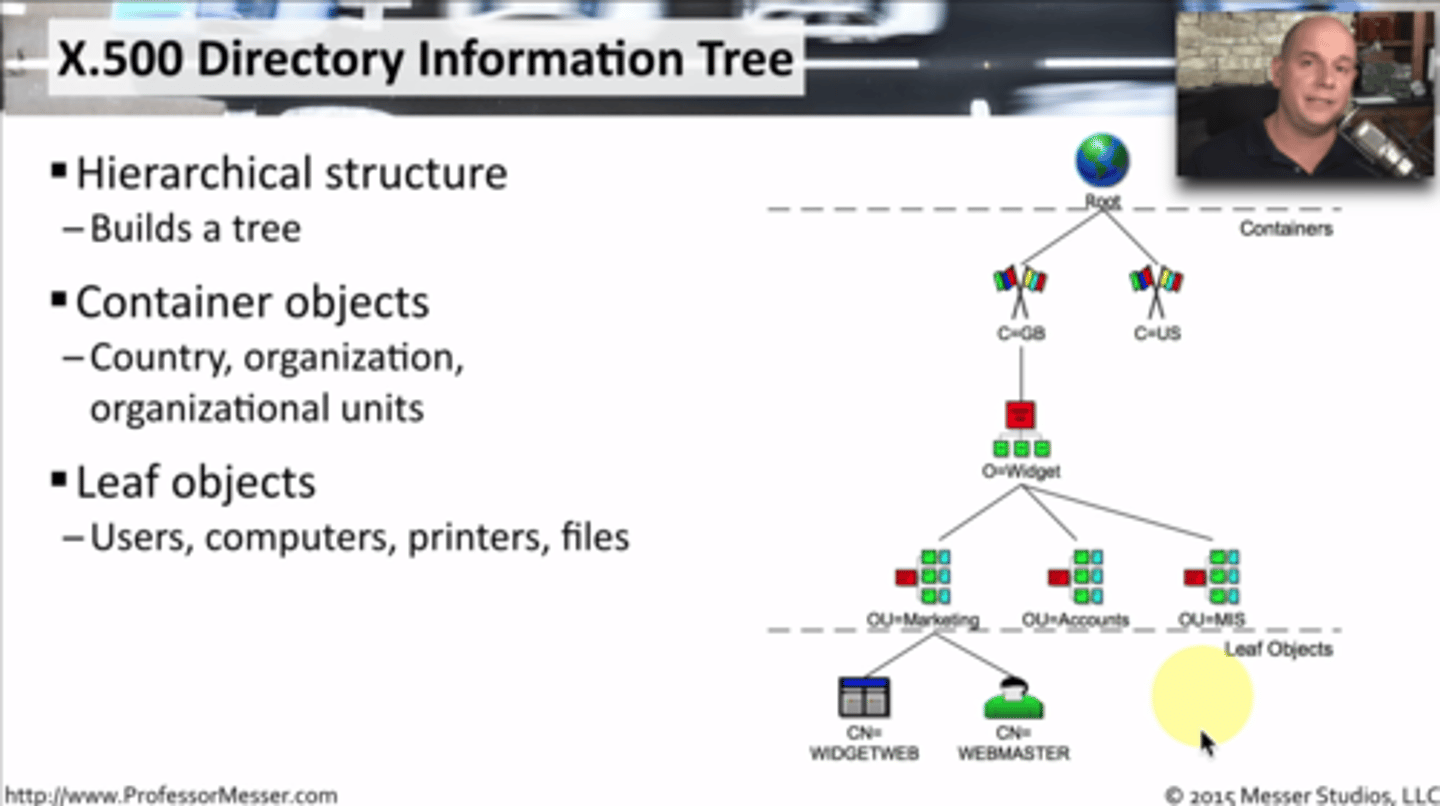
X.500 Directory Information Tree
Hierarchical structure
Builds a tree
Container objects
• Country, organization, organizational units
Leaf objects
• Users, computers, printers, files
SAML (Security Assertion Markup Language)
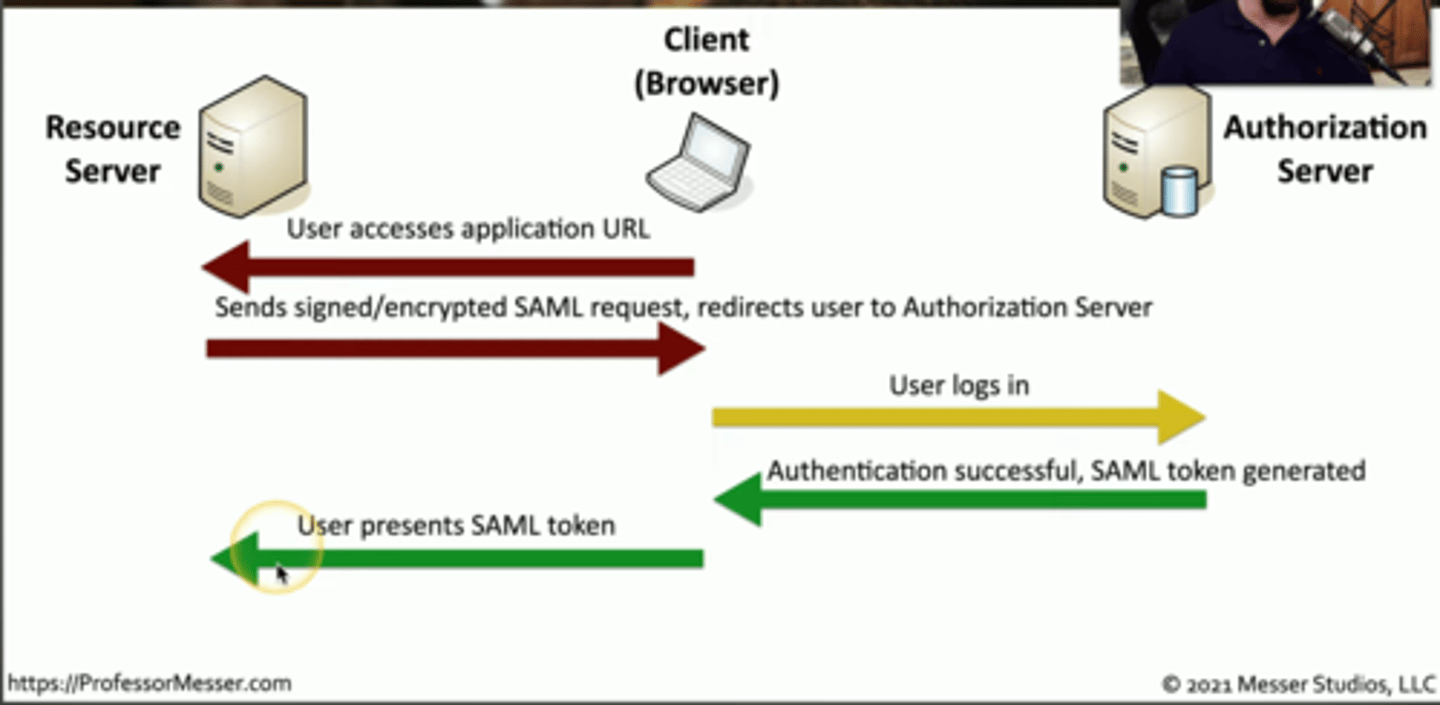
open standard for authentication and authorization
- auth through a 3rd party
not designed for mobile apps
SAML authentication flow
OAuth
created by Twitter, Google and many others
- big industry support
not an auth protocol
auth framework
allows auth between apps
federation
authnticate and authorize between 2 orgs
("log in with facebook")
3rd parties must establish a trust relationshup
Mandatory Access Control (MAC)
OS limits user access to objects by labeling them
admin decides who gets access to what security level
Discretionary Access Control (DAC)
owner of object controls who has access
can modify access at any time
very flexible; but also very weak
Role-Based Access Control (RBAC)
admins provide access based on the role of the user
rights are gained implicitly instead of explicitly
rule based access control
access is determined through system enforced rules
Attribute-based access control (ABAC)
"next gen" authorization model
combine and evaluate multiple parameters
- IP address
- time of day
- desired action
etc
multifactor authentication
use diff methods to prove who you are
factors
- something you know
- something you have
- something you are (biometrics)
- somewhere you are
password strength
minimum of 8 chars
- this will change as computers get faster
uppercase, lowercase, #s and special chars
password age
how long since a password was modified
password manager
store all passwords in a database
- encrypted and protected
built into many OS's and browsers
passwordless authentication
authenticate without a password
can be used with a password or additional factors
just in time permissions
grant admin access for a limited time
just in time accounts are temporary
- with temp password