Ch 4 Extensions of Mendelian Genetics
 Call Kai
 Learn
Learn Practice Test
 Spaced Repetition
 Match
Match Flashcards
 Knowt Play
1/44

There's no tags or description
Looks like no tags are added yet.
Name | Mastery | Learn | Test | Matching | Spaced | Call with Kai |
|---|
No analytics yet
Send a link to your students to track their progress
45 Terms
Two postulates are basic principles of gene transmission
– Genes are present on _____
– Chromosomes segregate and assort ______
• Gene interaction: single _____ is affected by more than one set of genes
• X-Linkage: genes that are present on the _____
homologous chromosomes
independently
phenotype
X chromosome
____: Alternative forms of a gene
____: Ultimate source of alleles
– New _____ result from changes in functional activity of gene product
▪ Eliminating enzyme function
▪ Changing relative enzyme efficiency
▪ Changing overall enzyme function
_____: Occurs most frequently in nature and is usually, but not always, dominant
Alleles
Mutation
phenotypes
Wild-type (wt) allele
______ mutations
– New phenotype results from change in activity
– Mutation causes loss of wild-type function
______ mutations
– Mutation enhances function of wild type
– Quantity of gene product increases
______ mutations
– No change to the phenotype
– No change to the evolutionary fitness of the organism
Loss-of-function
Gain-of-function
Neutral
______ alleles indicated by either an italic uppercase letter (D) or letters (Wr)
_____ alleles indicated by either an italic lowercase letter (d) or an italic letter or group of letters (wr)
___ alleles indicated by italic letter (e)
_____ alleles indicated by italic letter plus superscript (e^+)
Dominant
Recessive
Mutant
Wild type
Allele Representations
.
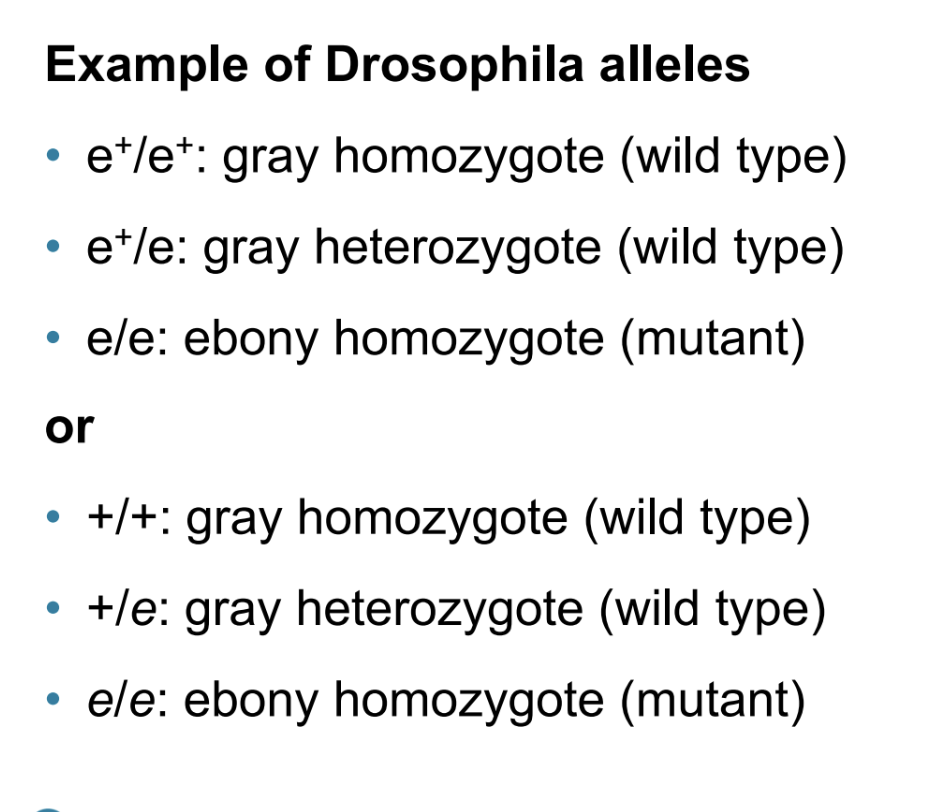
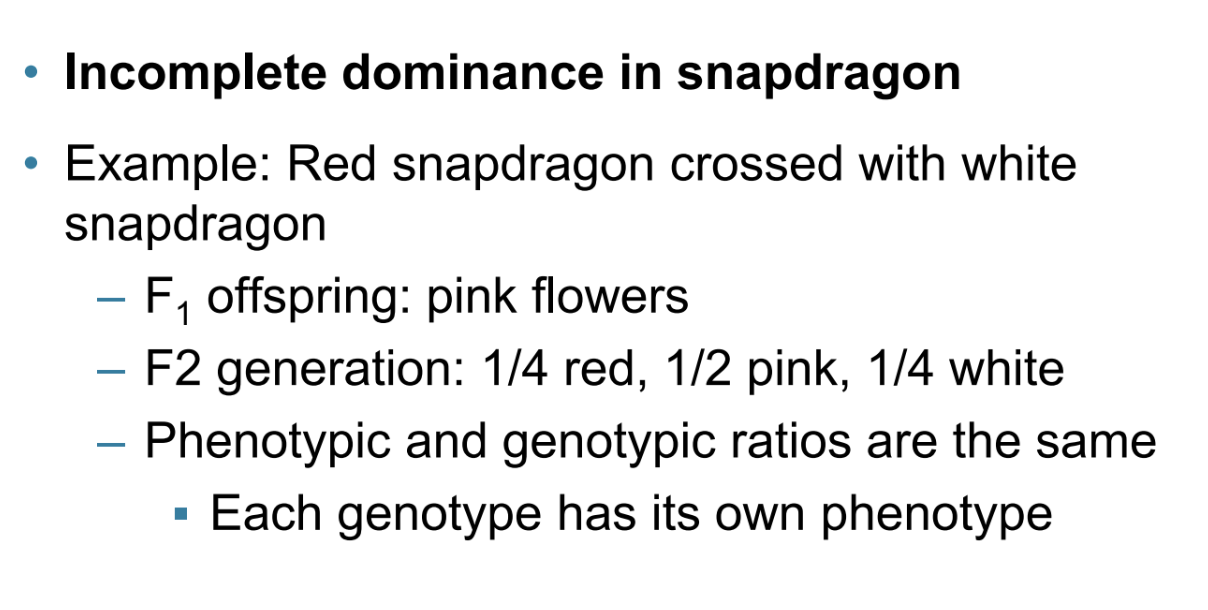
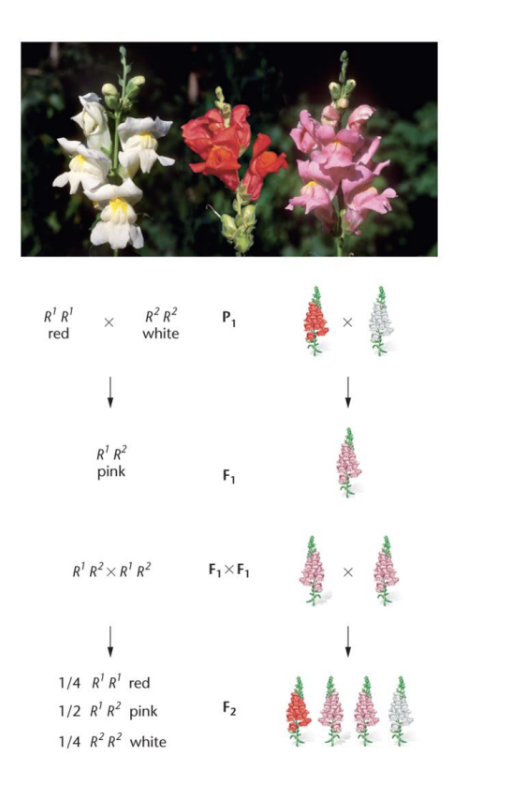
_____ or _____ dominance
– Intermediate phenotype
– Neither allele is dominant
Incomplete or partial
Incomplete dominance in humans
– Example: _____ disease
Tay-Sachs
The minimum amount of gene product needed for normal phenotype expression, below which a disease phenotype appears:
____ effect
– Normal phenotypic expression results
– Certain level (usually 50% or less) of gene product is
attained
– In Tay-Sachs disease, < 50% threshold
Threshold
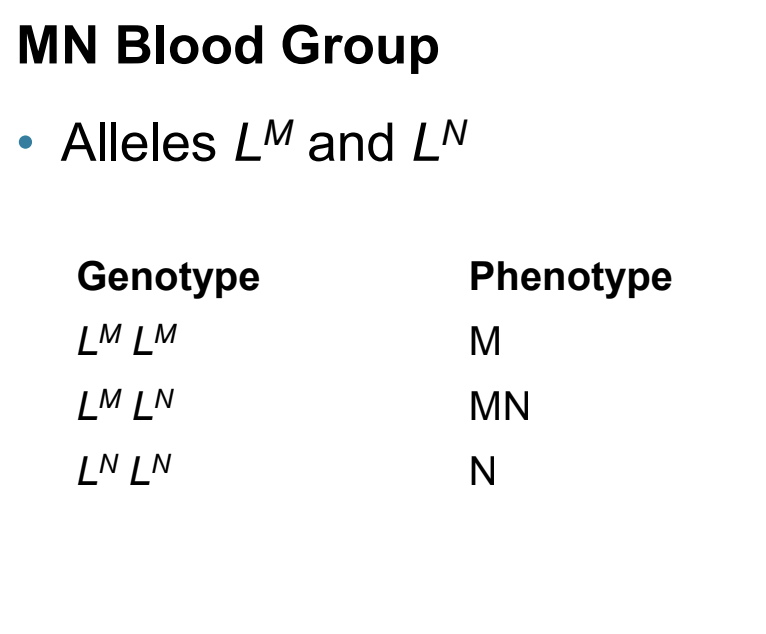
_______
– No dominance or recessiveness
– No incomplete or blending
– Joint expression of both alleles in a heterozygote
Codominance
_____ alleles
– Three or more alleles of the same gene
– Resulting mode of inheritance unique
– Can only be studied in populations
Multiple
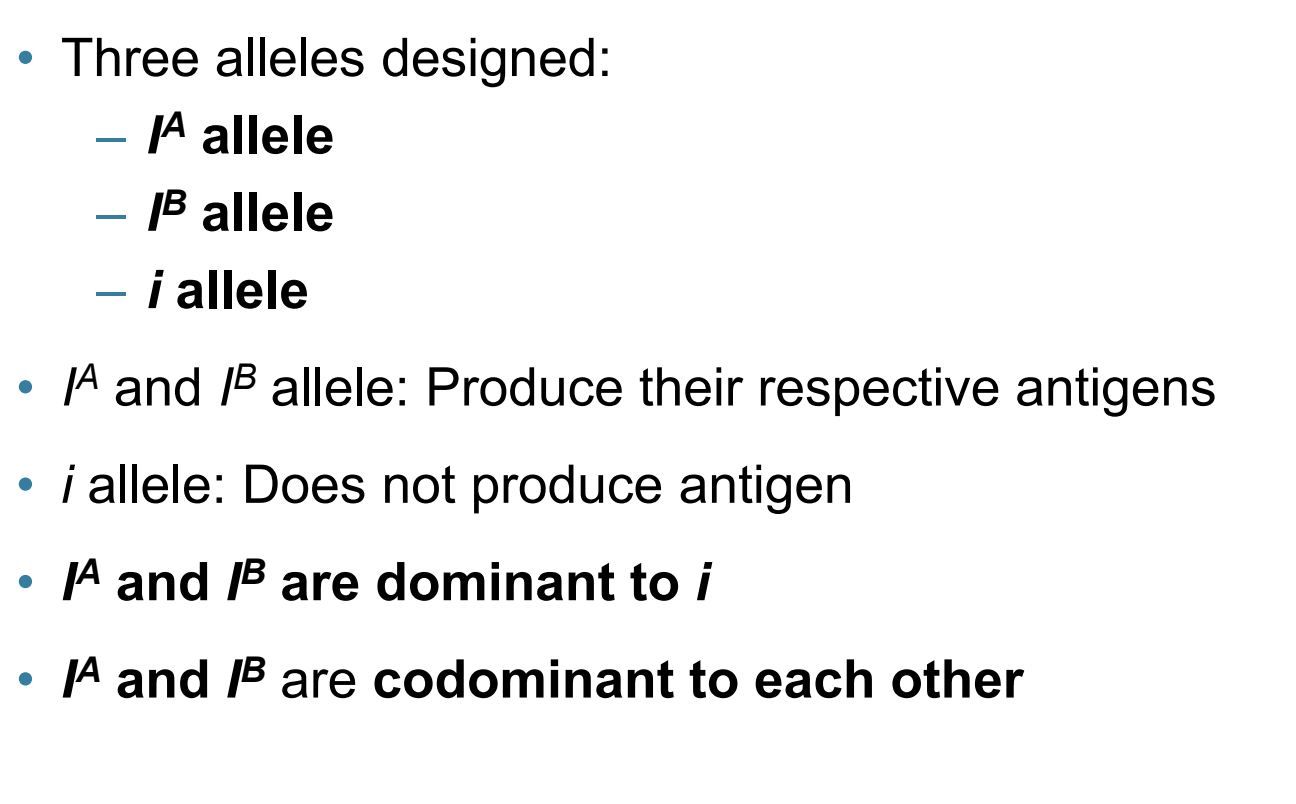
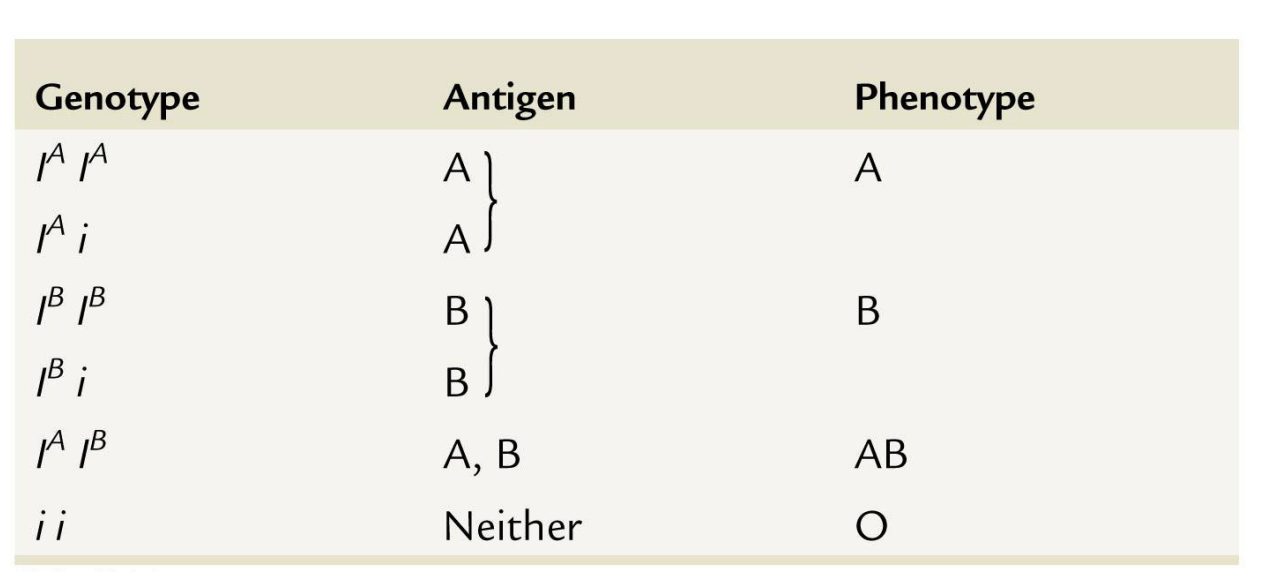
Human _____ blood groups
– Example of ____ alleles
– A and B antigens present on surface of red blood cells
– Three alleles of a single gene responsible for ABO phenotypes
ABO
multiple
Isoagglutinogen (Antigen)
_____ antigens
– Carbohydrate groups bound to lipid groups on red blood cells
• ____ substance
– One or two terminal sugars are added
– O blood types (___) only have this substance protruding from red blood cells
A and B
H
ii
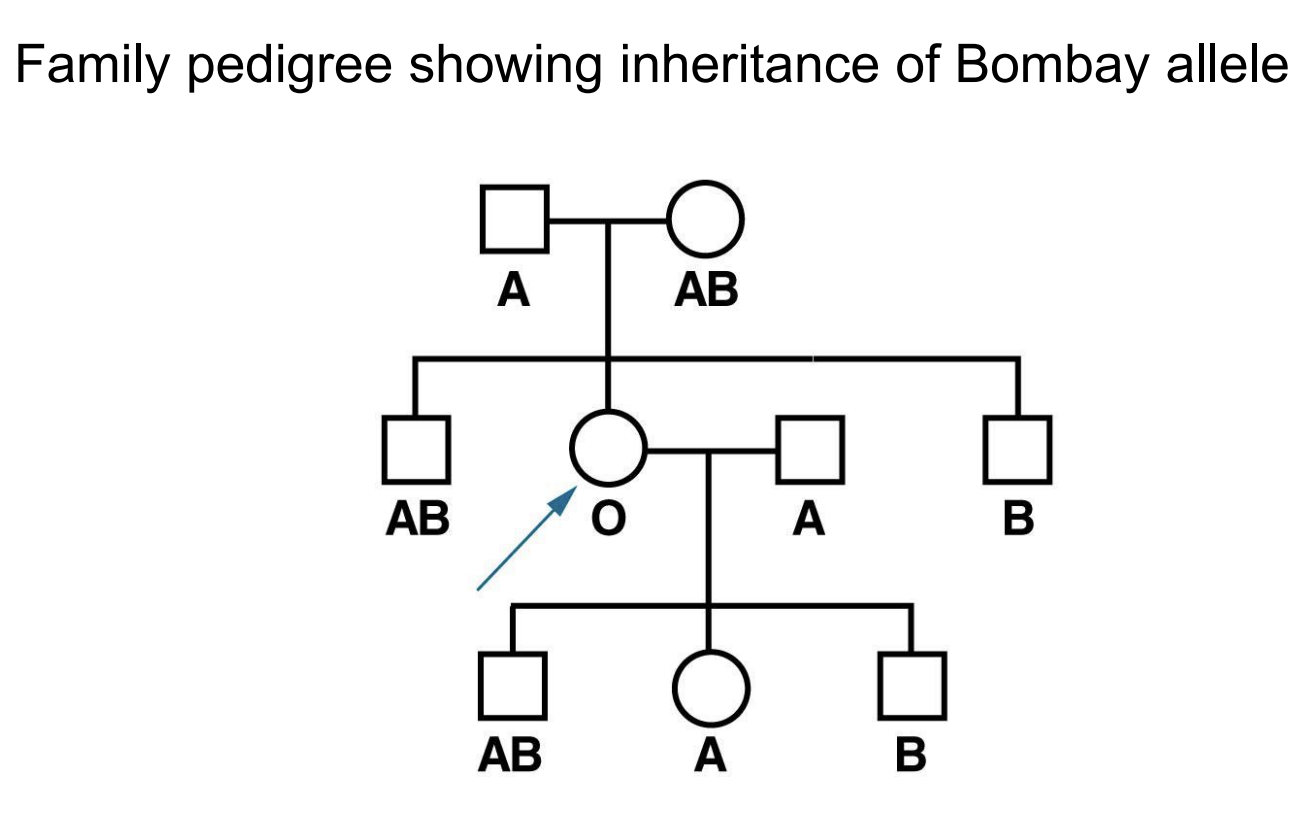
_____ phenotype
• Type O female, yet...
– One parent has type AB blood and
– Female is I^B allele donor to two children
• Female found to be homozygous for ____ at the fucosyl transferase locus
Bombay
FUT1
_____ genes
– Absolutely required for survival
– Mutations can be tolerated if heterozygous
▪ One wild-type allele sufficient for survival
▪ Homozygous recessive will not survive
– Mutation behaves as _______
Essential
recessive lethal allele
____ allele
– Has potential to cause death of organism
– Alleles are result of mutations in essential genes
– Inherited in recessive manner
_____ allele
– Presence of one copy of allele results in death
– Example: ______
Lethal
Dominant lethal
Huntington disease
____ disease
– Dominant autosomal allele H
– Onset of disease in heterozygous delayed until adulthood
– Characterized by progressive degeneration of nervous system, dementia, and early death
Huntington
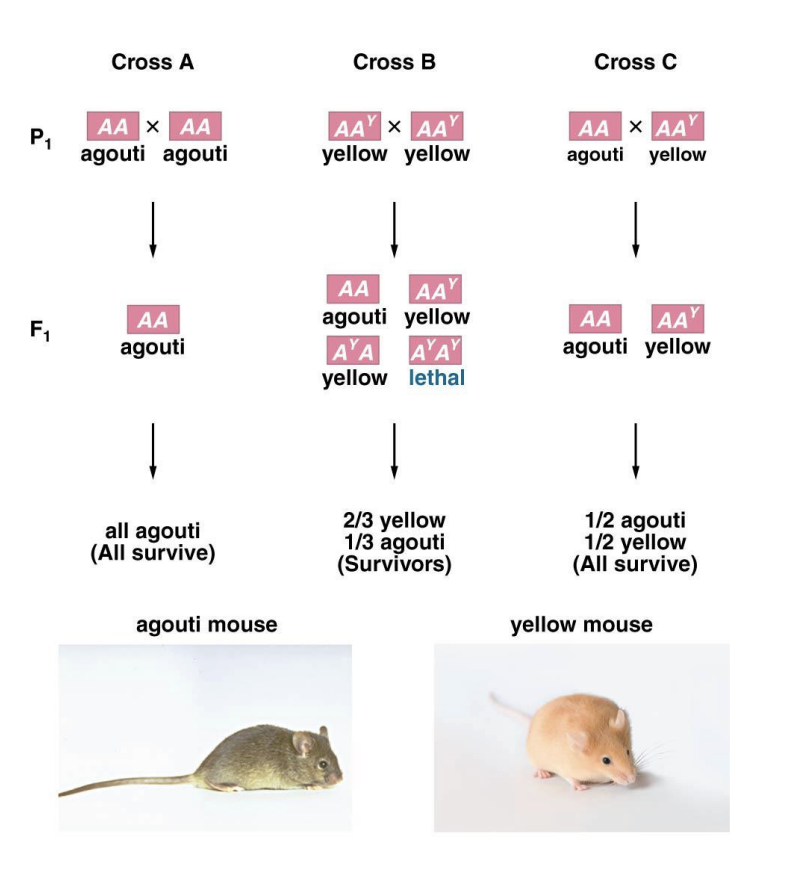
____ gene in mice (coat color)
– Agouti allele A
– Mutant ____ allele A^Y
_____ allele (A^Y)
– Behaves dominantly to normal allele to control coat color
– Behaves as homozygous recessive lethal allele
Genotype AY AY does not survive
Agouti
yellow
Mutant
Combinations of Two Gene Pairs with Two Modes of Inheritance Modify the 9:3:3:1 Ratio
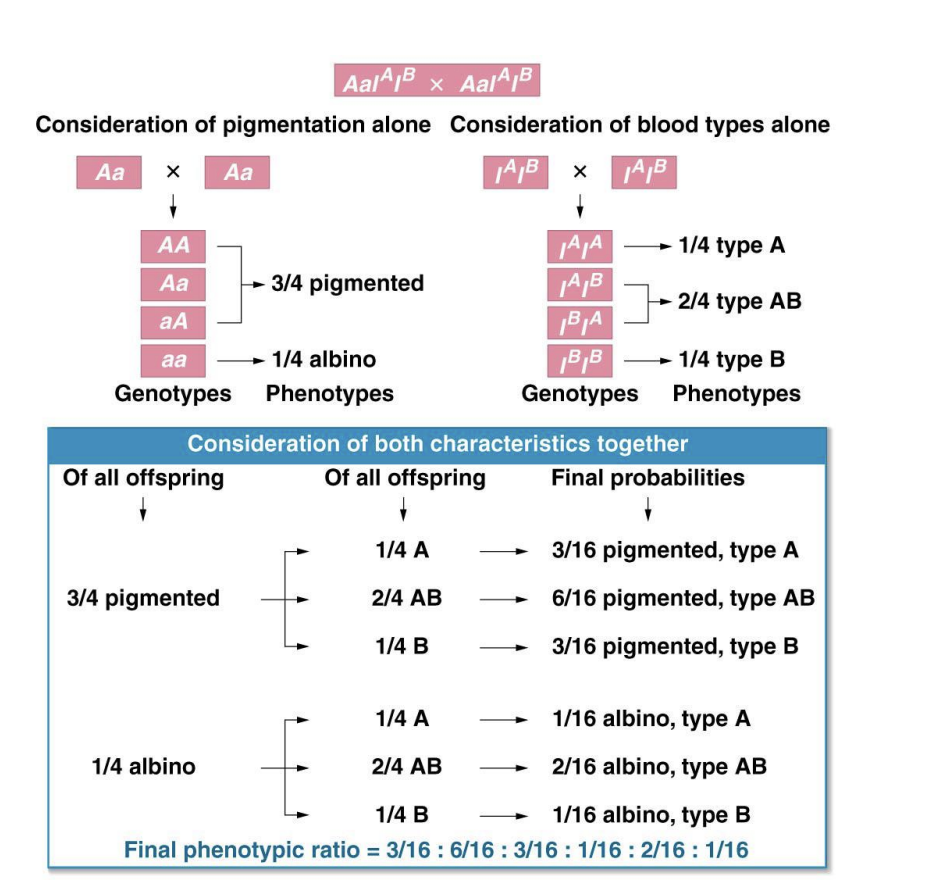
Different modes of inheritance combined
– Results in many variants of modified ____
Example:
– Two heterozygotes mate
– Both autosomal recessive for ____
– Both _____
– Albinism inherited Mendelian style
– Blood types via three multiple alleles, I^A, I^B, and ii
ratios
albinism
blood type AB
Phenotypic characters are influenced by _____
Gene interaction
– _____ influence a particular characteristic
– _____ of numerous gene products contributes to development of common phenotype
many different genes and their products
Several genes
Cellular function
_______
– Expression of one gene masks/modifies effect of another gene pair
– Gene masks phenotypic effects of another gene
– Each step of development increases complexity of organ
– Under control and influence of many genes
Epistasis
Epistasis and multiple gene interaction: _______
– Ear forms as result of many genes
– Genes interact to produce common phenotype
– Mutations interrupt development = hereditary deafness
– Mutant phenotype
heterogeneous trait where many genes are involved
Hereditary deafness
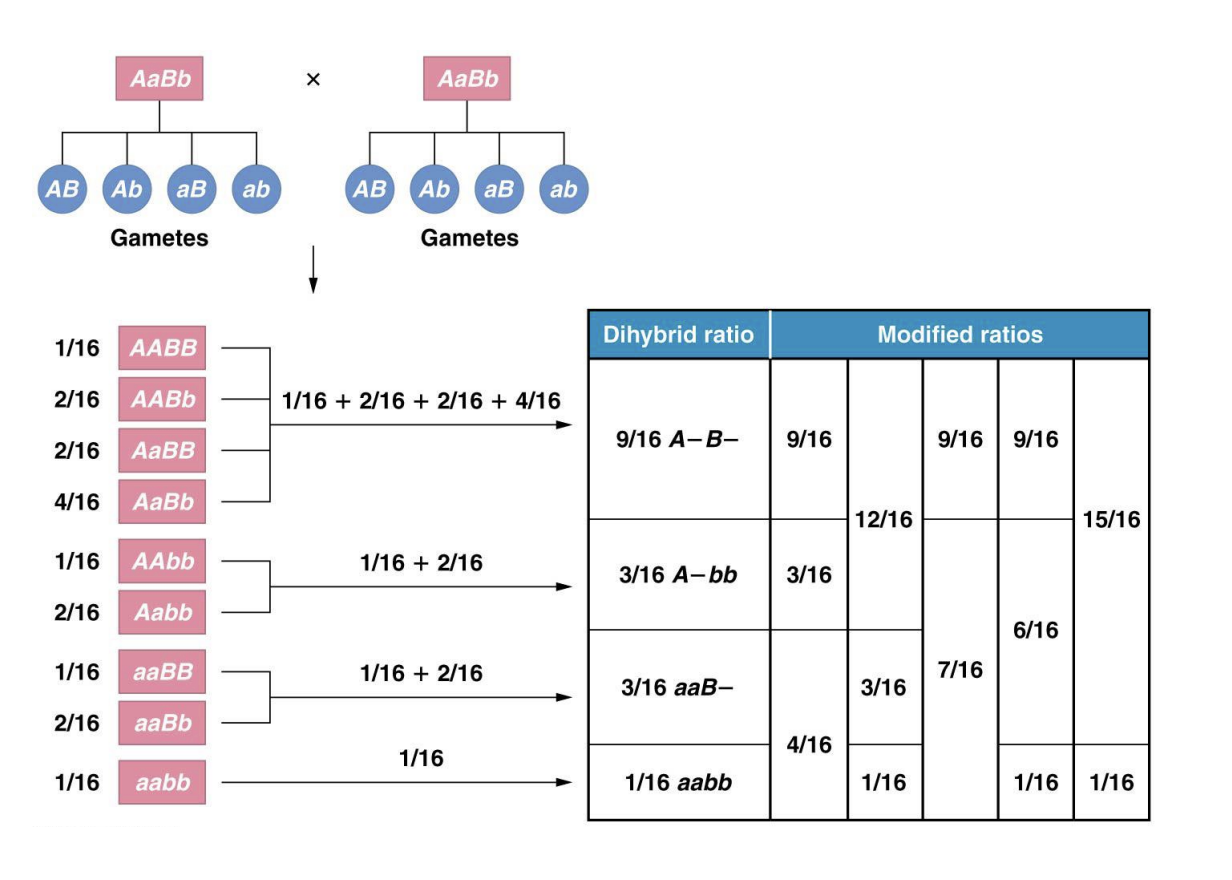
Epistasis has effect on one or more of four phenotypic categories
Recessive epistasis
– B allele: black pigment
– A allele: agouti phenotype
– aa genotype: all black
– bb genotype: _______, even if A or a alleles present
▪ Mouse is albino
– bb genotype ____ expression of A allele = _______
no black pigment
MASKS
recessive epistasis
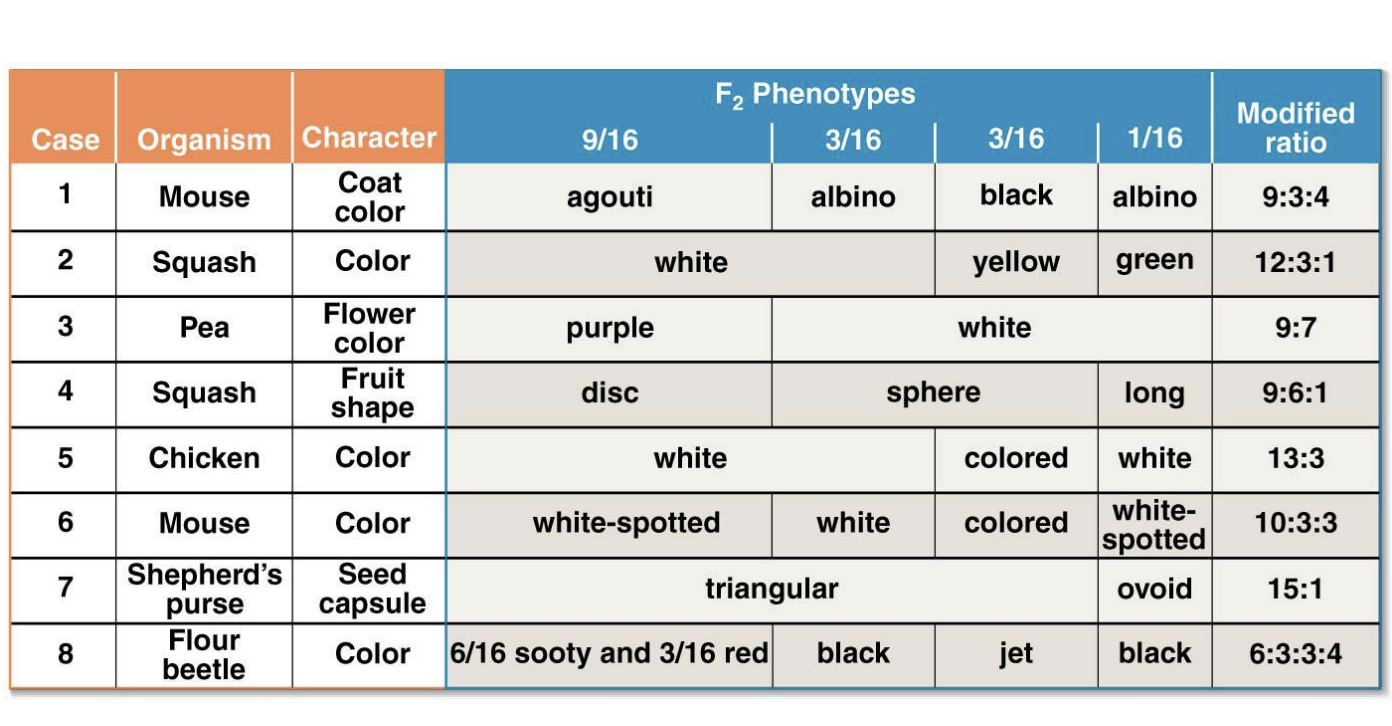
_______
– Dominant allele at one loci masks an allele at second loci
• Example: Summer squash fruit color
Dominant allele A = White fruit
Regardless of _______
– Absence of A allele = Yellow fruit
▪ Genotypes aa, BB, Bb = yellow fruit
▪ Genotype bb = green
Dominant epistasis
second loci allele
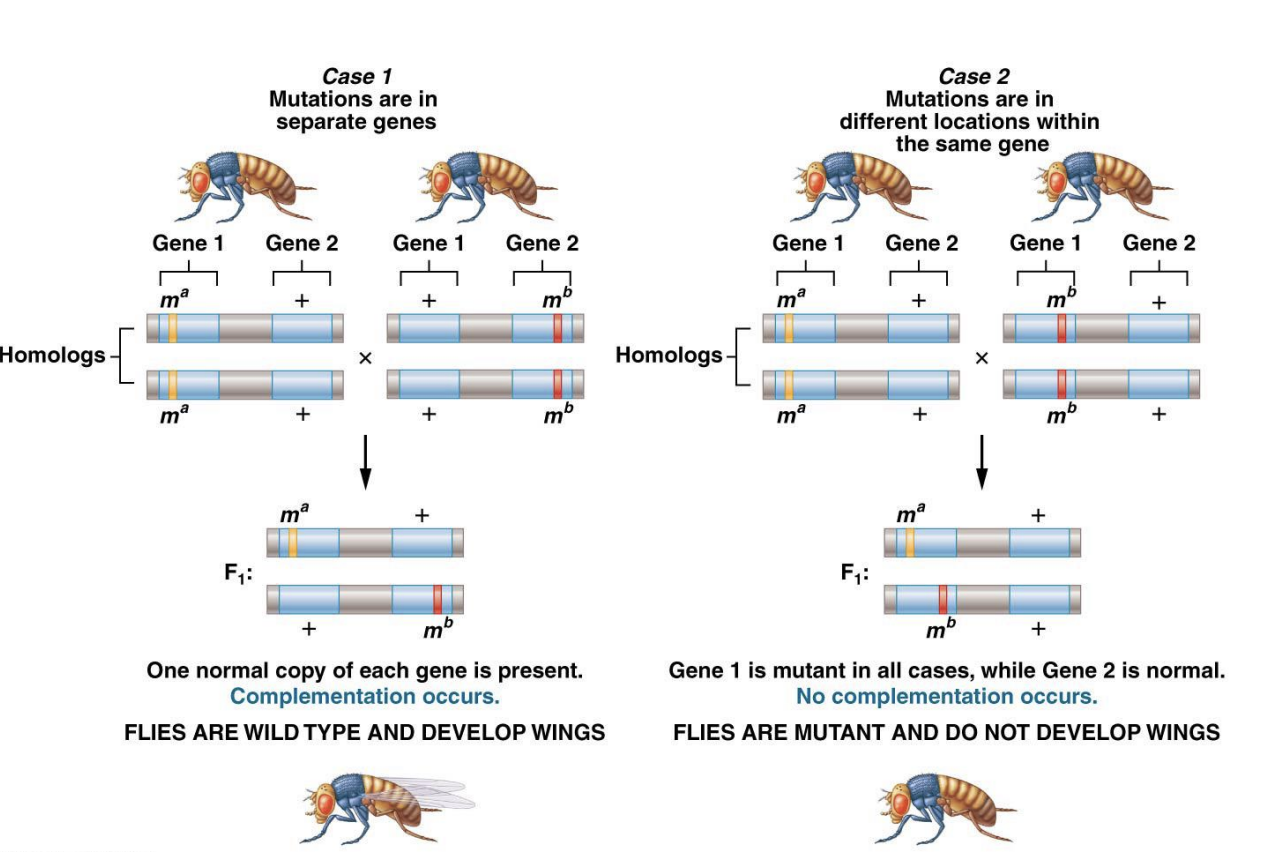
______
– Screens number of individual mutations resulting in
same phenotype
– Can predict total number of genes determining a trait
_______
– All mutations present in any single gene
Complementation analysis
Complementation group
_____
– Expression of single gene has multiple phenotypic effects
Example: _____
– Single autosomal dominant mutation in gene that encodes protein fibrillin results in multiple phenotypic effects
Pleiotropy
Marfan syndrome
Pleiotropy Example: ______
– Autosomal disorder
– Toxic buildup of porphyrins in body
– Numerous phenotypic effects
▪ Abdominal pain
▪ Muscular weakness
▪ Fever
▪ Racing pulse
▪ Insomnia
▪ Vision issues
Porphyria variegata
_______ Describes Genes on the X Chromosome
X-Linkage
_______
– Genes present on X chromosome exhibit patterns of inheritance
– Different from autosomal genes
______
– Relatively inert genetically
– Male-specific genes on human Y chromosome
– Lacks copies of genes found on X chromosome
X-linkage
Y chromosome
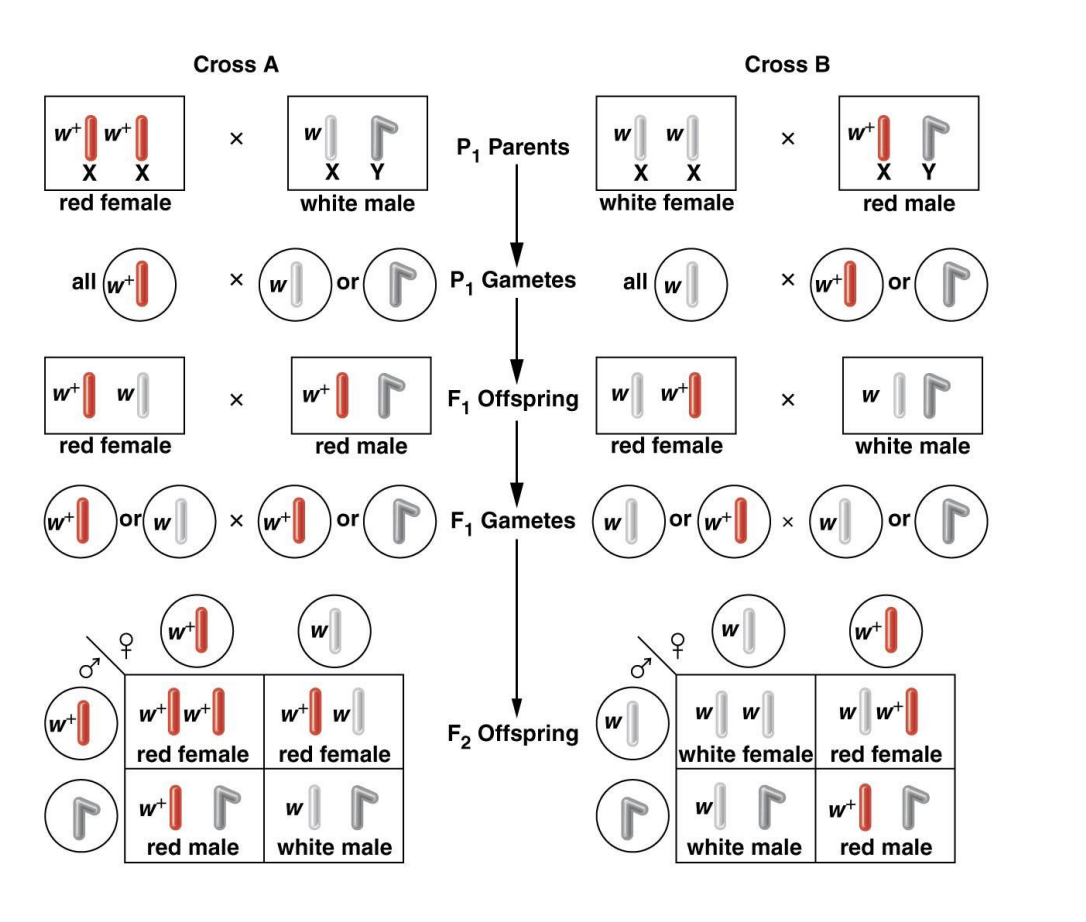
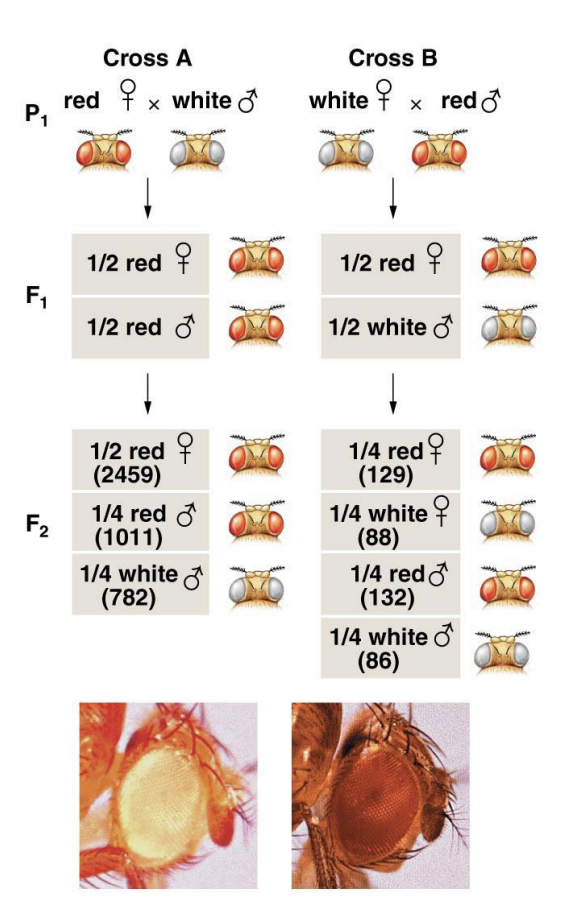
______ in Drosophila
– Wild-type red eye color is dominant to white
– Inheritance pattern of white eye related to sex of parent
Reciprocal crosses between white- and red-eyed flies did not yield identical results
_____ locus present on X chromosome (X-linked)
White eye mutation
White
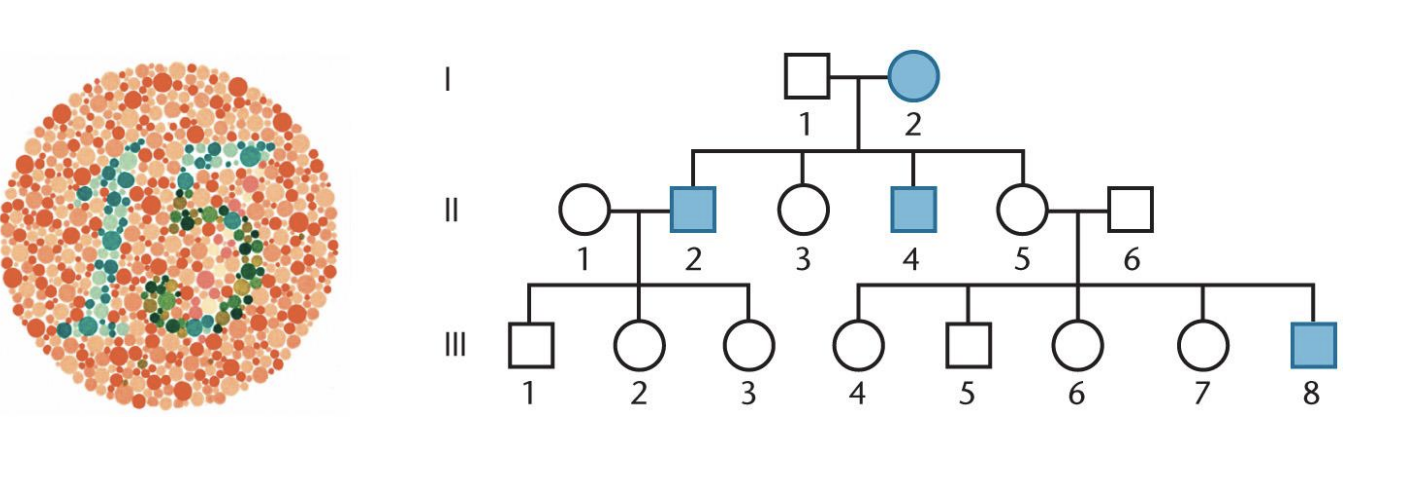
Color blindness: ______
– Red/green color blindness
– Mother passes to ____
– Mother passes to no ____
X chromosome-linked
all sons
daughters
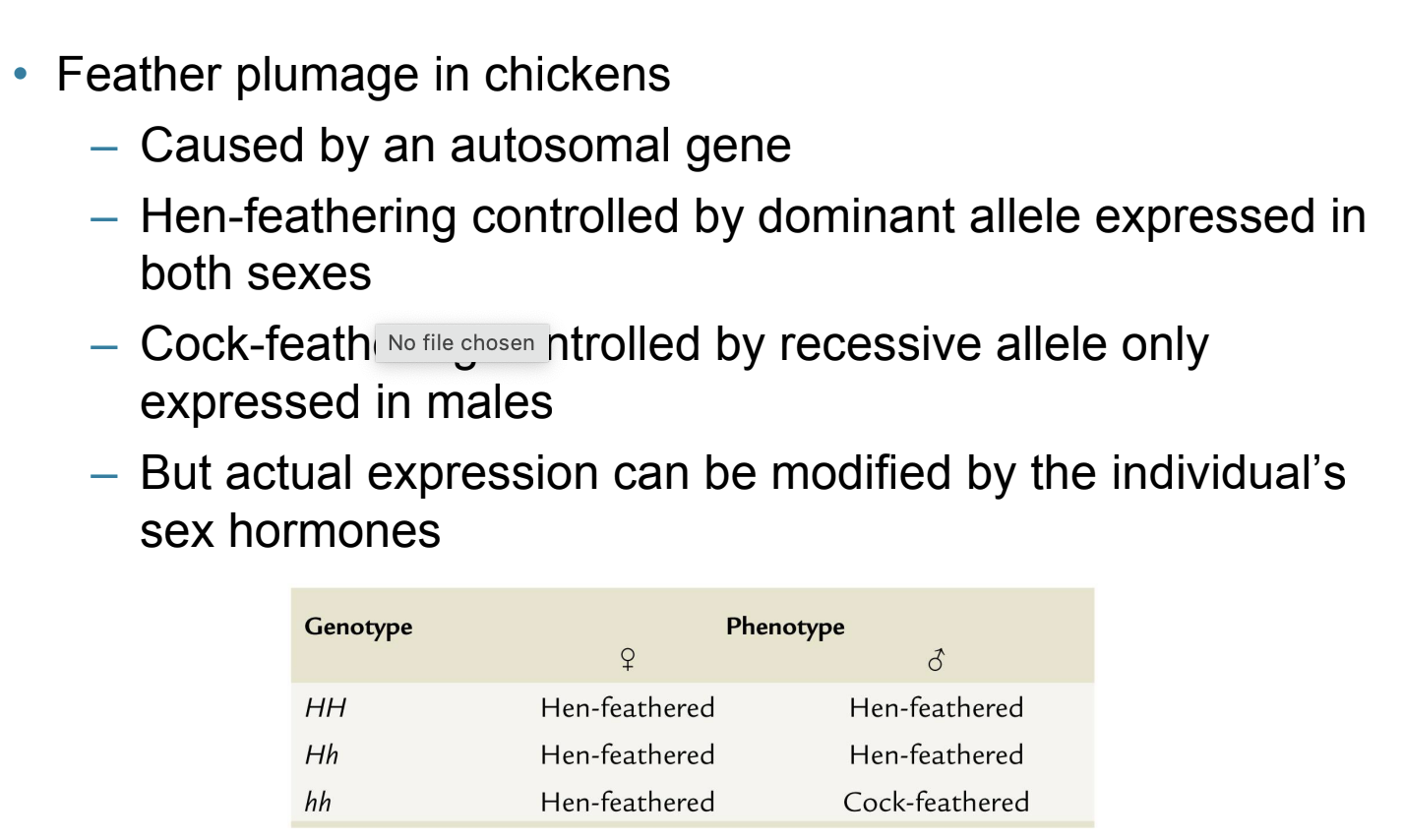
_____ inheritance
– Expression of specific phenotype is absolutely limited to one sex
______ inheritance
– Sex of individual influences expression of phenotype
– Not limited to one sex or the other
Sex-limited
Sex-influenced
_____ expression of trait
– Influenced by environment
– Influenced by genotype
Gene products function within cell in various ways
Organism exists in diverse environmental conditions
Phenotypic
_______
– Percentage of expression of the mutant genotype in a population
______
– Range of expression of mutant phenotype
– Result of genetic background differences and/or environmental effects
Penetrance
Expressivity
______ in Drosophila
– Homozygous recessive mutant gene
– Phenotype ranges from presence of normal eyes to absence of one or both eyes
Eyeless mutation
Genetic background: _____ effect
– Physical location of gene influences expression
– Translocation or inversion events modify expression
– Gene relocated to condensed or genetically inert chromosome (heterochromatin)
Position
_____ effect
a) Female heterozygote for white eye genotype showing normal dominant phenotype
b) Chromosomal rearrangement leads to variegated effect (also female heterozygote for white eye)
Position
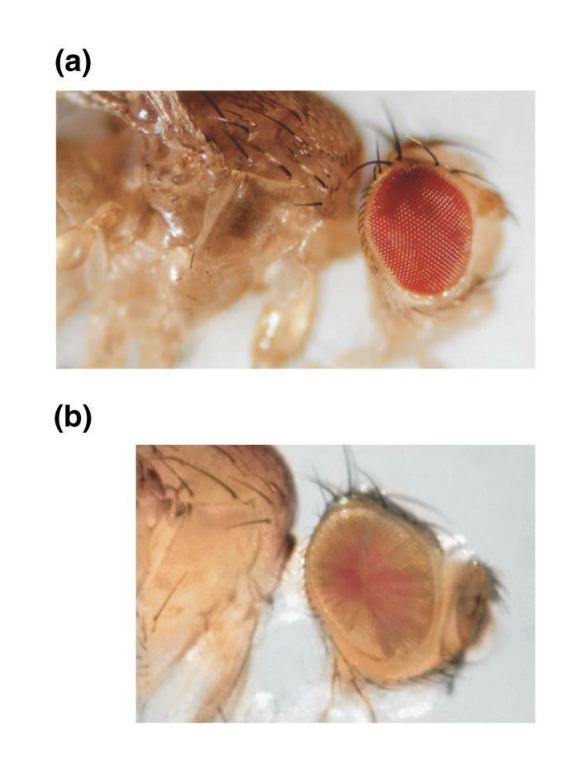
Conditional Mutations
______ effects
– Evening primrose
▪ Red flowers at 23Celsius
▪ White flowers at 18Celsius
– Siamese cats and Himalayan rabbits
▪ Darker fur on cooler areas of body (tail, feet, ears)
▪ Enzymes lose catalytic function at higher
temperature
Temperature
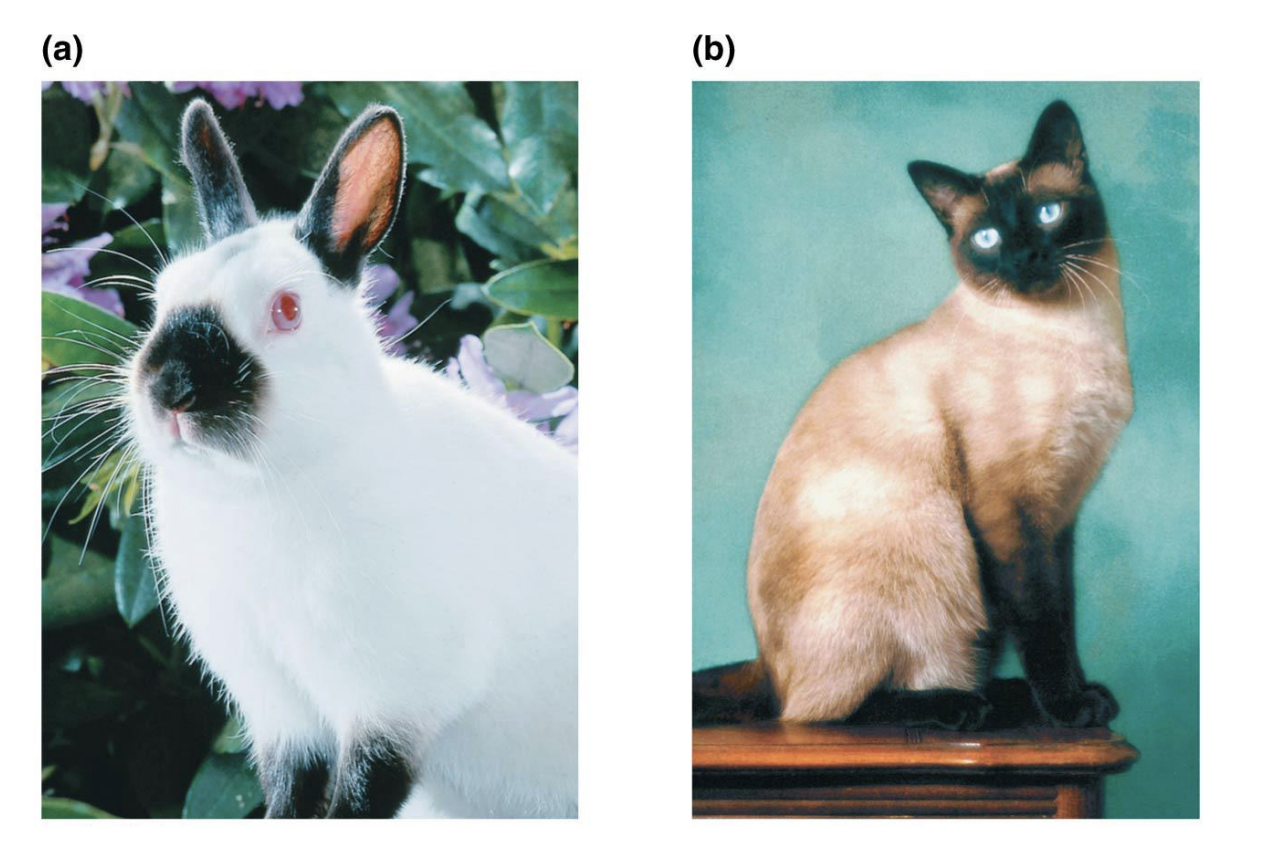
_______
– Viruses, bacteria, fungi, and _____
– Mutant allele expresses mutant phenotype at one temperature, wild-type phenotype at another
– Useful when studying phage (bacterial virus) mutants
Temperature-sensitive mutations
Drosophila
_____ mutations
– Prevent synthesis of nutrient molecules in microbes
– Auxotrophs (microbe)
– Phenotype expressed or not depending upon diet
______
– Loss of enzyme to metabolize amino acid phenylalanine
– Severe problems unless low-Phe diet
Nutritional
Phenylketonuria
_____
– Cannot metabolize galactose
_____
– Cannot metabolize lactose
Galactosemia
Lactose intolerance
Delayed onset of phenotypic expression
______
– Inherited autosomal recessive
– Lethal lipid-metabolism disease (hexosaminidase A)
– Baby normal for a few months, dies by age 3
______
– Inherited X-linked recessive
– Purine salvage enzyme defect (HPRTase)
– Normal for about 6 months
Tay-Sachs disease
Lesch–Nyhan syndrome
______dystrophy (DMD)
– X-linked recessive disorder
– Diagnosis at 3–5 years old, fatal by age 20
_____ disease
– Variable age of onset in humans
– Autosomal dominant disorder
– Affects frontal lobes of cerebral cortex
– Progressive cell death—brain deterioration
– Age range 30–50 years old
Duchene muscular
Huntington
_______
– Genetic disease has earlier onset and increased severity with each succeeding generation
Example: _______
– Adult muscular dystrophy
– Autosomal dominant
– Increased severity and earlier onset with successive generations of inheritance
Genetic anticipation
Myotonic dystrophy (DM1)
Week 3 Learning Outcomes
Discuss allelic variants from wild-type to mutated forms and their influence on phenotype from normal function to loss or gain of function.
Practice solving the genotypic and phenotypic ratios of non-Mendelian traits that show incomplete dominance, codominance (MN blood group), and multiple alleles (ABO blood group).
Compare the effect of dominant and recessive lethal genes on survival of offspring.
Practice solving the offspring ratio from two gene pair combinations using the forked-line method.
Demonstrate how phenotypes influenced by multiple genes as in epistasis modify the normal predicted dihybrid ratio of 9:3:3:1.
Discuss the usefulness of complementation.
Relate single gene with multiple phenotypic effects, pleiotropy.
Practice solving the ratios produced by sex linked traits crosses.
Recognize how alterations in phenotypic expression result from differences in genetic background and environmental factors (penetrance and expressivity).