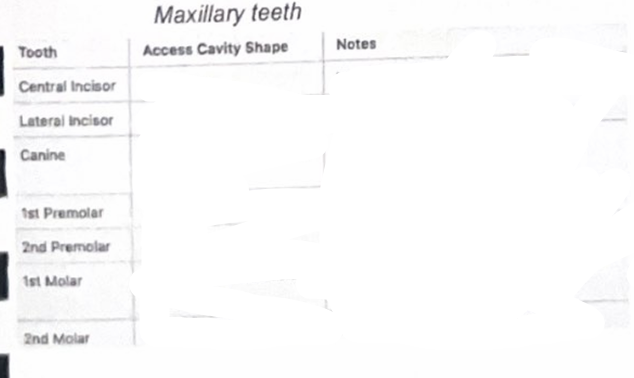
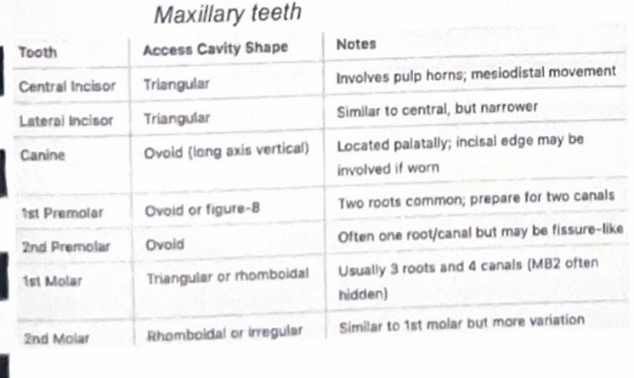
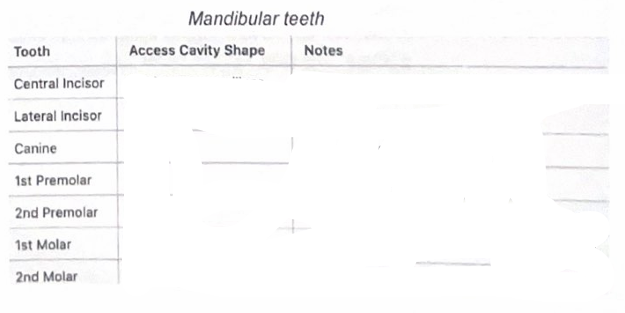
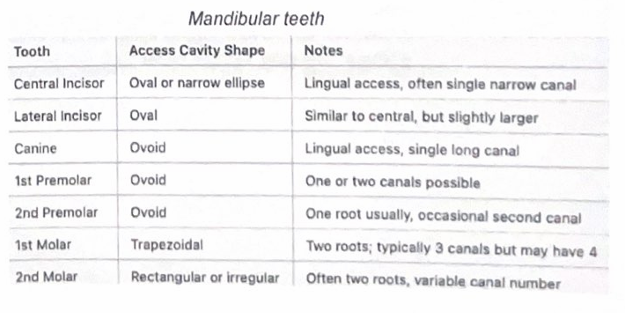
essay 35 - endodontic access - goals. The endodontic cavity shape in different tooth groups
 Call Kai
 Learn
Learn Practice Test
 Spaced Repetition
 Match
Match Flashcards
 Knowt Play
1/4

There's no tags or description
Looks like no tags are added yet.
Name | Mastery | Learn | Test | Matching | Spaced | Call with Kai |
|---|
No analytics yet
Send a link to your students to track their progress
5 Terms
what is endodontic access?
refers to the creation of an opening in the crowns of a tooth to allow the dentist to locate, clean, shape, disinfect and obturate (fill) the root canal system. It is a critical first step in endodontic treatment
goals (requirements) of endodontic access
complete removal of chamber contents
total removal of the pulp chamber roof allows thorough cleaning of the chamber, pulp horns and calcification
prevents persistent infection or discolouration
direct vision of pulp floor and canal orifices
visibility of the entire floor is crucial for locating canal opening
grooves and natural landmarks guide orifice location
facilitates insertion of instruments
well shaped cavity helps canal instrument glide into the canals without obstruction
smooth entry reduces the risk of ledges, blockages or instrument fracture
straight-line access to the apical third
instruments must reach the apical third without being deflected
prevents deforming of apical foramen and improves instrument control
support for temporary fillings
slight flaring of cavity walls gives mechanical retention for temporary fillings
prevents leakage and contamination between appointments
leave four stable walls
helps in rubber dam placement, irrigation retention, reference points for instrumentation and safe medication placement
rules to follow during endodontic access
orientation of apical foramen = creating the access cavity, one must keep in mind not only the position of the canal orifices, but also the orientation of the apical foramen. In markedly curved canals, the access cavity must be extended opposite to the curve to reduce instrument bending
different from restorative cavity = the shape differs from restorative dentistry; endodontic access must uncover the pulp by removing the chamber roof for straight access to apical foramen.
Anatomy determines shape = the cavity must not have predetermined shape. Its form - triangular, elliptical or trapezoidal - depends on the pulp chamber floor anatomy
Know anatomy = this is essential, gained through clinical observation and radiographs in multiple views
Rubber dam timing = when canals are difficult to find, begin without the rubber dam until the canals are located
correct access location = access should always be through the occlusal or lingual surface, not approximate or gingival