PS 12 Lectures
 Call Kai
 Learn
Learn Practice Test
 Spaced Repetition
 Match
Match Flashcards
 Knowt Play
1/21

There's no tags or description
Looks like no tags are added yet.
Name | Mastery | Learn | Test | Matching | Spaced | Call with Kai |
|---|
No analytics yet
Send a link to your students to track their progress
22 Terms
Economic properties of property rights
Incentive effects: retention of labor product, gives bequest motives [for leaving accumulated wealth to heirs upon death]
Capital formation from excess savings
Free exchange, reliance on price mechanism → develop capital markets
Property is an asset
Property can thus be the collateral required by the lender
Crucial role of investment in human capital
Internalization of costs and benefits → antitode to tragedy of the commons and congestion; facilitates achievement of efficient outcomes
Coase Theorem
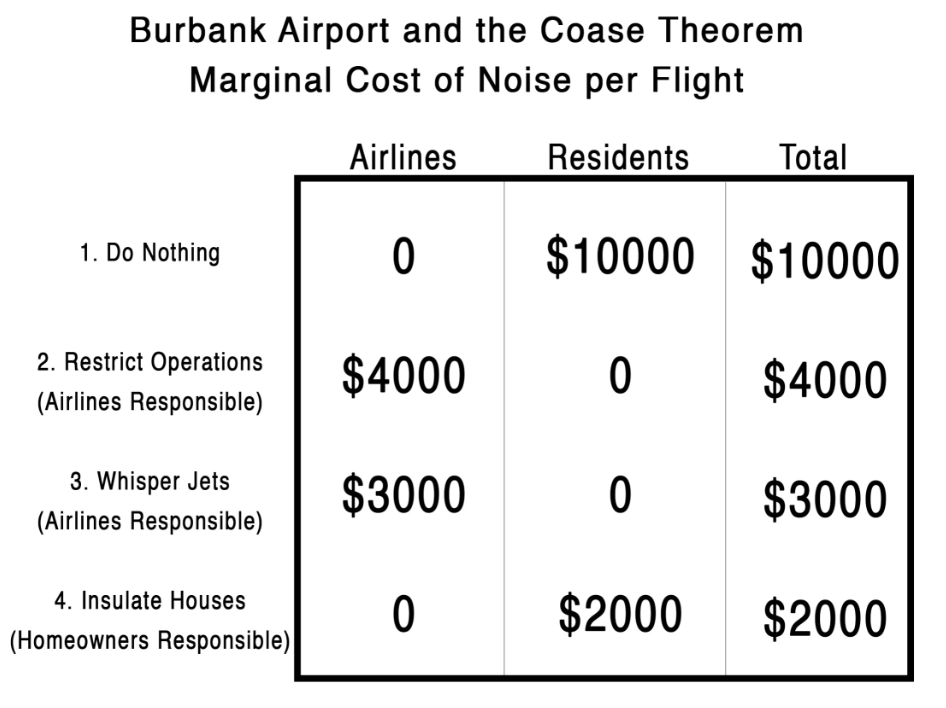
Trade is possible, no transaction costs → bargaining yields efficient outcome no matter initial property rights allocation
Key assertion that Option 4 (insulate houses in flight paths) chosen no matter allocation conditions: even if airlines were responsible for noise abatement, not homeowners
Assuming no transaction costs, property rights must be clearly/unambiguously defined
Transaction costs involved in negotiating, monitoring, governing exchanges between people → with contemporary brokerage fees, can be minimal
Other costs loom large
Statistics of economic freedom
Countries with more economic freedom have much higher per-capita incomes
Income scales exponentially with economic freedom
Entrepreneurial dynamism (rank in entrepreneurship and opportunity sub-index) scales linearly with economic freedom
Wealth distributions
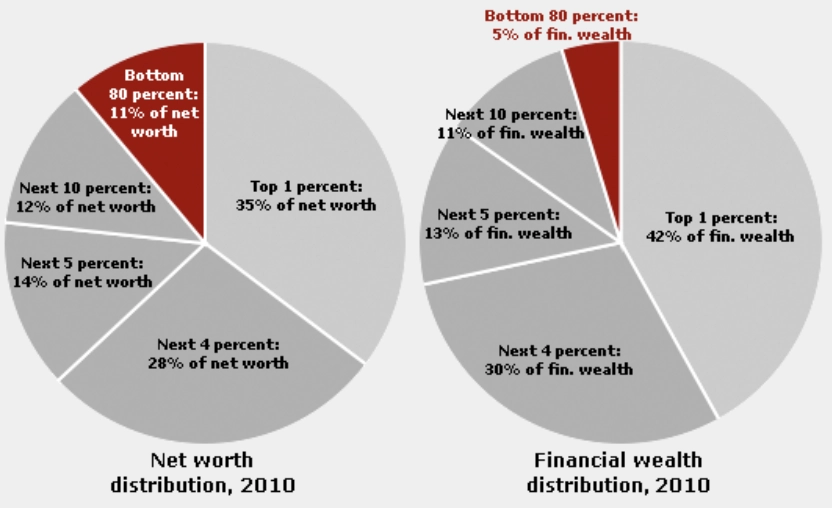
Bottom 80% have 11% of net worth
Bottom 80% have 5% of financial wealth
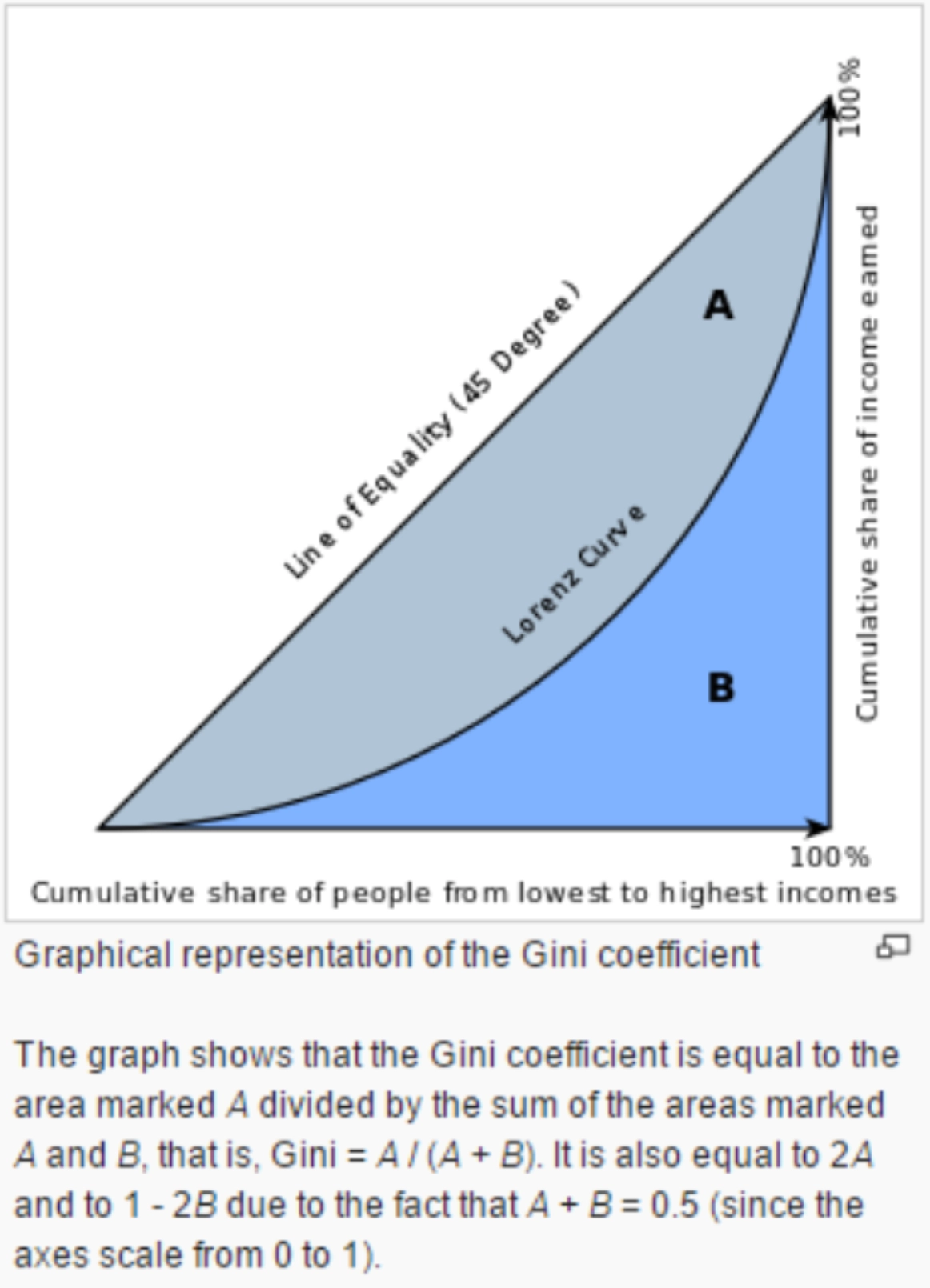
Gini coefficient
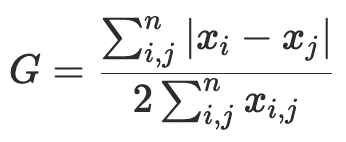
Half of mean absolute difference (income/wealth/etc.) of all pairs, and relative mean absolute difference is mean absolute difference divided by average, normalized for scale
Gini coefficient comparison
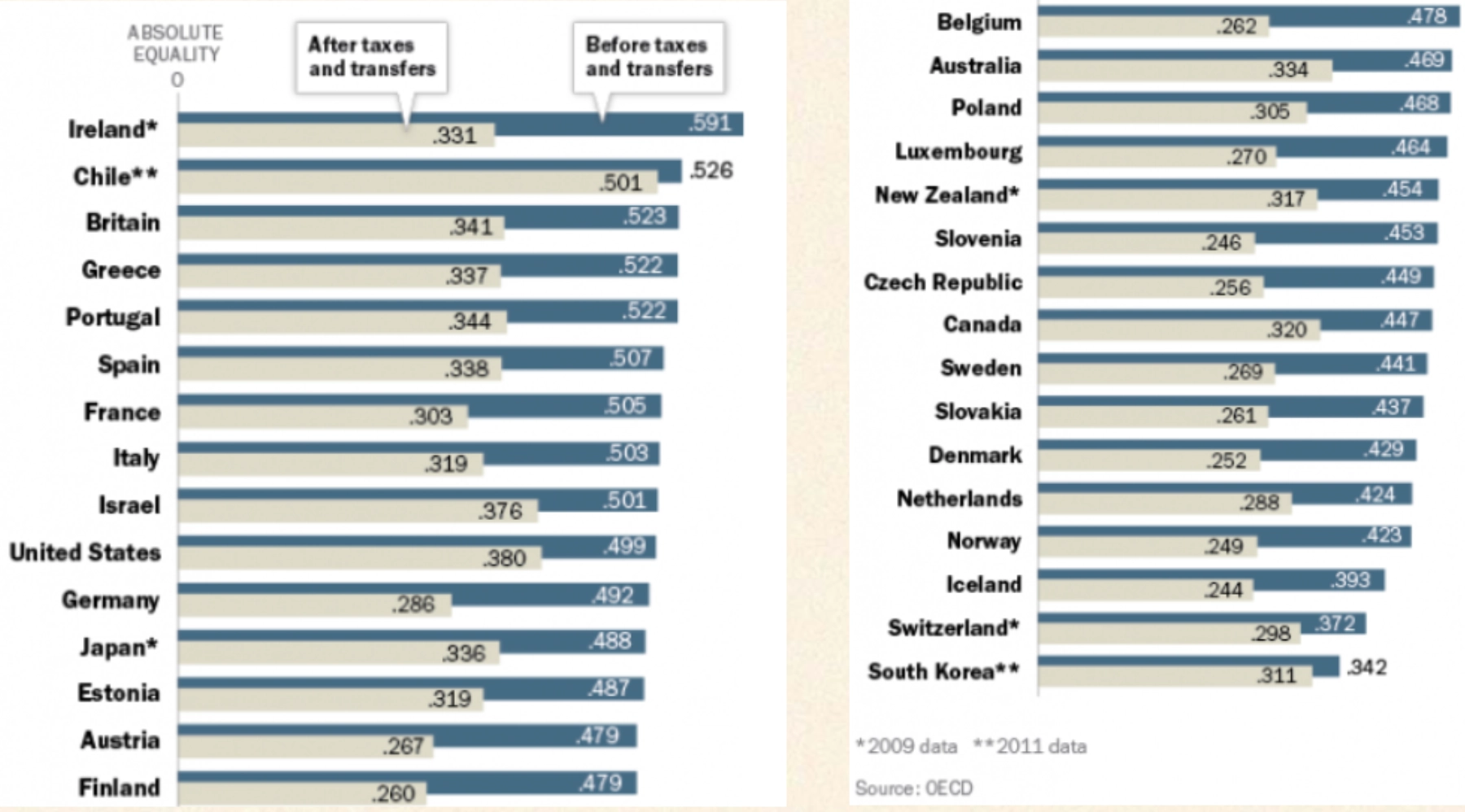
0 indicates absolute equality, 1 absolute inequality
Slovakia, Slovenia, Belarus have around 0.24 with high income equality (measured after taxes/social transfers)
States with lowest Ginis include Utah/Idaho/Wyoming/South Dakota/Alaska
Highest is South Africa (63.0), and other Sub-Saharan African and Latin American nations
States with highest are NY (0.5208) and Connecticut (0.5008)
Lorenz curve
Gini = A/(A+B) when we consider triangle of cumulative share of people from lowest to highest incomes and cumulative share of income earned
Norman Conquest timeline
Not accomplished in 1066 at Hastings
Danes returned again in the North in 1069, uniting with Edgar Aetheling and old Anglo-Saxon nobles → Edgar was grandson of Edmund Ironside (son of Ethelred and Aelfgifu) and a plausible claimant to the English throne
William paid Danes to leave, but then commenced a destruction campaign, the Harrying of the North: crushed rebellion but genocided >100,000 people in the resulting famine
William the Conqueror crowned King of England at Westminster in December 25 1066, Harrying of the North in 1069, Hereward the Wake leads Ely rebellion in 1070 and the Conquest effectively complete after Ely falls
Domesday Book
1086 document detailing the Feudal System
William ordered tax roll catalogue all land/housing/livestock/value in England and Wales at zenith of feudalism
Tenant-in-capite
Holds property directly from the Crown rather than an intermediary nobleman
Sovereignty same as ownership—all was property of the Crown
13,418 holdings organized by tenants in capite
History of feudalism
Military technology advanced → king needed money to finance skilled soldiers, armaments—not knights and peasant soldiers
Tenants discharged feudal duties to Crown via quit-rents that relieved them of further service
This land-holding method done via annual payments to king was socage (rather than through military service)
Lords and barons/tenants-in-capite became unlikely to have manors seized, but ties to Crown persisted after death to lord
Holdings then escheat to the Crown for at least one year and one day until, upon completion of inquisition after death and payment to the Crown
Seisin would be granted and land would undergo re-enfeoffment
If heir were a minor, wards would oversee property and be compensated → wardships sold to highest bidder and were major source of Crown revenue
Knights receded in significance → socage became dominant paradigm for land ownership
Socage
Form of feudal land tenure where tenant held land from lord in exchange for fixed, non-military services or money rent (quit-rent)
Seisin
Legal possession of a freehold estate, and upon a tenant’s death, this possession was interrupted
Heir had to pay a relief tax to the lord to receive livery of seisin (formal transfer of possession) and regain land
End of feudalism
By 16th century, monasteries owned ~33% of English land, and about 2% of the adult population were members of religious orders
Henry VIII seized land in 1536 and 1539 waves → to maximize revenue, land was sold to >40,000 people without fee tails, giving clear title in free and common socage/primogeniture endured
All feudal duties abolished by Tenures Abolition Act of 1660 with restoration of Stuart Monarchy
Later mercantilism was abandoned in favor of free trade after 1840, cemented by expansion of British Empire and global trade
Tenures Abolition Act of 1660
Passed shortly after English Restoration to abolish feudal land tenure and military services owed to the Crown.
Converted most feudal tenures into "free and common socage," essentially creating the foundation for modern freehold landownership, replacing direct service with, initially, taxation on alcohol
Political Restoration (1660): Following the English Civil War and the collapse of Richard Cromwell’s regime, Charles II was restored to the throne
Act was a necessary legal reconfiguration to stabilize the landowning elite's rights after years of conflict
Abolition of Feudal Obligations:
Legally abolished the feudal system of landholding, including outdated burdens like knight’s service, wardship, and marriage, which were increasingly viewed as economically inefficient and onerous to the gentry
End of Feudal Courts:
Officially took away the Court of Wards and Liveries, which had been suspended during the interregnum, confirming that the king's traditional rights of "purveyance" (demanding goods/services) were finished
The "Great Contract" Legacy:
Act completed a process that began in 1610 (the failed "Great Contract" of James I), which aimed to convert these outdated feudal rights into a fixed annual revenue for the Crown
Economic Modernization:
Allowed landowners to hold land more securely, enabling land to become more like private property with reduced financial impositions to the monarch
Compensation for the Monarch: To secure the king’s agreement, the crown was compensated for the loss of these revenue-generating, archaic rights with an annual fixed payment of £100,000, raised through a new excise tax on alcohol
Property in the New World
Original European colonists found no gold and became real estate developers to increase land demand in the New World
Expense/danger of journey across Atlantic, large inducements were required to encourage migration
Tax breaks → early colonists could obtain land in free and common socage, subject to low quit-rents
Ivan V
Russia as vast empire → Ivan the Terrible is erratic and unstable, various theories why
Threatened by the boyvars: out-maneuvered and replaced with loyalist oprichniki who installed a regime of terror
Peter the Great
Succeeded Ivan V
Great reformer according to his incorrect reputation → establishment of Petersburg at the capital → finance military adventures, expropriated monasteries and other church lands; all trades and industries were taken over by the state
Abolished land and poll tax, replace with soul tax imposed upon peasant villages, or communes
Catherine the Great
Became Czarina in 1796 after couping her husband Peter III → shocked by economic backwardness/miserable prouctivity, Catherine influenced by Francois Quesnay and French physiocrats
Lack of secure individual property rights as cause of problems
Building upon Peter III’s Manifesto of 1762 Manifesto freeing nobles from obligatory service → in 1785 Catherine issues Charter of Rights/Freedoms/Prerogatives of Noble Russian Dvorianstvo
Serfs were tied to the land and de facto became property of the lord → established private property in Russian that installed slavery
Bought/sold/plaed into service or sent off to Siberia
Soul tax
Commune needed to annually produce the soul tax → estate owners couldn’t reduce # of souls, which spawned Gigol’s Dead Souls
Catherine wanted to extend property rights to serfs, but failed
Economic position was opposite of North America → both had vast areas of agricultural land, of little value without people to farm it
In Russia, serfs were there → nobles needed to prevent them from leaving
North American landholders needed to attract people and did so without fee simple land onership
Property hold ollectively by commune, assessed soul tax and controlled ability to leave
Property held collectively by commune, which assessed the soul tax
For freedom, needed virtulaly impossible redemption payment
20th-century Russian property rights
Goremykin and Stolypin Reforms in 1906-1911 permitted peasants to opt out of communes, but resented by those left behind
Bolsheviks seized power in 1917 → collectivization of agriculture was recollectivizaiton of property
Communists otherwise untook complete assault on all forms of private property
New Econmoic Policy reforms after Civil War and Russian economy collapse abandoned, seied by Stalin for Liquidation of the Kulaks in 1929
2 million peasants were deported to labor camps between ‘29 and ‘31 → 5 million died in next few years, and colectivization famines followed killed around 15 million by 1937
Stalin’s reputation in Russia is mixed but positive on whole
Modern Russian property rights
Real estate transactions in Russia requires buyer/seller to present several documents, including psychiatric references
Buyer/seller preliminarily agree to describe all conditions
Sales trancsactions in bank → buyer deposits full purchase cash amount in safe deposit box on condition tha tbank will release money to seller only upon presentation of complete package of registered documents under buyer’s name
Seller pays 20% tax on purchase price
Mortgage debt in Russia is about 5% of GNP compared to 63% in US