test and stuff
 Call Kai
 Learn
Learn Practice Test
 Spaced Repetition
 Match
Match Flashcards
 Knowt Play
1/85

There's no tags or description
Looks like no tags are added yet.
Name | Mastery | Learn | Test | Matching | Spaced | Call with Kai |
|---|
No analytics yet
Send a link to your students to track their progress
86 Terms
cardiac output
the amont of blood in the heart pumps in one minute
HR x SV=co
What pathologies increase afterload?
Valvular aortic/ pulmonic stenosis
Subvalvular aortic/ pulmonic stenosis
Supravalvular aortic/ pulmonic stenosis
Systemic/pulmonic hypertension
Coarctation of the aorta
Renal artery stenosis
What are some pathologies that increase preload?
Mitral/ aortic regurgitation
- Heart failure (backed up blood resulting into more SV)
- IV fluids/blood transfusions
-bradycardia
- renal failure
- venoconstriction
What is heart failure?
When the heart is no longer able to pump blood to sustain the body's metabolic needs, or can only do so if the cardiac filling pressure are abnormally high
heart is too weak to pump blood around the body, or can only do it with extra pressure and extra blood
What determines stroke volume?
preload, afterload, contractility
Conditions that increase ventricular preload include:
Mitral regurgitation
Tricuspid regurgitation
Pulmonic regurgitation
Aortic regurgitation
Ventricular and atrial septal defects
Fluid overload
stroke volume
the amount of blood pumped with each beat
EDV-ESV= SV m/l
Ejection fraction
percentage of blood left in the ventricle that gets pumped out
(SV/EDV)x100= EF %
End systolic volume
amount of blood that’s left in the ventricle at the end of contraction.
End diastolic volume
volume of blood left in the ventricle at the end of diastole volume.
S3 sound
heart sound during filing of a stretched out heart common in systolic heart failure.
-common systolic heart failure.
S4 sound
a heart sound is heard when heart is stiff and hard to fill.
-common in diastolic problems
What is most sensitive period for cardiac development?
3 to 6 weeks
What day does the primitive heart begins to beat?
22 days
When does septation begin?
33- 37 days
When will the tubes fuse together forming a single heart tube?
day 22
What are the layers of the primitive heart?
endocardium, Cardiac jelly, myocardium.
inside ——→ outside
What is endocardium?
inner lining of the heart
What is one pathway?
umbilical vein- ductus venous- IVC- RA- foreman ovale (LA- MV- LV- Aorta)
What is the second pathway?
IVC- SVC- CS- RA- PV- MPA- ductus arteriosus- Aorta
What is Cardiac jelly?
gelatin like middle layer (helps cushion and shape)
What is myocardium?
muscular outer layer that will become the heart muscle
What first septum to form?
septum primum
When the septum primum forms what closes?
Ostium primum
When Ostium primum closes what forms?
ostium secundum
How does septum secundum forms?
as a thick, muscular ridge that grows downward to the right of the septum primum. It partly covers the ostium secundum, but doesn’t close it completely. o This leaves a new oval-shaped hole → the foramen ovale
How does the valve of the foramen ovale form?
by the lower part of the septum primum. As the septum secundum grows and leaves the foramen ovale open, the septum primum acts like a flap on the left‑atrial side. This flap becomes the valve that allows blood to flow right → left in the fetus but prevents left → right flow.
What happens to baby once it’s born when it comes it the pressure in the left atrium?
the left atrium becomes higher than right.
Where is the interventricular foreman?
an opening between the right and left ventricle
Which tissues fuse with the muscular interventricular septum to form the membranous part?
The bulbar (conotruncal) ridges and the endocardial cushions.
What does the fusion of these tissues form?
The membranous part of the interventricular septum.
What does the membranous septum do?
It closes the interventricular foramen.
What is the result of closing the interventricular foramen?
The right and left ventricles become fully separated.
At 4 weeks how many pairs of arches?
6 pairs.
What is 3rd aortic arch?
origin of the ICA
What is the 4 aortic arch?
aortic arch
what is the 6 aortic arch?
pulmonary arteries.
What aortic arches get absorbed?
1, 2, 5
At how many week there is 6 pairs of aortic arches?
4 weeks
What is one of the first pathway start?
Oxygenated blood enters through the umbilical vein
After the umbilical vein, where does the blood go?
It passes through the ductus venosus.
After the ductus venosus, where does blood flow?
Into the inferior vena cava (IVC).
After entering the IVC, where does the blood go?
It flows into the right atrium (RA).
How does the blood bypass the right ventricle and lungs?
It passes through the foramen ovale into the left atrium.
After
(LA → MV → LV → Aorta)
What does the foreman ovale become?
fossa ovalis (adults)
What does the ductus arteriosus become?
ligamentum arteriosum (adults)
What does the ductus venosus become?
ligamentum venosum (adults)
What is one of the second pathway start?
The IVC, SVC, and coronary sinus (CS).
After entering the right atrium, where does the blood go?
Into the right ventricle (RV).
After the right ventricle, where does the blood flow?
Through the pulmonary valve (PV).
After the pulmonary valve, what vessel does the blood enter?
The main pulmonary artery (MPA).
How does fetal blood bypass the lungs from the pulmonary artery?
It flows through the ductus arteriosus.
After the ductus arteriosus, where does the blood go?
Into the aorta.
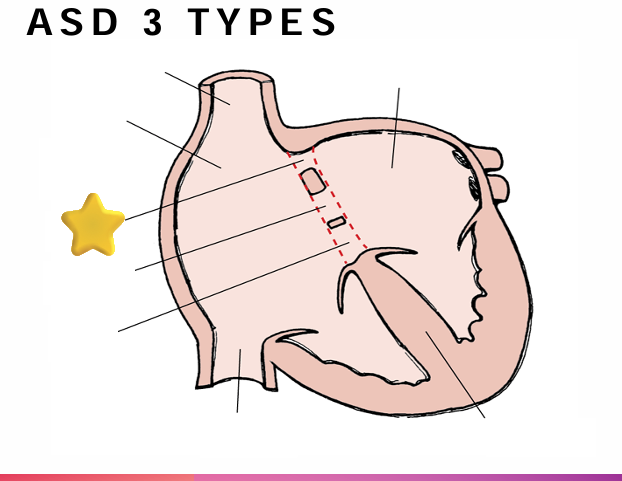
What is this?
Sinuous Venous
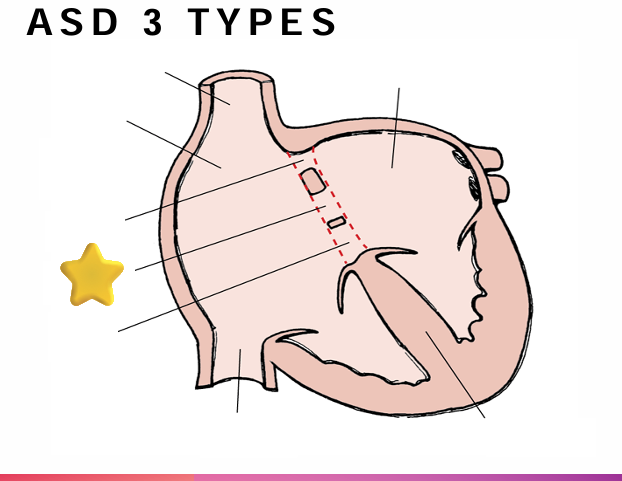
What is this?
Ostium secundum
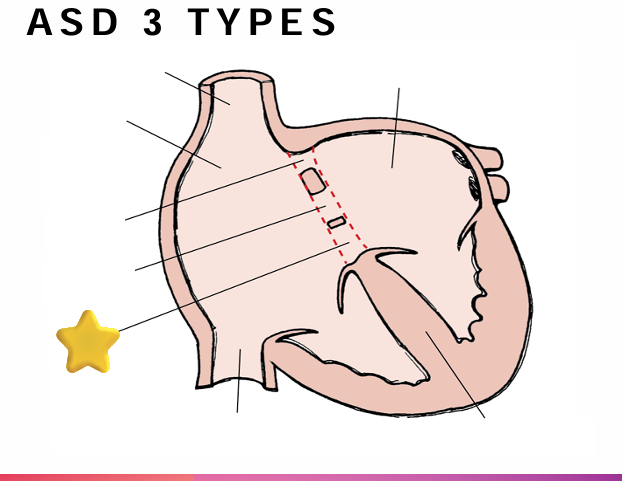
What is this
Ostium primum
What is the ASD?
Ostium primum, Ostium secundum, Sinus venous
What is the ostium primum
lower parts of the parts by the av valves.
What is the Ostium secundum?
Central part of the septum.
What is the Sinus venosus?
Superior interatrial septum.
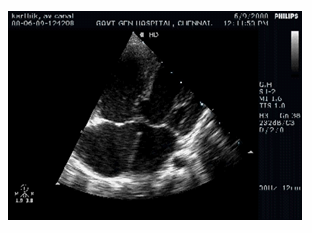
What is this?
Ostium primum
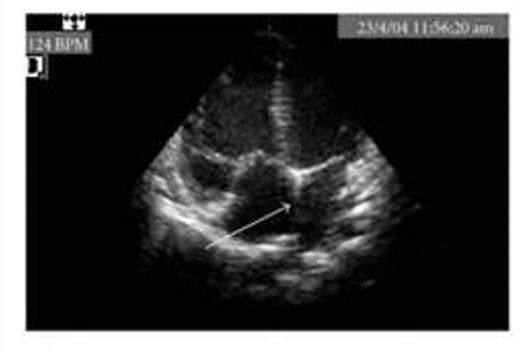
What is?
ostium secondum
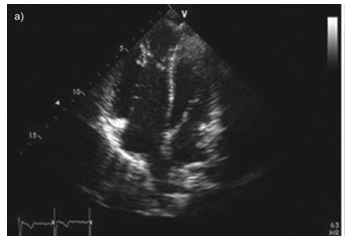
What is this?
sinus venous
what is the left horn?
from coronary sinus
what is the right horn?
become absorbed in the right atria as the sinus venarum
By what day does the tube bends and loops into a U shape because it’s too long?
day 23
What is the most common membranous?
Perimembanous
what is the memebranous of the IVS by AOV
perimembranous (2)
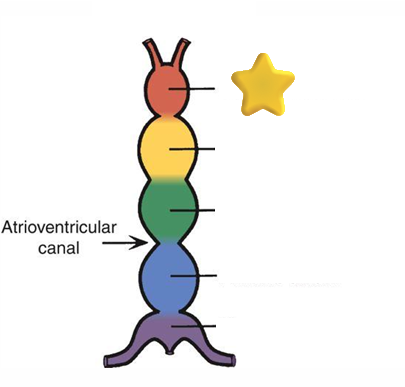
what IS THIS
Truncus arteriosus
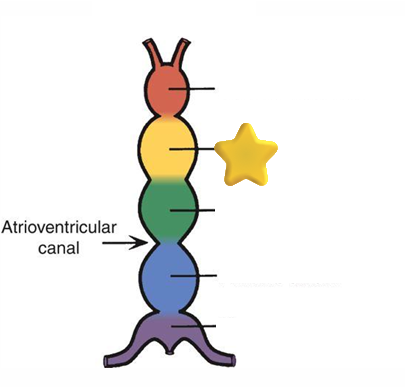
WHAT IS THIS?
Bulbus Cordis
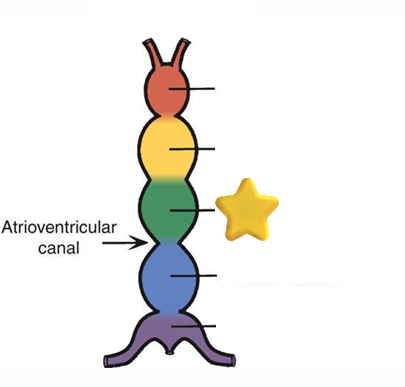
WHAT IS THIS?
Primitive ventricle
What is pulse alternans?
weak then strong the week again pulse.
What is partial?
Ostium primum ASD • Cleft Mitral Valve
What complete?
• ASD • VSD • Common AV Valves
What is mitral valve leak?
mitral valve doesn’t close tightly, so blood leaks backward from the left ventricle into the left atrium.
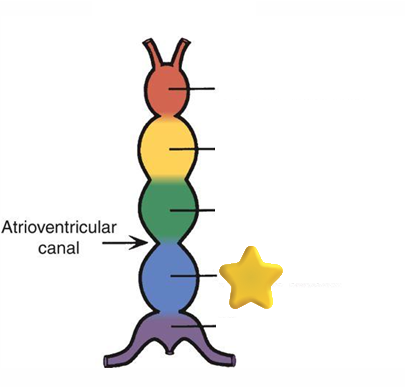
what is this?
Primitive atrium
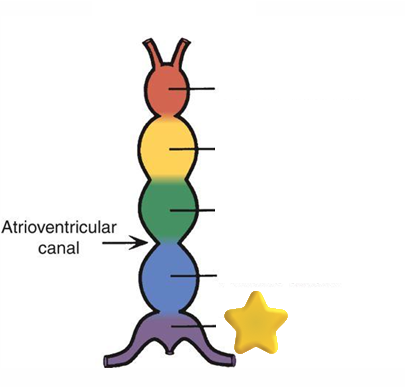
what is this?
Sinus Venosum
where IS INLET ?
TRICUSPIC VALVE
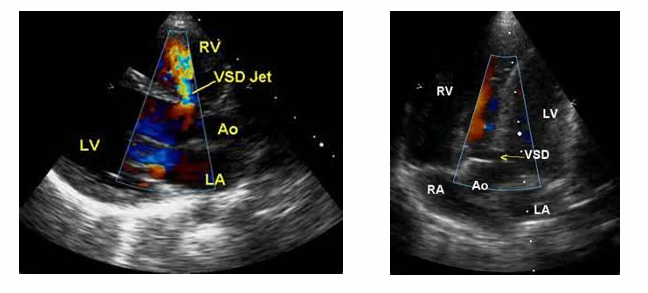
What is this?
PERIMEMBRANOUS VSD
What is Ebsteins Anomaly?
Tricuspid leaflets are displaced apically one or more leaflets
What is tetralogy of Fallot?
congenital heart defect combination 4 related heart defects.
What are the 4 related defects in tetralogy of fallot?
VSD,
Overriding aorta
pulmonary stenosis
right ventricular hypertrophy
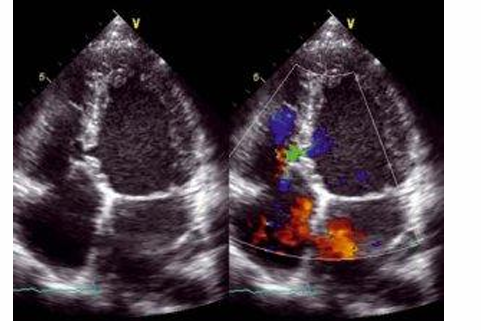
What is this?
INLET VSD
What does PATENT DUCTUS ARTERIOSUS cause?
Left Ventricular Volume Overload
What is pda?
blood leaving aorta is shunted back to pulmonary artery traveling to LA.
What is Eisenmenger syndrome?
This may change the pressure from left to right systemic circulation will have deoxygenated blood.