biological anthropology final
 Call Kai
 Learn
Learn Practice Test
 Spaced Repetition
 Match
Match Flashcards
 Knowt Play
1/63

There's no tags or description
Looks like no tags are added yet.
Name | Mastery | Learn | Test | Matching | Spaced | Call with Kai |
|---|
No analytics yet
Send a link to your students to track their progress
64 Terms
Class 13: Climate Change
what is the international panel on climate change (IPCC)?
the United Nations body for assessing the science related to climate change
The IPCC provides regular assessments of the scientific basis of climate change, its impacts and future risks, and options for adaptation and mitigation
Class 13: Climate Change
how do shared socioeconomic pathways explore future climate change?
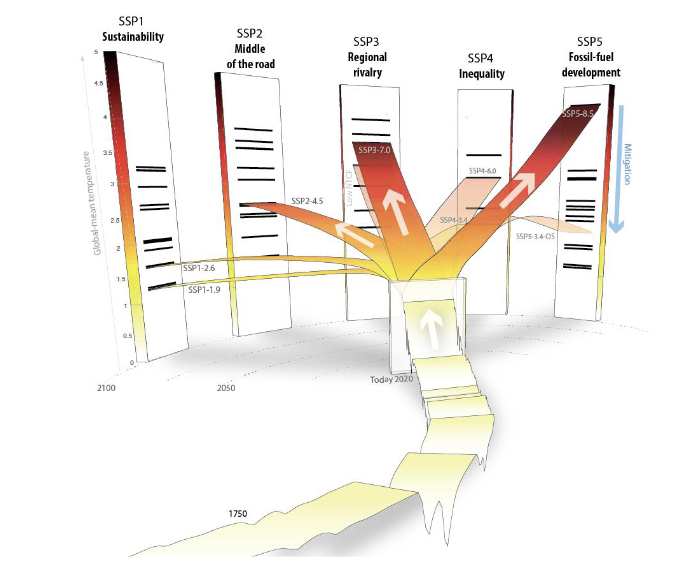
Over the past few years, an international team of climate scientists, economists and energy systems modellers have built a range of new “pathways” that examine how global society, demographics and economics might change over the next century. They are collectively known as the “Shared Socioeconomic Pathways” (SSPs).
These SSPs are now being used as important inputs for the latest climate models, feeding into the Intergovernmental Panel on Climate Change (IPCC) sixth assessment report due to be published in 2020-21. They are also being used to explore how societal choices will affect greenhouse gas emissions and, therefore, how the climate goals of the Paris Agreement could be met.
The SSPs feature multiple baseline worlds because underlying factors, such as population, technological, and economic growth, could lead to very different future emissions and warming outcomes, even without climate policy.
Class 13: Climate Change
how do droughts impact primates?
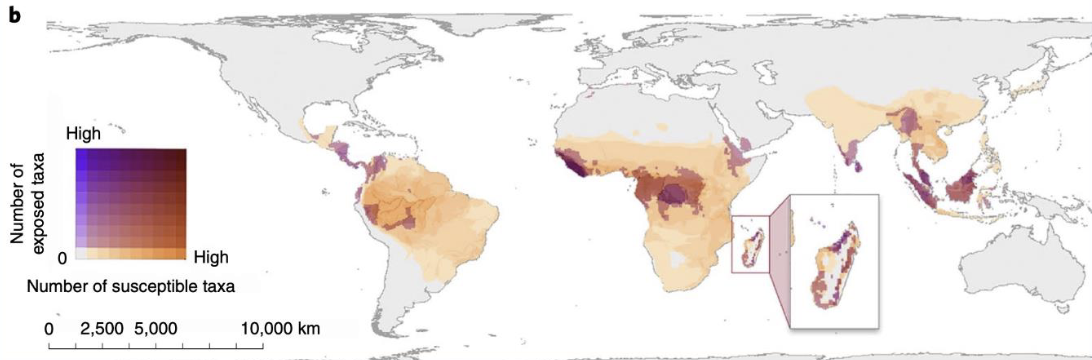
Critical changes in distribution of primate habitats
Large time scale but small compared to evolutionary time scale of primate diversification
Class 13: Climate Change
how do cyclones impact primates?
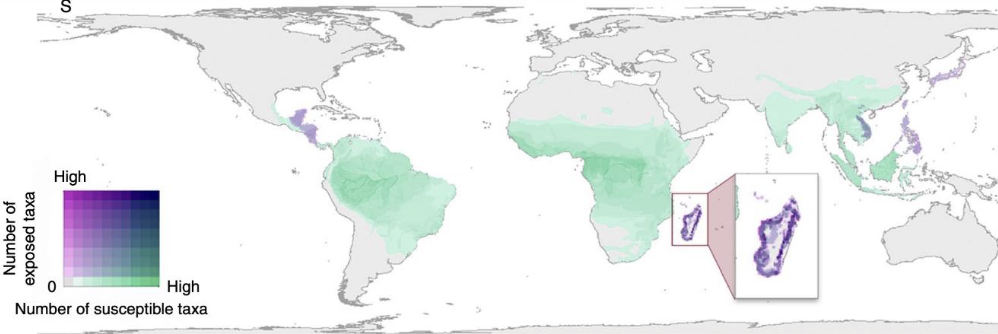
primate species vulnerable: a new study has assessed where affected species are found
risking increasing globally, including mainland africa, madagascar, asia, and the neotropics
Class 13: Climate Change
what is ecological niche modeling?
When building an ENM, the following factors should be considered:
Scale: local x regional x global
Locality records: what are the places where the species is recorded?
Habitat selection: am I interested in all habitats where the species occur? Comparing habitats? Just a specific habitat? Entire geographic distribution?
Class 13: Climate Change
what is a habitat vs a niche?
“A habitat is the place where an organism lives while a niche is that organism’s role within that environment. Habitat focuses on how the environment impacts the organism while niche focuses on how the organism impacts the environment. Both habitat and niche are important concepts to understanding the balance of an ecosystem and the biodiversity found there.”
For example, Platyrrhini primates (from Central and South America) occur in different tropical forests (habitat). However, different primates have different specializations in diet, social behavior, ecology, etc. These different specializations is what allow them to occupy different forest strata.
Class 13: Climate Change
what is the difference between a fundamental, realized, and occupied niche?
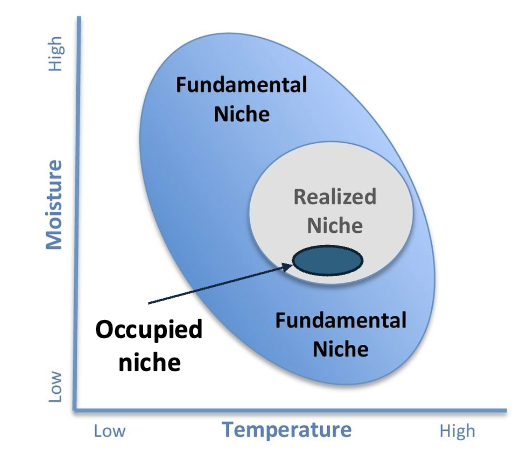
fundamental: inhabitable abiotic conditions
realized: where other species allow coexistence
occupied: accessible areas (mobility, barriers)
Class 13: Climate Change
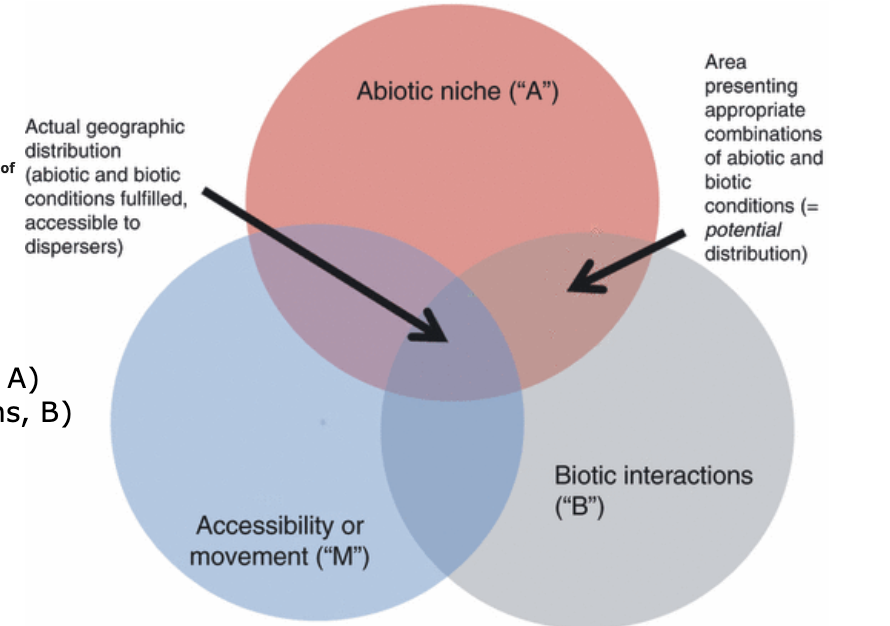
what is the BAM diagram?
adequate environment (Abiotic niche, A)
adequate neighbors (Biotic interactions, B)
adequate accessibility (Migration, M)
The ‘BAM diagram’, showing a simplified framework for understanding where species will and will not be distributed. Distributions of species are seen as responding to three sets of factors: the abiotic niche (A) and the biotic niche (B), which roughly correspond to the fundamental ecological niche (A) and the realized ecological niche (A ∩ B, here termed the potential distribution). A further modification to distributional potential, however, is that of access (here M for ‘movement’), which constrains species distributions quite dramatically.
Class 13: Climate Change
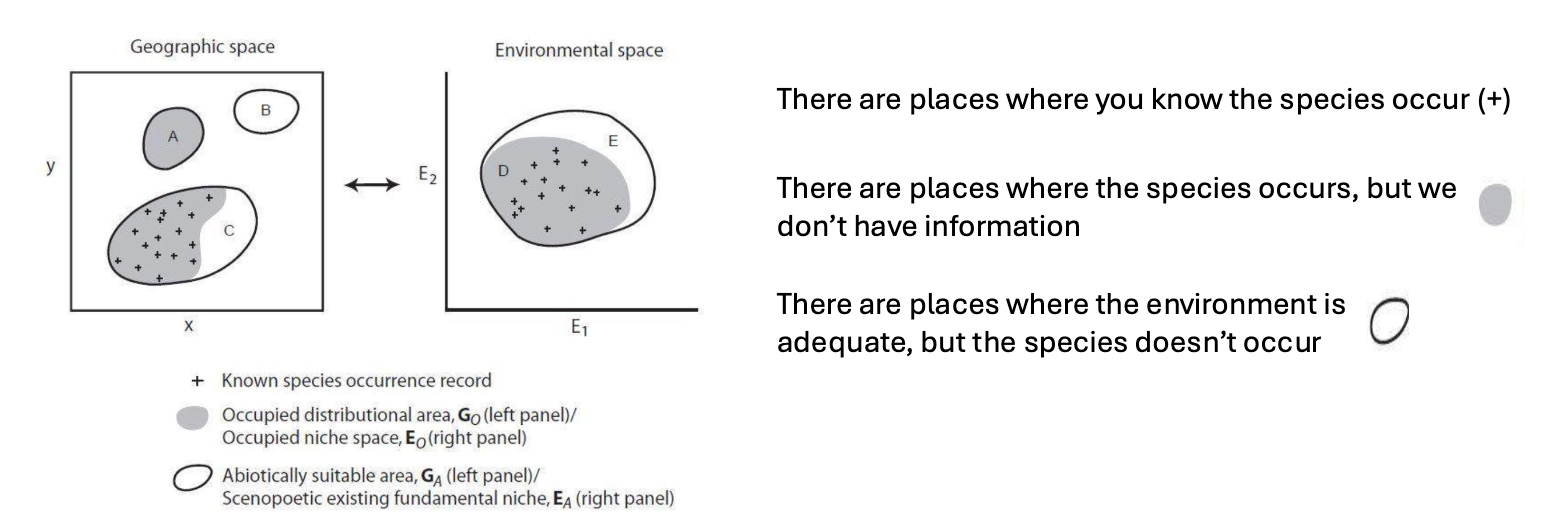
what are some causes for mismatch when it comes to niches?
Dispersal limitation: places inside the niche not occupied because the species hasn't reached them or was (temporarily) wiped out
Source-sink dynamics: places outside the niche where a species occurs but can't persist without immigration
Class 15: Zoonoses
what are zoonoses?
zoonosis is an infectious disease that has jumped from a non-human animal to humans.
Zoonotic pathogens may be bacterial, viral or parasitic, and can spread to humans through direct contact or through food, water or the environment.
They represent a major public health problem around the world due to our close relationship with animals in agriculture, as companions and in the natural environment.
70% of emerging infectious diseases are zoonoses
Class 15: Zoonoses
what are some impacts of zoonoses?
Zoonoses comprise a large percentage of all newly identified infectious diseases as well as many existing ones.
Some zoonoses can cause recurring disease outbreaks, such as Ebola virus disease and yellow fever.
Still others, such as the novel coronavirus that causes COVID-19, have the potential to cause global pandemics
Class 15: Zoonoses
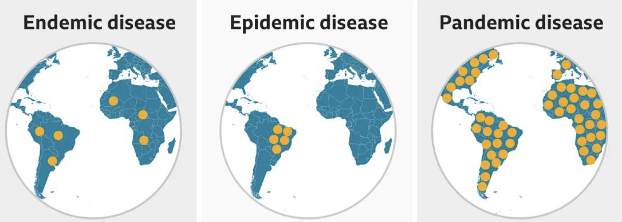
what’s the difference between an endemic, an epidemic, and a pandemic?
endemic disease: constantly present in a population or region, with relatively low spread
epidemic disease: sudden increase in cases spreading throughout a large population
pandemic disease: sudden increase in cases across several countries, continents, or the world
Class 15: Zoonoses
what are direct zoonoses?
Direct zoonoses are infections transmitted directly from vertebrate animals to humans through contact with saliva, blood, urine, mucus, feces, or body fluid.
Class 15: Zoonoses
what is cyclozoonosis
Cyclozoonosis is a type of zoonotic disease that requires more than one vertebrate species, but no invertebrate host, to complete its life cycle
Echinococcosis (Hydatid disease): Caused by Echinococcus species, involving dogs/canids as definitive hosts and sheep/humans as intermediate hosts.
Taeniasis/Cysticercosis: Caused by Taenia solium (pork tapeworm) or Taenia saginata (beef tapeworm), where humans are the definitive host and pigs or cattle are intermediate hosts.
Class 15: Zoonoses
what is metazoonosis?
Metazoonosis is an infectious disease transmitted between vertebrate animals and humans via an invertebrate vector (e.g., tick, mosquito, flea)
Class 15: Zoonoses
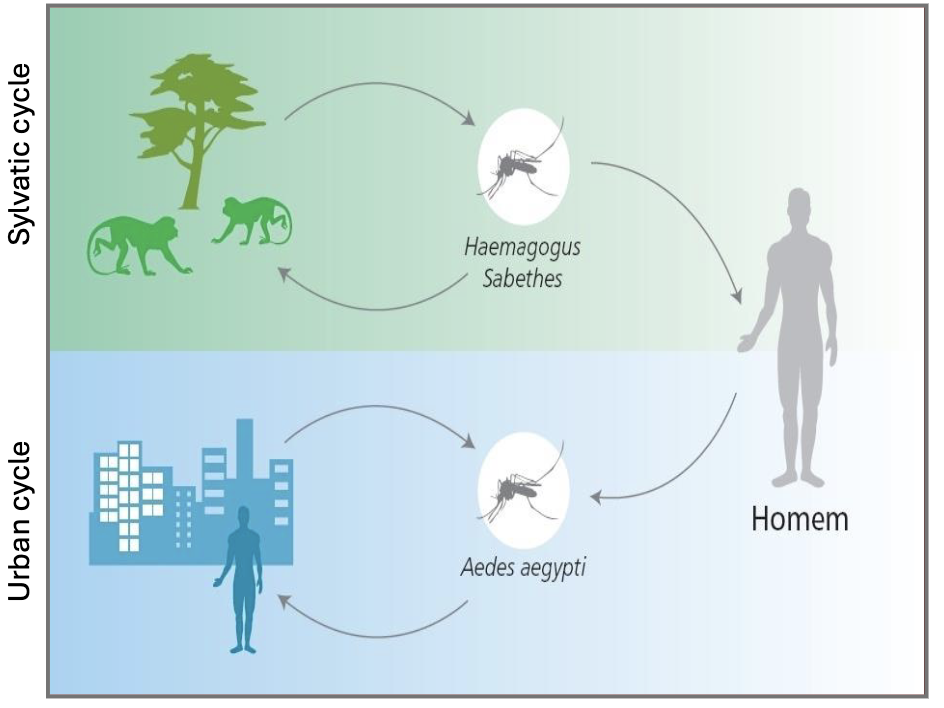
what is an enzootic cycle?
An enzootic or sylvatic cycle is the natural, continuous transmission of a pathogen (virus, bacteria, or parasite) between wild animals and vectors (such as mosquitoes or ticks) in their own specific environment. Example: Yellow fever.
Class 15: Zoonoses
what is an epizootic cycle?
An epizootic cycle is the rapid, widespread outbreak of disease within a non-human animal population. It involves amplification of a pathogen (e.g., virus, bacteria) between hosts and vectors, often triggered by high population density. Example: Avian influenza.
Class 15: Zoonoses
what is an epidemic cycle?
An epidemic cycle occurs when a disease jumps from animals to humans and spreads rapidly through a population, often caused by viruses, bacteria, parasites, or fungi. These diseases, which account for a high percentage of new human infections, often spread through close contact with wildlife or domestic animals. Examples: Ebola, influenza, and SARS-CoV-2.
Class 15: Zoonoses
what are some factors affecting the transmission of zoonotic diseases?
Climate change accelerates the spread of zoonotic diseases (transmitted from animals to humans) by shifting habitats, changing weather patterns, and forcing wildlife closer to humans.
Warming temperatures and altered rainfall allow disease vectors like mosquitoes and ticks to expand their range, causing diseases like Ebola, Zika, and West Nile to emerge in new areas.
Illegal trade has a major impact on the spreading of zoonoses.
Class 15: Zoonoses
what is yellow fever?
Yellow fever is an acute viral hemorrhagic disease transmitted by infected Aedes and Haemagogus mosquitoes.
Class 15: Zoonoses
what is the ebola virus?
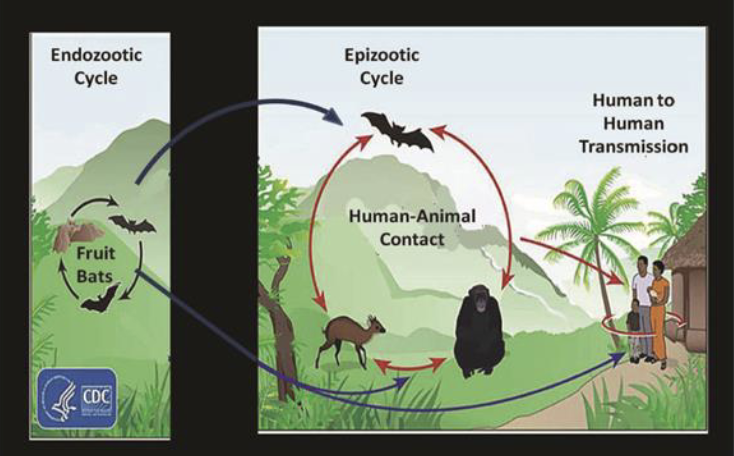
The transmission cycle of Ebola virus is divided into three main cycles, namely Endozootic, Epizootic and Human to human transmission
Human-to-Human: Direct contact with an ill person or their fluids, contaminated clothing, bedding, or medical equipment. The virus can persist for several months (over 80 days) after recovery, allowing for sexual transmission
Animal-to-Human: Contact with infected animals, such as fruit bats, monkeys, or apes, often via hunting or preparing "bushmeat"
Class 16: Zoos and Primate Conservation
what is a menagerie?
a menagerie is a collection of captive animals, frequently exotic, kept for display; a precursor to the modern zoos
The term was first used in 17th-century France, referring to the management of household or domestic stock.
Later, it came to be used primarily in reference to aristocratic or royal animal collections.
The French-language Methodical Encyclopaedia of 1782 defines a menagerie as an "establishment of luxury and curiosity"
Class 16: Zoos and Primate Conservation
how did the first zoos come about?
Tiergarten Schönbrunn, often considered the first zoo, opened in Vienna in 1752, a product of the Enlightenment Era’s focus on the sciences.
The Victorian Era and the Cage (1840s-90s):
The Victorian era was characterized by a utilitarian approach to zoo design, with animals kept in cages for the ease of the public. This period saw the construction of many of the world’s oldest surviving zoos, but the welfare of the animals was secondary to the display.
Until the mid-20th century, zoos functioned primarily for the exhibition of animals in captivity.
By the late 20th century, some zoos had become important sites for research on animal behavior.
Class 16: Zoos and Primate Conservation
what are the impacts of animal behavior and welfare in zoos?
Animals have evolved over millions of years and their physical, physiological and behavioral traits are specifically adapted to their natural habitat.
Life in captivity brings a series of impacts on animal behavior and welfare due to 1) space, 2) social interactions, 3) diet, 4) climate, 5) the presence of humans
Class 16: Zoos and Primate Conservation
what is zoochosis?
Zoochosis is a term for abnormal, repetitive, and purposeless behaviors—known as stereotypies—exhibited by animals held in captivity, such as pacing, swaying, head-bobbing, and self-mutilation.
“If the captive environment does not fully cater for the species-specific needs of an animal, or if it imposes unnatural stress or frustration, there can be a deterioration in the animal’s physical and mental health.
This may manifest in the development of physical disease or abnormal behaviour. Abnormal behaviour in captive animals can include stereotypic behaviours – highly repetitive, invariant, functionless behaviour, such as repetitive pacing, swaying, head-bobbing, bar-biting, over-grooming or excessive licking.
These behaviours result from “the frustration of natural behaviour patterns, impaired brain function, or repeated attempts to deal with some problem.”
Class 16: Zoos and Primate Conservation
how have zoos become an important part of conservation?
More recently, zoos became an important part of conservation programs throughout the world.
Not just entertainment. Four main roles:
Conservation
Research
Education
Animal welfare
Class 16: Zoos and Primate Conservation
how can zoos provide study opportunities?
Known individuals (age, sex, history)
Stable groups
Easier data collection
Many primate species in one place
Enables comparative studies
Example, Compare cognition across:
apes
monkeys
prosimians
Class 16: Zoos and Primate Conservation
how are chimpanzees studied in zoos?
Cognition & social learning
Research topics:
Memory
Tool use
Cultural transmission
Famous finding:
Chimps can remember number sequences faster than humans (short-term memory tasks)
Implications:
Controlled experiments
Repeated testing possible (replication)
Class 16: Zoos and Primate Conservation
how are capuchin monkeys studied in zoos?
Tool use & fairness
Research topics:
Tool use (stone tools, cracking nuts)
Sense of fairness (inequity aversion)
Classic experiment:
One monkey gets cucumber, another gets grapes
Monkey rejects “unfair” reward
Key takeaway:
Roots of human fairness
Implications:
Zoos provide a way to run controlled behavioral experiment
Class 16: Zoos and Primate Conservation
how are visitor effects studied in zoos?
Stress & behavior
Species: multiple (gorillas, lemurs, chimpanzees)
Research question:
Do visitors stress animals?
Findings:
Some species show stress, more aggression, increasing cortisol
Implications:
Improves zoo design + welfare
Class 16: Zoos and Primate Conservation
how are conservation breeding programs studied in zoos?
Example:
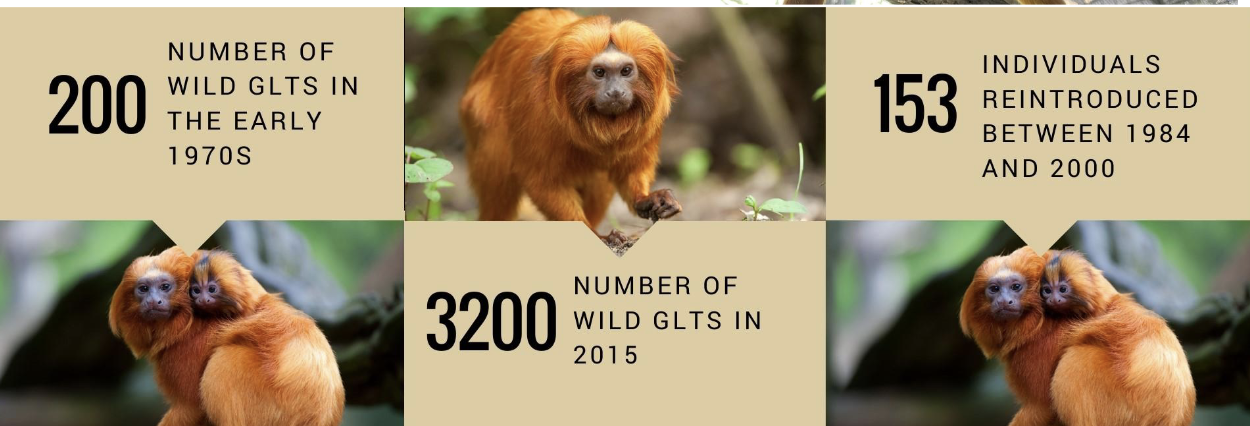
Golden lion tamarin (Leontopithecus rosalia)
Focus:
Genetic management
Reintroduction to the wild
Key point:
Zoo research directly supports conservation
Class 18: Integrating landscape and population
what is one of the main threats for landscape?
habitat fragmentation
Conversion of once-continuous habitat into isolated different patches
landscape permeability is the opposite: measures a heterogeneous land area’s capacity to facilitate animal movement
Class 18: Integrating landscape and population
what do the effects of fragmentation depend on?
distance between fragments
environment of the matrix among the fragments and its impact on dispersal
distribution of population sizes in the fragments
dispersal ability of the species
migration rates among fragments
ability of immigrants to establish and breed
extinction and recolonization rates across fragment
Class 18: Integrating landscape and population
how do fragments impact populations?
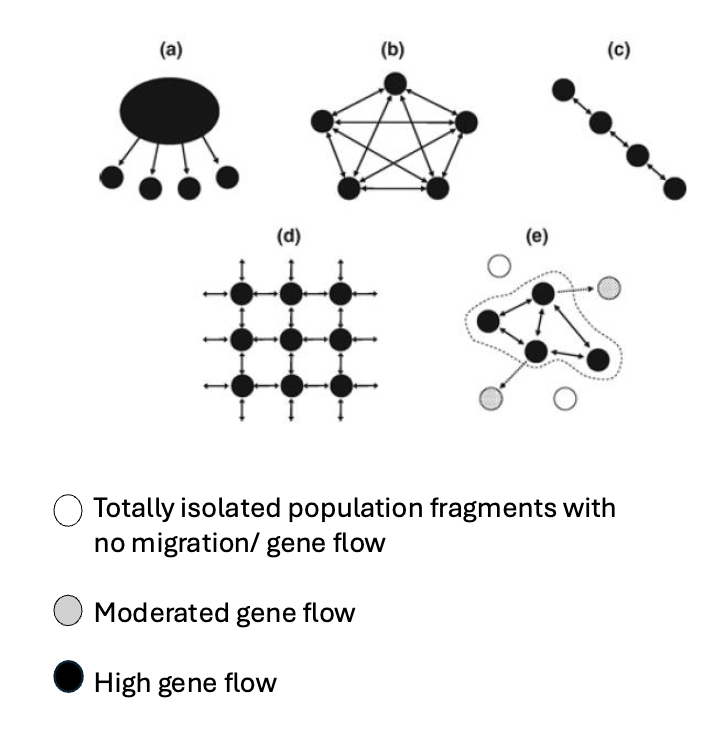
(a) a mainland–island (or source–sink): the mainland’ (source) provides all the input to the island (sink) populations,
(b) an island structure: migration is equal among equal-sized islands,
(c) a linear stepping-stone structure: only neighbouring populations exchange migrants (as in riparian habitat along rivers)
(d) a two-dimensional stepping-stone structure: neighbouring populations exchange migrants
(e) metapopulation: empty circles indicate extinct populations and dotted ones newly founded populations.
Class 18: Integrating landscape and population
what is a metapopulation?
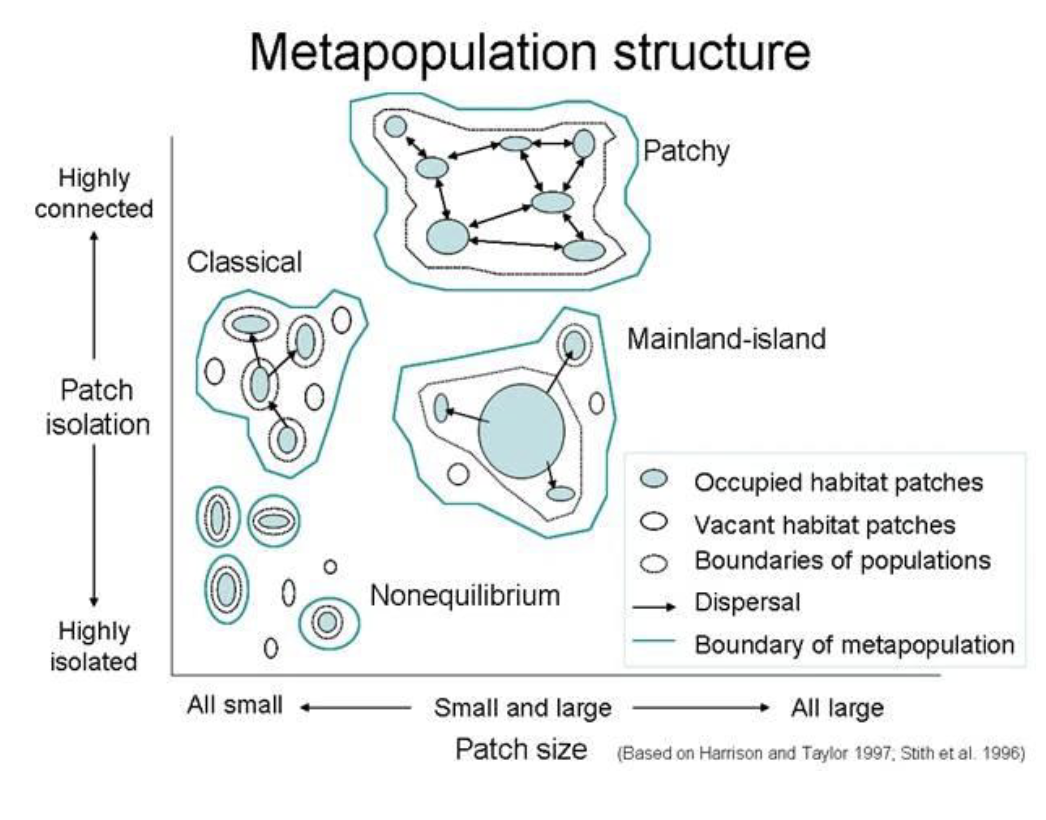
A metapopulation is a group of spatially separated populations of the same species that interact through dispersal, creating a "population of populations"
individual populations have finite life-spans, but a metapopulation as a whole is often stable because immigrants from one population are likely to recolonize habitat which has been left open by the extinction of another population
Class 19: Protected Areas and Field Station
what is the definition of a protected area? and the aspects?
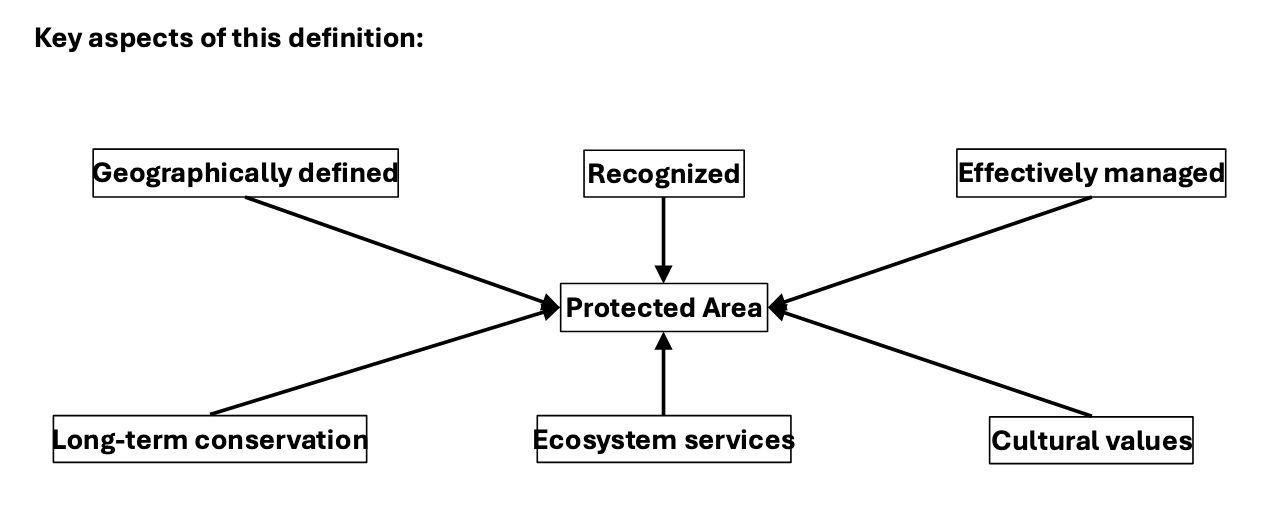
A clearly defined geographical space, recognised, dedicated and managed, through legal or other effective means, to achieve the long-term conservation of nature with associated ecosystem services and cultural values.
Class 19: Protected Areas and Field Station
what does geographically defined mean in the protected area definition?
“Geographically defined” implies a spatially defined area with agreed and demarcated borders. These borders can sometimes be defined by physical features that move over time (e.g., river banks) or by management actions (e.g., buffer zones)
Class 19: Protected Areas and Field Station
what does recognized mean in the protected area definition?
“Recognized” Implies that protection can include a range of governance types declared by people as well as those identified by the state, but that such sites should be recognised in some way (in particular through listing on the World Database on Protected Areas – WDPA)
Class 19: Protected Areas and Field Station
what does effectively managed mean in the protected area definition?
“Effectively managed” assumes some active steps to conserve the natural (and possibly other) values for which the protected area was established; note that “managed” can include a decision to leave the area untouched if this is the best conservation strategy.
Class 19: Protected Areas and Field Station
what does long-term conservation mean in the protected area definition?
“Long-term conservation” means protected areas should be managed in perpetuity, not temporarily, to ensure in-situ maintenance of ecosystems and natural habitats and of viable populations of species in their natural surroundings.
Class 19: Protected Areas and Field Station
what does ecosystem service mean in the protected area definition?
“Ecosystem services” Means here ecosystem services that are related to but do not interfere with the aim of nature conservation. These can include provisioning services such as food and water; regulating services such as regulation of floods, drought, land degradation, and disease; supporting services such as soil formation and nutrient cycling; and cultural services such as recreational, spiritual, religious and other non-material benefits.
Class 19: Protected Areas and Field Station
what does cultural values mean in the protected area definition?
“Cultural values” Includes those that do not interfere with the conservation outcome (all cultural values in a protected area should meet this criterion), including in particular those that contribute to conservation outcomes (e.g., traditional management practices on which key species have become reliant); those that are themselves under threat.
Class 19: Protected Areas and Field Station
how is air a “3D” impact for protected areas?
Air: protecting the airspace above the PA from disturbance from, for example, low-flying aircraft, helicopter, or hot-air balloons.
Class 19: Protected Areas and Field Station
how is water a “3D” impact for protected areas?
Water: protecting from over/illegal fishing, diving, underwater noise.
Streams inside protected areas are contaminated by external (exogenous) stressors
Untreated or poorly treated sewage contributes strongly to water degradation
Water quality (physicochemical + microbiological) was similar inside and outside PAs
Terrestrial protection alone does not translate into aquatic protection
Class 19: Protected Areas and Field Station
how is land a “3D” impact for protected areas?
Land: protecting from illegal mining, deforestation, and other extractive industries
Class 19: Protected Areas and Field Station
what are the categories of a protected area?
The definition is expanded by six management categories. The category depends on the primary management objectives, which should be applied to at least 75% of the protected area
1a. Strict nature reserve: Strictly protected for biodiversity and also possibly geological/geomorphological features, where human visitation, use and impacts are controlled and limited to ensure protection of the conservation value
1b. Wilderness area: Usually large unmodified or slightly modified areas, retaining their natural character and influence, without permanent or significant human habitation, protected and managed to preserve their
2. National park: Large natural or near-natural areas protecting large-scale ecological processes with characteristic species and ecosystems, which also have environmentally and culturally compatible spiritual, scientific, educational, recreational and visitor opportunities
3. Natural monument or feature: Areas set aside to protect a specific natural monument, which can be a landform, sea mount, marine cavern, geological feature such as a cave, or a living feature such as an ancient grove
4. Habitat/species management area: Areas to protect particular species or habitats, where management reflects this priority. Many will need regular, active interventions to meet the needs of particular species or habitats, but this is not a requirement of the category
5. Protected landscape or seascape: Where the interaction of people and nature over time has produced a distinct character with significant ecological, biological, cultural and scenic value: and where safeguarding the integrity of this interaction is vital to protecting and sustaining the area and its associated nature conservation and other values
6. Protected areas with sustainable use of natural resources: Areas which conserve ecosystems, together with associated cultural values and traditional natural resource management systems. Generally large, mainly in a natural condition, with a proportion under sustainable natural resource management and where low-level non-industrial natural resource use compatible with nature conservation is seen as one of the main aims
Class 20: Involving the stakeholders in primate conservation
what is the IUCN and the IUCN Red List?
The International Union for Conservation of Nature is a leading global membership union composed of both government and civil society organizations. Founded in 1948, it works to influence, encourage, and assist societies to conserve nature and ensure sustainable natural resource use.
The IUCN Red List of Threatened Species is the most comprehensive source of data on the global conservation status of animal, fungi, and plant taxa.
Each species or subspecies receives its own assessment
An assessment entails the compilation of all relevant data on the species and application of Red List Criteria in order to identify the species’ conservation status
Class 20: Involving the stakeholders in primate conservation
what taxonomic level should be assessed with the IUCN Red List?
The IUCN Red List assessments will be considering the lowest possible taxonomic level. If subspecies name is available, it will be used in the assessment. If not, the assessment will be considering the species level,
Species
Subspecies (if they exist..)
Genetic diversity should be considered
Class 20: Involving the stakeholders in primate conservation
how do assessments occur at the global level with the IUCN Red List?
If a species occur in more than one country, the assessment include all information available for all countries where the species occur.
National assessment may occur and differ from the IUCN Red List. For example, Black-and-gold howler monkey (Alouatta caraya) in Argentina is currently listed as Vulnerable (VU) in the national red list of mammals, but globally, it is classified as Near Threatened (NT)
Continental
Regional
National
Class 20: Involving the stakeholders in primate conservation
How does the IUCN Red List classify when a taxon is threatened?
Assessment of threat
Expert opinion
the most authoritative?
pooled expert opinion? [Primate Specialist Group]
most data? [Primatologists from habitat countries]
More objective – strict criteria
Class 20: Involving the stakeholders in primate conservation
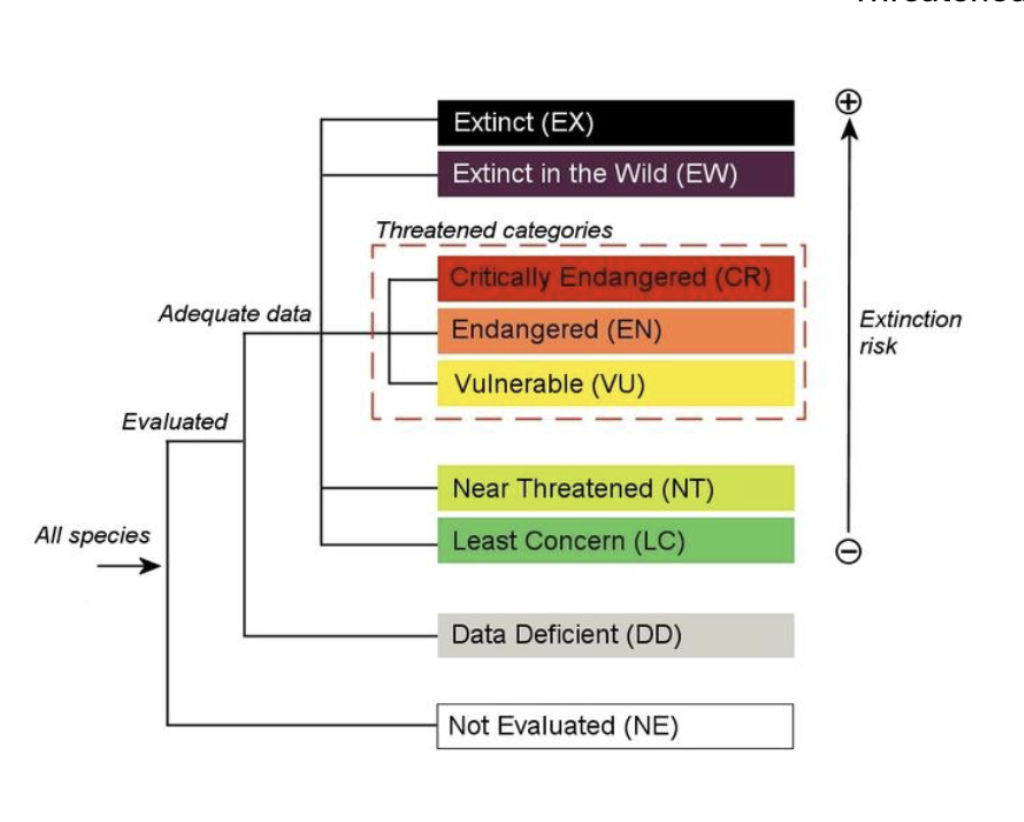
what are the categories of the IUCN Red List?
Extinct EX
Extinct in the Wild EW
Critically endangered CR
Endangered EN
Vulnerable VU
Near Threatened NT
Least Concern LC
Data Deficient DD
Not Evaluated NE
Class 20: Involving the stakeholders in primate conservation
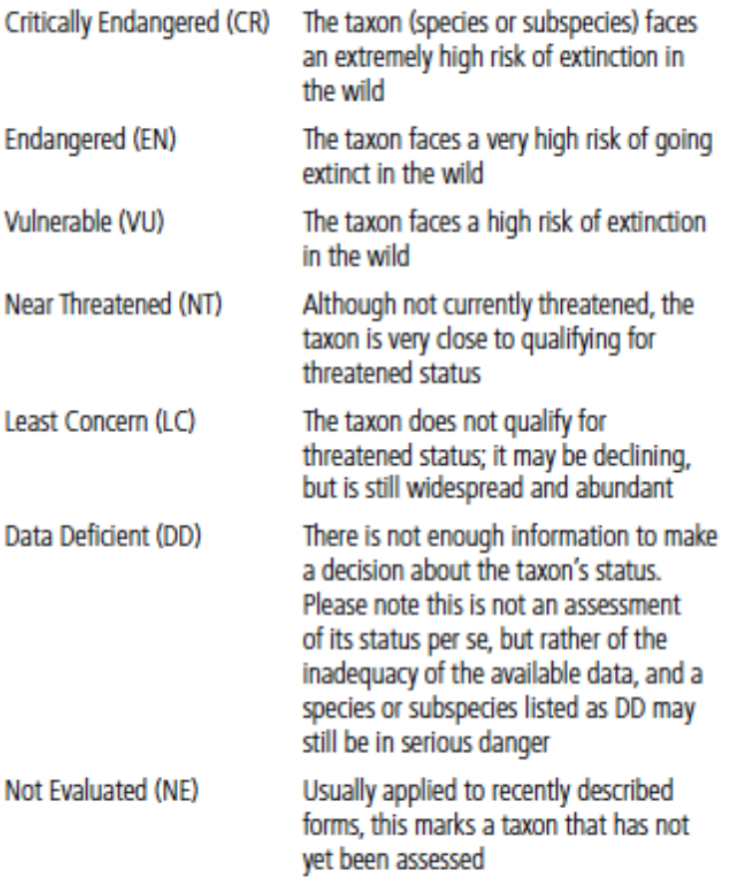
what are the definitions of each category of the IUCN Red List?
see image
Class 20: Involving the stakeholders in primate conservation
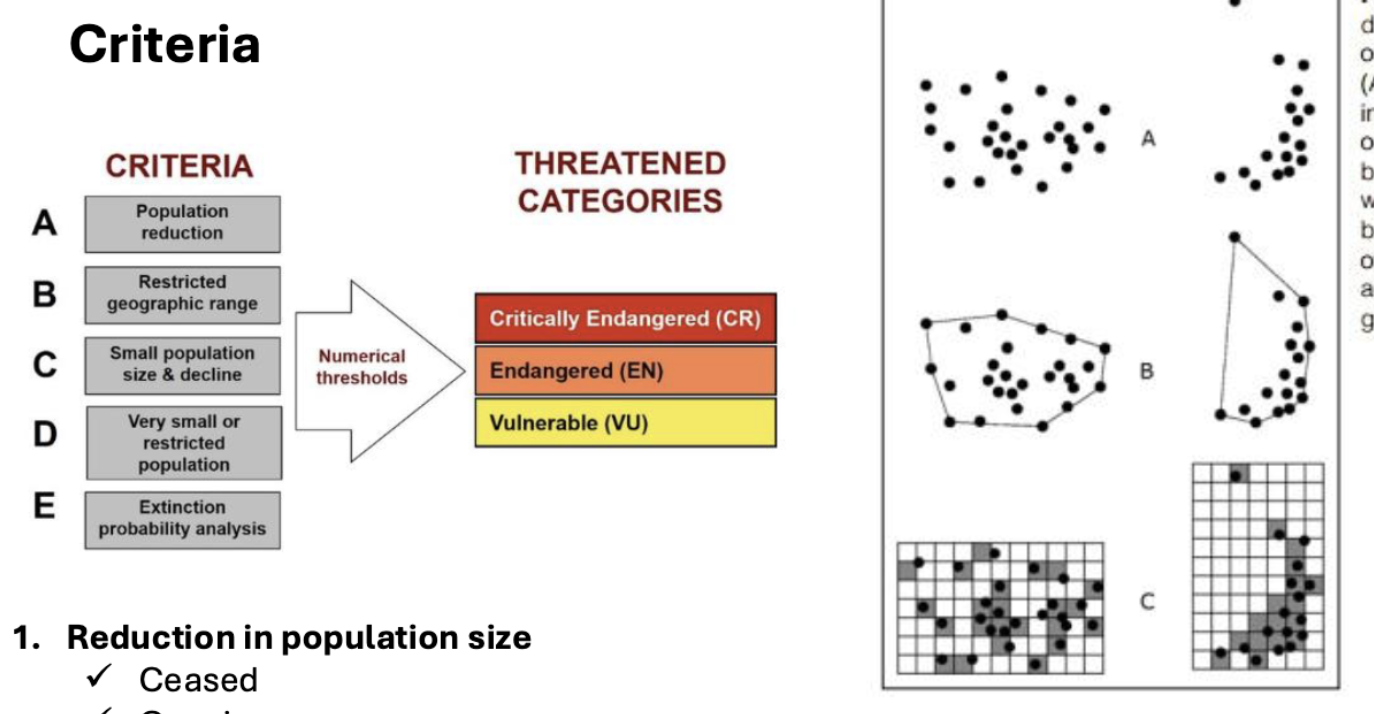
what is the criteria for the IUCN Red List?
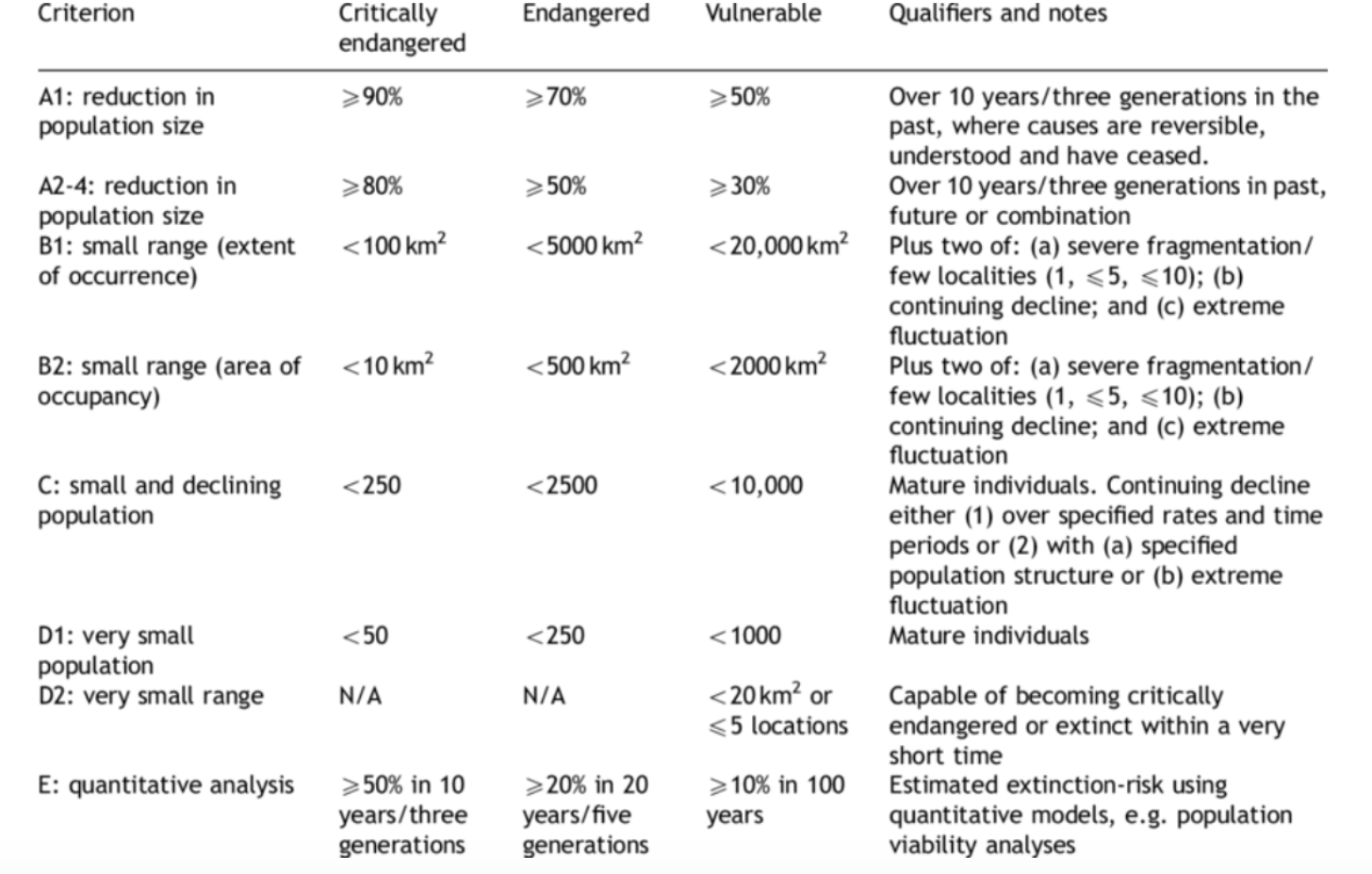
1. Reduction in population size
Ceased
Ongoing
Past
Projected
What time period (years, generations)
Historically (naturally) very small population
2. Small Range
Range of occurrence (small or large)
Range of occupancy
Fragmentation
Fluctuation in size or numbers
Class 20: Involving the stakeholders in primate conservation
what is a simplified overview of threshold for the IUCN Red List criteria?
see image
Class 20: Involving the stakeholders in primate conservation
how do we establish what species are threatened?
The same for all taxa? Yes, the same categories and criteria are applied for animal, fungi, and plant taxa
What scale, global or national? IUCN Red List assess the species’ conservation status at global level
Should life history be taken into account? Yes, when data is available
What evidence do we need? The more evidence, the better
Comparability. The categories are comparable in different taxa because they follow a set of criteria
Class 23: Tourism and Primate Conservation
how can tourism be beneficial for primate conservation?
Tourism is one of the conservation strategies to protect mountain gorillas and their habitat while also ensure profitable outcome for people
Approximately 50,000 foreign tourists visit mountain gorillas annually in the Virunga Massif and Bwindi Impenetrable National Park
Visitors pay between $600 (Uganda) and $1,500 (Rwanda) for permits, enabling sustainable tourism and funding conservation initiatives (+ accommodation, travel to the site, local guides, food…
Class 23: Tourism and Primate Conservation
how can tourism be beneficial to local communities?
Conservation Efforts: The local people are allowed to engage in park activities like participating in multiple projects of conservation and sustainability. Tree planting projects and eradication of unauthorized activities like poaching, encroachment on the parkland, farming in the forest areas among others
Local Employment: Employment opportunities offered to the locals by the park authorities. The local people have been trained and recruited to work in the park as park rangers, potters, and local guides to help out and assist the tourist. Others work in hotels and safari lodges around the gorilla parks as waiters, waitresses, chefs, or managers. This has kept the idle locals busy preventing them from engaging in authorized activities and the act of employing them has improved their standards of living.
Revenue Sharing: Sharing of revenue by both the staff and the authorities benefits the local communities. The park gains revenue from park charges on park entry, park activities such as game drives, cultural encounters, hiking, nature walks among others, donations to the park. A small percentage is given back to the local communities and this is used in the local development, for example, its invested in local schools medical centers, rural electrification and provision of piped water among others
Market for Local agricultural produce: The development of Gorilla tourism provides a market for local agricultural products such as fruits, vegetables, foods like Irish potatoes, bananas and yams among others. These are sold to hotels, lodges, and campsites where tourists stay while on their safaris in Rwanda or Uganda
Community Participation and Sensitization: The locals are allowed to participate in park activities. The park authorities have greatly engaged the local communities in park projects of conservation and sustainability of the ecosystem. They are given trees to plant and sensitized to stop unauthorized illegal activities.
Class 23: Tourism and Primate Conservation
what are some guidelines put in place to help primates with tourism rates?
General Guidelines:
Restricting access to individuals who are unwell
Limiting groups to a maximum of eight people per visit
Allowing only one group to visit the gorillas per day for a maximum of one hour of contact
Maintaining a safe distance of at least seven meters from the
animals.
Class 23: Tourism and Primate Conservation
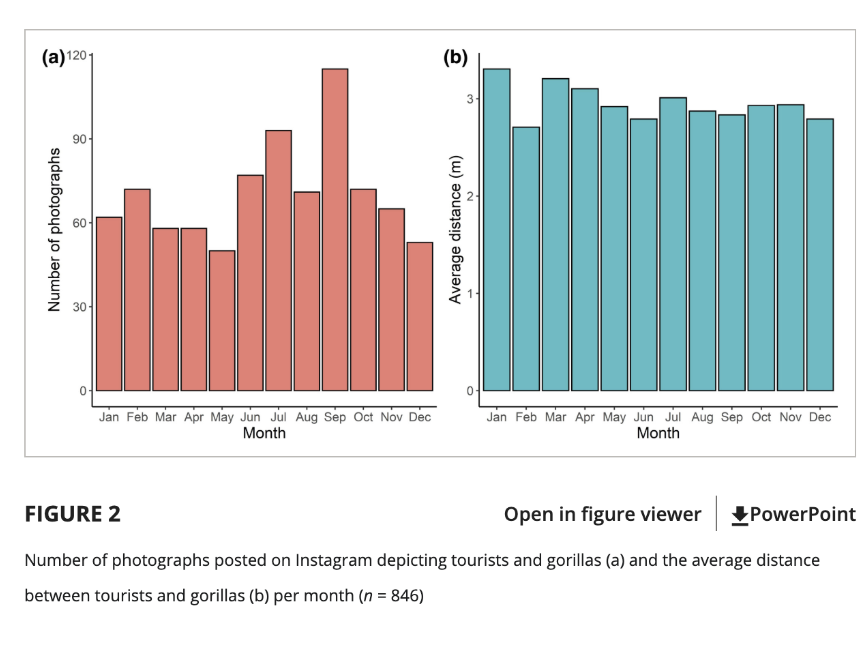
what did tourists’ selfies with primates prove?
Instagram posts from 2013 to 2019 revealed that a majority of tourists were dangerously close to gorillas, with 86% less than 4 meters away, and 25 instances of physical contact
Instagram posts we’re evaluated to measure the risk of anthroponotic disease transmission in gorilla ecotourism
Class 23: Tourism and Primate Conservation
how can lack of rule compliance and poor risk perception can threaten primates?
“Through analysis of posts on Instagram we determine the extent of compliance by visitors with the rule to keep a minimum distance of 10 m from orangutans and assess the positional behaviours of the orangutans.”
2,229 photographs assessed between November 2019 and July 2020, 279 depicted one or more orangutans.
42 contained both a human and an orangutan showing inappropriate behaviours (direct contact, feeding orangutans, close proximity <5 m) providing direct evidence of non-compliance with the 10-m distance rule
Most of these photos showed orangutans performing an abnormal behavior, being low to or on the ground rather than in their natural high position in the canopy → increasing risk of anthropozoonotic disease transmission
Class 23: Tourism and Primate Conservation
how has zoo closure and covid increased awareness for zoo visitors?
There was a significant decrease in the percentage of photographs showing orangutans and humans in close proximity or in direct contact after national park closure.
This indicates that the closure of the park was effective in reducing the amount of contact between humans and orangutans, including the risk of the new threat of COVID-19 and other potential disease transmission.
The COVID-19 pandemic has increased people’s awareness of zoonoses and potentially heightened risk perception, and this may have positive impacts on the behaviour of visitors to the Gunung Leuser National Park, making them more likely to comply
Class 25: Conservation Evidence
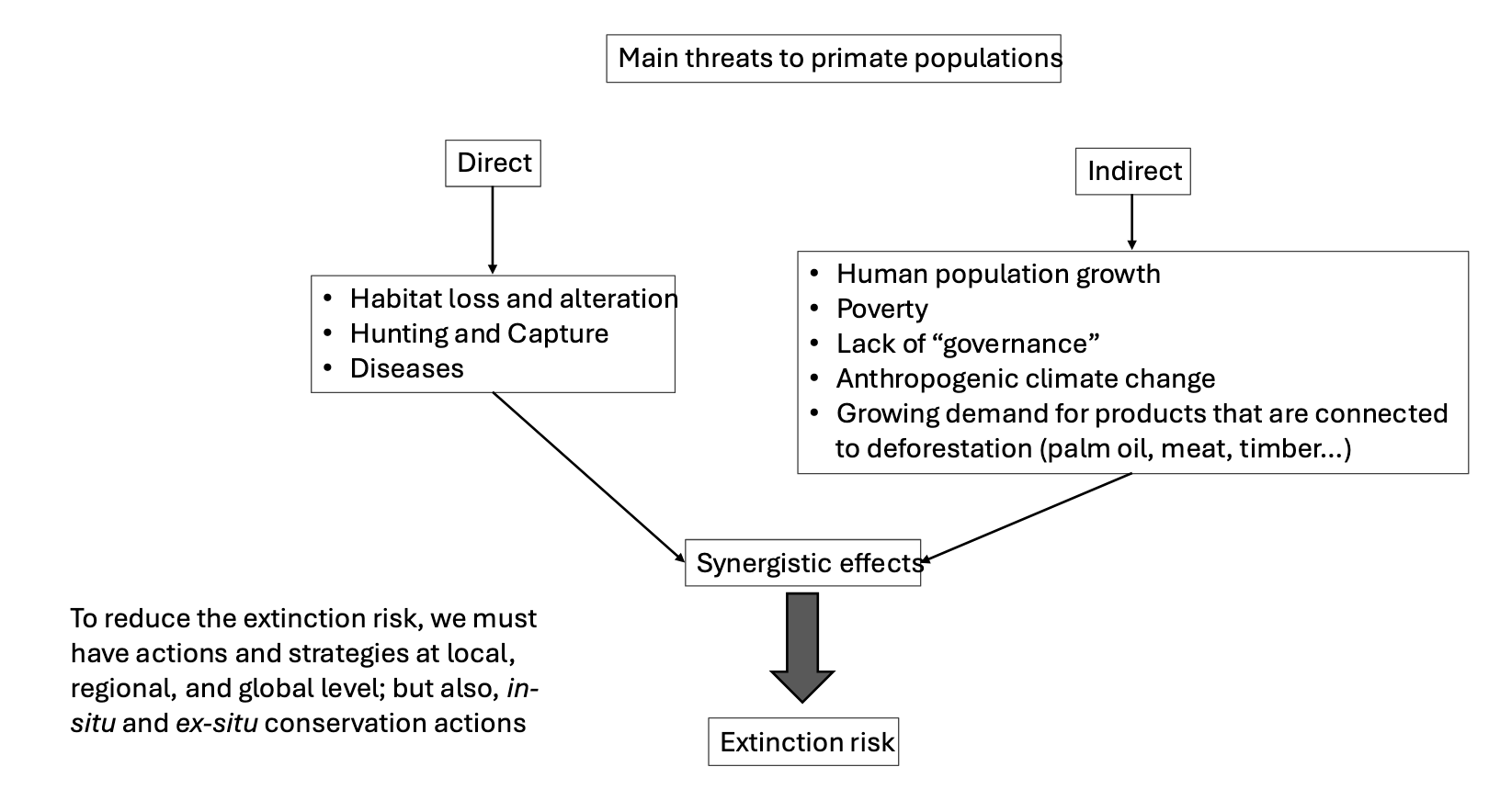
what are the main threats to primate populations?
Direct
Habitat loss and alteration
Hunting and Capture
Diseases
Indirect
Human population growth
Poverty
Lack of “governance”
Anthropogenic climate change
Growing demand for products that are connected to deforestation (palm oil, meat, timber…)
To reduce the extinction risk, we must have actions and strategies at local, regional, and global level; but also, in-situ and ex-situ conservation action
Class 25: Conservation Evidence
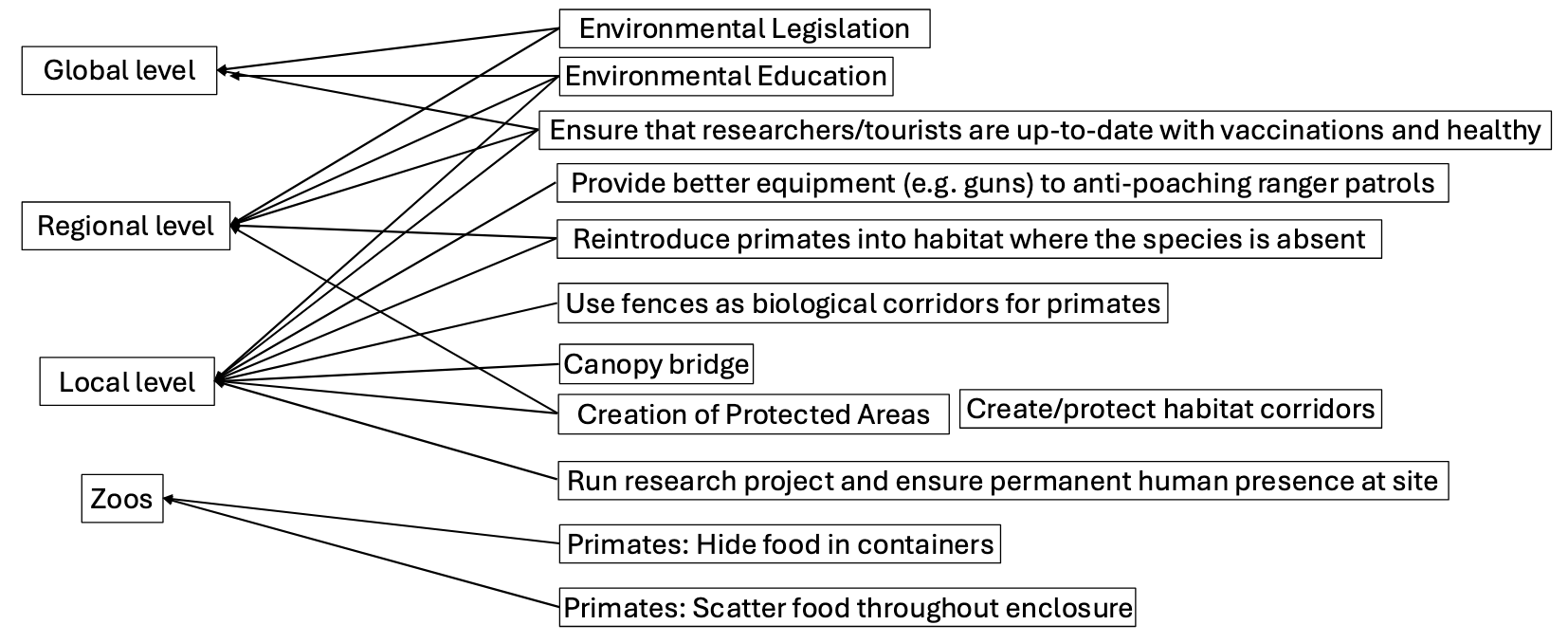
how can we reduce extinction risk?
To reduce the extinction risk, we must have actions and strategies at:
global level
regional level
local level
zoos
Class 25: Conservation Evidence
what’s one example of successful conservation efforts?
Forest Fragmentation
Conversion of once-continuous forest into isolated different patches
Impacts:
Habitat reduction and alteration
Population reduction
Inbreeding
Stochastic (random) factors (e.g. fire, diseases, hurricane)
Diet alteration
What can be effective in reducing the effects of forest fragmentation? Increase connectivity!
Canopy bridges have been implemented in many countries and decreasing rates of mortality by accidents/run over, electrocution in power lines, facilitate dispersion
Ecological corridors have also facilitated the dispersal of many species and avoiding accidents/run over