Quiz 10: Cell Resp & Photosynthesis
 Call Kai
 Learn
Learn Practice Test
 Spaced Repetition
 Match
Match Flashcards
 Knowt Play
1/19

There's no tags or description
Looks like no tags are added yet.
Name | Mastery | Learn | Test | Matching | Spaced | Call with Kai |
|---|
No analytics yet
Send a link to your students to track their progress
20 Terms
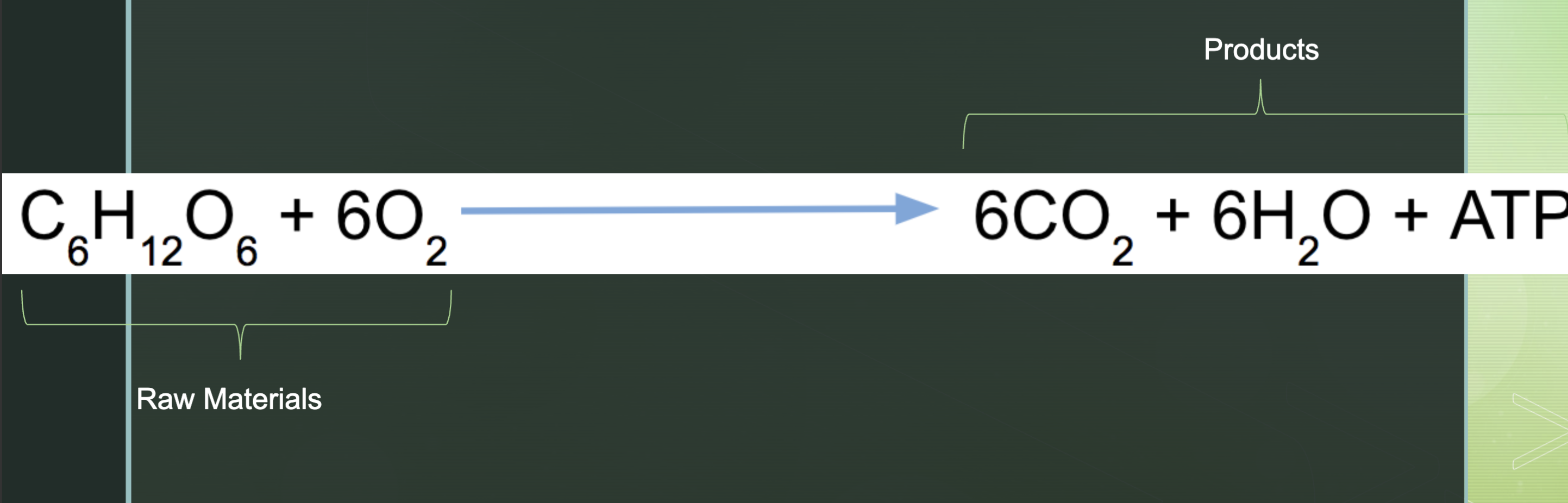
Cellular Resp equation (verbatim)
CHO + O2 → CO2+ H2O+ ATP
(raw materials) → (products)
Glycolosis:
location
o2 requirement?
uses
products
Cytosol
only one no O2 needed
2 ATP
4 ATP (2 net)
2 Pyruvate
2 NADH
Why is NADH/FADH2 important?
Carries electrons from one reaction to another
NAD+/FAD is oxidized (will accept electrons from other molecules becomes reduced)
NADH/FADH2 is reduced (will lose electrons becomes oxidized)
Bridge Reaction:
location
converts
produces
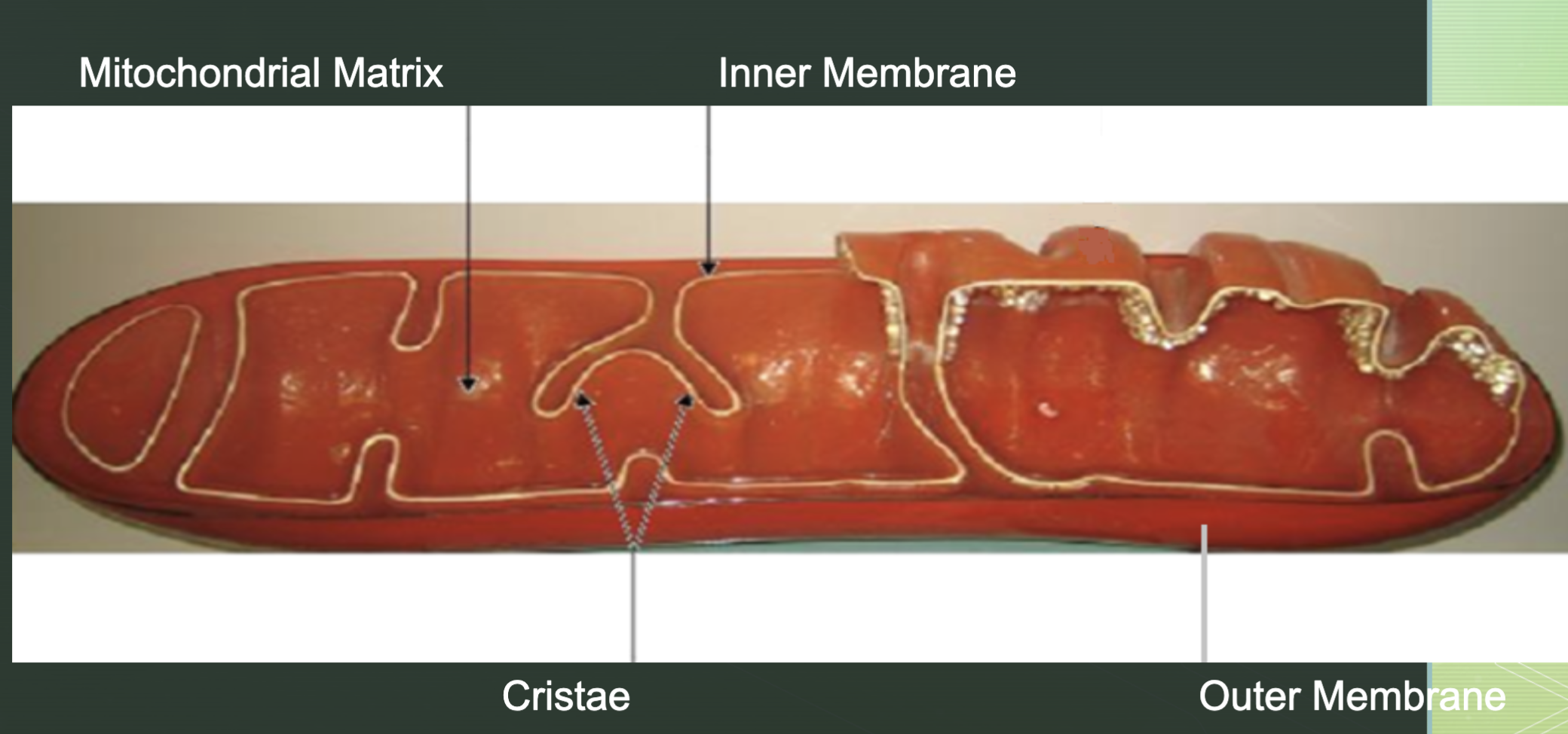
Mitochondrial Envelope 💌
2 pyruvate → 2 acetyl CoA
0 ATP
2 CO2
2 NADH
When does Bridge cycle happen
when pyruvate crosses the outer mitochondrial membrane
Krebs Cycle:
location
input
products (2 cycles)
Mitochondrial Matrix
2 Acetyl CoA →
2 ATP
2 FADH2
4 CO2
6 NADH
Electron Transport Chain (ETC):
location
input
output
Cristae 💎
input-
10 NADH (each 3 ATP→30 ATP)
2 FADH (each 2 ATP→4 ATP)
output-
34 ATP (32 NET bc 2 used to ship NADH)
uses this proton gradient to create ATP in ETC
ATP synthase
in ETC, Protons travel across the mitochondrial membrane which creates a
electrochemical proton gradient
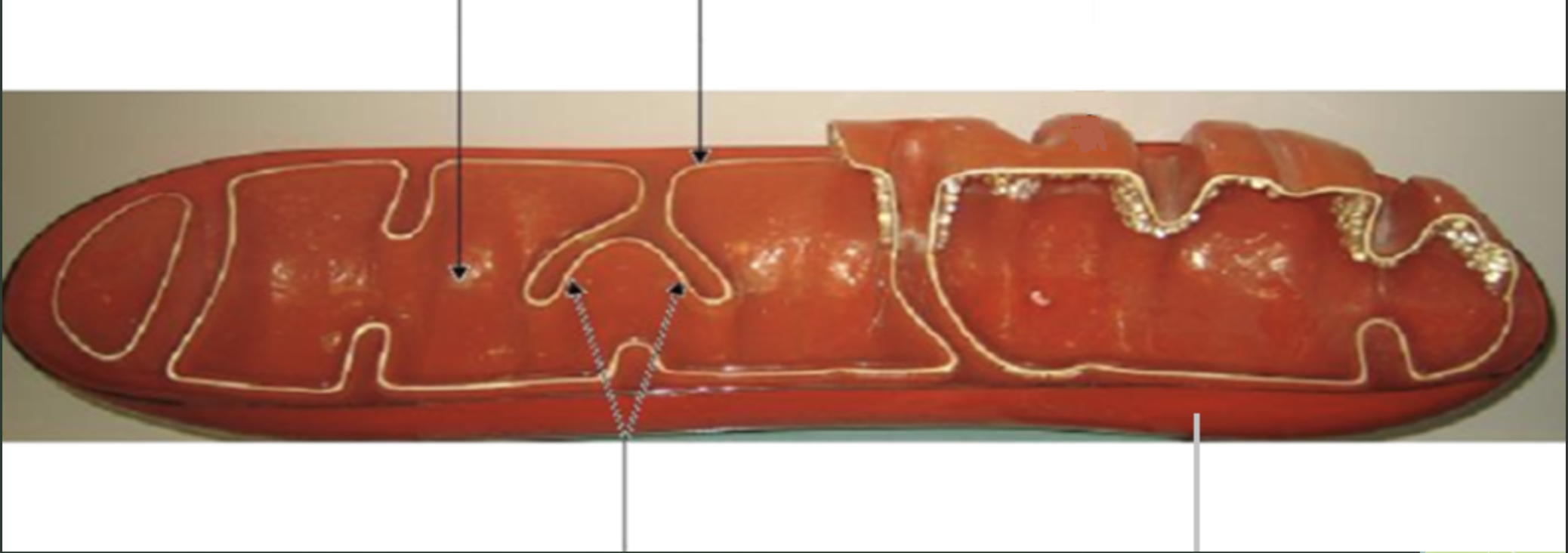
Label
Occurs when there is no oxygen available
Fermentation
Lactic Acid
i.e. muscle cells
Alcohol
i.e. yeast
Alcohol Fermentation Equation
Sugar → CO2 & Ethanol
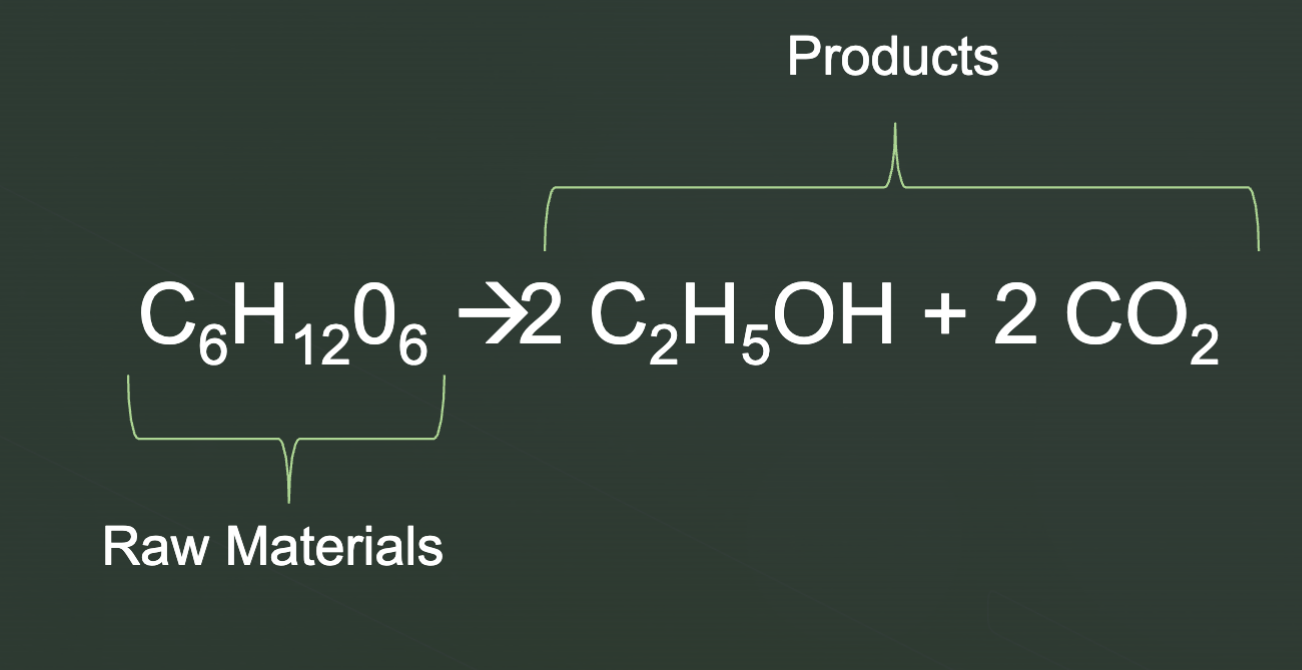
What kinds of organisms use fermentation (anaerobic respiration)?
prokaryotes— like bacteria and archaea
Photosynthesis Equation
H2O & CO2 → CHO, H2O, O2,
(light energy not raw material*)
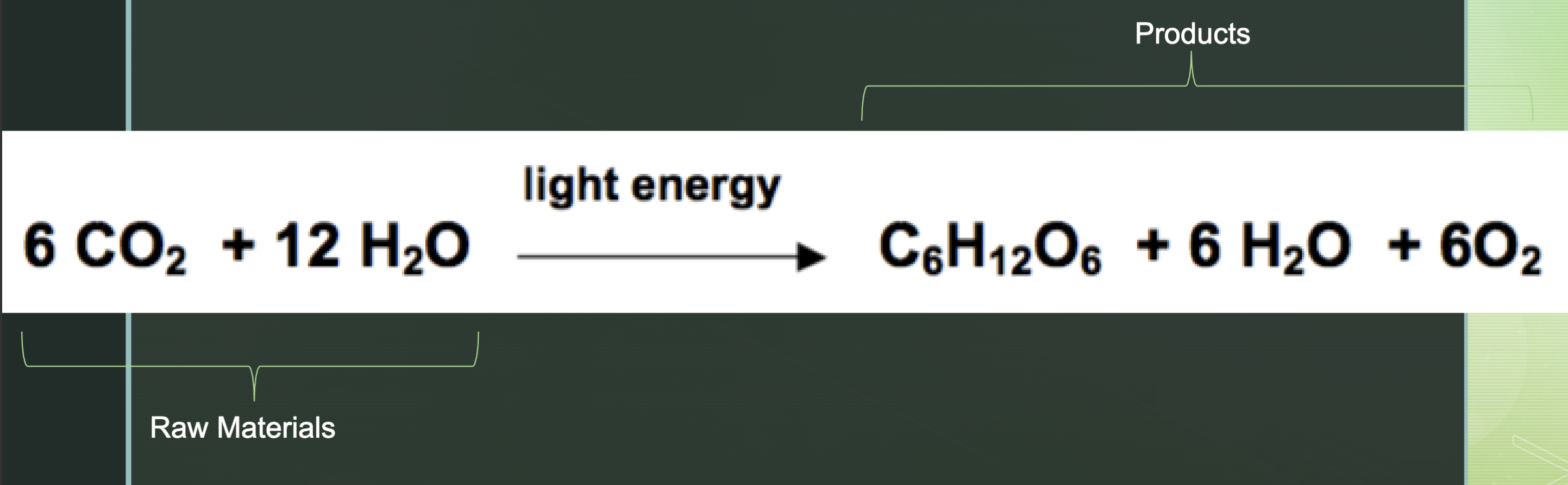
Where does Photosynthesis take place
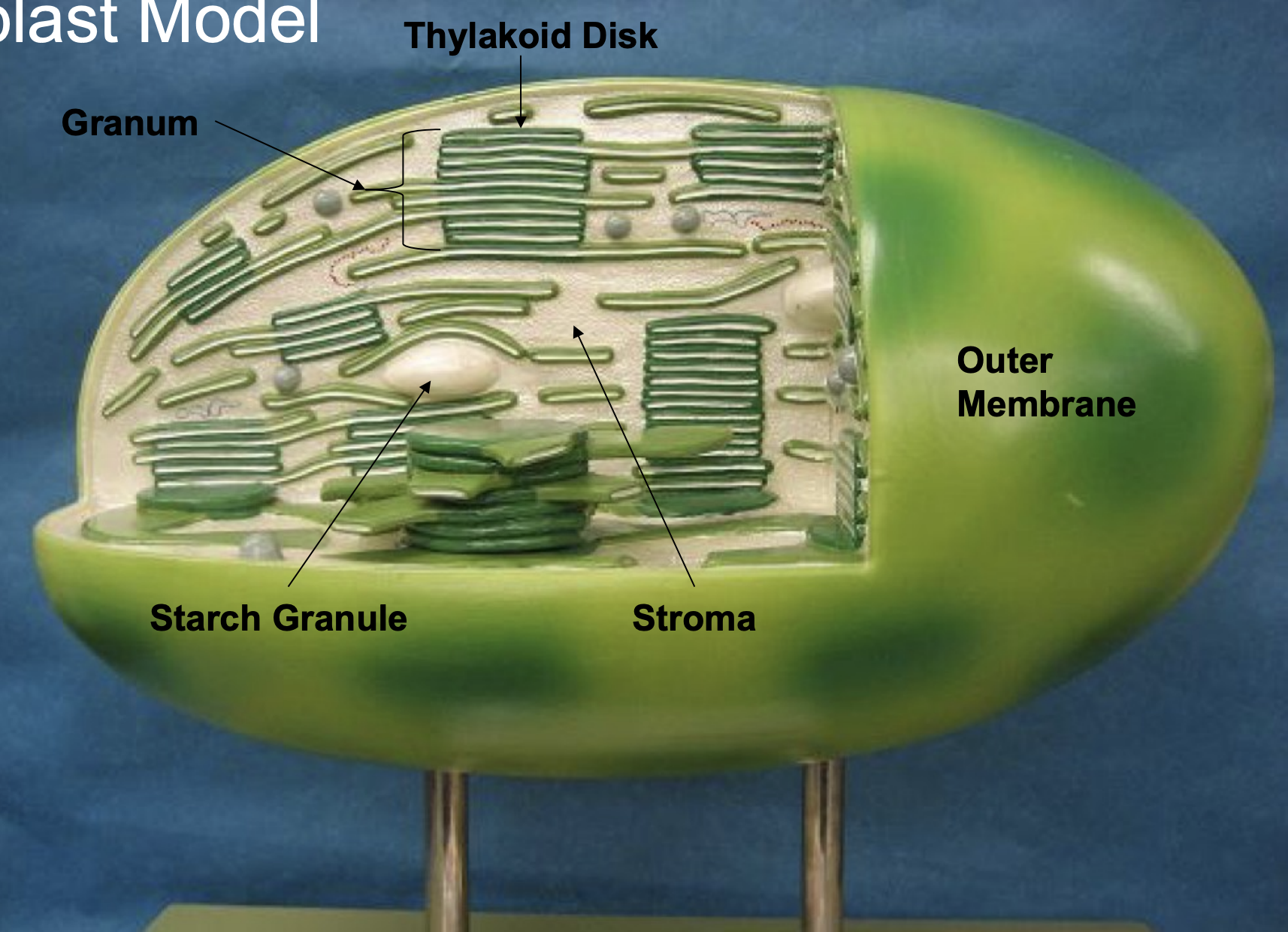
chloroplasts
What is released when the water molecule is split
Oxygen
What does the plant do with the glucose it makes?
Used to make cellulose for the cell wall
Converted to starch for energy storage
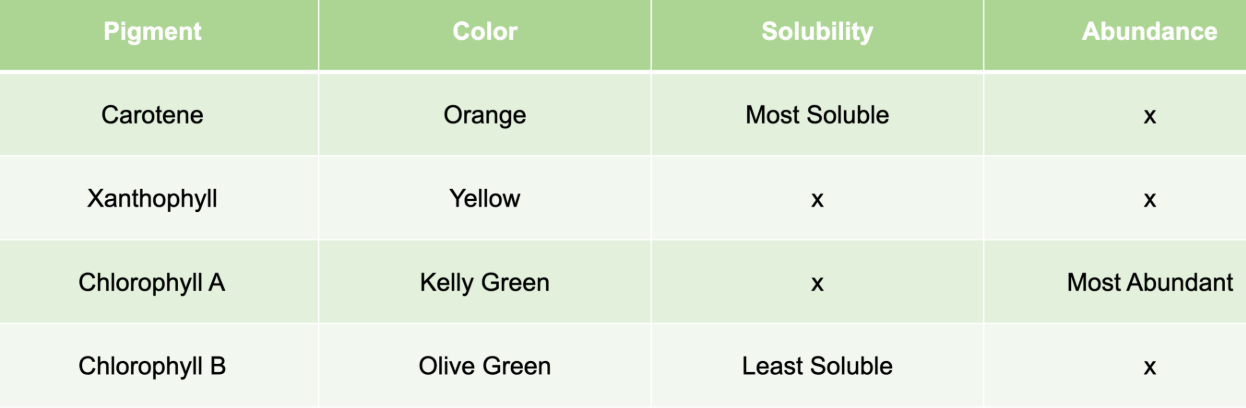
Chromatography Experiment most soluble vs most abundant
most soluble pigment=furthest from application line →
most abundant pigment=largest band
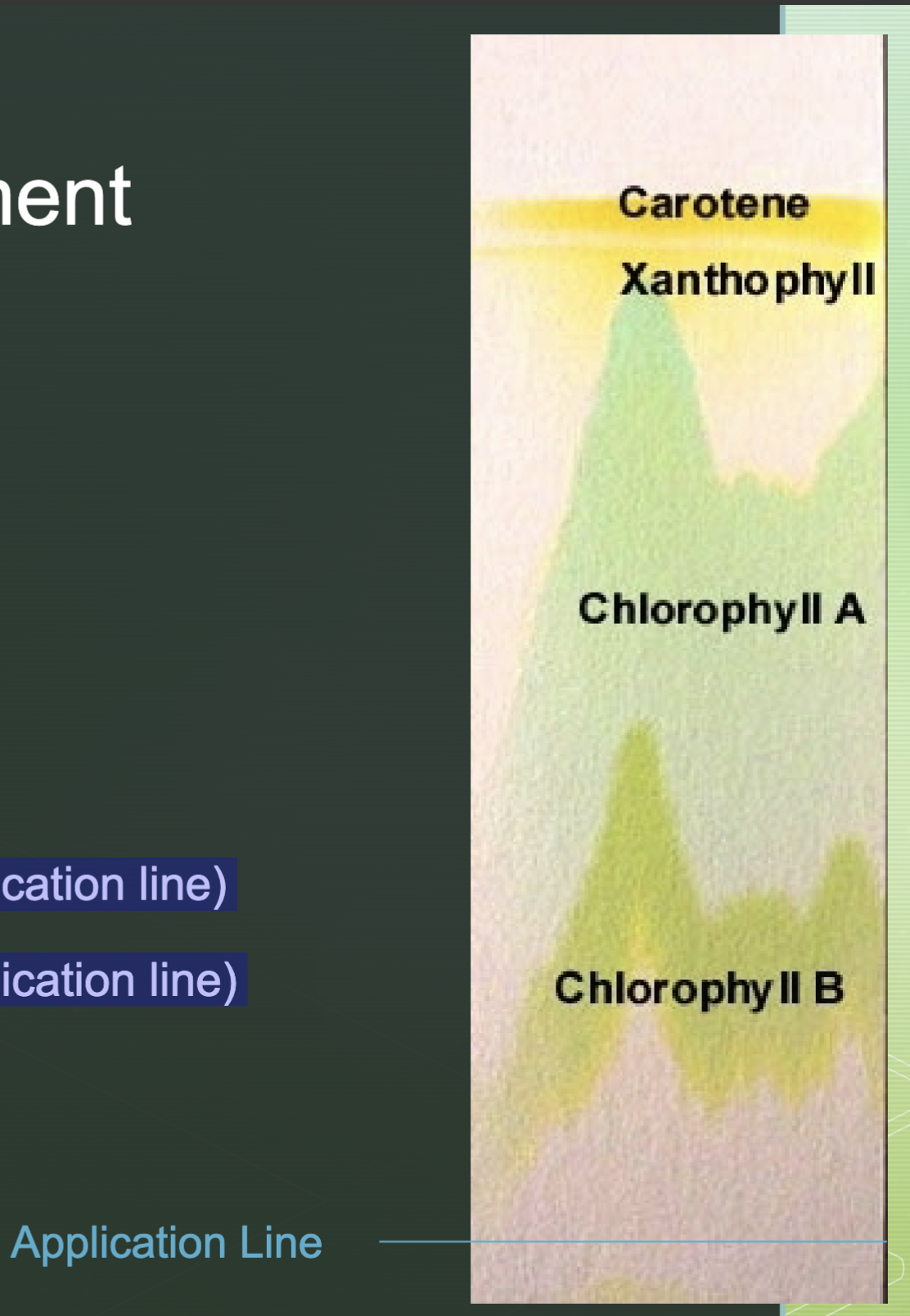
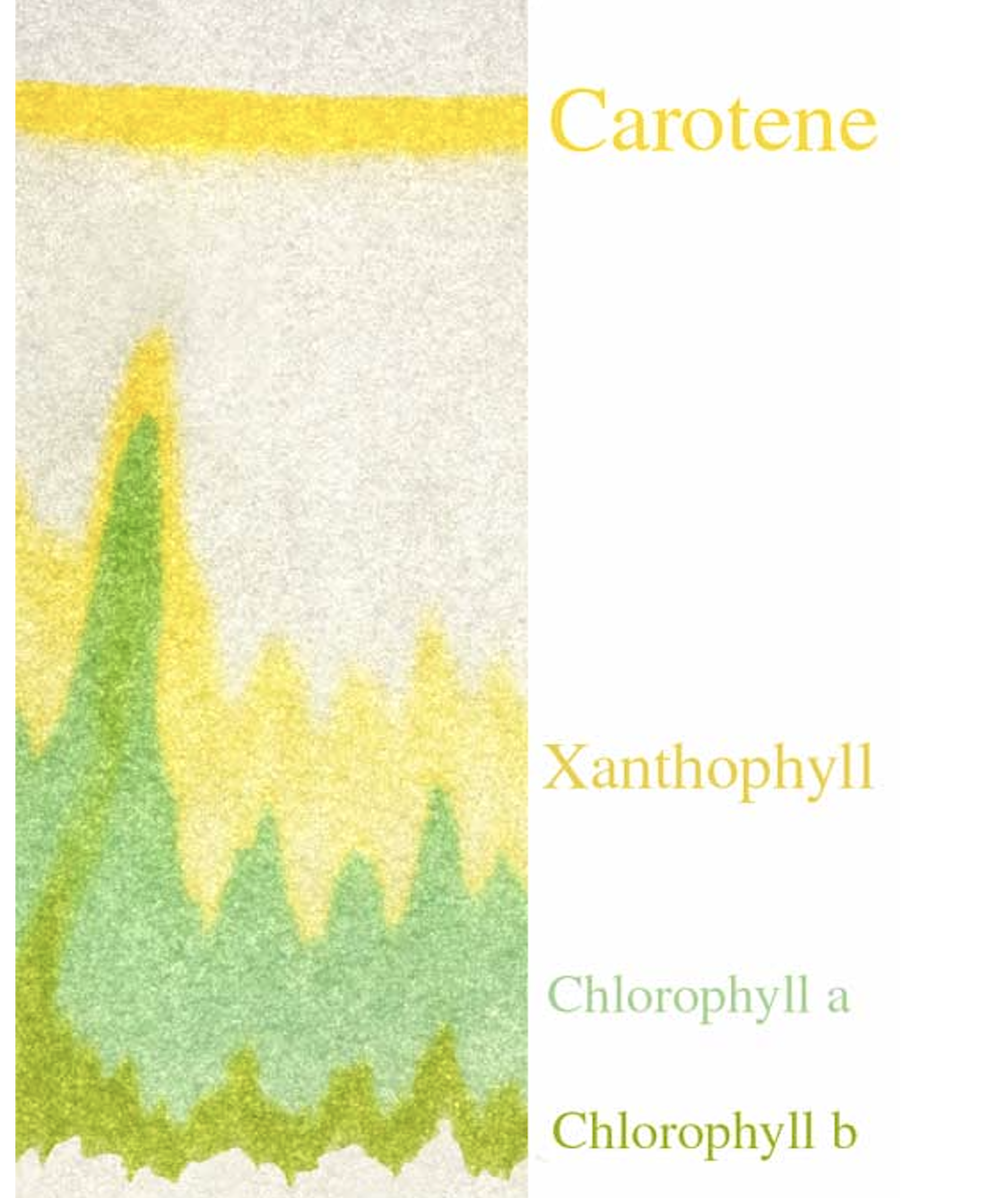
Chromatography:
color & solubility/abundance
Carotene
Chlorophyll A
Chlorophyll B
Xanthophyll
carotene: orange, most soluble
chlorophyl a: kelly green most abundant
chlorophyl b: olive green least soluble
xanthophyl: yellow, n/a
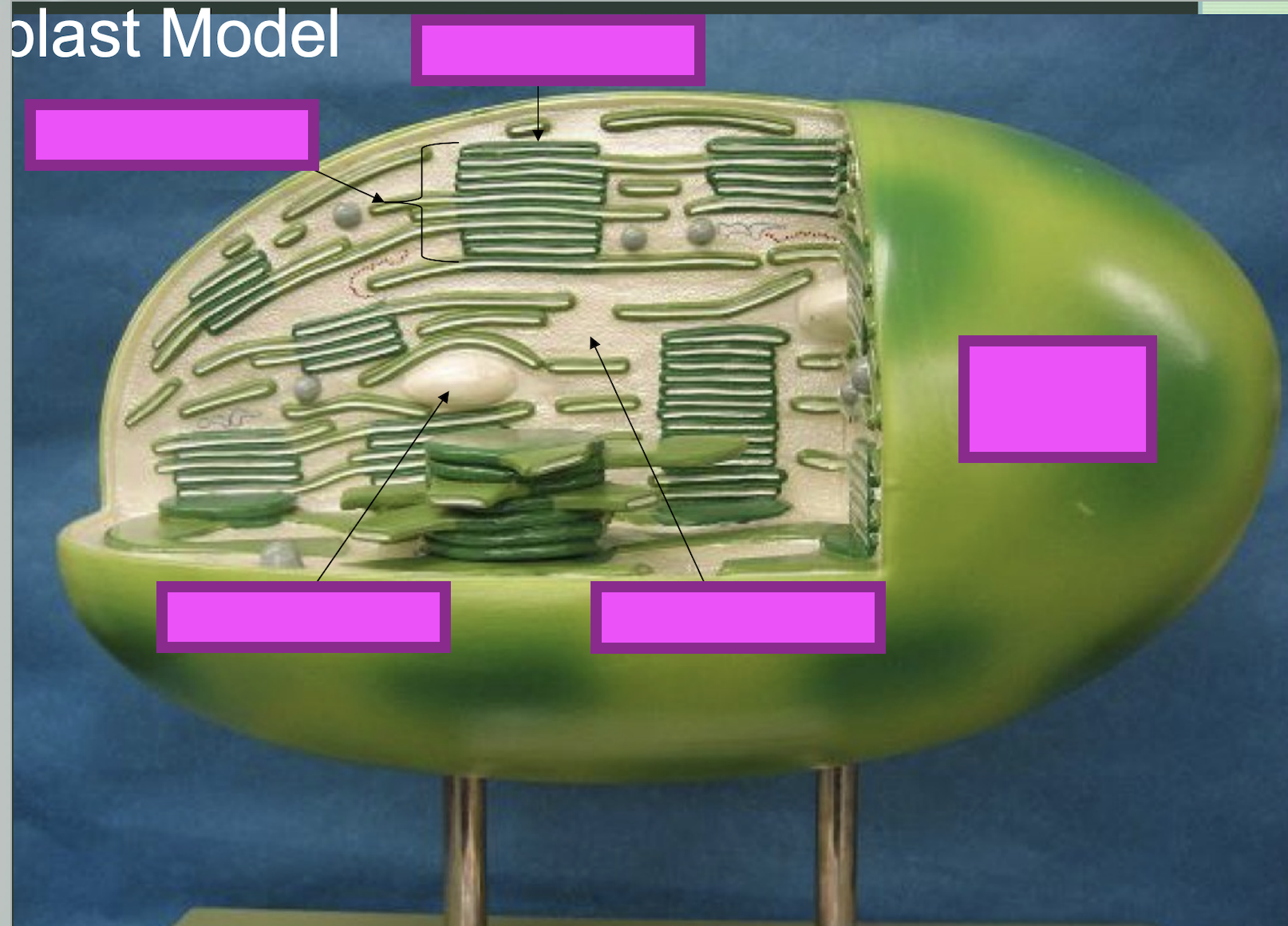
Label
Light Reactions – Thylakoid Disks
Dark Reactions - Stroma