haa 183k
 Call Kai
 Learn
Learn Practice Test
 Spaced Repetition
 Match
Match Flashcards
 Knowt Play
1/118

Earn XP
Description and Tags
this is so bogus
Name | Mastery | Learn | Test | Matching | Spaced | Call with Kai |
|---|
No analytics yet
Send a link to your students to track their progress
119 Terms
Vairocana
central buddha
turning wheel (dharmachakra) or wisdom fist mudra
white
lion throne
Akshobya
eastern Buddha
blue (associated with dawn)
earth-touching (enlightenment) mudra
elephant throne
Amitabha
western Buddha
red (associated with setting sun)
meditation mudra + begging bowl
peacock throne
Ratnasambhava
southern Buddha
yellow
varada mudra (gesture of supreme generosity)
horse throne
Amoghasiddhi
northern Buddha
green
abhaya ("no-fear") mudra
garuda throne
Four orders of Tibetan Buddhism
Nyingma
Kagyu
Sakya
Kadampa —> Gelug
Descent of Ganges
Ganga was a celestial river, when there was a severe drought on earth she agreed to descend to earth
Shiva agrees to help after a devotee worships with tree pose, allows Ganga to come down via a lock of his hair
Mirrors river coming down through the Himalayan mountains
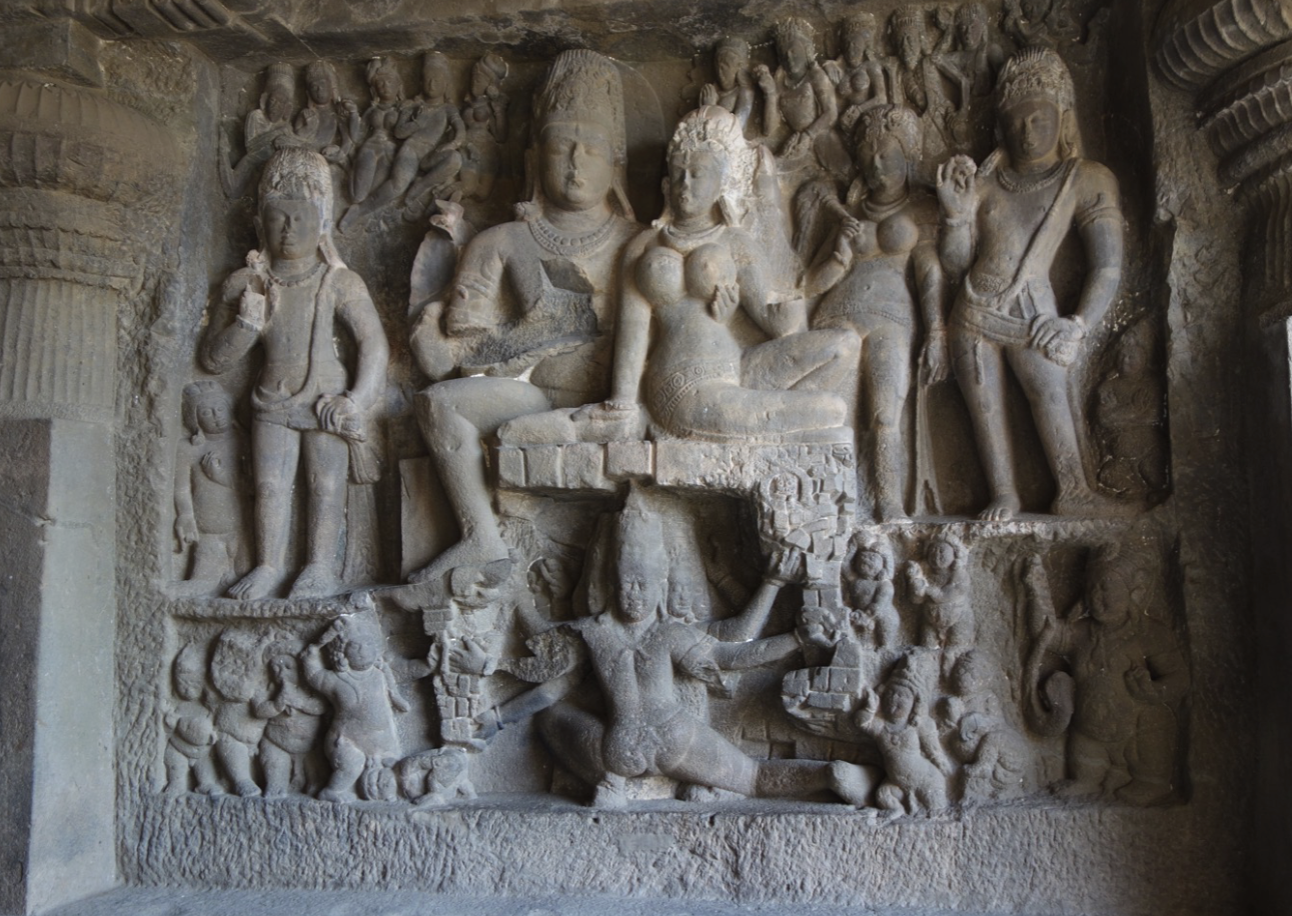
Ravana shaking Mt. Kailasa
In an act of arrogance, Ravana attempts to lift and shake Mt. Kailasa (home of Shiva)
Is then trapped under the mountain by Shiva’s foot
Ravana then becomes a devotee of Shiva, does such penance that he gains significant power
8 life scenes of the Buddha
Birth of the Buddha at Lumbini
Enlightenment of the Buddha at Bodh Gaya
Buddha's first sermon at Sarnath
The monkey's offering at Vaishala
Taming Nalagiri the elephant at Rajgir
Descent from Tavatimsa Heaven (sermon for mother) at Sankassa
Miracle at Shravasti (self-multiplication)
Death of Buddha at Kushinagar
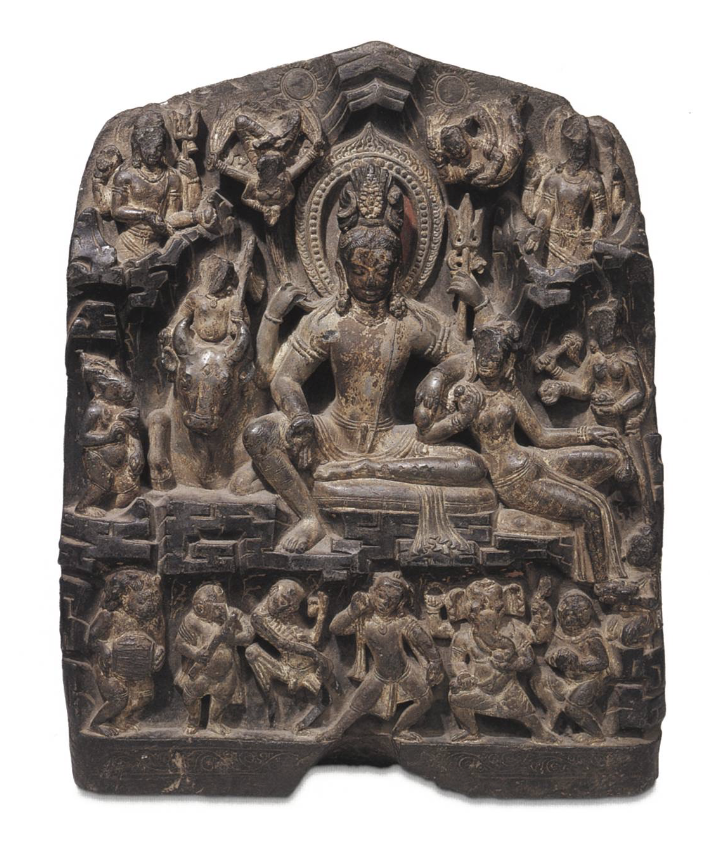
Shiva
destroyer/transformer
Home is Mount Kailash
Crescent moon headdress
Trident
Snake
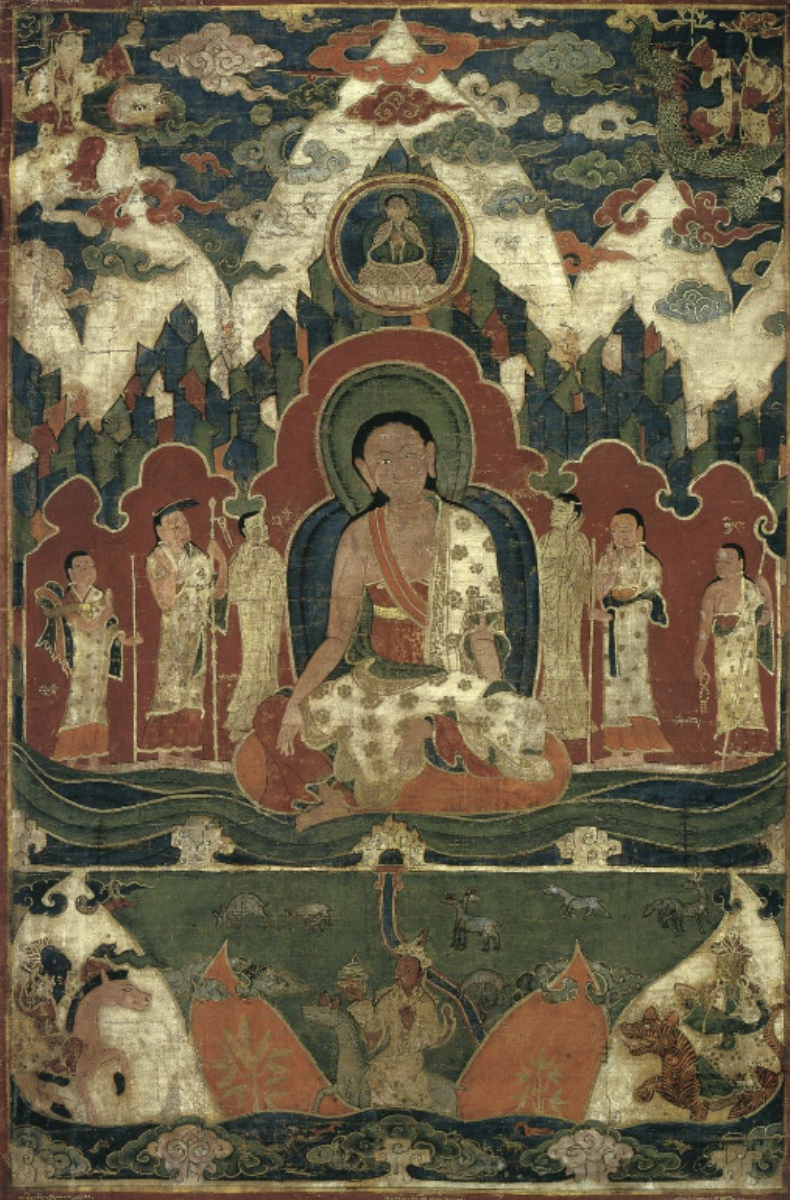
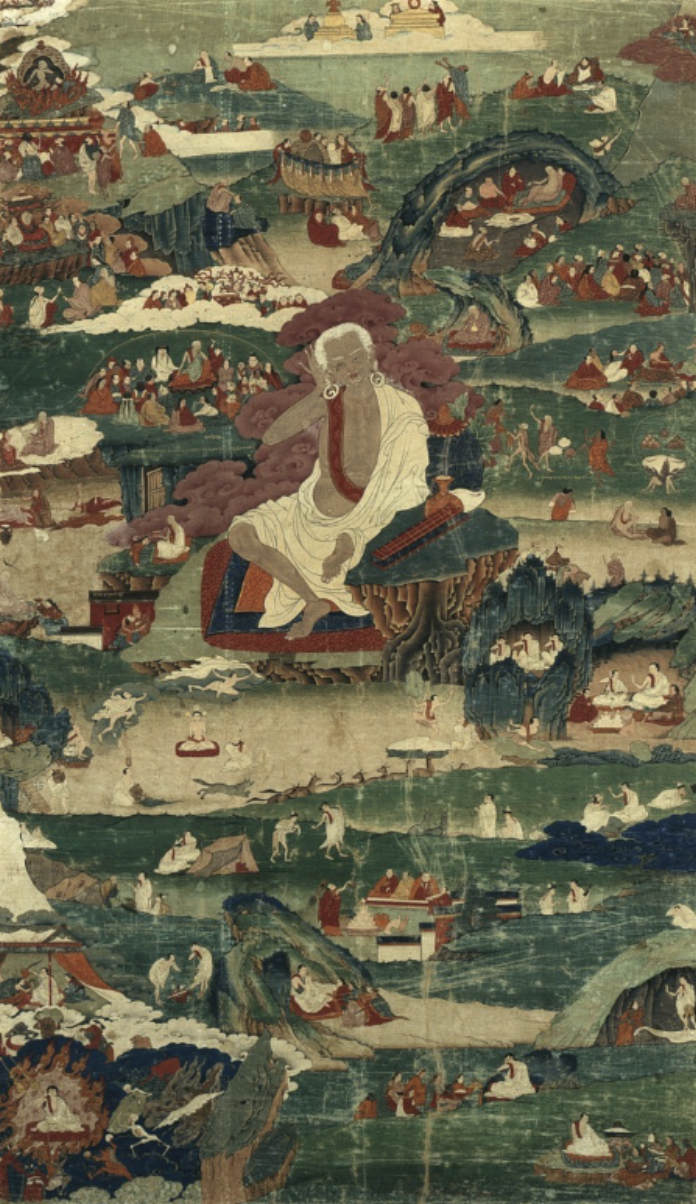
Milarepa on Mount Kailash, Central Tibet, c. 1500 CE, pigment and gold on cotton, The Art Institute of Chicago
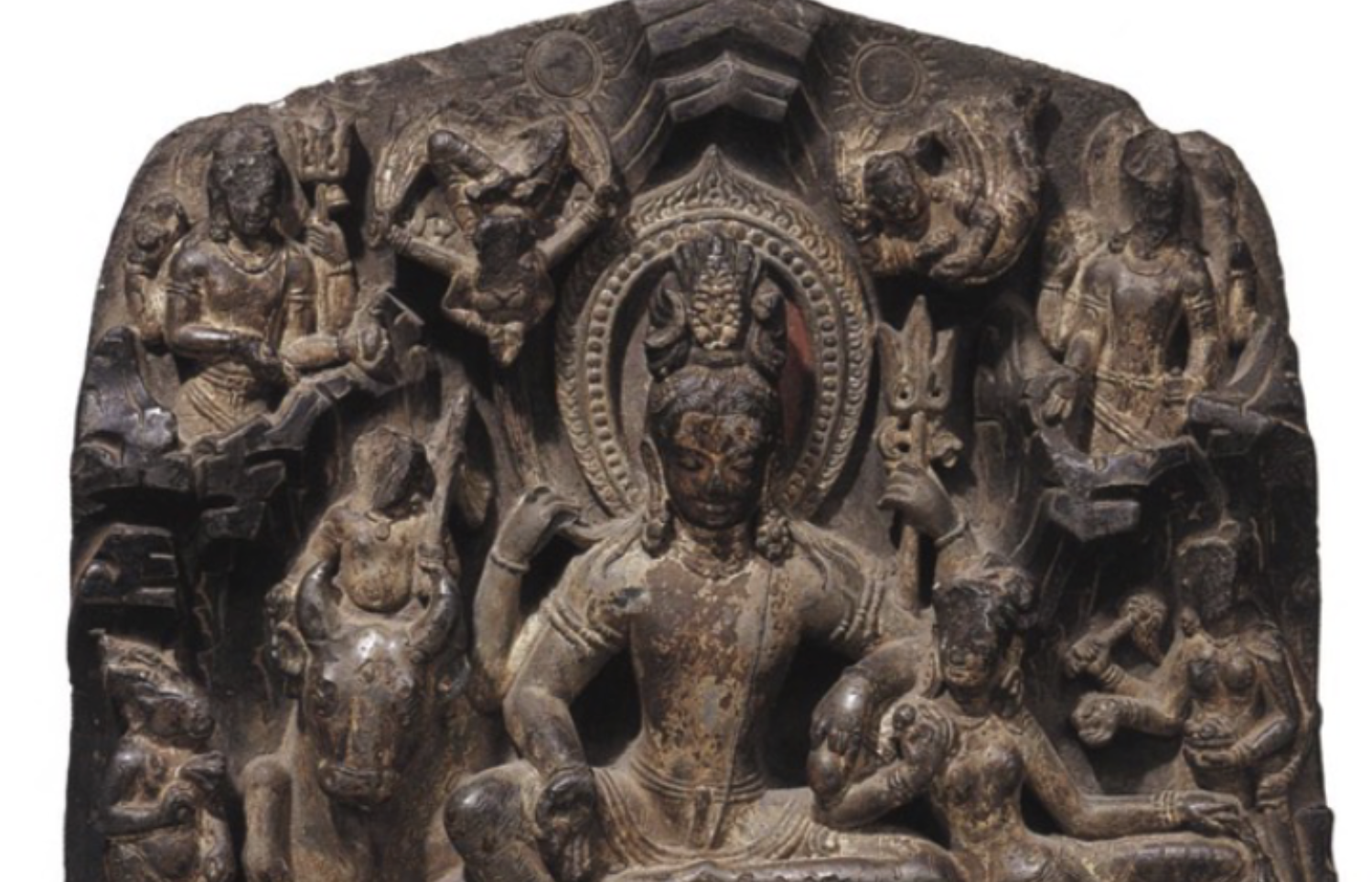
Uma-Maheshvara or Shiva’s family on Mount Kailash, Kathmandu valley, Nepal, c. 10th century
Scenes from the life of Milarepa, Eastern Tibet, 18th century, pigment and gold on cotton, Nyingjei Lam Collection
hand on ear!
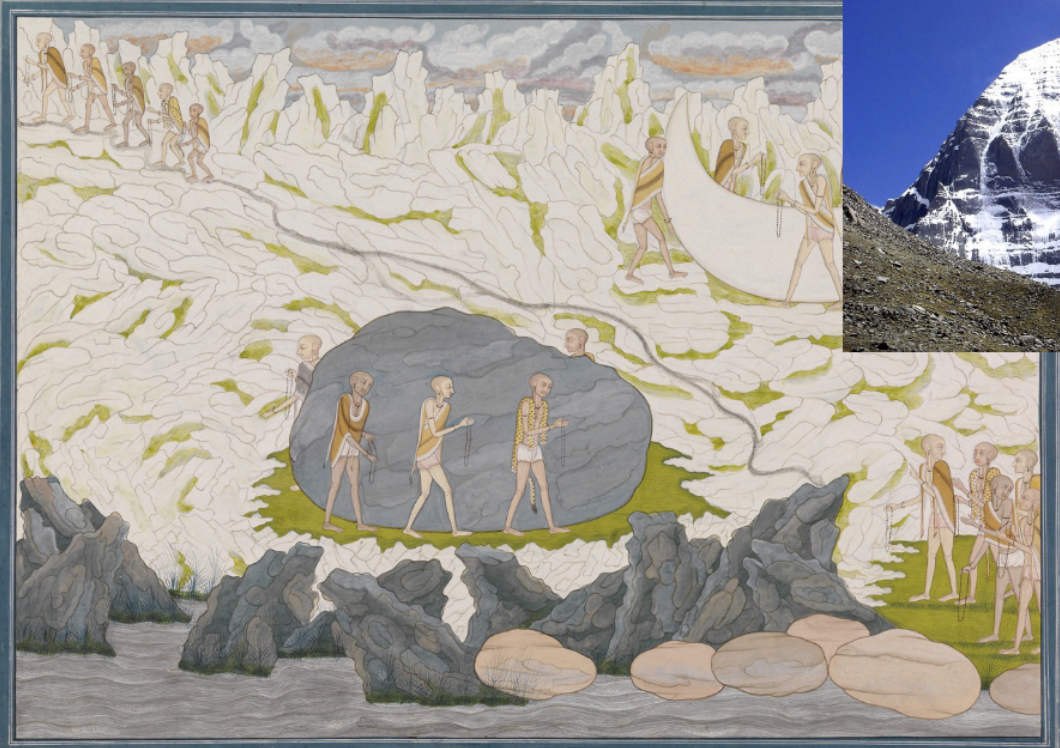
Five Sages in Barren Icy Heights, folio from the Kedara Kalpa. Attributed to the workshop of Purkhu. Kangra, Himachal Pradesh, India, ca. 1815. Opaque watercolor on paper
Shangri-La
a fictional place, a mythical Himalayan utopia
Shambhala
a mythical happy kingdom hidden somewhere beyond the snow peaks of the Himalayas in Tibetan Buddhist tradition
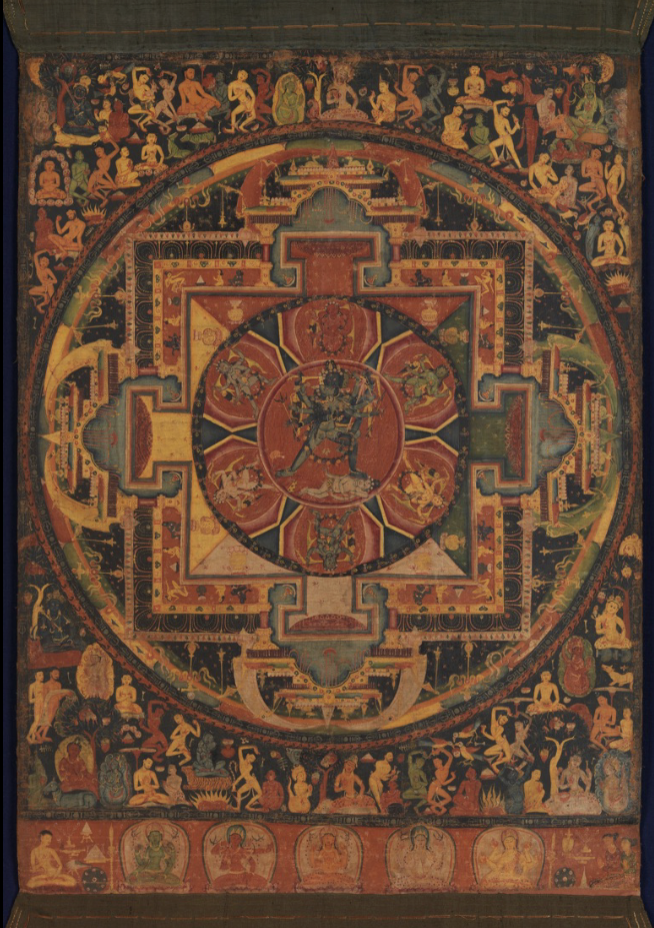
Cakrasamvara Mandala, Nepal, ca.1100. Distemper on cloth. 26 ½ x 19 ¾”, Metropolitan Museum of Art.
Centered around Chakrasamvara and his consort, Vajravarahi, trampling on a form of Shiva + his consort
6 lotus petals, reminiscent of 3 vajras
Surrounded/protected by circle of vajras
Each deity holding a splayed human skin
Varied activities taking place in the charnel ground background
Gruesome, but juxtaposed with bright colors, heavy movement, and joyous facial expressions
Blue at center + white in the east = Vairocana lineage becoming of central importance
Donors in bottom right corner
Potential early representation of Vajracharya householder monk + two wives
Esoteric Buddhism addressing its own survival by allowing monks to marry and have children
Eyes in Newar art
ovular with third line at corner
Eyes in East Indian art
“seagull eyes”
Eyes in Kashmir and Western Tibetan art
almond shaped
theosophical society
religious movement originating in the US in 1975
Founded by Helena Blavatsky + two other founding members
Believed Tibet to be the home of the Mahatmas (Great Souls), keepers of the wisdom of Atlantis
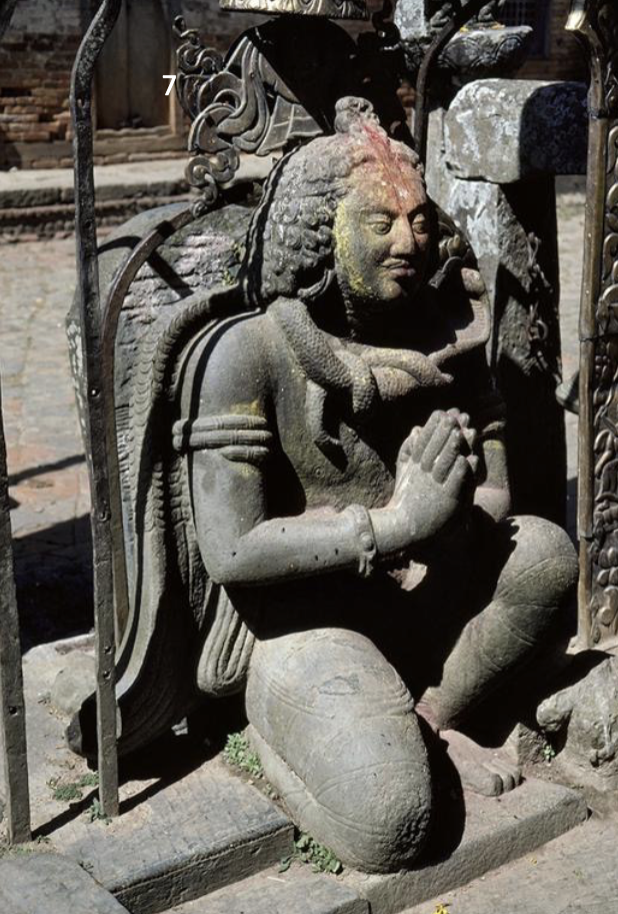
Garuda, Changu-Narayan temple, c. 6th-7th century, Kathmandu Valley, stone
mythical bird-like figure, commonly depicted as half-man, half- bird, can control nagas
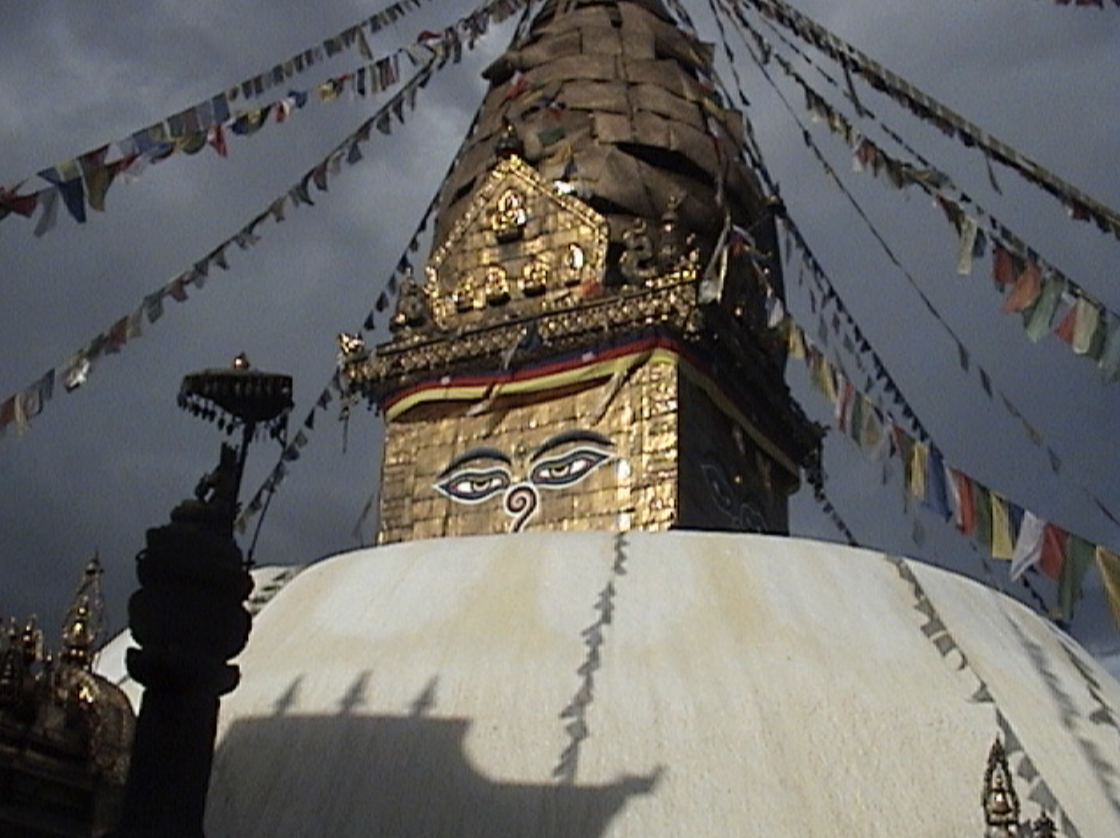
Svayambhūnāth
the most important sacred site in the Kathmandu valley, a location where the self-existent came forth in the form of light
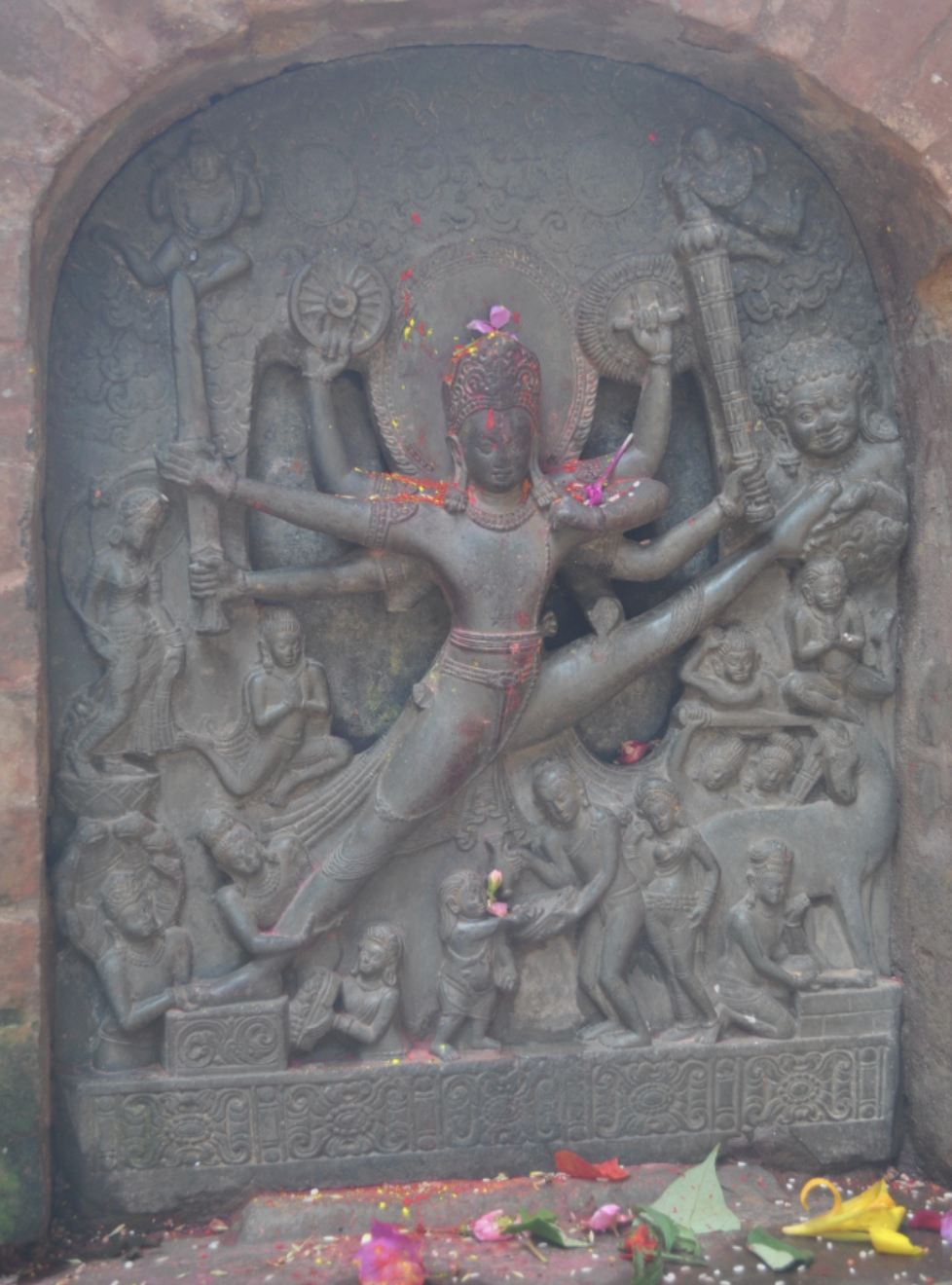
Vishnu
Preserver
Associated with snakes, Garuda
Takes 10 different forms to preserve the world
Always has a chakra (wheel), a club, and a conch
Vishnu Vikranta or Trivikrama (an incarnation of Vishnu), Changu-Narayan temple, c.9th century or later (transitional period), Kathmandu Valley, stone
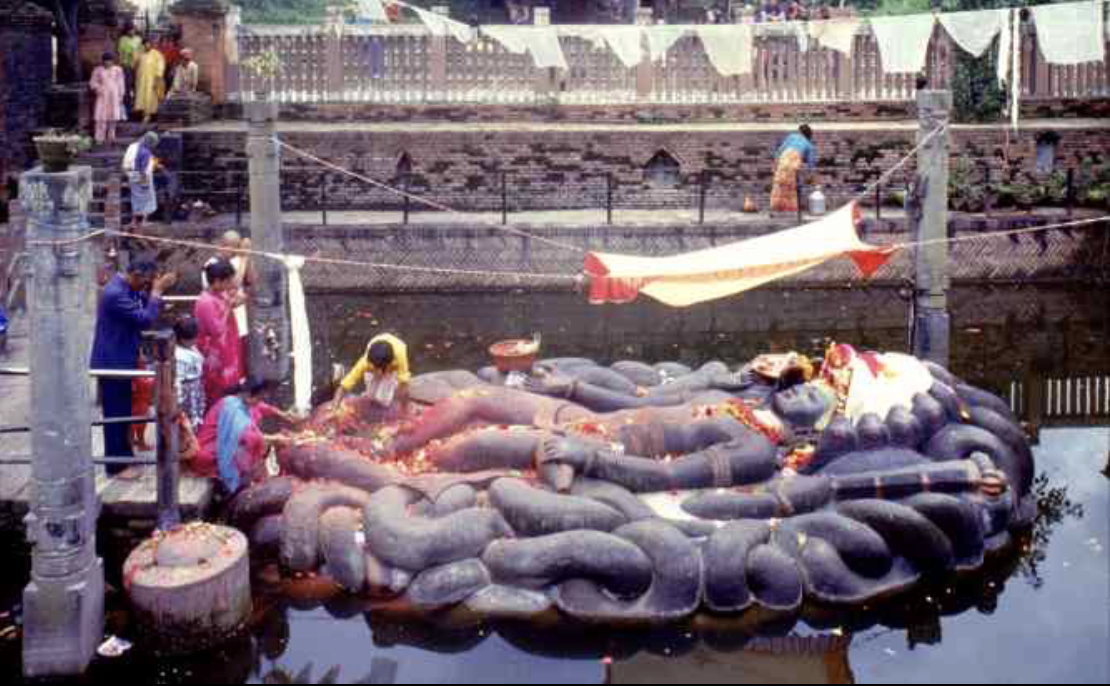
Vishnu Anataśāyin (Vishnu Reclining on Serpent Ananta) or “Jalaśayana Viṣṇu,” donation by Vishnugupta, Būḍhānīlakaṇṭha, Kathmandu valley, dated 640CE, polished stone, 21’2”
Visnu sleeping on Serpent couch “reclining Visnu”
Placement within water to activate the cosmological significance
Nature in cosmic meaning-making
Tied to politics—shows the ability of kings to harness nature to harness cosmology
Imagery demonstrates Nepal's connection to the rest of the Indian subcontinent
Stone was likely acquired elsewhere and brought to the site
Charged with sensory experience in ritual context
Characteristics of Newar art
Elongated torso
Ovular eyes with third line at corner (in contrast with east Indian seagull eyes)
Wide foreheads (in contrast with ovular east Indian heads)
Less saturated color palettes
U-shaped drapery on clothing
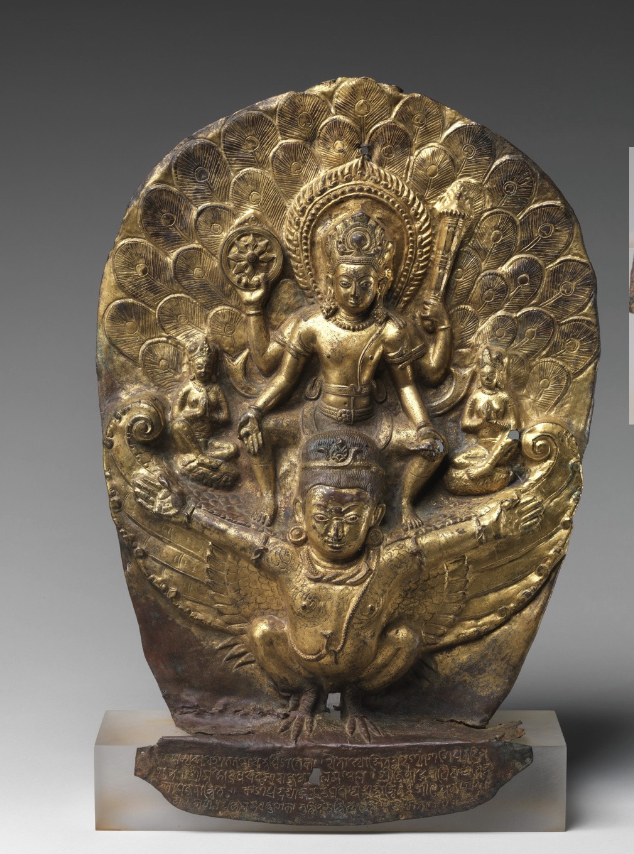
Vishnu Riding on Garuda, Nepal, dated 1004 (N.S. 124), gilt copper repoussé, H: 41.9cm, Metropolitan Museum 2012.463
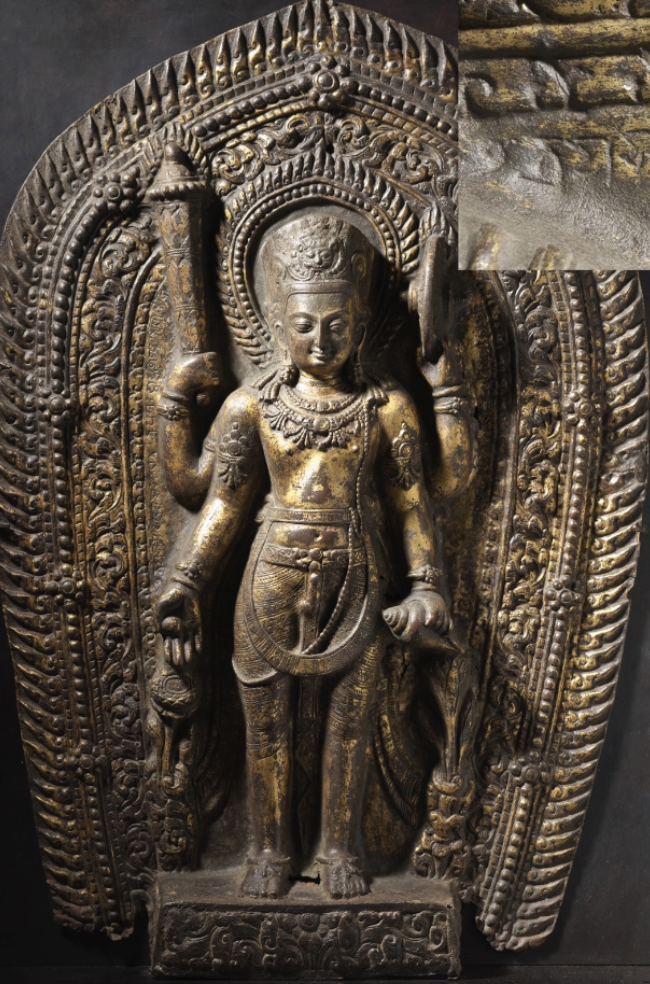
Vishnu repoussé plaque, Nepal, dated 983 or 1180CE, Copper alloy with gilt. H:47.3cm
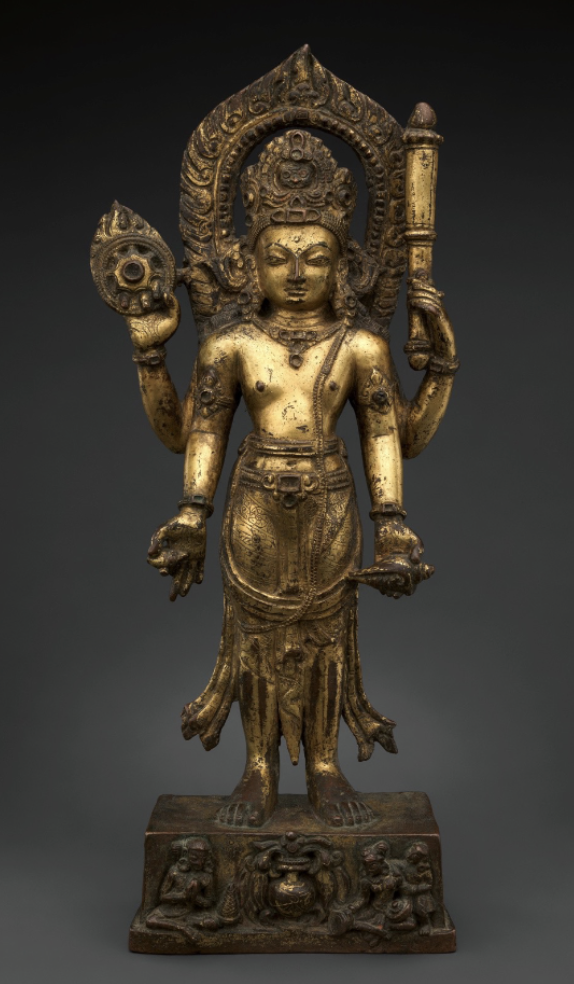
Standing Vishnu, Nepal, dated 1105CE, copper alloy with gilding. H: 42.9cm. Metropolitan Museum of Art
Ardhanarisvara (Shiva as half woman), c. 1000 CE, Nepal, copper alloy with semiprecious stones
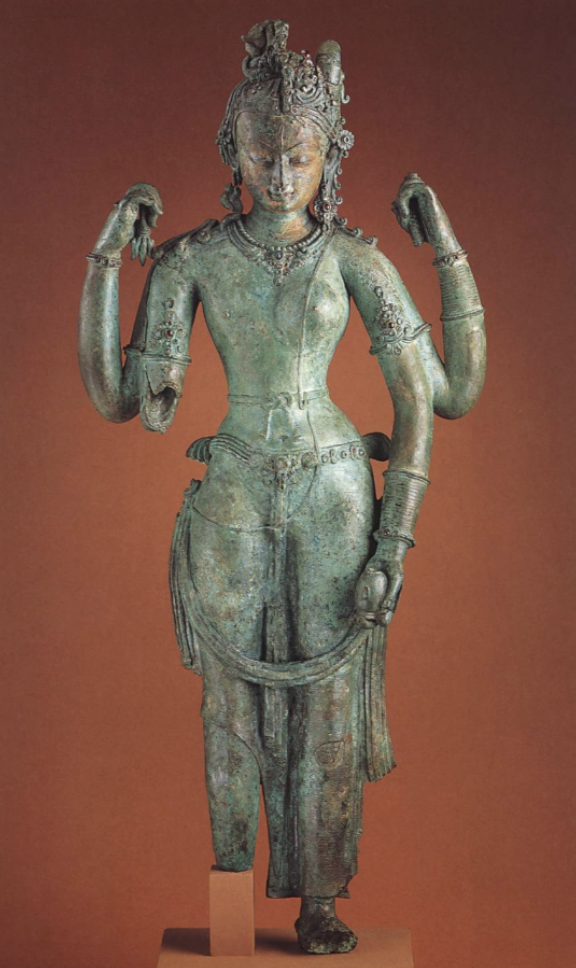
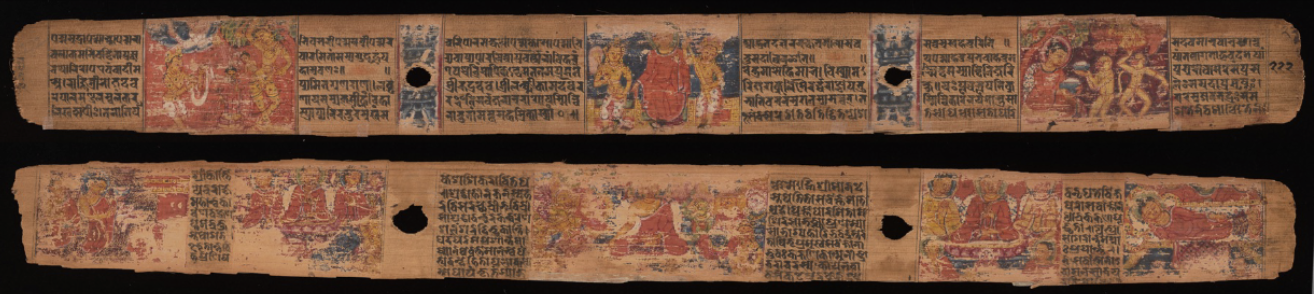
Palm-leaf manuscript of the Perfection of
Wisdom(AsP) sutra
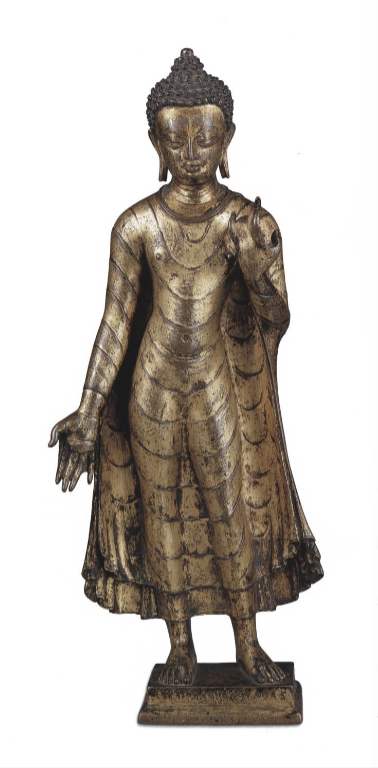
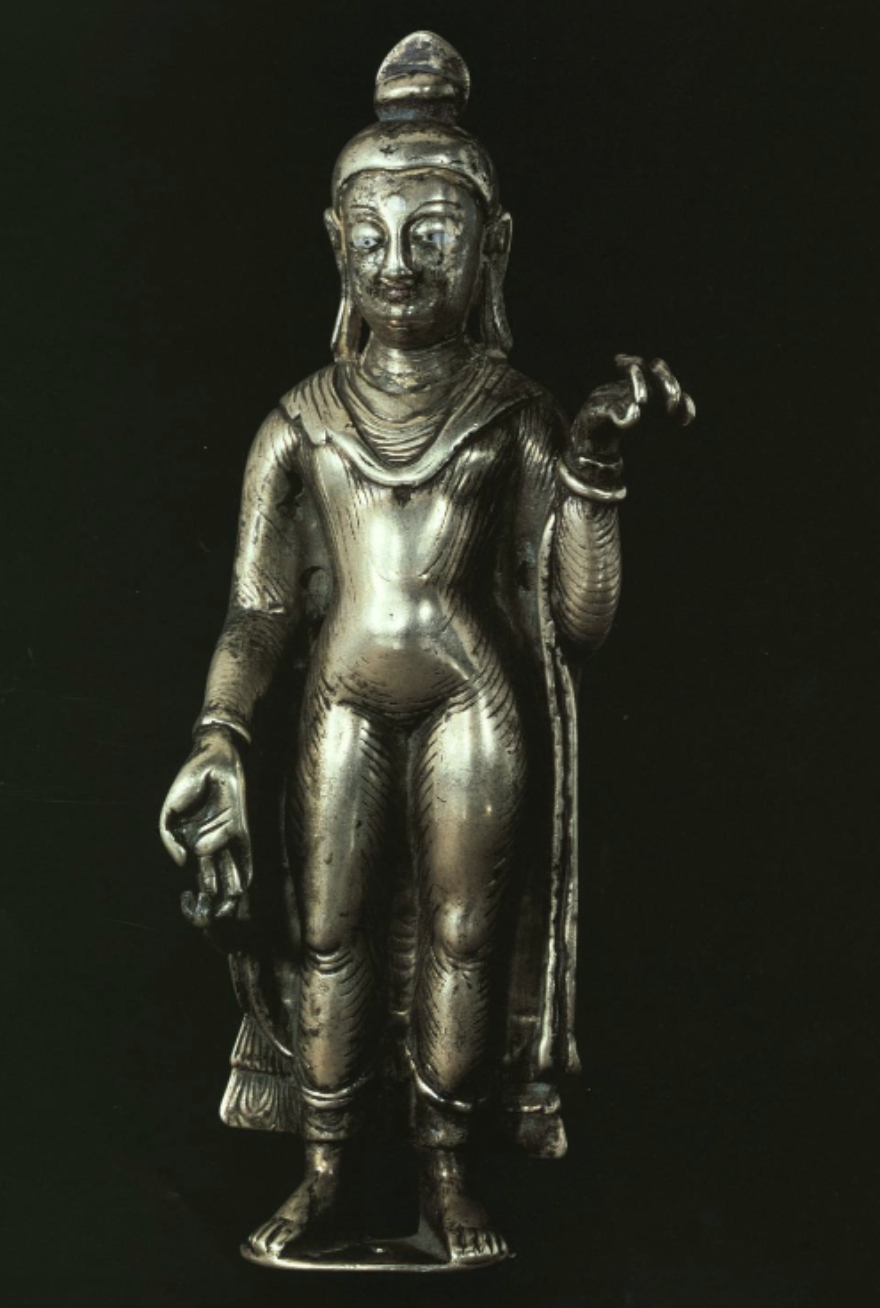
Standing Buddha, Kashmir, c. 6th-7thcentury, Brass, copper and silver inlay
Evidence of extensive touch = veneration
Almond shape eyes (characteristic of Kashmir and Western Tibet)
+ sharp eyebrows
Round, short face
Proximity to Gandhara, which has a demonstrated connection to Hellenistic traditions of depicting drapery
Drapery becomes increasingly abstract/not naturalistic
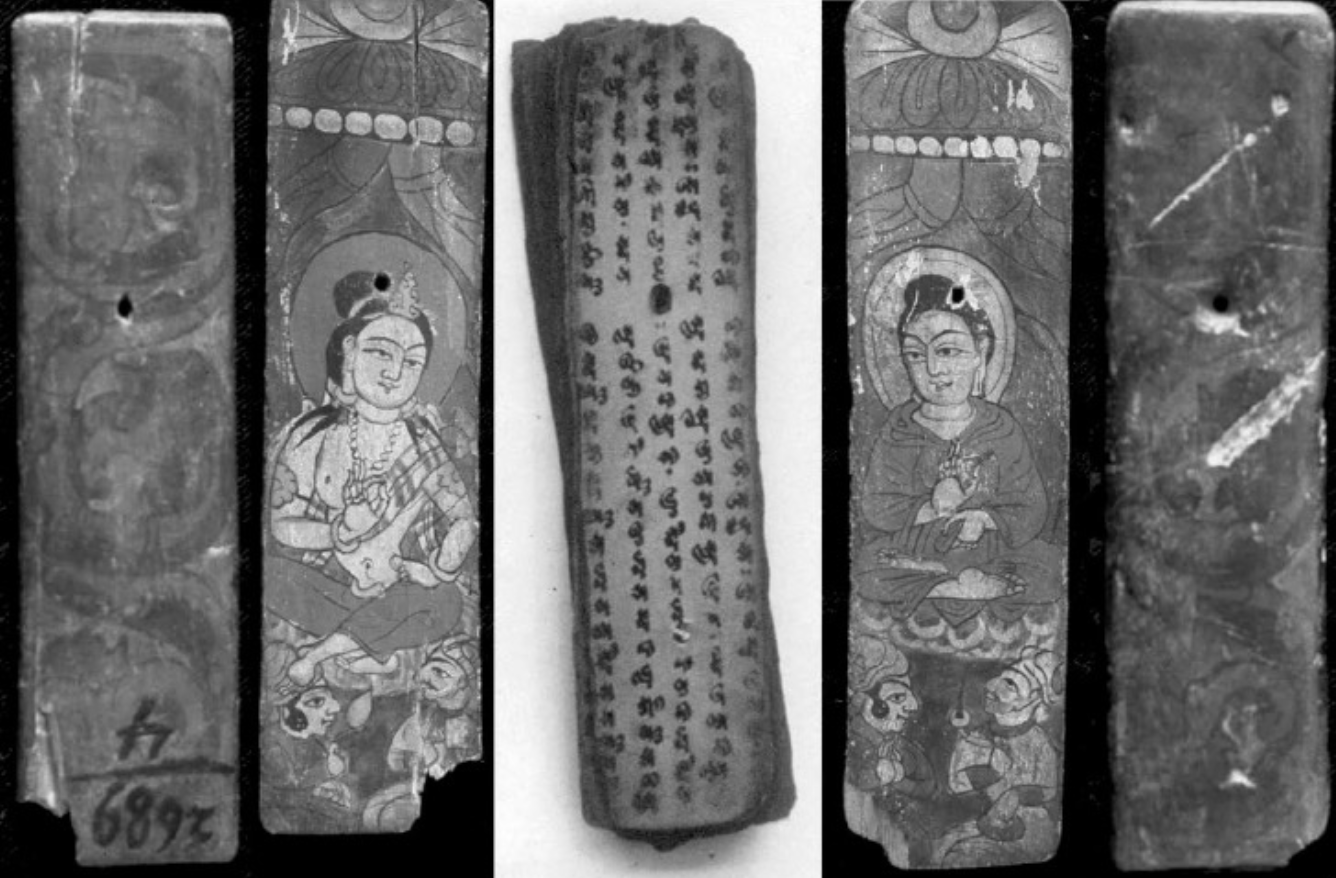
Palola-Shahi Dynasty
ruled in Kashmir-Gilgit region during the seventh through the early eighth centuries, well known royal patrons of Buddhist art in the region
Gilgit Manuscript Covers, painted wooden covers to a Saṃghāta sūtra manuscript, ca. 8th century CE or earlier
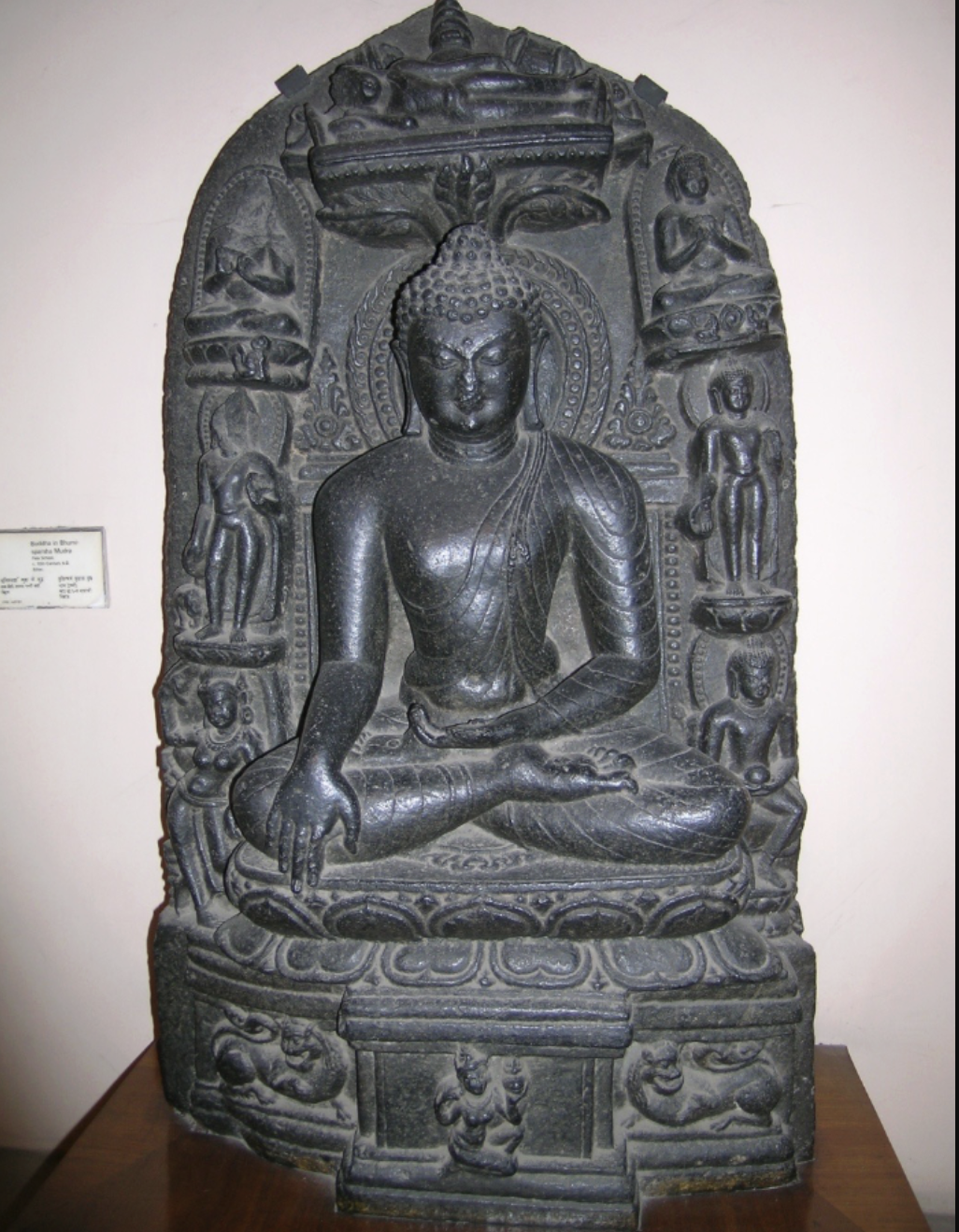
Buddha’s Enlightenment and other 7 life events of the Śākyamuni Buddha, c. eleventh century (Pāla period), Ghosrawan, Bihar, black stone stele. Indian Museum
Birth of the Buddha at Lumbini
Enlightenment of the Buddha at Bodh Gaya
Buddha's first sermon at Sarnath
The monkey's offering at Vaishala
Taming Nalagiri the elephant at Rajgir
Descent from Tavatimsa Heaven (sermon for mother) at Sankassa
Miracle at Shravasti (self-multiplication)
Death of Buddha at Kushinagar
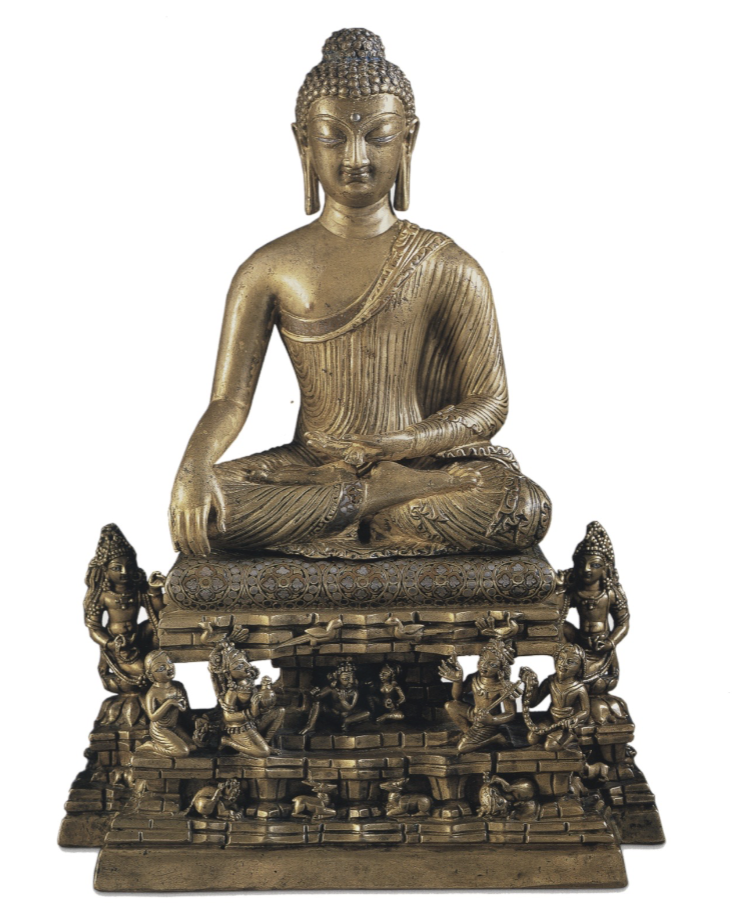
Buddha (Shakyamuni) on Mount Meru, Kashmir, c. 700CE, Bronze with silver and copper, Norton Simon Museum
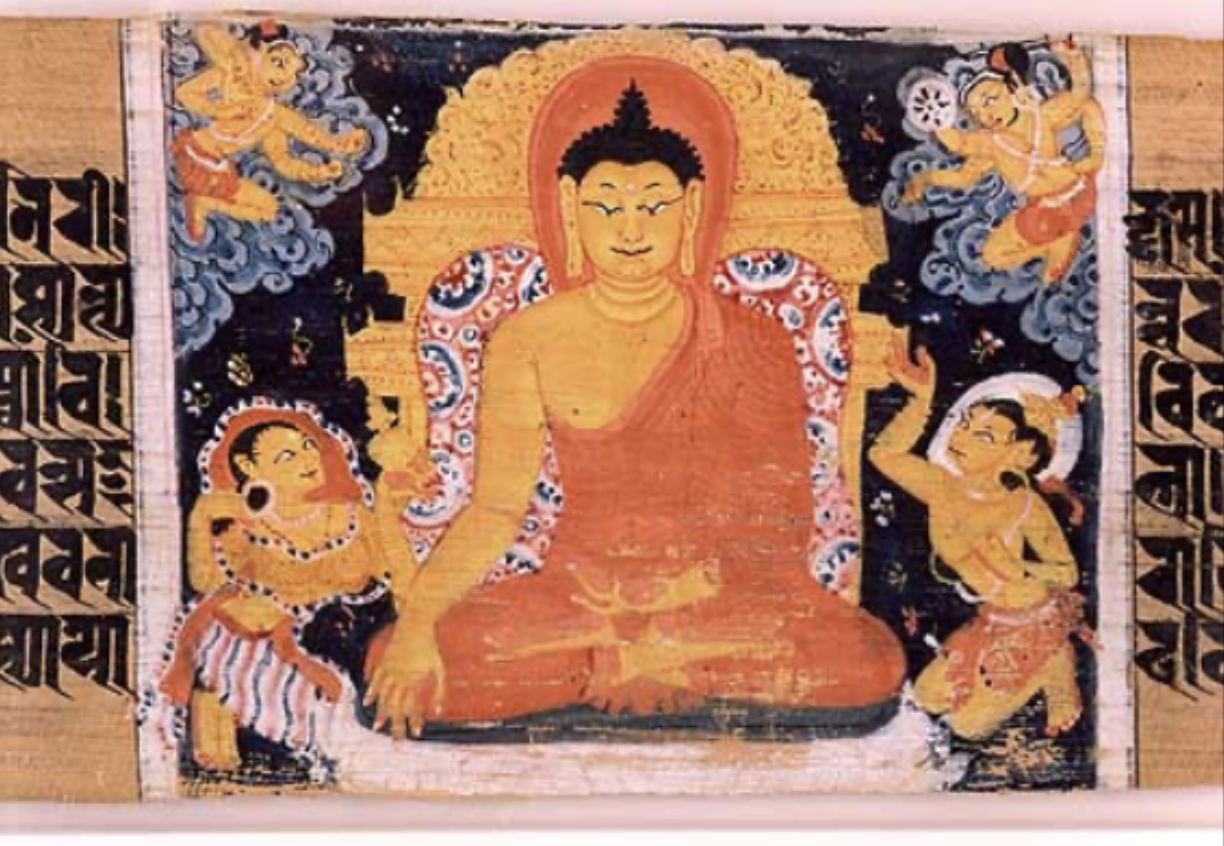
Buddha’s enlightenment, manuscript painting, early 12th century, Nalnada monastery, Bihar, India, Asia Society, New York
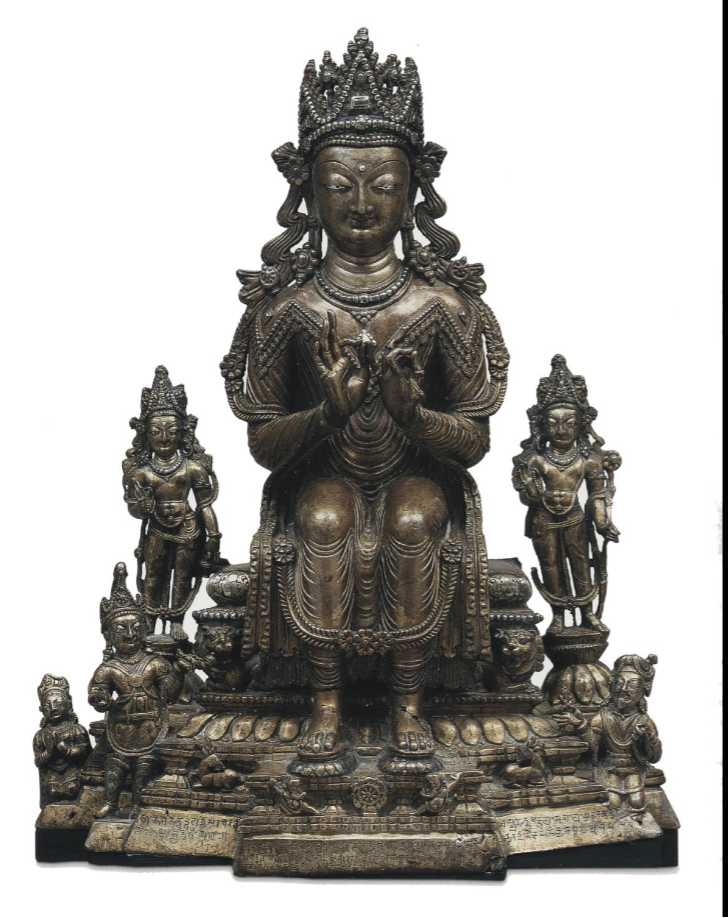
Preaching Buddha with Bodhisattvas and Royal devotees, Kashmir, dated c. 715 CE.
Donors: King Nandivikramadityadeva and his Queen Samadevi, prime minister
Gunodadhi. Brass with silver, Pritzker Collection
Over time, Buddha becomes increasingly conceived as cosmic, transcendent
No longer just a human teacher, now king of the dharma realm
Also representational of the human desire to make more merit through making offerings/adorning him
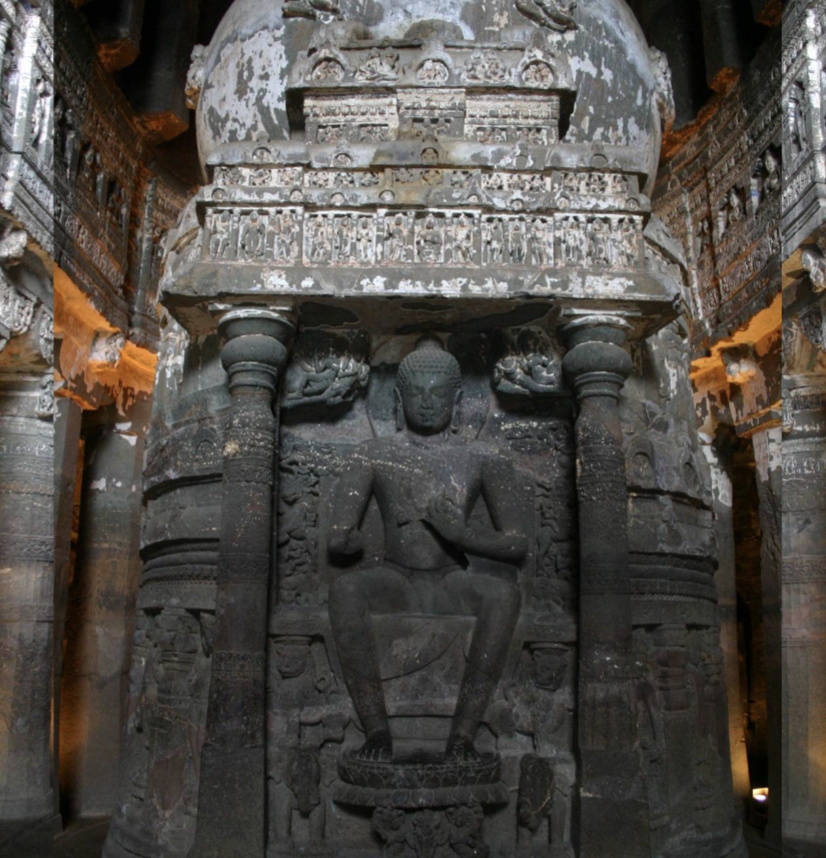
Preaching Buddha in front of a stupa, Ajanta, Cave 26, c. 462-500CE
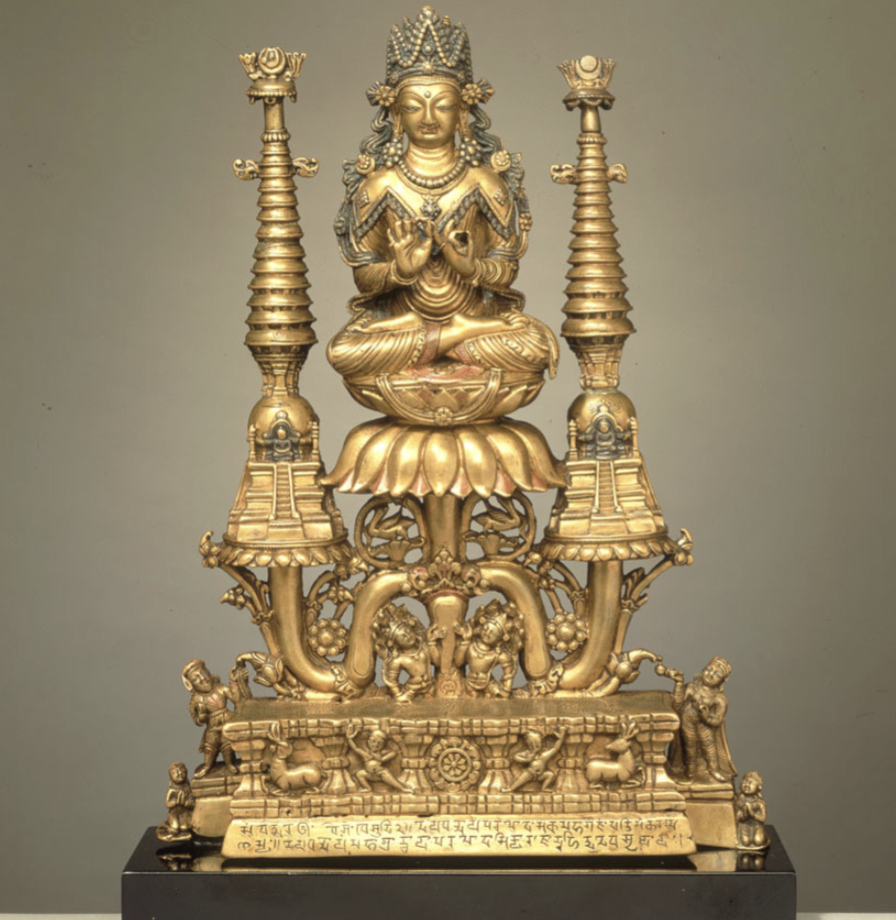
Shakyamuni/Vairocana, Kashmir, Donors: Princess Devashri and her husband
Samkarasena, dated c.714 CE, Brass with copper and silver alloy, Asia Society, New
York
Bottom layer: wheel of dharma + deers = Budhas first sermon at Sarnath
Second Layer: lotus + nagas + stupas = Buddha’s multiplication miracle
Different stupas = different Buddhas?
Staircases on all four sides
Representations of donors on either side
Crowned, adorned
Signaling of different (cosmic) level of the Buddhahood
Potentially develops out of ritual adornment of such Buddha figures
Cosmic Buddha body associated with Akanistha heaven
“Enjoyment-body”
Mahayana
Great vehicle/way
association with bodhisattva ideal → helping others before reaching enlightenment
Must go through many lives/reincarnations
Hinayana
little/lesser vehicle/way
Vajrayana (tantric/esoteric Buddhism)
Emphasis on secrecy, importance of guru (teacher) for initiation and guidance
Philosophically based on Mahayana teachings
Immediate enlightenment through ritual
Theravada
way of the elders, Pali Buddhism
Three M-s
Mudra (body)
Mantra (speech)
Mandala (mind)
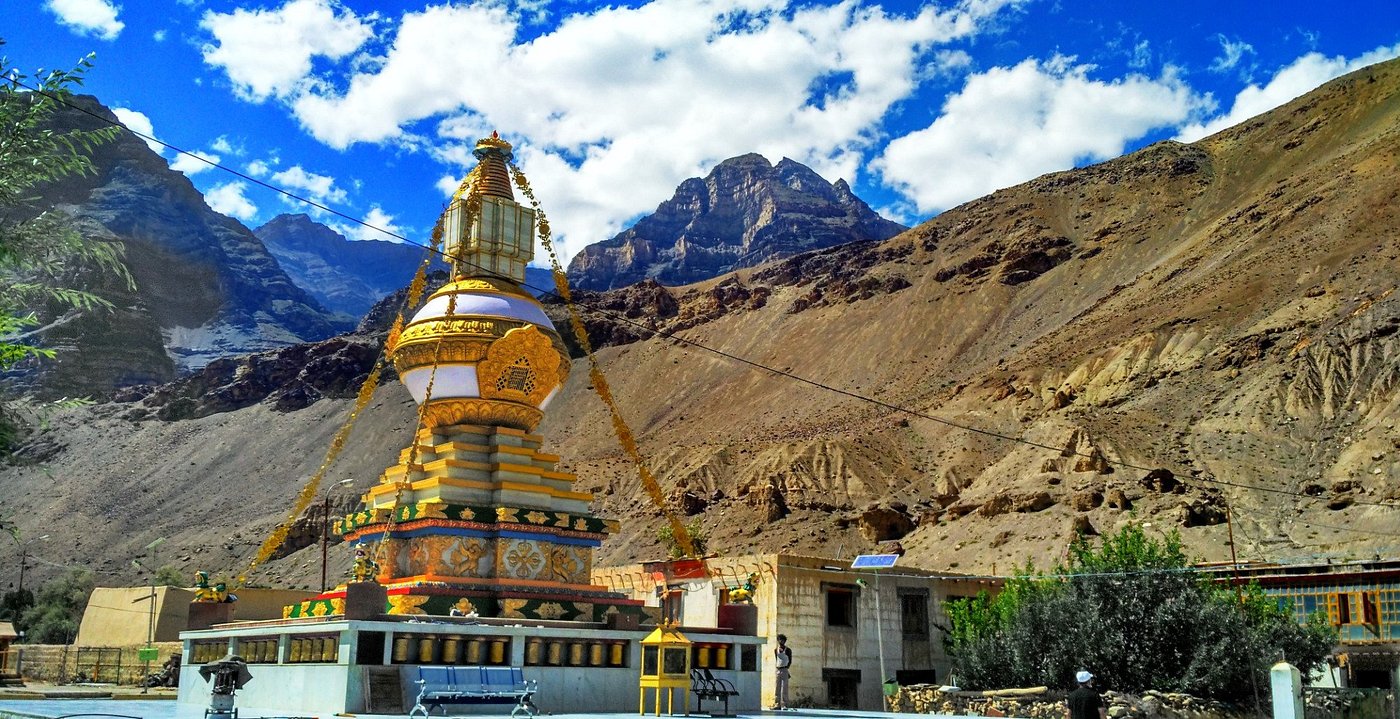
Tabo monastery
Spiti Valley, India
founded 996 CE
under the patronage of kings of the Guge-Purang Kingdom
Based on the Sarvatathāgatatattvasagraha (STTS)
Three structural entities of the Tabo Main Temple:
1. Entry hall dedicated to protective deities
2. Assembly hall featuring a Vajradhatumandala with four-bodied Vairocana + The Pilgrimage of Sudhana and Life of the Buddha
3. Cella containing Amitabha (formerly Vairocana) surrounded by an Ambulatory
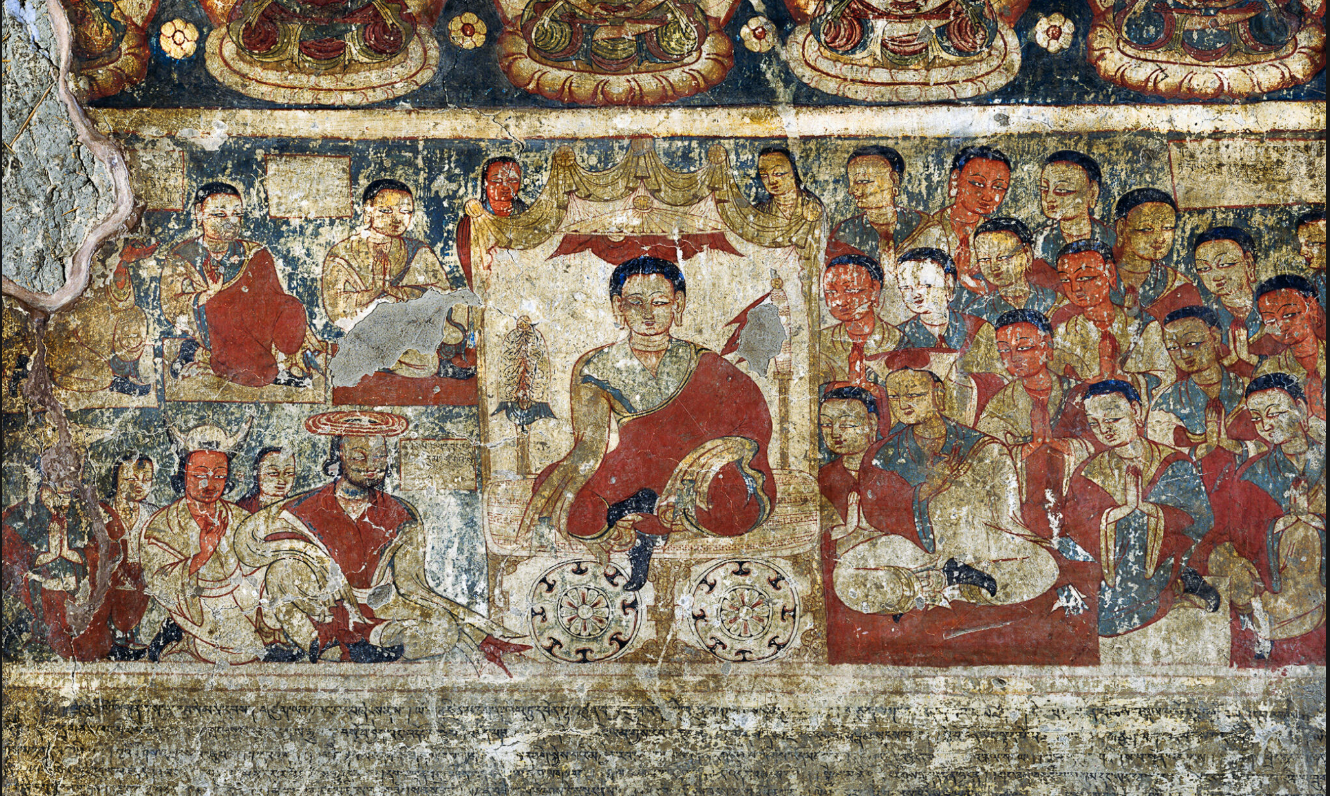
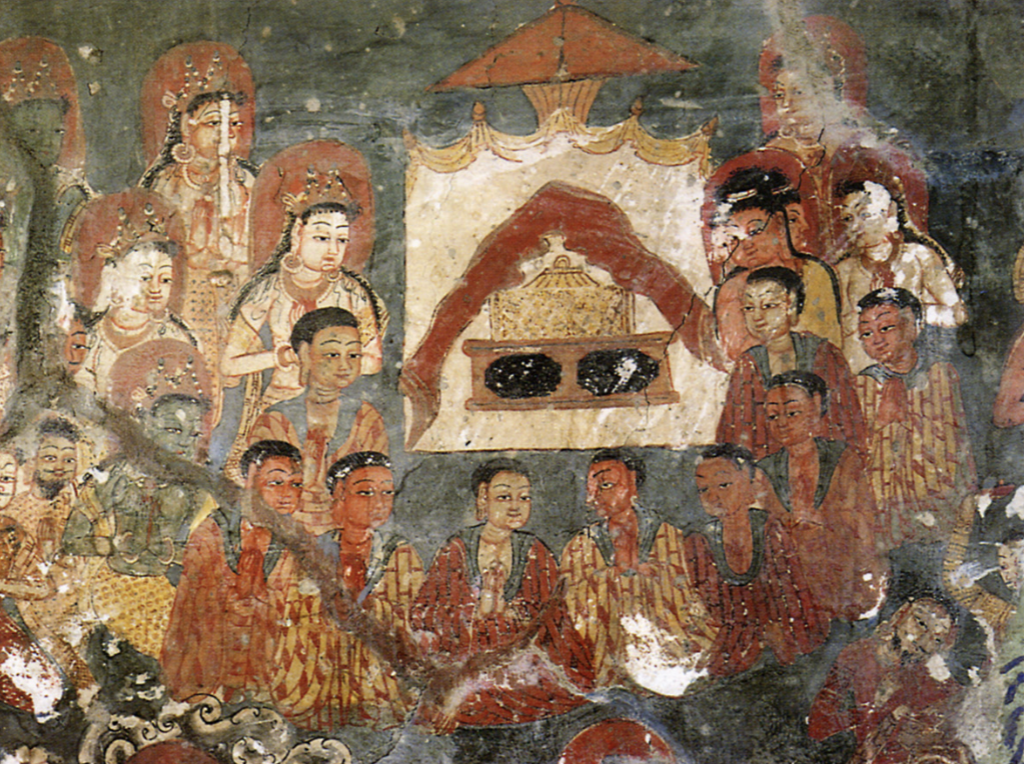
Royal Lama Byang-chub’od and donor Assembly, southern face of the entrance to the Cella, ambulatory, Tabo Monastery, 1042
Vairocana/Amitabha, Cella, Tabo Main temple
one of the two main images of the temple
flanked by two standing Bodhisattvas
difficult to securely identify the bodhisattvas in the Cella because they have been repainted many times, based on their arm positions + traces of color possibly represent Avalokitesvara and Vajrasattva
being offered flowers by four deities
generally interpreted as Buddha Amitabha (red body color, meditation gesture), but was originally an ancient form of Vairocana (lion throne, holds wheel in meditation gesture
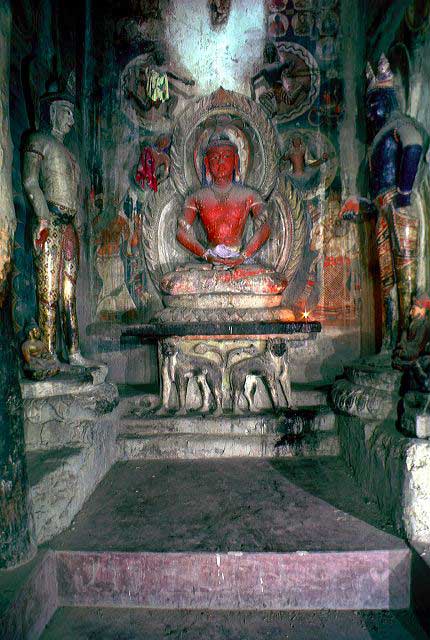
Mahavairocana, behind altar, Main Temple, Tabo
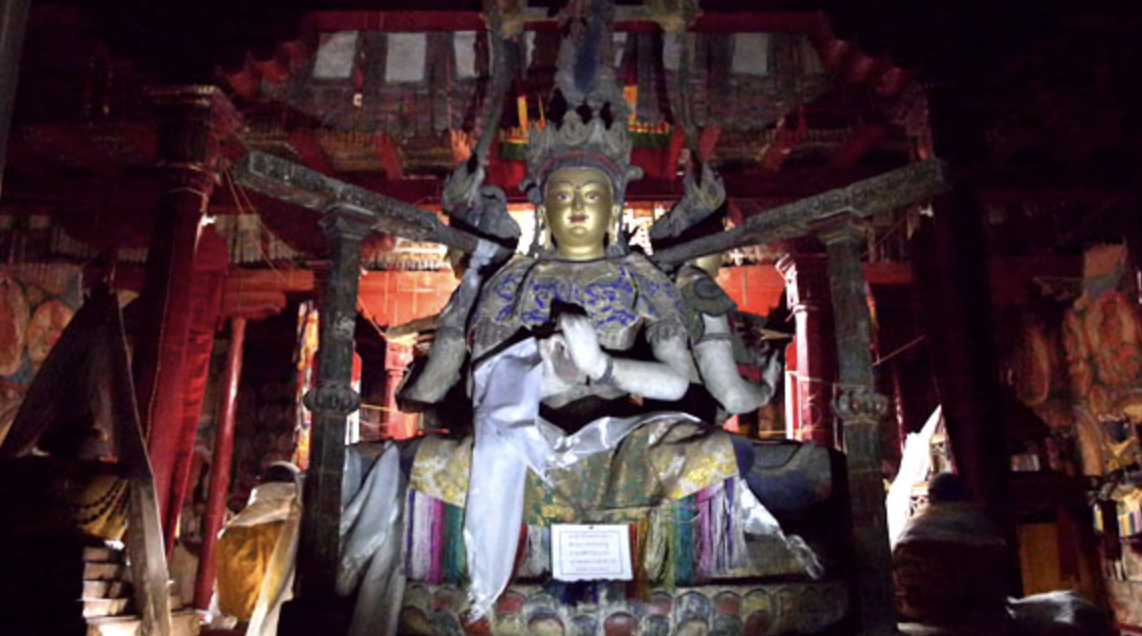
Vajradhatu (Vajra realm) mandala
According to STTS, center of mandala is four-headed Vairocana
Depicted in Tabo as four-bodied
Similar anatomical proportions to images from Sarnath
Sarvatathagatatattvasamgraha text emphasizes Vairocana as the universal sovereign
New teaching at the time of Temple renovation
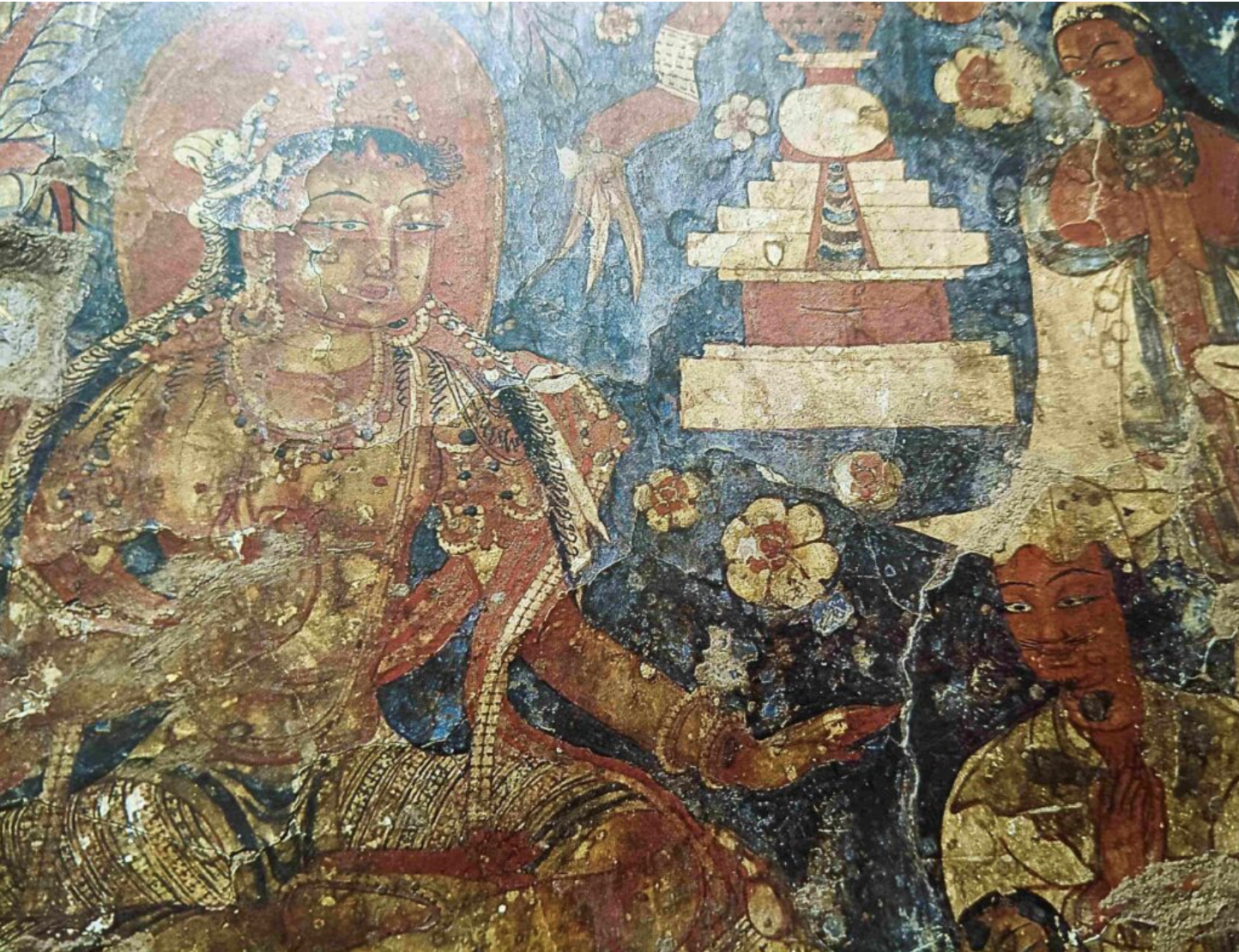
The Pilgrimage of Sudhana
based on the Gandavyuha sutra
featured in Tabo’s assembly hall
Sudhana takes a pilgrimage on quest for enlightenment and studies under 53 "good friends", those who direct one towards the Way to Enlightenment
Manjushri blesses Sudhana, Pilgrimage of Sudhana, Assembly Hall, Main Temple, Tabo, 11th century
Sudhana visits the perfume merchant Samantanetra, Assembly Hall, Main temple, Tabo, 11th century
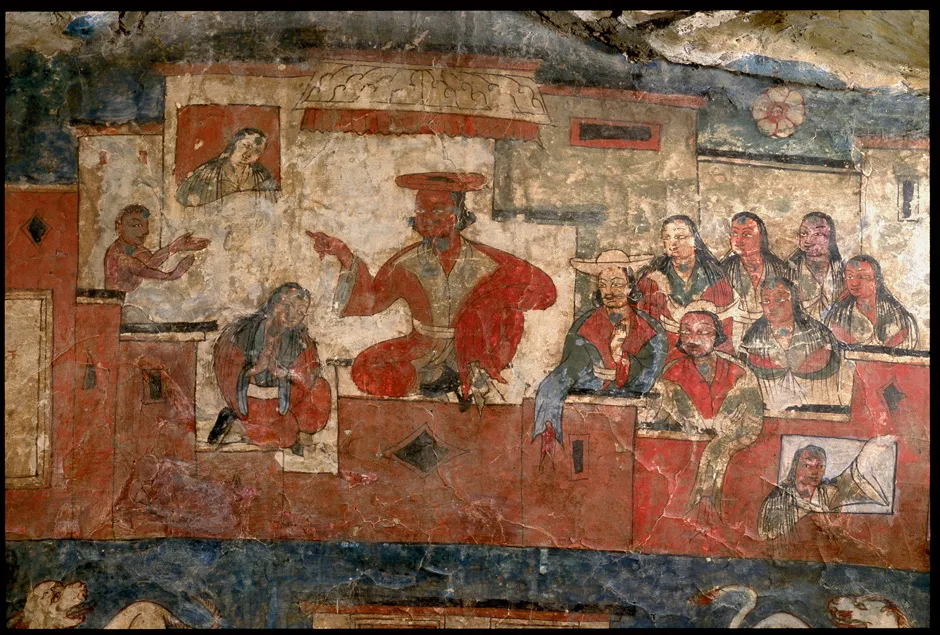
Lady Maya’s dream (conception) and the palace of King Shuddhodana, Assembly Hall, Main Temple, Tabo, 11th century
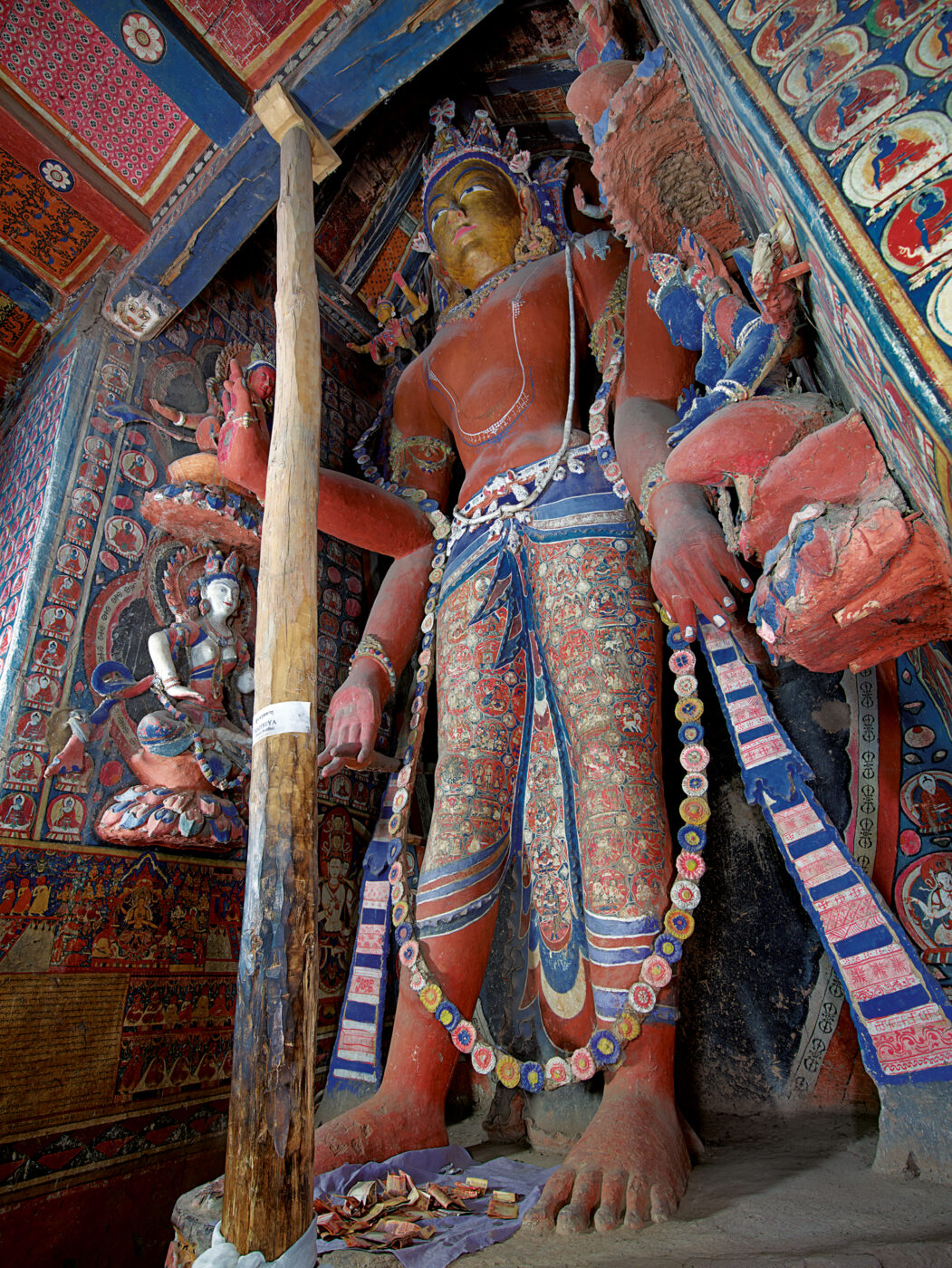
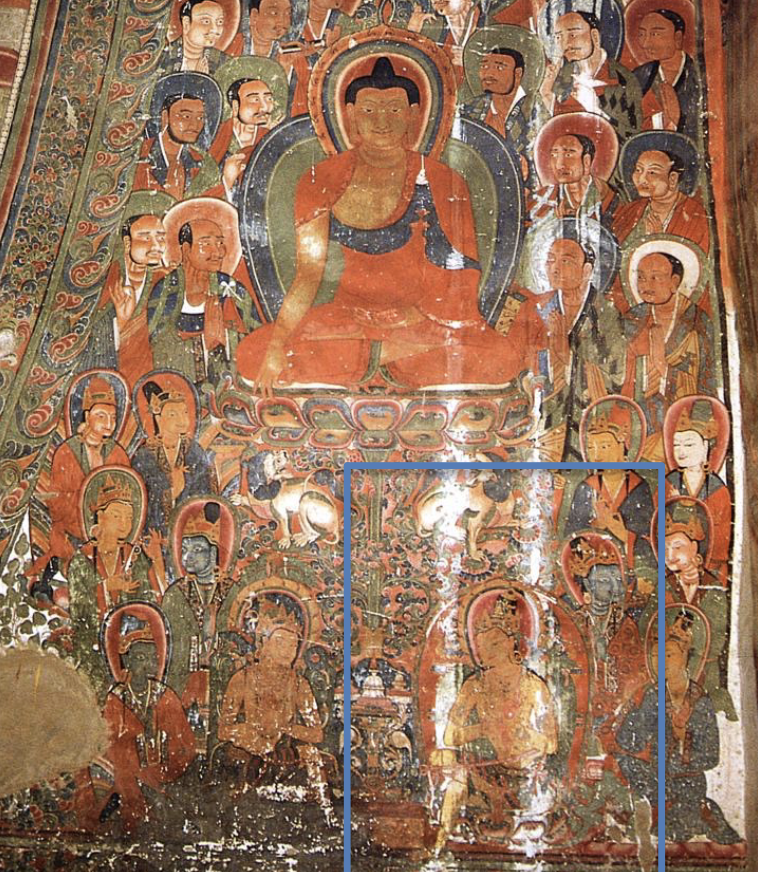
Maitreya
Bodhisattva, future Buddha
Stupa on the headdress
Water jug, symbol of the ascetic lifestyle, associated with Siva
Alchi monastery
Lower Ladakh on the southern bank of the Indus Valley
mid-12th to early 13th century
traditionally attributed to Rinchen Zangpo
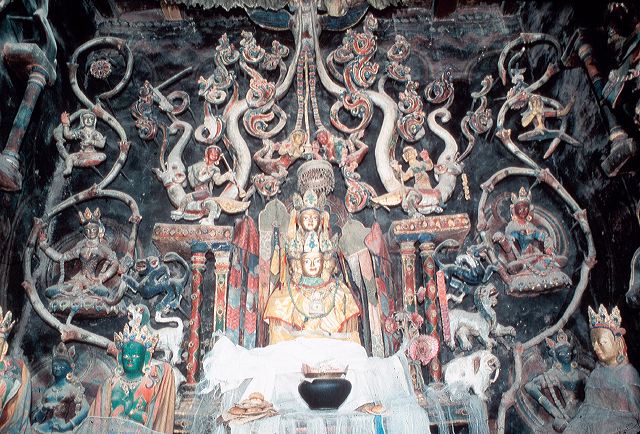
Dukhuang (Assembly Hall) with four-faced Vairocana
Sumtseg (Three-Storied Temple)
Great and Small Chortens (stupas)
Four-faced Vairocana, central wall, Dukhang, Alchi, c. 12-13th centuries
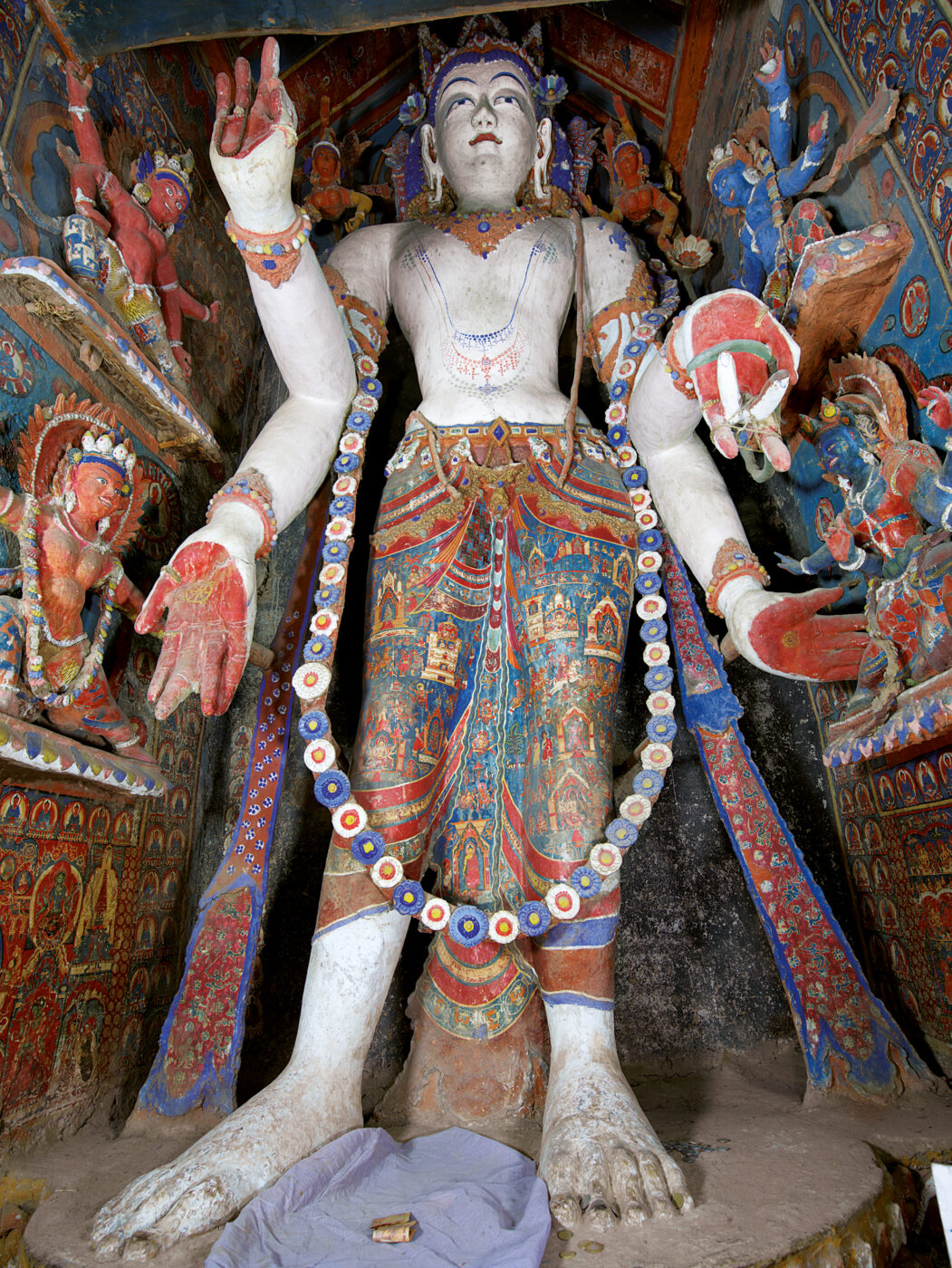
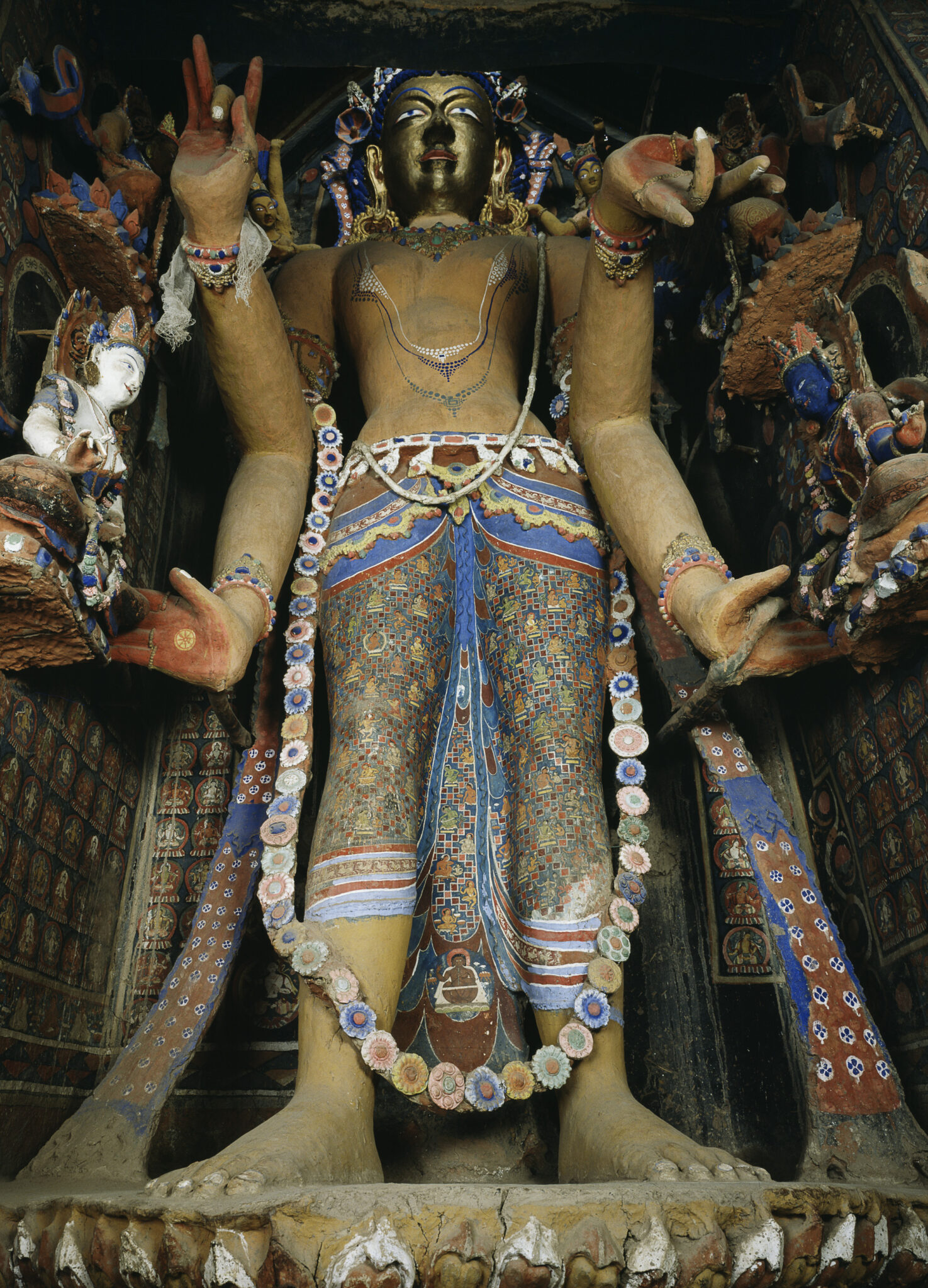
Avalokiteshvara with a dhoti depicting the holy places and royal palaces of Kashmir, Sumtseg, Alchi, c. early 13th century
Wears Five Buddha Crown
Compassion
Dhoti with holy sites in Kashmir → appears in the world to provide help to people
evidence of deep Kashmiri connectio
Body (of mind, body, speech triad)
Amitabha
west
Maitreya with a dhoti depicting the life of the Buddha, main niche, Sumtseg, Alchi, c. early 13th century
Four-headed Vairocana in headdress
Future Buddha
Dhoti with Buddha’s life scenes
Mind (of mind, body, speech triad)
Vairocana
Center
Contains 3 body system in one figure
Life of the Buddha = emanation body
Vairocana headdress = truth body
Maitreya = enjoyment body
Manjushri with a dhoti depicting the 84 Mahasiddas, Sumtseg, Alchi, c. early 13th century
Wisdom
Dhoti with Mahasiddhas
Speech (of mind, body, speech triad)
Akshobhya
east
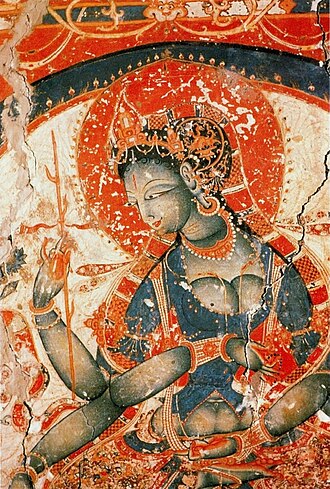
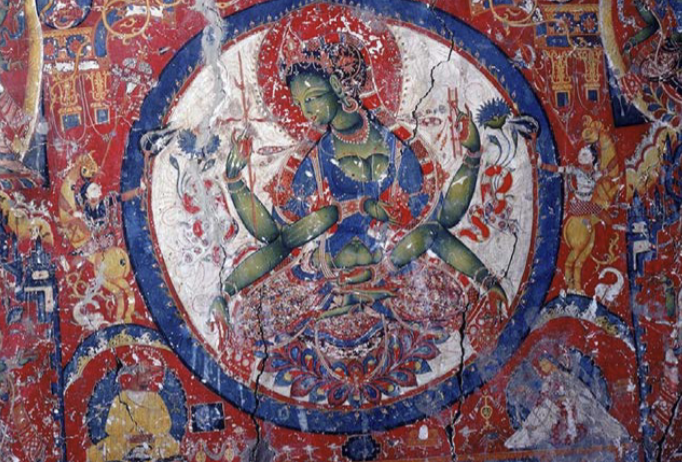
Detail of Green Tara, Avalokiteshvara niche, Sumtseg, Alchi, c. early 13th century
Holds a manuscript
Associated with compassion, said to have emerged from a tear of Avalokiteśvara
almond-shaped, protruding eyes
Extreme shading
Detailed depiction of clothing and jewelry
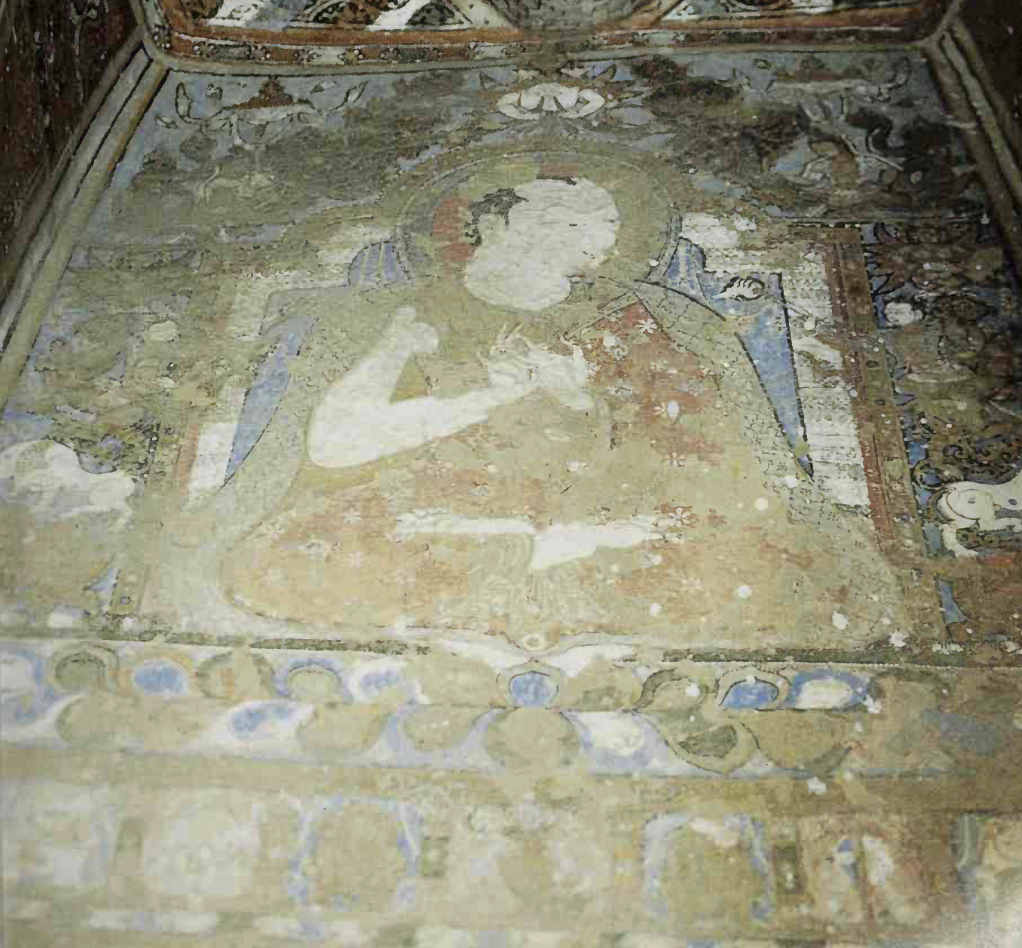
Portrait of Rinchen Zangpo(?), Great Chorten, Alchi, ca. 1200
the Ngadar
"the Earlier Diffusion" of Buddhis, ca. 7th-9th cents
initiated by Songsten Gampo who deliberately imported aspects of Buddhism from abroad
period during which Tibet became one of Asia's great imperial powers, intermittently controlling their predominantly Buddhist neighbors (India, Nepal, China, etc)
Buddhism as largely a court religion
Influence from Indian and other Central Asian Buddhist painting during this early period
ended with the successive assassinations of pro-Buddhist king Relpachen and pro-Bon King Lang Darma
the Chidar (phyi-dar)
"the Later Diffusion" of the Buddhist faith, approx 11th-15th cents (main activities: late 10th century-12th century)
Generated enormous popular appeal
period during which Tibet supplanted India as the Buddhist holy land
widespread translation of Indian Buddhist texts into Tibetan + construction of Buddhist monuments
efforts to model beliefs/practices off of India
Tibetan presence in eastern India (ca. 1000-1200) as pilgrims, scholars, monks
art shows influences from eastern India and the Kathmandu Valley
Rinchen Zangpo
influential master in the propagation of Buddhism in Tibet
made monumental translations/commentaries
brought artists/artisans from northeastern India and Kashmir back to Tibet, ensuring the importance of the Kashmiri tradition in Tibet/preservation of the style in the face of Muslim conquest
Atisa
revered as Tibet's greatest early spiritual leader
stayed in Guge for three years, then traveled to central Tibet
prestigious example shaped subsequent practices
depicted wearing a red pandita hat (or scholar's hat)
Avalokiteshvara mandala, Tibet occupied Dunhuang (China), c. 9th century, pigments on cloth (silk), H:189cm, Musée Guimet,
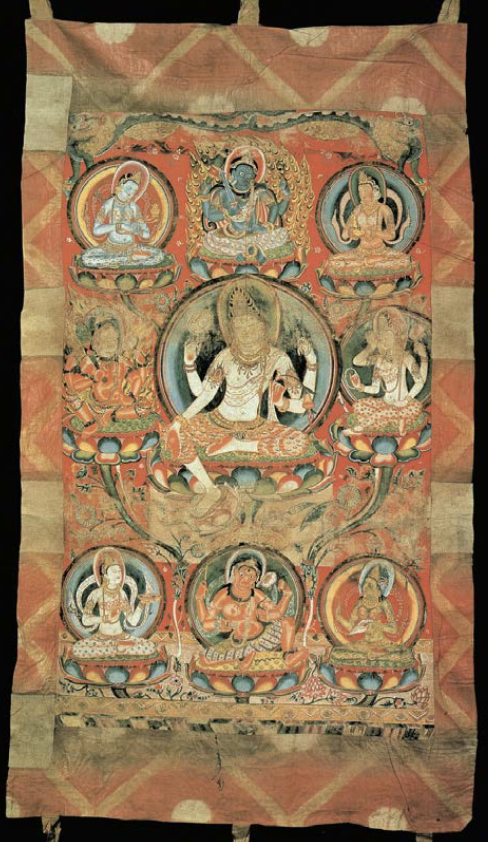
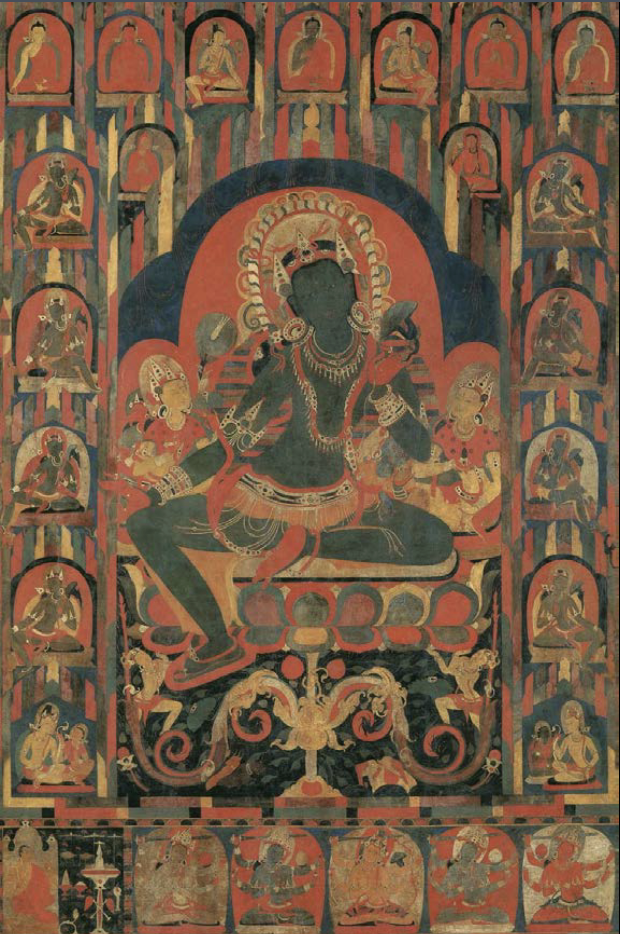
Green Tara (Khadiravani Tara/ Ashtamahabhaya Tara), central Tibet, Reting monastery, c. 2nd half of the 11th century, pigments on cloth
stylistically comparable to contemporary eastern Indian examples
important lineage object for Reting monastery
Bodhisattva Maitreya, Drathang monastery, ca. 1081- 1093 CE, wall painting
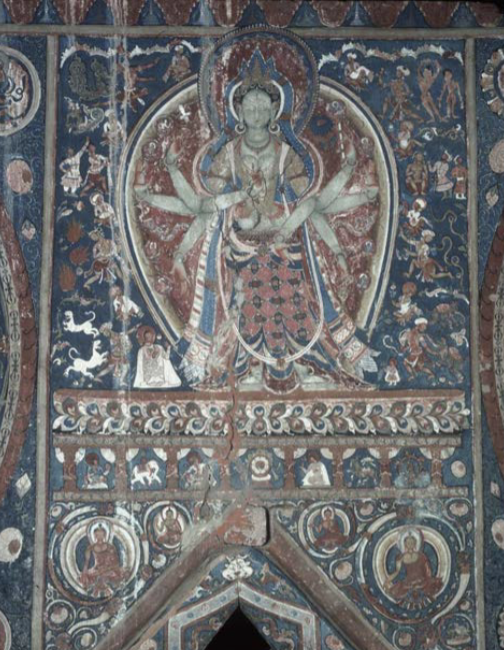
Tara as Saviouress from the Eight Perils, above the Manjushri niche, Sumtseg, Alchi, c. 1200CE(?), wall painting
Prajñaparamita/Tara, mural, left corner of the Avalokiteshvara niche, Alchi Sumtseg, c. early 13th century? (or c. 11th century)
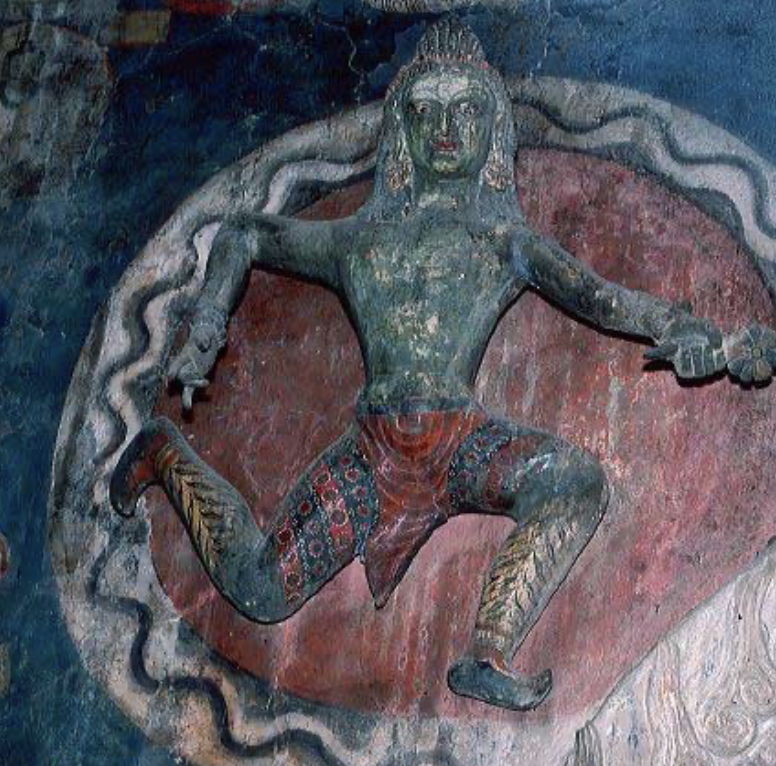
Celestial being (god) offering a flower, Cella, Tabo Main temple, 996CE, clay
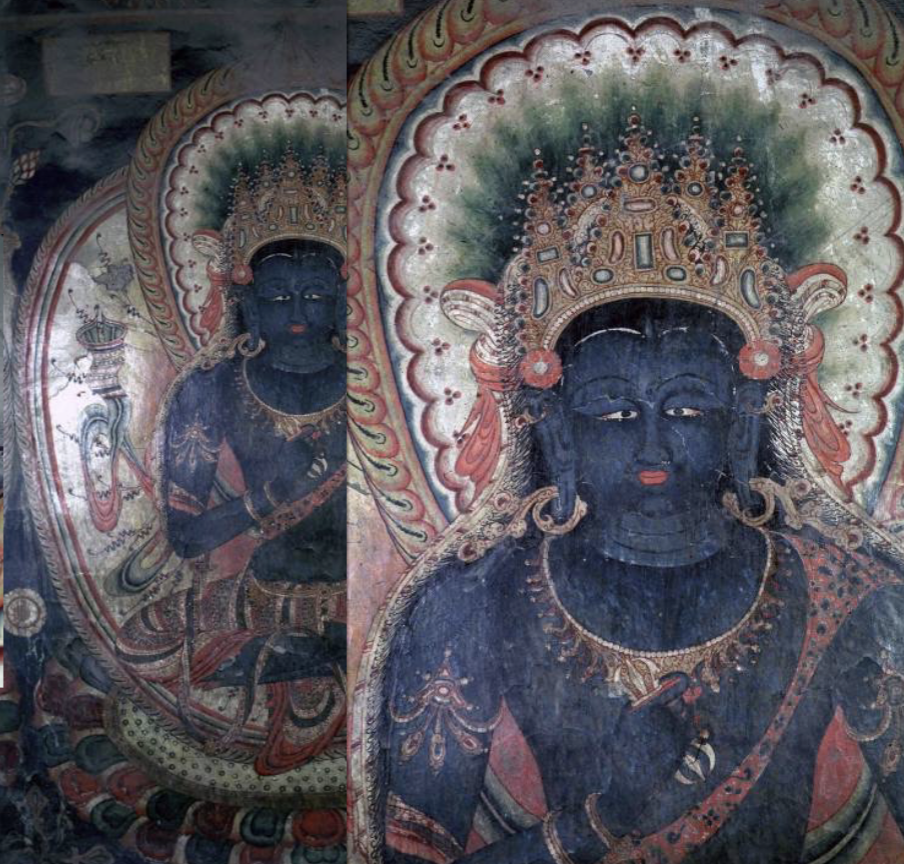
Bodhisattva Vajragarbha (rDo-rje-snying-po), South wall upper register, Ambulatory, Tabo Main temple, 1042CE
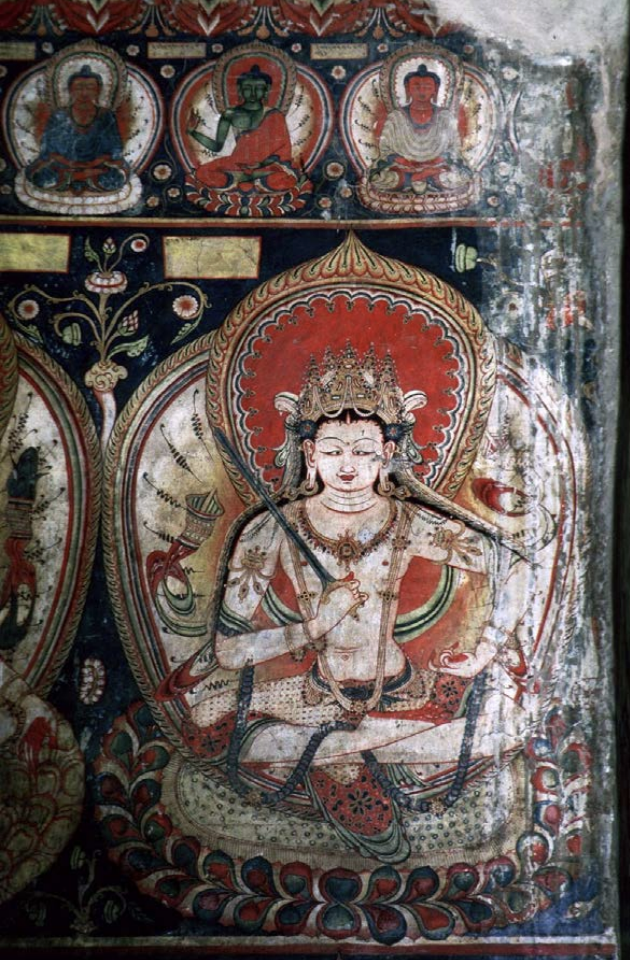
Mahabodhisattva Mahabala (sTobs-po-che), North wall lower register, Ambulatory,
Ambulatory, Tabo Main temple, 1042CE
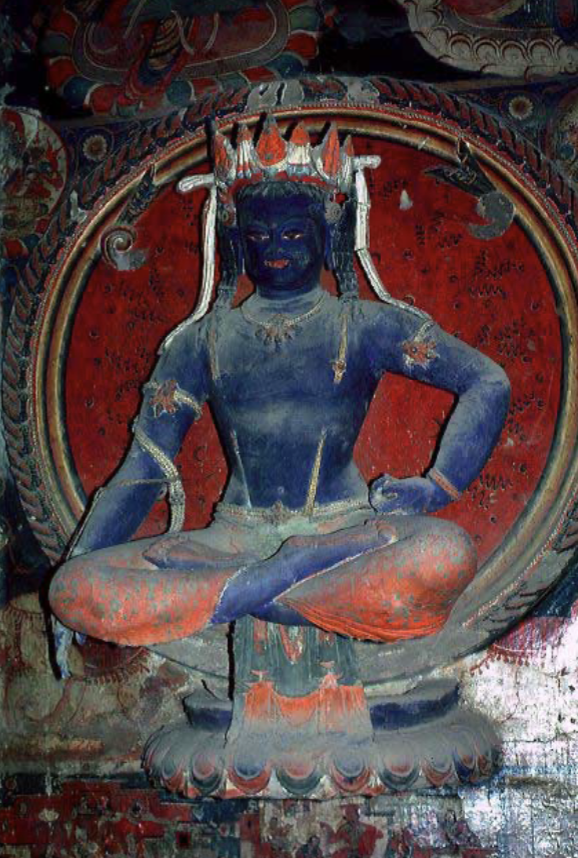
Akshobhya, eastern quarter of the Vajradhatu mandala, South wall, Assembly Hall, Main temple, Tabo, 11th century (1042CE), clay, repainted
Ratnasambhava, southern quarter of the Vajradhatu mandala, South wall, Assembly Hall, Main temple, Tabo, 11th century (1042CE), clay, repainted
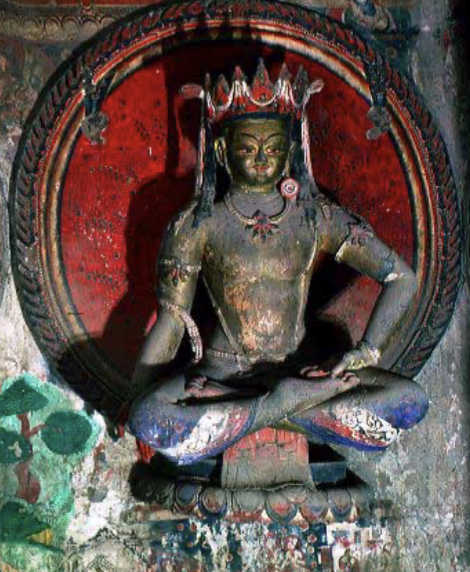
Amitabha, western quarter of the Vajradhatu mandala, North wall, Assembly Hall, Main temple, Tabo, 11th century (1042CE), clay, repainted
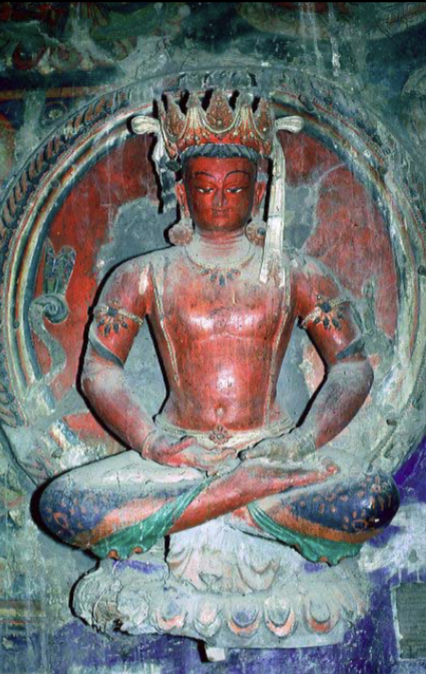
Amoghasiddhi, Northern quarter of the Vajradhatu mandala, North wall, Assembly Hall, Main temple, Tabo, 11th century (1042CE), clay, repainted
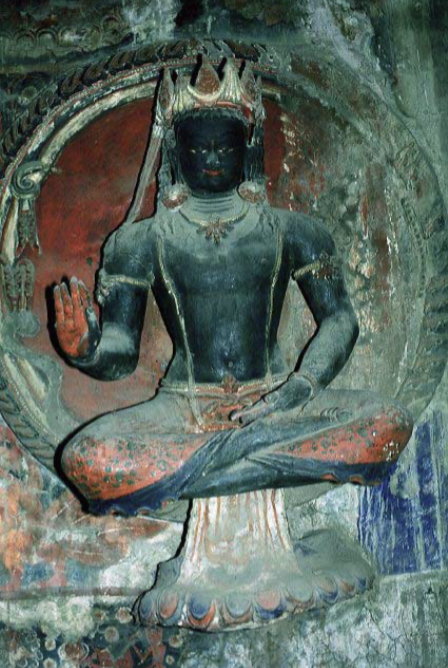
Monkey’s offering of honey at Rajagrha, East wall, lower register, west wall, lower register, Assembly Hall, Main temple, Tabo, 11th century
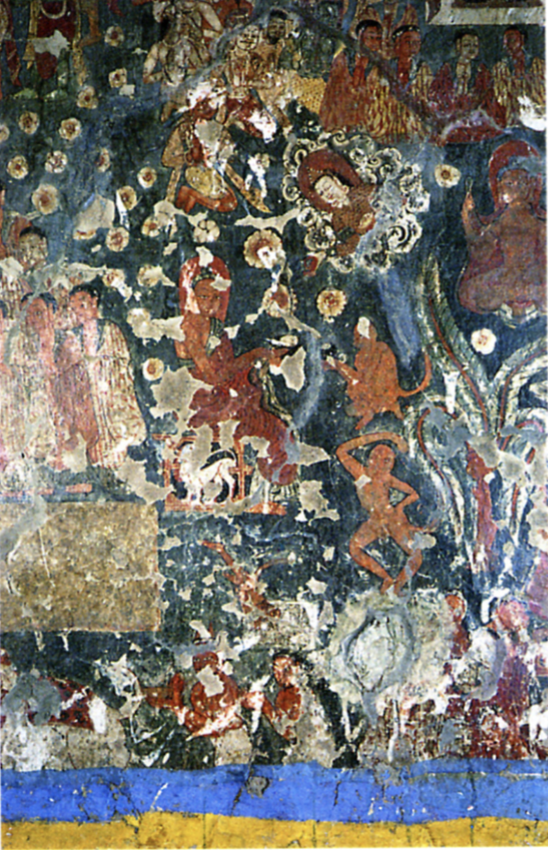
Veneration of the relics, East wall, lower register, west wall, lower register, Assembly Hall, Main temple, Tabo, 11th century
Contains devotees, both human and divine + the monks of Tabo and abbot
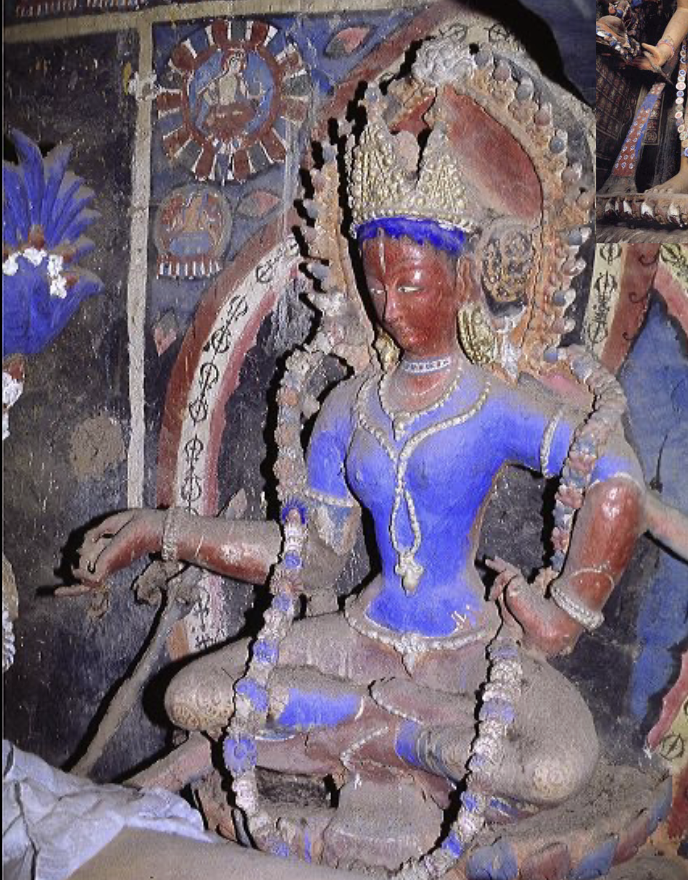
Attendant goddess, Manjushri niche, Sumtseg, Alchi, c. early 13th century
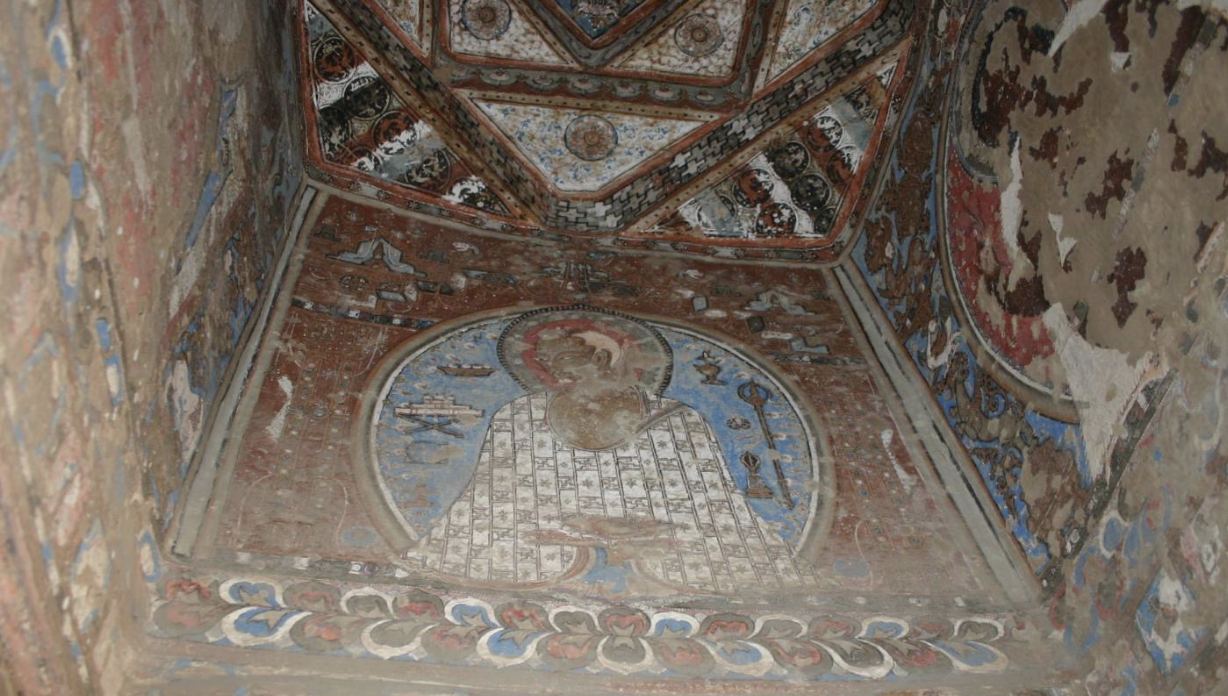
“Portrait” of an Indian master, Western wall, Great Chorten, Alchi, ca. 1200
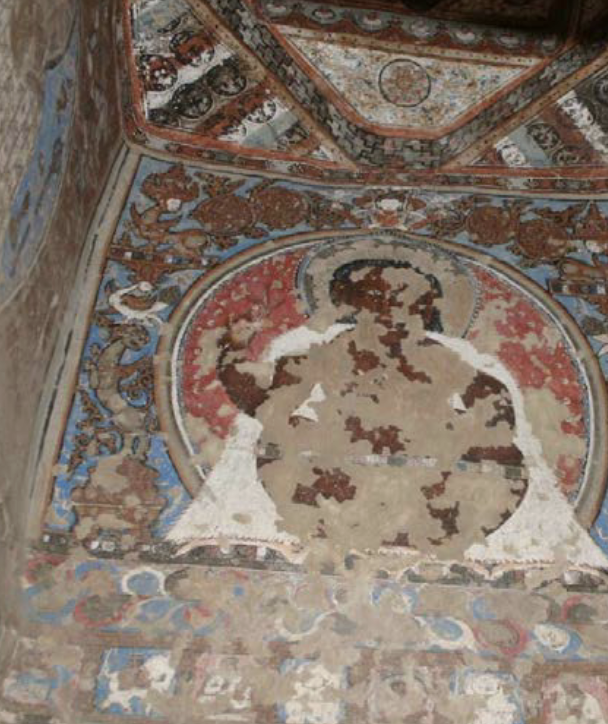
Portrait of a Mahasiddha, Northern wall, Great Chorten, Alchi, ca. 1200
Ushnishavijaya, central Tibet, 11th-12th century, distemper on silk
Popular goddes, linked to longevity rituals
Atributes
3 heads, 8 arms (here more natural looking than at Alchi), 3 eyes
Double vajra
Bow and arrow
Bowl/water jug
Holds a lotus with the buddha Vairocana (holding a preaching gesture) sitting atop
Tarjani (threatening gesture) + varada (giving) mudra
Emerges from/in the womb of a Chaitya
Central line reveals method of making image
stylistically close to eastern Indian examples
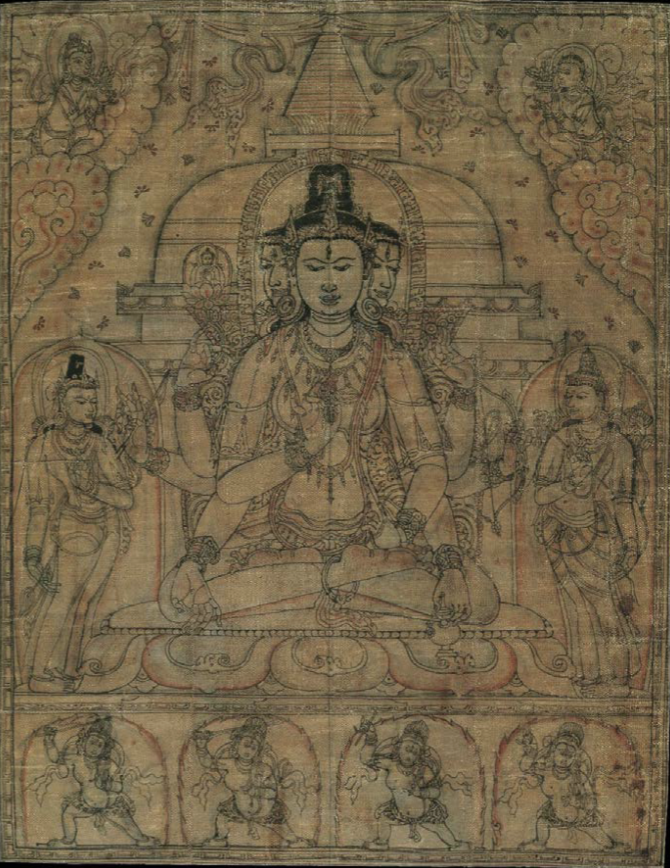
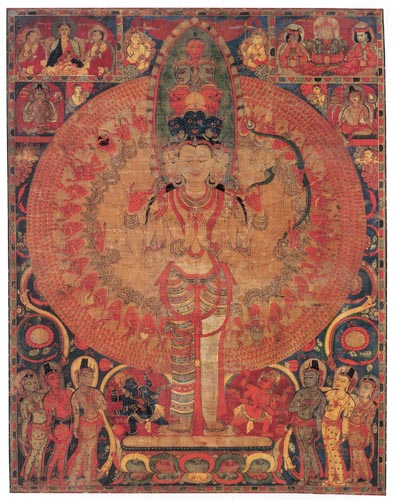
Eleven-headed, one-thousand-armed Avalokiteshvara, central Tibet (a Kagyu monastery), mid-12th century, distemper on cloth
This specific form is the patron deity of Tibetan Buddhism
Thousand arms, each with an eye, is a representation of multiplicity + the Bodhisattvas ability to see and help all
In top right corner is depiction of is depiction of Songtsen Gampo, the first Tibetan ruler of the historical period traditionally credited with introducing Buddhism to Tibet, with his Chinese and Nepalese wives
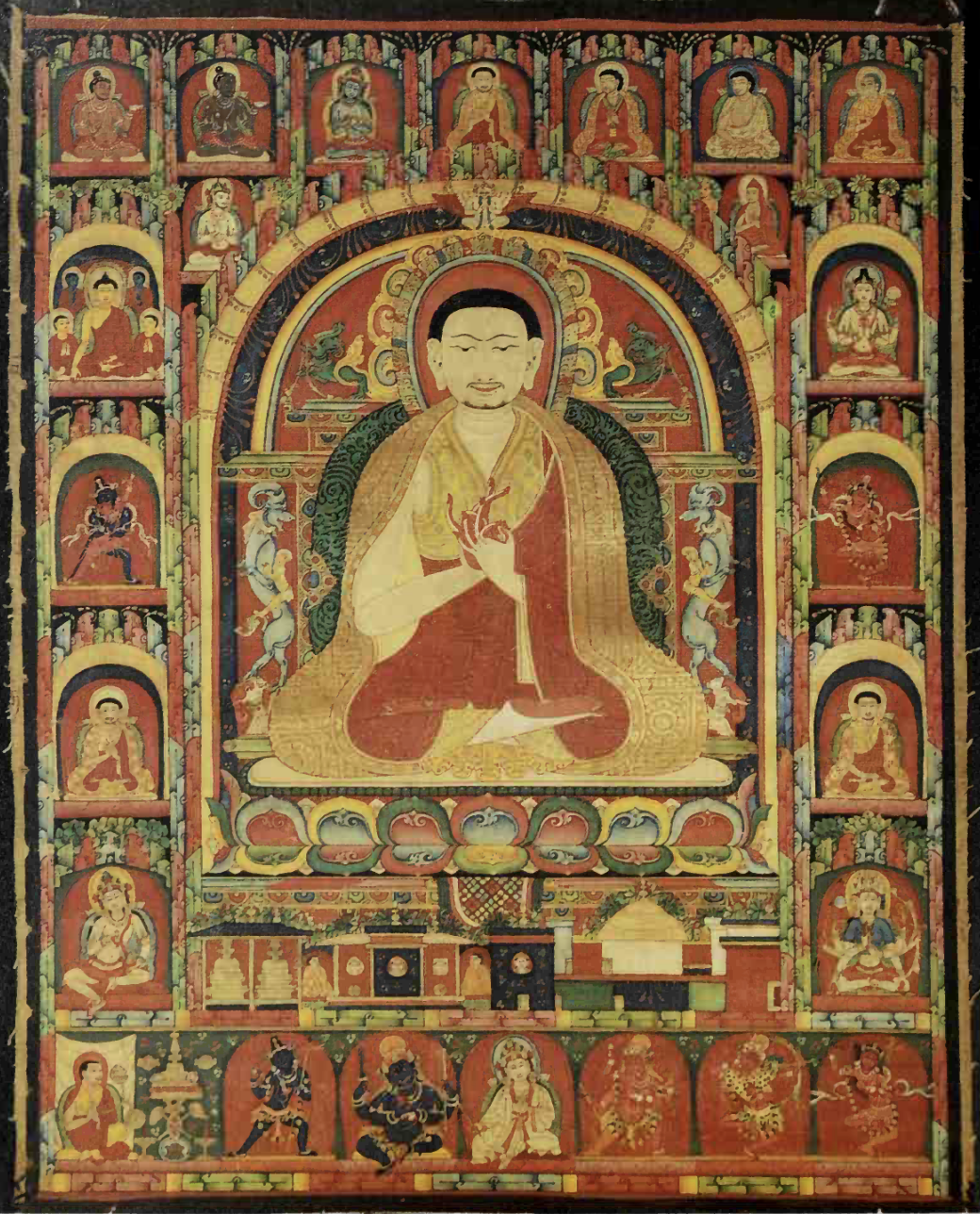
Portrait of Taklung Thangpa Chenpo, Central Tibet (Taklung monastery), ca. 1200, distemper on cloth
Lineage along top register, including primordial Buddha Vajradhara
Hut at bottom, referencing story in the biography of this founder of Taklung monastery
compositional structure: central figure being a human teacher facing foward, as opposed to a deity or Buddha, is not necessarily a deification, but surely emphasizes the importance of spiritual teachers and lineage
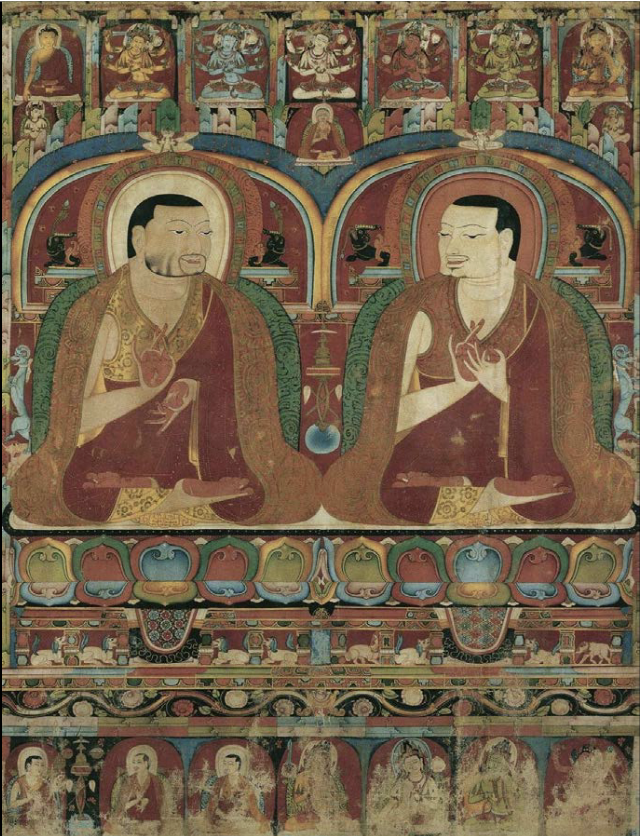
Portrait of Two monks, Central Tibet (Taklung monastery), ca. 1300, distemper on cloth
Teacher-disciple relationship
Phakmo Drupa (left), Tashipel (right), Gampopa (center)
Attempts to visually differentiate between figures, based on some sort of likeness
central teacher figure looking forward
Book in between, with stupa on tip
esoteric form of Tatagathas along top?
Importance of lineage
Vajravarahi mandala, Central Tibet (Taklung monastery), ca. 1200, distemper on cloth
Vajravarahi is the thugsdam, or chosen deity, of Onpo Lama Rinpoche of Taklung
In active movement, unlike depictions of Buddhas, bodhisattvas
Dancing on a human figure laying prone
Holds a skull up, sow-face coming out of head
Lineage portrait along top
Milarepa (white robe) and Marpa in the center
Two inverted triangles (yantra) = representation of sexual union of deities
Based on transgressive tantra
Goal is immediate spritual liberation by challenging the senses/social norms
Charnel grounds as background (white bones on black backing)
Associated with triumph over ignorance
Orientation through directional deities
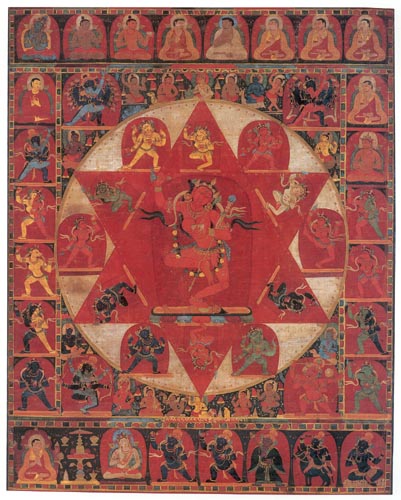
Chakrasamvara mandala with the scenes of the eight cremation grounds filled with siddhas, Central Tibet, ca. 1100, distemper on cloth
Meditating figures facing away from viewer
Scene of a ritual with a lay donor and a monk in bottom right corner
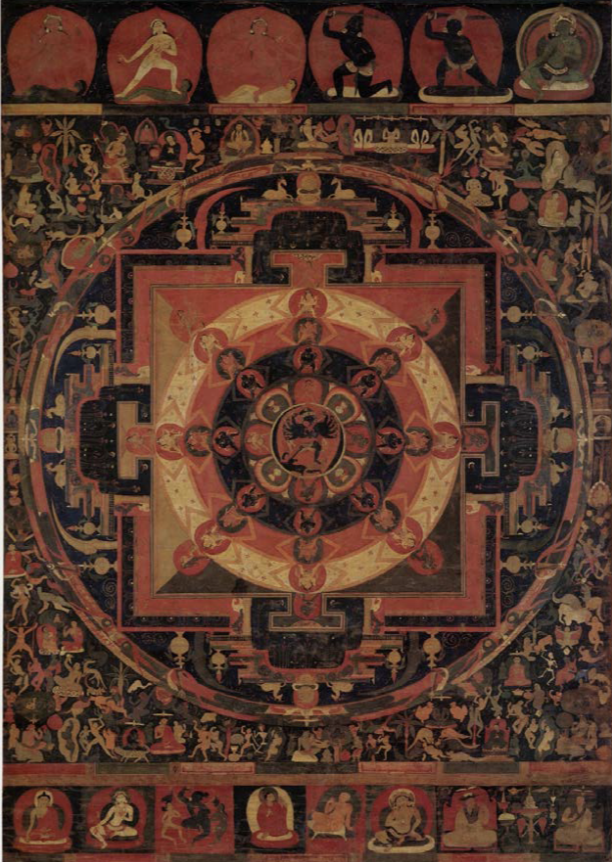
Ratnasambhava, one of the surviving three tathagatas, Central Tibet, ca. 1200-1250, distemper on cloth
Yellow + horse
Elongated limbs at odd angles of attendant bodhisattvas
Tri-partite body
Wealth deities along bottom section
Detailed shawl with depictions of the Buddha around his shoulders
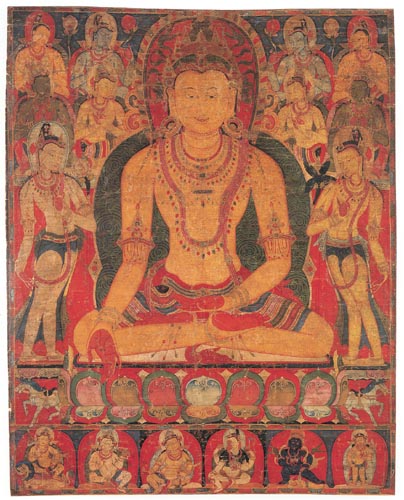
Amoghasiddhi, one of the surviving three tathagatas, Central Tibet, ca. 1200-1250, distemper on cloth
Green + Garuda
Elongated limbs at odd angles of attendant bodhisattvas
Tri-partite body
Ritual scene at bottom, with layman
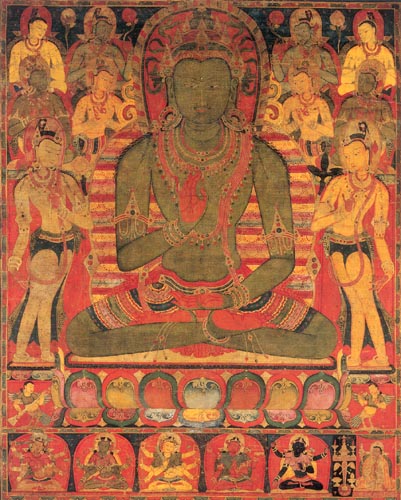
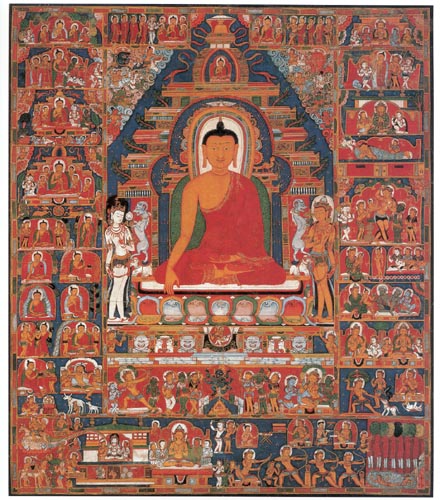
Scenes from the life of the historical Buddha, Central Tibet, ca. late 13th-early 14th century, distemper on cloth
Buddha represented within a shrine place
Earth-touching gesture, arrows turning into flowers, earth goddess and Mara
Depicts the moments of enlightenment and represents the orilgrimage site of the Bodh Gaya
Collapsing of time and space
Maitreya and Avalokitesvara on either side
Buddha life episodes organized spatially and chronologically (ex. different levels of heavens)
Elongated limbs at odd angles of attendant bodhisattvas
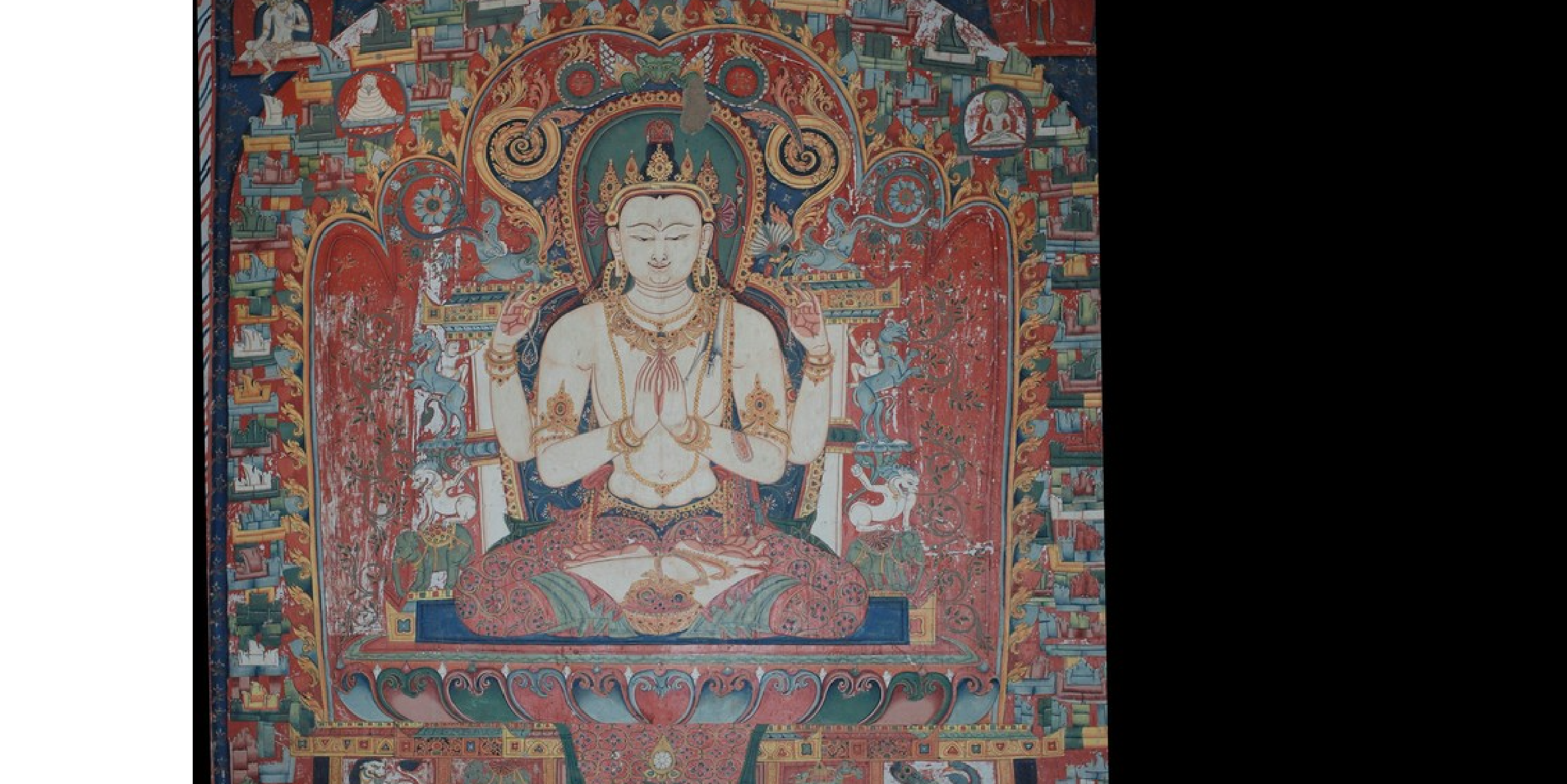
Sadaksari Avalokitesvara, Shalu monastery, early 14th century (restored 20th century), wall painting
Beri-style ornamentation
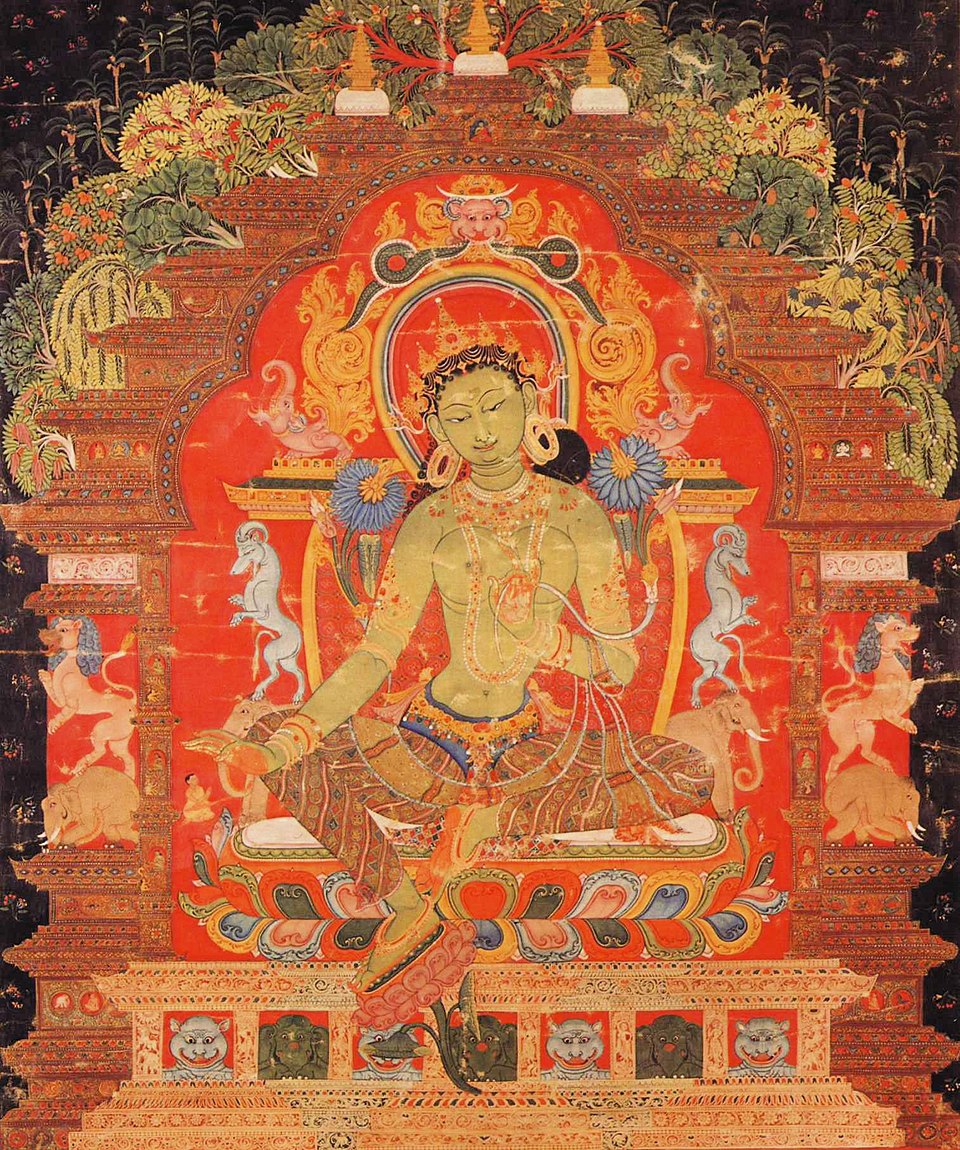
Green Tara, attributed to the Nepalese artis Anige (or Aniko), Central Tibet, third quarter of the 13th century, distemper on cloth
Name of artist only survives in Chinese record
Artist from Nepal, given position of master of the imperial mongol art workshop
Identified based on artistic mastery of this work + presence of small Tibetan monk
Newar style indicated by ornate and floral makra
Indications of projection/recess in shrine architecture
Bejeweled tree
Made for a Tibetan patron
Shrine also includes depictions of the eight great perils
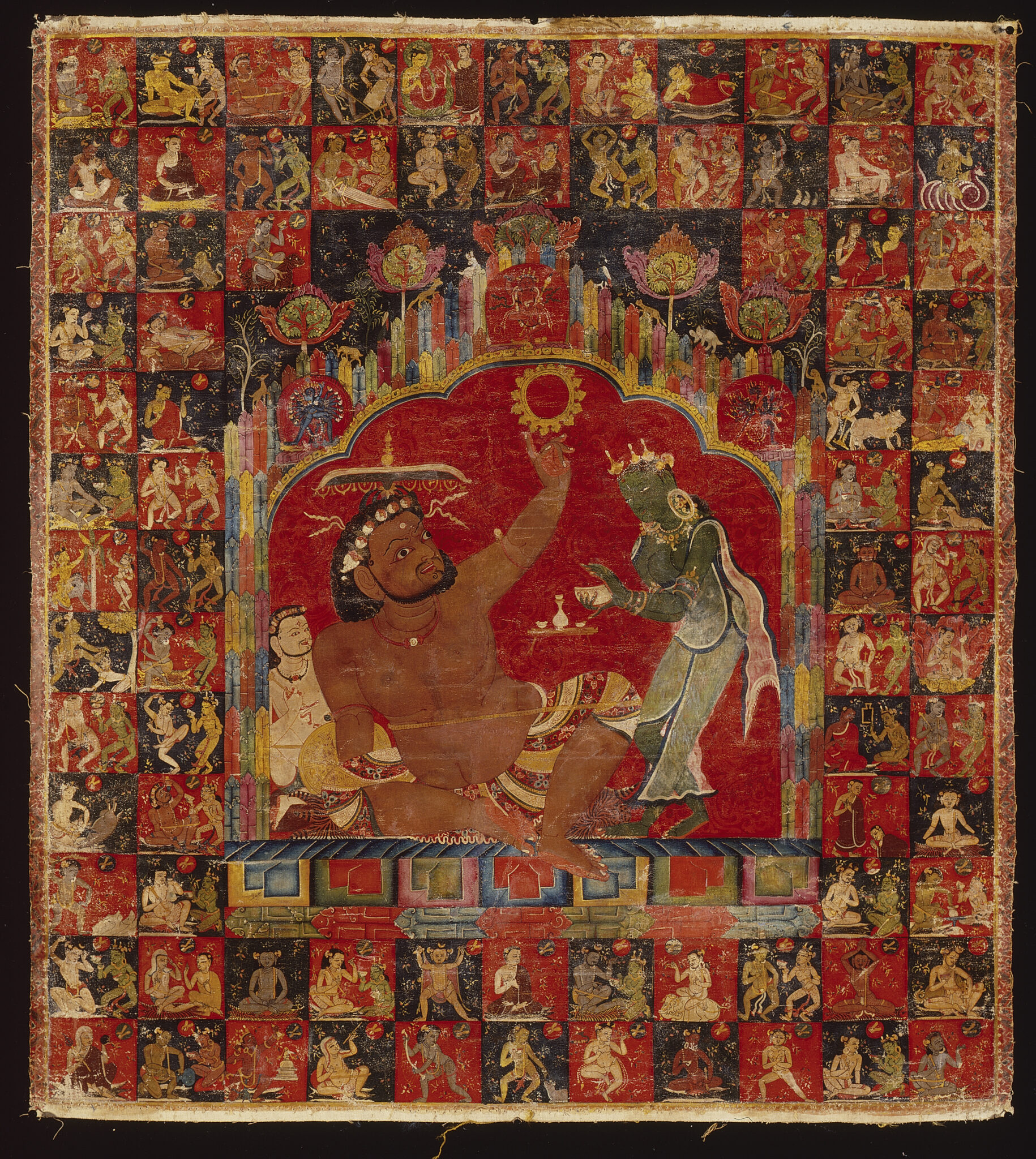
Virupa, Tibet (Sakya monastery), ca. second quarter of the 13th century, distemper on cloth
Swirled, floral pattern of Beri style
Virupa stopping the sun to continue drinking
Located within mountanous landscpae
Wearing diadem of skull cups
Deities of transgressive tantras with Vajrayogini in the center
Green “barmaid” = evokative of Green Tara offering a skull cup
Grid-like pattern
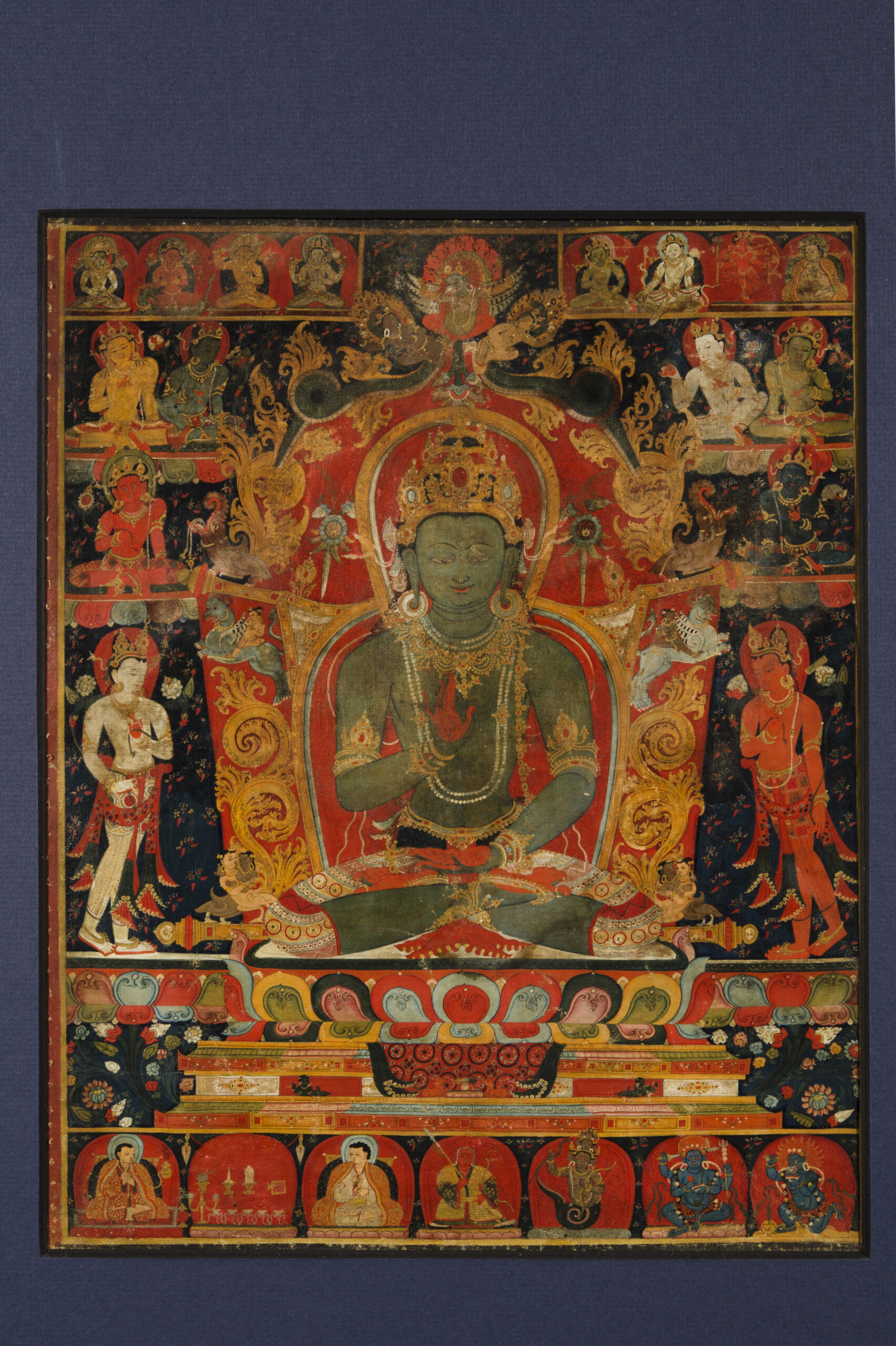
Amoghasiddhi, one of three Tathagatas, Central Tibet, Sakya monastery, 1st half of the 13th century, distemper on cloth
Ornateness + head + eye shape = Newari/Beri style
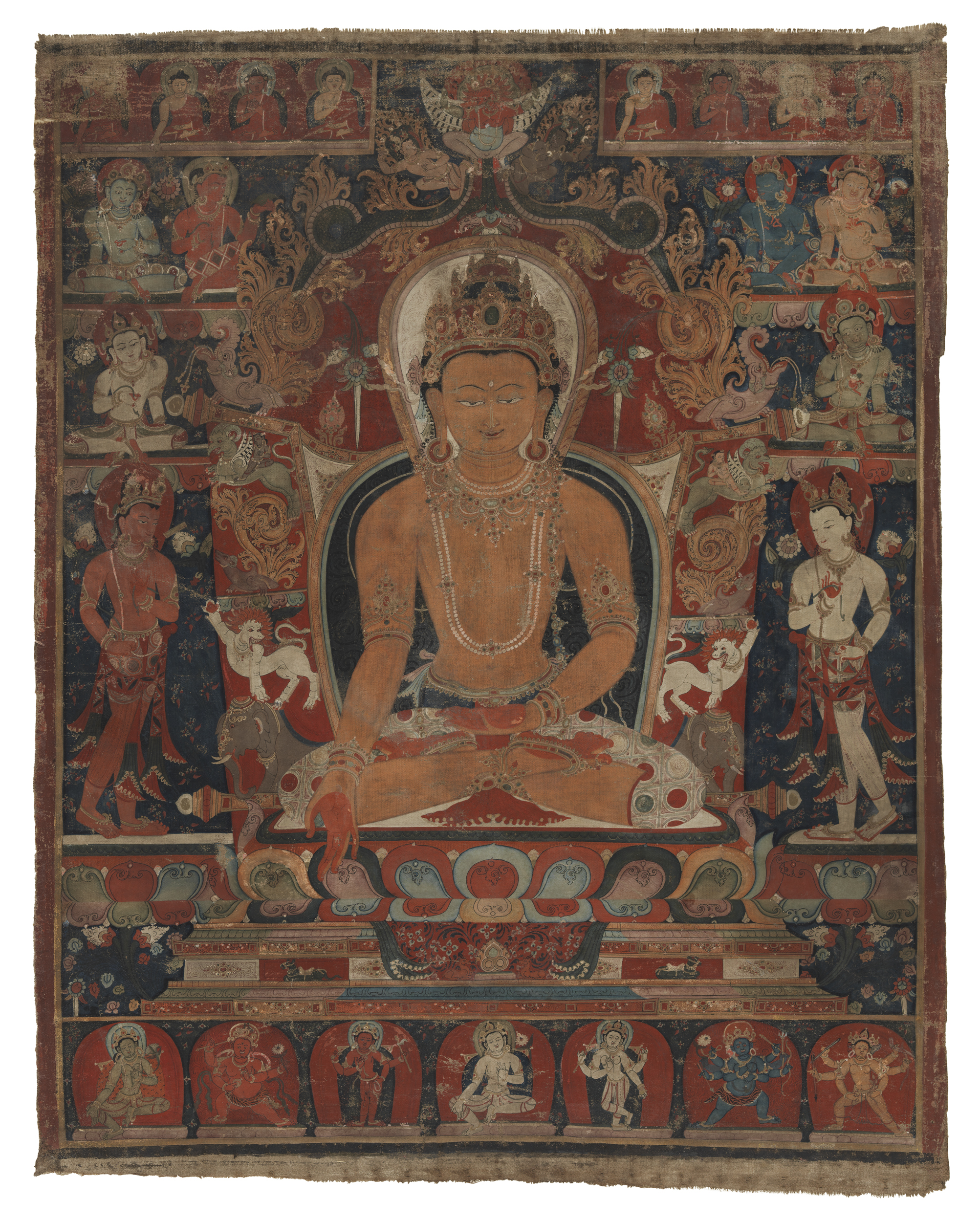
Ratnasambhava, one of three Tathagatas, Central Tibet, Sakya monastery, 1st half of the 13th century, distemper on cloth
Ornateness + head + eye shape = Newari/Beri style
Jewel is his symbol
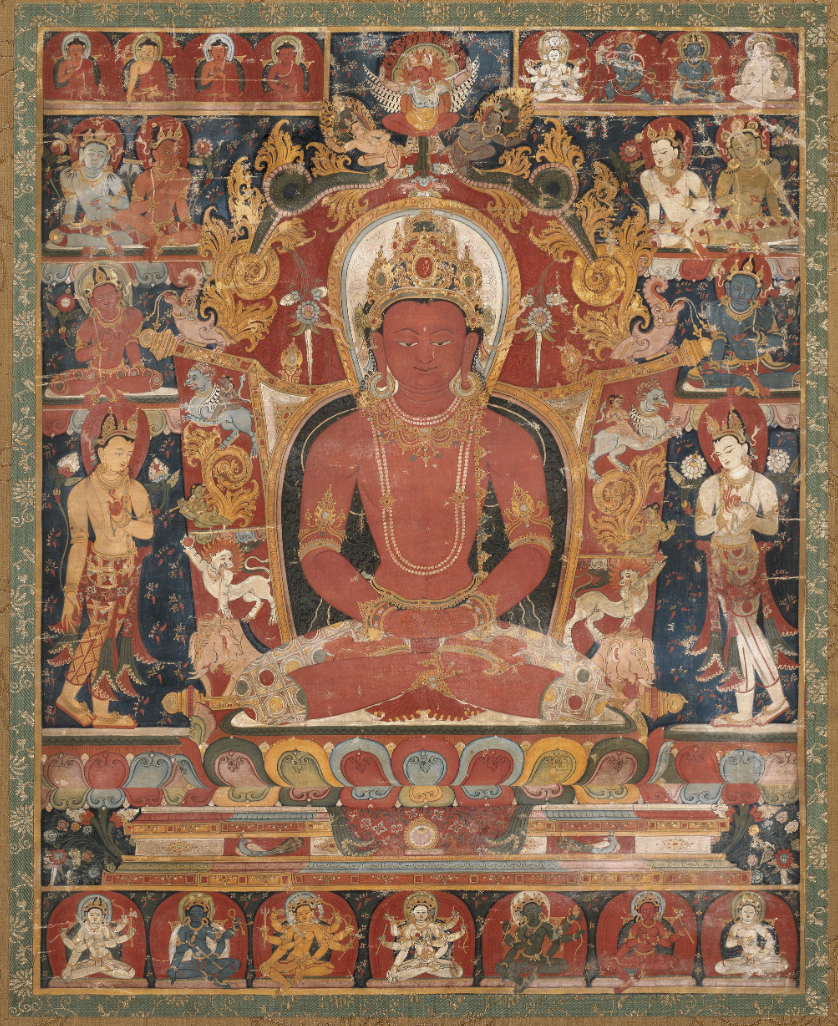
Amitabha, one of three Tathagatas, Central Tibet, Sakya monastery, 1st half of the 13th century, distemper on cloth
Ornateness + head + eye shape = Newari/Beri style
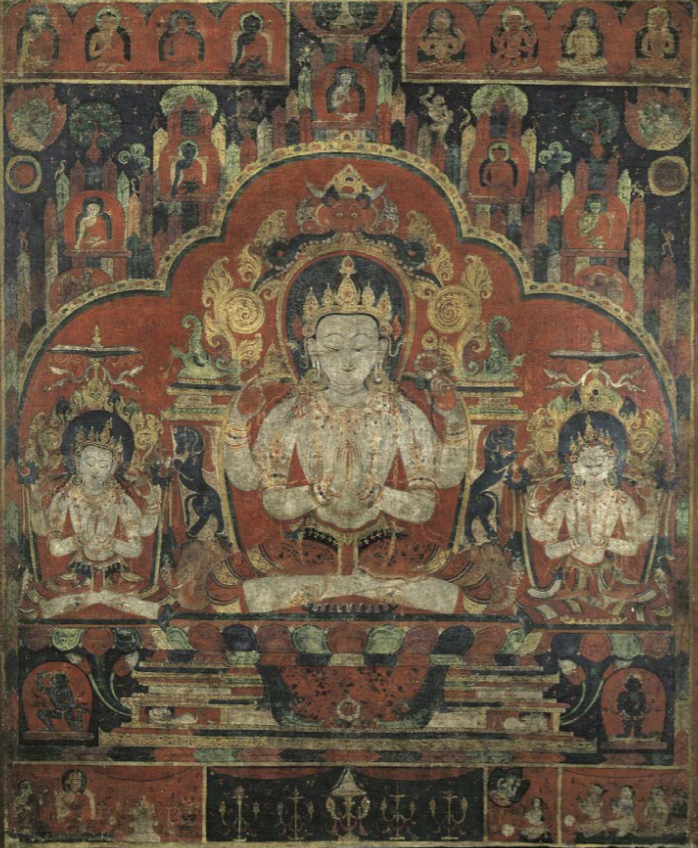
Sadaksari Avalokiteshvara with Manidhara and Sadaksari, Nepal, early 14th century, distemper on cloth
Ornateness + head + eye shape = Newari/Beri style
Mountainous landscape
idk man
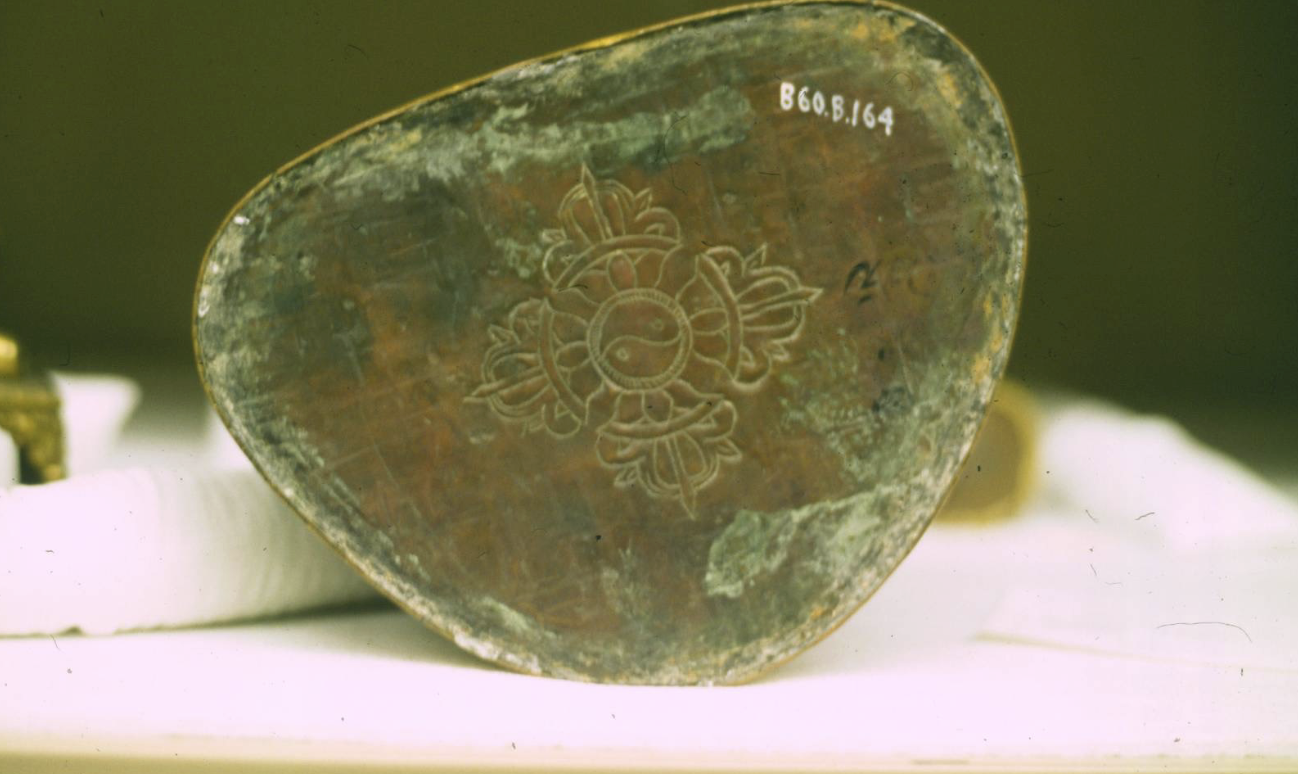
Sealed bottom of a Tibetan bronze statue with double-vajra mark, 18th century, San
Francisco Asian Art Museum
Vajra = tantric ritual tool, associated the diamond and the thunderbolt
presence on the bottom of statue indicates that it is consecrated