ANATOMY - Bones, Bony Landmarks, and Ligaments
 Call Kai
 Learn
Learn Practice Test
 Spaced Repetition
 Match
Match Flashcards
 Knowt Play
1/474

There's no tags or description
Looks like no tags are added yet.
Name | Mastery | Learn | Test | Matching | Spaced | Call with Kai |
|---|
No analytics yet
Send a link to your students to track their progress
475 Terms
Term: Retinacula
Definition: deep fascia formed which hold tendons in place
Term: Bursae
Definition: closed sacs containing lubricating fluid that reduces friction
axial skeleton
cranium, vertabrae, ribs, sternum
appendicular skeleton
bones of the limbs
example of a long bone
humerus
example of a short bone
carpal bones
example of a flat bone
flat bones of the skull
example of a irregular bone
vertebra
example of a sesamoid bone
patella
types of fibrous joints
suture (Skull bones), syndesmosis (radius and ulna), gomphosis (teeth)
types of cartilaginous joints
Primary (epiphysis) and secondary (Intervertebral discs)
primary cartilaginous joints have what kind of cartilage?
hyaline cartilage
secondary cartilaginous joints have what kind of cartilage?
fibrous cartilage surrounded by hyaline cartilage
types of synovial joints
uniaxial, biaxial, multiaxial
uniaxial joint that permits flexion and extension e.g. elbow joint
hinge joint
uniaxial joint that permits rotation around a central axis e.g. radioulnar joint
pivot joint
uniaxial joint that permits sliding movement e.g. acromioclavicular joint
plane joint
biaxial joint that permits abduction/adduction, flexion/extension and circumduction e.g. first carpo-metacarpal joint
saddle joint
biaxial joint that permits abduction/adduction, flexion/extension and minimal circumduction. movement is in one axis more than the other e.g. metacarpal joint
condyloid
multiaxial joint that permits abduction/adduction, flexion/extension, medial/lateral rotation and circumduction e.g. shoulder and hip joint
ball and socket joint
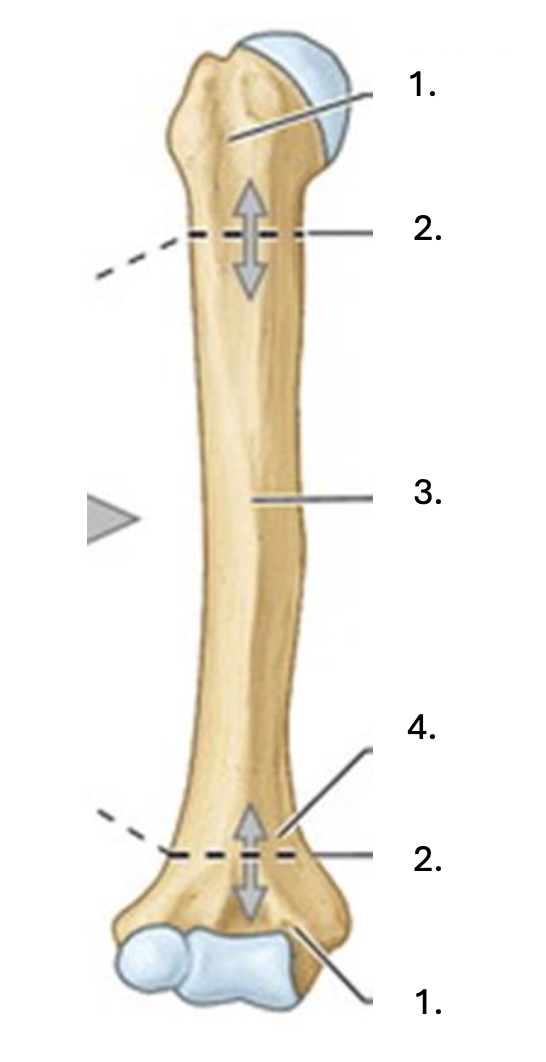
What is number 1?
epiphysis
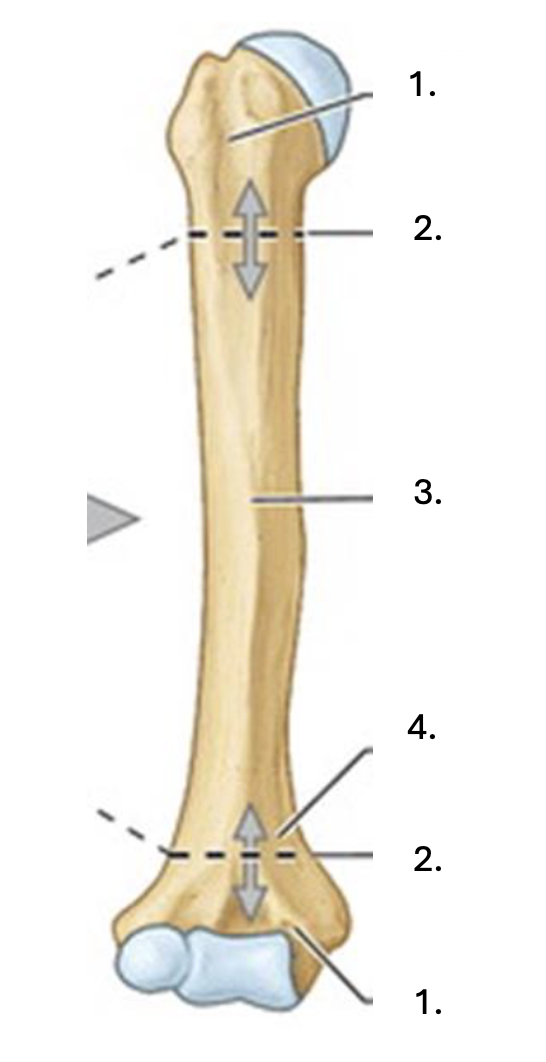
What is number 2?
epiphyseal plate
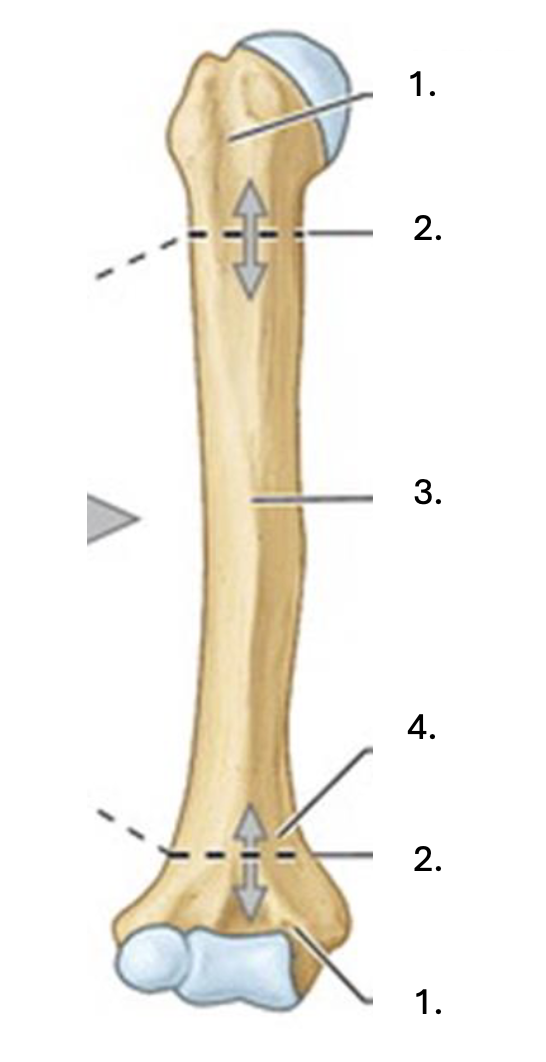
what is number 3?
Diaphysis
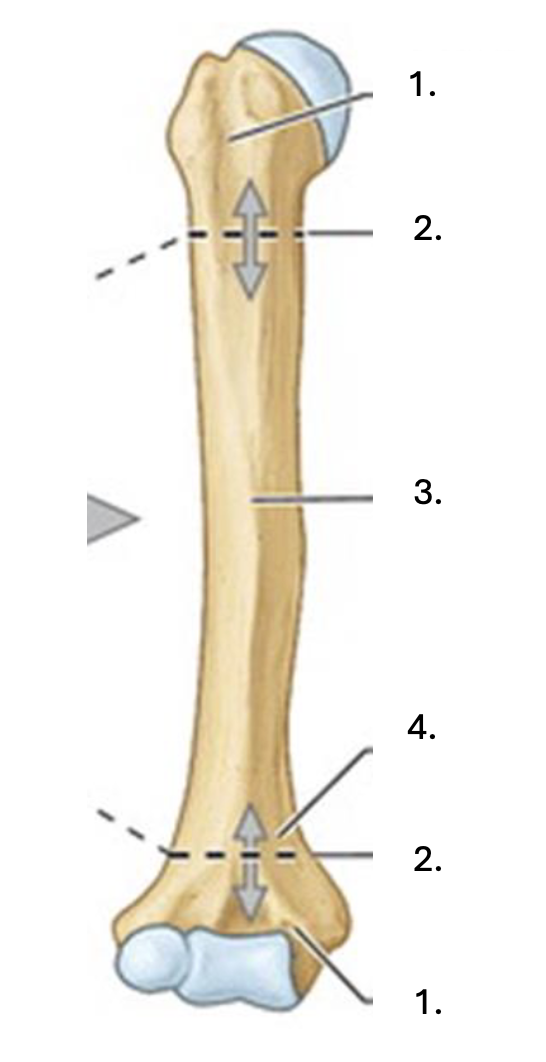
What is number 4?
metaphysis
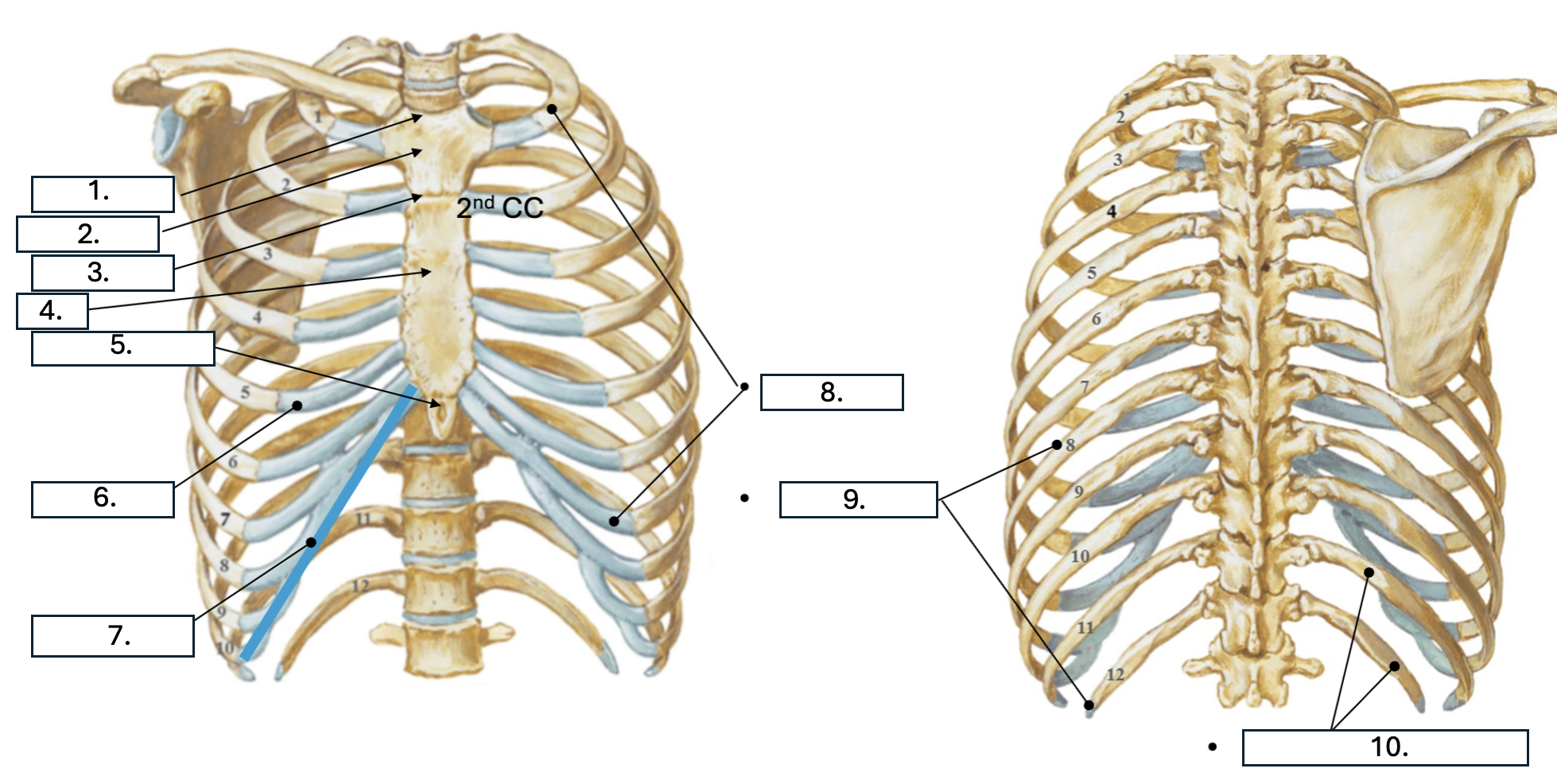
What is number 1?
Jugular notch
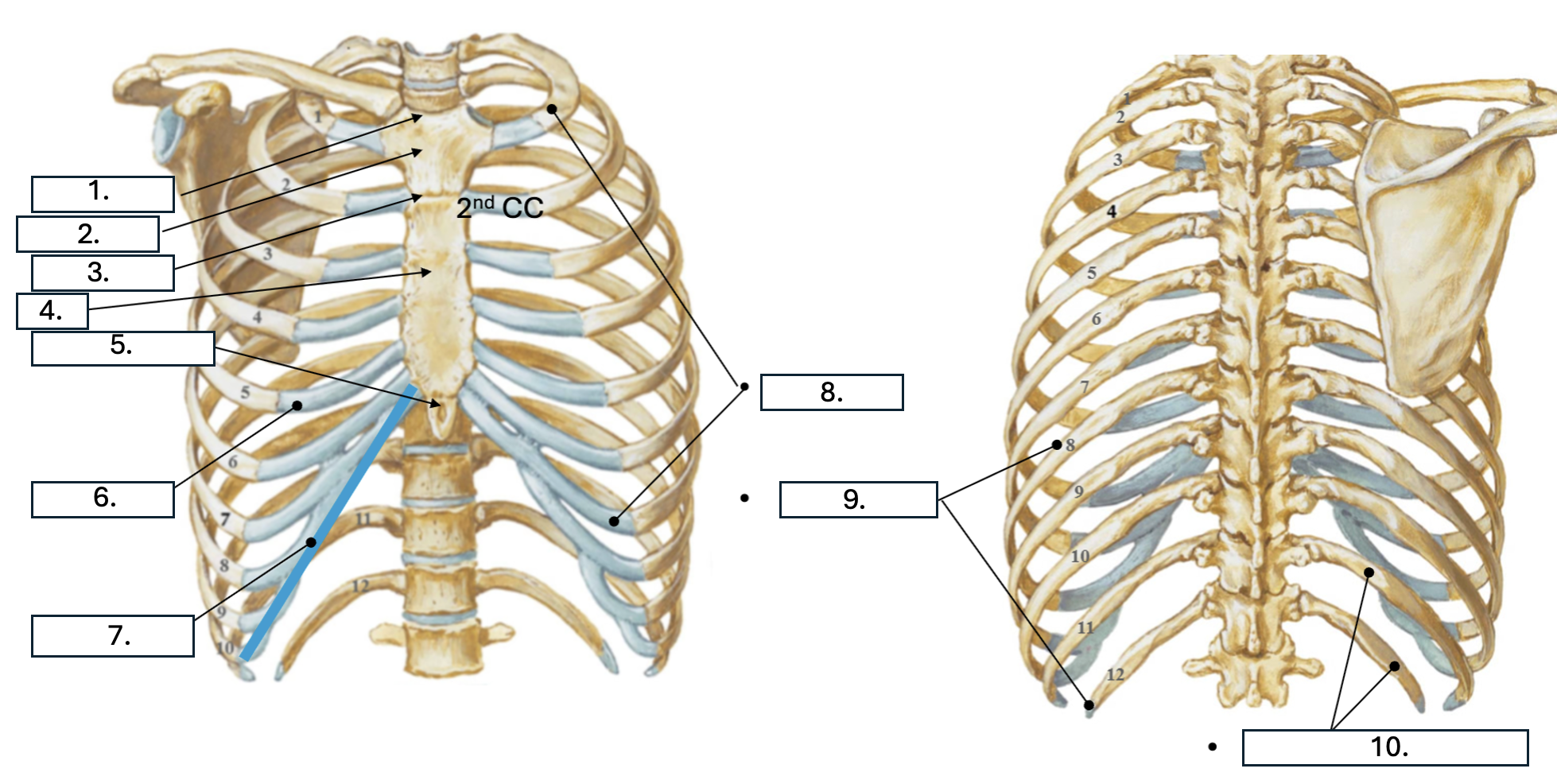
What is number 2?
Manubrium
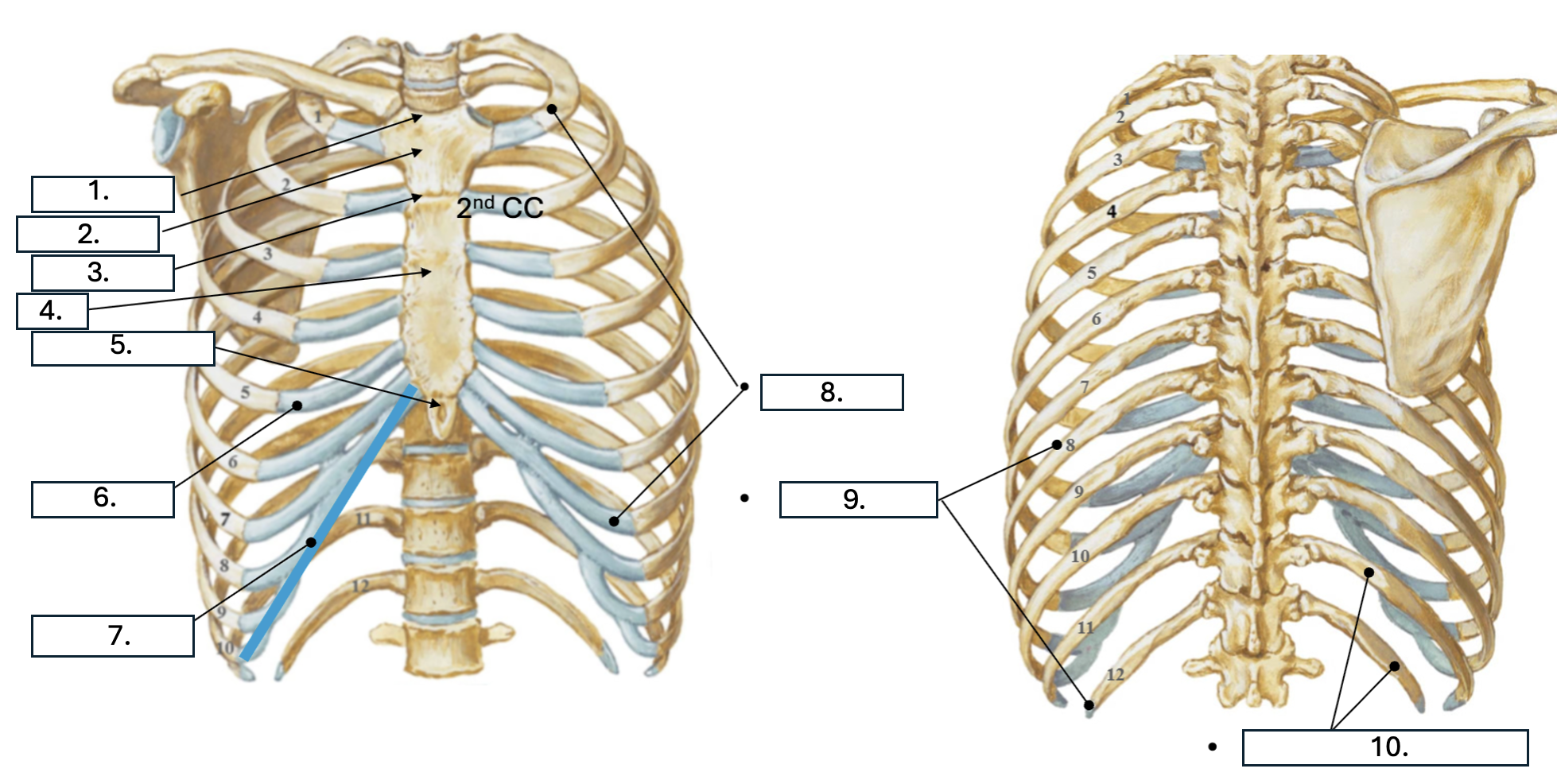
What is number 3?
Sternal angle
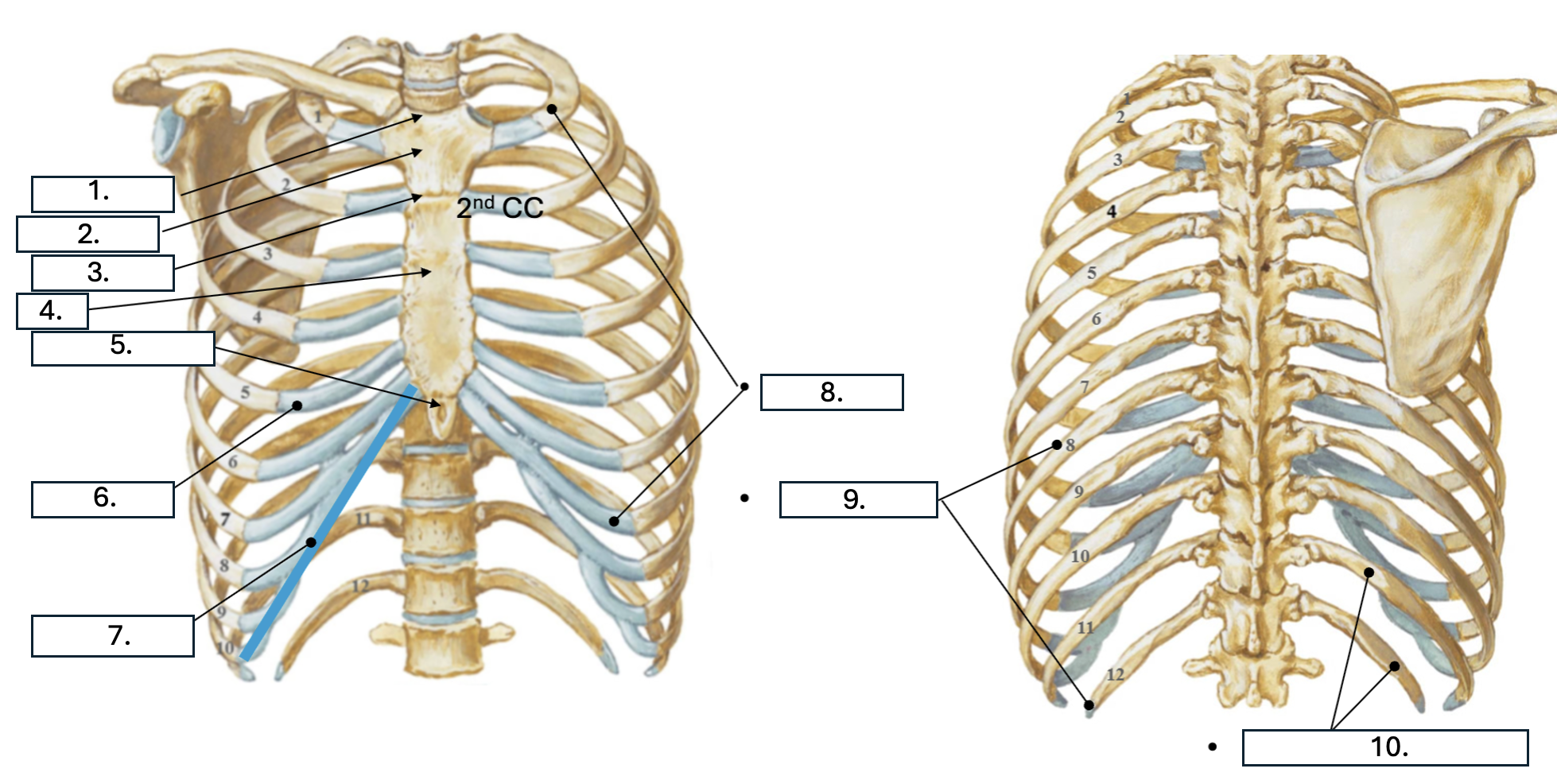
What is number 4?
body of sternum
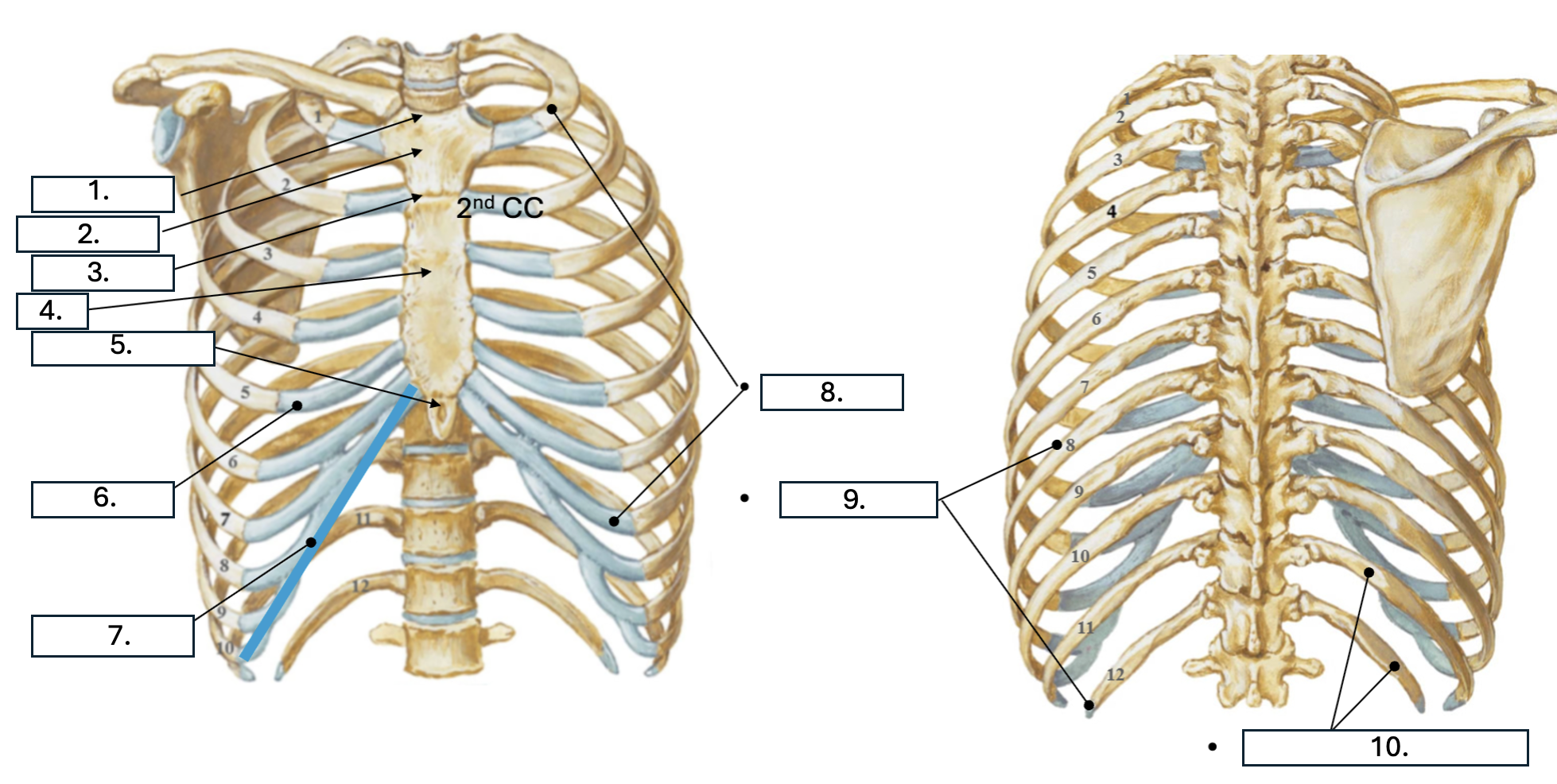
What is number 5?
Xiphoid Process
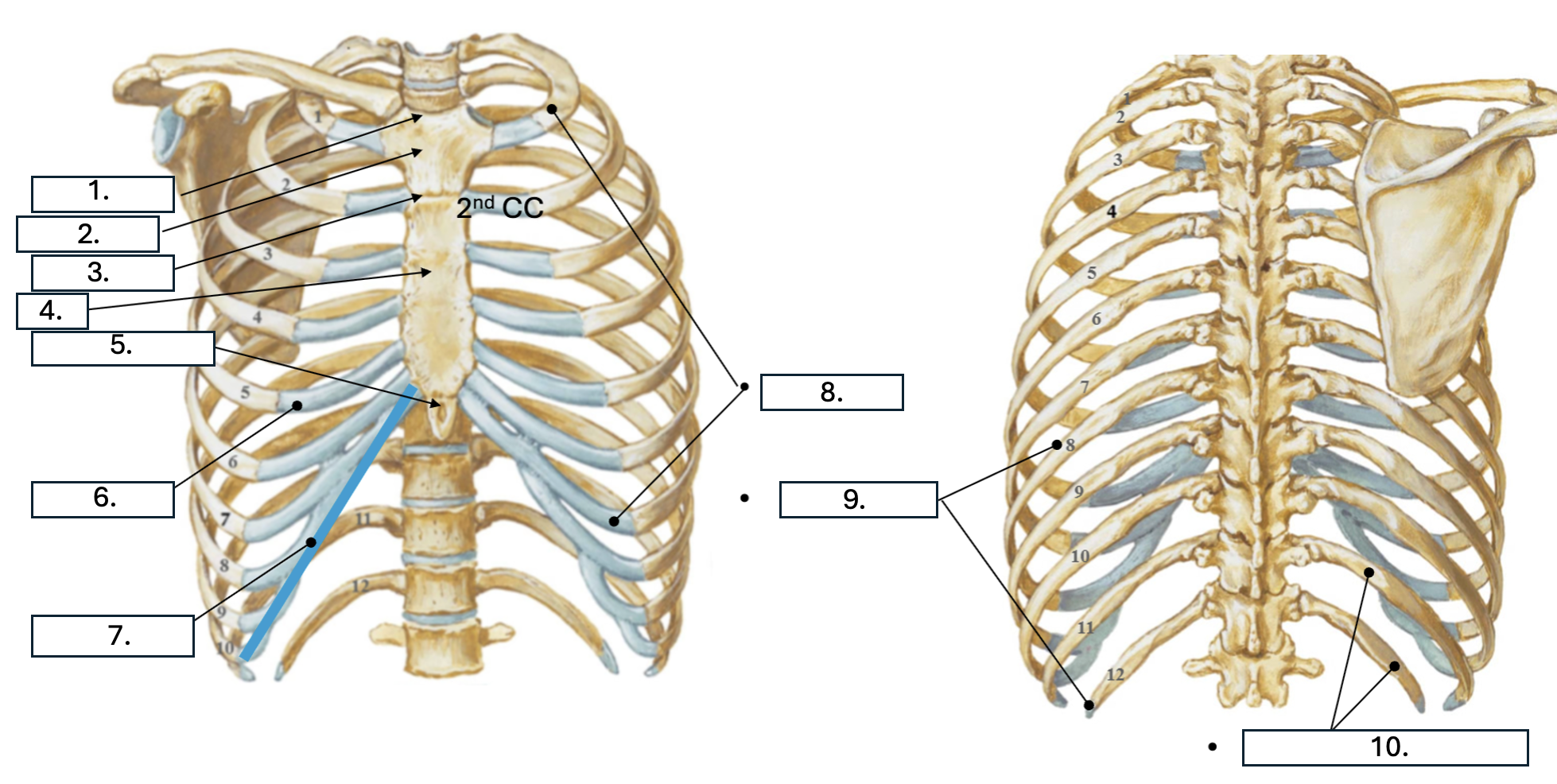
What is number 6?
Costal cartilage (CC)
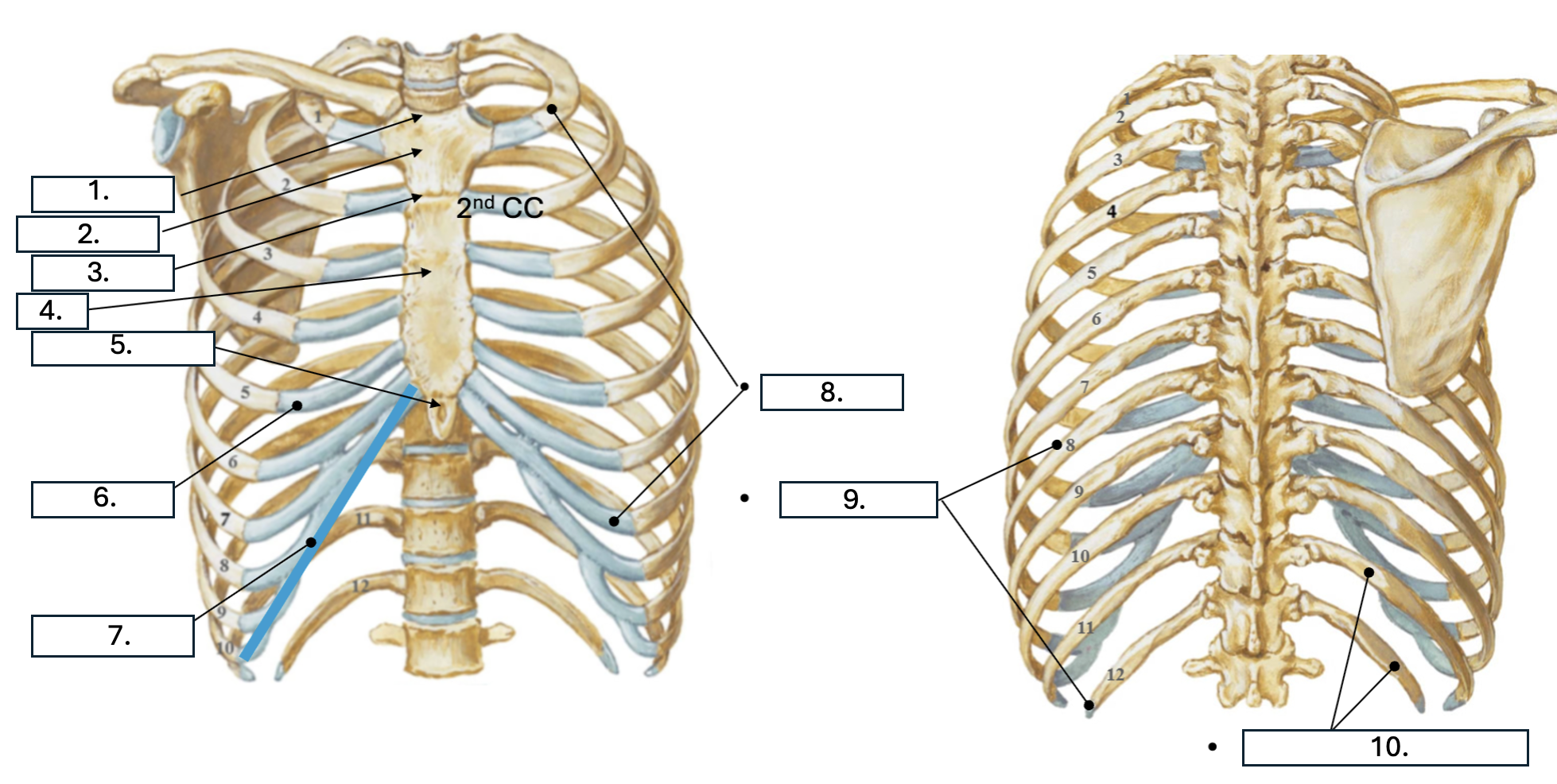
What is number 7?
Costal margin (7th-10th CC)
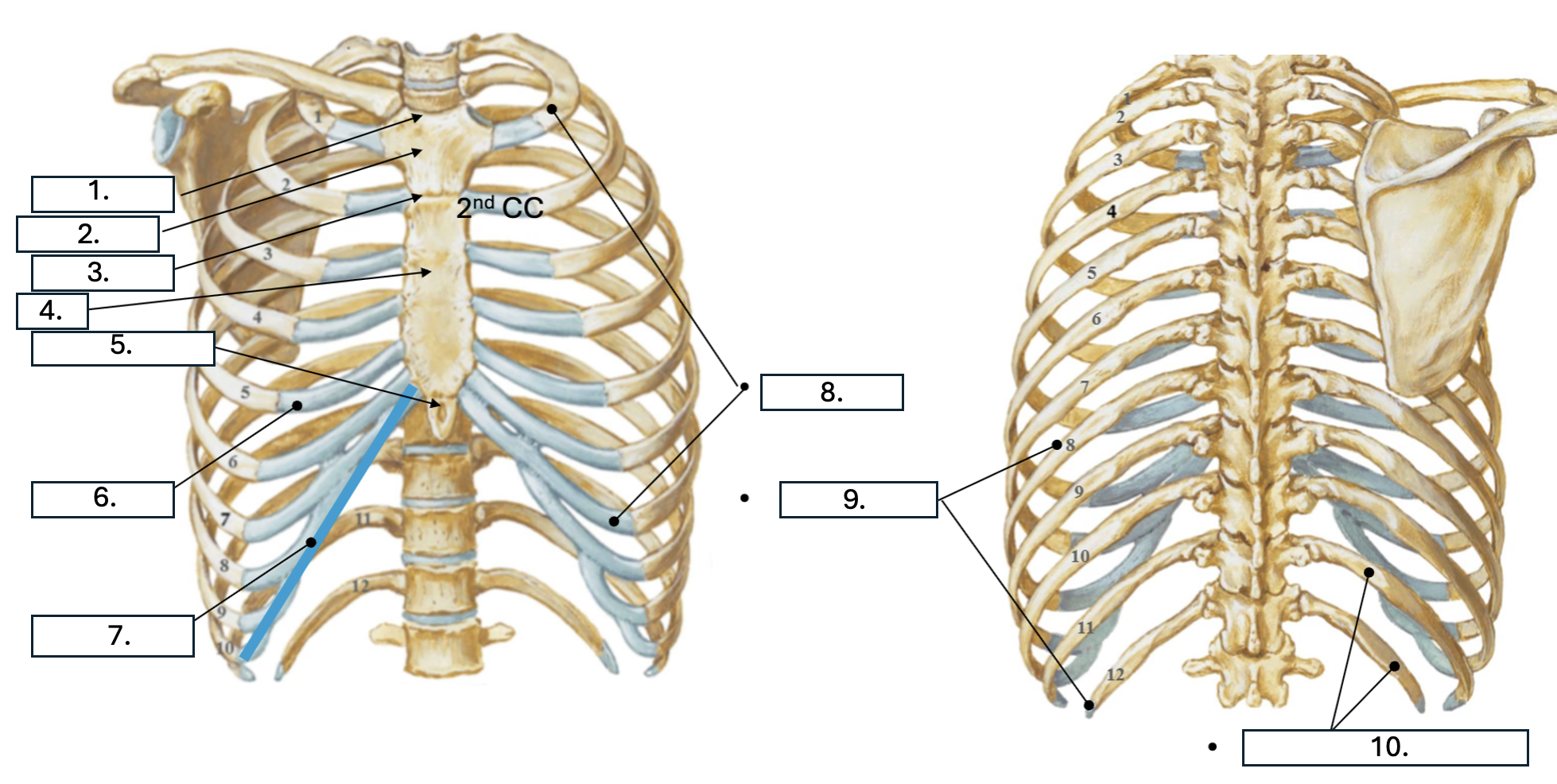
What is number 8?
true ribs (1st-7th)
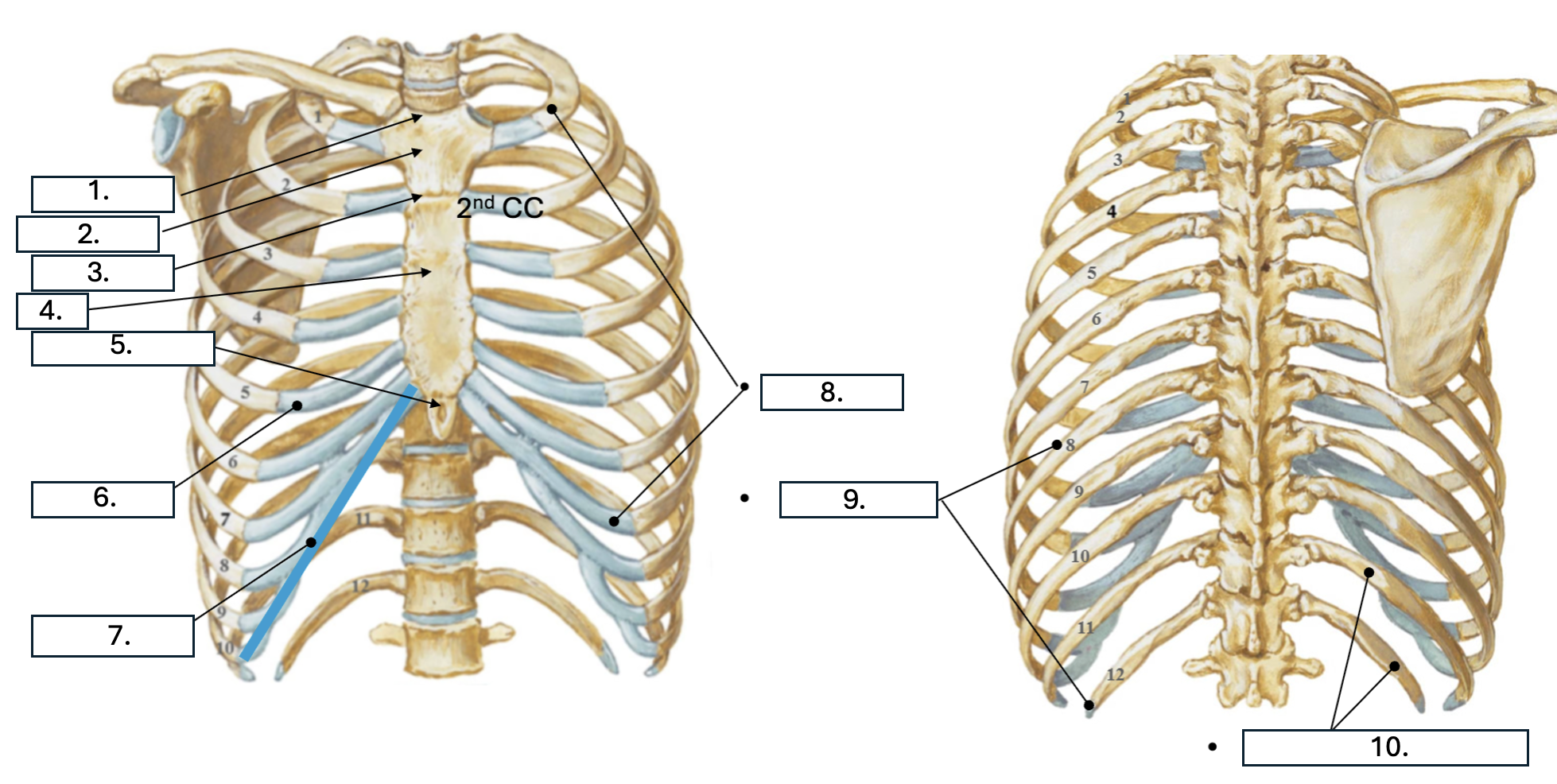
What is number 9?
False ribs (8th-12th)
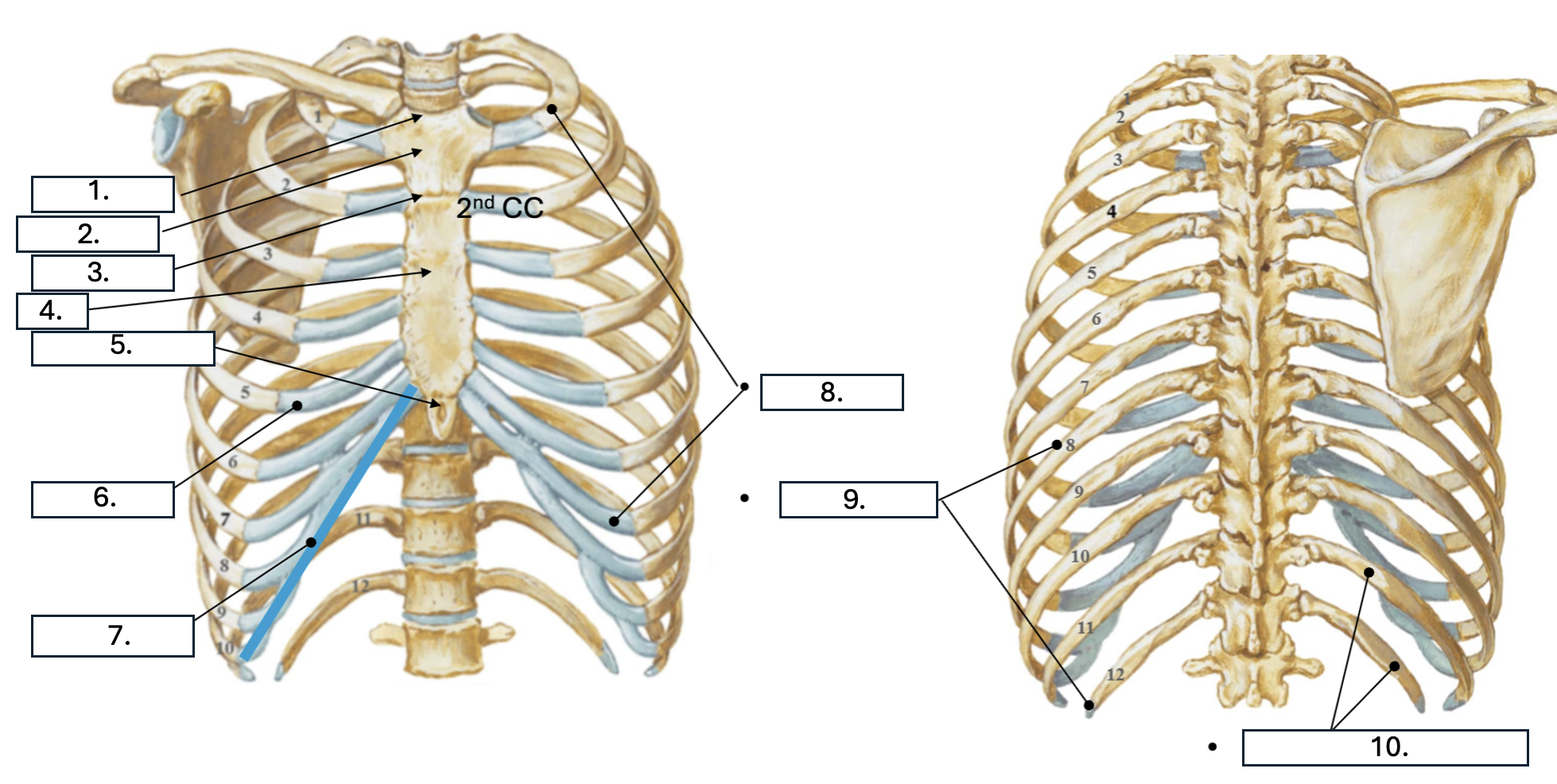
What is number 10?
floating ribs (11th-12th)
How many vertebrae are there?
33
How many cervical vertebrae are there?
7
How many thoracic vertebrae are there?
12
How many lumbar vertebrae are there?
5
How many sacral vertebrae are there?
5
How many coccygeal vertebrae are there?
4
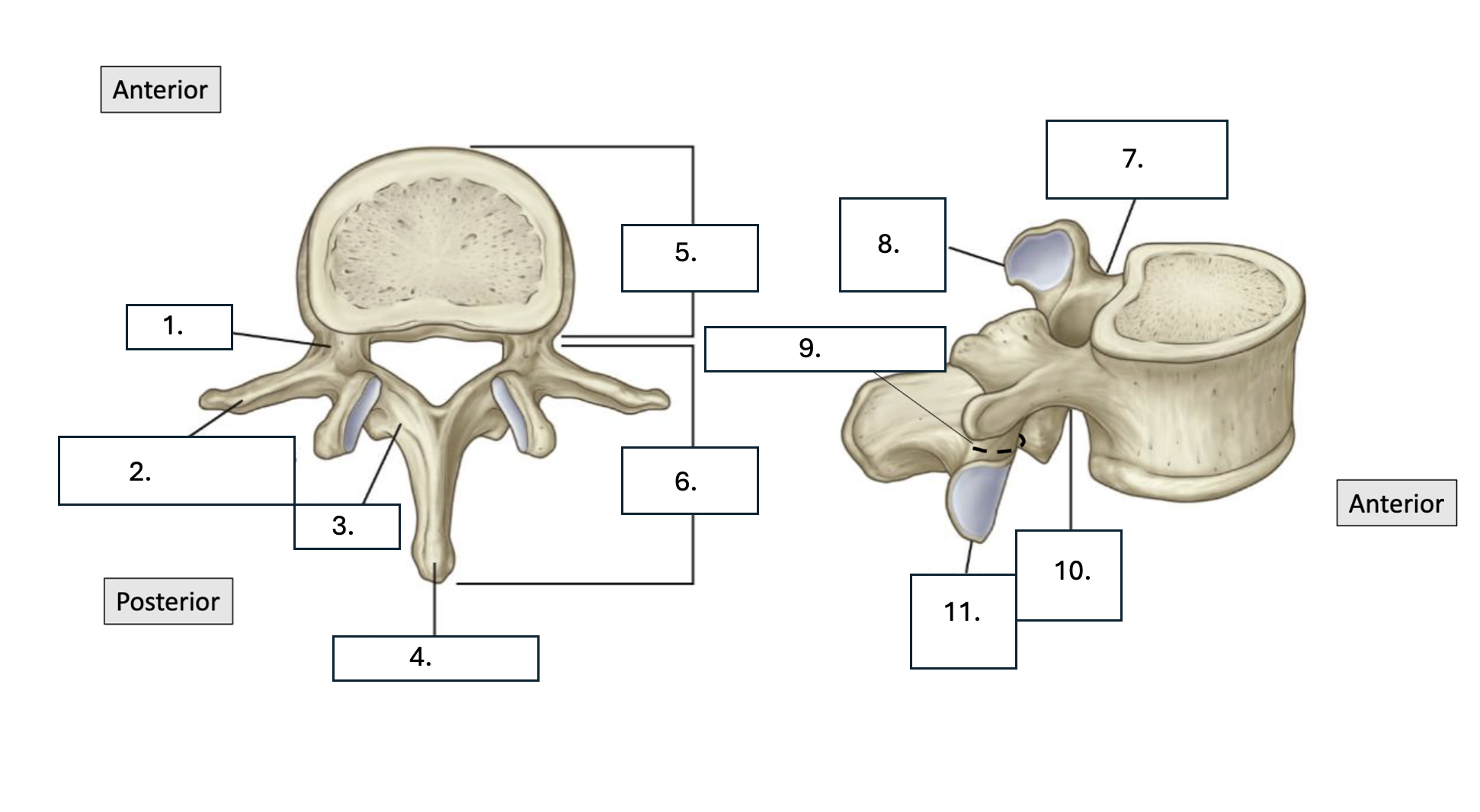
What is number 1?
Pedicle
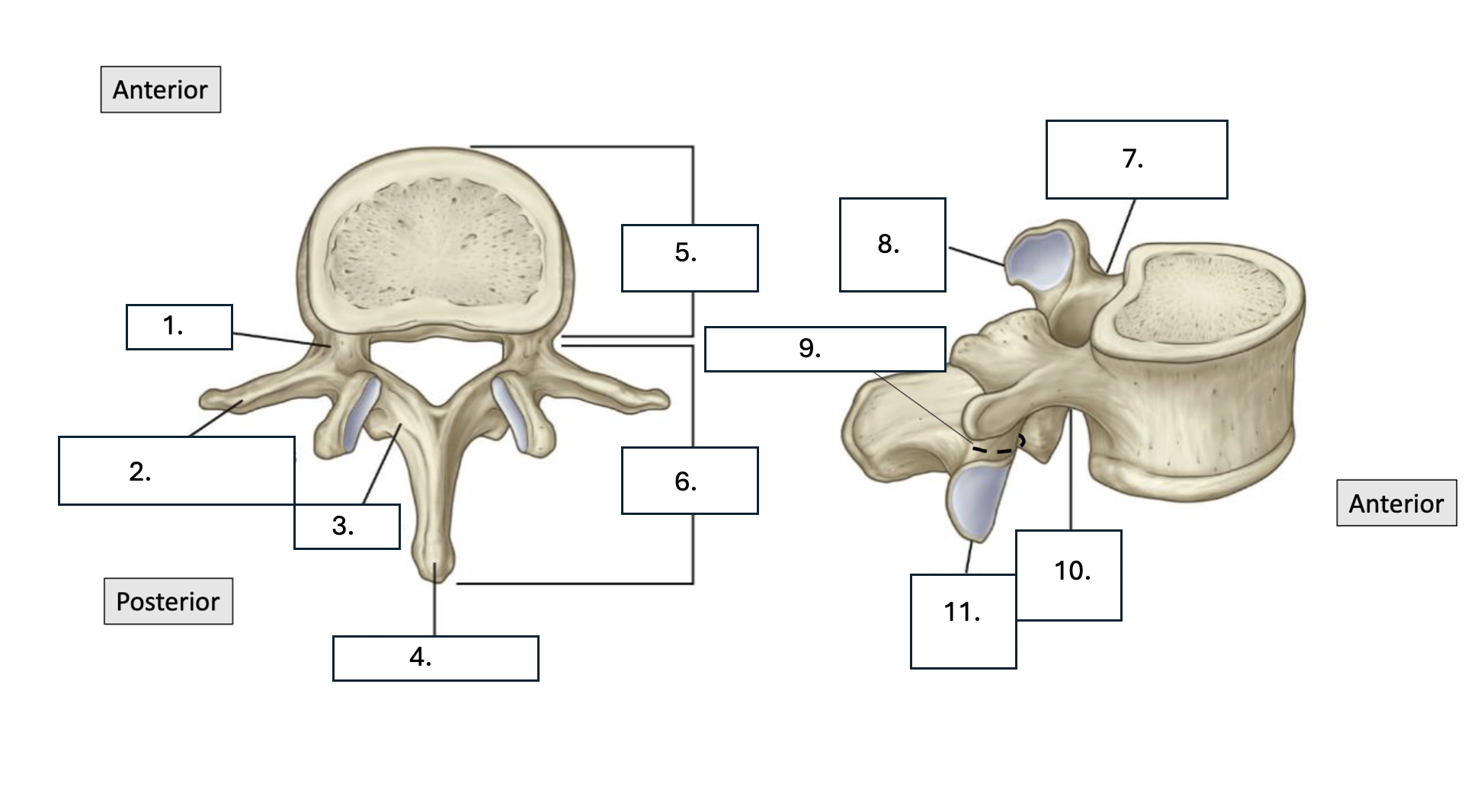
What is number 2?
Transverse process
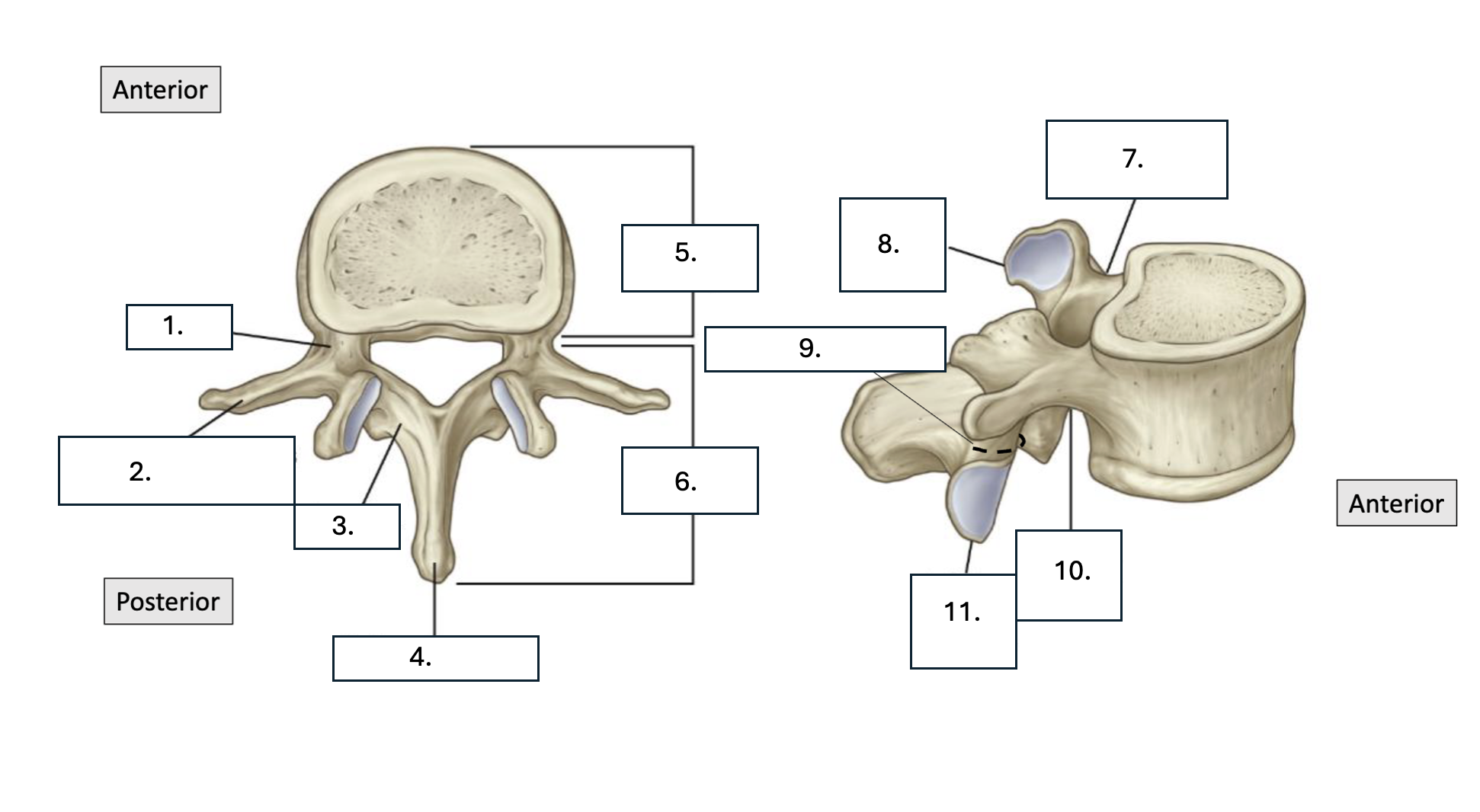
What is number 3?
lamina
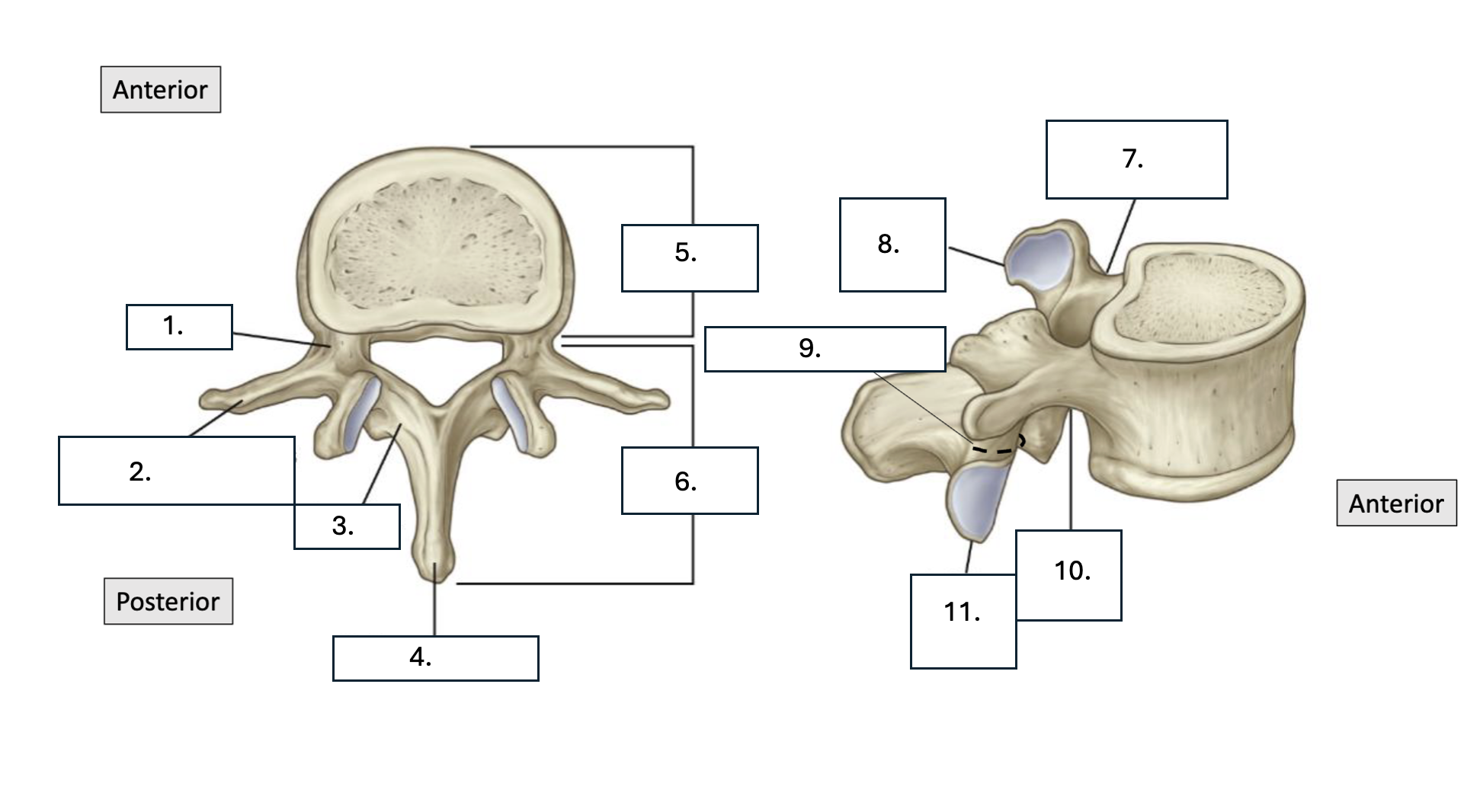
What is number 4?
spinous process
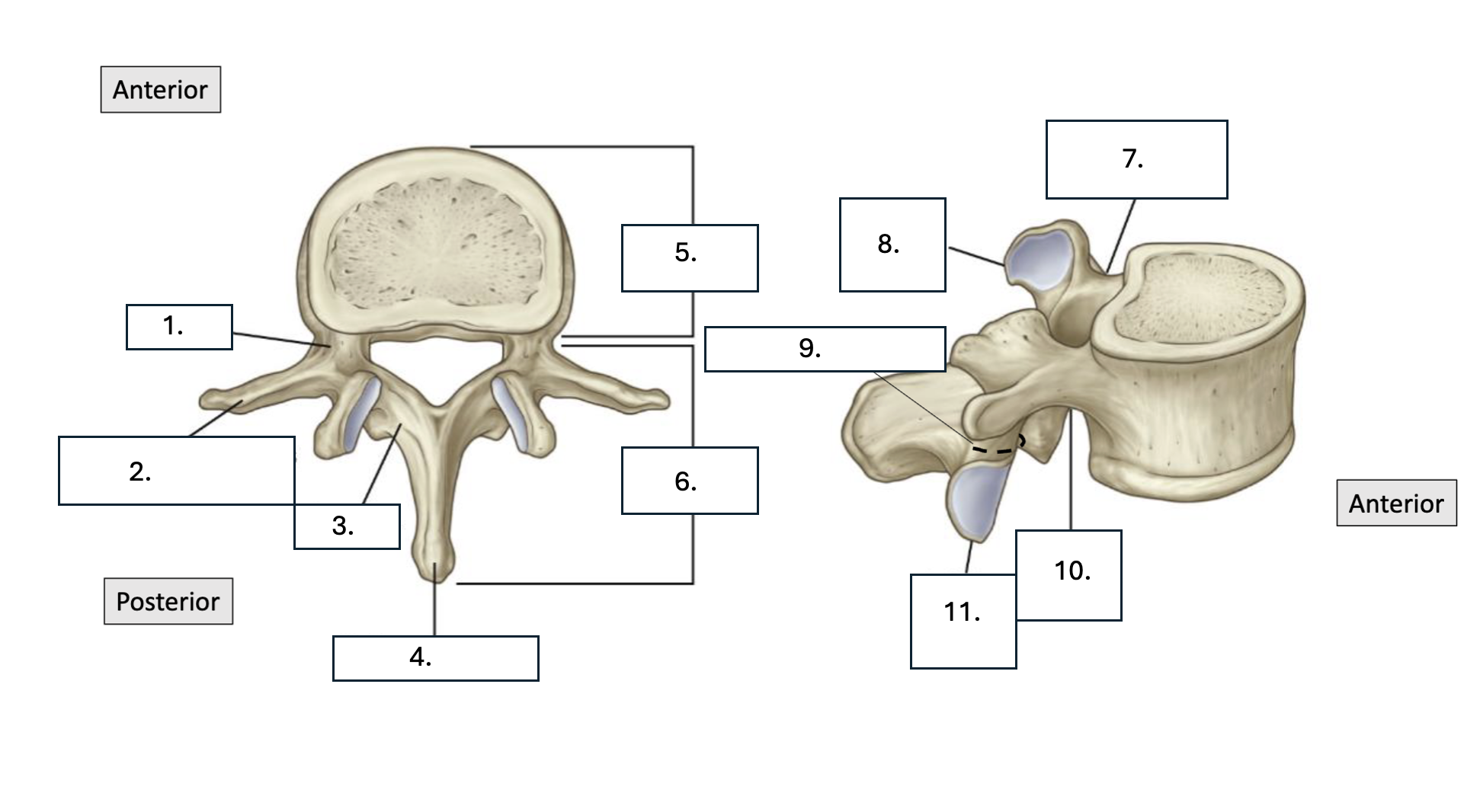
What is number 5?
vertebral body
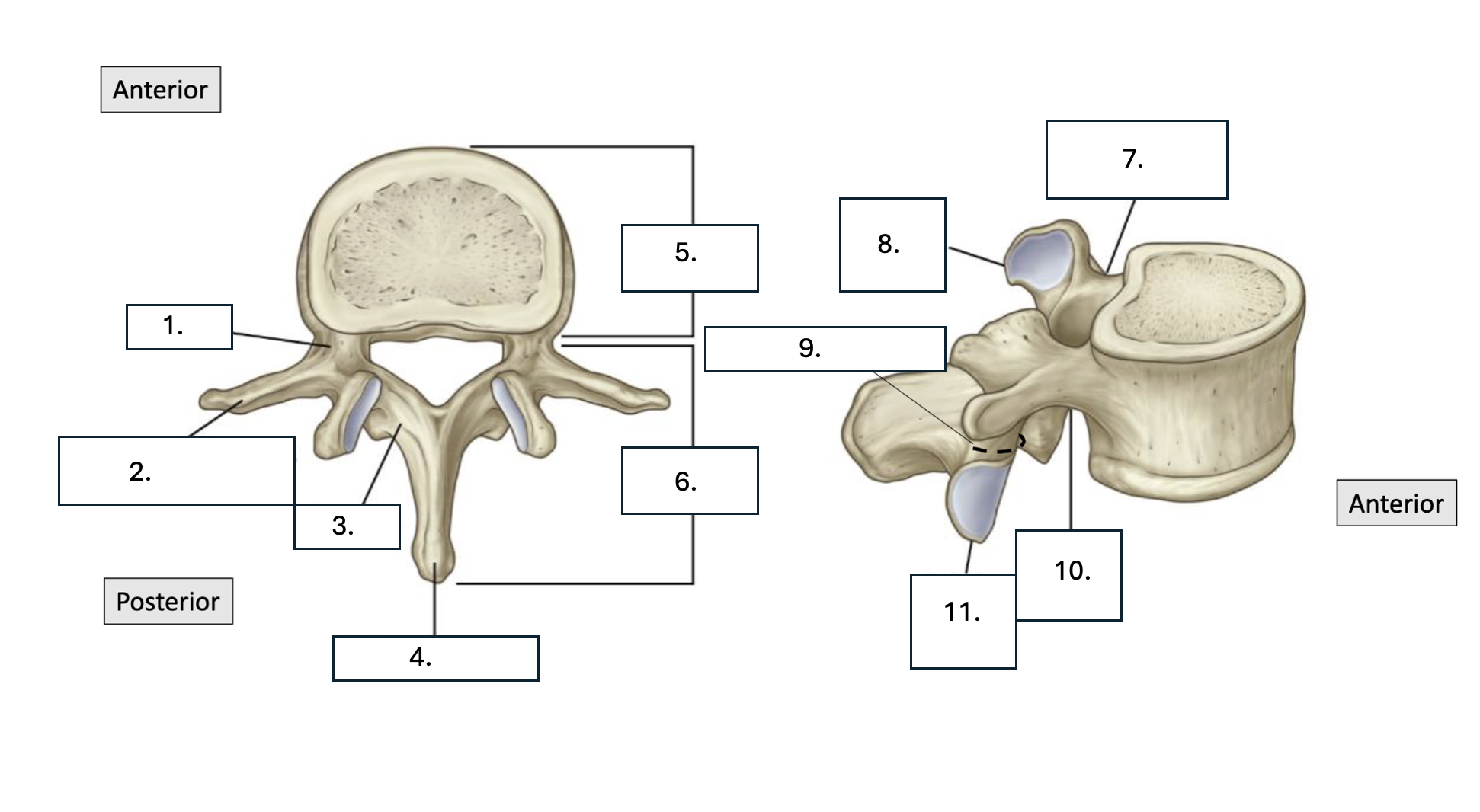
What is number 6?
vertebral arch
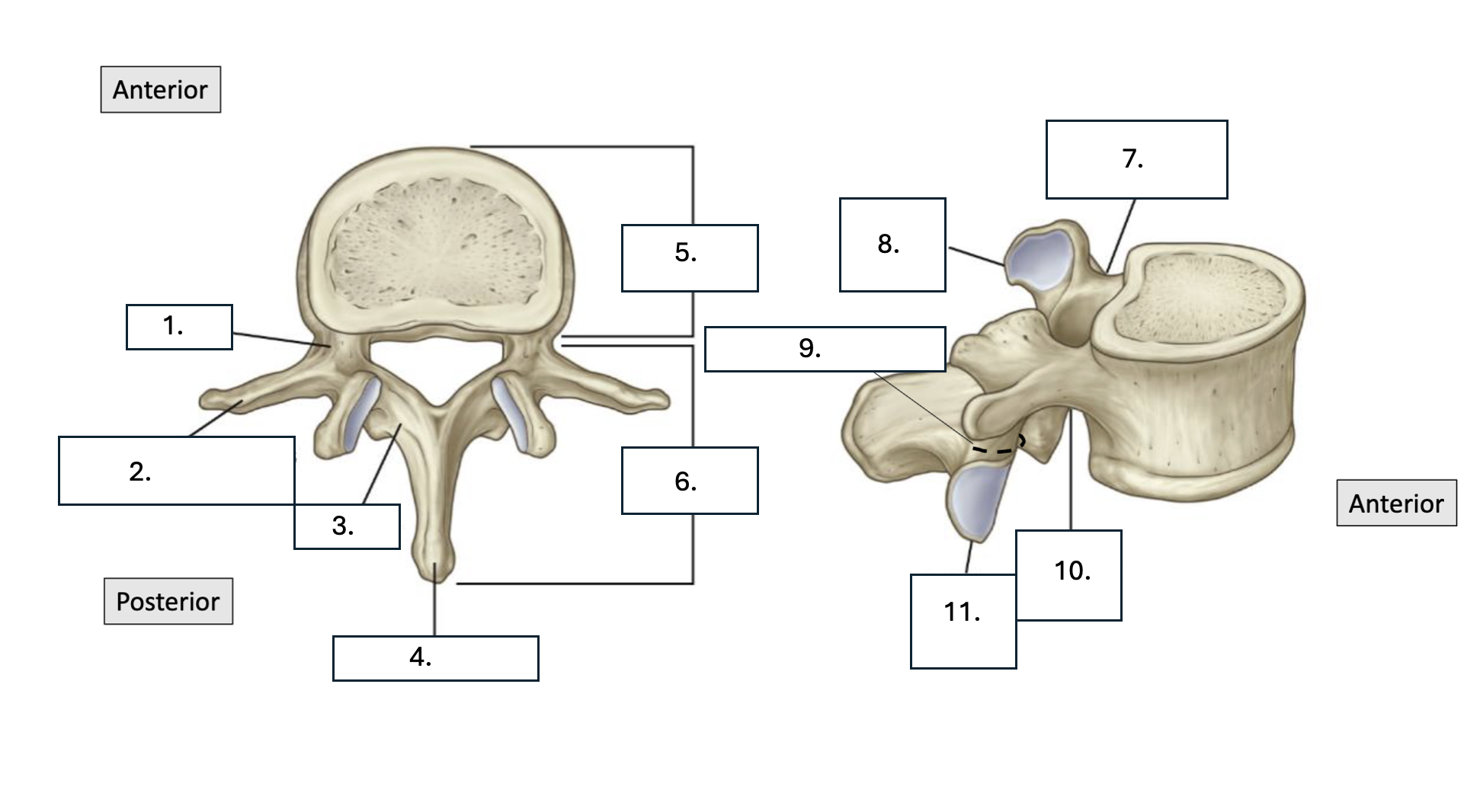
What is number 7?
superior vertebral notch
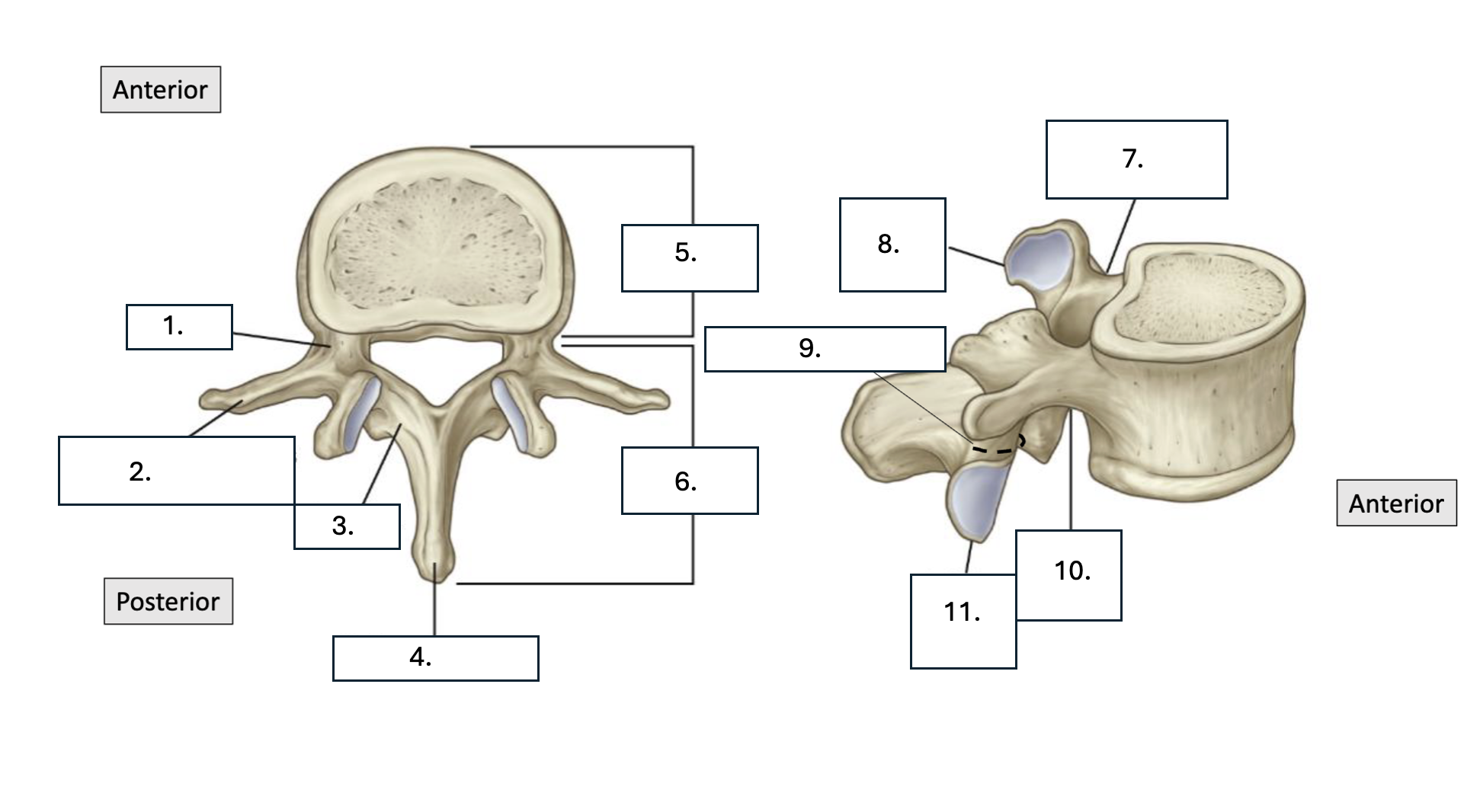
What is number 8?
superior articular process
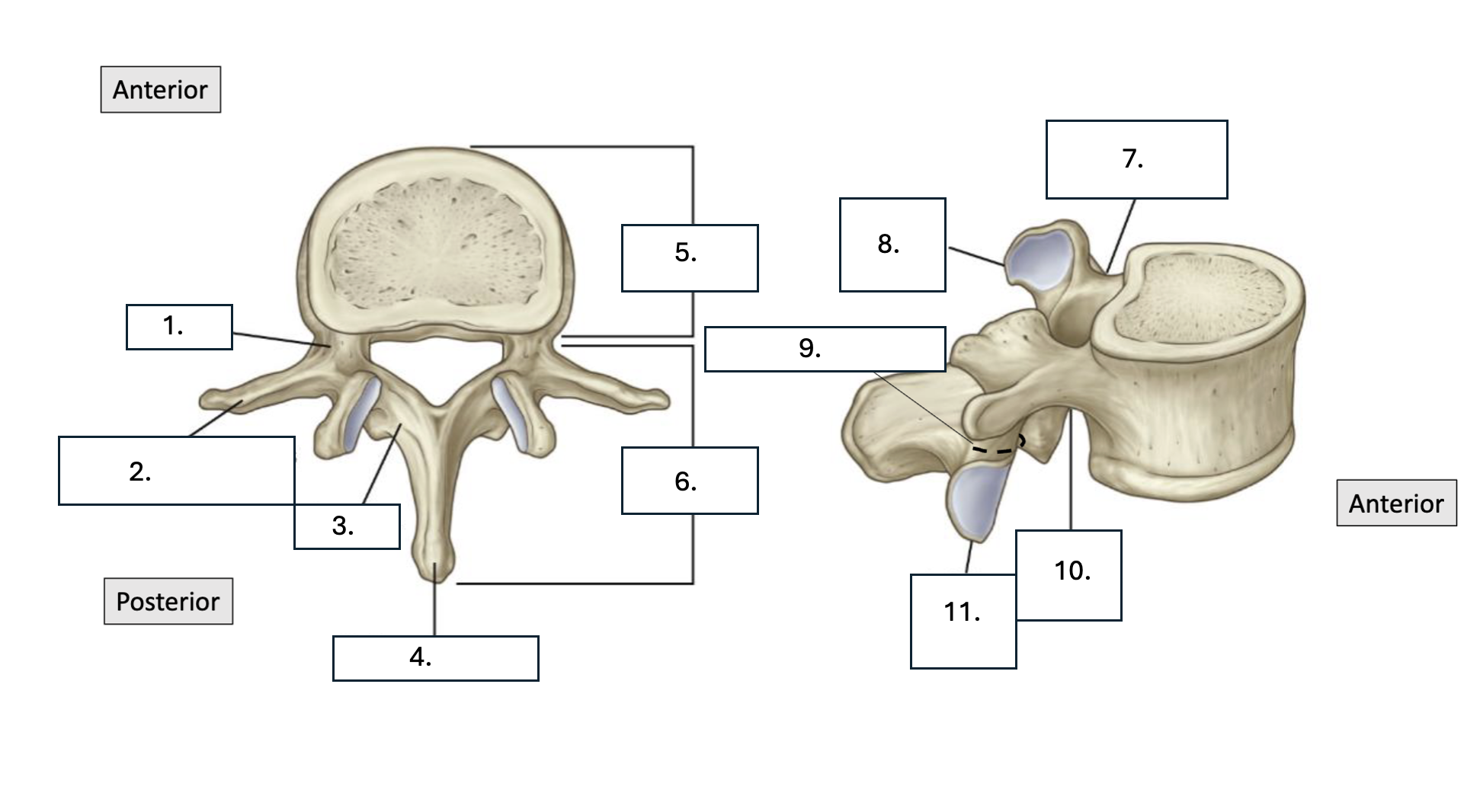
What is number 9?
pars interarticularis
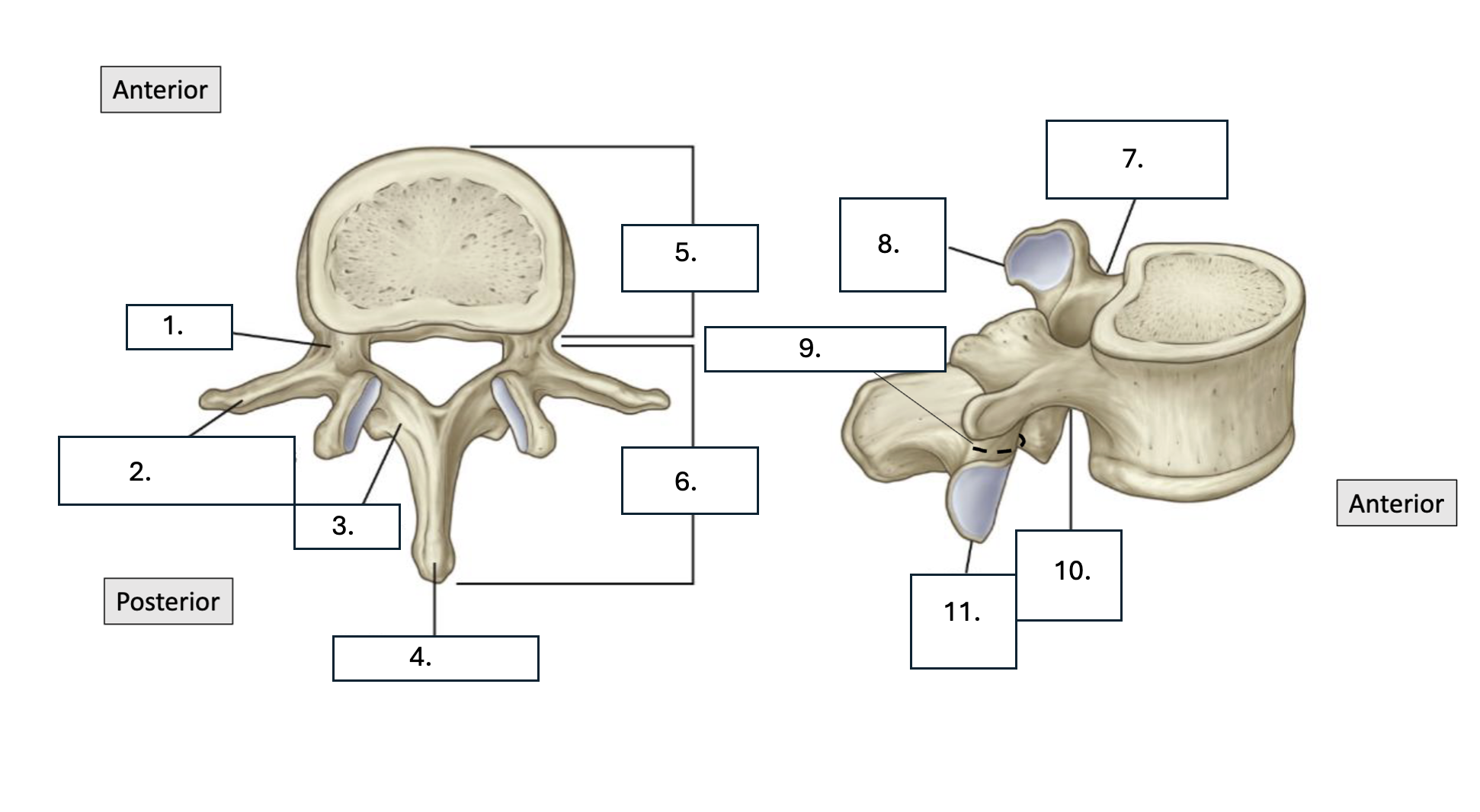
What is number 10?
inferior vertebral notch
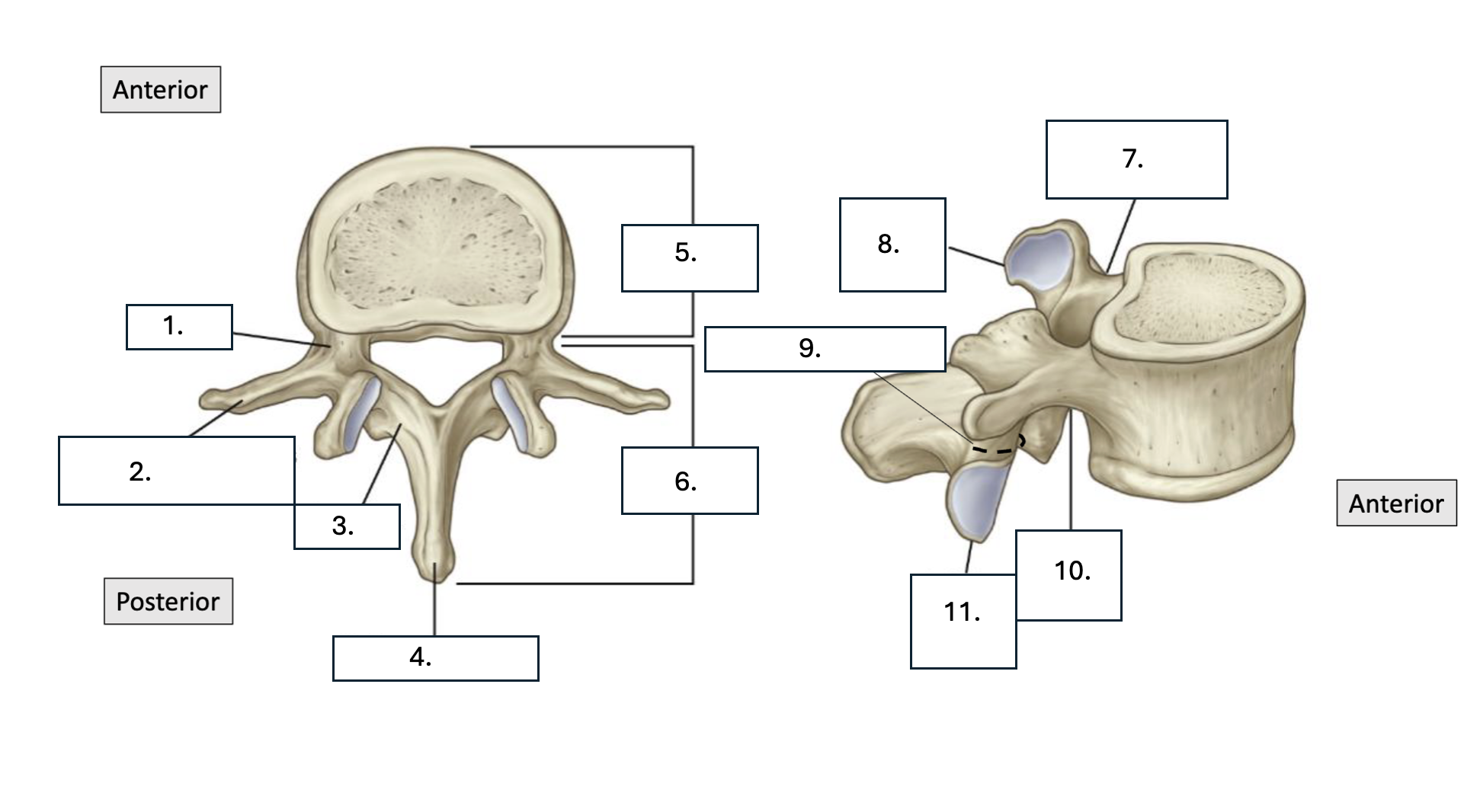
What is number 11?
inferior articular process
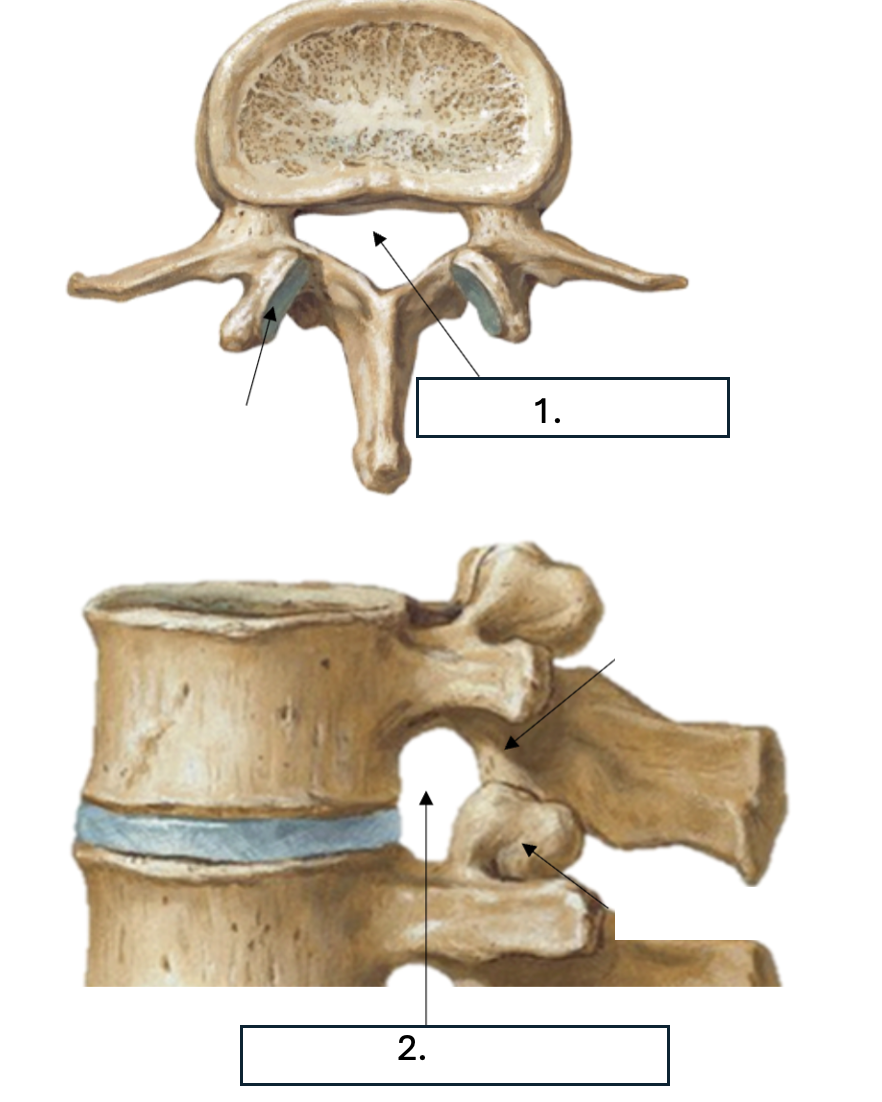
What is number 1?
vertebral foramen
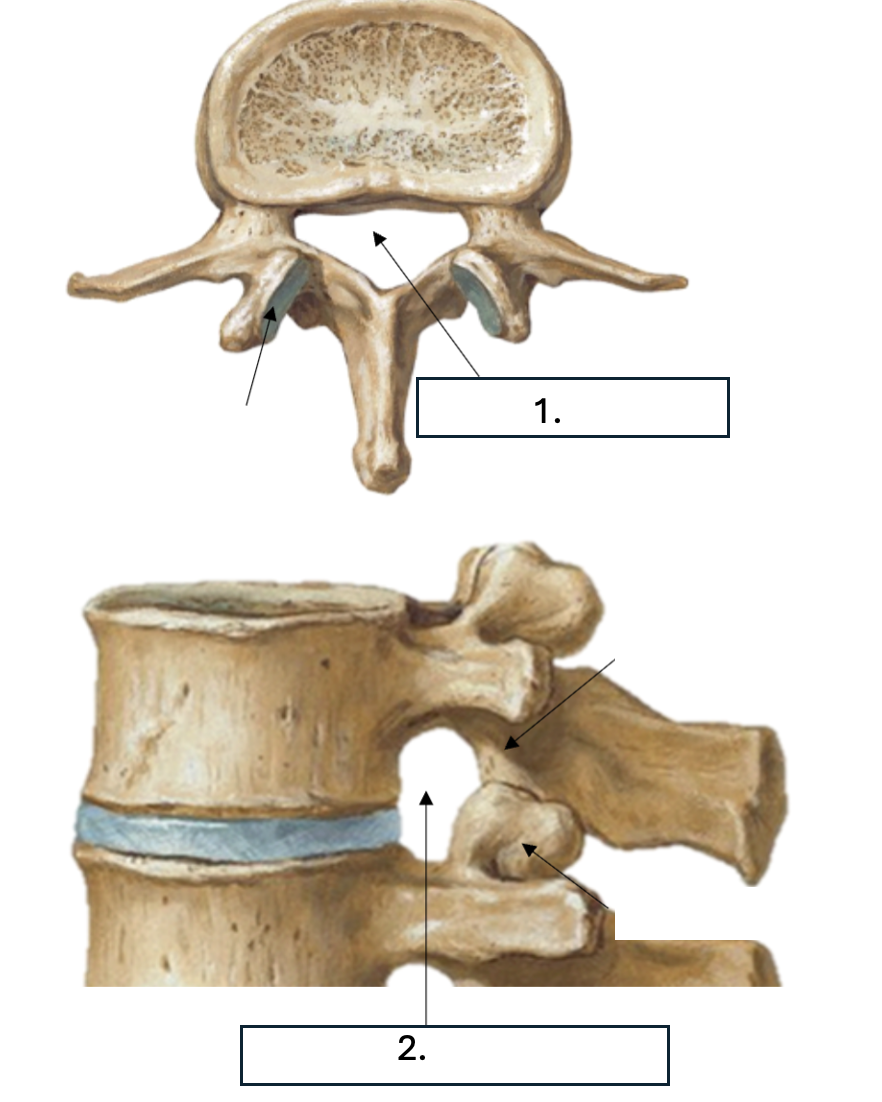
What is number 2?
intervertebral foramen
what is the function of the spinous process of vertebrae?
Muscle attachment and movement
What is the function of the articular processes of vertebrae?
restriction of movement
what is the function of the vertebral arch?
protection of the spinal cord
What is the function of the vertebral body?
support of body weight
which cervical vertebrae are typical?
C3-C6
What makes the C7 atypical?
vertebra prominens
What makes the atlas (C1) atypical?
2 arches, 2 tubercules, 2 lateral masses
what makes the axis (C2) atypical?
the dens (odontoid process)
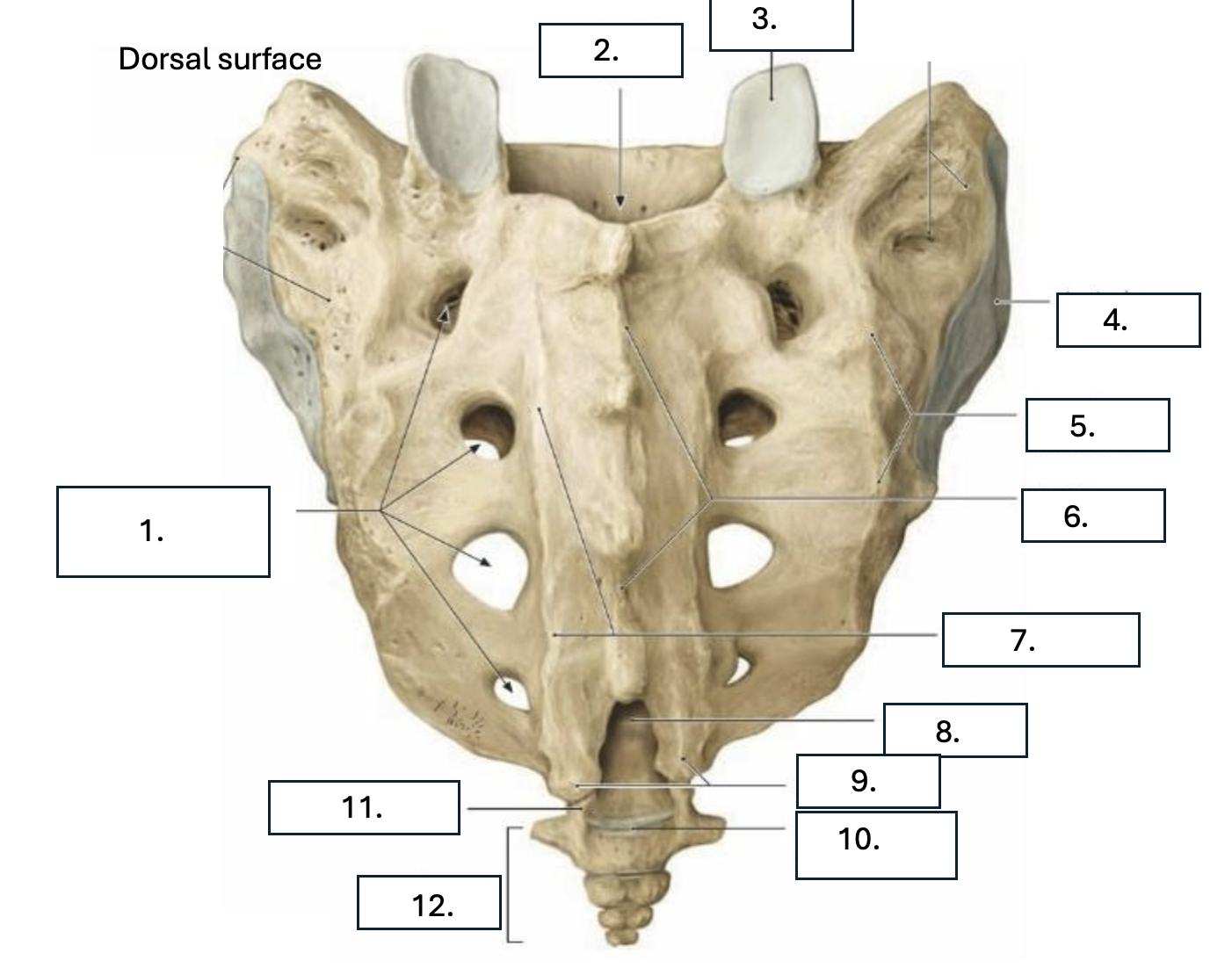
What is number 1?
posterior sacral foramen
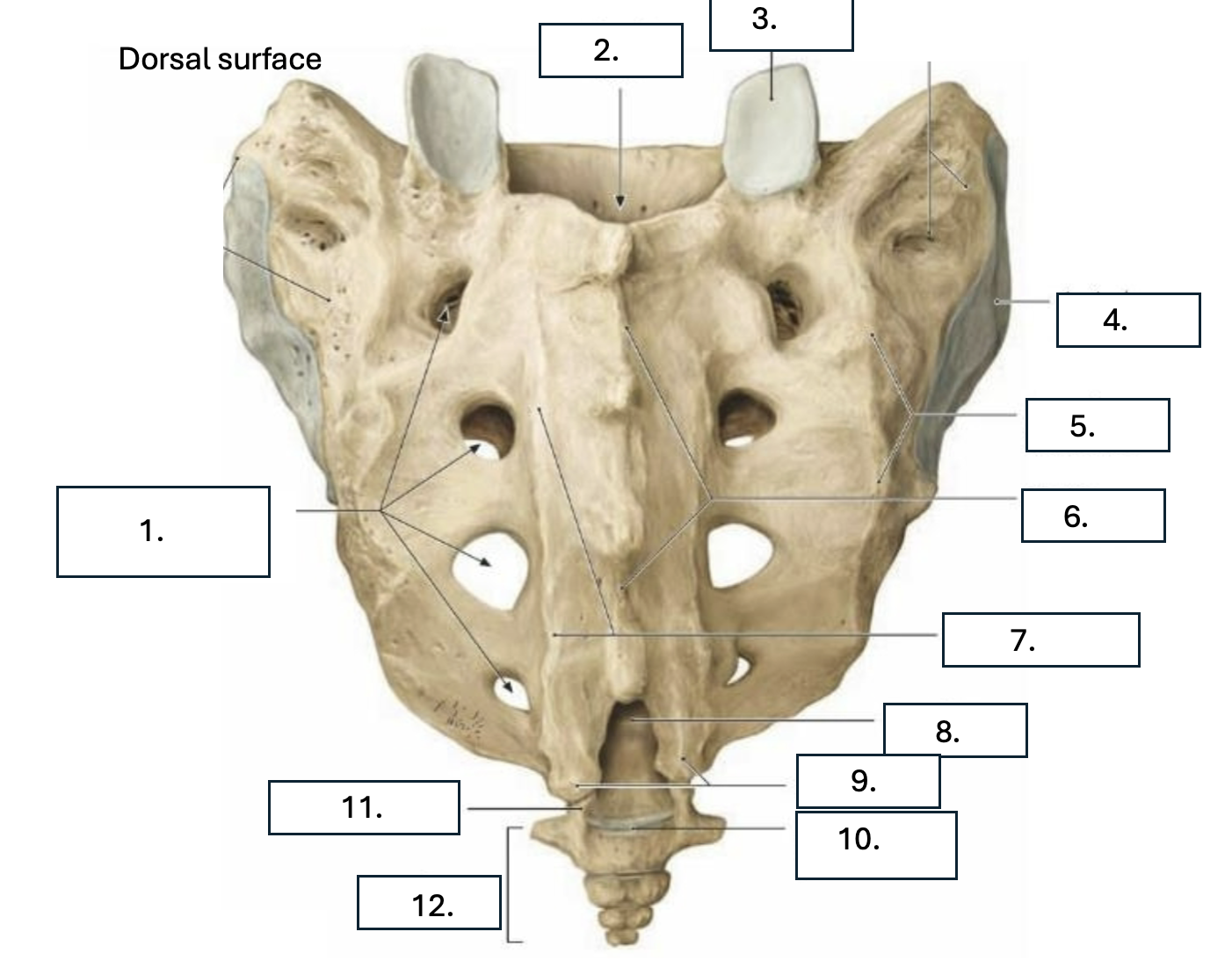
What is number 2?
sacral canal
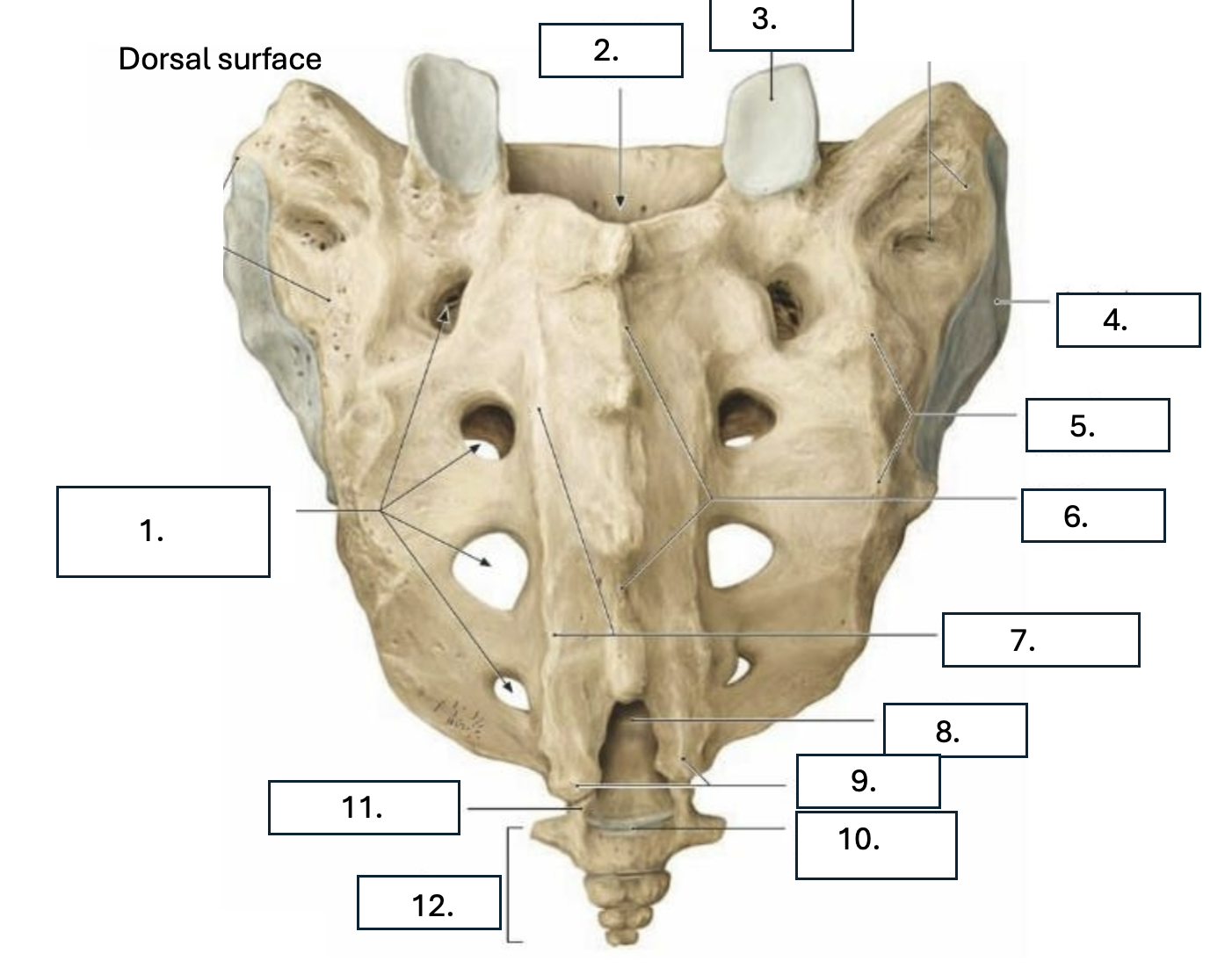
What is number 3?
superior articular facet
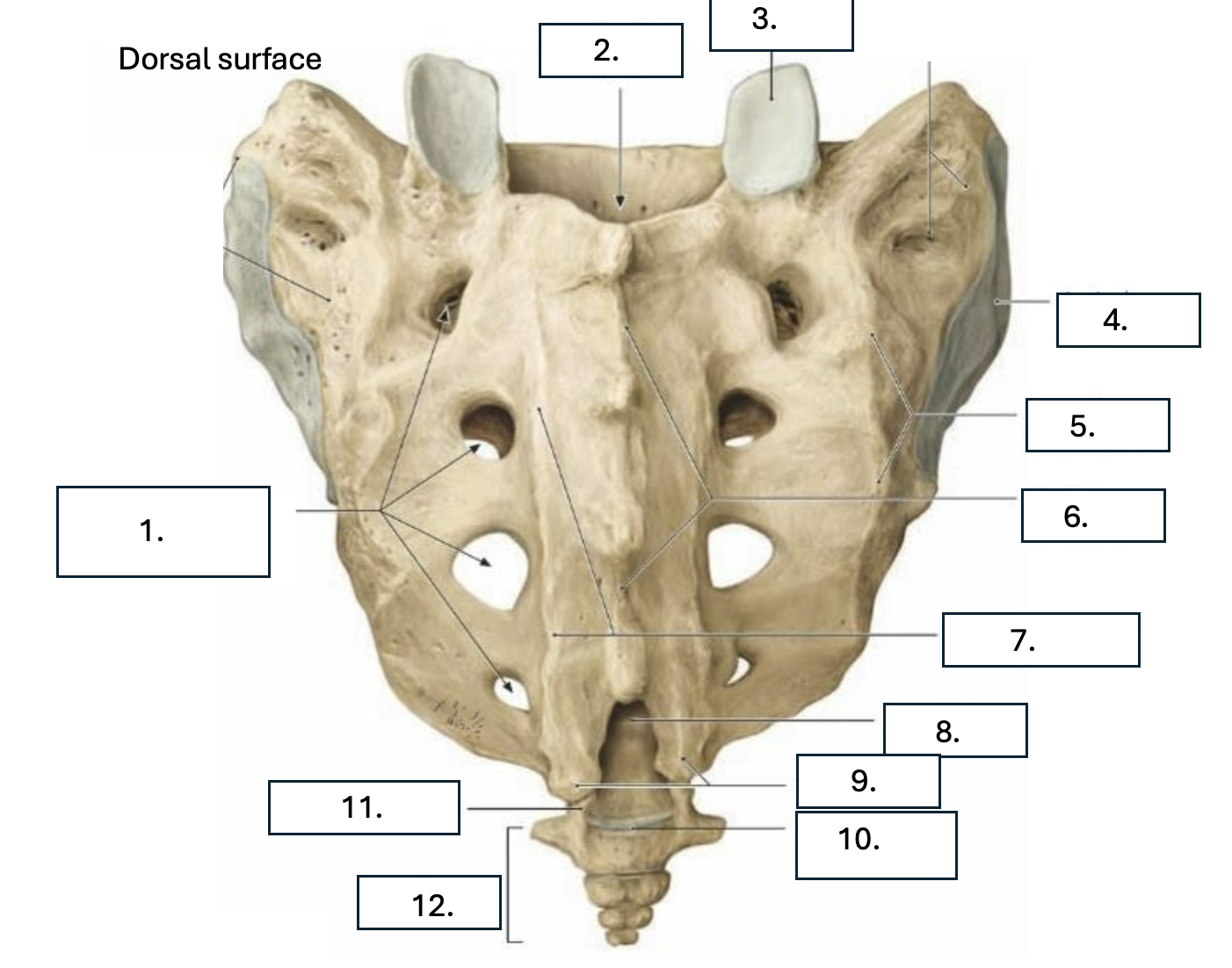
What is number 4?
auricular surface
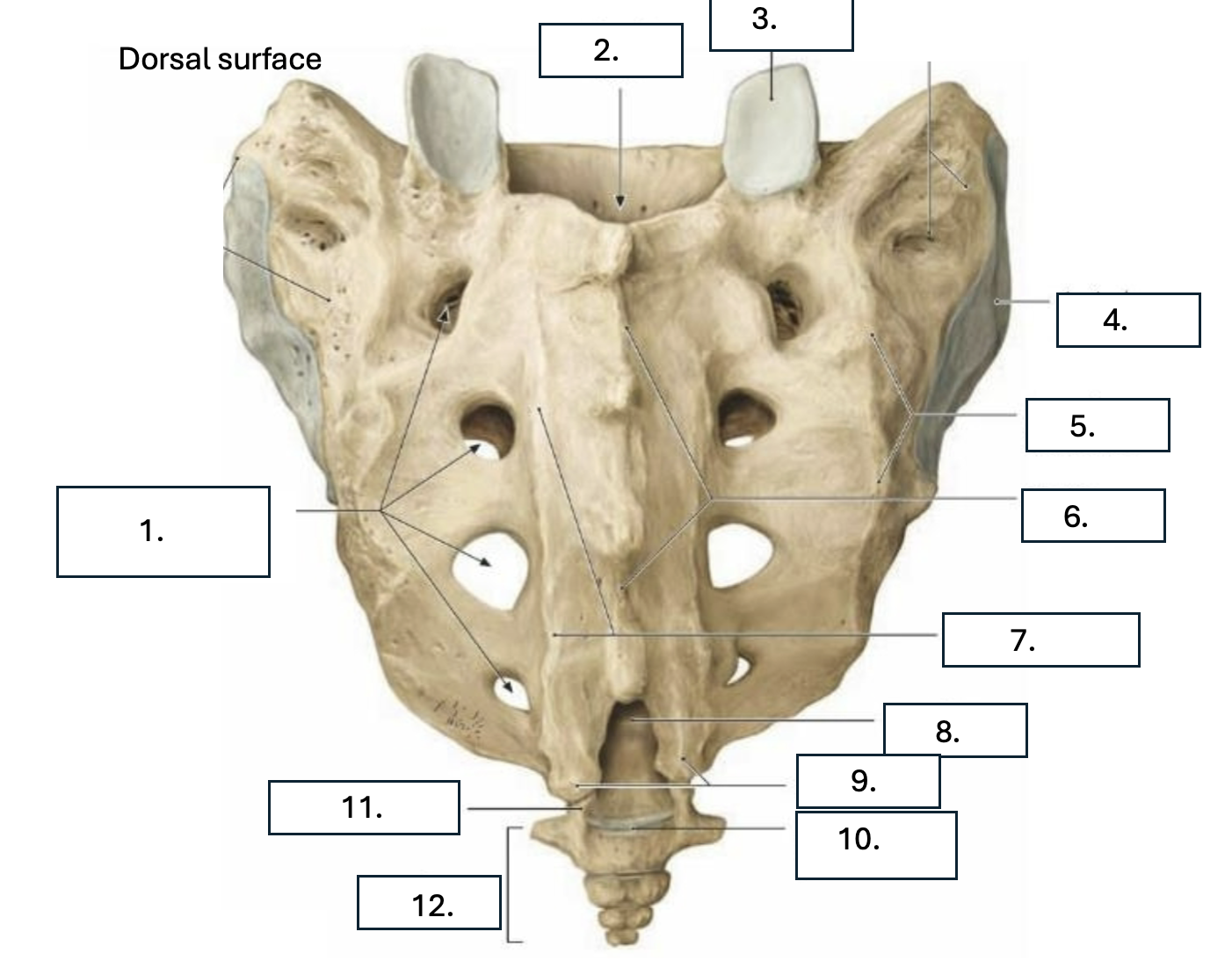
What is number 5?
lateral sacral crest
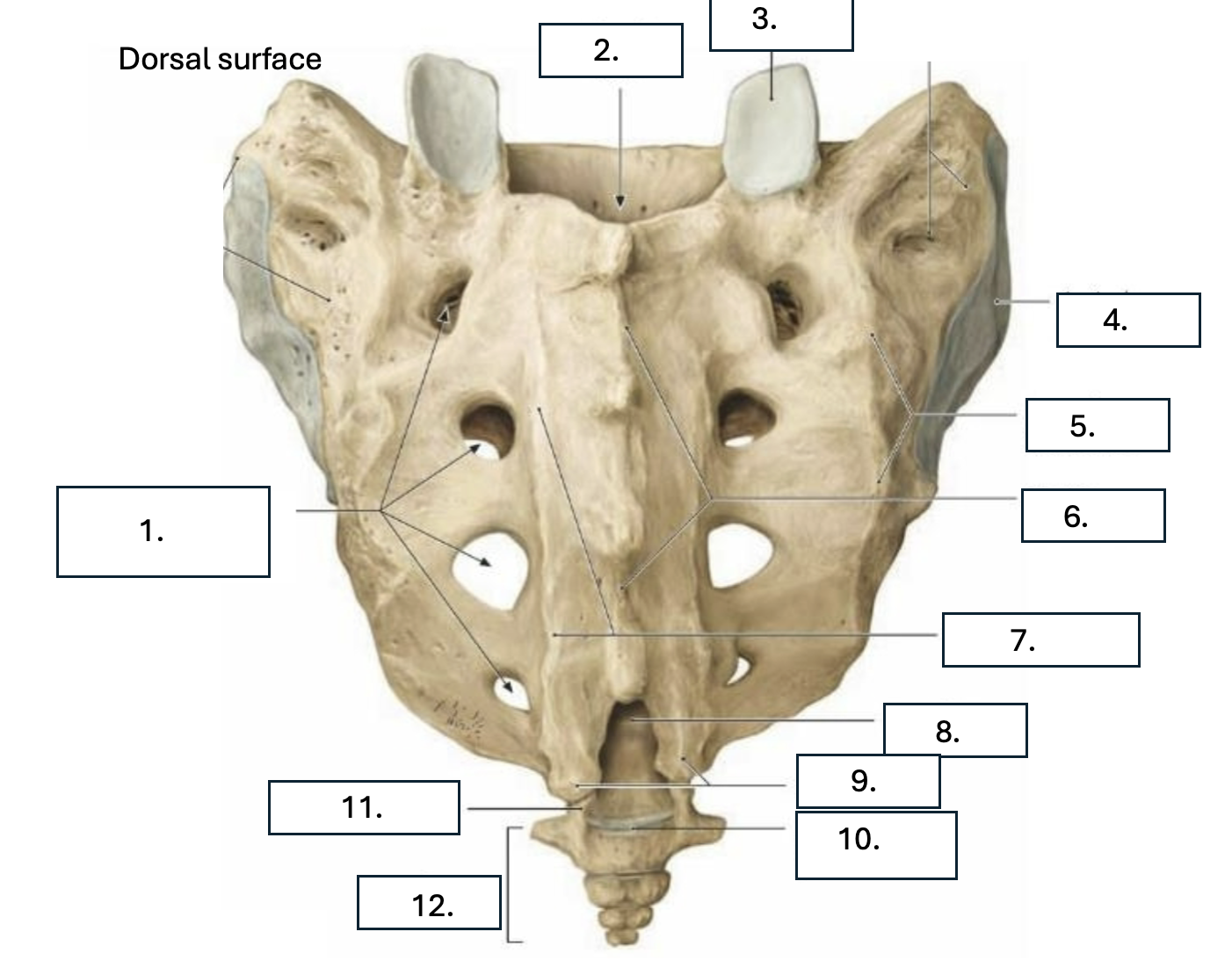
What is number 6?
median sacral crest
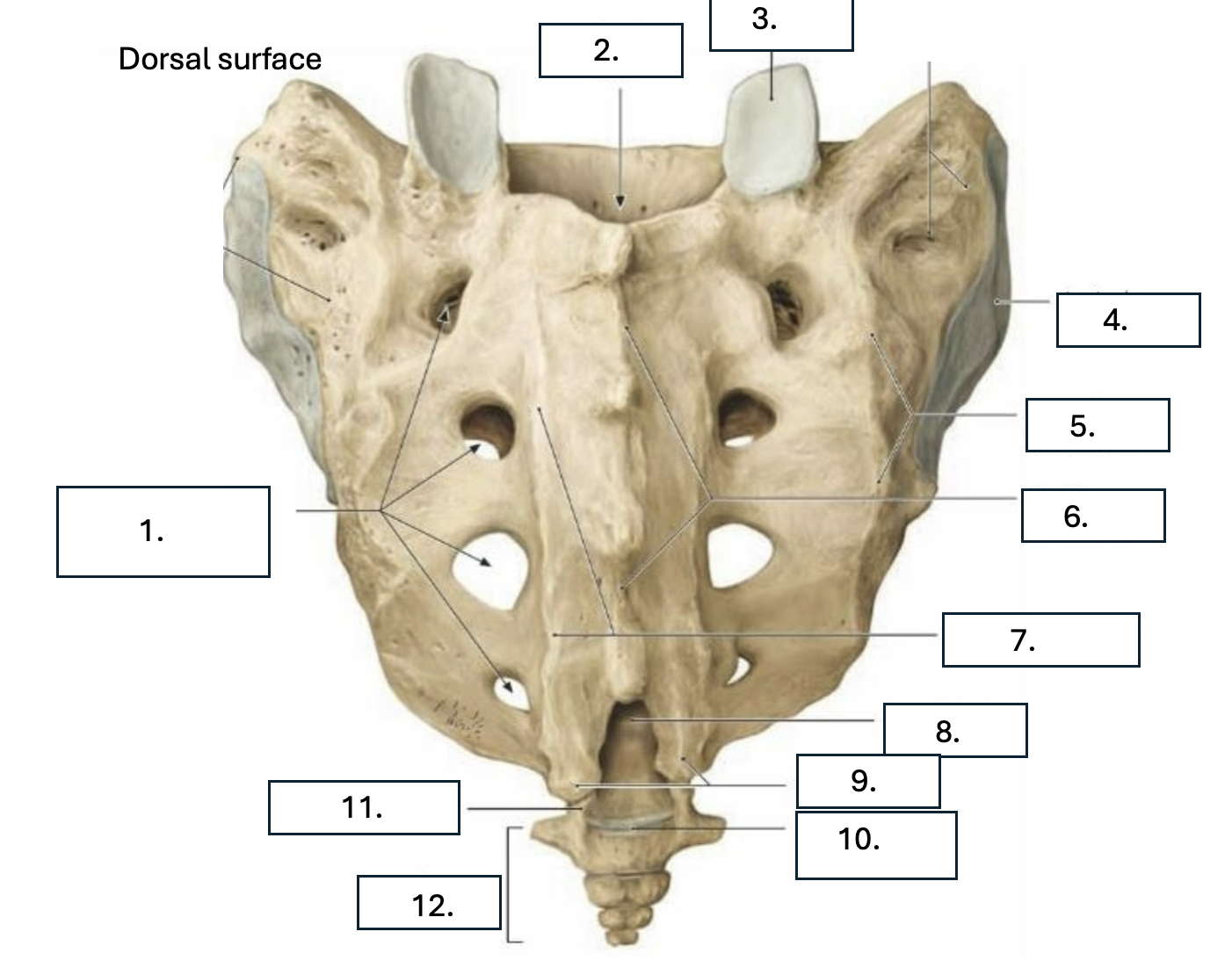
What is number 7?
medial sacral crest
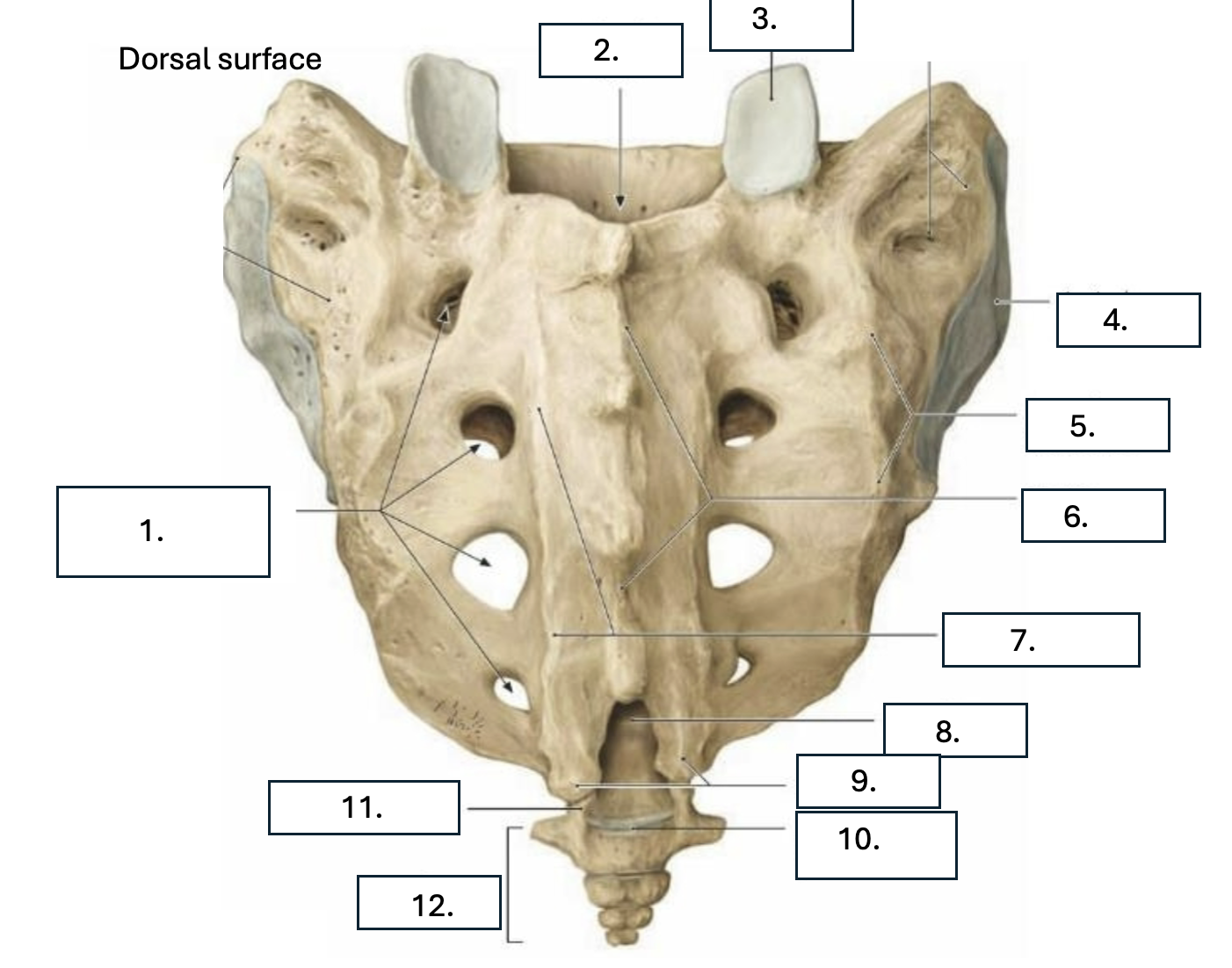
What is number 8?
sacral hiatus
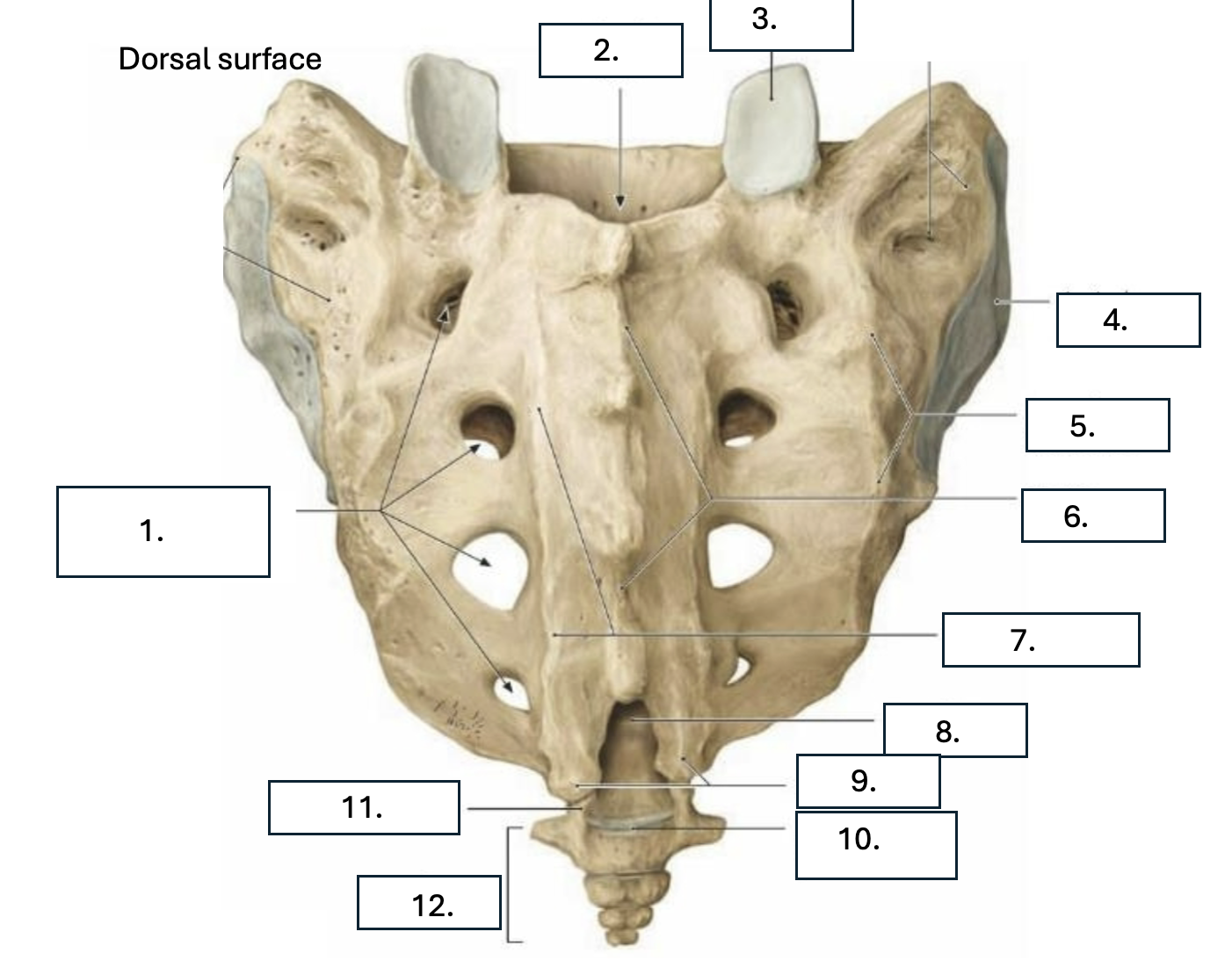
What is number 9?
sacral cornua
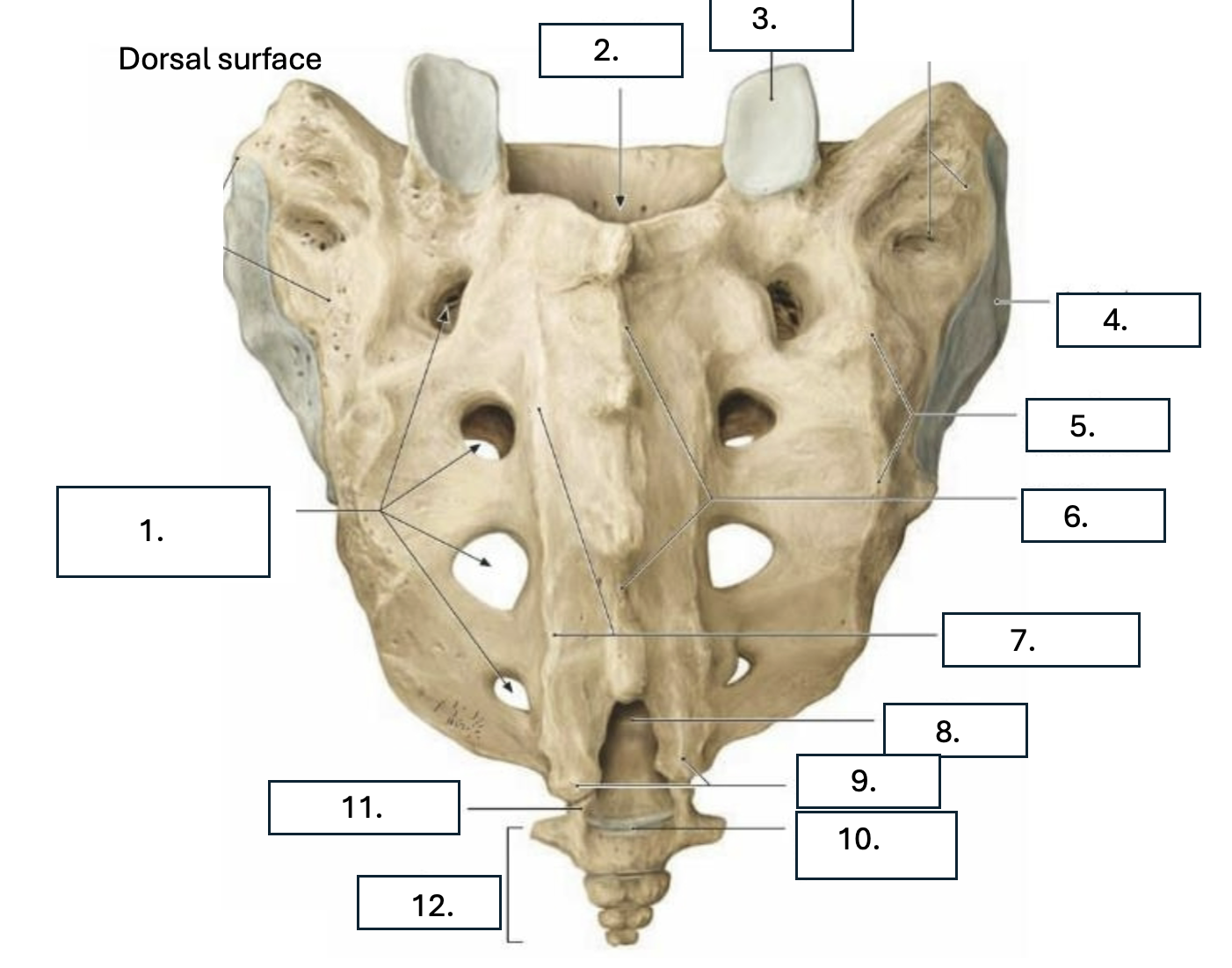
What is number 10?
sacrococcygeal joint
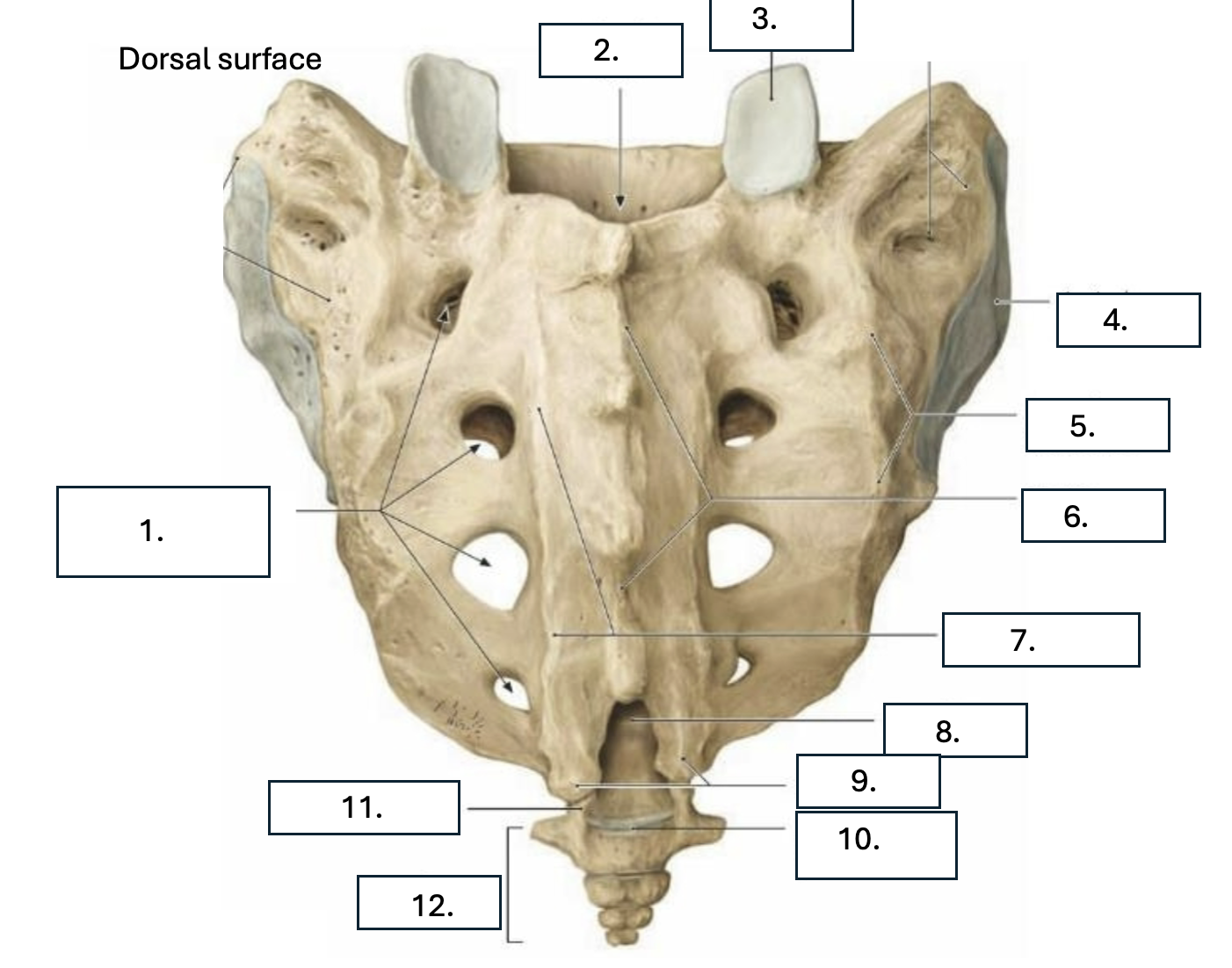
What is number 11?
coccygeal cornu
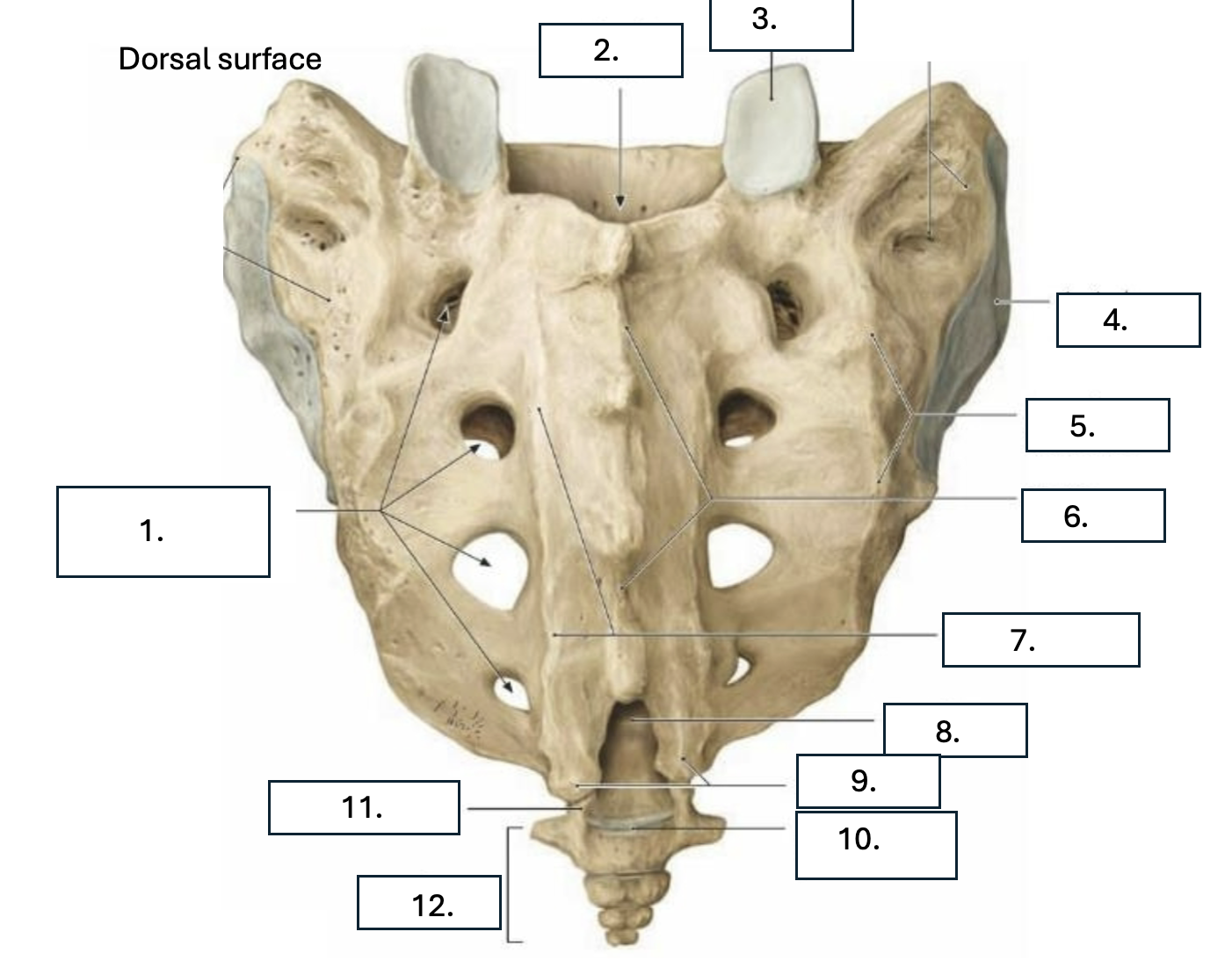
What is number 12?
coccyx
intervertebral discs are what kind of joint?
secondary cartilaginous joint
the outer ring of intervertebral discs are called?
anulus fibrosus
the inner ring of intervertebral discs are called?
nucleus pulposus
the joints on the lateral sides of vertebral bodies are called?
uncovertebral joints
the joints between articular processes of vertebrae are called
zygapophyseal joints
zygapophyseal joints are what kind of joints?
Plane synovial joints
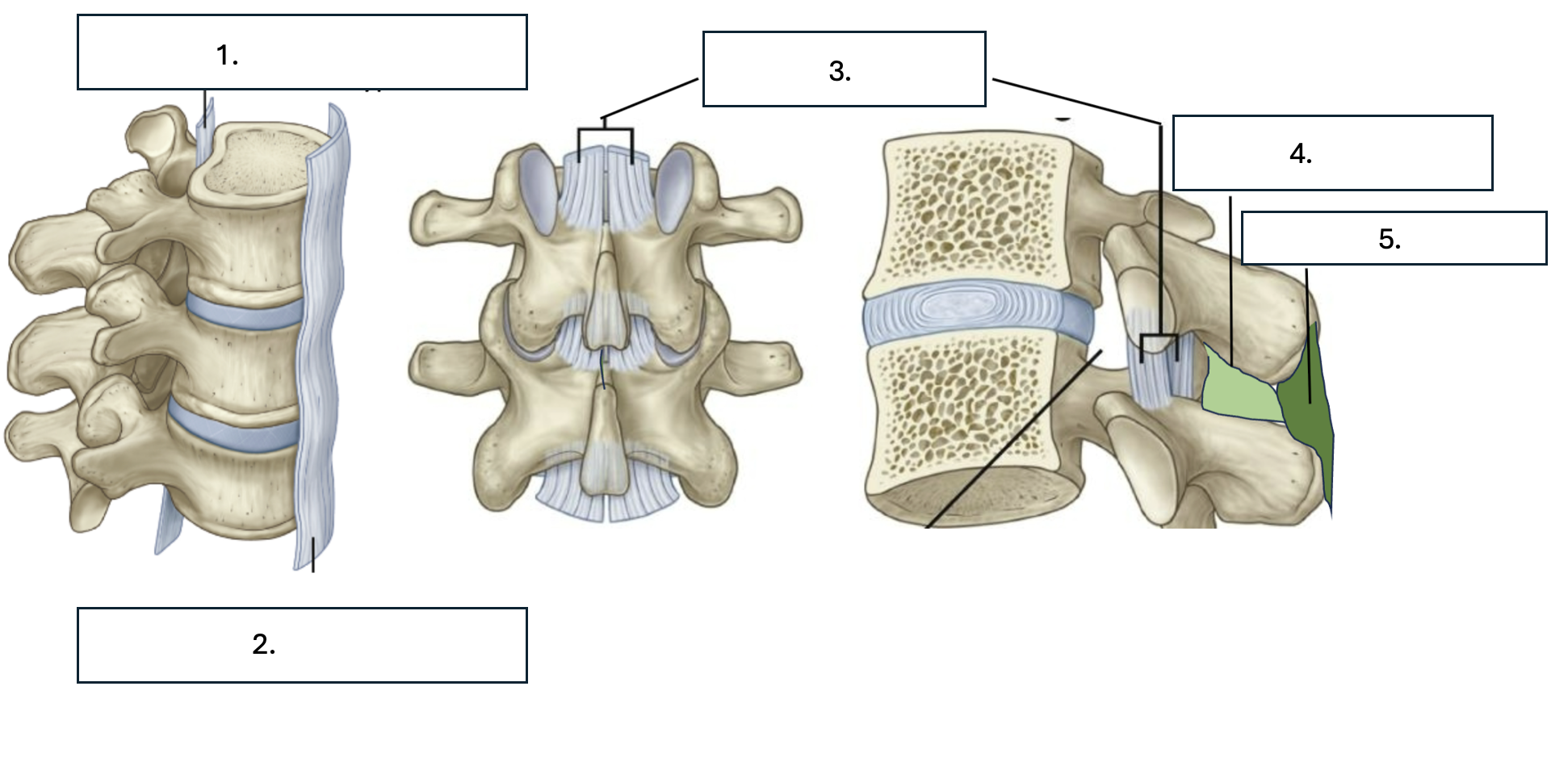
What is number 1?
Posterior longitudinal ligament
What is the function of the Posterior longitudinal ligament?
prevent hyperflexion
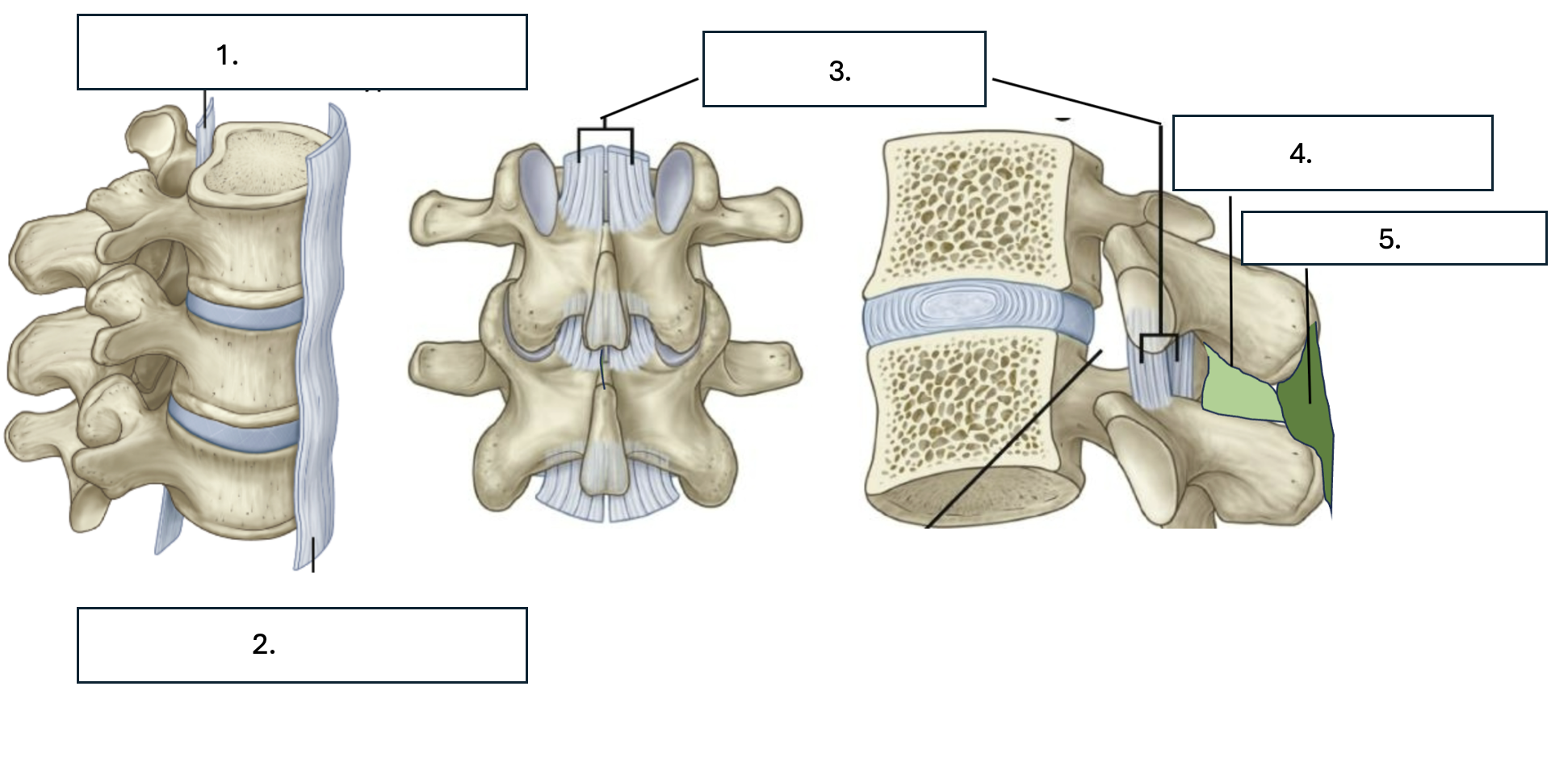
What is number 2?
anterior longitudinal ligament
What is the function of the anterior longitudinal ligament?
prevents hyperextension
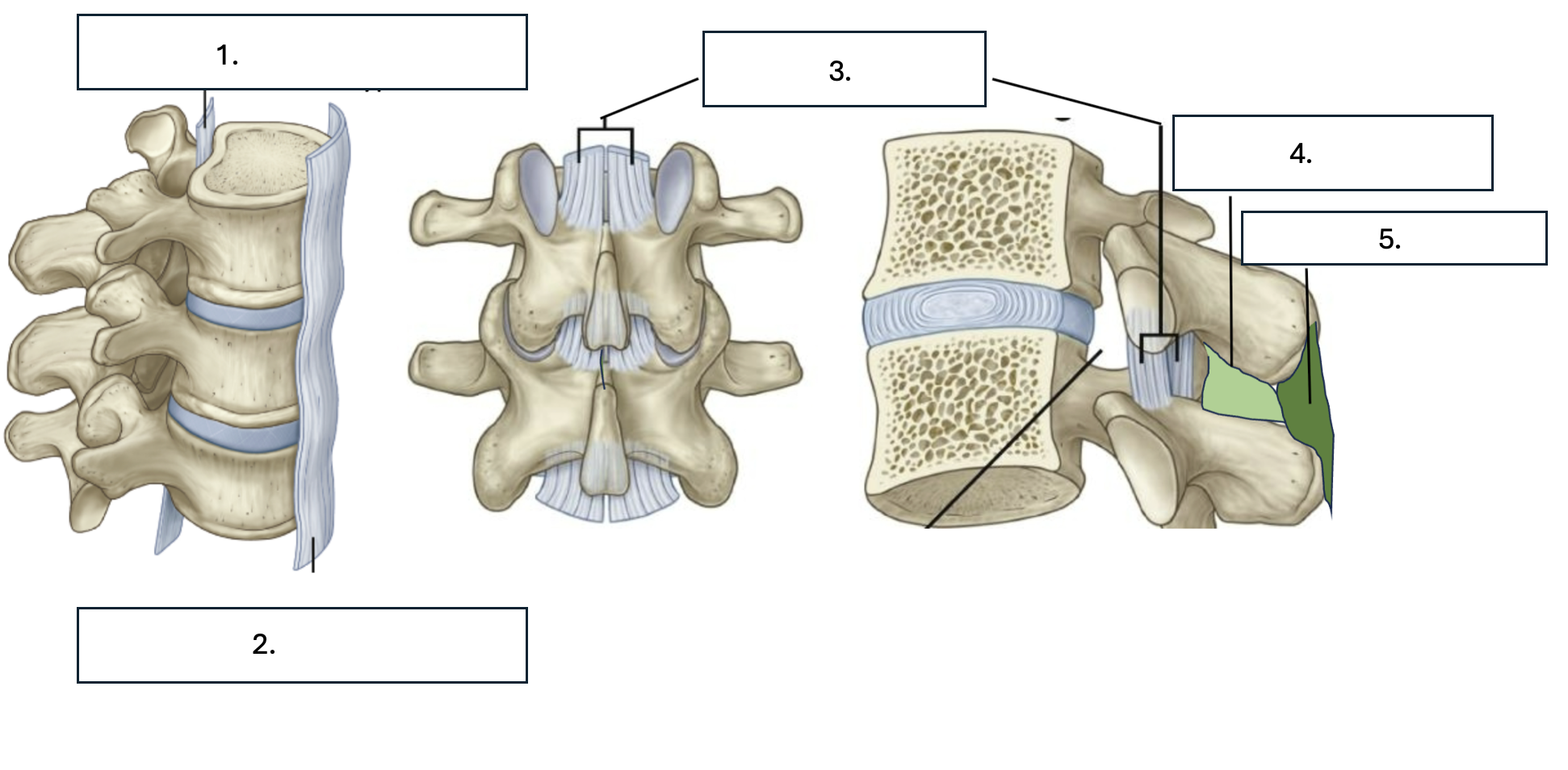
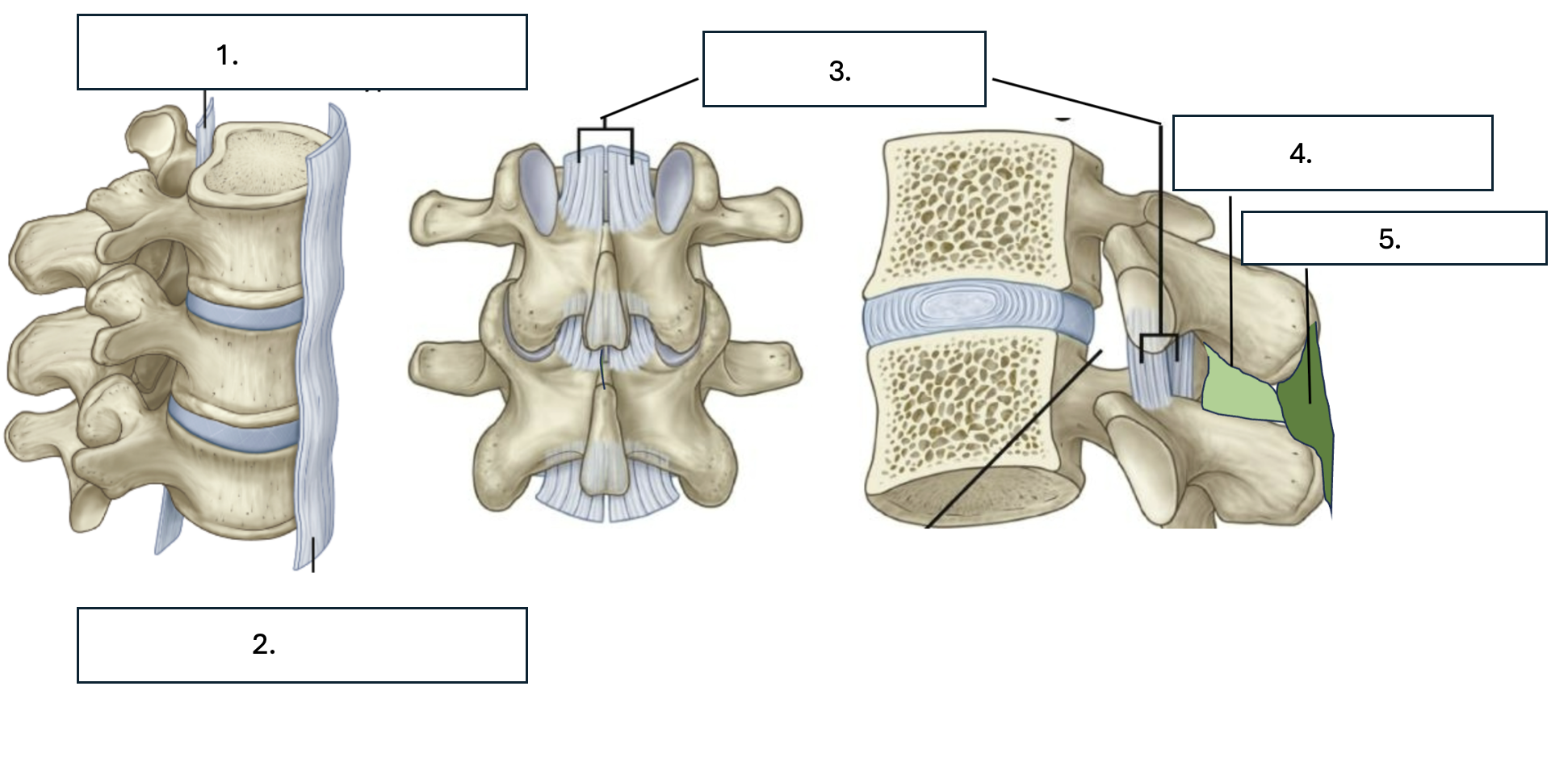
What is number 3?
Ligamentum flavum
what does Ligamentum flavum connect?
laminae
What is the function(s) of Ligamentum flavum?
prevents hyperextension and elasticity helps extend after flexion
What is number 4?
interspinous ligament
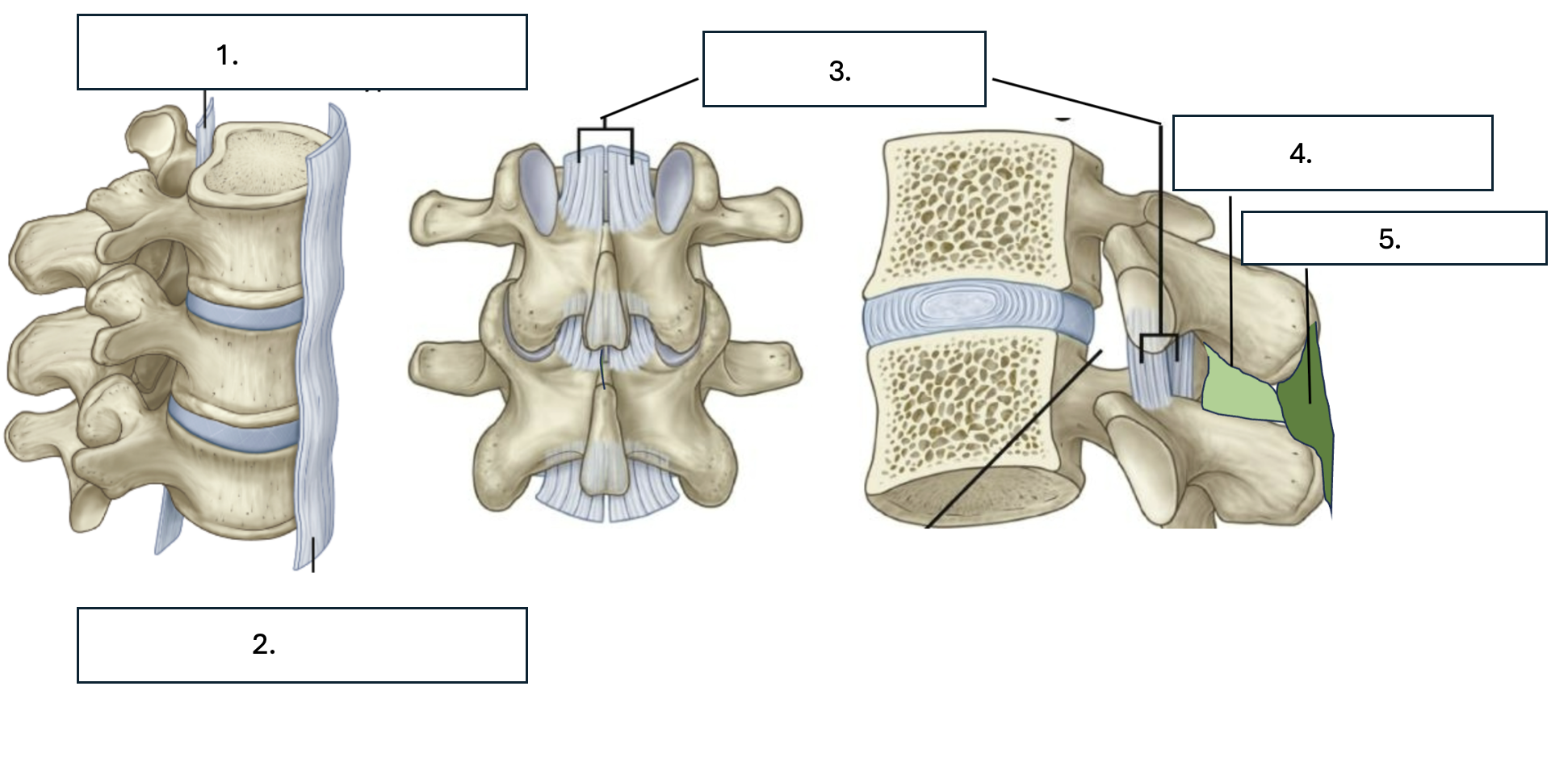
What is number 5?
supraspinous ligament
What kind of joint is the atlanto-occipital joint?
condyloid (synovial) joint
What is the function of the atlanto-occipital joint?
flexion and extension, “yes” movement
what two structures are the atlanto-occipital joints between?
lateral mass of C1 & occipital condyles
T/F: the atlanto-axial joint has intervertebral discs
False
What kind of joint is the median atlanto-axial joint?
pivot joint
What kind of joint are the lateral atlanto-axial joints?
plane joints
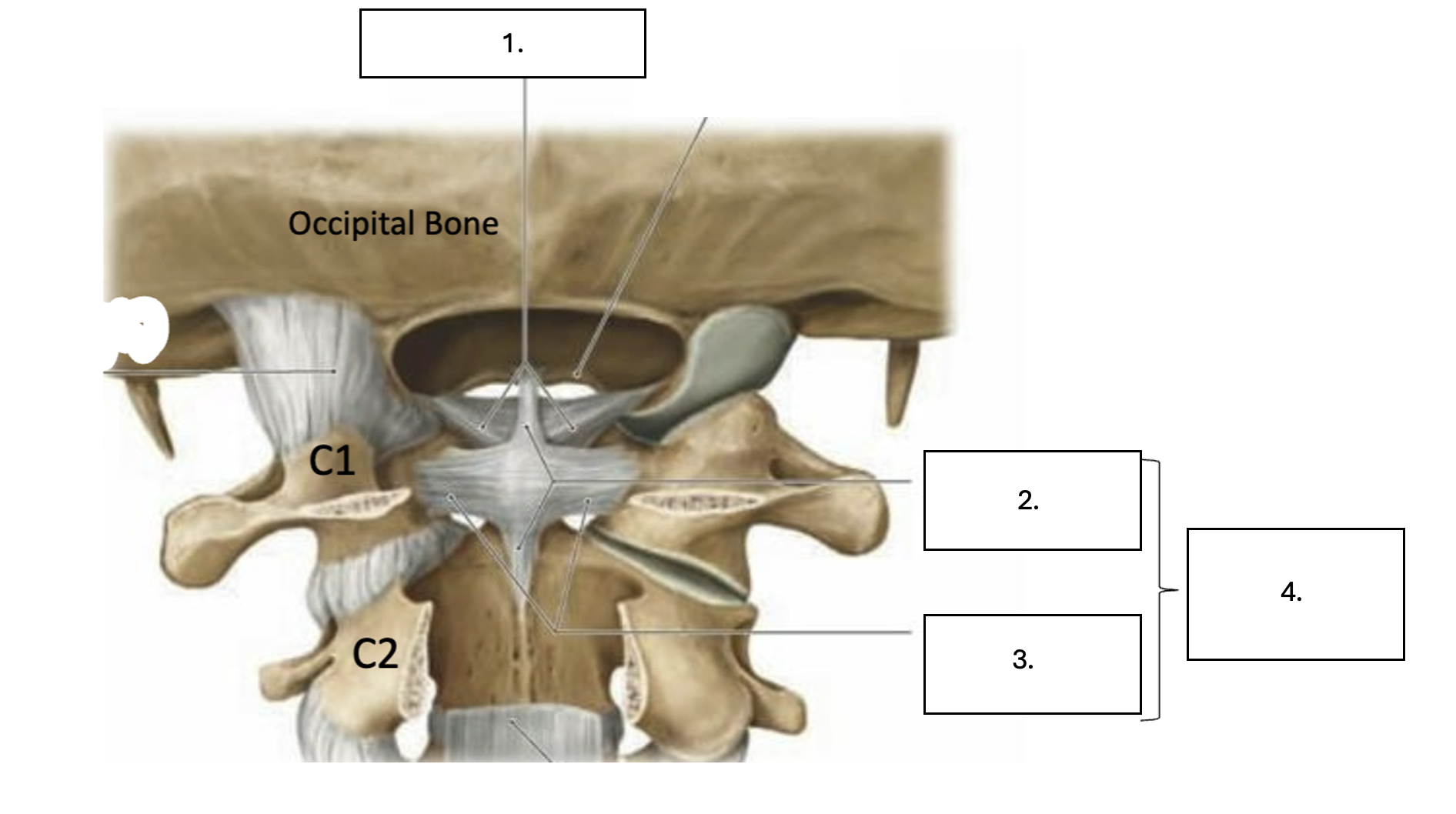
What is number 1?
alar ligaments
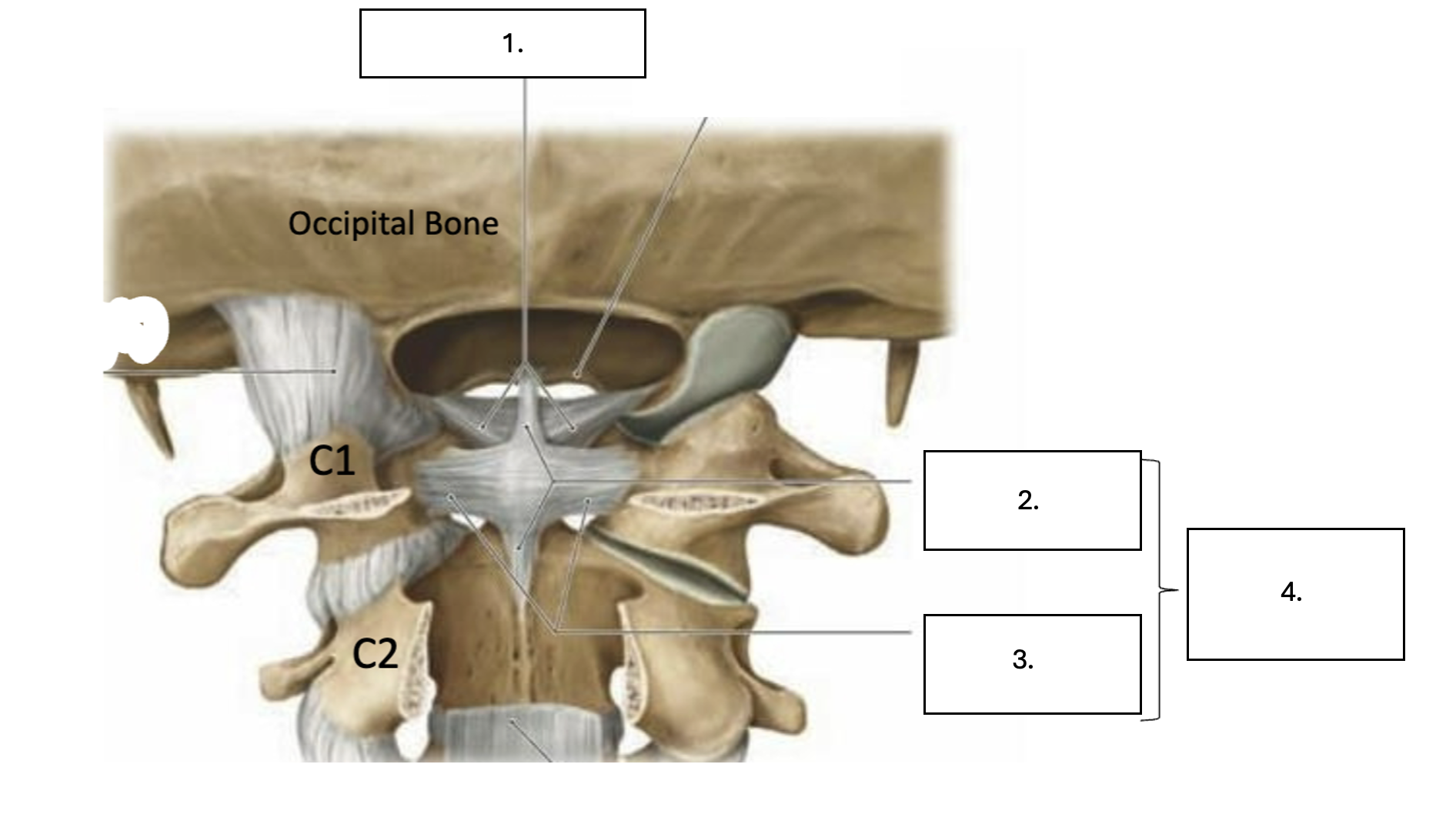
what is number 2?
Longitudinal fasicles
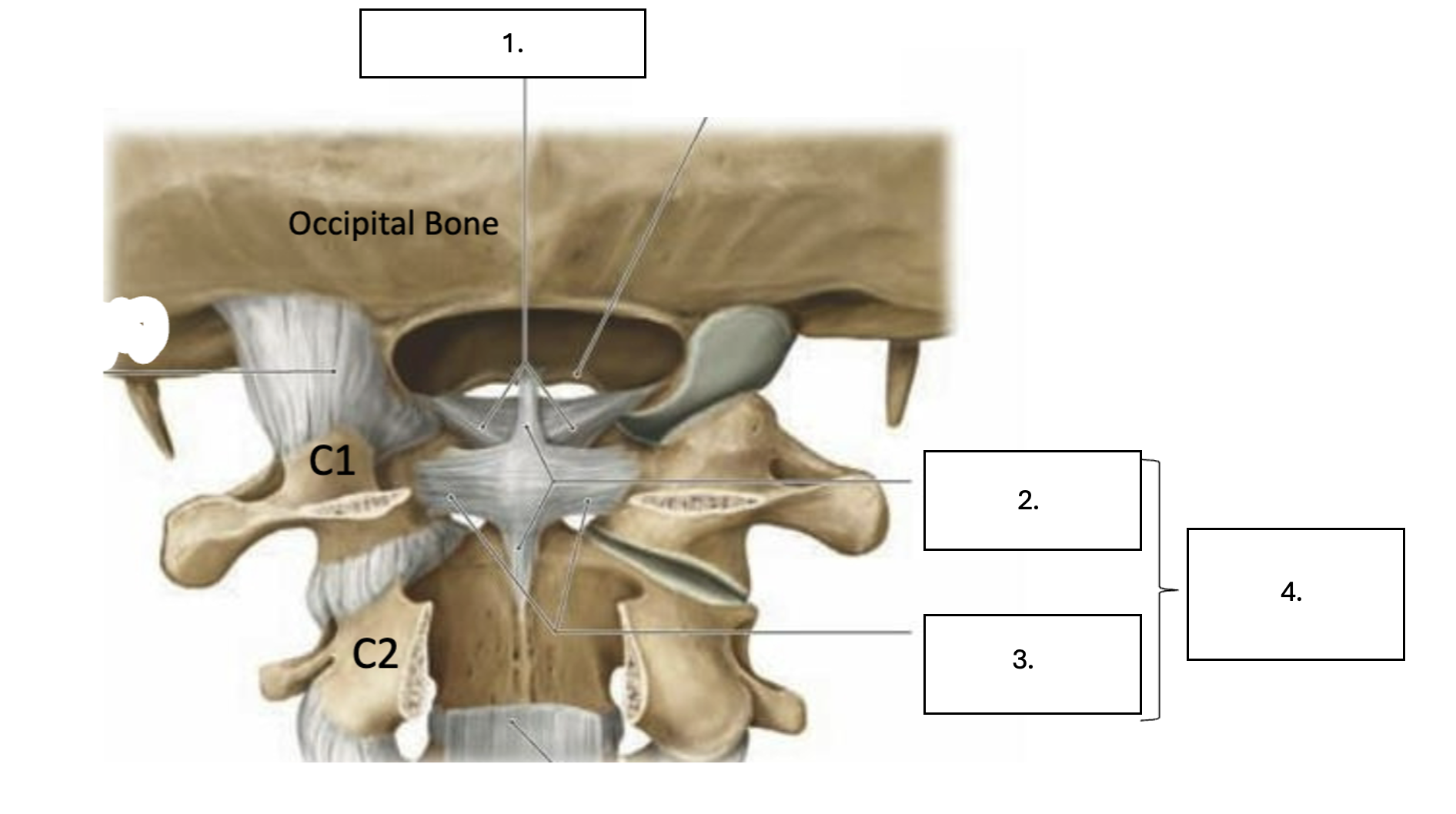
What is number 3?
Transverse ligament of atlas
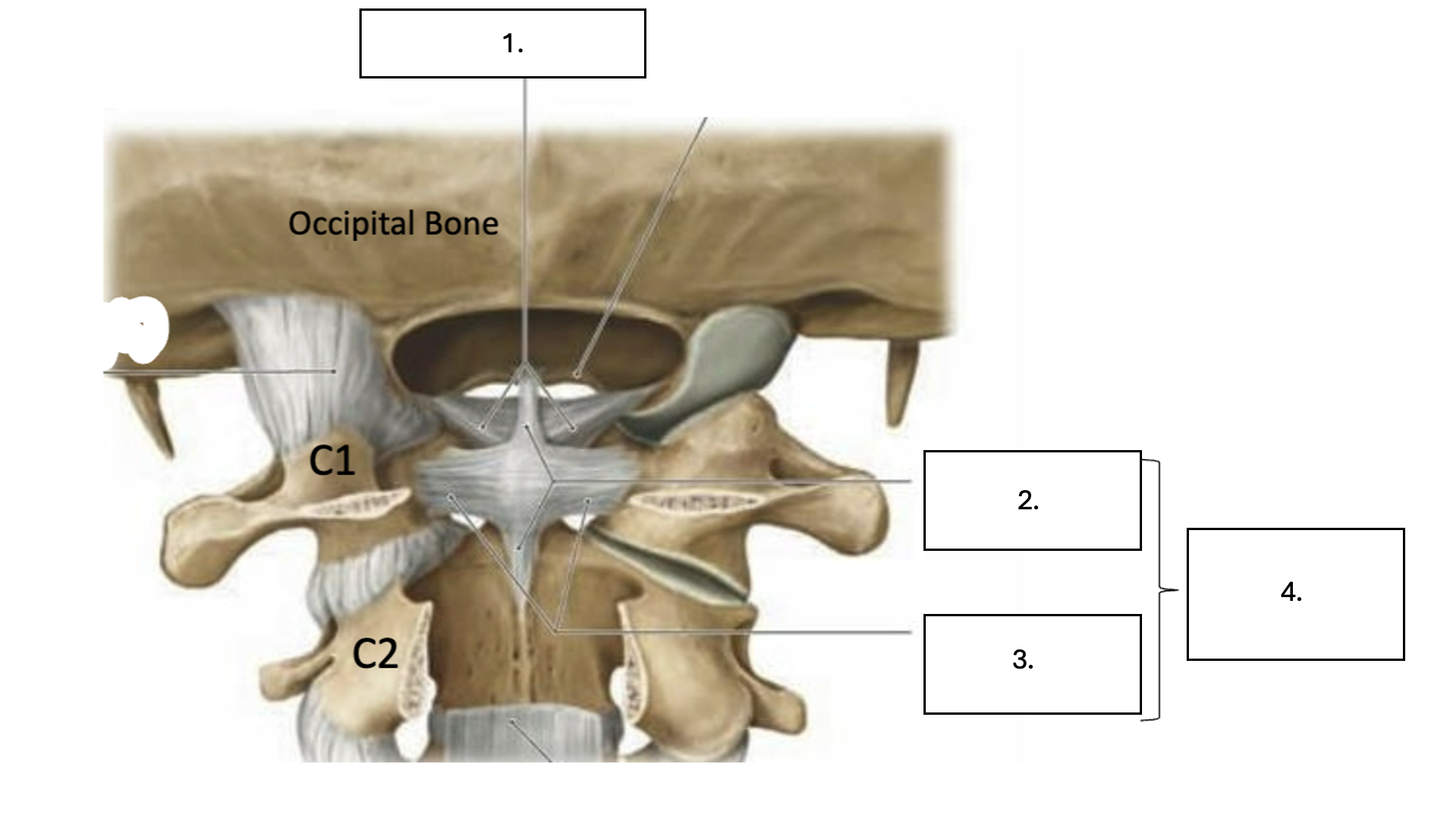
What is number 4?
cruciform ligament
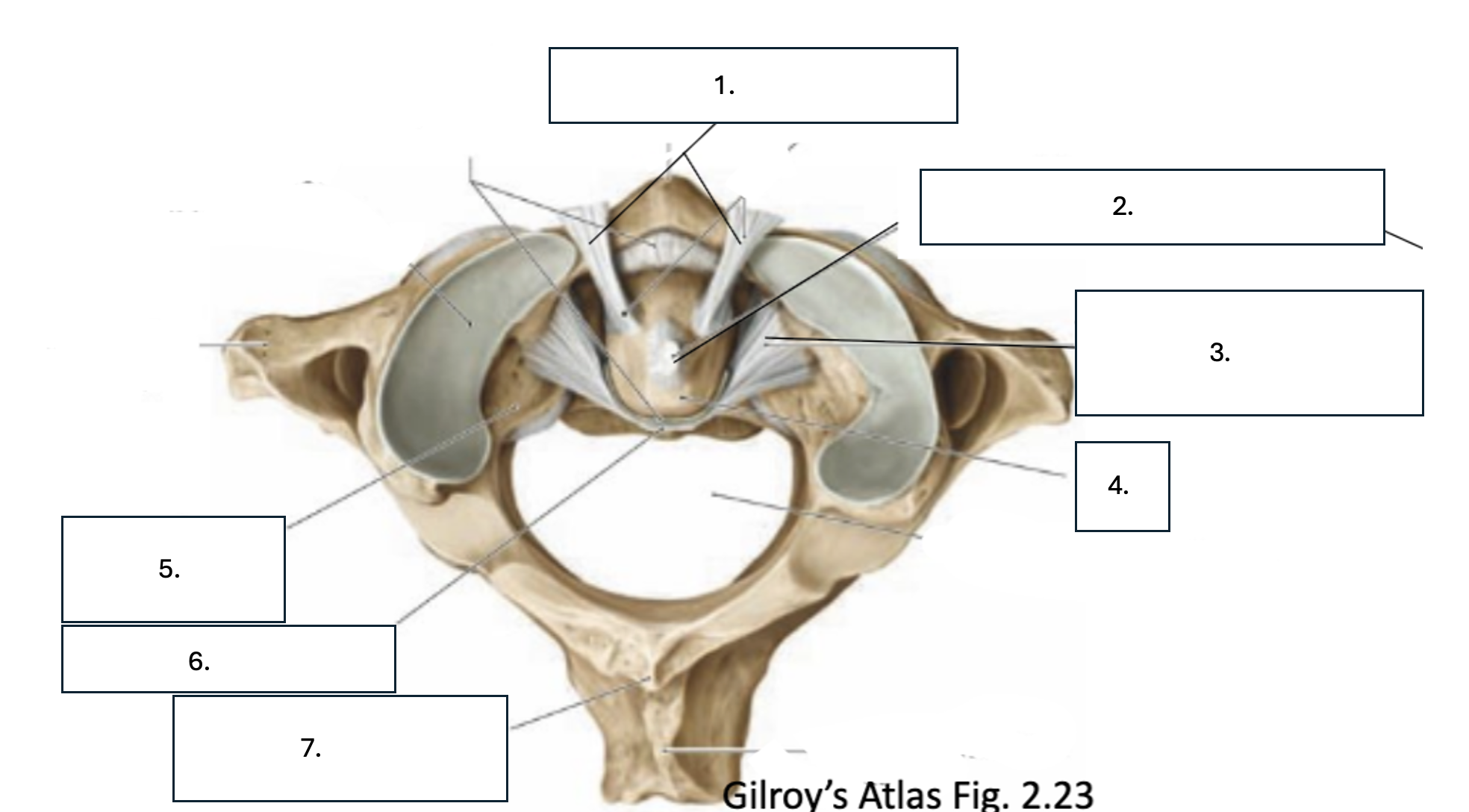
What is number 1?
alar ligaments
alar ligaments and Apical ligament of dens connect what two structures?
dens and foramen magnum