Ch. 42 Structure and Function of the Male Genitourinary System-1
 Call Kai
 Learn
Learn Practice Test
 Spaced Repetition
 Match
Match Flashcards
 Knowt Play
1/64

There's no tags or description
Looks like no tags are added yet.
Name | Mastery | Learn | Test | Matching | Spaced | Call with Kai |
|---|
No analytics yet
Send a link to your students to track their progress
65 Terms
Q: Where are the testes located?
A: Outside the abdominal cavity in the scrotum.
Note: They hang in a little skin pouch outside your body so they stay cool.
Q: What contributes to the majority of testicular volume?
A: Cells involved in spermatogenesis.
Note: Most of the testicle is filled with cells that make sperm.
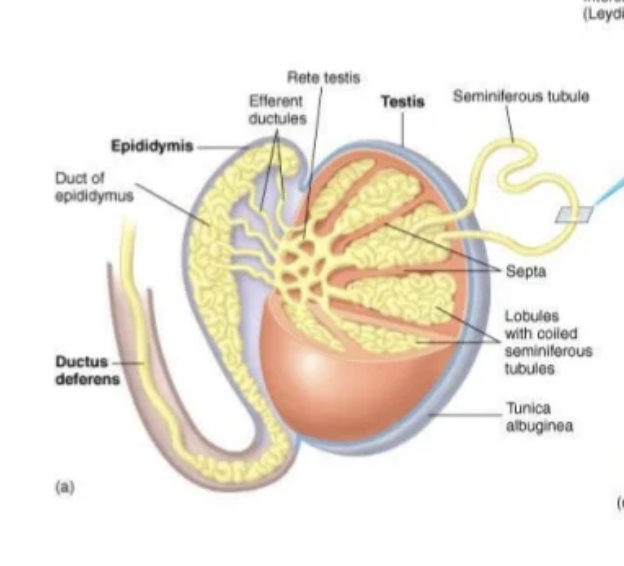
Q: What is the tough, fibrous outer sheath protecting the testes?
A: Tunica albuginea.
Note: It ’s like a strong protective wrapper around the testicle.
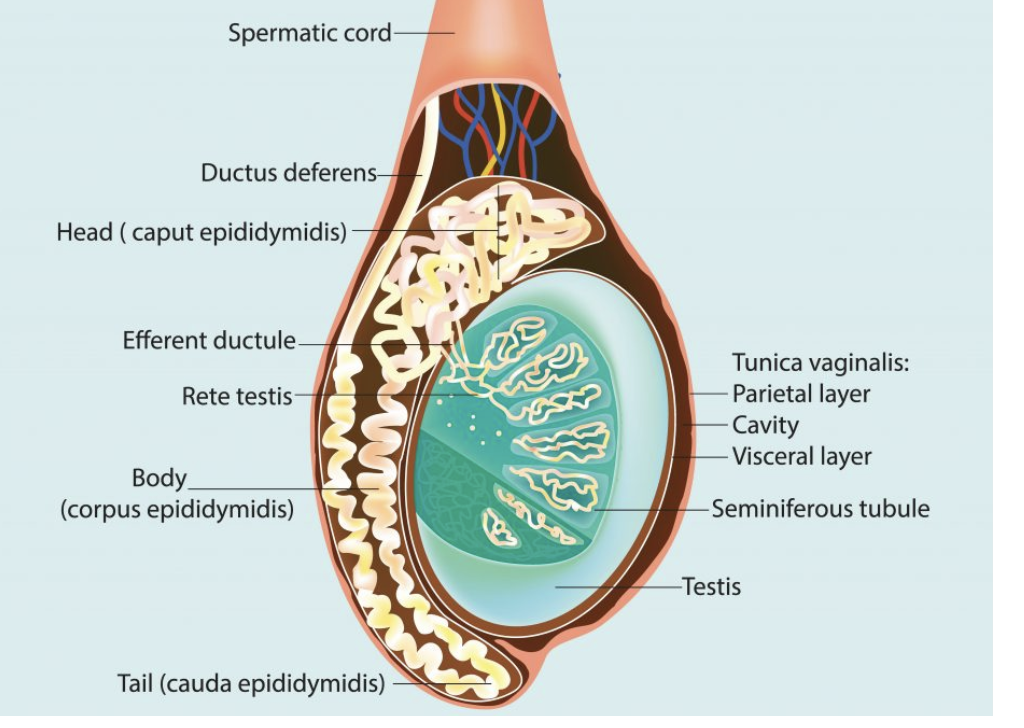
Q: What double-layered membrane contains the testes?
A: Tunica vaginalis.
Note: It ’s like a double-layered blanket around the testicle.
Q: What arteries supply blood to the testes?
A: Testicular arteries that branch from the abdominal aorta.
Note: These are tubes that bring fresh blood straight from the big body artery.
Q: What veins drain the testes?
A: Testicular veins, which arise from the pampiniform plexus.
Note: These tubes take used blood away and help keep the testes cool.
Q: When and where does the first stage of testicular descent occur?
A: Between the 7th and 12th weeks of gestation into the inguinal region.
Note: Baby testicles start moving down early in pregnancy.
Q: When and where does the second stage of testicular descent occur?
A: Occurs in the 26th week of gestation into the scrotum.
Note: Later in pregnancy, they move into the scrotum.
Q: What is the condition where the testes fail to descend?
A: Cryptorchidism.
Note: This means the testicles never came down like they should.
Q: What risk is associated with failure of inguinal canal closure?
A: Increased risk of an inguinal hernia.
Note: A hole stays open, and stuff from the belly can poke through.
Q: What is the optimal temperature for sperm production?
A: 2°C to 3°C below body temperature.
Note: Sperm are made best when things are a little cooler.
Q: What is the effect of prolonged exposure to elevated temperatures?
A: May impair spermatogenesis.
Note: If the testicles get too warm for too long, sperm-making gets worse.
Q: What structure absorbs heat from arterial blood entering the testes?
A: The pampiniform plexus.
Note: It works like a cooling system for testicle blood.
Q: Which skeletal muscle elevates the testes when cold?
A: Cremaster muscle.
Note: This muscle pulls the testicles up to warm them.
Q: What smooth muscle under the scrotal skin responds to temperature?
A: Dartos muscle.
Note: This muscle tightens the scrotum when cold.
Q: What does the dartos muscle do when cold?
A: Contracts, reducing surface area and decreasing heat loss.
Note: It scrunches the skin so less heat escapes.
Q: Where does sperm production occur?
A: Seminiferous tubules.
Note: These are tiny tubes inside the testicles that make sperm.
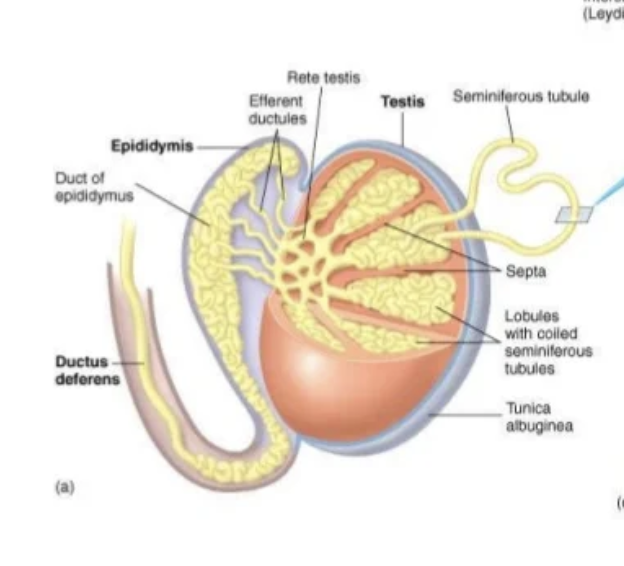
Q: Structures the seminiferous tubules lead into?
A: Rete testis.
Note: Multiple interconnecting channels that carry sperm from the seminiferous tubules to the epididymis.
Q: What cells line the seminiferous tubules?
A: Sertoli cells, which secrete hormones required for spermatogenesis.
Note: These cells act like helpers and protectors for growing sperm.
Q: How long does spermatogenesis and maturation take?
A: Approximately 90 days.
Note: It takes about three months to make a mature sperm.
Q: What is the final site for sperm maturation and gain of motility?
A: Epididymis.
Note: This is where sperm learn to swim.
Q: Where is most sperm stored?
A: Ampulla of the vas deferens.
Note: It ’s like a storage closet for sperm.
Q: Storage of sperm until ejaculation?
A: Ductus deferens (vas deferens).
Note: This tube transports sperm from the epididymis to the urethra during ejaculation.
Q: What is the sperm production rate?
A: Up to 300 million sperm cells per day.
Note: The body makes LOTS of sperm every day.
Q: What is sperm lifespan in the female genital tract?
A: Only 1 to 2 days.
Note: Sperm don't live very long once inside the female body.
Q: What is the main function of sperm?
A: To reach the ovum and fuse with it to deliver its 23 chromosomes.
Note: Sperm bring half the baby ’s genetic instructions.
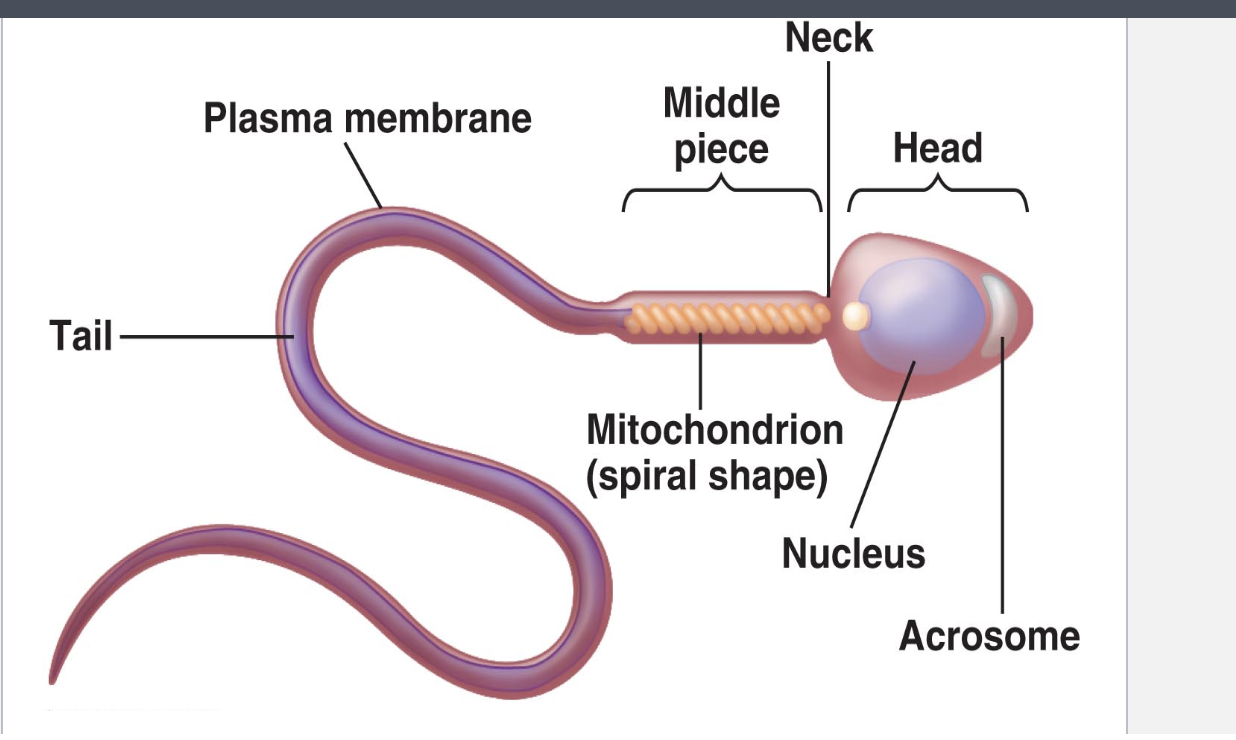
Q: What part of the sperm head contains enzymes for ovum penetration?
A: Acrosome.
Note: It ’s like a little “door opener” for the egg.
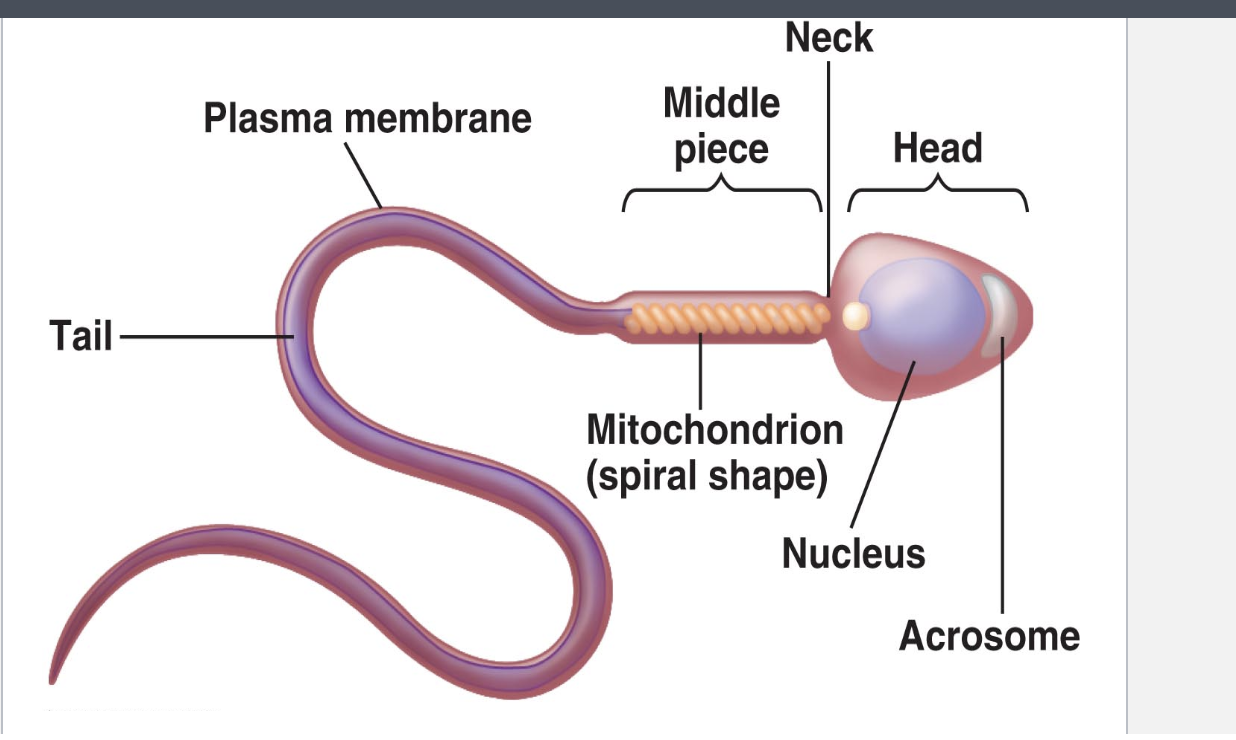
Q: What component supplies energy for sperm movement?
A: Mitochondria.
Note: These are the power batteries that help sperm swim.
Q: What procedure surgically disconnects the vas deferens?
A: Vasectomy.
Note: A surgery that blocks the path sperm travel.
Q: What are the three male accessory organs?
A: Seminal vesicles, prostate gland, and bulbourethral glands.
Note: These are helpers that make the fluids sperm swim in.
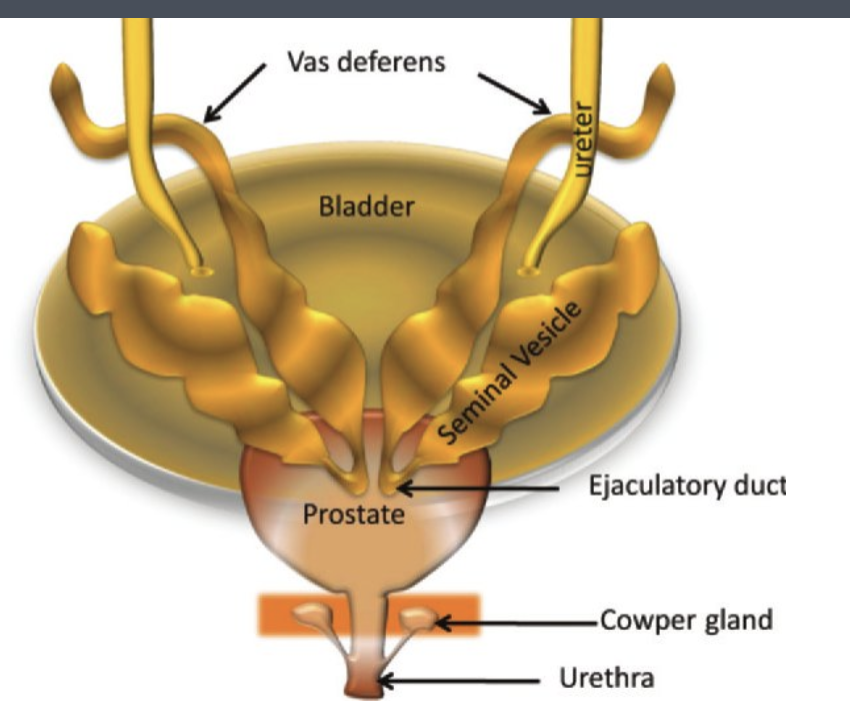
Q: What structure is formed by the junction of the seminal vesicle and vas deferens?
A: Ejaculatory duct.
Note: This is the hallway where sperm and fluid mix.
Q: What component in seminal fluid provides energy for sperm motility?
A: Fructose.
Note: It ’s sugar that gives sperm energy.
Q: What components in seminal fluid assist fertilization and cause uterine contractions?
A: Prostaglandins.
Note: These chemicals help sperm move inside the female body.
Q: What organ is located inferior to the bladder?
A: Prostate gland.
Note: The prostate sits right under the bladder.
Q: Why are prostatic secretions important?
A: Neutralizes the acidic environment of the vas deferens and the vagina, which is essential for fertilization.
Note: The prostate makes fluid that protects sperm from acidic environments.
Q: Secretions produced by the prostate gland?
A: Alkaline fluid containing citric acid, calcium, acid phosphate, a clotting enzyme, and profibrinolysin.
Note: Protects sperm and helps them survive in the acidic environment of the vagina.
Q: What secretion neutralizes acids from urine in the urethra?
A: Alkaline mucus from the bulbourethral (Cowper) glands.
Note: This mucus cleans and protects the pathway before sperm travel.
Q: What is the tip of the penis called?
A: Glans.
Note: It ’s the rounded end of the penis.
Q: What loose skin covers the glans?
A: Prepuce.
Note: This is the soft skin flap on top.
Q: What is the removal of the foreskin called?
A: Circumcision.
Note: It means cutting off the foreskin.
Q: What are the two lateral masses of erectile tissue?
A: Corpora cavernosa.
Note: These are two spongy tubes that fill with blood.
Q: What is the ventral mass of erectile tissue?
A: Corpus spongiosum.
Note: This soft tube keeps the urethra open during an erection.
Q: What is the most abundant androgen and main testicular hormone?
A: Testosterone.
Note: It ’s the main male hormone.
Q: What cells secrete testosterone?
A: Leydig cells.
Note: These cells make testosterone inside the testicles.
Q: What hypothalamic hormone regulates gonadotropic hormones?
A: GnRH.
Note: It ’s the brain ’s hormone boss that starts the process.
Q: What anterior pituitary hormone regulates testosterone production?
A: LH.
Note: This hormone tells the testicles to make testosterone.
Q: What anterior pituitary hormone helps initiate spermatogenesis?
A: FSH.
Note: This hormone helps start sperm-making.
Q: What is the role of testosterone in development?
A: Essential to the development and maintenance of primary and secondary male sex characteristics.
Note: It makes boys grow into men and keeps male traits.
Q: What is the definition of hypogonadism?
A: Reduced function of the gonads.
Note: It means the testicles aren ’t working well.
Q: What conditions cause Primary Hypogonadism?
A: Mumps and Klinefelter syndrome.
Note: Certain illnesses or genetic issues can hurt testicles.
Q: What hormonal results indicate Primary Hypogonadism?
A: High LH and FSH.
Note: The brain shouts “work harder,” but the testicles can ’t.
Q: What causes Secondary Hypogonadism?
A: Lack of secretion of LH and FSH from the anterior pituitary.
Note: The brain isn ’t sending the “make hormones” message.
Q: Condition caused by decreased/absent GnRH secretion from the hypothalamus?
A: Tertiary Hypogonadism.
Note: The hypothalamus fails to signal the pituitary to release LH and FSH.
Q: Hormonal results indicating secondary or tertiary hypogonadism?
A: Low or normal LH and FSH.
Note: The pituitary isn ’t getting the correct signals to produce gonadotropins.
Q: What are adult manifestations of hypogonadism?
A: Fatigue, depression, decreased libido, erectile dysfunction, loss of secondary sex characteristics, and decreased bone density or osteoporosis.
Note: Adults can feel tired, sad, weak, and lose male features.
Q: What is the treatment for hypogonadism?
A: Testosterone therapy.
Note: Doctors give extra testosterone to help.
Q: When do testosterone levels typically begin to decrease?
A: 25−30 years of age in healthy, nonobese males.
Note: Men ’s hormones start slowly dropping after their mid-20s.
Q: How does aging affect seminal fluid?
A: Reduced volume and viscosity, leading to a decrease in the force of ejaculation.
Note: Older men make less semen, so it shoots out less strongly.
Q: What age-related changes occur in the testes?
A: Become smaller and lose their firmness.
Note: Testicles shrink and get softer with age.
Q: Age-related change in the prostate?
A: The prostate gland enlarges.
Note: Common with aging, can contribute to urinary symptoms.
Q: What is the definition of Erectile Dysfunction (ED)?
A: Persistent inability to achieve and maintain an erection sufficient for satisfactory sexual intercourse.
Note: It means a man can ’t get or keep an erection.
Q: What is the major etiologic factor for ED?
A: Aging.
Note: Getting older is the biggest reason it happens.
Q: What conditions are common in older males with ED?
A: Type II diabetes mellitus, cardiovascular disease, and hyperlipidemia.
Note: These health issues can make blood flow worse, causing ED.
Q: What conditions predict cardiac disease?
A: Hypogonadism, erectile dysfunction, and type II diabetes mellitus.
Note: These are warning signs of future heart trouble.
Q: Risk associated with low testosterone levels?
A: Increases risk of cardiovascular disease.
Note: Hormonal decline can impact heart and vessel health.