Energy Processing & Metabolism
 Call Kai
 Learn
Learn Practice Test
 Spaced Repetition
 Match
Match Flashcards
 Knowt Play
1/12

There's no tags or description
Looks like no tags are added yet.
Name | Mastery | Learn | Test | Matching | Spaced | Call with Kai |
|---|
No analytics yet
Send a link to your students to track their progress
13 Terms
intro
-Storing and releasing energy from food
-Sources of energy expenditure
major sites where energy is processed
Liver
-Receives most nutrients (except fat and cholesterol) directly from the hepatic portal system
-Can store/release glucose and synthesize fats (*and chol)
Muscle
-Takes up glucose and stores as glycogen
-Uses its own glycogen for energy – does not release back into blood
Adipose
-Stores/releases fats
-Synthesizes fats from glucose
*most extra kcal → fat (can store a lot of fat)
Absorptive and Postabsorptive States
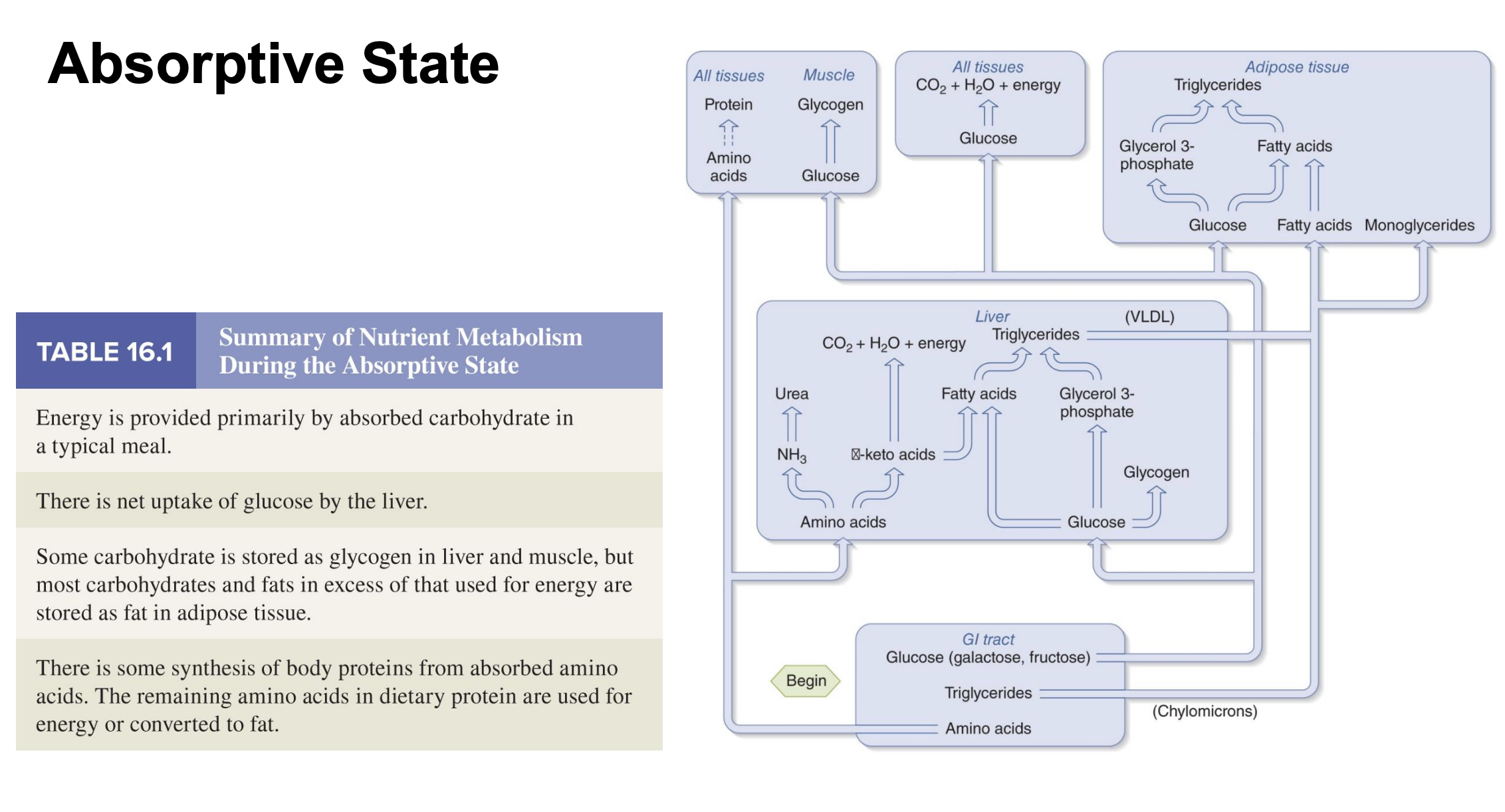
Absorptive State
-Nutrients are being absorbed from GI tract
-Carbohydrates from food are used for energy by most cells (*insulin)
-Excess energy mostly stored as fat
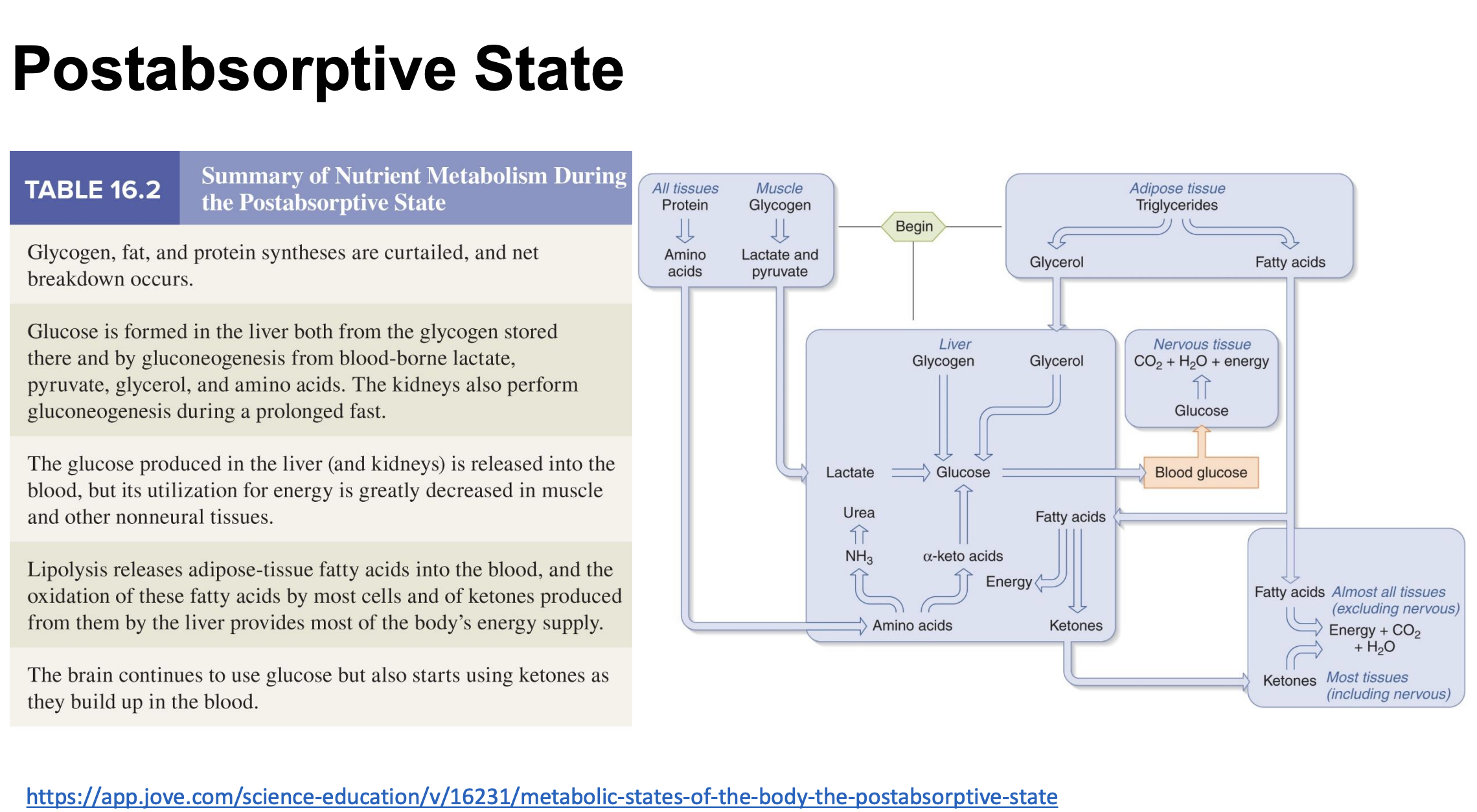
Postabsorptive State
-Begins approximately four hours after a meal
-Energy is released from body stores (*release fats from adipose, and break down glycogen)
Summary: what is happening to each nutrient during the absorptive state?
*high insulin levels; goal=store
Glucose:
-used for energy by most cells
-max out glycogen stores
-extra converted to fat and stored
Amino acids:
-used for protein synthesis
-extra converted to fat
Fats:
-used for energy (except brain)
-extra store in adipose
*muscles burn fat if lower intensity activity (ex walking=50%), if higher intensity use more glucose bc use less O2 and easier to break down
Summary: what is happening to each nutrient during the postabsorptive state?
*low insulin levels
Glucose:
-produce from glycogen breakdown OR gluconeogensis
Amino acids:
-use to make glucose
-protein catabolism
Fats:
-released into blood from adipose stores
*tap into stored energy; gluconeogensis AA → glucose; nervous tissue needs steady glucose
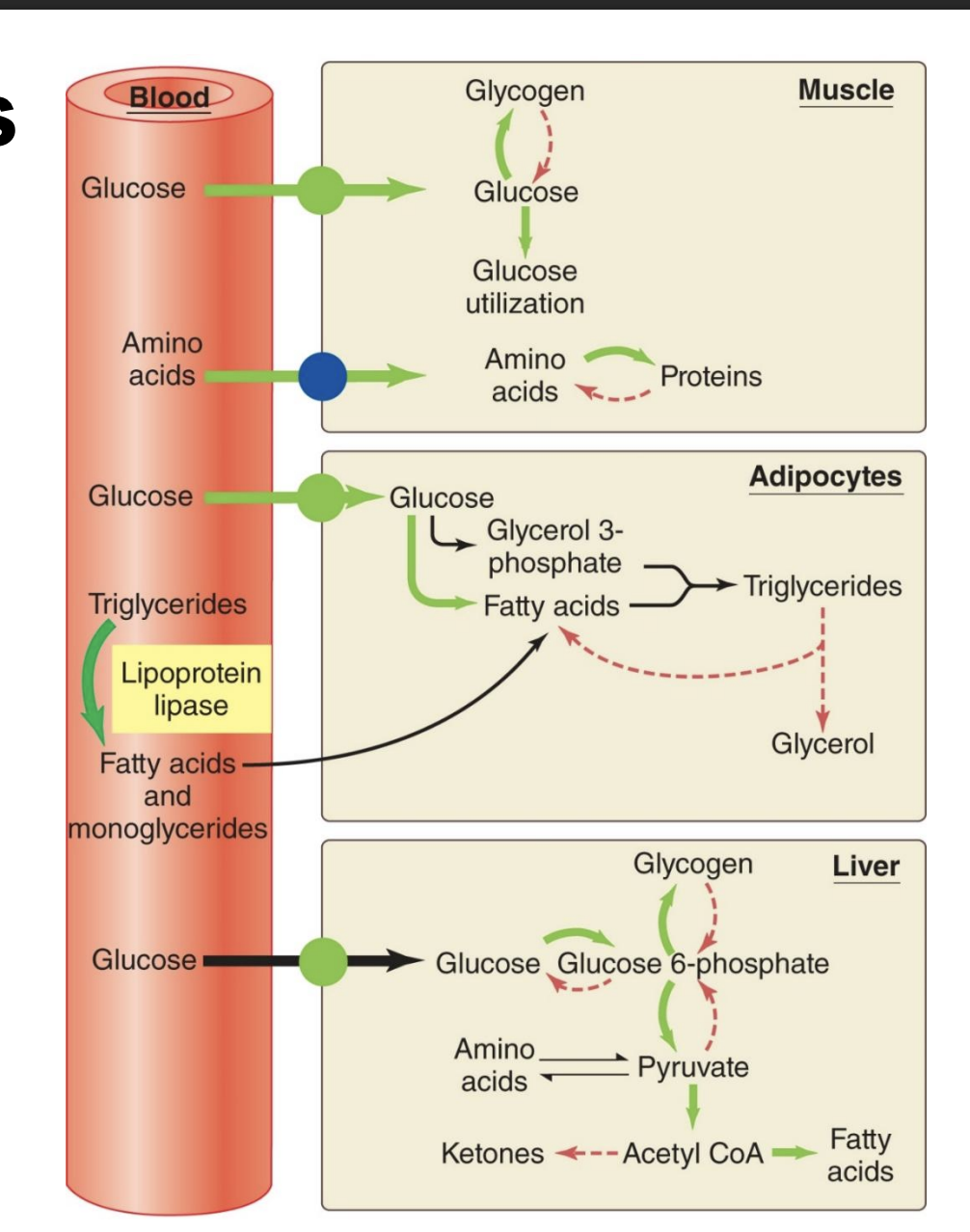
response of target cells to insulin
-insulin determines if in absorptive or postabsortive state
*green=promoted by insulin; red=insulin is low
Which organ does not make significant use of fatty acids for energy?
brain
-uses glucose or ketones (from fat breakdown, make when fasting/low glucose as back-up source, so doesn’t directly use fatt acids)
conservation of energy
-Energy neither created nor destroyed but converted between forms
-Energy taken in from food: chemical energy (*energy in bonds)
-Can be converted to:
mechanical energy: move muscles, do work
heat energy: byproduct of metabolism and mechanical processes
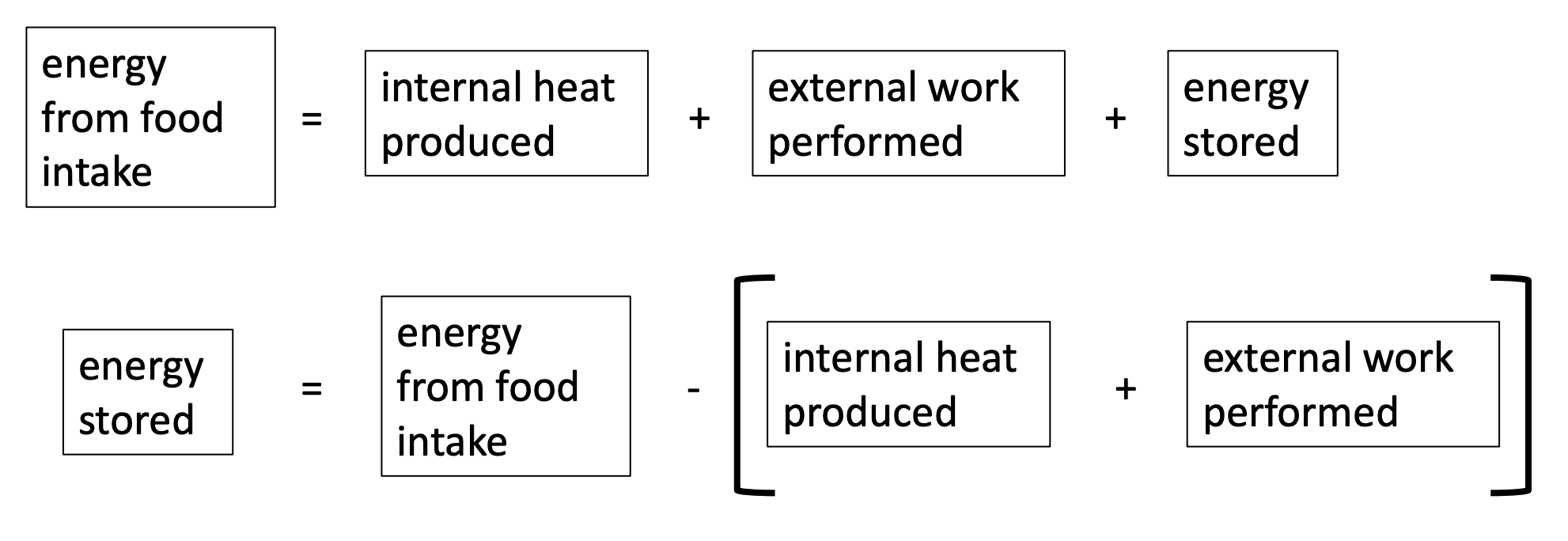
energy balance in the body: equation + internal vs external heat
-Internal heat: produced by metabolic processes and other activities that generate heat as a byproduct
-External work: energy used to move objects, using skeletal muscle
4 sources of energy expenditure
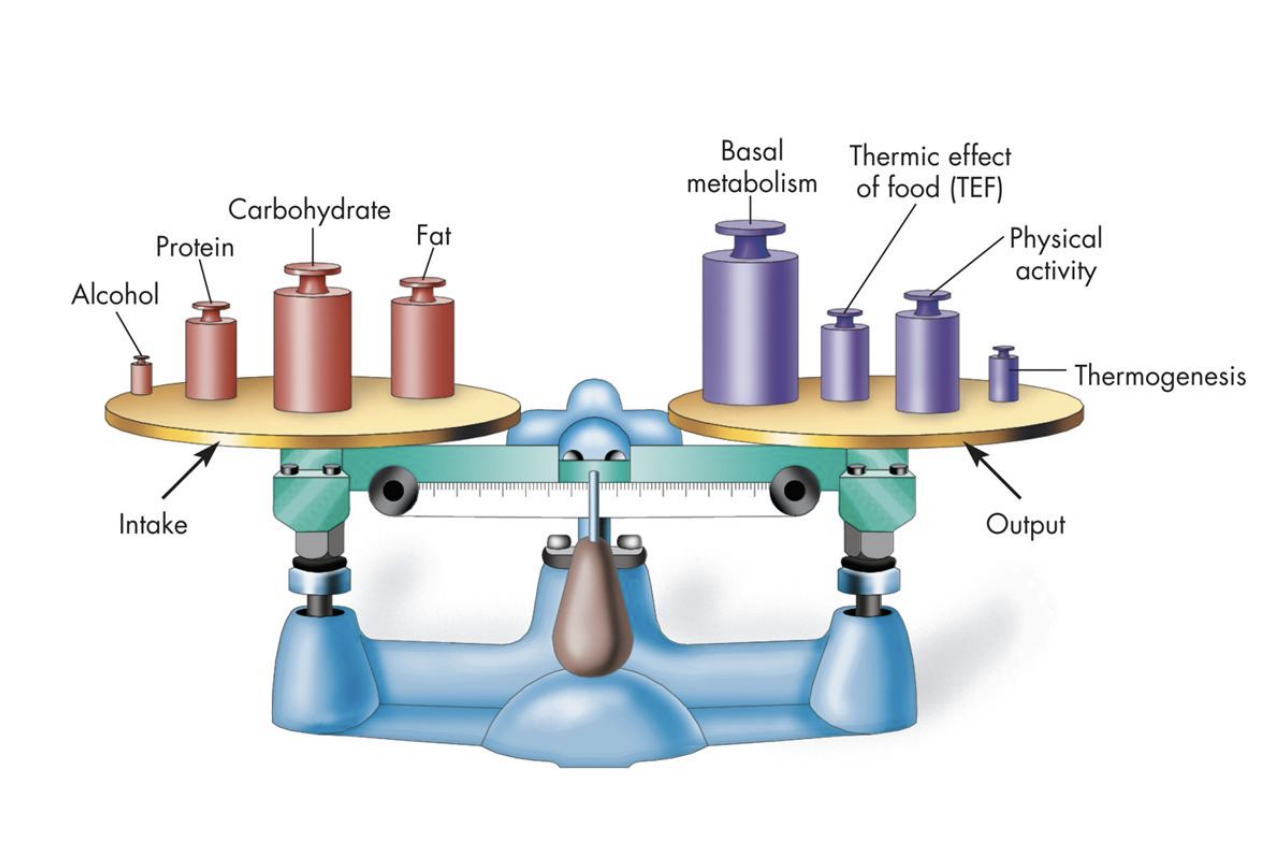
-Basal metabolism: metabolic cost of living to keep gong; largest fraction!
-Physical activity: “intential exercise”
-Thermic effect of food: energy to digest food; protein > carbs > fats
-Non-exercise activity thermogenesis (NEAT): ex=body posture, standing up, on feet all day; non-intentional movement
Basal metabolic rate (BMR)
-Measured under standard conditions
rest
comfortable room temp
no food in last 12 hours/fasted
-“Metabolic cost of living”
-Thyroid hormone is the main determinant of BMR
Increased T3 and T4 increase BMR
Calorigenic effect (*generation of heat from metabolism; upregulate Na/K pump)
Regulation of body weight
-Weight (more accurately, total energy storage) is maintained at a set point by feedback mechanisms (*set point genetic and other factors)
-Decrease food intake to cause 10% weight loss: BMR goes down (*why plateau in 3 months WL, body recalibrates to evolutionary prevent weight loss)
-Increased weight leads to increased BMR (*weaker than last point; bc evolutionary want to maintain storaage and not resist gaining extra)
*higher muscle mass=higher BMR
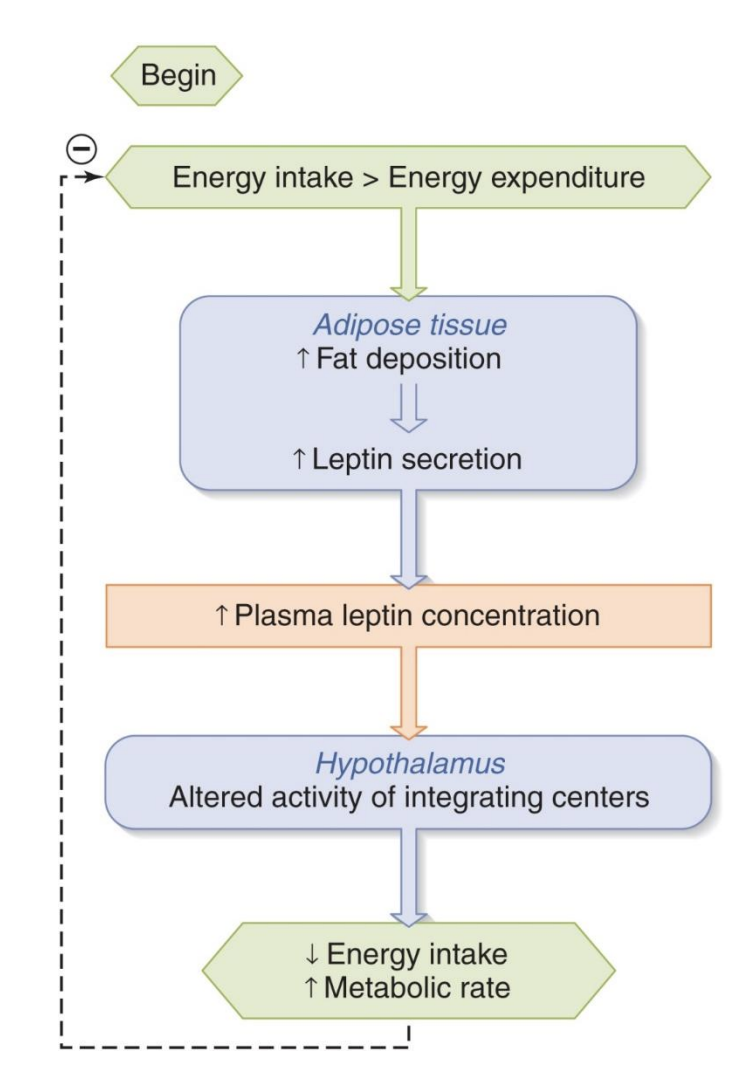
Leptin
-Produced by adipose tissue (*increase adipose=increase leptin)
-Inhibits neurons in hypothalamus that stimulate appetite
-Increases BMR
-Wonder drug for weight loss?: Nope (*bc can become resistent to it; GLP1s more effective and also effect satiety signals)