Essay 2 (there's no 1) - Asepsis and antisepsis in oral surgery. Preparation of the patient and surgical team
 Call Kai
 Learn
Learn Practice Test
 Spaced Repetition
 Match
Match Flashcards
 Knowt Play
1/15

There's no tags or description
Looks like no tags are added yet.
Name | Mastery | Learn | Test | Matching | Spaced | Call with Kai |
|---|
No analytics yet
Send a link to your students to track their progress
16 Terms
definition of asepsis
absence of infectious organisms
goals of asepsis
prevent contamination of wounds, tissues, instruments and fluids
how is asepsis achieved
sterile techniques, barrier protection and environmental control
define antisepsis
destruction of microorganisms on tissues or in wounds
purpose of antisepsis
prevent and treat infection locally
sources of infection
endogenous = patient's own flora (Skin, mucosa)
exogenous = airborne microbes, droplets, contact with unclean hands, contaminated tools
transmission
direct contact = by touching → physical for example kissing or touching
indirect contact = contaminated surfaces
droplet = coughing or sneezing
airborne = suspended in air, entering respiratory tract
faecal- oral = infecting digestive tract For example food or water
Vector bourne = animals for example flies or rats
source of Entry
preoperative → nasal carriage, ward, bed covers
during operation → improper preparation of skin, damaged or lack of protective wear, operative theatre
post operative → non sterile dressing
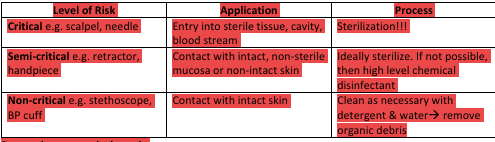
Spaudling’s classification - potential infection risk (1968)
preparation of the patient
MRSA screening
minimise hospital stay (prefer same day admission)
preoperative skin disinfection: Chlorhexidine or providone-iodine
shaving: only just before surgery, by trained staff
sterile draping: reusable reusable disposable or antimicrobial adhesive drapes,
preparation of surgical instruments
Cleaning - removal of blood, debris (manual or detergent wash)
disinfection - using chemical disinfectants (low, medium or high level)
sterilisation- complete elimination of microorganisms
sterilisation methods of surgical instruments
dry heat - 160-180 degrees
steam (autoclave) - 10-135 degrees, most common method
ethylene oxide - for heat sensitive items (e.g endoscope)
formaldehyde gas and low temperature steam
chemical immersion- In Emergencies
irradiation - for disposable products for disposable products (e.g sutures, catheters)
preparation of the surgeon
hand disinfection
— remove jewellery, trim nails
— agents:
- Chlorhexidine = long lasting
- providone-iodine = broad spectrum
- alcohol rubs = rapid effect, up to six hours of protection
— historical and alternative methods: ethanol, iodine, pervomur, ultrasonic baths etc
Gloving
— sterile gloves Mandatory
— double gloving offers extra protection
— gloves may have micro perforations - proper hand hygiene still critical
masks, visors and hair covers
— protect both patient and surgeon
— Integrated Shields available
— cover hair to reduce airborne contamination
gowns
— prevent microbial shedding
— Use elastic cuffs to Seal sleeves
preparation of the operating theatre
design = double door entry/exit, separate dirty/clean zones
Temperature = 19-22 degrees
humidity = 45-55%
ventilation = 3-4 air changes/hour
air disinfection = UV lamps
scrub area = direct connexion to OR
classic methods of hand disinfection
Alfred method = wipe hands for five minutes with 96% ethyl alcohol; nail phalanxis and back interphalangeal folds cleaned with 5% iodine sol
Furbringer method = hand wiped for one minute by sol. mercuric chloride → 96% Alcohol 3 min → nail beds 5% iodine
spasokukotsky-Kochergin = running water with soap, 10 mins→ warm, 0.5% liquid ammonia Sol. hands washed in two basins, 2× 3mins. Sterile napkin with 96% alcohol 2× 2.5 min → finger tips/nail walls and beds/ finger skin folds smeared with 5% alcoholic iodine
quick method of hand disinfection
pervomur
Chlorhexidine Bigluconate
detergents
iodophorm
ultrasounds