Bioarch Quiz 4
 Call Kai
 Learn
Learn Practice Test
 Spaced Repetition
 Match
Match Flashcards
 Knowt Play
1/59

There's no tags or description
Looks like no tags are added yet.
Name | Mastery | Learn | Test | Matching | Spaced | Call with Kai |
|---|
No analytics yet
Send a link to your students to track their progress
60 Terms
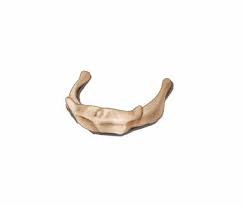
Hyoid bone, located in the neck. It is the only bone in the body not articulated with another bone, suspended by ligaments to connect to the tips of the styloid processes of temporal. Often fractured in forensic cases of strangulation.
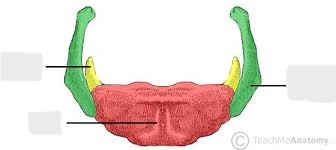
What are the features of the hyoid bone?
Greater horns, lesser horns, body
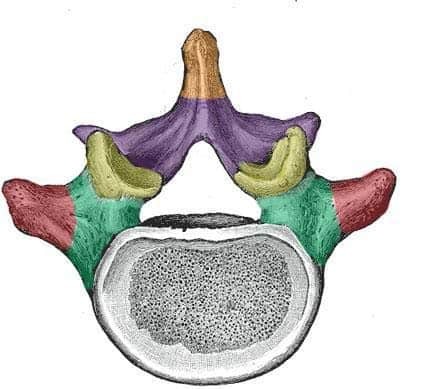
Name these features of a vertebrae
Spinous process, lamina, superior articular processes, pedicles, transverse processes
What are the three types of vertebrae and where are they located?
Cervical: located in the neck [C1-C7]
Thoracic: in the thorax (trunk) [T1-T12]
Lumbar: in the lower back [L1-L5]
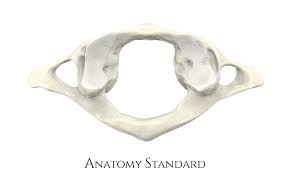
What kind of vert is this?
C1 Atlas vertebrae, has no vertebral body
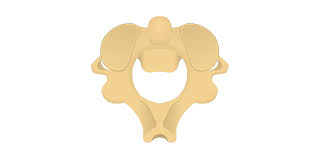
What kind of vert is this?
C2 Axis vertebrae, no vertebral body, has a projecting process that forms a pivot for the atlas
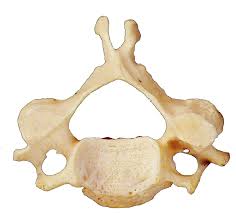
Cervical, thoracic, lumbar?
Cervical
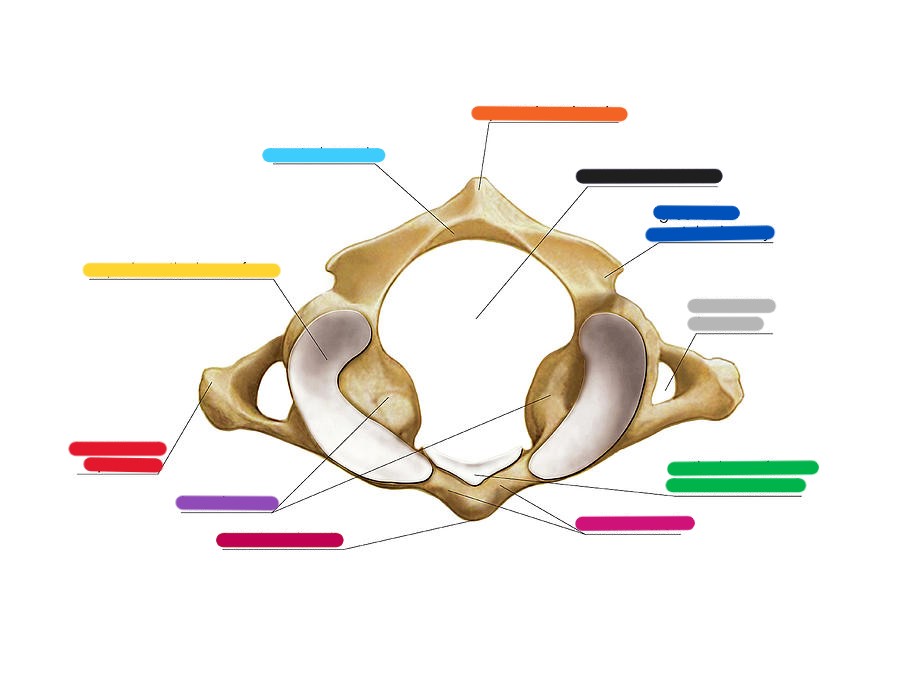
Features of the Atlas
Posteriror tubercole, posterier arch, vertebral foramen, groove for vertebral artery, superior articular surface, transverse foramen, transverse process, lateral mass, articular surface for dens of axis, anterior arch, anterior tubercole
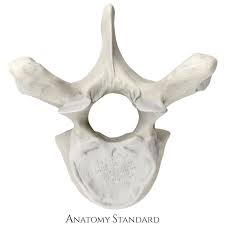
What kind of vert is this?
Thoracic
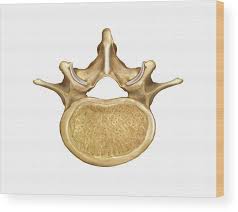
What kind of vert is this?
Lumbar
The sternum
The breastbone. Anchors ends of paired ribs 1-7 via cartilage and is composed of 3 main parts in adulthood but develops from 6 segments.
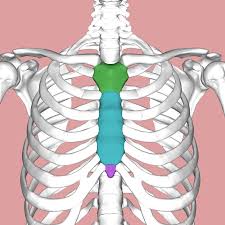
Mandibrium, corpus sterni, xiphoid process
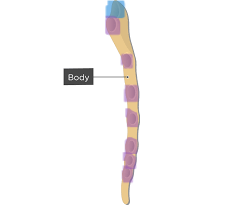
Clavicular notch, 1-7 costal notches
How many ribs can a person have?
Normally 12 on each side, people can have 11 or 13
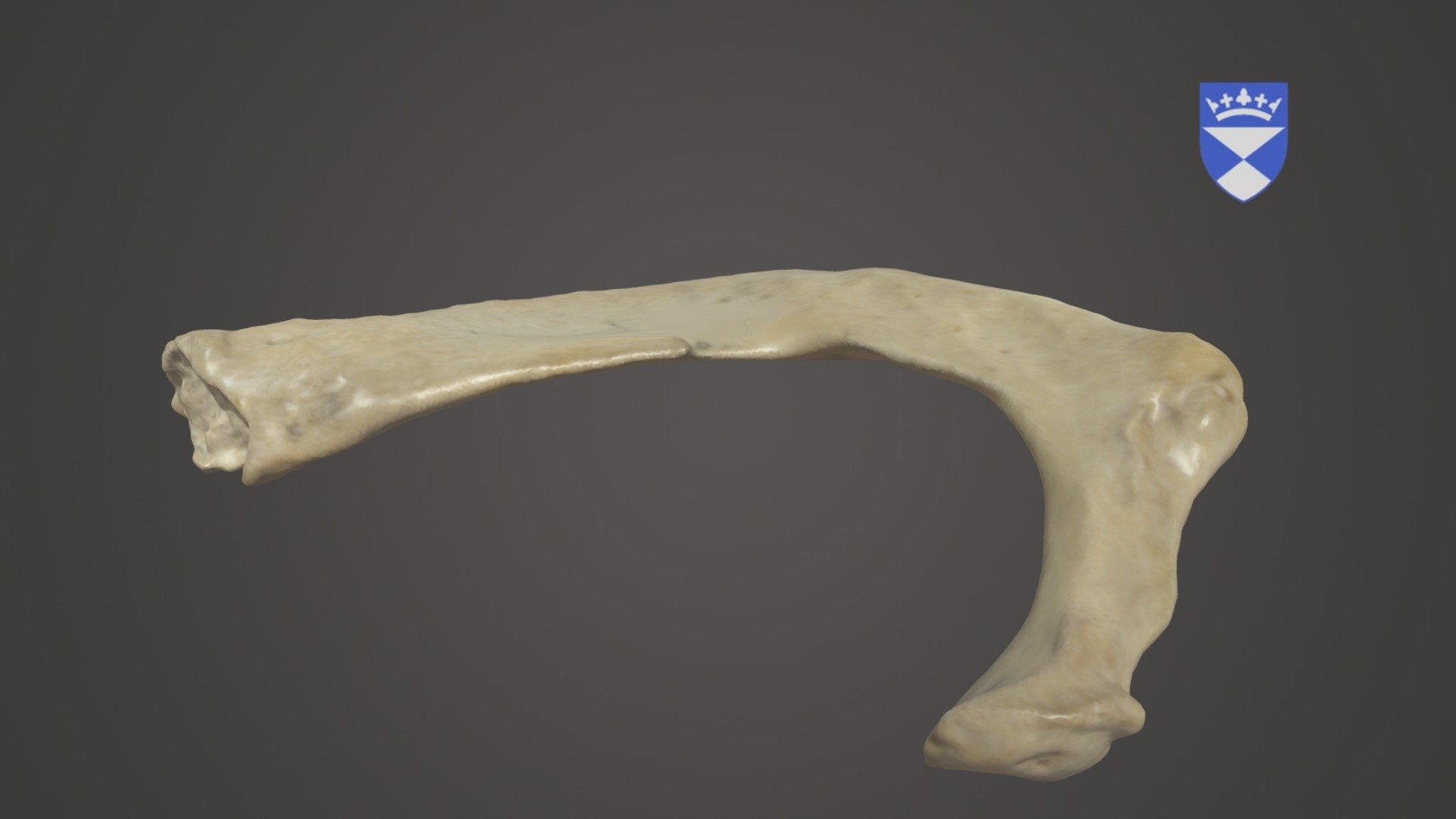
First rib
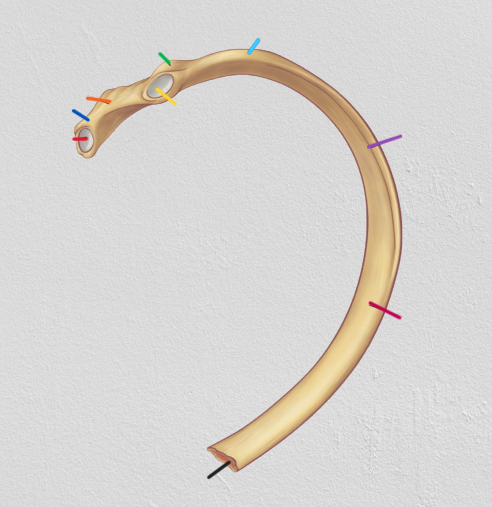
Articular facet, head, neck, tubercle, articular facet, costal angle, costal groove, shaft, articulation with costal cartilage
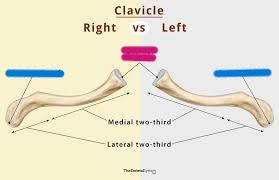
Clavicles. Medial (sternal end) is round and flared. Lateral (acromial end) is flattened
What is a scapula?
Shoulder blade
Posterior scapula
Dorsal
Anterior scapula
Costal
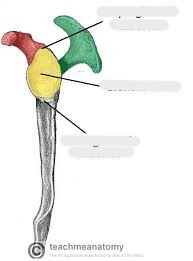
Supraglenoid tubercle, glenoid fossa, infraglenoid tubercle
Glenoid fossa
Raindrop shaped fossa that recieves the head of the humerus. Shallowness of the joint = great flexibility but makes it more prone to dislocation than hip
Siding of a scapula
If you hold the scapula with the glenoid fossa facing you, the top part of the tear drop points towards the correct side
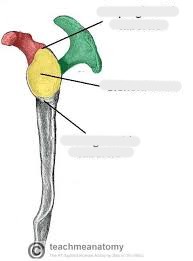
What side is this scapula from?
the right side
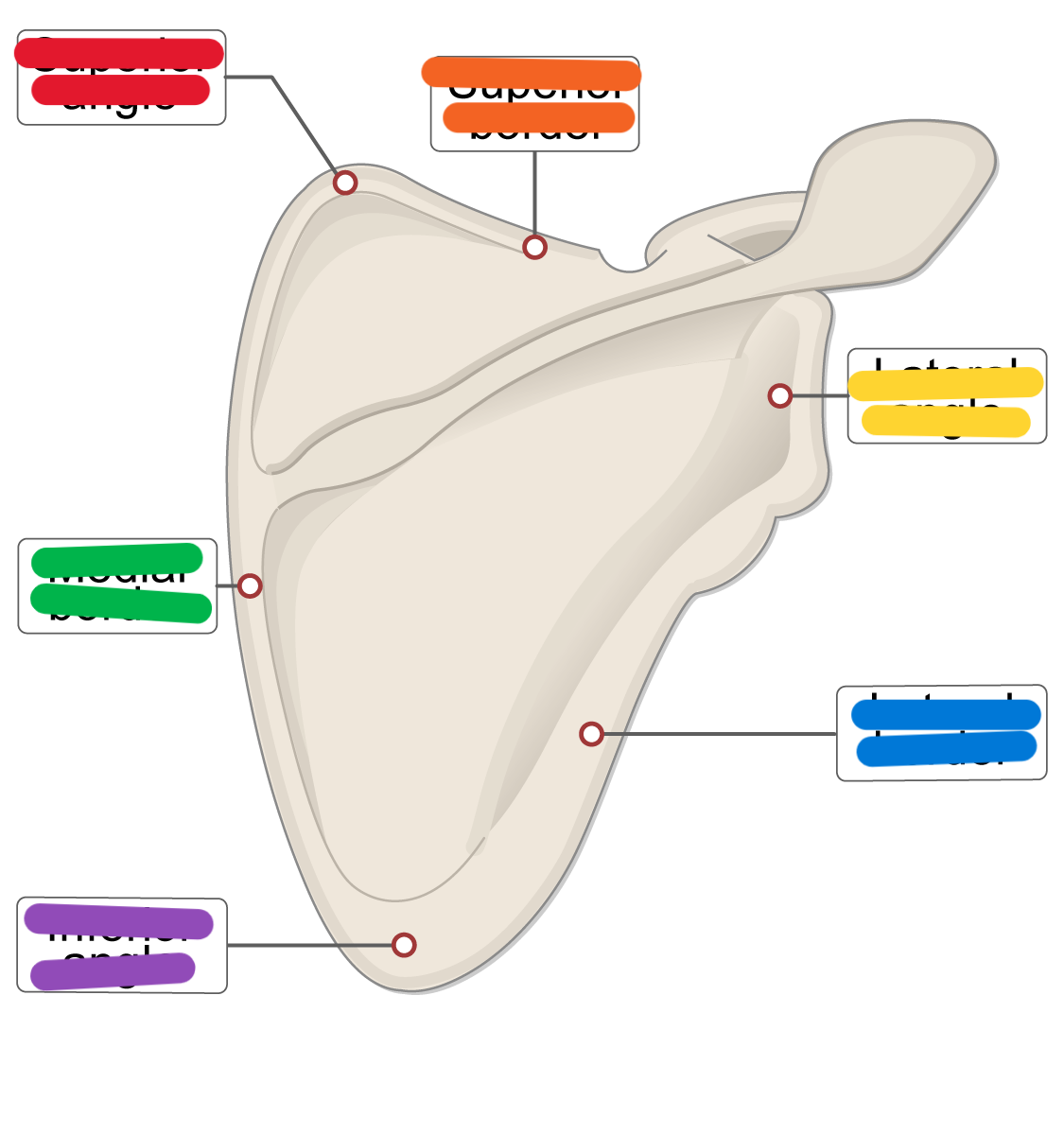
Superior angle,superior border, lateral angle, medial border, lateral border, inferior angle
Scapula features
Medial border: side opposite the glenoid fossa
Lateral border: side closest to the glenoid fossa
Scapular spine
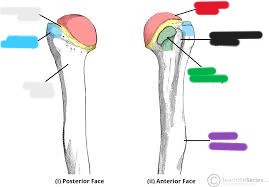
Greater tubercle, humeral head, intertubercular sulcus, lesser tubercle, deltoid tuberosity
Humerus Head
Hemisphere on the proximal end that faces medially (toward the body)
Greater tubercle
Larger tubercle, projects laterally (away from the body)
Lesser tubercle
Smaller, blunt eminence closer to humeral head
Interbercular sulcus
Sits between the 2 tubercles
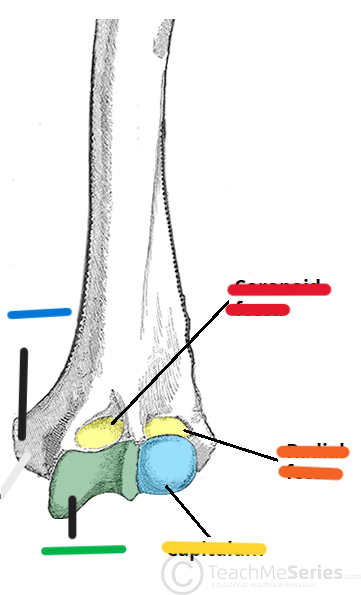
coronoid fossa, radial fossa, capitulum, trochlea, medial epicondlye
Coronoid fossa
Hollow on the anterior surface of the distal humerus
Trochlea
Spool shaped medial portion of the distal humerus
Capitulum
rounded eminence that forms the lateral portion of the distal humeral surface
Deltoid tuberosity
Insertion site of the deltoideus muscle
Medial epicondyle
Nonarticular projection next to the trochlea
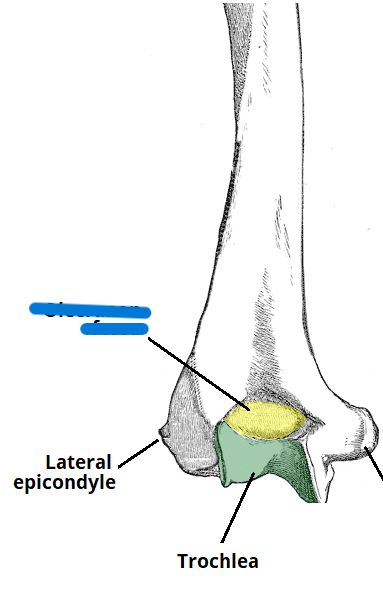
Olecranon fossa
Olecranon Fossa
Largest hollow on the distal humerus. if perforated = septal aperture
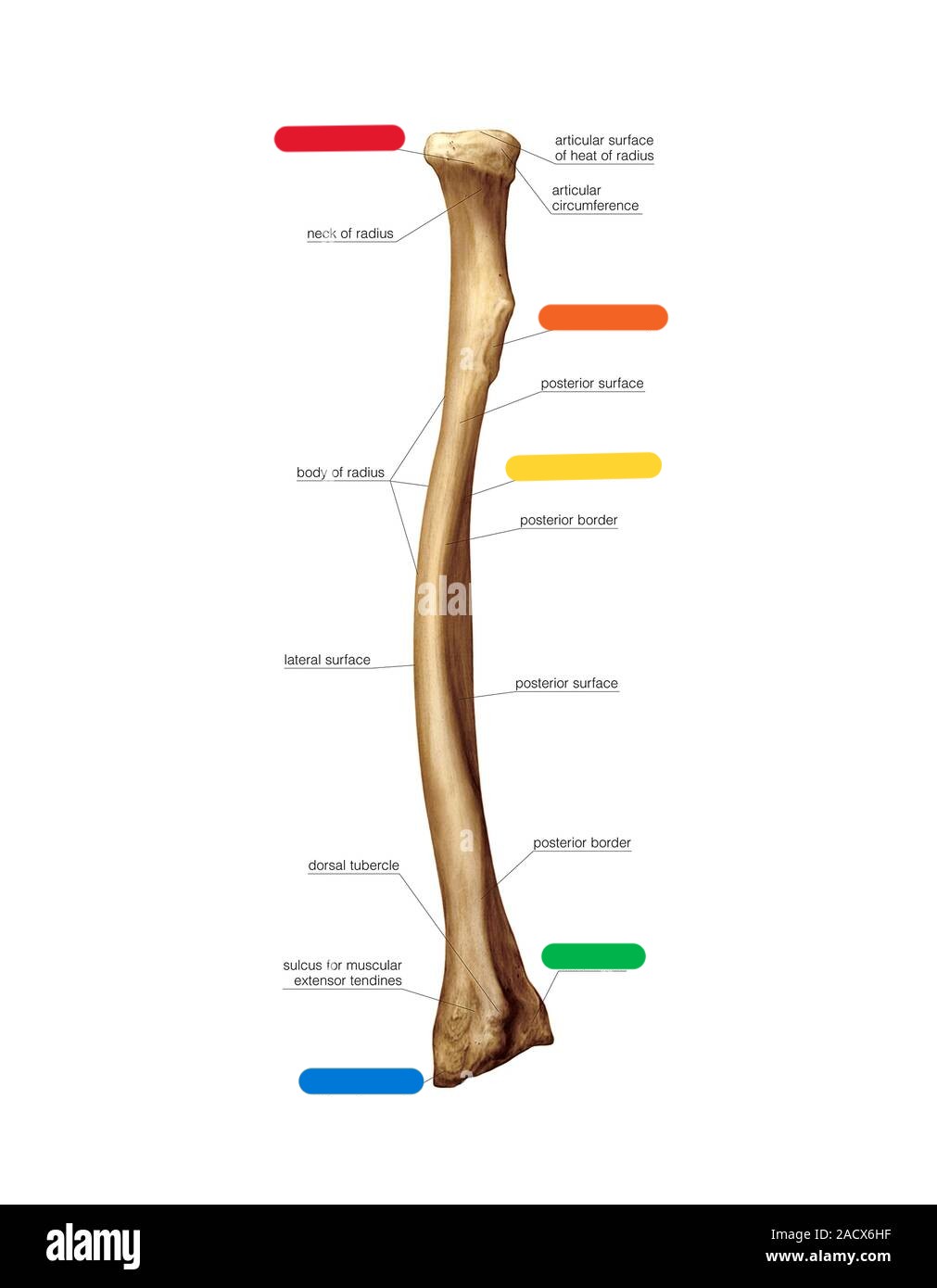
Head of radius, radial tuberosity, interosseous crest, unlar notch, styloid process or radius
Head of radius
Rounded proximal end that articulates with the capitulum
Radial tuberosity
Blunt, rugose, oval structure on the antermedial side of proximal radius
Radius styloid process
Sharp projection on lateral side of distal radius
Interosseous crest
Sharp, medial, edge of the redial shaft
Ulnar notch
Crescent shaped, concave articular hollow on distal radius
Siding the radius
The smooth side of the distal radius faces forwar, the styloid process points to the side from which the bone comes.
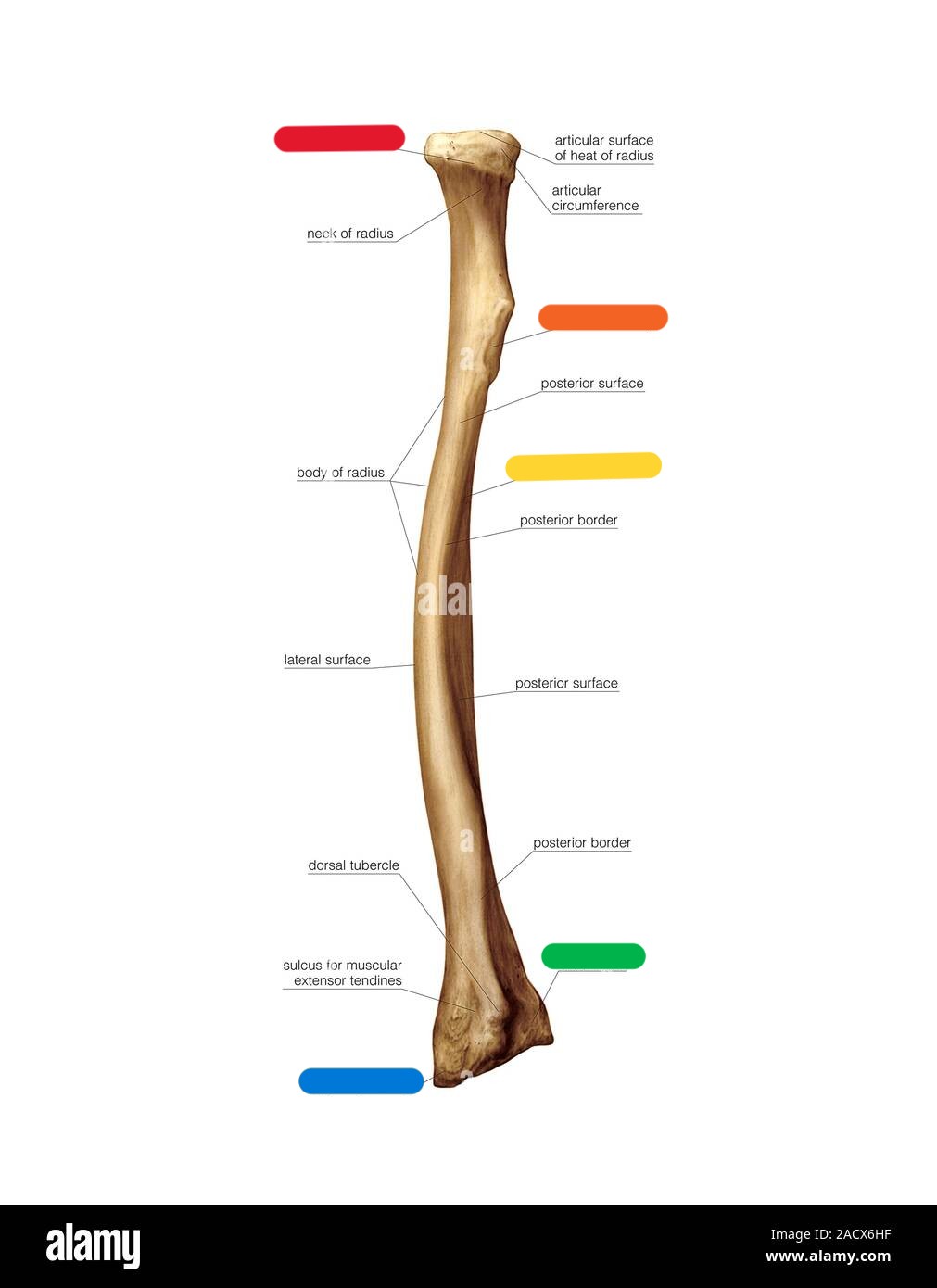
right or left radius?
left
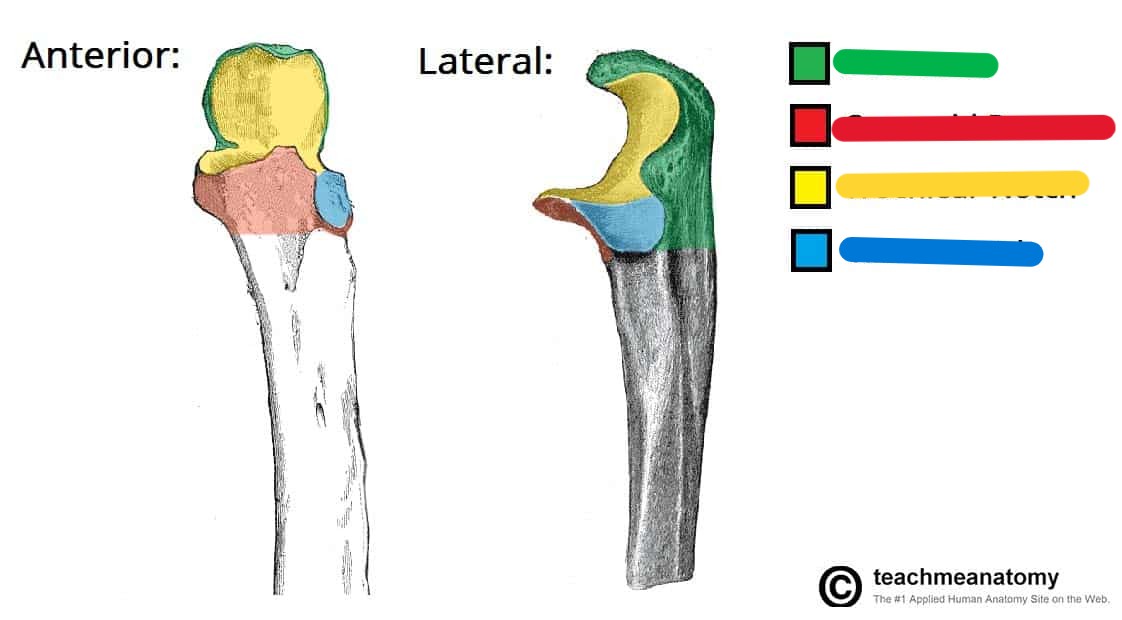
Olecranon, coronoid process, trochlear notch, radial notch
Trochlear notch
Articulates with the trochlea of the humerus
Coronoid process
Beak-shaped projection at the base of the trochlear notch
olecranon
most proximal part of the ulna bone, curved projection
Radial notch
small articular surface for the radius
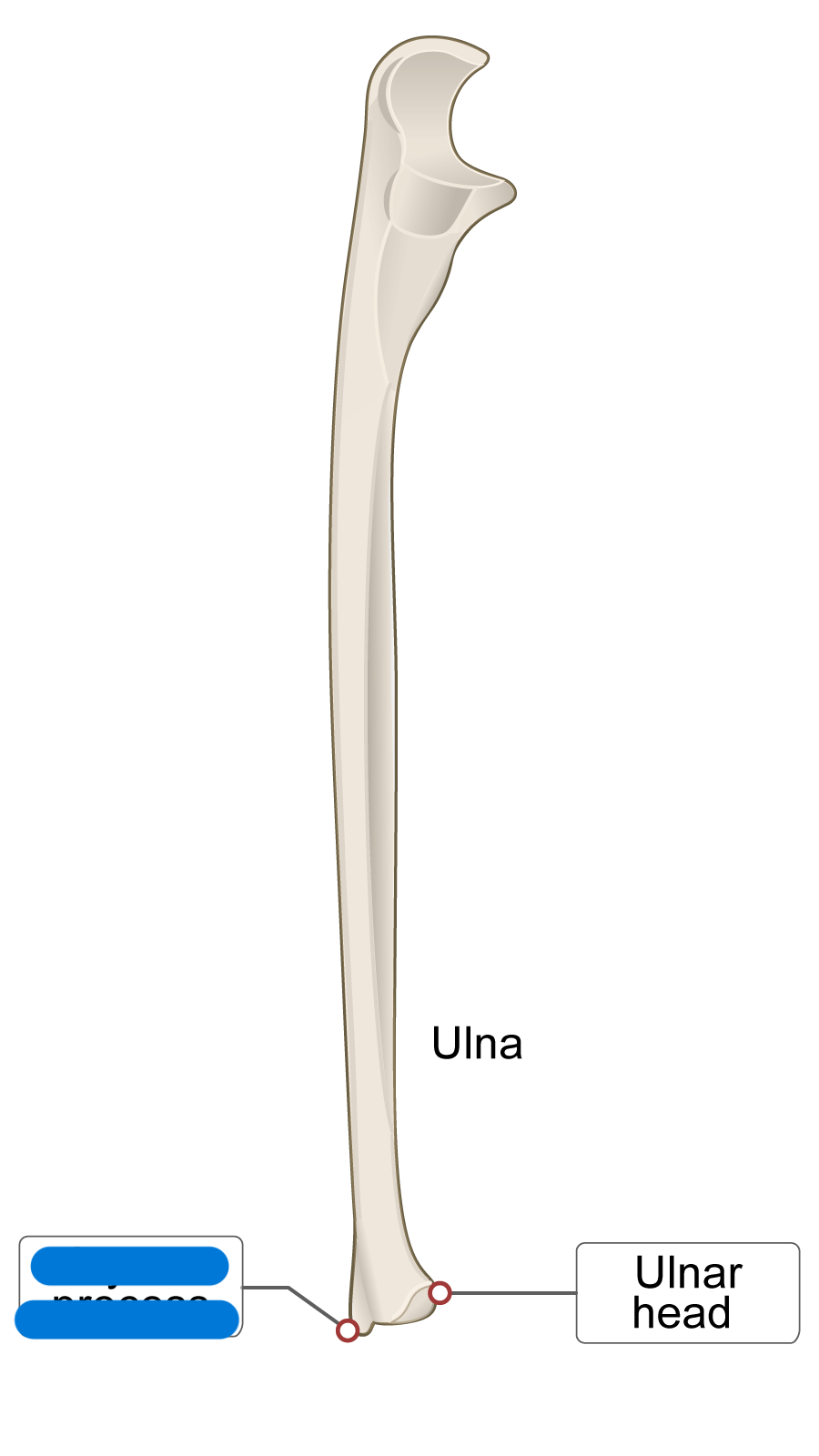
Styloid process
Ulna styloid process
Sharp, distal-most projection of the ulna
Siding an ulna
Olecranon process is proximal, radial notch is lateral (directed away from the body)
What are the 8 bones of the wrist
Scaphoid, lunate, triquetral, pisiform, trapezium, trapezoid, capitate, hamate
How many metacarpals are there
5
What is MC1
thumb metacarpal
what is MC5
pinky metacarpal
What is the difference between metacarpals and phalanges
Metacarpals are tubular, phalanges are very flat and have no rounded heads or large bases