Plant Science Exam 2
 Call Kai
 Learn
Learn Practice Test
 Spaced Repetition
 Match
Match Flashcards
 Knowt Play
1/182

There's no tags or description
Looks like no tags are added yet.
Name | Mastery | Learn | Test | Matching | Spaced | Call with Kai |
|---|
No analytics yet
Send a link to your students to track their progress
183 Terms
classified plants into different morphological forms
in 1600 BC, what did Indian writings do for botanical classification
wrote lists of plants with their pharmological uses
in 480 BC, what did Chinese writings do for botanical classification
Theophrastus
who is the father of botany
student of Aristotle that produced a list of 500 plants with names that we still use today
many medical terms are Greek because of him too
Greece 300 BC
who was Theophrastus and what did he do for botanical classification? when did he live?
wrote the Materia Medica that described medical plants that was the standard medical reference book for physicians at the time
lived 40-90 AD
what did Dioscorides do for botanical classification? when did he live?
Dioscorides
who wrote the Materia Medica
herbals
what was used during the Renaissance for botanical classification
herbals
medical plant identification and preparation books that had descriptions and colored pictures to help identify plants to be used for medicine and how to use them
Swedish botanist, zoologist, and physician that came up with the binomial naming system that we use today
1707-1778
describe who Linnaeus was and when he lived
Linnaeus
established a consistent taxonomic system that was relatively easy to use that we still use today
generic name first, italicized, capitalized
specific name next, italicized, not capitalized
author name last, not italicized, capitalized
what is the format of the scientific name of a plant
names can change over time depending on the time period because new findings can come out that change the name of the plant
why do you need to include the author at the end of a scientific name
collected samples and pressed them so that people knew what they looked like so they did not come up with two different names and relationships could be made between plant species
other than just naming plants, what else did Linnaeus do with plants to help identify them
bouquets of flowers have specific meanings depending on the flowers included in them
roses = love
four-leaf clover = luck
olive branch = peace
what is meant by the term flower language
benefits: good for small area of people, can have same name for different species or multiple names for one species
drawbacks: hard to communicate between different areas and know what you are talking about so need general scientific name too
what the benefit of having common names for plants? what about drawbacks?
morphological, physiological, and molecular evidence to put species into groups
what is modern taxonomy based on?
taxon
any taxonomic rank
kingdom, phylum, class, order, family, genus, species
yes, it tells us how one species is related to another one
what is the classic hierarchy of modern taxonomy? is this the best system to reflect evolutionary relationships?
convergent evolution
some species may look alike but not be evolutionary related so can lead to the wrong idea of them
what is one problem with classifying plants based solely on morphology
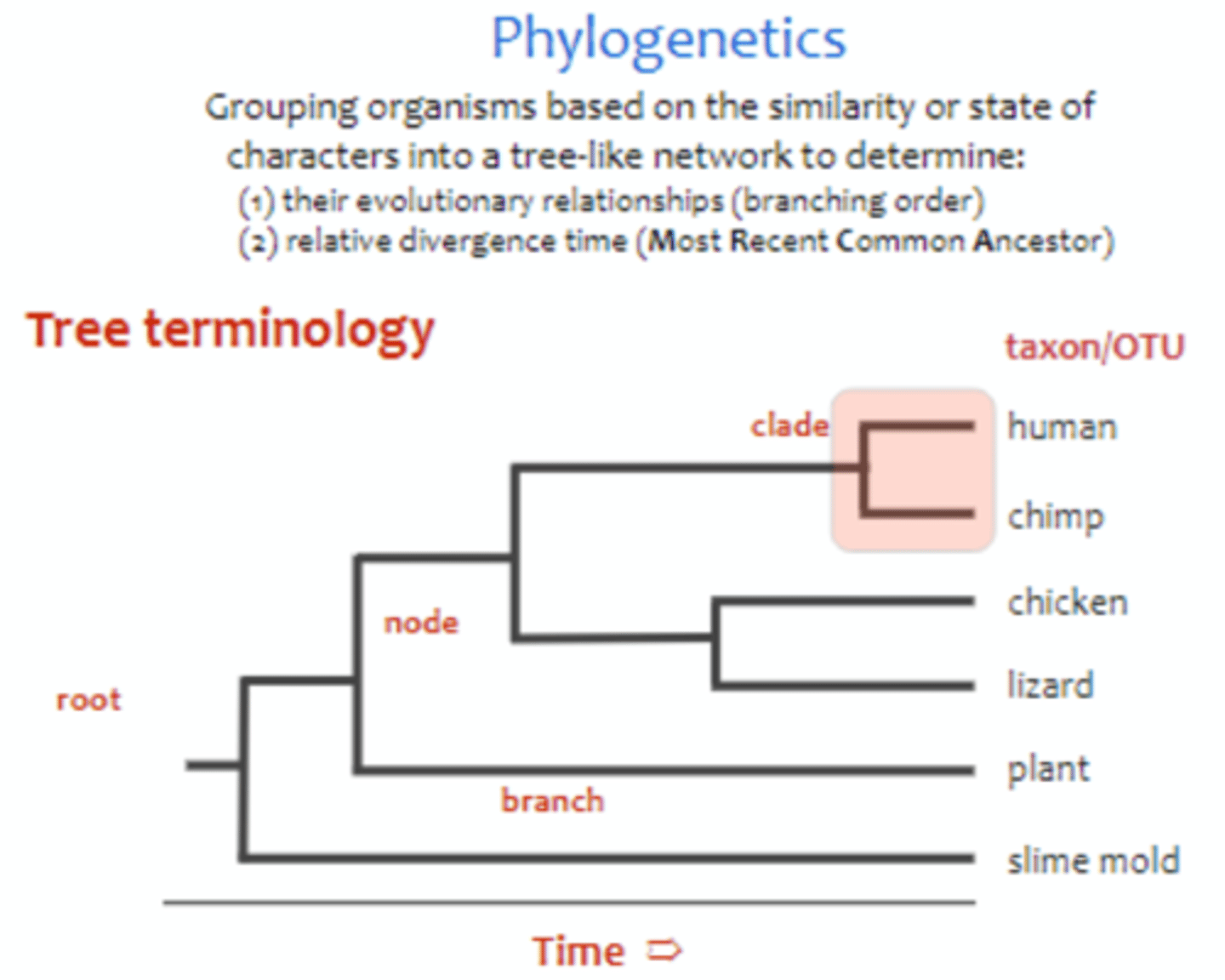
cladistics
using taxonomic relationships to examine evolutionary branching patterns
clade
branch of a cladogram which includes a common ancestor and all descendants
phylogenetic tree
what is this
monocots and dicots
originally thought that they were not related but found that dicots are closely related to monocots
what are angiosperms divided into? what was found out about them after genetic sequencing?
all members of a species show variation in genes
populations produce more offspring than can survive
individuals compete for resources and mates
individuals best suited to the environment pass on more genes and the population evolves
what are premises of Darwin's evolutionary theory (natural selection)
no because there is no difference in genes so there is nothing to select for
can natural selection act on a population of clones
tropical rain forests
what environment contains 70% of the world's species
250,000 total
20,000 for food
how many species of angiosperms are there, and how many are used by humans for food
wheat, rice, and corn
50% of human calories come from what three plants
goal of it is to make things uniform so that get the most yield
does not allow for diversity that could be more beneficial for the plant
how is agriculture inhibiting the future of agriculture
could end up having a remedy for a disease or be better at surviving at a later time period (could have resistance to a pest or just have a gene that makes it better equipped to survive)
why is it important to save species that have unknown value
Spirulina: cyanobacteria that is 60% protein, dehydrated to be put in products because high in protein and no taste
Dulce: red algae that is a good source of dietary fiber in Iceland
list some edible algae and their characteristics
Spirulina cyanobacteria
what is the most nutrient dense plant on earth
red plants - Red alage (marine)
brown plants - Brown algae (marine)
green plants - cyanobacteria and land plants (marine and freshwater)
what are the three main groups of photosynthetic organisms
algae
aquatic, non-vascular photosynthetic organisms that includes prokaryotes and eukaryotes
thallus which is the blade of photosynthetic cells
range from unicellular to 60 meters long
what is the basic body structure of algae
by their photosynthetic pigments
all have chlorophyll a but the others vary
how are algae primarily separated
needed to excite an electron to donate to the electron transport chain in photosynthesis
why do all algae have chlorophyll a
green algae: chlorophyll a and b and carotenoids
other groups: chlorophyll a and c, and various other accessory pigments
green algae has _________ photosynthetic pigments, but other groups have ___________.
both have chlorophyll a and b and carotenoids so that shows the relationship between them
how do we know that land plants are most closely related to green algae
photosynthetic bacteria
aka blue-green algae
some are able to fix N from the air which is important in the nitrogen cycle
prokaryotic
grow in water
vary in colonies they grow in (some balls, some chains)
describe cyanobacteria
unicellular, eukaryotic
hard cellulose plates and 2 flagella that spin through the water
can be autotrophs, mixotrophs, or heterotrophs
may contain animal toxins
can lead to reed tides
describe dinoflagellates
ornamented silica cell walls that produce diatomaceous earth
easy to identify because the silica shells remain in the ground
describe diatoms
they don't break down in rock so they can be used to find out how they have evolved and what other species have evolved with them
why are diatoms useful to paleontology
diatoms grow in specific rock
some diatoms are specific to rock that is good for oil reserves so the petroleum industry digs for oil in those areas
why are diatoms useful in the petroleum industry
have 1-2 flagella for locomotion
have a protein-containing flexible covering instead of rigid cell wall
mixotrophic
senses light with an eye spot and will move the organism toward the light
describe euglenoids
brown
are diatoms red, brown, or green algae
freshwater and marine
unicellular, colonial, filamentous, or multicellular
photosynthetic pigments are the same as land plants
have alternation of generations so probably relative to bryophytes
describe green algae
those in freshwater
what is the most diverse group of green algae
green algae that is unicellular
has one chloroplast in cell
used as biofuel because it is easy to grow in large quantities
describe chlorella
mainly marine
some have walls containing high amounts of agar and carageenans
describe red algae
food thickeners especially in tub ice cream
what are carageenans used for
calcium
coralline algae have rigid aggregations of what in their cell walls
mostly marine
Kelp is an example
important in ecosystems because provide food source and habitat
describe brown algae
provide food source and habitat especially nurseries for animals because they reduce waves
rocky coastlines like the ones in Maine
what is the importance of Kelp forests and where are they found
blades are the main photosynthetic organs
float holds it up to capture more light
holdfast attaches it to rock to anchor it
describe what Kelp looks like
water distorts wavelengths from the sun so need different pigments to capture the light
algae are found at different distances from the top of the water
wavelengths travel different distances so algae have to adapt to where they are located in the water
why have a variety of photosynthetic pigments evolved in marine algae but not in land plants
Nostoc Spirulina
what algae could have been manna
fish get them from the algae that they consume
where do omega-3 fish oils come from
Japanese sushi
red algae is used as a wrapper in what food
very easy to grow quickly unlike corn and soybeans but it is not found everywhere
what is the potential advantage for using algae as biofuel
polishing electronics
pool filters
insecticide (shells are like glass so the insect won't want to go on it)
diatomaceous earth can be used for...
toxic cyanobacteria can lead to swimming restrictions
red tides from dinoflagellates can have toxins accumulate in the shellfish
other dinoflagellates can secrete a toxin to kill fish and can cause dermatitis in humans
what are some toxicities with algae
not native
outcompete native species because they have no native predators
cause problems ecologically
what are the characteristics of an invasive species
mushrooms, yeasts, food, crop diseases, fermentation, human maladies
what are some economic uses for fungi
interactions with other organisms, decomposition, succession
what are some ecological uses for fungi
fungi
changing of ecosystems probably started with the growth of
heterotrophic
are fungi heterotrophic or autotrophic
chitin fibrils
what are the cell walls of fungi made of
exoskeletons of insects
where else is chitin found
glycogen
what is the storage carbohydrate of fungi
animal-like because have the same storage carbohydrate
are fungi more animal-like or plant-like
eukaryotic
are fungi eukaryotic or prokaryotic
hyphae
single cells or filaments that make up a fungus
mycelium
bunch of hyphae
septate: have crossing cell walls to separate nuclei
nonseptate: separate nuclei but no crossing cell walls
what are the two kinds of hyphae and what is the difference between them
septate
do most fungi have septate or nonseptate cell walls
plasmogamy
fusion of the cytoplasm of two different fungi
karyogamy
fusion of haploid nuclei, resulting in one cell
dikaryon
two genetically different nuclei/cells that result when karyogamy does not immediately follow plasmogamy
asexually or sexually
majority is asexually but sexually is important for genetic recombination
how do fungi reproduce
fungal spores that are released into the air
sexual reproduction of fungo leads to
chitridiomycota
zygomycota
ascomycota
basidiomycota
what are the four classes of fungi
parasites of plants, animals, and other fungi
chitridiomycota are typically considered what
chitridiomycota because it infects their dermal cells and reduces respirations
what class of fungi is associated with world-wide amphibian decline
no
do chitridiomycota grow as hyphae
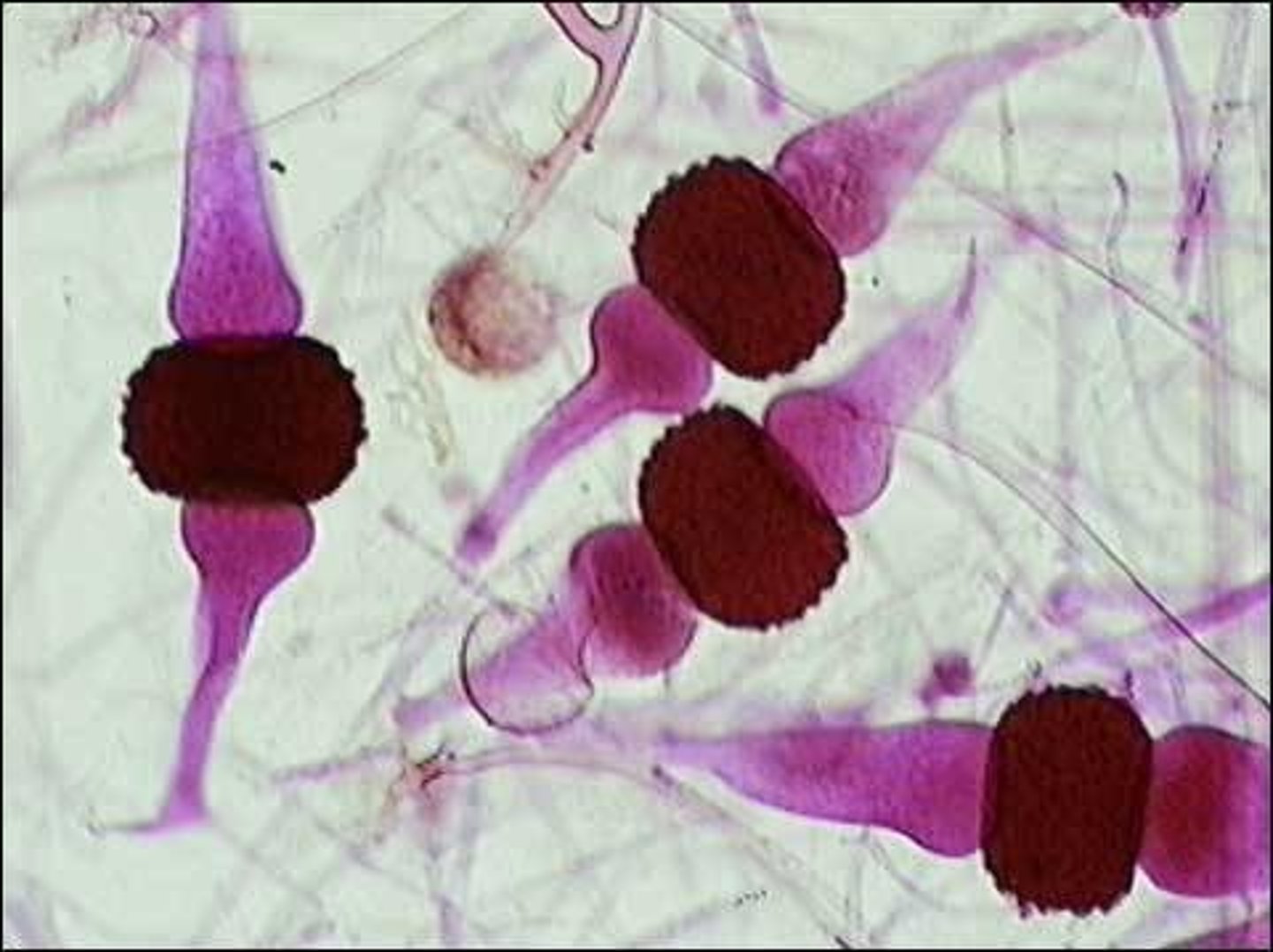
thick-walled spore-containing zygosporangia
where did the class of zygomata fungi get their name
yes, nonseptate ones
do zygomycota grow as hyphae
bread mold
example of zygomycota fungi
asexually but can undergo sexual reproduction with plasmogamy and karyogamy
how do zygomycota fungi usually reproduce
zygomycota
what class of fungi is this
asci
each individual ascomycota spore in the ascocarp
ascocarp
place where the spores are held in ascomycota fungi
septate dikaryon undergoes karyogamy to get one nuclei
meiosis and mitosis leads to 8 ascospores
what does ascomycota fungi start as and how many spores does it end with
athlete's foot
truffles
example of ascomycota fungus
ascomycota
source of the antiobiotic penicillin
what class of fungus is penicillum and what is it's importance
ascomycota
can cause lung infections that CF and asthma patients are more susceptible to
what class of fungus is aspergillus and what is it's importance
ascomycota
causes white nose syndrome in bats where the bats that are infected wake up early from hibernation and look for insects but find none because it is winter and die
what class of fungus is Geomyces destructans and what is its importance
basidium
tiny pegs of clubs that spores grow in basidiomycota fungi
septate dikaryon undergo karyogomy and meiosis to produce 4 spores
what do basidiomycota fungus start as and how many spores does it end with
basidiospores
spores in basidiomycota