England: Notable Groups, Organizations and Movements (inc. Church Denominations, Newspapers, etc.)
 Call Kai
 Learn
Learn Practice Test
 Spaced Repetition
 Match
Match Flashcards
 Knowt Play
1/62

Earn XP
Description and Tags
Organized chronologically by starting date
Name | Mastery | Learn | Test | Matching | Spaced | Call with Kai | Chat |
|---|
No analytics yet
Send a link to your students to track their progress
63 Terms
1096 - University of Oxford (All Facts)
In 1214, it received its first privileges
In 1382, their principal tenets were condemned in the Blackfriars Council, which took steps to stamp out heresy within the namesake institution, so threatening the University’s independence
By the 1680s, it served as the political base of the Conservative Tory party
1209 - University of Cambridge (All Facts)
Order of the Garter (All Facts)
Chivalrous Order in England instituted during the reign of King Edward III
Inspired by King Edward III’s much-publicized moment of rescue of one of the countesses of Salisbury’s namesake figures at a dance, rebuking onlookers with “Shame on whoever thinks this shameful”
Competition was high among leading English knights in the kingdom for invitations to the order given that just 25 knights were eligible for membership of the new elite order
Its members met on St. George’s Day each year
Guilds (All Facts)
Professional associations of artisans and merchants who oversaw the practice of their craft / trade in a particular area
They were initially granted to all free men in a trade, but it became steadily harder to obtain over the course of history
For example, weavers were refused membership over time by merchants worried that too many of them would create a cheap and plentiful supply of labor that would drive prices down
Parliament of England (All Facts)
Political body which increased the rights of the English nobility, but not the general population
Its “House of Lords” represented the clergy and nobility
Its “House of Commons” comprised elected representatives of wealthy townspeople
Eventually, the power of these two legislative bodies in England became stronger than that of similar bodies on the European continent
Political body which first met during the reign of King Henry III of England, during which King Henry III of England had enacted the “Provisions of Oxford” for the discontented English barons only to have it annulled by King Louis IX of France
Some might say that Simon de Montfort’s namesake meeting in response to King Henry III’s might be the first true namesake meeting, since it represented a larger constituency of knights and burgesses and not just barons
Simon de Montfort’s namesake meetings reflected the improved status of lesser knights and townsmen in England at the time
However, his namesake meeting would lay the foundations for the “House of Commons"
House of Lords (All Facts)
Parliament house which represented the clergy and nobility
Its power eventually became stronger than that of similar bodies to it across the European continent
House of Commons (All Facts)
Parliament house comprised of elected representatives of wealthy townspeople
Its power eventually became stronger than that of similar bodies to it across the European continent
Parliament house which evolved out of the first meeting of barons, knights, and burgesses by Simon de Montfort during the Second Barons’ War
Parliament house which responded to King James of England’s order to MPs not to “meddle” in the affairs of the state and his having claimed the right to punish any MP who committed a “misdemeanor in Parliament” by putting forth a statement that said “the liberties, franchises, privileges and jurisdictions of Parliament” are the birthright of the English people and that every MP must have “freedom from all impeachment and molestation (other than by censure of the House itself)”
Privy Council (All Facts)
Body of advisors to the sovereign of the Kingdom of England
Its members were often senior members of the House of Lords and the House of Commons, together with leading churchmen, judges, diplomats and military leaders
In 1620, they allowed for the kidnapping and export of orphaned children from the streets of London to the colony of Virginia under the reign of King James of England, who authorized the procedure, a practice since which criminals had cashed on the plentiful labor force that were children
By 1620, 1,500+ orphaned children were kidnapped and exported from London to Virginia
In 1621, they ordered all exports from the colonies to have customs paid in England
1380s - 1500s - Lollardy / Lollards (All Facts)
Proto-Protestant Christian religious movement in England (initially) led by John Wycliffe and informed by his teachings
They emphasized the importance of ordinary people reading the Bible for themselves
Their principal tenets were condemned in the Blackfriars Council of 1382, which took steps to stamp out heresy within the University of Oxford, so threatening the University’s independence
When this occurred, many of Wycliffe’s followers submitted and the University of Oxford dismissed Wycliffe for heresy
Movement which was a reaction to the Western Schism, in which the English government at the time was, for its own reasons, willing to criticize the temporal power of the papacy; which was already being threatened by the Western Schism
1382 - Winchester College (All Facts)
Founded by William of Wykeham
It was a boys boarding school
Represented the fashionable area of concern at the time that was education
1440 - Eton College (All Facts)
Founded by King Henry VI, it was located in Buckinghamshire
It
was a boys boarding school
housed clerks to pray for the king
taught grammar to 25 poor scholars
had a school master which was required to teach other applicants on demand
Its establishment was due to the
attention focused on the importance of good teachers
clergymen who set themselves up as schoolmasters may well perform quite adequately, but in the end lacked real teaching qualifications, a problem, pronounced in the teaching of Latin grammar, noted in a report by William Bingham to King Henry VI, which detailed the extent of the problem and which prompted him to establish the namesake institution
Bingham noted that some 70 schools prior to the namesake had to be forced to close down because of the scarcity of masters and stressed that, without good teachers, the church would be weakened, since no new clergymen would be taught
Its creation prompted the establishment of a special college for the training of the teachers who would be sent out to educate the young
1509 - 1559 - English Reformation (All Facts)
Movement which began as a controversy over King Henry VIII’s matrimonial problems and evolved into a political revolution in England
Movement in which England broke with the Roman Catholic Church
Movement in which the King of England needed to carry public opinion with him, causing him to increasingly seek the support of parliament
Movement in which the following developments took place:
Convocations of Canterbury and York
1533 Submission of the Clergy Act
1534 Supremacy Act
1534 Succession Act
1535 Suppression of Religious Houses Act
Dissolution of the Monasteries
Increasing clerical unemployment in which clerics
Lost their jobs as clerics of church properties and monasteries
Lost their jobs among those who sat in the House of Lords
The English Bible
With the Bible being printed into English, it rendered clerics obsolete for the people could at the time then read the Bible for themselves
Movement which took place alongside the spread of Protestantism throughout northern Europe at the time
1534 - Church of England (All Facts)
Founded by King Henry VIII
1536 - 1541 - Dissolution of the Monasteries (All Facts)
Movement in England under the reign of King Henry VIII in which he set up a commission under Thomas Cromwell, which
disbanded all Catholic Church properties in England, Wales, and Ireland
seized their wealth
redistributed their wealth to the Crown of England and to fund King Henry VIII’s military campaigns
disposed of their assets
destroyed buildings and relics
dispersed or destroyed libraries
provided for their former personnel and functions
former abbots, monks, and nuns were given pensions; however clerical unemployment rose significantly during this movement
turned many of the nearly 800 church properties sold into private homes for the Gentry class
ceased the Church’s system of distributing alms, thus causing hardship amongst England’s poor
made it so that monks and abbots no longer sat in the House of Lords, having lost political power in addition to religious authority
Movement in England under the reign of King Henry VIII in which he set up a commission under Thomas Cromwell, in which
Cromwell sent the commissioners appointed under him by King Henry VIII storming throughout England in which they
interrogated monks, nuns, and friars
claimed to have uncovered profound bawdiness, drunkenness, and “whores in feather beds”
put up for sale nearly 800 church properties, which the proceeds having gone to the Crown
King Henry VIII and Thomas Cromwell had
sought excuses for suppressing the English monasteries and confiscating their assets for
The English Crown
Henry VIII’s military campaigns
redistributed some of the assets
to their supporters as gifts of property
to put up for auction
Over 550 church properties being brought to a close, with their treasure of plate and jewels being passed into King Henry VIII’s possession
370 of these were smaller and were the first to fall
186 of these were bigger and were the last to fall
New family fortunes, for the time, were established on the namesake basis
as a result of
being guarantors of the gifts of property given to supports of King Henry VIII’s English Reformation
buying off of auctions of former properties initiated by King Henry VIII’s administration
by
William Cavendish
Richard Rich
1536 - Court of Augmentations (All Facts)
It was established by Thomas Cromwell under the reign of King Henry VIII
Its function was to gain better control over the land and finances formerly held by the Roman Catholic Church in the Kingdom of England
Via the namesake institution, the Gentry of England under the reign of King Henry VIII had bought most of the nearly 800 church properties that were being put up for sale during the Dissolution of the Monasteries movement
Via the namesake institution, many of these properties were converted into private homes for the Gentry
1555 - 1917 - Muscovy Company / Merchant Adventurers (All Facts)
England’s first major chartered joint-stock company founded during the reign of Queen Mary of England
This was the precursor of the type of business that would soon flourish in England and finance its exploration of the world
It held a monopoly on trade in furs and wood between England and Russia in the 1500s and 1600s
It was formed following Richard Chancellor’s expedition to Moscow and founded by Richard Chancellor
Its creation put the English in competition with the German Hanseatic League
By 1611, they opened up a branch in Hamburg in Germany
By 1615, they were granted a monopoly on the export of cloth
1557 - Stationer’s Company (All Facts)
By the reign of King James, they issued corantos
1550s / 1563 - 1600s - Brownists (All Facts)
English Separatists founded by the namesake man
They were not tolerated by England
1563 - Separatists (All Facts)
Dissident group from the Church of England following England’s adoption of the 39 Articles
They rejected the Church of England entirely
1563 - Puritans (All Facts)
Dissident group from the Church of England following England’s adoption of the 39 Articles
The namesake group derived its name from being stigmatized by those outside their group for wanting to purify the Church of England even further
They opposed the church rituals of the Church of England
In 1620, 35 of them banded together and set sail in the “Mayflower” for the colony of Virginia, jubilant at the prospect of practicing their brand of worship in the New World without harassment
They gathered together in the “Mayflower” ship’s main cabin and prepared a social contract designed to bolster unity, meant to placate settlers angered by their arrival on land which had not been granted to them by charter, this “Mayflower” Compact established a civil body politic for their new colony that setup “just and equal laws” based on church covenants
They were somewhat tolerated by England at the time of their founding
1563 - (English) Presbyterians (All Facts)
Dissident group from the Church of England following England’s adoption of the 39 Articles
They had synods instead of bishops
They were somewhat tolerated by England at the time of their founding
1560s - Royal College of Physicians (All Facts)
Founded in London
They got a statue that (legally) empowered them to carry out dissections of the human body
1560s - 1600s - English Renaissance (All Facts)
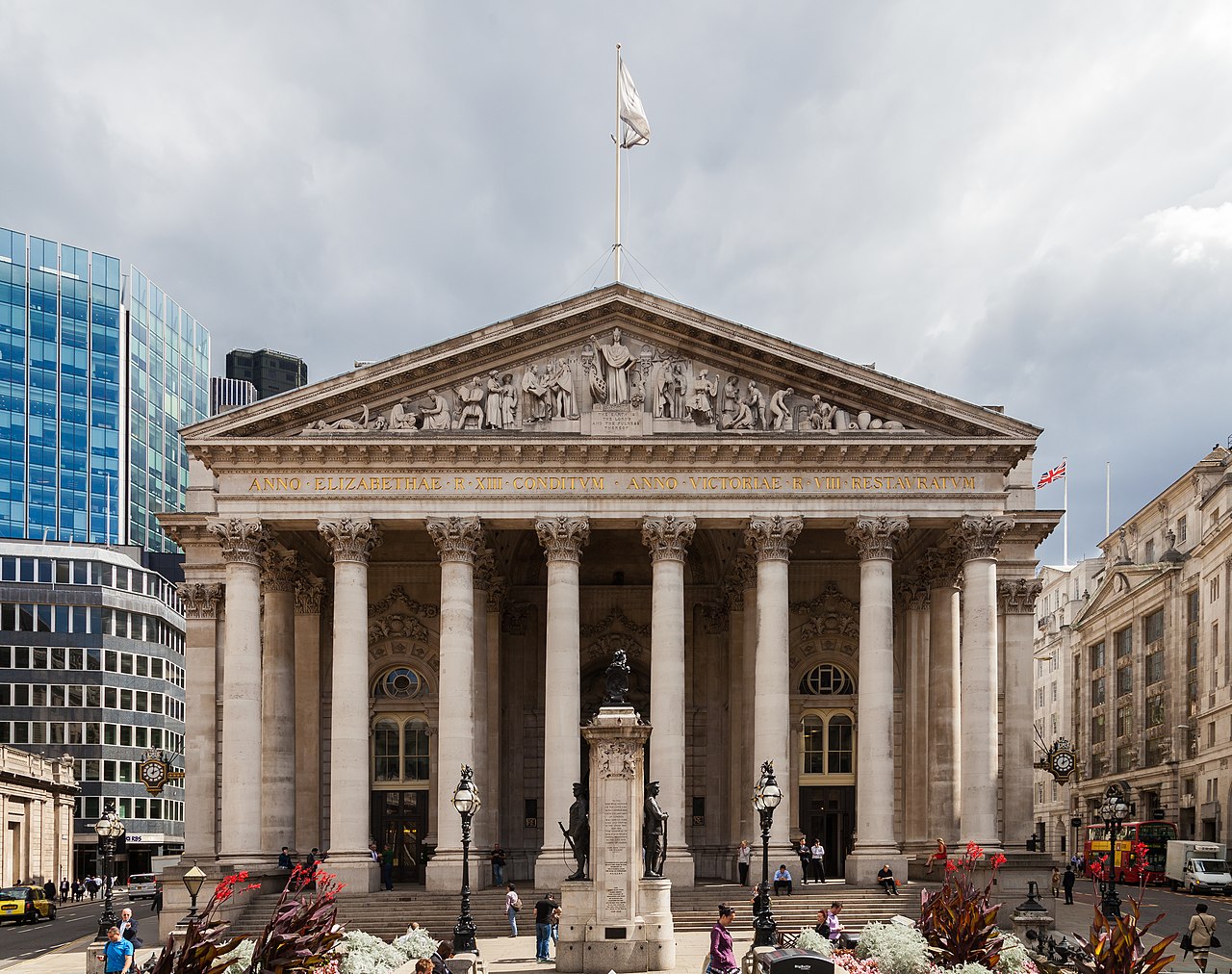
1571 - Royal Exchange (All Facts)
Center of commerce in Cornhill for the city of London in England built during the English Renaissance / reign of Queen Elizabeth
Founded by Thomas Gresham
It was built over piazzas supported by marble pillars
Its ground floor was reserved for wholesalers, with retail shops in its gallery above
Its merchants were summoned to meetings by bells
This would later house the Royal Society, the first British institute for teaching science
1576 - 1642 - The Theater (All Facts)
First permanent public theater and Elizabethan playhouse built during the English Renaissance / reign of Queen Elizabeth
Opened in fields north of London
Located at Shoreditch
William Shakespeare worked there with his “Lord Chamberlain’s Company”
1577 - 1624 - Curtain Theater (All Facts)
Permanent public theater and Elizabethan playhouse built during the English Renaissance / reign of Queen Elizabeth
Opened in fields north of London
1576 - 1666 - Blackfriars Theater (All Facts)
Former monastery adapted for the namesake kind of performances during the English Renaissance / reign of Queen Elizabeth
Theater located on the north bank of the Thames River
Theater built and maintained as a winter playhouse by Richard Burbage
1579 - 1672 - Eastland Company (All Facts)
Crown-chartered company, founded to foster trade with Scandinavia and Baltic Sea states during the reign of Queen Elizabeth of England
It was an attempt by the English to challenge the Hanseatic League's dominance in the commerce of Northern and Central Europe at the time
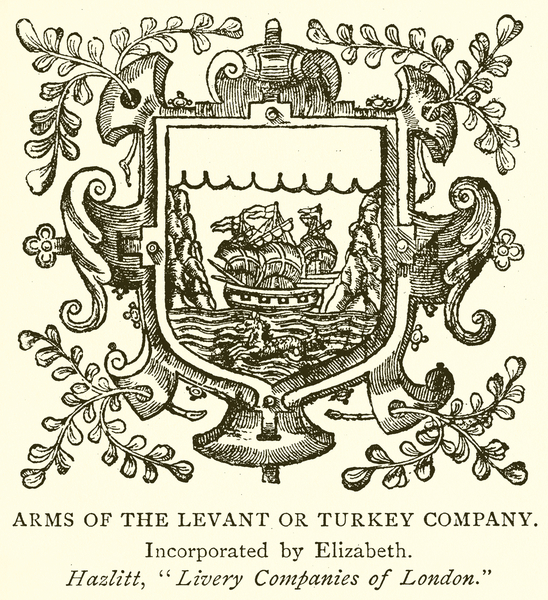
1592 - 1825 - Levant Company (All Facts)
Company formed to trade with the Mediterranean countries during the reign of Queen Elizabeth of England
It was meant to establish and maintain trade with the Ottoman Empire
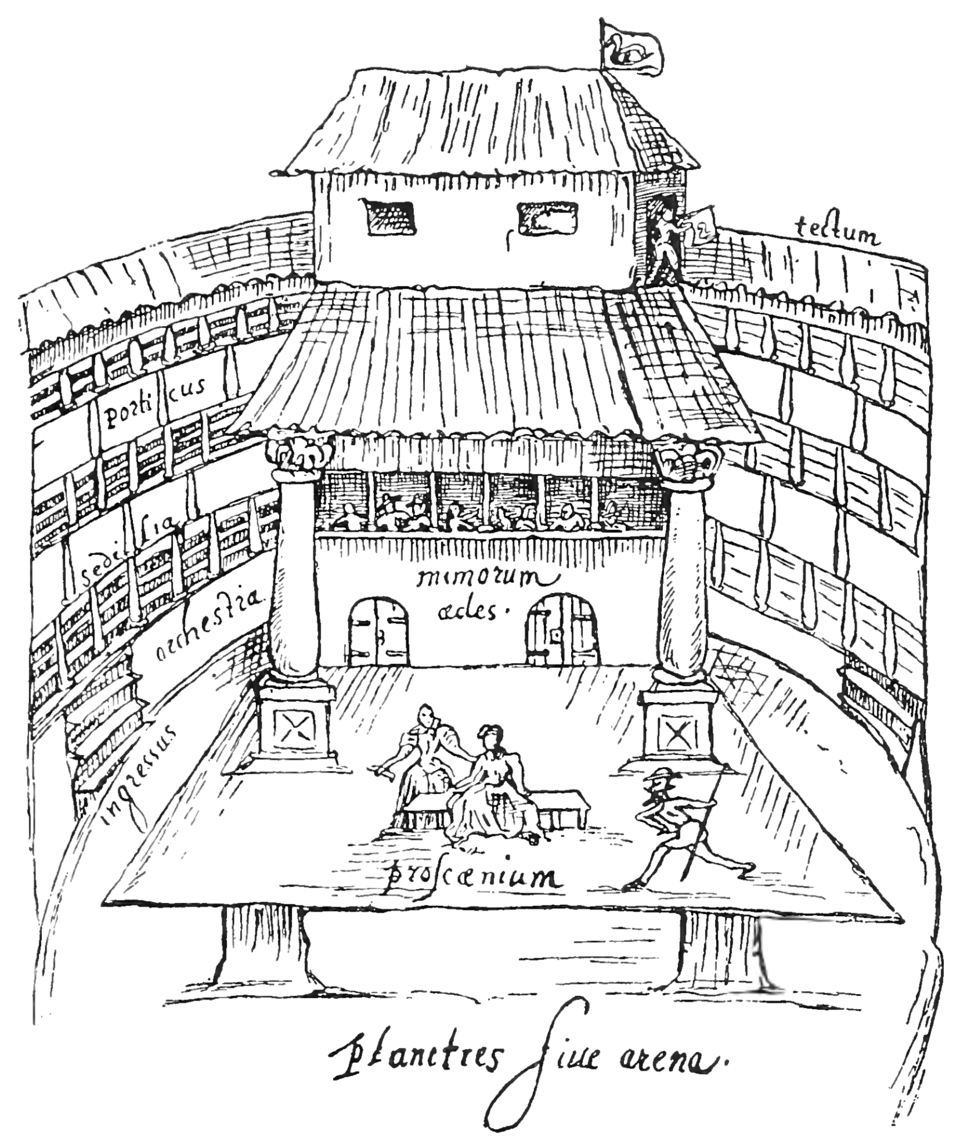
1595 - 1621 - The Swan (All Facts)
Theater located in Southwark in London
1599 - The Globe (All Facts)
Theater in London which was a roofless summer playhouse
Theater built by Richard Burbage
Theater which sat 1,200 spectators
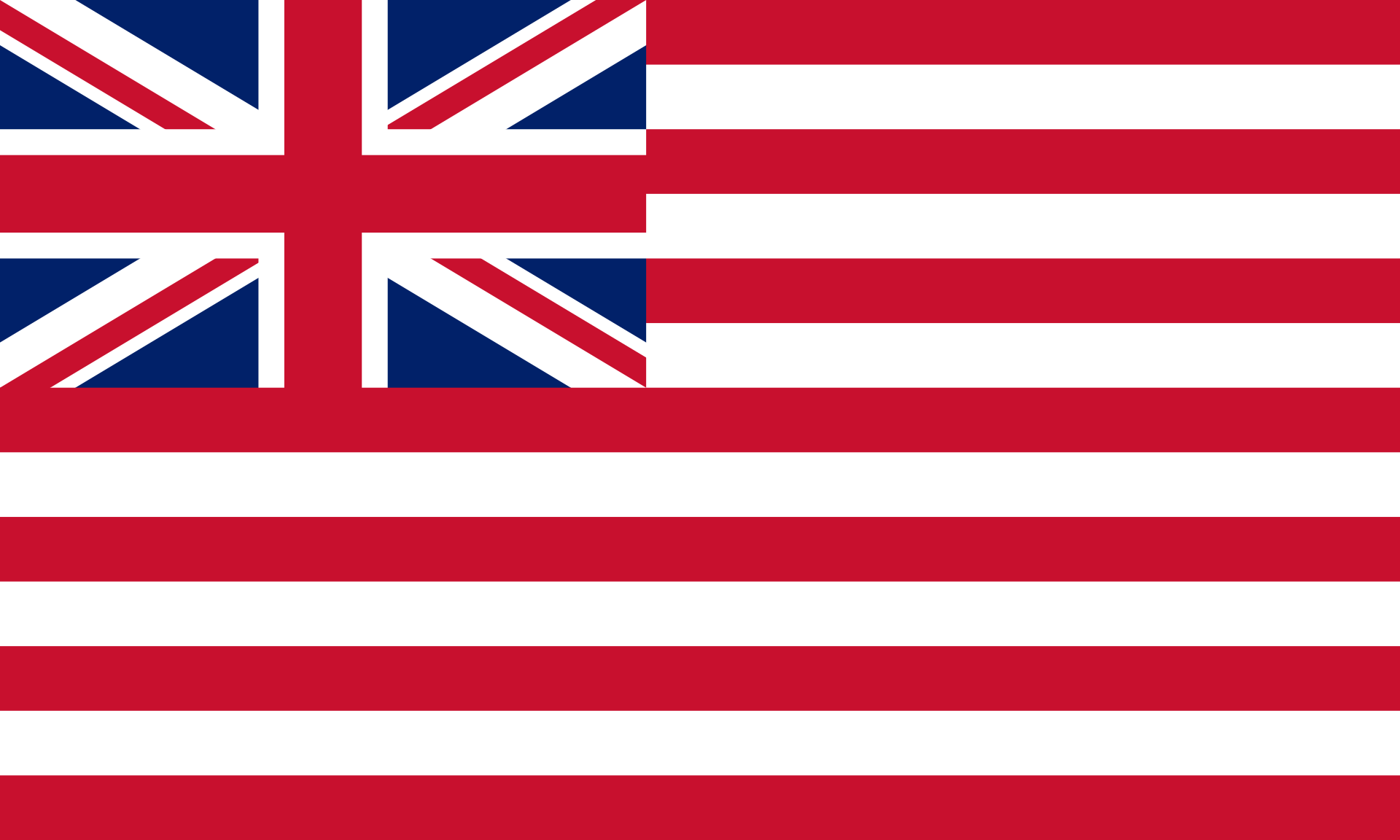
1600 - 1874 - (British / English) East India Company (All Facts)
Subtitled “The Governor and Company of Merchants of London trading into the East Indies, ” it was granted a charter of corporation by and founded during the reign of Queen Elizabeth
The charter gave George Clifford and 215 knights, alderman, and merchants the right to trade in the East Indies for fifteen years
The company’s members put up money to finance a large-scale trading expedition and sent out a fleet of five ships to Sumatra and Java to do business in the east’s rich markets
The company’s voyage promised to be in the tradition of merchants venturers who had carried English trade around the world during the reign of Queen Elizabeth
The charter also gave Christian merchants in Persia special privileges, including being free from customs’ duties and religious interference
In 1612, it defeated the Portuguese off the west coast of India and established multiple factories that year including those at
Surat
Syriam (Rangoon)
Prome
Ava
Thus, by 1612, its influence in India overran that of the Portuguese (as a rival to the Dutch)
In 1620, its captains Shillinge and Fitzherbert erected the English flag on the shores of Table Bat in the name of King James, not leaving the colony to take possession of the Cape of Good Hope, but rather by valuing the Cape of Good Hope primarily as a stopping-off post for ships bound to India
In 1639, it expanded its trade all over India via the English trading post establishment at Madras in India
In 1650, they established a trading post at Hughli in Bengal in India
In 1666, they were granted full liberty to export ingots to India, establishing a free market in money, having got rid of a cherished pillar of financial rectitude
Prior to this, the “nabobs” had been complaining that the potential for trade was enormous, but that restrictions on bullion experts had held it back
At this point, they had all the funds they needed
Despite its success, in which it operated untrammeled by its own government, it did not exhibit any suggestion of free trade
1602 - Bodelian Library (All Facts)
Founded by scholar Sir Thomas Bodley
Located in Oxford
1606 - 1624 - Virginia Company of London (All Facts)
Company chartered by King James of England
Company which dispatched Captain Christopher Newport and his three ships “Sarah Constant,” “Discovery,” and “Godspeed” to Virginia
Company which was given the task of colonizing the area around Florida and Delaware
By 1620, they received letters from leaders of the colony of Virginia asking for more orphaned apprentices for employment
They were given a monopoly in exchange for tax of one shilling per pound of tobacco after King James and his administration had banned tobacco growing in England
In 1623, the Royal Commission reported that disasters killed around 3K settlers of the Virginia colony in just 15 years
The Royal Commission reported that people sent there in efforts to get a colony off the ground were “by sickness of body, famine, and massacres dead” or “living in miserable, lamentable necessity”
This led King James to revoke the namesake charter and reinstitute it as a royal charter
The namesake company’s advocates claimed that King James was more concerned about the colony’s spirit of independence than its viability
1606 - 1624 - Plymouth Company / Virginia Company of Plymouth (All Facts)
Company chartered by King James of England
Company which was to colonize North American territory inland from Cape Cod Bay
1606 - Baptists (All Facts)
Separatists who rejected the Church of England and rejected (orthodox) Calvinism
Founded and led by John Smith
They believed in rejecting infant baptism in favor of adult baptism because
Baptism is not simply “washing in water” but also “baptism of the Spirit, the confession of the mouth”
Infants cannot possibly appreciate the importance of Baptism
Adult Baptism thus is a more fitting ceremony
They also
refused to read the Holy Bible in anything but the original Hebrew or Greek
rejected Calvinist doctrines of predestination and original sin
They
caused great controversy
faced continuous persecution in England
emigrated to Amsterdam in the Netherlands as a result of the persecution they faced
1614 - 1666 - Hope Theater (All Facts)
1619 - London Amazon Company (All Facts)
1620 - 1635 - Council for New England (All Facts)
English joint stock company awarded a royal charter, with the purpose of expanding the realm of King James over parts of North America by establishing colonial settlements
Council which made Robert Gorges the lieutenant-general of New England, having granted him 300 square miles on Boston Bay
Its charter was returned to the English crown after repeated defiance of the Crown’s authority by the namesake’s settlers
1628 - 1691 - Massachusetts Bay Company (All Facts)
Company established as an English joint-stock company venture to promote trade and colonization in North America
Company that was given a patent to land along the coast between the Merrimack and Charles Rivers, which would became the namesake colony
1642 - 1651 - Roundheads (All Facts)
Parliamentarians of England during the English Civil War, they supported Parliament
They fought against King Charles of England and the Cavaliers (Royalists), the King’s supporters, who claimed rule by absolute monarchy and the principle of the divine right of kings
Their goal was to give Parliament supreme control over the executive administration of England and sought to establish a constitutional monarchy in England
1642 - 1651 - Cavaliers (All Facts)
Royalists of England during the English Civil War, they supported King Charles
They fought against the Roundheads (Parliamentarians), who they tried to prevent from establishing a constitutional monarchy in England and taking supreme control over the executive administration of England
Their goal was to maintain absolute monarchy and the principle of the divine right of kings
1645 - 1660 - New Model Army (All Facts)
Roundhead (Parliamentary) Military force during the English Civil War, founded and led by Oliver Cromwell
It was thus an anti-royalist force comprised of six East Anglian counties
Mercurius Aulicus (All Facts)
Newspaper which ran Cavalier (Royalist) propaganda during the English Civil War
Newspaper based in Oxford which published weekly articles
Mercurius Civicus / Britanicus (All Facts)
Newspaper which ran Roundhead (Parliamentarian) propaganda during the English Civil War
Newspaper based in London which published weekly articles
1646 - 1649 - Levellers (All Facts)
Political Organization / Movement founded by John Lilburne
They were active during the English Civil War
They
wanted Parliamentary reform
an end to monopolies
liberty of conscience in religion
They
had leaders that were men of substance
appealed to folk of more modest means who lost their savings when they lent money to Parliament for the war
They were committed to
popular sovereignty
extended suffrage
equality before the law
religious tolerance
populism
They demanded an egalitarian and republican society
1648 / 1652 - Quakers / Society of Friends (All Facts)
Religious Organization / Movement founded by George Fox
Founded during England’s “Puritan Revolution”
Organization / Movement whose biblical basis was John 15:14
They taught that the essence of Christianity was the “inward light” in every man that did not need a minister, liturgy, or sacraments
They were pacifist
1648 - 1653 - Rump Parliament (All Facts)
Form of Parliament during the “Long Parliament”
It was created to do the bidding of Oliver Cromwell and the Roundheads and consisted of the MPs that remained after Pride’s Purge had reduced its number of members
It
had King Charles beheaded
It set up the High Court of Justice for the sole purpose of trying, condemning, and executing by decapitation King Charles of England who was “a tyrant, traitor, murderer, and enemy of the people”
abolished the (absolute) monarchy
abolished the House of Lords
declared England a “Commonwealth or Free State,” with supreme authority vested in the House of Commons in which the executive powers of the monarchy were assumed by the “Council of State”
It issued
The 1651 Navigation Act
It ended when it was thrown out by Oliver Cromwell and some soldiers; as Cromwell came to see the namesake as increasingly corrupt and ineffective
1649 - 1653 - English (First) Council of State (All Facts)
It was founded by the “Rump Parliament” and effectively abolished the monarchy and House of Lords
It was active during the English Civil War
It initially was composed of 40 members, 31 of whom were MPs
It had passed the 1651 Navigation Act
1649 - Diggers (All Facts)
Founded by Gerard Winstanley
They split off from the previously established group known as the Levellers, calling themselves “the True Levellers”
They were active during the English Civil War
Organization / Movement whose biblical basis was Acts 4:32
Organization / Movement which
denounced property as a tool of slavery
proposed a total transformation of society
was essentially comprised of poor men who were agrarian socialists ((it) was an agrarian communistic group)
appealed to the poor and starving in England to join them
declared that the land of England belonged to the people and that it was stolen by the squires
believed that religious ideas had diverted man from asserting his political rights in the world
Organization / Movement which
carried spades and appeared on St. George’s Hill, Walton-on-Thames one day and set about digging up the waste land, hence their name, having sowed it with corn, parsnips, and carrots
its ringleaders were promptly arrested after local property-owners became alarmed and called for Thomas Fairfax and his (New Model Army) troops
had its ringleaders arrested by the English government but whom refused to take off their hats for Thomas Fairfax
1640s - Ranters (All Facts)
Movement with no organization or leader but a dissenting group of English commoners who were said to go in for hard drinking and whoring in the name of the Holy Spirit and equality; they were active during the English Civil War
1653 - Barebones Parliament (All Facts)
Replaced the “Rump Parliament”
It was composed of religious men handpicked by Oliver Cromwell and the Council of State
It was nicknamed after one of its members, named “Praise-God Barbon,” a sectarian preacher
Upon its creation, however, it immediately voted for its own dissolution
This was because its conservative elements were alarmed by the intentions of its radical contingent
It is replaced by the Protectorate of Oliver Cromwell
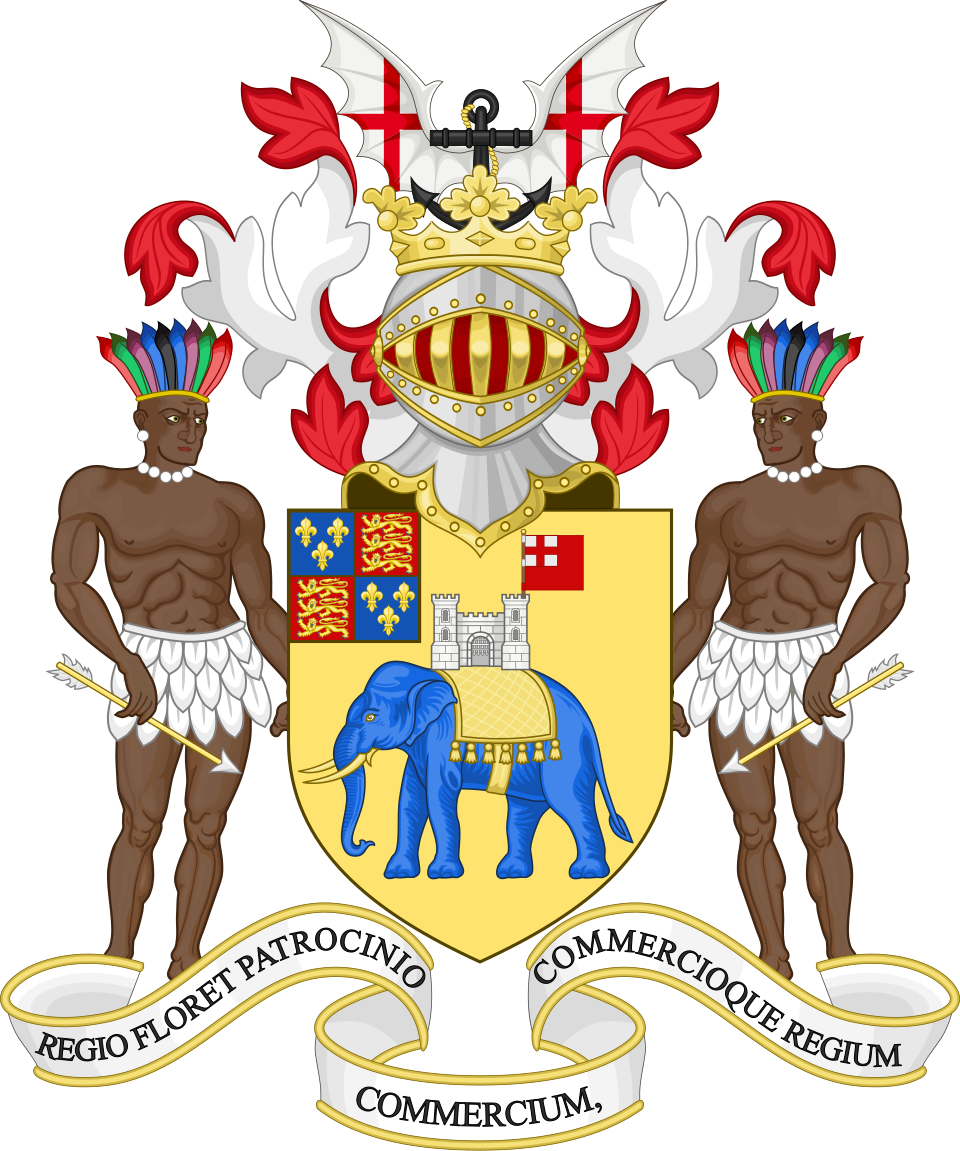
1660 - 1752 - Royal African Company (All Facts)
Founded by Prince Rupert
Its goal was to make England the world’s leading slave trading nation at the time
It competed with French, Dutch, and Swedes for access to Gambia’s resources including
unprotected mountains of gold
nations of unexploited slaves
Under King Charles II, it
was granted a charter with a monopoly (monopoly rights under the English flag) on the slave trade (to collect slaves) from an area that ran from Sallee on the coast of Morocco all the way to the Cape of Good Hope
delivered slaves from West Africa with raised capital, having promised prompt supply to those prepared to sign contracts for whole cargoes of slaves
supplied a slave between 12 and 40 years old “able to go over the ship’s side unaided” in Barbados, Nevis, Jamaica, and Virginia
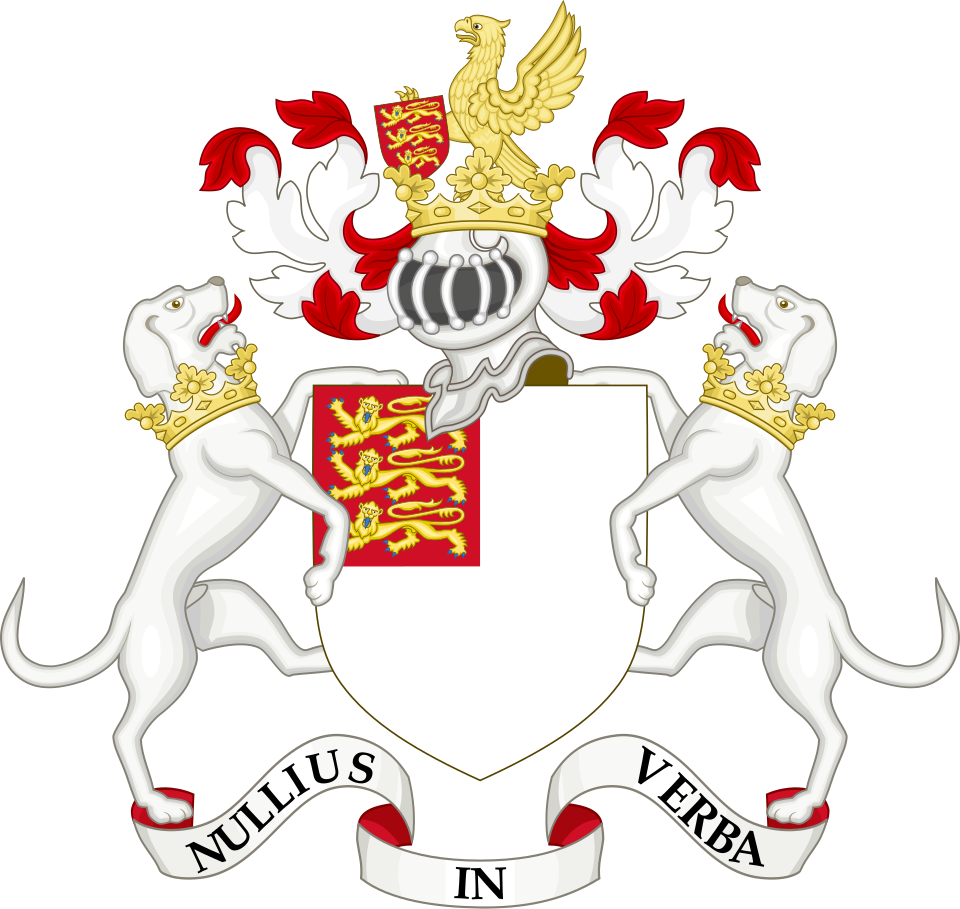
1660 - Royal Society of London (All Facts)
Organization given royal charter and founded by King Charles II
Organization whose principal aim was to act a center of intellectual debate and excellence, dedicated to scientific discovery and enterprise
This called for the financing of scientific buildings and instruments, laboratories, and libraries
Organization that represented the height of the Scientific Revolution throughout Europe and the height of the movement within England
It excluded such topics as theology and rhetoric
It instead emphasized the “useful arts” such as the work of navigators and engineers, as well as academic scientists
Organization that levied an annual subscription on its members in order to
maintain its independence
publish its journal called “Philosophical Transactions”
Organization which provided
lively lectures and meetings
a focal point for the most eminent men of England, Scotland, and Ireland to air the views, free from any government intervention
Organization which emerged from meetings of scientists and philosophers held in England 15 years prior to the namesake’s establishment and meetings held after that
They were joined by people associated with Gresham College and a number of interested and influential Cavaliers (Royalists)
Organization founded and joined into by
John Evelyn
John Winthrop, the Younger
John Wilkins
John Wallis
John Locke
Isaac Newton
Christopher Wren
Robert Boyle
Thomas Willis
Organization whose contemporary subscribers included writers like Samuel Pepys
1661 - 1848 - Lincoln’s Inn Theater (All Facts)
Founded by William Davenant
It opened with William Shakespeare’s “Hamlet” as its first production

1670 - 2025 - Hudson’s Bay Company (All Facts)
Founded by England to promote the exploration of North America
The oldest (now defunct) corporation in North America
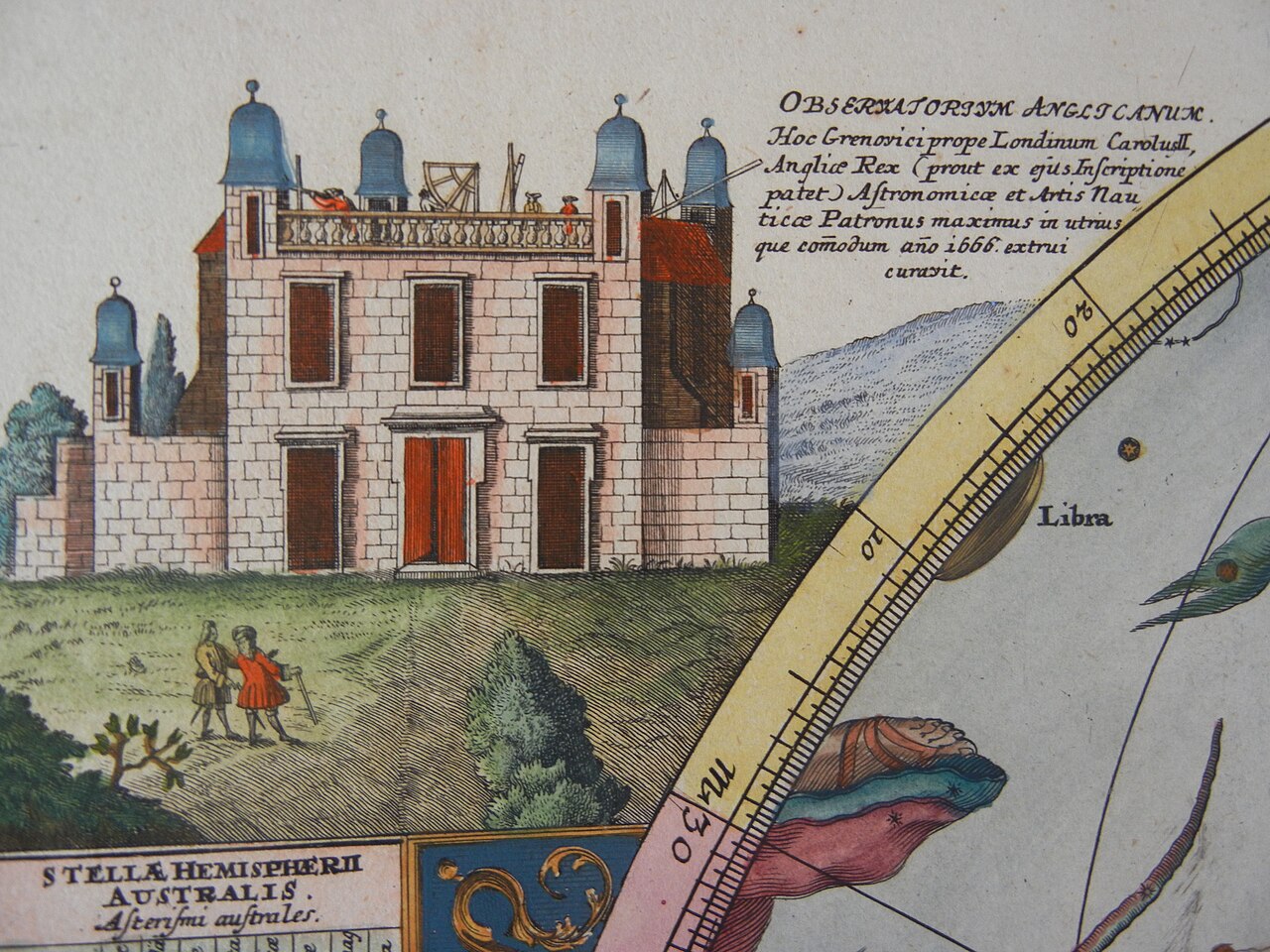
1675 - Greenwich Observatory (All Facts)
Founded during the reign of Charles II
Supported and worked in by John Flamsteed
Its houses graduated arcs traversed by telescopic lenses for measuring celestial angles and also included devices such as a quadrant and sextant
It was founded principally to improve navigation
Its foundation marks the standard meridian of longitude
1678 - 1859 - Whigs / Whig Party / Whig Movement (All Facts)
English (British) Political party formed during the reign of King Charles II
They were liberal
Their political base was at London
Its establishment represented the emergence of a two-party system for the first time in history, in England
They represented the wealthy middle classes of England upon the time of their formation
They formed in response to and against the idea of there being a reign of James II of England and did not support the reign of Catholics in high office in England
They were also known as the Exclusionists, because they desired for James II to be excluded from the throne of England during the Exclusion Bill Crisis
They thus fell for the belief that Titus Oates’ fabricated “Popish Plot” was indeed true and that politics in England needed to remain Protestant
Their willingness to encourage the London mobs to put pressure on King Charles II caused much concern towards them in England
Their political rivals feared they were undermining the established order by seeking to exclude James II from the throne
In response, they denounced their political rivals as “papists in disguise”
They temporarily unified with their political rivals to overthrow King James II in the Glorious Revolution
1678 - 1760 - Tories / Tory Party / Tory Movement (All Facts)
English (British) Political party formed during the reign of King Charles II
They were conservative
Their political base was at Oxford (Oxford University)
They supported the reign of (Catholic) James II of England
Its establishment represented the emergence of a two-party system for the first time in history, in England
They
were critical of their political rivals because they feared that their political rivals undermined the established order
were denounced by their political rivals as “papists in disguise”
They temporarily unified with their political rivals to overthrow King James II in the Glorious Revolution
Although they had first opposed the attempt to exclude James II from the throne, they joined with their political rivals to support his overthrow because of the way he had alienated them with his strange and arbitrary conduct near the end of his reign
Some of them were unhappy, however, with their political rivals’ insistence that King James II had abdicated and wanted a regency
Some of them wanted Queen Mary alone to rule England, and not the Dutch foreigner William of Orange
However, William and Mary came together as a pair and both said they would not take the throne without each other ruling
1688 - 1807 - Jacobites / Jacobitism (All Facts)
Political Group and Movement that advocated the restoration of the senior line of the House of Stuart to the British throne
Initially, they were the supporters of the exiled King James II of England (King James VII of Scotland) following the Glorious Revolution
1694 - Bank of England (All Facts)
Institution which borrowed from the public in order to make loans to the government
Their motto was that the namesake “promise[d] to pay”
Established during the reign of King William III of England
This was because the King was faced with an urgent and recurring need for funds to continue the Nine Years’ War with France
The Nine Years’ War with France also diversified capital from foreign trade into
the manufacture of armaments
the smelting and mining of coal, copper, and tin
As a result, numerous joint-stock companies were set up to handle these enterprises; and a central type of the namesake institution was needed to manage all their money
Founded by George Seville / Lord Halifax, or so he is accredited due to his idea of it and suggestion to the king
Upon its establishment,
its rate of interest was at 8% and was secured by trade and beer taxes
magnates of the City of London rushed to subscribe to the namesake institution
within its first few months, it had lent the government the whole of its authorized capital, through part of it had not been paid up
This shortfall was covered by issuing bills, which England’s Treasury accepted as cash and were paid out to creditors, who in turn cashed them later at the namesake institution
The namesake institution was so popular that the money was raised within a mere 12 days, and there was no pressure to repay the loan, so long as the government continued to guarantee the interest
Up to the time of its establishment,
much of the lending to the English state was undertaken by London’s goldsmiths
However, their greed and appetite for speculation eventually earned them the hostility of the city
They, along with the bishops in the House of Lords, opposed the setting up of the namesake
Thus, England’s Parliament forced the namesake measure through
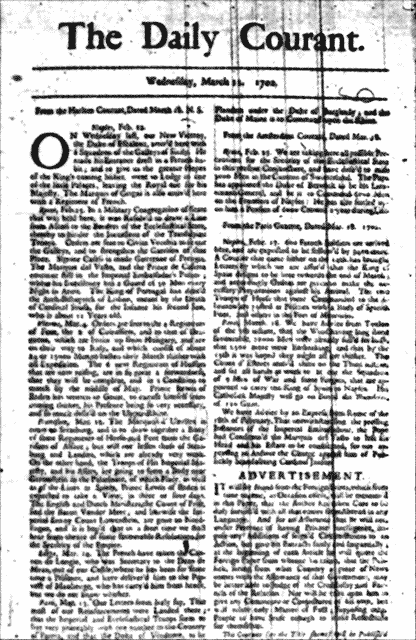
1702 - The Daily Courant (All Facts)
First daily newspaper in England (Britain)
Published in England (Britain) during the reign of Queen Anne