Biology 1107 UGA Unit 2 - DNA Replication, PCR, Mitotic Cell Division, Meiotic Cell Division
 Call Kai
 Learn
Learn Practice Test
 Spaced Repetition
 Match
Match Flashcards
 Knowt Play
1/198

There's no tags or description
Looks like no tags are added yet.
Name | Mastery | Learn | Test | Matching | Spaced | Call with Kai |
|---|
No analytics yet
Send a link to your students to track their progress
199 Terms
helicase
the enzyme in leading strand replication that separates the DNA strands so they can be used as template; it acts as a zipper and "unzips" DNA
hydrogen bonds
In DNA replication, Helicase breaks ______________ ____________ between the strands and separates them.
topoisomerase
allows DNA to uncoil a bit and releases the tension
'3
DNA polymerase has to have a ______ end to start replication
RNA primase
a DNA polymerase that does not need a promoter; it can start anywhere along the strand and make RNA complementary nucleotides
DNA polymerase
After RNA primase attaches to the leading strand, _______________ adds nucleotides onto the 3' end of the strand.
DNA polymerase
___________ follows helicase down the strand in leading strand replication.
helicase
DNA polymerase follows __________ in leading strand replication.
opposite
Lagging strand replication occurs in the __________ direction of the helicase splitting apart hydrogen bonds.
leading strand
the top strand in this image
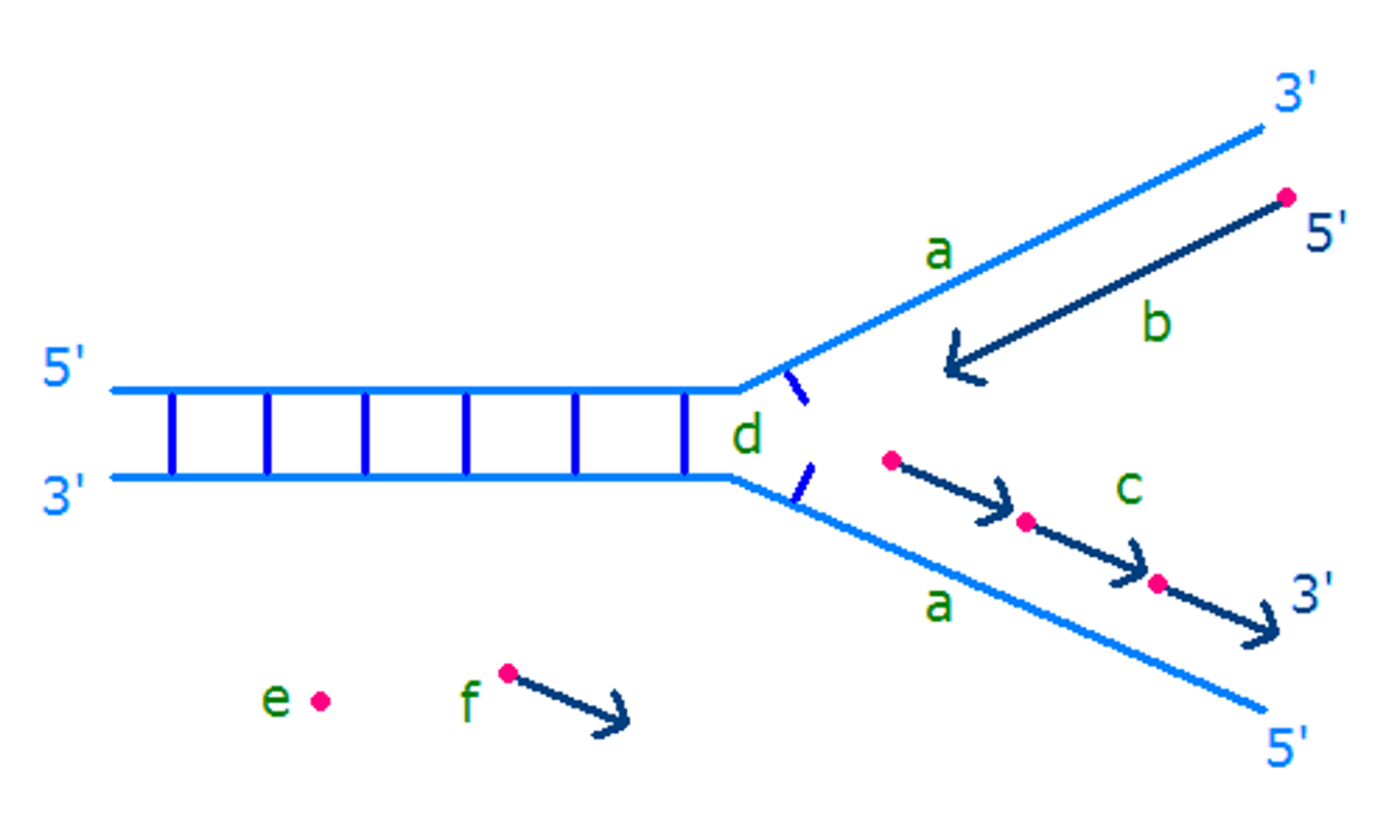
lagging strand
the bottom strand in this image
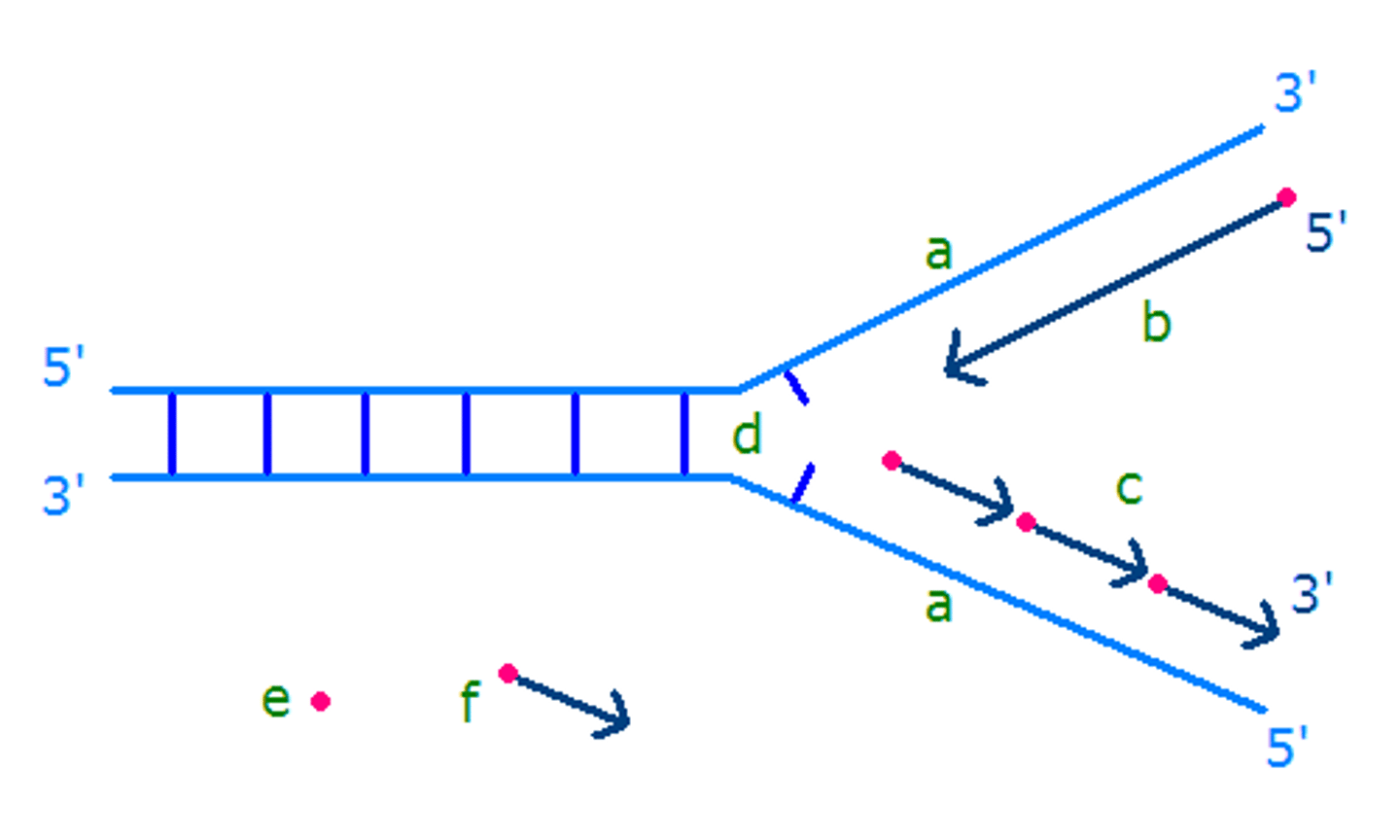
lagging strand replication
This strand is synthesized discontinuously. Primase synthesizes a short RNA primer, which is extended by DNA polymerase to form an Okazaki fragment. After the RNA primer is replaced by DNA, DNA ligase joins the Okazaki fragment to the growing strand.
lagging strand replication
discontinuously synthesized using Okazaki fragments;
1. RNA primase joins RNA primer to template
2. DNA polymerase adds nucleotides forming fragments
3. RNA primer is removed from fragments and replaced with nucleotides
4. ligase attaches fragments
one band at the same distance as 15N DNA and one band at the same distance as 14N DNA
You grow bacteria in the presence of 15N for several generations, let the bacteria divide only once in the presence of 14N, extract the DNA, and use a centrifuge to examine the density of the DNA. If the conservative model of DNA replication had been correct, what would you expect to see for a result?
lagging strand
Which DNA strand(s) would telomerase enzyme lengthen?
contractile ring
A cell from an animal fails to divide properly. When you later examine the cell in a microscope, it contains two normal nuclei. A failure of which structure was likely responsible?
mitosis, meiosis II
When do sister chromatids separate from each other during cell division?
two cells with the normal number of that chromosome, one cell with an extra copy of that chromosome, and one cell missing that chromosome
A nondisjunction occurs during meiosis II that affects one chromosome. If all other steps of meiosis take place properly, what cells will be produced as a result?
3' AGTCC 5'
A small DNA primer attaches to a template strand as shown below. What are the first 5 nucleotides added by DNA polymerase?
------------3'GTAGC5'------------
5' ACTCAGGCATCGCAAATAC 3'
prophase
chromosomes condense and microtubule spindle starts to form; condenses to make easily move around
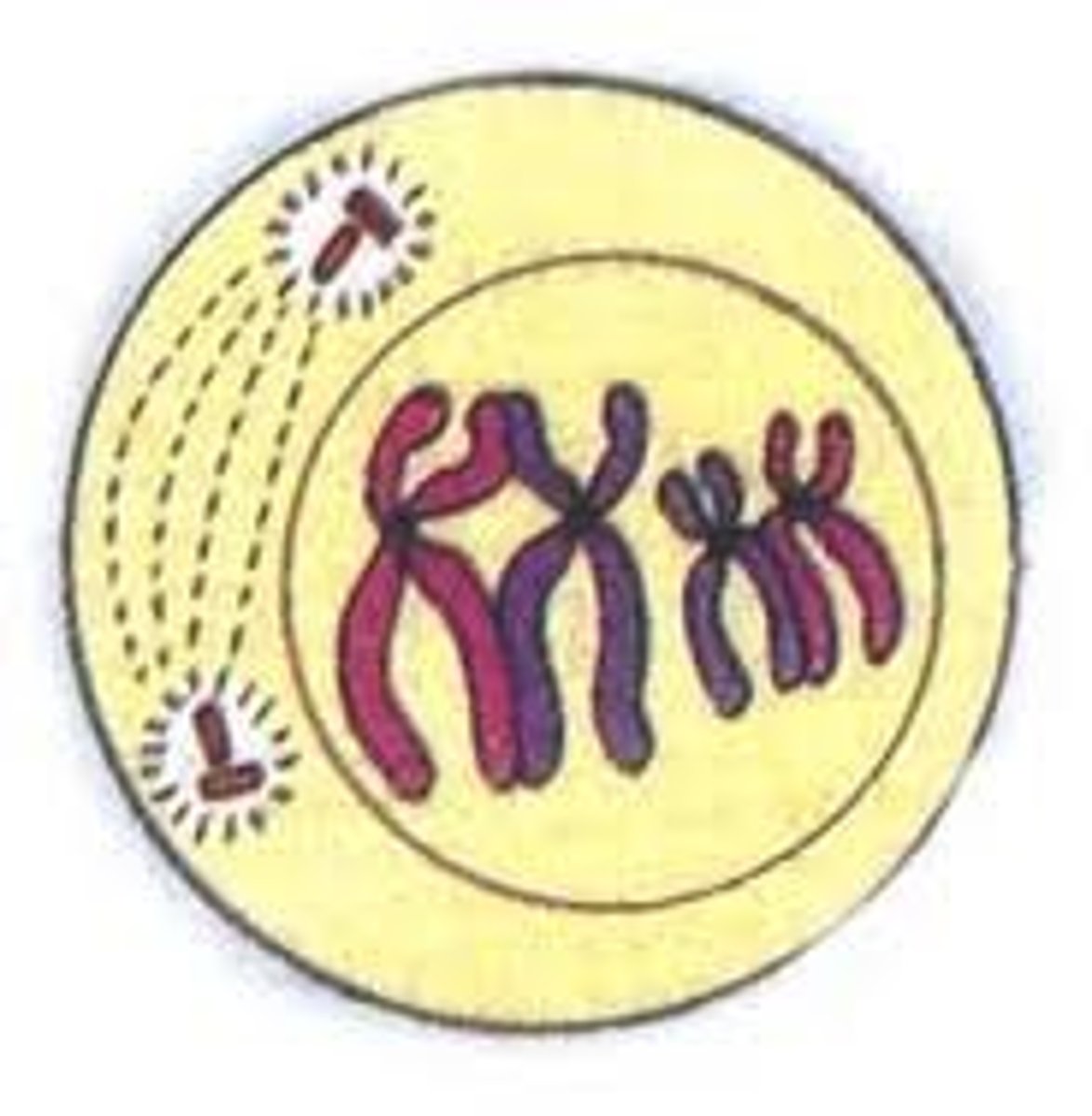
chromosomes condense and microtubule spindle starts to form
prophase
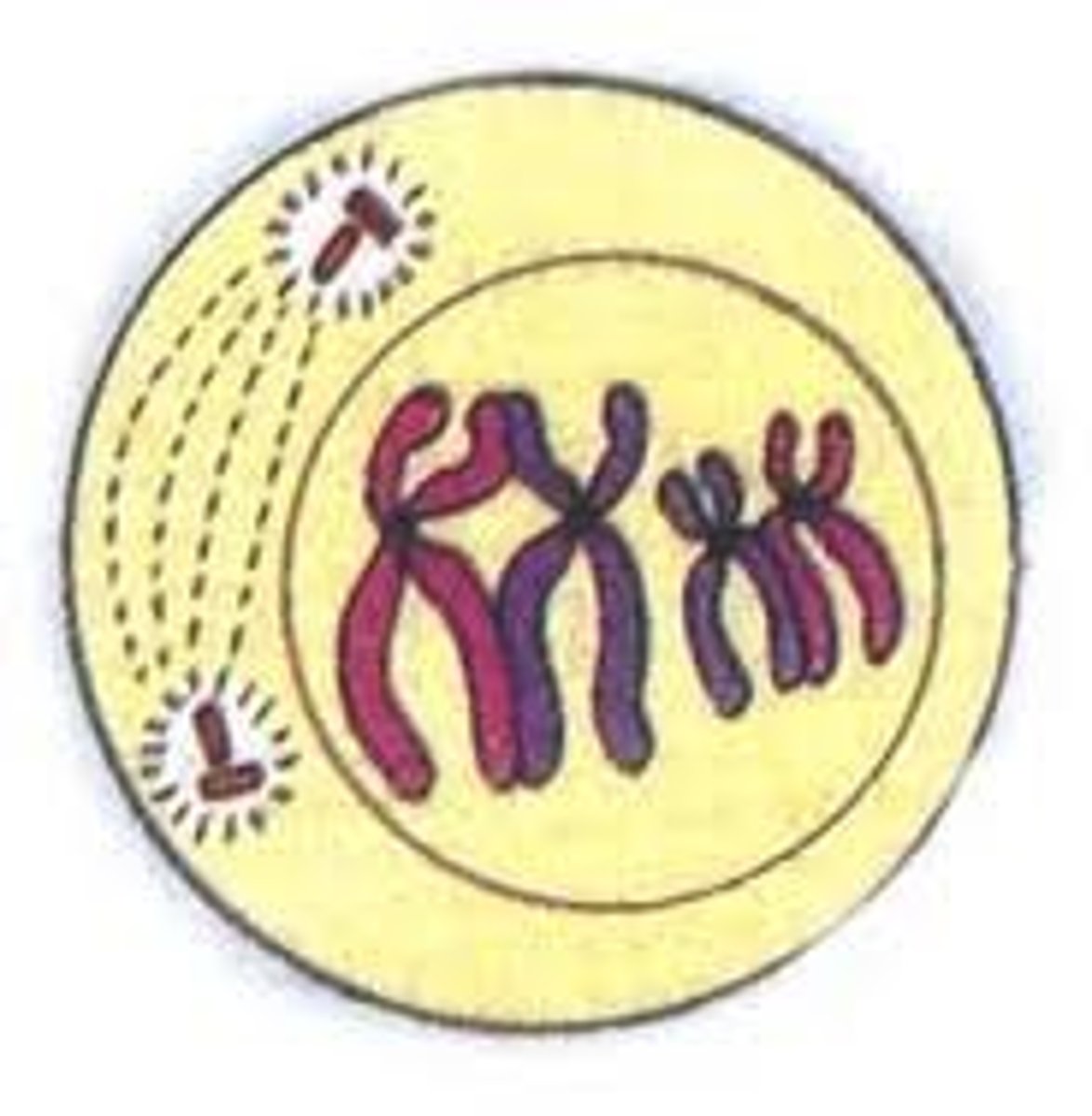
microtubules
organize the chromosomes and move them; they help the cell generate force and serve as a path way to move chromosomes in a particular way
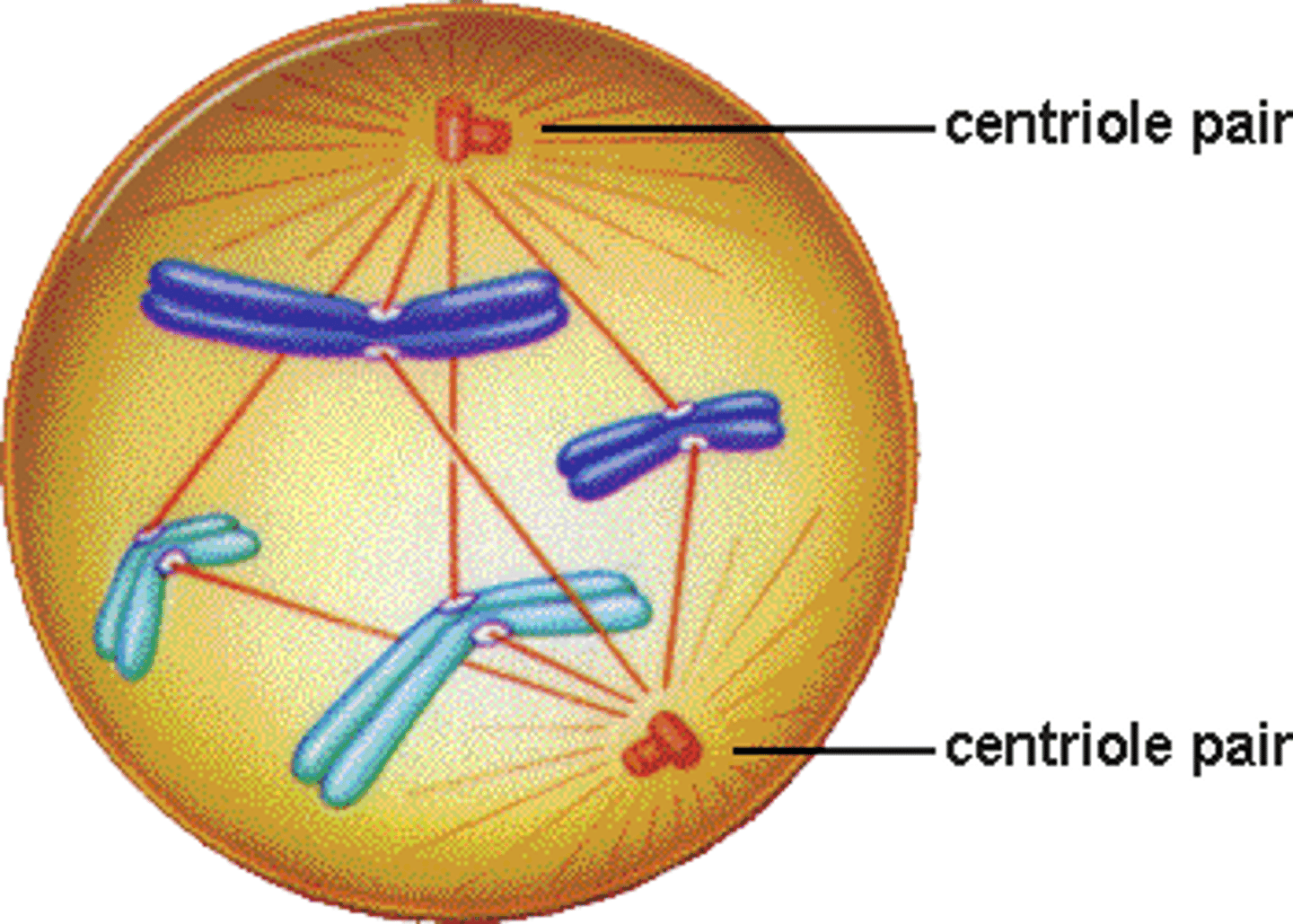
prometaphase
nuclear membrane disassembles in order to allow the spindles to connect with the microtubules; spindle attaches to chromosomes at kinetochore
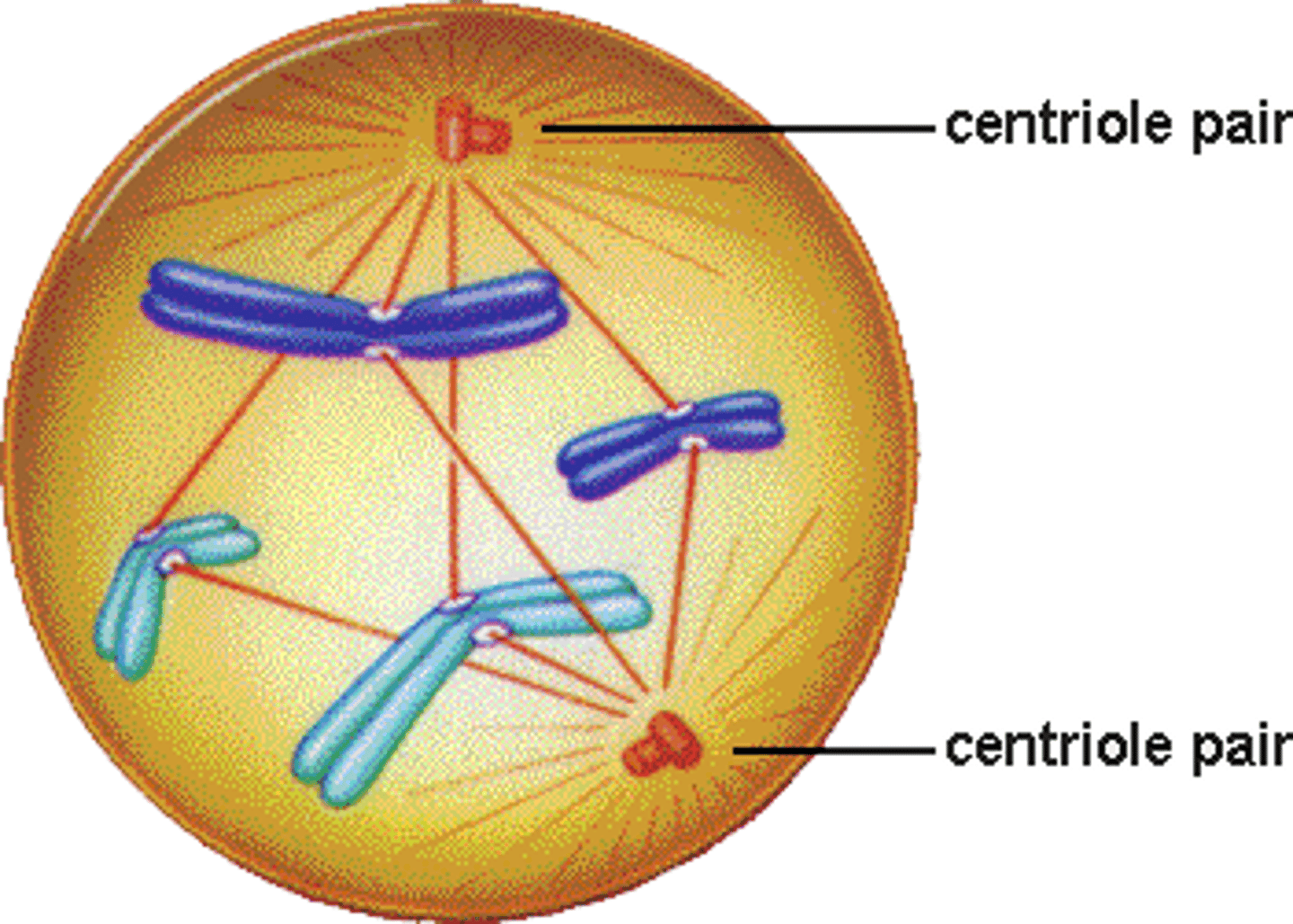
nuclear membrane disassembles in order to allow the spindles to connect with the microtubules; spindle attaches to chromosomes at kinetochore
prometaphase
metaphase
chromosomes line up in the middle of cell; sister chromatids for each chromosome face opposite side of the cell
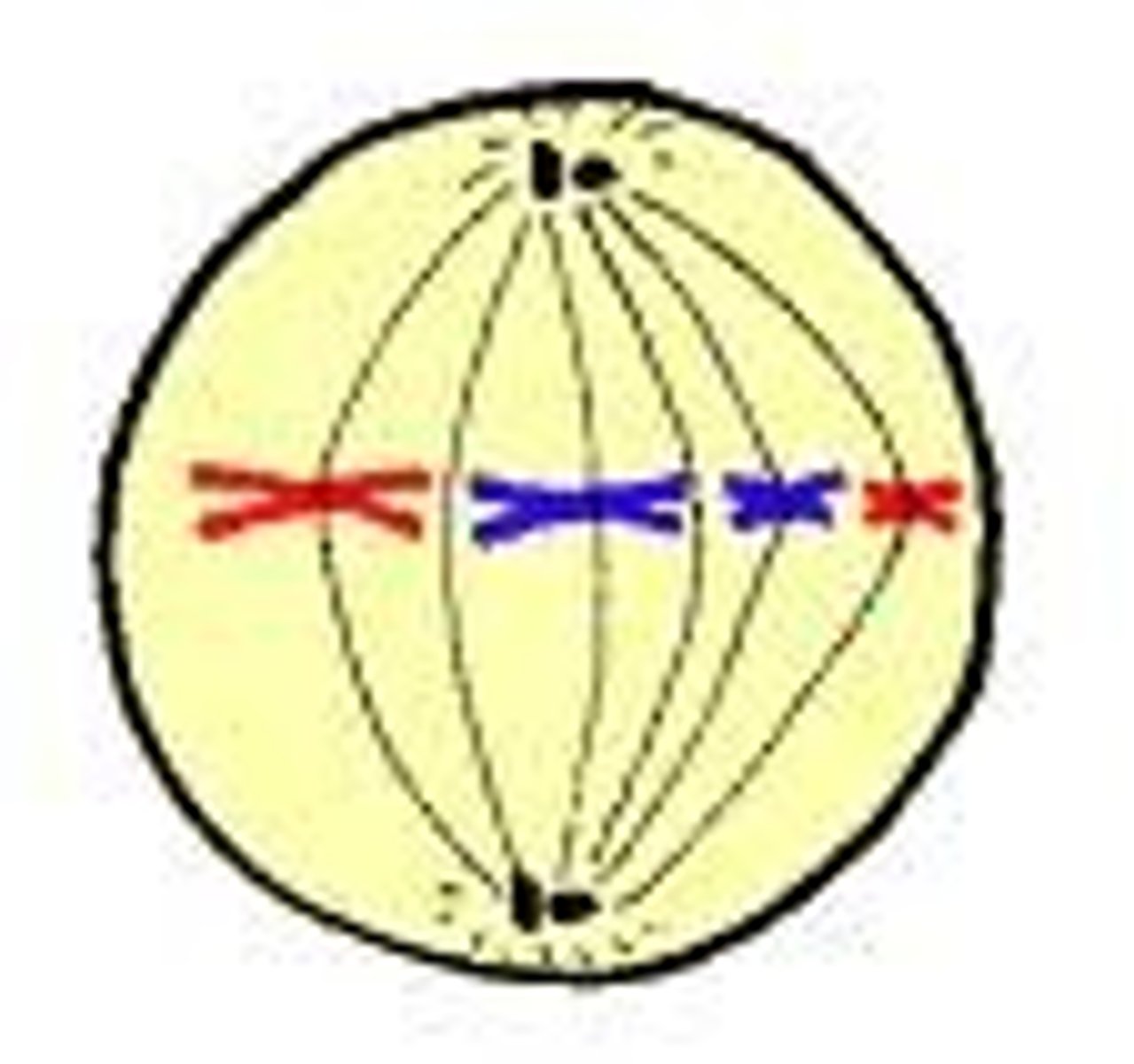
chromosomes line up in the middle of the cell; sister chromatids for each chromosome face the opposite side of the cell
metaphase
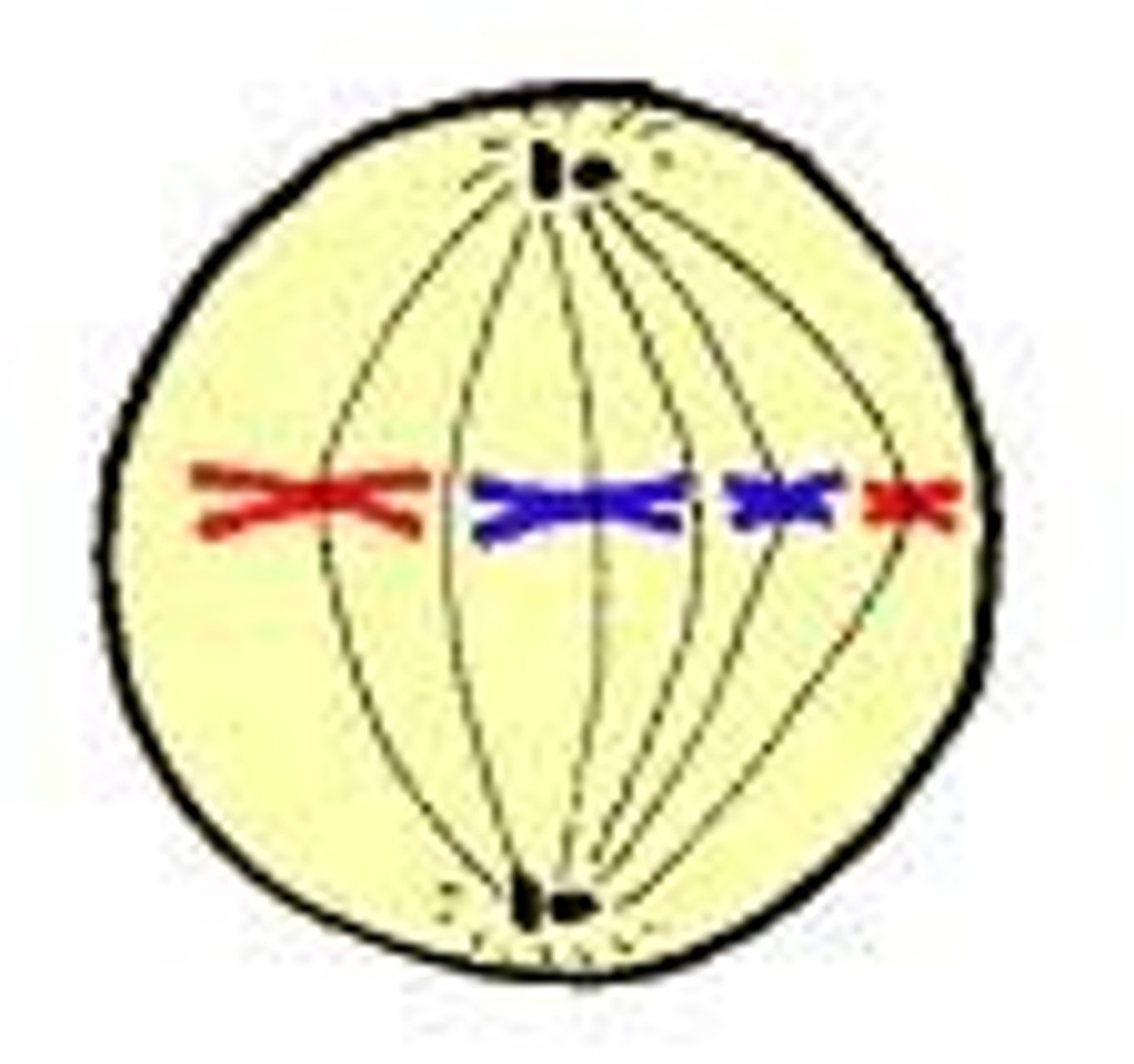
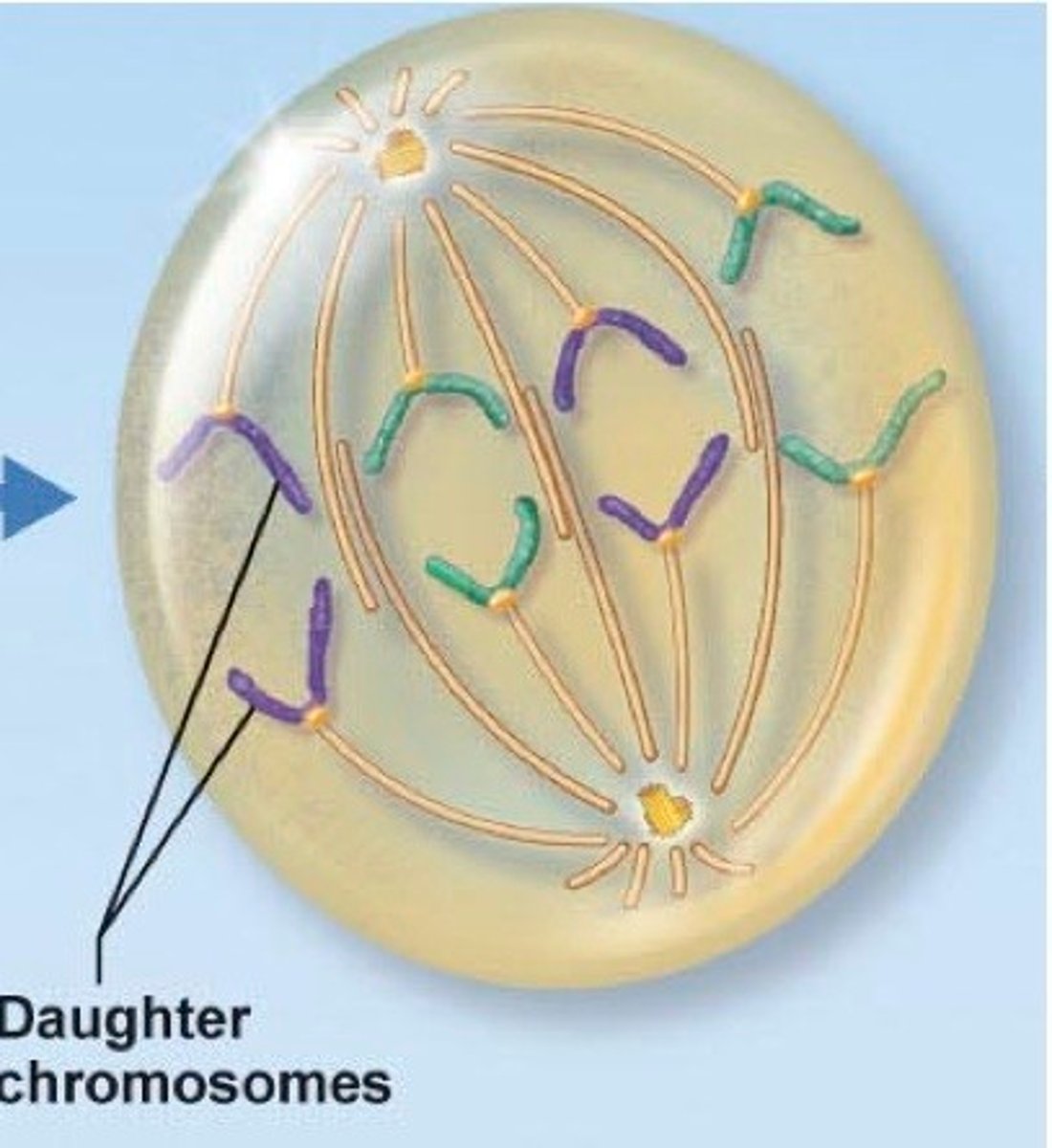
sister chromatids separate and move to opposite sides of the cell
anaphase
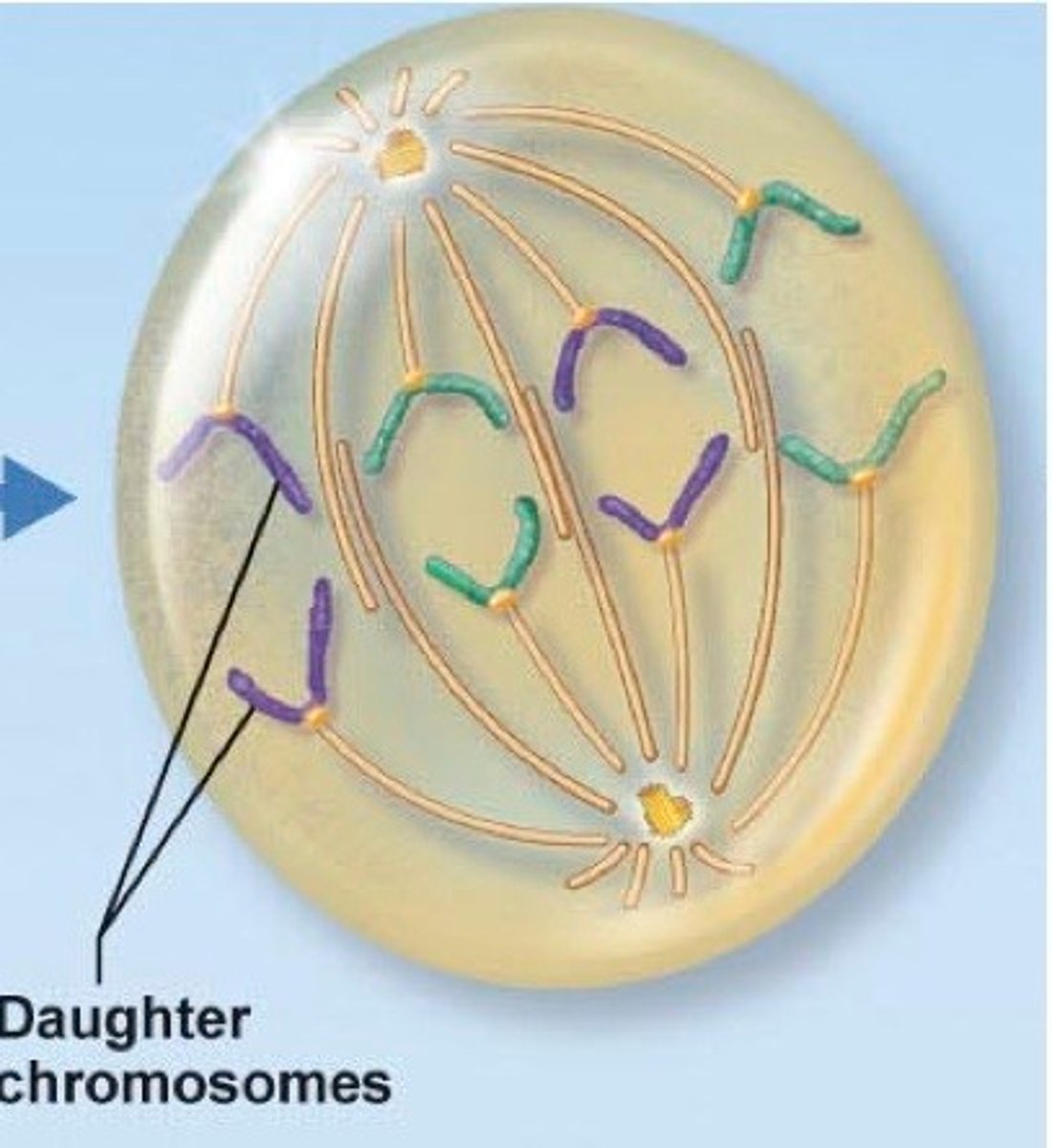
anaphase
sister chromatids separate and move to opposite sides of the cell
telophase
nuclear membranes reform; chromosomes decondense
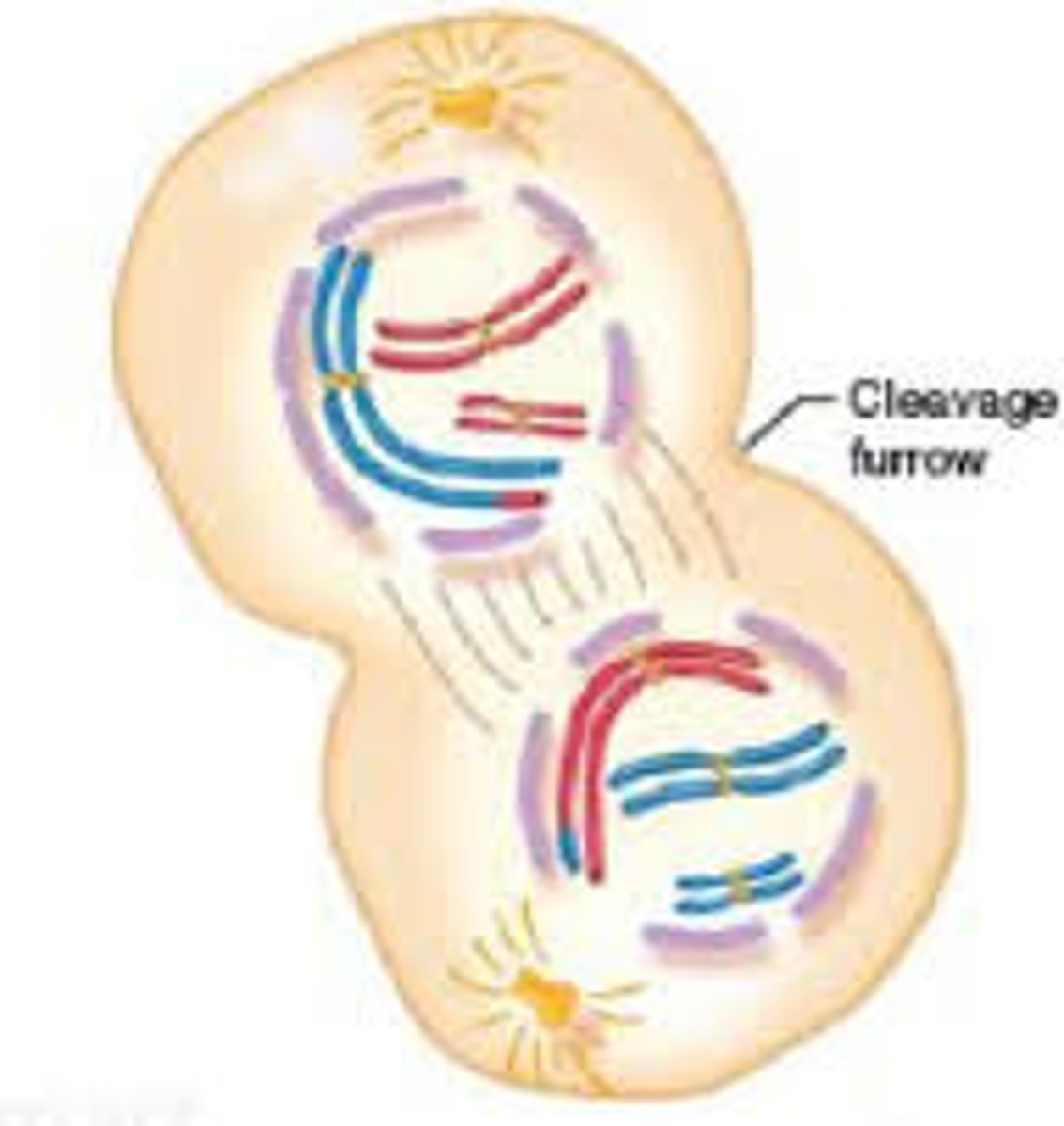
nuclear membranes reform; chromosomes decondense
telophase
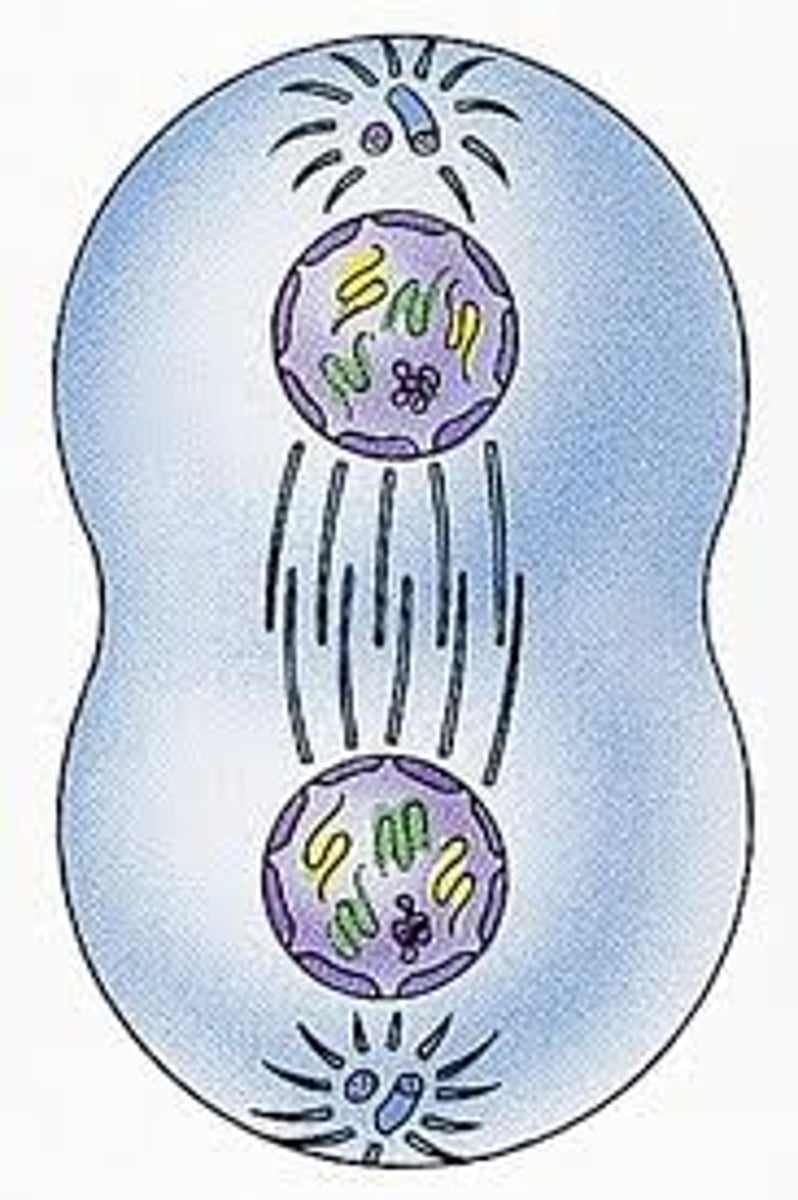
cytokinesis
cell divides into two daughter cells
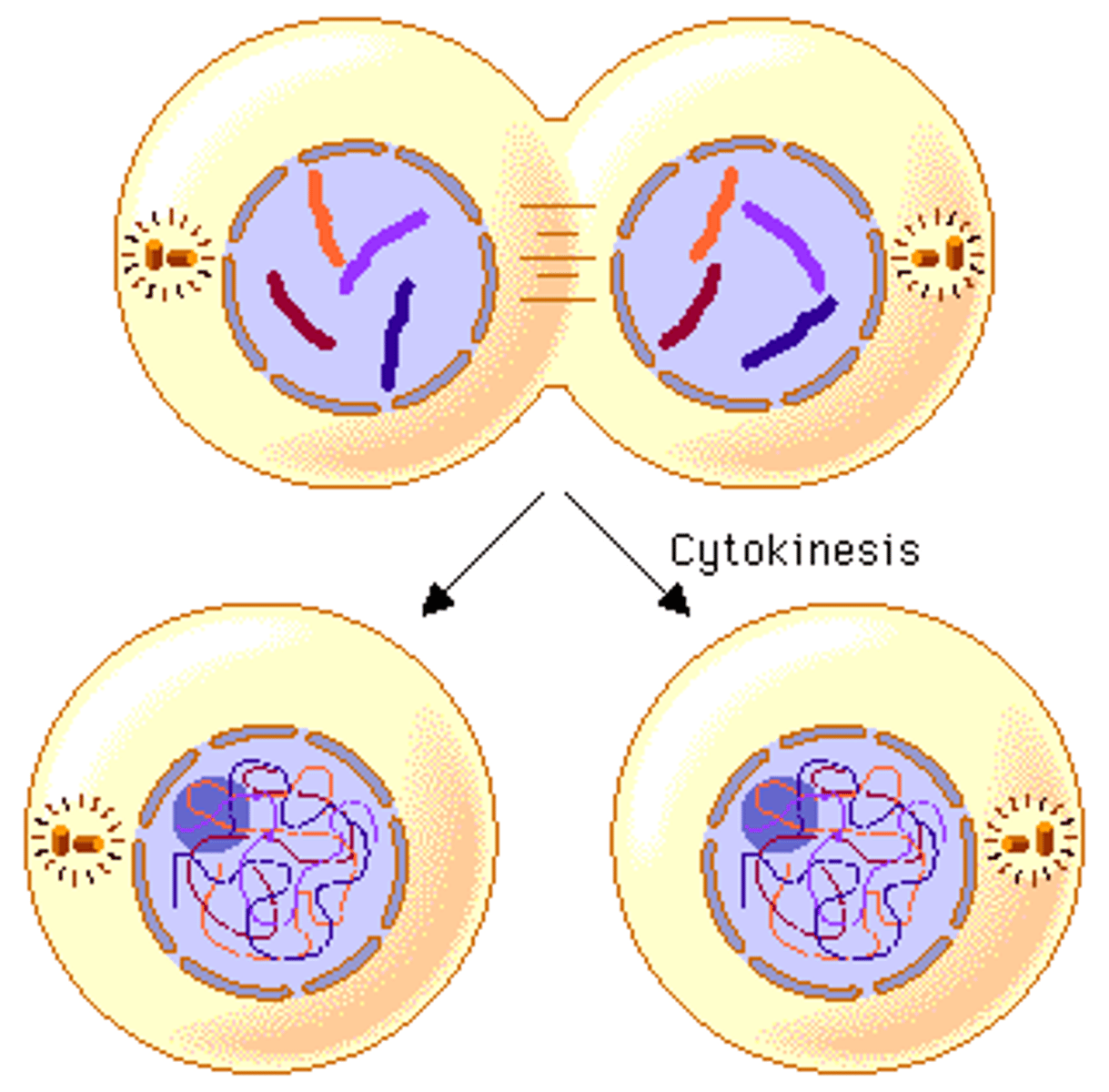
cell divides into two daughter cells
cytokinesis
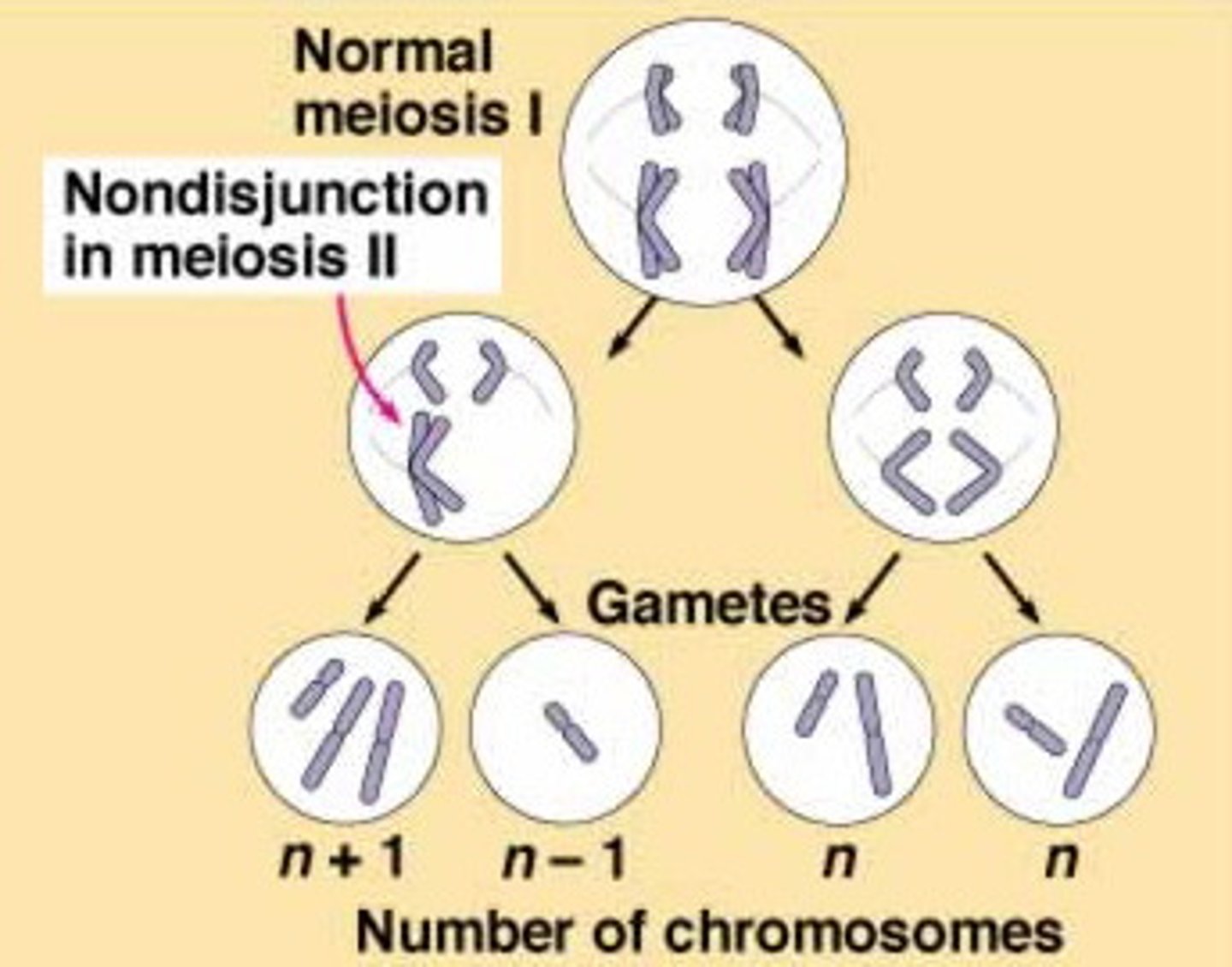
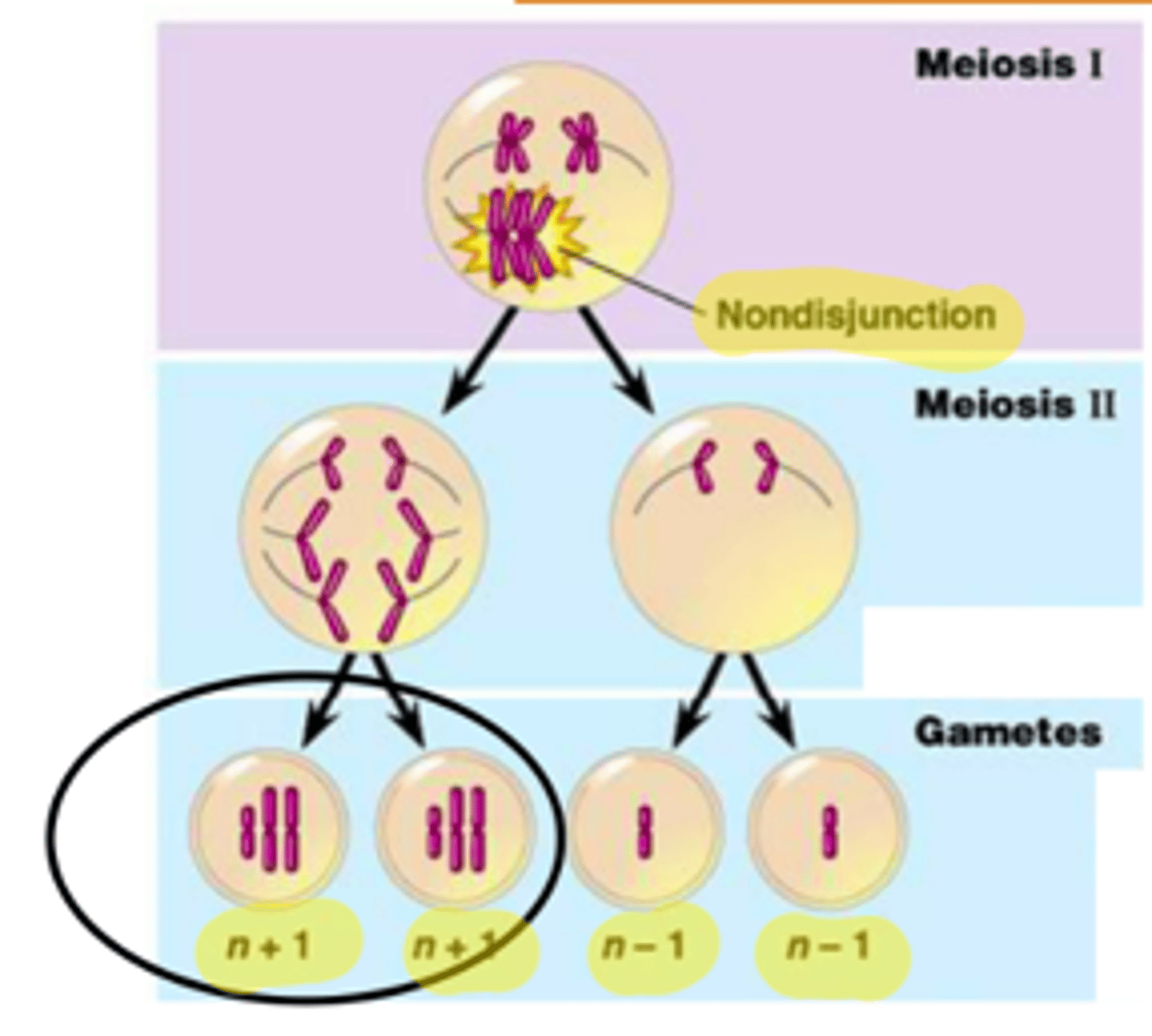
non-disjunction
Error in meiosis in which homologous chromosomes fail to separate.
nondisjunction in meiosis II
nondisjunction in meiosis I
G1 checkpoint
checkpoint in the cell cycle to see if a cell should prepare to divide
G2 checkpoint
checkpoint that ensures the DNA is copied fully and correctly
M checkpoint
checkpoint that ensures the chromosomes are lined up correctly
S phase
The synthesis phase of the cell cycle; the portion of interphase during which DNA is replicated.
G1 phase
The first gap, or growth phase, of the cell cycle, consisting of the portion of interphase before DNA synthesis begins.
G2 phase
The second growth phase of the cell cycle, consisting of the portion of interphase after DNA synthesis occurs.
M phase
The phase of the cell cycle that includes mitosis and cytokinesis.
cancer
uncontrolled cell division
conservative replication
the two DNA strands in the original DNA molecule (parental DNA) remain together and make up one of the two copies of DNA resulting from replication. The two new DNA strands produced by replication (daughter strands) join together to form the other copy of the DNA
semiconservative replication
each of the two parental DNA strands can act as a template for the production of a new strand and each of the double-stranded DNA molecules produced by replication would have one parental or "old" strand and one daughter or "new" strand
dispersive replication
both of the DNA molecules produced by replication would have "old" and "new" double-stranded regions that are mixed together
just one band of medium N14 and N15 DNA
A DNA molecule containing only N15 is replicated in the presence of nucleotides containing N14. What bands were seen in the test tube after one round of replication?
origin of replication
Site where the replication of a DNA molecule begins, consisting of a specific sequence of nucleotides.
helicase
These enzymes recognize and bind to DNA sequences at origins of replication and break the hydrogen bonds between nitrogenous bases that hold the two DNA strands together. Two of these enzymes then move down the DNA molecule in opposite directions separating the two DNA strands as they go.
topoisomerase
DNA molecule are shaped like a helix and, as the helicase enzyme separates the two strands, the DNA in front of the helicase gets twisted more tightly putting stress on the DNA molecule. Twisting is prevented by _________________, which temporarily cuts the sugar-phosphate backbone of one strand, allowing the DNA molecule to untwist. After the tension in the DNA is released, this enzyme reforms the covalent bonds in the sugar-phosphate backbone
single-stranded binding proteins
Proteins that keep the separated strands of DNA apart, preventing them from reforming their hydrogen bonds. This allows other enzymes to attach to the DNA strands to carry out replication.
RNA primase
Uses the template DNA strands to make short stretches of complementary RNA called "primers."
primers
starting point for DNA synthesis, short structures of nucleotides--these are made from the template strand
RNA primers
short stretches of complementary DNA that provides 3' ends for DNA polymerase to add nucleotides onto; these are later removed and replaced with DNA nucleotides
DNA polymerase
____________ enzymes read the DNA sequence of the template strand and insert new, complementary DNA nucleotides across from it to form a new DNA chain; new nucleotides can only be added to the 3' end of the new strand. As a result, ________________ is said to produce new strands of DNA in the 5' to 3' direction and to read the antiparallel template strand in the 3' to 5' direction.
DNA ligase
DNA replication often begins at multiple different origins of replication and, as a result, the new DNA strands produced as several separate pieces. Thus, _______________ can form covalent bonds between the sugar-phosphate backbones of the new DNA fragments and join them together to form one long and continuous DNA strand
5' CGAATCGT 3'
During DNA replication, which nucleotide sequence would be produced by DNA polymerase using the following template sequence:
3' GCTTAGCA 5' ?
replication bubble, replication fork
Separating the strands in a DNA molecule for replication creates a structure called a _____________, which a y-shaped _____________ at each end.
cancer
uncontrolled cell division
leading strand
One template is called the ________________. The DNA polymerase using this template moves in the same direction as the replication fork and can produce a long, continuous strand of new DNA as it reads the template DNA
lagging strand
The DNA polymerase molecule reading the other template strand, the _____________, moves in the opposite direction, away from the replication fork. As a result, replication of this strand must be restarted again and again as helicase opens new regions of template DNA. This results in the production of several smaller pieces of new DNA called Okazaki fragments.
Okazaki fragments
Which of the following are involved in synthesizing lagging strands but now leading strands during DNA replication?
a. Helicases
b. DNA polymerases
c. Okazaki fragments
d. Primases
DNA polymerase needs an RNA primer to provide a starting point for replication; when the RNA primer is removed, there is no 3' end onto which DNA polymerase can add new nucleotides and the very end of the lagging strand remains unreplicated. Eventually, the unreplicated end of the lagging strand is removed by enzymes, causing the chromosome to become shorter every time the DNA is copied. Cells with linear chromosomes deal with this with telomeres.
Why does the lagging strand need telomeres?
telomere
composed of a repetitive sequence of nucleotides that does not code for information needed by cells; found at both ends of linear chromosomes
signal a cell to stop dividing
If telomeres get too short, they...
telomerase
an enzyme that can add more copies of the repeated sequence found in telomeres on to the ends of the chromosome; it does this by using an RNA sequence that is complementary to the DNA found in the repeated DNA sequences as a template to make more copies.
repeated sequences, short RNA molecule that is complementary to the repeated DNA sequences in the telomeres
Telomerase adds _______________________ on the ends of linear chromosomes. It contains a _____________________________.
its chromosomes will get too short and it will be forced to stop
What will happen if a cell begins to divide more often than it should?
false
True or false? All eukaryotic cells contain active telomerase enzymes to prevent their chromosomes from shortening during DNA replication.
helicase
during replication, this enzyme helps to open up the DNA helix by breaking the hydrogen bonds
lagging strand
during replication, the strand that is replicated in short fragments and away from the replication fork
leading strand
strand that is synthesized continuously in the 5'-3' direction which is synthesized in the direction of the replication fork
ligase
enzyme that catalyzes the formation of a phosphodiester linkage between the 3' OH and 5' phosphate ends of the DNA
Okazaki fragment
DNA fragment that is synthesized in short stretches on the lagging strand
RNA primase
enzyme that synthesizes the RNA primer; the primer is needed for RNA polymerase to start synthesis of a new DNA strand
primer
short stretch of nucleotides required to initiate replication; in the case of replication, the primer has RNA nucleotides
replication fork
Y-shaped structure formed during initiation of replication
semiconservative
a form of DNA replication in which each new DNA molecule consists of one old and one new DNA strand
single-stranded binding protein
during replication, protein that binds to the single-stranded DNA; this helps in keeping the two strands of DNA apart so that they may serve as templates
telomerase
enzyme that contains a catalytic part and an inbuilt RNA template; it functions to maintain telomeres at chromosome ends
telomere
DNA at the end of linear chromosomes
topoisomerase
enzyme that causes underwinding or overwinding of DNA when DNA replication is taking place
homologous chromosomes
Chromosomes that have the same sequence of genes and the same structure
allele
Different forms of a gene
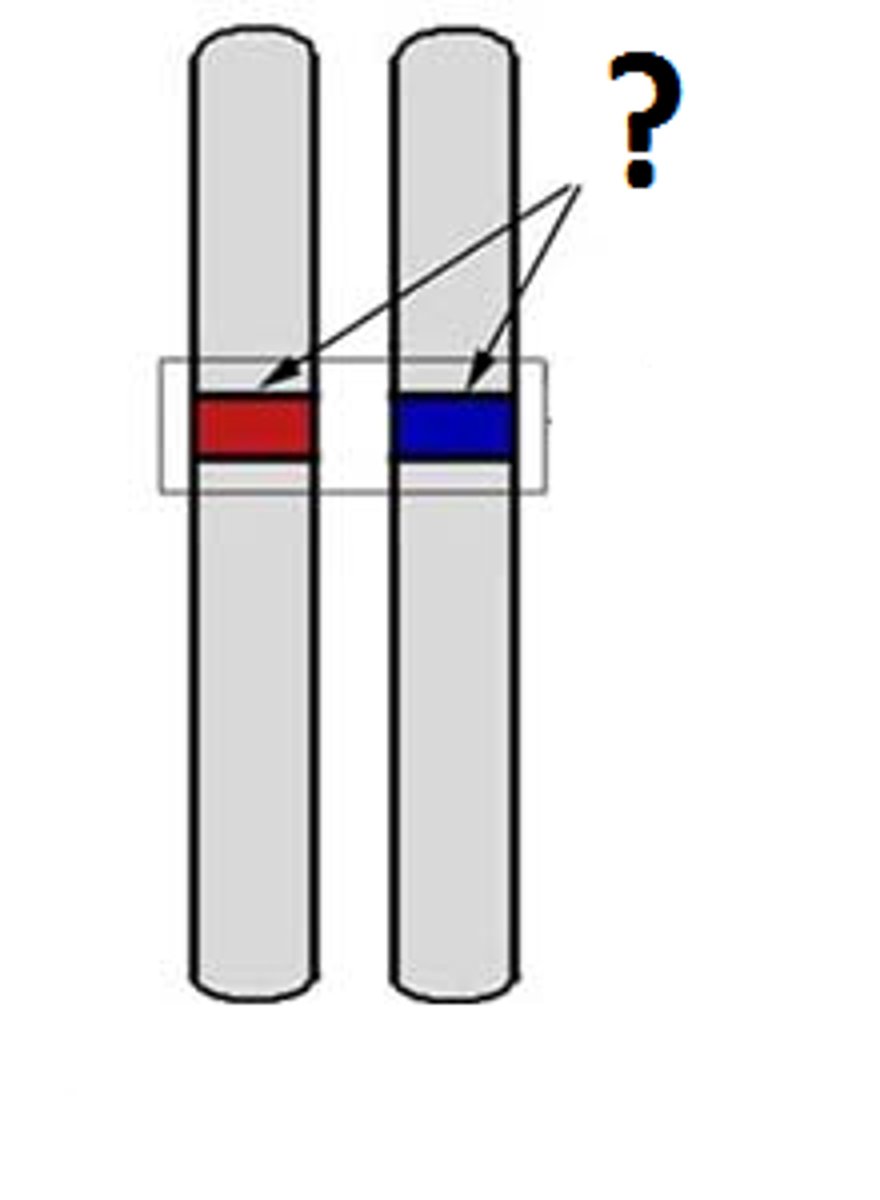
replicated
When a cell goes through division, it must first be...
polymerase chain reaction
laboratory technique that mimics the process of DNA replication to make many copies of a particular region of DNA
DNA polymerase
Just like DNA replication in a cell, PCR uses a __________________ and a DNA template to make identical copies of a DNA molecule.
small
PCR copies a _________ portion of the DNA present inside a cell.
heat
PCR requires only one enzyme, which is...
Taq polymerase
The DNA polymerase typically used in PCR; it is named after a heat-tolerant bacterium
DNA primers
During PCR, a 3' end is provided by short pieces of single-stranded DNA that are typically 20-25 nucleotides long and are found on either side of a DNA region
PCR
Is the DNA primer is used for PCR or DNA replication?
DNA replication
Is the RNA primer used for DNA replication or PCR?
whole DNA, a short region of DNA
DNA replication copies the ___________ molecule while PCR copies ______________.
one copy
How many copies of a DNA molecule does DNA replication make?
multiple copies
How many copies of the DNA molecule do polymerase chain reactions form?
PCR
A ___________ reaction requires the following key ingredients:
- template DNA that will provide the DNA sequence to be amplified
- DNA primers to provide a 3' end onto which Taq polymerase can add new nucleotides
- Taq polymerase to produce complementary DNA strands
- nucleotides that will be used to make the new DNA strands
- magnesium and buffers to keep the enzyme stable
- heat source to denature the template DNA (i.e., separate the two strands) and maintain an optimal temperature for Taq DNA polymerase
denaturation
(96 degrees C) heat the reaction to separate (denature) the DNA strands in PCR reactions; this provides single-stranded templates for the next step
annealing
(55-65 C) Cool the reaction so the primers can bind to their complementary sequences on the single-stranded template DNA
extension
(72 C) raise the reaction temperatures so that polymerase can extend the primers, synthesizing new strands of DNA