PB Final
 Call Kai
 Learn
Learn Practice Test
 Spaced Repetition
 Match
Match Flashcards
 Knowt Play
1/118

There's no tags or description
Looks like no tags are added yet.
Name | Mastery | Learn | Test | Matching | Spaced | Call with Kai |
|---|
No analytics yet
Send a link to your students to track their progress
119 Terms
nascent chain
AA chain in process of being synthesized
RQC
ribosome quality control complex: made of four proteins (Ltn1, CDC48, Rqc1, Rqc2)
goal of paper 1.2
determine mechanisms by which proteins Ltn1p, Rqc1p, Rqc2p recognize and rescue stalled nascent chains in 60s ribosome
UPS
ubiquitin proteasome system, serves to tag and degrade unwanted proteins
E1 of UPS
activates ubiquitin
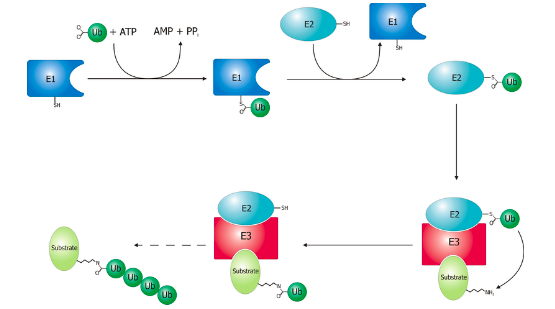
E2 of UPS
conjugates ubiquitin
E3 of UPS
E3 ligase; bidns ubiquitin to target protein
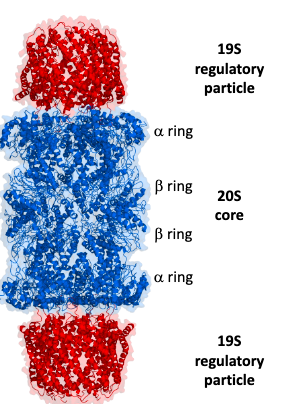
structure of proteasome
2 19 S regulatory particles, 1 20 S core
Ltn1
type of E3 ligase, ubiquitinates stalled nascent chains
CDC48
uses ATP hydrolysis to get the ubiquitinated nascent chains from 60S subunit to deliver to the proteasomes
CryoEM
used to probe structure of biological molecules using electron microscopy
Cryo-EM key characteristics
samples are not fixed or stained (closer to native state), kept at cryogenic temperatures to minimize electron beam damage, thousands of images can be taken and recombined to make 3D reconstructions
contact regions of Rqc2
tRNA is A and P sites, Ltn1
method to find out which tRNA Rqc2 recruits
purify Rqc complexes and bound tRNAs
Extract tRNAs from purified complexes
reverse transcribe to get complimentary DNA
plot tRNA frequency
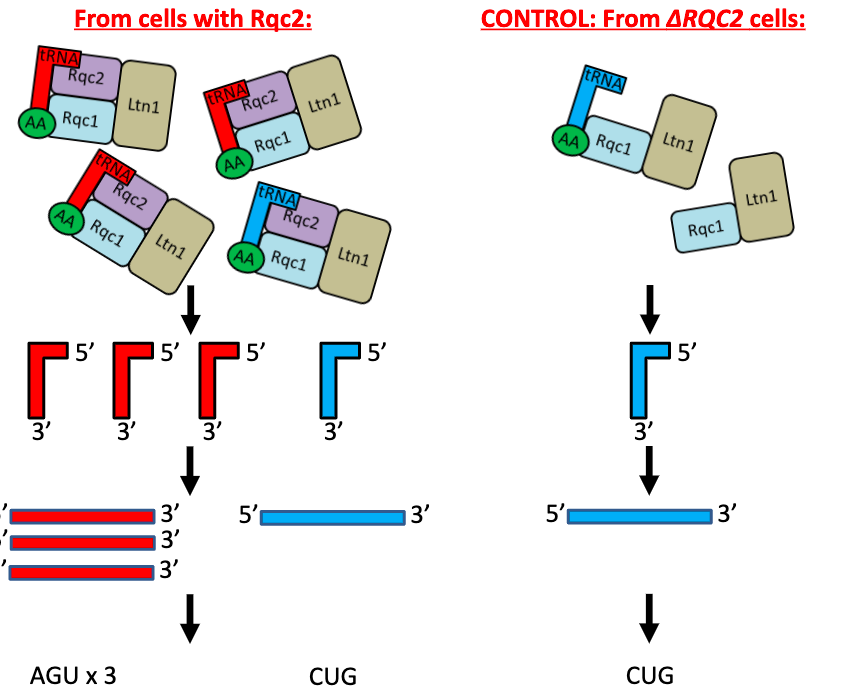
amino acids most commonly recruited by Rqc2p
alanine, threonine
3 predictions made by paper 1.2
Rqc2p dependent increase in the molecular weight of the nascent chain should be from the C-terminus
C terminus extension should be only Ala and Thr residues, starting at the stall sequence
Ala and Thr should not have a defined sequence
R12
stall region of reporter
TEV
cleavage site in reporter
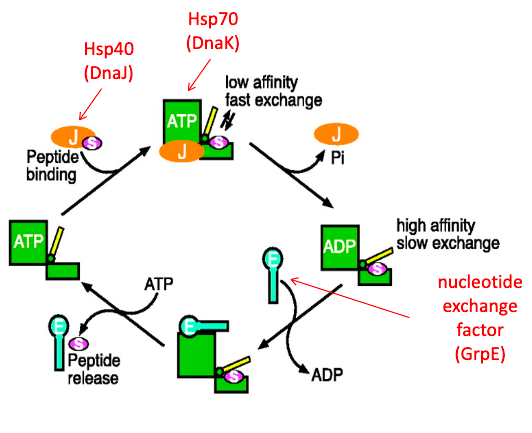
prokaryote and archaea form of Hsp70
DnaK
eukaryote form of Hsp70
Hsp70
prokaryote and archaea form of Hsp40
DnaJ
eukaryote form of Hsp40
Hsp40
nucleotide exchange factor GrpE
reactivates DnaK by exchanging ADP for ATP, causing substrate release
firefly luciferase
type of protein that glows when properly folded
GuHCl
denaturing agent used to denature firefly luciferase
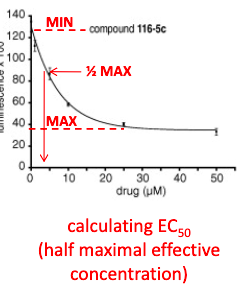
EC50
half maximal effective concentration
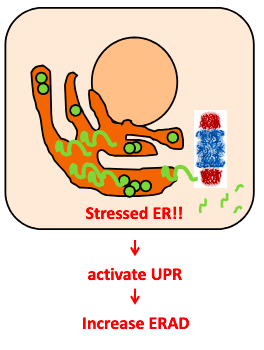
endoplasmic reticulum (ER)
network of membranes important for protein trafficking, entry point for secretory pathwa
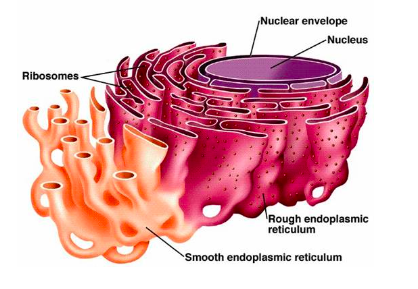
y
ER proteins
Proteins destined for the membrane, cell surface, or secretion (stressful, highly oxidizing environments), need special modifications to stabilize them
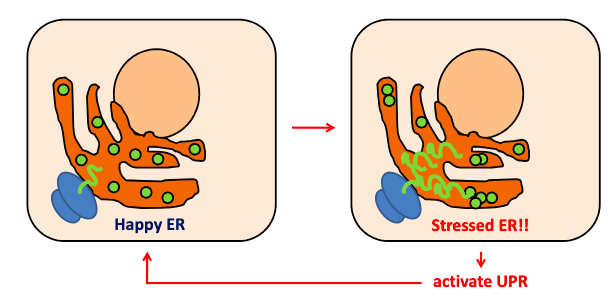
Unfolded Protein Response (UPR)
accumulation of misfolded proteins in the ER that causes stress
ER-Associated Degradation (ERAD)
degrades misfolded ER proteins; Misfolded substrates recognized in ER, delivered to the cytosol for degradation by proteasomes
polyglutamine expansion diseases (aka trinucleotide expansion disorders)
neurodegenerative diseases caused by an repeated expansion of the CAG nucleotide in specific genes
number of PolyQ repeats to be normal, unaffected
<28
number of PolyQ repeats to be intermediate, unaffacted
28-35
number of PolyQ repeats to be reduced penetrance, ± affected
36-40
number of PolyQ repeats to be full penetrance, affected
>40
HD brain atrophy regions
striatum (movement), cerebral cortex (memory, attention,…)
Htt protein expression
expressed everywhere, but highly in neurons
Htt protein function
not fully understood – likely acts as a “scaffold” to bring other proteins together for various jobs
type of mutation of Htt
toxic gain-of-function (dominant inheritance, increased severity with length)
3 questions asked by paper 3.1
is there a common mechanism of toxicity?
what are the primary mechanisms vs secondary?
Is there an early and specific event in toxicity?
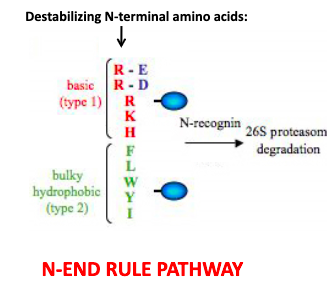
N-end rule pathway
degradation pathway that uses the N-terminus amino acid Arginine to signal for degradation by 26s proteasome
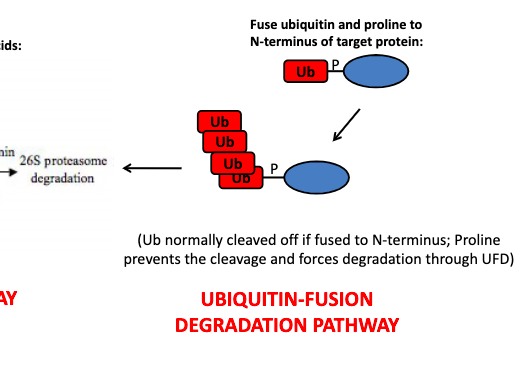
ubiquitin fusion degradation (UFD) pathway
fuses ubiquitin to protein to mark it for degradation
PC12 cells
immortalized cell line for studying nerve cell development and neurotoxicity
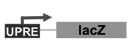
UPRE
UPR element: a DNA sequence in the promoters of genes that are switched on as part of UPR
tunicamycin (TM)
induces the UPR
striatal cells
the neurons and glial cells that make up the striatum
Thapsigargin (TG)
drug used to induce ER stress
P97
mammalian homolog of yeast CDC48
P47
mammalian homolog of yeast Shp1
trapped complex from paper 3.1-predictions made by model
Restoring function of the p97/Npl4/Ufd1 ERAD complex should rescue toxicity
Preventing misfolded proteins from accumulating should rescue toxicity
central dogma of molecular biology
genetic information flows in one direction: DNA to RNA, and then proteins
prion
self-propagating, transmissible protein conformation
mammalian prion origin
Misfolding of PrP
fungal prion protein origin
several- not PrP though
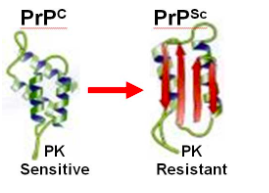
PrPC
normal form of prion protein, membrane associated, made of alpha helicies
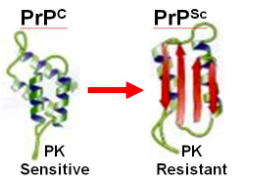
PrPSc
misfolded form of prion protein, aggregates into amyloid fibers, made of beta sheets
three of ways of getting prions
acquired, familial, specific
Infectious prion
acquired from environment (e.g. mad cow disease)
familial prion
certain mutations in the gene for PrP increase the liklihood of PrPC misfolding to form PrPSc
sporadic prion
PrPC spontaneously misfolds to form PrPSC
scrapie
prion disease of sheep and goats
Bovine Spongiform Encephalopathy (Mad Cow Disease)
prion disease in cows
variant Creutzfeldt-Jakob disease (vCJD)
prion disease in humans caused by eating beef infected with prions
Creutzfeldt-Jakob Disease (CJD)
most common human prion disease, caused usually by sporadic misfolding
PMCA
Protein Misfolding Cyclic Amplification
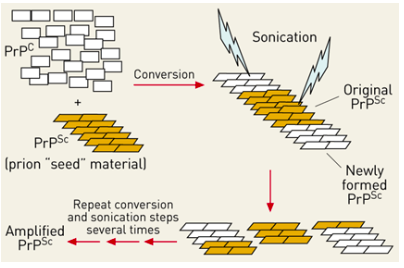
Main question from paper 3.2
Can PMCA be used to generate infectious prions in vitro?
astrogliosis
response of astrocytes to central nervous system (CNS) damage
loss of function mutation
protein stops functioning as normal due to mutation- aggregates or is degraded
cystic fibrosis
inherited chronic disease- affects lungs and digestive system and produces thick mucus which can obstruct pancreas
symptoms of CF
salty skin, persistent coughing and lung infections, wheezing and shortness of breath, failure to thrive
cause of CF
lack of functional form of CF transmembrane conductance regulator protein (CFTR)
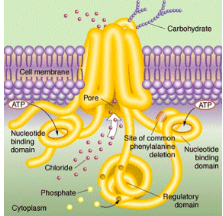
inheritance pattern of CF
recessive
function of CFTR protein
acts as chloride ion channel- allows Cl- to move across the cell membrane
regulatory mechanisms of CFTR
phosphorylation of regulatory domain by PKA opens channel
ATP binds to nucleotide binding domain to open channel
ATP hydrolysis closes channel
most common CF-causing mutation
F508del- causes CFTR to misfold in ER and be degraded by ERAD
adenovirus
vector used to introduce foreign DNA into cells; does not integrate into genome and requires readministration, as well as strong immune response
adeno-associated virus (AAV)
vector used to introduce foreign DNA into cells; integrates into genome and does not elicit strong immune response, though it can be very inefficient
CFTR potentiator
increases activity of defective CFTR at the cell surface (fixing channel gating)
CFTR correctors
overcome defective protein processing, minimize misfoling and increase trafficking to plasma membrane
goal of paper 3.3
discover CFTR correctors for F508del-CFTR that could advance to clinical studies
Fluorescence Resonance Energy Transfer (FRET)
cell culture assay technique- creates FRET pairs so the emission from one donor dye to an acceptor dye will excite the acceptor if they’re close together
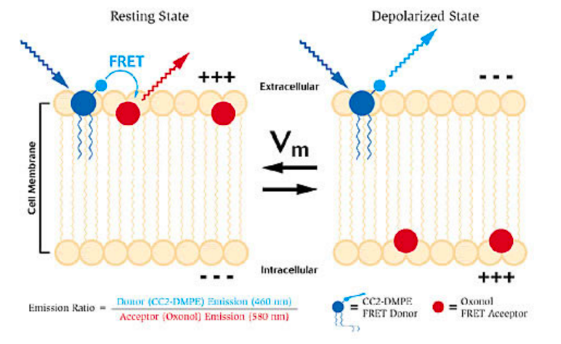
VRT-768
identified drug from HTPS
VX-809
more portent derivative of VRT-768
Ussing chamber
measured Cl- ion transport between epithelial cells by holding the current at 0 by applying an opposing current- the amount of current requires is the net ion movement across the epithelial layer
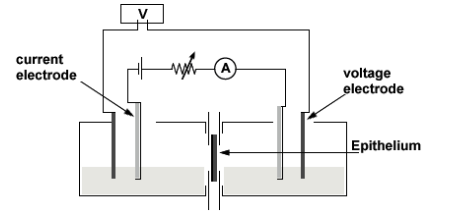
pulse-chase experiment
used to measure conversion of immature CFTR to mature CFTR; add radiolabeled AA (pulse), allow synthesis of proteins for defined period of time, add unlabeled AA (chase)
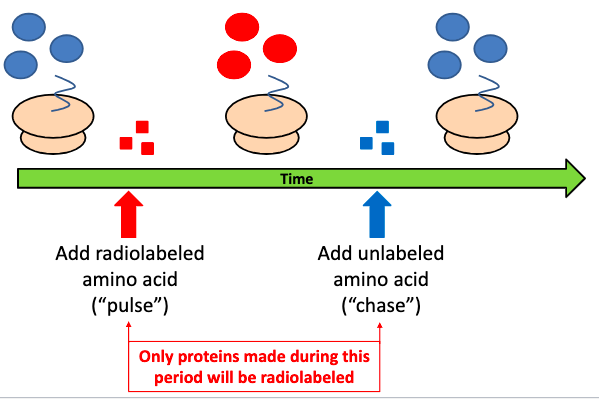
brefelden A (BFA)
drug that causes protein to be retained in ER
patch clamp
measures ion transport across membranes; detects opne/closed states and the fraction of time the ion channel spends open as “open probability” of PO
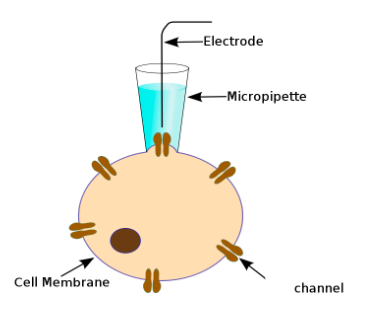
name of VX-809 drug
Lumacaftor
name of VX-770 drug
Ivacaftor
VX-770
a potentiator
name of drug that is combination of lumacaftor and ivacaftor
orkambi
patients treated with Orkambi
patients homozygous for F508del-CFTR mutation
TRIKAFTA
triple combination therapy of elexacaftor/tezacaftor/ivacaftor
patients treated by TRIKAFTA
patients heterozygous for F508del allele
function and size of ribosomal small subunit
binds mRNA, 30S or 40S
function and size of ribosomal large subunit (aka peptidyl transferase)
catalyzes peptide bond formation, 50S or 60S
two sizes of ribosomes
70S or 80S
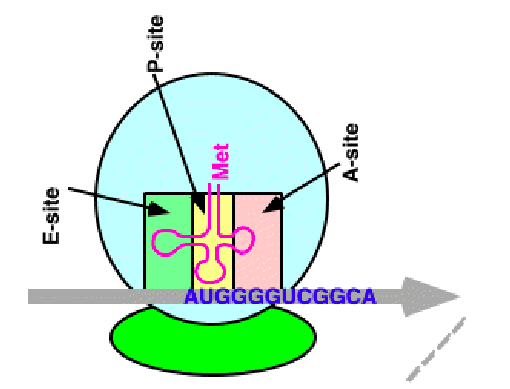
a-site
arrival site, where the AA comes in
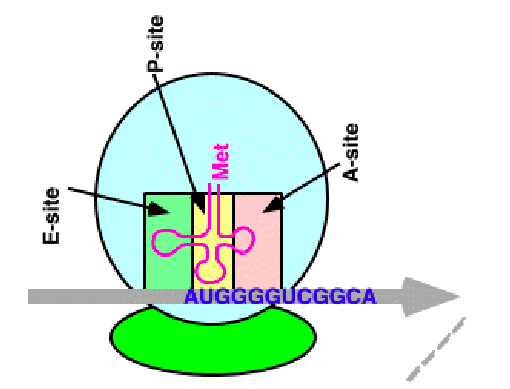
P-site
where the peptide bond currently is- peptidyl-tRNA site
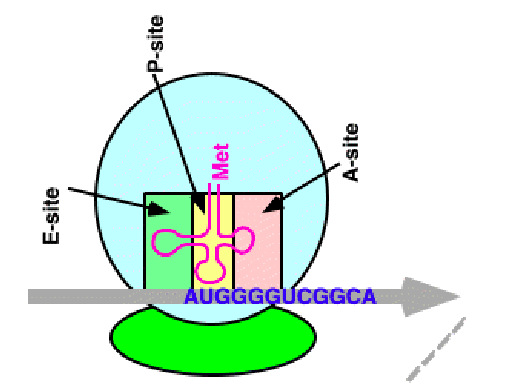
E-site
exit site