8.2 - Standardisation & designation of steels
 Call Kai
 Learn
Learn Practice Test
 Spaced Repetition
 Match
Match Flashcards
 Knowt Play
1/6

There's no tags or description
Looks like no tags are added yet.
Name | Mastery | Learn | Test | Matching | Spaced | Call with Kai |
|---|
No analytics yet
Send a link to your students to track their progress
7 Terms
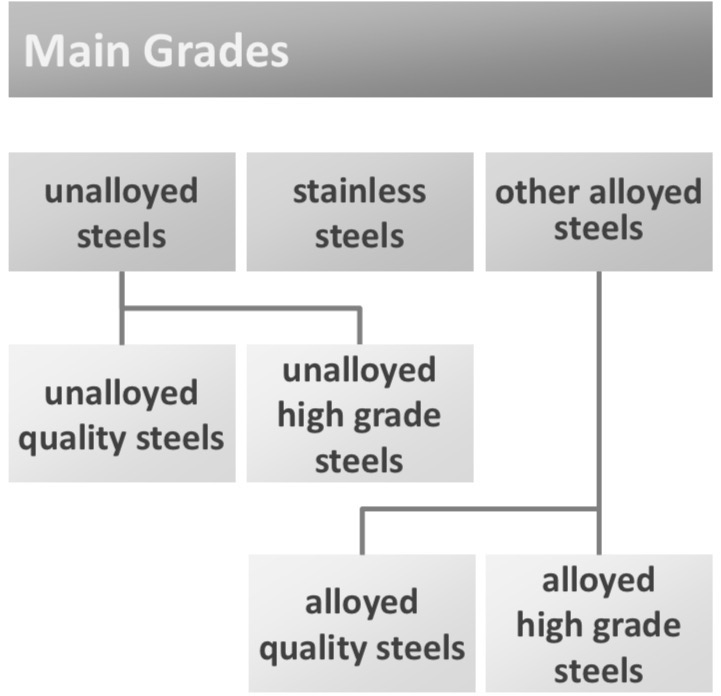
What are the main grades of steel? (Primary groups based on their composition & intended use)
Give categories & subcategories…
UNALLOYED steels
= steels that contain no intentionally added alloying elements, or that their content doesn’t exceed their specified maximum value
Unalloyed quality steels
→ specific properties regarding toughness, grain size or formability
unalloyed high-grade steels
→ increased purity of non-metallic inclusions (MnS… → less or smaller)
→ max contents of Sulfur S & Phosphorus P
→ requires a minimum toughness & impact resistance
→ used for heat treatments (quenching, tempering / surface hardening)
STAINLESS steels (alloyed)
= steels designed to resist corrosion & oxidation
→ Chromium content: min = 1.2% / max = 10.5%
→ different types of stainless steels according to Nickel content & properties
OTHER ALLOYED steels
→ alloying elements contents exceed their maximum specified value (more than unalloyed steels)
→ don’t include stainless steels
alloyed quality steels
→ specific properties regarding toughness, grain size, or formability
→ used for heat treatments (tempering / surface hardening)
alloyed high-grade steels
→ improved properties due to precise control of their composition & special manufacturing processes
What’s the DIN EN 10020?
European standard that defines the classification of steels based on their chemical composition
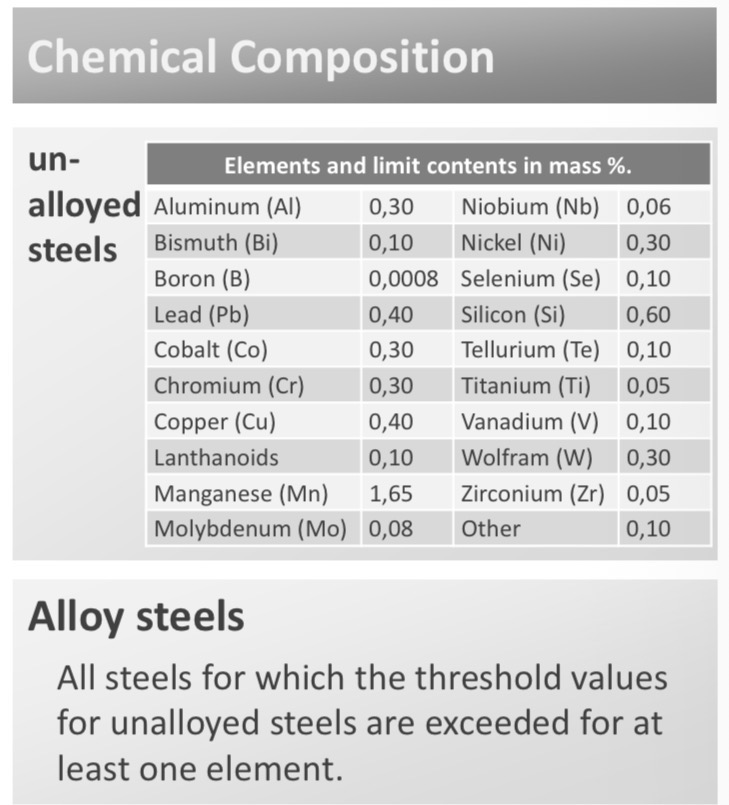
From where do we consider that a steel is alloyed?
When elements exceed their limit content in mass percentage in steel
What are the 3 primary systems for designating & classifying steels?
Material number (numerical system)
According to their intended use (symbol-based system)
According to their chemical composition (symbol-based system)
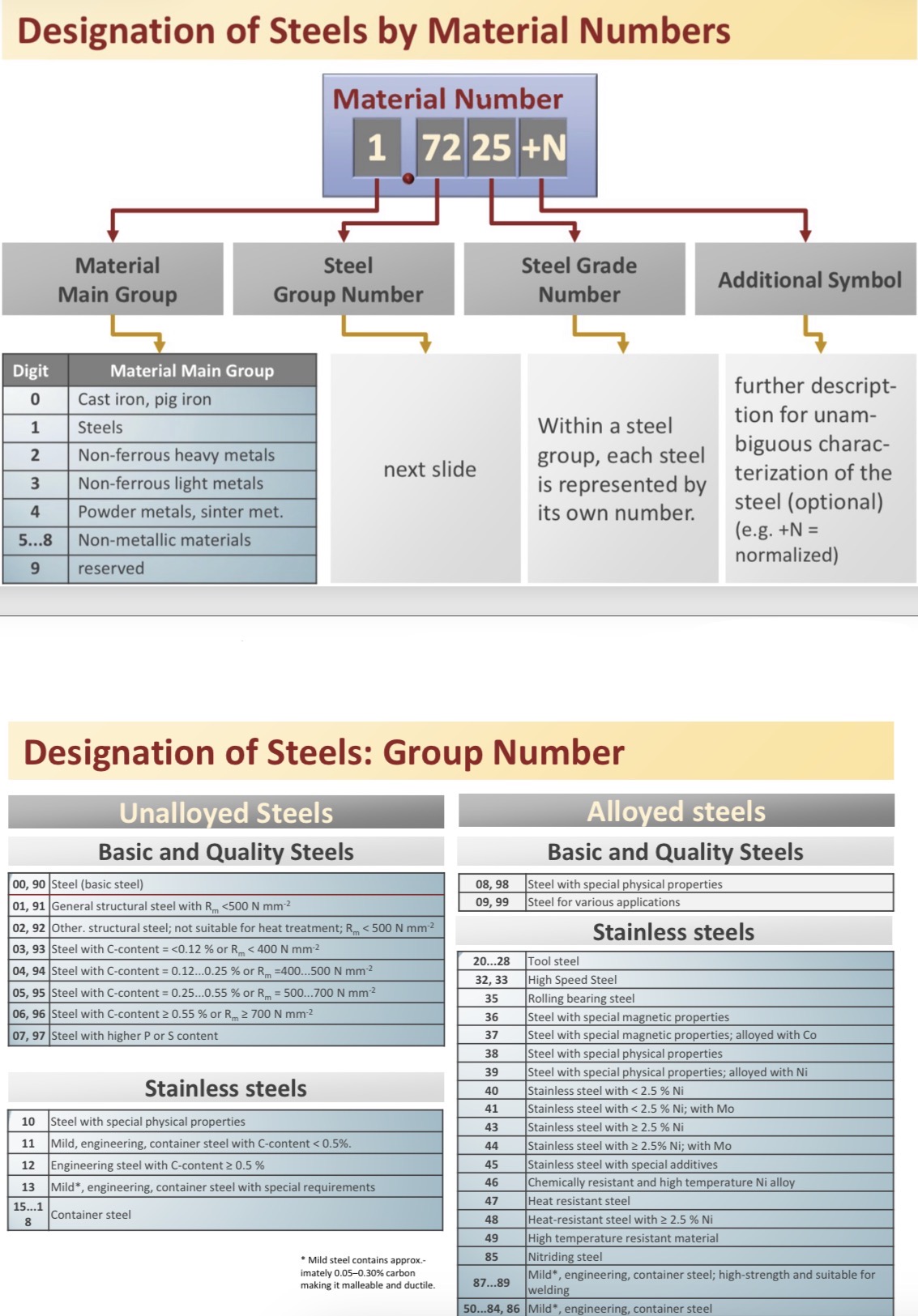
What’s a material number?
What are the different components of this number?
How to read & interpret them?
5-digit code used to identify steels & other materials based on their type & properties
Divided into 4 parts:
material main group (1st digit)
→ steels are always represented by the number 1
Steel group number (2nd & 3rd digits)
→ define the type of steel within the main group
Steel grade number (4th & 5th digits)
→ specify the exact steel grade within the group
Additional symbol (optional)
→ brings additional information
→ “+N” = normalised condition
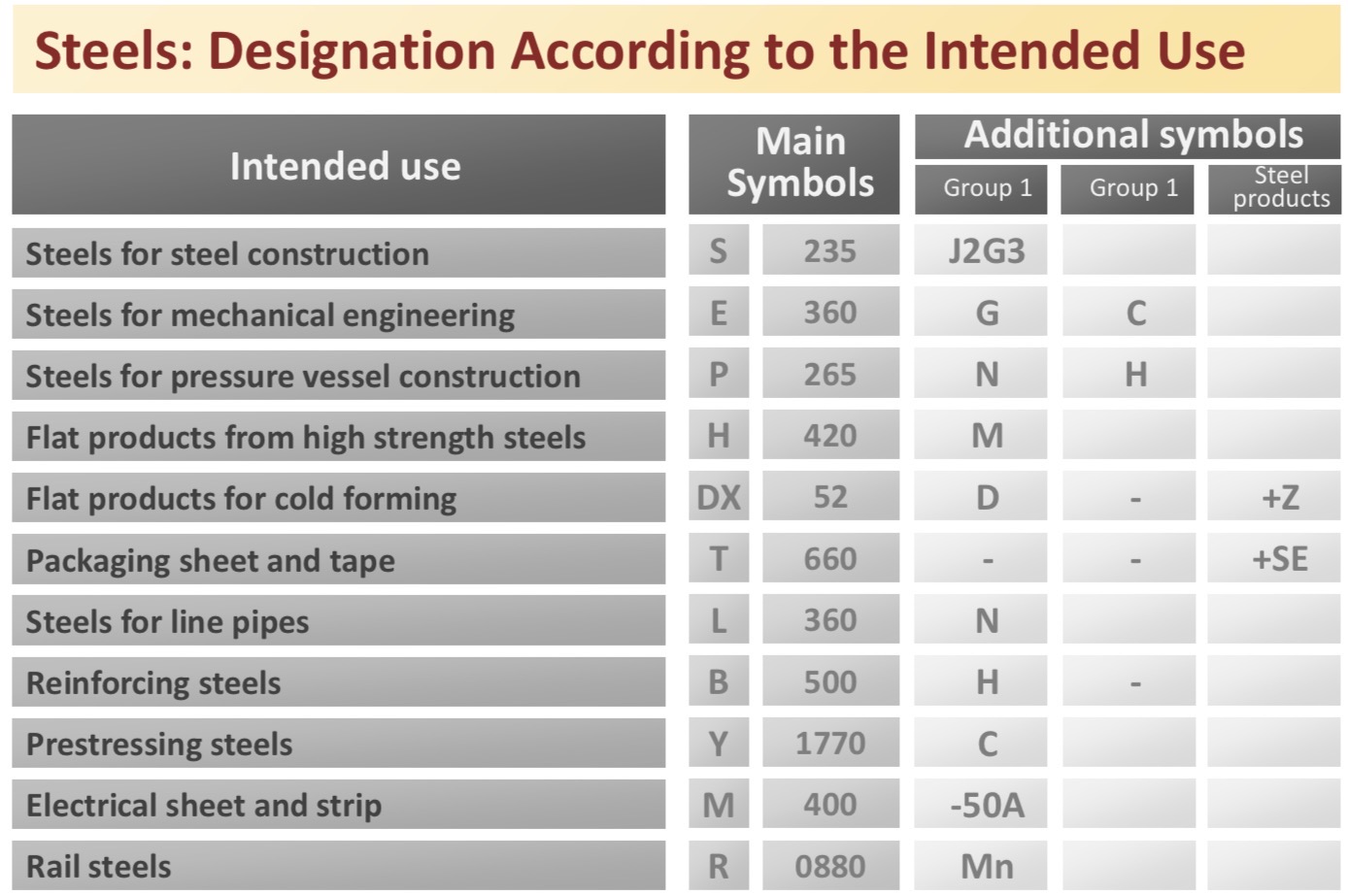
How are steels designated & classified according to their intended use / primary application?
Symbol-based system:
→ main symbol + additional symbols
Main symbol
→ letter that identifies the primary intended use of the steel
→ number that represents the minimum yield strength (stress at which it begins to permanently deform)
Additional symbols
→ indicate specific properties
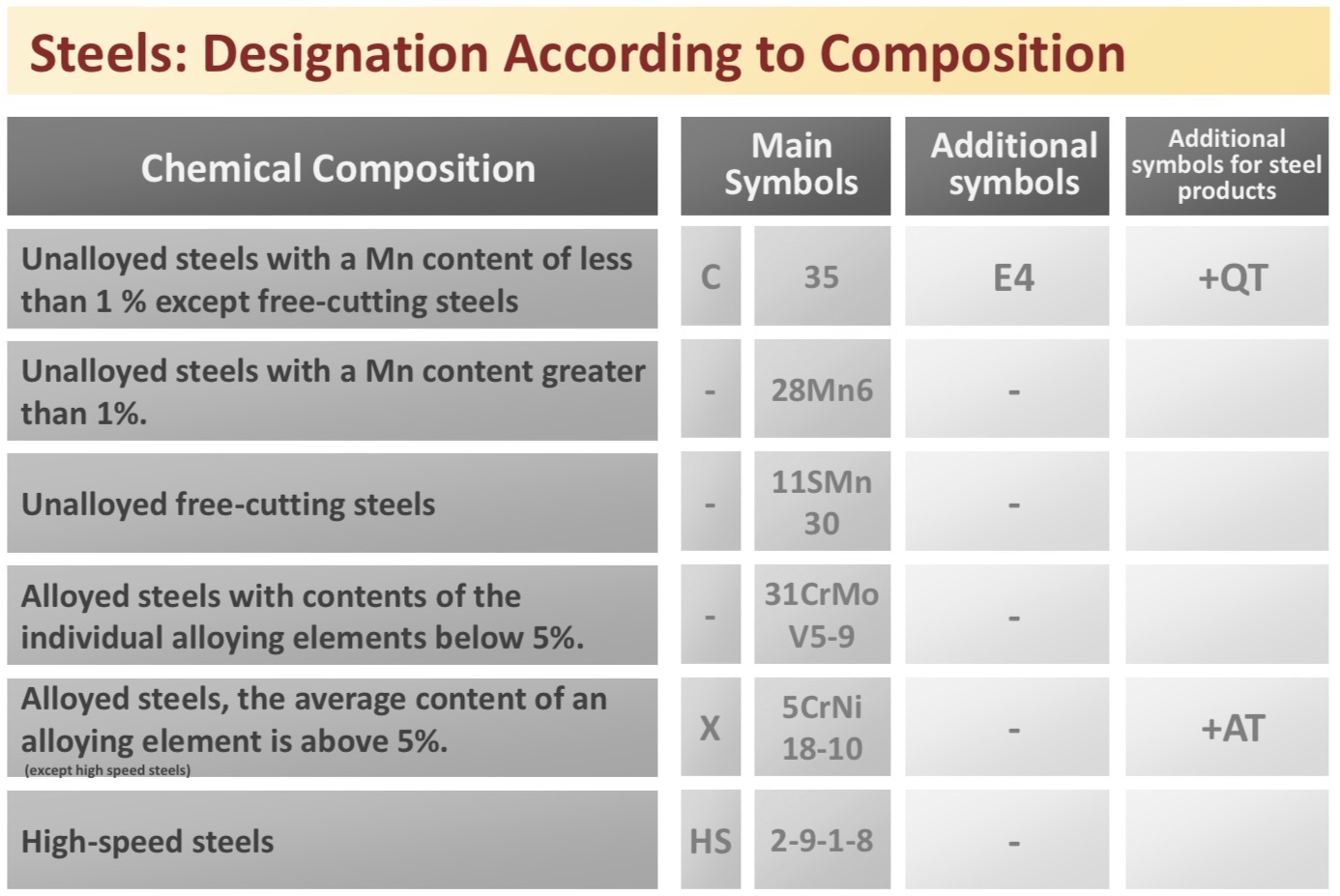
How are steels designated & classified according to their chemical composition?
Symbol-based system:
Main symbol + chemical composition + additional symbols
main symbol
→ letter that identifies the general category of the steel
chemical composition
→ combination of numbers & chemical symbols that indicate the content of alloying elements in the steel
→ alloying elements are represented by their chemical symbols (Cr, Mo Ni…)
→ their content is given as a number following the chemical symbol
Note: C35 or 35__ = 0.35% carbon BUT Ni18 = 18% nickel
additional symbols
→ indicate special properties or conditions
→ “+N” = normalised / “+QT” = quenched & tempered…