SOUND, SPEECH, HEARING
 Call Kai
 Learn
Learn Practice Test
 Spaced Repetition
 Match
Match Flashcards
 Knowt Play
1/31

There's no tags or description
Looks like no tags are added yet.
Name | Mastery | Learn | Test | Matching | Spaced | Call with Kai |
|---|
No analytics yet
Send a link to your students to track their progress
32 Terms
wave
travelling disturbance carrying energy from place to place
longitudinal wave
disturbance parallel to direction of travel of wave
example of longitudinal wave
sound
transverse wave
disturbance perpendicular to direction of travel of wave
example of transverse wave
guitar, banjo
periodic waves
cycles produced over and over again by source
simple harmonic motion
repetitive movement back and forth through central position/equilibrium, displacement on one side = maximum displacement on other side
amplitude
maximum excursion of particle of medium from
period
time required to complete 1 cycle
what does speed of wave on string depend on
speed of particle in string accelerates (upward) in response to net force
tension and density
where cant sound exist
vacuum
distance between adjacent condensations equal to
wavelength of sound wave
where do compressions and rarefactions travel
speaker to listener, but air molecules dont move with wave
how is vibration interpreted by brain
wave arrives at ear, condensations and rarefactions force eardrum to vibrate at same frequency as speaker
pure tone
sound w single frequency
pitch
frequency interpreted by brain
loudness depends on
pressure amplitude of wave
power of wave
energy transported per second by wave
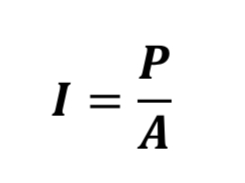
sound intensity
power perpendicular through surface divded by area of surface
power/area
threshold of hearing
intensity of sound human ear can detect
exposure to intensity greater than 1 W/m^2
painful
what if sound emits uniformly in all directions
intensity depends on distance from source simply
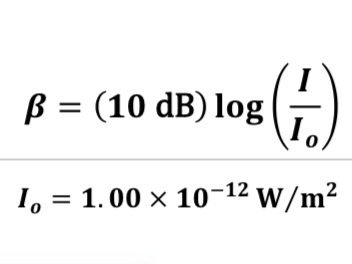
decibels
measurement used when comparing 2 sound intensities
intensity level is what type of scale
logarithmic scale
doppler effect
change in frequency/pitch detected by observer die to difference in velocities from source and observer
compressions
particles pushed together
high pressure, high density
‘dense’
rarefaction
particles spread apart in wave
low pressure, low density
‘rare’ (few)
doppler effect formula: moving source, stationary observer
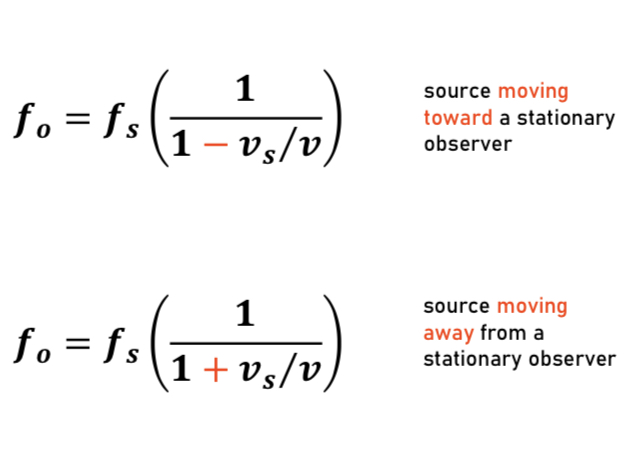
+if moving AWAY from observer (like i gain + energy when i move away from ppl)
-if moving toward observer
AWAY = ADD
TOWARD = subTracT
no additional fractions in denominator so if the observer is stationary imagine it like your eyes are looking towards the source moving
doppler effect formula: stationary source, moving observer
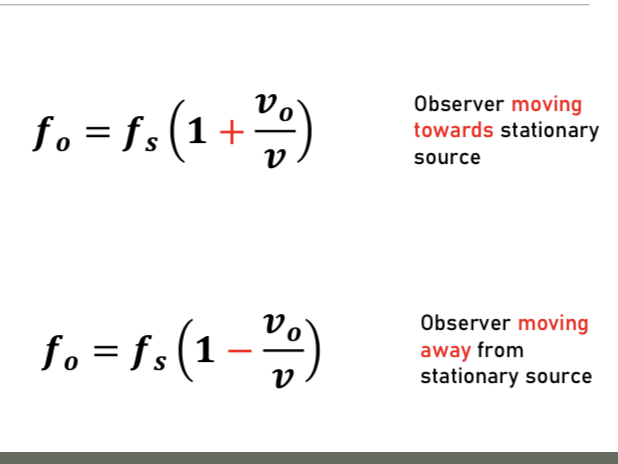
+for observer moving towards source (same as general effect)
theres a fraction
dopper general case formula
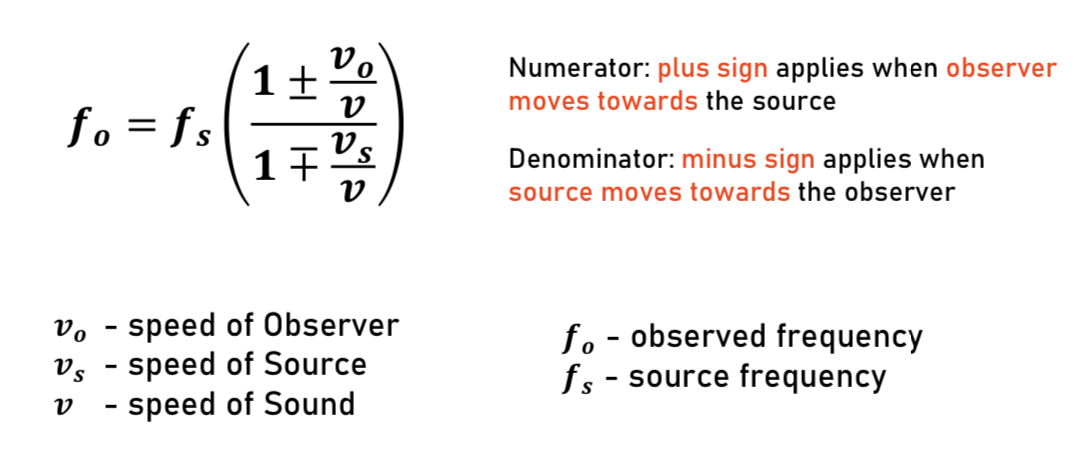
numerator:
+ if OBSERVER moves toward SOURCE (think of movement on x axis)
denominator:
- when SOURCE moves towards OBSERVER
speed of sound: 343 m/s
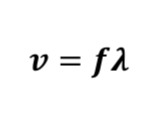
wavelength formula
decibel formula