GEOL210 Midterm
0.0(0)
Studied by 0 people Call Kai
 Learn
Learn Practice Test
 Spaced Repetition
 Match
Match Flashcards
 Knowt Play
Card Sorting
1/152

Earn XP
Description and Tags
Last updated 8:26 PM on 1/7/26
Name | Mastery | Learn | Test | Matching | Spaced | Call with Kai | Chat |
|---|
No analytics yet
Send a link to your students to track their progress
153 Terms
1
New cards
Geology
is the scientific study of the solid Earth including the materials that makeup the planet and the processes that shape the planet
2
New cards
Physical Geology
examines the materials (minerals, rocks, air and water) composing the earth and the processes that operate both beneath and on the surface (mountain building, volcanic eruptions, earthquakes).
3
New cards
Historical geology
aims to understand the origin of earth and its development through time (the study of rock strata, fossils, and geologic events utilizing the geologic time scale)
4
New cards
Environmental geology
studies the interaction between humans and the geological environment
5
New cards
Urban Geology
(New emerging science) that studies the diversity of Earth science linkages within the urban environment including urban population concentration
6
New cards
Steady State Theory
They said that matter is continuously created at a rate that keeps the average density of the Universe the same as it expands.
Universe has always existed, no beginning and no end, eternal existence
Matter alone exists for an infinity of time
Universe has always existed, no beginning and no end, eternal existence
Matter alone exists for an infinity of time
7
New cards
The Big Bang theory
Lemaitre (1931) declared that the universe had a beginning and that it was expanding as a result of something that had triggered it.
Had 2 main theories:
The ball was full of quarks
Inside there was nothing and non-dimensional. It was only energy. Energy can create matter. e=mc2
A single point of concentrated energy exploded -assumes that all parts of the universe began expanding simultaneously.
Had 2 main theories:
The ball was full of quarks
Inside there was nothing and non-dimensional. It was only energy. Energy can create matter. e=mc2
A single point of concentrated energy exploded -assumes that all parts of the universe began expanding simultaneously.
8
New cards
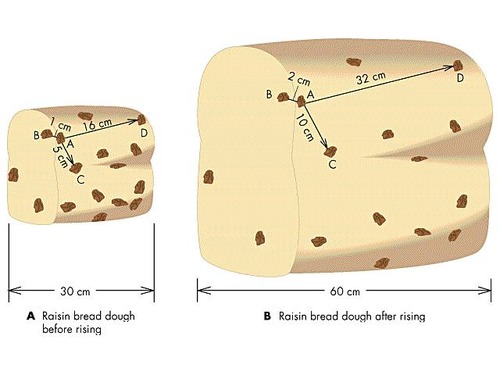
Universe as raisin bread
Bread expands and raisins have moved away from each other like galaxies in the expanding universe.
9
New cards
String Theory
recent contender for the big bang theory
the big bang may not have been the origin of the universe but simply a violent transition from acceleration to deceleration. Pre-Bang universe.
the big bang may not have been the origin of the universe but simply a violent transition from acceleration to deceleration. Pre-Bang universe.
10
New cards
What did the heat from big bang cause?
- The immense heat of the explosion caused: Fusion of quarks (fundamental particles) Formed protons (1H) and neutrons
hydrogen (proton) begun to populate the universe
hydrogen (proton) begun to populate the universe
11
New cards
Nucleosynthesis
Happened after the big bang before stars formed
Collision and fusion of hydrogen atoms
Collision and fusion of hydrogen atoms
12
New cards
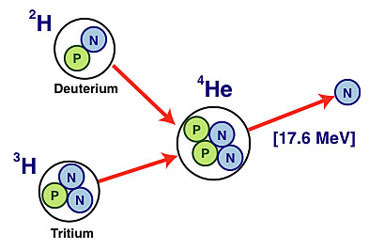
Big Bang nucleosynthesis
First stars initiated nuclear fusion ~1 billion years after the Big Bang a-Fusion of 2H to 4He
13
New cards
Stellar nucleosynthesis (Red Giant Phase)
Friction between particles increased Increased heat allowed for the fusion of helium into carbon
b-4He + 4He → 8Be + 4He → 12C
-Small amount of 16O is also produced by adding 4He to 12C
b-4He + 4He → 8Be + 4He → 12C
-Small amount of 16O is also produced by adding 4He to 12C
14
New cards
How was the periodic table arranged?
After big bang, H started to bond together to form different elements. It worked its way down the periodic table. starting from lightest elements moving to heaviest.
New phase of star collapse sees C-12C + 12C → 24Mg → 20Ne + 4He D-16O + 16O → 32S → 28Si + 4He Production of 'even-numbered' elements up to iron (Fe)
New phase of star collapse sees C-12C + 12C → 24Mg → 20Ne + 4He D-16O + 16O → 32S → 28Si + 4He Production of 'even-numbered' elements up to iron (Fe)
15
New cards
cosmic dust
very fine particles of solid matter found in any part of the universe.
iron, minerals, rocks, gas, Ices
iron, minerals, rocks, gas, Ices
16
New cards
Dense vs light elements
Dense elements sank to the center of the Earth ( core of nickel and iron.)
Light elements floated to the surface. (Crust of aluminum, oxygen and silicon)
Light elements floated to the surface. (Crust of aluminum, oxygen and silicon)
17
New cards
How long ago was the earth formed?
4.6 billion years ago
18
New cards
Layers of the Earth
crust (0-36km), upper mantle (35-60) , mantle (35- 2890), outer core(2890-5150), inner core (5150-6360)
19
New cards
What is in the crust
The crust floats on top of the mantle. It is composed of basalt rich oceanic crust and granitic rich continental crust.
20
New cards
Earths meteors
The Earth has about 100 craters more than 0.1 km in diameter; erosion has made most of them hard to discern. One of the largest is in Canada, in Northern Quebec (Manicouagan).
Most meteorites are rocky ; some are iron.
Most meteorites are rocky ; some are iron.
21
New cards
tectonic plates
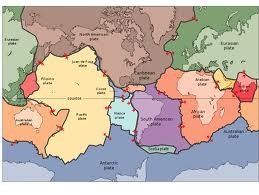
At the beginning of the 20th century, a controversial hypothesis was proposed by Alfred Wegener. He proposed that continents were not fixed masses of land on the earth's surface, but rather moving continents on a Molten earth's interior.
His reasoning was actually quite simple at first the continents of South America and Africa fit together like a puzzle
His reasoning was actually quite simple at first the continents of South America and Africa fit together like a puzzle
22
New cards
tectonic plates (fossil evidence)
Similar or identical fossils are found on both sides of the Atlantic
23
New cards
tectonic plates Structure Evidence
Mountain ranges on either side of the Atlantic are the same - which brings us to the conclusion that the land masses were once together as one.
24
New cards
What drives plate tectonics?
mantle convection
Hot, less dense material rises, cool denser material sinks
Slow process
Drives motion of tectonic plates (lithosphere)
Very slow process. The mantle when subjected to heat and pressure in the Earth's interior over millions of years can melt and flow . -Cold, denser material convects downward and hotter, lighter material rises because of gravity
Hot, less dense material rises, cool denser material sinks
Slow process
Drives motion of tectonic plates (lithosphere)
Very slow process. The mantle when subjected to heat and pressure in the Earth's interior over millions of years can melt and flow . -Cold, denser material convects downward and hotter, lighter material rises because of gravity
25
New cards
ex: The Red Sea represents a young rift which is just beginning to separate Arabia from Africa.
26
New cards
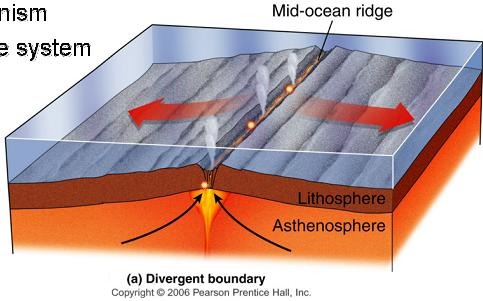
divergent tectonic plates
A tectonic boundary is where two plates are moving away from each other and new crust is forming from magma that rises to the Earth's surface between the two plates. It can also result in trenches and river formation.
27
New cards
divergent tectonic plates examples
ex: The Red Sea represents a young rift which is just beginning to separate Arabia from Africa.
The middle of the Atlantic Ocean is a divergent margin which is being torn, or rifted, apart...the two plates are separating continuously at a rate of several cm/yr
The middle of the Atlantic Ocean is a divergent margin which is being torn, or rifted, apart...the two plates are separating continuously at a rate of several cm/yr
28
New cards
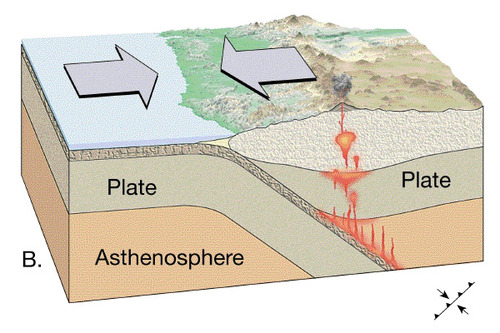
convergent tectonic plates
Plates that move towards each other
Instead of two plates being created, they are being: (a) consumed or (b) colliding
Instead of two plates being created, they are being: (a) consumed or (b) colliding
29
New cards
convergent tectonic plates example
The Juan de Fuca plate dives beneath North America. This subduction zone is known for producing earthquakes of great magnitudes
30
New cards
tectonic plates transform margin
Here, plates are neither created nor destroyed... ...they simply slide by one another
31
New cards
tectonic plates transform margin example
Transform plate boundary responsible for The San Andreas in California
32
New cards
does a rock need only one mineral?
No, A rock is composed of one or more minerals
33
New cards
Why study minerals?
Minerals are the building blocks of our planet
-Minerals make up the rocks that make the earth
landscapes
-Industrial minerals=serve as raw materials for
manufacturing chemicals
-Ore minerals=valuable minerals (gold, copper), and
energy resources like uranium
-Gems=minerals used for jewelry
-Minerals make up the rocks that make the earth
landscapes
-Industrial minerals=serve as raw materials for
manufacturing chemicals
-Ore minerals=valuable minerals (gold, copper), and
energy resources like uranium
-Gems=minerals used for jewelry
34
New cards
What is a mineral
an element found naturally in rocks and soils
35
New cards
What 5 things must a mineral do to be a mineral?
1. Occur naturally
2. Be a solid ( no free atoms)
3. be crystalline ( atoms are organized)
4. be of definite chemical composition
5. be formed by inorganic processes
2. Be a solid ( no free atoms)
3. be crystalline ( atoms are organized)
4. be of definite chemical composition
5. be formed by inorganic processes
36
New cards
All minerals must be solid...
Minerals are the building blocks of our planet
-Minerals make up the rocks that make the earth
landscapes
-Industrial minerals=serve as raw materials for
manufacturing chemicals
-Ore minerals=valuable minerals (gold, copper), and
energy resources like uranium
-Gems=minerals used for jewelry
-Minerals make up the rocks that make the earth
landscapes
-Industrial minerals=serve as raw materials for
manufacturing chemicals
-Ore minerals=valuable minerals (gold, copper), and
energy resources like uranium
-Gems=minerals used for jewelry
37
New cards
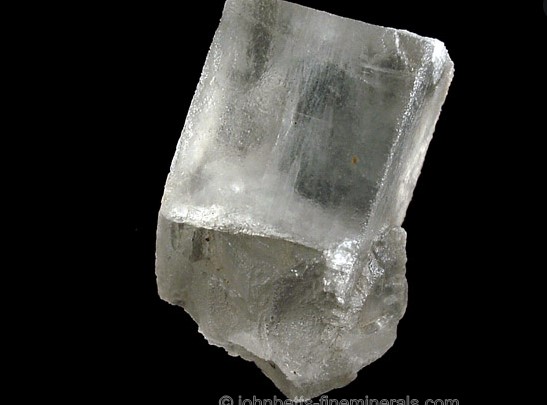
all minerals must be crystalline
a crystalline solid is a material with an internal atomic structure that is organized in a regular, repeating structure.
Eg. Halite, NaCl (table salt)
Cubic arrangement of Na+
(red) and Cl-
(yellow) ions
Halite crystals are cubic in shape.
Eg. Halite, NaCl (table salt)
Cubic arrangement of Na+
(red) and Cl-
(yellow) ions
Halite crystals are cubic in shape.
38
New cards
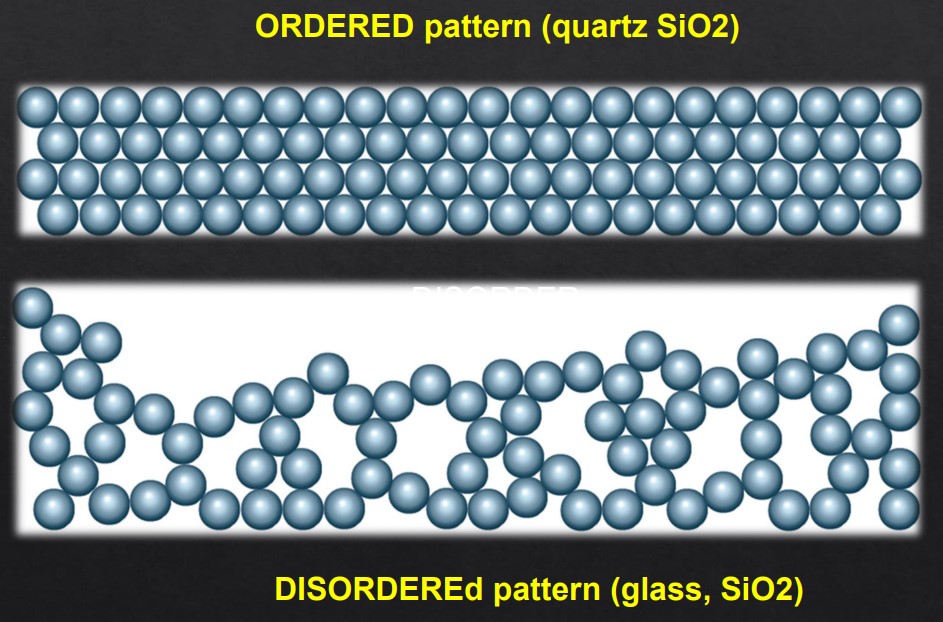
amorphous
A non crystalline solid is termed amorphous solid such as glass and
plastic
plastic
39
New cards
glass vs. quartz
40
New cards
All minerals are inorganic.
This means that they do not come from living things.
➢Organic substances are plants and animals or the things that are left
behind when they die.
➢Sometimes those dead plants and animals are turned into a mineral
by heat and pressure, such as coal.
The key here is that the minerals are the result of
Geological Activities and not directly the product of
biological organisms such as bones, shells, pearls,
ivory, etc.
➢Organic substances are plants and animals or the things that are left
behind when they die.
➢Sometimes those dead plants and animals are turned into a mineral
by heat and pressure, such as coal.
The key here is that the minerals are the result of
Geological Activities and not directly the product of
biological organisms such as bones, shells, pearls,
ivory, etc.
41
New cards
all chemicals have a definite composition
this means that there is a specific chemical formula for each mineral.
ex: quartz is always made up of one silicon atom bonded with two oxygen
ex: pyrite is always one atom of iron to two atoms of sulfur.
ex: quartz is always made up of one silicon atom bonded with two oxygen
ex: pyrite is always one atom of iron to two atoms of sulfur.
42
New cards
Can two minerals have the same chemical composition?
Two different minerals can have the same chemical
composition but different properties and different structures
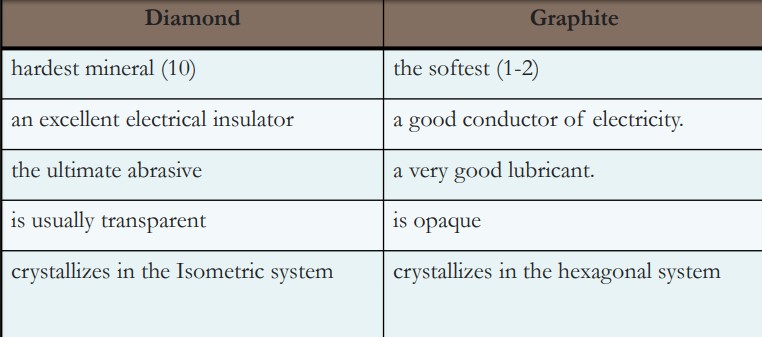
Diamond and graphite share the same chemical composition:
they are polymorphs of the element Carbon (C)
composition but different properties and different structures
Diamond and graphite share the same chemical composition:
they are polymorphs of the element Carbon (C)
43
New cards
what are the physical properties of a mineral?
Crystal form
Luster
Colour
Streak
Hardness
Cleavage
Fracture
Specific Gravity
Luster
Colour
Streak
Hardness
Cleavage
Fracture
Specific Gravity
44
New cards
define Crystal form
is the external reflection of the internal mineral arraignment
45
New cards
what are the largest minerals in the world?
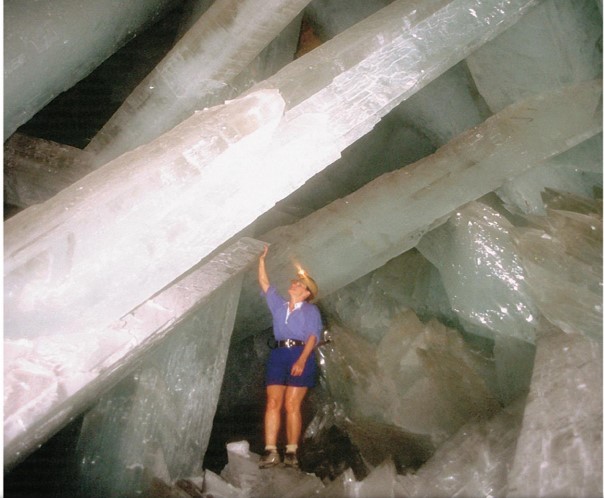
World’s largest crystals:
the mineral gypsum (CaSO4
.2H2O)
Precipitation from water solutions
in mexico
the mineral gypsum (CaSO4
.2H2O)
Precipitation from water solutions
in mexico
46
New cards
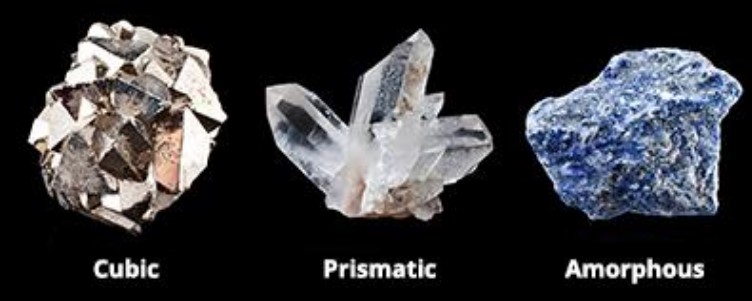
3 main cristal forms
amorphous is without shape
47
New cards
define crystal habits
The term crystal habit describes the favored growth pattern of the crystals of a
mineral species. (supplement to the system, descriptive)
mineral species. (supplement to the system, descriptive)
48
New cards
Law of constancy of interfacial angles
Or
First Law of crystallography
Or
First Law of crystallography
The angles between corresponding
faces on different crystals of one
chemical composition have a constant
value.
faces on different crystals of one
chemical composition have a constant
value.
49
New cards
crystal colour
Visible hue of a mineral
Usually, we notice the color of a mineral first. Some
minerals are easily identified by color because they are
never any other color.
For example, Malachite is always green. Azurite is
always blue.
Usually, we notice the color of a mineral first. Some
minerals are easily identified by color because they are
never any other color.
For example, Malachite is always green. Azurite is
always blue.
50
New cards
why isn't colour a reliable source of identifying?
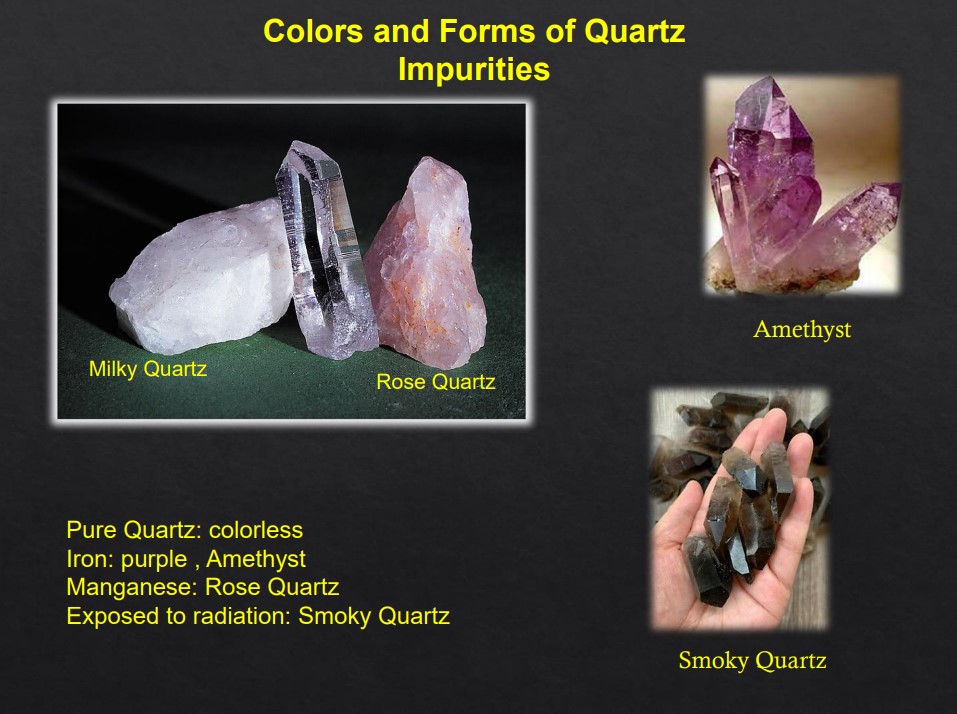
Chemical impurities can change the colour of a
mineral without changing its basic make-up
ex: quartz comes in many different colours.
mineral without changing its basic make-up
ex: quartz comes in many different colours.
51
New cards
mineral streak
When a mineral is rubbed firmly across an unglazed tile of
white porcelain (a streak plate), it leaves a line of powder.
This is called the streak. The color of the streak is always the
same, whether or not the mineral has impurities.
For example, quartz leaves a white streak, whether it’s
purple (amethyst), pink (rose quartz), or brown (smoky
quartz).
white porcelain (a streak plate), it leaves a line of powder.
This is called the streak. The color of the streak is always the
same, whether or not the mineral has impurities.
For example, quartz leaves a white streak, whether it’s
purple (amethyst), pink (rose quartz), or brown (smoky
quartz).
52
New cards
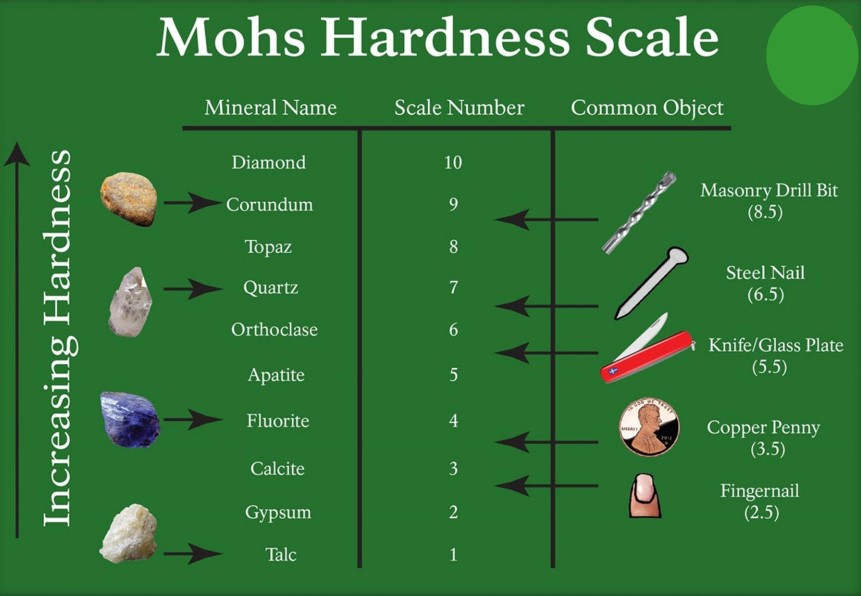
hardness
Scratch-resistance
The hardness is the resistance of a mineral to scratching
The hardness is the resistance of a mineral to scratching
53
New cards
what is hardness measured on?
Mohs hardness scale
54
New cards
mineral cleavage
When a mineral sample is broken with a hammer, it breaks along
planes of weakness that are part of its crystalline structure. These
breaks are cleavages.
Some minerals break only in one direction. Others break in two or
more directions.
planes of weakness that are part of its crystalline structure. These
breaks are cleavages.
Some minerals break only in one direction. Others break in two or
more directions.
55
New cards
Mineral fracture
Breakage not along
planar surfaces
2 main types:
conchoidal or irregular
planar surfaces
2 main types:
conchoidal or irregular
56
New cards
non metallic lusters
Vitreous (glassy) -- example: quartz, tourmaline
Resinous (like resin from a tree) -- example: sphalerite
Greasy or waxy -- example: turquoise
Pearly -- example: talc
Silky -- example: asbestos
Dull or earthy -- example: bauxite
Resinous (like resin from a tree) -- example: sphalerite
Greasy or waxy -- example: turquoise
Pearly -- example: talc
Silky -- example: asbestos
Dull or earthy -- example: bauxite
57
New cards
mineral luster
Luster is the way the surface of a mineral reflects light.
Two general types of luster -- metallic and non-metallic.
Two general types of luster -- metallic and non-metallic.
58
New cards
specific gravity
the density of a substance relative to the density of water
59
New cards
mineral transparency
Transparency describes how well light passes through a
mineral sample.
There are three degrees of transparency:
transparent, translucent, and opaque.
-You can see objects through a transparent mineral.
-You can see light, but no objects through a translucent
mineral.
-You can't see anything through an opaque mineral.
mineral sample.
There are three degrees of transparency:
transparent, translucent, and opaque.
-You can see objects through a transparent mineral.
-You can see light, but no objects through a translucent
mineral.
-You can't see anything through an opaque mineral.
60
New cards
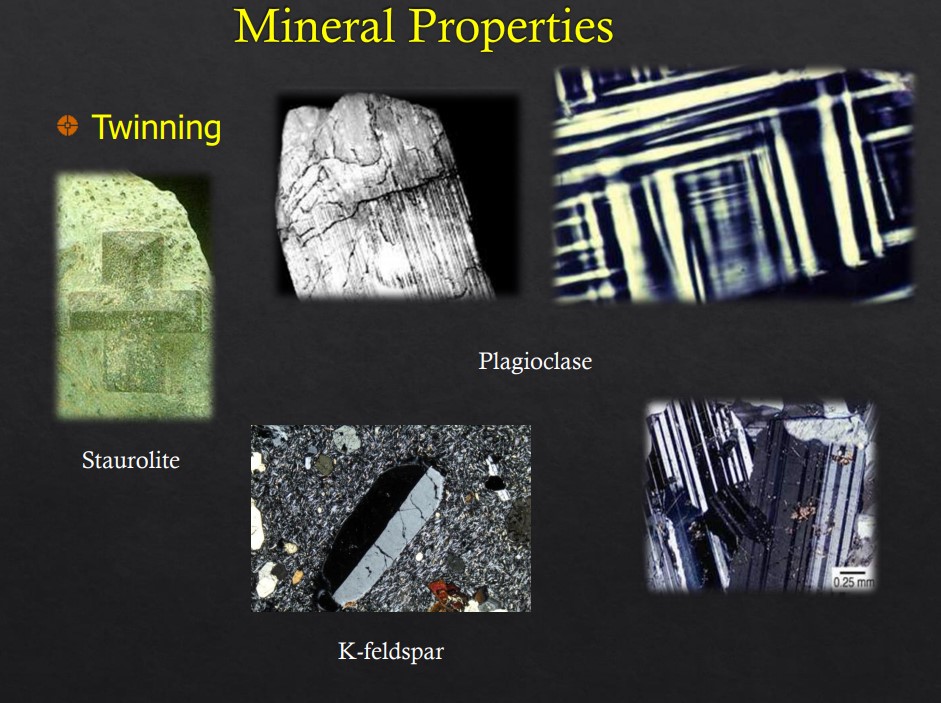
mineral twinning
• If a crystal is subjected to stress during growth
or temperature/pressure conditions different from those
under which it originally formed, two or more intergrown
crystals are formed in a symmetrical fashion.
These symmetrical intergrowths of crystals are called
twinned crystals.
or temperature/pressure conditions different from those
under which it originally formed, two or more intergrown
crystals are formed in a symmetrical fashion.
These symmetrical intergrowths of crystals are called
twinned crystals.
61
New cards
How many minerals are there?
Roughly 4200
Fifty or so are added each
year
Fifty or so are added each
year
62
New cards
How do minerals form
Crystallize…
• from liquids (molten rock, aqueous
fluids..)
• during solid-state recrystalliation
inside solid rocks (metamorphism)
• from gases (volcanic gases, trapped
gases in open spaces in rocks)
Or are created from…
• the destruction of earlier minerals
during chemical weathering
– clay minerals and oxides are most
common
– think “mud” and “rust”
• from liquids (molten rock, aqueous
fluids..)
• during solid-state recrystalliation
inside solid rocks (metamorphism)
• from gases (volcanic gases, trapped
gases in open spaces in rocks)
Or are created from…
• the destruction of earlier minerals
during chemical weathering
– clay minerals and oxides are most
common
– think “mud” and “rust”
63
New cards
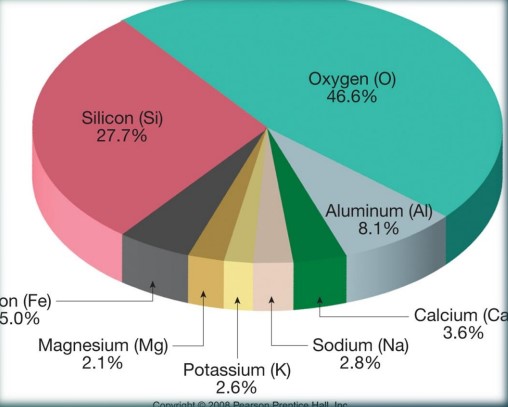
what are the common elements of minerals
Nearly 97% of the atoms in Earth’s crust are represented
by the 8 most common elements (~50 wt% = oxygen!)
• O, Si, Al, Fe, Ca, Na, K, Mg
Grouped according to
common anionic
groups
• Si + O make up the
most important
anionic group
by the 8 most common elements (~50 wt% = oxygen!)
• O, Si, Al, Fe, Ca, Na, K, Mg
Grouped according to
common anionic
groups
• Si + O make up the
most important
anionic group
64
New cards
what is the basic building block of the silicates
The basic building block of the silicates is the
[SiO4]^4-
tetrahedron, represented in a “ball-andstick” model and as a filled polyhedron
[SiO4]^4-
tetrahedron, represented in a “ball-andstick” model and as a filled polyhedron
![The basic building block of the silicates is the
[SiO4]^4-
tetrahedron, represented in a “ball-andstick” model and as a filled polyhedron](https://knowt-user-attachments.s3.amazonaws.com/cbdd5be6225c4ac79de651908309d47e.jpeg)
65
New cards
homogeneous crystalline structure
A homogeneous crystalline structure in which one or more types
of atoms or molecules may be partly substituted for the original
atoms and molecules without changing the structure
(Temperature dependant).
of atoms or molecules may be partly substituted for the original
atoms and molecules without changing the structure
(Temperature dependant).
66
New cards
olivine group
has 2 sides: magnesium and iron. On the 100% magnesium side we have Forsterite (Mg2SiO4). On the 100% iron side we have Fayalite (Fe2SiO4).

67
New cards
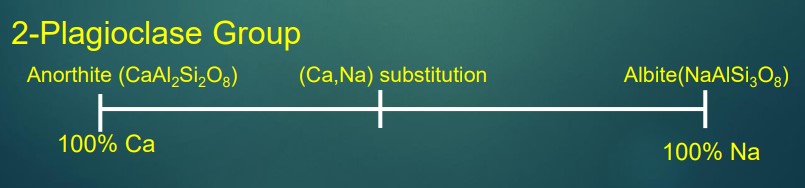
Plagioclase group
has 2 sides: calcium and sodium. On the 100% calcium side is Anorthite (CaAl2Si2O8
). On the 100% sodium side is Albite(NaAlSi3O8
).
). On the 100% sodium side is Albite(NaAlSi3O8
).
68
New cards
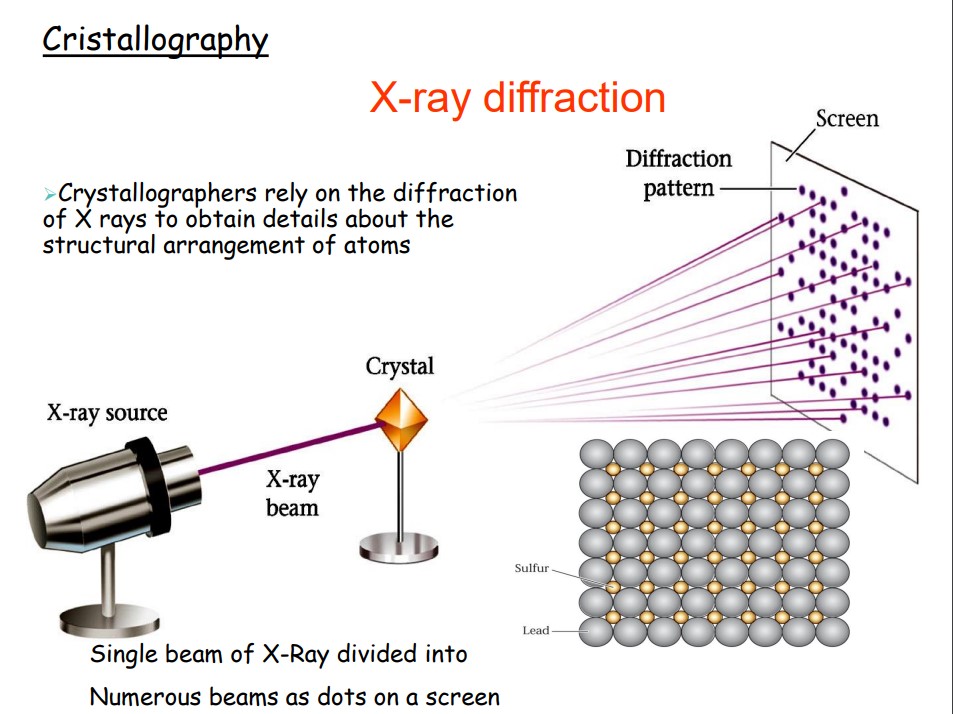
Cristallography
uses electromagnetic radiation (specifically, X-rays) to determine the molecular and atomic structure of a crystal.
69
New cards
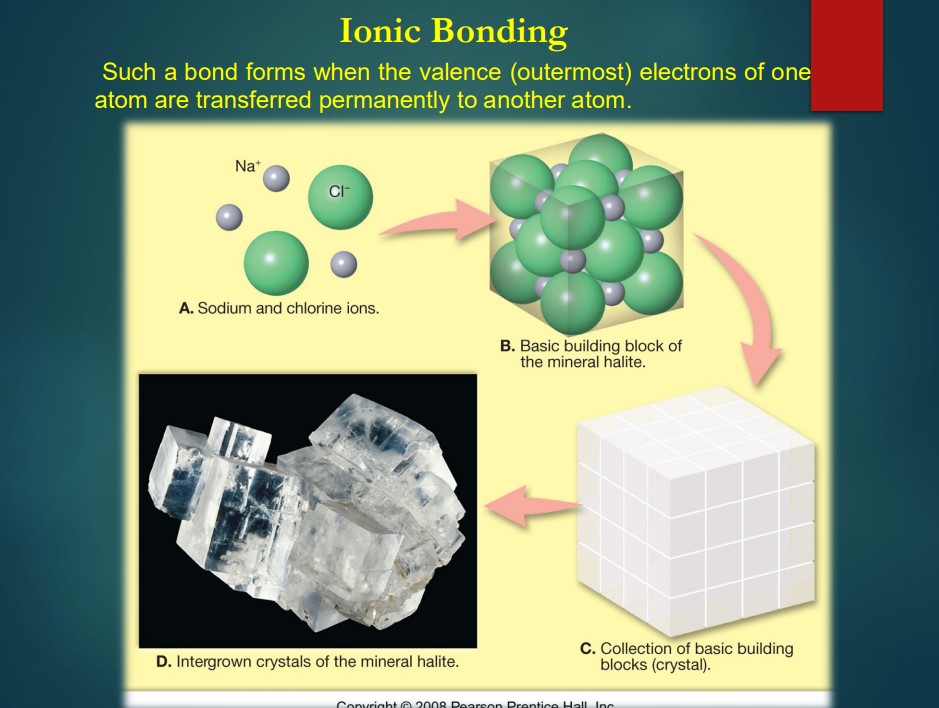
Ionic Bonding
Such a bond forms when the valence (outermost) electrons of one
atom are transferred permanently to another atom.
atom are transferred permanently to another atom.
70
New cards
diamond vs. graphite bonding
diamond has covalent bonding while graphite has ionic bonding
71
New cards
covelent vs. vander walls with sheets
covelant bonds will be within the sheets while walls bonding will be between the layers of sheets.
72
New cards
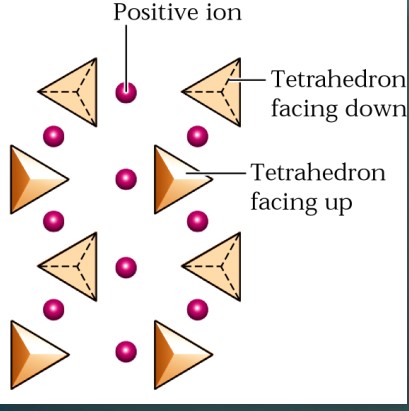
Nesosilicate
Independant tetrahedra share no
oxygen atoms, held by positive ions
ex: Olivine (Fe,Mg)2SiO4
oxygen atoms, held by positive ions
ex: Olivine (Fe,Mg)2SiO4
73
New cards
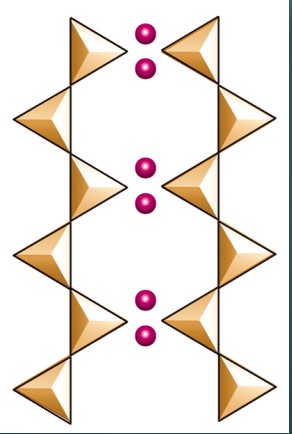
2a-Inosilicate (Single Chain)
Two single chains of tetrahedra held by
positive ions
positive ions
74
New cards
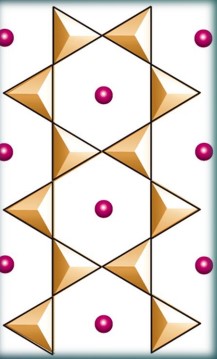
2b-Inosilicate (Double Chain)
Two single chains of
tetrahedra link by sharing
oxygen
tetrahedra link by sharing
oxygen
75
New cards
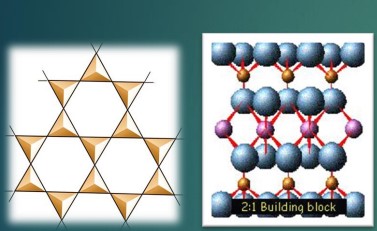
3-Sheet Silicate
Each tethadera shares 3 oxygens
76
New cards
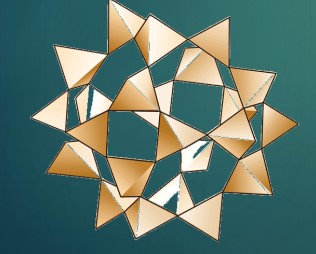
4-Framework Silicate
Each tetrahedra shares all
four oxygens with its
neighbors
four oxygens with its
neighbors
77
New cards
bowens reaction series
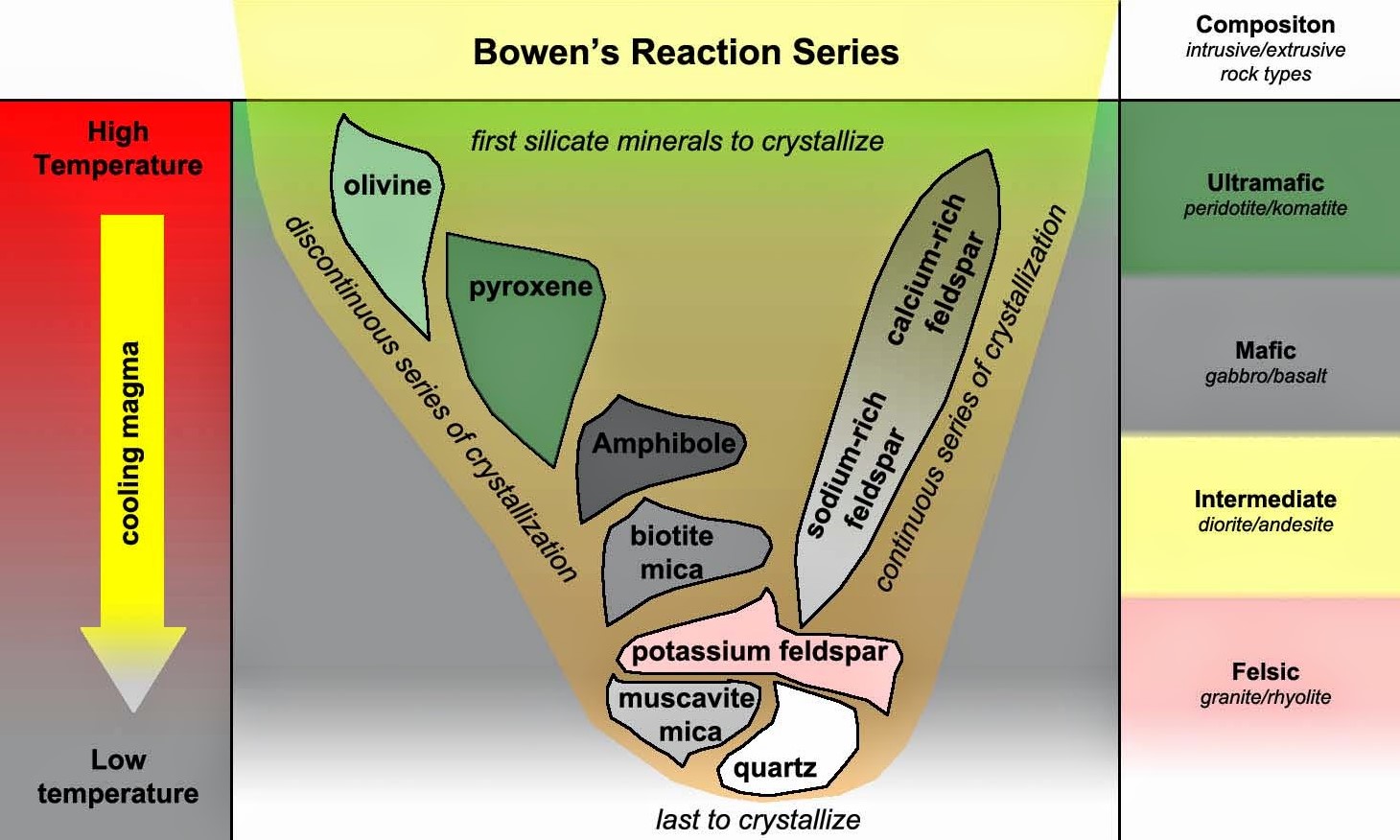
A general model for explaining how magmatic rocks form and the order of
appearance of the common silicate minerals from a magma.
-Shows minerals crystallising as temperature decreases
-Composition of magma changes as the system evolves
appearance of the common silicate minerals from a magma.
-Shows minerals crystallising as temperature decreases
-Composition of magma changes as the system evolves
78
New cards
Igneous Rocks
Formed by consolidation and cooling of magma. If the rock
cools below the ground it is called a plutonic rock and if the
rock cools above the ground it is called a volcanic rock.
igneous meaning fire.
originate from the evolution of this magma
Either under or above the crust.
cools below the ground it is called a plutonic rock and if the
rock cools above the ground it is called a volcanic rock.
igneous meaning fire.
originate from the evolution of this magma
Either under or above the crust.
79
New cards
Sedimentary Rocks
Rocks at the surface which react with
water, ice and air. These interactions cause them to break
down into smaller particles, called weathering. These
particles are transported by wind, water or ice and once
deposited are called sediment.
water, ice and air. These interactions cause them to break
down into smaller particles, called weathering. These
particles are transported by wind, water or ice and once
deposited are called sediment.
80
New cards
Metamorphic rock
meta meaning change, morphe meaning form
change.
These rocks have been changed as a result of high temperature,
high pressure, or both. Metamorphism the process that forms
metamorphic rocks from sedimentary or igneous rocks is similar to
what happens when a potter fires clay in an oven. The mineral
grains undergo a series of chemical reactions and a new compound
forms.
change.
These rocks have been changed as a result of high temperature,
high pressure, or both. Metamorphism the process that forms
metamorphic rocks from sedimentary or igneous rocks is similar to
what happens when a potter fires clay in an oven. The mineral
grains undergo a series of chemical reactions and a new compound
forms.
81
New cards
Crust rocks
Crust – 95% igneous or metamorphic derived from igneous,
5% sedimentary
5% sedimentary
82
New cards
Surface rocks
Surface – 75% sedimentary, 25% igneous
83
New cards
magma
The term used to describe the liquid when it is
within the Earth's crust or mantle.
within the Earth's crust or mantle.
84
New cards
lava
The term used to describe the liquid when it has
reached the surface of the Earth.
reached the surface of the Earth.
85
New cards
Molten rock composed of:
A liquid portion, called melt, that is composed of mobile ions of O,
Ca, Na, K, Si, Al, Mg, Fe
Solids, if any, are silicate minerals that have already crystallized
from the melt, and/or residual minerals
Volatiles, which are gases dissolved in the melt, including water
vapor (H2O), carbon dioxide (CO2),
Ca, Na, K, Si, Al, Mg, Fe
Solids, if any, are silicate minerals that have already crystallized
from the melt, and/or residual minerals
Volatiles, which are gases dissolved in the melt, including water
vapor (H2O), carbon dioxide (CO2),
86
New cards
Partial Melting
Incomplete melting of a 'parent rock' to produce a molten rock (like
magma) with a different chemical composition (Primary magma).
This happens because different minerals melt at different
temperatures.
magma) with a different chemical composition (Primary magma).
This happens because different minerals melt at different
temperatures.
87
New cards
What three conditions can lead to the formation of magma?
1-Melting as a result of a decrease in pressure (decompression)
2-Melting as a result of the addition of volatiles
3-Melting as a result of heat transfer from rising magma
2-Melting as a result of the addition of volatiles
3-Melting as a result of heat transfer from rising magma
88
New cards
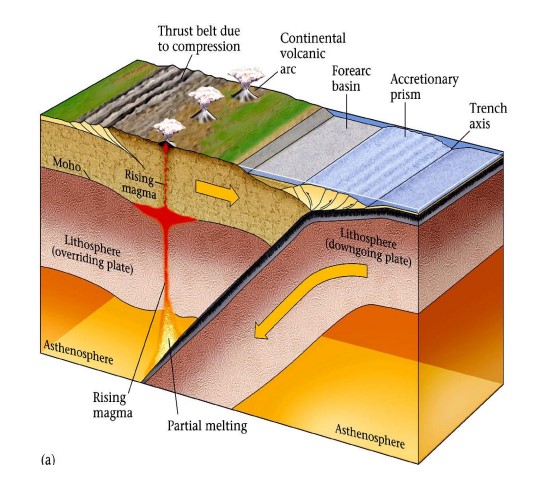
Melting at a Subduction Zone
Below 150 km, heat causes
volatiles within the
downgoing plate to be
released into the
asthenosphere (ultamafic
rock) of the overriding plate.
Partial melting of the
asthenosphere produces
basaltic magma, which
migrates upward through the
lithosphere to erupt at the
surface.
Magma in any case rises because it is less dense than the
surrounding rock and thus is buoyant.
volatiles within the
downgoing plate to be
released into the
asthenosphere (ultamafic
rock) of the overriding plate.
Partial melting of the
asthenosphere produces
basaltic magma, which
migrates upward through the
lithosphere to erupt at the
surface.
Magma in any case rises because it is less dense than the
surrounding rock and thus is buoyant.
89
New cards
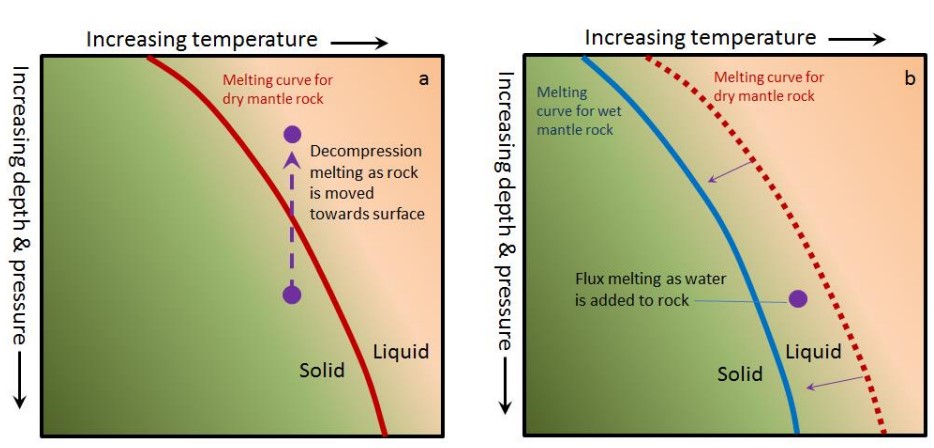
Hydration Melting-subduction zones
Adding water to a dry solidus will decrease
the temperature of melting a basalt.
Water percolates into a solid hot rock and triggers the melting.
the temperature of melting a basalt.
Water percolates into a solid hot rock and triggers the melting.
90
New cards
Melting and heat transfer
Melting as a result of heat transfer can occur when a hot
magma rises into rock that has a lower melting
temperature.
Exp: Hot basaltic magma rising from the mantle can make
the surrounding intermediate composition crust to melt.
magma rises into rock that has a lower melting
temperature.
Exp: Hot basaltic magma rising from the mantle can make
the surrounding intermediate composition crust to melt.
91
New cards
MAGMA EVOLUTION
A change in the composition of a magma
body is known as magma evolution
Magma evolution can occur by fractional
crystallization, assimilation, or magma mixing
body is known as magma evolution
Magma evolution can occur by fractional
crystallization, assimilation, or magma mixing
92
New cards
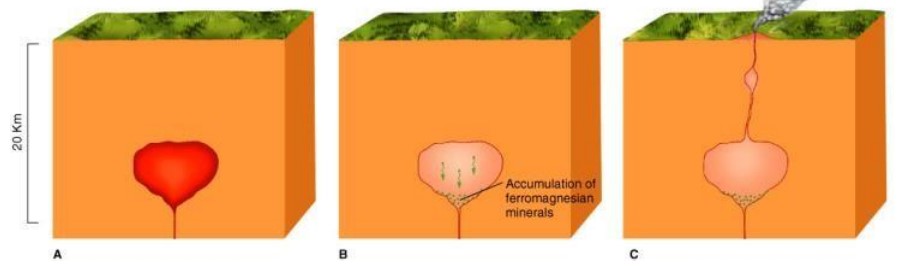
Fractional crystallization
involves the changing of magma composition by the removal of denser early-formed ferromagnesian minerals by crystal settling Note that the separation of early-formed ferromagnesian minerals from a magma body increases the silica content of the remaining magma and leaves behind a more mafic residue
93
New cards
Assimilation
occurs when a hot magma melts and incorporates more felsic surrounding country rock
94
New cards
Magma mixing
involves the mixing of more and less mafic magma to produce one of intermediate composition
95
New cards
make sure to watch video
Partial Melting and Crystallization are very important in
understanding igenous rocks and thus the evolution of the
mantle and the continental crust
understanding igenous rocks and thus the evolution of the
mantle and the continental crust
96
New cards
Intrusive igneous rocks
form when magma solidifies underground
•Layman’s term = granitic
•Granite is most common type
•Layman’s term = granitic
•Granite is most common type
97
New cards
Extrusive igneous rocks
form when magma solidifies at the Earth’s surface (lava)
•Layman’s term = basaltic
•Basalt is most common type
ex: andesite and basalt
•Layman’s term = basaltic
•Basalt is most common type
ex: andesite and basalt
98
New cards
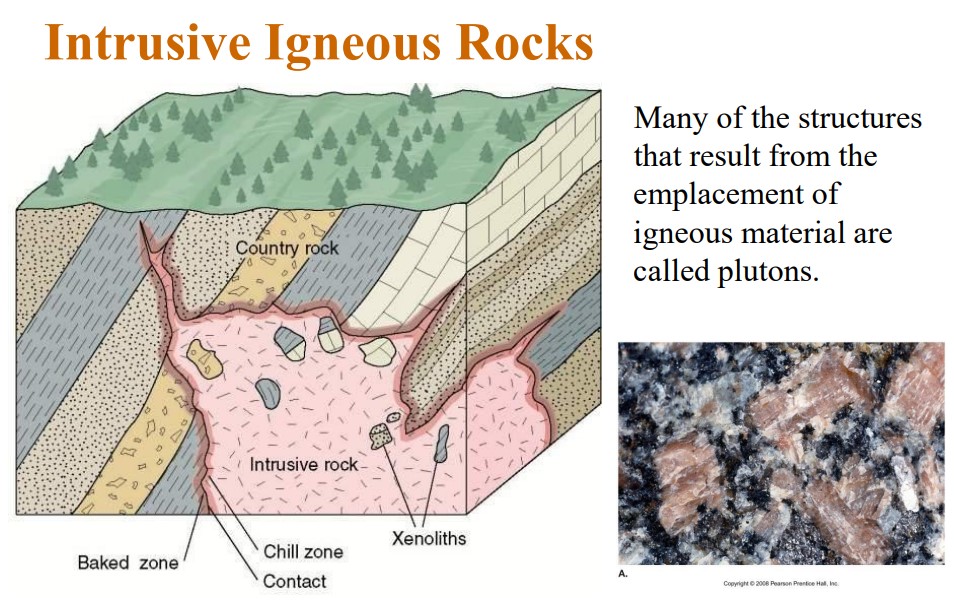
what is a pluton?
Many of the structures that result from the emplacement of igneous material are
called plutons.
Mount Royal is a Pluton.
Small plutons (exposed over <100 km2) are called stocks
Large plutons (exposed over >100 km2) are called batholiths
called plutons.
Mount Royal is a Pluton.
Small plutons (exposed over <100 km2) are called stocks
Large plutons (exposed over >100 km2) are called batholiths
99
New cards
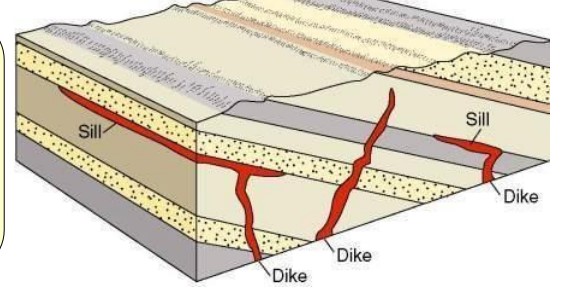
Dikes and sills
Dikes are created when magma is injected into fractures. Sills are created when magma is injected in
between sedimentary layers for example.
between sedimentary layers for example.
100
New cards
What are the four types of magma based on silica?
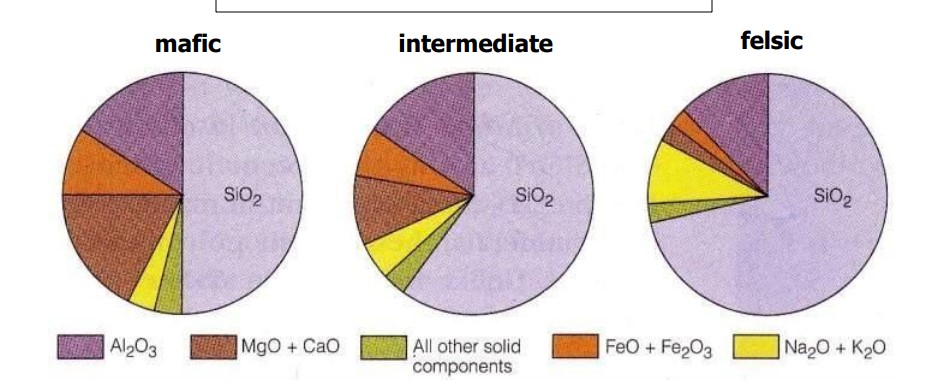
Four types of magma based on silica (SiO2) abundance:
Ultramafic <45 wt%
Mafic (basic) 45-51 wt%
Intermediate 52-65 wt%
Felsic (silicic) 66-75 wt%
Ultramafic <45 wt%
Mafic (basic) 45-51 wt%
Intermediate 52-65 wt%
Felsic (silicic) 66-75 wt%