Dangers of your Grandparents Shed
 Call Kai
 Learn
Learn Practice Test
 Spaced Repetition
 Match
Match Flashcards
 Knowt Play
1/22

Earn XP
Description and Tags
lecture 4
Name | Mastery | Learn | Test | Matching | Spaced | Call with Kai |
|---|
No analytics yet
Send a link to your students to track their progress
23 Terms
odds ratio of pesticide exposure and PD
use retrospective study → odds of those who had previously been exposed to pesticides
large chance of PD if exposed to pesticides → OR of 1.94
PD patients 2x more likely to have been exposed to pesticides
prospective study → 1.7 fold increased relarive risk of PD with pesticide use
Parkinsons disease
progressive neurological condition
symptoms → tremor, slow movement, muscle stiffness
risk → increased age, 1.5x more in males, genetics, environmental (head injury, pesticide and herbicide exposure and chlorinated solvents)
pathology → loss of DA neurones in substantia nigra pars compacta in midbrain → nigrostriatal pathway is impaired (motor feedback control)
Rotenone
netural product → in tropical and subtropical plants, especially gena Derris
lipophilic → LogP = 3.3, so can cross BBB
potent → IC50 is 1-10nm
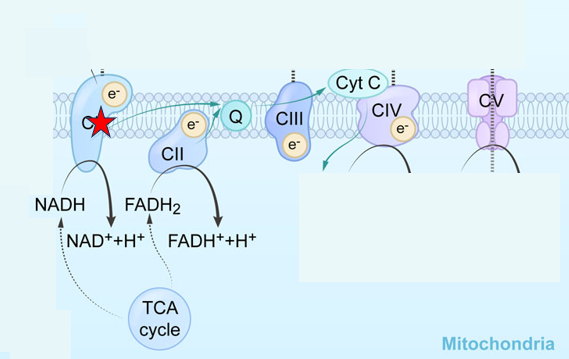
imhibits complex 1 of mitochondrial electron transport chain
used in pesticides → insects eg. weevils, beetles and flies
used to clear lakes of invasive fish (piscicide)
environmental half life of days
associated and causal agent of PD
mechanism of rotenone
complexes of electron transport chain pump H+ across the membtane to power the priduction of ATP
rotenone blocks the transfer of electrons in complex 1 → cannot produce ptoton gradient so no ATP is produced
generates reactive oxygen species (ROS) which activate apoptosis by geberation of caspase 3
can cross BBB
apoptosis of cells in substantia nigra and decreased ATP of these cells
kills dopaminergic cells → parkinsonism
rotenone is selective for the substantia nigra → unknown why, dopamine metabolism?
effect of rotanone on DA metabolism
decreases ATP, so decreased VMAT DA uptake → increased cytosolic DA
MAO oxidises DA to DOPAL → increase cystolic DOPAL
increased ROS decreases ALDH enzyme activity so decreases DOPAC production → build up of cytosolic DOPAL
DOPAL fixes the cell and causes apoptosis → specific to substantia nigra neurones
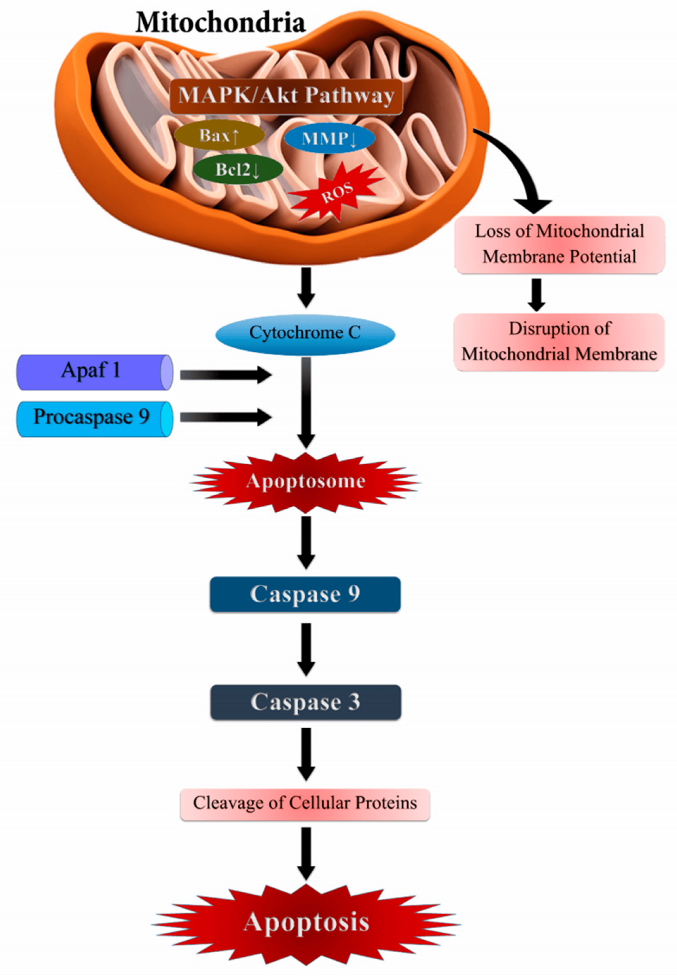
casscade of intrinsic apoptosis
ROS are generated
causes mitochondrial damage
opens mitochondrial permeability transition pore → hole in the mitochondrial membrane
collapse of mitochondrial membrane potential, loss of membrane and matrix proteins
release of cytochrome C into cytosol → activates Apaf 1 (apoptotic protease activating factor 1)
apoptosome forms
caspase enzyme activation → procaspase 9 activates executioner caspases (3, 6 and 7)
execution phase → DNA fragmentation, degredation of cytoskeleton proteins and formation of apoptotic bodies
interventions regarding rotenone
evidence for association with PD and mechanistic cause of neurodegeneration
banned in 2009 in UK
banned in USA, EU and switzerland
environmental half life of days → photodegredation
permitted for some things → piscicide
paraquat use
man made oxidant
herbicide
1950s
cheap
increased food productivity and weed control
used on 100s of crop types, mostly plantation crops → maize, organges, tea, coffee, palm oil, sugar cane
USA use troppled 1992-2018
paraquat toxicity
only associated with PD, not causal → no causal mechanism
strong comercial interests and is still exported worldwide
is a systemic poison
half life → >7 years
contaminates soil and water
no antidote to poisoning
LogP of paraquat
LogP = -6.7
hydrophilic → cannot cross BBB
acts like rotenone on isolated mitochondria but cannot enter brain its self
could enter damaged BBB or be metabolised to something which can
paraquat and PD
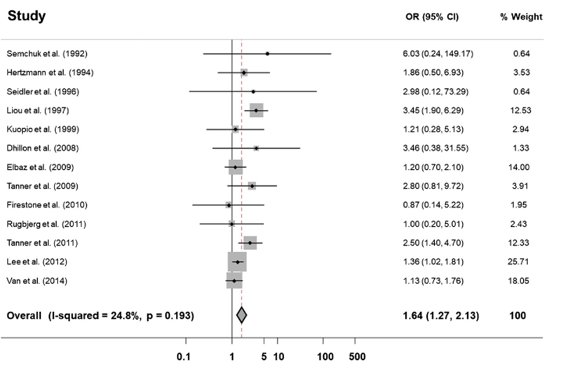
odds ratios from meta analyses
OR of 1.64
correlational, not causal
forrest plots
use in meta analysis
plot means and weights of odds ratios
calculate mean OR
confounders in the link between PD and paraquat
exposure to other pesicides
male
smoke
farmers
farm animal exposure
living on a farm
drinking well water
living in rural area
legistaltion surrounding paraquat
banned in 68 countries
banned in UK in 2007
trichloroethylene (TCE)
solvent
volatile colourless liquid
logP = 2.2 → lipophilic
used to extract fat soluble compounds
uses:
paint remover
degreaser
decaffinating coffee
dry cleaning
carpet cleaning
anaesthetics → trilene, banned 1977
persists in environment → halogenated forever chemical
found in water, food, fat and breast milk
associated with PD
studys on solvent (TCE) exposure
cohort study of US army vererans
increased PD incidence in one camp over another (OR was 1.70)
this camp has TCE contamination in the water supply → from water runnoff from decreasing and cleaning machinery
ingested in food, water and bathing water
associated with PD and no other neurological condition
twin studies
one had PD and one didnt
interviewed on pervious work
increased PD development of worked with degreaser
association not causation
TCE animal study
rat models → replicate in weeks what takes years in a man
high dose of TCE oraly dosed for 6 weeks
measured mitochondrial bioenergetics
use mitochondria from substantia nigra and compared to striatum and liver as controls
changes in bioenergetics seen only in substantia nigra
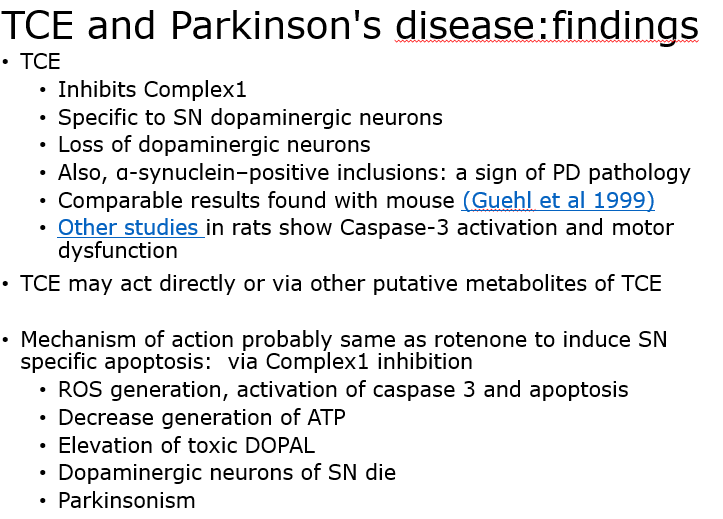
selectively inhibited complex 1
TCE mechanism
inhibits complex 1 to blovk the electron transport chain, oxygen consumption and ATP production
like rotenone
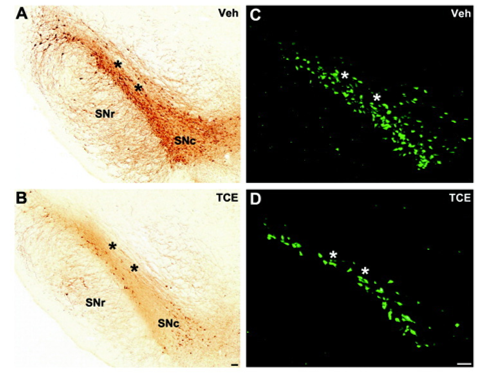
nigrostriatal DA histochemistry after TCE
loss of tyrosine hydroxylase in neurones in substantia nigra pars compacta after TCE treatment (A control vs B TCE)
loss of retrograde labelled fluorogold dopaminergic neurones in substantia nigra pars compacta (C control vs D TCE)
TCE mechanism in relation to parkinsons
has candidate toxic metabolites → DCVC, TaClo and TACH (inhibits ALDH)
current use of TCE
degreasing
chemocal feedstock
textiles
dry cleaning
military (reduced)
no longer used in:
anaesthetic
decaffination
animal feed processing
enters environment via industrial processes leaching into water supply
TCE in in human breastmilk
women with lower BMI have highest breastmilk TCE concentration
fat is protective → leeches TCE
not replicated and small sample
TCE legislation
regulated
america → centre for disease control
europe → european chemical agency
still advertised
ban on domestic use in EU
organic alternatives available