Membrane Proteins: Types, Functions, and Membrane Fluidity
 Call Kai
 Learn
Learn Practice Test
 Spaced Repetition
 Match
Match Flashcards
 Knowt Play
1/18

There's no tags or description
Looks like no tags are added yet.
Name | Mastery | Learn | Test | Matching | Spaced | Call with Kai |
|---|
No analytics yet
Send a link to your students to track their progress
19 Terms
What are the three classes of membrane proteins?
Integral proteins, peripheral proteins, and lipid-anchored proteins.
What is the function of integral membrane proteins?
They span the lipid bilayer and have various functions such as transport, communication, and attachment.
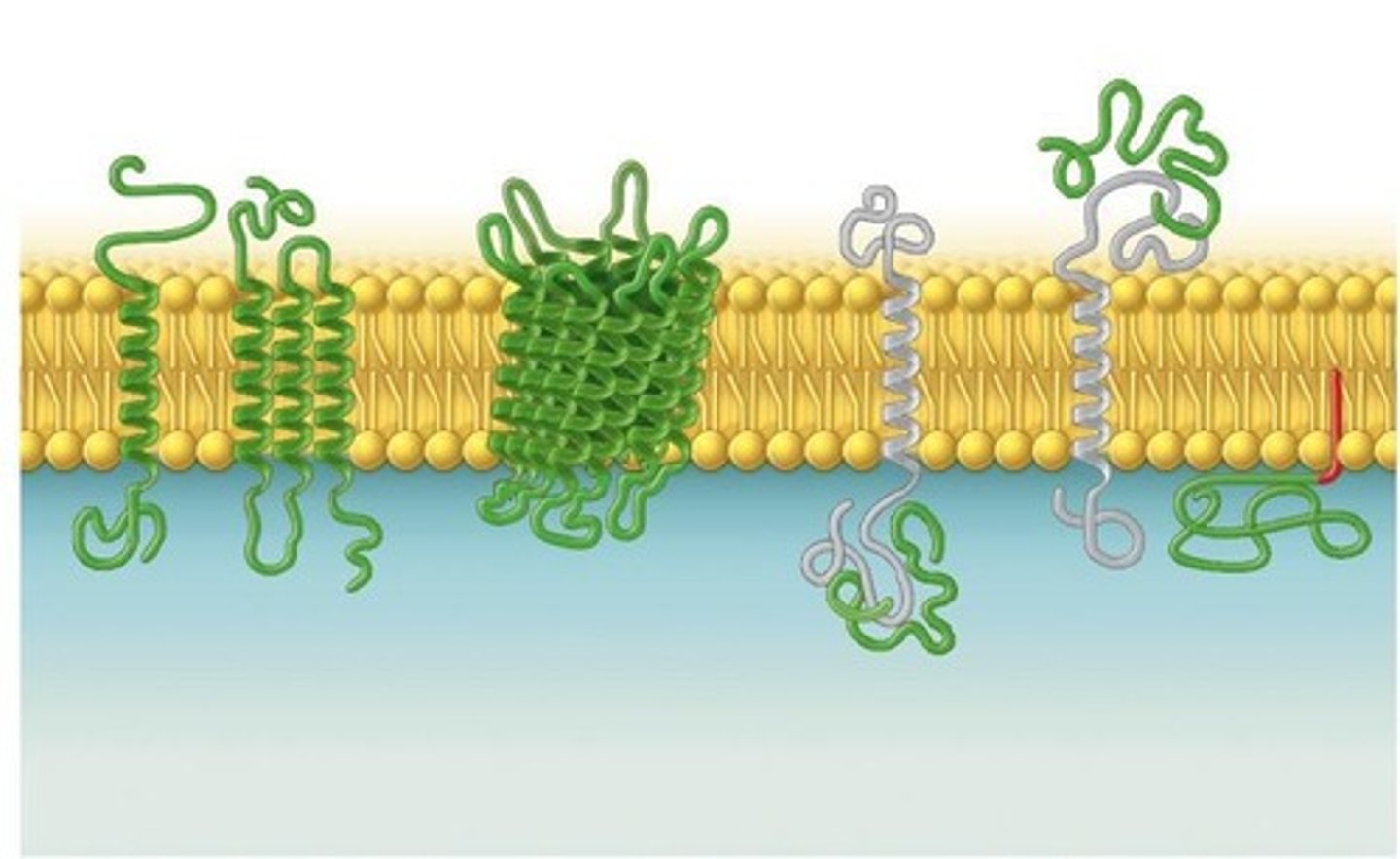
How do peripheral membrane proteins associate with the membrane?
They associate with the surfaces of the lipid bilayer.
What is the role of lipid-anchored proteins?
They attach to a lipid in the bilayer.
What is the symmetry of biological membranes?
Biological membranes are asymmetrical, with distinct lipid compositions in the outer and inner leaflets.
How does temperature affect the fluidity of biological membranes?
Warming increases fluidity (liquid crystal), while cooling decreases fluidity (crystalline gel).

What types of lipids increase membrane fluidity?
Unsaturated lipids increase fluidity.
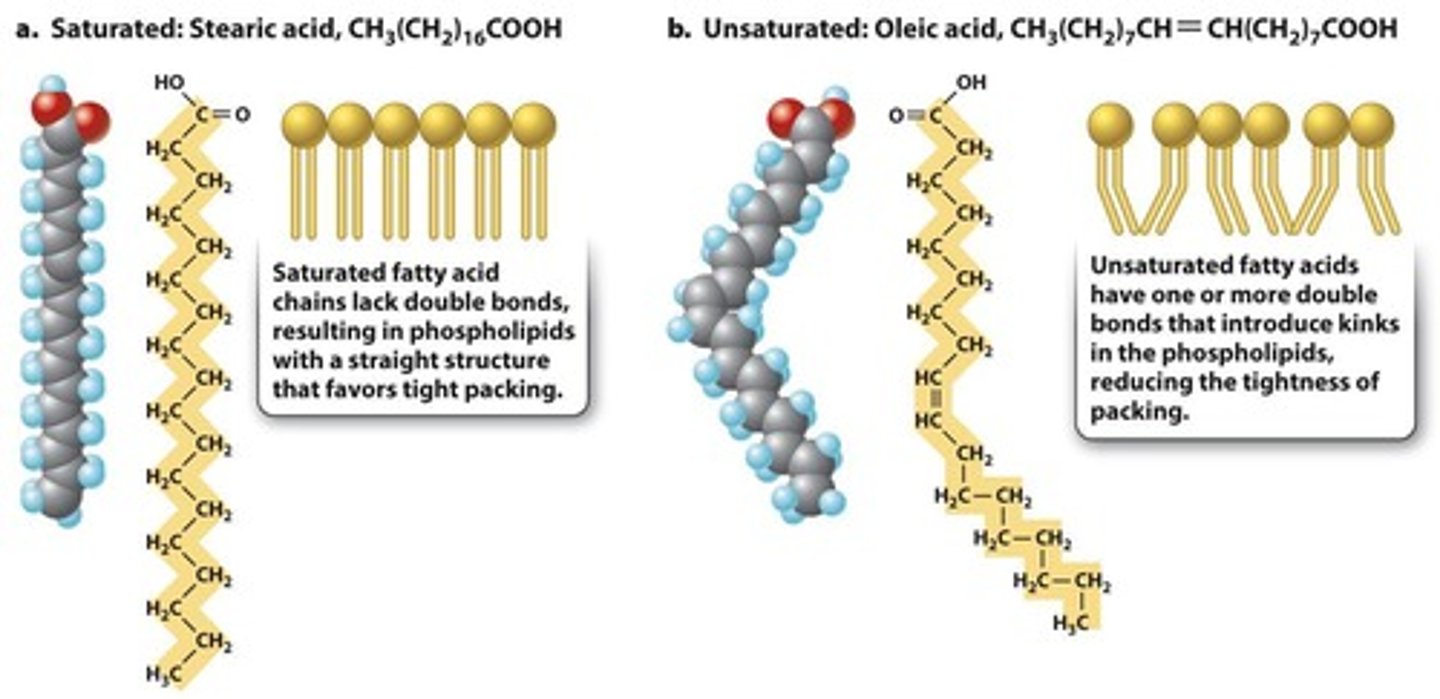
What effect do saturated lipids have on membrane fluidity?
Saturated lipids reduce fluidity.
How can lipid composition change in response to temperature?
Through desaturation of lipids and exchange of lipid chains.
What is the balance required for membrane structure?
A balance between ordered (rigid) and disordered structures allows for mechanical support and flexibility.
How does cholesterol modulate membrane fluidity?
Cholesterol stabilizes membranes at high temperatures and prevents clustering at low temperatures.
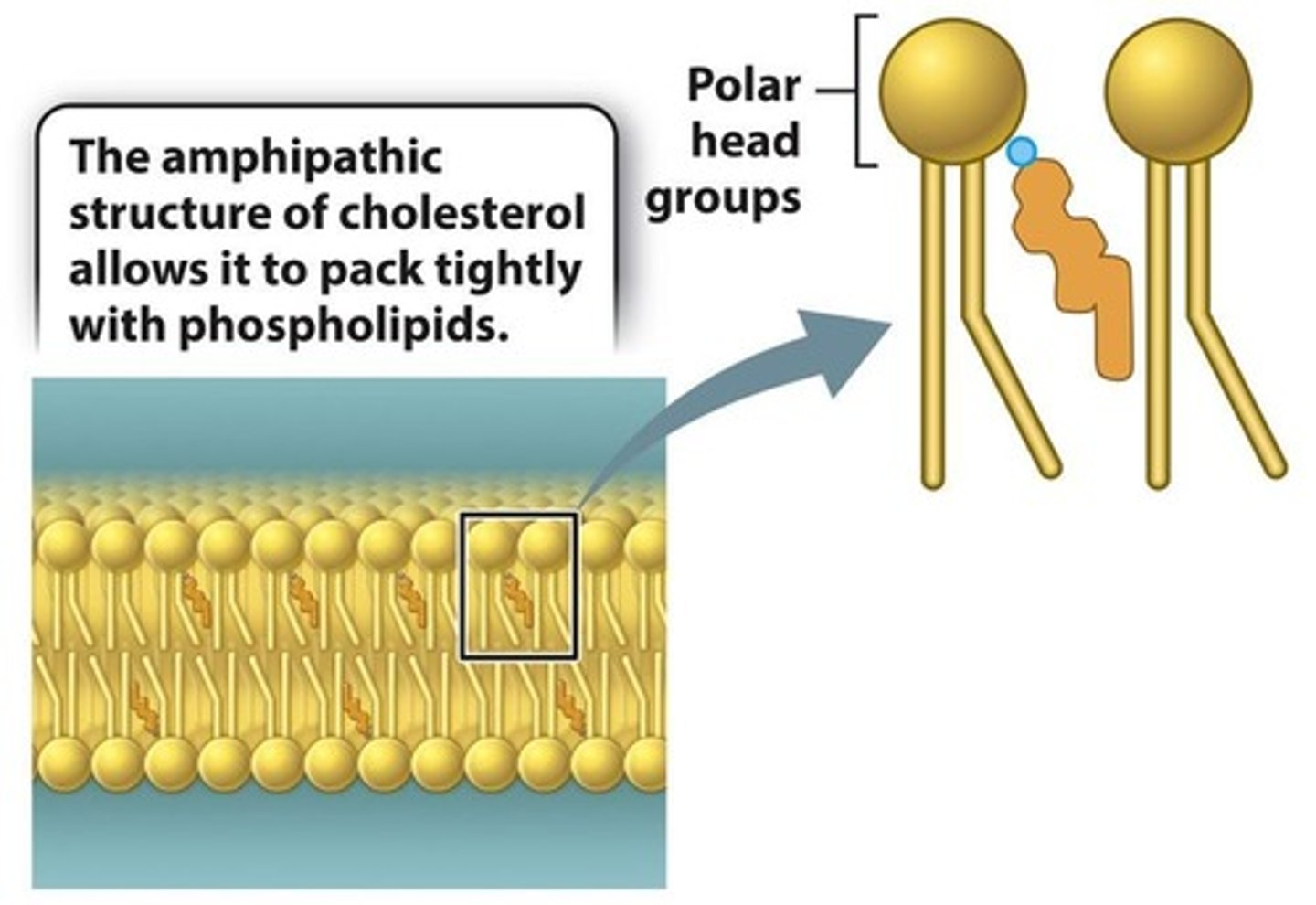
What happens to fluidity when cholesterol is added to a liquid crystal membrane?
Fluidity will decrease.
What happens to fluidity when cholesterol is added to a crystalline gel membrane?
Fluidity will increase.
What factors influence the degree of membrane fluidity?
Lipid composition and temperature.
What is the significance of membrane fluidity for cell function?
It is crucial for membrane assembly, modification, and dynamic interactions between membrane components.
What are glycolipids and glycoproteins?
They are lipids and proteins with carbohydrates attached, found in the outer leaflet of plasma membranes.
What is the transition temperature in relation to membrane fluidity?
It is the temperature at which the membrane transitions from a liquid crystal state to a crystalline gel state.
What is the required reading for this topic?
Morris Chapter 5, Sections 5.1-5.2 and Figure 5.8.
What is an optional reading for more detailed information?
Lodish Chapter 10, Section 7.1-7.2.