bio 200
 Note
Note Call Kai
 Learn
Learn Practice Test
 Spaced Repetition
 Match
Match Flashcards
 Knowt Play
1/27

There's no tags or description
Looks like no tags are added yet.
Name | Mastery | Learn | Test | Matching | Spaced | Call with Kai | Chat |
|---|
No analytics yet
Send a link to your students to track their progress
28 Terms
Information flow:
understand how genetic and environmental information is perceived, transmitted, and interpreted at molecular, cellular, and systemic levels
Structure and function:
analyze how the structure of molecules, cells, and systems is directly related to their biological roles and efficiency
Energy transformations:
study the storage, transfer, and conversion of energy in biological systems under thermodynamic principles
Evolution:
explore the mechanisms (mutation, selection, drift) driving genetic variation and population dynamics over time
Systems:
investigate interconnected biological networks and their adaptive responses to environmental changes, including feedback loops and regulatory mechanisms.
Polar bonds
unequal electronegativity
Nonpolar bonds
equal electronegativity
Polar functional groups (OH, COOH, NH2) are
hydrophilic
Nonpolar functional groups (long alkyl chains, benzene rings) are
hydrophobic
Be able to draw hydrogen bonds between biomolecules
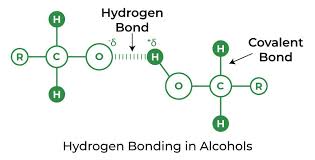
Covalent bonds
Energy Storage: Store energy in bond energy, which is the energy required to break the bond.
Example: Glucose (C₆H₁₂O₆) stores energy in covalent bonds.
Potential Energy: Stronger, shorter bonds store more energy.
Ionic bonds
Energy Storage: Store energy in electrostatic attraction between oppositely charged ions.
Example: Sodium chloride (NaCl) stores energy in the attraction between Na⁺ and Cl⁻.
Potential Energy: Stronger ionic bonds form with larger charges and smaller ions, storing more energy.
Metallic bonds
Energy Storage: Store energy through delocalized electrons in a metallic lattice.
Example: Copper (Cu) stores energy via delocalized electrons, allowing conductivity.
Potential Energy: Distributed over the entire lattice, effective for energy conduction.
Explain why breaking polar bonds releases less energy compared to breaking nonpolar bonds.
Polar bonds involve unequal sharing of electrons, leading to lower bond strength and less energy release upon breaking, while nonpolar bonds have equal sharing and stronger interactions.
Explain how DNA mutations alter protein function and affect fitness.
Genotype refers to an organism’s genetic makeup, and mutations in DNA can alter the phenotype by changing protein function.
The effects on fitness depend on whether the mutation is beneficial, neutral, or harmful. Beneficial mutations can increase fitness, while harmful mutations can reduce it.
Primary protein structure
is the sequence of amino acids in a polypeptide chain, determining the protein's unique characteristics and function.
Secondary protein structure:
hydrogen bonds form between the backbone atoms in a polypeptide chain, leading to the formation of alpha helices and beta sheets.
Tertiary protein structure:
The three-dimensional shape of a protein formed by the folding of the polypeptide chain, stabilized by interactions between side chains.
Quaternary protein structure:
interactions including disulfide bonds and hydrophobic packingbetween multiple polypeptide chains, forming a functional protein complex.
Transcription
Initiation: RNA polymerase binds to the sigma, sigma binds to promotor, helix opens, transcription begins at 1+ site
Elongation: RNA adds bases to 5’ to 3’ end
Termination: terminator sequence ends transcription, sigma dissociates
Translation
Initiation: Ribosome begins at the start codon AUG. Small ribosomal subunit bind to ribosome at Ribosome Binding Site —> codons binds to anticodons—> Large ribosomal subunit binds so that a tRNA is at the p-site
Elongation: tRNA enters A-site —> peptide bonds form between amino acids carried by tRNA —> polypeptides attached to A-site tRNAs ribosomes moving from 5’ to 3’, placing new codon at A-site
Termination: Stop codon enters A-site —> protein finishes folding
Product: protein
Transcription and translation in prokaryotic:
Because prokaryotes lack a nucleus, transcription and translation occurs in the cytoplasm
Transcription and translation in eukaryotes:
Translation occurs in the nucleus, and translation occurs in the cytoplasm
Predict phenotypes in genetic screens involving single and double mutants in metabolic pathways.
single mutants reveal where the pathway is disrupted
double mutants clarify gene order and interactions
predict phenotypes by analyzing where substrate accumulation or product loss occurs, considering upstream-downstream relationships and compensatory mechanisms
Promotors
DNA sequences located upstream of a gene that signal where RNA polymerase should begin transcription (before the 1+ region)
the TATA box
RNA polymerase
an enzyme that synthesizes RNA by reading the DNA template strand
binds to the promotor region with the help of sigma protein, unwinds the DNA helix
Transcription factors
proteins that assist in the initiation and regulation of transcription bny interacting with DNA and RNA polymerase
help RNA polymerase recognize and bind to the promotor
Predict how amino acid changes alter protein folding and function.
alter protein folding by disrupting stabilizing interactions (e.g. hydrophobic interactions, hydrogen bonds)
affect function by modifying active sites, ligand-binding pockets or allosteric regulation. The severity of the impact depends on the nature of the substitute (how similar it is to the original), its location, and the protein’s structural and functional context