BHS Muscle Physiology
 Call Kai
 Learn
Learn Practice Test
 Spaced Repetition
 Match
Match Flashcards
1/36

There's no tags or description
Looks like no tags are added yet.
Name | Mastery | Learn | Test | Matching | Spaced | Call with Kai |
|---|

37 Terms
epimysium
outermost layer of muscle
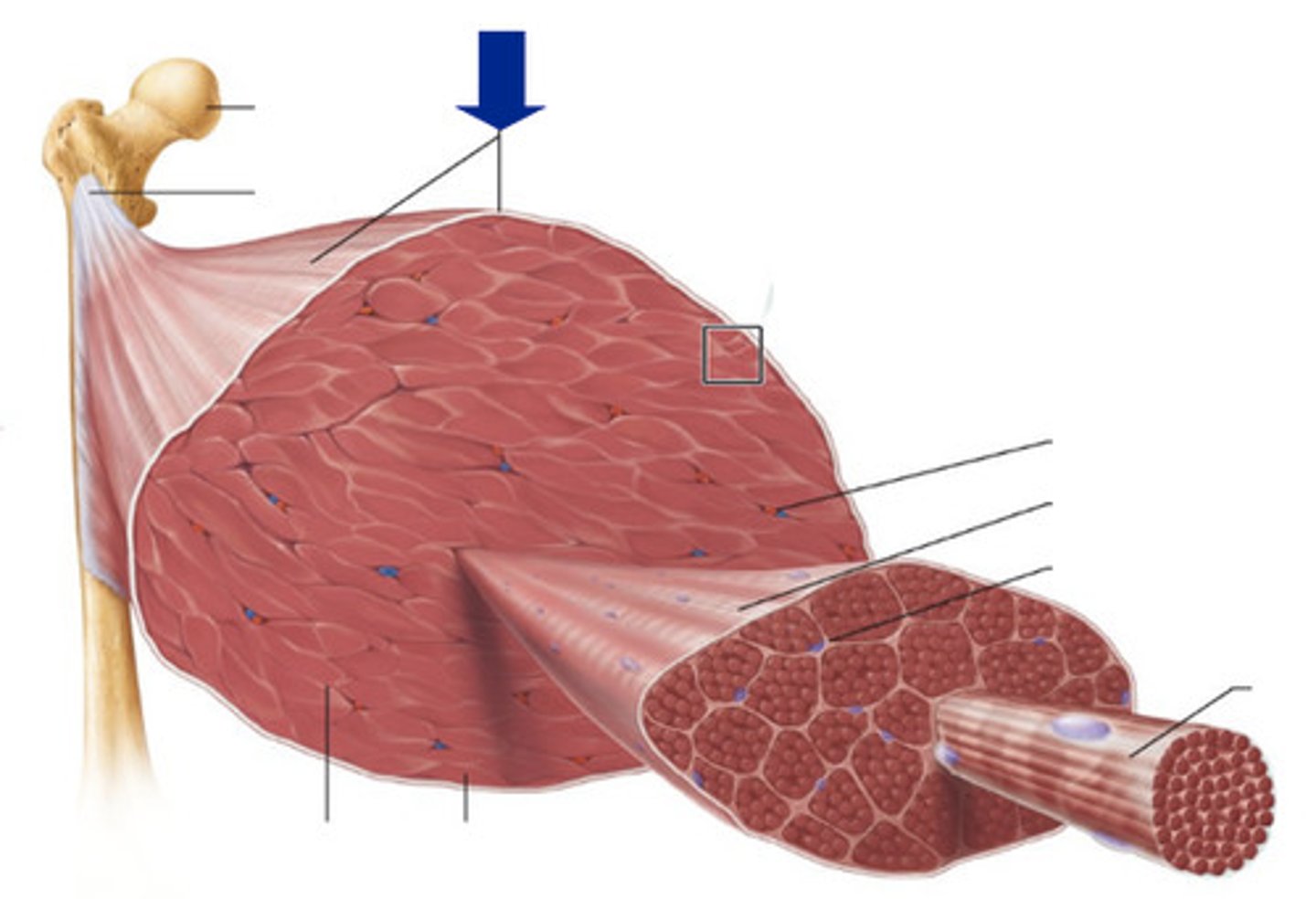
perimysium
connective tissue dividing muscles into fascicles
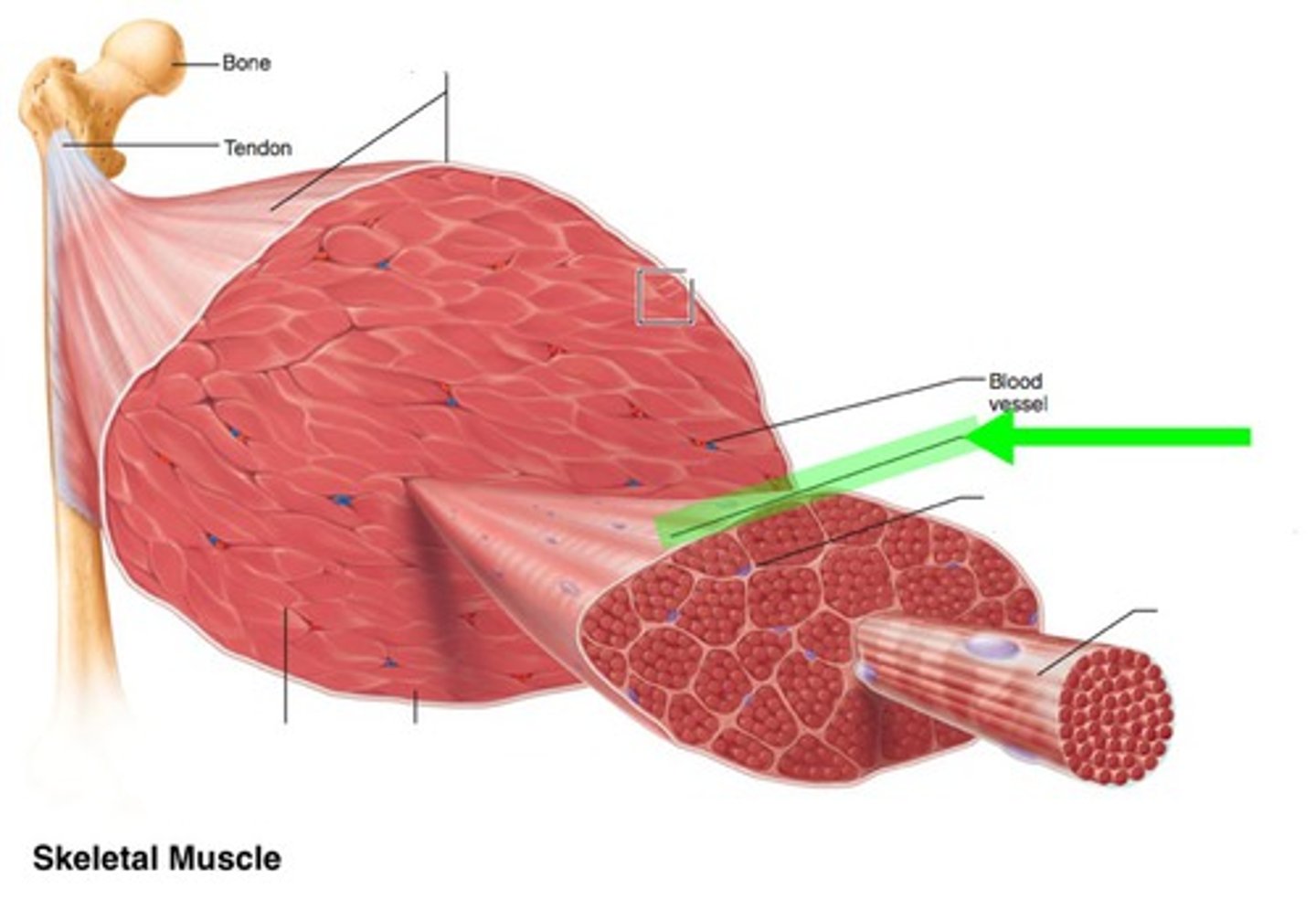
muscle fascicle
made of bundles of muscle fibers
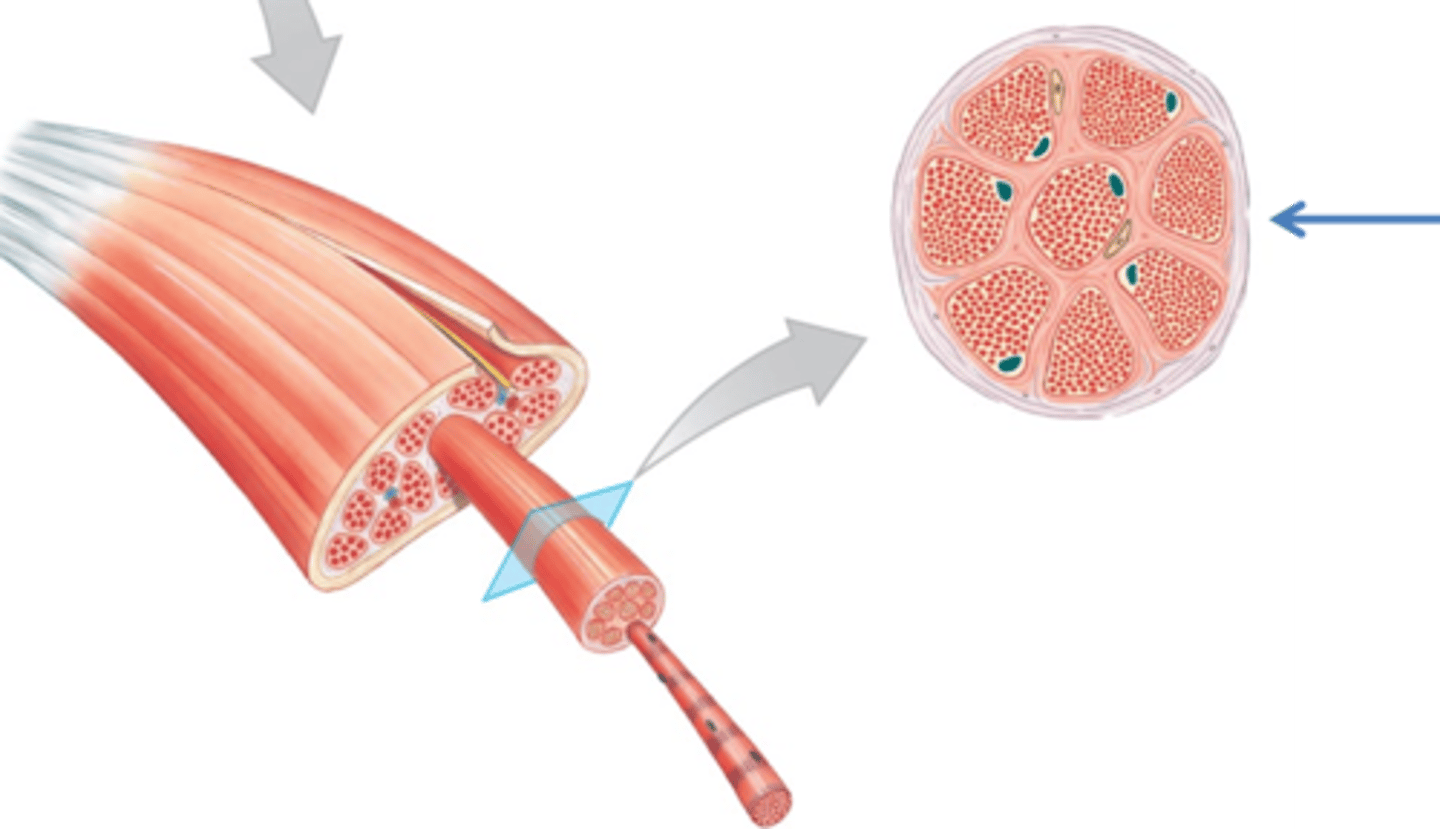
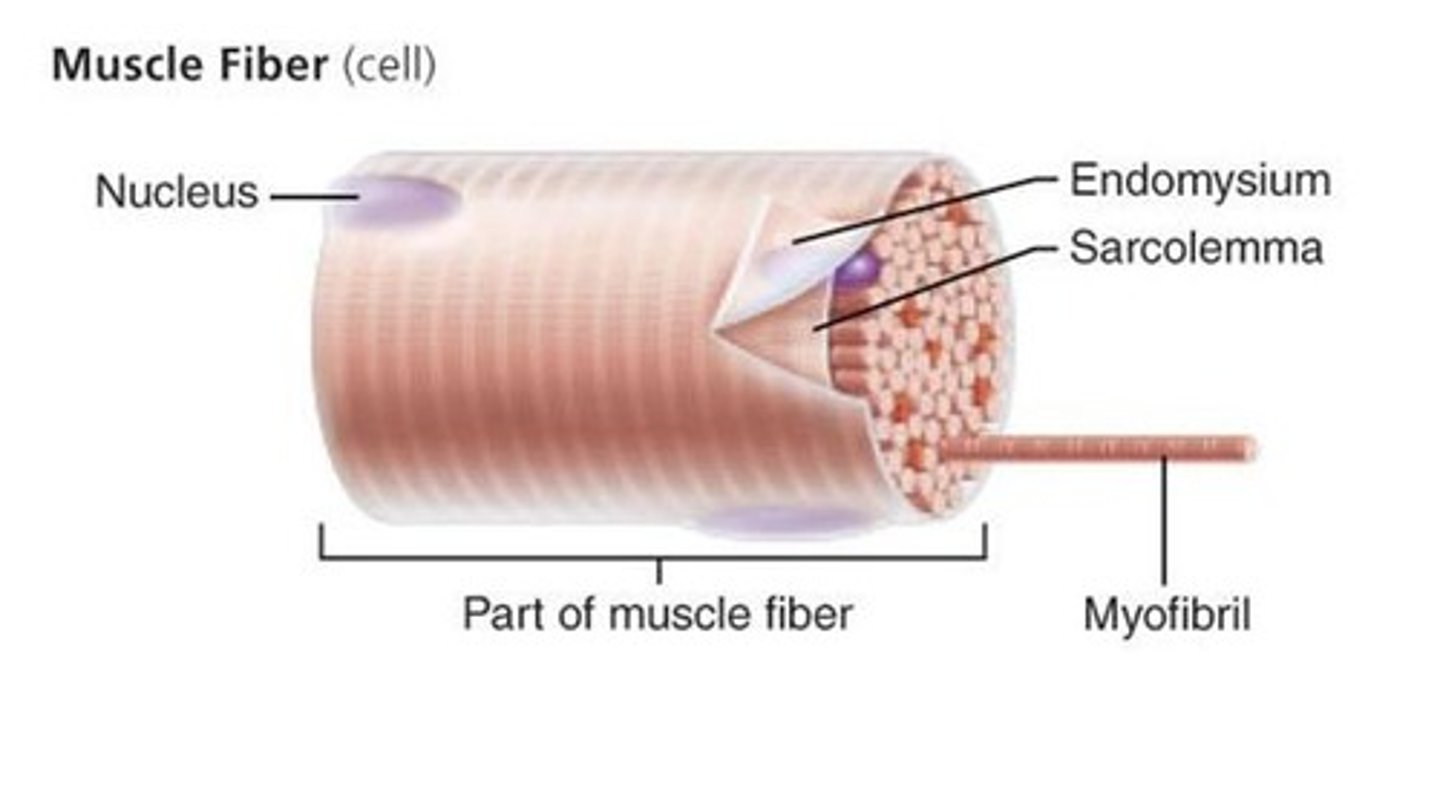
endomysium
innermost connective tissue dividing fascicles into muscle fibers
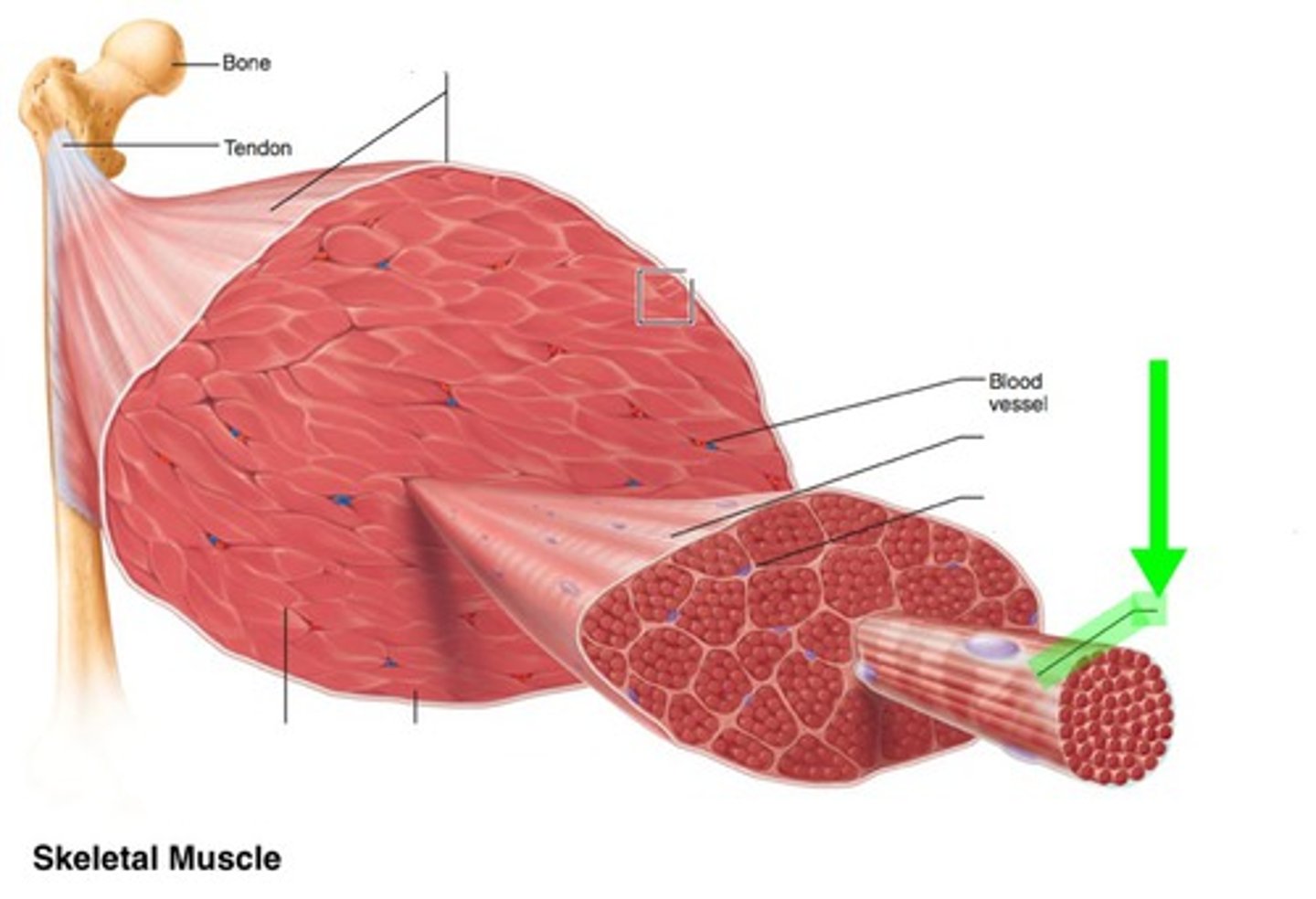
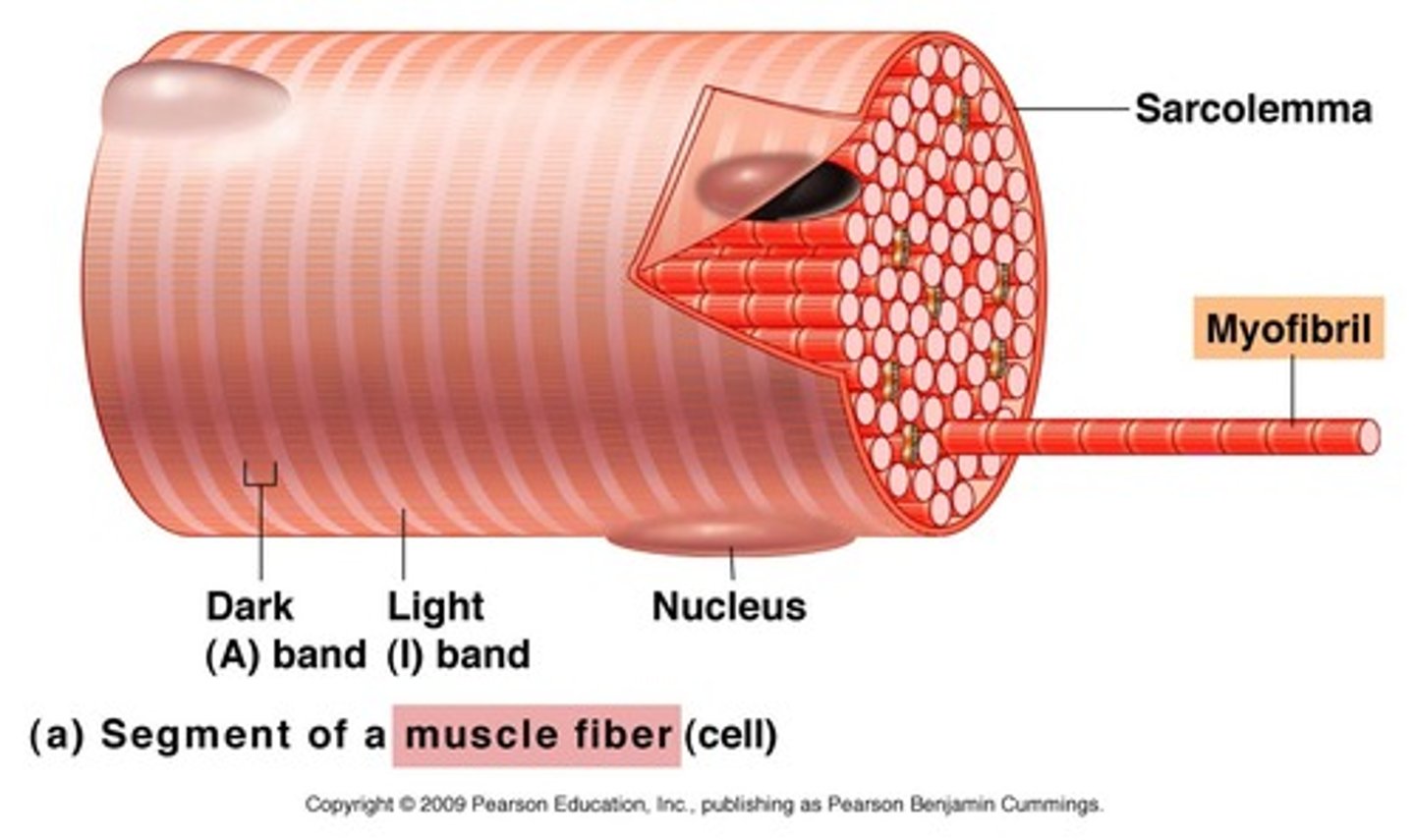
sarcolemma
cell membrane of muscle cell
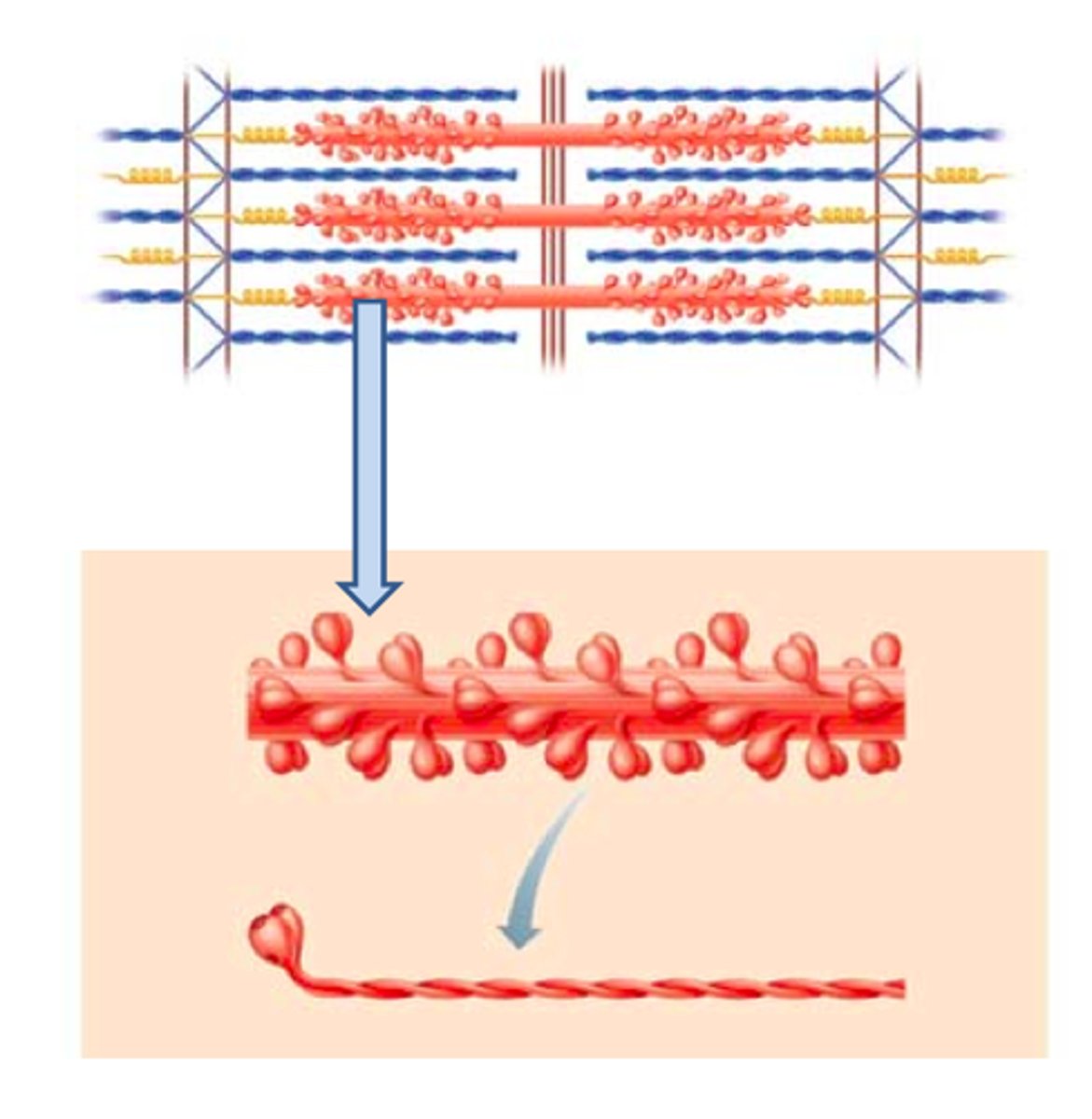
myosin
thick filament
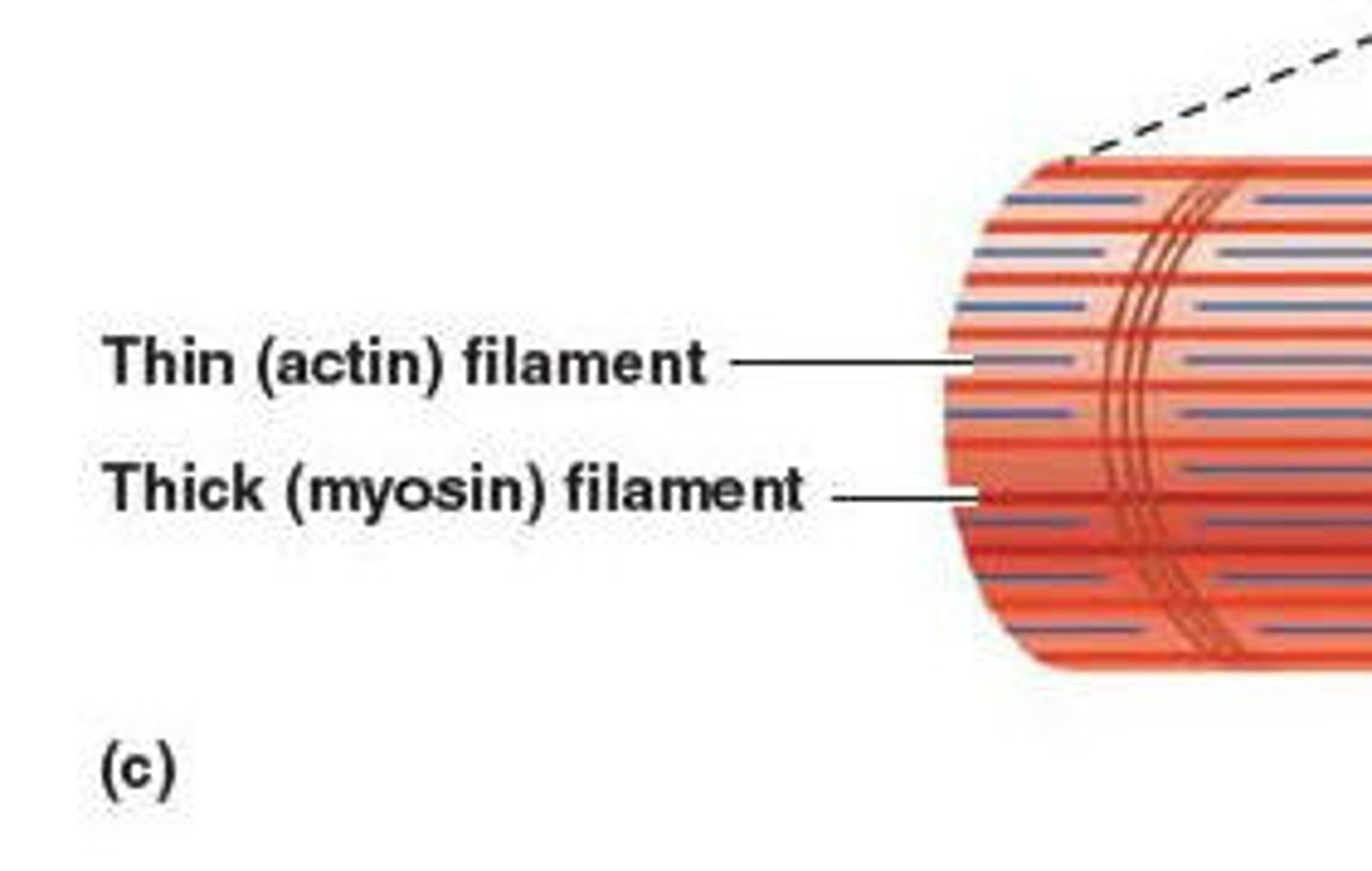
actin
thin filament
myofibrils
cells in a skeletal muscle (filled with actin and myosin)
sarcomere
THE UNIT OF CONTRACTION IN A MUSCLE FIBER; repeating unit of myofilaments like actin and myosin
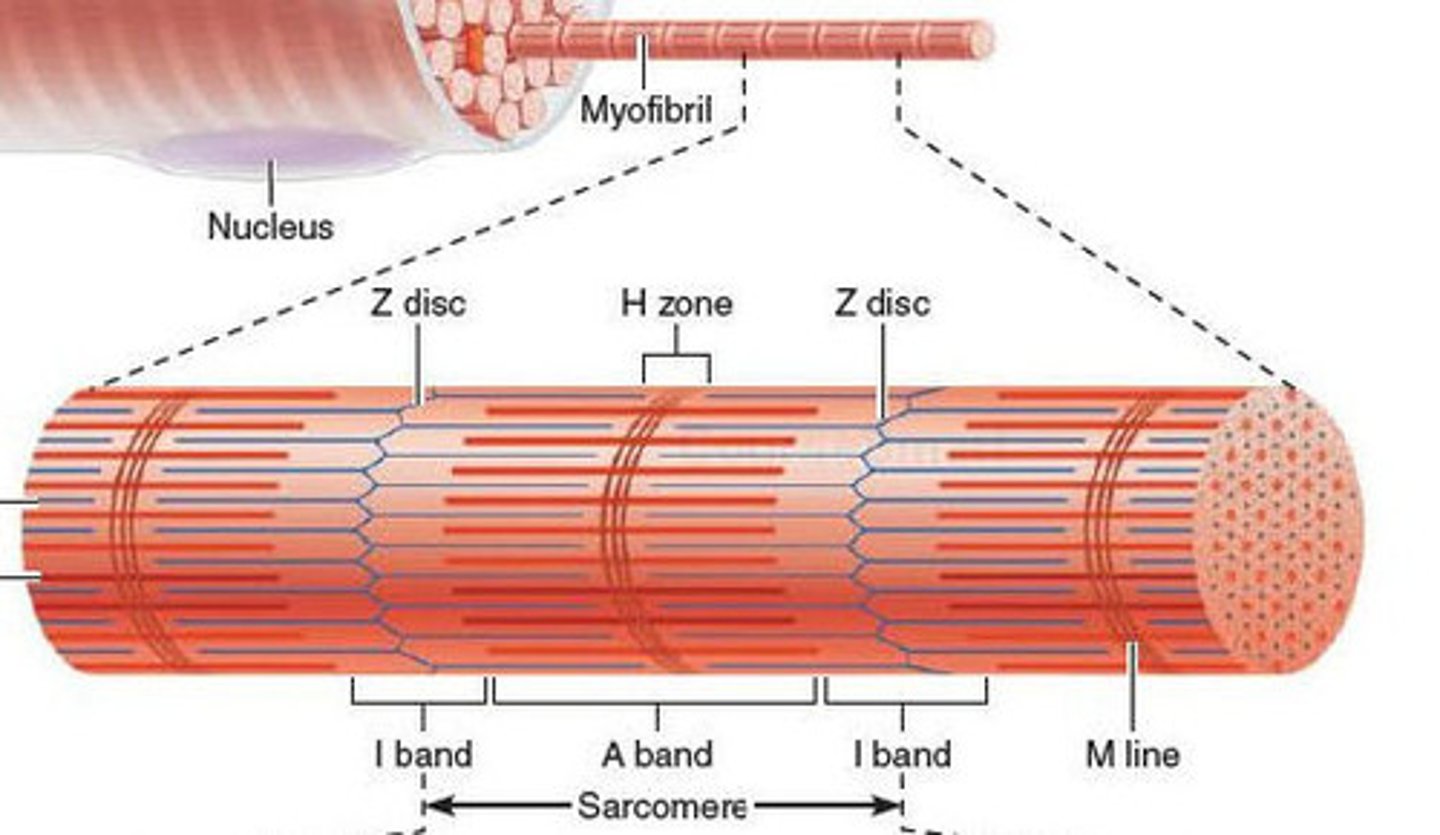
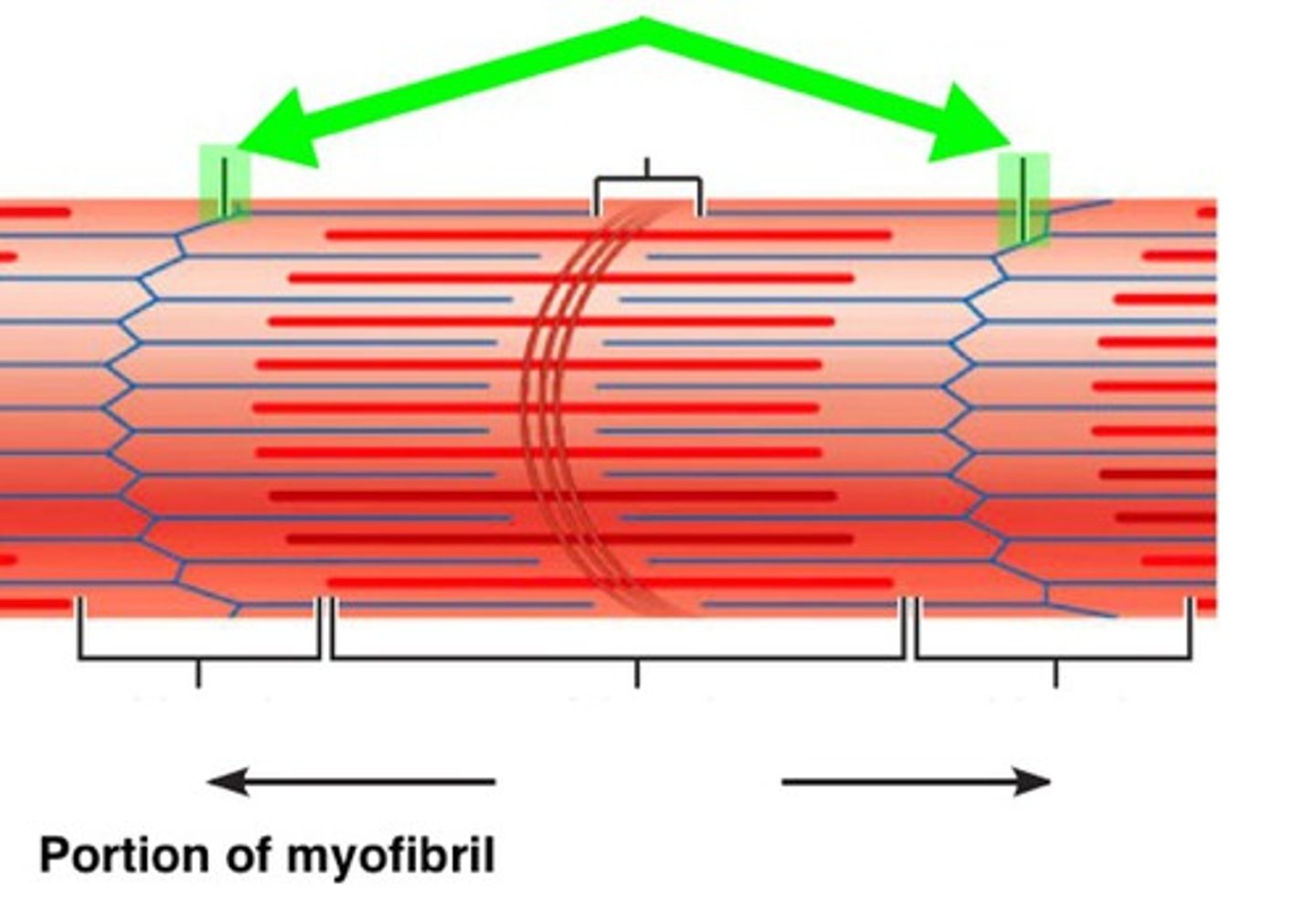
Z line
where actin is attached
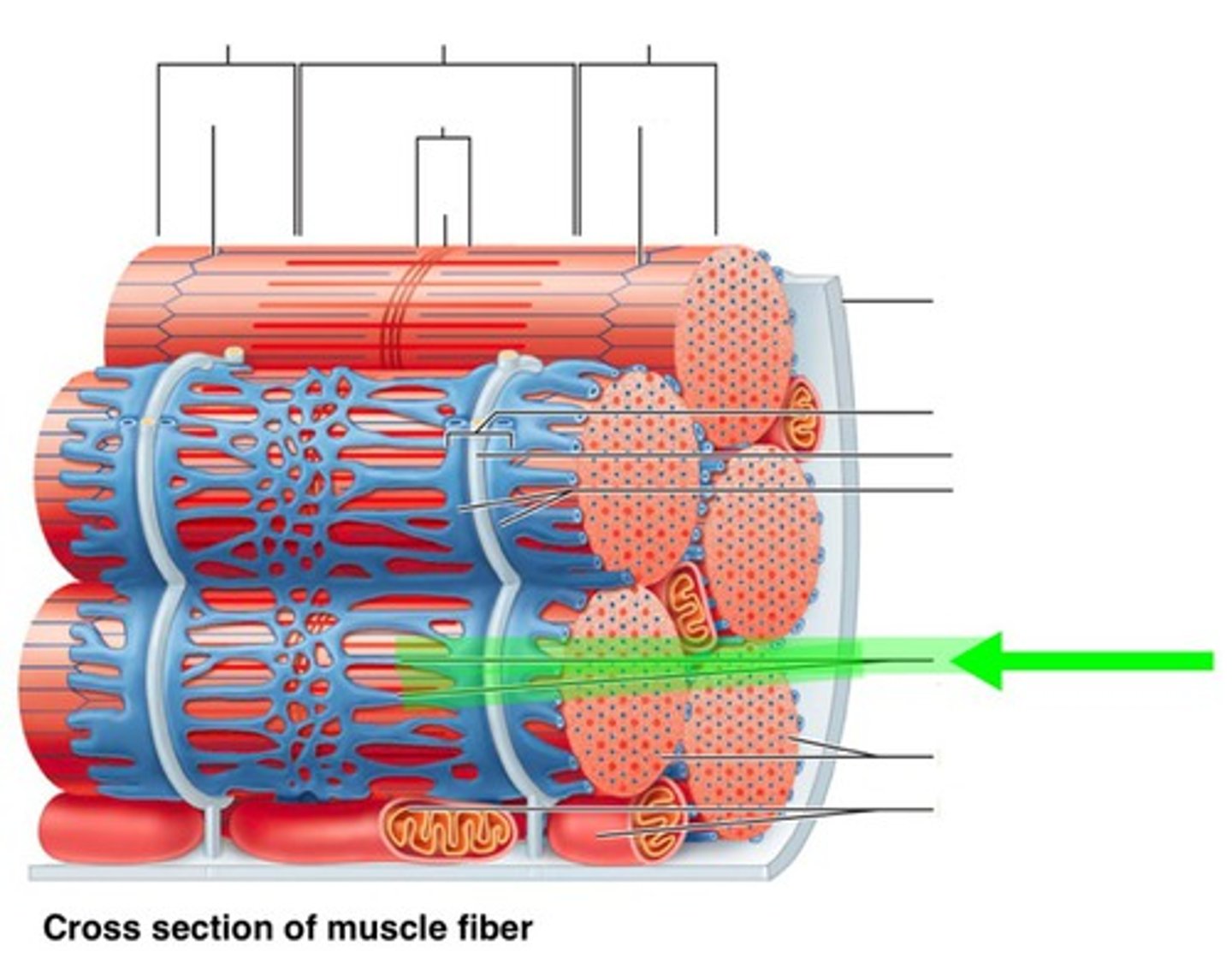
sarcoplasmic reticulum
network of membranous channels around myofibrils; contains Calcium ions
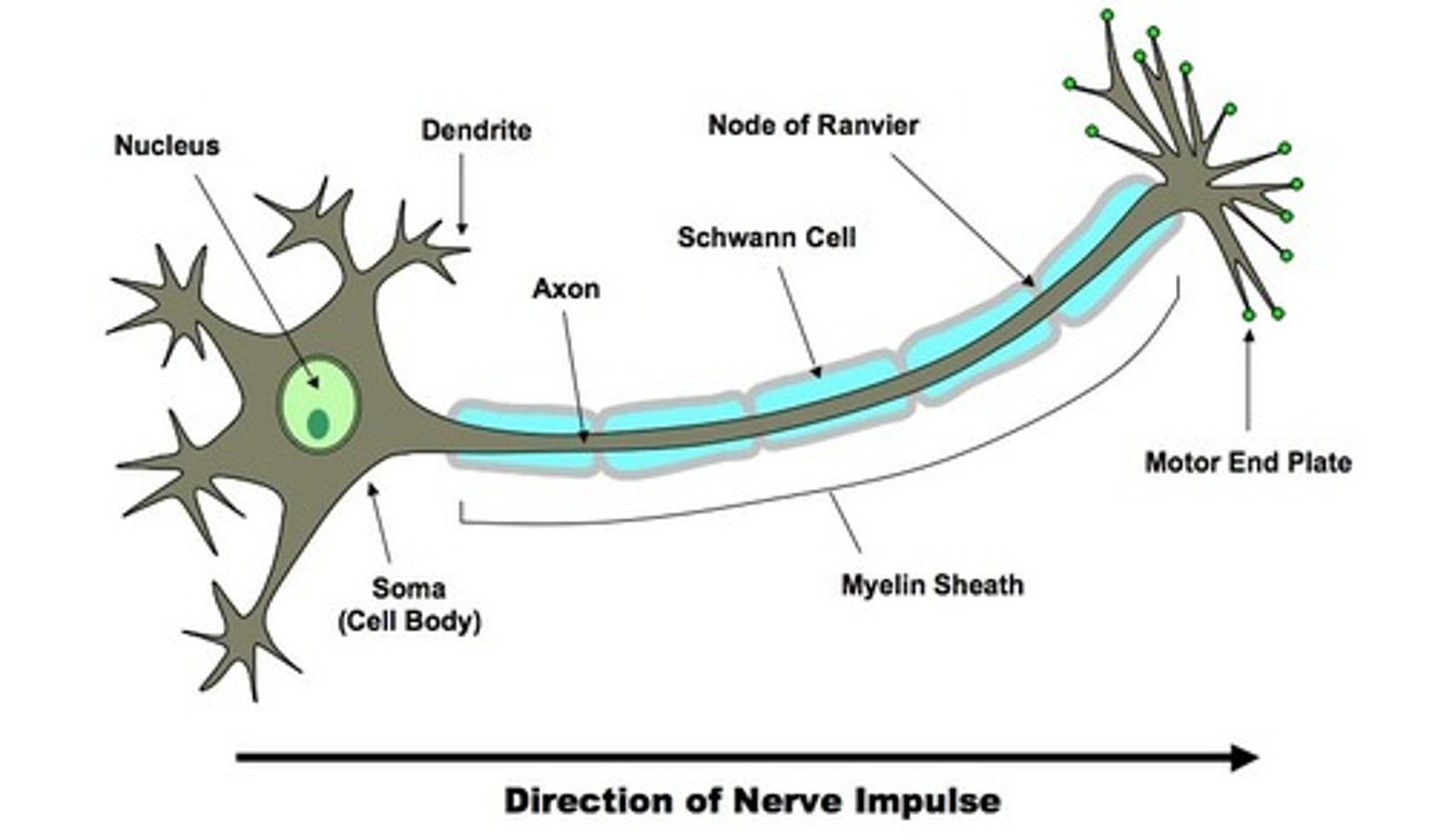
motor neurons
neurons that control muscle contraction
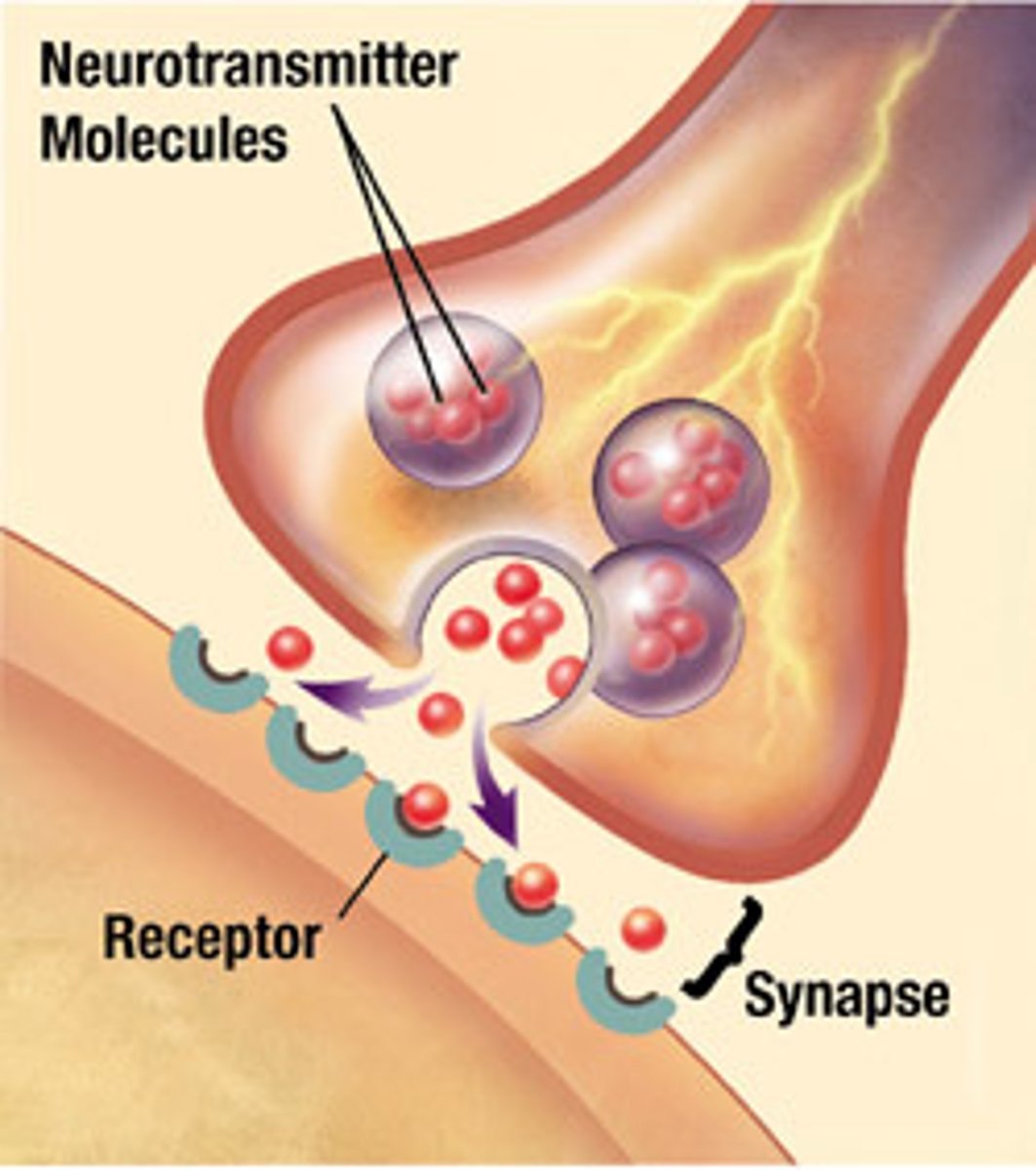
neurotransmitters
chemicals that travel over synaptic cleft (like acetylcholine)
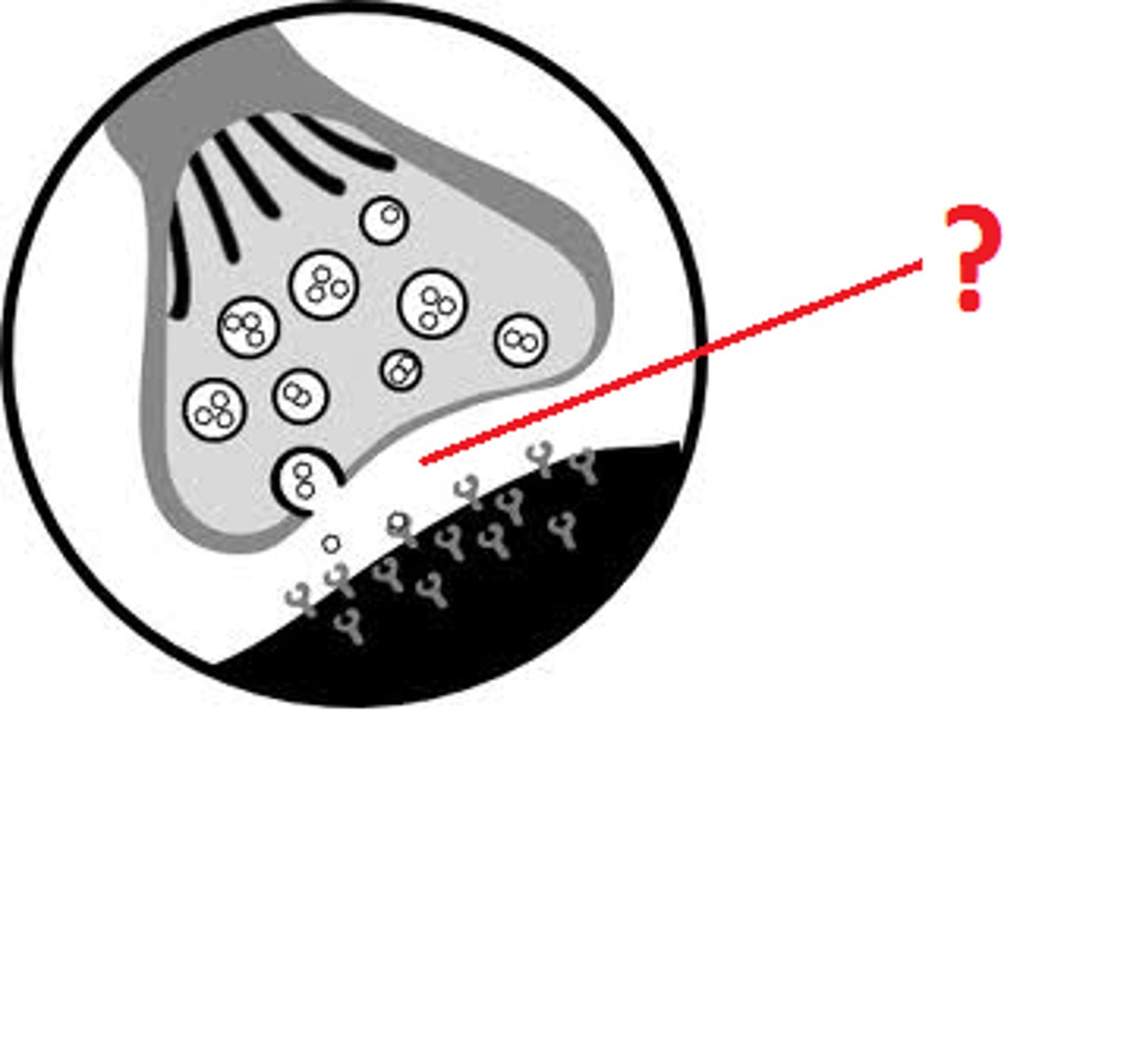
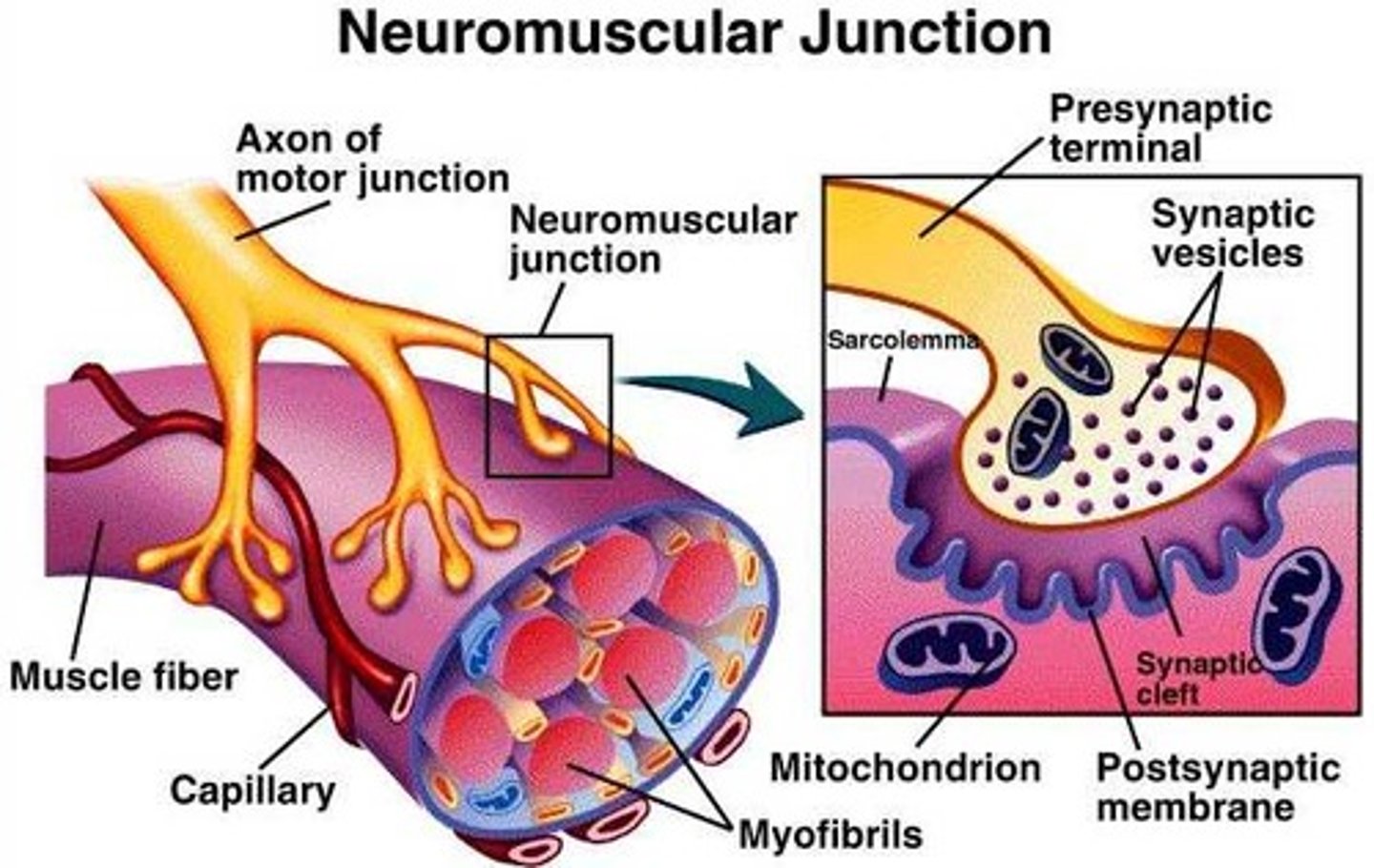
synaptic cleft
gap between motor neuron axis and motor end plate
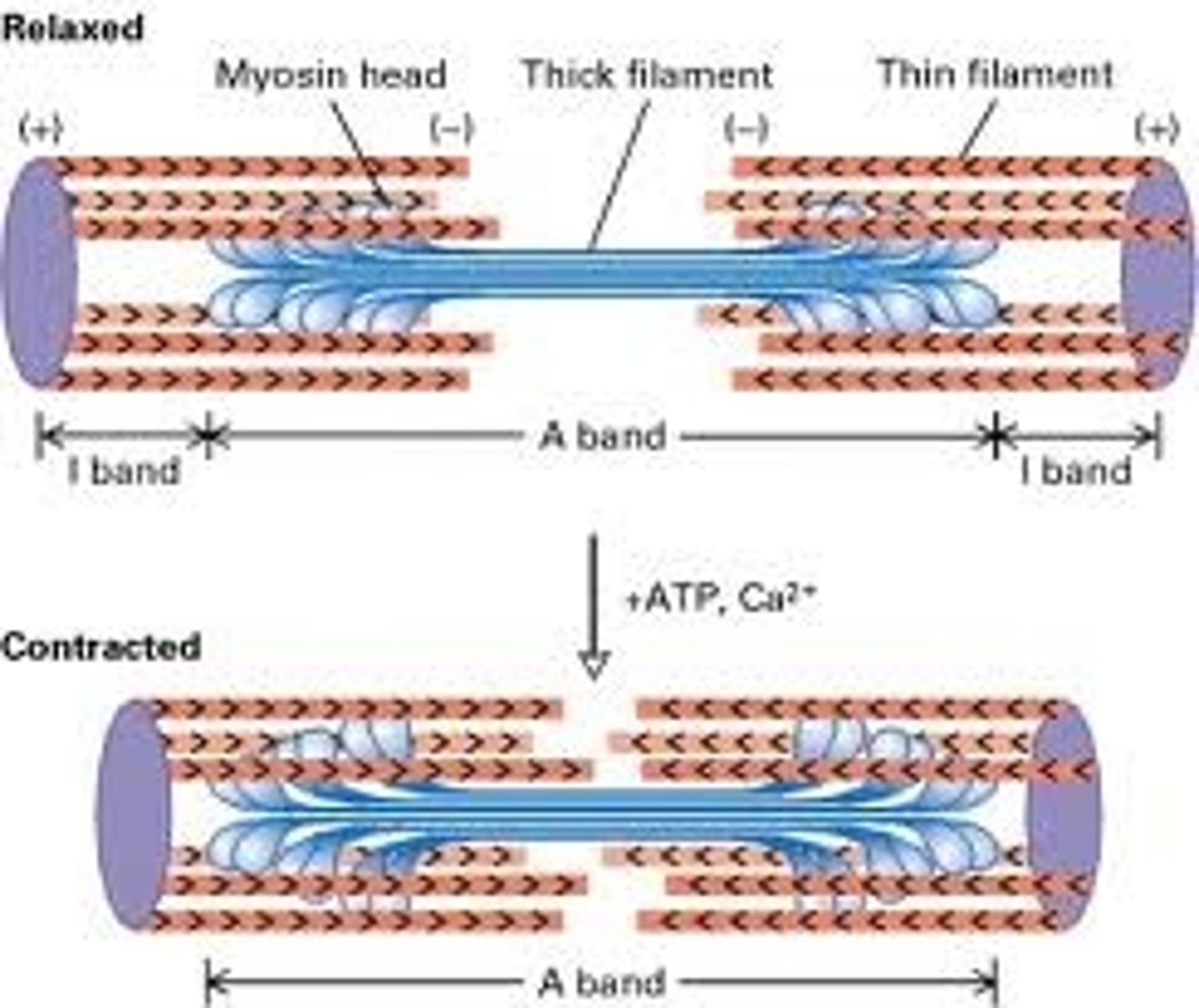
sliding filament model
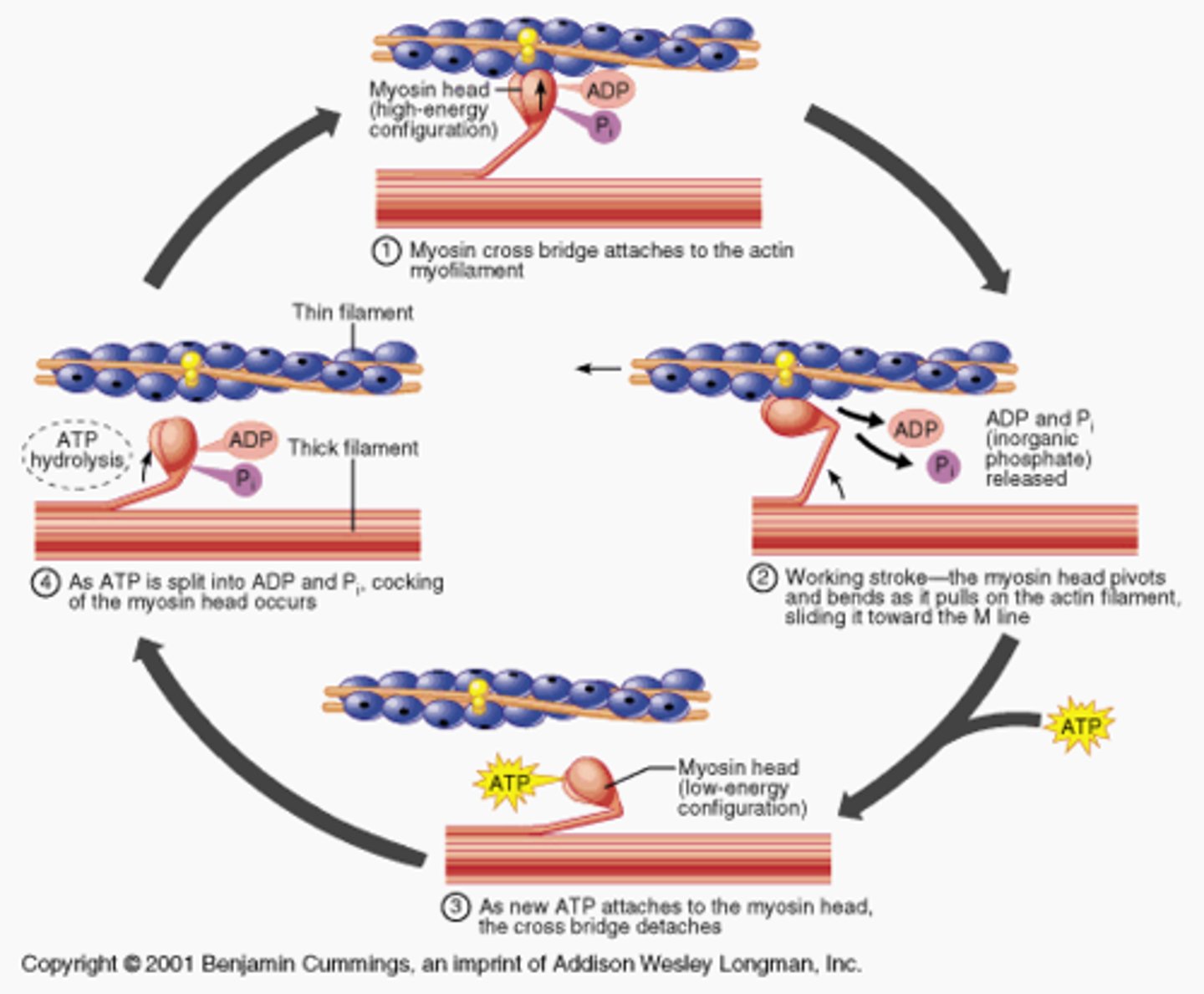
actin and mysoin (myosin pulls actin toward m line/middle) moving past each other to shorten sarcomere
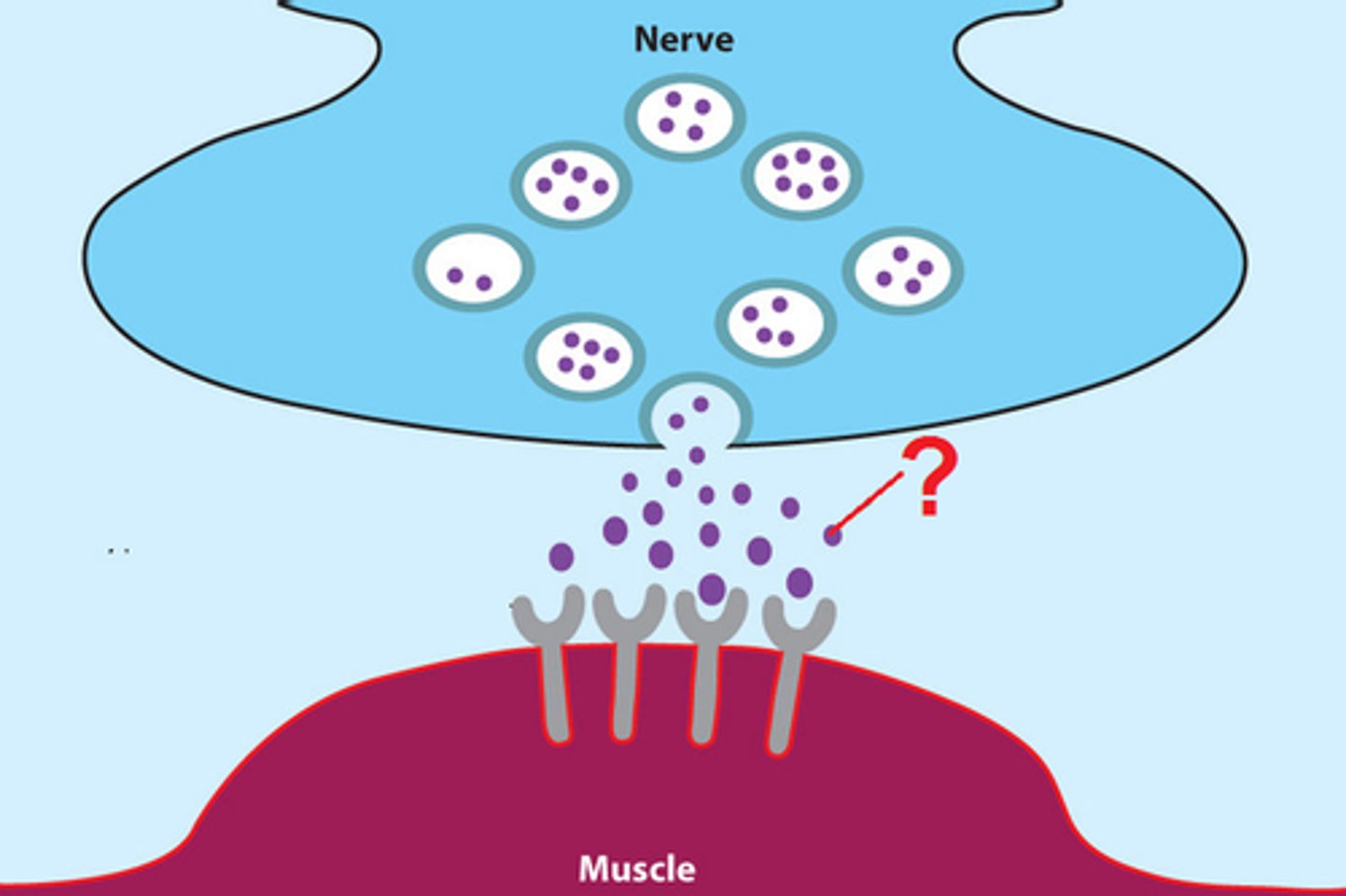
acetylcholine
neurotransmitter for muscle contraction
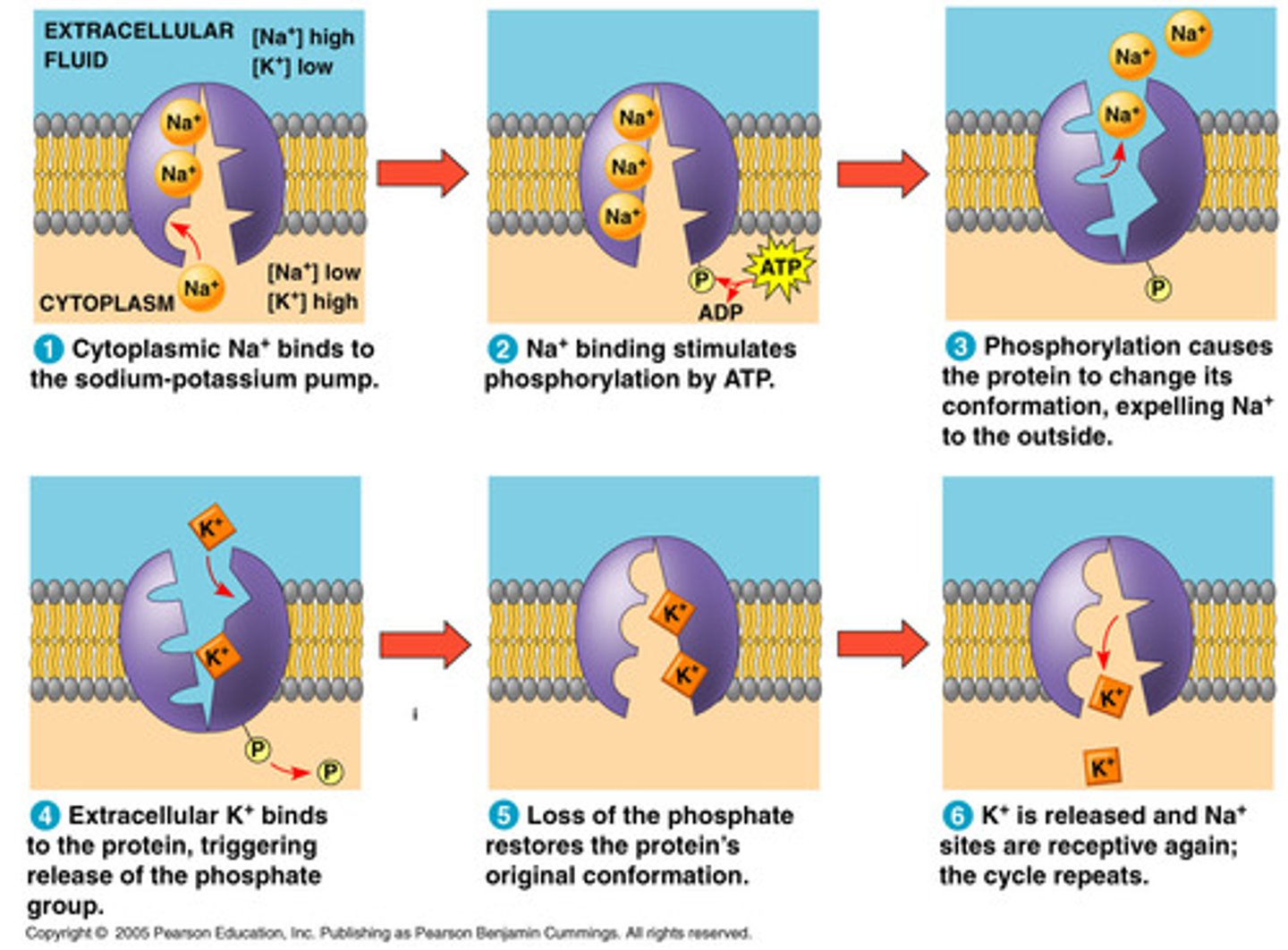
Na+
stimulates electrical impulse by rushing into sarcolemma
Ca+
intiates sarcomere contraction
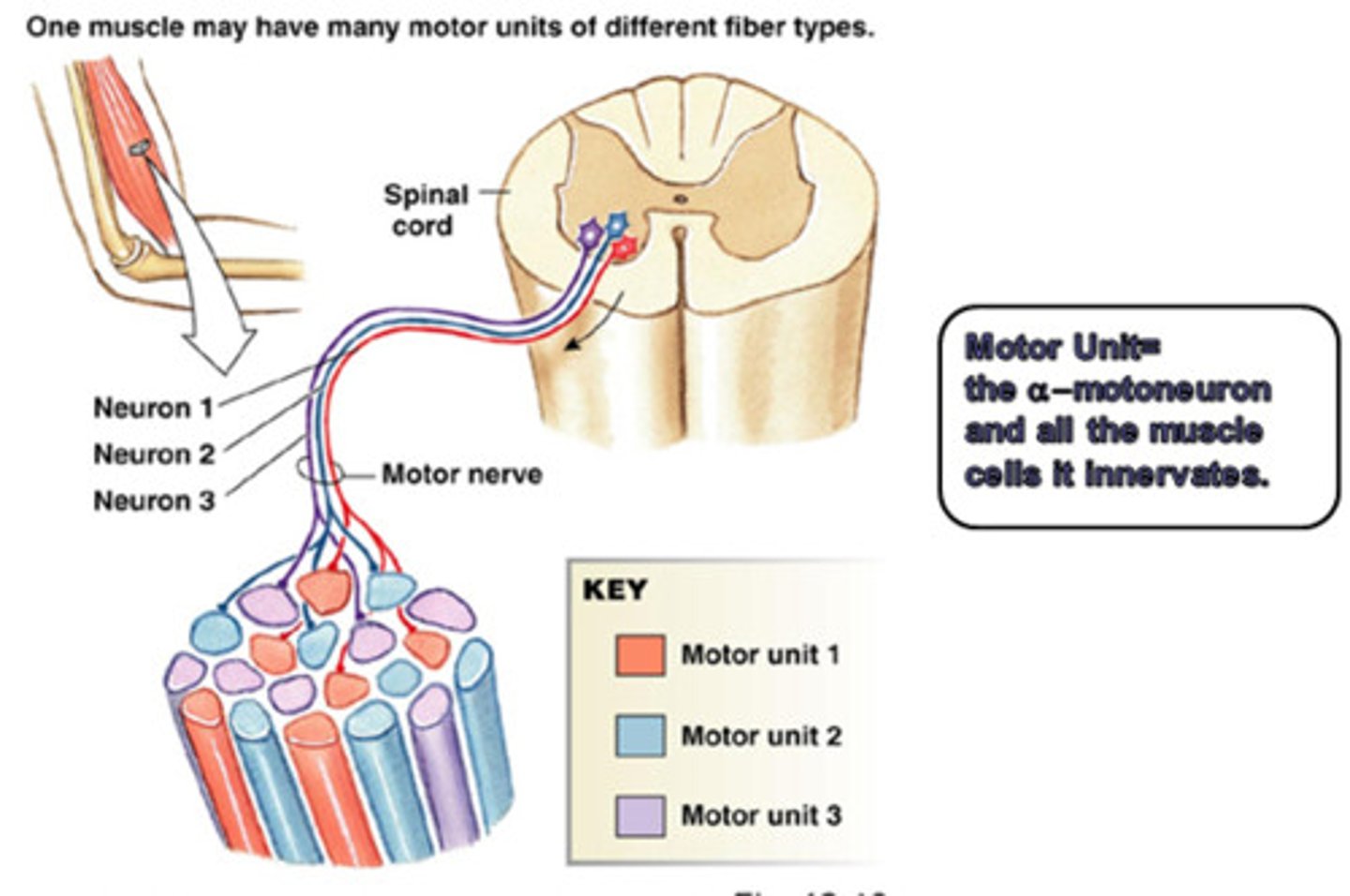
motor unit
A motor neuron and all of the muscle fibers it innervates
Glycolysis
first step in releasing the energy (2ATP) of glucose, in which a molecule of glucose is broken into two molecules of pyruvic acid
aerobic respiration
last energy pathway which gathers the most ATP (32-38ATP) but, oxygen must be utilized
motor end plate
synapse between the axon terminal of a motor neuron and the section of the membrane of a muscle fiber with receptors for the acetylcholine released by the terminal
sliding filament theory
theory that actin filaments slide toward each other during muscle contraction, while the myosin filaments are still
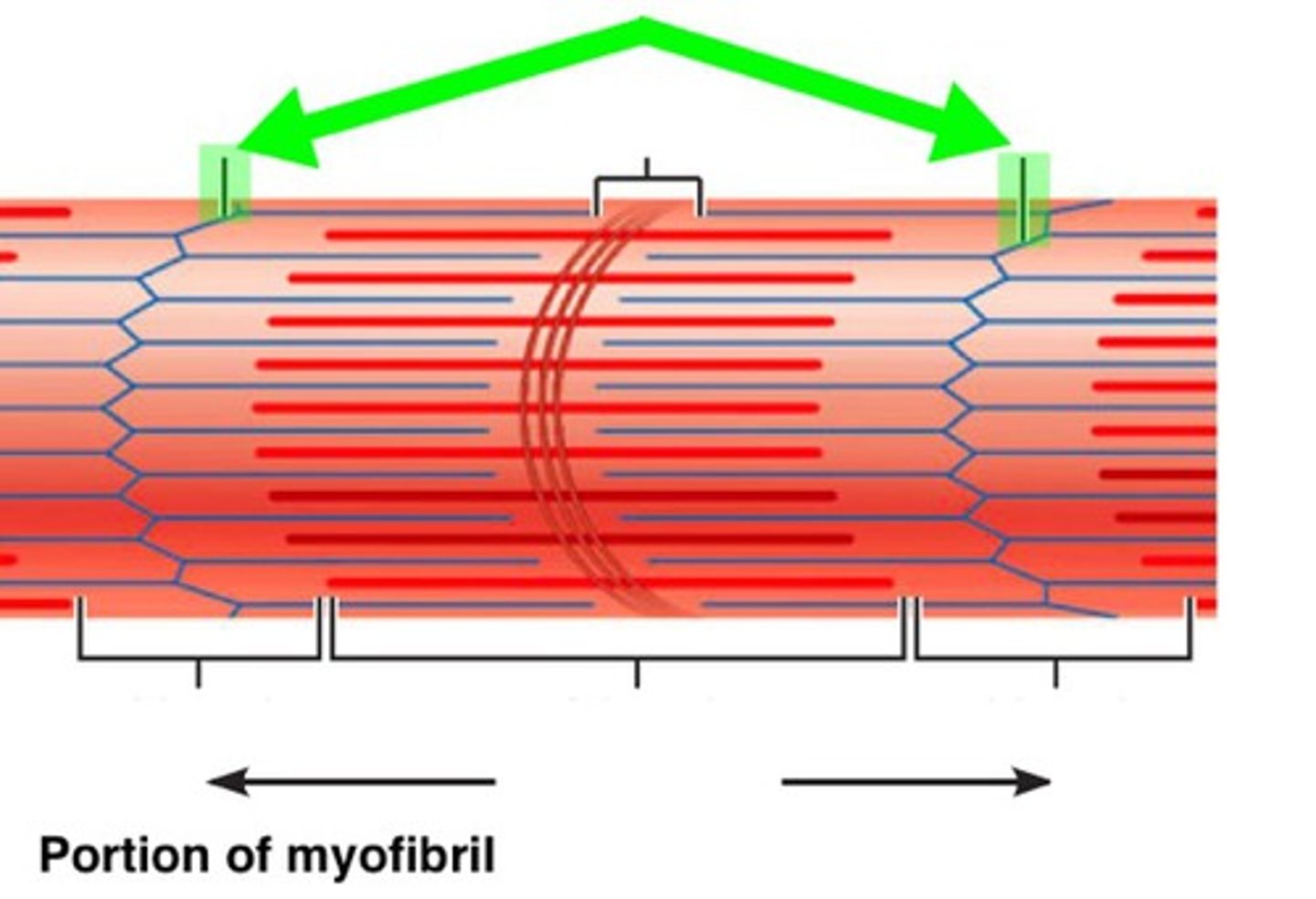
TERM
Z disc
DEFINITION
Tendons
Connect muscle to bone. Made of very tough collagen fibers continuous with the fascia layer surrounding a muscle
Sarcolemma
Cell membrane of a muscle cell.
Myofibrils
Long fibers that make up muscle cells. Made of thick filaments (myosin) and thin filaments (actin) that contract the muscle.
Epimysium
A sheath of elastic tissue that surrounds an entire muscle and protects muscles from friction against bones and other muscles.
Perimysium
Holds the fascicles together, provides structural support for the muscle.
Endomysium
Connective tissue surrounding each individual muscle fiber. Contains nerves and blood vessels.
Fascicle
A bundle of muscle fibers.
Which types of muscle move voluntarily?
Skeletal muscle (not cardiac or smooth)
Z disc
Separates the sarcomeres from one another; where actin filaments intersect.
A band
The entire length of myosin.
I band
Thin filaments only.
H zone
Thick filaments only.
Do the lengths of actin and myosin change during a muscle contraction?
No. They just move so that they are overlapping more.