Hinduism Final 2026
 Call Kai
 Learn
Learn Practice Test
 Spaced Repetition
 Match
Match Flashcards
 Knowt Play
1/52

There's no tags or description
Looks like no tags are added yet.
Name | Mastery | Learn | Test | Matching | Spaced | Call with Kai |
|---|
No analytics yet
Send a link to your students to track their progress
53 Terms
Brahmin, Kshatriya, Vaishya, Shudra
What are the 4 caste systems?
Brahmin
The highest of the four classes of the caste system, traditionally made up of priests
Kshatriya
The second of the four classes of the caste system, traditionally made up warriors and administrators
Vaishya
The third of the four classes of the caste system, traditionally made up of producers, such as farmers, merchants, and artisans
Shudra
The lowest of the four classes of the caste system, traditionally made up of servants and laborers
Caste System
Traditional division of Hindu society into various categories; there are four main varnas or classes: brahmin, kshatriya, vaishya, and shudra; each class contains numerous subgroups, resulting in more than three thousand categories
*The caste system is not based on amount of wealth, but rather based on the closest to ritual purity
*Birth-based
Dalits "down-trodden"
Outcastes
Exiled from society
Worst types of jobs
Discrimination
Gandhi - "God's children" or harijan
Worked for legal rights for the Dalits
Student, Householder, Forest Dweller, Sannyasa
Stages of Life (Hinduism)
*Relevant for males who belong to vaishya, kshatriya, and brahmin
Student Stage
Initiation ritual at the time of puberty
Usually period of 12 years (until marriage)
The student lived in his guru's home and learned scriptures, philosophy, science and logic
Strict code of conduct
Intense study of the Vedas and other sacred literature
Householder Stage
Marriages are traditionally arranged
Student is expected to marry and raise a family, earning well by righteous means to provide for his wife and children
Support his parents and give generously to charity
Pursuing a career and raising a family are central
Birth of the first grandchild marks the start of stage three
Forest Dweller Stage
Man may choose to ask his wife to accompany him through this stage
Allows him to retreat from worldly bonds in order to engage fully in a spiritual quest
Generally around age 55, the householder is expected to hand over the responsibility of the family to his children and retire to the forest
Continue to observe continence and devote himself to contemplation on God, all to prepare himself for life's final phase
Sannyasa Stage
Wandering ascetic for when the forest dweller felt enough inner strength to totally renounce all possessions and lead the life of itinerant monk
He would move about constantly from place to place, begging his good and devoting himself to mediation, worship of his deity and contemplation of scriptures
Stage is for forest dwellers who are ready to return to society but remain detached from the normal attractions and distractions of social life
Engaged with the world but not attached to it
Women who have accompanied their husbands into the forest might naturally advance to the fourth stage as well, and having transcended the ordinary ways of this world, they detached from each other
Kama, Artha, Dharma, Moksha
Four Goals of Hinduism - POSSIBLE EXTENDED RESPONSE
Kama
Pleasure, especially of sensual love; one of the four goals of life
-Pursed ethically according to dharma
Artha
Material success (houses, jewelry, etc), and social status, prestige - Pursed ethically according to dharma, don’t build up status at expense of another
Book Definition: material success and social prestige, one of the four goals of life
Dharma
ethical duty (gender, caste, stage of life) based on the divine order of reality; one of the four goals of life
-Pursed out of a sense of joy rather than obligation
Moksha
Liberation or release of the individual self, atman, from the bondage of samsara; salvation; one of the four goals of life
-Soul/atman merges back into Brahman (Not interim goals or householder stage)
Karma Marga, Jnana Marga, Bhakti Marga
Three Paths of Liberation - POSSIBLE EXTENDED RESPONSE
Margas
"method of seeking"
Solves the issue of being stuck in the cycle of samsara
The three paths to liberation or moksha
The paths are not mutually exclusive; in practice Hindus usually follow more than one
Each of the three paths draws primarily on one of the following human tendencies: to be active, to gain knowledge, and to experience emotional attachment
Karma Marga
Path of works
Selfishness separates a person from Brahman
Asking: “Am I helping others”
Purity of action of self-orientation / attitude of unselfishness
Living in accordance with one’s dharma
All action should be done in service to the Ultimate:
-Move toward union with Brahman through selfless action
-Without concern for receiving credit
-Without self-interest in the outcome
Mohandas Gandhi was an influential modern advocate of this path
Book Definition: One of the three Hindu paths to salvation, emphasizing performing right actions according to dharma
Jnana Marga
Path of knowledge
Philosophical and experiential
Through contemplation of the innermost self, comes a full awareness of truth, a certitude that has the power to transform the knower, thus leading to liberation
Suffering results from ignorance of one’s true self
Uses intellectual and meditative practices to
-Gain awareness of the oneness of all reality (monoism)
-Understand the illusory nature of world (maya)
Considered most feasible for Brahmin caste
-Most difficult and philosophical path
Book Definition: One of the three Hindu paths to salvation, emphasizing knowing the true nature of reality through learning and meditation
Bhakti Marga
Path of devotion - most popular of the three Hindu paths to salvation
Suffering results from separation from the divine source
Emphasizes the divine-human relationship
Holidays & festivals:
-Holi
-Diwali
Worship of deities
-Devotional rites (puja)
Pilgrimage
Veneration of cows
The Bhagavad-Gita contains ideas that are relevant to many aspects of Hinduism
This path focuses on devotion to and love for the divine in the form of a god or goddess as a way to transcend selfishness and egoism
Book Definition: The most popular of the three Hindu paths to salvation, emphasizing loving devotion to one’s chosen god or goddess
Trimurti
Brahma, Vishnu, Shiva - three main gods of Hinduism
Brahma
The Creator
Vehicle: Swan
Had 4 heads, 4 arms, and a reddish complexion
Not commonly worshipped
Vishnu
The Preserver
Vehicle: Garuda (bird)
Had 4 arms, a blueish complexion, and rests on a snake
Was incarnated (born as an animal or human) nine times with one more still to come
Main god of Vaishnavism
Shiva
The Destroyer / Transformer
Vehicle: Bull
Has matted hair, a third eye, a blue throat and a trident in his hand
Often worshipped in the featureless lingam form
Main god of Saivism
Shiva Nataraja (MAY NOT NEED TO KNOW)
“Lord of the Dance”
Famous representation of Shiva dancing within a ring of flames and standing on the head of a demon
Represents the end of this cycle of time
Puja
Hindu Puja is a religious act of worship in which Hindus show reverence and devotion to a deity through prayers, rituals, and offerings.
It’s a way for devotees to make a spiritual connection with the divine — to honor, thank, and communicate with a god or goddess.
Puja Purpose
Express devotion (bhakti) and gratitude.
Seek blessings, guidance, or protection.
Maintain a personal relationship with the divine.
Purify the mind and spirit.
Home Shrines, Temples
Where does Puja happen?
-(daily puja by individuals or families)
-(led by priests for the community)
Common Elements of Puja
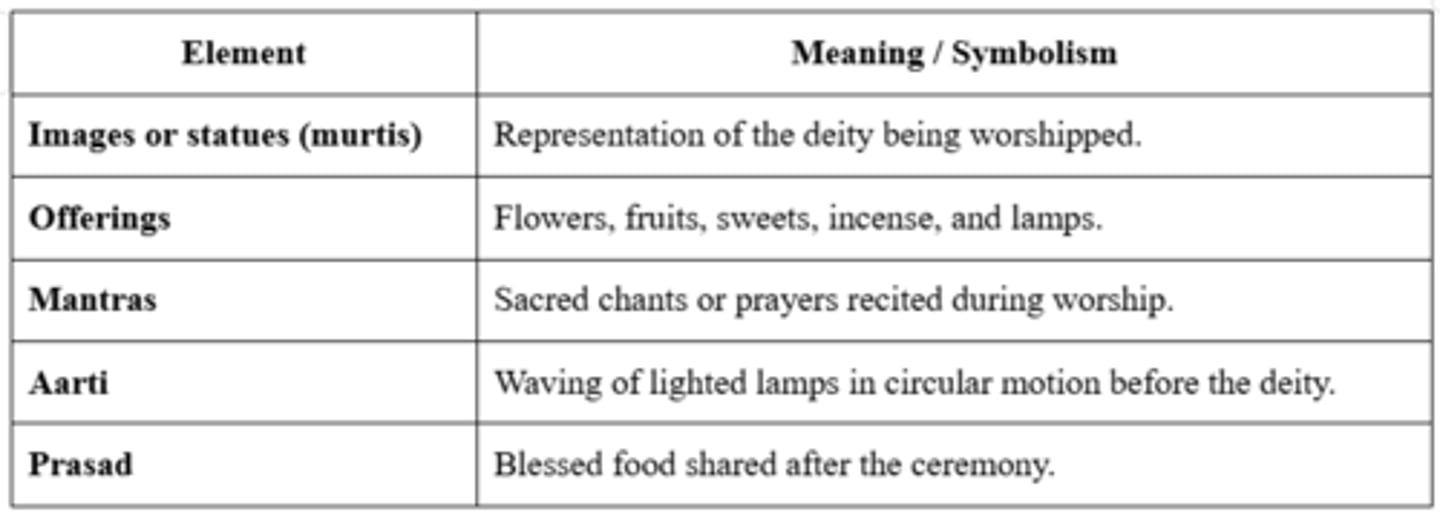
Puja Key Idea
In puja, the deity is treated like an honored guest — greeted, offered food and gifts, praised, and bid farewell.
It’s an act of love, respect, and presence, not just a ritual.
Gandhi
Nonviolent philosophy of passive resistance
Known as Mahatma "or great-souled one"
Started as an Indian immigrant in South Africa, in the years following WWI
Leading figure in India's struggle to gain independence from Great Britain
Known for ascetic lifestyle-imprisoned several times
Worked towards peace between Hindus and Muslims
Killed in Delhi by a Hindu fundamentalist
Worked to improve Dalits treatment
-Government system of affirmative action
-Gained legal rights
Hindu-Muslim Relations
The Partition of India:
Divided British India into India and Pakistan in 1947
End of British rule in Indian subcontinent
Two-nation theory: Muslims and Hindus were too different to be in one country
Pakistan became Muslim
India became majority Hindu (but nominally secular in 1974)
After the Partition, people crossed the borders to what they hoped was the safety of their religious majority
Newly formed governments were unable to deal with the forced migration of such huge numbers
Massive violence occurred on both sides of the border; many died
The region of Jammu and Kashmir, went to war several times to try to take the whole region
Holi
Festival of Colors
Time: Spring
Welcomes color coming back into the world (return of spring)
Major festival in the Hindu religion
Usually marks the happy transition from harsh, dark winter to brighter, warmer springtime
Celebrates the Hindu story of Prahlada, who was a prince dedicated to the worship of Vishnu. Prahlada’s father and aunt opposed his religious faith and as punishment made him sit in the middle of a raging bonfire. Vishnu protected Prahlada, and the price did not burn
Bonfires remain a part of Holi rituals today
Spraying of brightly colored powers and water in enormous public celebrations
The color marks both Prahlada’s flickering bonfire and the bright colors associated with spring
Barriers between rich and poor, men and women, young and old are broken down by Holi’s bright colors; “Don’t be offended, it’s Holi”
Diwali
Festival of Lights
Time: Fall
Celebrating the win of good over evil. Light over dark
Biggest and most important holiday of the year
Names come from the row of clay lamps that Indians light outside their homes to symbolize the inner light protects us from spiritual darkness
Originated as a festival that marked the last harvest before winter
India was an agricultural society where people would seek the divine blessings of Lakshmi, the goddess of wealth, as they prayed for success in the new financial year
The fourth day of Diwali as the first day of the new financial year
Celebrate with family gatherings, glittering clay lamps, festive fireworks, strings of electric lights, bonfires, flowers, sharing of sweets, and worship to Lakshmi
Lakshmi - Hindu goddess of wealth, fortune, and prosperity
Lakshmi wanders the Earth looking for homes where she will be welcomed. People open their doors and windows and light lamps to invite Lakshmi in
Diwali has become national holiday that is celebrated by most Indians regardless of faith: Hindus, Jains, Buddhists, and Sikhs
Festival marks the victory of good over evil
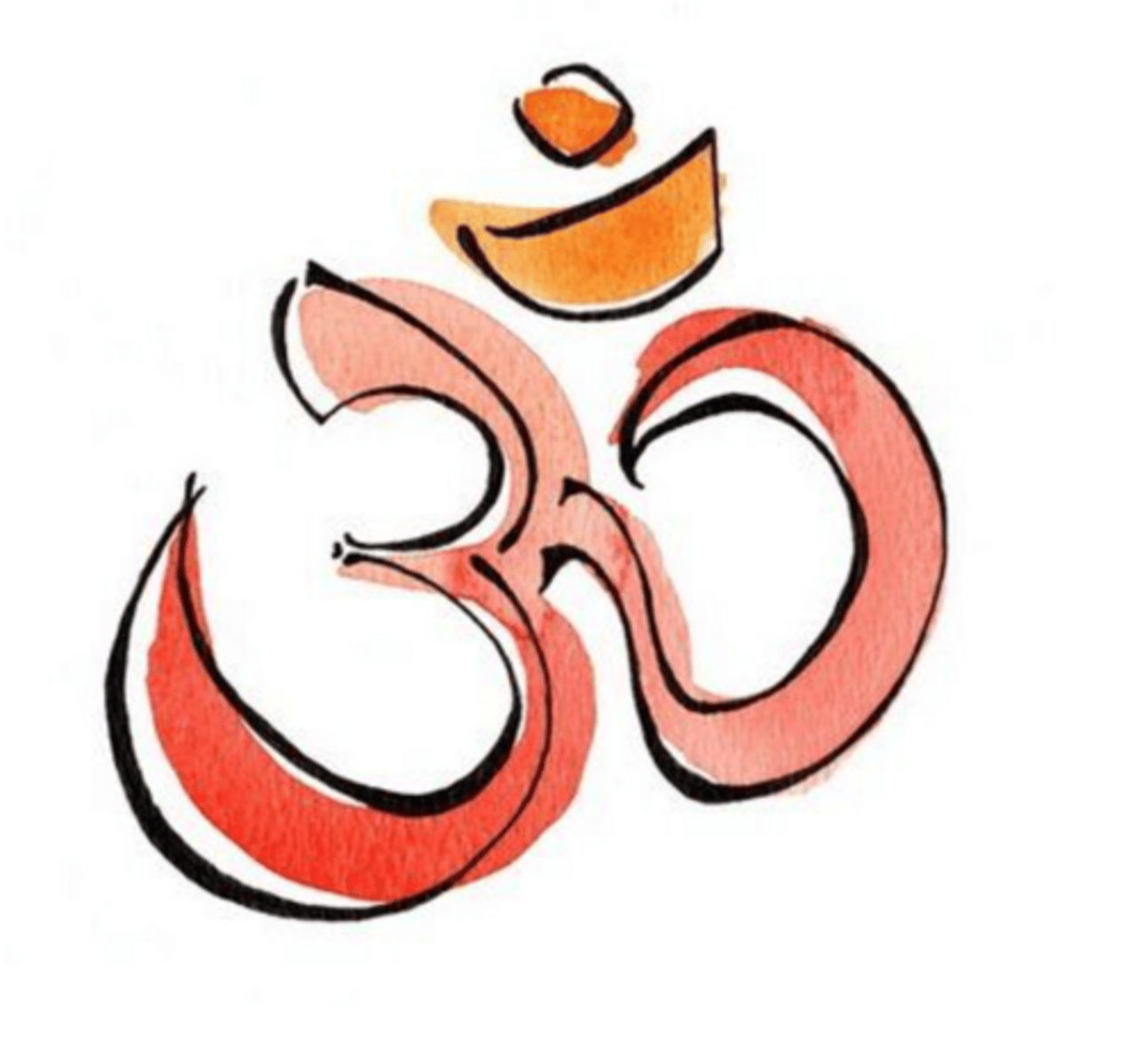
Aum
Sanskrit symbol
Primary symbol
Mystically embodies the source/essence of the universe
Often used in prayers or as a part of mantras
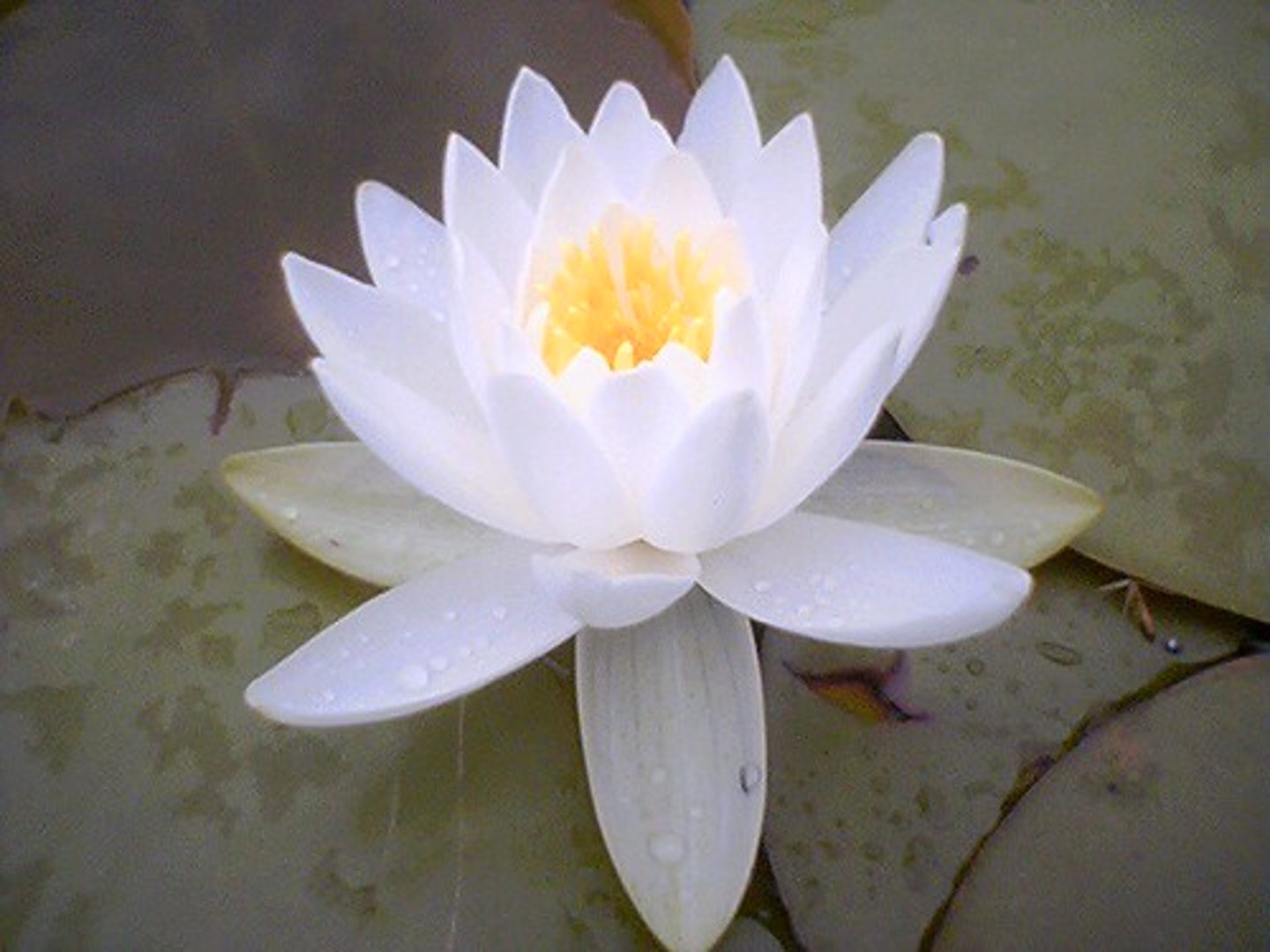
Lotus
Symbol of purity and transcendence
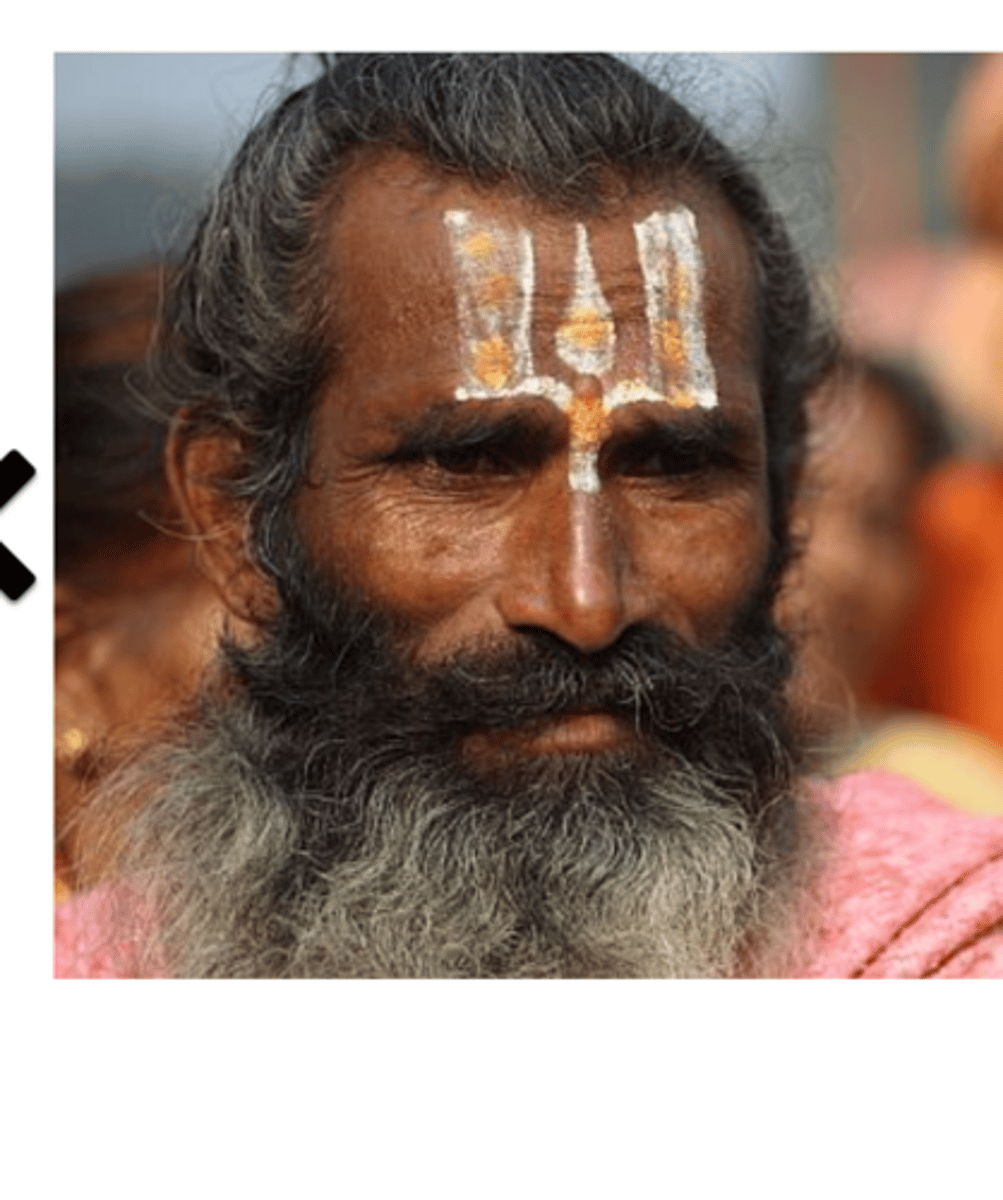
Tilak
Symbolic mark generally worn by men during religious rituals or when visiting the temple
Often indicated deity tradition
Lingam
An aniconic symbol (i.e. not figural, not a literal likeness) of the god Shiva
Found in home shrines, temples dedicated to the worship of Shiva

Mudra
Symbolic hand gestures used to indicate certain ideas or intensions
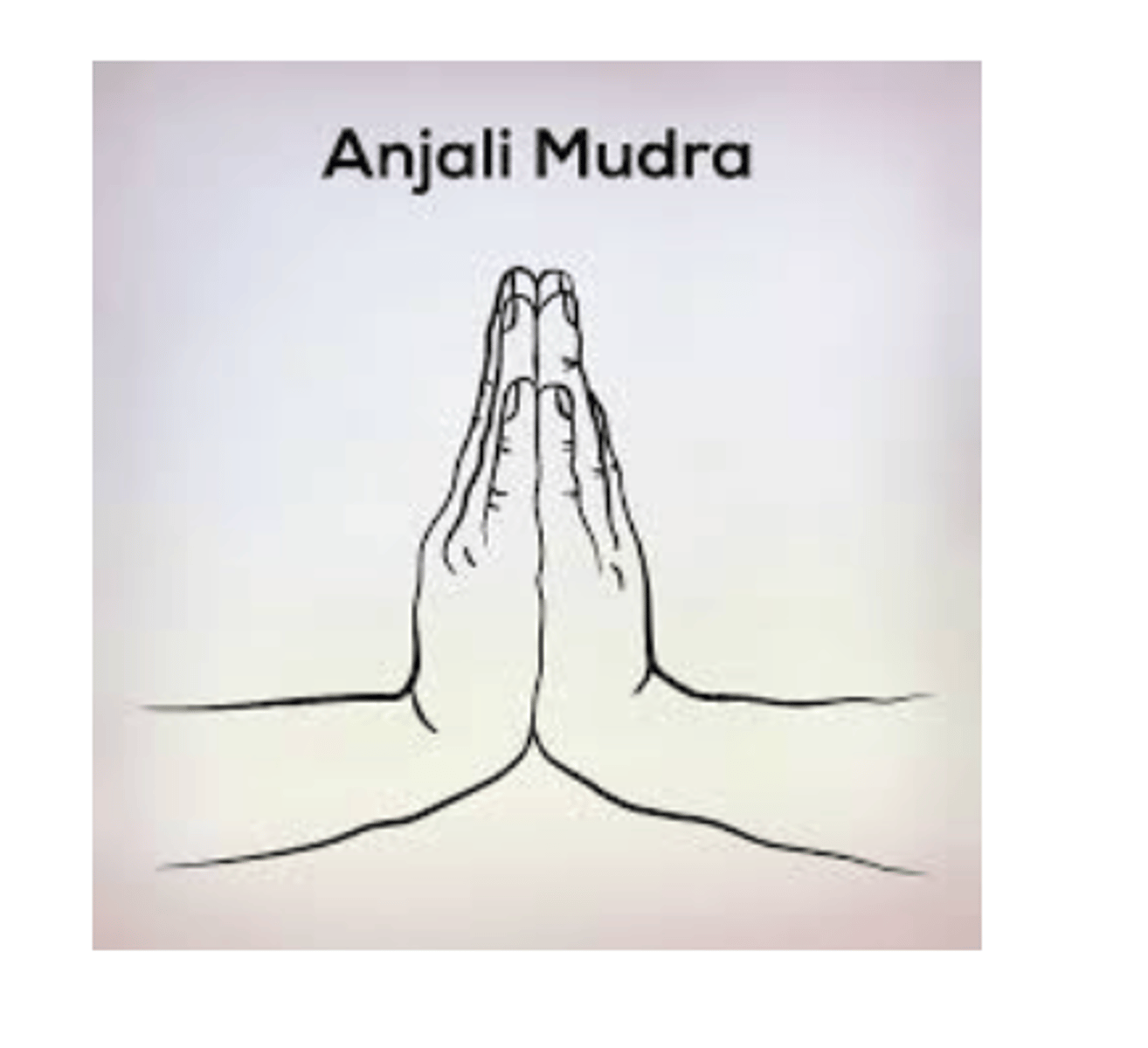
Namaste
"I bow to you"
"The divine in me honors the divine in you"
Said in greeting
Swastika
Ancient Hindu symbol denotes well being and auspiciousness
From the sanskrit word svasti meaning "good fortune"

Atman
the eternal Self, which the Upanishads identify with Brahman; often lowercase to refer to the eternal self or soul of an individual that is reincarnated from one body to the next and is ultimately identified with Atman
Avatar
An incarnation, or living embodiment of a deity, usually of Vishnu, who is sent to earth to accomplish a divine purpose; Krishna and Rama are the most popular avatars
Bhagavad Gita
A short section of the epic poem Mahabharata in which the god Krishna teaches the great warrior Arjuna about bhakti marga and other ways to God; Hinduism's most popular sacred text
Brahman
The eternal essence of reality and the source of the universe, beyond the reach of human perception and thought
Maya
Cosmic illusion brought about by divine creative power
Monism
The doctrine that reality is ultimately made up of only one essence
The belief that the source of the world is one, but includes strong emphasis on the presence of that One throughout everything that exists
Brahman appears and is present differently throughout the world, but is always one
Everything exists in Brahman, that gods express Brahman’s pervive
All reality is reducible to a single principle, common, essence
All things are one
One thing - Brahman
Brahman is impersonal, not theistic, formless, shapeless, eternal, the source of all things that exist
Vedas
A collection of 1,017 Sanskrit hymns composed about 1500 BC or earlier; Hinduism's oldest sacred text
Samsara
The wheel of rebirth or reincarnation; the this-worldly realm in which rebirth occurs
Sannyasin
A wandering ascetic who has advanced to the fourth and highest stage of life
Upanishads
A collection of over two hundred texts composed between 900 and 200 BC that provide philosophical commentary on the Vedas
-The philosophical-religious texts of Hinduism
-Develop and explain the fundamental tenets of the religion
-Teach that Brahman is not this, not that
Hindu Cosmology
Western cosmology is linear
But eastern cosmology is cyclical
Cyclical pattern of creation and destruction (death and rebirth)
The pattern is repeating itself over and over until the atman has achieved moksha