APAIS Fish Identification Cards
 Call Kai
 Learn
Learn Practice Test
 Spaced Repetition
 Match
Match Flashcards
 Knowt Play
1/70

There's no tags or description
Looks like no tags are added yet.
Name | Mastery | Learn | Test | Matching | Spaced | Call with Kai |
|---|
No analytics yet
Send a link to your students to track their progress
71 Terms
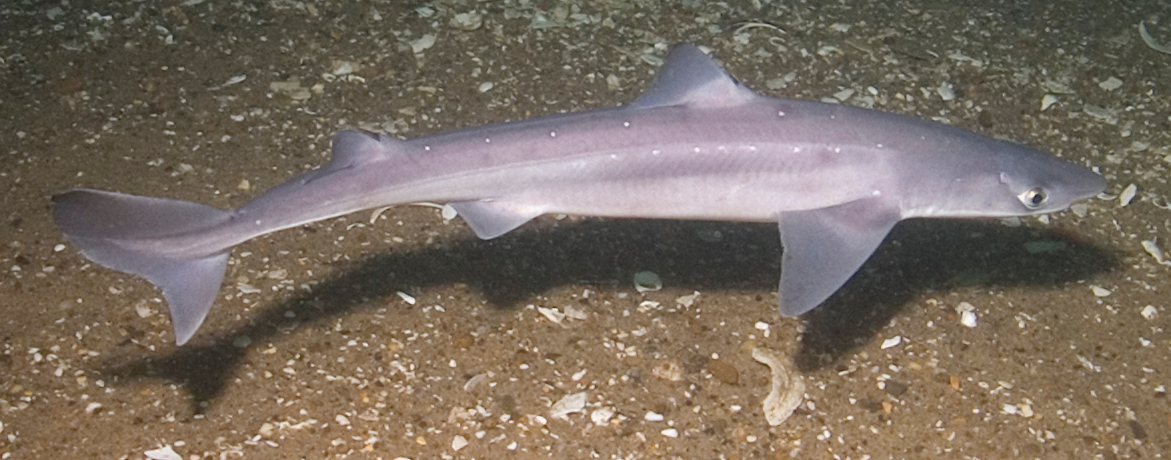
Spiny Dogfish (Squalus acanthias) #16
NO anal fin, spine on dorsal, some lateral spots
General: Small, slender gray shark with white lateral spots.
Size: Avg. adult 60–100 cm (24–39 in; 2.0–3.3 ft), 1–4 kg (2.2–8.8 lb);
large adults commonly reach (39–49 in; 3.3–4.1 ft) and 5–9 kg (11–20 lb).
Key IDs:
Sharp spine anterior to each of the two dorsal fins.
No anal fin.
Pointed snout
Gray-brown dorsally, white ventrally, with scattered white spots.
cwith larger upper lobe.
Memory cue: Spines + spots
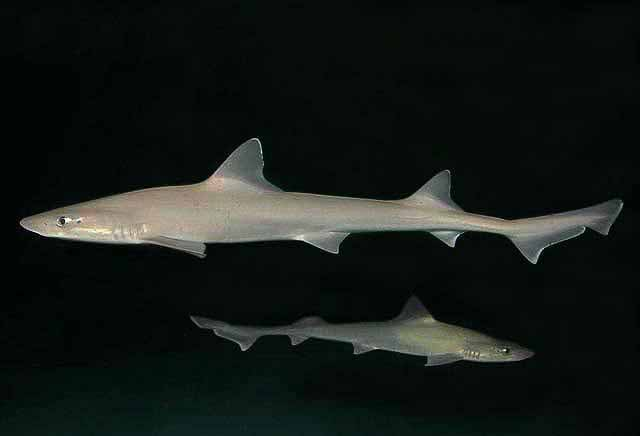
Smooth Dogfish (Mastelus canis) #17
Pelvic and anal fin, no spines, no white lateral spots ever
General: Slender gray-brown shark lacking the dorsal-fin spines of spiny dogfish.
Size: Avg. adult 90–120 cm (35–47 in; 3.0–3.9 ft), 2–6 kg (4.4–13.2 lb);
large adults (47–59 in; 3.9–4.9 ft) and 8–13 kg (18–29 lb).
Key IDs:
No dorsal-fin spines.
Anal fin present.
Blunt, rounded snout.
Uniform gray-brown coloration, ribbed; no white lateral spots.
Small pavement-like teeth adapted for crushing crabs and shellfish.
Memory cue: no spines, no spots.
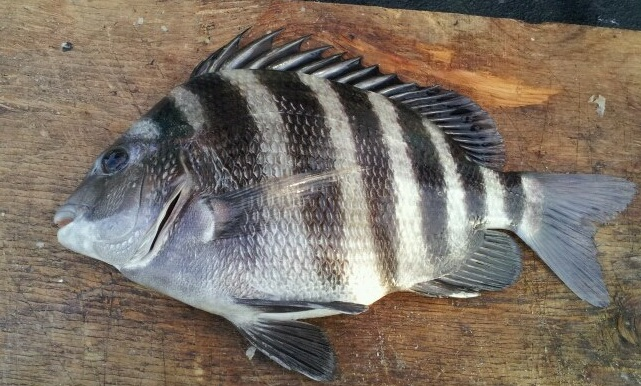
Sheeps Head (Archosargus probatocephalus) #14
General: Deep-bodied, silvery fish with bold black vertical bars and human-like teeth.
Size: Avg. adult 30–60 cm (12–24 in; 1.0–2.0 ft), 1–4 kg (2.2–8.8 lb);
large adults commonly reach (24–35 in; 2.0–3.0 ft) and 5–10 kg (11–22 lb).
Key IDs:
5–7 vertical bars on silvery body.
Deep, laterally compressed body.
Prominent human-like incisors visible at front of mouth.
Long dorsal fin with strong anterior spines.
Forked caudal tail.
Memory cue: Black bars + human teeth
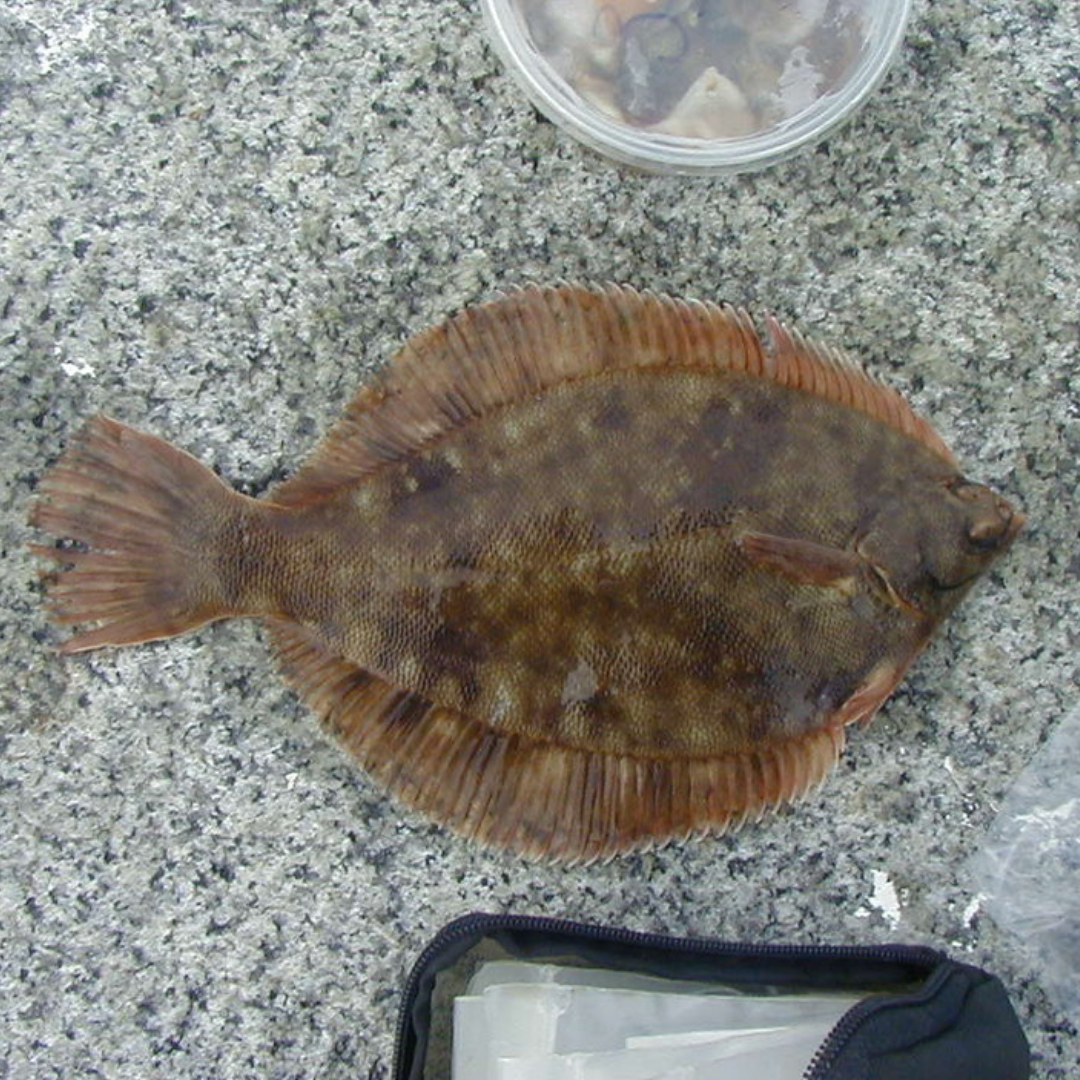
Winter Flounder (Pseudopleuroneotes americanus) #25
right-headed, dark molted/random blotches, small mouth “kissy face”; winter = mistletoe, convex caudal
General: Right-eyed flounder with a dark brown body and small mouth, commonly found on sandy or muddy bottoms.
Size: Avg. adult 30–45 cm (12–18 in; 1.0–1.5 ft), 0.5–1.5 kg (1.1–3.3 lb);
large adults commonly reach (18–24 in; 1.5–2.0 ft) and (4.4–6.6 lb).
Key IDs:
Both eyes on right side of body.
Nearly straight lateral line (lacks the strong arch of summer flounder/fluke).
Small/short mouth; upper jaw does not extend past lower eye.
Dark brown to olive dorsal side, often with scattered dark spots.
Caudal tail usually squared to slightly rounded.
Memory cue: Right eyes + small mouth + straight lateral line
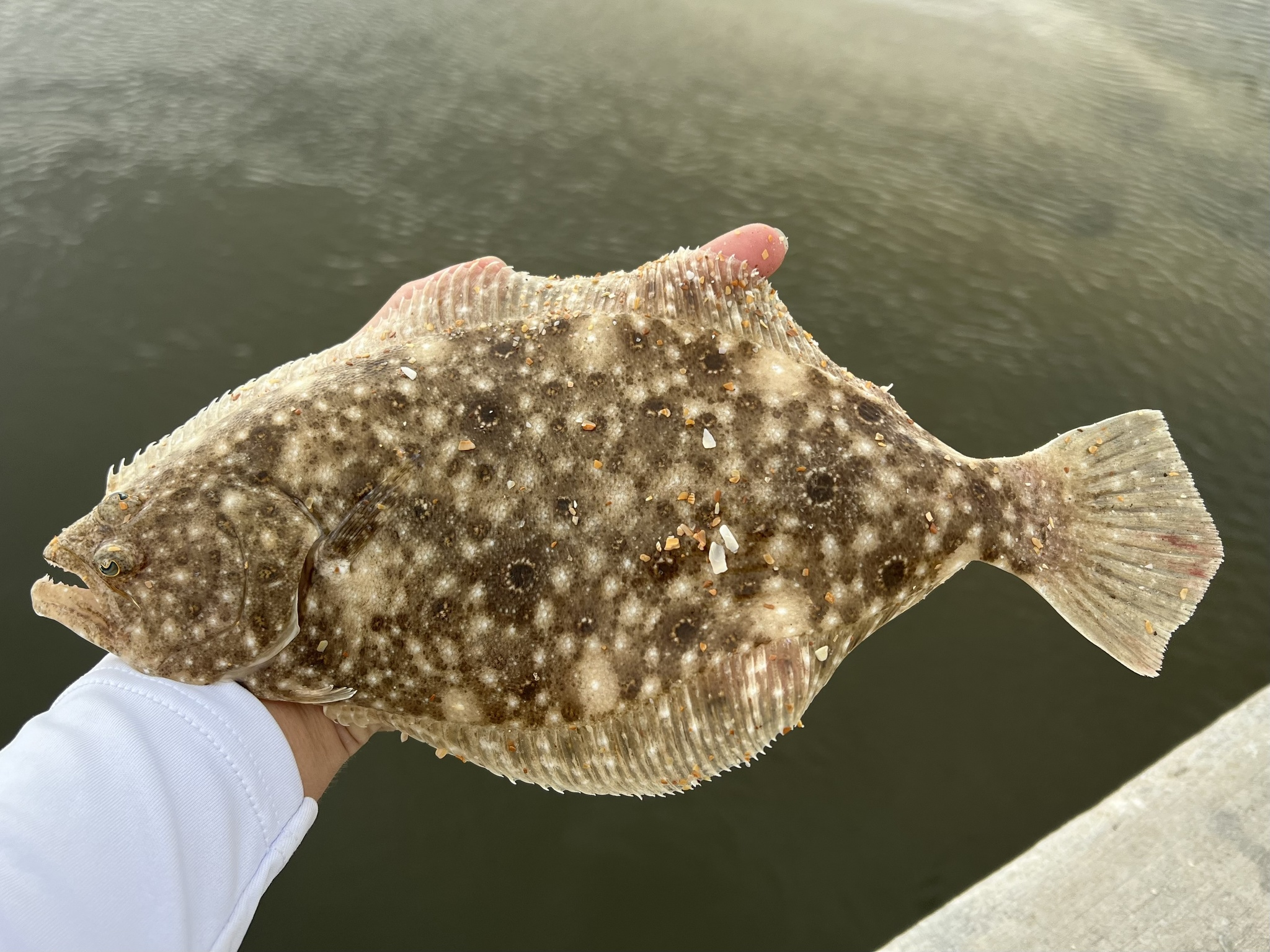
Summer Flounder / Fluke (Paralichthys dentatus) #23
large mouth, many large ocelli (spots), “Dice pattern” nearly exactly on caudal side lying on lateral, left-facing, convex tail
General: Large left-eyed flounder with a wide mouth and distinctive eye-like spots on the dorsal side.
Size: Avg. adult 40–60 cm (16–24 in; 1.3–2.0 ft), 1–4 kg (2.2–8.8 lb);
large adults commonly reach (24–35 in; 2.0–3.0 ft) and (11–22 lb).
Key IDs:
Both eyes on left side of body.
Large mouth; upper jaw extends well posterior to lower eye.
Prominent arch in lateral line above pectoral fin.
Brown dorsal side with 5 distinct eye-like spots (ocelli).
Elongated body compared to winter flounder.
Memory cue: Left eyes + big mouth + 5 eye-spots
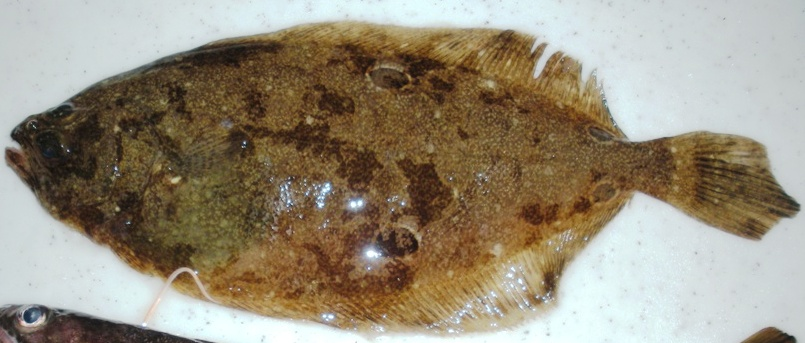
Fourspot Flounder (Paralichthys oblongus) #24
General: Left-eyed flounder similar to summer flounder but marked by four large black spots on the body.
Size: Avg. adult 25–40 cm (10–16 in; 0.8–1.3 ft), 0.3–1 kg (0.7–2.2 lb);
large adults commonly reach (16–24 in; 1.3–2.0 ft) and (2.2–6.6 lb).
Key IDs:
Both eyes on left side of body.
Four large black spots arranged in pairs on dorsal side (most distinctive feature).
Large mouth extending posterior to lower eye.
Elongated body shape similar to summer flounder.
Brown to olive dorsal coloration.
Memory cue: Left eyes + 4 large black spots
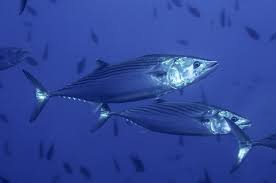
Atlantic Bonito (Sarda sarda) #2
7 or more diagonal black stripes on dorsal side
Size: Avg. adult 50–75 cm (20–30 in; 1.6–2.5 ft), 2–6 kg (4.4–13.2 lb);
large adults commonly reach (30–35 in; 2.5–3.0 ft) and (15–24 lb).
NO dark spots on belly or lower sides (separates from little tunny/false albacore).
Slender “bullet” body, smaller and more streamlined than true tunas (bluefin/yellowfin).
Metallic blue-green dorsally, silver ventrally.
Albacore Tuna (Thunnus alalunga) #3
Memory Trick: Albatross = Big bird = Longest Pectoral fins
pectorals move past anal fin and 2nd dorsal
General: Streamlined with very long pectoral fins and a metallic blue back fading to silver sides.
Size: Avg. adult 60–100 cm (24–39 in; 2.0–3.3 ft), 4–15 kg (9–33 lb);
large adults commonly reach (39–47 in; 3.3–3.9 ft) and (44–55 lb).
No body spots or stripes.
Slender tuna body, smaller than bluefin; more elongated than bonito.
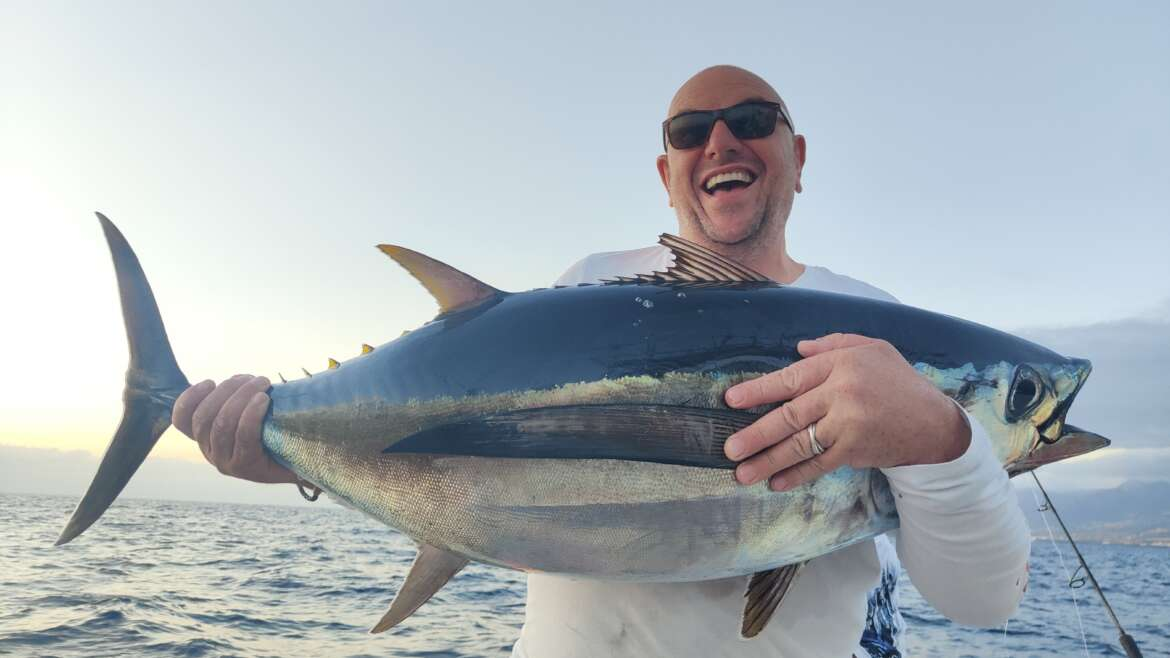
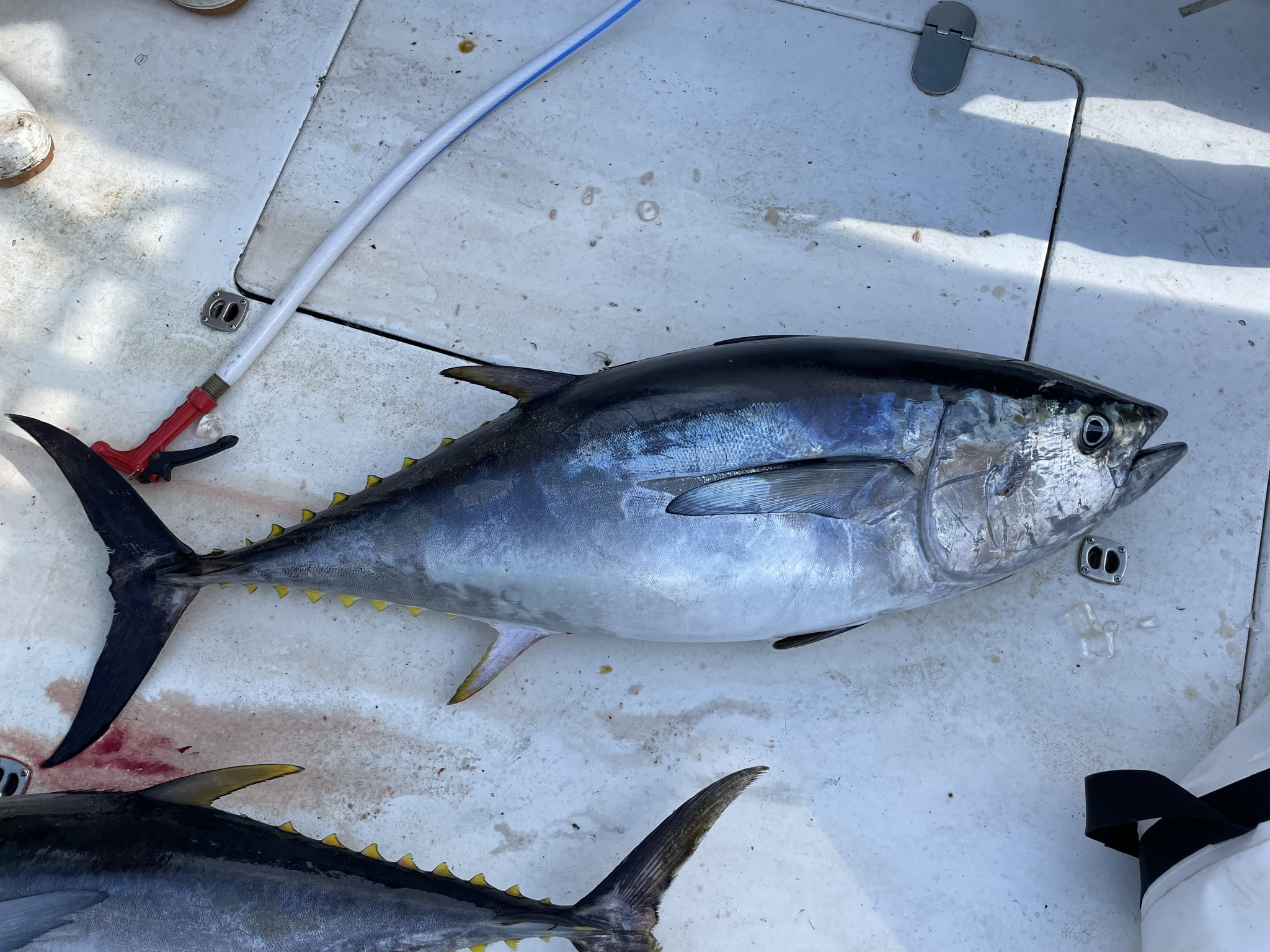
Bigeye Tuna (Thunnus obesus) #4
Memory Trick: big eyes, straight edge, og 2 dorsal
very large dark eye and pectoral fins only reaches the origin of the second
dorsal (longer than bluefin, shorter than albacore).
Torpedo Body
From bird’s eye straight to body rather than (yellowfin have much more curved pectoral), more rotund
Size: Avg. adult 80–140 cm (31–55 in; 2.6–4.6 ft), 10–60 kg (22–132 lb);
large adults commonly reach (55–71 in; 4.6–5.9 ft) and (132–220 lb).
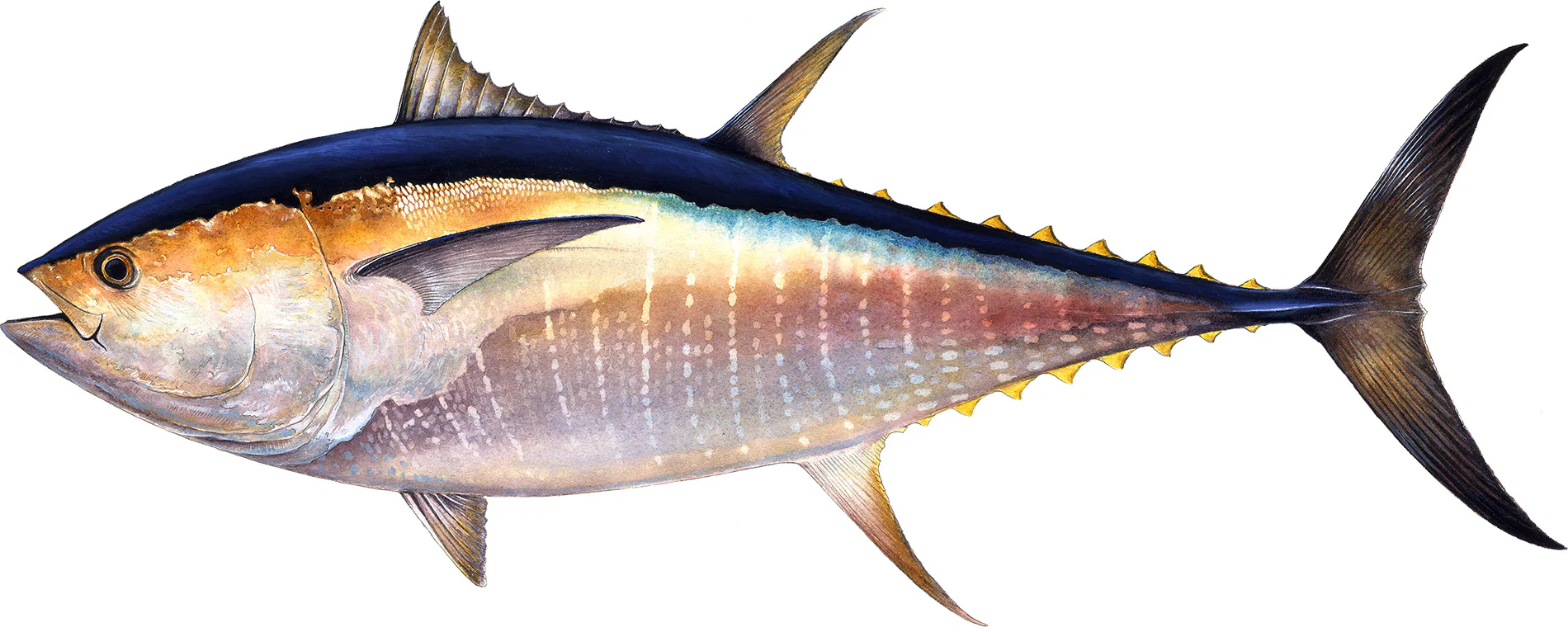
Bluefin Tuna (Thunnus thynnus) #5
Gray spots and bands, may resembled tree bark,
pectoral fin are short and do not reach 2nd dorsal og
General: Large, powerful with a thick, torpedo-shaped body built for sustained fast swimming in open ocean.
Size: Avg. adult 150–250 cm (59–98 in; 5.0–8.2 ft), 100–250 kg (220–550 lb);
large adults commonly reach (98–118 in; 8.2–9.8 ft) and (550–880 lb).
Key IDs:
Very robust, thick body (deepest-bodied Atlantic tuna).
Pectoral fins short (do not extend past dorsal fin base).
No body stripes or spots. Slight silvery vertical stripes.
Metallic dark blue-black dorsally, silvery ventrally.
Strongly forked caudal tail with finlets.
Memory cue: Thick body + short fins
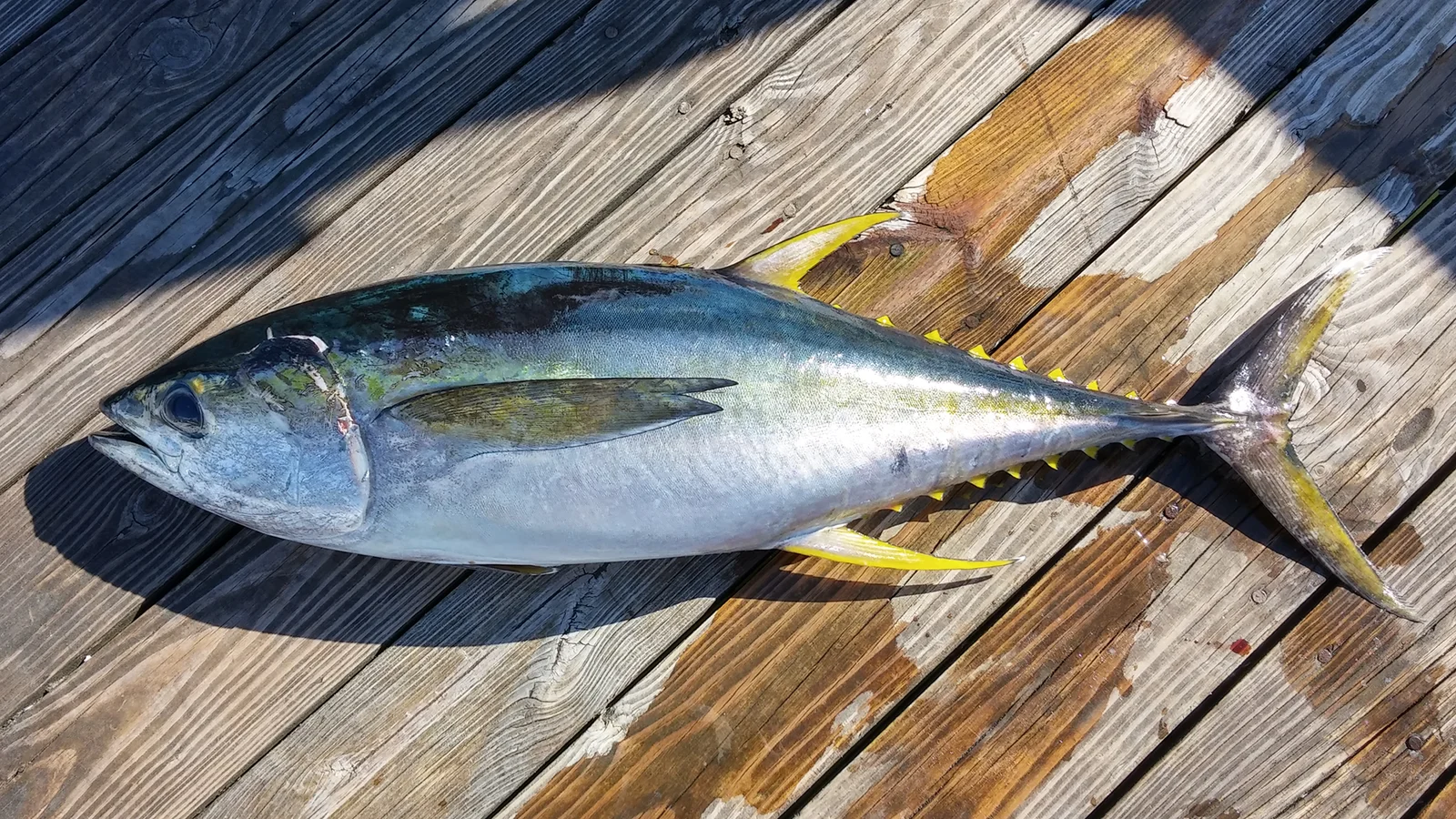
Yellowfin Tuna (Thunnus albacares) #6
longest 2nd dorsal and anal fins than any tuna. pectoral fin reaches to or past 2nd dorsal.
20+ white streaks and spots, yellow-gold band on sides (fades with death)
Thin caudal
Anal and 2nd dorsal fairly parallel
Size: Avg. adult 100–180 cm (39–71 in; 3.3–5.9 ft), 20–80 kg (44–176 lb);
large adults commonly reach (71–83 in; 5.9–6.9 ft) and (176–265 lb).
Key IDs:
Bright yellow second dorsal, anal, and finlets (key field ID).
Long, slender body compared to bluefin (more “torpedo-shaped”).
Pectoral fins moderate/long (extend to 2nd dorsal fin)
Second dorsal fins moderately long, extremely long in adulthood
No stripes or spots on body.
Metallic dark blue dorsally, blue-green center, silver ventrally
Memory cue: Yellow fins + sleek body + long curved 2nd dorsal
Little Tunny / False Albacore (Euthynnus alletteratus) #1
Wavy black lines on pack, fingerprint spots on chest (between the pectoral and ventral fins)
little tunny spots on belly
Size: Avg. adult 40–70 cm (16–28 in; 1.3–2.3 ft), 2–6 kg (4.4–13.2 lb); large adults commonly reach 70–90 cm (28–35 in; 2.3–3.0 ft) and 8–12 kg (18–26 lb).
Key IDs:
No stripes or diagonal bands
Short pectoral fins; robust, chunky
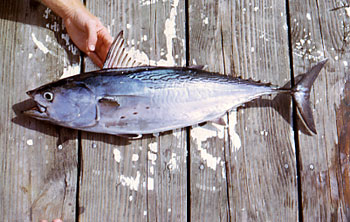
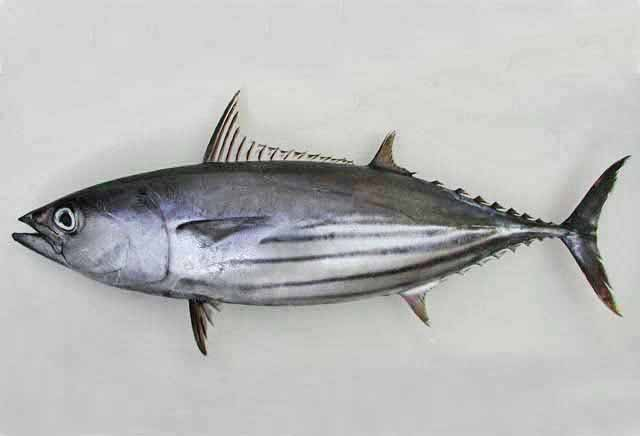
Skipjack Tuna (Katsuwonus pelamis) #7
4-6 dark horizontal stripes that go onto belly “skipping rope”
General: Small, streamlined with bold horizontal stripes, short pectorals, torpedo-shaped body.
Size: Avg. adult 40–70 cm (16–28 in; 1.3–2.3 ft), 2–8 kg (4.4–18 lb);
large adults commonly reach (28–35 in; 2.3–3.0 ft) and (18–26 lb).
Key IDs:
4–6 bold dark horizontal stripes on belly/lower sides (KEY ID feature).
Strong, muscular “bullet” tuna shape.
Deeply forked caudal tail; finlets present.
Metallic blue-purple dorsally, silver ventrally.
Short pectoral fins (do not extend far back).
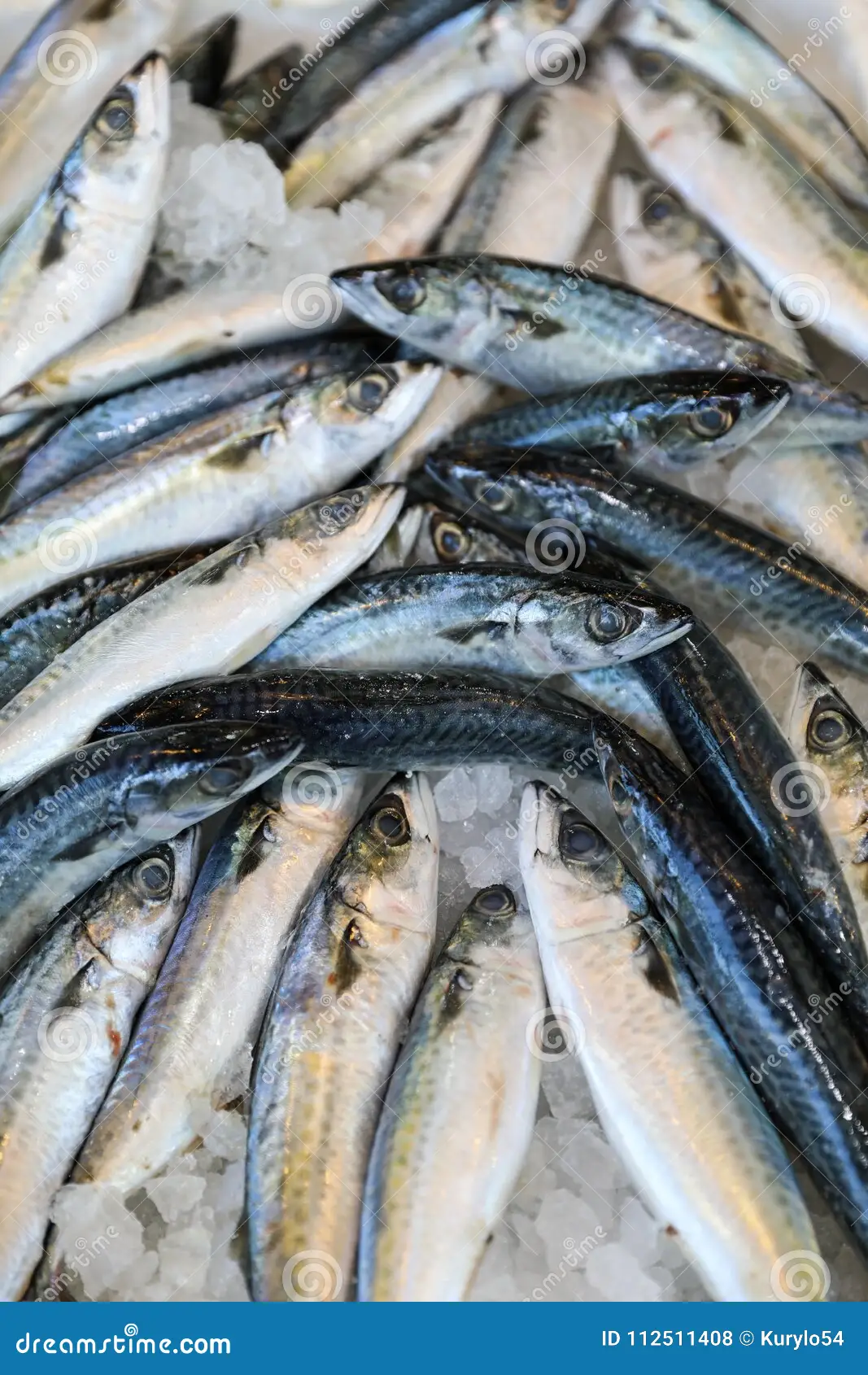
Atlantic Chub Mackerel (Scomber japonicus) #21
Blue dorsally, wavy faded diagram stripes, small warm to gray dots across lateral
got it all? = excess = chub its doin too much
General: Small, fast schooling fish with a streamlined rounded body, wavy vertical markings on the back
Size: Avg. adult 25–40 cm (10–16 in; 0.8–1.3 ft), 0.3–1 kg (0.7–2.2 lb);
large adults commonly reach (16–20 in; 1.3–1.6 ft) and (2.2–4.4 lb).
Key IDs:
Wavy, vertical to cloudy dark lines on upper back.
Small round spots on lower sides/belly, yellow pigement
Strongly forked caudal tail.
Two dorsal fins: first spiny, second followed by finlets.
No swim bladder (important biological trait, often used in fisheries ID).
Memory cue: Wavy back + yellow tint + belly spots
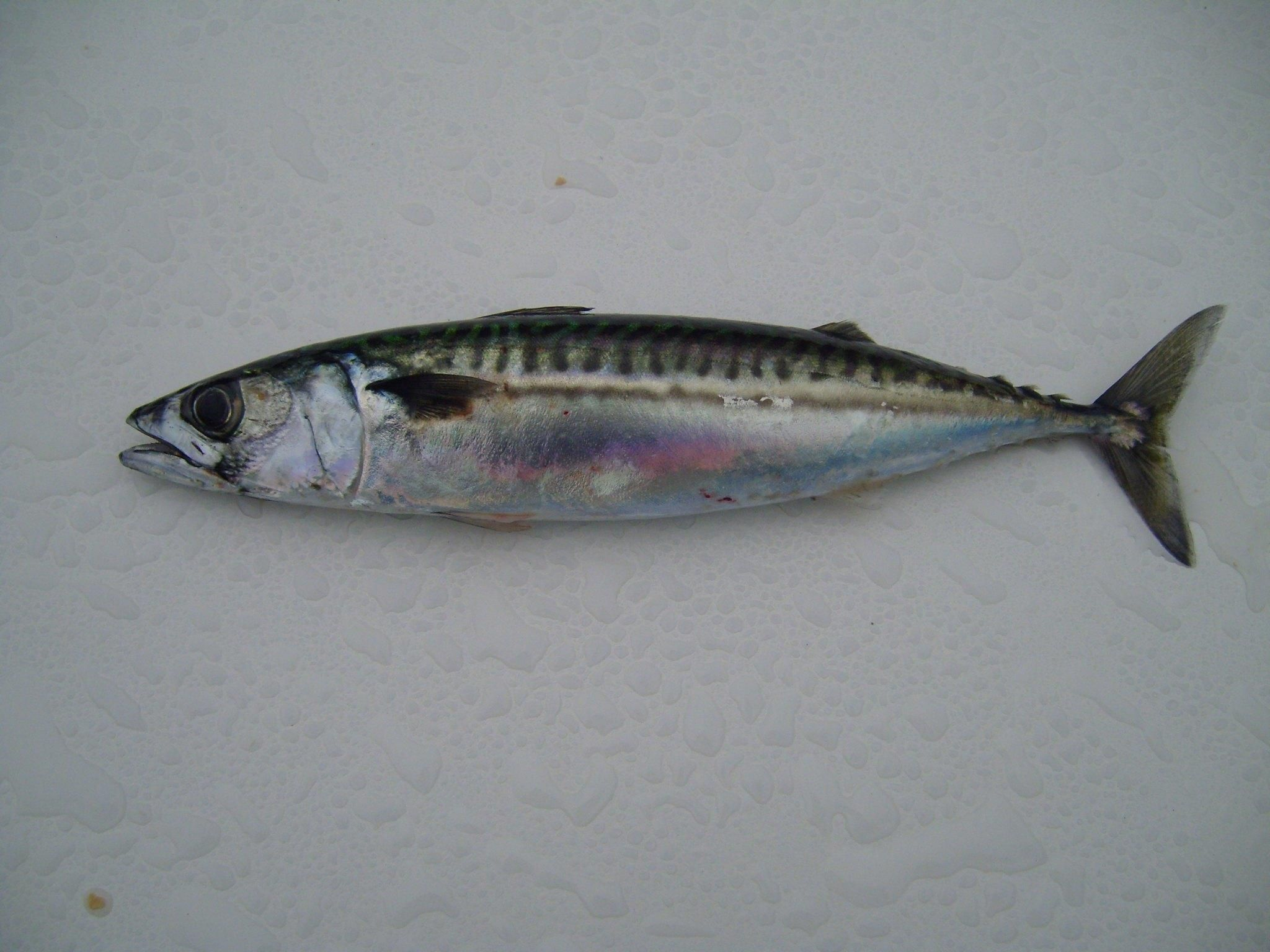
Atlantic Mackerel (Scomber scombus) #20
Squiggle stripe; even spacing mackerel pattern
Spots across entire belly pattern
Yellowly tipped fins when alive; fluorescent eyeball
MUCH larger eyeball
General: Small, fast schooling fish with a streamlined body and strong wavy stripes on the back, yellow tone
Size: Avg. adult 30–40 cm (12–16 in; 1.0–1.3 ft), 0.5–1.5 kg (1.1–3.3 lb);
large adults commonly reach (16–20 in; 1.3–1.6 ft) and (3.3–5.5 lb).
Key IDs:
Strong dark wavy vertical lines on dorsal/back only.
NO spots on belly or lower sides (KEY distinction from chub mackerel).
Metallic blue-green dorsally, silver ventrally.
Strongly forked caudal tail.
Two dorsal fins: first spiny, second followed by finlets.
Memory cue: Pronounced wavy back only, clean belly
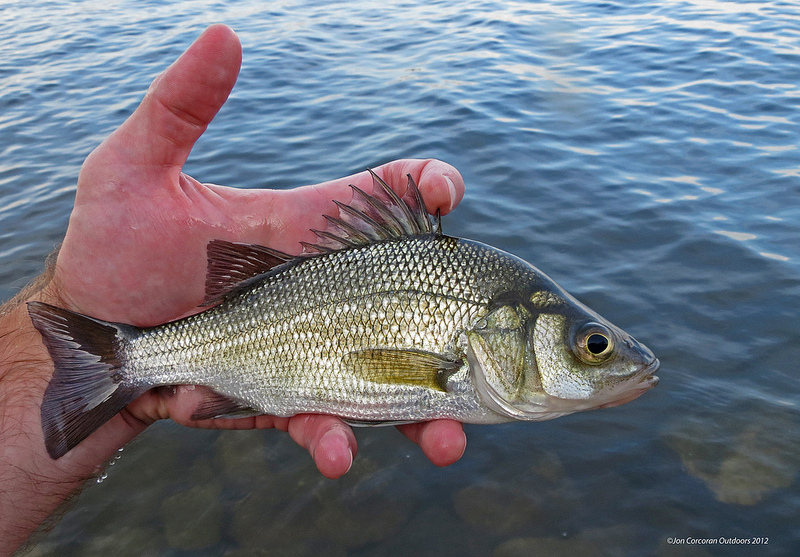
White Perch (Morone americana) #35
Almost like a miniature stripped bass; same fin structure)
White = divide the dorsals
Sloped forehead
White = Simple = Forked tail
General: Deep-bodied, silvery fish with a perch-like shape and no distinct body stripes.
Size: Avg. adult 20–30 cm (8–12 in; 0.7–1.0 ft), 0.2–0.7 kg (0.4–1.5 lb);
large adults commonly reach (12–18 in; 1.0–1.5 ft) and (2.2–4.4 lb).
Key IDs:
Silvery-gray body
Deep, laterally compressed body.
Single dorsal fin appearing divided into spiny anterior and soft posterior sections.
Small mouth; lower jaw does not protrude.
Often shows a faint dark patch near the posterior edge of the gill cover.
Memory cue: Small mouth/jaw + dark patch by gills + spiny 1st spiney dorsal,
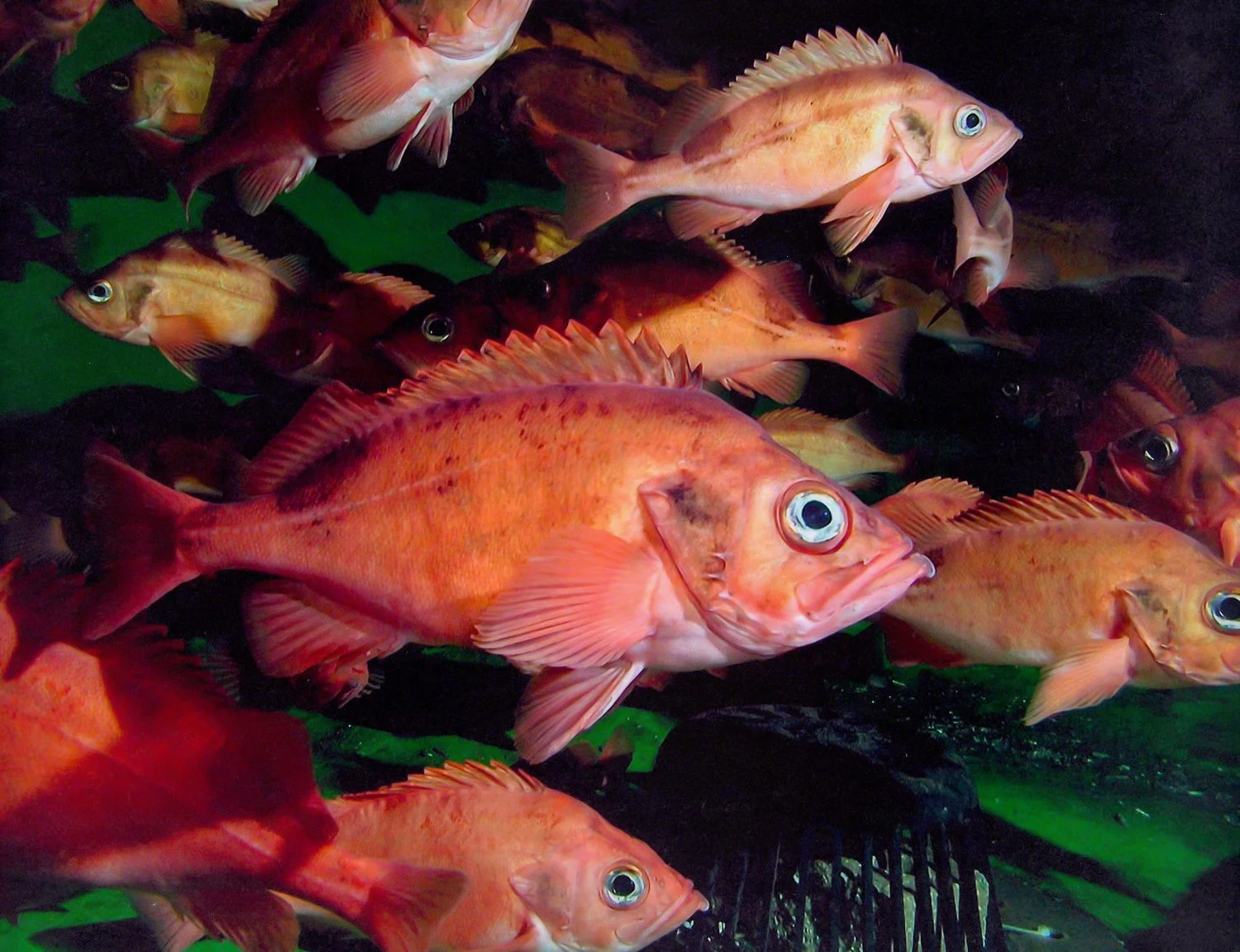
Acadian Redfish (Sebastes fasciatus) #36
General: Deep-bodied, bright red to orange fish with large eyes and a spiny, ridged head.
Size: Avg. adult 25–40 cm (10–16 in; 0.8–1.3 ft), 0.5–1.5 kg (1.1–3.3 lb);
large adults commonly reach (16–22 in; 1.3–1.8 ft) and (4.4–8.8 lb).
Key IDs:
Bright red to orange coloration over most of body.
Very large eyes relative to head size.
Head with prominent spines and ridges.
Large mouth; lower jaw slightly protruding.
Long dorsal fin with strong anterior spines.
Memory cue: Red body + big eyes + spiny head
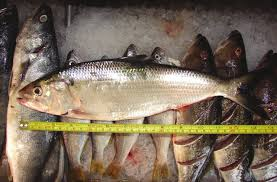
American Shad (Alosa sapidissima) #37
herring
“American painter”; small lateral line dots sometimes in gills; past plate, gill rakers are very “feather”-like
herring; similar fin placement to Atlantic herring
General: Large, silvery, laterally compressed, single dark shoulder spot, and a deeply forked tail.
Size: Avg. adult 40–55 cm (16–22 in; 1.3–1.8 ft), 1–3 kg (2.2–6.6 lb);
large adults commonly reach (22–30 in; 1.8–2.5 ft) and (6.6–13.2 lb).
Key IDs:
Large dark spot posterior to gill cover ("shoulder spot").
Often followed by a row of smaller faint spots along the upper side.
Small mouth; lower jaw projects slightly.
Deeply forked caudal tail.
Sharp ventral keel (saw-like belly scutes) ** can’t see
Memory cue: small mouth, one large shoulder spot, sometimes row of spots
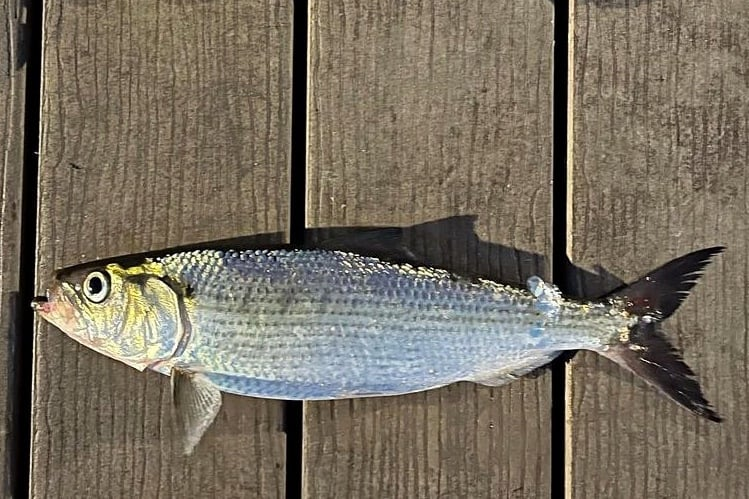
Hickory Shad (Alosa mediocris) #38
herring; similar fin placement to atlantic; more boney gill rakers; “hickory comb” not feather painter
General: Silvery, dark shoulder spot, “upturned” large mouth
Size: Avg. adult 30–45 cm (12–18 in; 1.0–1.5 ft), 0.5–1.5 kg (1.1–3.3 lb);
large adults commonly reach (18–24 in; 1.5–2.0 ft) and (4.4–6.6 lb).
Key IDs:
Large mouth with lower jaw projecting beyond upper jaw (best field ID).
Distinct dark shoulder spot posterior to gill cover.
Deeply forked caudal tail.
Sharp ventral keel (saw-like belly scutes) ** can’t see
Memory cue: Big mouth
Atlantic Menhaden (Brevoortia tyrannus) #39
“Wooden spoon shape”
Large dark spot behind gill plate
Head ⅓ body size (even)
overbite
General: Deep-bodied, silvery baitfish ("bunker") with a large shoulder spot and a distinctive overhanging upper jaw.
Size: Avg. adult 25–35 cm (10–14 in; 0.8–1.2 ft), 0.3–0.8 kg (0.7–1.8 lb);
large adults commonly reach (14–20 in; 1.2–1.6 ft) and (2.2–3.3 lb).
Key IDs:
Large black shoulder spot posterior to gill cover.
Tiny mouth with upper jaw extending well beyond lower jaw ("overbite" appearance).
Blunt, rounded head profile.
Deep, laterally compressed, almost oval-shaped body.
Deeply forked caudal tail.
Often several smaller spots trailing behind shoulder spot.
Memory cue: Big spot + little overbite mouth
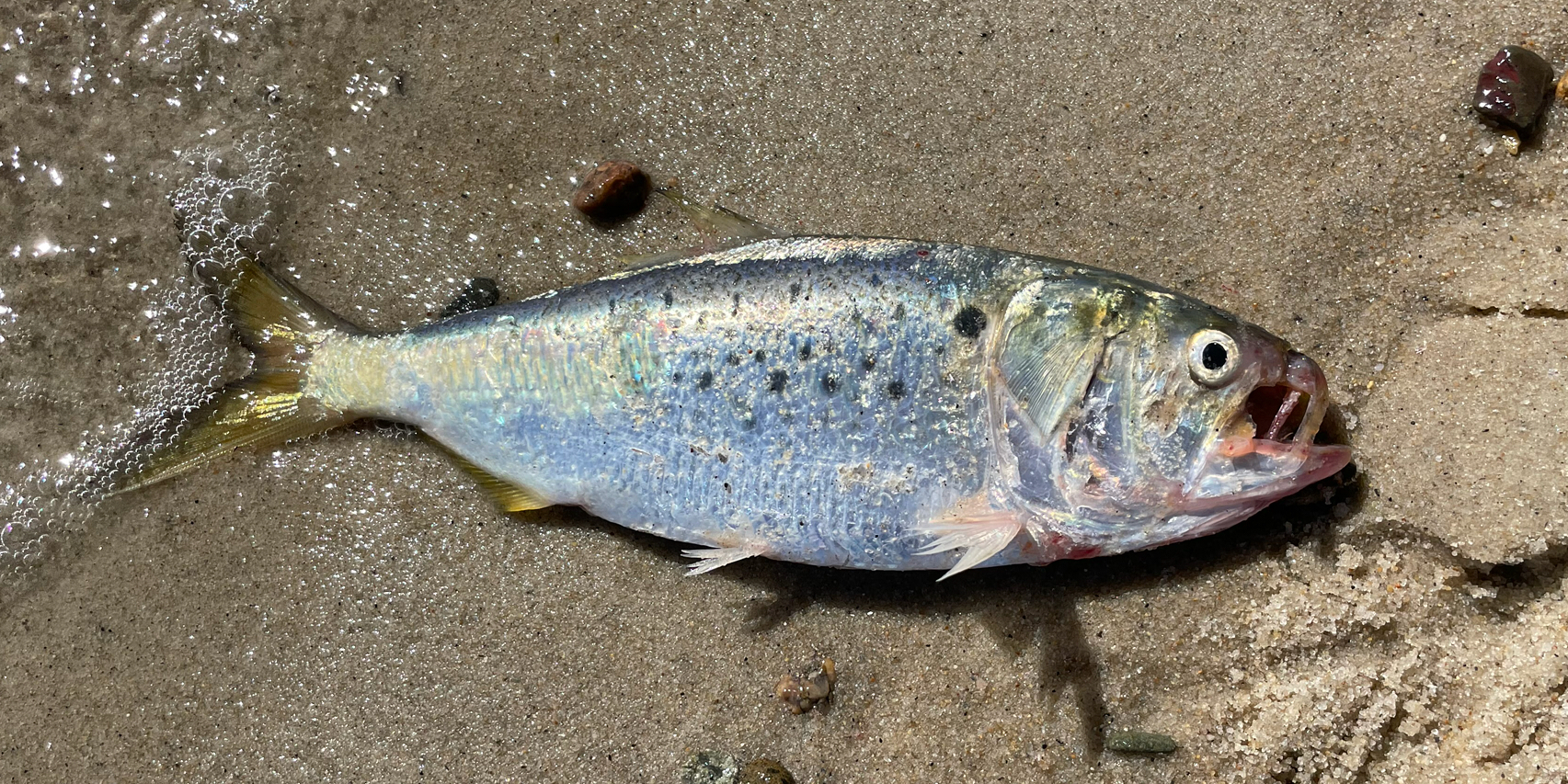
Atlantic Herring (Clupea harengus) #40
Silverly, shiny, dorsal evenly in center withe pelvic fin more central as well ;
Upper jaw upturned
aka shad thing
General: Slender, silvery schooling fish with slender body
Size: Avg. adult 25–30 cm (10–12 in; 0.8–1.0 ft), 0.2–0.5 kg (0.4–1.1 lb)
large adults commonly reach (12–15 in; 1.0–1.2 ft) and (1.1–1.8 lb).
Key IDs:
Very slender, streamlined body
No patterns, Smooth, bright silver sides with bluish-green dorsal surface.
Small terminal mouth; lower jaw does not project strongly.
Strongly forked caudal tail.
Memory cue: No patterns + blueish-green + slim body
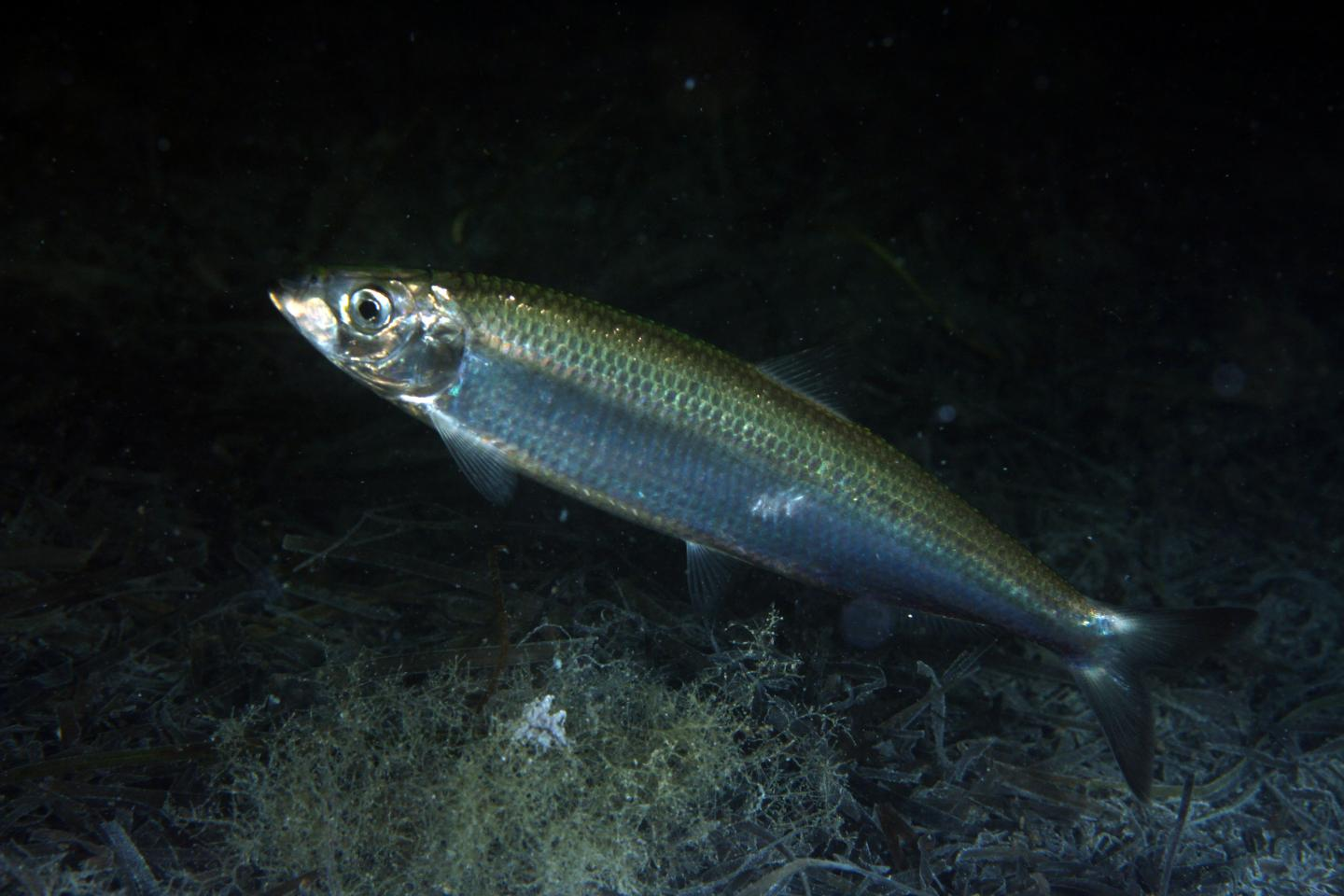
Weakfish (Cynoscion regalis) #53
Drum family; DOES NOT HAVE continuous tail spots, ends on body, more speckley than it’s spotted “sea” relation
Yellow tipped fins
weaker = smaller teeth
General: Slender, silvery coastal fish, many faint dorsal polka-dots, a large toothed mouth; sometimes shows a slight yellow/bronze sheen.
Size: Avg. adult 40–60 cm (16–24 in; 1.3–2.0 ft), 1–3 kg (2.2–6.6 lb);
large adults commonly reach (24–30 in; 2.0–2.5 ft) and (6.6–13.2 lb).
Key IDs:
Irregular dark spots on back and dorsal fin (spiney and rounded)
Large mouth with prominent canine teeth.
Slender, elongated body.
Slightly forked caudal tail.
Color usually silvery-gray, sometimes faint yellow/bronze tint.
Memory cue: Spots + slender + silver/bronze + big toothed mouth
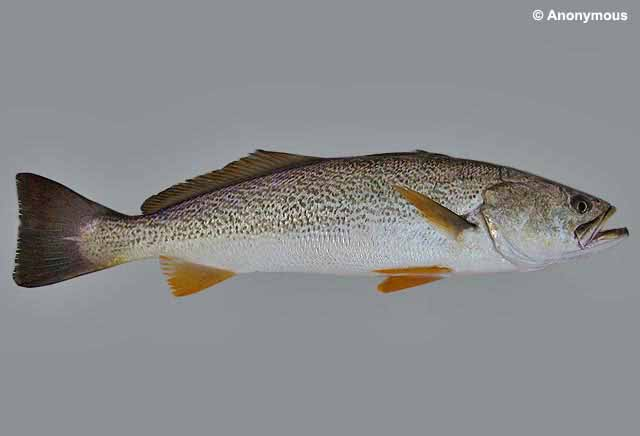
Silver Perch (Bairdiella chrysoura) #54
Drum Family; Less steep head, caudal convex still pointed/angular “perching on the edge”
silver DOES NOT divide the dorsals
No strong barbs
silver with brassy or yellow sheen and fins
General: Small, slender silvery drum, yellowish sheen, large eye
Size: Avg. adult 15–25 cm (6–10 in; 0.5–0.8 ft), 0.1–0.3 kg (0.2–0.7 lb);
large adults commonly reach (10–12 in; 0.8–1.0 ft) and (0.7–1.1 lb).
Key IDs:
Large eye relative to head size (noticeably “bug-eyed” look in small drum).
Golden-yellow to brassy sheen, especially on sides and fins.
Faint vertical or slightly oblique bars may be visible (not bold).
Small terminal mouth; no canine teeth.
Slightly forked caudal tail.
Memory cue: Big eye + yellow sheen
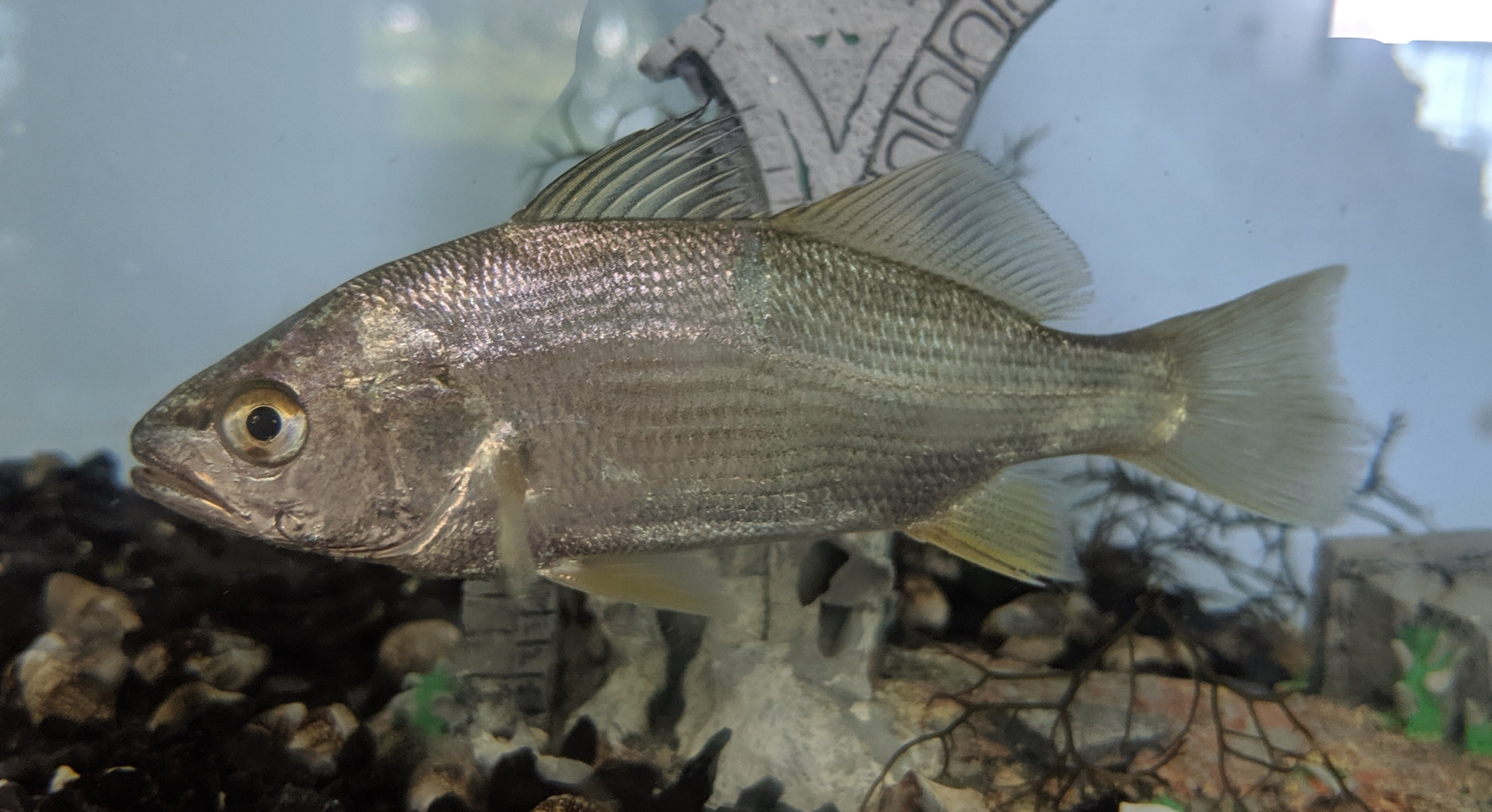
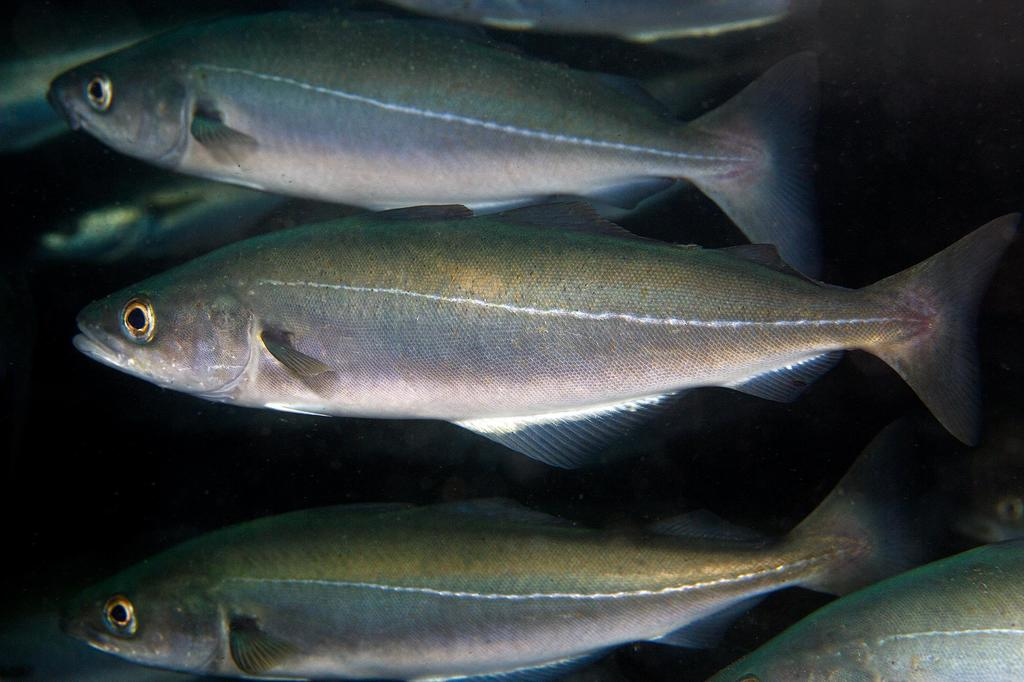
Polluck (Pollachius virens) #58
cod-family 3 dorsal fins
More pointed, underbite
Uniform anal and pelvic parallel
Broken up bright lateral line
greenish?
General: Slender, dark greenish-brown back, distinct pale lateral line
Size: Avg. adult 60–90 cm (24–35 in; 2.0–3.0 ft), 2–7 kg (4.4–15 lb);
large adults commonly reach (35–43 in; 3.0–3.6 ft) and (18–26 lb).
Key IDs:
3 dorsal fins and 2 anal fins
Lower jaw slightly longer than upper jaw (small overbite).
Straight, sharply defined white lateral line (key ID feature).
Dark olive-green to brown dorsally, silvery sides; no chin barbel.
Caudal fin slightly forked.
Memory cue: straight white lateral line + 5 dorsal/anal
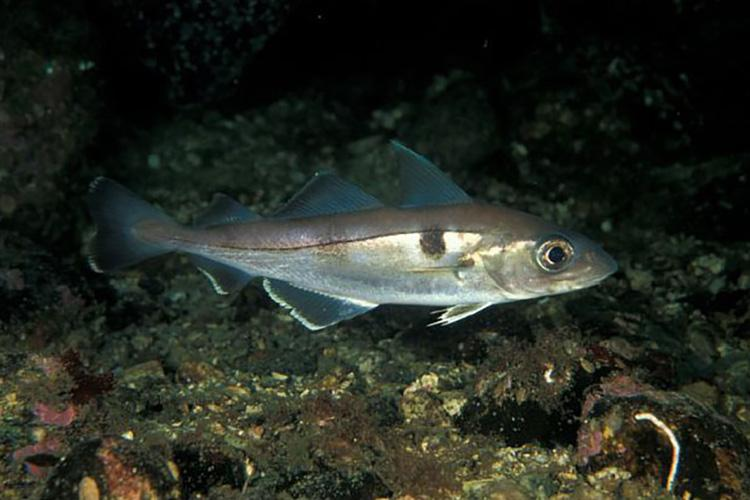
Haddock (Melanogrammus aeglefinus) #59
cod-family
3 dorsals (1st dorsal pointy)
“Haddo run with the devil” “Devils thumb print” giant ?? across (above) a black road (lateral line)
Concave tail
slim body, silver belly, dark dorsally
General: Slender, gray-brown silver, dark lateral line and distinctive black “thumbprint” spot above the pectoral fin.
Size: Avg. adult 40–60 cm (16–24 in; 1.3–2.0 ft), 1–3 kg (2.2–6.6 lb);
large adults commonly reach (24–30 in; 2.0–2.5 ft) and (6.6–11 lb).
Key IDs:
3 dorsal fins and 2 anal fins
Black lateral line that is sharply curved above the pectoral fin (KEY ID)
Distinct dark “thumbprint” blotch behind gill cover above pectoral fin.
Small chin barbel present (short, less obvious than cod).
Caudal fin slightly forked.
Gray-brown dorsal surface with silvery sides.
large eyes
Memory cue: Curved black lateral line + thumbprint spot + 5 dorsal/anal
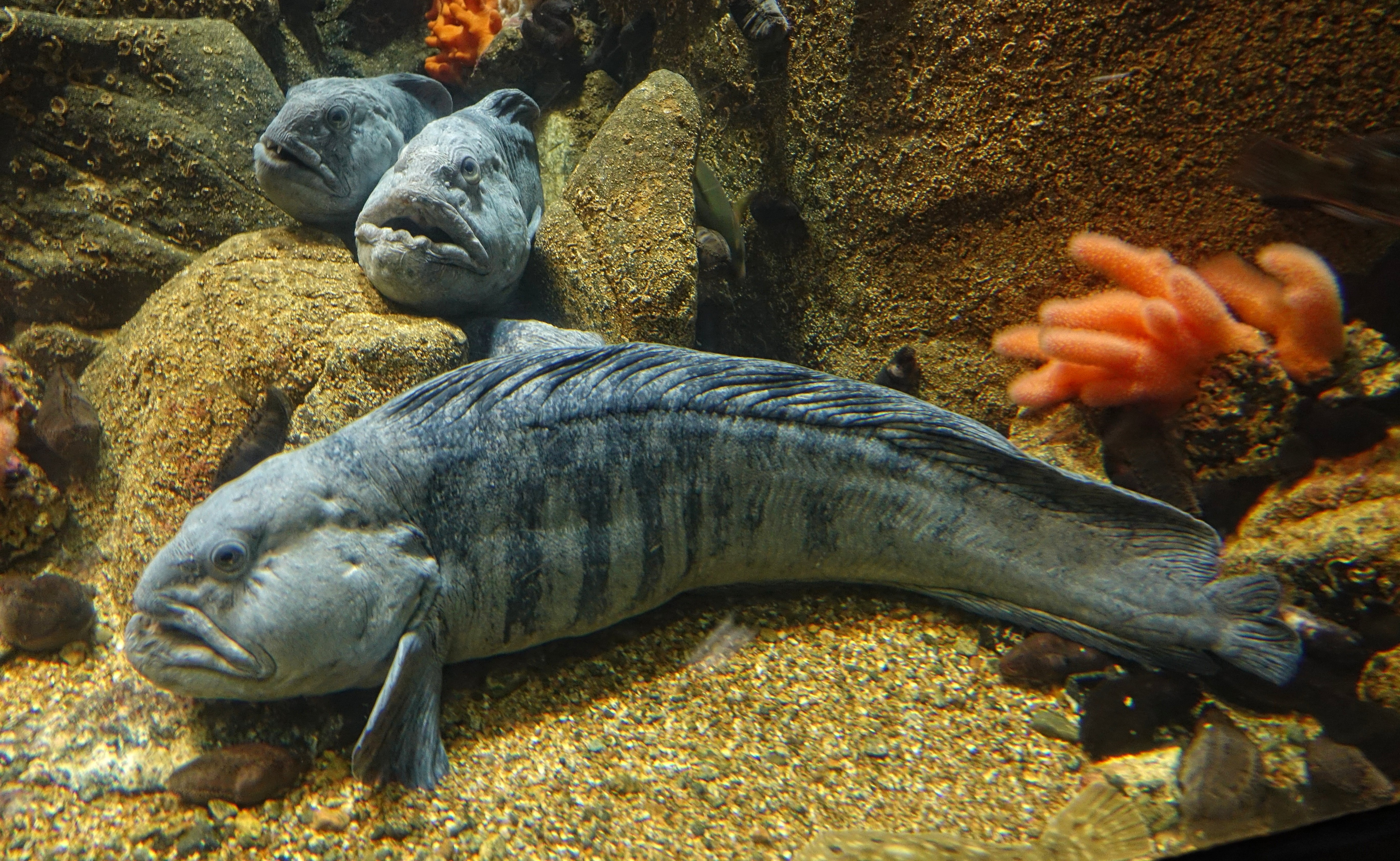
Atlantic Wolffish (Anarchichas lupus) #8
General: Large, elongated bottom-dwelling fish with a thick head and powerful jaws filled with strong, crushing teeth.
Size: Avg. adult 60–100 cm (24–39 in; 2.0–3.3 ft), 5–12 kg (11–26 lb);
large adults commonly reach (39–59 in; 3.3–4.9 ft) and (26–44 lb).
Key IDs:
Very large head with blunt snout and heavy jaw structure (distinct “bulldog” look).
Prominent canine-like teeth visible when mouth is open.
Long, eel-like but robust body (not truly slender like eel).
Long continuous dorsal fin running much of body length.
No pelvic fins (key family trait).
Mottled gray, brown, or purplish coloration with dark vertical stripes or splotches
Memory cue: Big head + big teeth + no pelvic fin
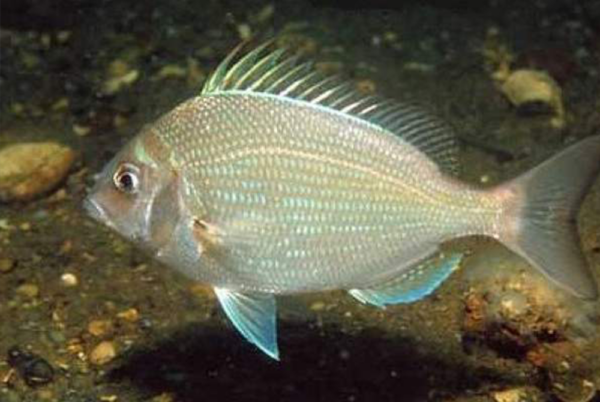
Scup / Porgy (Stenotomus chrysops) #34
idk most general white silver classic fish
sometimes have bars
Side is ovally, laterally compressedm Pointed pectoral fins, Forked caudal tail, silver, small lips, laterally compressed round
General: Deep-bodied, silvery porgy with a small mouth and distinctive incisor-like front teeth, common in coastal New England waters.
Size: Avg. adult 20–30 cm (8–12 in; 0.7–1.0 ft), 0.2–0.8 kg (0.4–1.8 lb);
large adults commonly reach (12–16 in; 1.0–1.3 ft) and (2.2–4.4 lb).
Key IDs:
Deep, laterally compressed, round body
Strong incisor-like front teeth (visible when mouth is slightly open).
Silvery-gray body with faint vertical bars (often subtle in photos).
Long dorsal fin with strong anterior spines.
Pointed pectoral fins, Forked caudal tail
Small terminal mouth; thin lips
Memory cue: forked caudal, pointed pectoral, small lips, incisor teeth
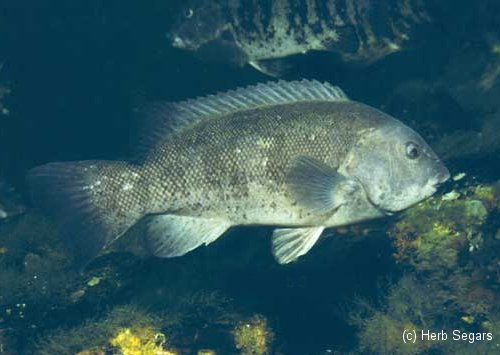
Tautog “Black Fish” (Tautoga onitis) #27
Wrasse family; Fat fleshy lips, human conical teeth,
Female = molted, Males = black & white w spot
crushers all the way down the throat, Males usually just Mottled, white spot behind pectoral, white belly, Females have bars
General: Thick-bodied, dark-colored, blunt head, strong crushing teeth, large lips, chin barbel
Size: Avg. adult 30–50 cm (12–20 in; 1.0–1.6 ft), 1–5 kg (2.2–11 lb);
large adults commonly reach (20–30 in; 1.6–2.5 ft) and (11–22 lb).
Key IDs:
Dark brown to black mottled coloration (often “dirty” or camouflaged look).
Very thick, robust body and large blunt head.
Thick fleshy lips (very distinctive).
Strong crushing teeth (molars-like)
Small chin barbel present (important ID feature).
Long dorsal fin with strong anterior spines; continuous fin structure.
Rounded to slightly forked caudal tail and rounded pectoral
Memory cue: Dark + thick lips + chin barbel = Tautog (“Blackfish”).
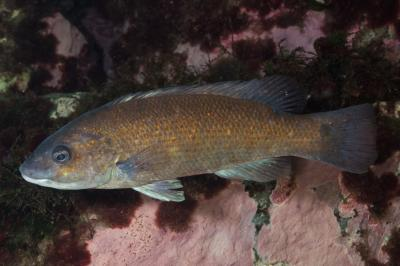
Cunner (Tautogolabrus adspersus) #28
Wrasse family; Short protruding teeth. Greenish, orangish reddish (color changes with habitat = cunning trickster) Smaller, Thick caudal peduncle
General: Small wrasse with a slender, elongated body and variable coloration
Size: Avg. adult 15–25 cm (6–10 in; 0.5–0.8 ft), 0.1–0.5 kg (0.2–1.1 lb);
large adults commonly reach (10–14 in; 0.8–1.2 ft) and (1.1–2.2 lb).
Key IDs:
More slender and long wrasse body
Highly variable coloration (green, brown, reddish, or mottled/rusty).
Small mouth with protruding snout
No chin barbel
Long dorsal fin running much of body length.
Rounded to slightly forked caudal tail and rounded pectoral
Memory cue: Slim + rusted + no chin barbel
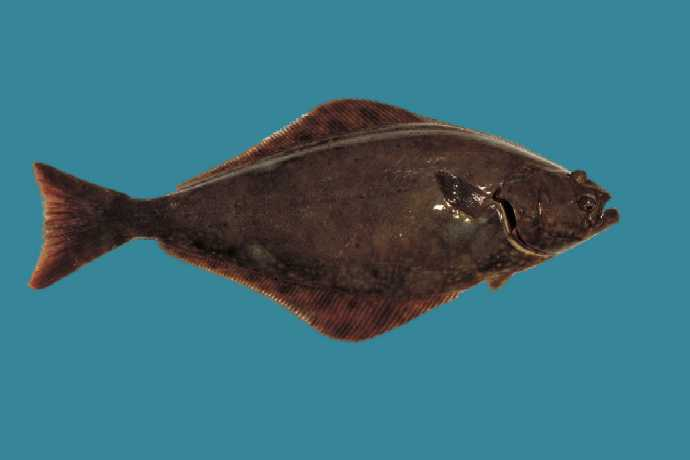
Atlantic Halibut (Hippoglossus hippoglossus) #22
High arched lateral line, concave caudal (inner), right-headed, large mouth,diamond shape!!
General: Right-eyed, pointed mouth, with a diamond-shaped body
Size: Avg. adult 80–150 cm (31–59 in; 2.6–4.9 ft), 15–80 kg (33–176 lb);
large adults commonly reach (59–98 in; 4.9–8.2 ft) and (176–440 lb).
Key IDs:
Both eyes on right side of body.
Large, elongated "diamond-shaped" body (less rounded than typical species).
Large mouth extending posterior to lower eye.
Forked caudal tail with “synch” base
Dark brown to olive dorsal side; white blind side.
Lateral line arches slightly over pectoral fin.
Memory cue: Right-eyed, diamond, large mouth
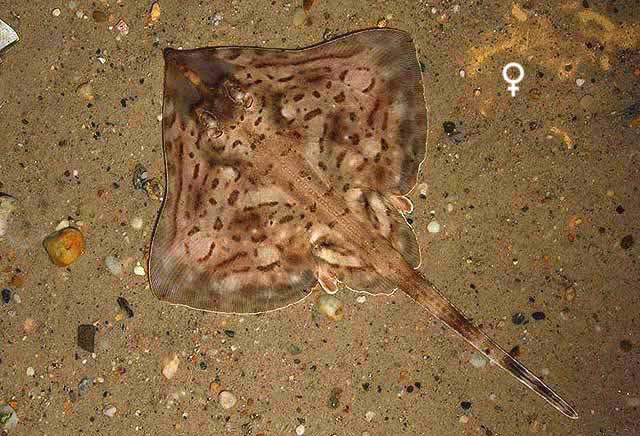
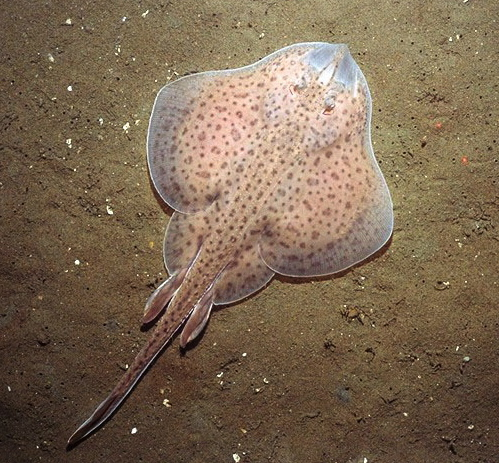
Clearnose Skate (Rostroraja egianteria) #11
1 back line of spines (rather than 2), diamond shape, Scattered bars like sprinkles
General: Left-eyed, pointed snout, and distinctive translucent patches on the snout.
Size: Avg. adult 45–70 cm (18–28 in; 1.5–2.3 ft) total length, 1–3 kg (2.2–6.6 lb);
large adults commonly reach (28–35 in; 2.3–3.0 ft) and (6.6–11 lb).
Key IDs:
Translucent ("clear") patches on either side of the pointed snout
Numerous small dark spots, waves, blotches across dorsal surface.
Row of enlarged thorns/spines along the dorsal midline and tail.
Triangular disc with small pointed rostrum.
Long, slender tail with small dorsal fins near the tip.
Memory cue: Clear nose + spotted back + rostrum + tail spines
Winter Skate (Leucoraja ocellata) #13
Smooth female under, shorter male claspers = polite season of joy etc lol cuffing season
two “snowflake” spots
General: Large, broad-bodied skate with a rounded disc and prominent eye-like spots on the dorsal surface.
Size: Avg. adult 60–100 cm (24–39 in; 2.0–3.3 ft) total length, 3–10 kg (6.6–22 lb); large adults commonly reach (39–59 in; 3.3–4.9 ft) and (22–44 lb).
Key IDs:
Large dark eye-like spots (ocelli) on each pectoral wing (key ID feature).
Broad, rounded.
Brown to gray dorsal coloration with scattered dark markings.
Row of thorns/spines along midline of back and tail.
Short, pointed snout
Memory cue: Eye-spots on wings, short snout
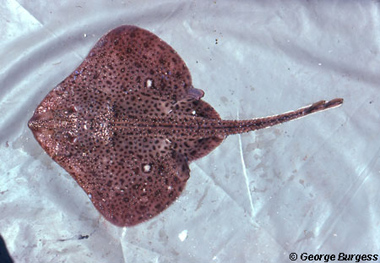
Little Skate (Leucoraja erinacea) #12
Males = long claspers “rude”
Females = “she’s rough around the edges” around cloaca
Little spots all over when alive evenly space, rounder shape
General: Rounded, short snout, and many numerous tiny dark spots across the dorsal surface.
Size: Avg. adult 35–50 cm (14–20 in; 1.2–1.6 ft) total length, 0.5–1.5 kg (1.1–3.3 lb);
large adults commonly reach (20–24 in; 1.6–2.0 ft) and (3.3–5.5 lb).
Key IDs:
Rounded body, short, blunt snout.
Numerous small dark spots scattered across dorsal surface.
Row of small thorns/spines along midline of back and tail.
Thin tail
Memory cue: Many tiny spots, thin tail, many dark spots
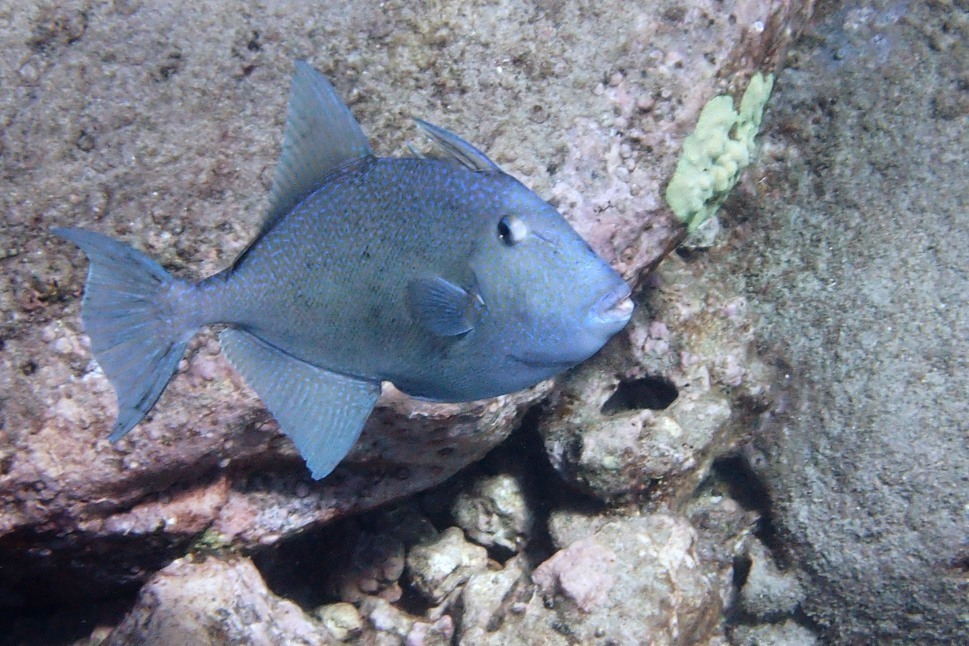
Gray Triggerfish (Balistes capriscus) #32
General: Deep-bodied, laterally compressed, a small mouth, “pursed” lips, sometimes thin triangle 1st dorsal fin, larger triangular trigger-like 2nd dorsal spine with parallel match anal fin
Size: Avg. adult 25–40 cm (10–16 in; 0.8–1.3 ft), 0.5–2 kg (1.1–4.4 lb);
large adults commonly reach (16–24 in; 1.3–2.0 ft) and (4.4–11 lb).
Key IDs:
Prominent first dorsal spine ("trigger") on top of head.
Small “pursed” mouth with strong incisor-like teeth.
Deep, diamond-shaped, laterally compressed body.
Tough, leathery gray skin with small scales.
Small pectoral fins; dorsal and anal fins set far posterior and mirror each other.
Crescent-shaped caudal tail in adults.
Memory cue: Diamond body + large triangular & mirrored posterior fins
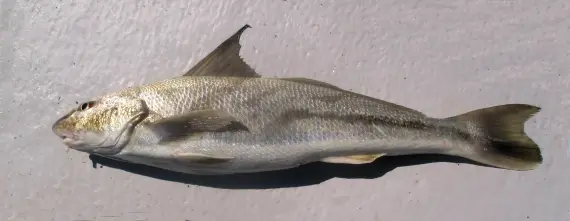
Northern Kingfish (Menticirrhus saxatilis) #33
Above pectoral there’s a V pattern that is relatively
V = vendetta = power = king of the north
General: Slender, long, silver, bottom-dwelling with a slightly humped back and a single chin barbel.
Size: Avg. adult 20–35 cm (8–14 in; 0.7–1.2 ft), 0.2–0.8 kg (0.4–1.8 lb);
large adults commonly reach (14–20 in; 1.2–1.6 ft) and (2.2–4.4 lb).
Key IDs:
Single short chin barbel (best ID feature).
Slender, elongated body with slightly arched thin anterior 1st dorsal
Silvery body sometimes with faint oblique/wavy dark bars on upper sides.
Small shark-like mouth without lips
Long first dorsal fin with tall 2nd anterior spines.
Slightly forked waved caudal tail
Memory cue: Long slender silver fish with thin curved 1st dorsal, 1 chin barb
Cusk (Brosme brosme) #9
“eel-like fish-ish” on the “cusp” of being an eel, still has ( c ) caudal, 1 chin barbel
General: Elongated, single long dorsal fin, mirrored anal fin, and 1 chin barbel.
Size: Avg. adult 50–80 cm (20–31 in; 1.6–2.6 ft), 2–6 kg (4.4–13.2 lb);
Large adults commonly reach (31–43 in; 2.6–3.6 ft) and (13–26 lb).
Key IDs:
1 continuous dorsal fin, white outer, running nearly the entire length of the back
Single chin barbel.
Long anal fin mirroring the dorsal fin.
Elongated eel-like body with a relatively blunt head.
Rounded caudal tail
Brown-to-gray coloration, often mottled.
Memory cue: 1 long dorsal fin + 1 barbel
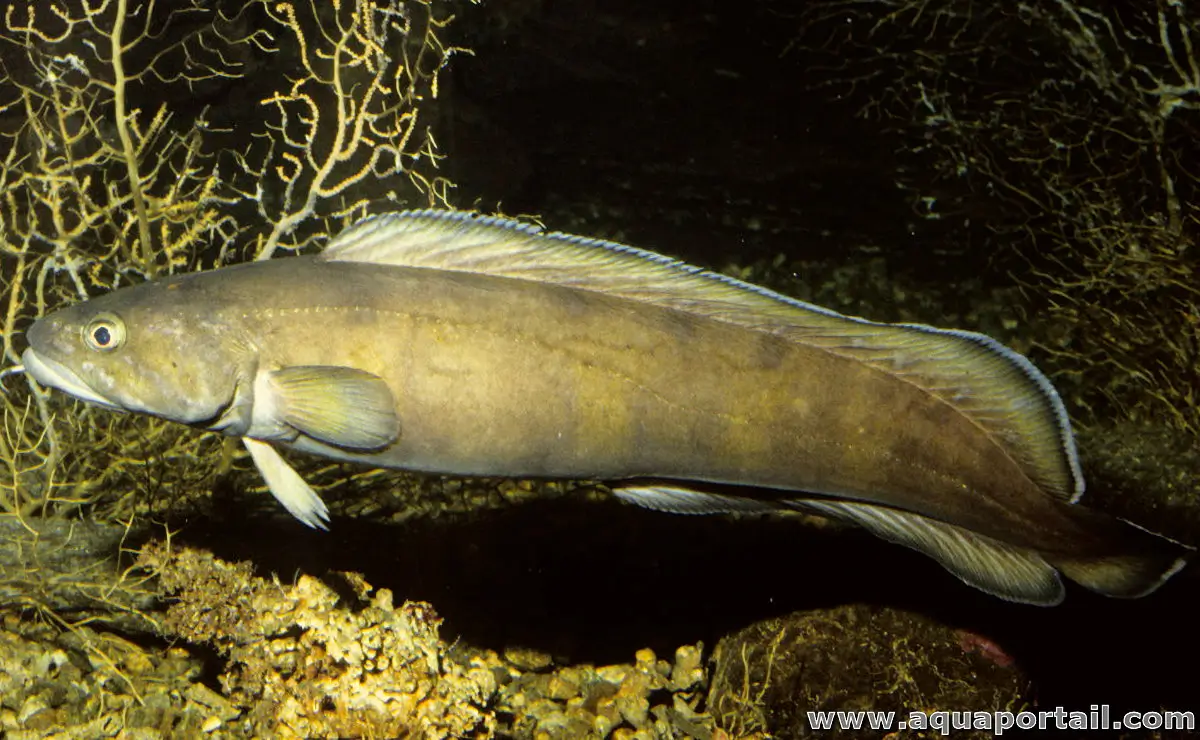
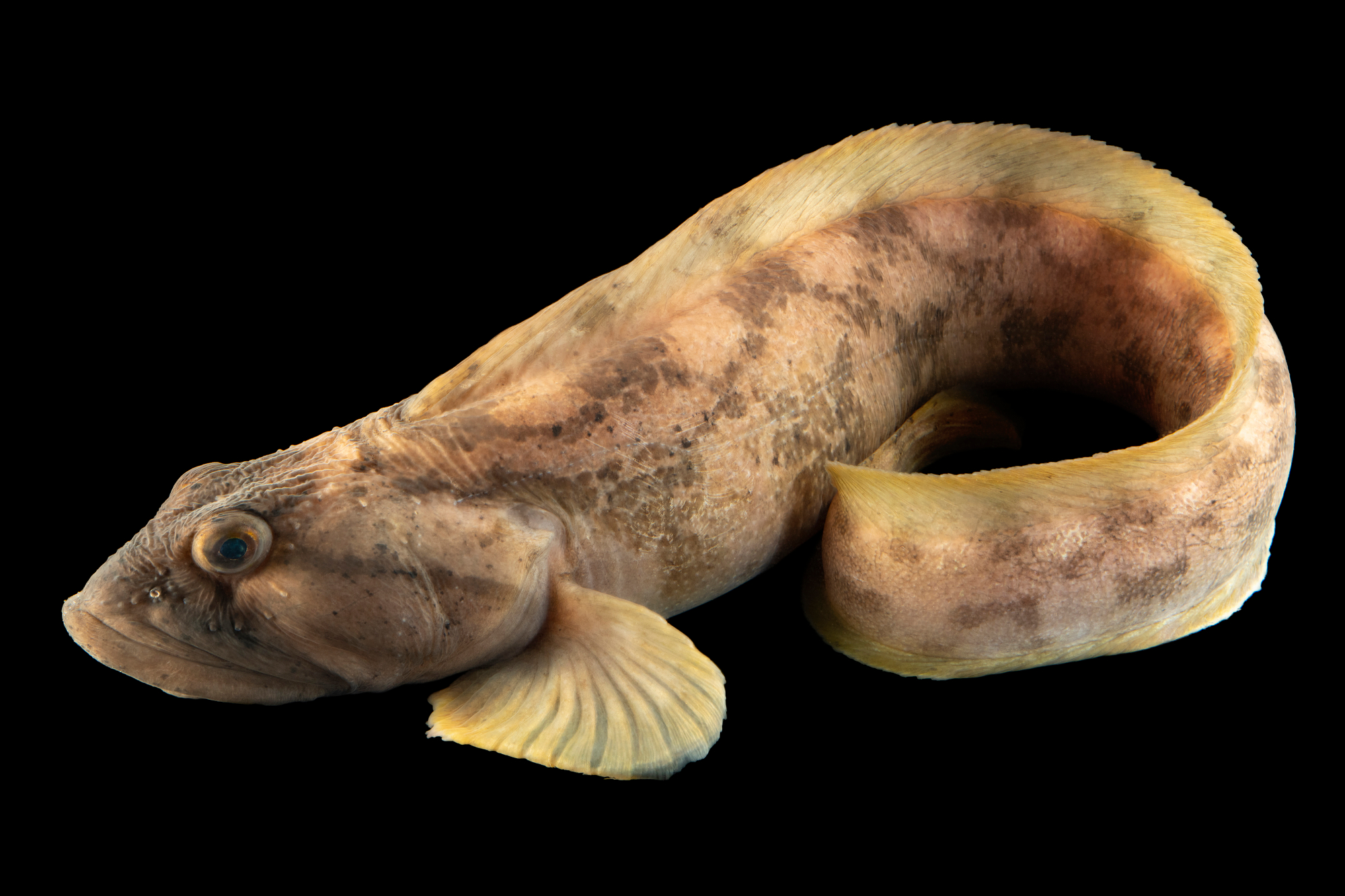
Ocean Pout (Zoarces americanus) #10
eel-like, pouting bc not, Giant lips; overbite, yellowy fins, no caudal
bars from eyes like makeup streams from crying
General: Eel-like bottom fish with a long continuous fin around most of the body and a thick, fleshy appearance.
Size: Avg. adult 30–60 cm (12–24 in; 1.0–2.0 ft), 0.5–2 kg (1.1–4.4 lb);
large adults commonly reach (24–39 in; 2.0–3.3 ft) and (4.4–11 lb).
Key IDs:
Very long continuous dorsal fin that joins the caudal and anal fins.
Eel-like body shape with a thick, fleshy head.
Short mouth with thick lips, under bite
No chin barbel (important distinction)
Mottled brown, many spots, olive, or reddish coloration.
Rounded tail, “lacking” caudal fin
Memory cue: Eel-like fish + no chin barbel + “lack” of caudal fin
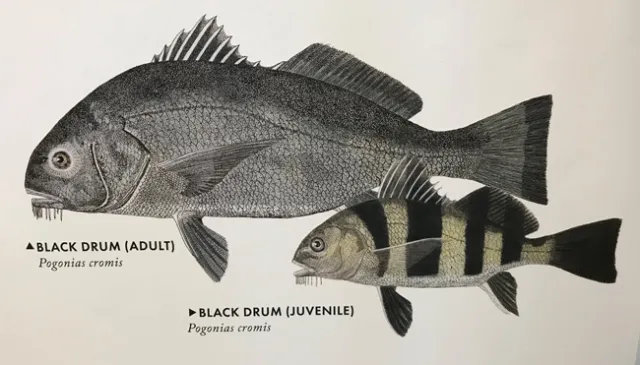
Black Drum (Pogonias cromis) #15 (rare)
More vertical angle on head
Juvenile has bars, adults no oop
General: Large, deep-bodied with a high humped back, blunt head, and distinctive numerous chin barbels.
Size: Avg. adult 50–100 cm (20–39 in; 1.6–3.3 ft), 5–20 kg (11–44 lb);
large adults commonly reach (39–59 in; 3.3–4.9 ft) and (44–110 lb).
Key IDs:
Multiple chin barbels ("whiskers") under lower jaw
Deep, high-backed body with arched dorsal profile.
Blunt snout and inferior (downward-facing) mouth.
Adults typically gray to black; juveniles often have bold vertical black bars.
Defined lateral line
Long dorsal fin with spiny anterior section and soft posterior section.
Slightly forked to rounded caudal tail.
Memory cue: Big drum with chin whiskers + striped (or gray)
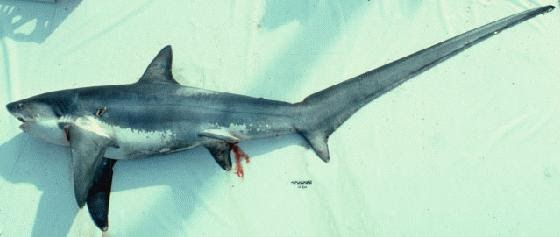
Atlantic Thresher Shark (Alopias vulpinus) #19
“thrashes” with weird ass tail to hunt
General: Shark with an extremely elongated upper caudal tail lobe
Size: Avg. adult 300–450 cm (118–177 in; 9.8–14.8 ft) total length, 100–250 kg (220–550 lb);
large adults commonly reach (177–217 in; 14.8–18.0 ft) and (550–1,100 lb).
Key IDs:
Upper lobe of caudal tail as long as, or longer than, the rest of the body
Very pointed snout and relatively small mouth.
Slender torpedo
Large wide pectoral fins.
Gray, blue-gray, or brownish dorsally; white ventrally.
Memory cue: Whip-like tail longer than body
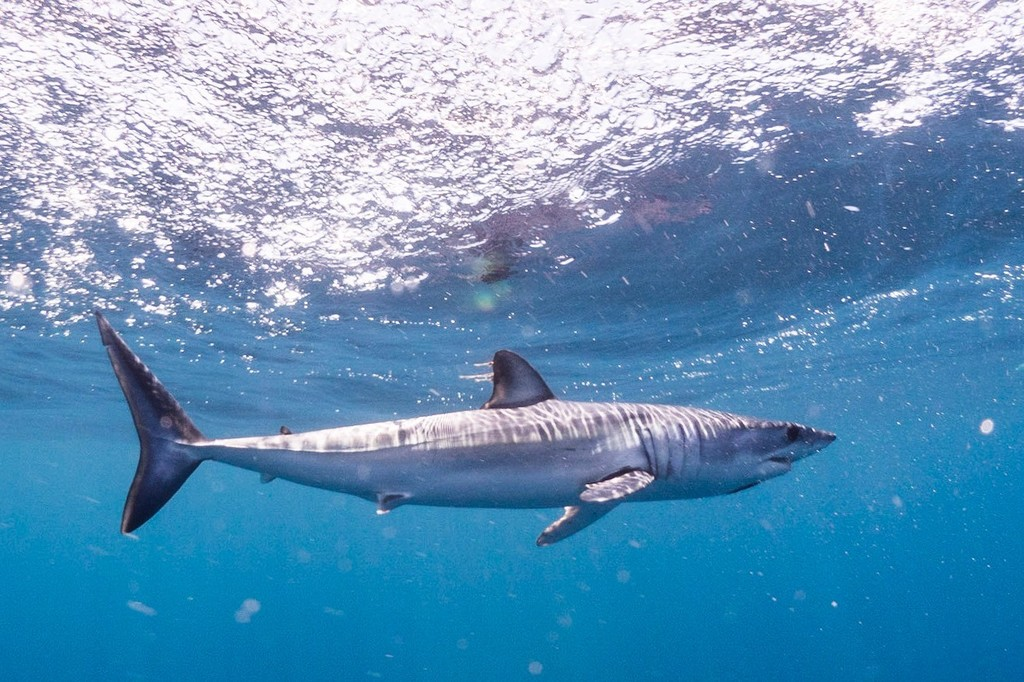
Shortfin Mako (Isurus ocyrinchus) #18
mako my shark fins bigger (they’re small) Curled in jaged teeth, protruding, Pointy, fast, aerodynamic
pointy teeth = needs “mako”-up to glow up lol
General: Streamlined long shark, short pectoral, crescent caudal with larger dorsal side
Size: Avg. adult 200–300 cm (79–118 in; 6.6–9.8 ft), 60–150 kg (132–330 lb);
large adults commonly reach (118–157 in; 9.8–13.1 ft) and (330–660 lb).
Key IDs:
Very stiff, crescent-shaped (lunate) caudal tail.
Short pectoral fins (key distinction from many coastal sharks).
Pointed, conical snout.
Mirrored tiny anal and 2nd dorsal fins
Dark metallic blue dorsally, bright white ventrally.
Large, dark eyes.
Memory cue: top heavy crescent tail + short pectoral fins, cone snout
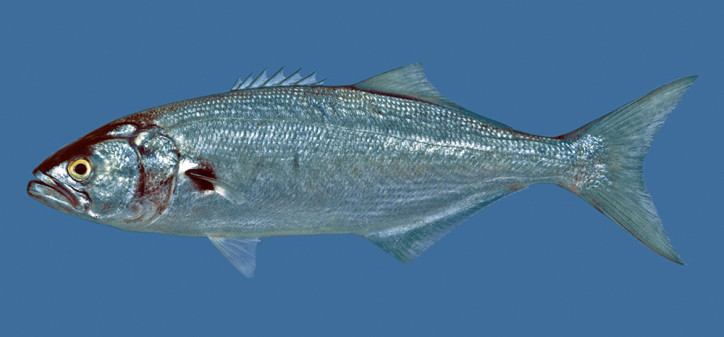
Bluefish (Pomatomus saltatrix) #29
Sharp teeth
Significant underbite,
Moderately elongegaet
Dark blotch at pectoral fin base
Also called snapper ___
General: Thin fish, large mouth, sharp teeth, and a blue-green darked lined back.
Size: Avg. adult 40–70 cm (16–28 in; 1.3–2.3 ft), 1–5 kg (2.2–11 lb);
large adults commonly reach (28–39 in; 2.3–3.3 ft) and (11–22 lb).
Key IDs:
Large, downturned mouth, with uniform razor-sharp teeth
Single dorsal fin (no second fin, no finlets)
No patterns; Bluish-green and dark-lined dorsally, silver ventrally with a sharp color contrast line.
Deeply forked caudal tail with strong crescent shape
Memory cue: Clean blue-green body + at times big visible teeth + no finlets, large downturn mouth
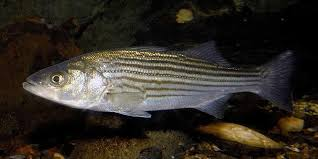
Striped Bass (Morone saxatilis) #30
General: Elongated, silvery fish with a robust body, large mouth, and distinctive dark horizontal stripes running along the sides. Back is olive-green to bluish-gray, fading to bright silver on the sides and belly.
Size: Avg. adult 50–90 cm (20–35 in; 1.6–3.0 ft), 2–9 kg (4–20 lb);
Large adults commonly reach (35–47 in; 3.0–3.9 ft) and (20–50 lb).
Key IDs:
Large terminal to slightly lower-set mouth; slight underbite
Two separate dorsal fins (a spiny first dorsal and a soft-rayed second dorsal)
7–8 prominent dark horizontal stripes extending from gill cover to deeply forked tail
No finlets behind the dorsal or anal fins
Memory cue: bold horizontal stripes + olive-green/blue-grey + protruding lower jaw
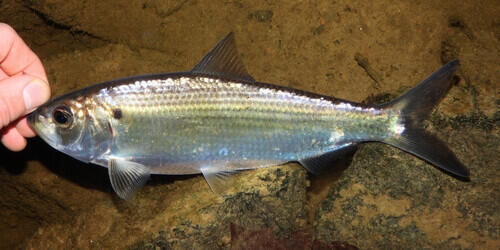
Alewife #41
herring (lighter stomach lining INSIDE BODY compared to blue); more often; sharp saw-life ridges ventral sided
wife is light
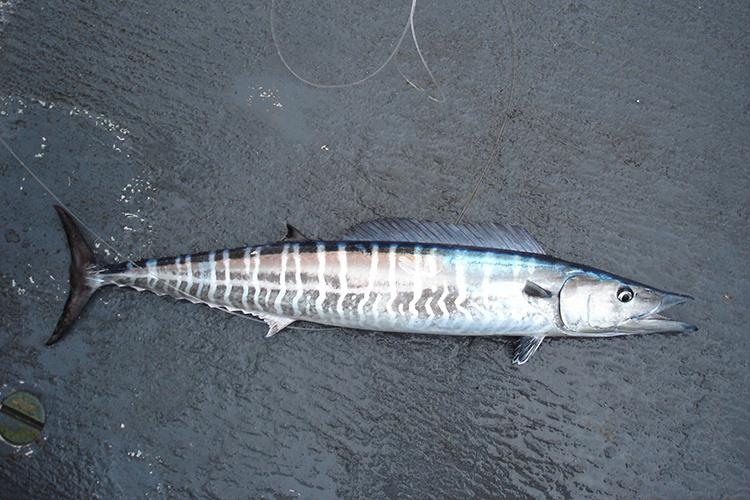
Wahoo #42
nuff said
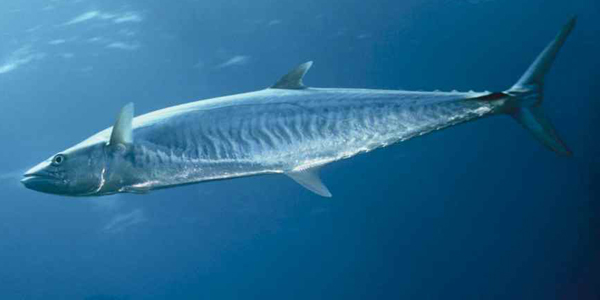
King Mackerel #43
“Bow down the king” ; lateral bows down very sharply
Silvery at mid-line/underside
Almost scaleless
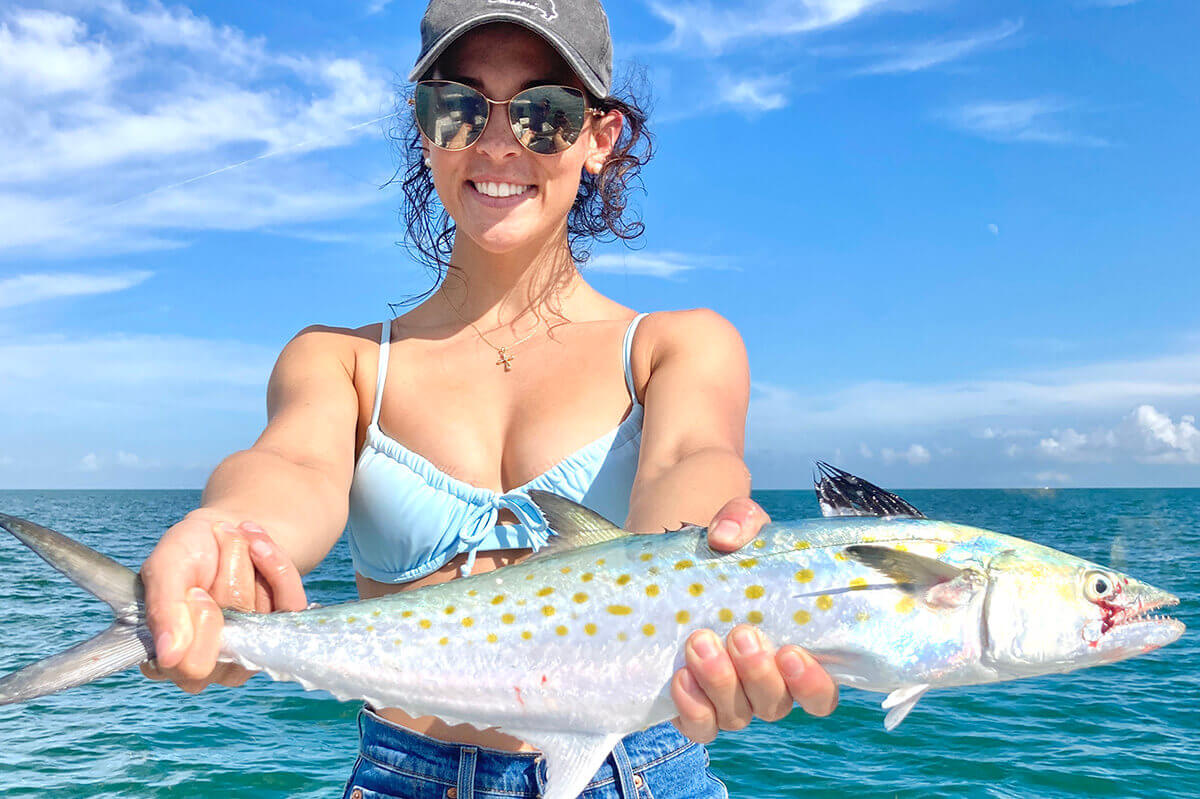
Spanish Mackerel #44
Orange spots = spanish flags, in line with lateral line
Very slender
light yellowy coloration, bright
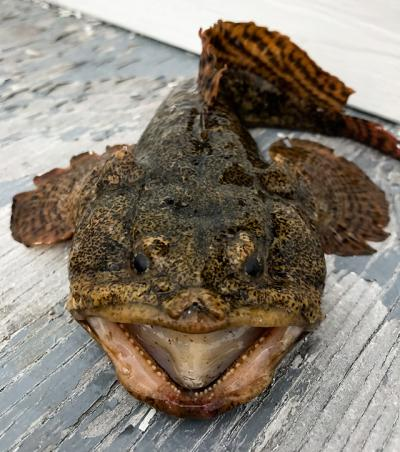
Oyster Toadfish #45
god’s least favorite creature
Spotted Hake #46
cod-family but 2 dorsal fins
1st dorsal is showy
White spots on lateral line
barbel
rounded caudal
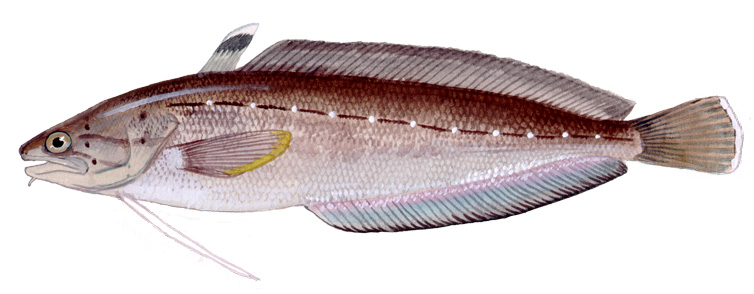
Windowpane Flounder #47
Almost translucent very thin = glass
Lateral line curves over pectoral fin similar to giant diamond cousin
Left-facing
Rounded body
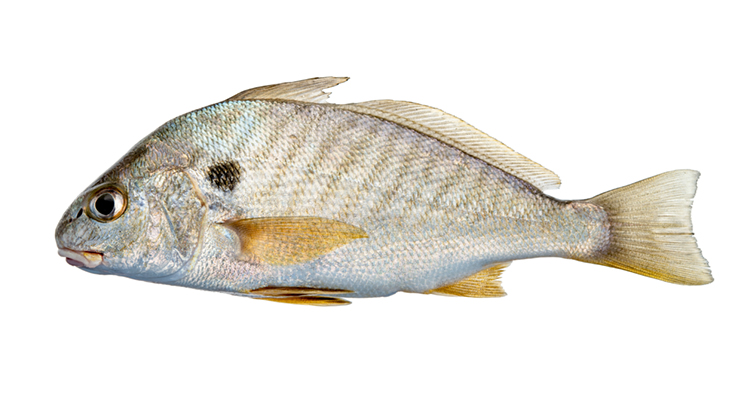
Spot #48 (uncommon)
Drum family; Very silvery, yellow finlets, giant black spot by pectoral, large eye of similar size
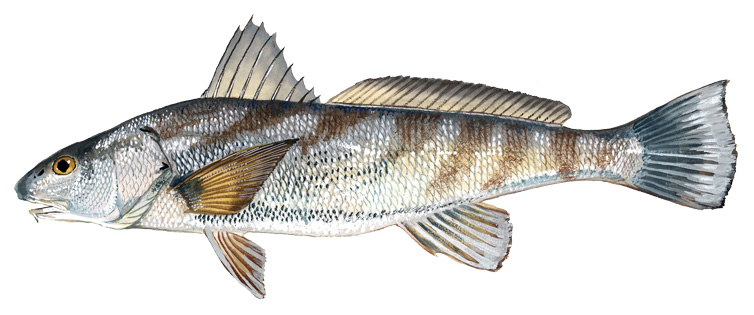
Southern Kingfish #49 (uncommon)
drum family; king without power; trumpies don’t get V lmao
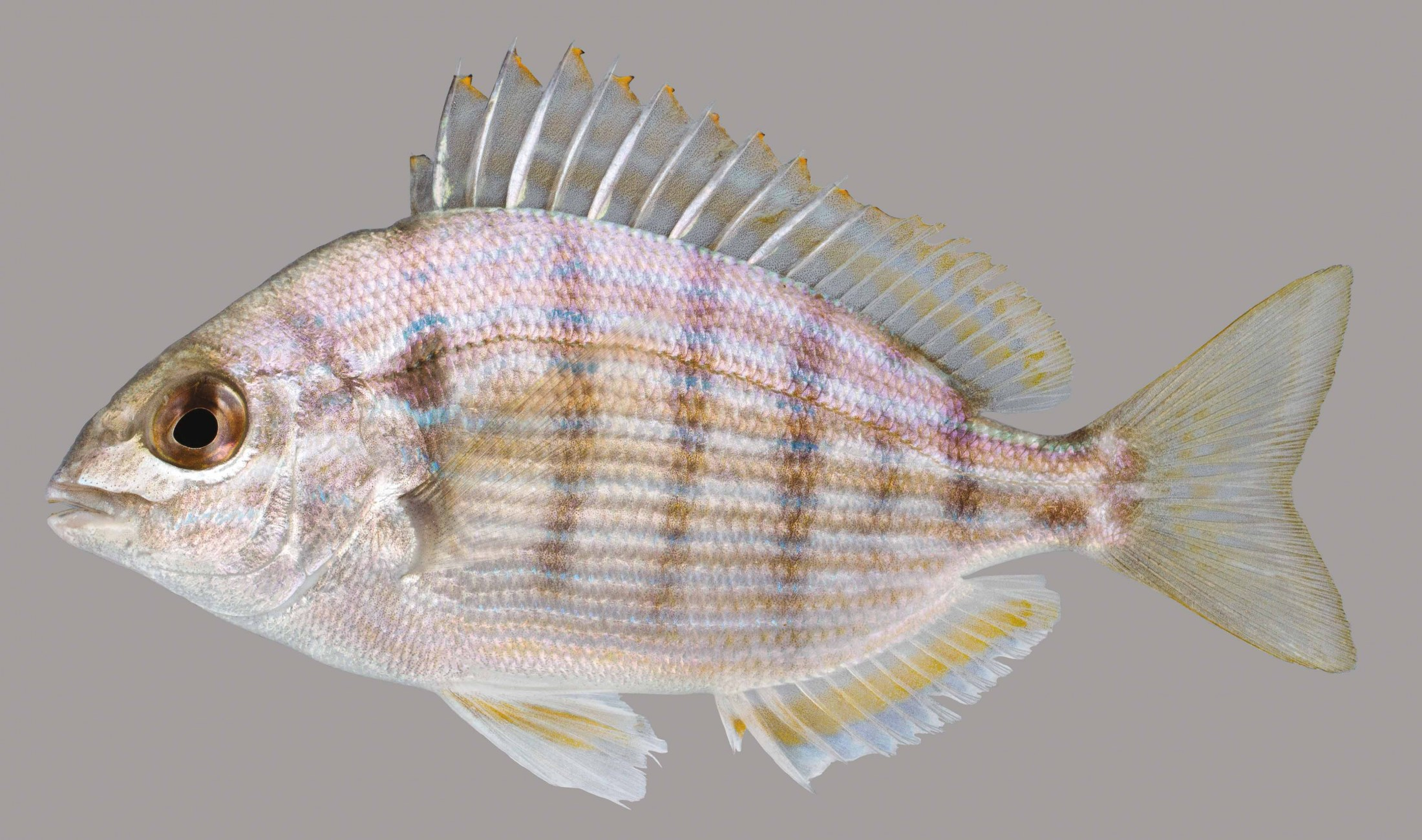
Pinfish #50
Like a scup and a spot had a baby lol — pin the tail on the donkey? idfk
Bars, stripes, and big pectoral
Anal fin with yellowfish inner band and caudal
Pigfish #51 (rare)
Each scale has a blue center
Mouth small
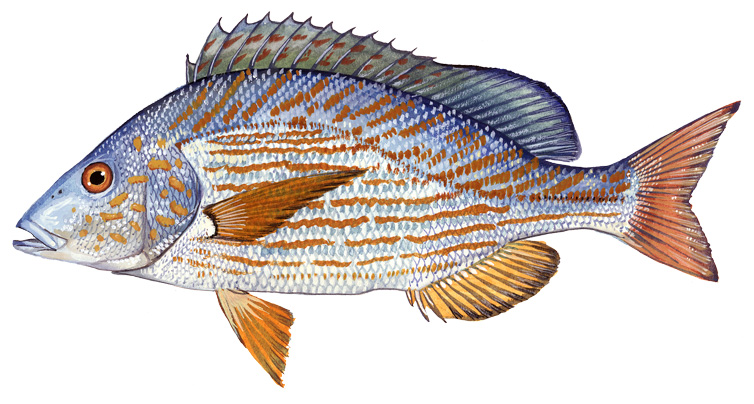
Spotted Seatrout #52
Drum family; Very distinctive black spots all the way to caudal tail and through, and on dorsal fins. spots across the sea, versus its weak brother
Big pointy teeth
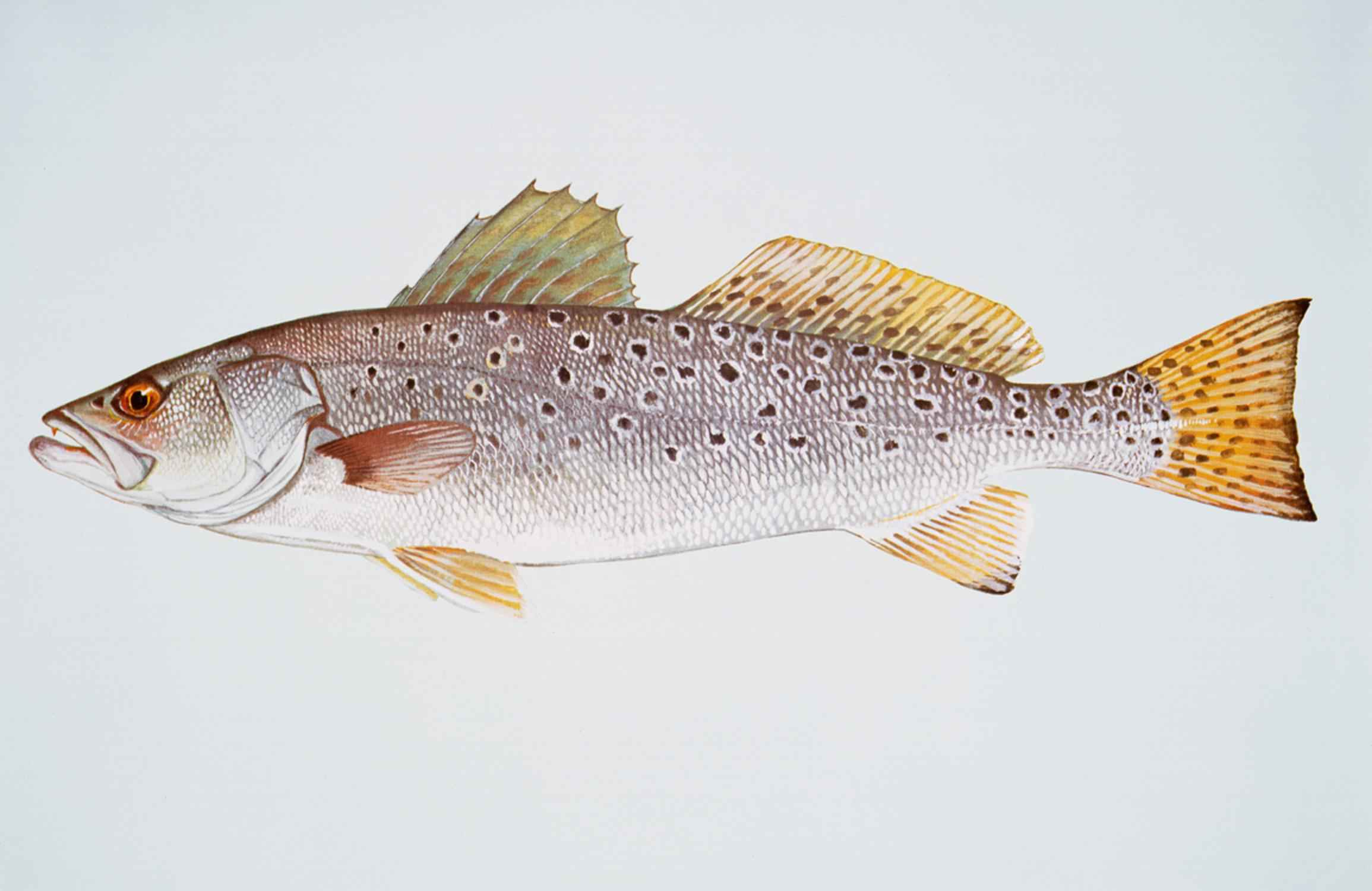
Atlantic Croaker #55 (uncommon)
drum family
Actually make croaking noise
dark pectoral fin base
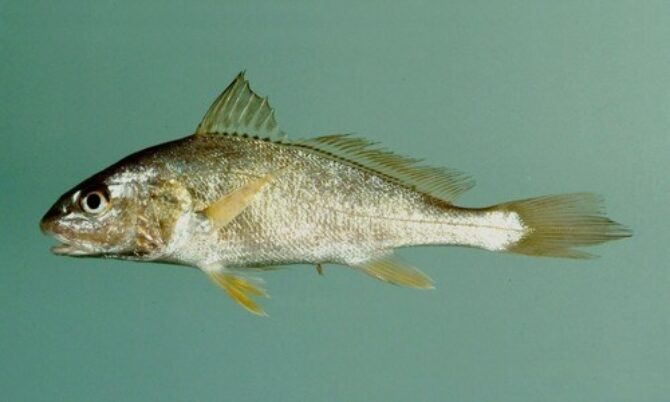
Northern Puffer #56
dark bar across eyes “unibrow” puffer
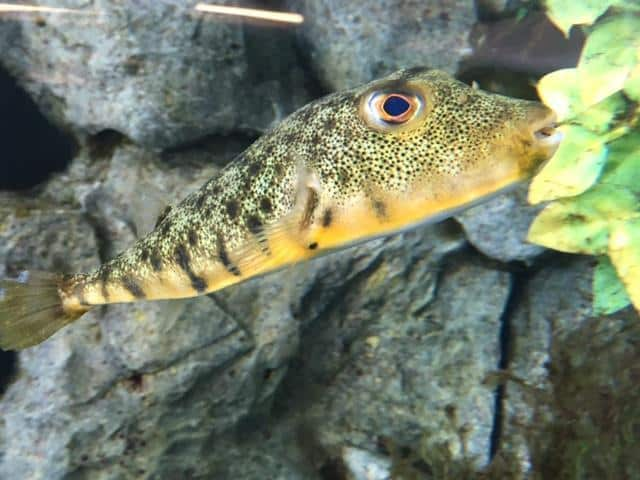
Silver Hake #60
3 dorsal fins
Distinct for hakes, more scaly silvery in comparison
Teeth (distinct)
Prominent lateral line
Even caudal
No barbel
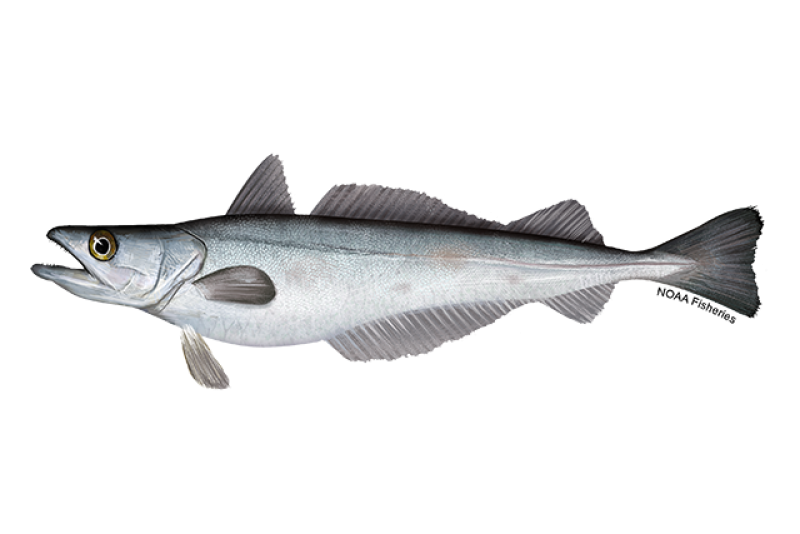
Atlantic / White Hake #61
Shorter filament on first dorsal
1 chin barbel
Epibranchial Feelers
2 rackers epibrocical (hinge of gill structure)
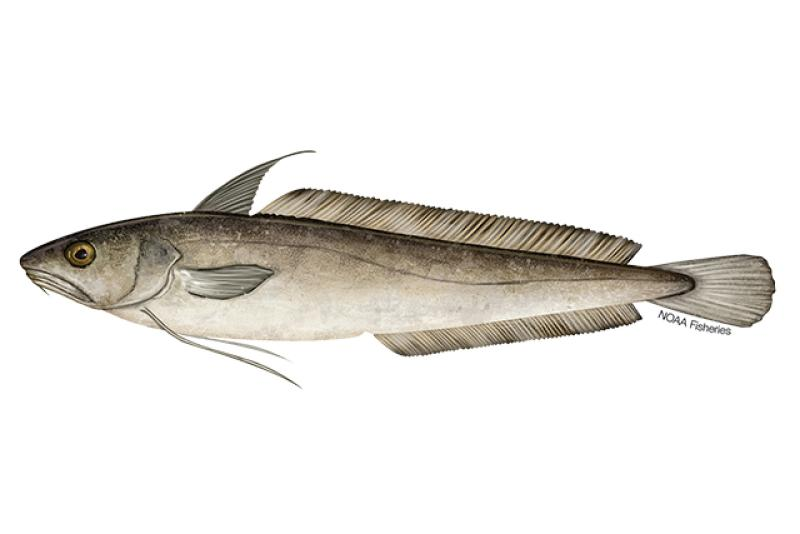
Red Hake #62
3 gill rakers “red has three letters”
showy long filaments, especially on longest filament 1st dorsal
(can be broken off though)
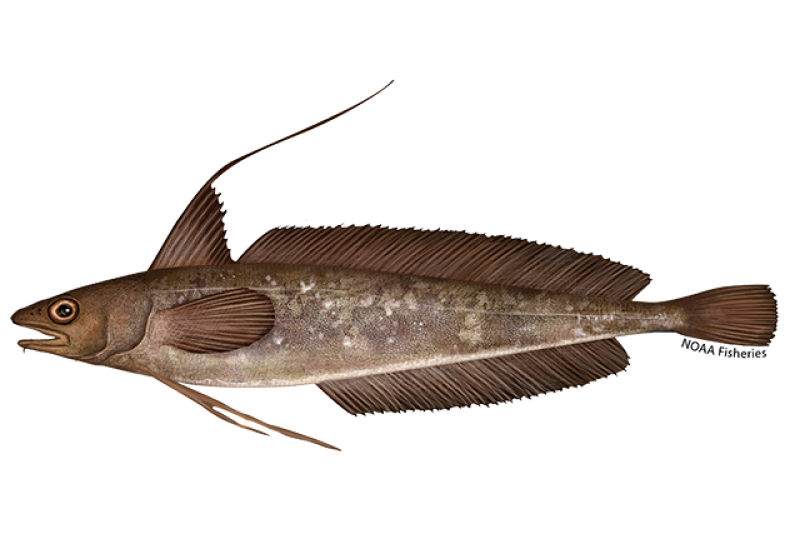
Striped Searobin #63
2 lateral stripes
faded tan bars
yellow/lighter coloration
very long pectoral wing (halfway through 2nd dorsal)
Northern Searobin #64
wing like pectoral to 2nd dorsal
Oscilated spot on first dorsal
No ventral lines
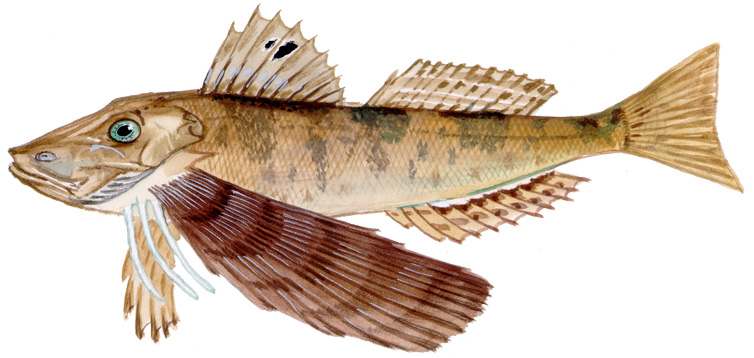
Longhorn Sculpin #65
long horns, molted pattern (poison)
sculpted strange
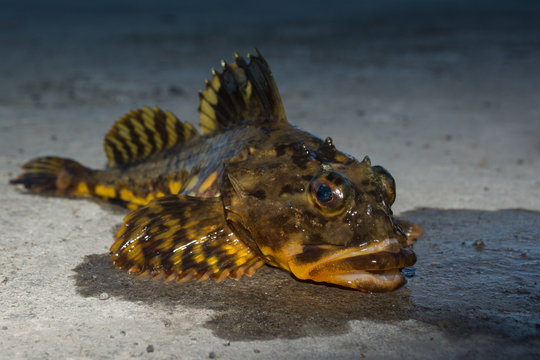
Shorthorn Sculpin #66
short horns, molted pattern (poison)
sculpted strange
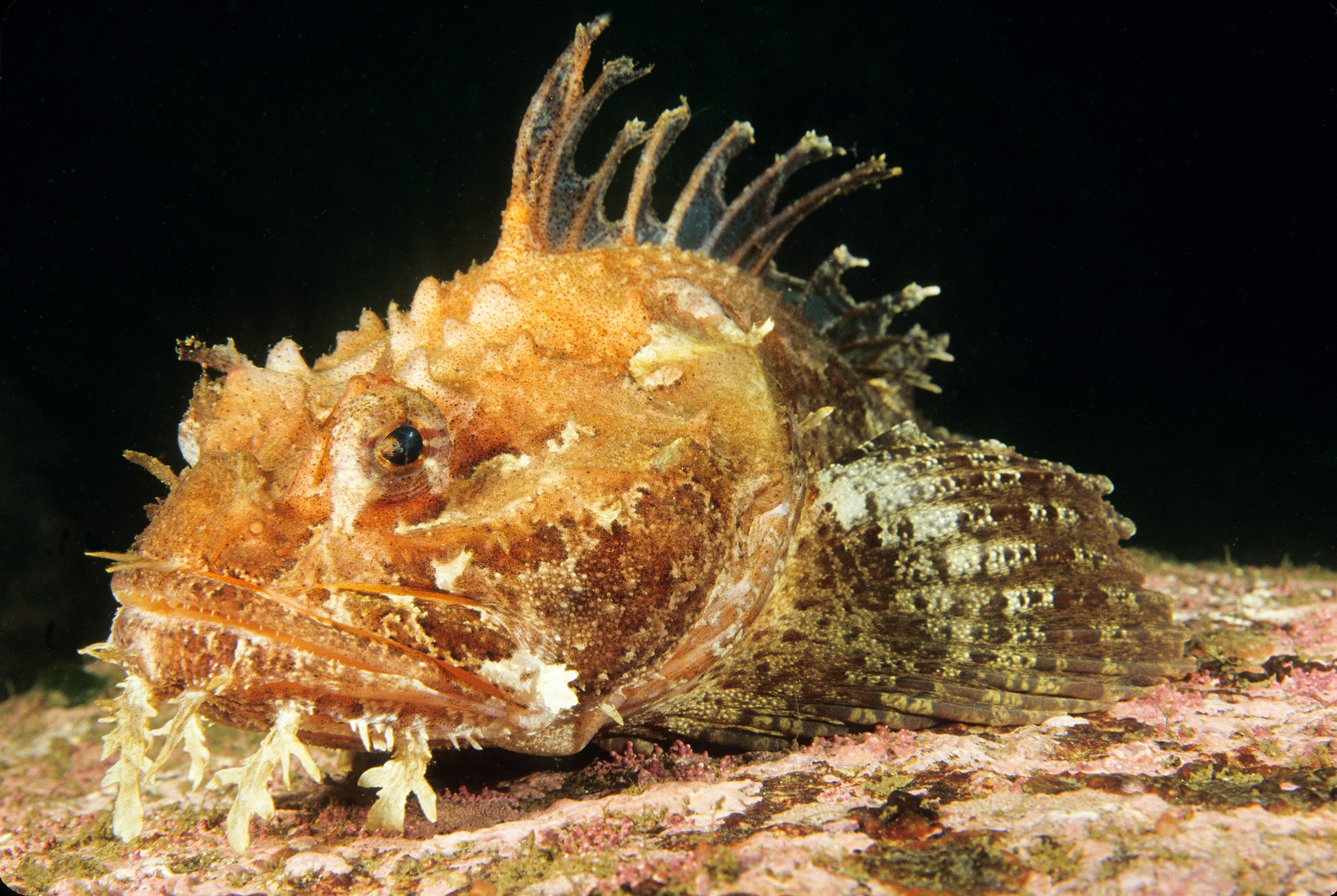
Sea Raven #67
weird lookin guy, prickly, great camo, smart trickster like a bird
Fleshy tabs on the end of hte spins very irregular
Very puffy air bladder
Less fringe of jaw of than oyster toad
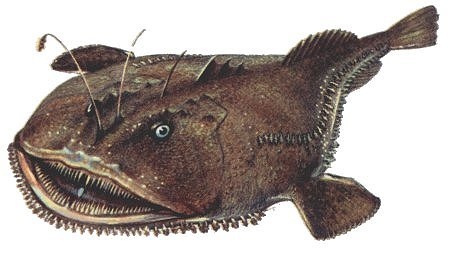
Goosefish #68
what we call a monkfish
Conger Eel #69
Blue Shark
Slow scavenger shark
Very thin, narrow
Longer pectoral fings
Long fin and tail
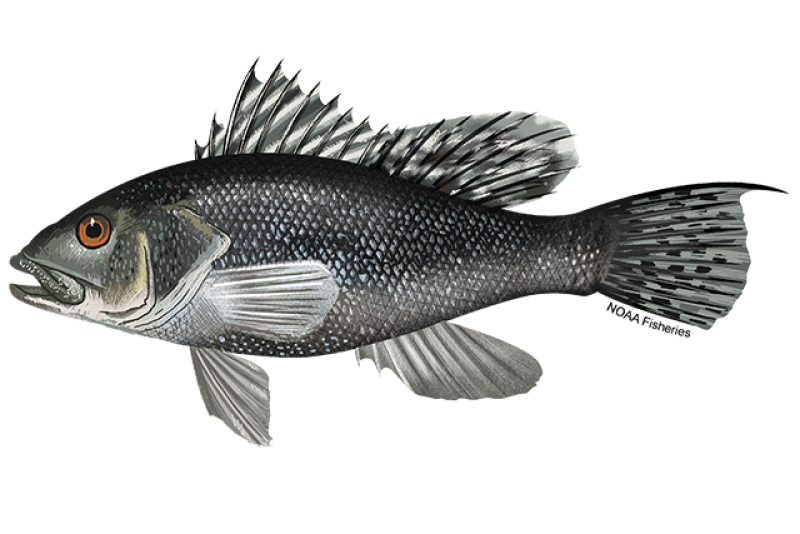
Black Sea Bass #31
“Prehistoric looking” very spiny, long caudal tail tips
Born females and turns male, they have a bump on their head
Large rounded pectoral
Endemic, not invasive
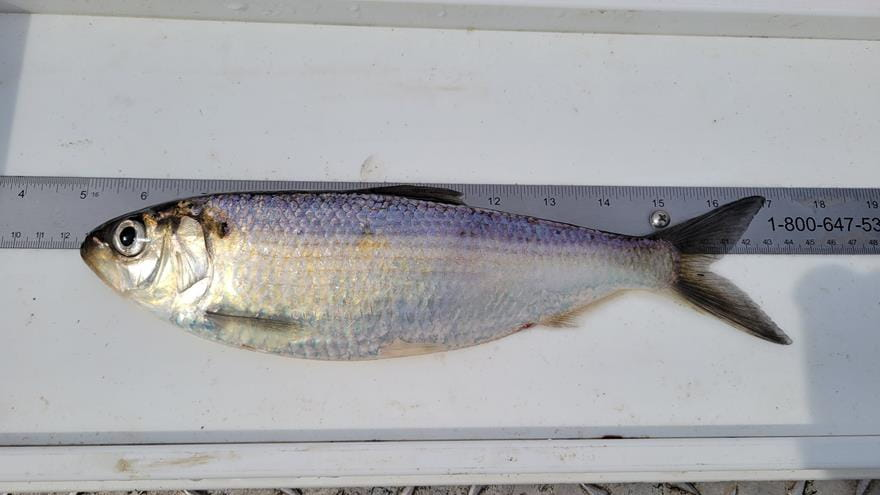
Blueback Herring
herring (darker stomach lining INSIDE BODY compared to alewife); Darker blue on top
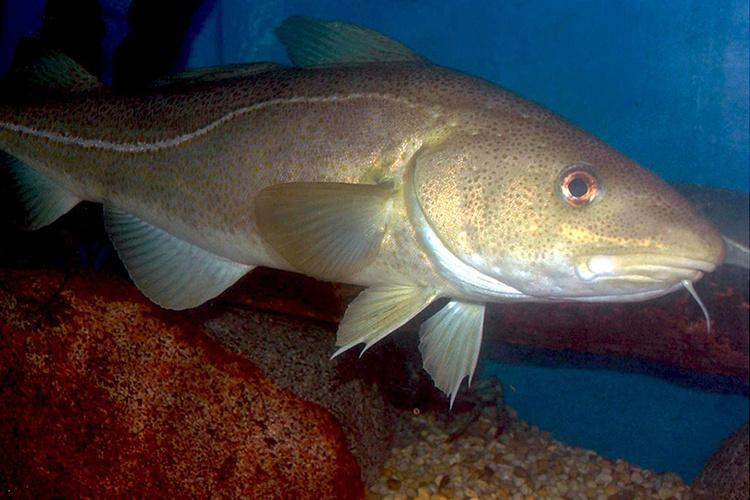
Cod
3 dorsal fins (like all in cod family) semi-rounded comparatively to P and H
rounded caudal tail
Sometimes have speckles, almost giraffe version (brownish reddish) of cheetah
Very clear curved white lateral line but broken across brown body
tiny barbel