Chapter 2: Chromosome Transmission during cell division and sexual reproduction
 Call Kai
 Learn
Learn Practice Test
 Spaced Repetition
 Match
Match Flashcards
 Knowt Play
1/628

There's no tags or description
Looks like no tags are added yet.
Name | Mastery | Learn | Test | Matching | Spaced | Call with Kai |
|---|
No analytics yet
Send a link to your students to track their progress
629 Terms
What are the two major types of cells?
Prokaryotes and Eukaryotes.
Which groups are prokaryotes?
Bacteria and Archaea.
Which groups are eukaryotes?
Protists
Fungi
Animals
What is the main difference between prokaryotes and eukaryotes?
Eukaryotes have a nucleus; prokaryotes do not
Do prokaryotes contain a nucleus?
No
Do eukaryotes contain a nucleus?
Yes.
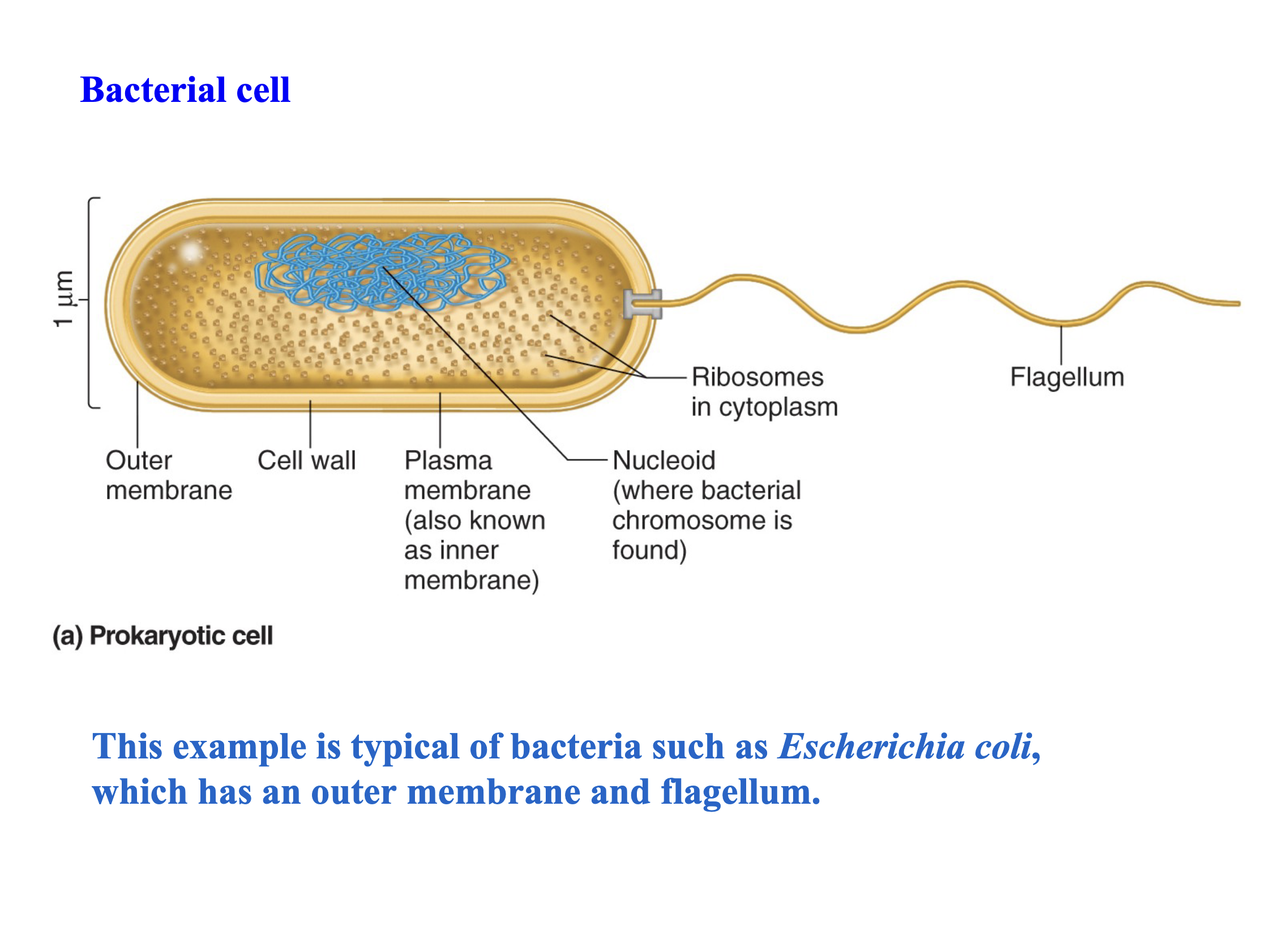
Where is the genetic material found in prokaryotes?
In the nucleoid
What type of chromosome do prokaryotes usually have?
A singular circular chromosome
What type of chromosomes do eukaryotes usually have?
Linear chromosomes
What encloses the cytoplasm in prokaryotes?
A plasma membrane
What is the function of the plasma membrane?
It regulates nutrient uptake and waste excertion
What structure is outside the plasma membrane in prokaryotes?
A rigid cell wall
What are two additional structures some prokaryotes may contain?
An outer membrane and a flagellum
What is a flagellum?
A structure used for movement
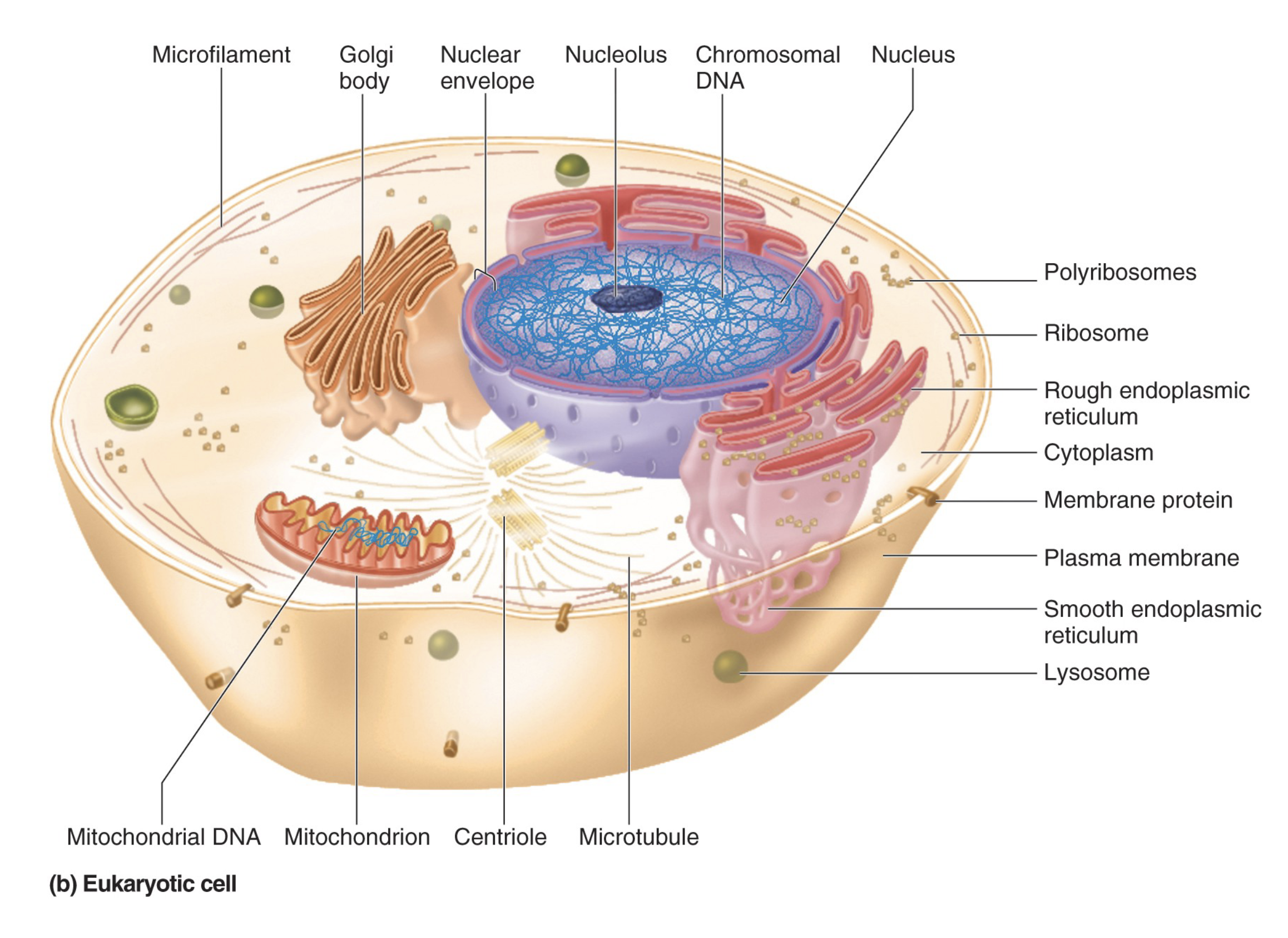
What is the nucleus?
A membrane-bound structure containing genetic material
What surrounds the eukaryotic nucleus?
A double membrane
What are organelles?
Membrane-bound structures with specific functions.
Which type of cells contain membrane-bound organelles?
Eukaryotic cells.
What is the function of mitochondria?
ATP synthesis (energy production)
What important feature do mitochondria contain?
Their own DNA
Which organelle is responsible for degrading macromolecules?
Lysosomes.
What is the function of the Golgi apparatus?
Protein modification and trafficking
What does the ER stand for?
Endoplasmic reticulum
What are the two types of ER?
Rough ER and smooth ER.
What is the difference between rough ER and smooth ER?
Rough ER has ribosomes attached; smooth ER does not.
Which cell type contains a nucleoid instead of a nucleus?
Prokaryotes
Which cell type contains membrane-bound organelles?
Eukaryotes.
Which organelle is associated with ATP synthesis?
Mitochondria.
Which organelle modifies and traffics proteins?
Golgi apparatus
Which organelle degrades macromolecules?
Lysosomes
A cell contains linear chromosomes and membrane-bound organelles. What type of cell is it?
A eukaryotic cell.
A cell lacks a nucleus and contains a circular chromosome. What type of cell is it?
A prokaryotic cell
A scientist discovers a cell with mitochondria and ER. Is it prokaryotic or eukaryotic?
Eukaryotic
A cell produces ATP using mitochondria. What type of organism likely contains this cell?
A eukaryote
A bacterium is observed with a flagellum. What is the likely function of this structure?
Movement.
Why are eukaryotic cells generally more complex than prokaryotic cells?
They contain specialized membrane-bound organelles.
Why are mitochondria important?
They produce ATP, the main energy source for cells.
Why is compartmentalization important in eukaryotic cells?
Organelles allow specialized functions to occur efficiently.
What is one major structural difference between eukaryotic and prokaryotic chromosomes?
Eukaryotic chromosomes are linear; prokaryotic chromosomes are circular
What kingdom groups are included in eukaryotes?
Protists
Fungi
Plants
Animals
What kingdom groups are included in prokaryotes?
Bacteria
Archaea
Which cell type is usually simpler in structure?
Prokaryotes.
Which cell type is usually larger and more complex?
Eukaryotes.
Label and draw a prokaryotic cell
Label and draw a eukaryotic cell
What are chromosomes?
Structures within living cells that contain genetic material.
What do chromosomes contain?
Genes.
What two major components make up chromosomes?
DNA and proteins
What is the role of DNA in chromosomes?
DNA is the genetic material
What is the role of proteins in chromosomes?
They provide organized structure.
What is chromatin?
The DNA-protein complex found in eukaryotes
Why are proteins important in chromosomes?
They help organize and package DNA.
If a structure contains genes and genetic material, what is it called?
A chromosome.
What is the DNA-protein complex in eukaryotes called?
Chromatin.
What is cytogenetics?
The field of genetics involving the microscopic examination of chromosomes.
What does a cytogeneticist study?
The chromosomal composition of cells or organisms.
Why might a cytogeneticist examine chromosomes?
To detect abnormal chromosome number or structure.
What is another use of cytogenetics?
Distinguishing closely related species.
A scientist is checking for abnormal chromosome numbers in a patient. What field are they working in?
Cytogenetics.
What are somatic cells?
Body cells other than gametes.
What are germ cells?
Cells that produce gametes.
What are gametes?
Sperm and egg cells.
Which are examples of somatic cells?
Blood cells.
Which type of cells are sperm and egg cells?
Germ cells (gametes)
Are blood cells somatic or germ cells?
Somatic cells.
Are sperm cells somatic or germ cells?
Germ cells.
Why is colchicine added during chromosome preparation?
It disrupts spindle formation and stops cells in mitosis when chromosomes are compacted.
Why are cells placed in a hypotonic solution during karyotype preparation?
To make the cells swell.
What is a karyotype?
An organized representation of the chromosomes within a cell
How are chromosomes usually arranged in a karyotype?
From largest to smallest
Why do scientists create karyotypes?
To look for chromosomal abnormalities.
A doctor wants to detect an extra chromosome in a patient. What tool would likely be used?
A karyotype.
What does a karyotype show?
The organized chromosomes of a cell.
Why are chromosomes easiest to study during mitosis?
Because they are highly compacted and visible.
What does diploid mean?
Having two sets of chromosomes.
Are most eukaryotic species diploid?
Yes.
How many chromosomes do humans have?
46 total chromosomes
How many chromosome sets do humans have?
Two sets of 23.
How many chromosomes do dogs have?
78 total chromosomes.
How many chromosomes do fruit flies have?
8 total chromosomes.
An organism has two sets of chromosomes. What term describes it?
Diploid.
A human cell contains 46 chromosomes. How many chromosomes are in each set?
23.
A dog cell contains 78 chromosomes total. How many chromosomes are in one set?
39.
Which organism listed has the fewest chromosomes?
Fruit fly.
Why are chromosomes inherited in sets?
One set comes from each parent.
If a human gamete is produced, how many chromosomes would it contain?
23 chromosomes.
A cell contains 23 chromosomes and can combine with another gamete during fertilization. What type of cell is it?
A gamete
Why are gametes not diploid?
They carry only one set of chromosomes so fertilization restores the diploid number.
What type of chromosome number do somatic cells usually have?
Diploid.
What type of chromosome number do gametes usually have?
Haploid.
What are homologous chromosomes?
A pair of chromosomes that contain the same genes in the same locations.
What is another name for a homologous chromosome pair?
Homologs.
What similarities do homologous chromosomes share?
Similar size, same banding pattern, same centromere location, and same genes.
Do homologous chromosomes always have the same alleles?
No.
Why can homologous chromosomes produce variation if they contain the same genes?
Because they may carry different alleles of those genes.
What are alleles?
Different versions of the same gene.
What causes allelic differences?
Slight differences in DNA sequence.
Blue, brown, and green eye color versions of the OCA2 gene are examples of what?
Alleles.
What is a locus?
The physical location of a gene on a chromosome.