Exam 3- most important things
 Call Kai
 Learn
Learn Practice Test
 Spaced Repetition
 Match
Match Flashcards
 Knowt Play
1/85

There's no tags or description
Looks like no tags are added yet.
Name | Mastery | Learn | Test | Matching | Spaced | Call with Kai |
|---|
No analytics yet
Send a link to your students to track their progress
86 Terms
You want to see a phospholipid bilayer so you add phospholipids to a cup of water. Which of the following is happening
hydrophobic effect (driving force), hydrogen bond/electrostatic forces (heads and environment), van der waals force (ALL options!!!)
true or false about membranes
true or false about membranes
things that are larger have an easier time getting in( no gasses pass easly large molecules don’t)
true or false about membranes
more hydrophobic things have an easier time getting in (TRUE) yes because oils , and lipid tails
true or false about membranes
like DNA formation, membrane formation uses enzymes- false
true or false about membranes
they contain many proteins (TRUE)
true or false about membranes
formation hapopens very quickly- TRUE
What causes the membrane to form
hydrophobic effect, tails experience van der waals interactions, and electrostatic interactions and H bonding occur between water and the HEAD (polar part)
Atp hydrolysis is…
exergonic due its relatively HIGH phosphoryl transfer potential (though its NOT the highest overall because PEP and -220 g value of ETC)
three qualities of atp
electrostatic repulsion (3 - phosphate heads), resonance stabilization (ADP+ Pi), Hydration and solution of products (aqueous environment, stabilizes), and increased entroby
True or false
oxidation means gains of electrons. Gaining hydrogens is similar to gaining electrons (F)= loss
R2C= O —> R2CH=OH
REDUCED, and NAD+ was also produced (NADH+ C=O—> C=OH+NAD+)
ranking in terms of most energy to the least
look, for oxygen, loook for hydrogen (more C,H= reduced) more (Os= oxidized)
Which of the following PROMOTE glycolysis by activating PFKase (which means it does NOT promote gluconeogenesis, its opposite)
three control strategies for glycolysis
allosteric control, phosphorylation, transcritpional control (regulates what enzymes are made)
write whether or not the following turns PFKase on or off (OFF)
high ATP, high immediate products (f1, 6 bp), high ATP; AMP ratio, high citrate
write whether or not the following turns PFKase on or off (ONNN)
high AMP, high immediate reactants (F6P), low ATP; AMP ratio
When breaking down glycolysis how many products are yielded
0 CO2, 2 NTP (ATP), 2 NADH, 0 FADH2
Pyruvate procesisng products
2 CO2, 2 NADH, 0 ATP, 2 NADH, 0 FADH2
CAC products
4 CO2, 2 ATP, 6 NADH, 2 FADH2 (this 2x meaning the cycle happens twice once is 3 NADH, 1 FADH2, 1 ATP, 2 CO2)
total products yielded during ETC after 2 ROUNDS
6 CO2, 4 ATP, 10 NADH, 12 FADH2
what does glycolysis produce
Pyruvate (enzyme that does it PFK)
what does Pyruvate processing do
produce Acetyl coa, enzyme (PDH)
What does CAC cycle produce
NADH2/ FADH2
what does ETC do
create H+ protein gradient
pyruvate processing
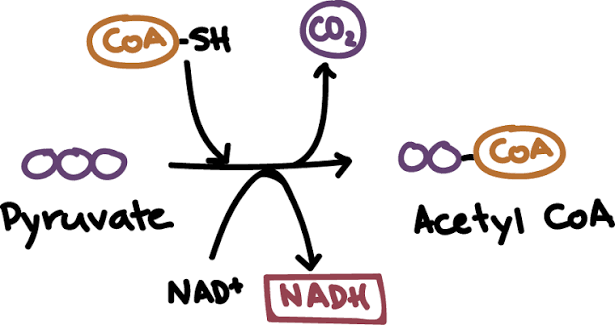
starts off with 2 pyruvates with THREE CARBONS EACH, in the MATRIX, an oxidized CO2 molecule is lost and NAD+ is reduced to NADH. COA comes to join in our acetyl group yielding 2 identical products. This molecule is called Acetyl CoA (ACC) and it has #2 carbons from the pyruvate. the enzyme that does this is PDH
CAC steps
Acetyl Coa, and one molecule of glucose products 2 of them, this combines with 4 carbond product (oxaloacetate) it forms the 6C citrate. Then step 8 is regenerated to step 1 oxaloacetate ( this turns a unfavorable reaction to a favorable one!) (cycle twice- 6 NADH, 2 FADH2, 4 CO2, 2 ATP
Which is proof of oxidation of carbon molecules, and what molecule does that oxidized carbon often become?
Which of the following upregulates the PDH complex
high pyruvate because it is the reactant (1 pyruvate—> acetyl CoA)
What is the difference between ETC and OP and where are each happening
ETC, ATP synthase and inner mitrochondrial membrane (matrix!)
what side of the innter membrane is ATP made on
matrix (ATP synthase faces matrix)
oxidative phosphorylation’s primary output is…
ATP
What is the name of an ATP- generating process in which an inorganic compound serves as the ultimate electron acceptor
cellular respiration
What is the ultimate acceptor in aerobic respiration
O2
Is NADH electron transfer to 02 more or less favorable than ATP hydrolysis in this process
EXTREMELY exergonic (so more -220 vs. -30)
What is the delta G for (reduction of oxygen) and (formation of ATP) combined
Negative (- G+ +G=-)
which of the two membranes is extensively fooded and why
inner—> more surface area for ETC and ATP Synthase
outer membrane
very permeable to small molecules and ions because of a high level of porin expression
inner membrane
is impermeable to ios and ions/ polar molecules. This is WHY transporters are needed for pyruvate, citrate, ATP, etc. This is also where we see ATP synthase
The overall goal of oxidative phosphorylation is to…
convert the electron transfer potential of NADH and FADH2 into the phosphoryl transfer potential of ATP
The proton gradient is highly exergonic because
it goes from flow of electrons that are (reduced forms of E carriers to O2 to make H20) and the oxidized forms of e carriers is EXergonic . this builds a proton gradient which allows it to be possible to perform the normally endergonic reaction (ATP synthesis)
What creates this proton gradient
large potential difference between e- carriers and O2 through the chain which favors the formation of the gradient
Energy is… by the oxygen being.,,
Gained, Reduced
the magnitude values of delta G values is higher in the process of ATP synthesis or NADH and FADH2 e- transfer
NADH and FADH2 e- transfer because the value is higher in order of the free energy NEEDED to make ATP
pH inside the matrix is ..
HIGHER so the matrix is LESS acidic due to the normal ABSENCE of protons,
which one is not a proton pump and CAC FADH2
C II
Which complexes have iron in them
ALL
Which complex does NADH enter into
I
which one does FADH2 enter into
II
Which is the CA cycle enzyme (the physical link between CAC and ETC)
II
Does a single NADH or FADH2 go through less complexes and hence pump less protons
FADH2 it enter CII, less physical H+ pumping
How many electrons does NADH carry and how many electrons does FADH2 carry
1, 2 e_
Which complex REDUCES oxygen to wat4er for the final electron acceptor
iv
Which cofactor has iron and IS a protein
Cyt C
Where do the electrons of NADH and FADH2 converge
complex III via CoQ
how electrons flow through the ETC
CI (coQ)—> CIII (cyt C)—> CIV
why do we need all these complexes and shuttles
controlled E release, build of H+ gradient
What are our products in oxidative phosphorylation
H2O, NAD+, FAD, and ATPPP
The committed step
(F6P—>F1,6 BP)
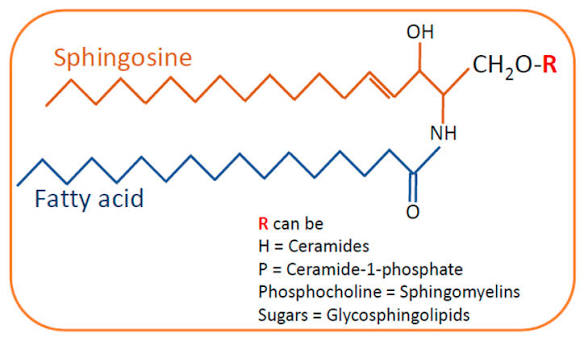
sphingosine
NH2, OH, makes it net charge positive because OH is neutral
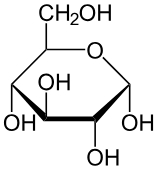
glucose
6 membered ring, 6 carbons
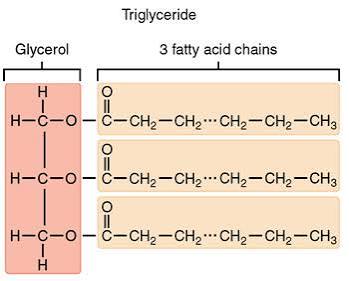
TAGS
anhydrous, highly reduced, 7x more energy per gram than glucose
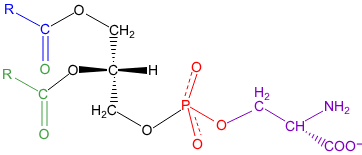
phosphatidylserine
hydroxyl group attaches to the phosphate
rate of traveling through the lipid bilayer
tryptophan —> indole—> glucose (largest, polar, slowest)
which process is noted to consume ATP
glycolysis (investment phases step 1, 3)
Allosteric regulator has
lower affiniity for atp , and F2, 6 BP can serve as a positive regulator for PFK
in the PDC complex
high acetyl coA serves as a negative regulator and high ATP serves as a negative regulator
glycolysis happens in the
cytoplasm
fatty acid synthesis happens in the
cytoplasm
fatty acid DEGREDATION happens in the
matrix
If a 16C fatty acid is being broken down to 2c Unit, the coA gets added when the fatty acid is at the ——- stage . Addition of the CoA —— an ATPq
16C you have to start at palmitate and it REQUIRES an ATP (as the energy source)
Beta Oxidation Stages
O (FADH2) H (add H2O) O( NADH) C (acetyl coa )
What does ACP do
prevents interaction and is a carbon carrier
Fatty acid synthesis
C (malonyl group loses CO2) ( R ) β-keto group to an alcohol NADPH D - take out water R NADPH Reduction of a double bond to a single bond
acetyl carboxylase
acetyl coA+ CO2+ ATP—> makes Malonyl coA
catabolism activated by
+AMP, +ADP, +glucagon, +epi,
catabolism inhibited by
-ATP, -NADPH, - citrate, - insulin
gluconeogenesis likesss
high atp, high citratem and high acetyl coA
as electron energy is transferred in ETC
it goes to lower free energy when it is coupled as it reaches the final e- acceptor O2
what inhibits ACC
high AMP, glucagon, epi, palmitoyl CoA (fat)
what activiates ACC
high energy so ATP, Citrate
high km
lower affinitiy
km unit is
M
kcat
turn over rate
km divided by vmax
M/ M/s= s (conc/ conc/time)