Lesson 3 - History of Latent Prints
 Call Kai
 Learn
Learn Practice Test
 Spaced Repetition
 Match
Match Flashcards
 Knowt Play
1/53

Earn XP
Description and Tags
History, Classification of Fingerprints & Visual Acuity
Name | Mastery | Learn | Test | Matching | Spaced | Call with Kai | Chat |
|---|
No analytics yet
Send a link to your students to track their progress
54 Terms
Known Print
Prints from a known source - exemplars, ten-print / fingerprint cards, palm print cards & major case prints
Latent Print
A print from an unknown source - chance impression, not always visible, usually consist of natural sweat / oils
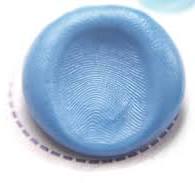
Plastic Print
Impression deposited in a material that retains the 3D shape of the ridge detail
ex. Wax, putty, grease
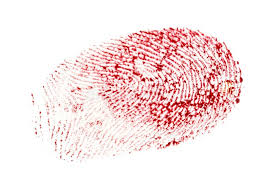
Patent Print
Impression obvious to the human eye - caused by transfer of foreign material on the finger to a surface
ex. blood, paint
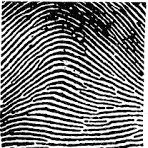
Plain Arch - AA
Ridges enter on one side and flow out the other with a rise in the middle
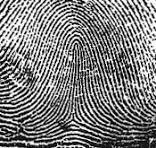
Tented Arch - TT
Ridges enter on one side and flow out the other with an up thrust in the middle
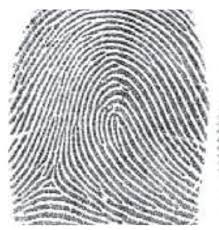
Right Slant Loop - RS
Ridges enter from the right side, recurve around the core, and exit toward the same side
Right Slant Loops on the right hand are Ulnar Loops (UL)
Right Slant Loops on the left hand are Radial Loops (RL)
Loops are defined as a pattern which has sufficient recurve, a delta and ridge count
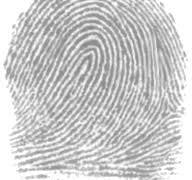
Left Slant Loop - LS
Ridges enter from the left side, recurve around the core, and exit toward the same side
Left Slant Loops on the left hand are Ulnar Loops (UL)
Left Slant Loops on the right hand are Radial Loops (RL)
Loops are defined as a pattern which has sufficient recurve, a delta and ridge count
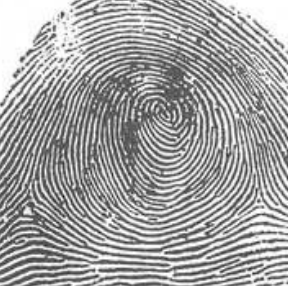
Plain Whorl - PW
2 deltas & at least one ridge making a complete circuit
An imaginary line drawn between the deltas must touch / cross at least one of the recurving ridges within the pattern area
Whorls are defined as a pattern which has at least 2 deltas & a recurve in front of each delta
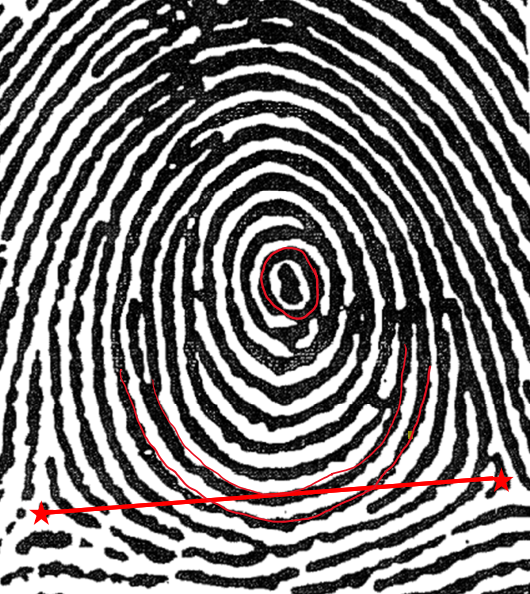
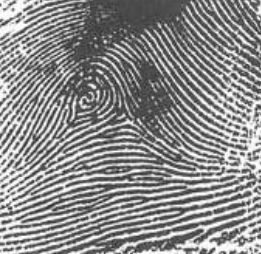
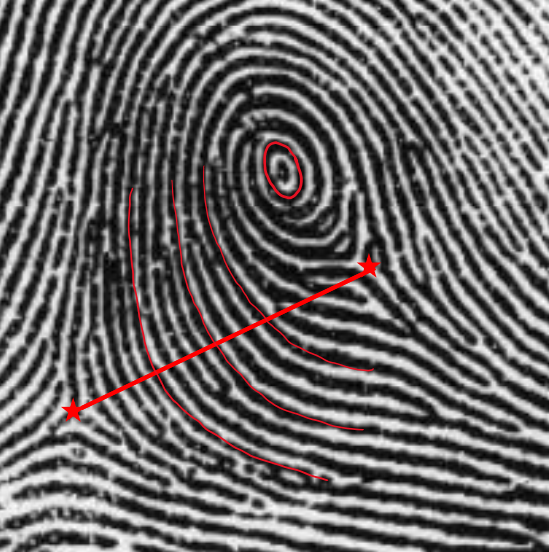
Central Pocket Loop Whorl - CW
2 deltas & at least one ridge making a complete circuit
An imaginary line drawn between the deltas must NOT touch / cross any of the recurving ridges within the pattern
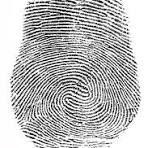
Double Loop Whorl - DW
2 separate loop formations
2 separate & distinct sets of shoulders / recurves
2 deltas
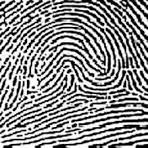
Accidental Whorl - AW
Pattern consisting of a combo of 2 different types of patterns with 2 or more deltas
OR
Pattern which possesses some of the requirements for 2 or more different types
OR
Pattern which conforms to none of the definitions
ex. Loop + Tented Arch | Loop + Whorl
Plain Arch = NOT possible pattern type
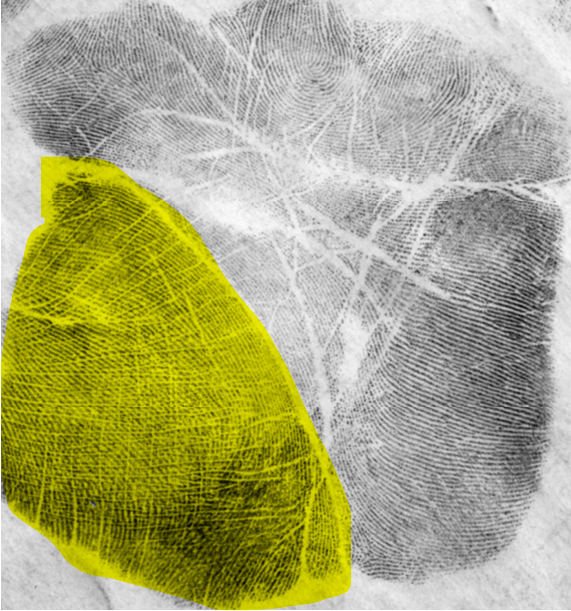
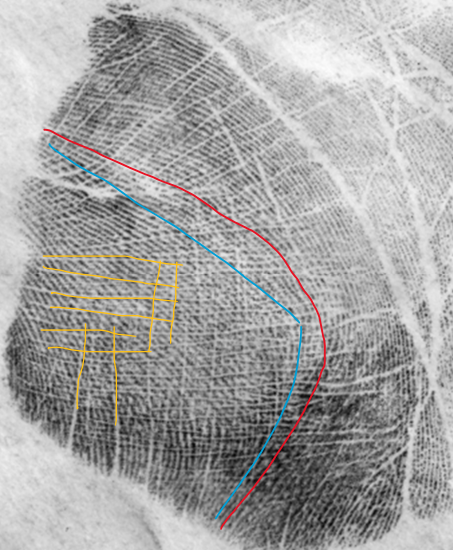
Thenar
Half-moon ridge flow
Long over short
Vestige
Cross-hatching
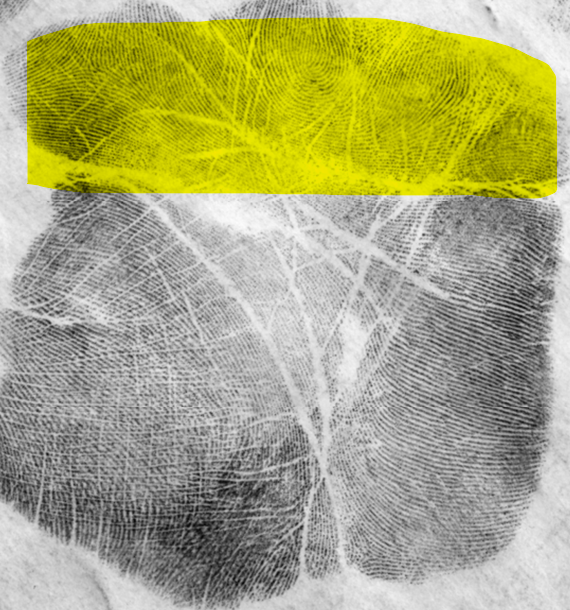
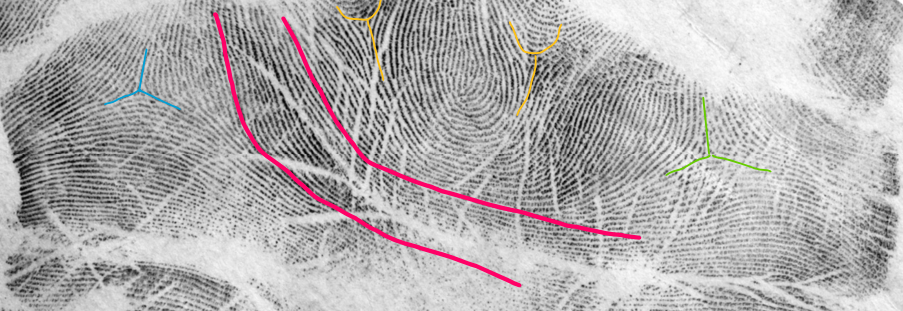
Interdigital
Waterfall ridge flow - right or left
Clean delta
Snow cone deltas
Side cone delta
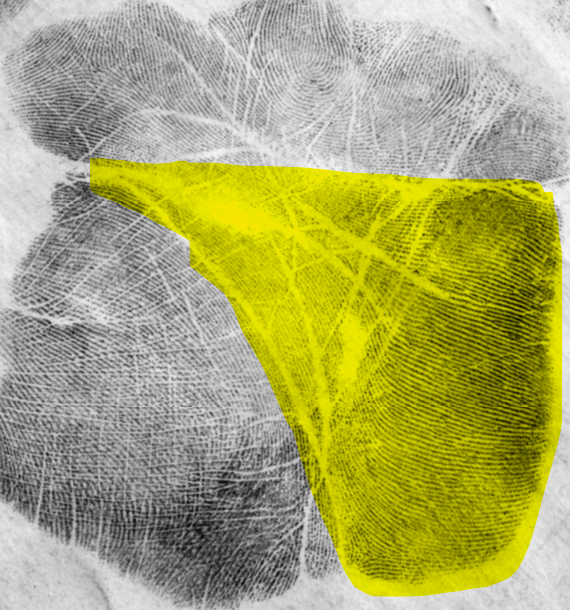
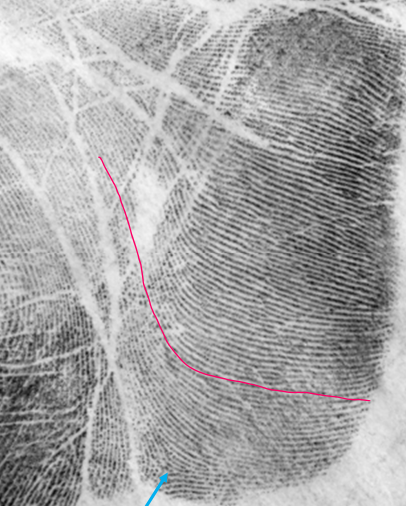
Hypothenar
Down & out ridge flow
Outward nose loop
Carpal delta
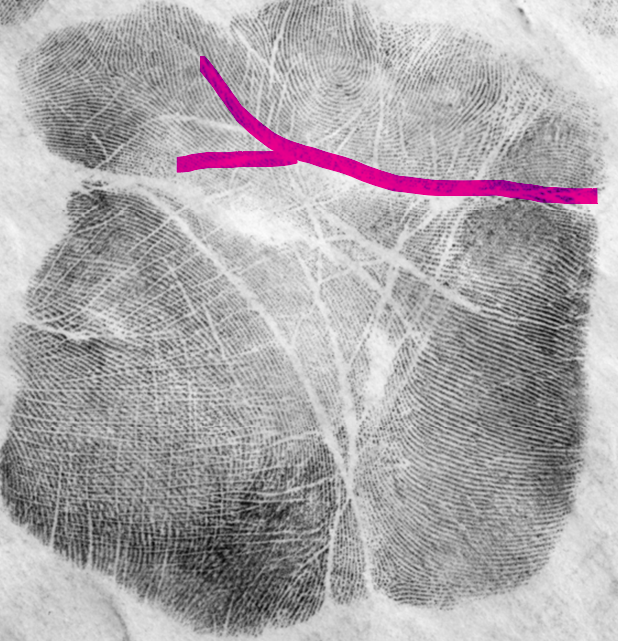
Distal Transverse Crease (TOP)
Forms ~11 weeks EGA
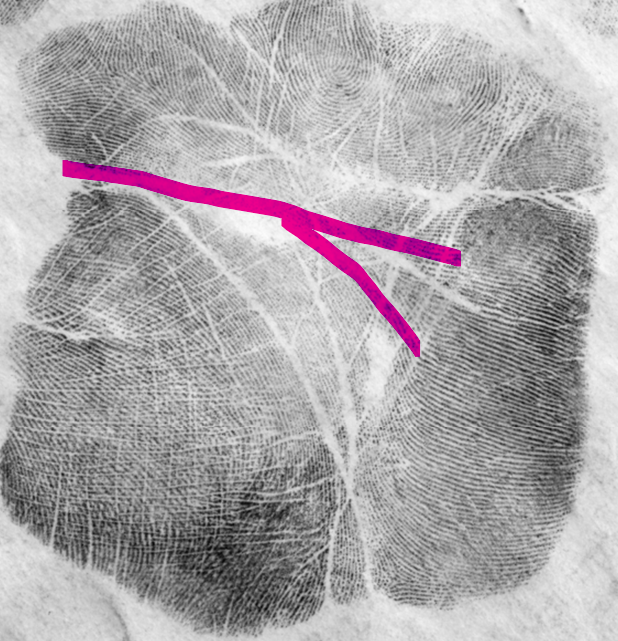
Proximal Transverse Crease (MIDDLE)
Forms ~13 weeks EGA
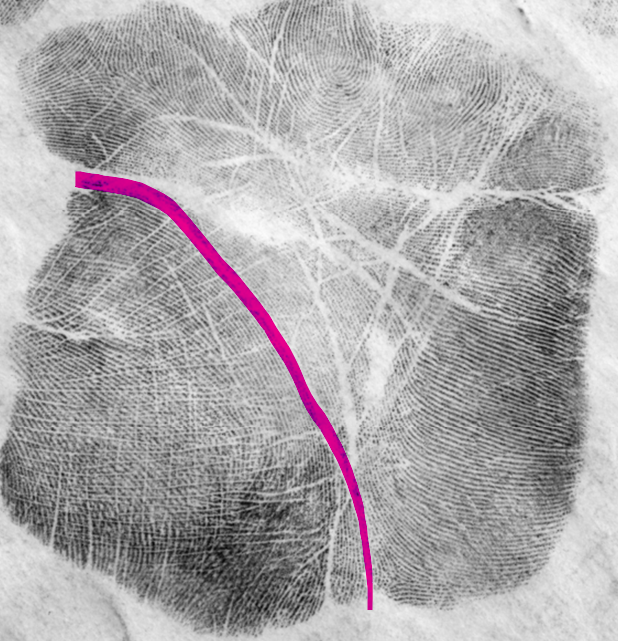
Radial Longitudinal Crease (BOTTOM)
Forms ~8 weeks EGA
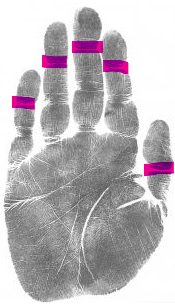
Distal Interphalangeal Crease (DIC)
Forms ~9 weeks EGA
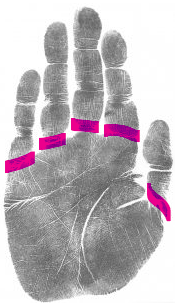
Palmar Digital Crease OR Metacarpophalangeal Crease (MCPC)
Forms ~9 weeks EGA
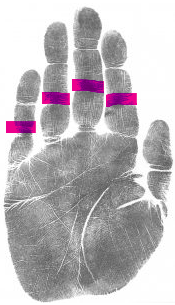
Proximal Interphalangeal Crease (PIC)
Forms ~10 / 18 weeks EGA
The thumb does NOT have this crease but can have up to 4 additional minor creases…
Oblique crease
Accessory crease
Extra crease
Proximal Phalanx
Distal Phalanx
Not everyone has all the same thumb creases
Henry Classification System
Developed by Sir Edward Henry in 1896
Modified versions till used today
Primary classification system - based on whorls
1/1 - All fingers have arches / loops
32/32 - All fingers have whorls
NCIC
National Crime Information Center
Created in 1967 as a centralized electronic criminal database
Contains millions of records sorted into separate databases
Includes NCIC fingerprint classification database
Alphanumeric
Pattern Specific
20-character code
Dr. Nehemiah Grew
1st to describe & publish friction ridges in detail
Dr. Marcello Malpighi
1st to use the microscope to study skin
Published article about FRS being used for traction during walking & grasping
Layer of the skin named after him - Stratum Basale, Stratum Spinosum & Stratum Granulosum
Govard Bidloo
Published Anatomy of the Human Body & included a hand drawn image of the details of the skin
JCA Mayer
1st to write that FRS is unique
Thomas Bewick
Engraved his “mark” under impressions in his work
Dr. Johannes Purkinje
Classified fingerprints into 9 categories & gave each a name
Gilbert Thompson
1st known use of fingerprints in the USA
Used his thumbprint on a document to prevent forgery
Thomas Taylor
Proposed that finger / palm prints left on objects could be used to solve crimes
Impressions in wax
Bloody hands
Sir William Hershel
1st European to recognize value of FRS & use it for identification purposes
“Hoogley Letter” - explained permanence & uniqueness of FRS
Printed himself to demonstrate permanence
Dr. Henry Faulds
1st to publish in a journal about the value of FRS for identification
On the Skin Furrows of the Hand - included examples of greasy print on glass of spirits & sooty fingermarks on white wall
Alphonse Bertillon
1st scientific method of criminal identification
Anthropometry (aka Bertillonage)
Sir Francis Galton
Published Finger Prints
1st to define & name specific print minutiae - Galton details
Juan Vucetich
1st practical uses of fingerprint science by law enforcement
Developed his own fingerprint classification system that did not catch on
Trained Eduardo Alvarez - 1st criminal fingerprint ID during the Rojas Murders
Sir Edward Henry
Developed the Henry Classification System
Mark Twain
1st American writer to use fingerprints for solving crimes in his novels
Dr. Arthur Kollman
1st to identify the presence & location of the volar pads on the hands & feet
David Hepburn
1st to suggest that FRS helps with gripping & grasping
Harris Hawthorne Wilder
1st to suggest that the center of the ridge pattern is always where a volar pad exists
Henry de Forest
Chief Medical Examiner in NYC
1st systematic use of fingerprints in the USA
Printed civil service applicants to prevent imposters from taking tests
New York State Prison System
1st systematic use of fingerprints in the USA for the identification of criminals
John Ferrier
Fingerprinted all inmates at Leavenworth prison
Started the US Governments fingerprint collection
Inez Whipple
Studied mammalian palm & sole configurations
Ridge patterns are affected by internal & external forces on the fetus during development
Mary Holland
1st American woman instructor of fingerprinting
People v. Jennings
Fingerprints 1st accepted by US courts
Appellate courts agreed that fingerprint evidence is a science
People v. Crispi
1st conviction obtained with fingerprint evidence alone in the USA
Harry Caldwell
Founded the International Association for Criminal Identification (IAI)
IAI in 1915
Harold Cummins
Dermatoglyphics - study of skin markings or patterns
Author of Fingerprints, Palms & Soles
Describes the formation & development of volar pads
Alfred Hale
Studied cross sections of fetal skin
Differential growth - plays major role in volar skin structure
Vision vs. Perception
Vision
Ability to detect & interpret light
Primary sense in humans
Perception
Process of interpreting sensory info
Combines past experiences, context & expectations
Influences decisions & memory
Visual Acuity
The sharpness or clarity of vision
Measured by the ability to distinguish fine details
Steps of Visual Processing
Light → Retina → Electrical Signals → Optic nerve → Visual cortex of brain
Limitations = color blindness, form blindness & depth / motion perception issues