Circulatory Test
 Call Kai
 Learn
Learn Practice Test
 Spaced Repetition
 Match
Match Flashcards
 Knowt Play
1/40

There's no tags or description
Looks like no tags are added yet.
Name | Mastery | Learn | Test | Matching | Spaced | Call with Kai |
|---|
No analytics yet
Send a link to your students to track their progress
41 Terms
Functions of the circulatory system
delivering blood to all body cells, transports oxygen throughout the body and carries away waste such as CO2
Open circulatory systems
found in vertebrae such as insects. Blood flows freely among the body
closed circulatory systems
blood is contained within arteries veins and capillaries
label structure of the heart
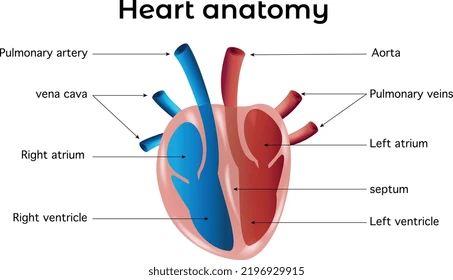
describe the path of blood
body cells use oxygen so blood becomes deoxygenated
deoxygenated blood returns to the heart through the superior and inferior vena cava
blood enters the right atrium
blood moves through the tricuspid valve into the right ventricle
the right ventricle pumps blood through the pulmonary arteries to the lungs
in the lungs, blood picks up the oxygen and oxygenates the blood
oxygenated blood returns to the heart through the pulmonary veins
blood enters the left atrium
it passes through the bicuspid valve into the left ventricle
the left ventricle pumps blood through the aorta to the rest of the body
oxygen is delivered throughout the body cells and repeats its cycle.
pulmonary circulation
takes place from the heart to the lungs and then back to the heart
systemic circulation
takes place from the heart to the body parts and then back to the heart
pericardium
fibrous, has 2 layer visceral which is the inner layer and parietal pericardium (outer)
myocardium
middle/inner layer mostly cardiac muscle
atrium
receiving reservoir for blood to then return to the heart through the veins
Left: receives oxygen rich from the lungs through the pulmonary veins
Right: received oxygen poor blood from the body through the vena cava.
ventricles
2 ventricles, thick muscular lower chambers that pump blood out of the heart through the arteries (away)
Left: stronger, pumps blood throughout the whole body
right: pumps oxygen poor blood via pulmonary artery to the lungs
septum
separates the right and left sides of the heart
tricuspid
right valve allow only one way of blood flow
bicuspid (mitral)
left valve allow one way of blood flow
veins
carries blood back to the heart contains oxygen poor blood valves to keep blood from flowing backwards
capillaries
exchange of water, oxygen, co2, nutrients and waste products between blood and tissues. both oxygen rich blood and poor depending on location. Connects veins to arteries. tiny and thin
The cardiac cycle
Heart rate is controlled by the cardiac center within the medulla oblongata. Increases/decreases as a response to changes in homeostasis. Involves diastole and systole
EKG Electrocardiogram
records the electrical activity of the heart. Used to check abnormal heart activity of signs of heart damage.
Systole
top number. contraction of the heart chamber where blood is being pumped out of the ventricles into the arteries
diastole
relaxation phase that allows the heart to be filled up with blood
sphygmomanometer (blood pressure cuff)
medical device designed to measure blood pressure. Used to diagnose hypertension and monitor blood pressure levels.
atherosclerosis
deposits of fatty material such as cholesterol form of plaque in the arteries that leads to reduced blood flow (hardening of arteries)
hemophilia
blood does not clot properly due to deficient clotting factors leading to bruising and prolonged bleeding.
anemia
blood lacks enough healthy red blood cells or hemoglobin causing reduced oxygen delivery to tissues resulting in fatigue pale skin and dizziness
hypertension
high blood pressure, the force within the arteries is too high.
heart attack
sudden blockage in the coronary artery stopping blood flow to the heart muscle. Caused by build up from cholesterol
stroke
blow flow to the brain is cut off
hemorrhagic: blood vessel breaks or leaks
schemic: blood vessel is blocked
red blood cells
transposrt oxygen and removes CO2
white blood cells
protect body against diseases, 5 types
plasma
mainly made up of water makes up 55% of blood cells
hemoglobin
combines with oxygen in red blood cells
platelets (thrombocytes)
blood clots and vessel repair
lymphocytes
main defense in immune system produces antibodies and makes up 30% of WBC
arteries
carries blood away from the heart usually has oxygen rich blood. thick walls because blood is pumped through hem with strong pressure from heart
humans have how much blood in them?
4-6 liters
average human adult heart rate/bpm
70 heart rate and 120/80 for bpm
what is the lub dub noise?
opening and closing of heart valves
swollen lymphnodes=
sore throat
universal recipient
AB+
universal donor
O-
function of blood
transport, protect, regulate body system to deliver oxygen and nutrients to tissues and remove water such as CO2