Medical Terms
 Call Kai
 Learn
Learn Practice Test
 Spaced Repetition
 Match
Match Flashcards
 Knowt Play
1/138

There's no tags or description
Looks like no tags are added yet.
Name | Mastery | Learn | Test | Matching | Spaced | Call with Kai |
|---|
No analytics yet
Send a link to your students to track their progress
139 Terms
hydrocephalus
abnormal accumulation of fluid (CSF) in the brain
spina bifida
congenital defects in the lumbar spinal column caused by imperfect
union of vertebral parts (neural tube defect)
Alzheimer disease (AD)
brain disorder marked by gradual and progressive mental deterioration (dementia) with personality changes and impairment of daily functioning
amyotrophic lateral sclerosis (ALS)
degenerative disorder of motor neurons in the spinal cord and brainstem
epilepsy
chronic brain disorder characterized by recurrent seizure activity
Huntington disease
hereditary disorder marked by degenerative changes in the cerebrum leading to abrupt involuntary movements and mental deterioration
multiple sclerosis (MS)
destruction of the myelin sheath on neurons in the CNS and its replacement by plaques of sclerotic (hard) tissue
myasthenia gravis (MG)
autoimmune neuromuscular disorder characterized by weakness of voluntary muscles (attached to bones)
palsy
paralysis (partial or complete loss of motor function)
Parkinson disease (parkinsonism)
degeneration of neurons in the basal ganglia, occurring in later life and leading to tremors, weakness of muscles, and slowness of movement
Tourette syndrome
involuntary, spasmodic, twitching movements; uncontrollable vocal
sounds and inappropriate words
herpes zoster (shingles)
viral infection affecting peripheral nerves
meningitis
inflammation of the meninges; leptomeningitis
human immunodeficiency virus (HIV) encephalopathy
brain disease and dementia occurring with AIDS
brain tumor
abnormal growth of brain tissue and meninges
cerebral concussion
temporary brain dysfunction (brief loss of consciousness) after injury,
usually clearing within 24 hours
cerebral contusion
bruising of brain tissue as a result of direct trauma to the head; neurologic deficits persist longer than 24 hours
cerebrovascular accident (CVA)
disruption in the normal blood supply to the brain; stroke
absence seizure
minor form of seizure, consisting of momentary clouding of consciousness and loss of awareness of surroundings
aneurysm
enlarged, weakened area in an arterial wall, which may rupture, leading to hemorrhage and CVA (stroke)
astrocytoma
malignant tumor of astrocytes (glial brain cells)
aura
peculiar sensation experienced by some persons with epilepsy before onset of an actual seizure
dementia
mental decline and deterioration
dopamine
deficient in patient with Parkinson disease
embolus
a mass (clot) of material travels through the bloodstream and suddenly blocks a vessel
ictal event
pertaining to a sudden, acute onset, as the convulsions of an epileptic seizure
palliative
relieving symptoms but not curing
tic
involuntary movement of a small group of muscles, as of the face;
characteristic of Tourette syndrome
TIA
transient ischemic attack
tonic-clonic seizure
major convulsive seizure marked by sudden loss of consciousness, stiffening of muscles, and twitching and jerking movements
bradycardia and heart block (atrioventricular block)
failure of proper conduction of impulses from the SA node through the AV node to the atrioventricular bundle (bundle of His)
flutter
rapid but regular contractions, usually of the atria
fibrillation
rapid, random, inefficient, and irregular contractions of the atria and ventricles (350 beats or more per minute)
coarctation of the aorta (CoA)
narrowing of the aorta
patent ductus arteriosus (PDA)
a duct between the aorta and the pulmonary artery, which normally closes soon after birth, remains open
septal defects
small holes in the septa between the atria or the ventricles
tetralogy of Fallot
a congenital malformation of the heart involving four distinct defects
congestive heart failure (CHF)
the heart is unable to pump its required amount of blood (more blood enters the heart from the veins than leaves through the arteries)
coronary artery disease (CAD)
disease of the arteries surrounding the heart
murmur
an extra heart sound, heard between normal beats
deep vein thrombosis (DVT)
a blood clot forms in a large vein, usually in a lower limb
Raynaud disease
recurrent episodes of pallor and cyanosis primarily in fingers and toes
acute coronary syndromes
consequences of plaque rupture in coronary arteries: unstable angina and myocardial infarction
angina
chest pain resulting from myocardial ischemia
biventricular pacemaker
device enabling ventricles to beat together so that more blood is pumped out of the heart
bruit
an abnormal blowing or swishing sound heard during auscultation of an artery or organ
cardiac arrest
sudden, unexpected stopping of heart action
cardiac tamponade
pressure on the heart caused by fluid in the pericardial space
claudication
pain, tension, and weakness in a leg after walking has begun, but absence of pain at rest
digoxin
a drug that treats arrhythmias and strengthens the heartbeat
embolus
a clot or other substance that travel to a distant location and suddenly blocks a blood vessel
infarction
area of dead tissue
nitrates and nitroglycerin
drugs used in the treatment of angina. They dilate blood vessels, increasing blood flow and oxygen to myocardial tissue.
occlusion
closure of a blood vessel
patent
open
pericardial friction rub
scraping or grating noise heard on auscultation of the heart; suggestive of pericarditis
petechiae
small, pinpoint hemorrhages
statins
drugs used to lower cholesterol in the bloodstream
thrill
vibration felt on touching the body over an area of turmoil in blood flow (as a blocked artery)
vegetations
clumps of platelets, clotting proteins, microorganisms, and red blood cells on the endocardium in conditions such as bacterial endocarditis and rheumatic heart disease
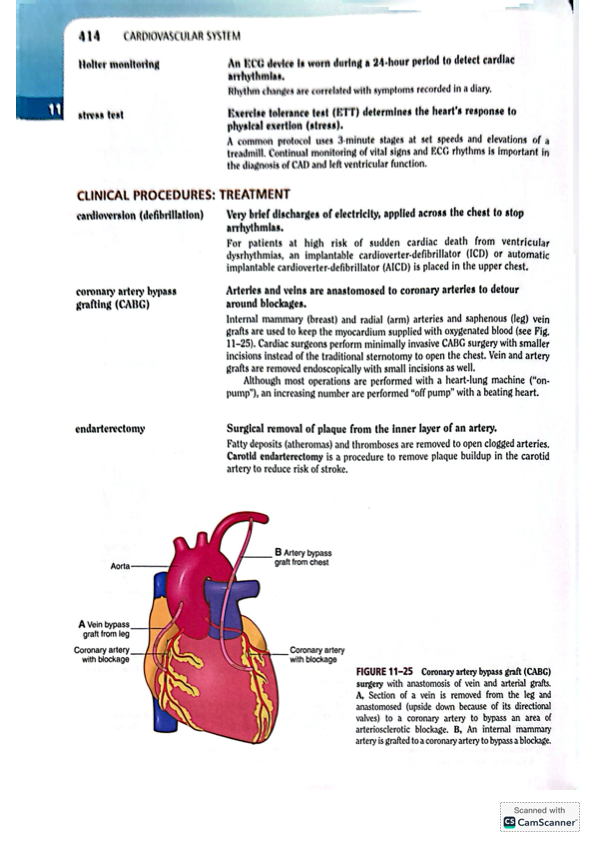
coronary artery bypass grafting (CABG)
arteries and veins are anastomosed to coronary arteries to detour around blockages
endarterectomy
surgical removal of plaque from the inner layer of an artery
extracorporeal circulation
a heart-lung machine diverts blood from the heart and lungs while the
heart is repaired
heart transplantation
a donor heart is transferred to a recipient
percutaneous coronary intervention (PCI)
a balloon-tipped catheter is inserted into a coronary artery to open the
artery; stents are put in place
thrombolytic therapy
drugs to dissolve clots are injected into the bloodstream of patients with coronary thrombosis
ascites
abnormal accumulation of fluid in the abdomen
borborygmus
rumbling or gurgling noise produced by the movement of gas, fluid, or both in the gastrointestinal tract
eructation
gas expelled from the stomach through the mouth
flatus
gas expelled through the anus
melena
black, tarry stools; feces containing digested blood
steatorrhea
fat in the feces; frothy, foul-smelling fecal matter
aphthous stomatitis
inflammation of the mouth with small, painful ulcers
dental caries
tooth decay
herpetic stomatitis
inflammation of the mouth (gingiva, lips, palate, and tongue) by infection with the herpesvirus
oral leukoplakia
white plaques or patches on the mucosa of the mouth.
achalasia
failure of the lower esophagus sphincter muscle to relax
esophageal varices
swollen, varicose veins at the lower end of the esophagus
gastroesophageal reflux disease (GERD)
solids and fluids return to the mouth from the stomach
peptic ulcer
open sore or lesion of the mucous membrane of the stomach or duodenum
anal fistula
abnormal tube-like passageway near the anus
colonic polyposis
polyps (benign growths) protrude from the mucous membrane of the colon
Crohn disease
chronic inflammation of the intestinal tract (terminal ileum and colon)
diverticulosis
abnormal side pockets (outpouchings) in the intestinal wall
ileus
failure of peristalsis with resulting obstruction of the intestines
intussusception
telescoping of the intestines
irritable bowel syndrome (IBS)
group of gastrointestinal symptoms associated with stress and tension
ulcerative colitis
chronic inflammation of the colon with presence of ulcers
volvulus
twisting of the intestine on itself
cirrhosis
chronic degenerative disease of the liver
gastric bypass
reducing the size of the stomach and diverting food to the jejunum (gastrojejunostomy)
percussion
tapping on a surface to determine the difference in the density of the underlying structure
pleural rub
scratchy sound produced by the motion of inflamed or irritated pleural surfaces rubbing against each other; also called a friction rub
rale (crackle)
fine crackling sound heard on auscultation (during inspiration) when there is fluid in the alveoli
rhonchus
loud rumbling sound heard on auscultation of bronchi obstructed by sputum
sputum
material expelled from the chest by coughing or clearing the throat
stridor
strained, high-pitched, relatively loud sound made on inspiration; associated with obstruction of the larynx or trachea
croup
acute viral infection in infants and children; characterized by obstruction of the larynx, barking cough, and stridor
diphtheria
acute infection of the throat and upper respiratory tract caused by the diphtheria bacterium
epistaxis
nosebleed