Reduction of Carbonyls
 Call Kai
 Learn
Learn Practice Test
 Spaced Repetition
 Match
Match Flashcards
 Knowt Play
1/69

There's no tags or description
Looks like no tags are added yet.
Name | Mastery | Learn | Test | Matching | Spaced | Call with Kai |
|---|
No analytics yet
Send a link to your students to track their progress
70 Terms
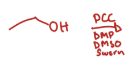
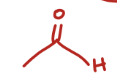
Primary Alcohol + PCC/DMP/DMSO/Swern
Aldehyde
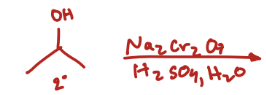
Secondary Alcohol + Jones Reagent (Na2Cr2O7/H2SO4,H2O)
Ketone


Primary Alcohol + Jones Reagent (Na2Cr2O7/H2SO4,H2O)
Carboxylic Acid

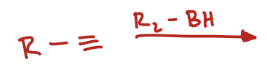
Terminal Alkyne + R2-BH
O=C on less substituted carbon

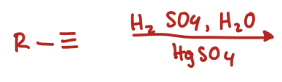
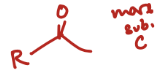
Terminal Alkyne + HgSO4, H2O, H2SO4
O=C on more substituted carbon
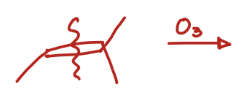
Internal Alkene + O3
Cleaving, two products (Carbonyl)
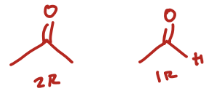
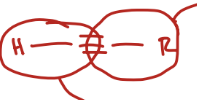
Terminal Alkyne + O3
Cleavage, Carboxylic Acid + CO2
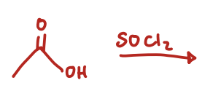
Carboxylic Acid + SOCl2
Subs. of OH with Cl (Acid Chloride)
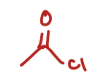
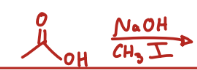
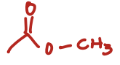
Carboxylic Acid + NaOH/CH3I
Ester + R group bonded to Halogen
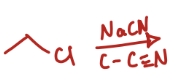
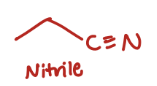
EtCl + NaCN/C-CN
Subs. of Cl with CN group (Nitrile)
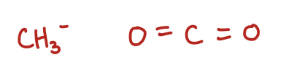
CH3- + O=C=O
Carboxylic Acid (Add R group, change C=O group to C-OH)
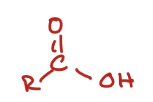
Electronic effect caused by sigma bonds that results partial negative and partial positive atoms in an electrophile
Inductive Effect
Electronic effect caused by pi bonds that results in fully negative or positive atoms and lead to similar atoms with different arrangement of negative/positive atoms and double bonds
Resonance Effect
What has a higher reactivity based on steric effects, Aldehydes or Ketones?
Aldehydes;
more open & reactive
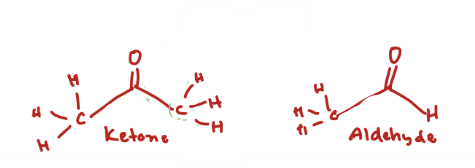
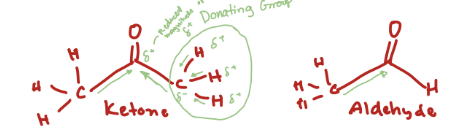
What has a higher reactivity based on electronic effects, Aldehydes or Ketones?
Aldehydes;
due to Inductive effects (partial negative bigger on Aldehyde makes it more reactive)
Which electronic effect is bigger on Carboxylic Acid, Inductive or Resonance?
Resonance

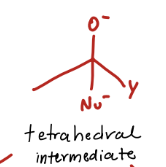
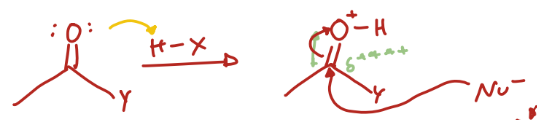
If a tetrahedral intermediate has a Leaving Group (Y=LG), then in basic conditions it will form…
Nucleophilic Acyl Substitution (Nu- for Y)
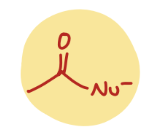
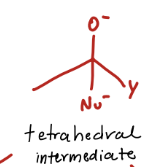
If a tetrahedral intermediate does not have a Leaving Group (Y=LG), then in basic conditions it will form…
Nu- Acyl Addition (stays tetrahedral, -O gets protonated to OH)
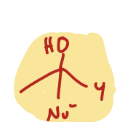
T/F: In acidic conditions, there is no good Nucleophile or Electrophile. For this reason, the Oxygen becomes protonated before the Carbon can be attacked.
True
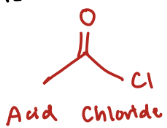
Least Stable/Most Reactive CA Derivative
Acid Chloride
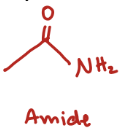
Most Stable/Least Reactive CA Derivative
Amide
Least to Most Stable CA Derivatives
Acid Chloride > Acid Anhydride > Ester > Amide
T/F: Reactions proceed more easily towards less stable CA Derivatives compared to towards most stable.
False
What groups does NaBH4 reduce?
Aldehydes and Ketones to OH
What groups does LiAlH4 (LAH) reduce?
Any C=O groups
What groups does BH3 * THF reduce?
Only Carboxylic Acid groups
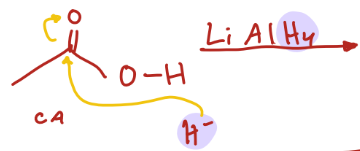
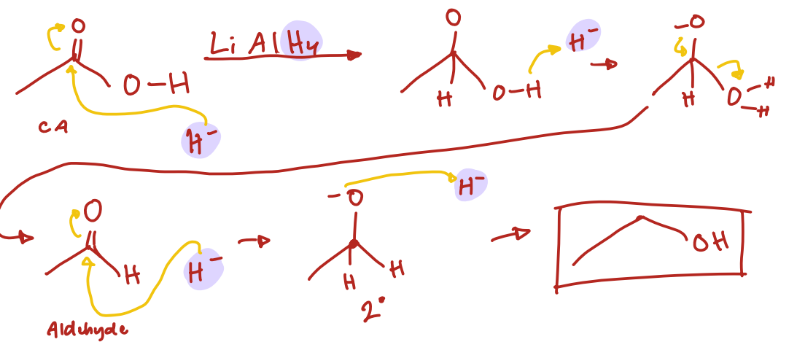
Carboxylic Acid + LiAlH4 (LAH)
First attacks C → second H turns OH to H2O (LG) and is kicked out → third H attacks C once again, No LG→ O- is protonated → Corresponding alcohol
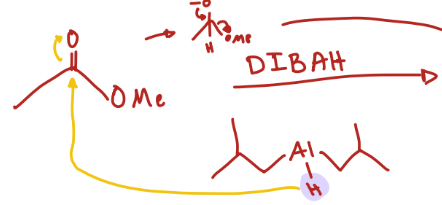
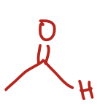
Ester + DIBAH
H attacks C → OMe reacts as a Leaving Group → Aldehyde
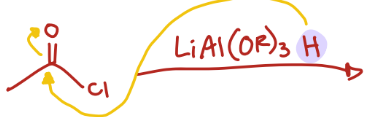
Acid Chloride + LiAl(OR)3H
H attacks C → Aldehyde
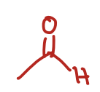
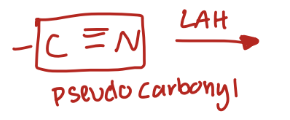
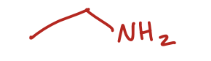
Et-CN + LAH
Et-Amine
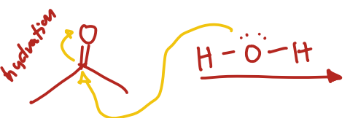
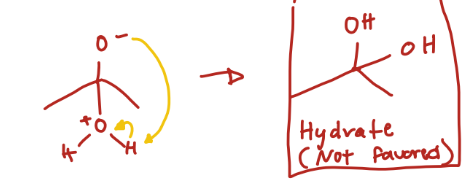
Ketone + H2O (hydration)
Hydrate tetrahedral (not stable)
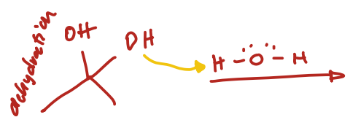
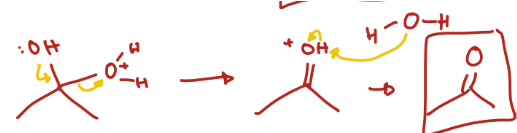
Hydrate + H2O (dehydration)
Ketone
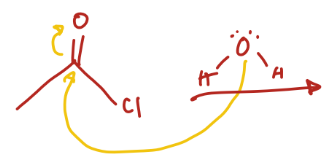
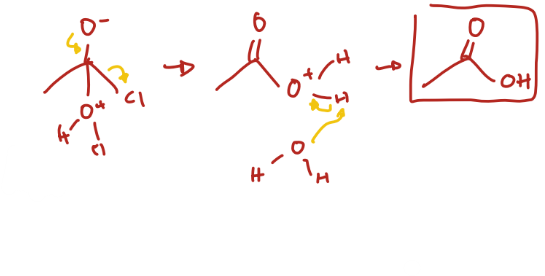
Acid Chloride + H2O
Carboxylic Acid
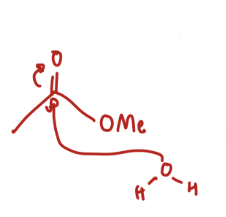
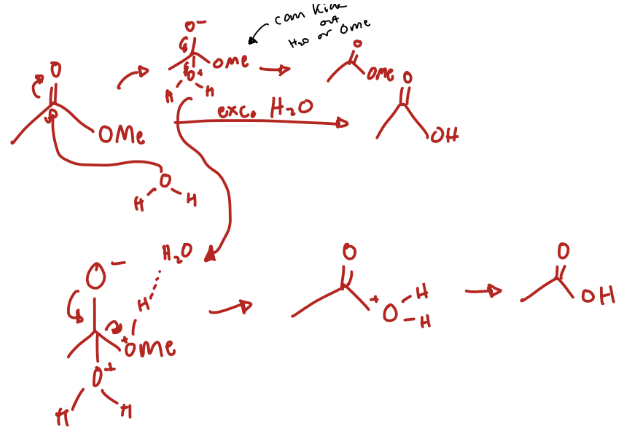
Ester + exc. H2O
Carboxylic Acid
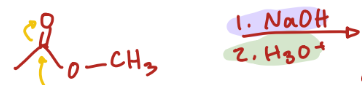
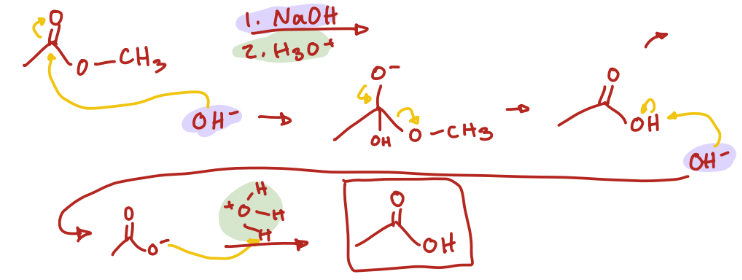
What does a Saponification Reaction (NaOH + H3O+) do?
Turns Ester to a Carboxylic Acid, it is how they make soap
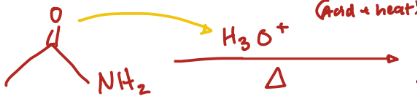
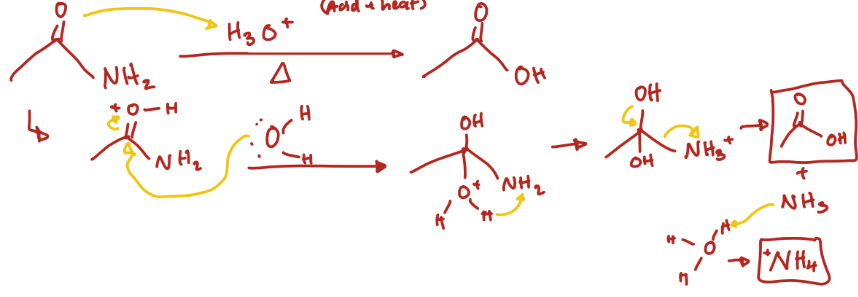
Amide + H3O+ & heat
Carboxylic Acid + NH4
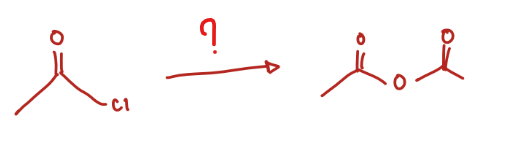
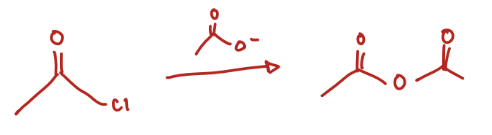
What do you use to turn an Acid Halide into an Acid Anhydride?
R-C-O(-), C=O
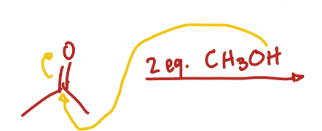
Ketone + 2eq. CH3OH
Acetal formation
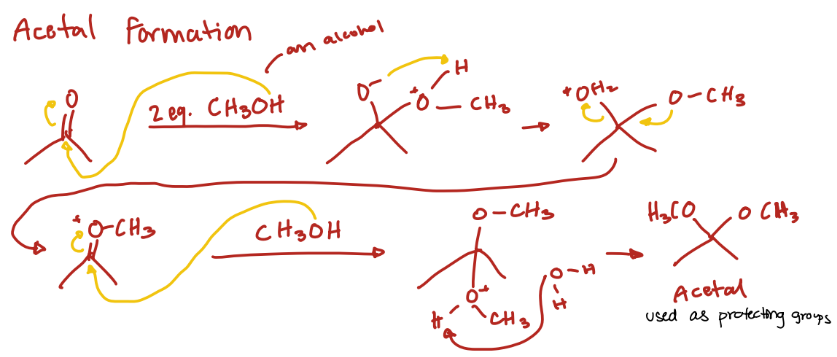
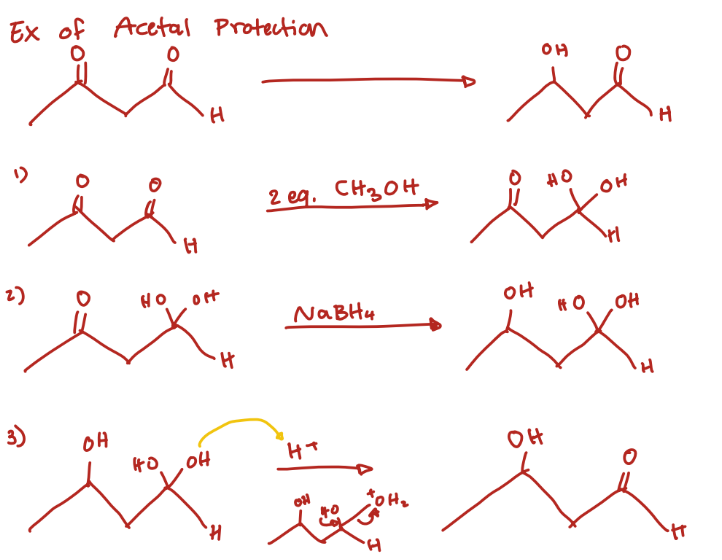
What does an Acetal protect?
Aldehyde
During a reduction
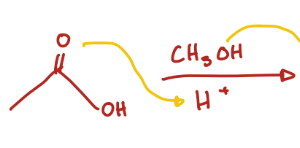
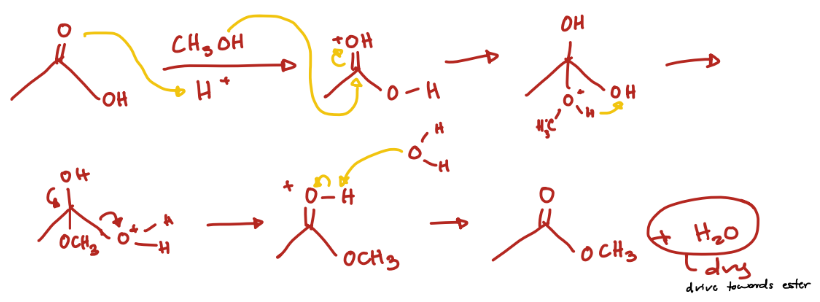
Carboxylic Acid + CH3OH/H+ (acidic environment)
Fischer Esterification
Ester + H2O (must be drying for reaction to drive towards ester)
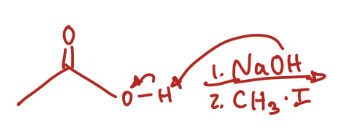
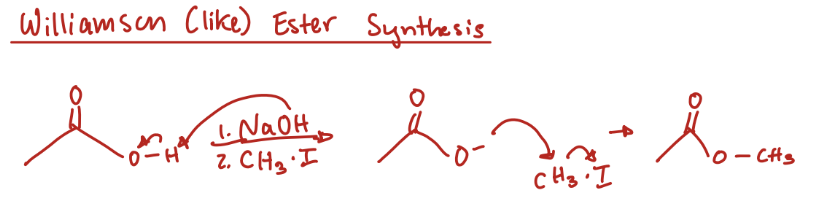
Carboxylic Acid + 1.NaOH 2. CH3-I
Williamson Ester Synthesis
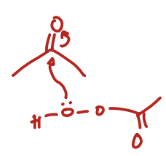
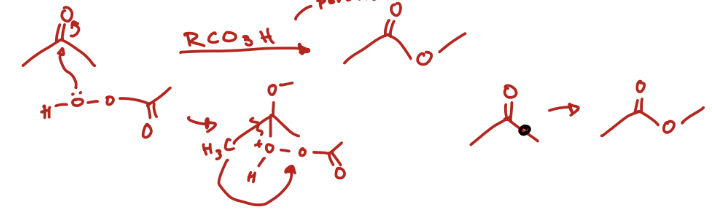
Ketone + RCO3H (peroxide)
Baeyer-Villagier Oxidation
Ester with insertion of O between Alpha and Beta Carbons
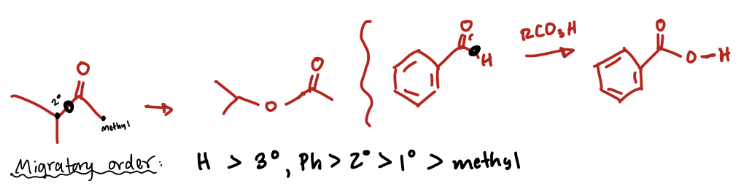
Migratory order for Baeyer-Villagier Oxidation
H > 3°, Ph > 2° > 1° > methyl
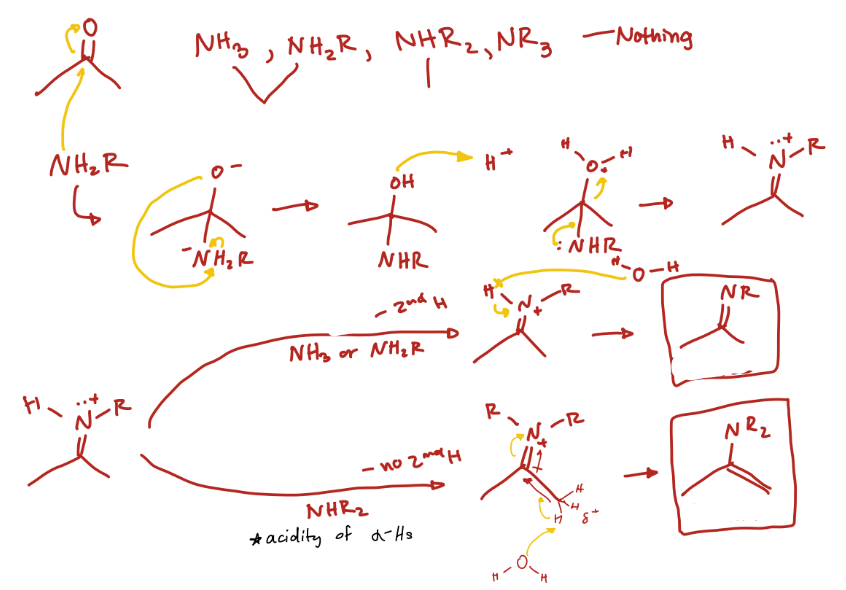
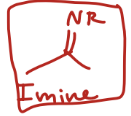
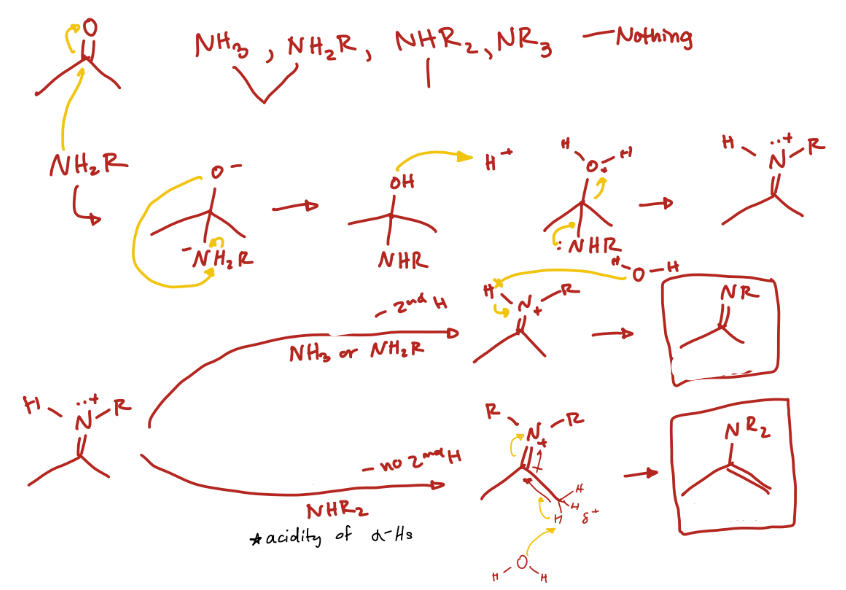
What is the product of a carbonyl reaction with the nitrogen nucleophiles NH3 & NH2R?
Imine
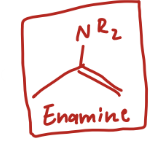
What is the product of a carbonyl reaction with the nitrogen nucleophiles NHR2?
Enamine
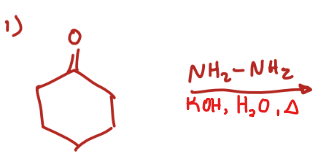
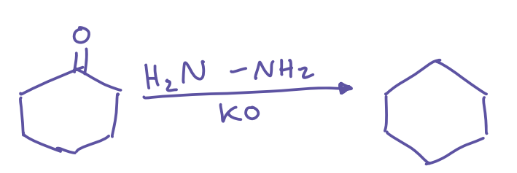
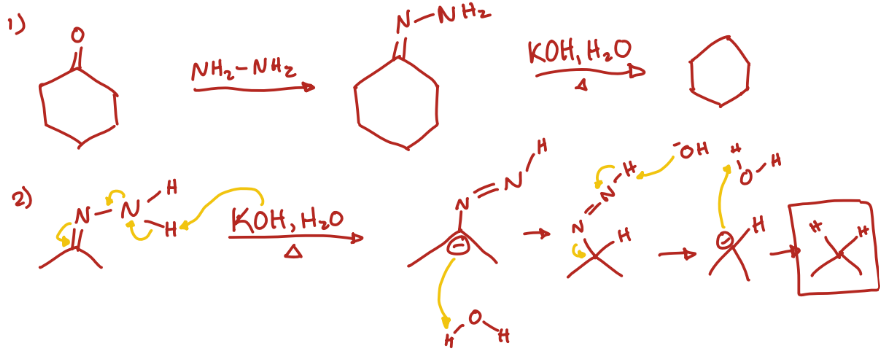
Ketone + 1. NH2-NH2 2. KOH, H2O
Wolff-Kishner Reduction
Alkane
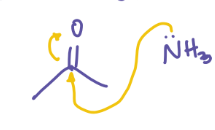
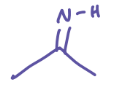
Ketone + NH3
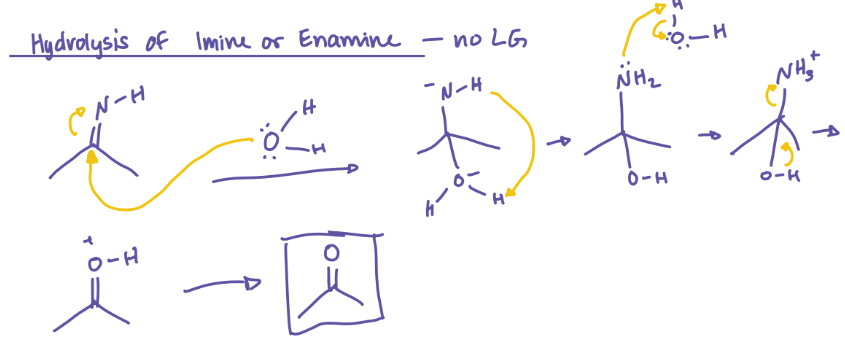
Imine + H2O
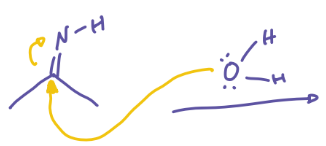
Imine + H2O
Hydrolysis of an Imine or Enamine
ketone + NH3
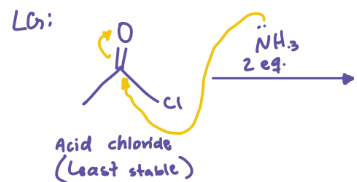
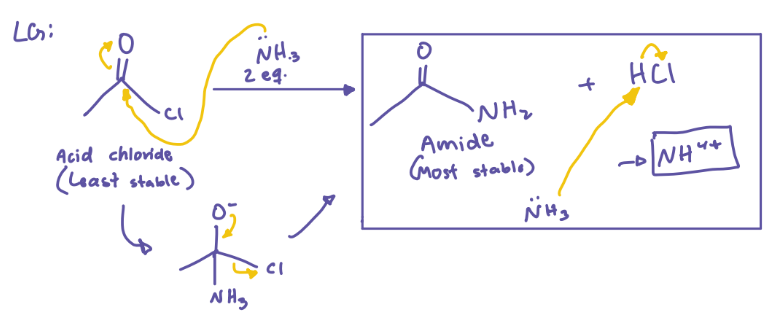
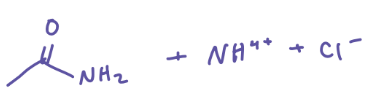
Acid Chloride + 2 eq. NH3
Amide + NH4+ + Cl-
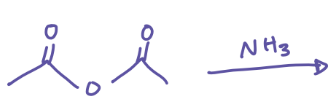
Acid Anhydride + NH3
Amide + NH4+ + Cl-
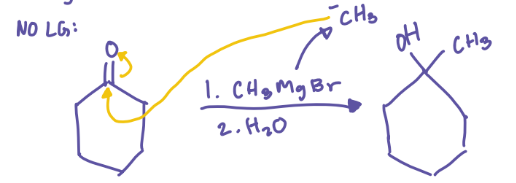
What is the product of a reaction with the Grignard reagent (RMgBr) if there is no Leaving Group?
Substitution of a C=O group with an OH and R group
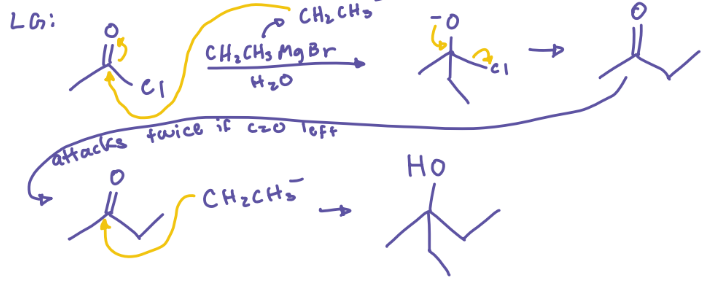
What is the product of a reaction with the Grignard reagent (RMgBr) if there is a Leaving Group?
Substitution of a C=O group with two R groups
T/F: The Gilman Reagent works the same way as the Grignard Reagent but stops before the second addition of the R group when there is a LG.
True
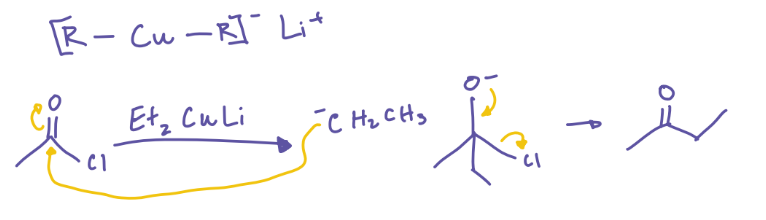
What is the Gilman Reagent?
R2CuLi
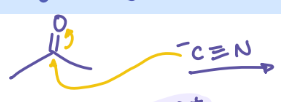
Ketone + -CN
Cyanohydrin Formation
creates tetrahedral with OH and CN groups
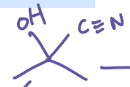
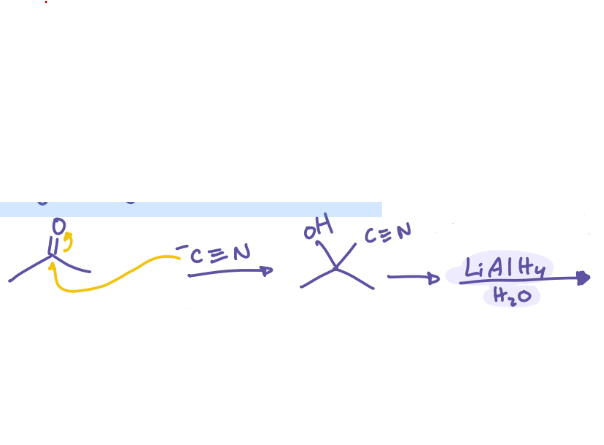
Ketone + 1. -CN 2. LiAlH4/H2O
Cyanohydrin Formation + Hydrogen Nu- Reduction
Tetrahedral with OH group and CH2+Amine
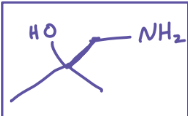
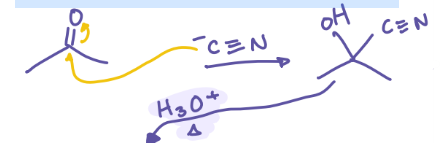
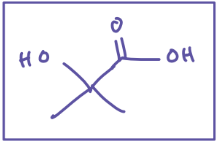
Ketone + 1. -CN 2. H3O+ & heat
Tetrahedral with OH and CH2+CA
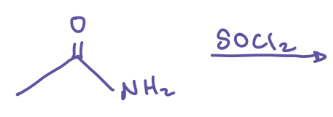
Amide + SOCl2
-CN
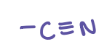
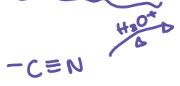
CN + H3O+ & heat
Amide
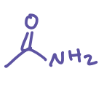
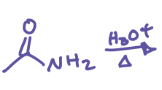
Amide + H3O+ & heat
Carboxylic Acid
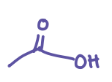
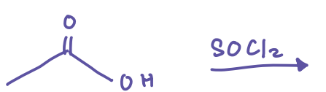
Carboxylic Acid + SOCl2
Amide

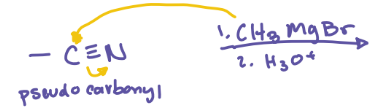
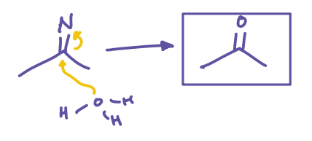
-CN + Grignard Reagent/H3O+
CN acts as pseudo carbonyl
Creates Ketone
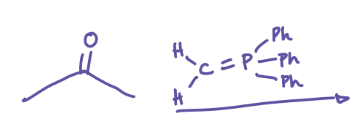
What product does a Wittig reaction form if it is reacted with a ketone and the formula is CH2PPh3?
It substitutes the Oxygen for the CH2 group
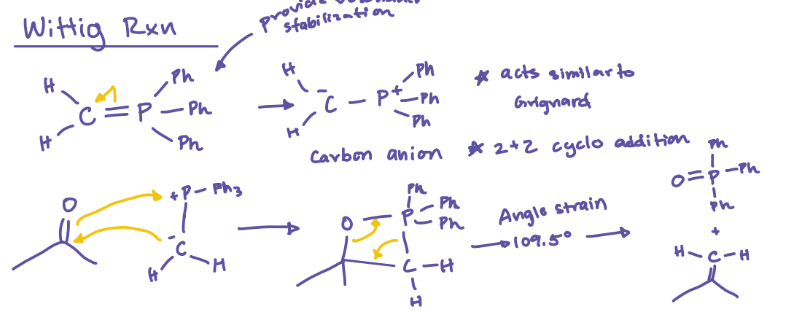
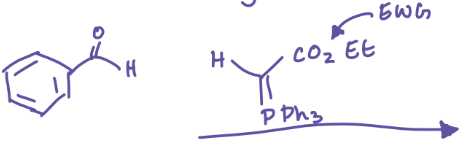
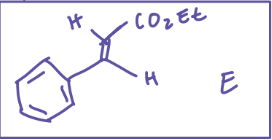
Does a Wittig reaction create a Z or E product when its reacted with an EWG?
E
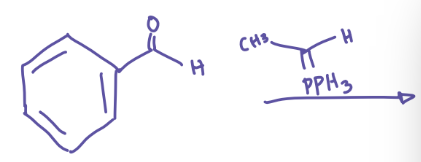
Does a Wittig reaction create a Z or E product when its reacted with a non EWG?
Z
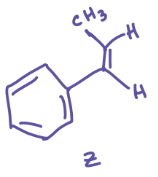
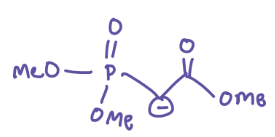
What product does the Horner-Wadsworth Emmons Reaction form?
E
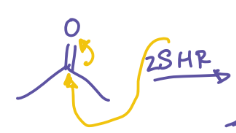
ketone + 2SHR
Thioacetal
works the same way as an acetal group and protects aldehyde group
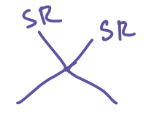
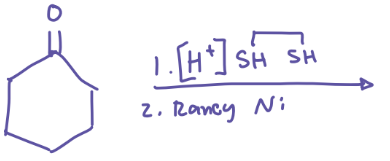
Ketone + 1. (SH)2H+ 2. Raney Ni
alkane
reduces ketone completely
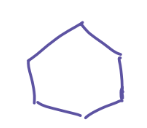
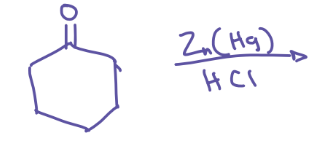
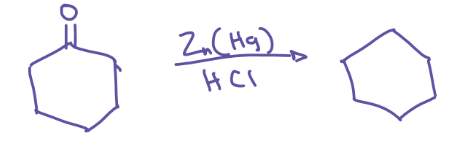
carbonyl + Zn(Hg)/HCL
alkane
complete reduction
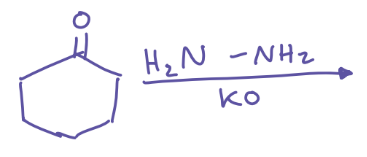
carbonyl+ (H2N)2
alkane
complete reduction