Fish
 Call Kai
 Learn
Learn Practice Test
 Spaced Repetition
 Match
Match Flashcards
 Knowt Play
1/28

There's no tags or description
Looks like no tags are added yet.
Name | Mastery | Learn | Test | Matching | Spaced | Call with Kai |
|---|
No analytics yet
Send a link to your students to track their progress
29 Terms
What are the main roles of fish in society?
Pet fish (tropical, marine, coldwater and ponds)
Aquaria (wide ranging plus other aquatic taxa)
Laboratory (mostly zebrafish)
Farmed (mostly salmon and trout in the UK)
What should you consider when mixing different species in community tanks?
Water parameters and habitat
Schooling or solo
Swimming levels
Compatibility
Aggression or intimidation
Predators
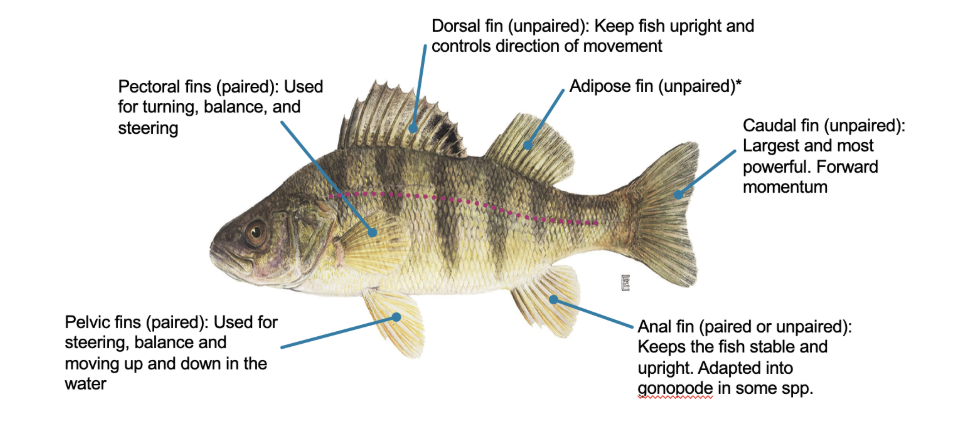
Label the basic external features of a typical fish species
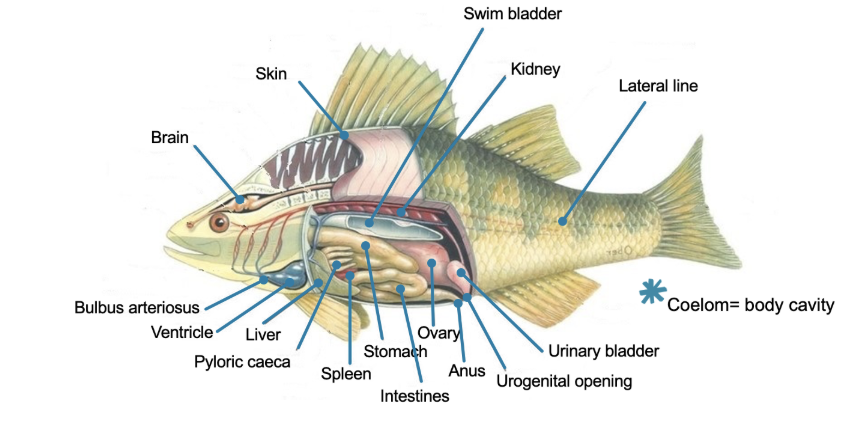
Label the basic internal features of a typical fish species
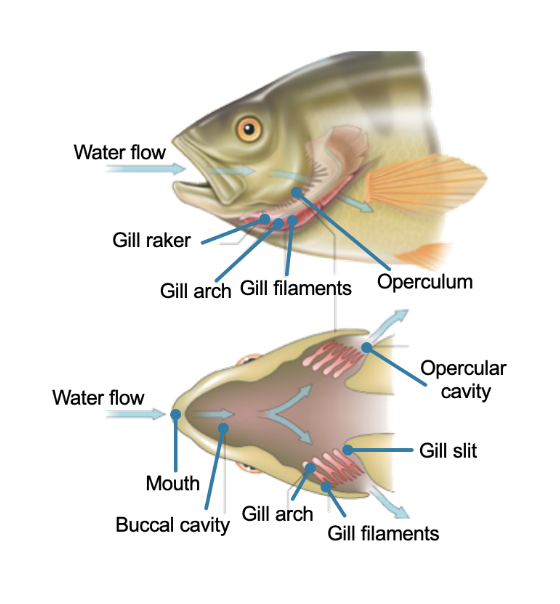
Describe how gills are used in fish
Primarily for gas exchange in water
Water passes into mouth, and out through gills
Rakers prevent damage from debris, arches hold the gill in position and filaments and lamellae create a large surface area for absorption
Gills also assist in excretion of nitrogenous waste, and have a role in the immune system and the acid-base balance
Label the structure of gills and how water moves into the gills (side on and view from below)
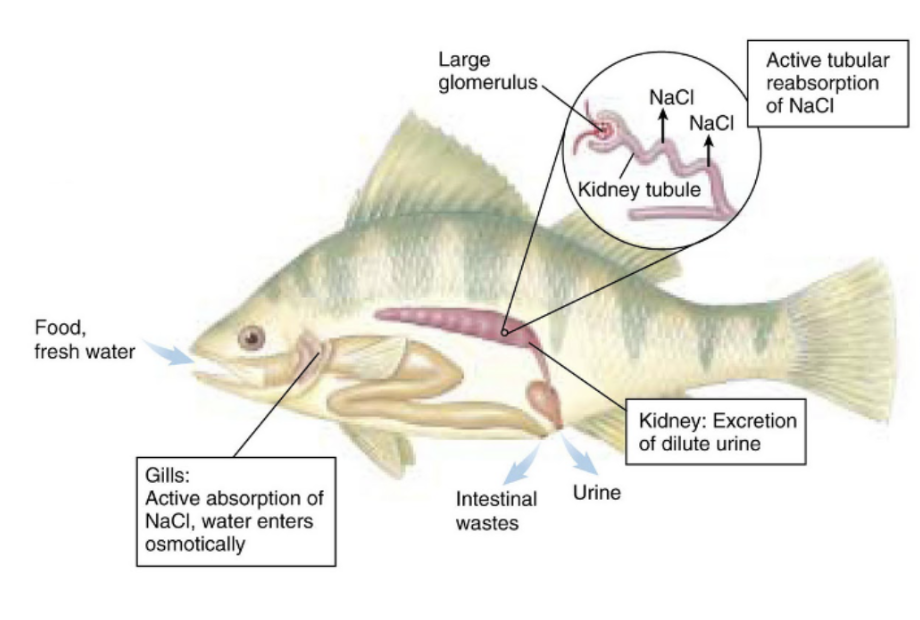
Draw out how osmoregulation occurs in freshwater fish
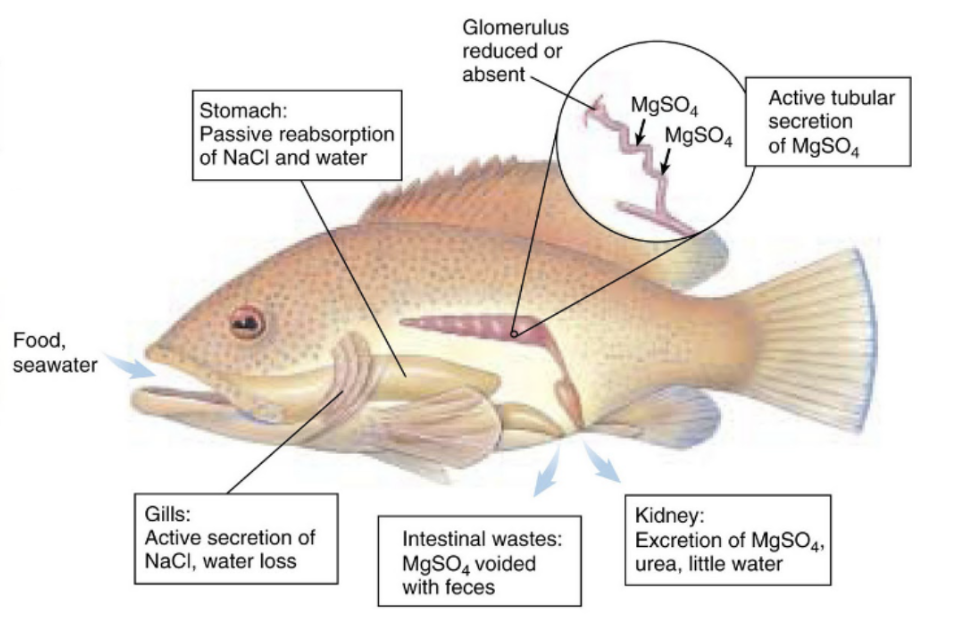
Describe how osmoregulation occurs in seawater fish
Describe how ammonia and nitrate should be considered relevant to keeping fish
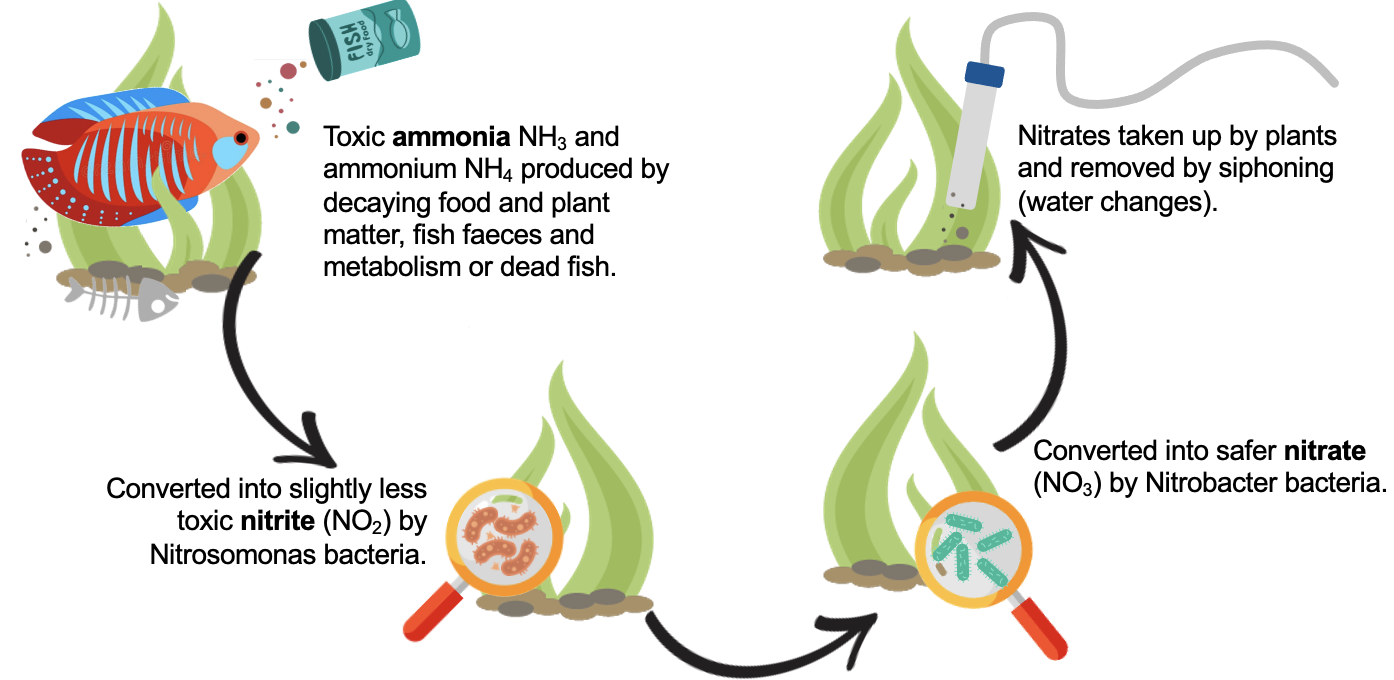
There is constant pollution from fish, food and plants
Both ammonia and nitrate are highly dangerous, causing stress and physical damage to sensitive tissues
There are no detectable levels of ammonia and nitrate
Biological filtration, surface area and sterilisation
Keep a good level of ‘good’ bacteria to maintain biological filtration
Describe how oxygenation/CO2 should be considered relevant to keeping fish
Most important to consider in ponds
Water movement allows surface dissolution
Air stones
Describe how chemically clean water should be considered relevant to keeping fish
Free of pesticides, chlorine, heavy metals, organophosphates
Chlorine/chloramine gill tissue necrosis
Chemical filtration (charcoal/zeolite)
Describe how water hardness/salinity/pH/temperature should be considered relevant to keeping fish
Different species have specific requirements
There may be narrow limits
Describe how organic pollution should be considered relevant to keeping fish
Fish faeces, uneaten food, algae and other detritus decompose
Build-up of dissolved/particulates encourages disease, parasites and bacteria
Mechanical filtration (sponges)
Describe how stability should be considered relevant to keeping fish
Substantial fluctuations of pH, temperature and other parameters can occur over a 24-hour period (not typically in the wild)
Constant changes within the preferred ranges are stressful, as fish must constantly adapt to changing conditions
What are the key pieces of equipment needed when keeping pet fish?
Filter: chemical, biological and mechanical filtration aerates and circulates water
Heater and thermostat: heats and maintains water at a set temperature
Substrate and enrichment: anchors plants, hides fish faeces, provides forage
Non-return valve: prevents water backing up into the air pump
Air pump: provides aeration via air stone
Thermometer: checks water temperature
Hood and hight: to provide a day/night cycle and protect inhabitants
Describe the 3 different types of fish in terms of how they feed
Surface feeders: have an upturned mouth for skimming the water surface for food
Mid-range feeder: have a mouth that appears straight from the face, to gather food as it falls through water
Bottom feeders: have a downturned mouth for feeding from the bottom surface
Describe the considerations when feeding fish
Fish are opportunistic feeders- overfeeding is common in home aquaria
Fatty liver disease (hepatic lipidosis) is a direct effect of overfeeding, and is fatal
Describe how feeding fish incorrectly can impact their environment
Blue-green and red algae blooms from inc. dissolved organic material, nitrates and phosphates in the water contribute to low oxygen
Decaying organic matter contributes to fungus growth, and ‘harmless’ pest species rapidly reproduce
Describe the nutritional requirements of herbivorous and omnivorous fish
Less nutrient-dense diet, have a long intestine to allow for digestion and absorption of vegetable material
Herbivores may graze aquarium plants, algae/seaweed tablets and small pieces of fresh vegetables
Omnivores thrive best when given a varied diet of formulated feeds (pellets, flakes and granules), fresh foods, live foods and frozen foods
Describe the nutritional requirements of carnivorous fish
Need a nutrient-dense, high protein diet, often top predators (e.g salmon and tuna), have a short intestine with rapid digestion and absorption
Some carnivore species prefer live prey that they can hunt before eating, whereas others will eat frozen cubes or freeze-dried invertebrates
What should you assess upon clinical examination of a fish?
Behaviour
Body
Skin
Opercular/gill movements
Swimming patterns
Population and interactions
Draw out the nitrogen cycle in relation to fish tanks
What are some behavioural concerns when assessing a fish in practice?
Circling
Bottom sitting (normal for sedentary species and sleeping fish)
Drifting and hovering (normal for angel fish and hatchet fish)
Head standing, tail-walking, flashing
Piping or gasping
Colour changes (confused for sexual maturity/seasonality)
List some physical signs of illness in fish
Ulcers
Fin haemorrhaging
Fin rot
Costia (grey sheen over body)
Intestinal/anchor worms
Leeches
Mouth/skin fungus
Cloudy, bulging eyes
Gill/skin flukes
White spots
Dropsy (pineapple scales)
Carp pox (viral infection, no known cure)
Velvet (gold-grey spots)
How can you obtain a diagnosis from a fish using histology?
Minimise handling, but perform a thorough examination
Primary diagnostics on exam:
Skin scraps: use a slide or coverslip to drag cranial-caudal, add a drop of tank water and examine immediately
Gill clips: lift the operculum, cut only gill tissue with fine-tip scissors, examine with microscopy (some bleeding will occur)
Fin clips for histology
How can you obtain a diagnosis from a fish using radiography?
Cases with abnormal body shape, swimming and buoyancy disorders and suspected foreign bodies
Give anaesthetic, remove from water for radiography
How can you obtain a diagnosis from a fish using an ultrasound?
For soft tissue and internal structures (tumours, sexing)
Gel is not needed in water, be careful with equipment
How can you obtain a diagnosis from a fish using biochemistry?
Blood sampling:
Use the tail vein (ventral to spine 90 degree angle)
Ensure lab can ‘do fish’- some labs have ‘koi health profile’
Assesses oxygen transport capacity, immune potential, level of stress, disease, intoxication, nutritional status and more
A smear can be analysed for cellular abnormality
How should you use anaesthetics on fish in clinical practice?
Sedation is recommended before handling, or a brief out-of-water examination
Preparation for GA should involve a 12-24hr starvation period to limit regurgitation into gill tissue and excretion of nitrogenous waste
GA is usually induced via immersion in a dissolved anaesthetic agent