Bio lecture 8
 Call Kai
 Learn
Learn Practice Test
 Spaced Repetition
 Match
Match Flashcards
 Knowt Play
1/111

There's no tags or description
Looks like no tags are added yet.
Name | Mastery | Learn | Test | Matching | Spaced | Call with Kai |
|---|
No analytics yet
Send a link to your students to track their progress
112 Terms
fluid-mosaic
parts can move, made of many smaller pieces (each with different functions)
phospholipids
________ are the most numerous molecule in our membrane (foundation)
bilayer
lipids structure
outwards
hydrophilic heads face…
towards the middle
hydrophobic tails face…
flipflop
phospholipids flip to the other side, very rare event
lipid raft
proteins and lipids are stuck in place, positioning a receptor or cell junction
temperature, presence of cholesterol, length of fatty acid tails, presence of double bonds
factors influencing fluidity (speed of movement)
higher temperatures create faster movement
how does temperature affect fluidity
cholesterol
seen in animal membranes, acts as a buffer and helps regulate membrane speed
longer → slower, shorter → faster
how does the length of fatty acid tails affect fluidity?
more unsaturated= faster, saturates= slower
how does the presence of double bonds affect fluidity?
synthesis
making, smooth ER- builds phospholipids
transported
all phospholipids are built on the other surface of the smooth ER, Fillapse
Fillapse
to even up surfaces
rough ER
what produces proteins
proteins
enzymes, receptors, cell junctions, transport (channels/carriers)
integral membrane proteins
embedded, amphipathic
transmembrane proteins
travels across the membrane- channels and carriers, receptors, (some) cell junctions
lipid-anchored proteins
surface proteins with a fatty acid tail, stays on the membrane surface
peripheral proteins
surface proteins, helps in place by hydrogen bonds
peripheral has proteins on the surface and free ribosomes, integral proteins are embedded on the rough ER
what’s the difference between peripheral and integral proteins
cell junctions and certain receptors
examples of immobile proteins
mobile proteins
most proteins are free moving
positioned
free ribosome attaches to the rough ER, proteins is threaded through a channel, when finished the channel is removed and protein remains
transportation proteins
rough ER, golgi body (modified), transported to its final destination
glycoprotein
ID tags
glycosylation
adding a carb to another molecule
glycolipid
carb + lipids
glycoprotein
carb + protein
N-linkes
carb is attached to a nitrogen, throughout the cell
O-linked
carb is attached to oxygen, unique to the golgi body
fluid-mosaic model
a molecular model for the structure of biological membranes consisting of a fluid phospholipid bilayer in which suspended proteins are free to move in the plane of the bilayer
transmembrane domains
a proteins region rich in hydrophobic amino acids that spans the phospholipid bilayer
cell recognition
the specific binding of cells to one another mediated by membrane proteins or carbohydrates
cell adhesion
the binding of one cell to another, often mediated by noncovalent forces
homotypic
pertaining to adhesion of cells of the same type
heterotypic
pertaining to the binding of the same types of cells, due to the interaction of the same molecules on the cell surfaces
desmosomes
an adhering junction between animal cells
integrin
in animals, a transmembrane proteins that mediates the attachment of epithelial cells to the extracellular matrix
signal transduction pathway
the series of biochemical steps whereby a stimulus to a cell is translated into a response of the cell
autocrine
pertaining to chemical signal that binds to and affects the cell that makes it
juxtacrine
pertaining to a chemical signal that binds to and affects only cells adjacent to it and with which it is in direct contact
paracrine
pertaining to a chemical signal that binds to and affects nearby cells
hormones
a chemical signal produced in minute amounts at one site in a multicellular organism and transported to another site where it acts on target cells
crosstalk
interactions between different signal transduction pathways
receptor protein
a protein that can bind to a specific molecule or detect a specific stimulus, within the cell or in the cells external environment
receptor (sensor)
a cell that is responsive to a particular type of physical or chemical stimulation
ligand
any molecule that binds to a receptor site of another (usually larger) molecule
dissociation constant
an equilibrium constant measuring the tendency of 2 substances that are bound together to seperate into 2 smaller components.
agonists
a chemical substance that elicits a specific response in a cell or tissue
antagonists
a biochemical substance that blocks the normal action of another biochemical substance
protein kinases
an enzyme that catalyzes the addiction of a phosphate group from ATP to a target protein
G protein-coupled receptors
a class of receptors that change configuration upon ligand binding such that a G protein binding site is exposed on the cytoplasmic domain of the receptor, initiating a signal transduction pathway
G protein
a membrane proteins involved in signal transduction, characterized by binding GDP or GTP
effector protein
in cell signaling, a protein responsible for the cellular response to a signal transduction pathway
intracellular receptors
a receptor that binds its ligand inside the cell
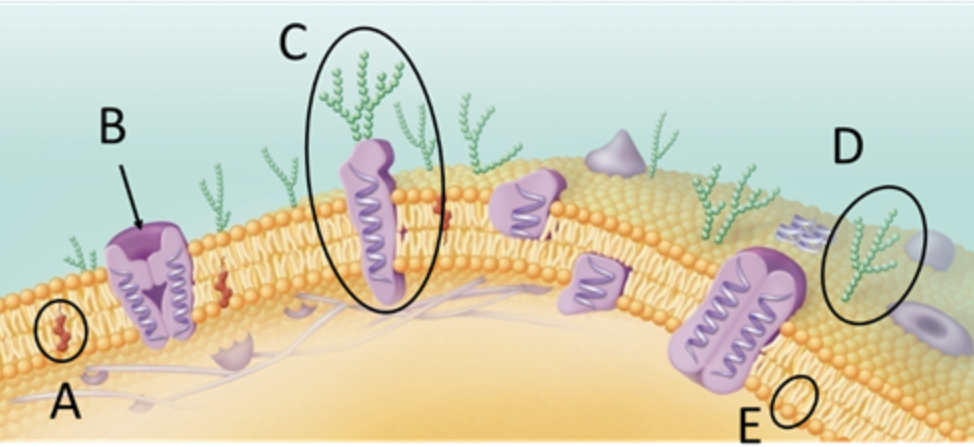
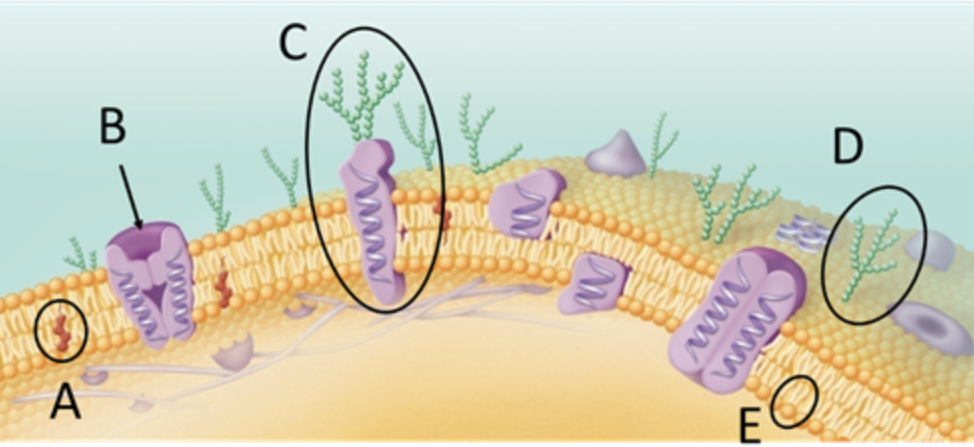
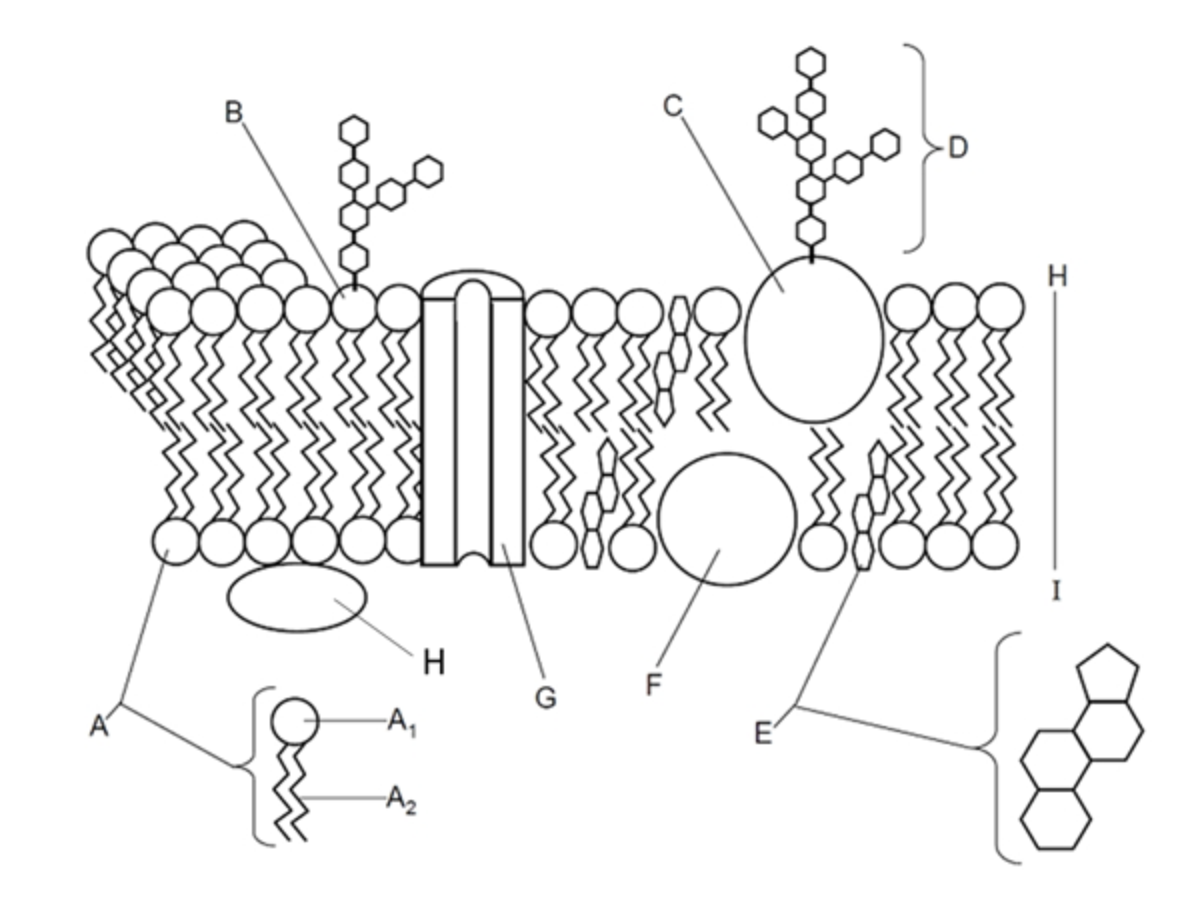
B
which of the following is a transmembrane protein
G
which of the following would be a channel
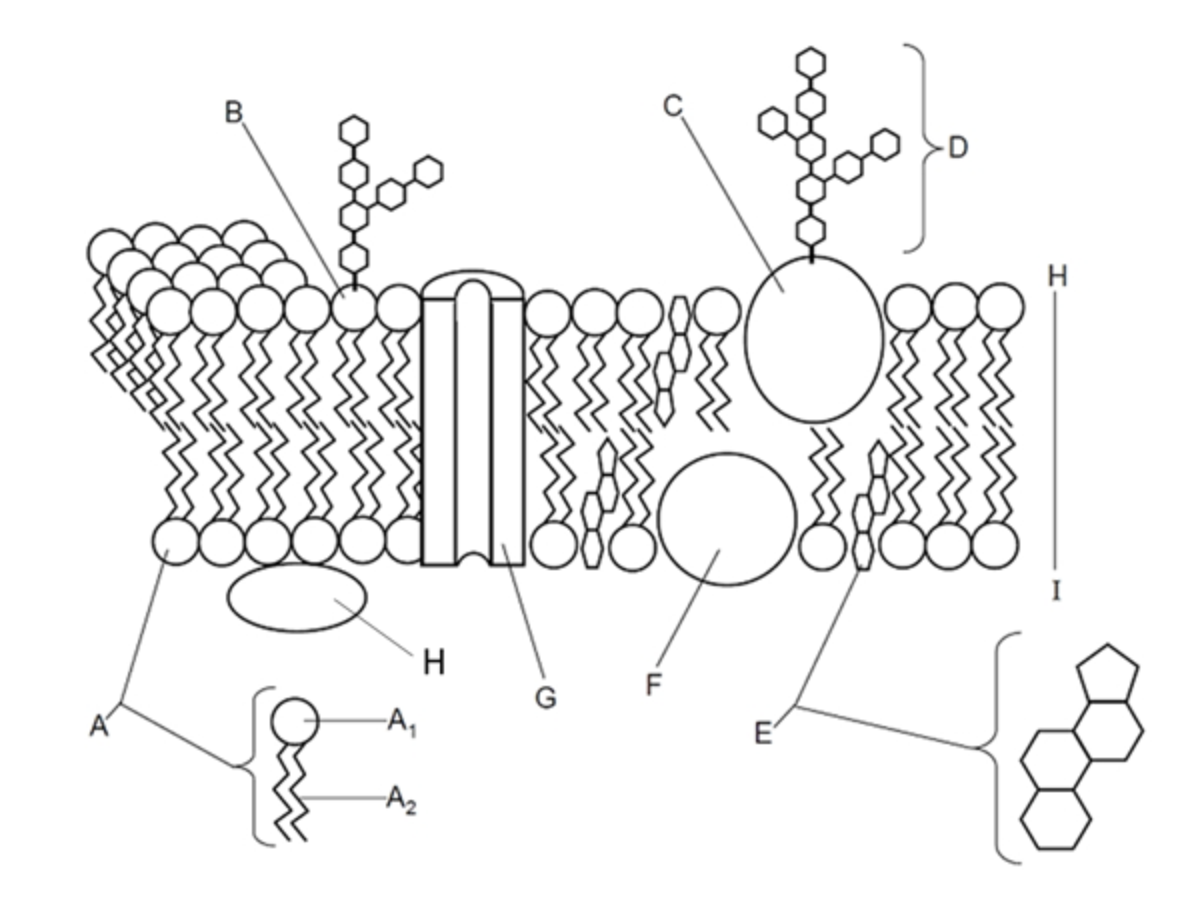
A
which of the following is the phospholipid
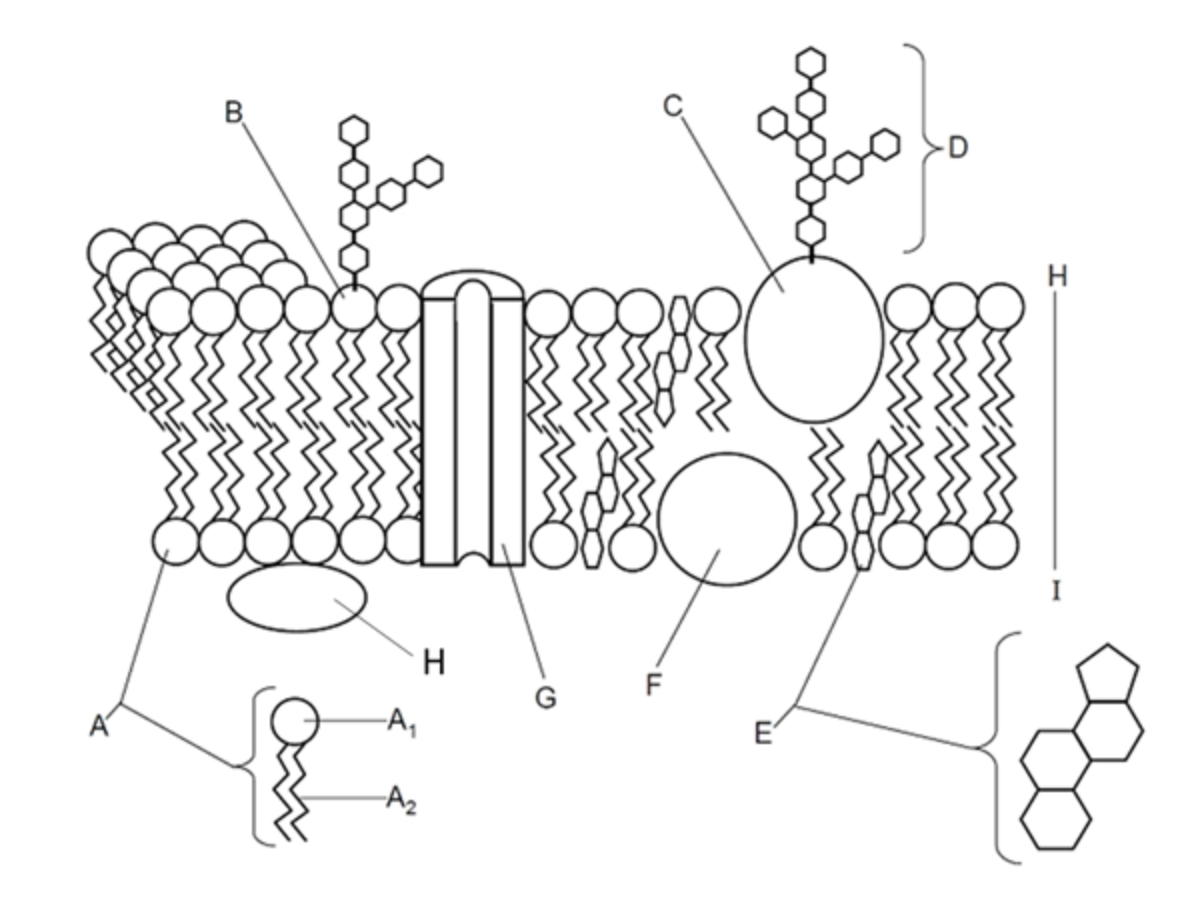
B-Glycoprotein
which of the following functions as an ID tag?
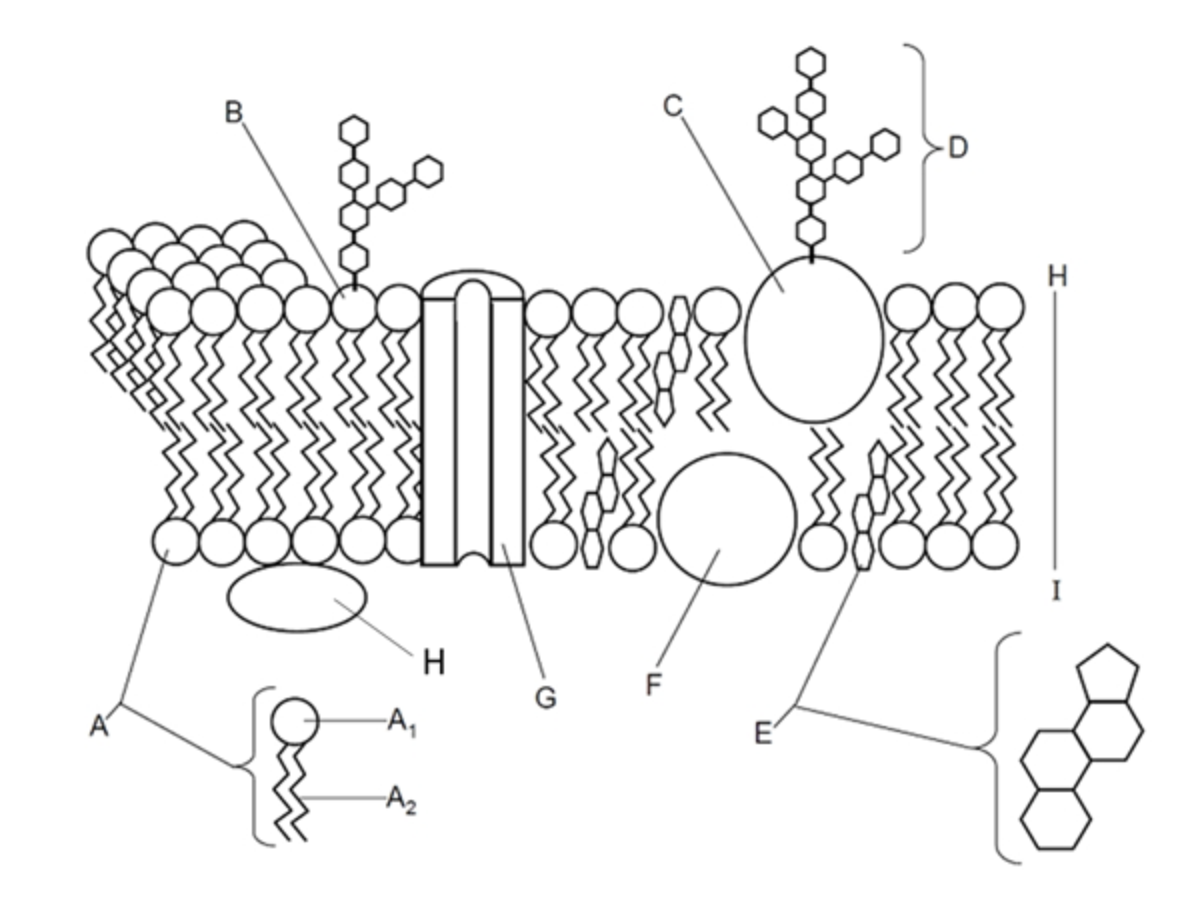
A- cholesterol
which of the following controls the speed of the membrane and is produced by the smooth ER
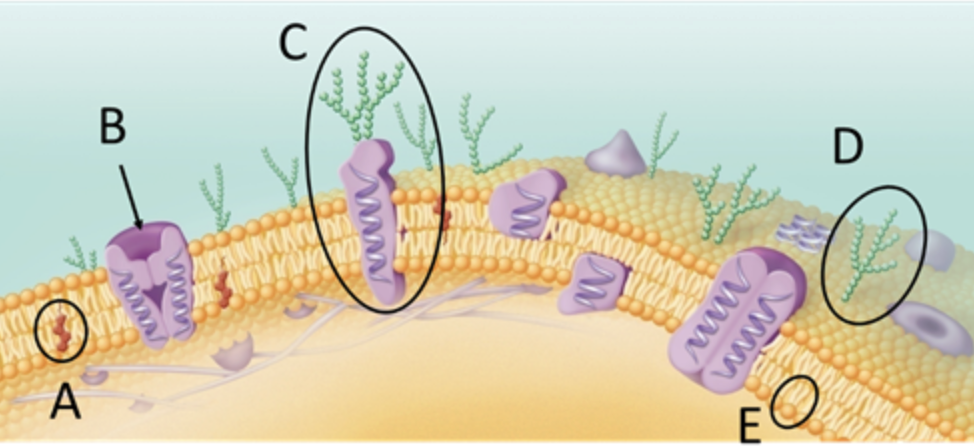
smooth ER
which organelle assembled molecule A
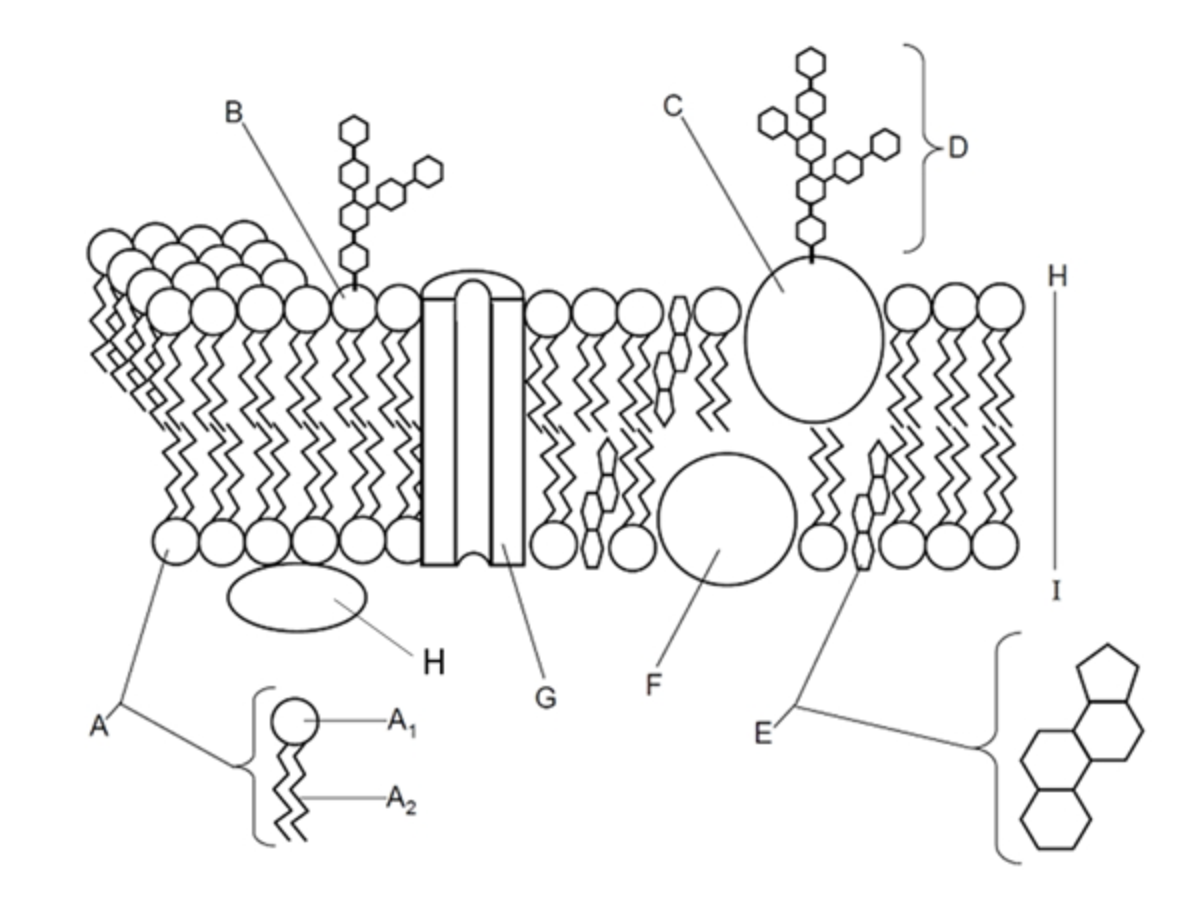
D
which of the following is a glycolipid
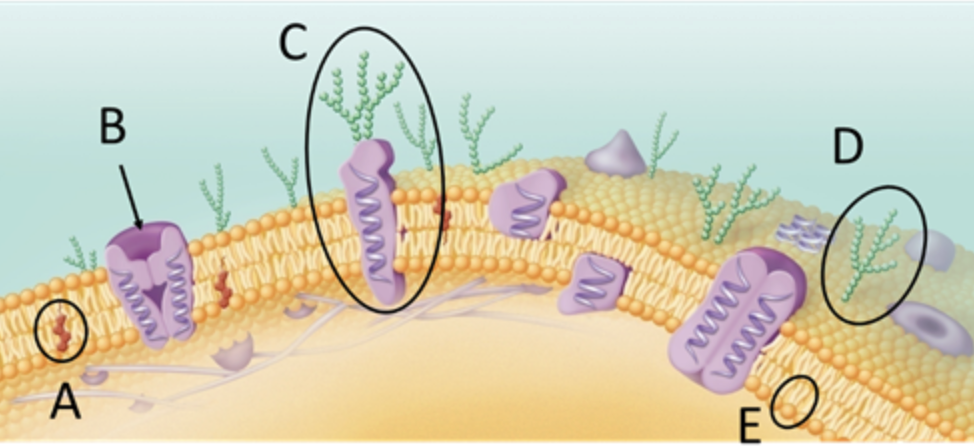
tight junction
what prevents digestive enzymes from leaking between cells
amphipathic
what is the term applied to phospholipids to indicate that they have a hydrophobic and hydrophilic region
glycolipids
carbohydrates attached to the surface of a membrane lipid
amphipathic
are phospholipids hydrophobic or hydrophilic
C- glycoprotein
which of the following can form a gel-like or mucus layer
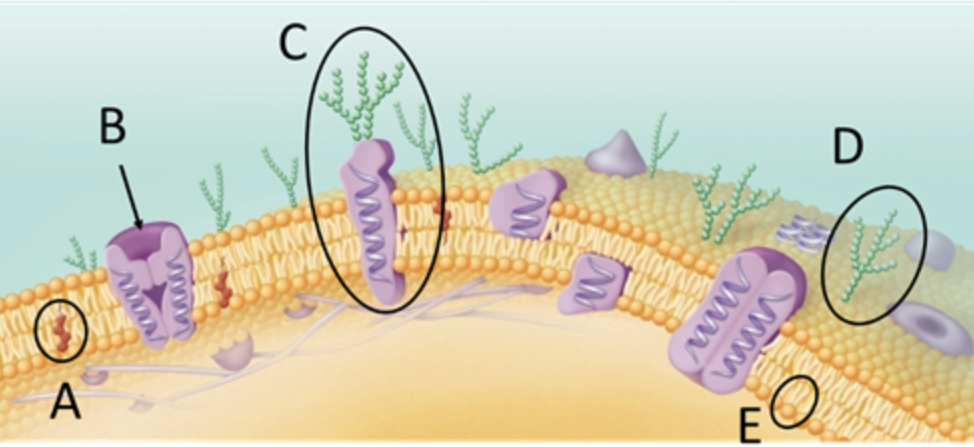
H
which of the following is a peripheral protein
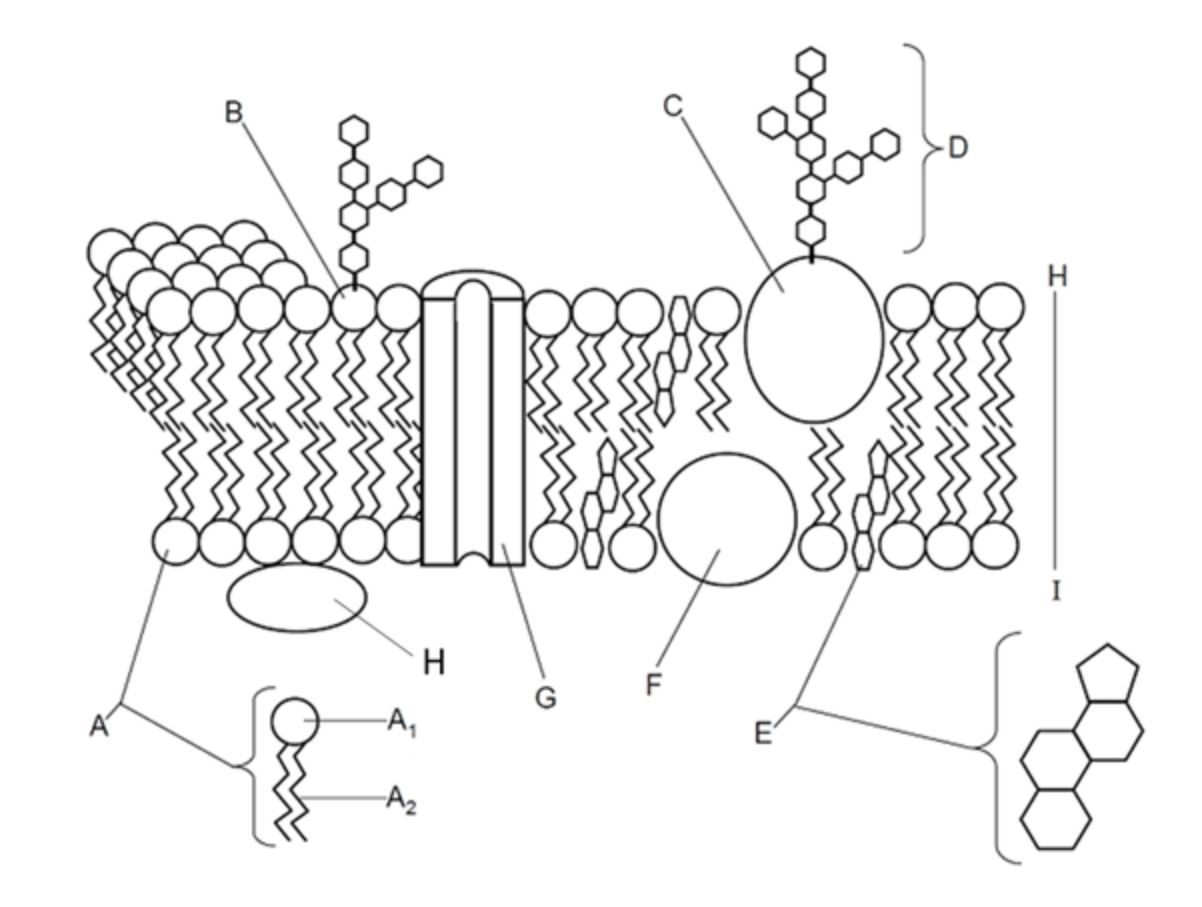
amphipathic
molecule E is described as
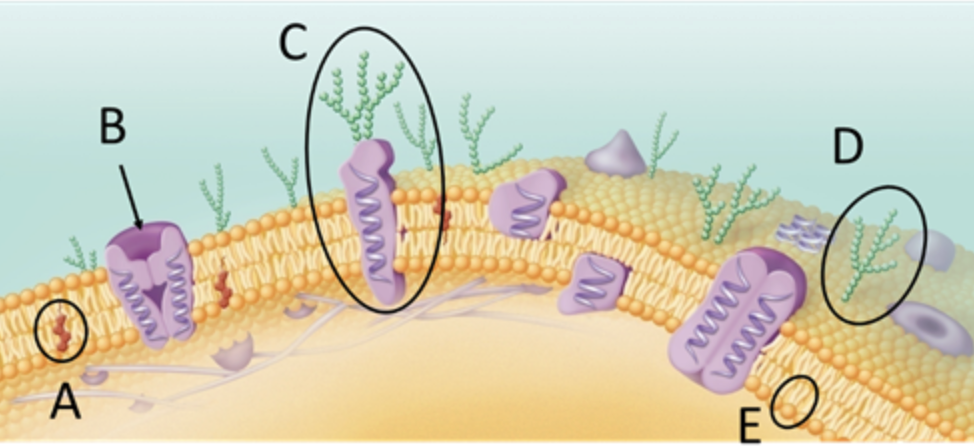
B
which of the following is a glycolipid
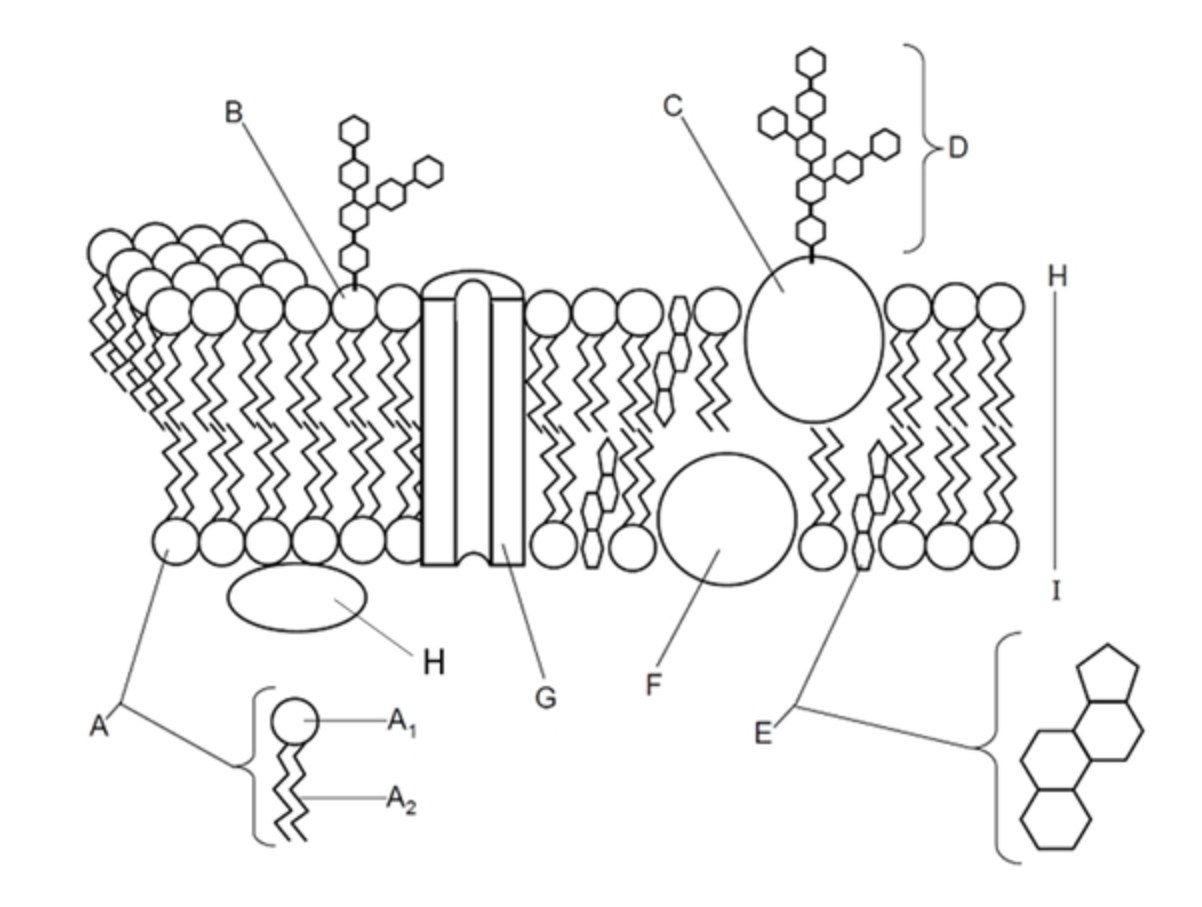
Rough ER
which organelle assmebled molecule G
gap junction
what allows cells to pass messages back and forth
membrane proteins
cell signaling, aid in cell-to-cell attachment, enzymes, transporters
tight junctions
what are the junctions that exist between the intestinal cells to prevent acid and enzyme from escaping
anchoring, gap, and tight junctions
Animal cell juncitons
plasmodesmata, middle lamella
plant cell junctions
cell junction
attaches cells to others, create pores between cells, controls molecule movement between cells
anchoring junctions (desmosomes)
cell to cell (cytoskeleton, surface proteins, transmembrane proteins)
surface proteins
helps connect transmembrane protein to the cytoskeleton
transmembrane proteins
membrane proteins that span the cell membrane, maintain homeostasis, and detects signals
tight junction
prevents movement of molecules between cells, water tight structure and force molecules through the membrane
gap junction
pores that connect cells, allow molecules and signals to travel cell to cell
middle lamella
attaches a cell to its neighbor, plant version of an anchoring junction
pectin- acts like double sided tape
middle lamella structure
plasmodesmata
forms pores that connect cells, organelles can travel from cell to neighboring cell (plant version of gap junction)
pores, lined with plasma membrane
plasmodesmata structure
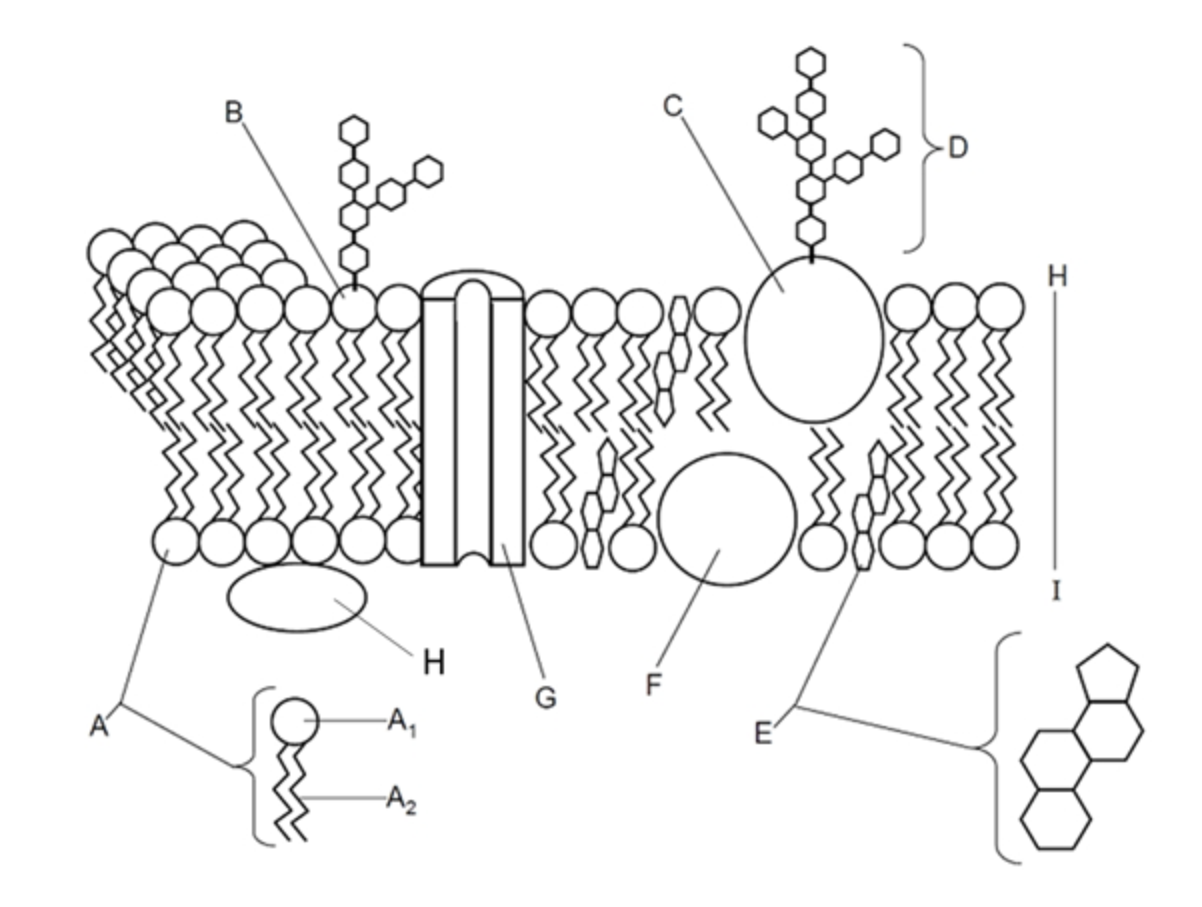
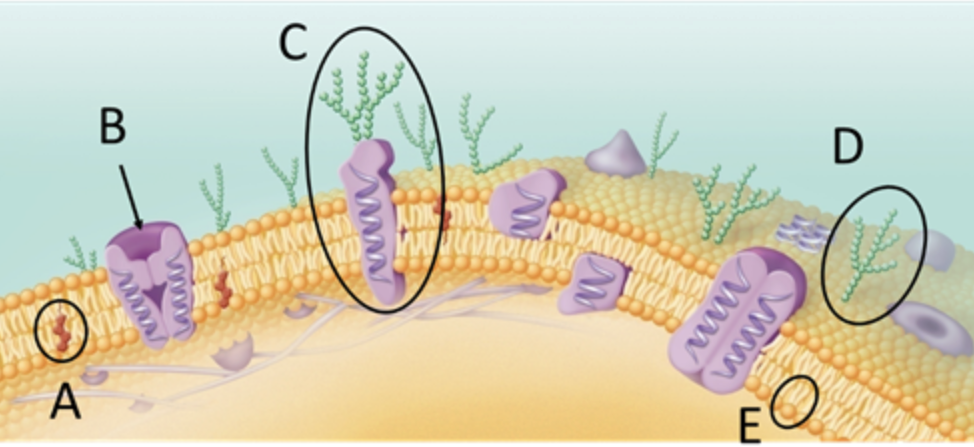
A
which of the following is cholesterol
E
which of the following is a phospholipid
F
which of the following is an enzyme
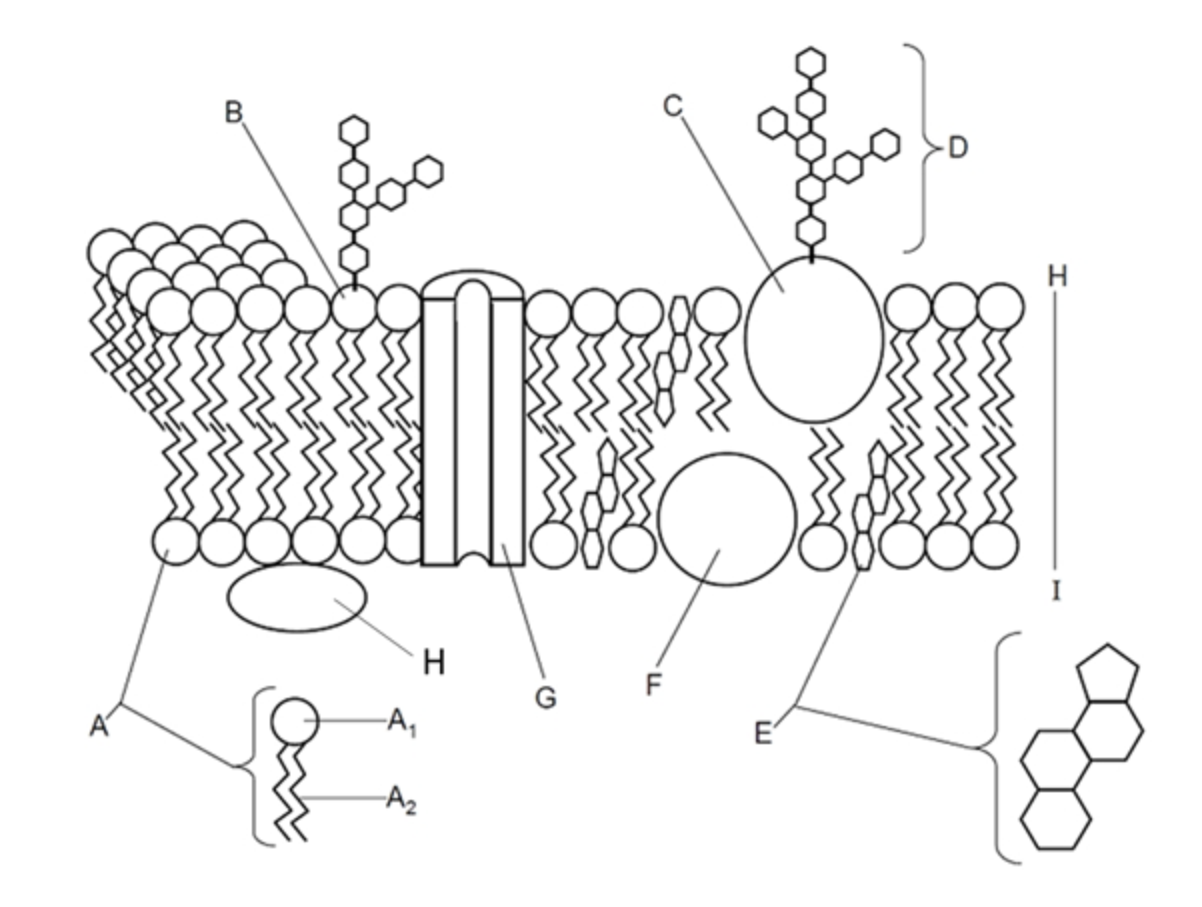
E
which of the following is cholestrol
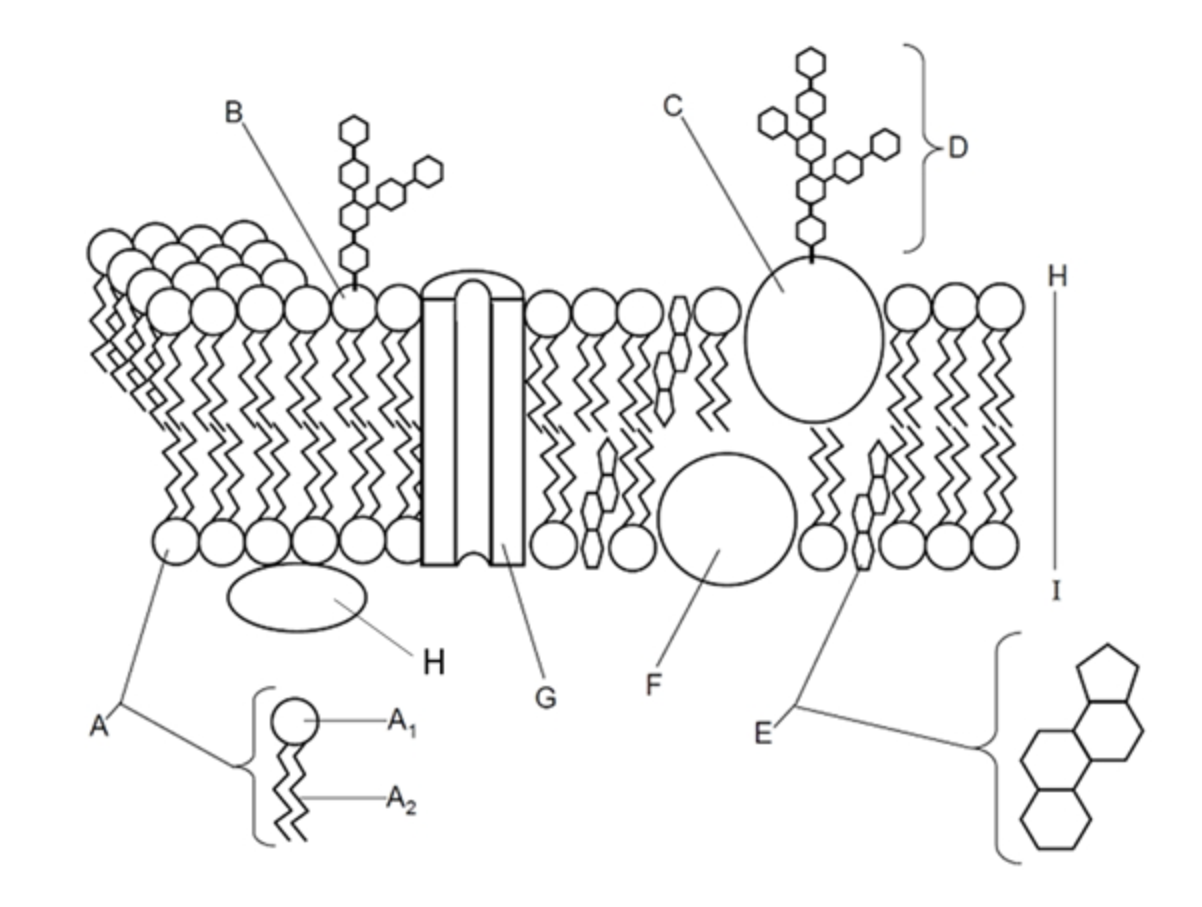
cholestrol
controls speed of membrane
B
which of the following is a glycoprotein and has gel mucus
binding is reversible
receptors bind to their ligands noncovalently, according to chemistry’s law of mass action. this means that…
receptor
the major difference between a cell that responds to a signal and one that does not is the presence of a…
paracrine signal
the specific term for a signal that is made by a cell and that diffuses to and affects a nearby cell is a…
look smooth
if a cell membrane lacking integral proteins is prepared by freezing and then fracturing it so that the two leaflets of the membrane are peeled away from one another and examined by electron microscopy, the exposed interior of the membrane bilayer will…
integral protein with a transmembrane domain
ion channels are formed by a particular kind of membrane protein that allows the passage of a specific ion under certain conditions. this type of protein is most likely a…
uses a phospholipid bilayer to separate the inside and outside of the cell
how does the plasma membrane function as a boundary