NPTE all Special Tests
 Call Kai
 Learn
Learn Practice Test
 Spaced Repetition
 Match
Match Flashcards
 Knowt Play
1/78

There's no tags or description
Looks like no tags are added yet.
Name | Mastery | Learn | Test | Matching | Spaced | Call with Kai |
|---|
No analytics yet
Send a link to your students to track their progress
79 Terms
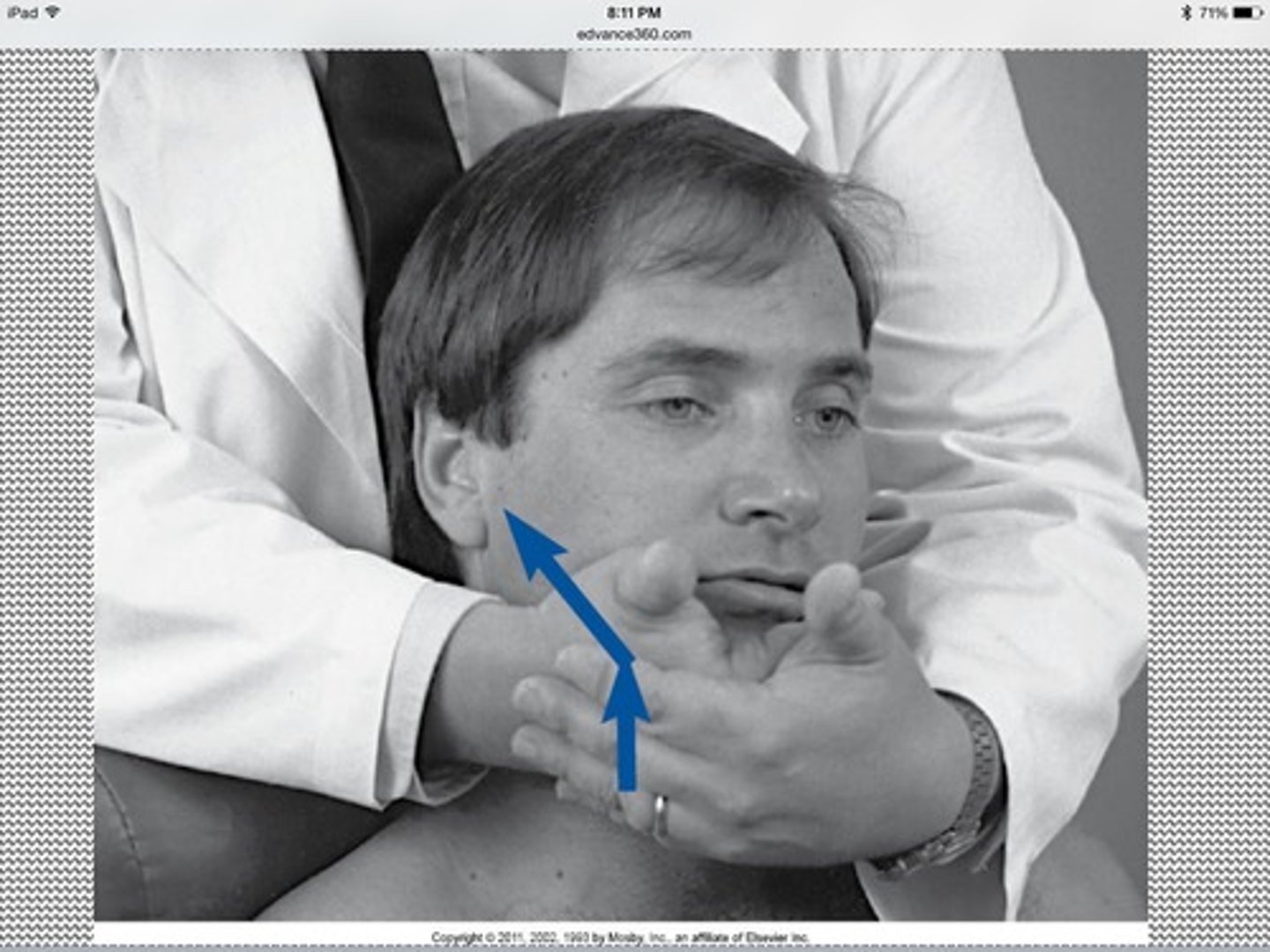
Yergason's Test
Tests Integrity of transverse ligament; may also identify Bicipital tendonosis
-pt sitting with shoulder in neutral stabilized by trunk and elbow at 90 forearm pronated
-PT resist supination and ER of shoulder
-tendon of biceps long head will "pop-out" of groove. May also reproduce pain in long head of biceps tendon
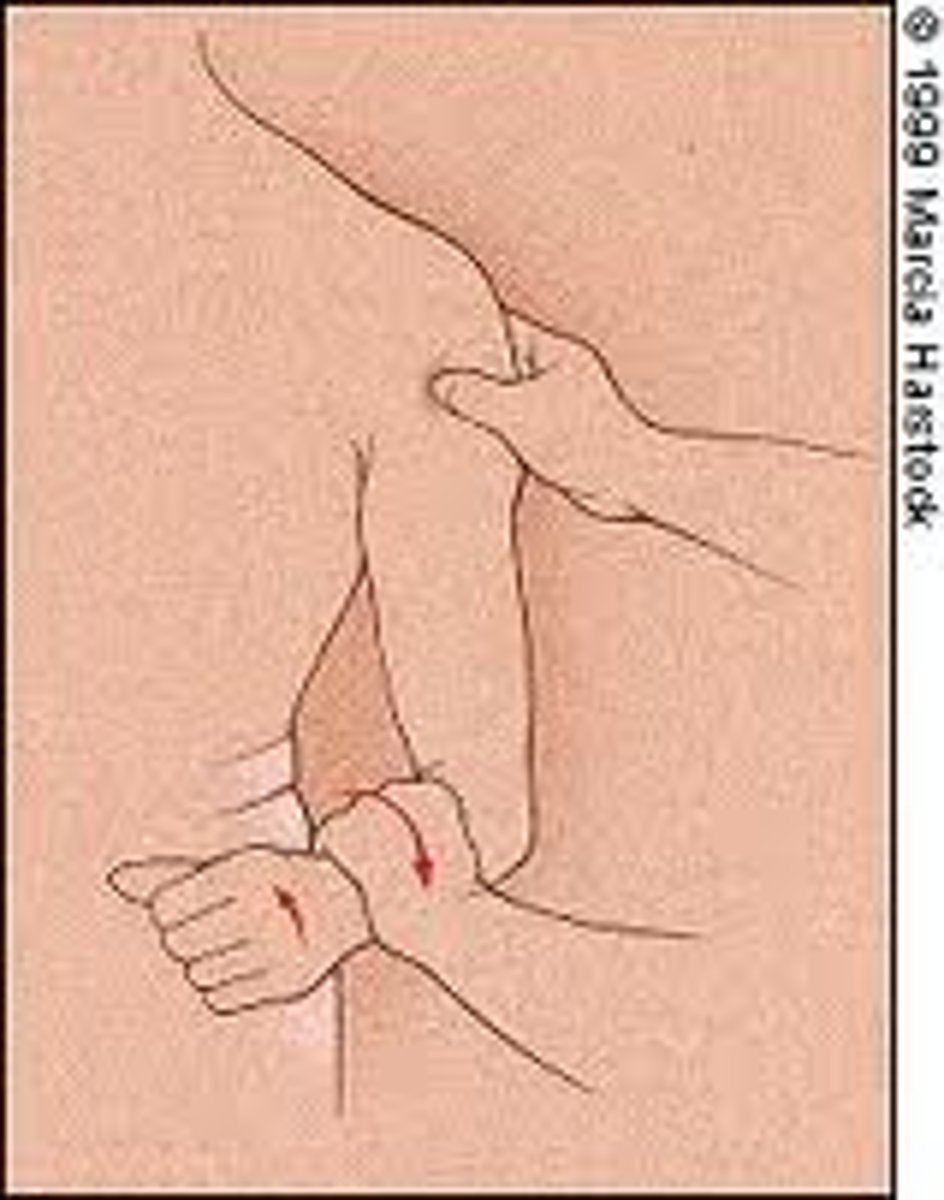
Speed's Test
Identifies Bicipital tendonosis/tendonopathy
-pt sitting or standing with upper limb in full extension and forearm supinated
-PT resist shoulder flexion
-reproduces symptoms (pain) in long head of biceps tendon
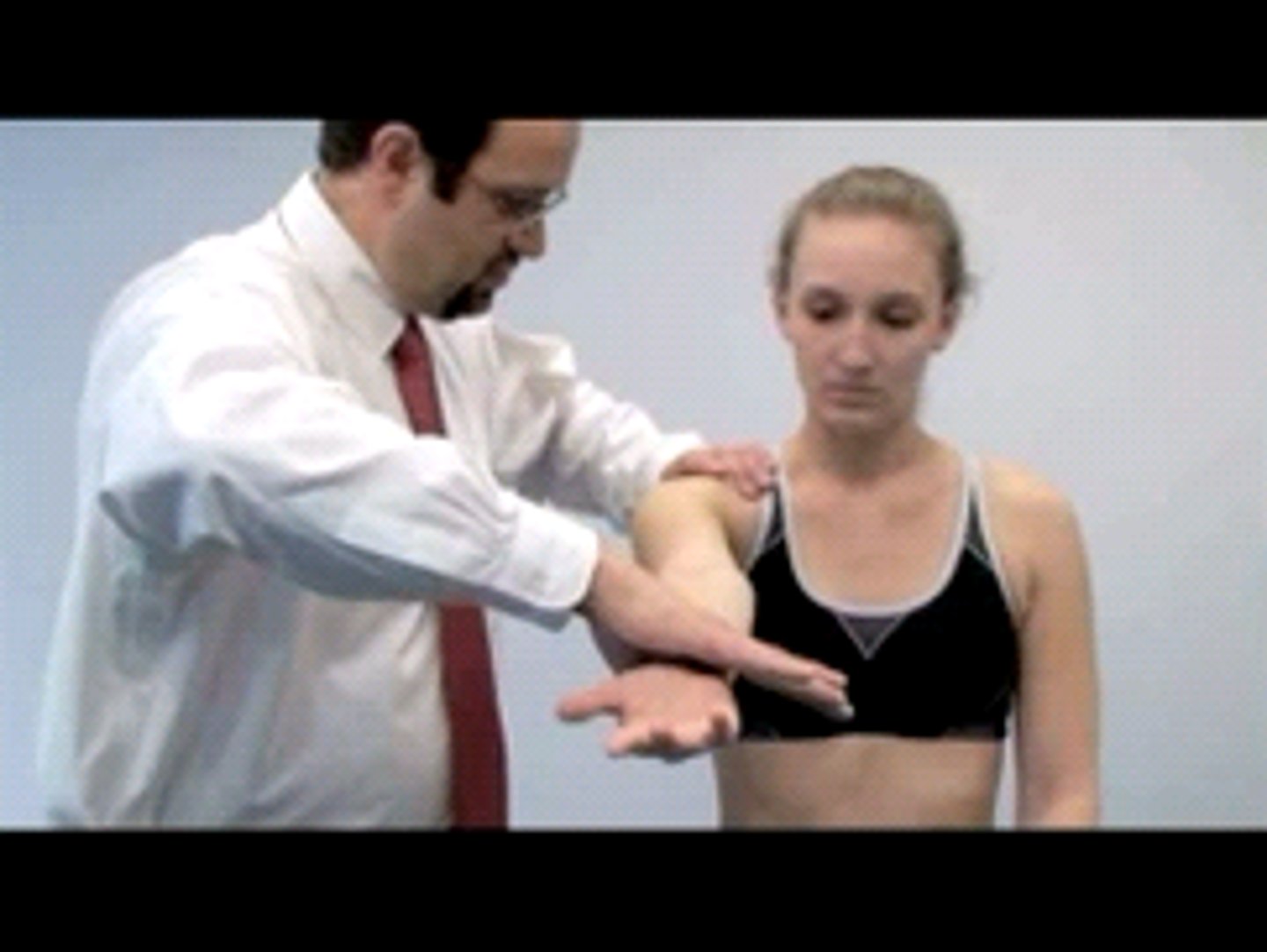
Neer's impingement test
Impingement of soft tissue structures of shoulder complex (long head of biceps and the supraspinatus tendon)
-pt sitting and shoulder is passively IR then fully abducted
-reproduces symptoms of pain within shoulder region
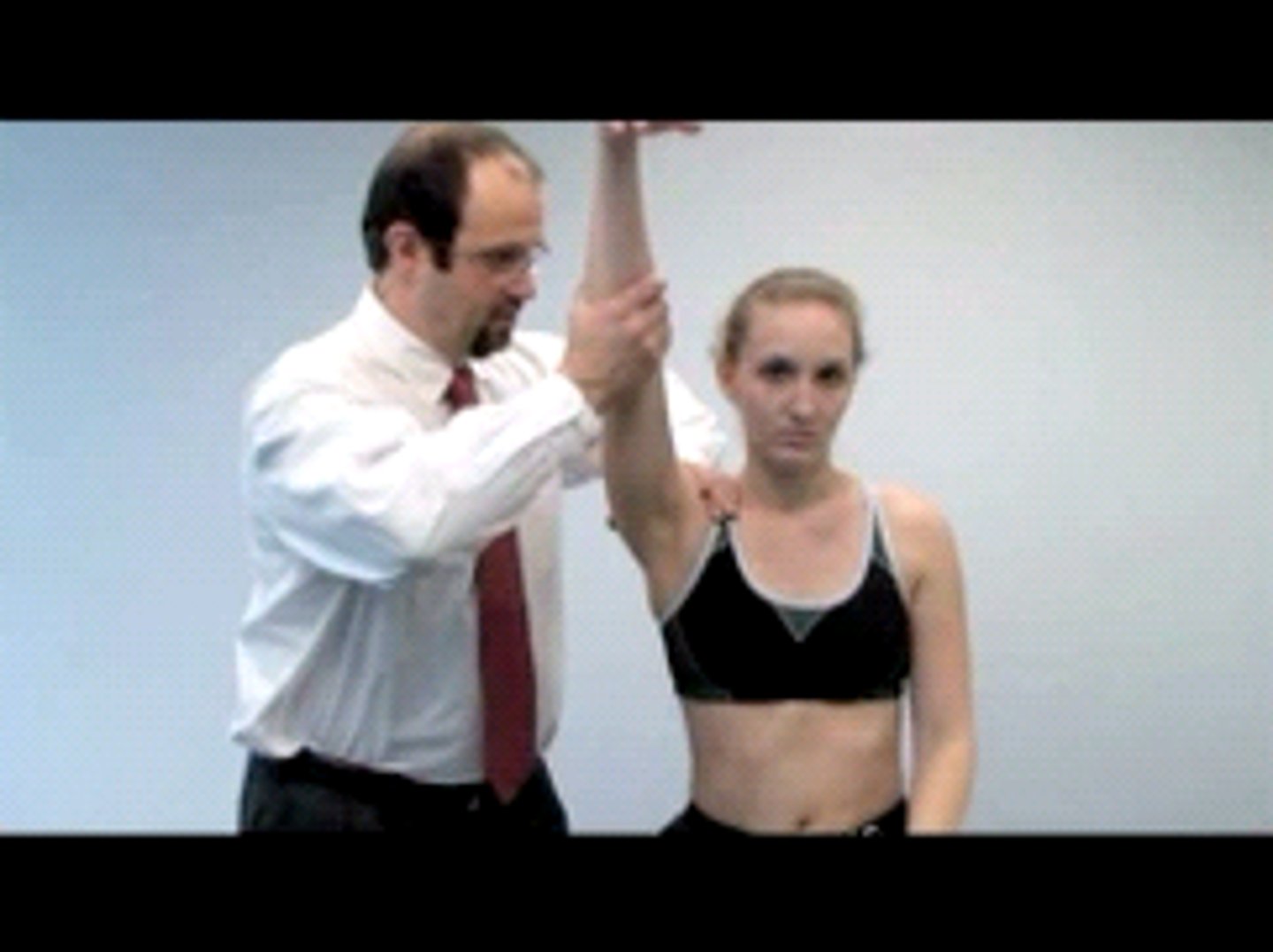
Empty can test
(Supraspinatus test)
Impingement of the supraspinatus tendon or possible suprascapular nerve neuropathy
-pt is sitting with shoulder at 90 and no rotation and resist shoulder abduction; then place shoulder in empty can position, IR and 30 horizontal adduction
-compare positions
-reproduces pain in supraspinatus tendon and/or weakness while in empty can position
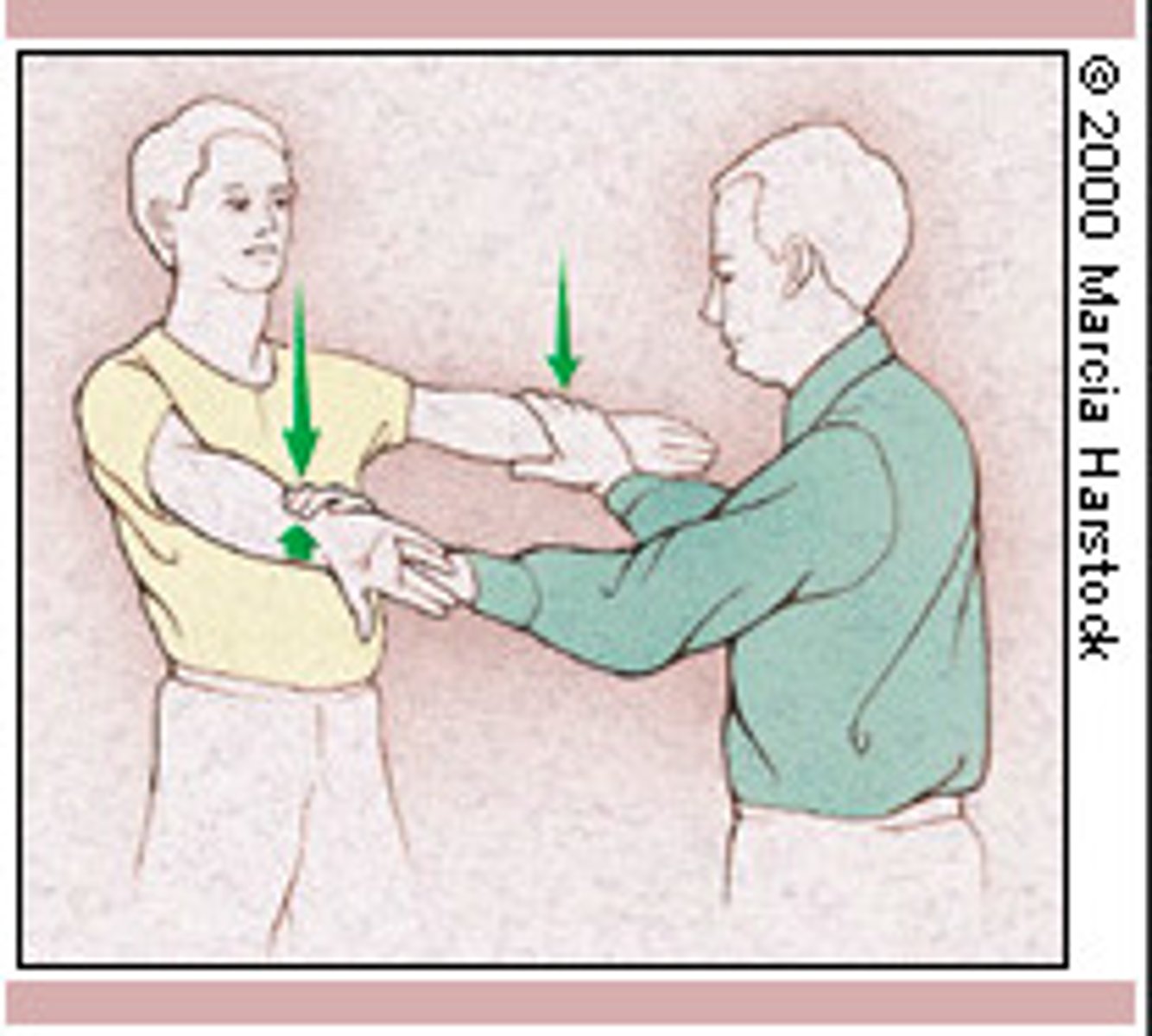
Drop arm test
Tear or rupture of rotator cuff muscles
-pt sitting with shoulder passively abducted to 120; instructed to slowly bring arm to side
-PT guards arm from falling
-positive test is pt unable to lower arm to side
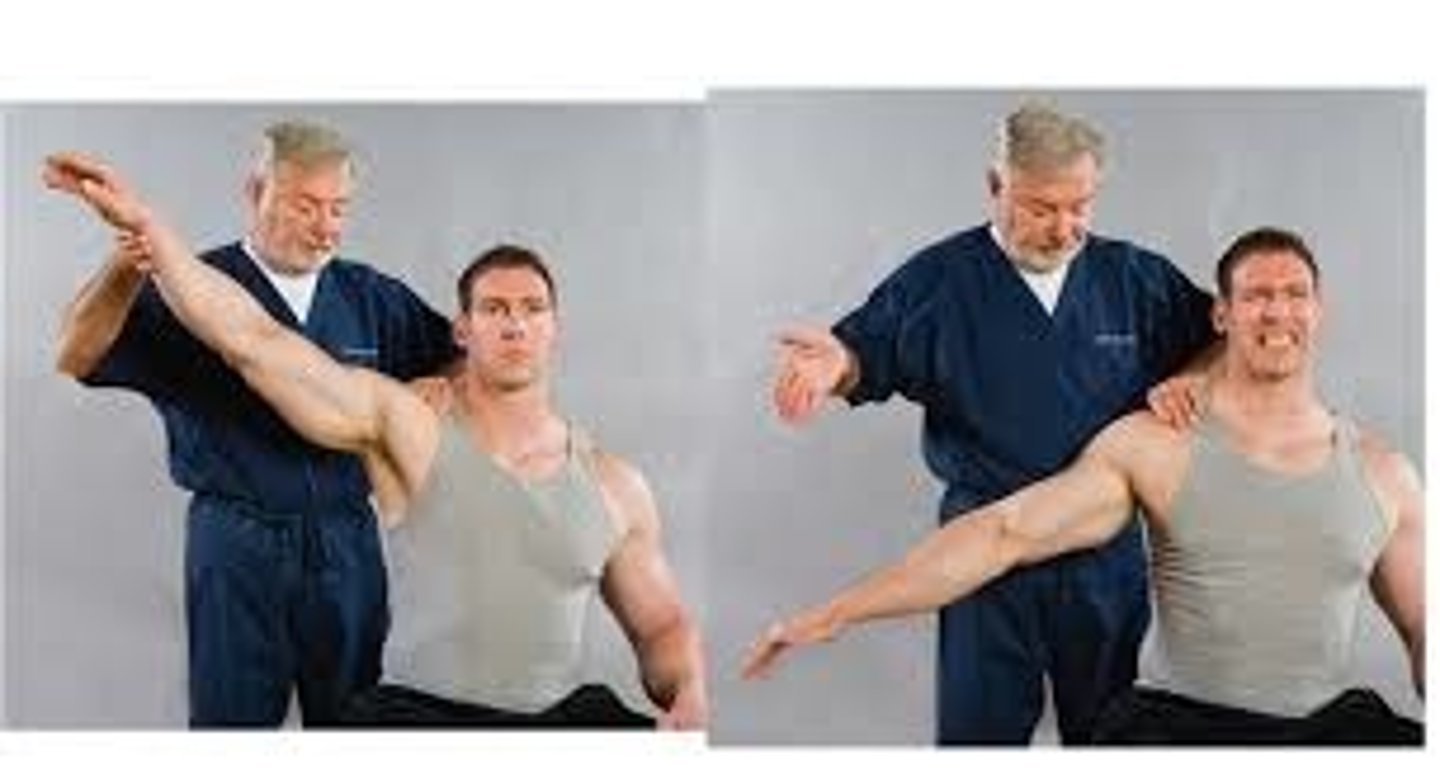
Posterior internal impingement test
Impingement of rotator cuff muscles between the greater tuberosity
-pt supine
-PT moves arm at 90 degrees abduction, maximal external rotation and 15-20 horizontal adduction
-reproduction of pain in posterior shoulder during test
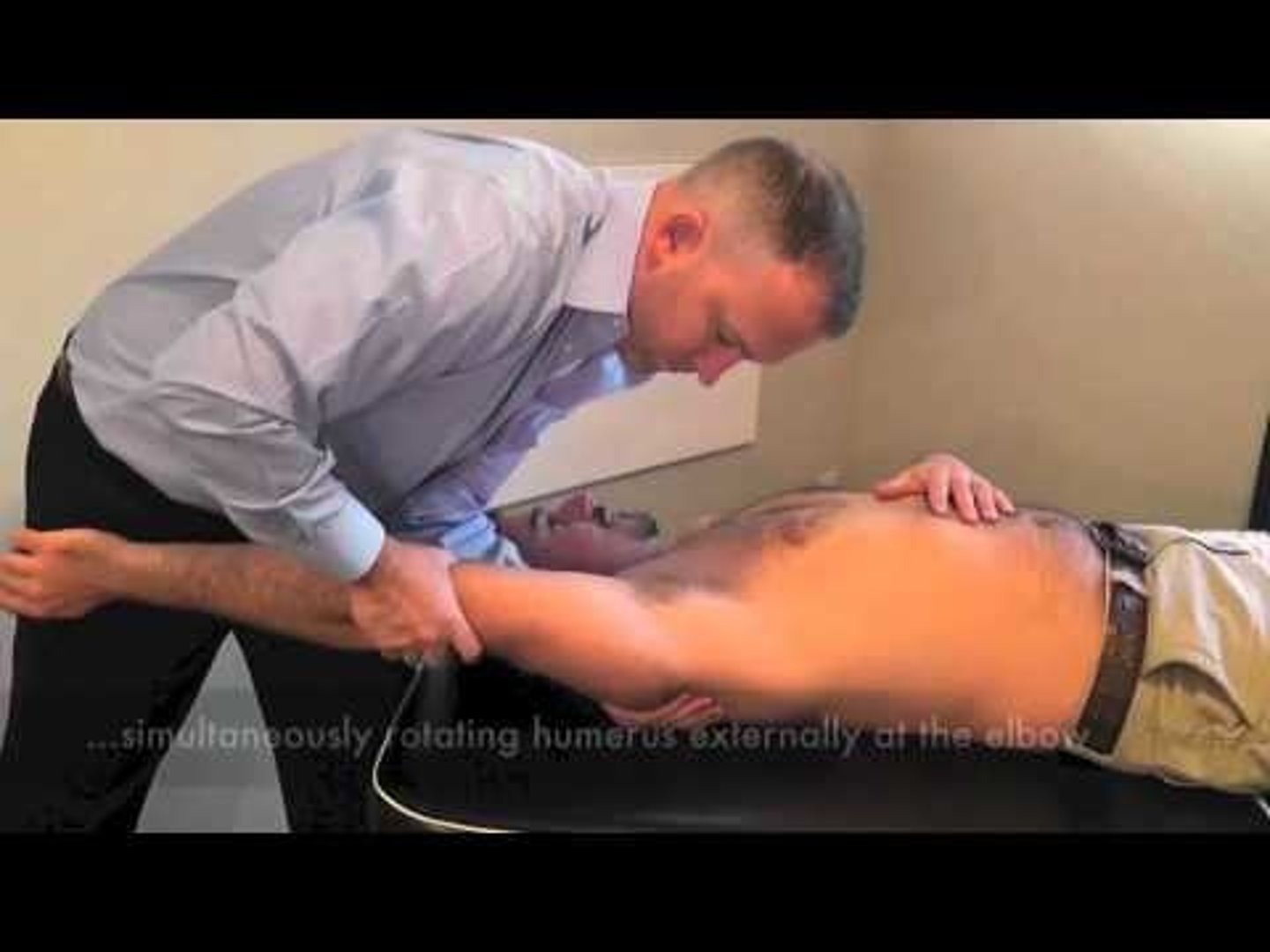
Clunk test
Glenoid labrum tear
-pt supine with arm in full abduction
-PT push humeral head anterior while rotating humerus externally
-audible clunk is heard during test
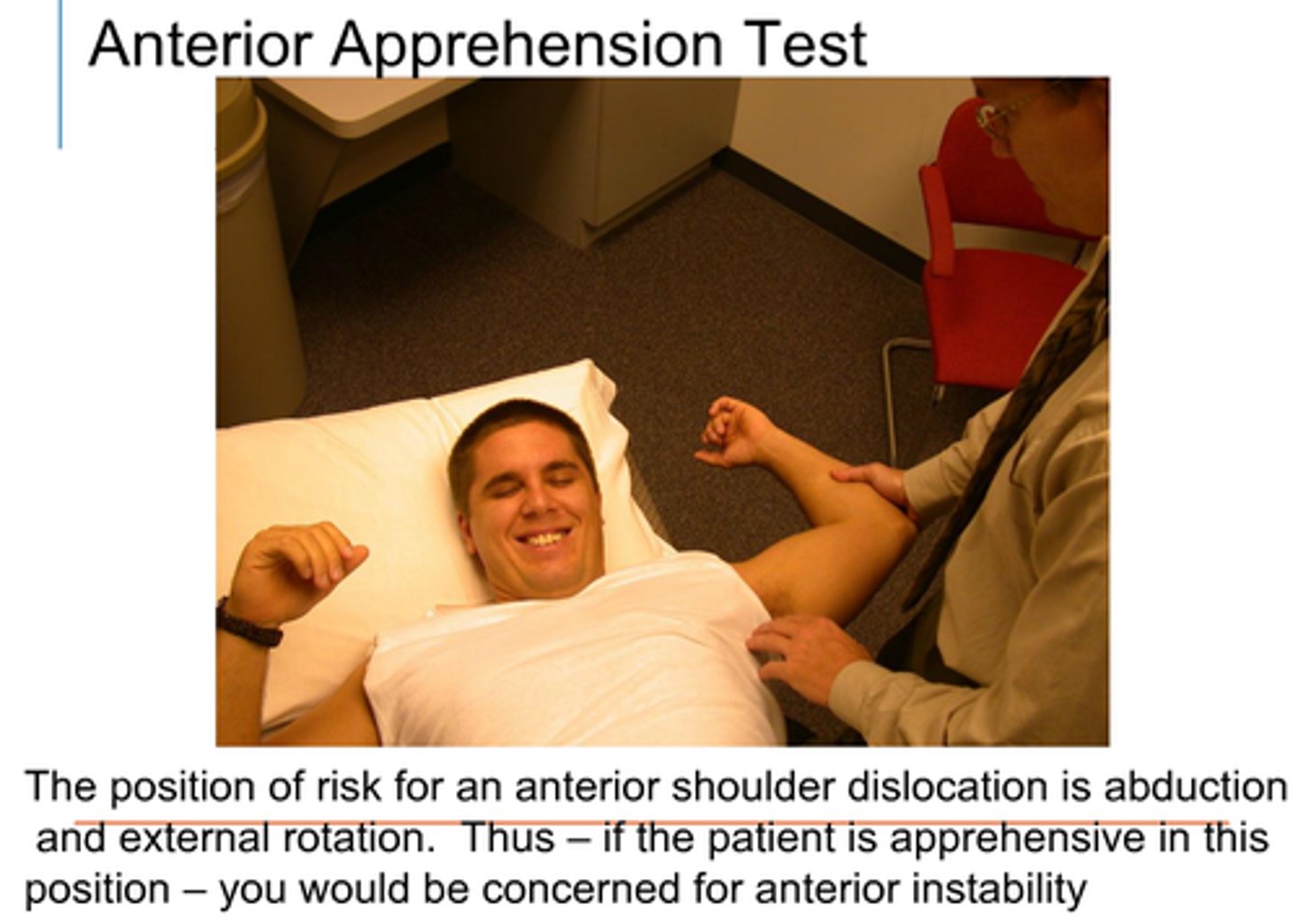
Anterior apprehension test
History of anterior shoulder dislocation
-pt supine with shoulder in 90 abduction
-PT slowly takes shoulder to ER
-pt does not allow or does not like shoulder movement in that direction
Posterior apprehension sign
History of posterior shoulder dislocation
-pt supine with shoulder abducted to 90 with scapula stabilized by table
-PT places posterior force through shoulder on patients elbow while moving shoulder into IR and horizontal adduction
-pt does not allow or does not like shoulder movement in that direction
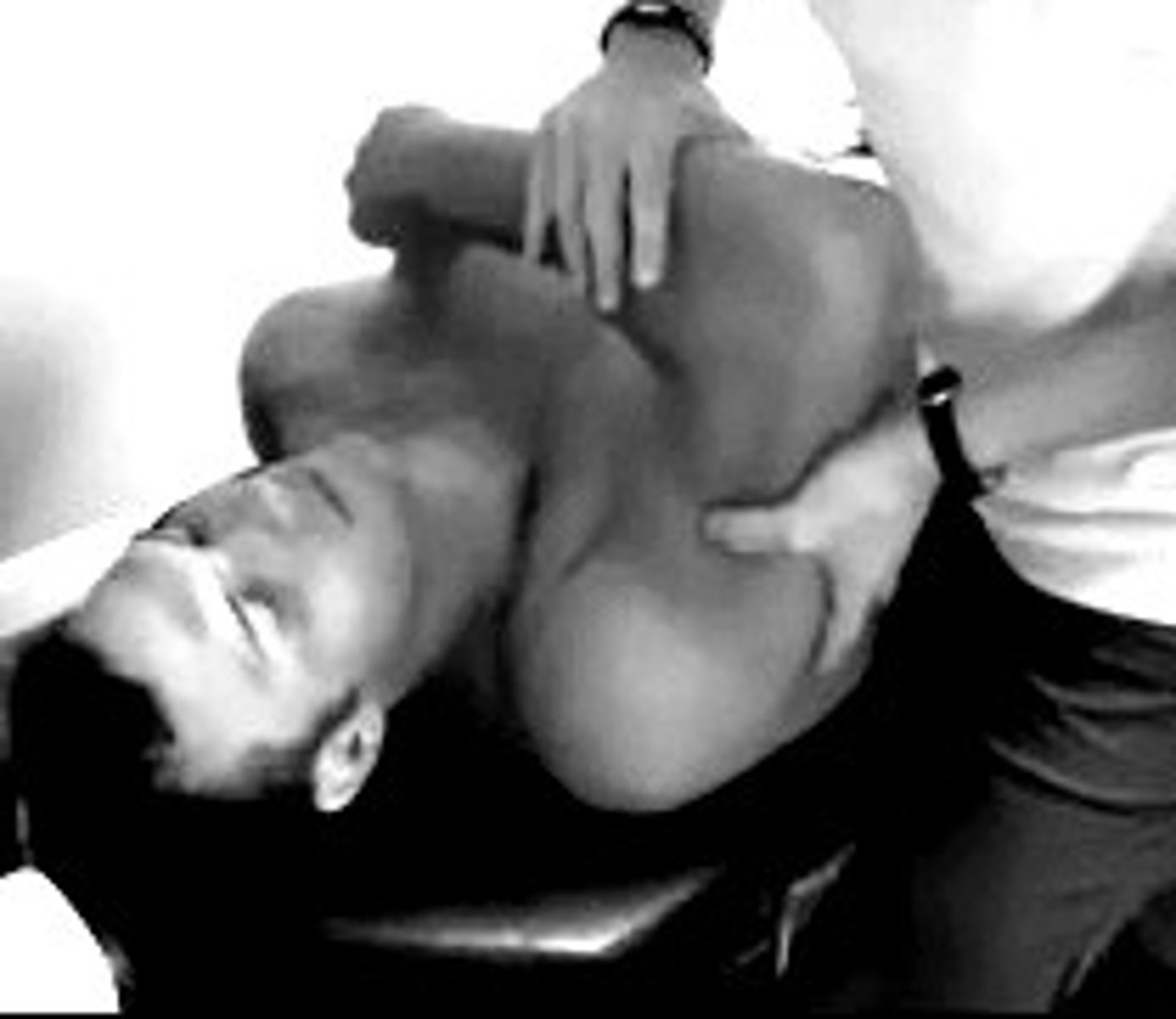
Acromioclavicular shear test
Dysfunction of the AC joint (arthritis, separation)
-pt sitting with arms rested at sides
-PT clasps hands and outs one heel of hand on spine of the scapula and one heel of hand on clavicle; squeeze hands together causing compression
-positive test is reproduction of pain at AC joint
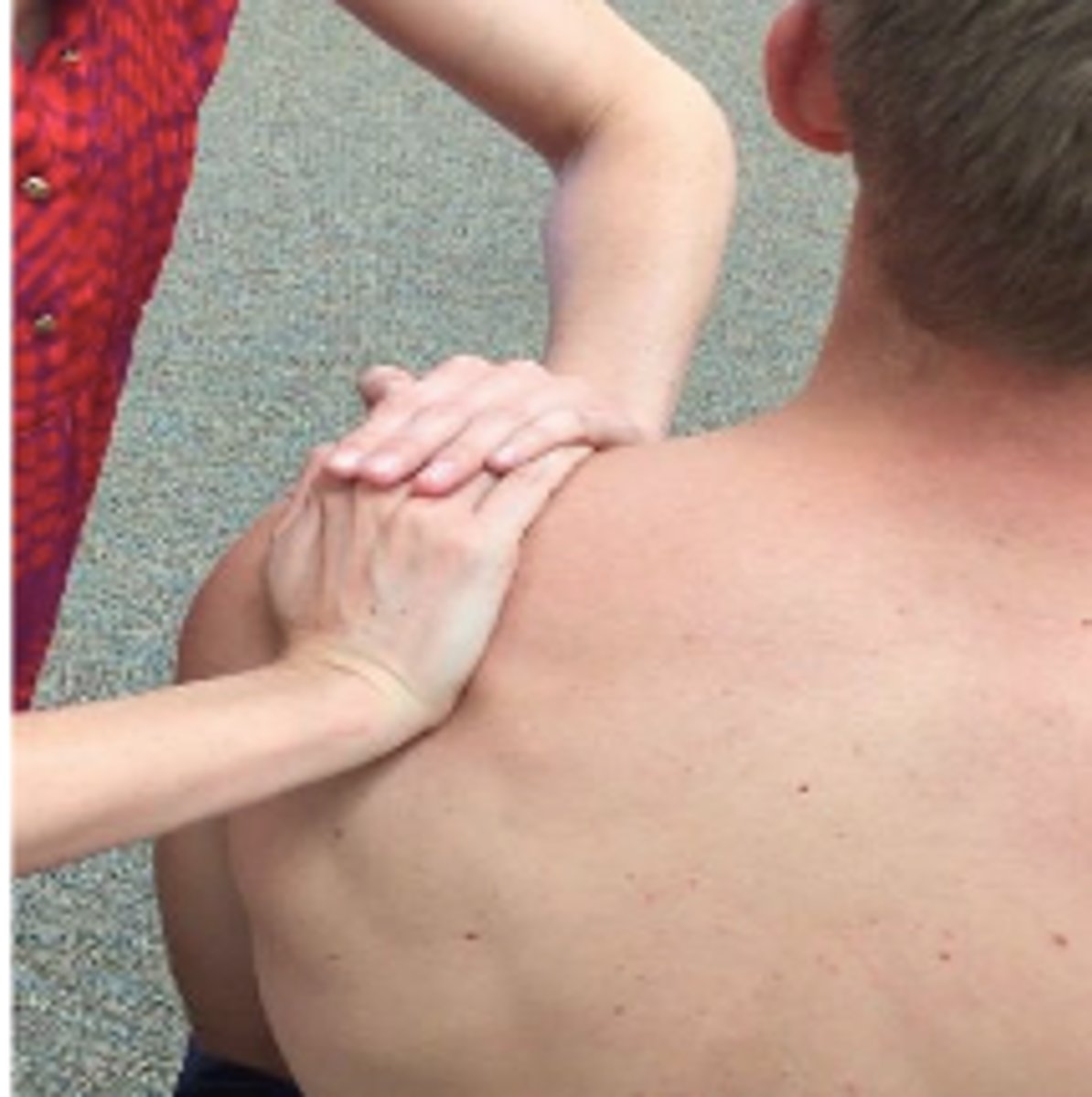
Adson's test
Thoracic outlet syndrome
-pt sitting
-PT find radial pulse rotate head toward extremity, then extend and ER shoulder while head extended
-neuro/vascular symptoms reproduced in UE
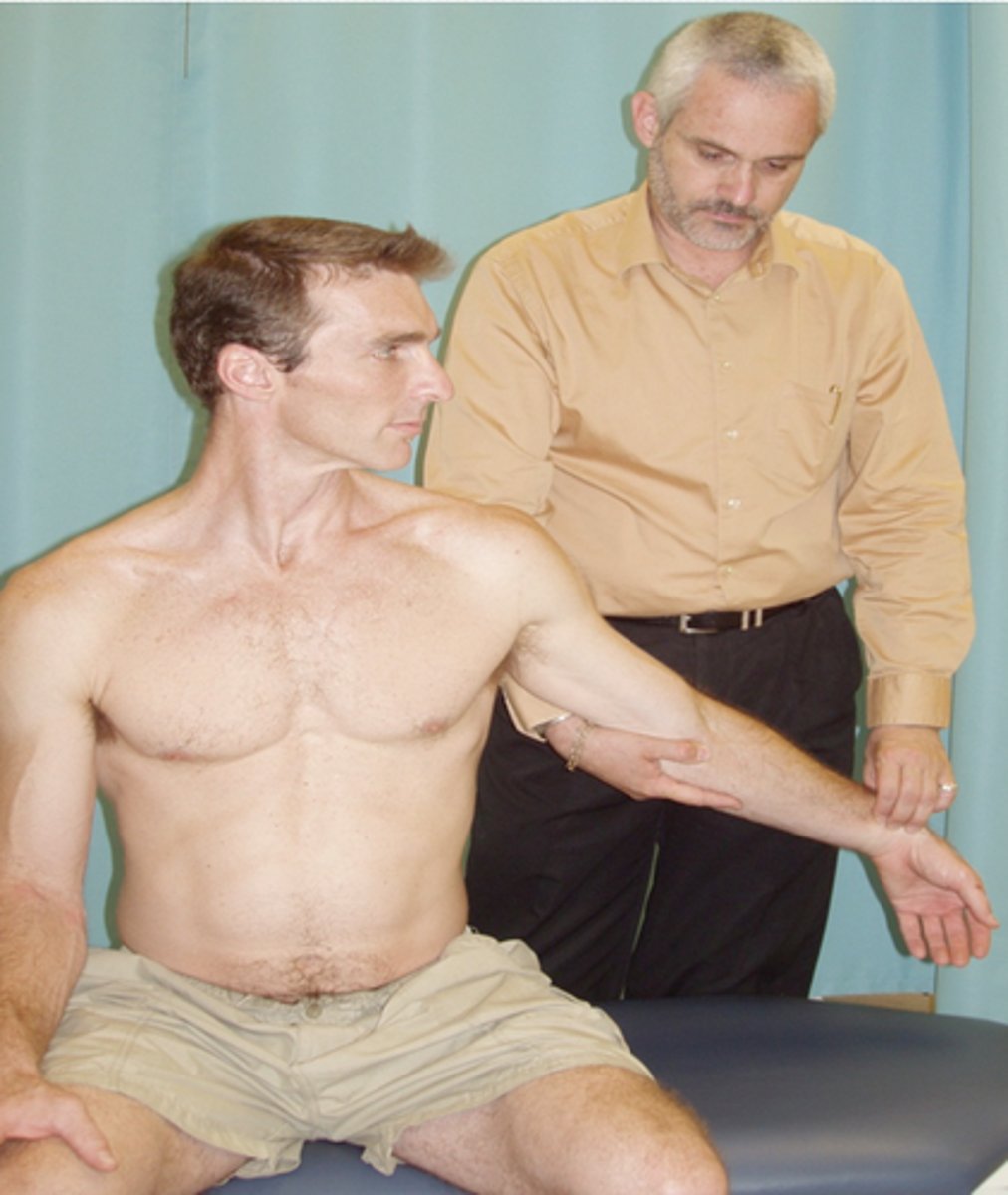
Costoclavicular syndrome
Thoracic outlet syndrome
-pt sitting
-PT finds radial pulse and moves shoulder down and back
-neuro/vascular symptoms reproduced in UE
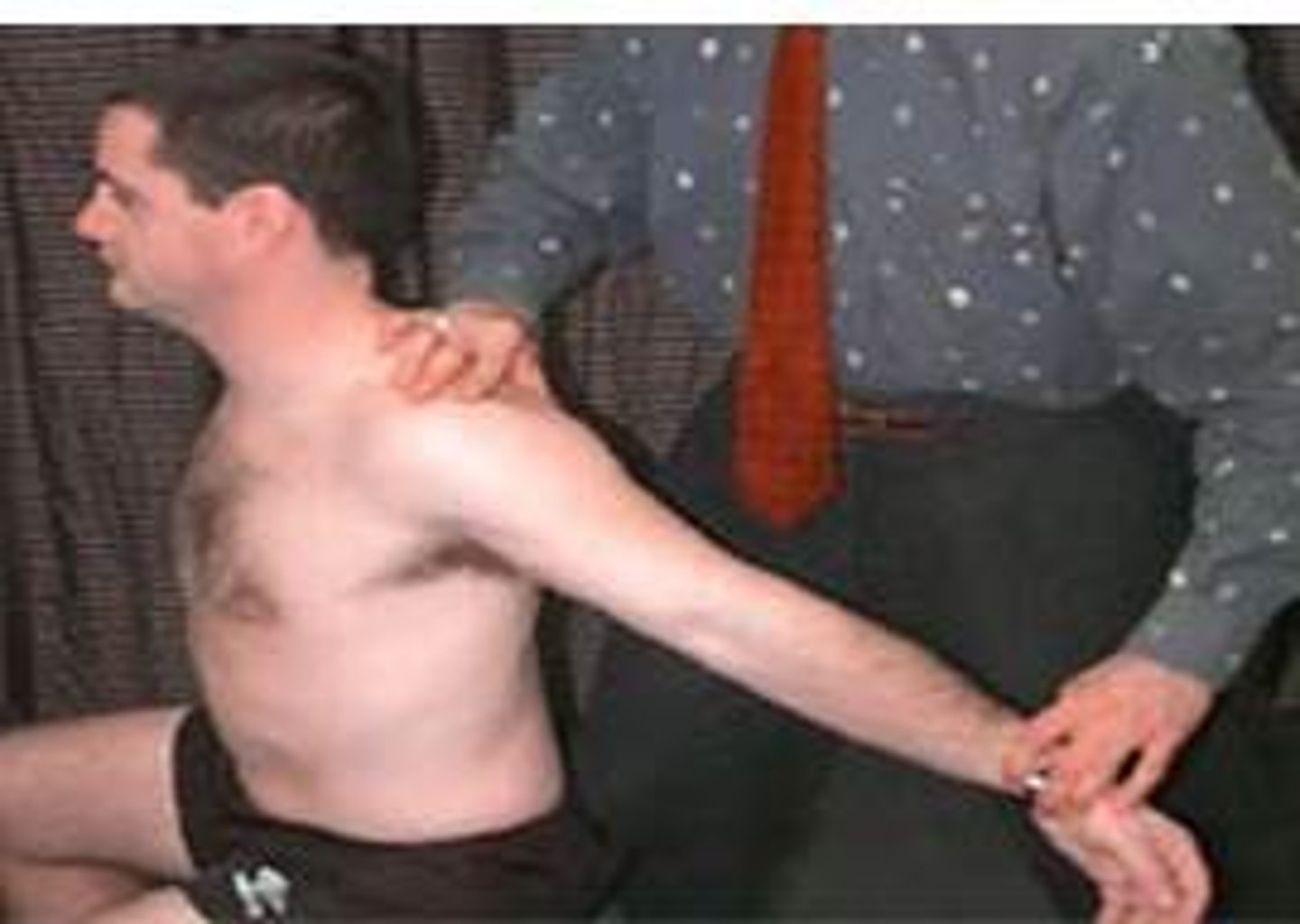
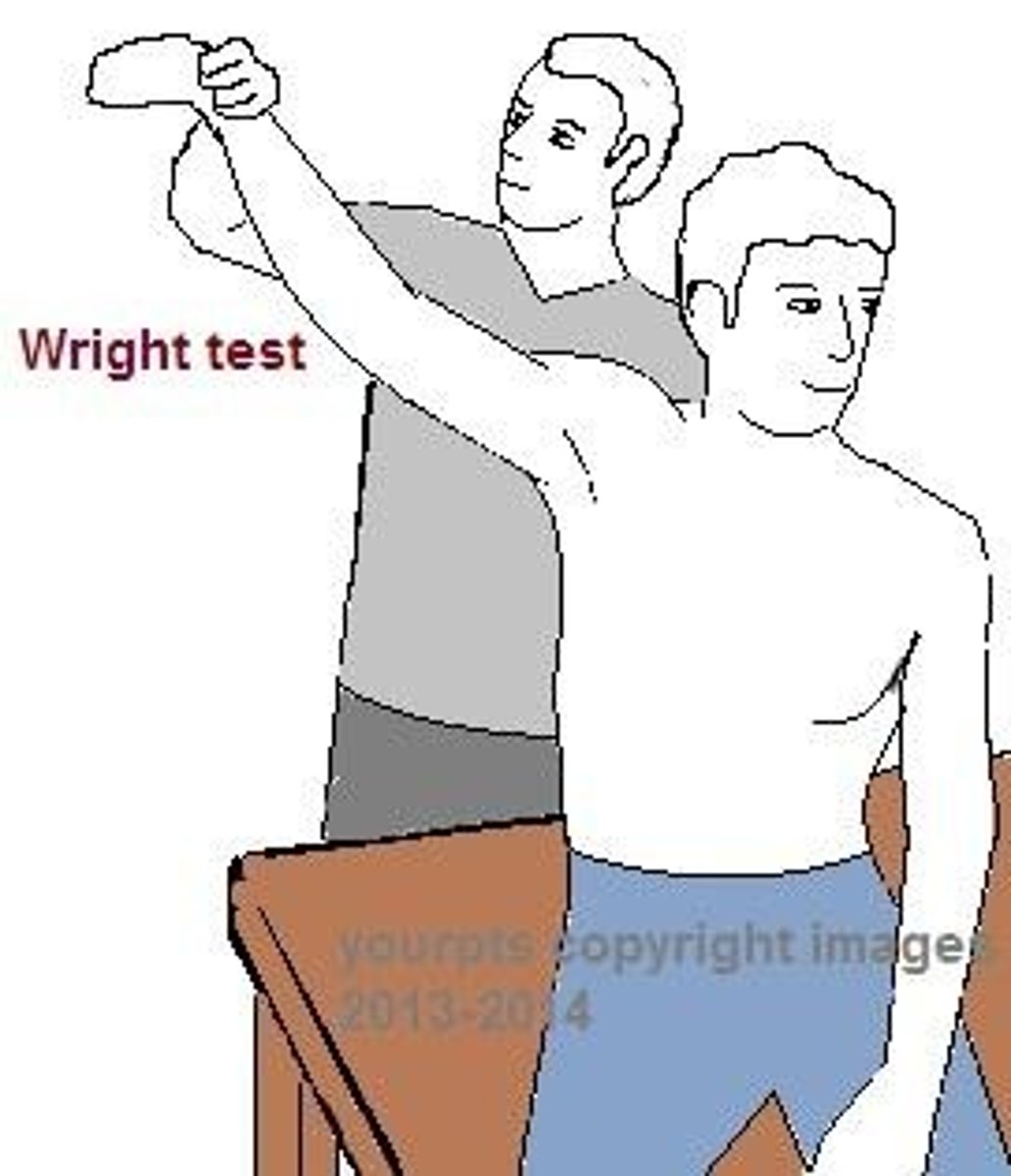
Wright test
Thoracic outlet syndrome
-pt sitting
-PT finds radial pulse and move shoulder into max abduction and ER; instruct patient to rotate head award from extremity being tested
-neuro/vascular symptoms reproduced in UE
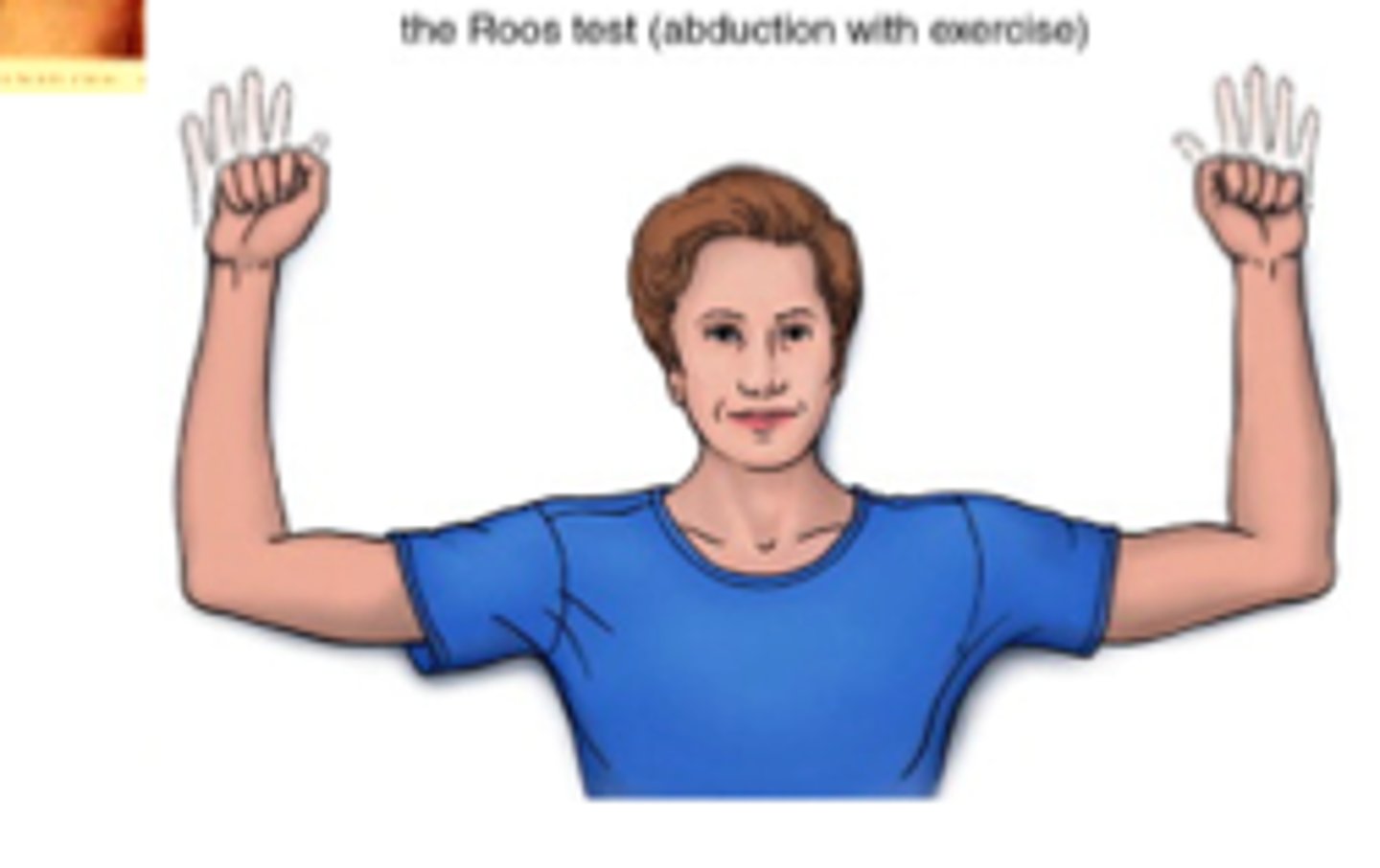
Roos test
Thoracic outlet syndrome
-pt sitting with arms fully ER and 90 abducted, slight horizontal abduction and elbows flexed to 90
-PT instructs patient to open and close hands for 3 mins slowly
-neuro/vascular symptoms reproduced in UE
Upper limb tension test
Peripheral nerve compression
ULTT1 - median and interosseous nerve bias
-shoulder depressed and abducted 110
-elbow extension
-forearm supination
-wrist extension
-fingers and thumb extended
-cspine contra lateral side flexion
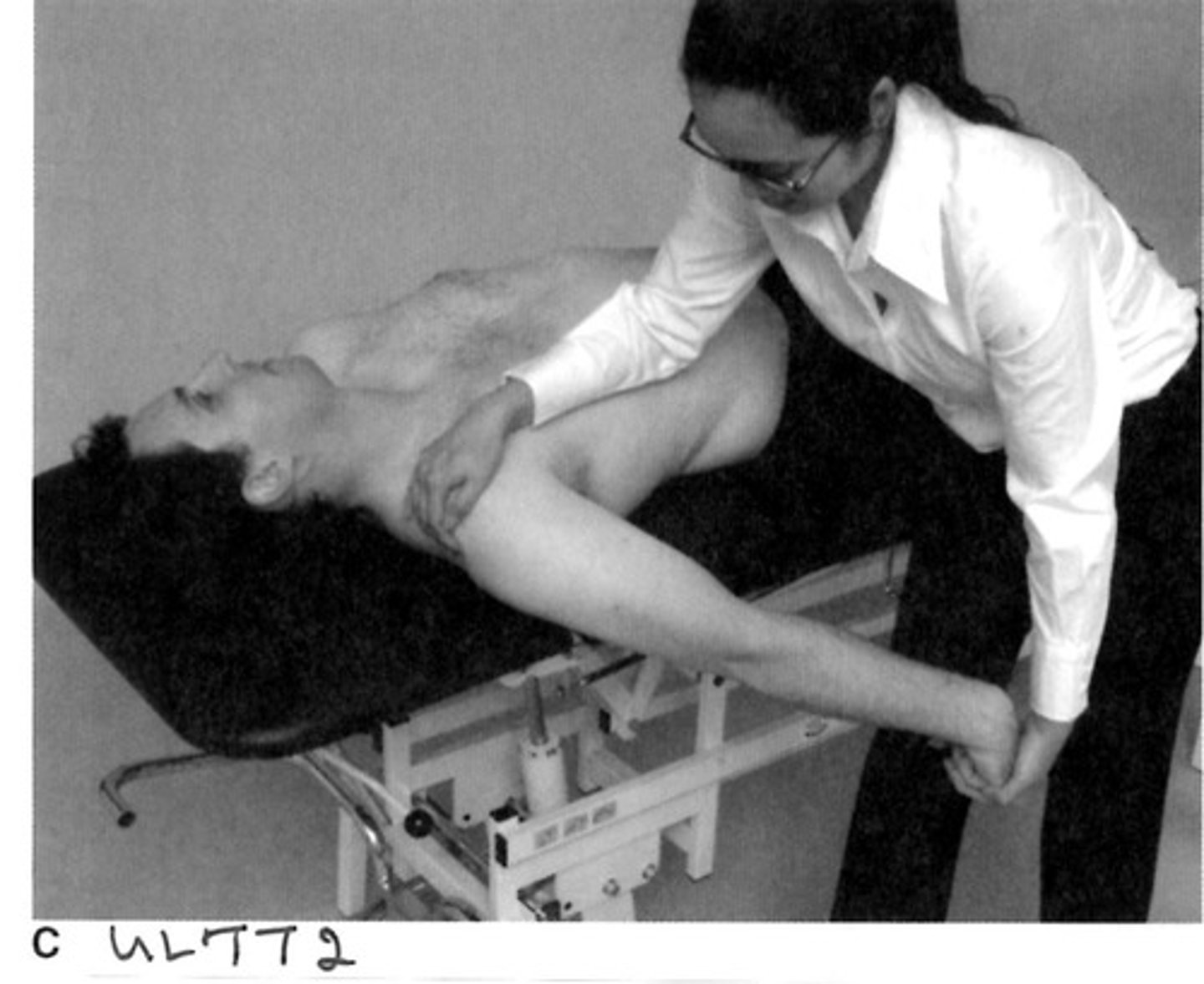
ULTT2- median, axillary, and musculocutaneous nerve bias (pic)
-shoulder depression and abduction 10
- elbow extension
-forearm supination
-wrist extended
-finger and thumb extended
-shoulder lateral rotation
-cspine contra lateral side flexion
ULTT3 - radial nerve
-shoulder depression and abduction 10
- elbow extension
-forearm pronated
-wrist flexion and UD
-fingers and thumb flexion
-shoulder medial rotated
-cspine contra lateral side flexion
ULTT4 - ulnar nerve
-shoulder depression and abduction 10-90 with hand to ear (waiter's position)
-elbow flexion
-forearm supination
-wrist extended with RD
-finger and thumb extended
-shoulder lateral rotation
-cspine contra lateral side flexion
Hawkins-Kennedy (impingement) Test
Identifies subacromial impingement
-PT places pt's shoulder into 90 shoulder flexion and 90 elbow flexion; passively IR shoulder
-positive test is pain with IR
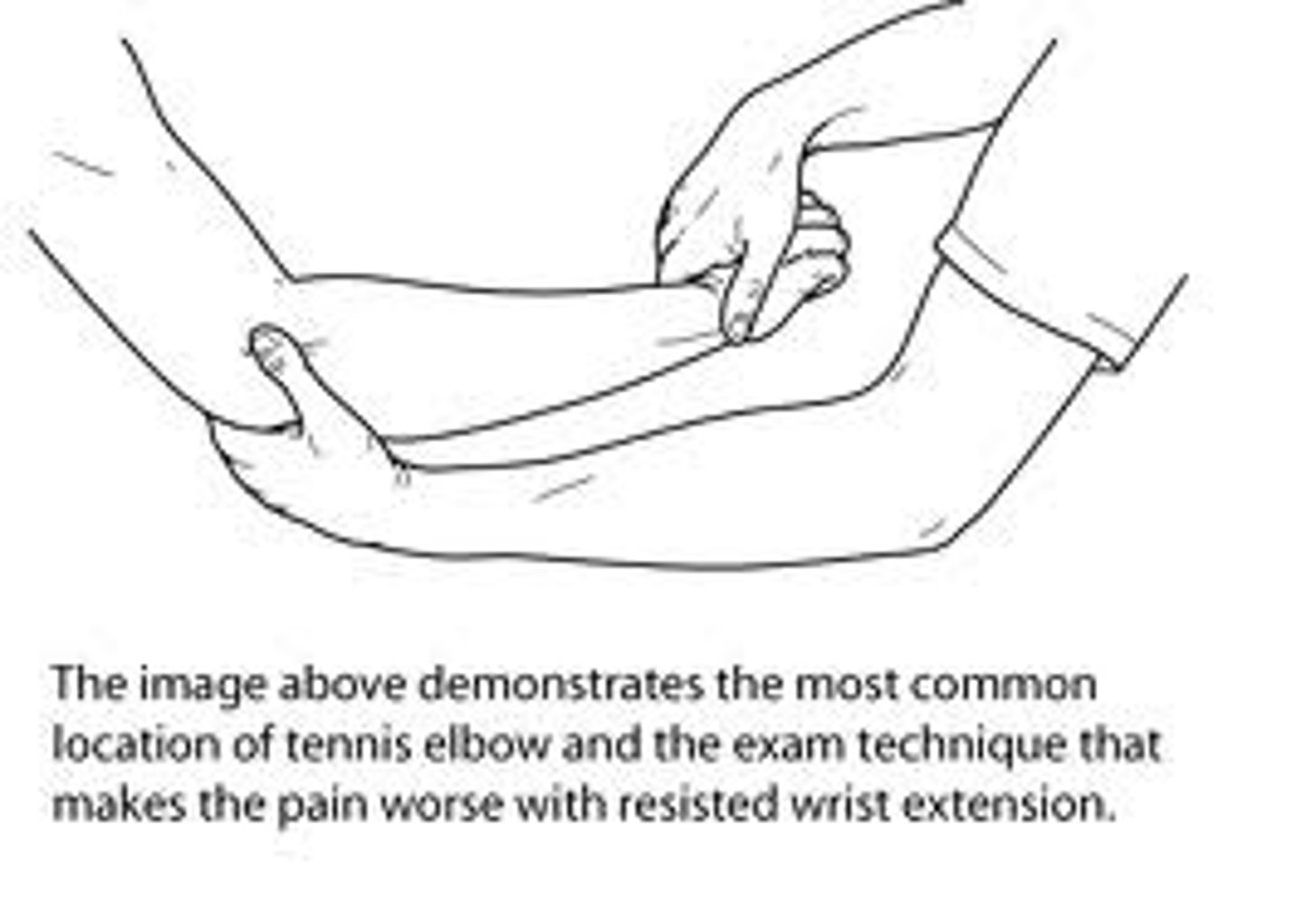
Lateral epicondylitis test
Tennis elbow/ lateral epicondylosis
Medial epicondylitis test
Golfers elbow/medial epicondylosis
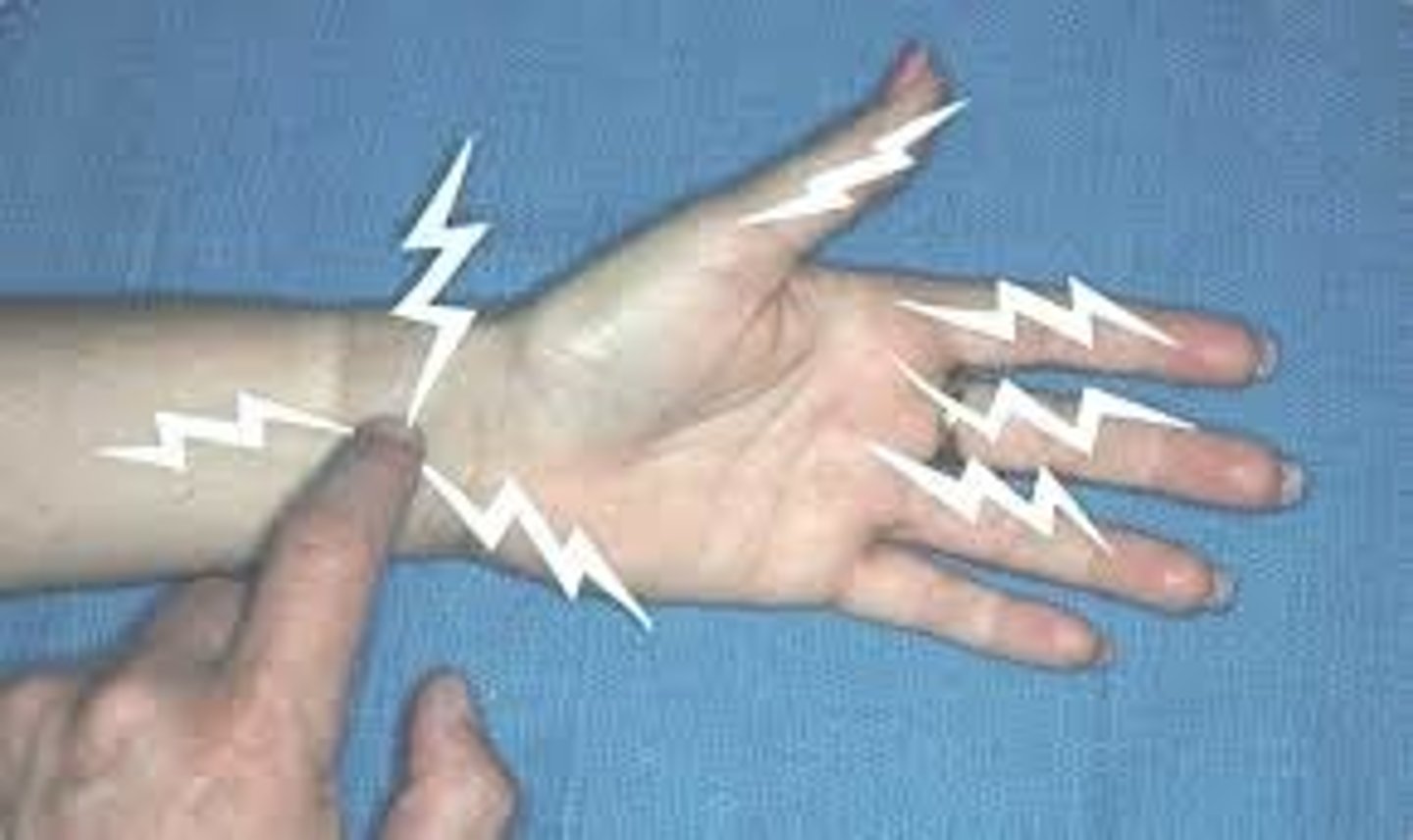
Tinel's sign
Ulnar nerve dysfunction (elbow) median nerve dysfunction (wrist) common fibular nerve (knee) posterior tibial nerve (ankle)
Pronator Teres syndrome test
Median nerve entrapment
sitting, elbow in 90 degrees flexion, resist forearm pronation and elbow extension
Finkelstein's test
De Quervain's tenosynovitis
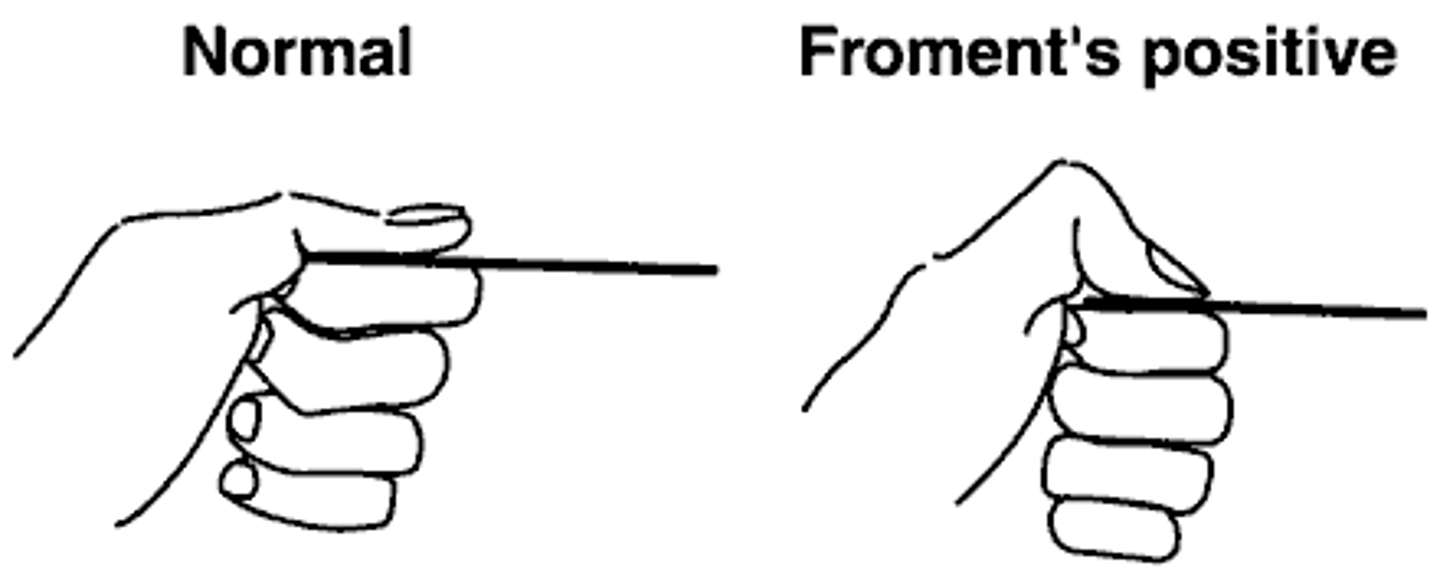
Froment's sign
Ulnar nerve dysfunction
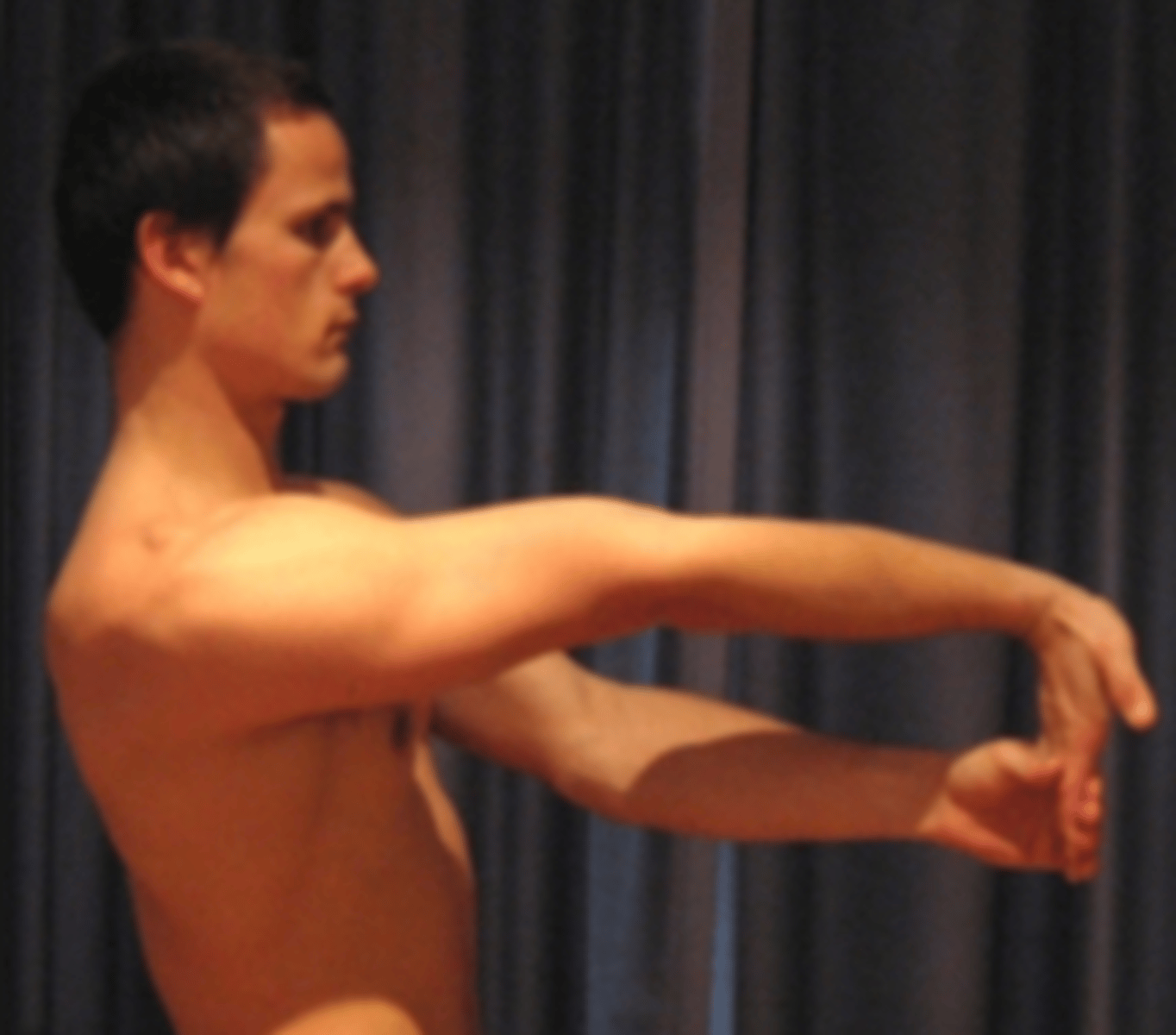
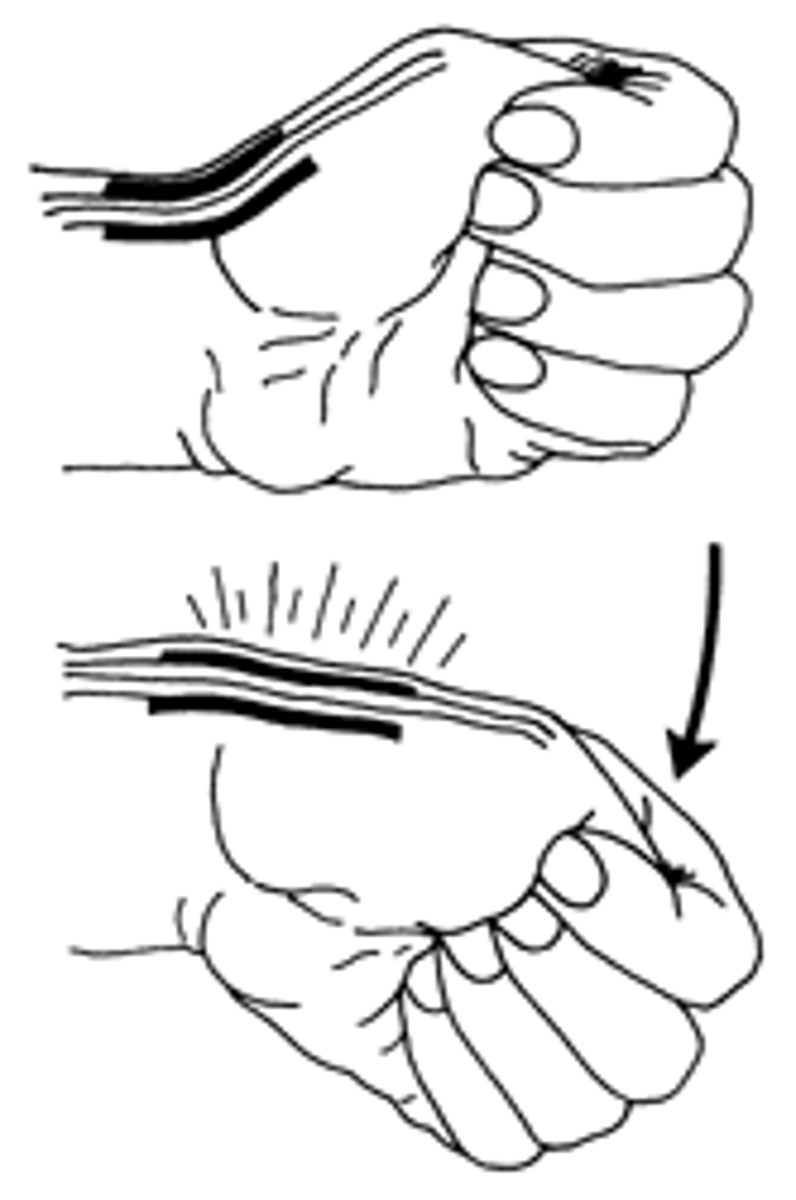
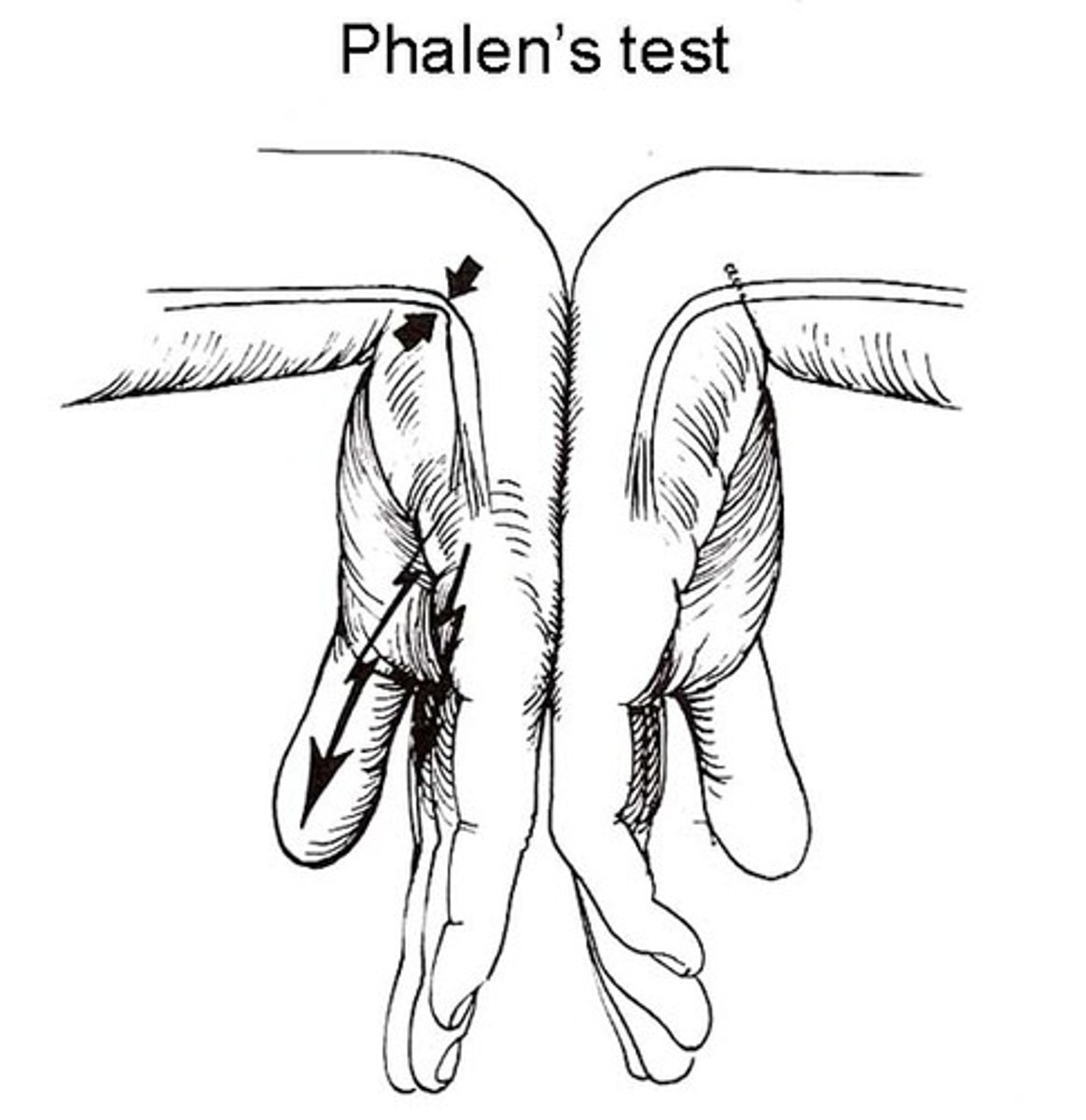
Phalen's test
Median nerve compression in carpal tunnel
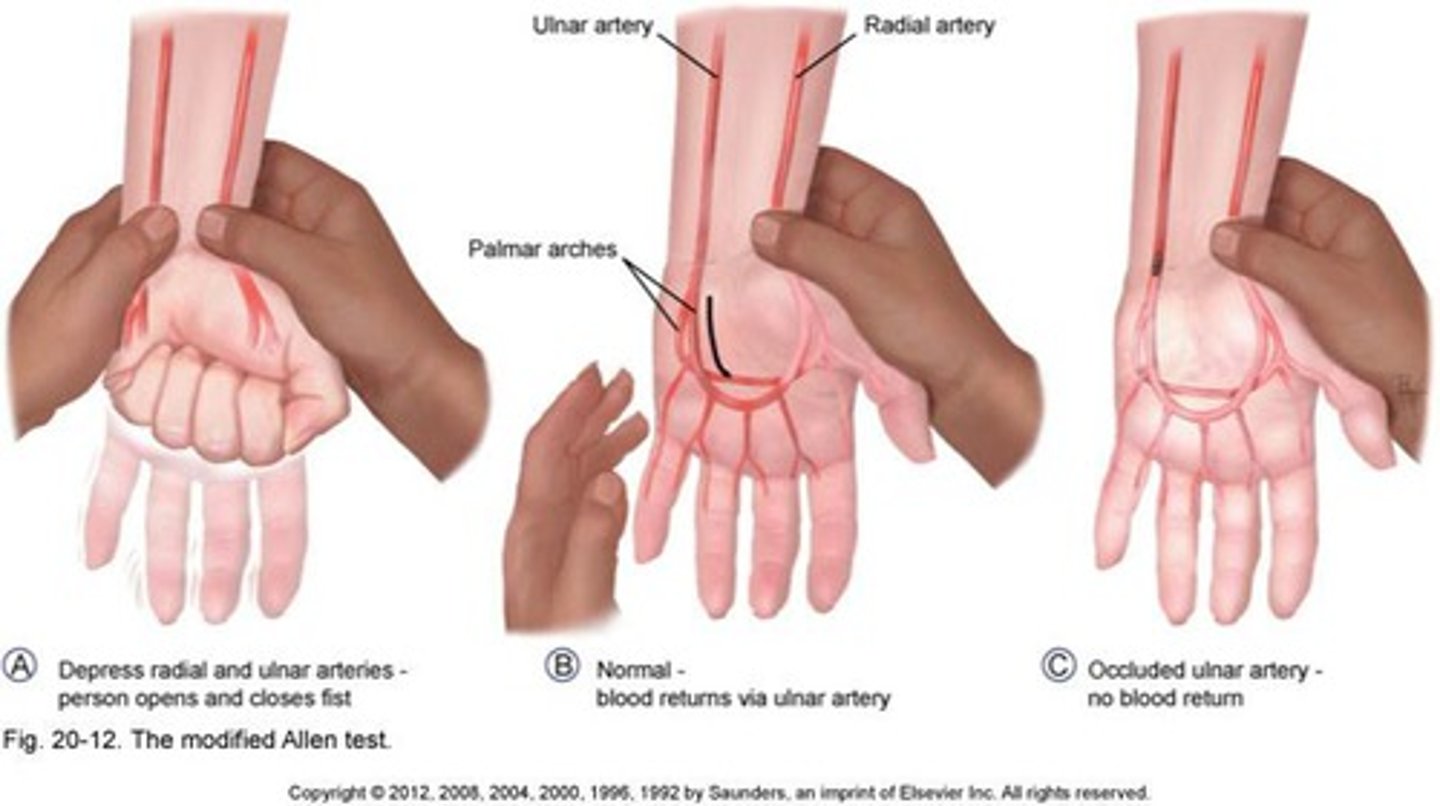
Allen's test
Vascular compromise of the hand
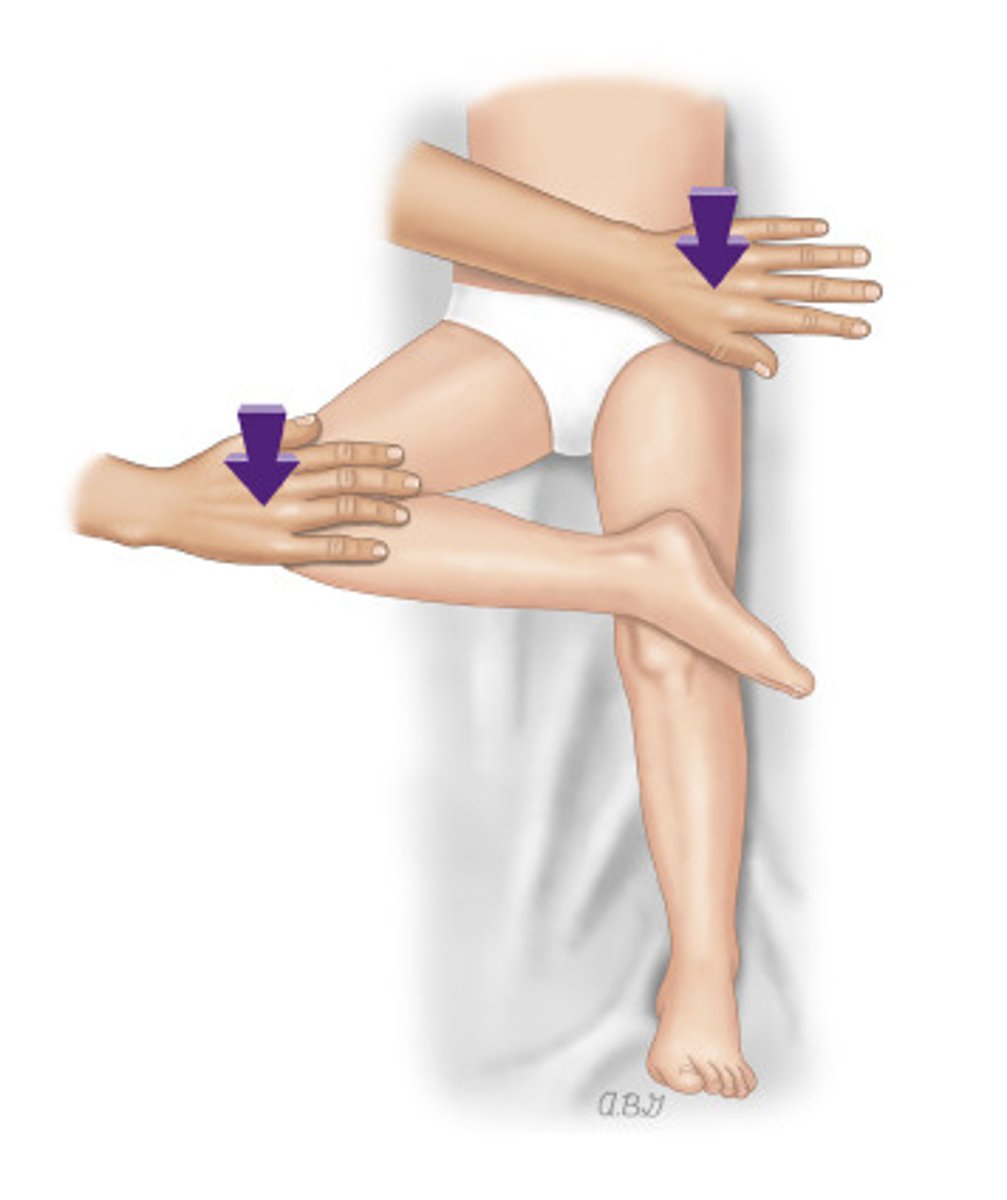
Patrick's (FABER) test
Hip dysfunction
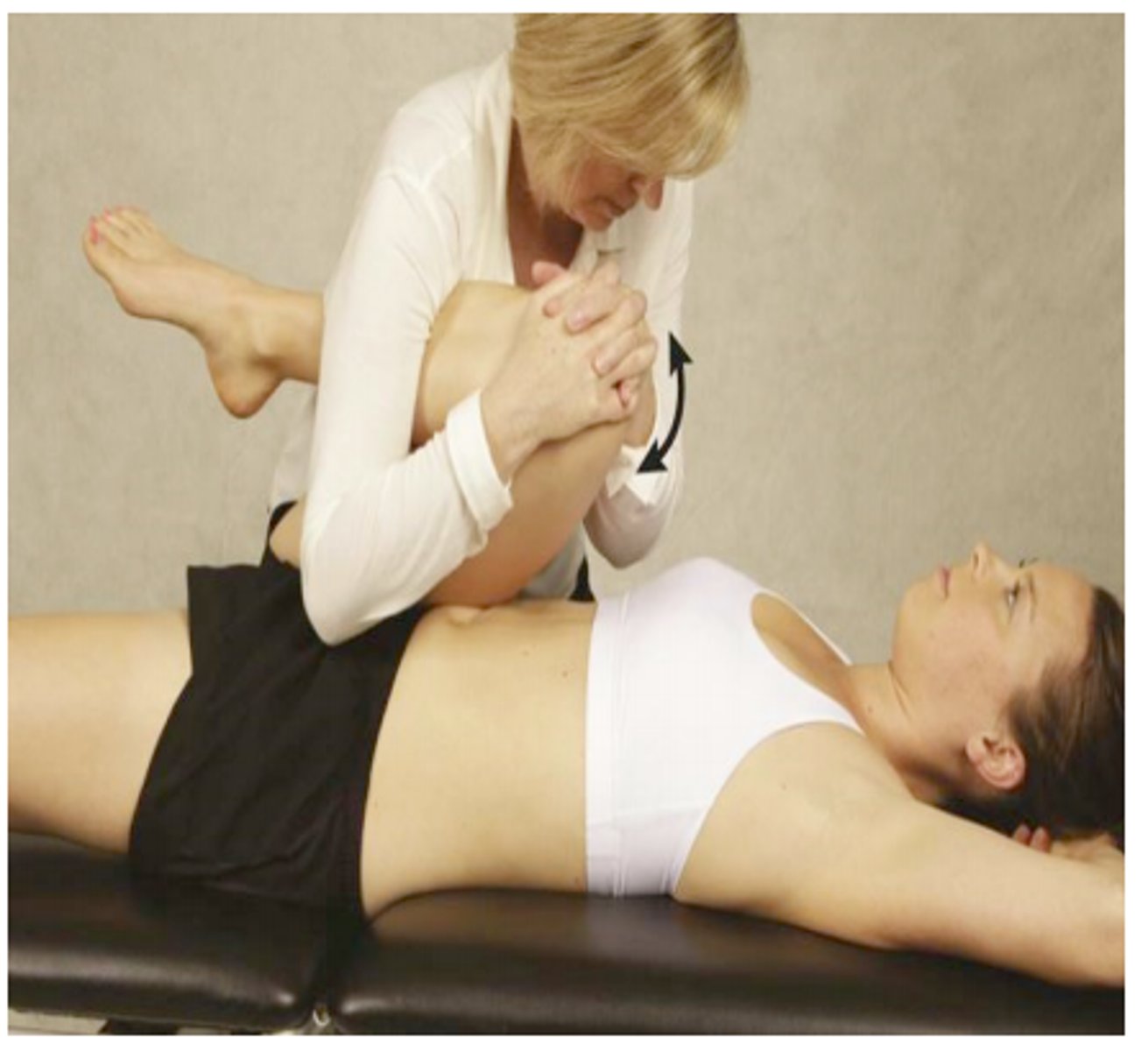
Grinding/scouring test
Degenerative joint disease of the hip
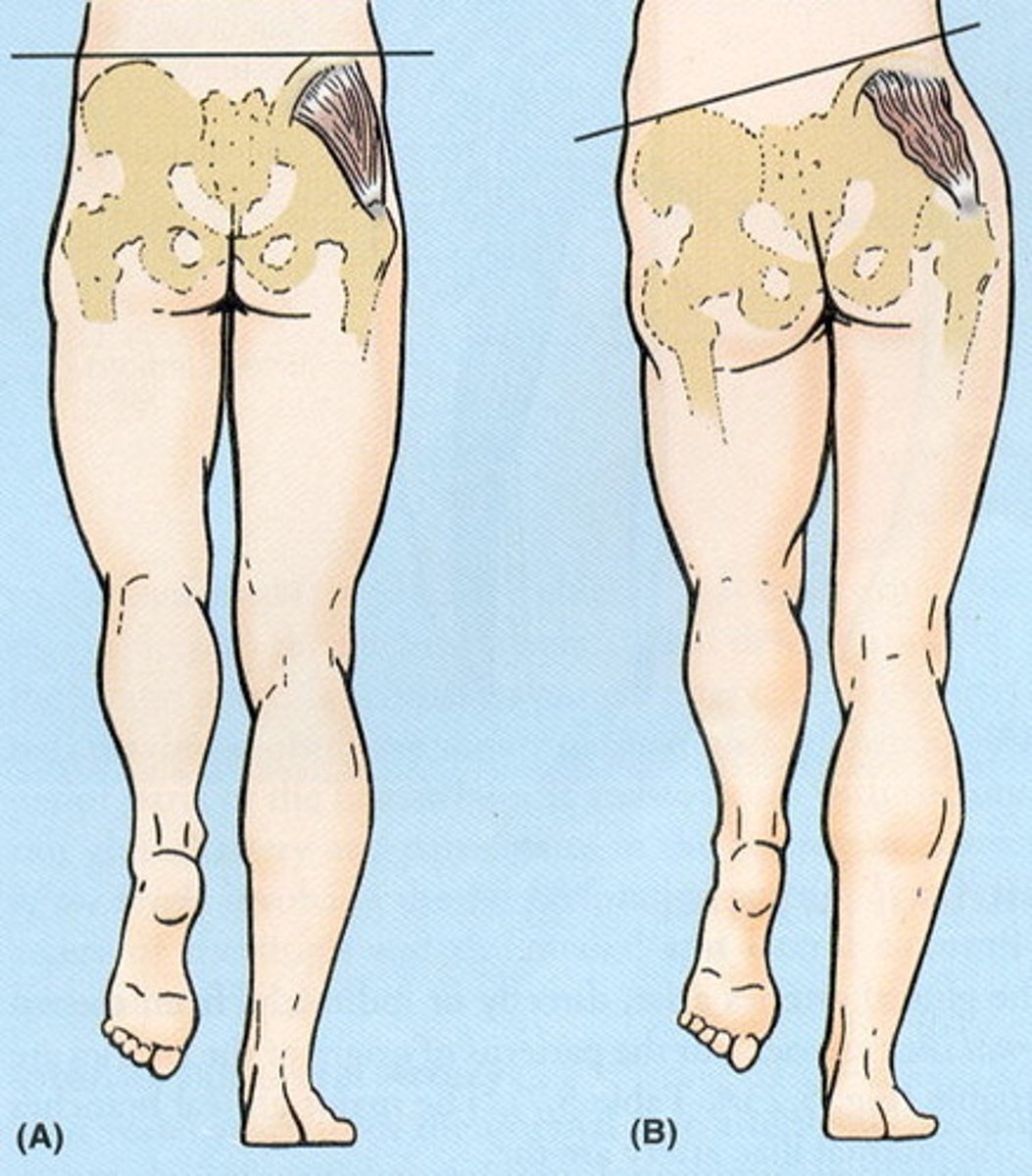
Trendelenburg sign
Week gluteus medius
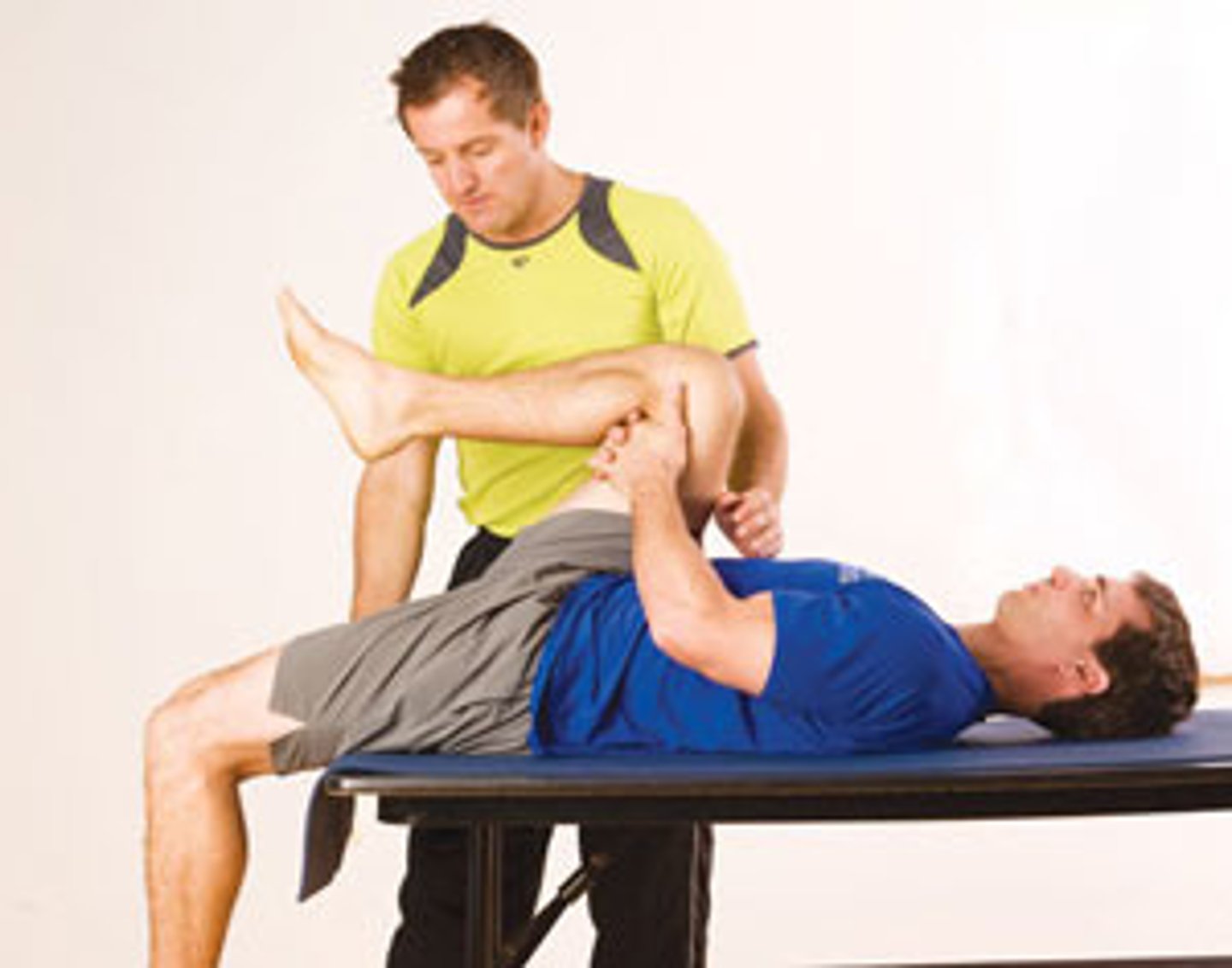
Thomas test
Tight hip flexors
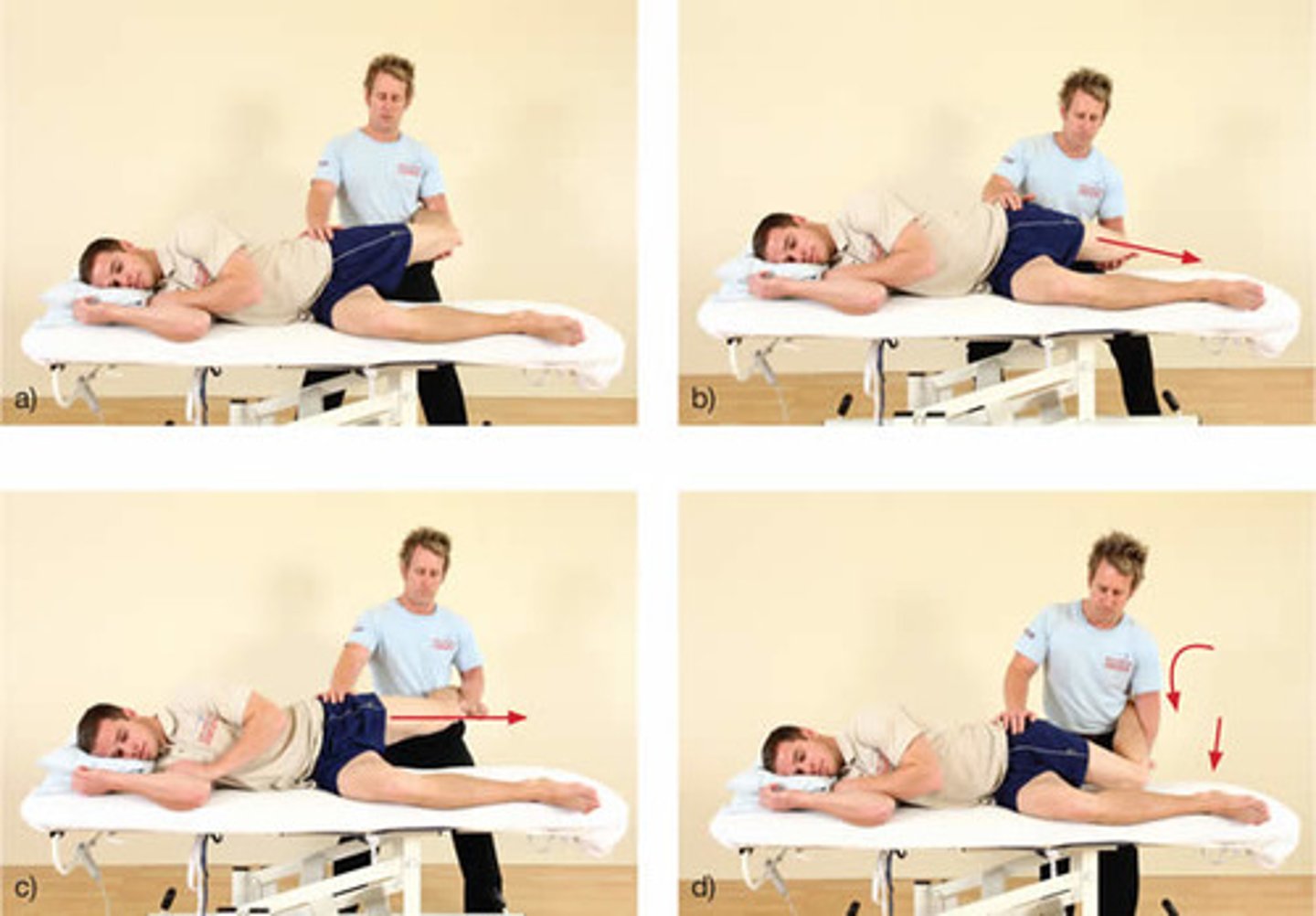
Ober's test
Tightness of Tensor fascia latae of or IT band
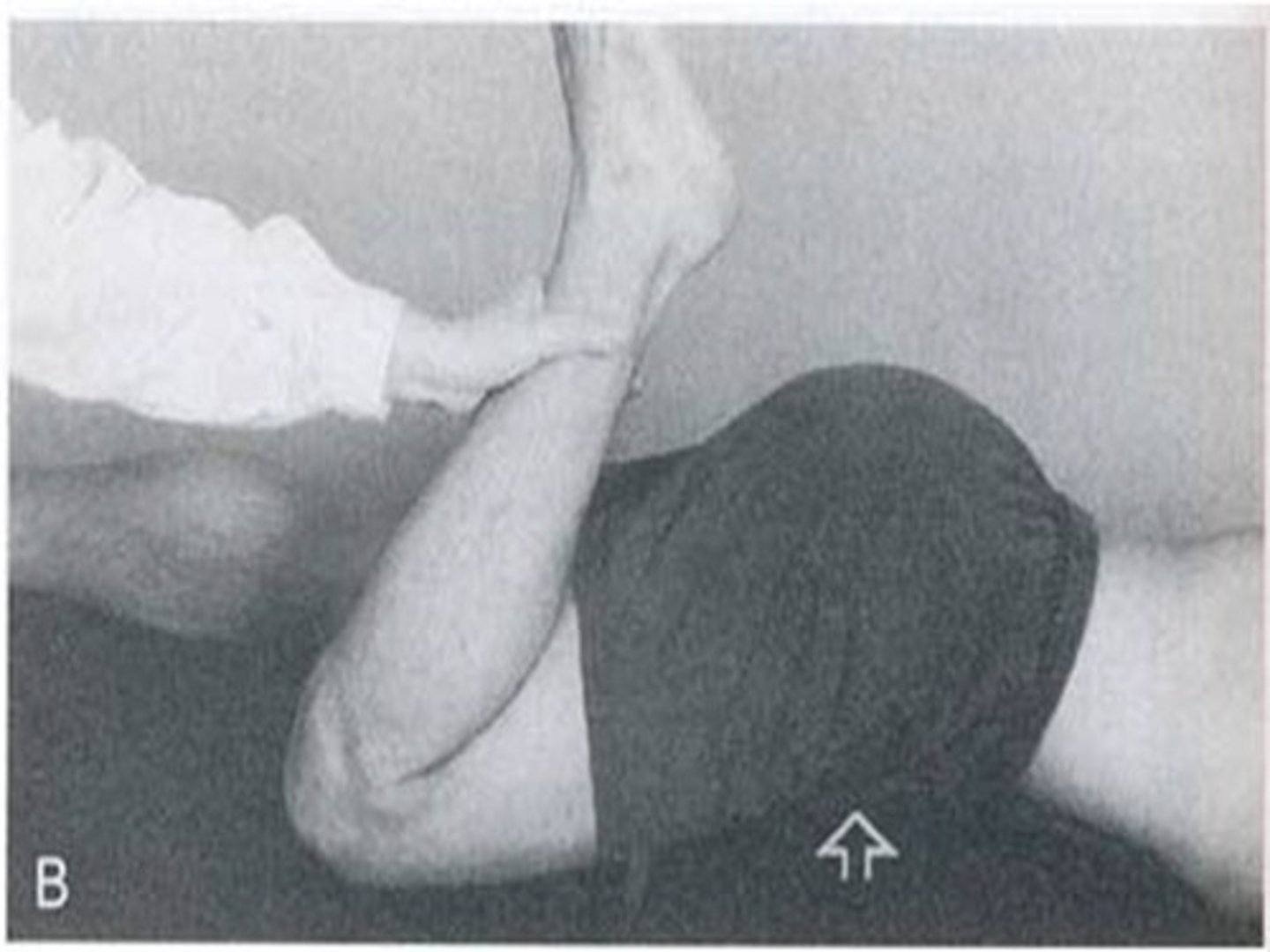
Ely's test
Tightness of rectus femoris
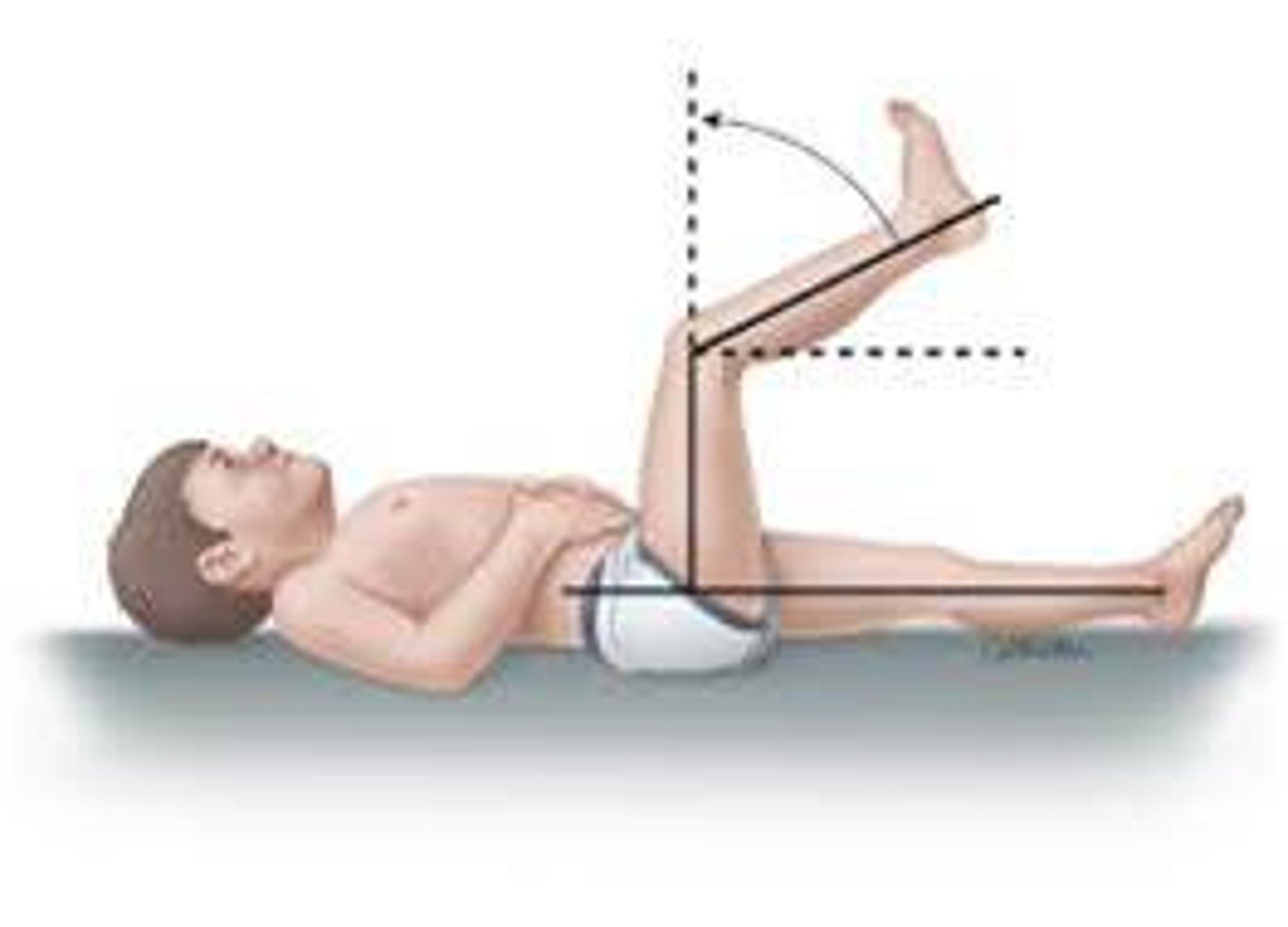
90-90 hamstring test
Hamstring tightness
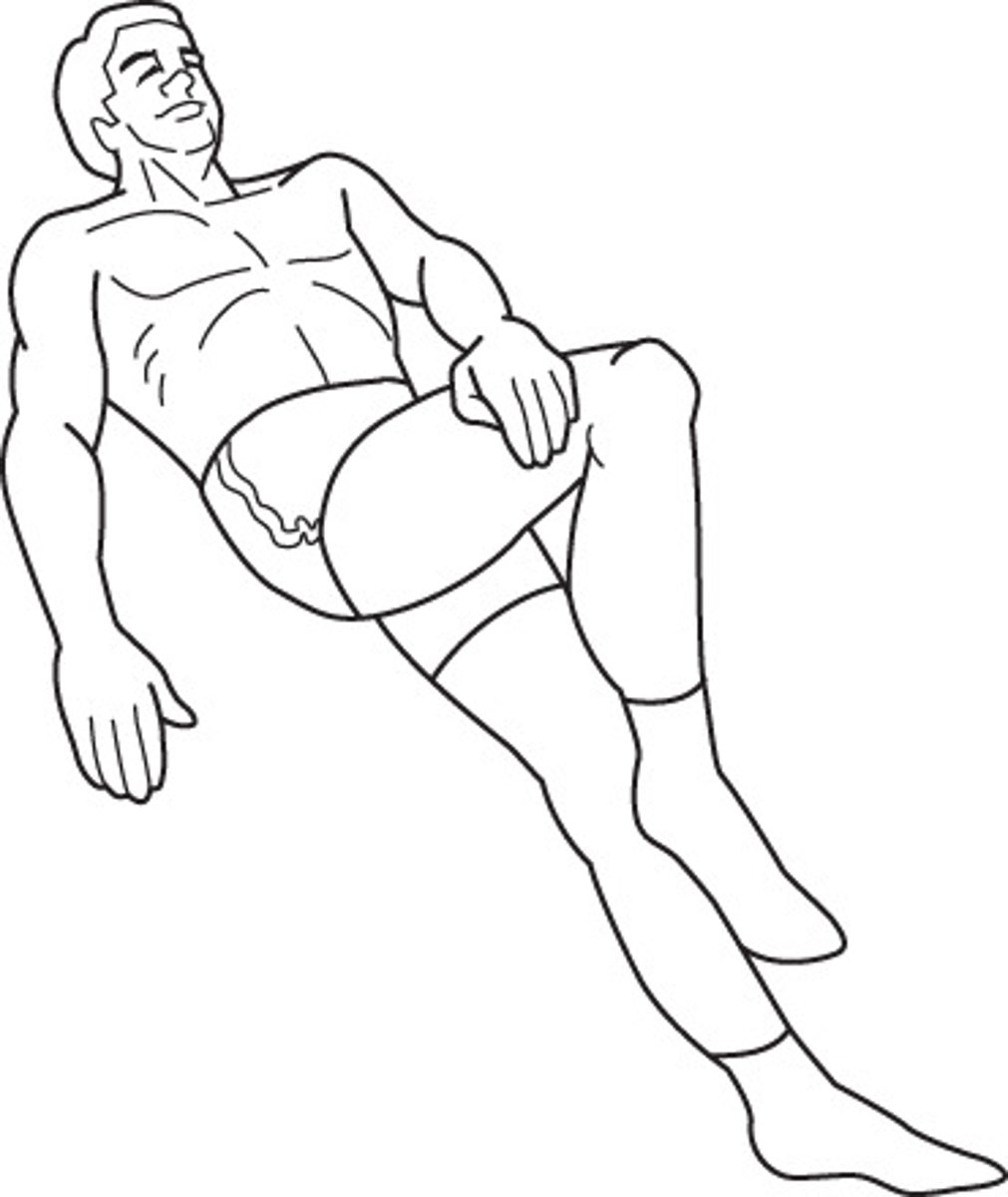
Piriformis test
Piriformis syndrome
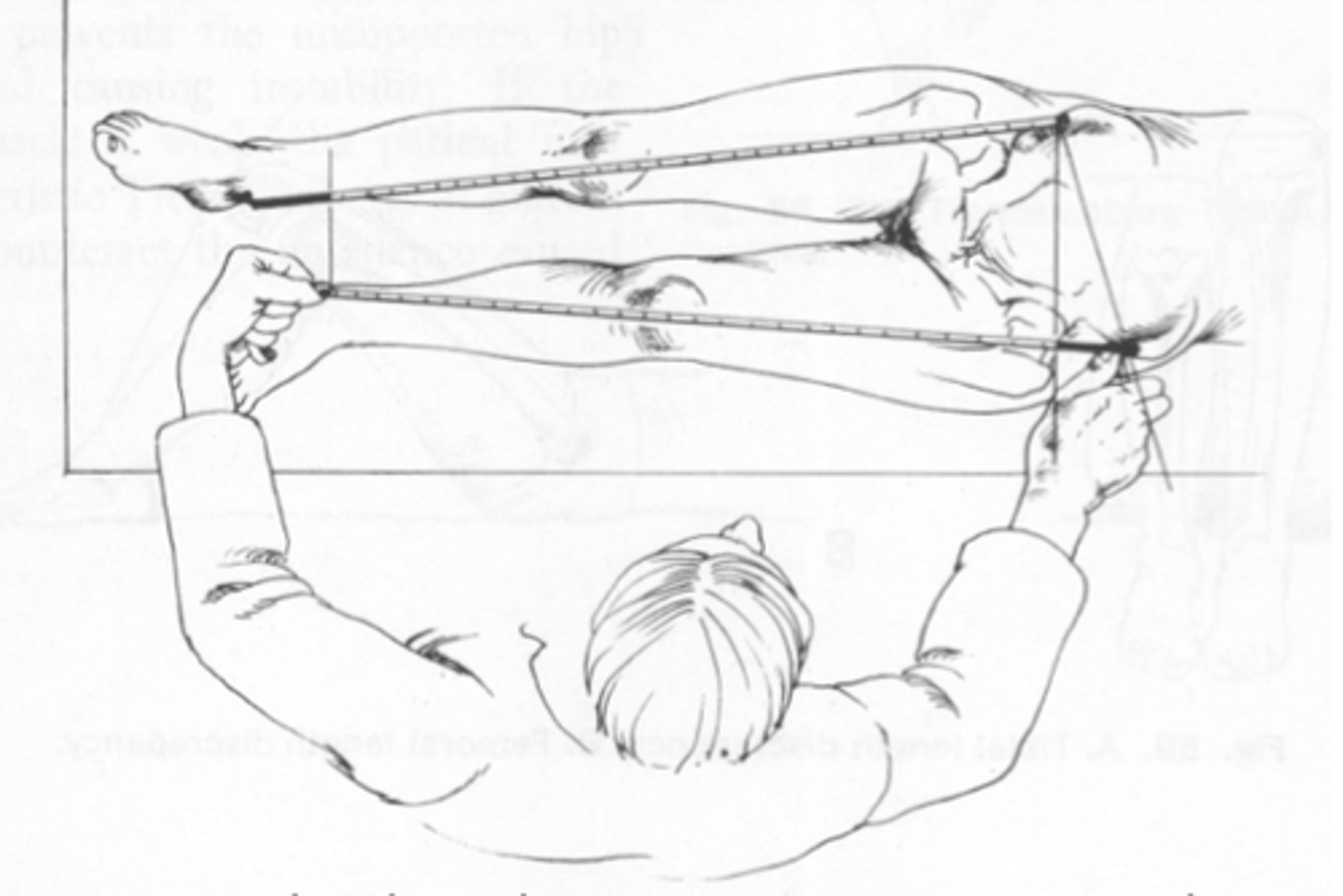
Leg length test
True leg length discrepancy
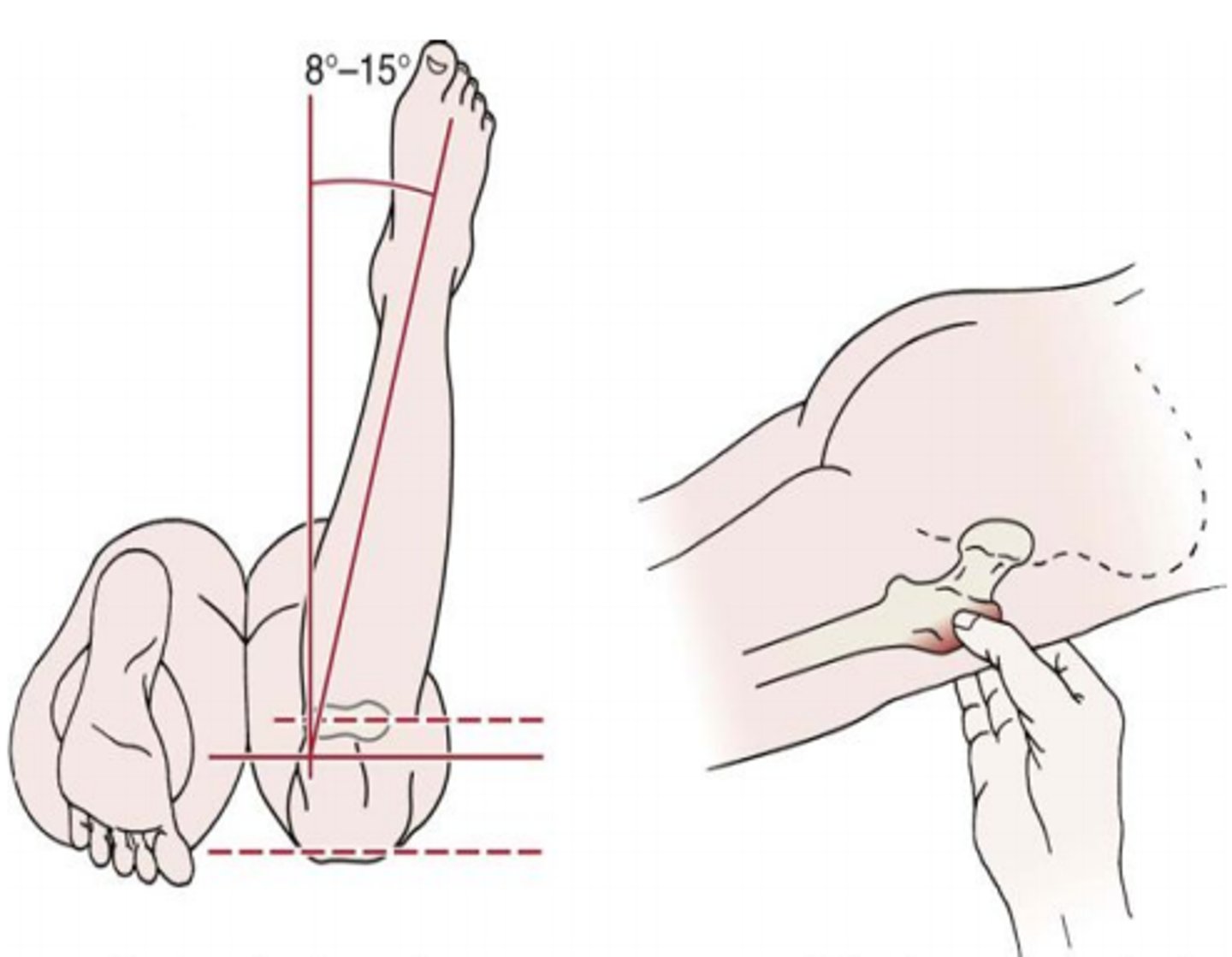
Craig's test
Abnormal femoral anti-torsion angle
Lochman test
Anterior cruciate ligament integrity
supine; knee flexed 20-30 degrees; stabilize femur and try to glide tibia anteriorly
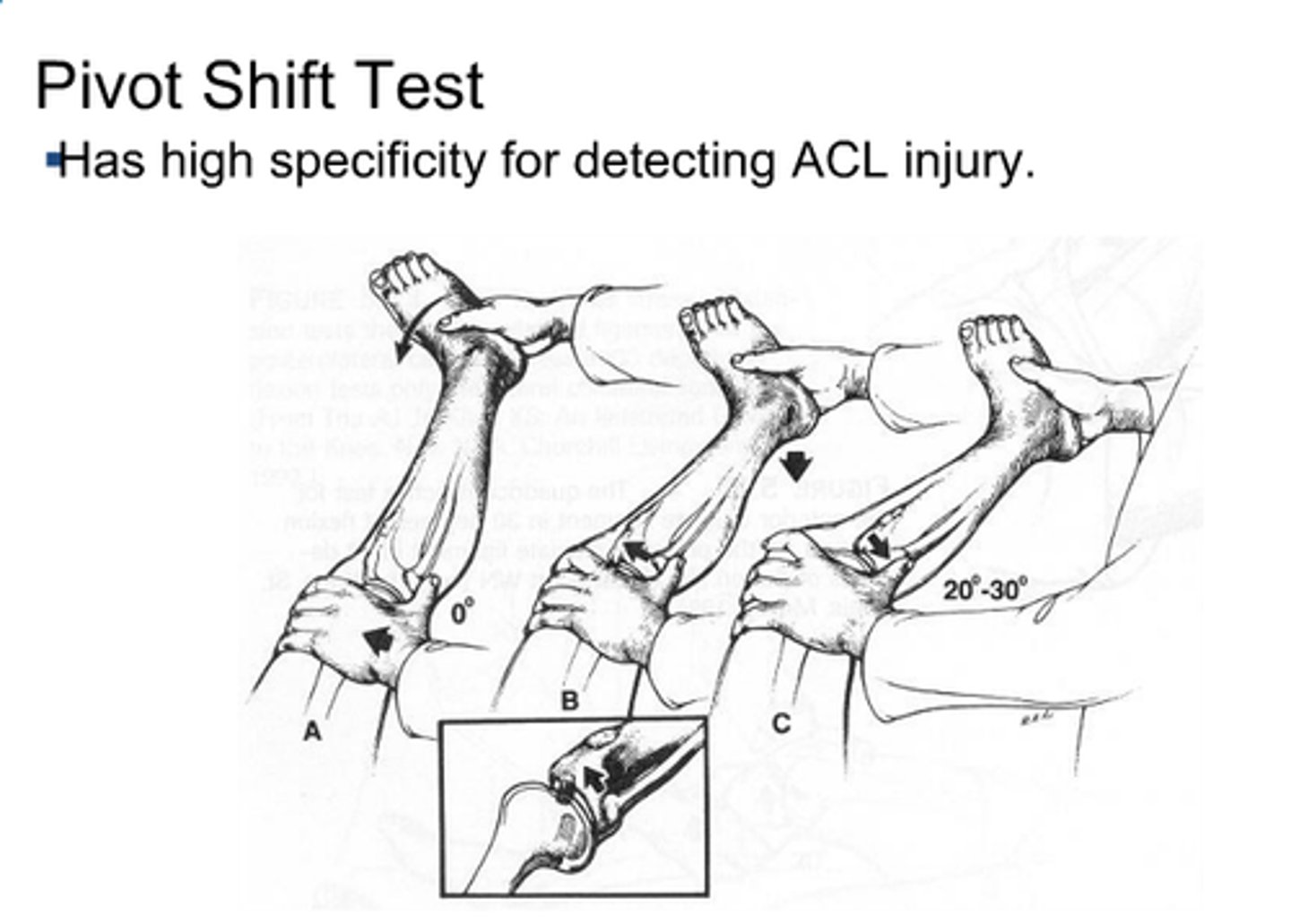
Pivot shift
Anterior cruciate ligament integrity
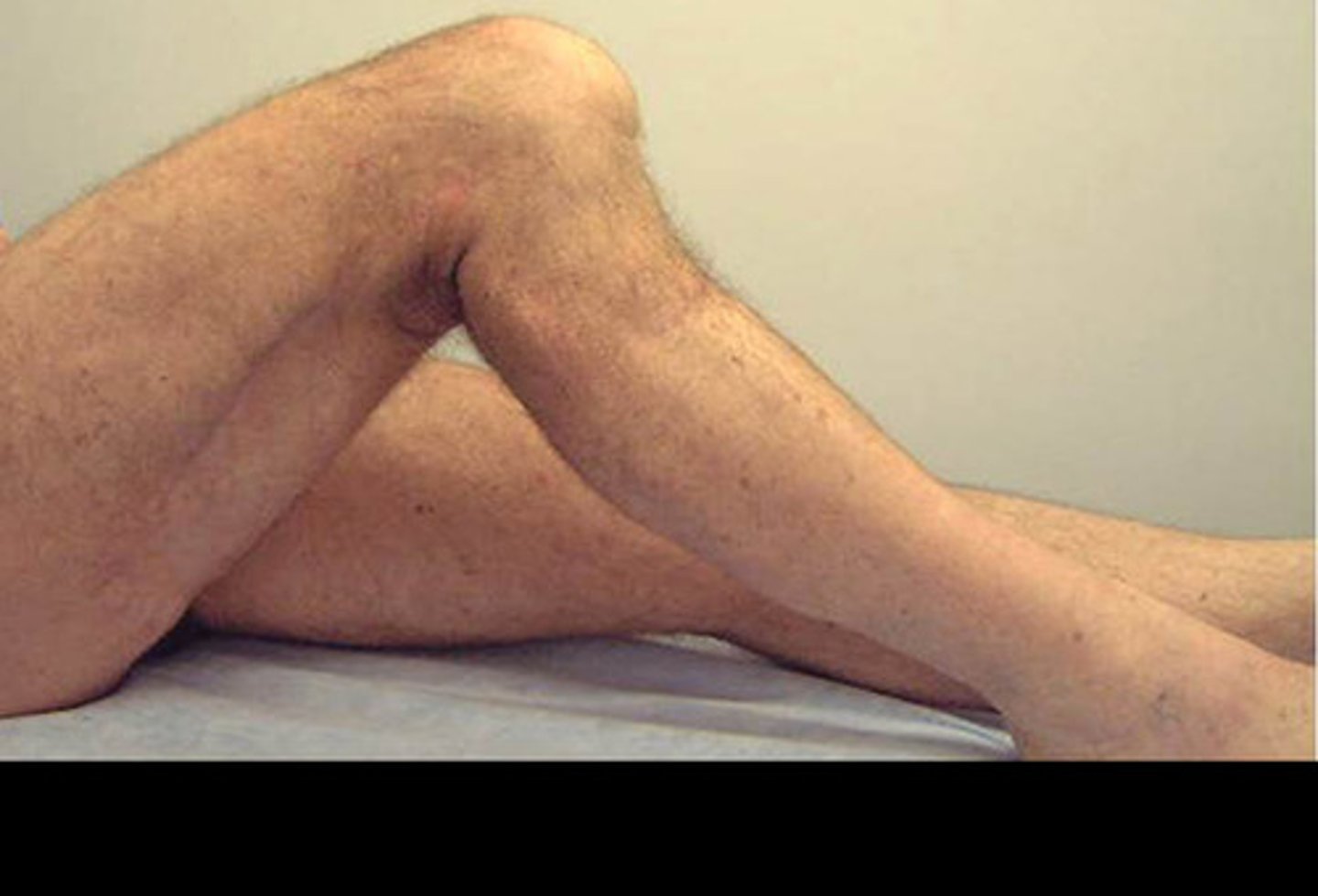
Posterior sag test
Posterior cruciate ligament integrity
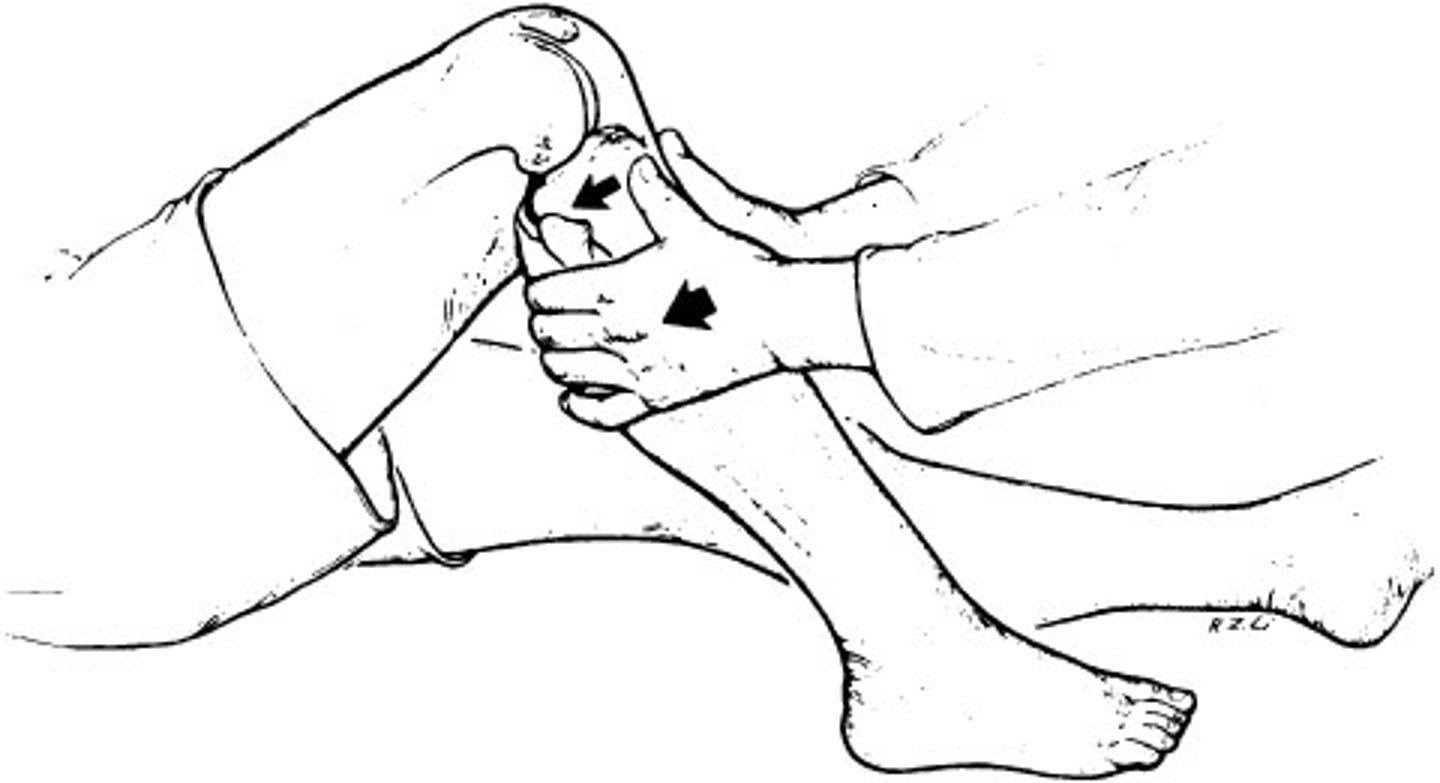
Posterior drawer test
Posterior cruciate ligament integrity
Reverse Lochman
Posterior cruciate ligament integrity
prone; knees flexed 30 degrees; stabilize femur and glide tibia posteriorly
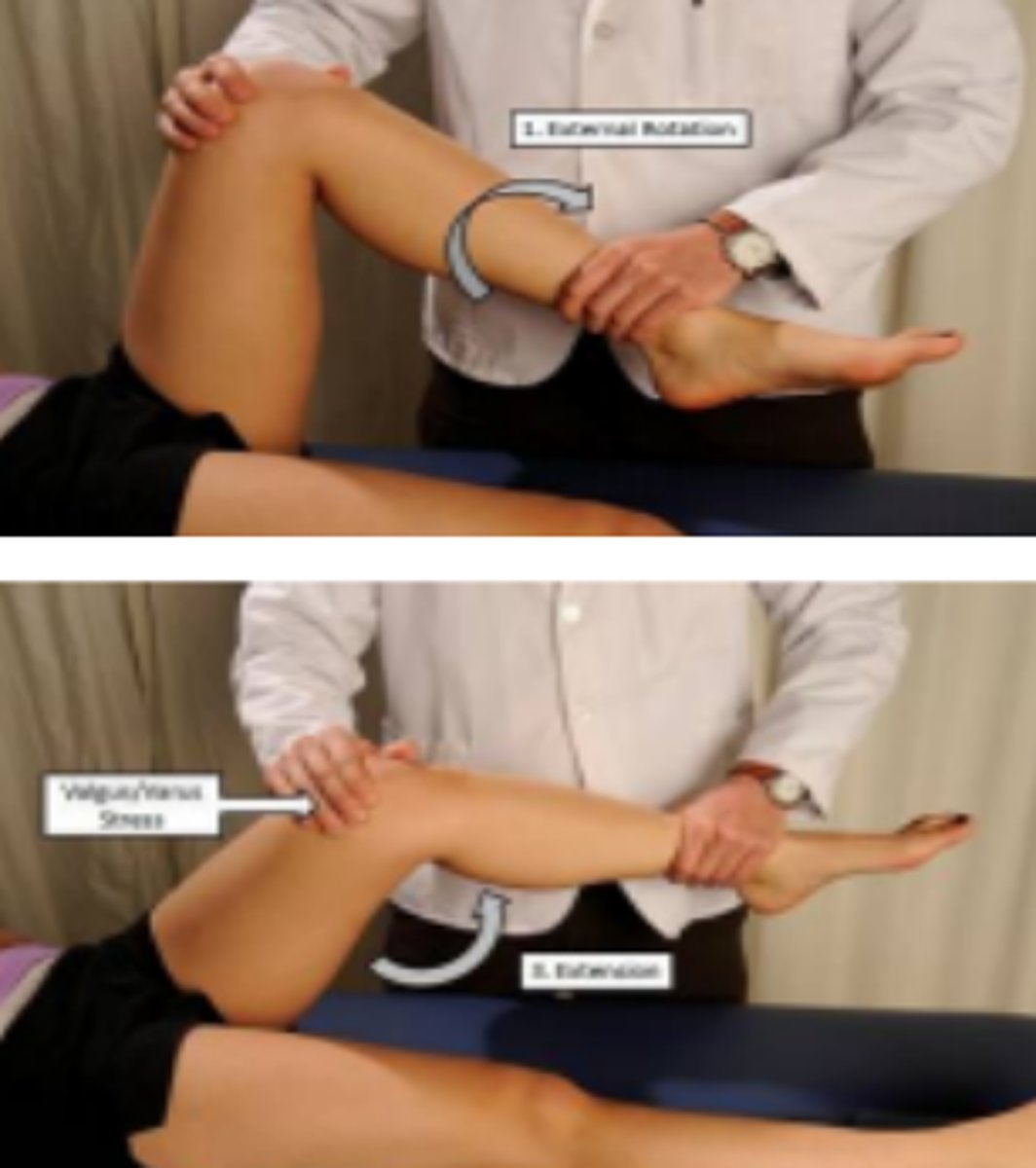
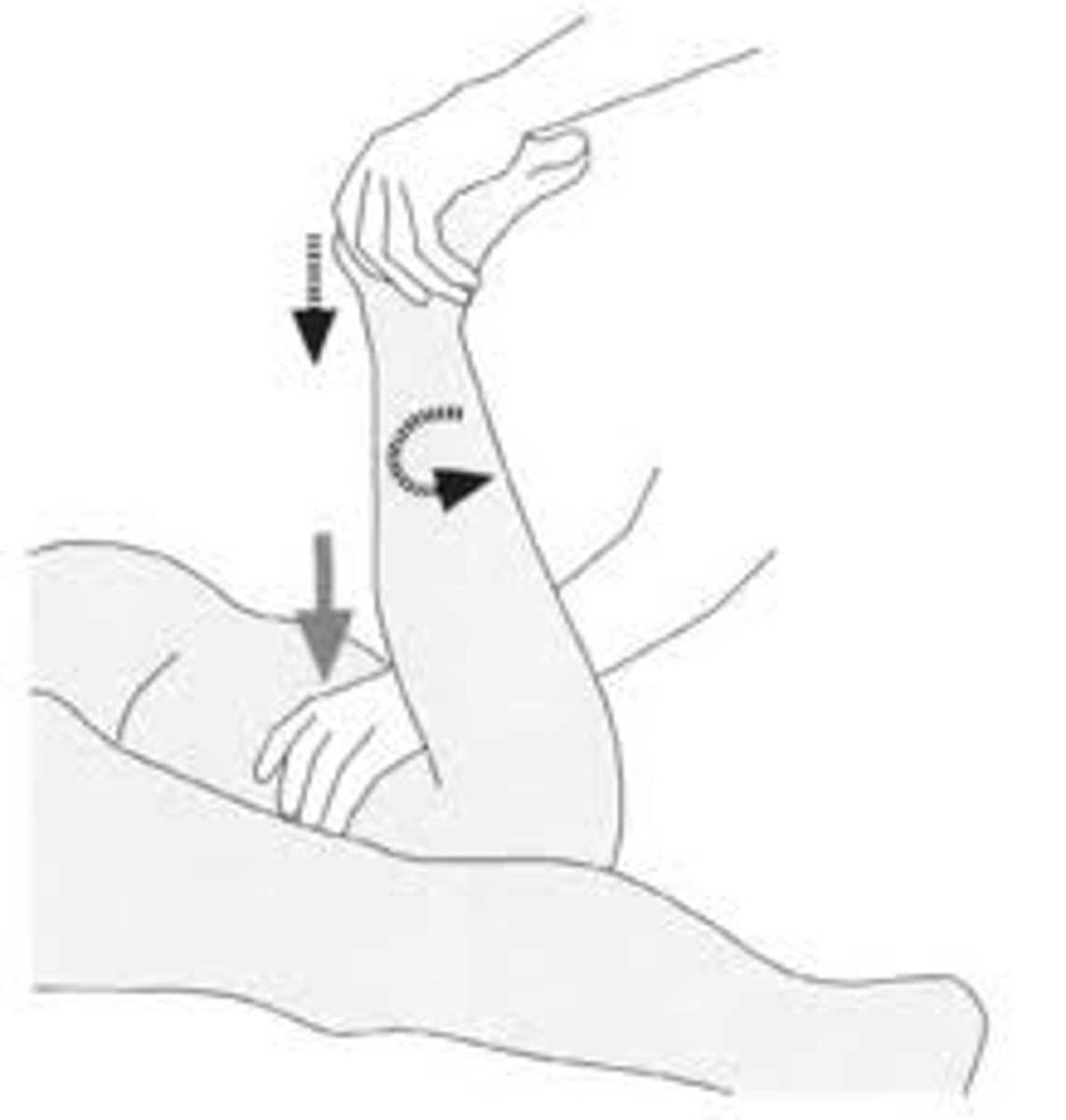
McMurray's test
Meniscal tears
Apley test
Differentiate between meniscal and ligamentous insult
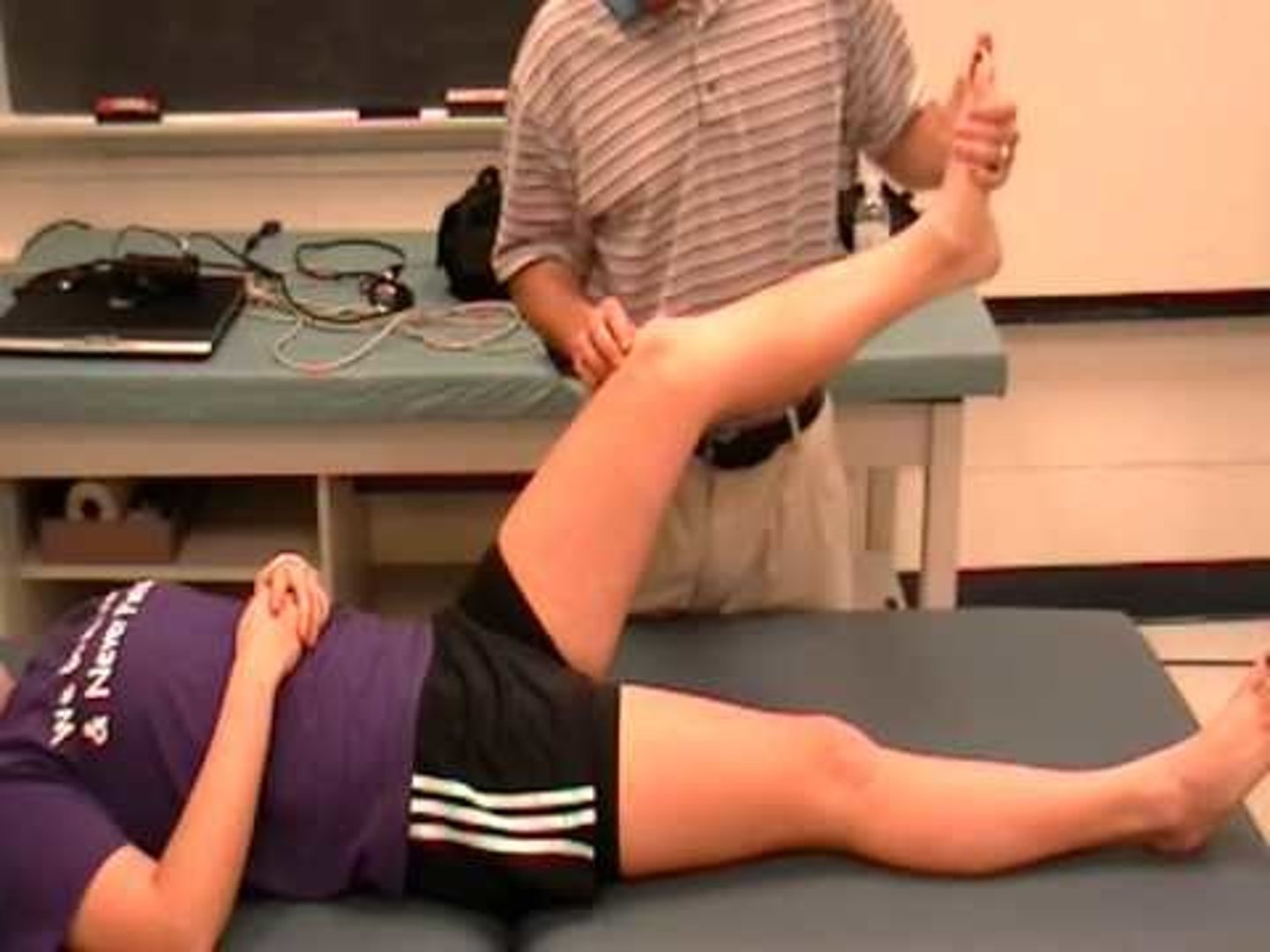
Hughston's test
Dysfunction of the plica
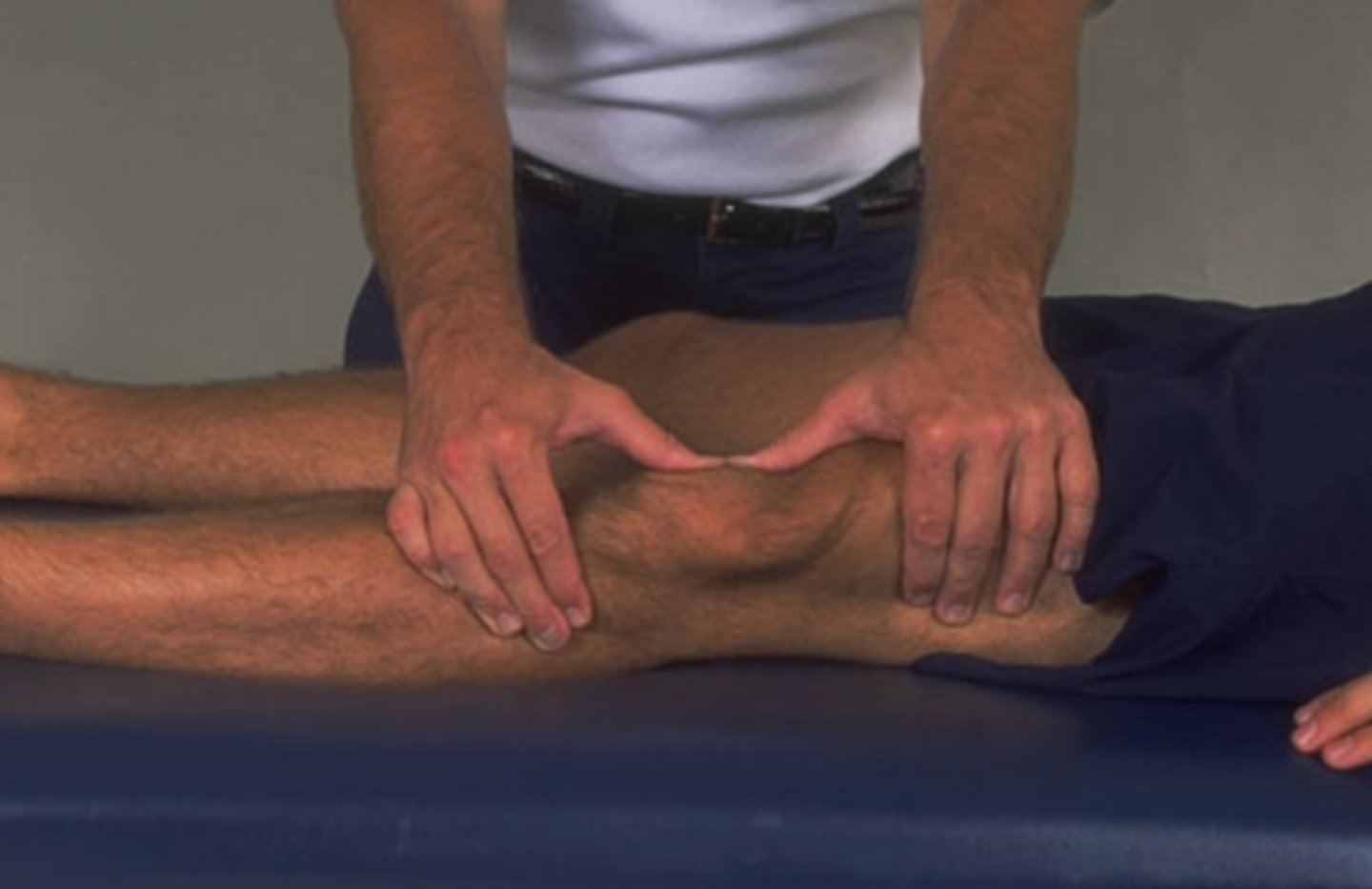
Patellar apprehension test
History of patella dislocation
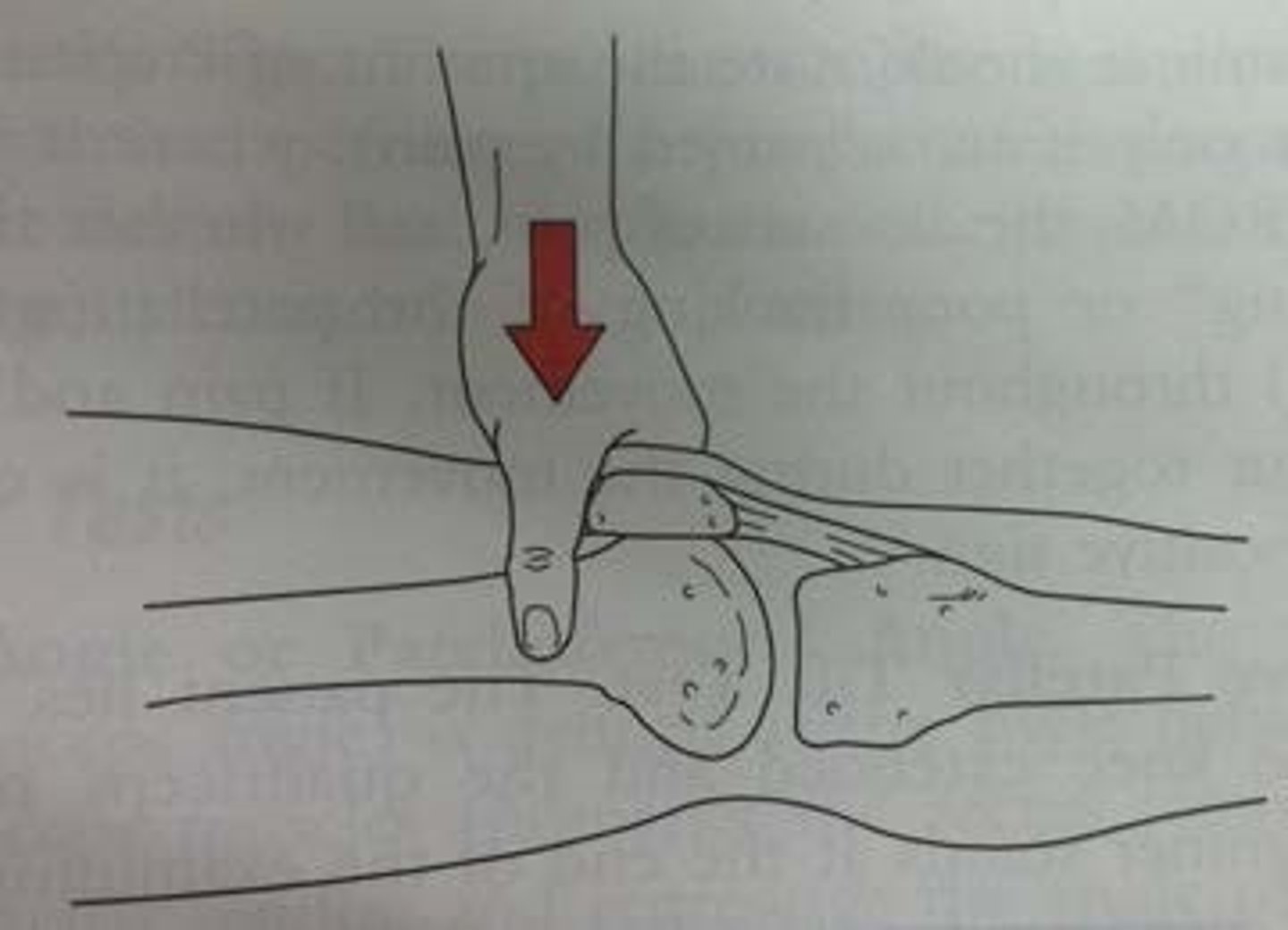
Clarke's sign
Patellofemoral dysfunction
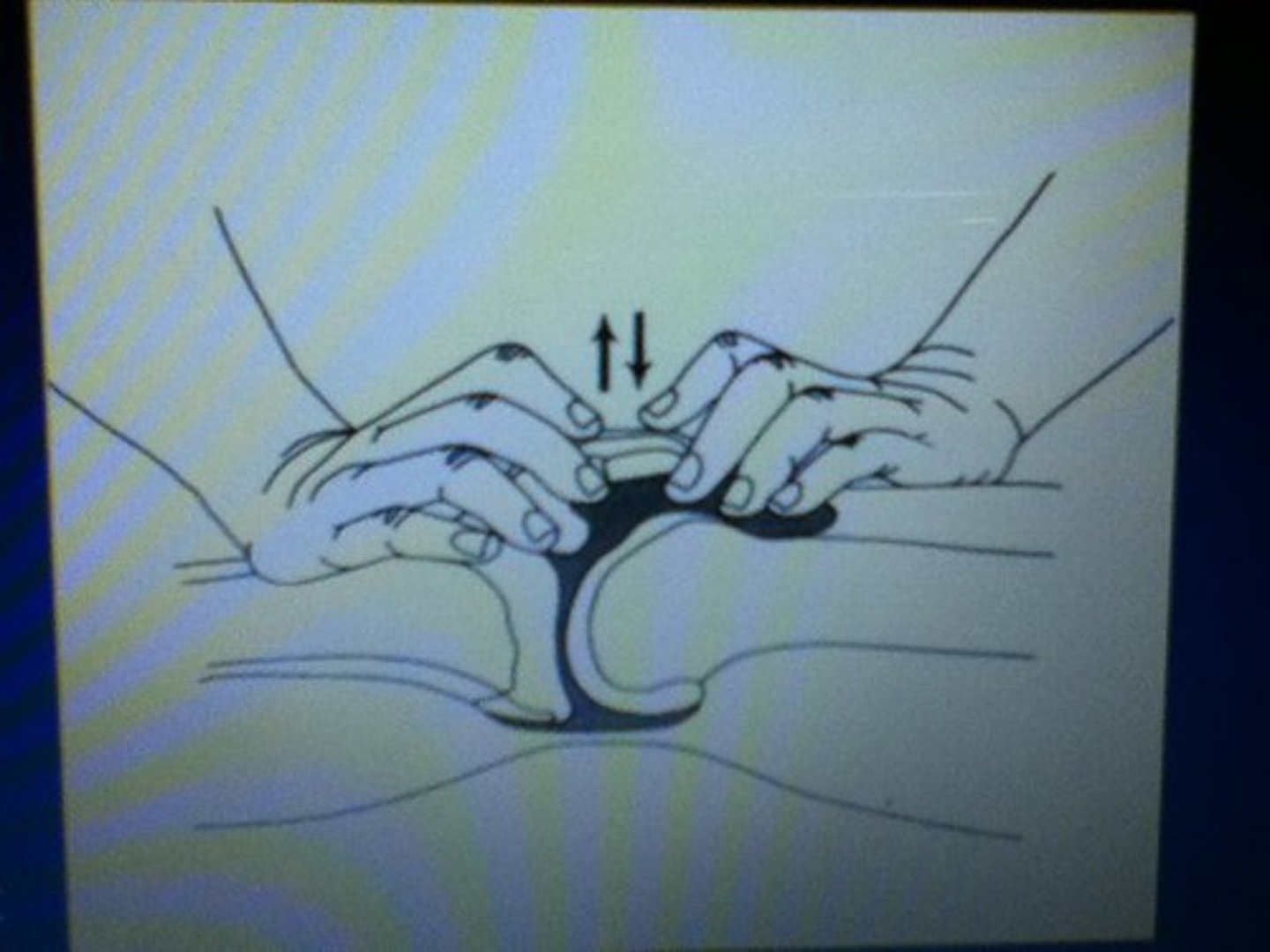
Ballotable patella/ patellar tap test
Infrapatellar effusion
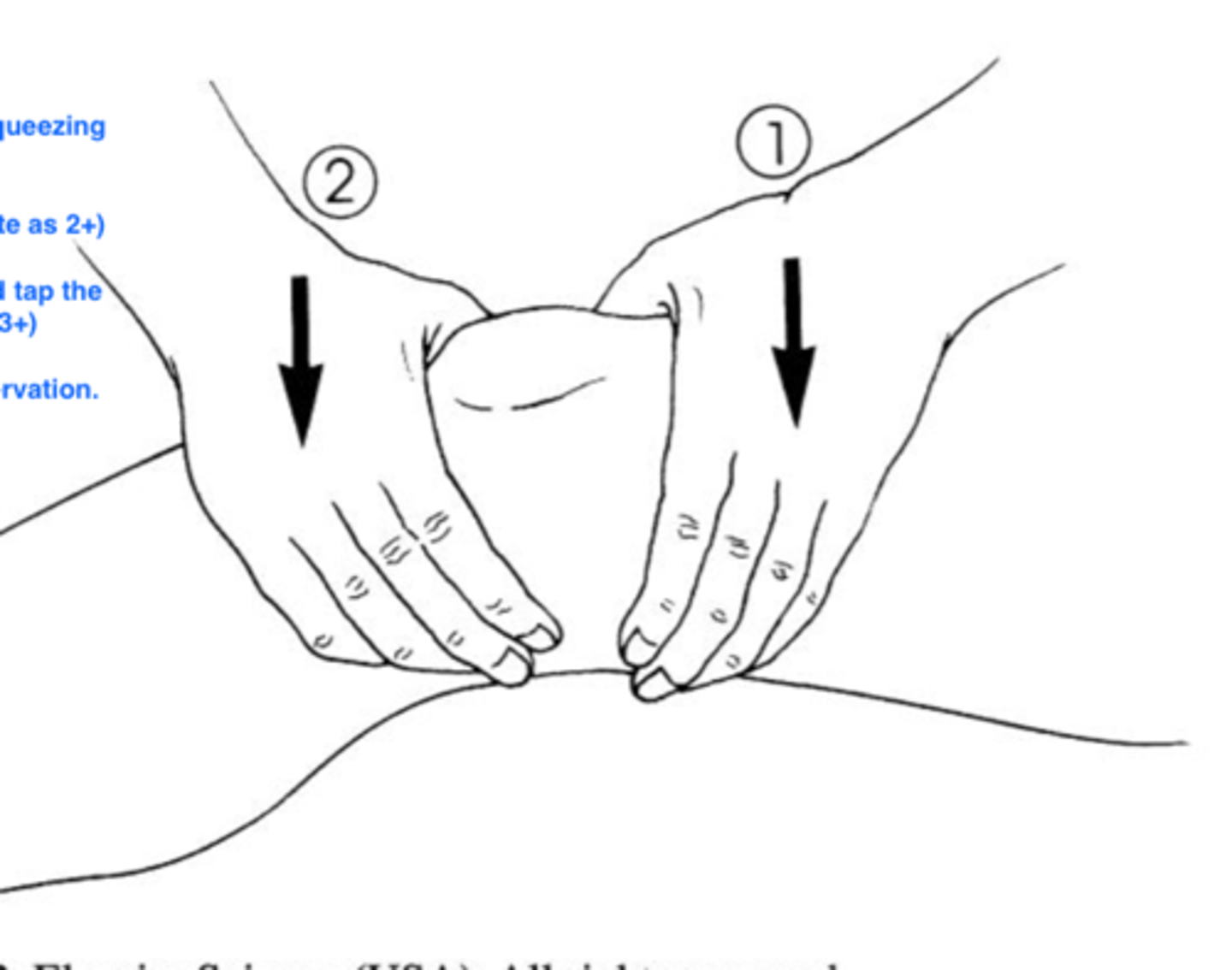
Fluctuation test
Knee joint effusion
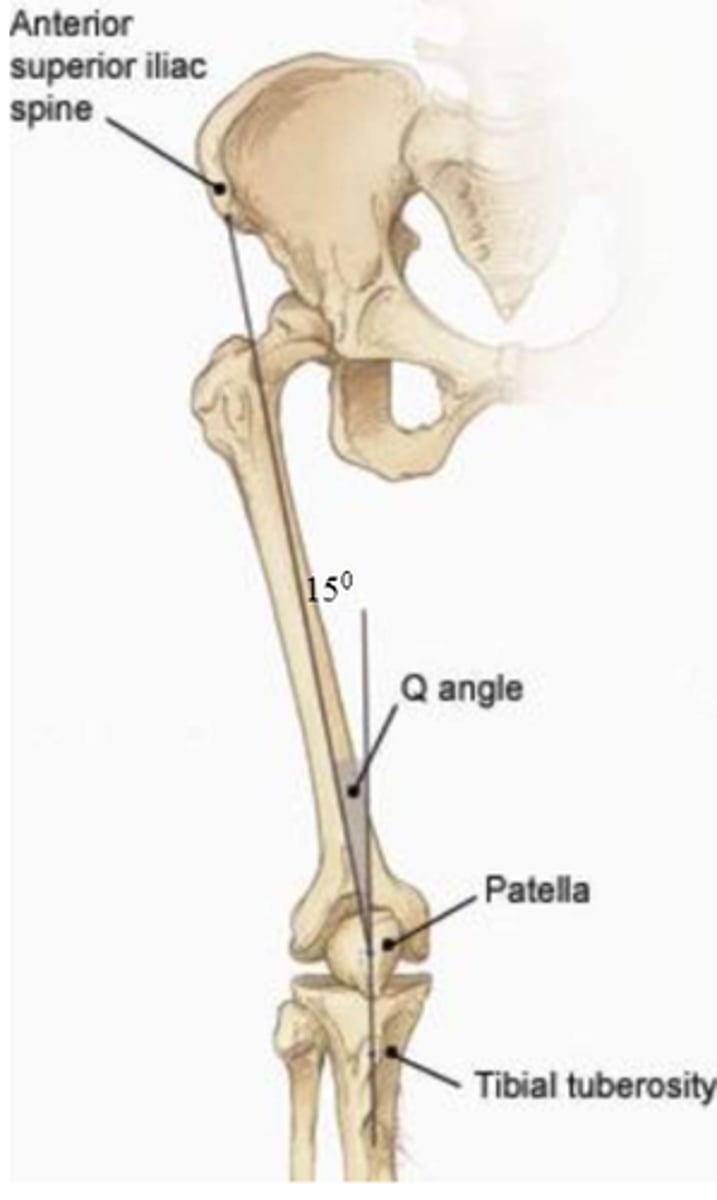
Q angle measurement
Knee dysfunction
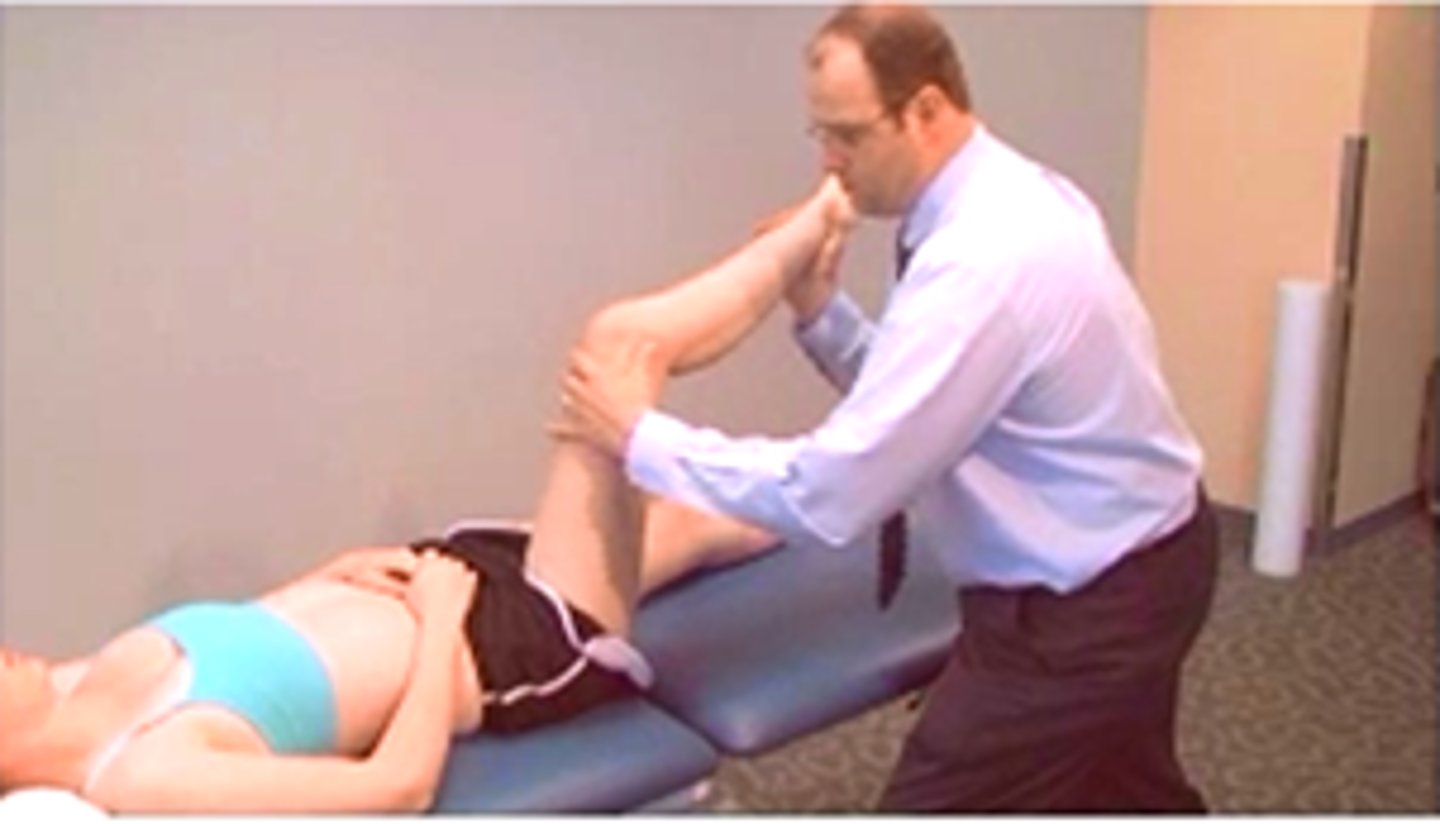
Noble compression test
IT band friction syndrome
Anterior drawer test of the ankle
Integrity of anterior talofibular ligament
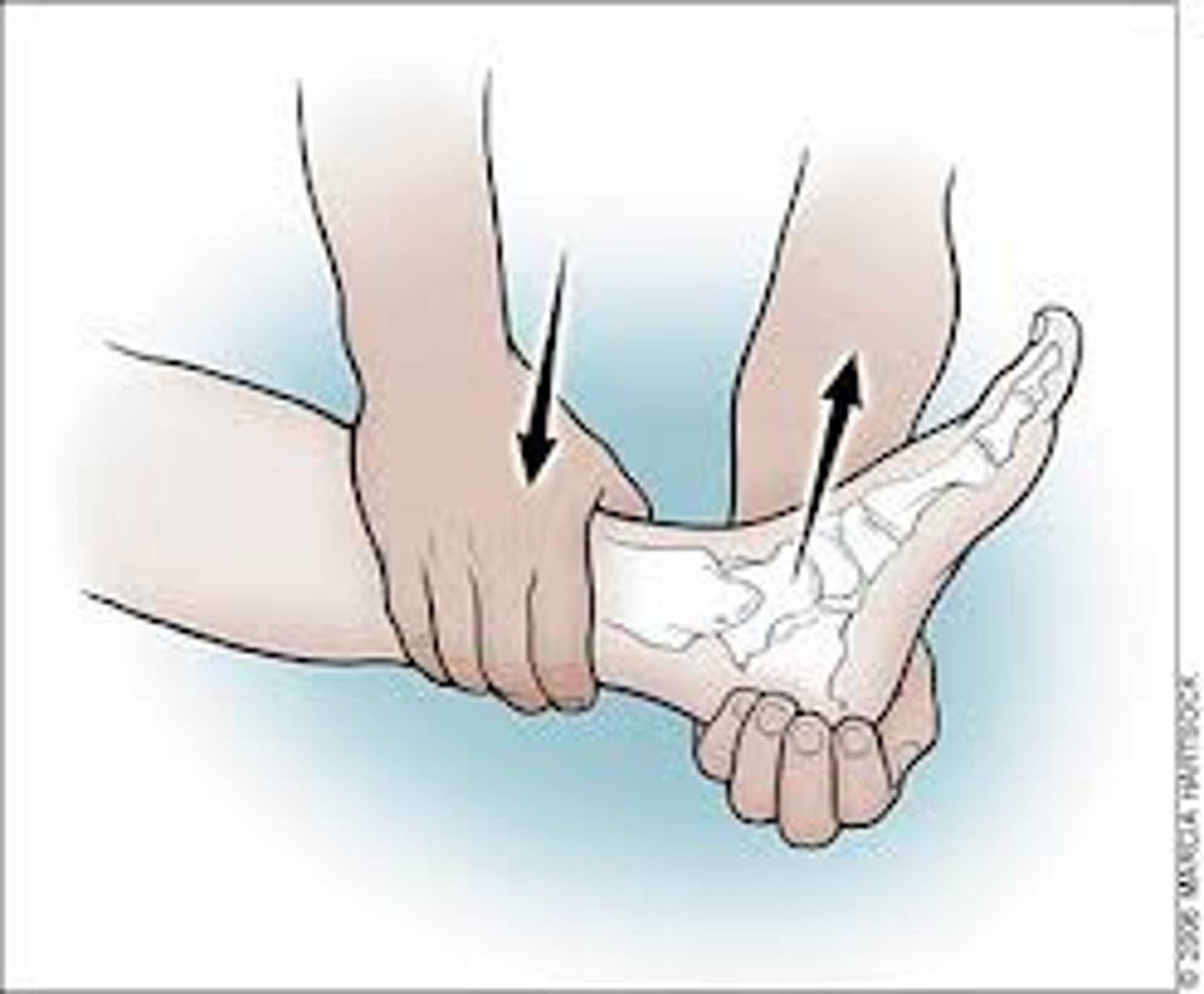
Talar tilt test
Calcaneofibular or deltoid ligament instability
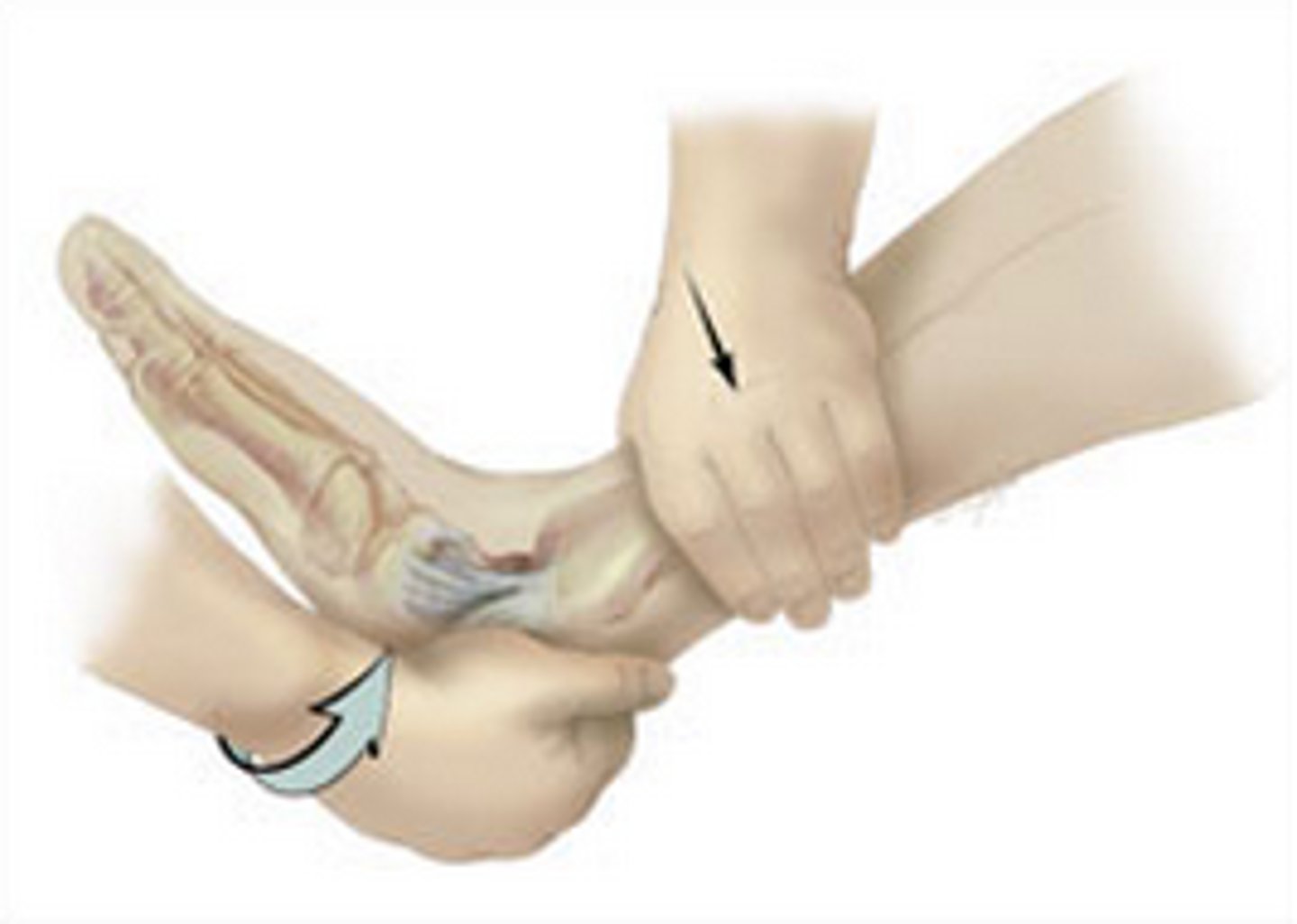
Thompson's test
Integrity of Achilles tendon
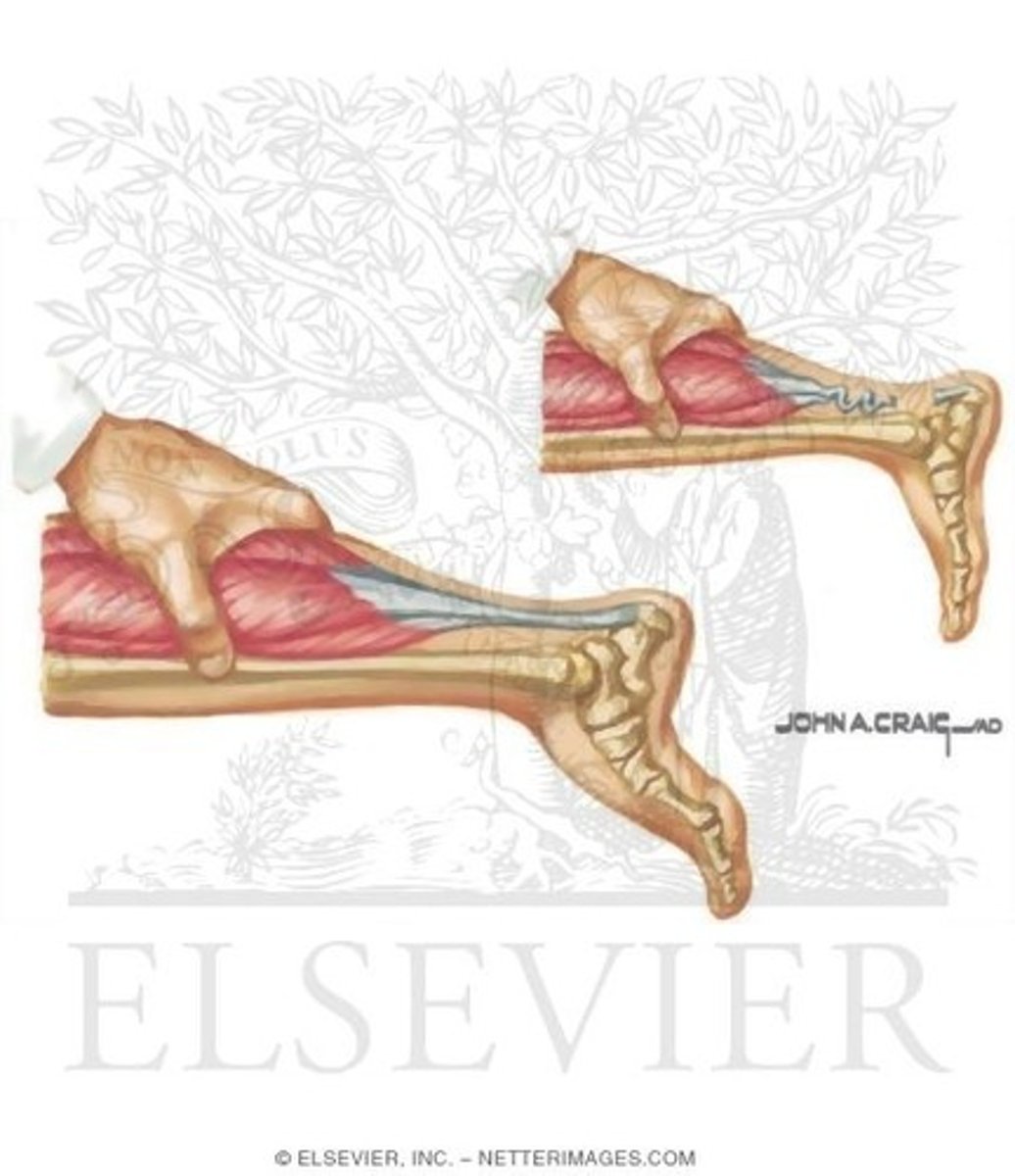
Morton's test
Stress fracture or Neuroma in forefoot
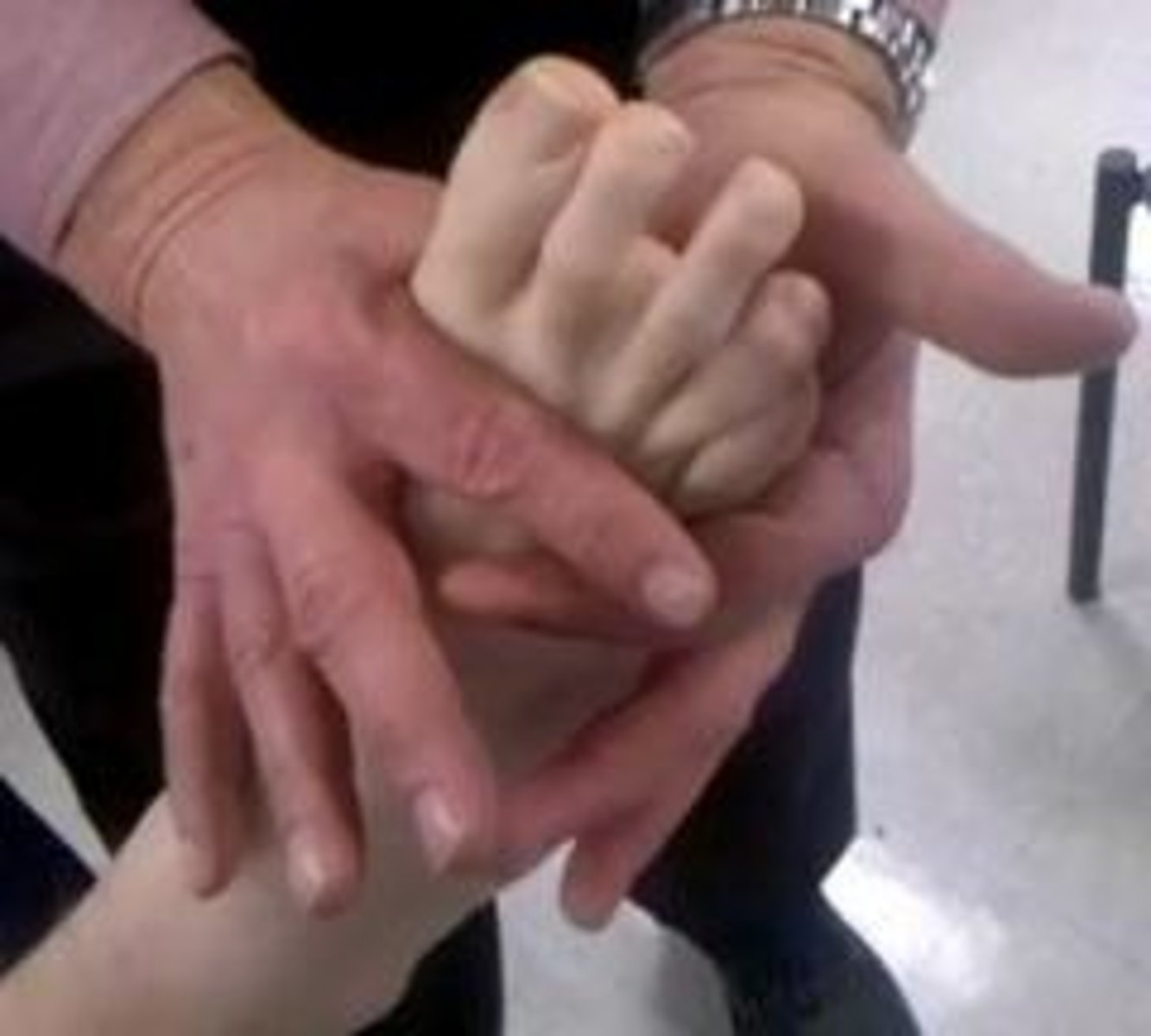
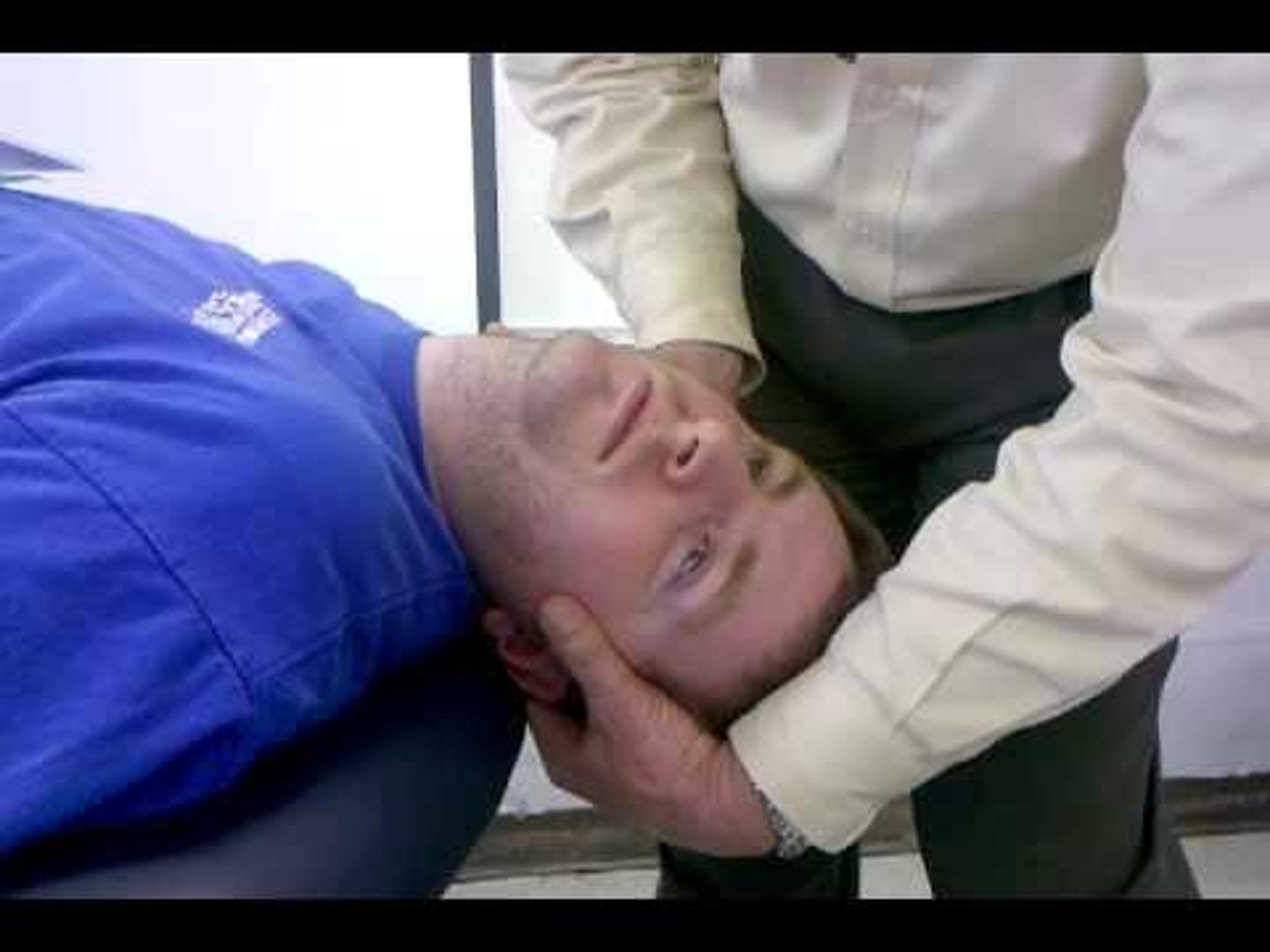
Vertebral Artery test
Vertebrobasilar vascular system
Hautant's test
Vascular versus vestibular causes of dizziness or vertigo
Sitting; shoulders 90 degrees flexion; palms up; close eyes for 30 seconds and see if arms drift
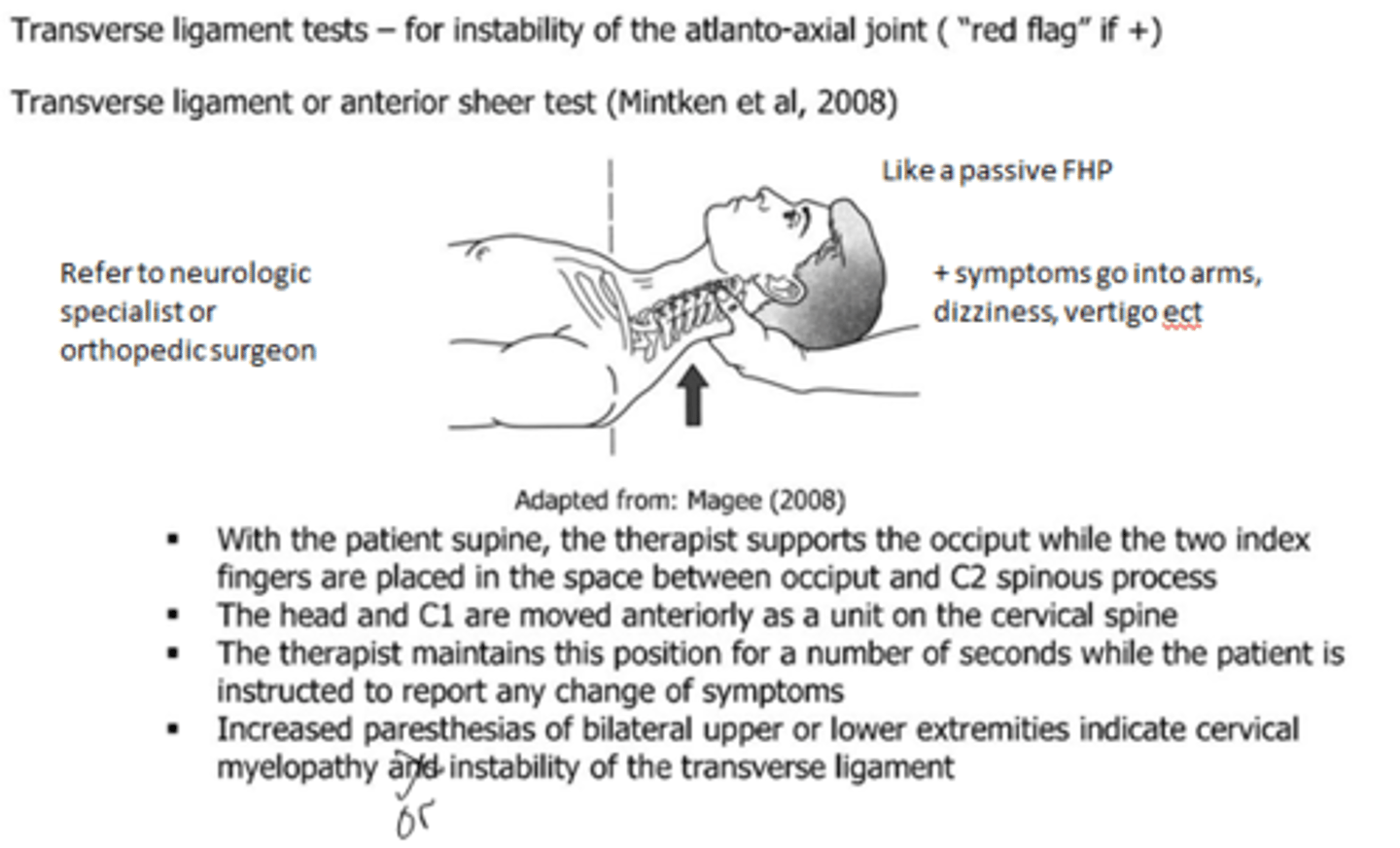
Transverse ligament stress test
Integrity of transverse ligament
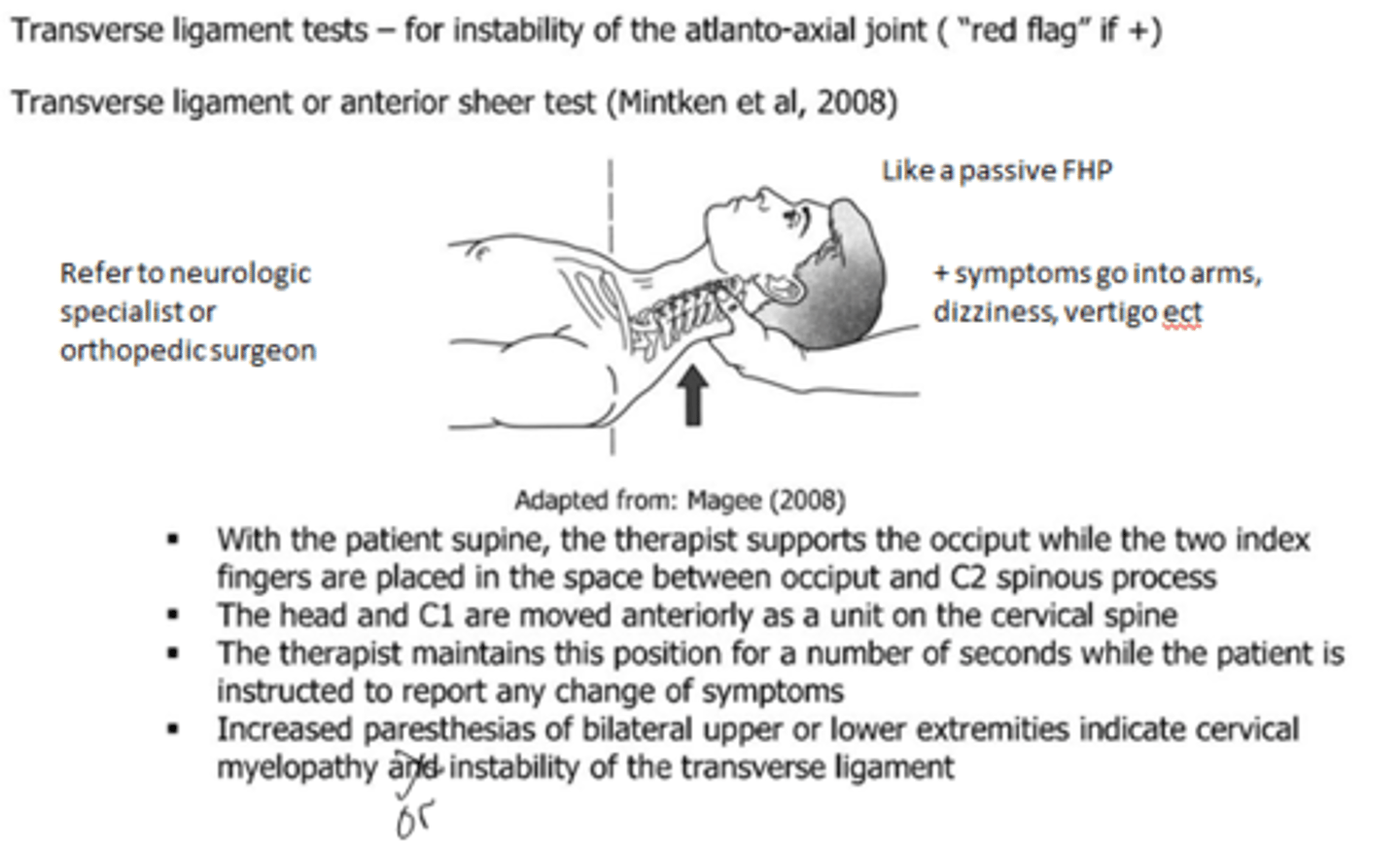
Anterior shear test
Integrity of upper cervical spine ligaments and capsule
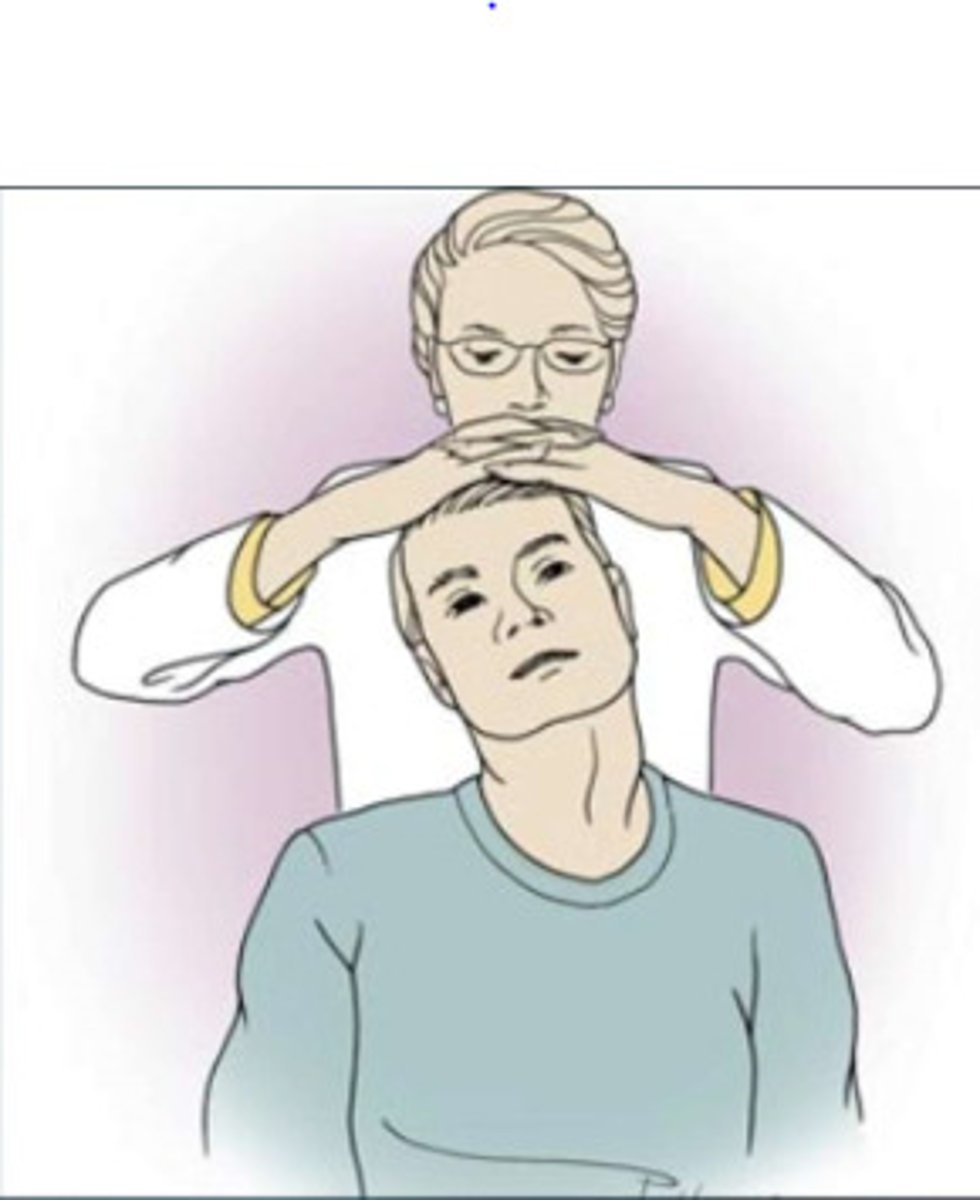
Foraminal compression/Spurling's test
Cervical nerve root dysfunction
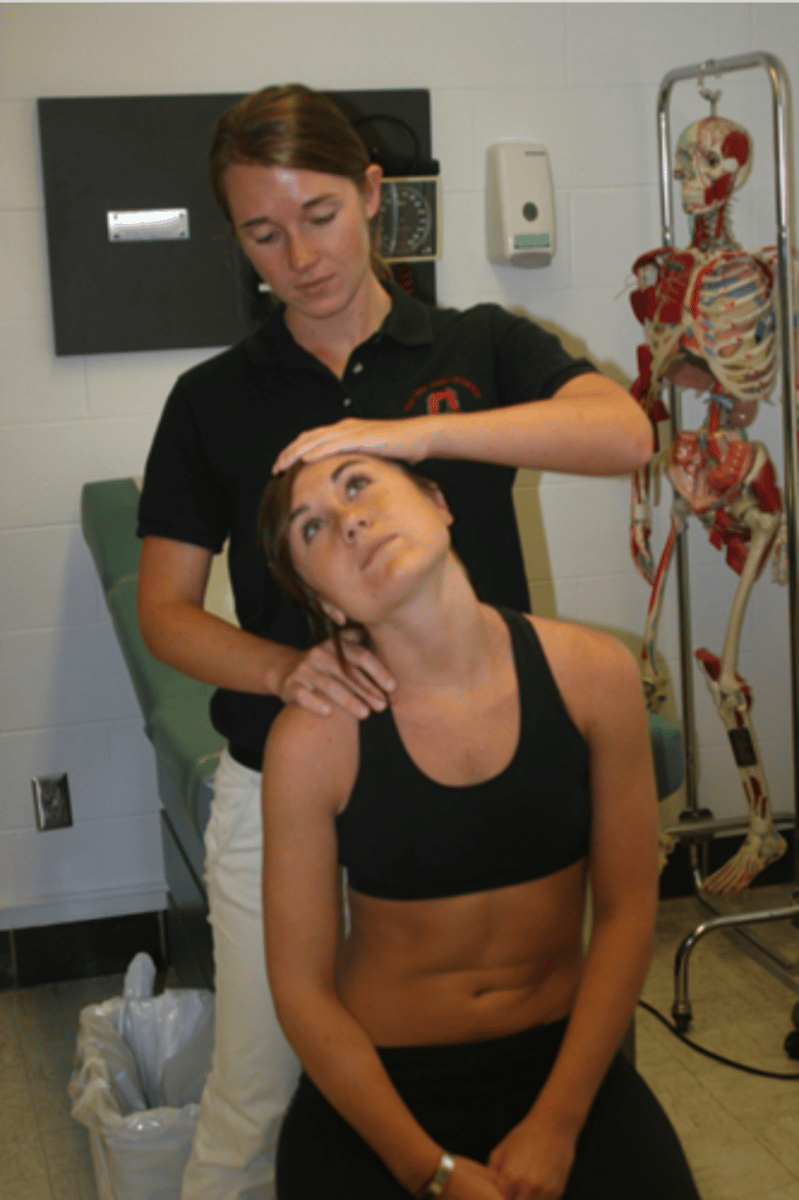
Maximum cervical compression test
Compression of a neural structures at intravertebral foramen and/or facet dysfunction
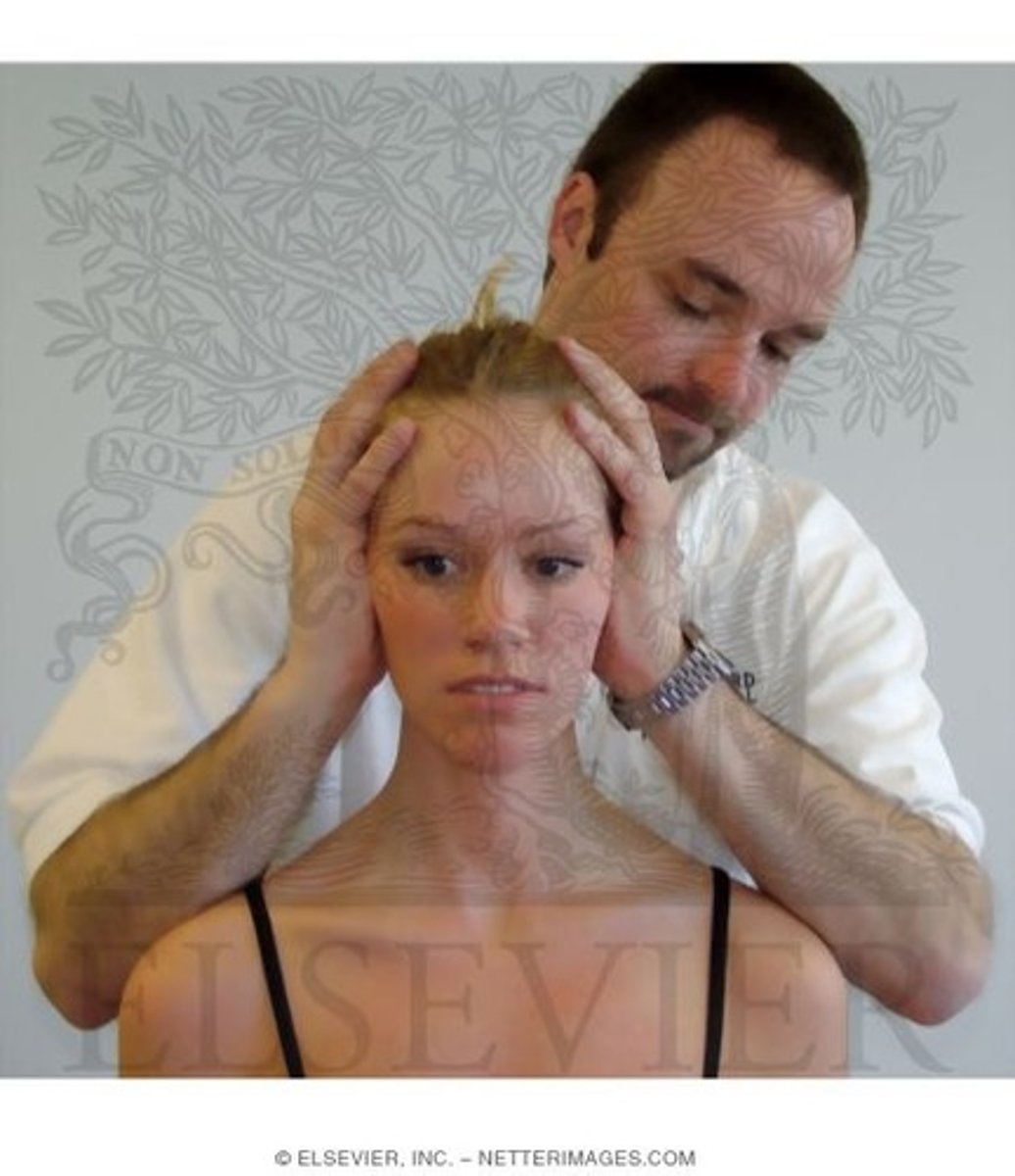
Distraction test
Compression of a neural structures at intravertebral foramen and/or facet dysfunction
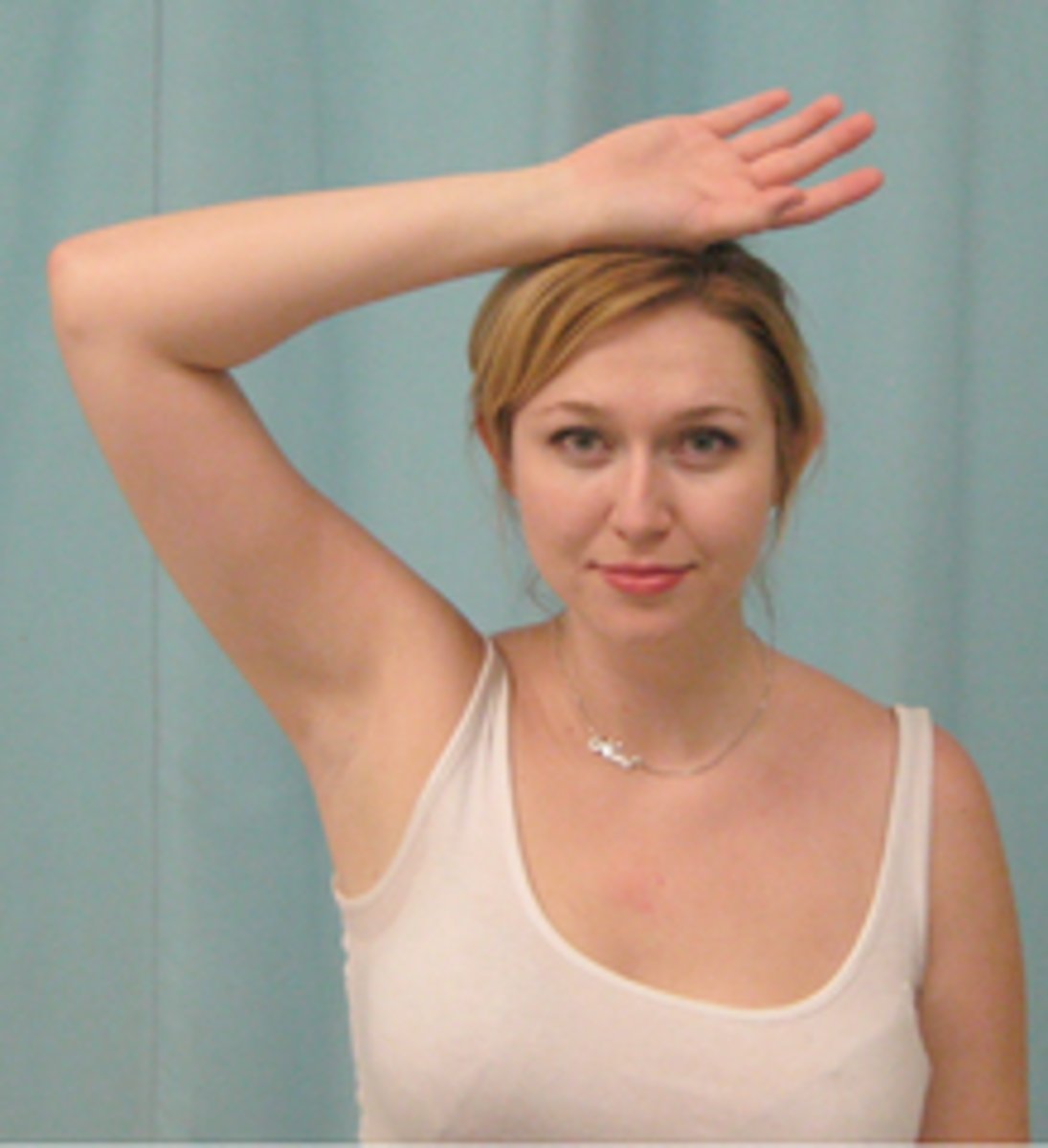
Shoulder abduction test
Compression of neural structures with in intravertebral foramen
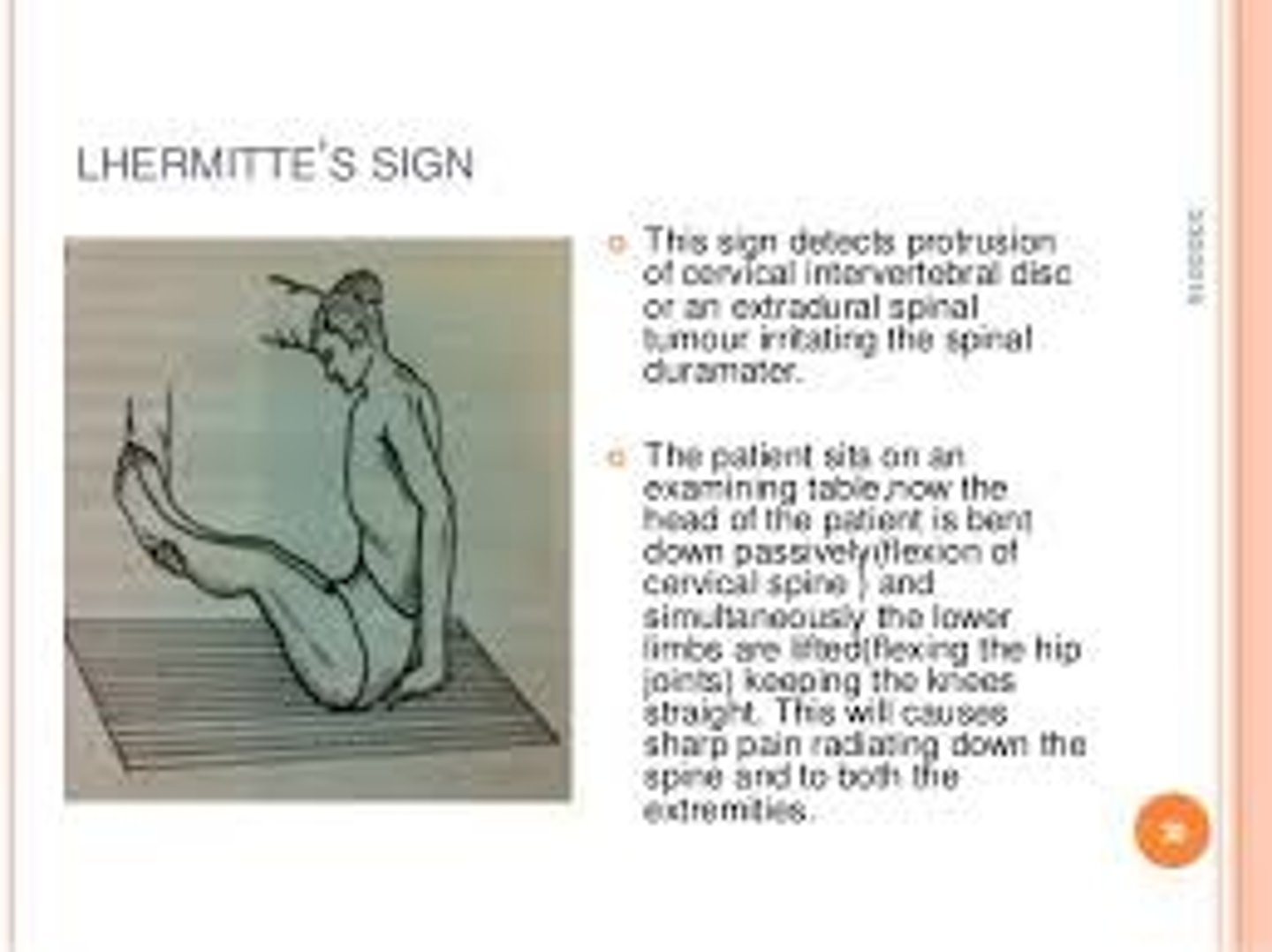
Lhermitte's sign
Dysfunction of spinal cord and/or an upper motor neuron lesion
Romberg test
Upper motor neuron lesion
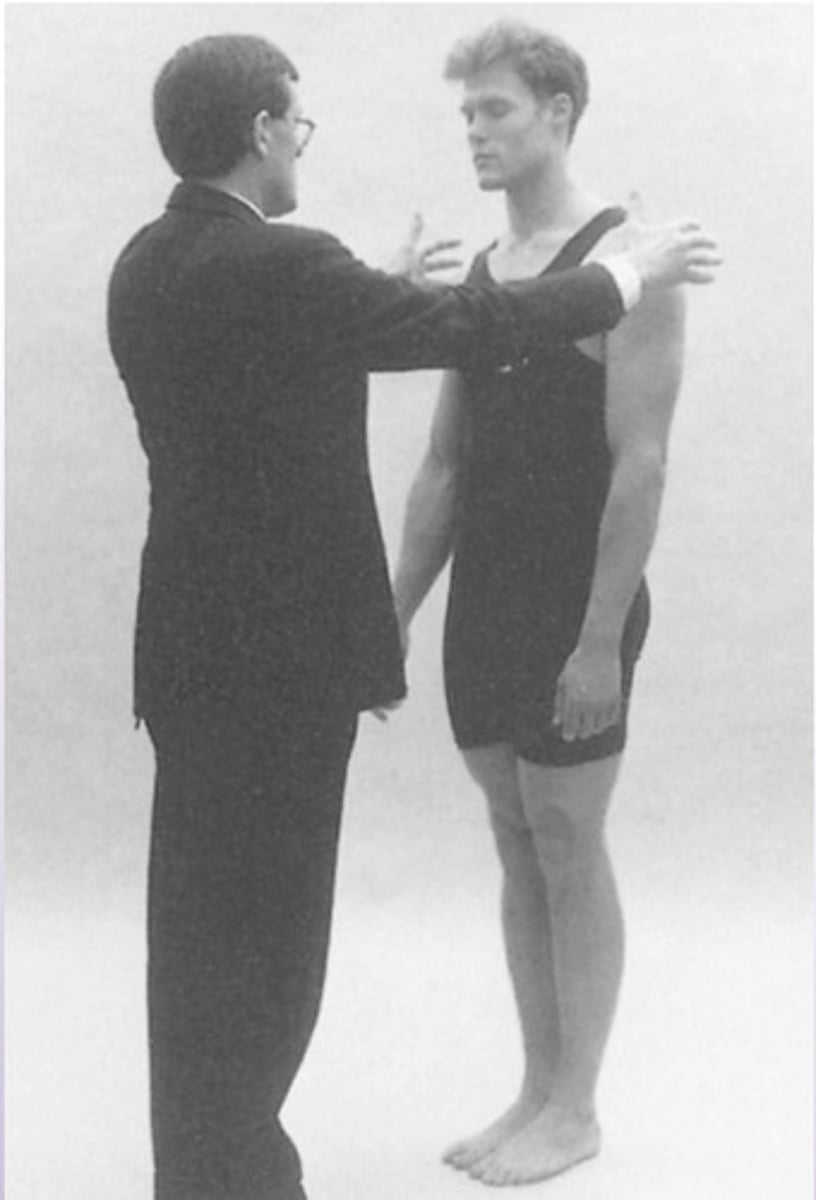
Rib springing
Rib of mobility
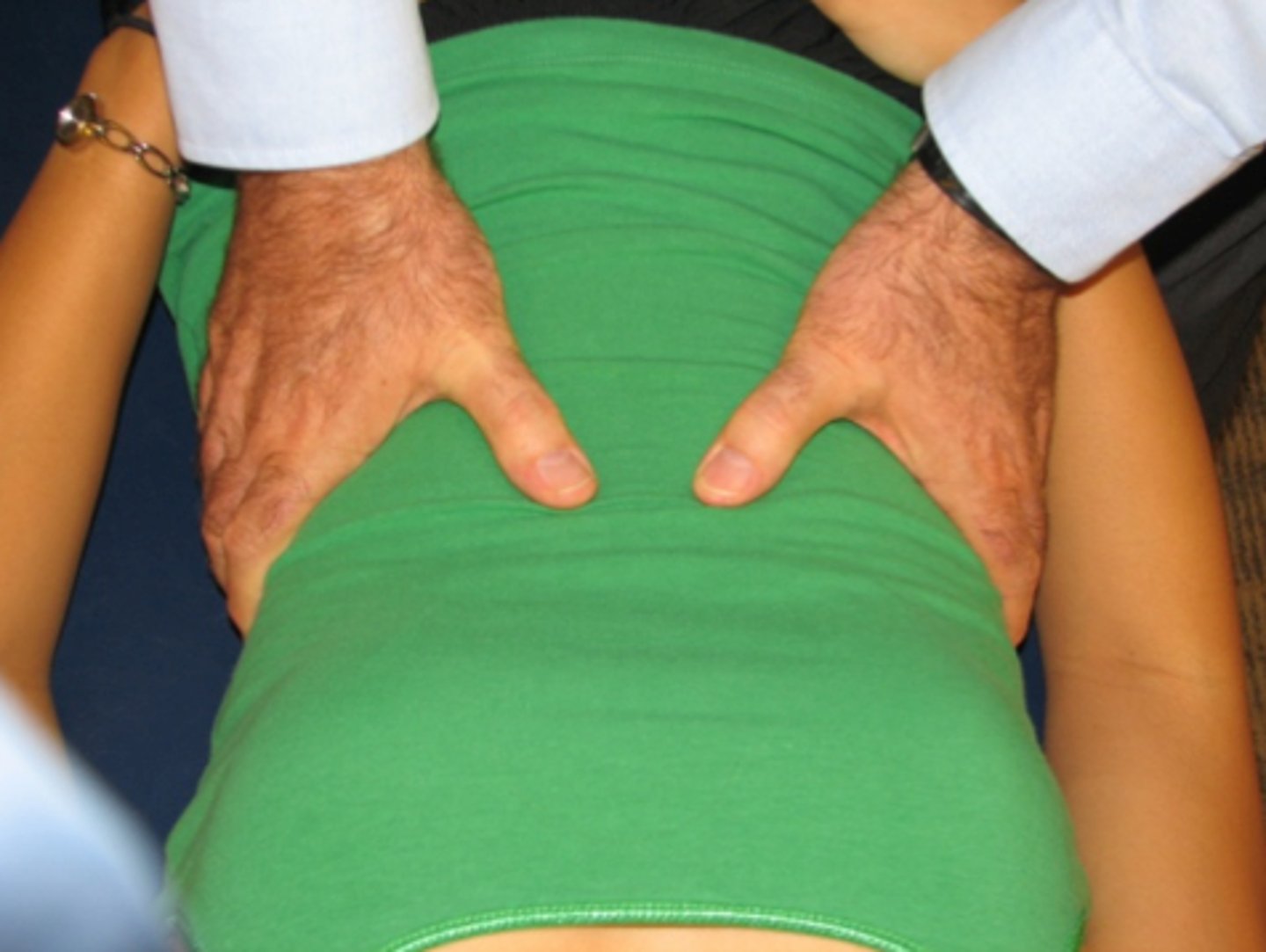
Thoracic springing
Intervertebral joints mobility
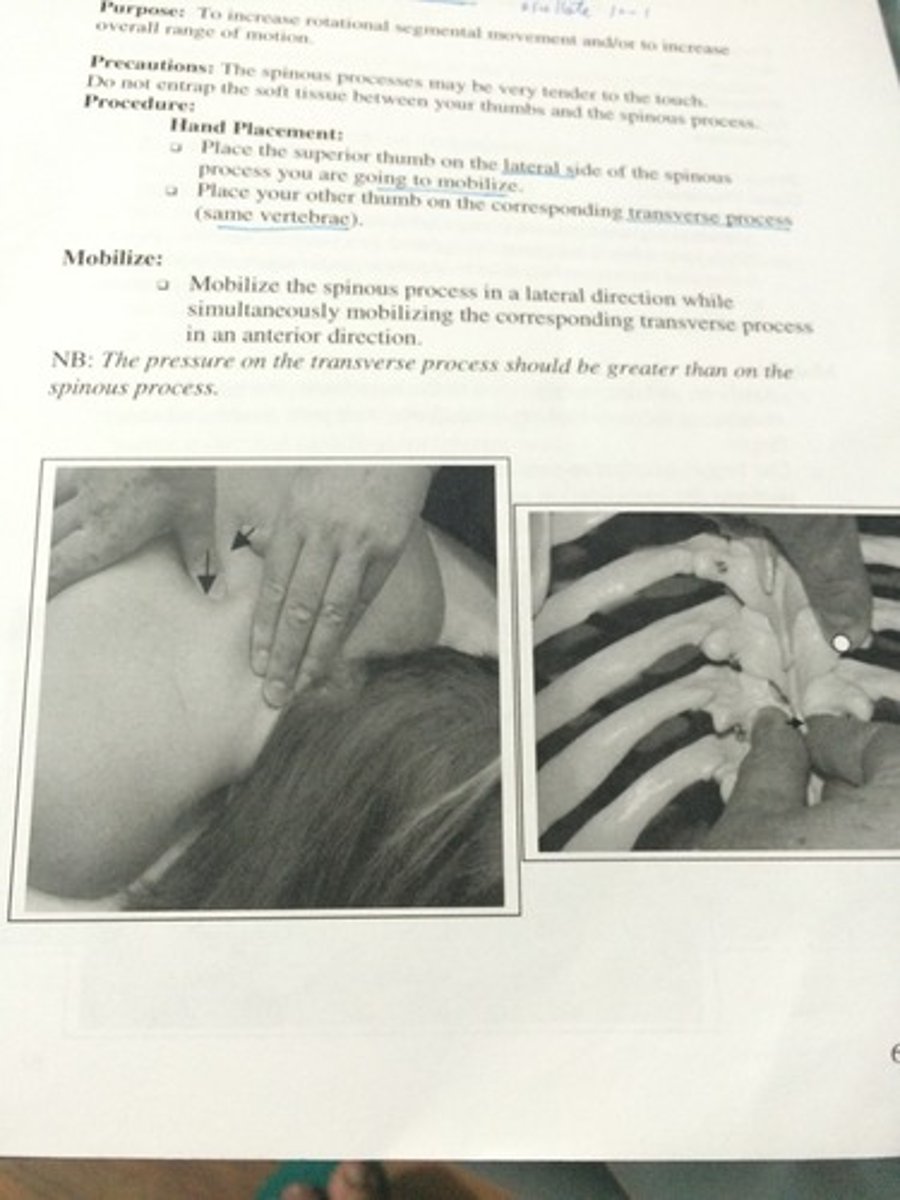
Slump test
Dysfunction of neurological structures supplying the lower limb
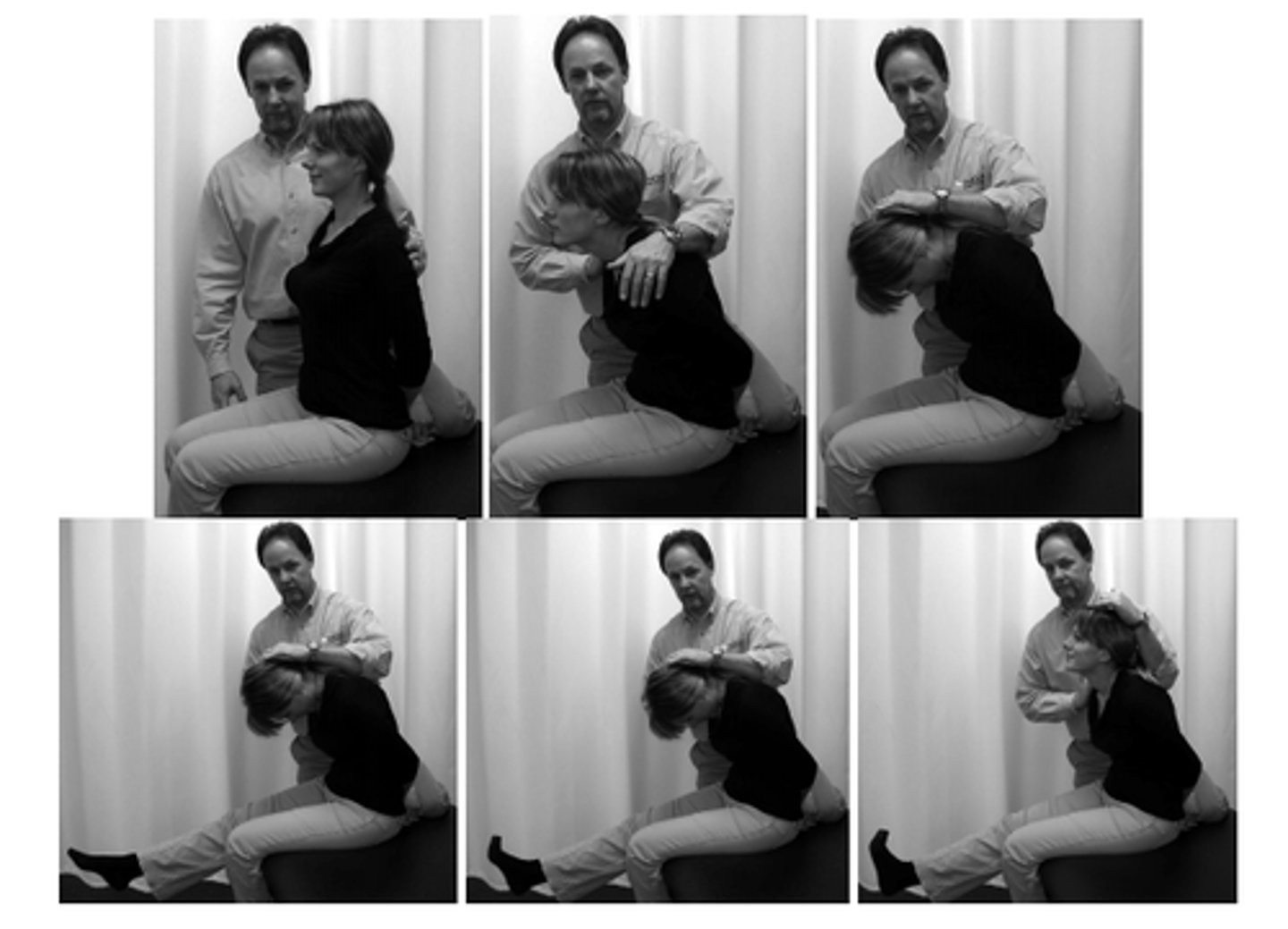
Lasegue's test / straight leg raise
Dysfunction of neurological structures that supply lower limb
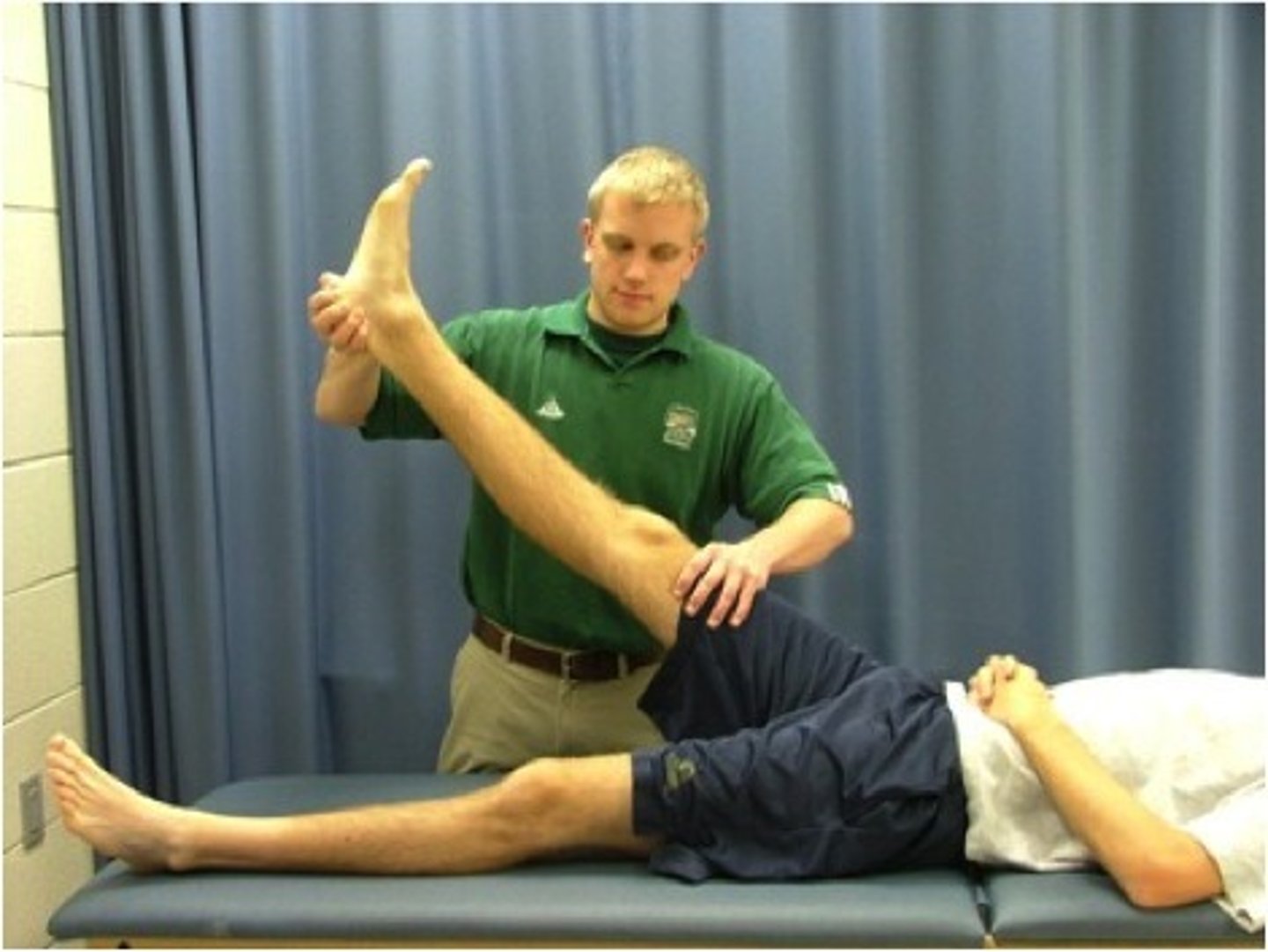
Femoral nerve traction test
Compression of femoral nerve
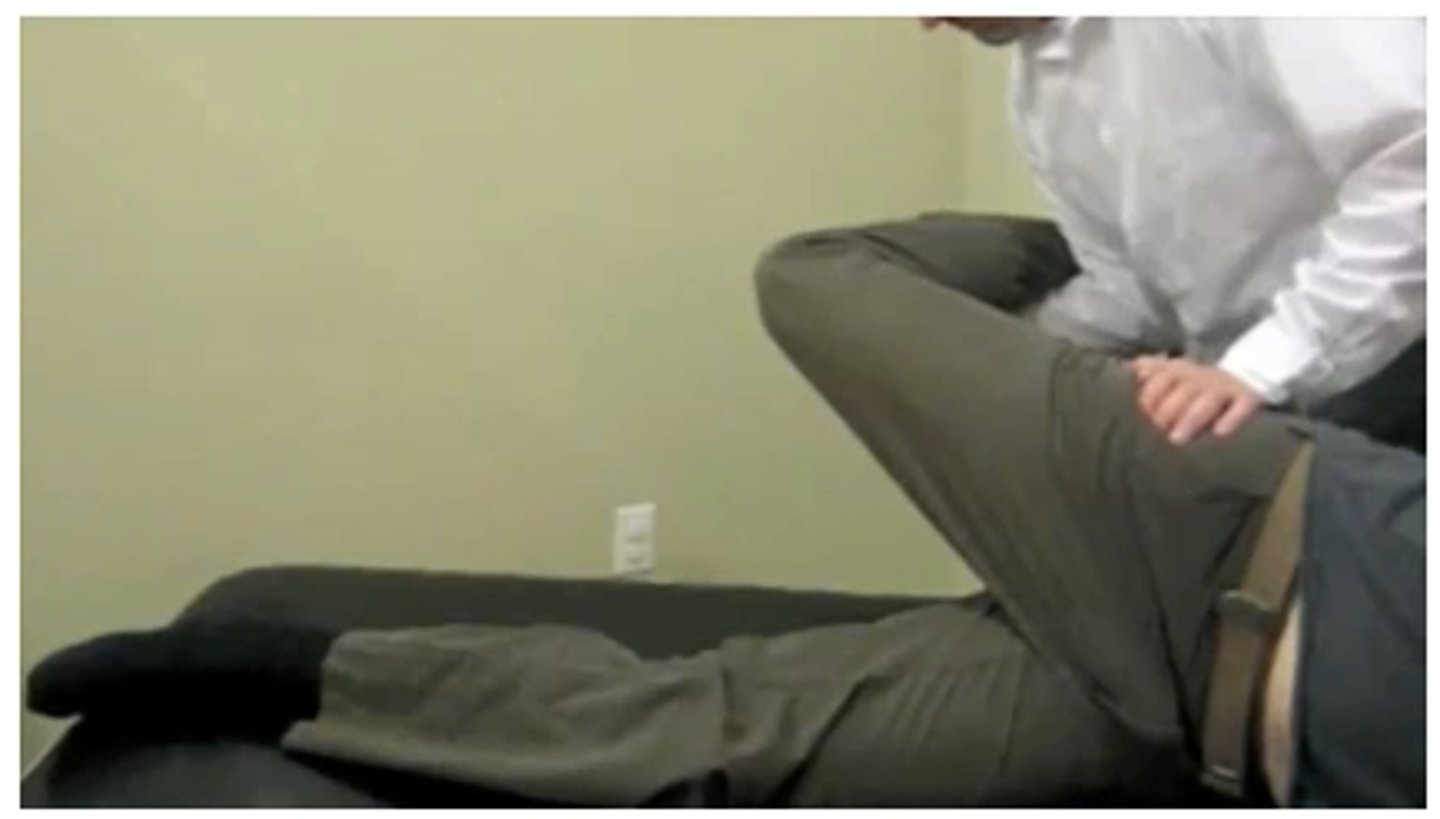
Valsalva maneuver
Space occupying lesion

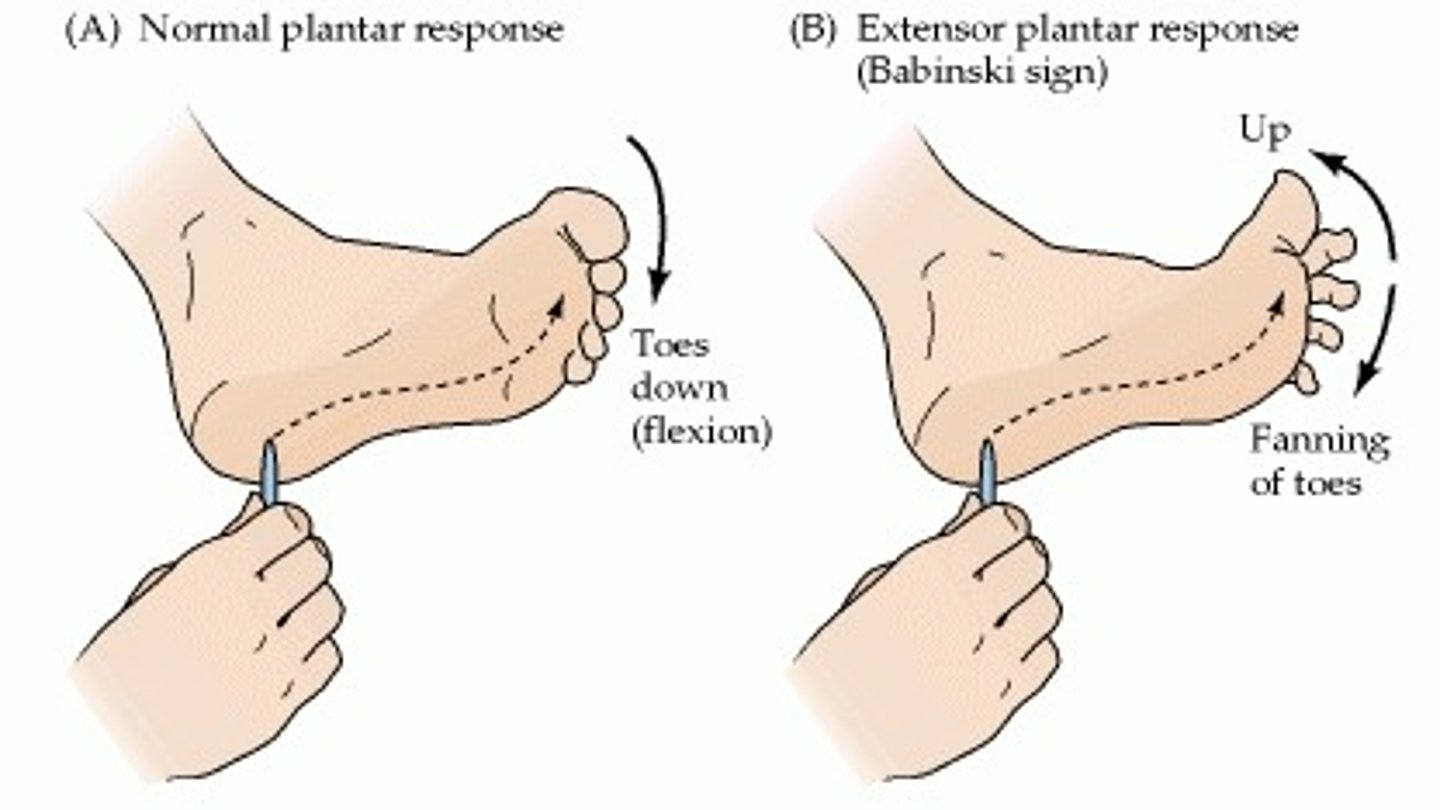
Babinski test
Upper motor neuron lesion
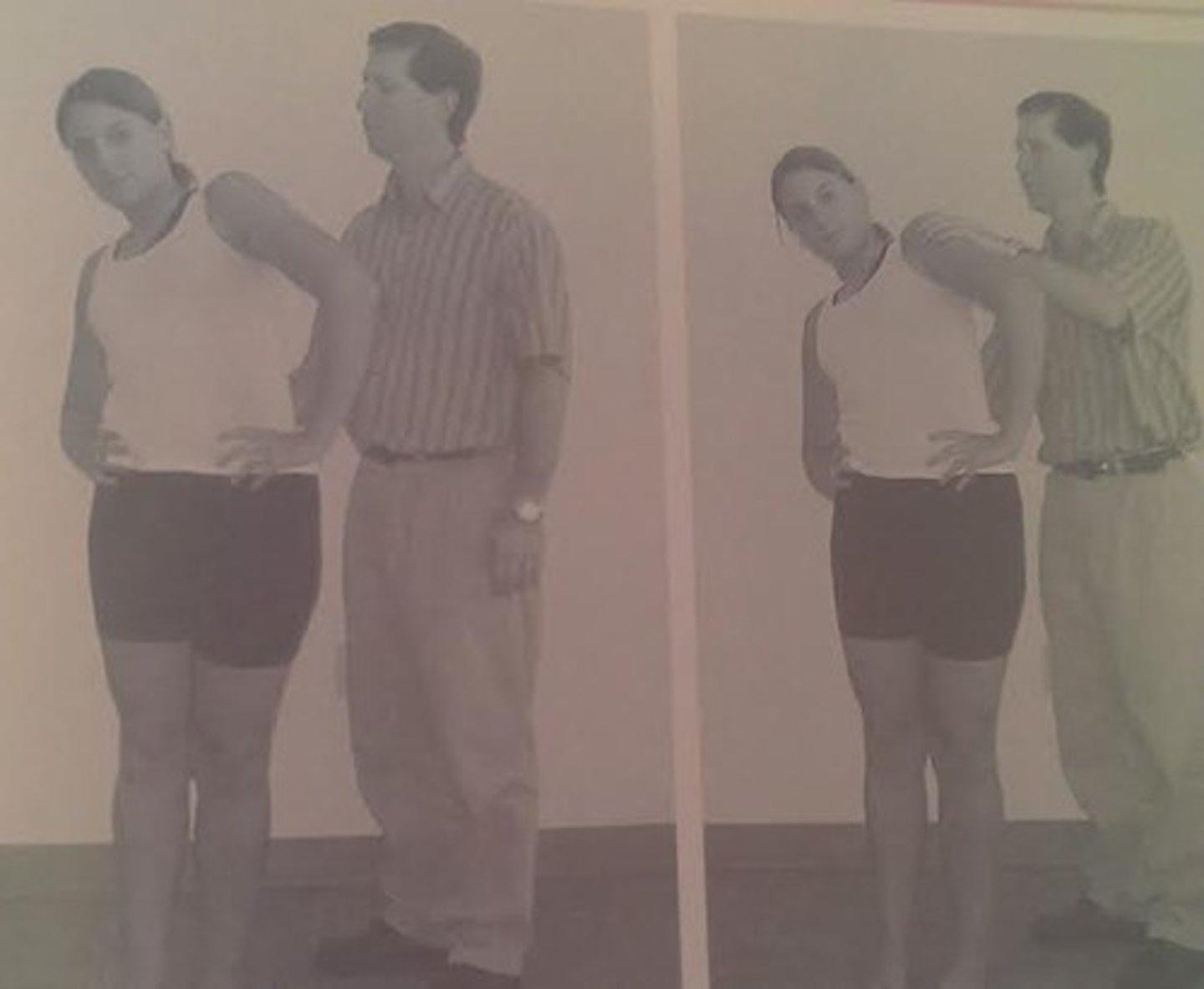
Quadrant test
Compression of a neural structures at intervertebral foramen and/or facet dysfunction
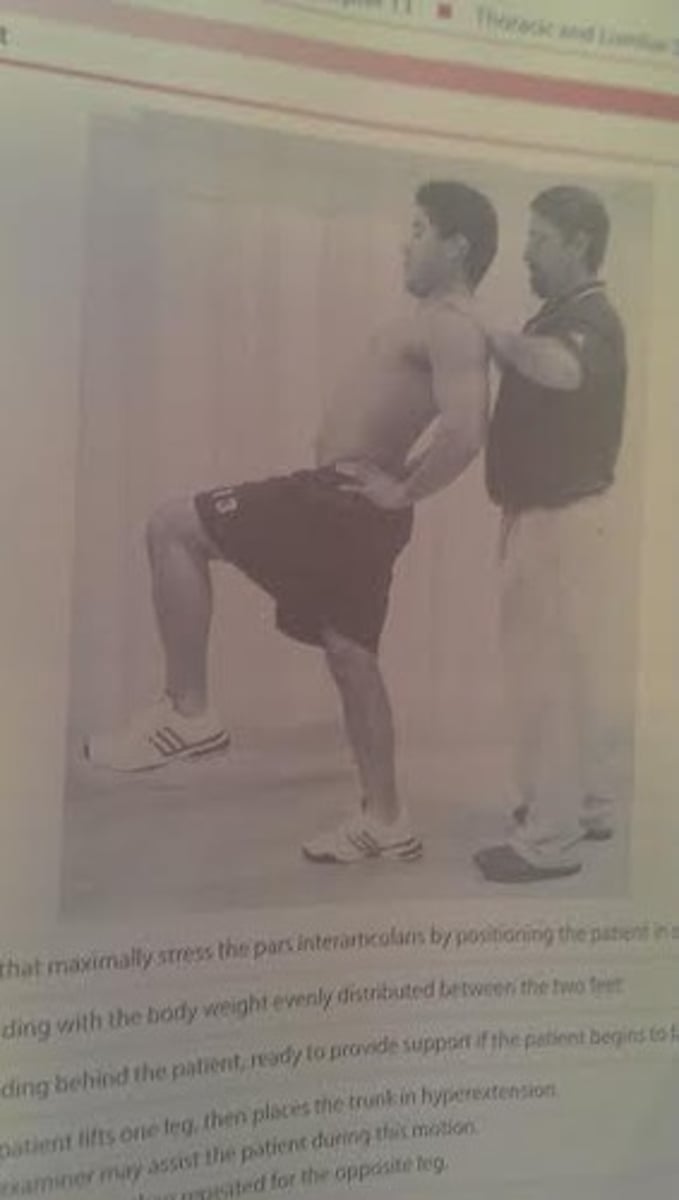
Stork standing test
Spondylolisthesis
McKenzie's slide glide test
Differentiates between scoliotic curve versus neurological dysfunction
Standing; PT standing on trunk shift side; place shoulder against pt's trunk; wrap hands around pt's pelvis; pull pelvis to create proper alignment
Bicycle van Gelderen's test
Differentiates between intermittent claudication and spinal stenosis
Bike in trunk extension and trunk flexion; pain with extension and not flexion = stenosis not intermittent claudication
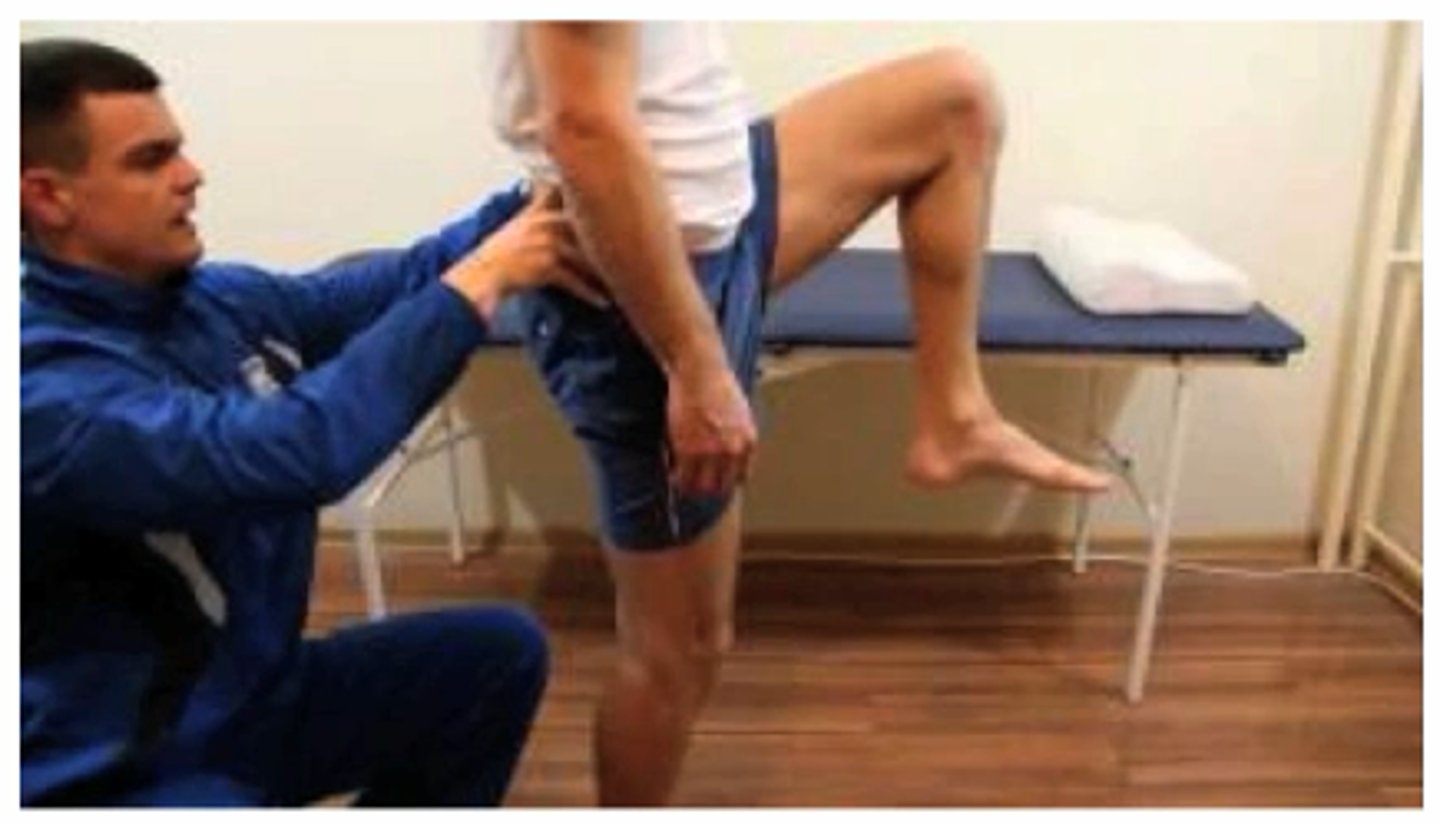
Gillet's test
Posterior movement of the ileum relative to the sacrum
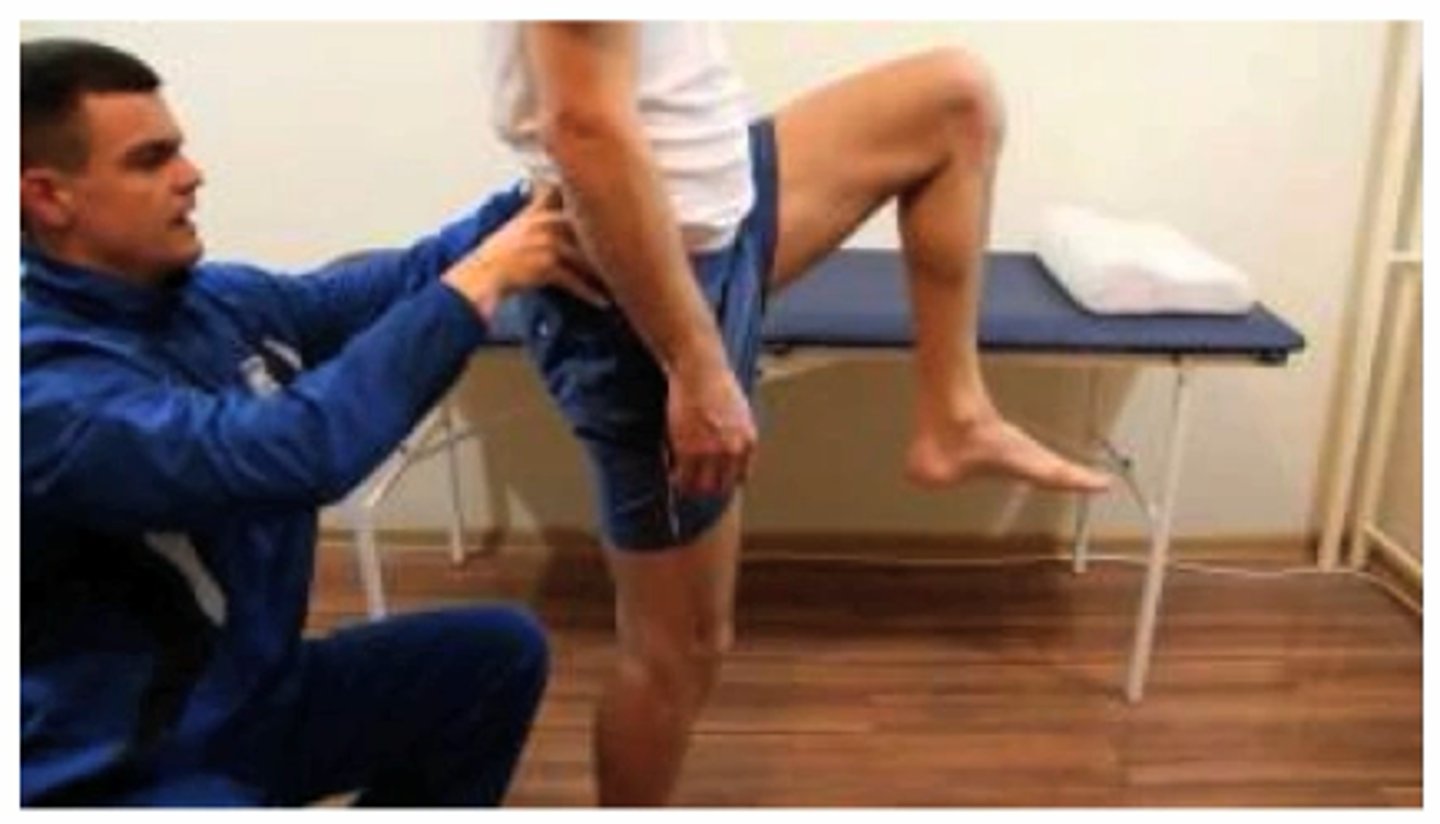
Ipsilateral anterior rotation test
Anterior movement of ilium relative to sacrum
Opposite of picture; leg should be extending
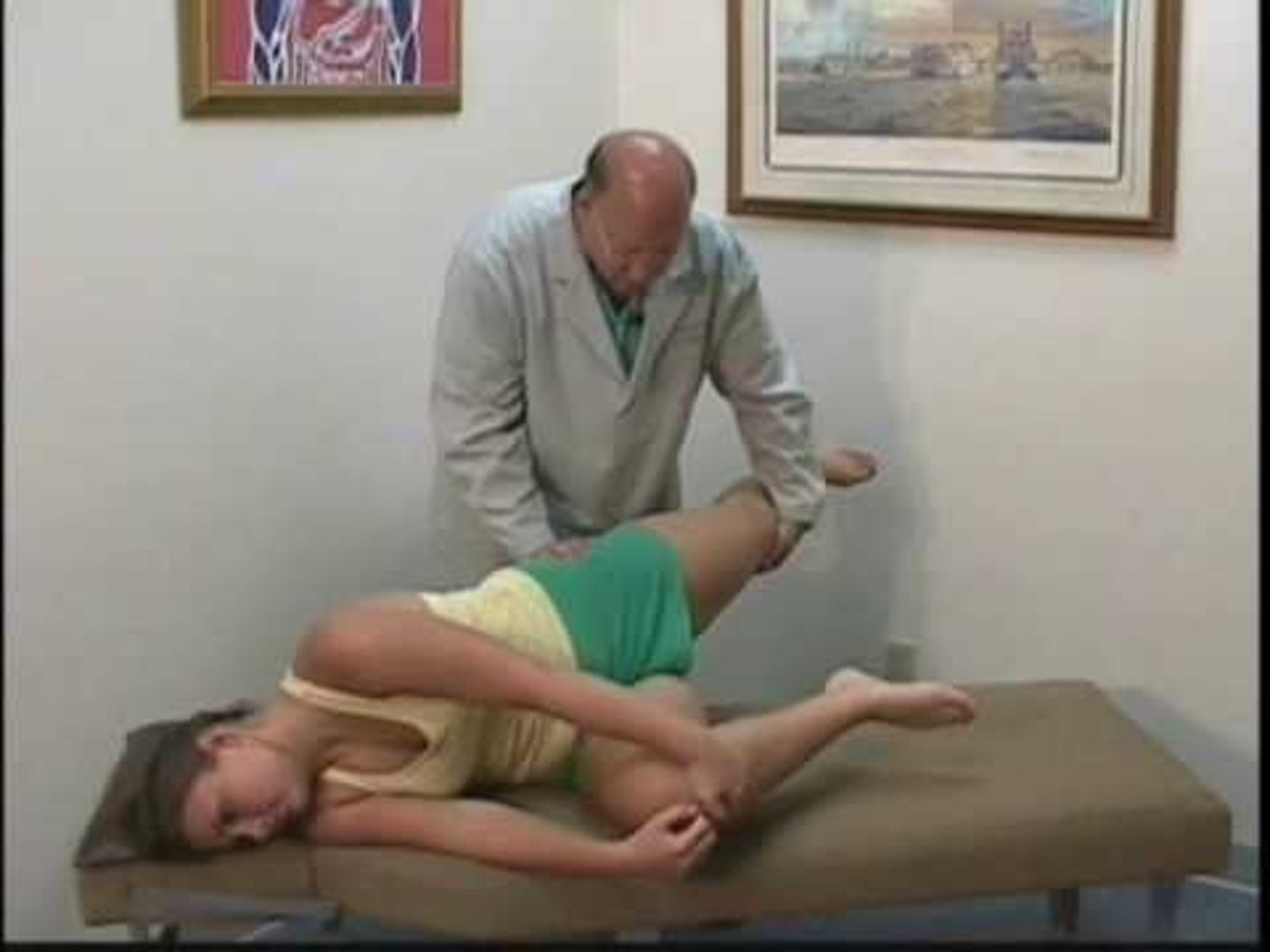
Gaenslen's test
SI joint dysfunction
Long sitting test
SI joint dysfunction
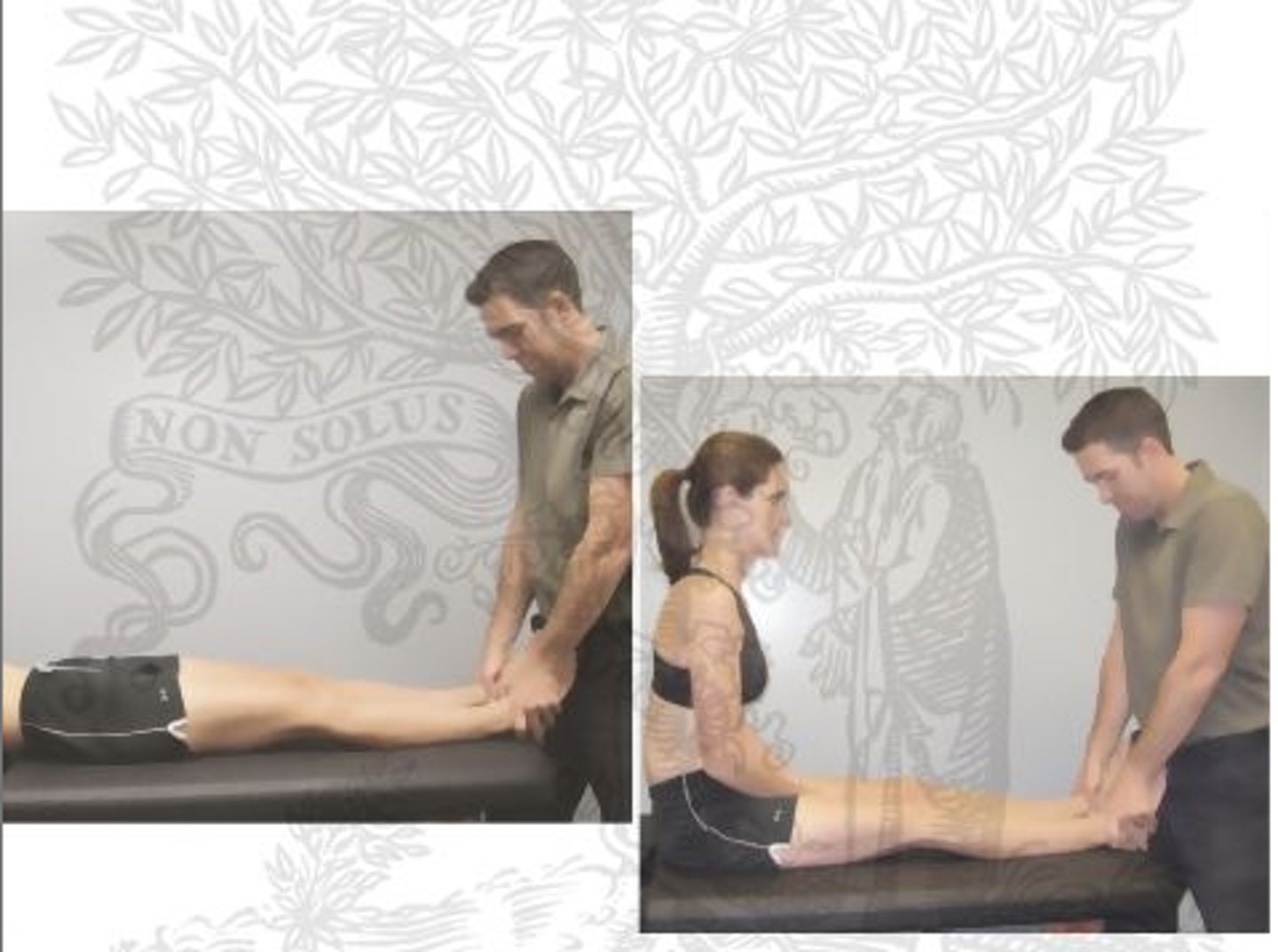
Goldthwait's test
Differentiate between dysfunction in lumbar spine versus SI joint
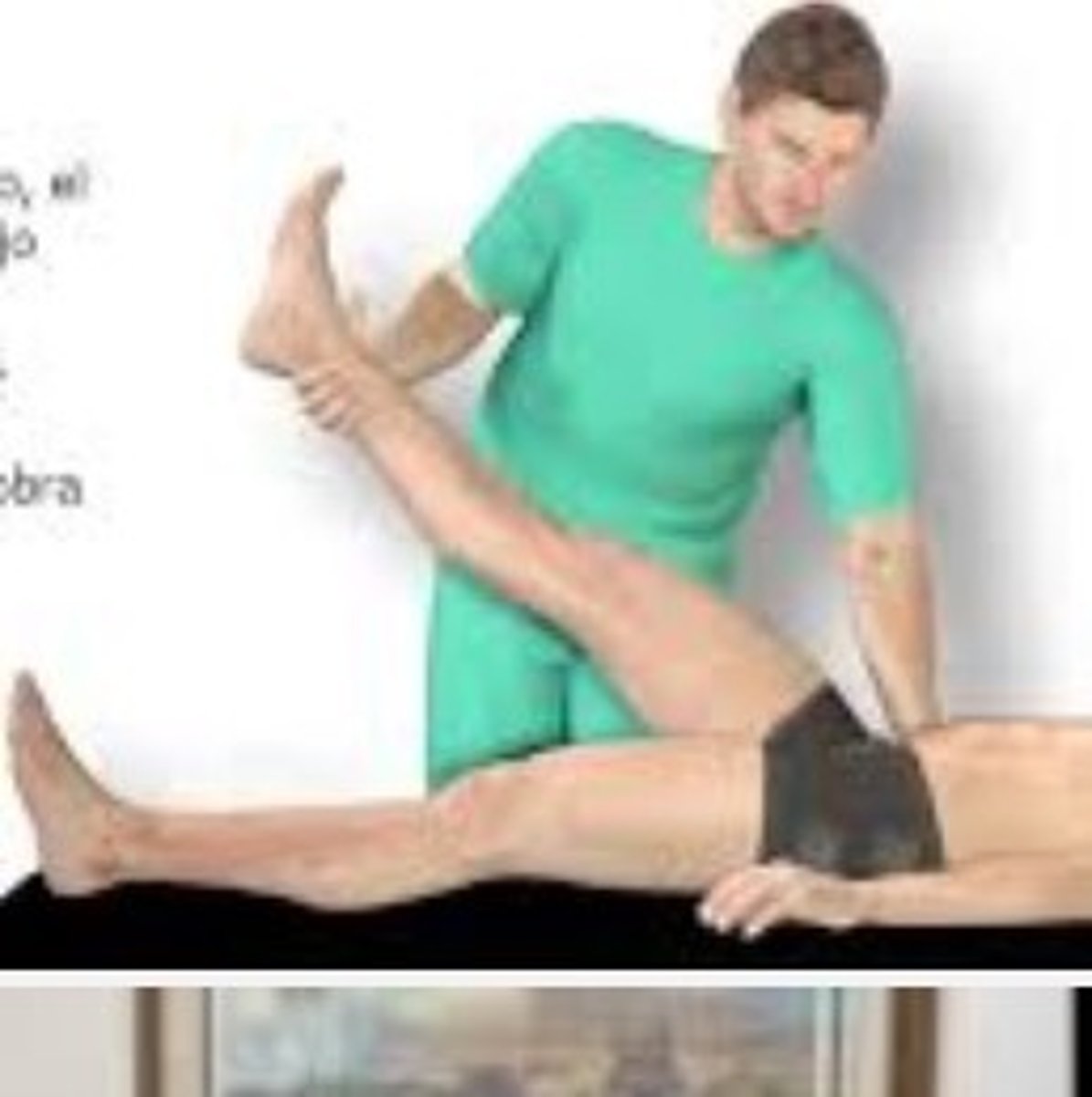
TMJ compression
Pain with compression of the retrodiscal tissue