AP Psychology Unit 5 Mental and Physical Health (updated for 24/25 SY)
 Call Kai
 Learn
Learn Practice Test
 Spaced Repetition
 Match
Match Flashcards
 Knowt Play
1/111

There's no tags or description
Looks like no tags are added yet.
Name | Mastery | Learn | Test | Matching | Spaced | Call with Kai |
|---|
No analytics yet
Send a link to your students to track their progress
112 Terms
Health Psychology
the subfield of psychology concerned with ways psychological factors influence the causes and treatment of physical illness and the maintenance of health

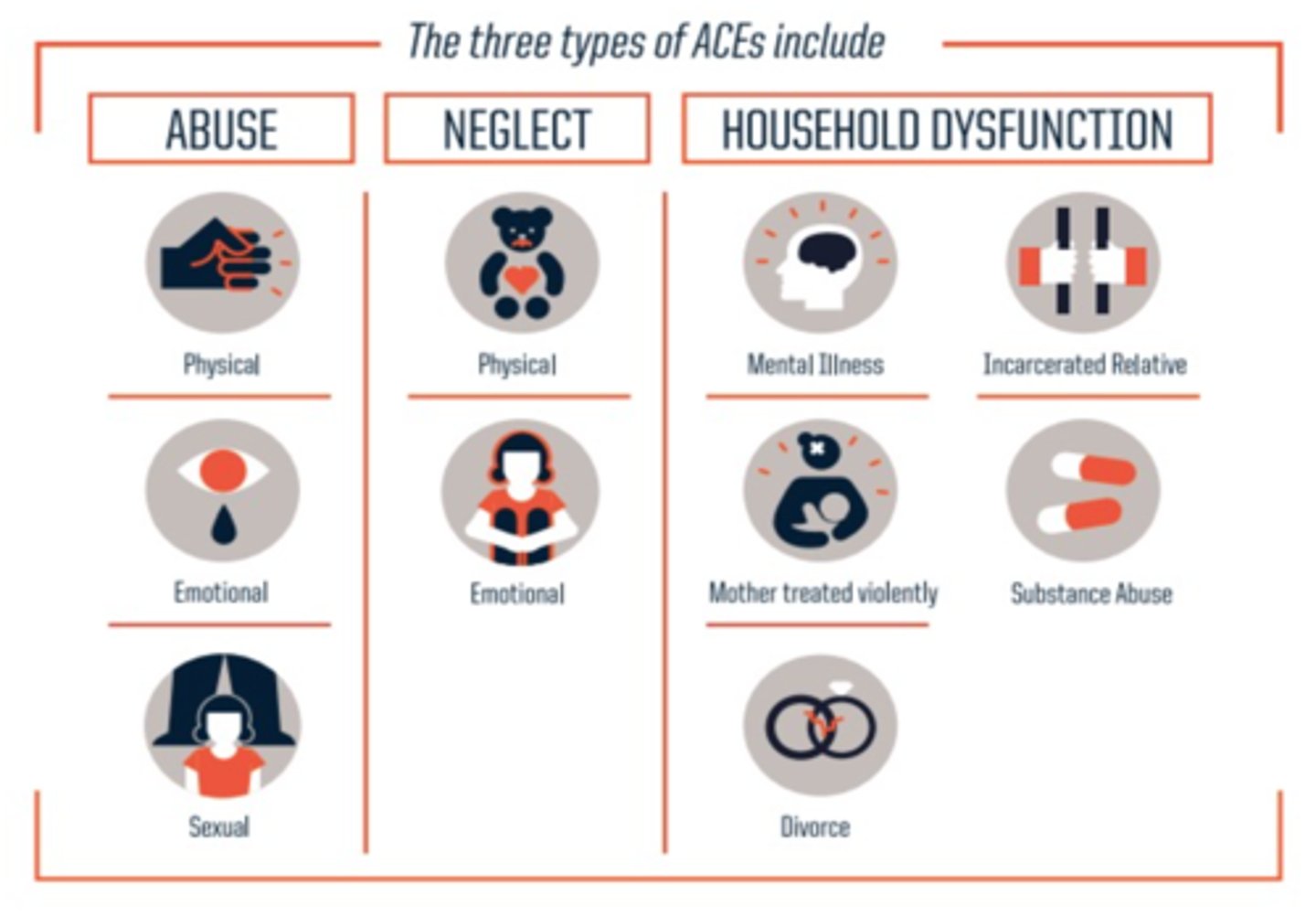
Adverse childhood experiences (ACEs)
Stressful or traumatic experiences, including abuse, neglect, and a range of household dysfunction, such as witnessing domestic violence or growing up with substance abuse, mental disorders, parental discord, or crime in the home.
Positive psychology
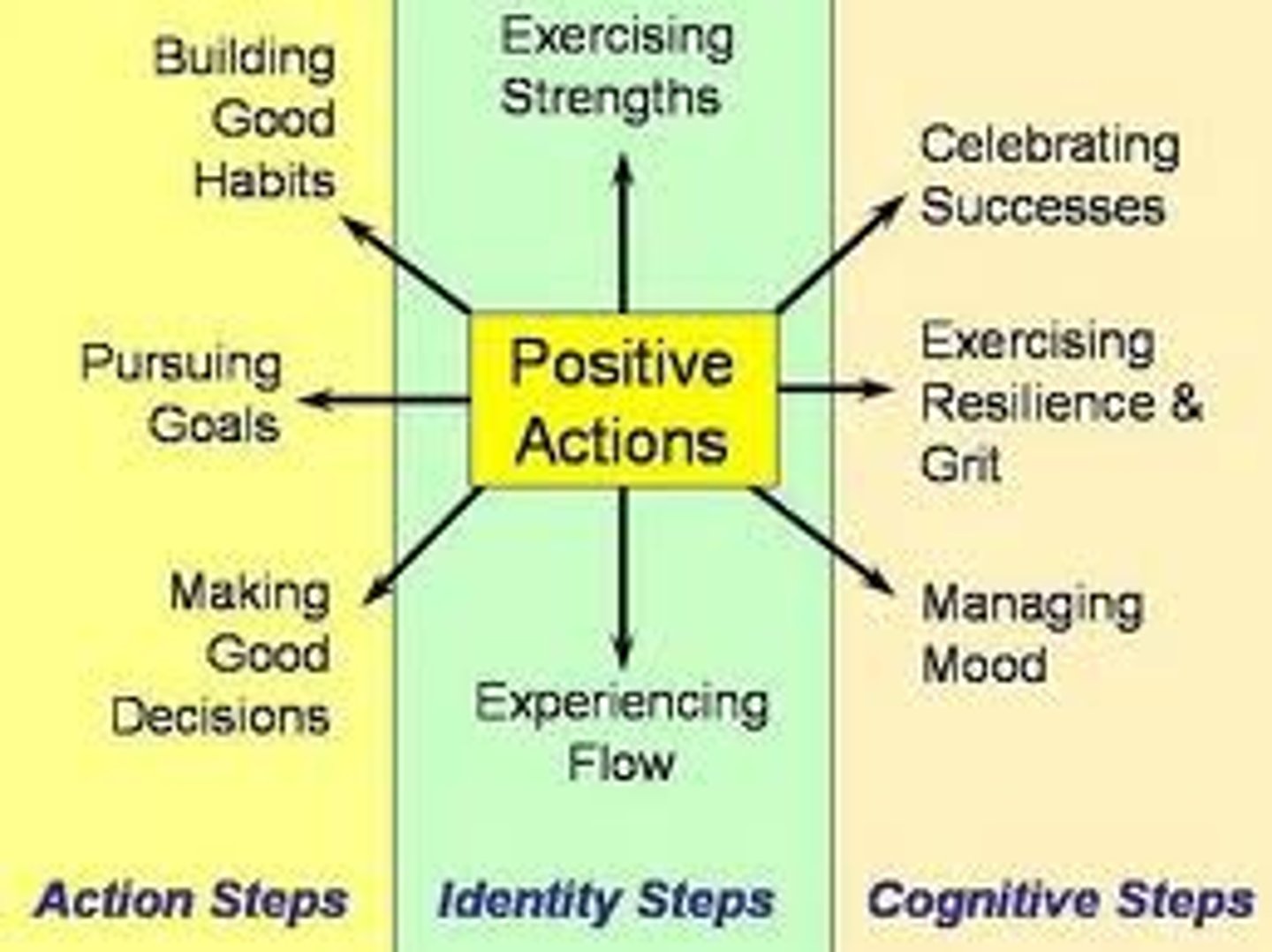
the scientific study of human flourishing, with the goals of discovering and promoting strengths and virtues that help individuals and communities to thrive
Positive emotions
joy, pride, relief, hope, love, and compassion

Happiness
the state of being happy

dysfunction
Impaired or abnormal functioning

DSM-5
the American Psychiatric Association's Diagnostic and Statistical Manual of Mental Disorders, Fifth Edition; a widely used system for classifying psychological disorders.

International Classification of Mental Disorders
global categorization system for physical and mental illnesses published by the World Health Organization (WHO)

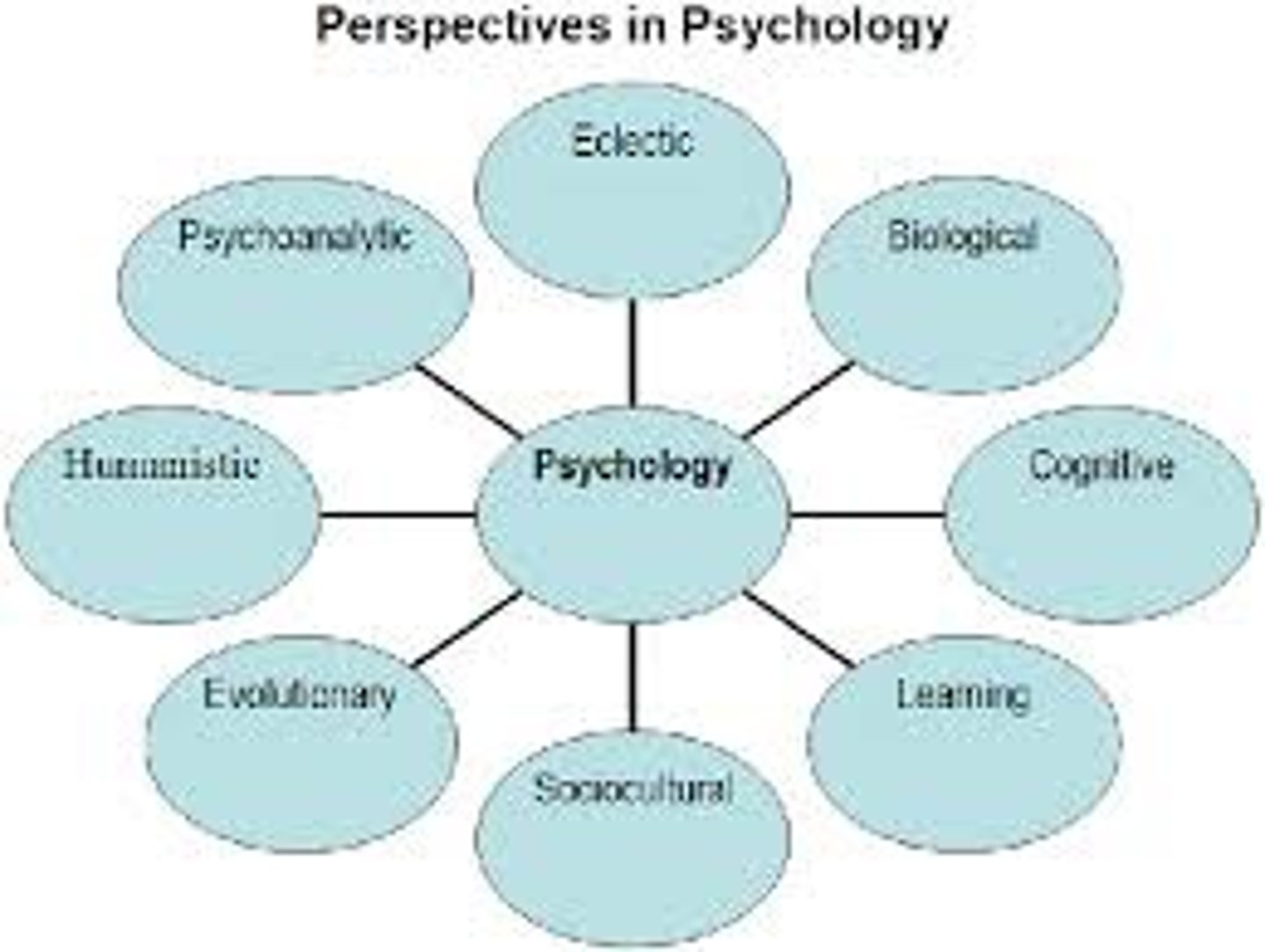
Eclectic approach
an approach to psychotherapy that, depending on the client's problems, uses techniques from various forms of therapy
Behavioral perspective
An approach to the study of psychology that focuses on the role of learning in explaining observable behavior.

Maladaptive learned associations
associations between or among responses to stimuli that interfere with an individual's activities of daily living or ability to adjust to and participate in particular settings.

Psychodynamic perspective
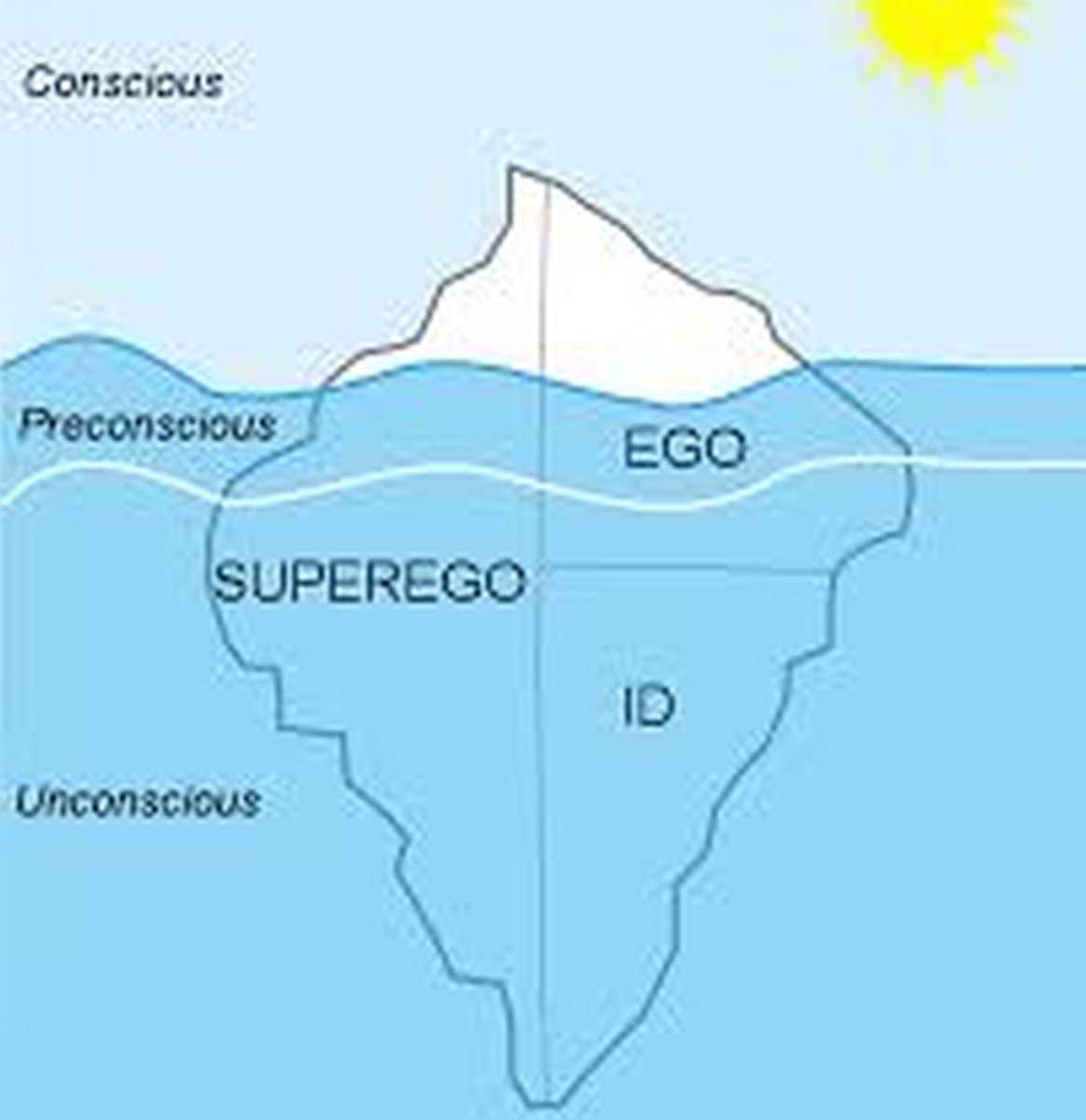
the approach based on the view that behavior is motivated by unconscious inner forces over which the individual has little control
Humanistic perspective
the psychological view that assumes the existence of the self and emphasizes the importance of self-awareness and the freedom to make choices
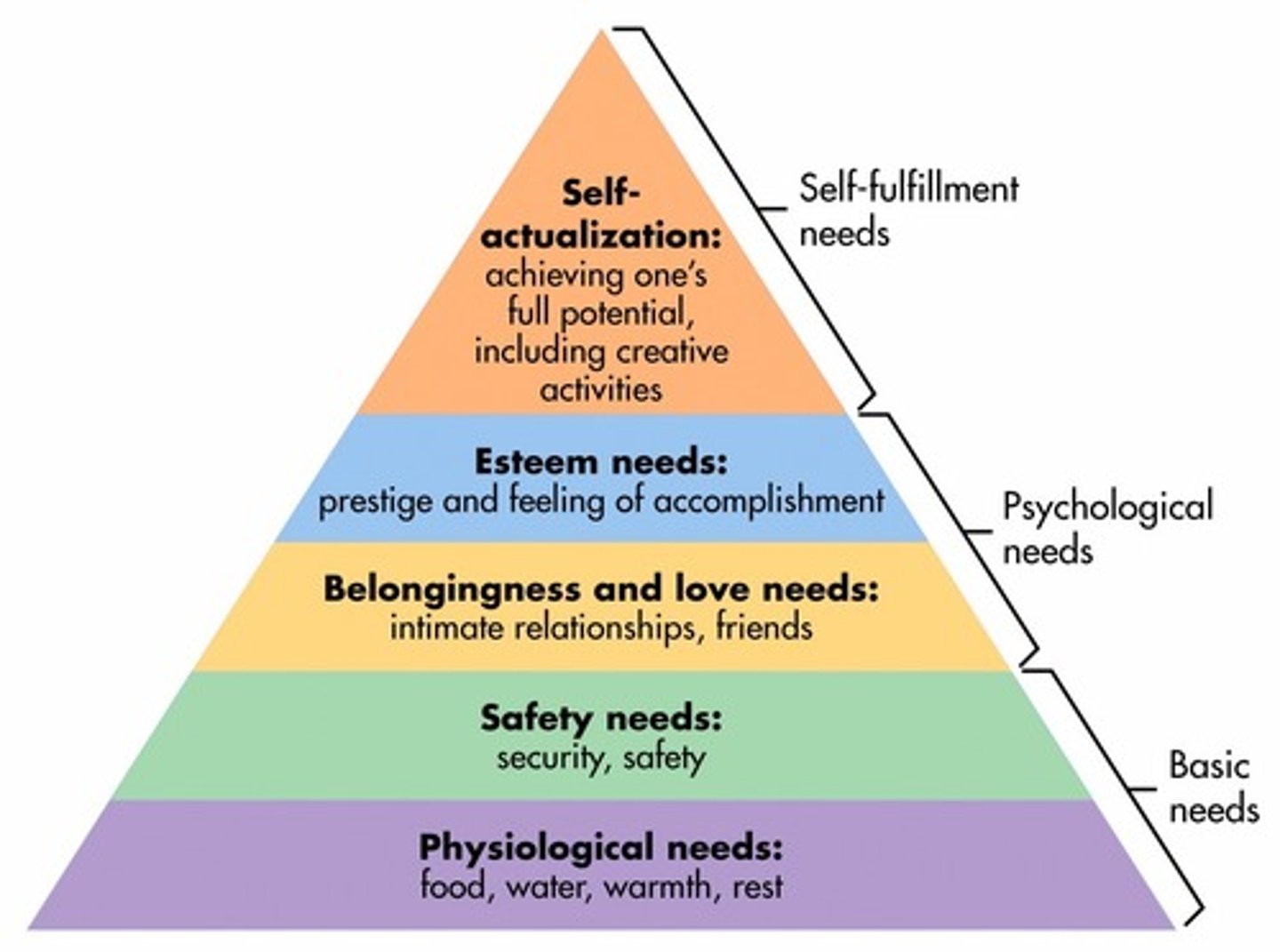
Cognitive perspective
A psychological approach that emphasizes mental processes in perception, memory, language, problem solving, and other areas of behavior
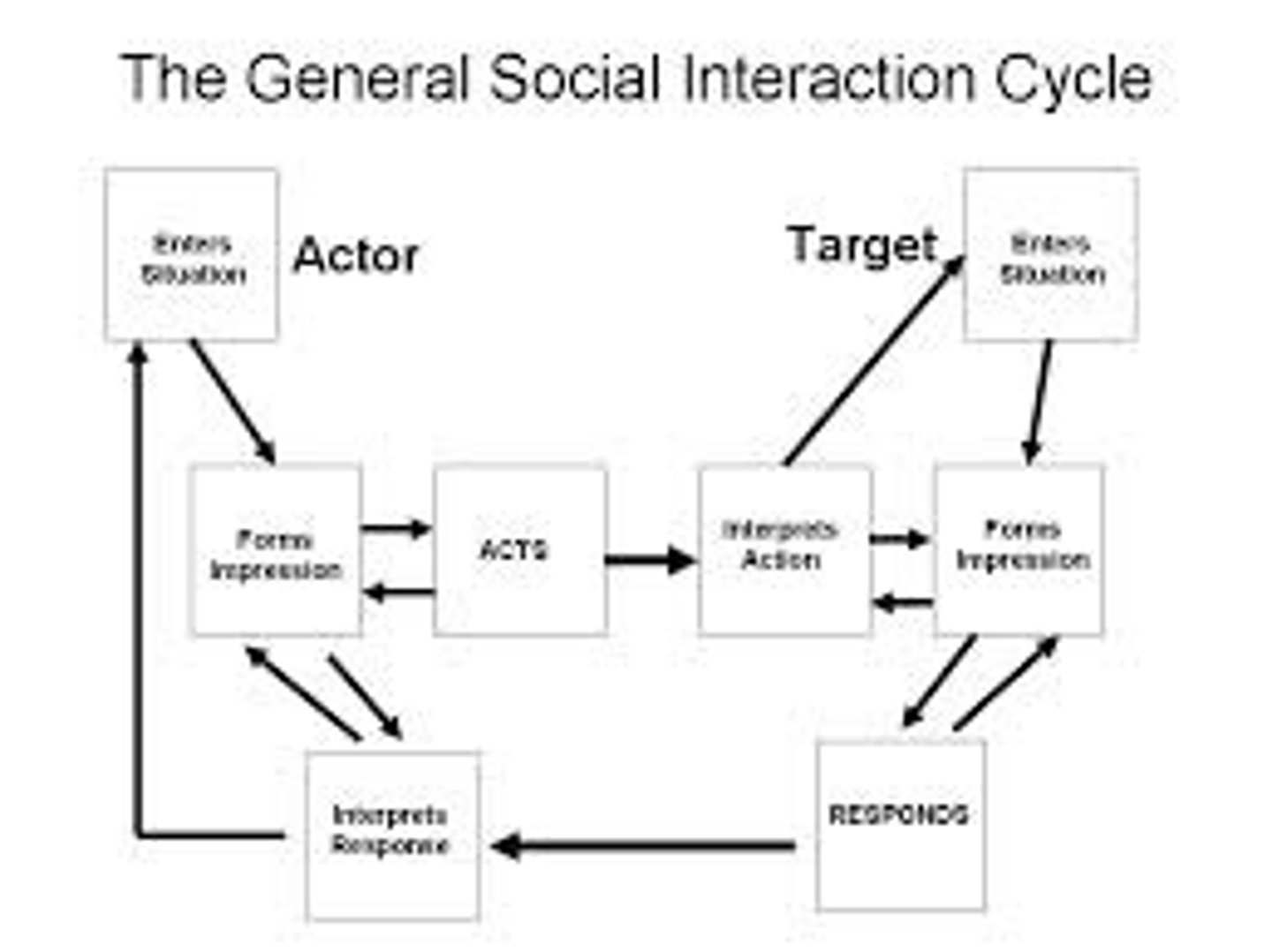
Evolutionary perspective
perspective that focuses on the biological bases of universal mental characteristics that all humans share

Sociocultural perspective
perspective that focuses on the relationship between social behavior and culture

Biological perspective
the psychological perspective that emphasizes the influence of biology on behavior
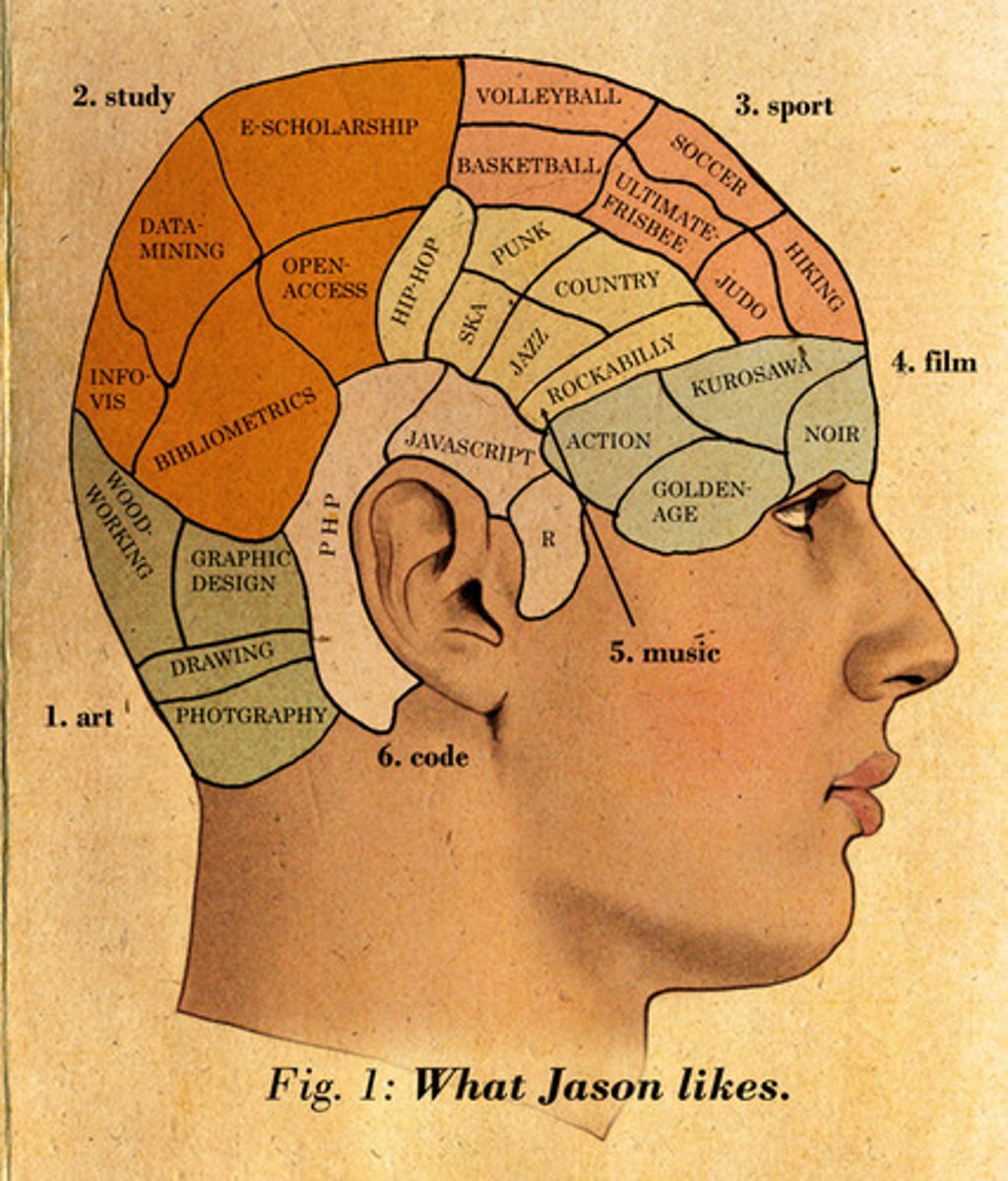
Biopsychosocial model
a model of health that integrates the effects of biological, behavioral, and social factors on health and illness
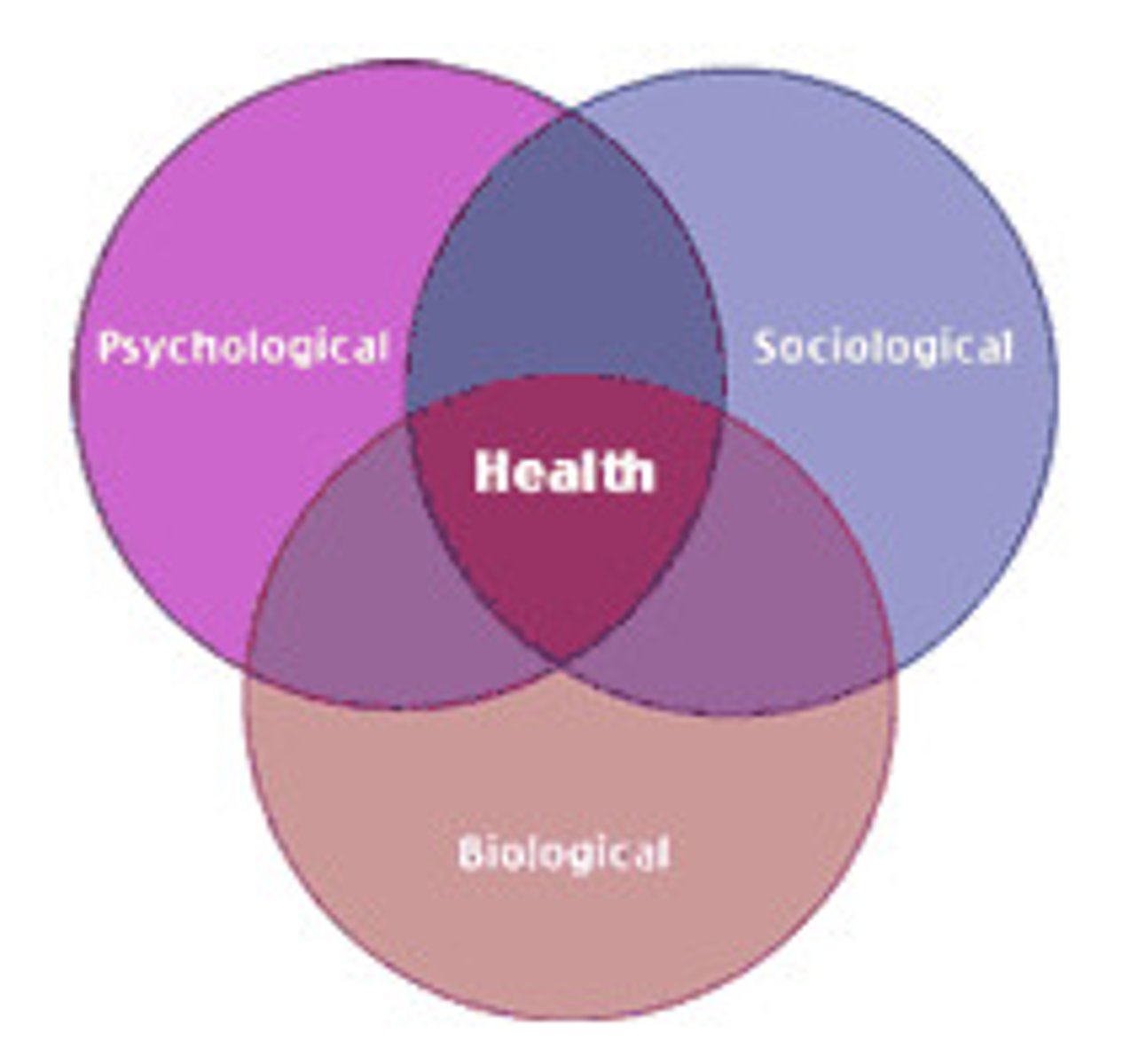
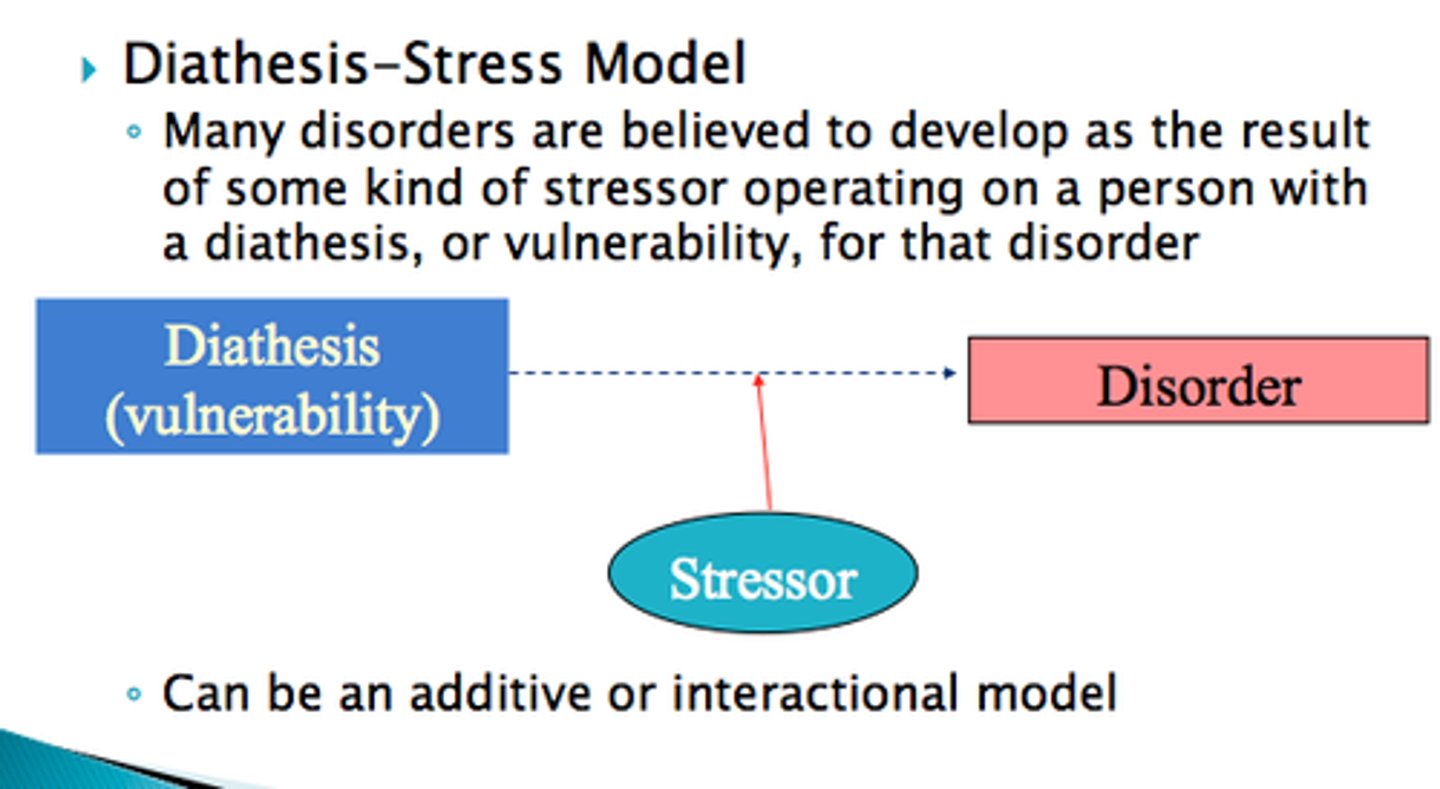
Diathesis-stress model
a diagnostic model that proposes that a disorder may develop when an underlying vulnerability is coupled with a precipitating event
Neurodevelopmental disorders
a group of conditions manifested early in development that are characterized by developmental deficits that produce impairments of personal, social, academic, or occupational functioning
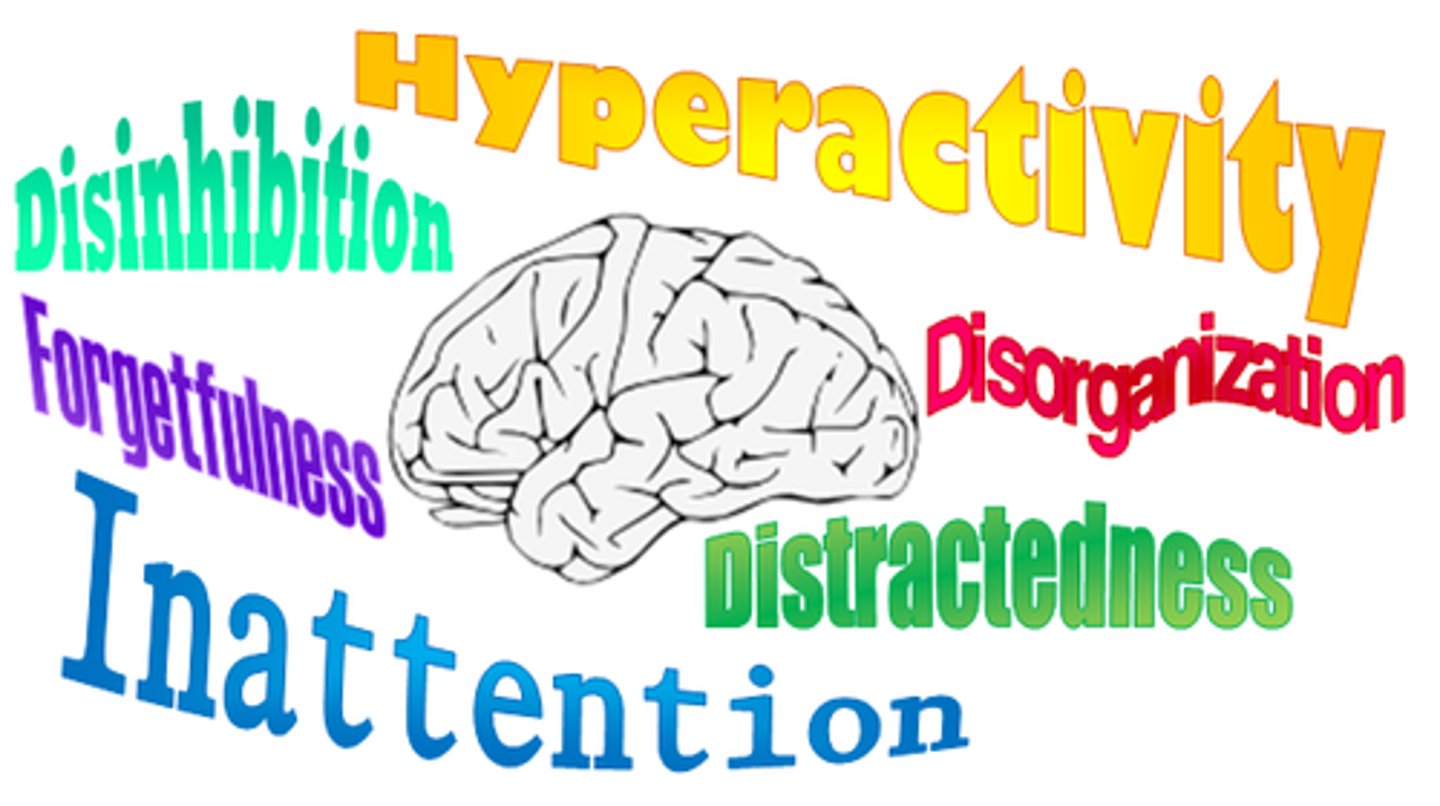
attention-deficit/hyperactivity disorder (ADHD)
a psychological disorder marked by extreme inattention and/or hyperactivity and impulsivity
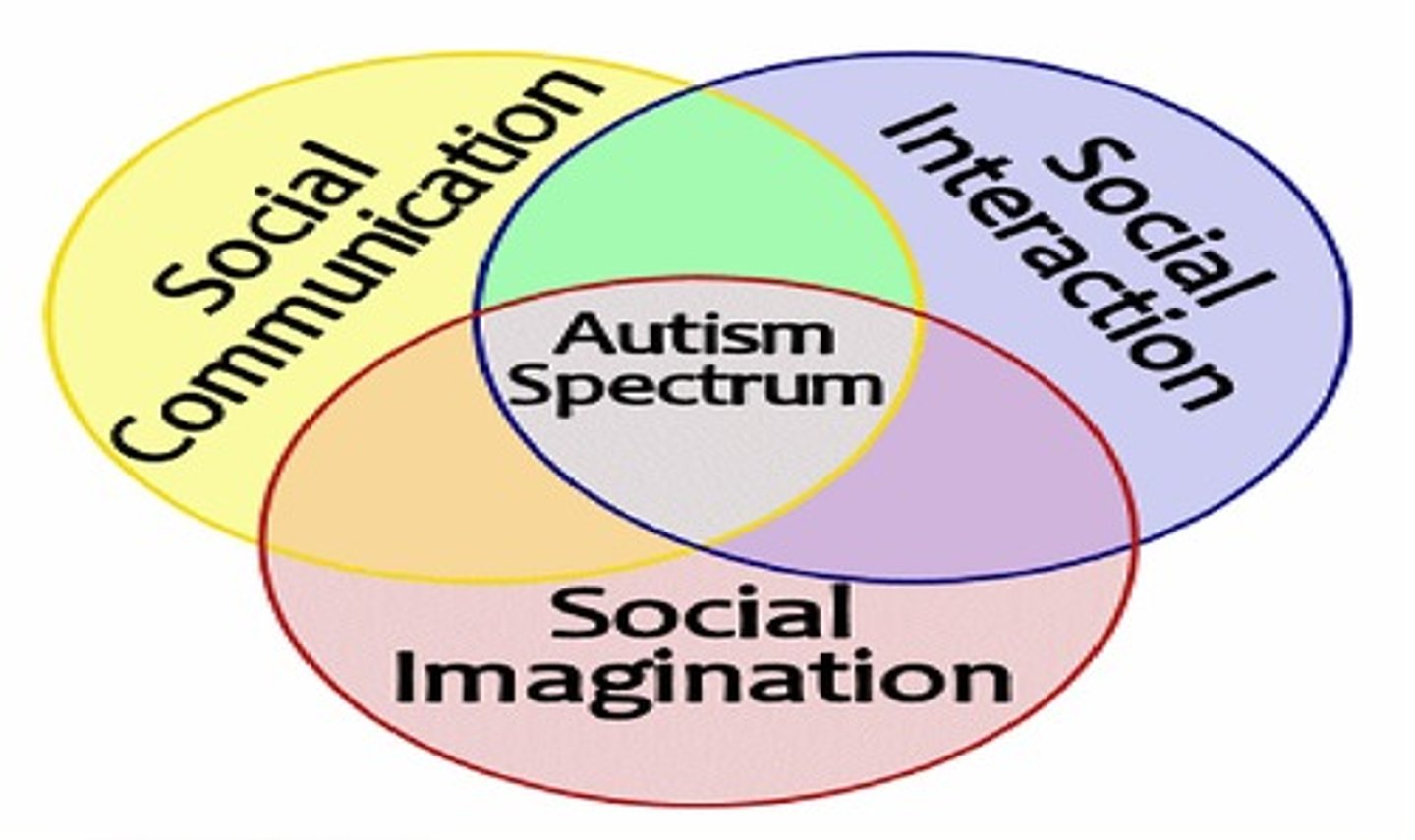
Autism Spectrum Disorder (ASD)
a disorder that appears in childhood and is marked by significant deficiencies in communication and social interaction, and by rigidly fixated interests and repetitive behaviors
Schizophrenic Spectrum Disorders
severe disorders in which there are disturbances of thoughts, communications, and emotions, including delusions and hallucinations
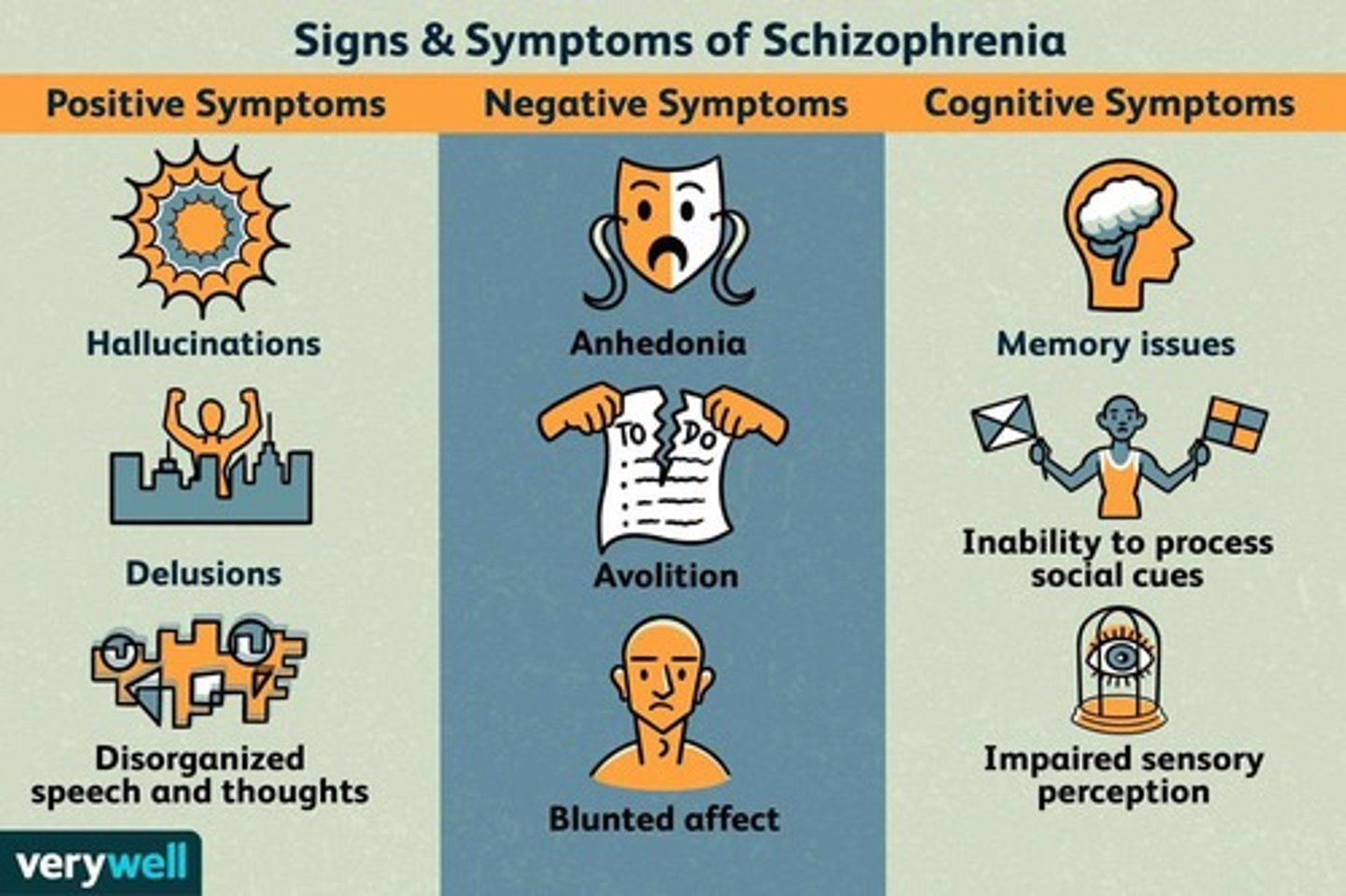
Delusions
false beliefs, often of persecution or grandeur, that may accompany psychotic disorders

Hallucinations
false sensory experiences, such as seeing something in the absence of an external visual stimulus
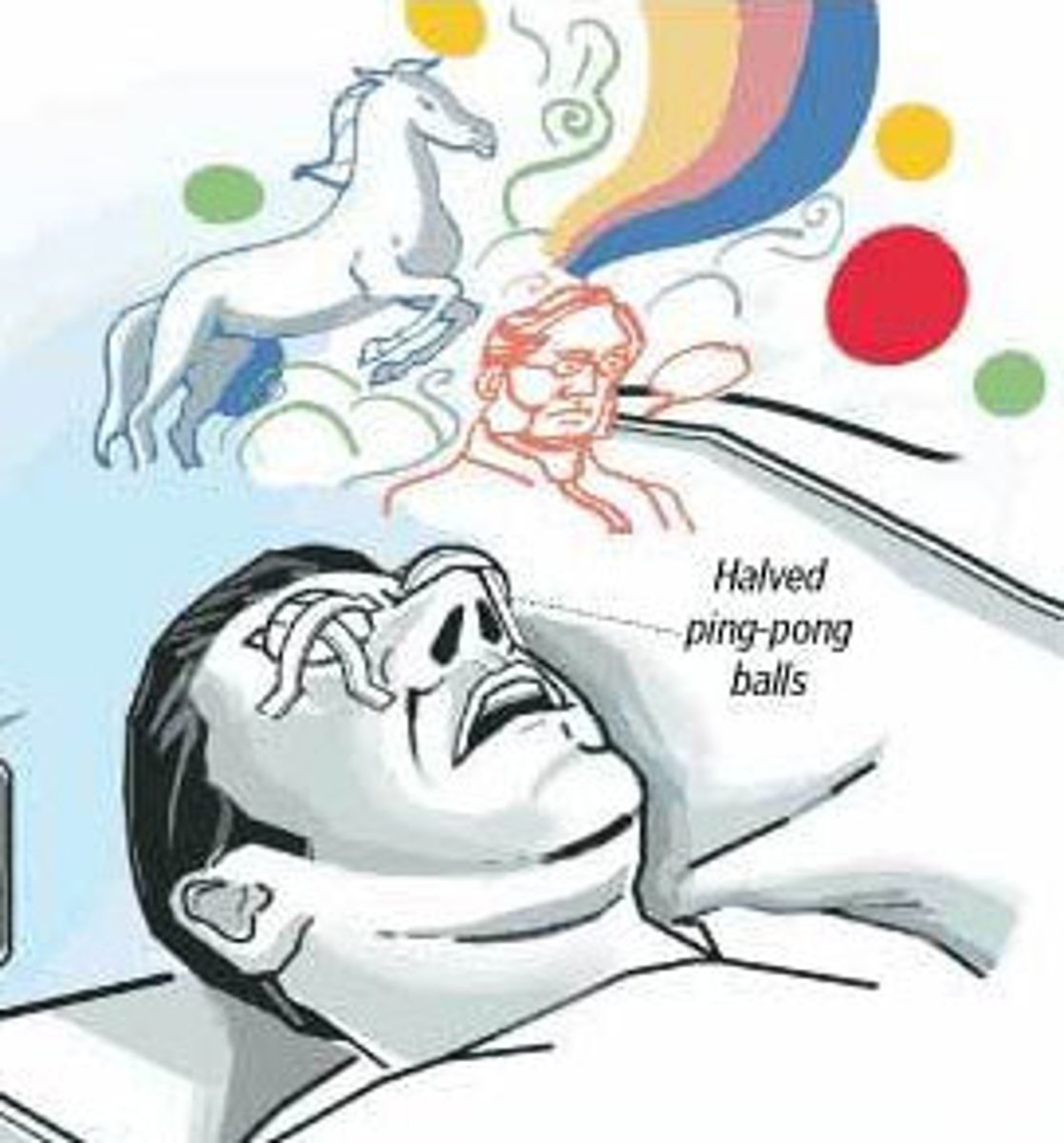
Disorganized thinking
disjointed and incoherent thought processes, usually detected by what a person says
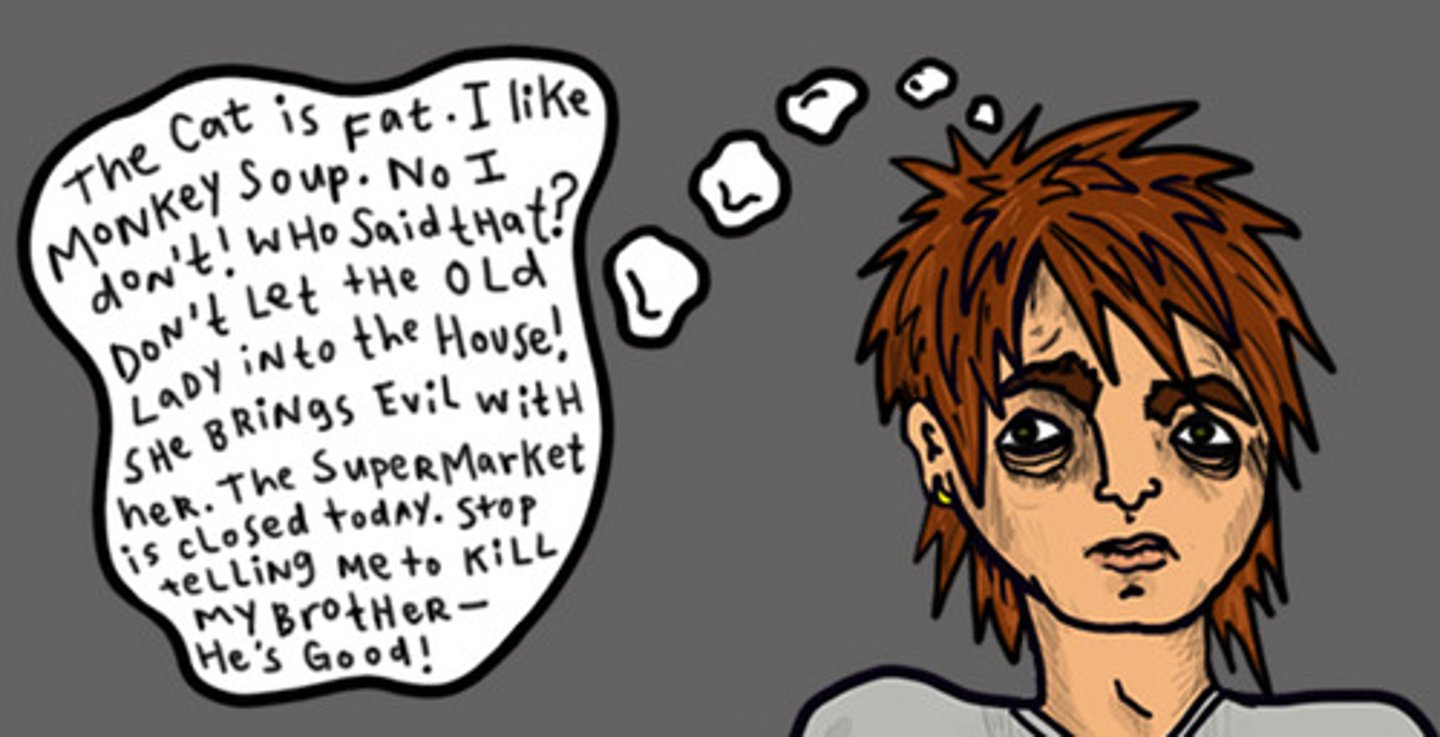
Disorganized speech
a severe disruption of verbal communication in which ideas shift rapidly and incoherently among unrelated topics

disorganized motor behavior
ranges from unusually active to barely moving; unusual grimaces and gestures

Negative symptoms
Schizophrenic symptoms that involve behavioral deficits, such as flattened emotions, social withdrawal, apathy, impaired attention, and poverty of speech.
Positive symptoms
Schizophrenic symptoms that involve behavioral excesses or peculiarities, such as hallucinations, delusions, bizarre behavior, and wild flights of ideas.
Delusion of persecution
a false belief that one is being mistreated, abused, or harassed

Delusion of grandeur
an exaggerated belief about one's importance, wealth, power, or talents

word salad
Incoherent mixture of words, phrases, and sentences

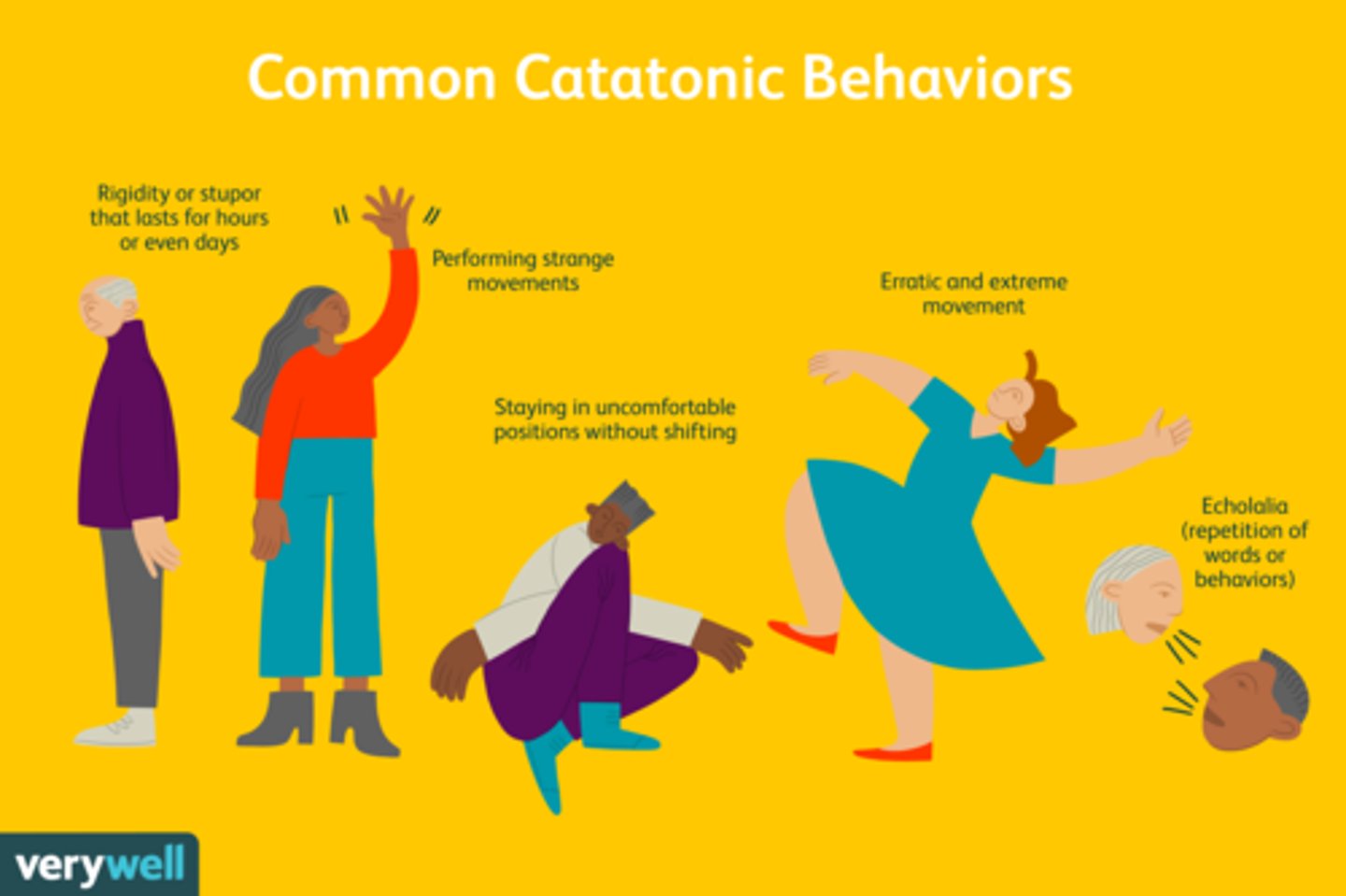
Catatonia
a state of unresponsiveness to one's outside environment, usually including muscle rigidity, staring, and inability to communicate
Flat affect
a lack of emotional responsiveness

Catatonic stupor
an immobile, expressionless, coma-like state associated with schizophrenia
major depressive disorder
A mood disorder in which a person experiences, in the absence of drugs or a medical condition, two or more weeks of significantly depressed moods, feelings of worthlessness, and diminished interest or pleasure in most activities.
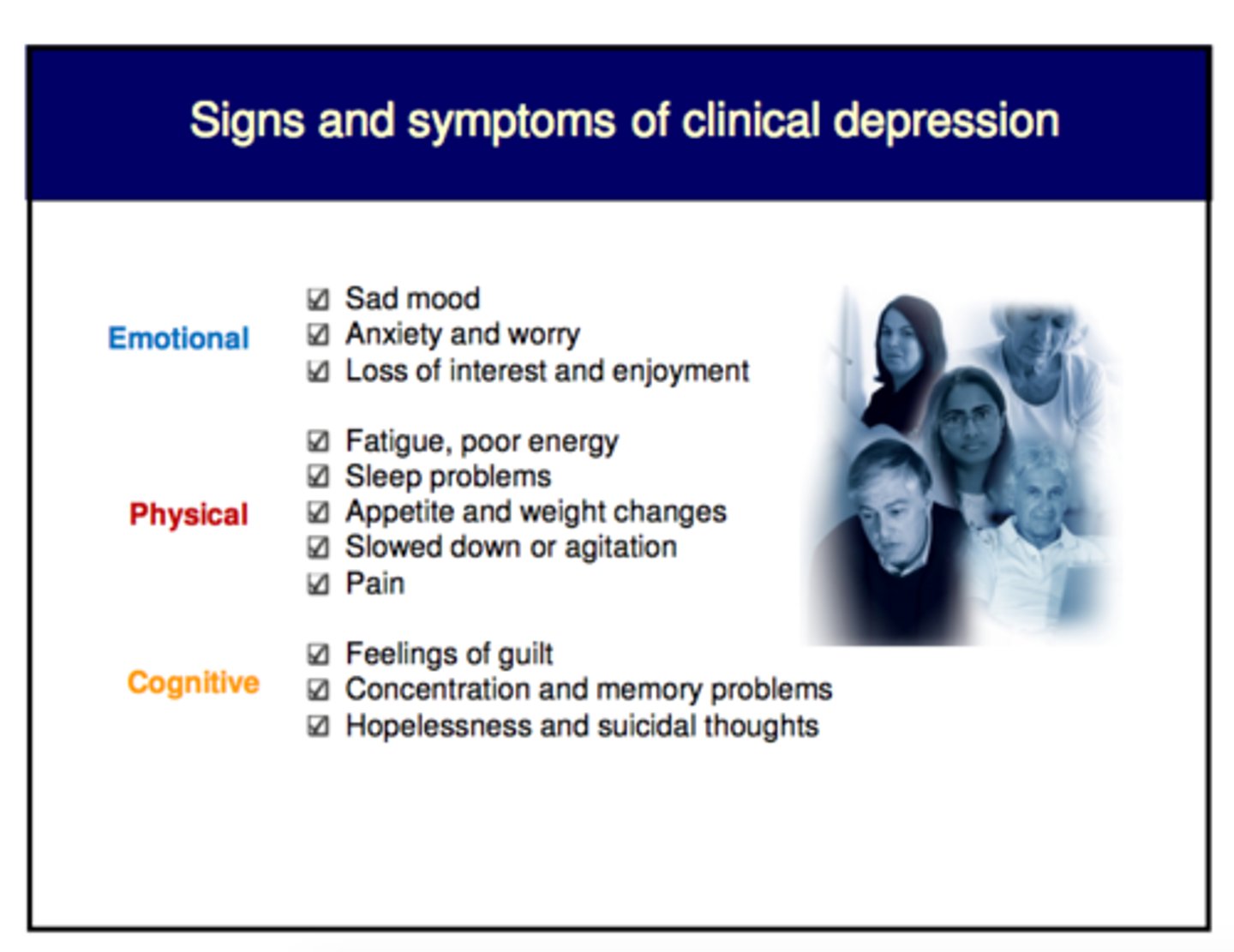
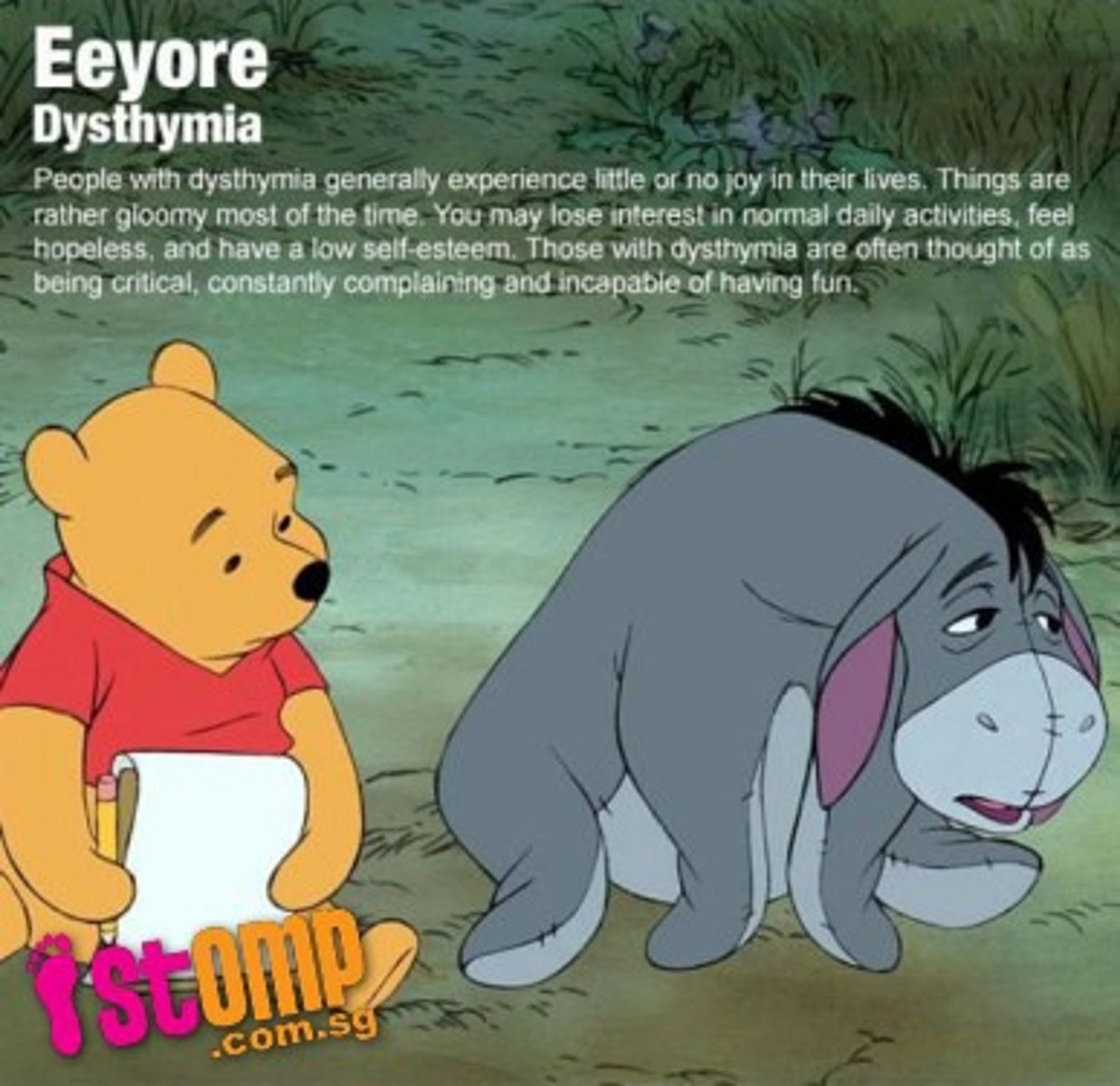
Persistent Depressive Disorder
a form of depression that is not severe enough to be diagnosed as major depressive disorder
Bipolar disorder
A mood disorder in which the person alternates between the hopelessness and lethargy of depression and the overexcited state of mania.
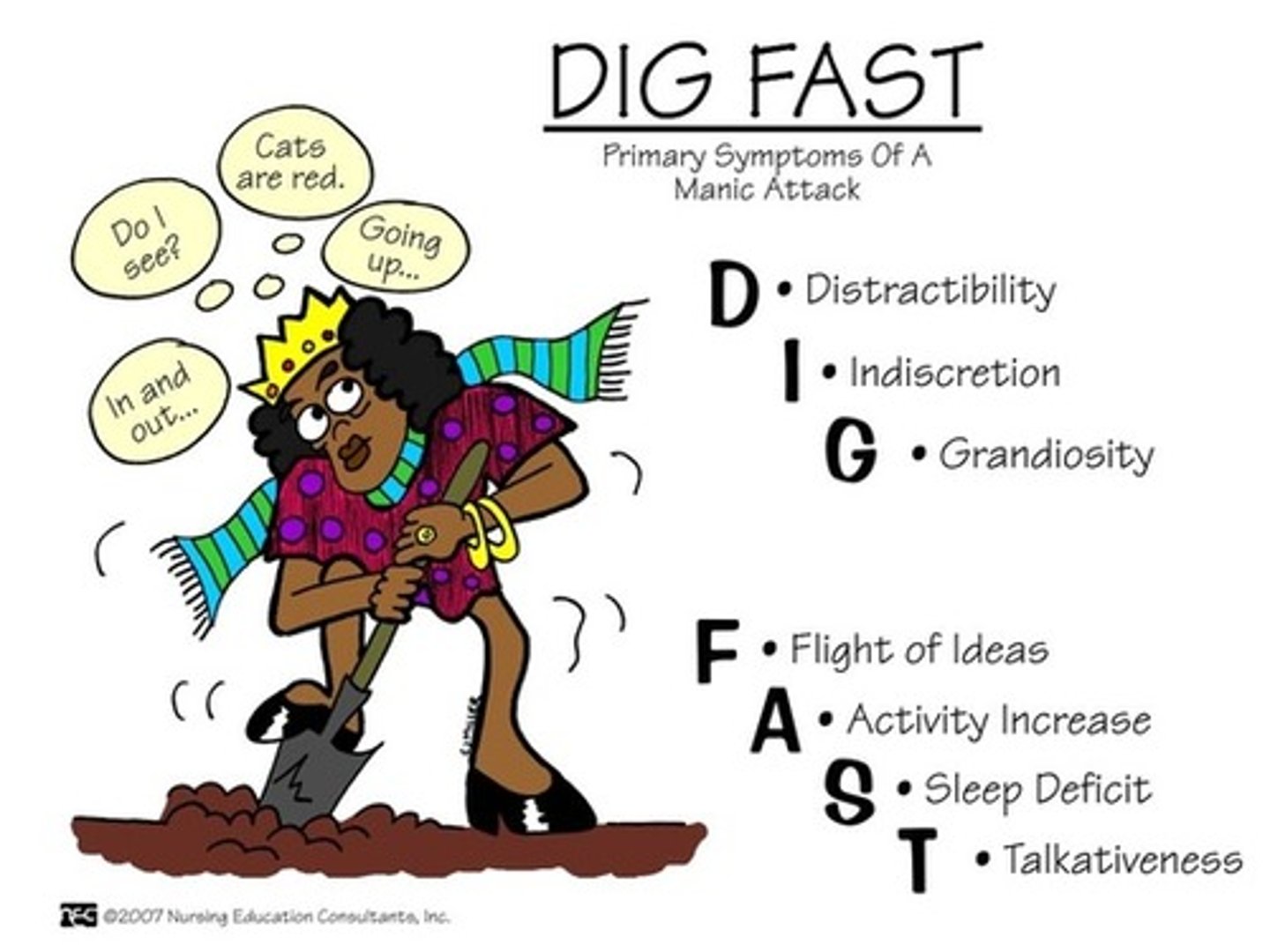
Mania
a mood disorder marked by a hyperactive, wildly optimistic state
Depression
A prolonged feeling of helplessness, hopelessness, and sadness

Bipolar I Disorder
a type of bipolar disorder marked by full manic and major depressive episodes

Bipolar II Disorder
a type of bipolar disorder marked by mildly manic (hypomanic) episodes and major depressive episodes

Specific phobia
fear of objects or specific situations or events

Acrophobia
fear of heights

Arachnophobia
fear of spiders

Agoraphobia
fear or avoidance of situations, such as crowds or wide open places, where one has felt loss of control and panic

Panic disorder
An anxiety disorder marked by unpredictable minutes-long episodes of intense dread in which a person experiences terror and accompanying chest pain, choking, or other frightening sensations.

Panic attack
sudden onset of intense panic in which multiple physical symptoms of stress occur, often with feelings that one is dying

Ataque de nervious
observed in latin american groups. symptoms include trembling, uncontrollable shouting, intense crying, heat in the chest rising to the head, and dizziness. this tends to surface during stressful family events such as funerals, and divorces.

social anxiety disorder
intense fear of social situations, leading to avoidance of such

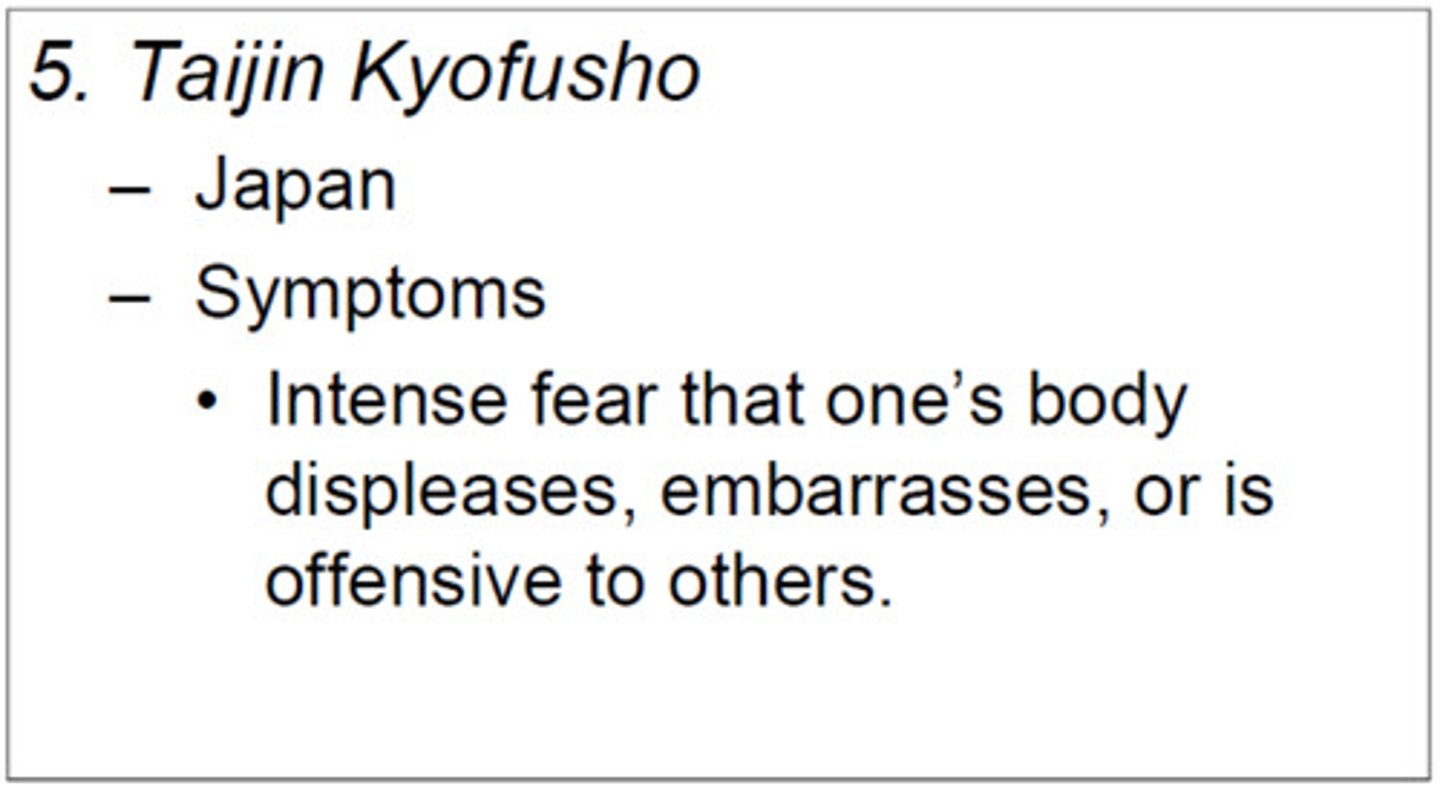
Taijin kyofusho
Japanese fear of offending or embarrassing others
Generalized Anxiety Disorder (GAD)
a disorder characterized by chronic excessive worry accompanied by three or more of the following symptoms: restlessness, fatigue, concentration problems, irritability, muscle tension, and sleep disturbance
Obsessive-compulsive and related disorders
group of overlapping disorders listed in the DSM-5 that involves intrusive, unpleasant thoughts and/or repetitive behaviors

Obsessions
persistent ideas, thoughts, or impulses that are unwanted and inappropriate, causing marked distress

Compulsions
Repetitive behaviors or mental acts that are performed to prevent or reduce anxiety.

Hoarding disorder
Persistent difficulty discarding or parting with possessions, regardless of their actual value

Obsessive-Compulsive Disorder
An anxiety disorder characterized by unwanted repetitive thoughts (obsession) and/ or actions (compulsions).

Dissociative disorders
disorders in which conscious awareness becomes separated (dissociated) from previous memories, thoughts, and feelings

dissociation
a split in consciousness, which allows some thoughts and behaviors to occur simultaneously with others

dissociative amnesia
Dissociative disorder characterized by the sudden and extensive inability to recall important personal information, usually of a traumatic or stressful nature.

dissociative identity disorder
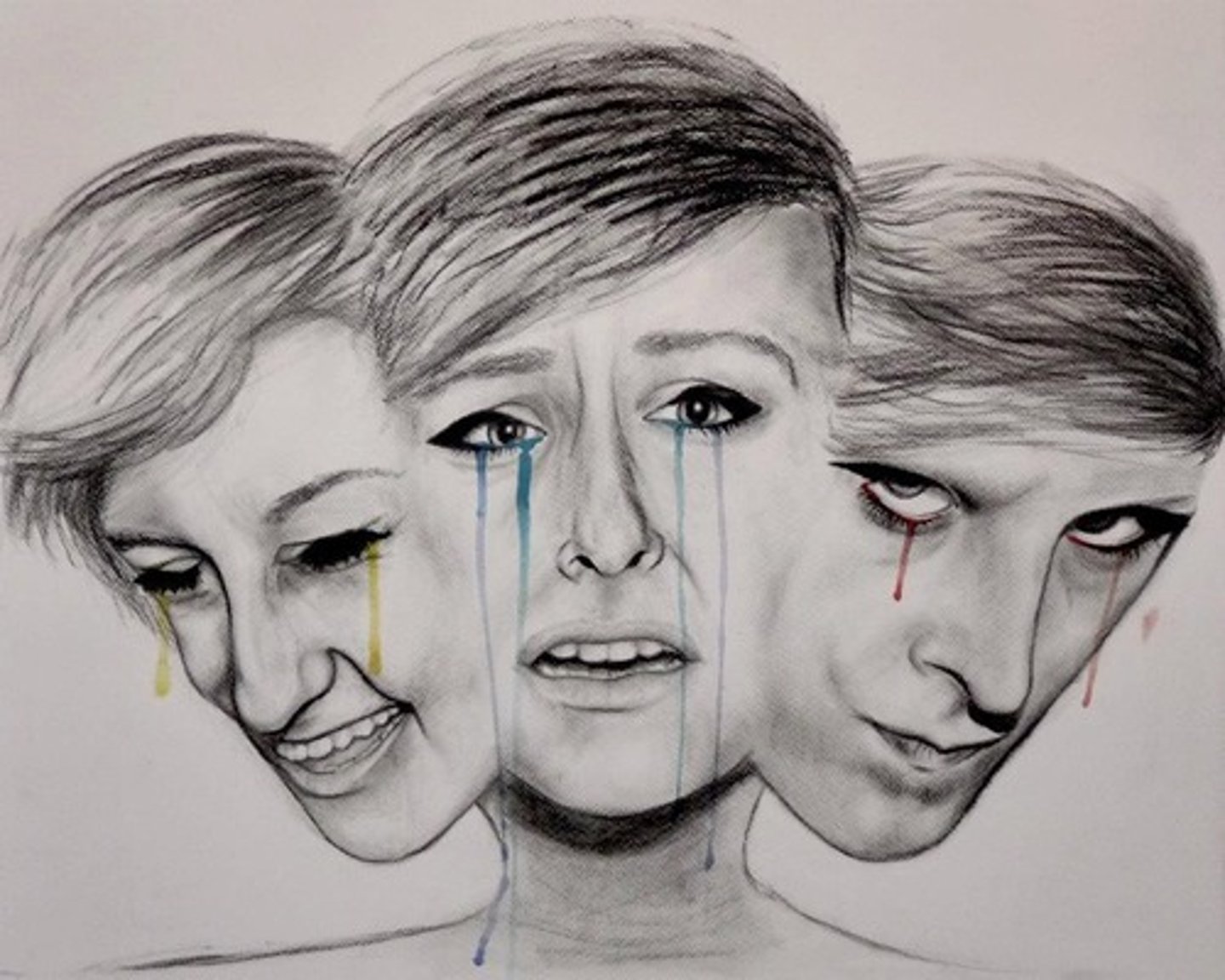
A rare dissociative disorder in which a person exhibits two or more distinct and alternating personalities. Also called multiple personality disorder.
Hypervigilance
state of ongoing anxiety in which the person is constantly tense and alert for threats

flashbacks
vivid and intrusive recollections of a traumatic event

Emotional detachment
detachment from social relationships, as well as a general disinterest in them

Posttraumatic stress disorder
a disorder characterized by haunting memories, nightmares, social withdrawal, jumpy anxiety, numbness of feeling, and/or insomnia that lingers for four weeks or more after a traumatic experience

anorexia nervosa
an eating disorder in which an irrational fear of weight gain leads people to starve themselves

bulimia nervosa
an eating disorder characterized by episodes of overeating, usually of high-calorie foods, followed by vomiting, laxative use, fasting, or excessive exercise

Cluster A personality disorders
odd or eccentric
paranoid, schizoid, schizotypal
paranoid personality disorder
type of personality disorder characterized by extreme suspiciousness or mistrust of others

Schizoid personality disorder
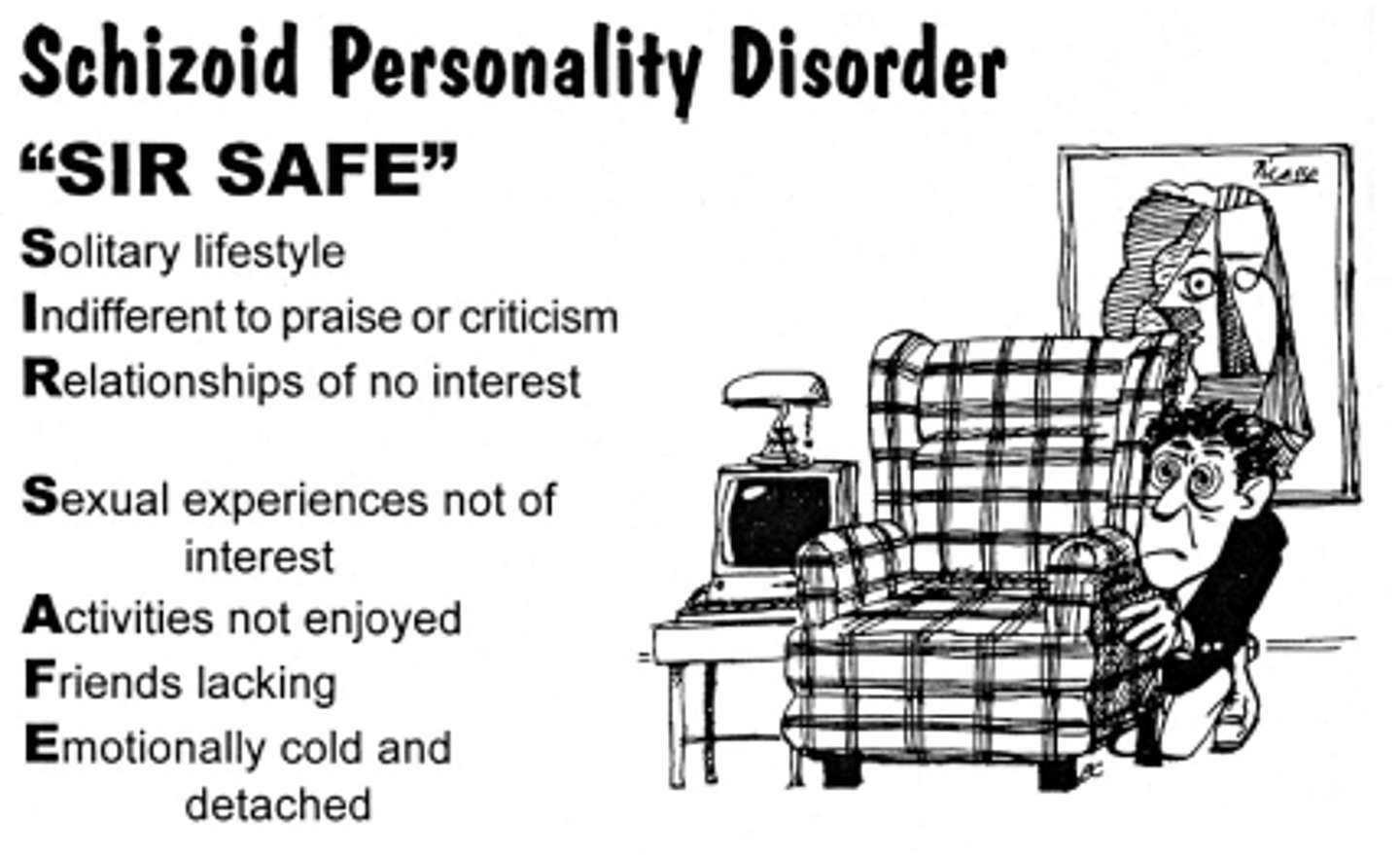
a personality disorder characterized by persistent avoidance of social relationships and little expression of emotion
Schizotypal personality disorder
a psychological disorder characterized by several traits that cause problems interpersonally, including constricted or inappropriate affect; magical or paranoid thinking; and odd beliefs, speech, behavior, appearance, and perceptions

Cluster B Personality Disorders
dramatic, emotional, erratic
Antisocial personality disorder
A personality disorder in which the person (usually a man) exhibits a lack of conscience for wrongdoing, even toward friends and family members. May be aggressive and ruthless or a clever con artist.

Histrionic personality disorder
a personality disorder characterized by excessive emotionality and preoccupation with being the center of attention; emotional shallowness; overly dramatic behavior
Narcissistic personality disorder
characterized by a grandiose sense of self-importance, a preoccupation with fantasies of success or power, and a need for constant attention or admiration

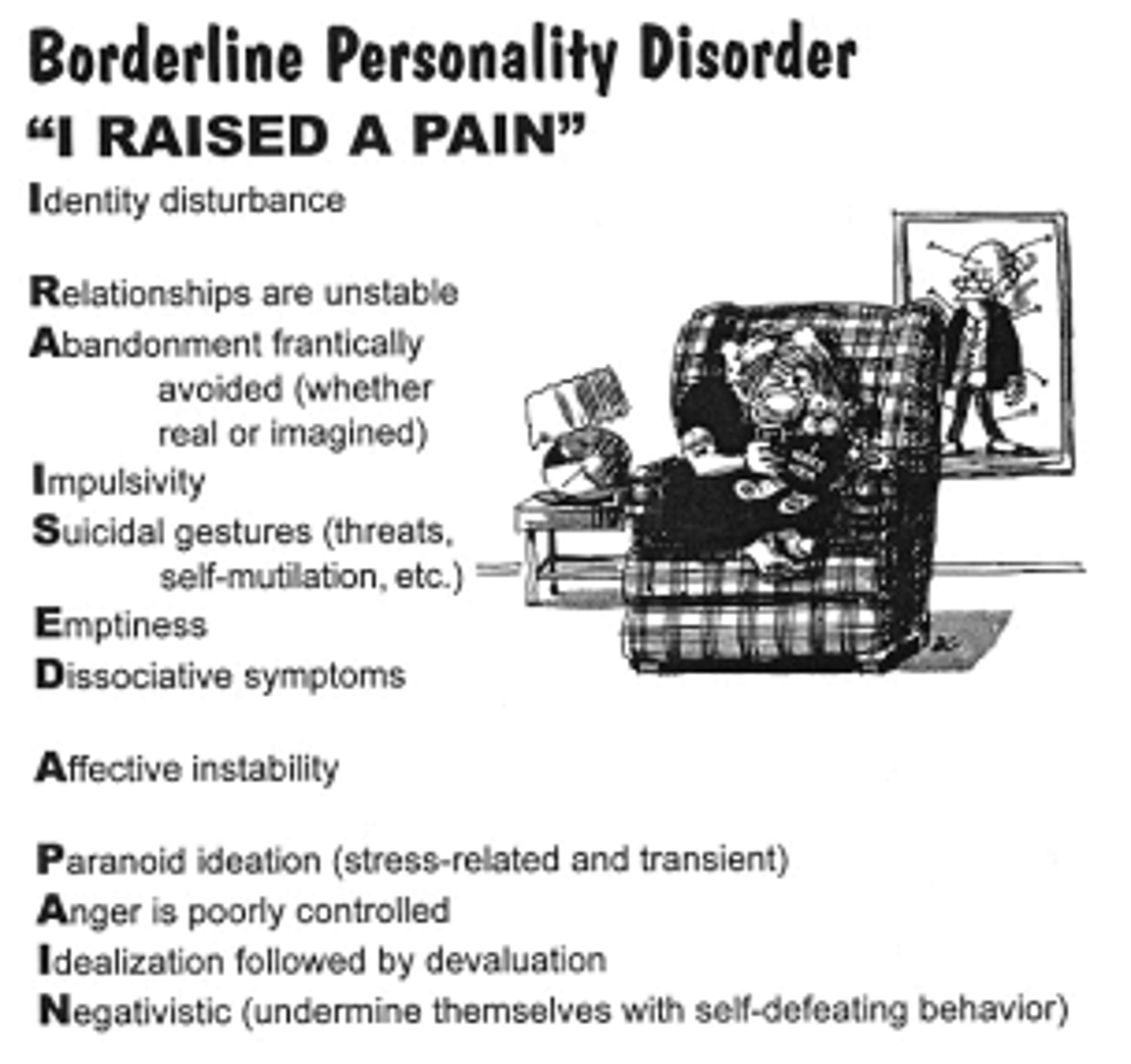
Borderline personality disorder
condition marked by extreme instability in mood, identity, and impulse control
Cluster C personality disorders
Anxious, fearful
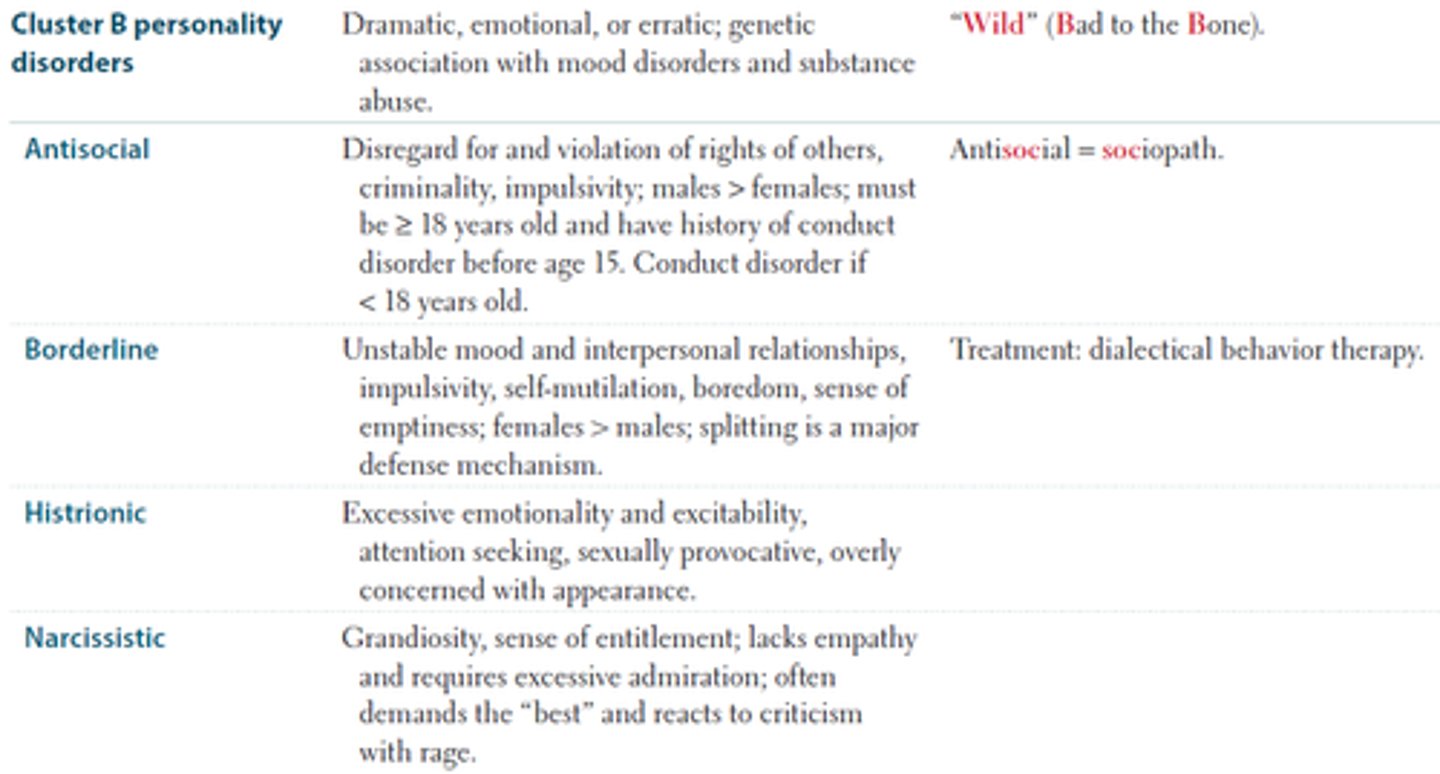
Avoidant personality disorder
A personality disorder characterized by consistent discomfort and restraint in social situations, overwhelming feelings of inadequacy, and extreme sensitivity to negative evaluation.

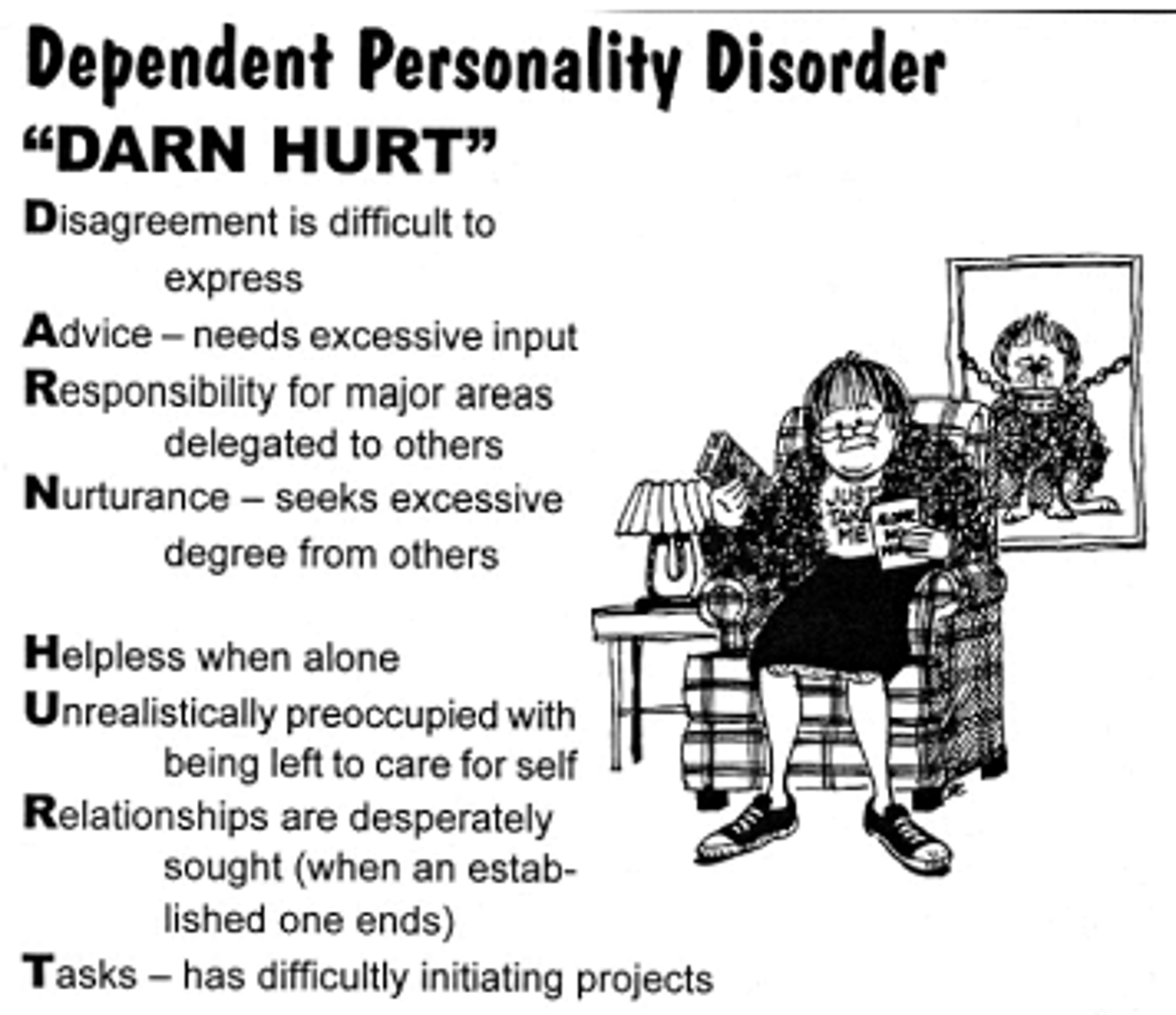
Dependent personality disorder
A personality disorder characterized by a pattern of clinging and obedience, fear of separation, and an ongoing need to be taken care of.
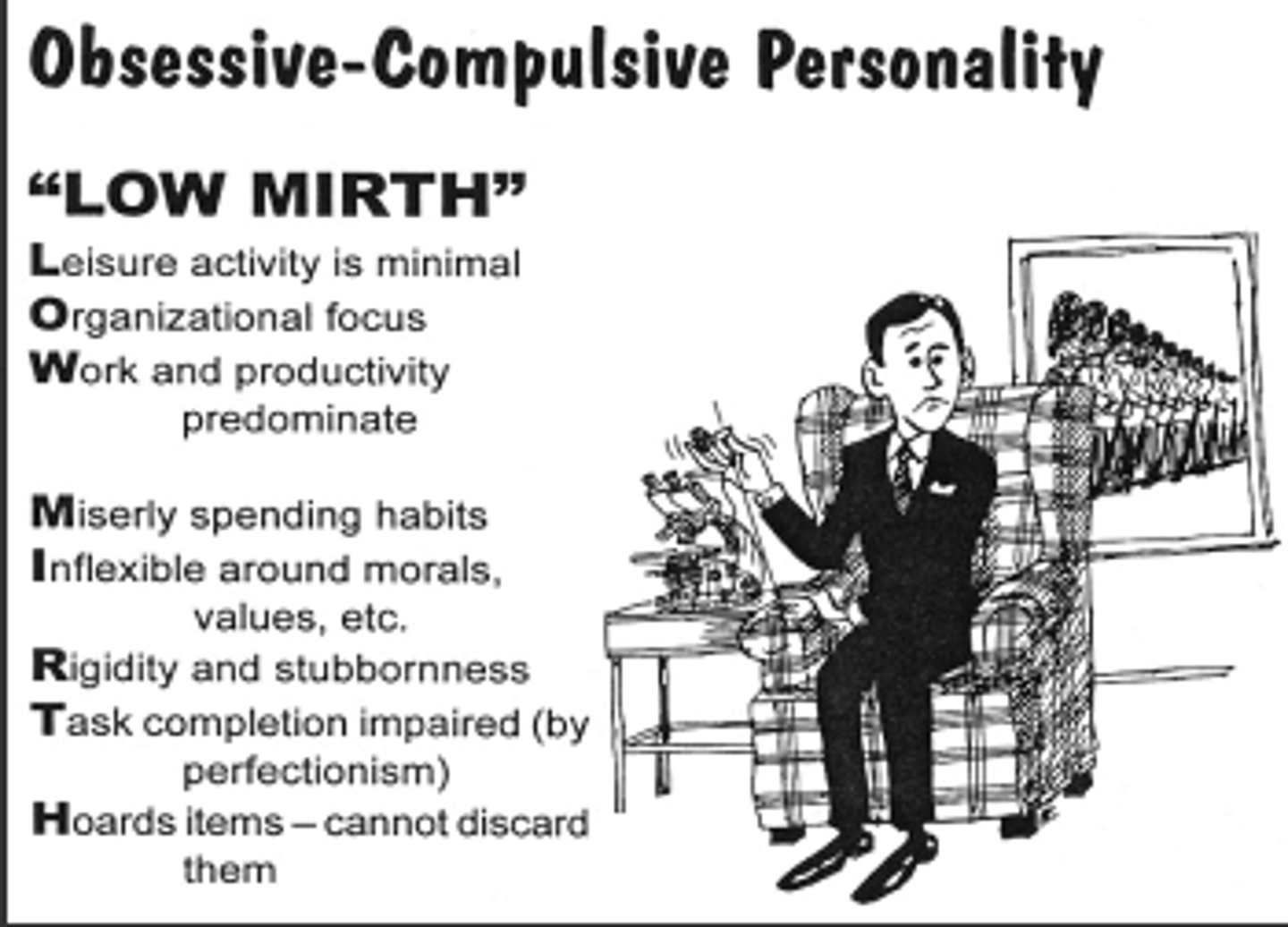
Obsessive-Compulsive personality disorder
a personality disorder characterized by preoccupation with orderliness, perfection, and control
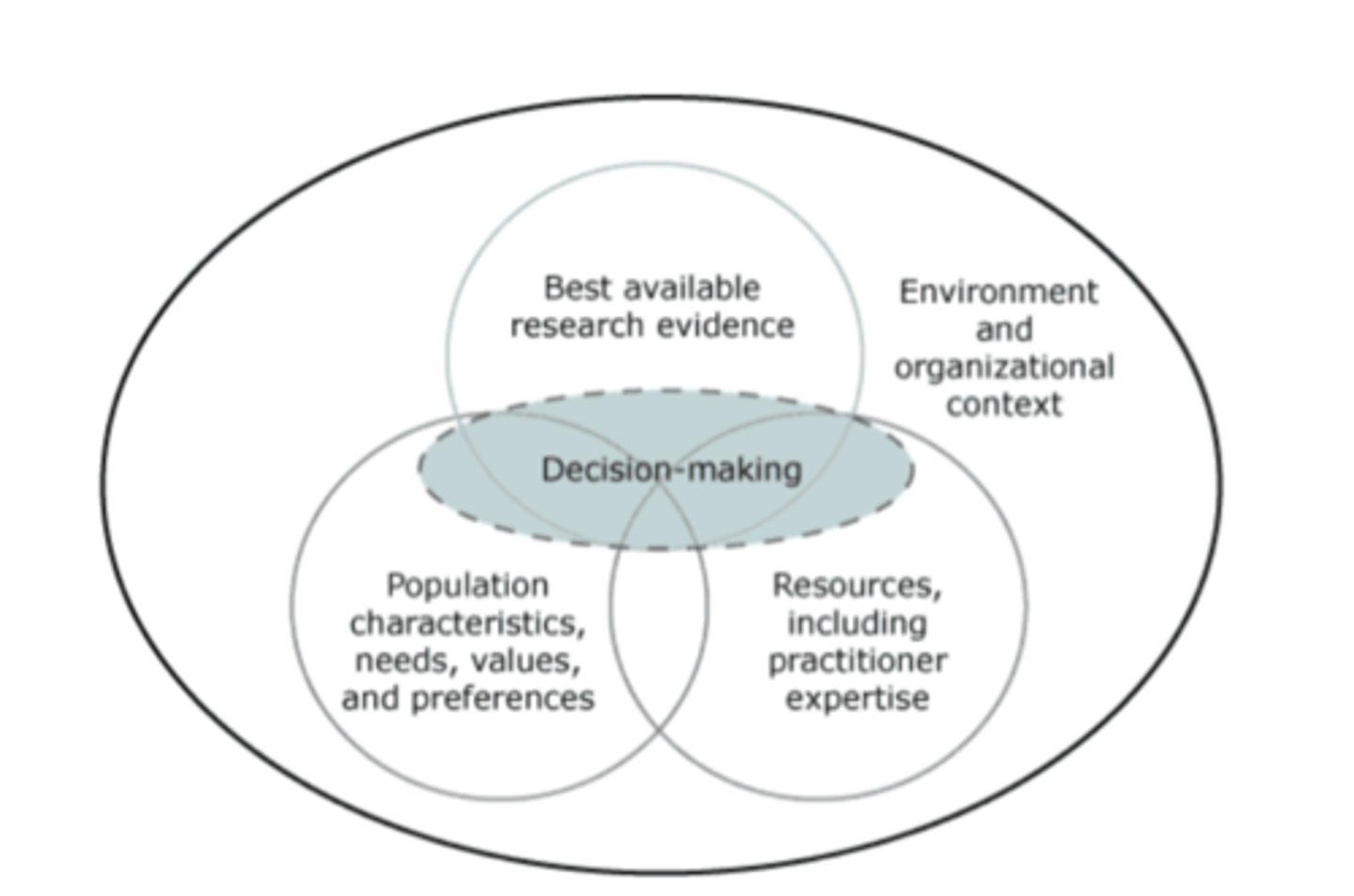
Evidence-based interventions
treatments that have been found to be effective on the basis of valid and reliable research studies
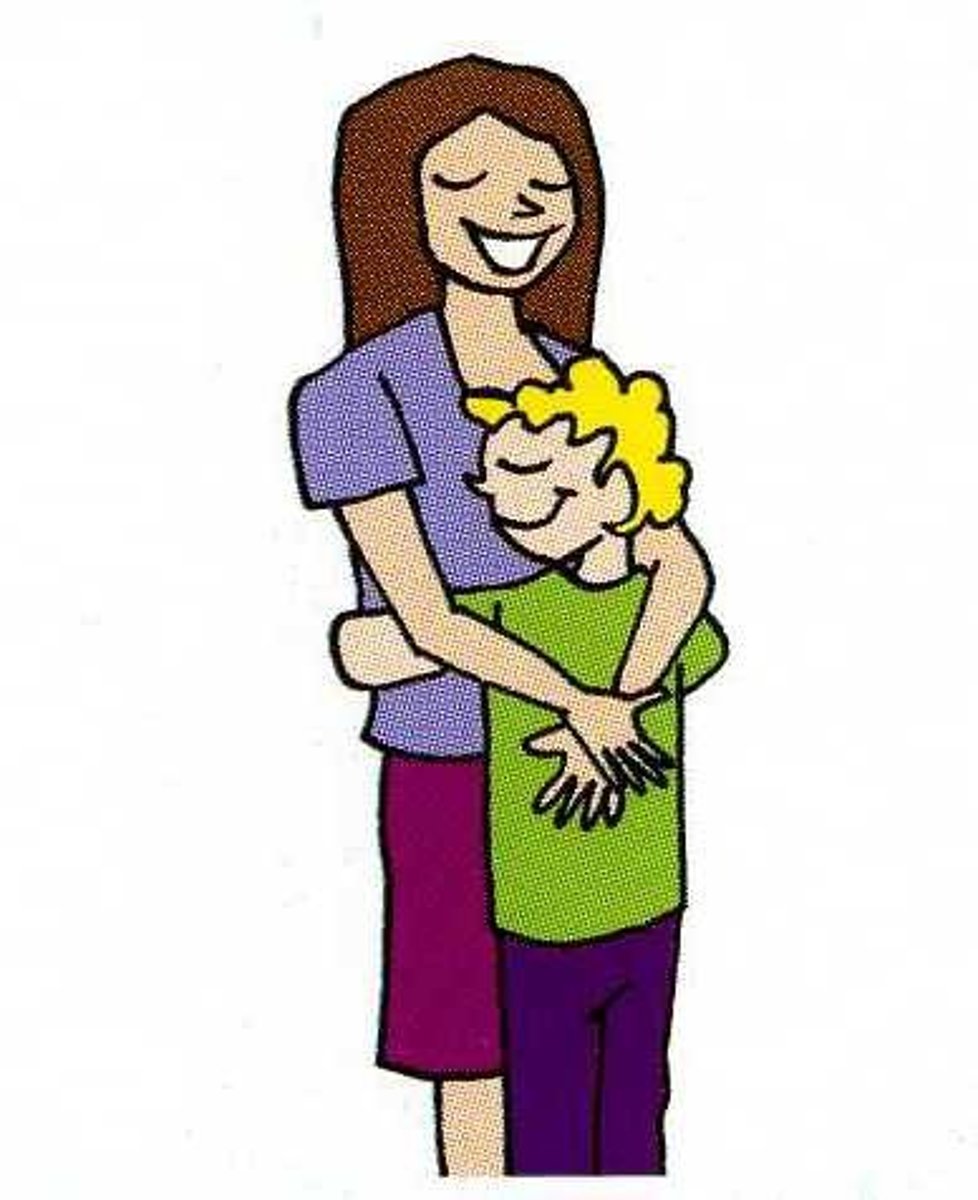
Therapeutic alliance
a bond of trust and mutual understanding between a therapist and client, who work together constructively to overcome the client's problem
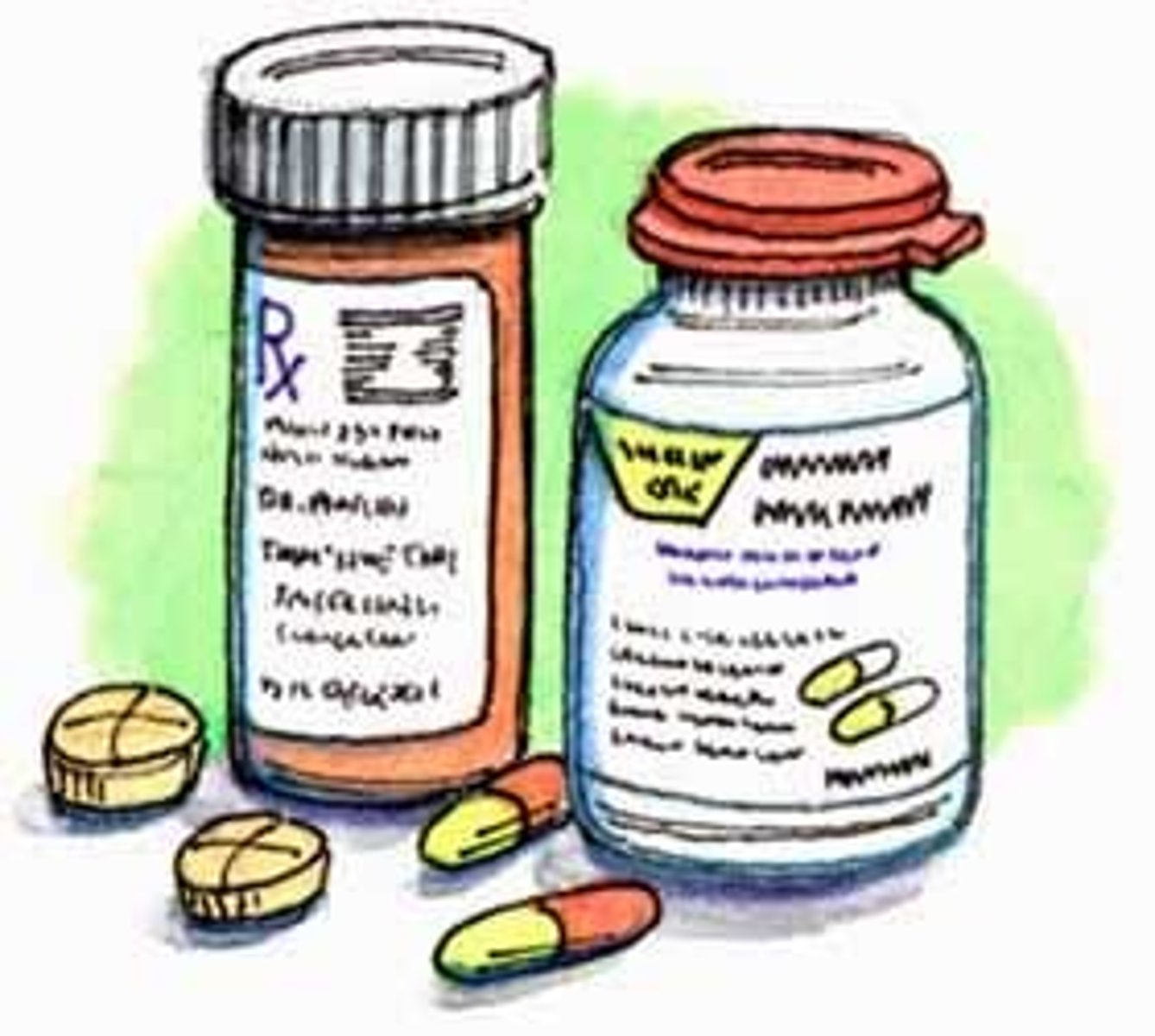
Psychotropic medication
drugs that treat psychiatric symptoms by restoring neurotransmitter balance
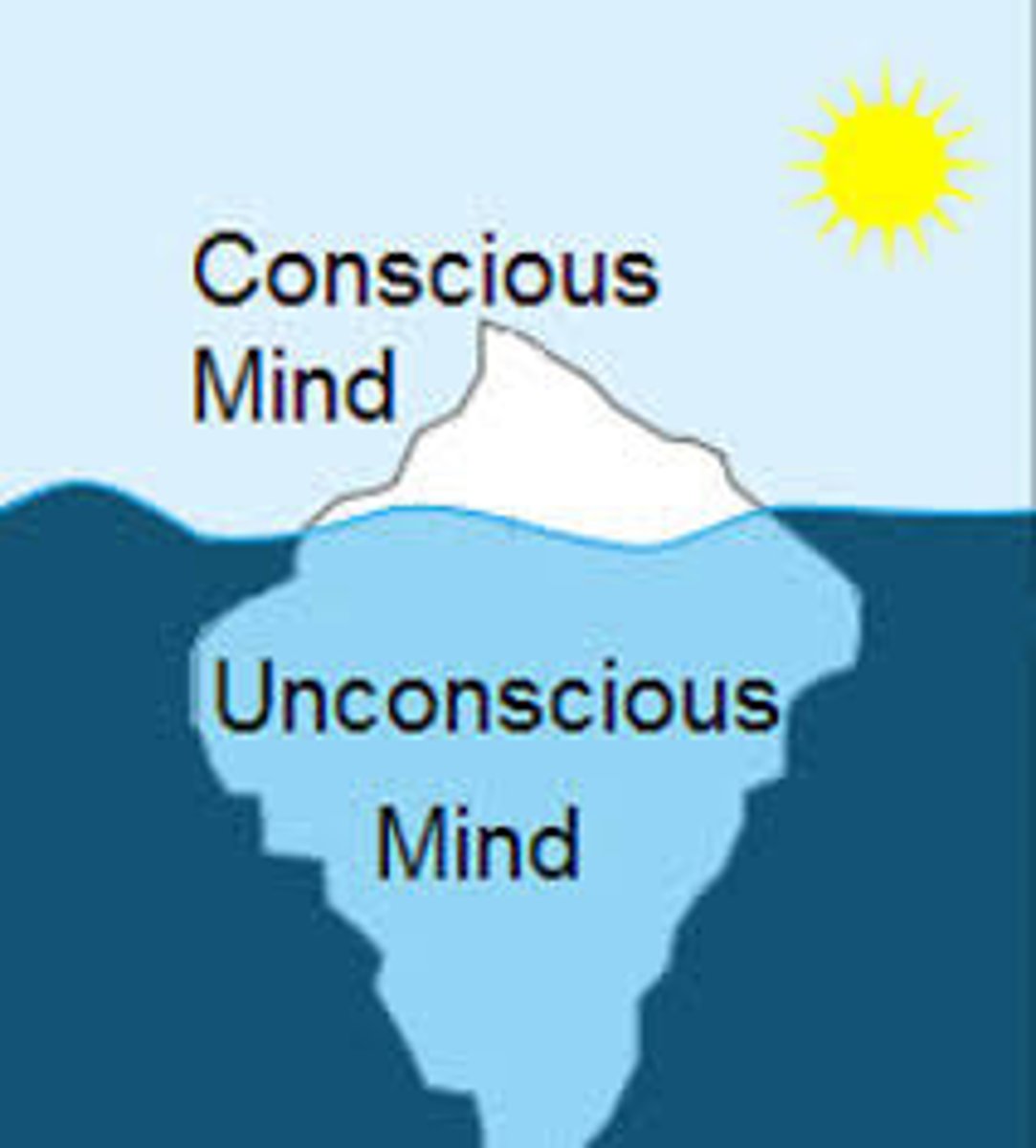
Psychodynamic therapies
Treatments that stress the importance of the unconscious mind, extensive interpretation by the therapist, and the role of early childhood experiences in the development of an individual's problems
Free association
in psychoanalysis, a method of exploring the unconscious in which the person relaxes and says whatever comes to mind, no matter how trivial or embarrassing
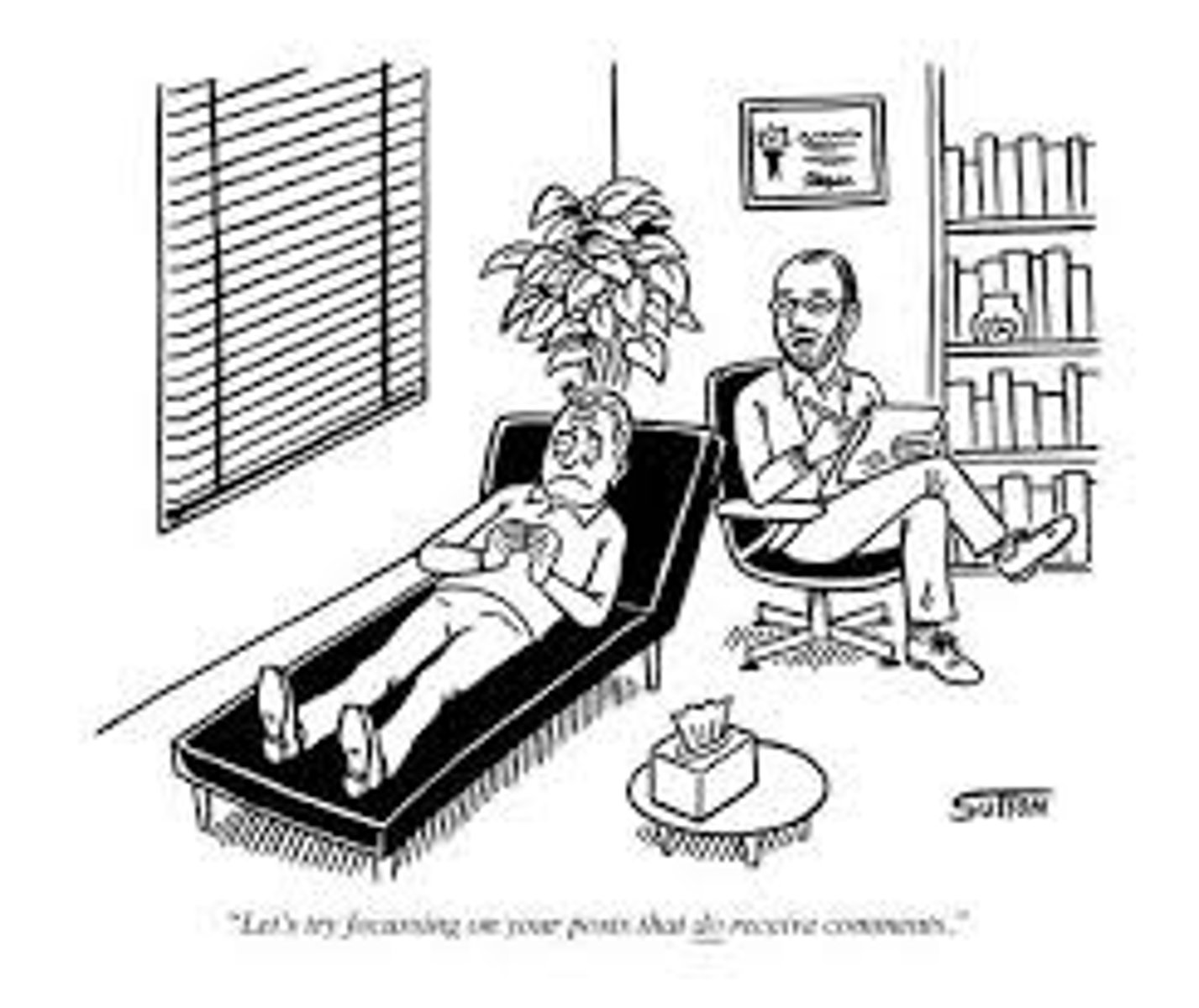
Dream interpretation
a technique used in psychoanalysis in which the content of dreams is analyzed for disguised or symbolic wishes, meanings, and motivations

Cognitive therapies
therapy that teaches people new, more adaptive ways of thinking and acting; based on the assumption that thoughts intervene between events and our emotional reactions
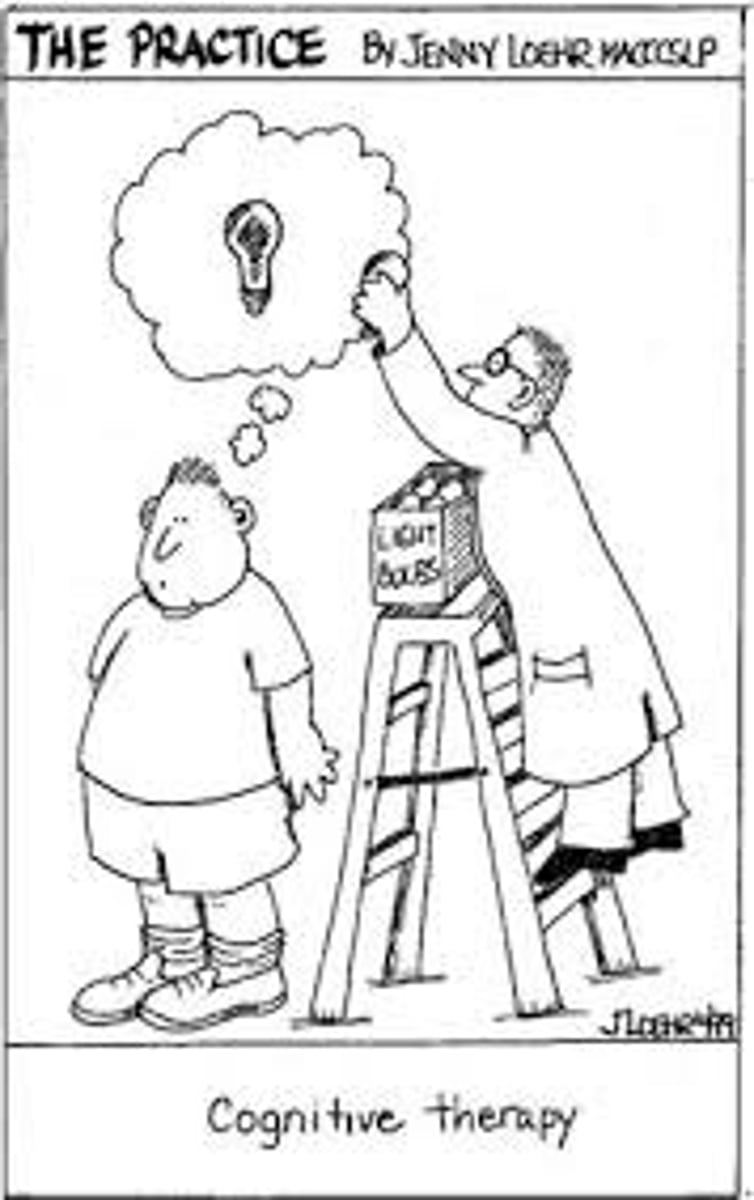
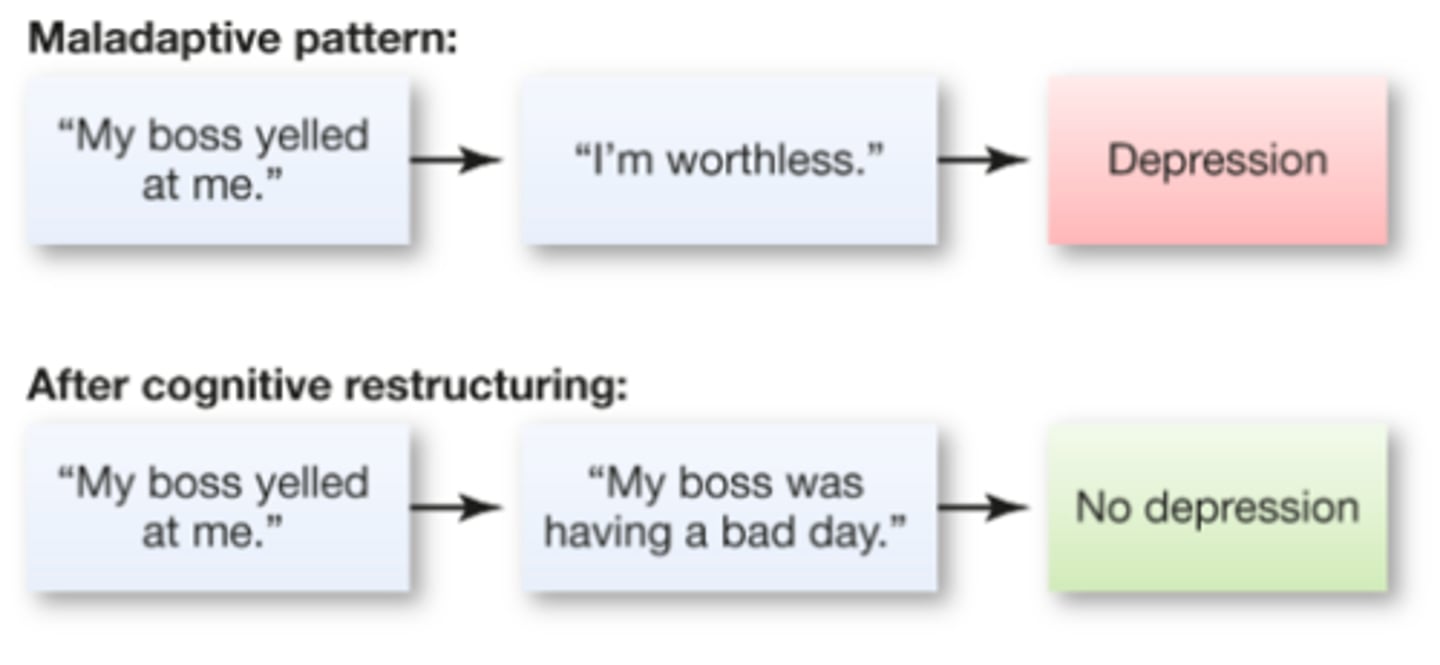
Cognitive restructuring
a therapeutic approach that teaches clients to question the automatic beliefs, assumptions, and predictions that often lead to negative emotions and to replace negative thinking with more realistic and positive beliefs
Applied behavior analysis
the use of operant conditioning principles to change human behavior

Exposure therapies
behavioral techniques that treat anxieties by exposing people to the things they fear and avoid

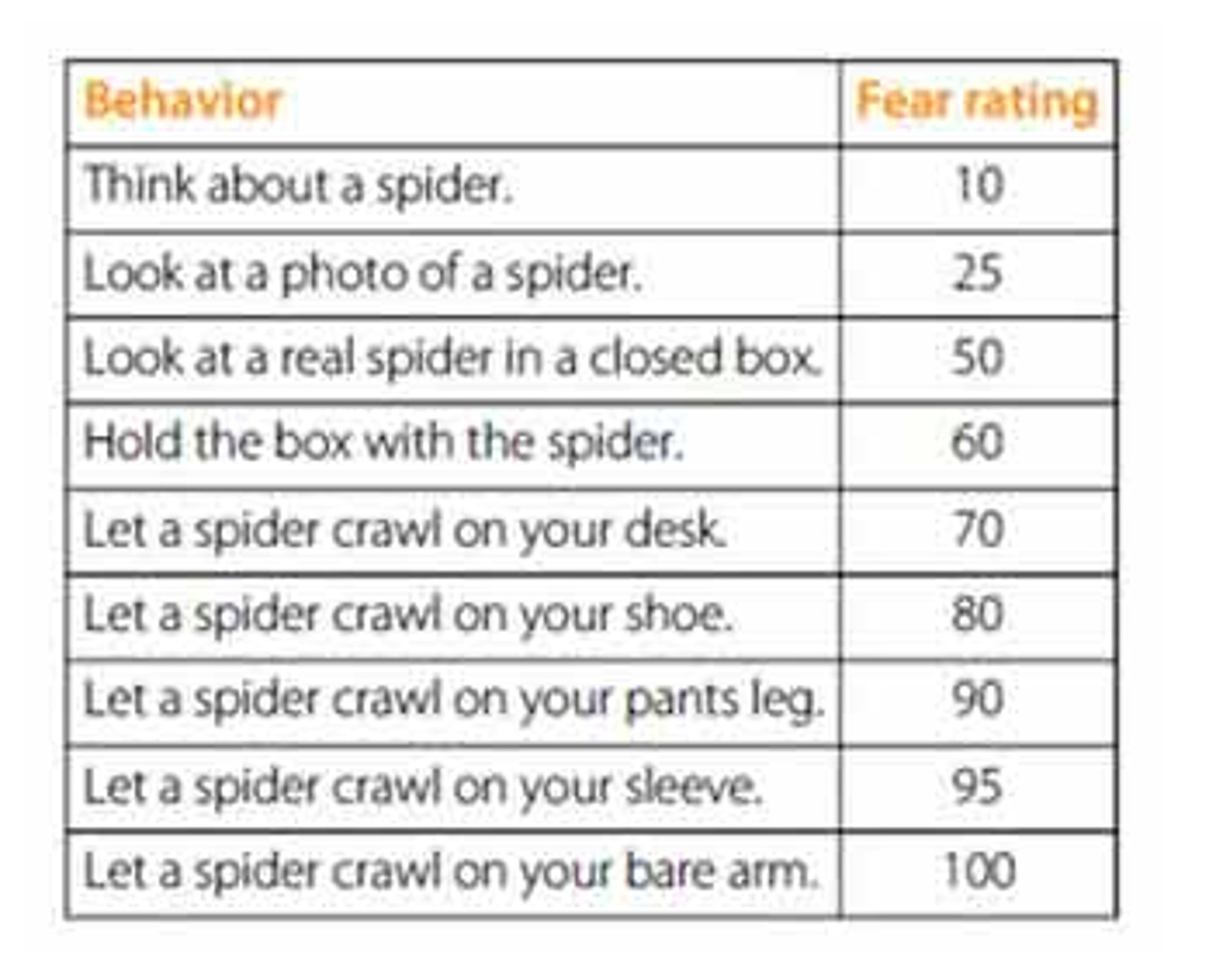
systematic desensitization
A type of exposure therapy that associates a pleasant relaxed state with gradually increasing anxiety-triggering stimuli. Commonly used to treat phobias.
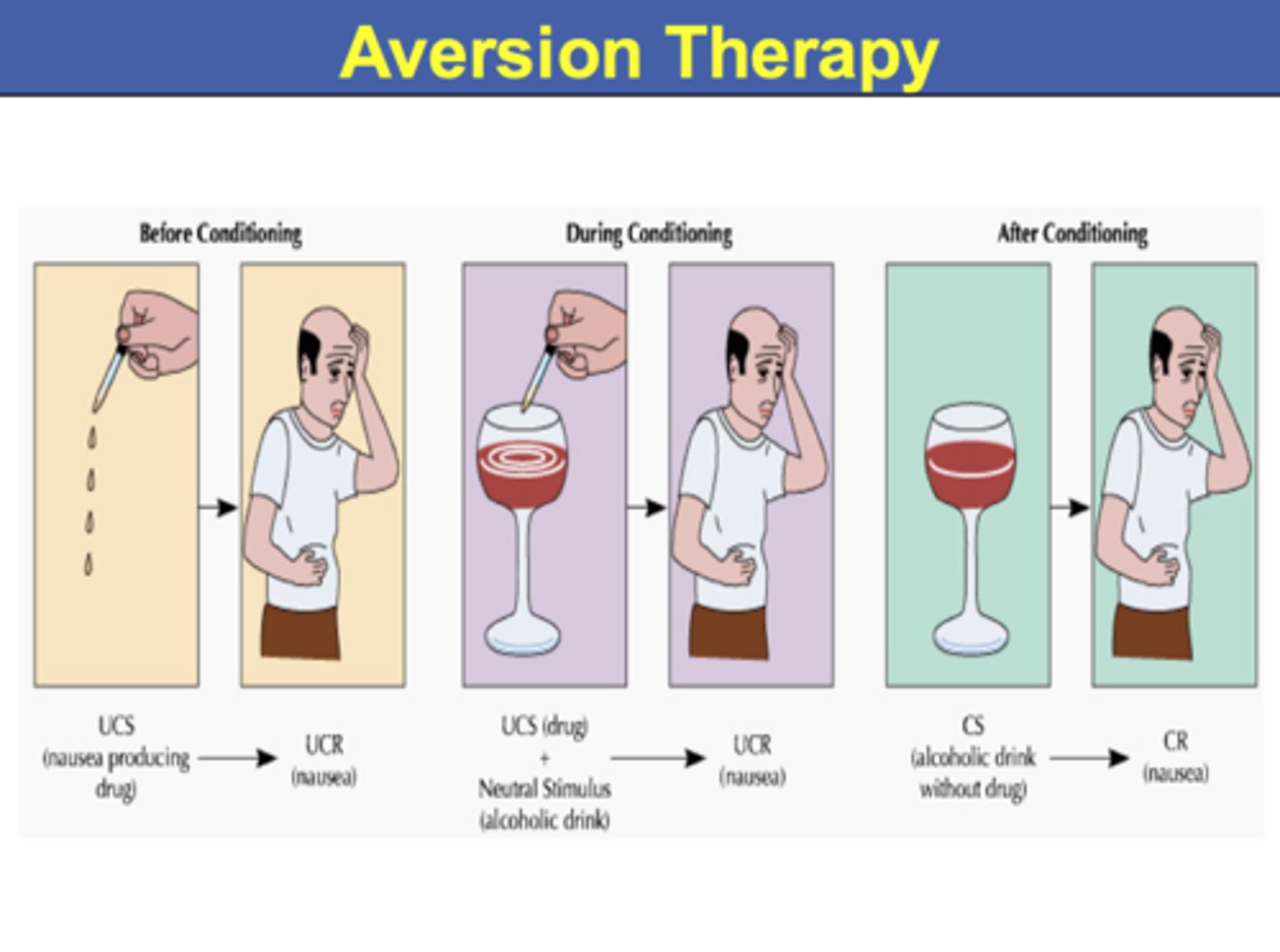
Aversion therapy
A behavior therapy in which an aversive stimulus is paired with a stimulus that elicits an undesirable response.
Token economies
a behavioral technique in which desirable behaviors are reinforced with a token, such as a small chip or fake coin, which can be exchanged for privileges

Biofeedback
The process of learning to control bodily states by monitoring the states to be controlled

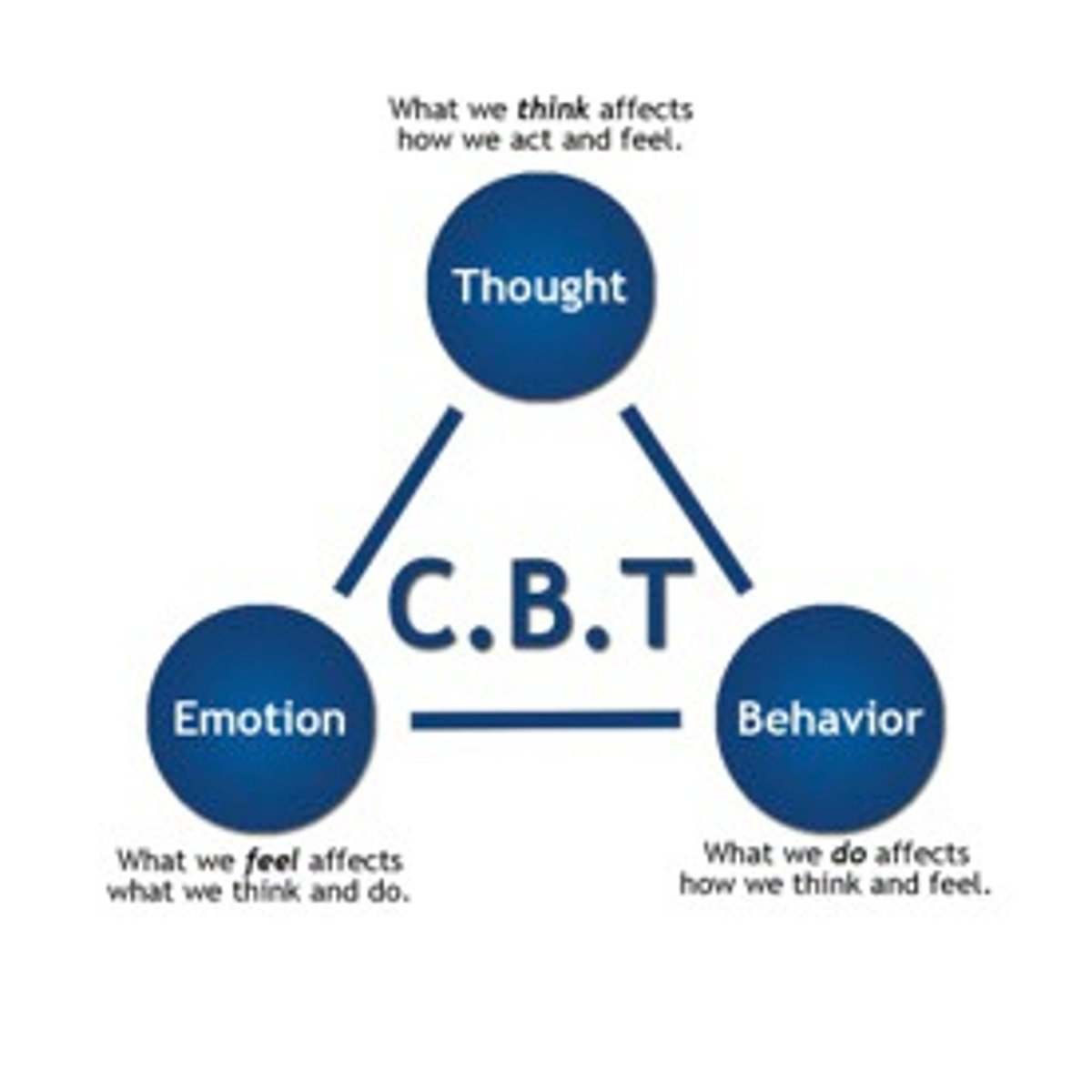
Cognitive-behavioral therapies
therapy approaches that seek to help clients change both counterproductive behaviors and dysfunctional ways of thinking
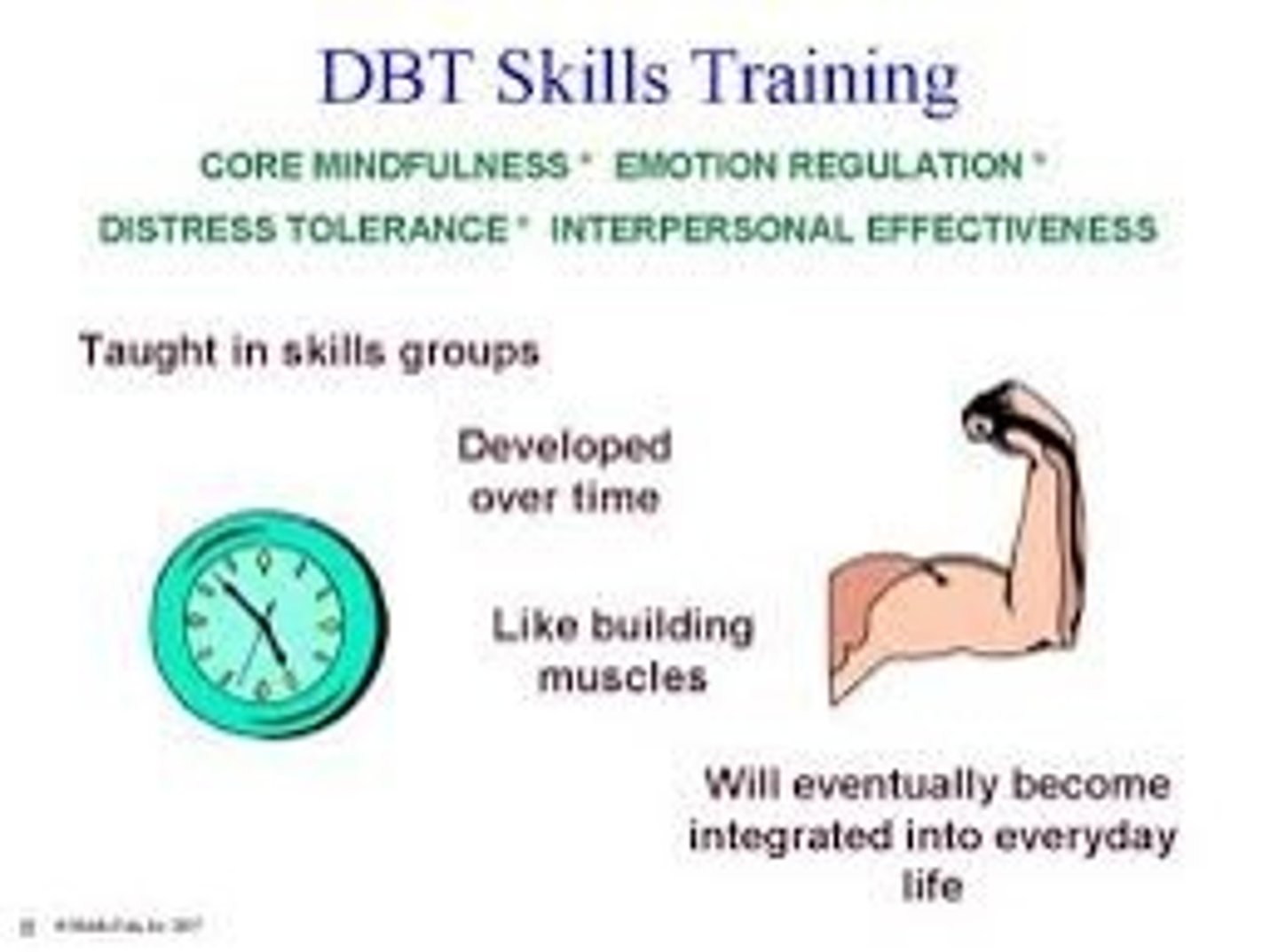
Dialectical behavior therapies
a type of talk therapy (psychotherapy), based on cognitive behavioral therapy (CBT), but it's specially adapted for people who experience emotions very intensely.
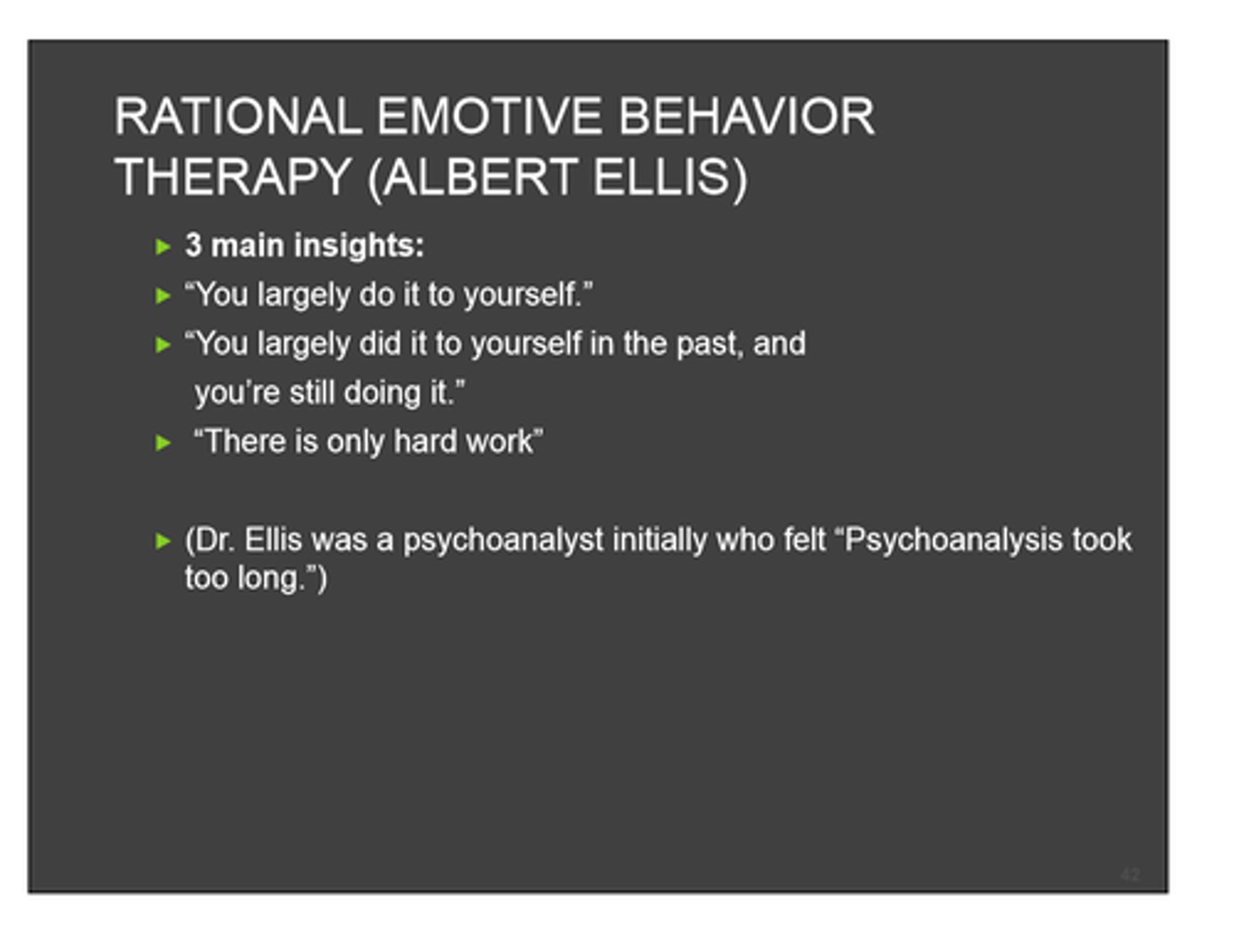
Rational emotive behavior therapy (REBT)
a confrontational cognitive therapy, developed by Albert Ellis, that vigorously challenges people's illogical, self-defeating attitudes and assumptions
Person-centered therapy
therapy centering on the client's goals and ways of solving problems

Active listening
empathetic listening in which the listener echoes, restates, and clarifies. A feature of Rogers' client-centered therapy