Chemical Equations VMA
 Call Kai
 Learn
Learn Practice Test
 Spaced Repetition
 Match
Match Flashcards
 Knowt Play
1/21

There's no tags or description
Looks like no tags are added yet.
Name | Mastery | Learn | Test | Matching | Spaced | Call with Kai |
|---|
No analytics yet
Send a link to your students to track their progress
22 Terms
balanced
__CaO + __H₂O → __Ca(OH)₂
2, 1, 2
__Na + __F₂ → __NaF
2, 1, 2, 1
__Na + __MgF₂ → __NaF + __Mg
1, 1, 2, 1
__BaCl₂ + __Na₂SO₄ → __NaCl + __BaSO₄
1, 2, 1, 1
__Sn + __HF → __SnF₂ + __H₂
4, 3, 2
__Fe +__O₂ → __Fe₂O₃
1, 3, 1, 2
__CS₂ + __O₂ → __CO₂ + __SO₂
2, 3, 2, 2
__MgS + __O₂ → __MgO + __SO₂
1,2,1,2
Complete combustion of methane gas.
__CH₄ + __O₂ → __CO₂ + __H₂O
reactant
A chemical substance that is present at the start of a chemical reaction.
product
A chemical substance formed as a result of a chemical reaction
chemical equation
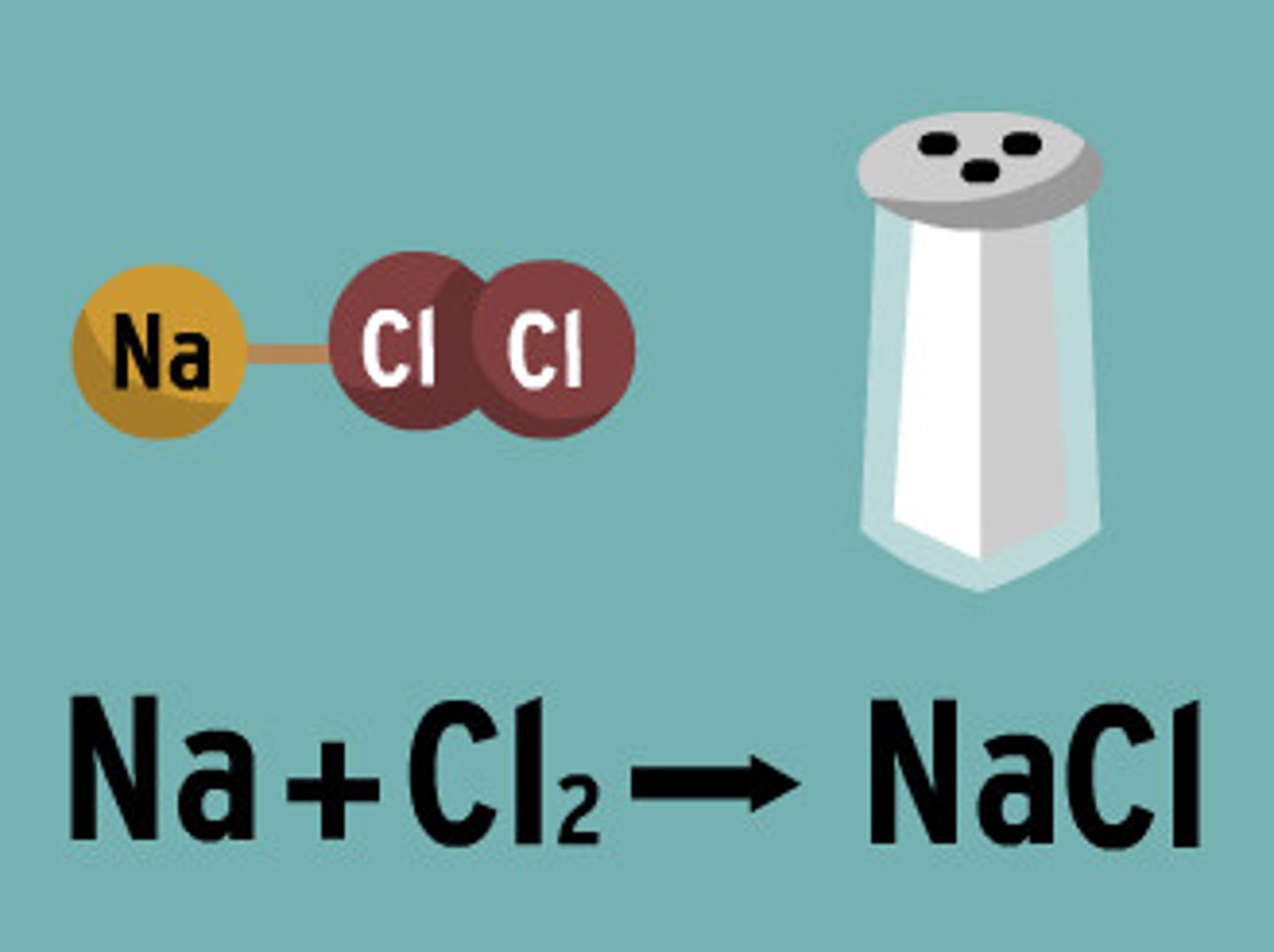
A representation of a chemical reaction that uses symbols to show the relationship between the reactants and the products
chemical reaction
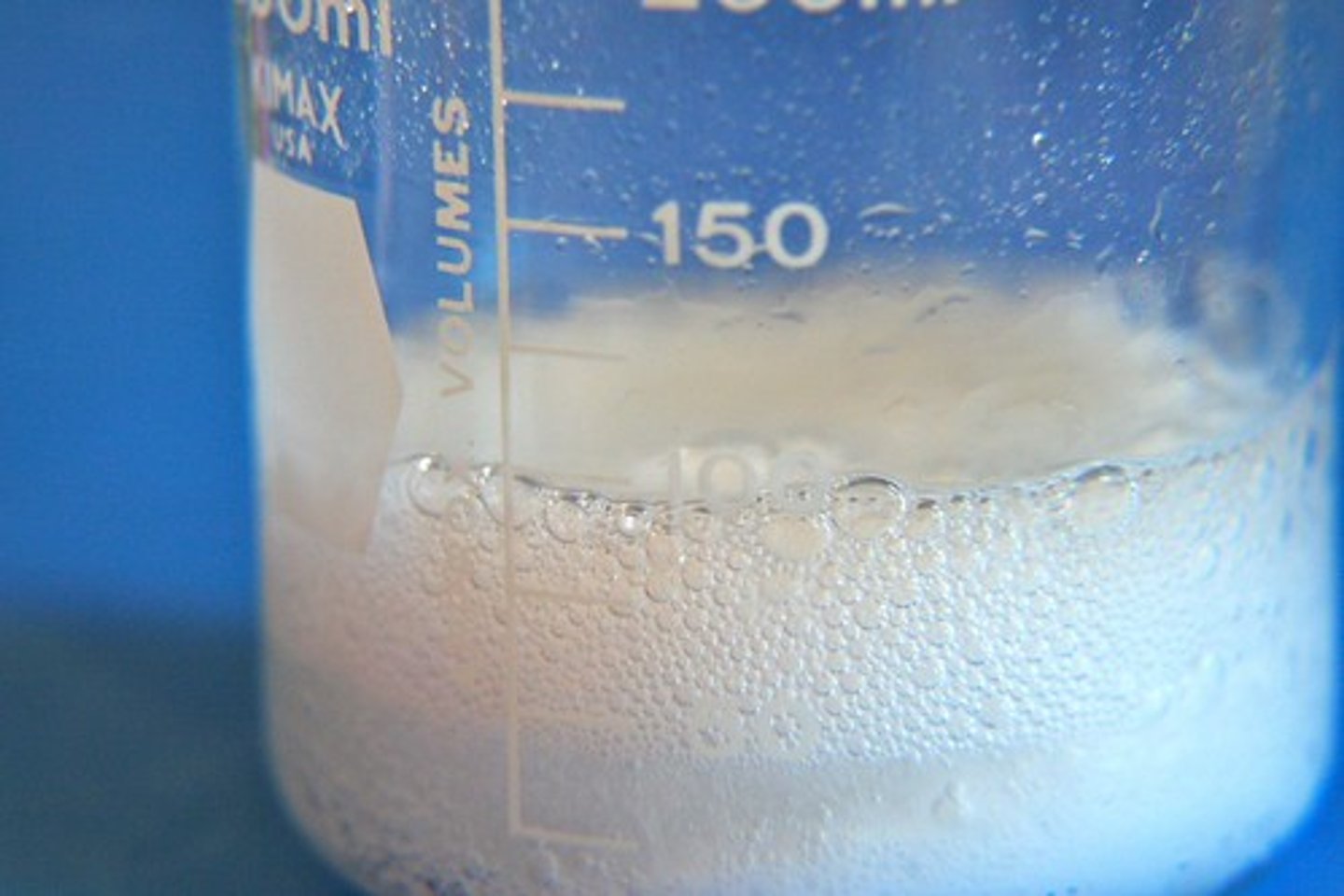
A process during which chemical bonds between atoms are broken and new ones are formed. Producing one or more different substances.
law of conservation of mass
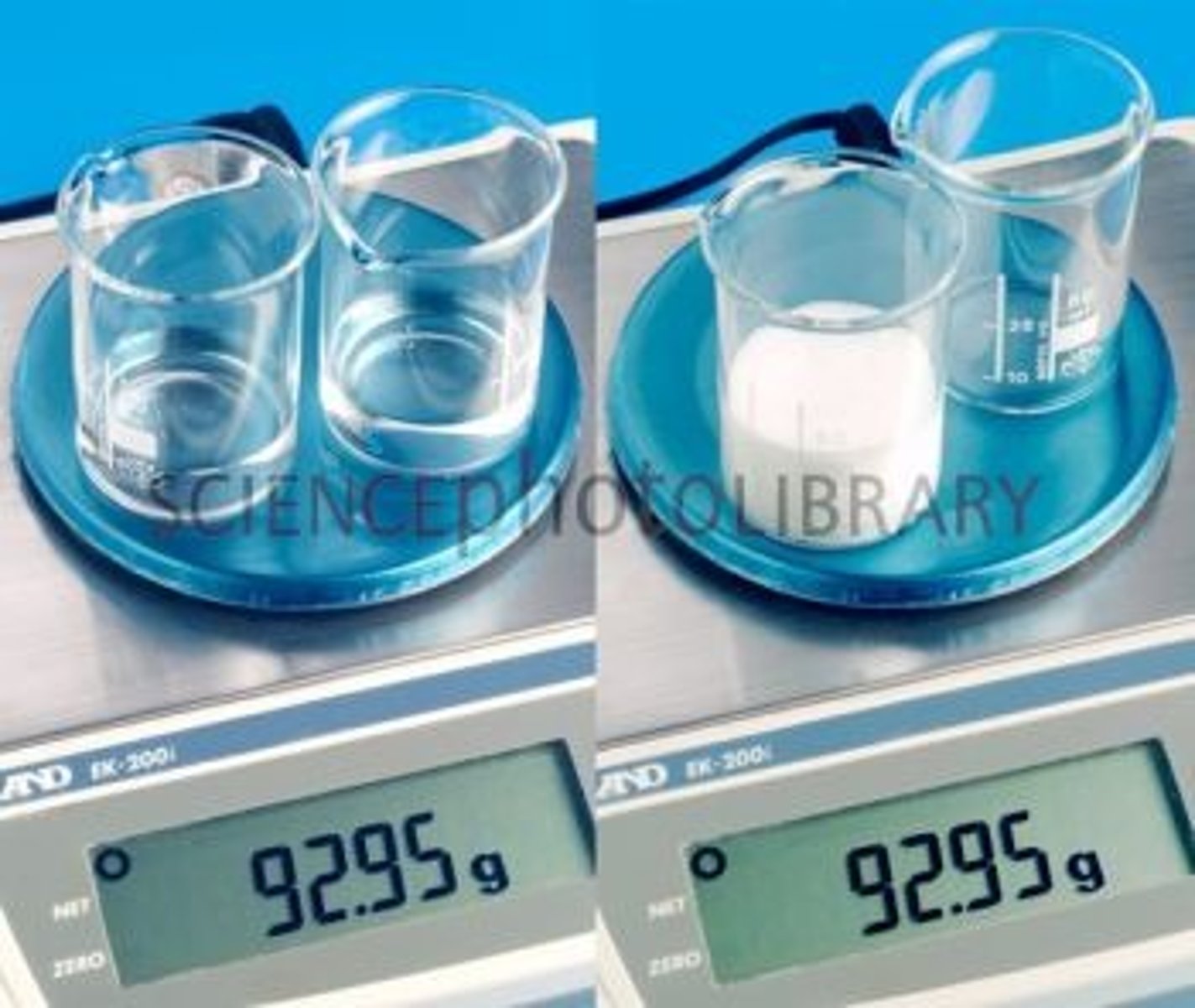
During any chemical reaction, the mass of the products is always equal to the mass of the reactants
coefficient
A number in front of a chemical formula in an equation that indicates how many molecules or atoms of each reactant and product are involved in a reaction.
subscript
A number written slightly below and to the right of a chemical symbol that shows how many atoms of an element are in a compound.
balancing chemical equations
keep mass of products and reactants the same by adjusting coefficients as necessary
Bonding
based on the attraction of particles with unlike charges
ionic bond
A chemical bond formed between a metal and a nonmetal in which the metal transfers electrons to the nonmetal, forming a bond. The attraction is due to electrostatic force.
covalent bond
bond between nonmetals in which both shares the same electron
Conductivity
a measure of an ability of an electric current to flow through a substance
Valency
The number of electrons needed to lose/gain/share to gain an octet