Digestive System (A&P Review)
 Call Kai
 Learn
Learn Practice Test
 Spaced Repetition
 Match
Match Flashcards
 Knowt Play
1/59

There's no tags or description
Looks like no tags are added yet.
Name | Mastery | Learn | Test | Matching | Spaced | Call with Kai |
|---|
No analytics yet
Send a link to your students to track their progress
60 Terms
What is peristalsis?
Wave-like muscular contractions that move food through the digestive tract.
What are the three salivary glands and where are they located?
Parotid glands – in front of the ears; Submandibular glands – beneath the lower jaw; Sublingual glands – under the tongue.
What are the two types of movements within the alimentary canal?
Peristalsis and segmentation.
What are the three main functions of the digestive system?
Digestion, absorption, and elimination.
What is the name of the opening where the esophagus passes through the diaphragm?
Esophageal hiatus.
What layer of the alimentary canal carries out absorption?
Mucosa.
What layer contains glands, blood vessels, and nerves?
Submucosa.
What layer contains the muscles?
Muscular layer (muscularis externa).
What layer covers the structures?
Serosa.
What valve opens from the esophagus to the stomach?
Cardiac sphincter (lower esophageal sphincter).
What valve opens from the stomach to the small intestine?
Pyloric sphincter.
What digestive enzyme is produced by the salivary glands?
Salivary amylase (ptyalin).
The front teeth are called what?
Incisors.
The back teeth are called what?
Molars.
The pointed teeth after the incisors are called what?
Canines.
What is food called after it has been broken down into a paste?
Bolus.
What are the folds inside the stomach called?
Rugae.
Name the sections of the colon that food passes through once it enters.
Ascending colon, transverse colon, descending colon, and sigmoid colon.
What is the function of the pancreas?
Produces digestive enzymes and insulin.
What structures does the bile duct connect?
The liver and gallbladder to the duodenum.
Trace the path of food from the stomach and through all of the parts of the small intestine.
Stomach → Duodenum → Jejunum → Ileum.
Which section of the small intestine is the longest?
Ileum.
What is the function of the gallbladder?
Stores and concentrates bile.
What is the function of bile?
Breaks down (emulsifies) fats.
What membrane holds the coils of the small intestine together?
Mesentery.
What membrane covers the organs of the digestive system like a curtain?
Greater omentum.
What is the function of the intestinal villi?
Increase surface area for absorption of nutrients.
What part of the colon is located right before the rectum?
Sigmoid colon.
Where is the cecum located?
At the beginning of the large intestine in the lower right abdomen.
What “useless” structure is attached to the cecum?
Appendix.
What part of the system stores waste before its elimination?
Rectum.
The “flora” of the large intestine consists of which bacterium?
Escherichia coli (E. coli).
What is the function of the large intestine?
Absorbs water and forms feces.
What can result if this function does not work correctly?
Diarrhea or constipation.
What substance is mainly responsible for breaking down fats?
Bile.
What substance is created in the stomach and breaks down food?
Gastric juice (contains hydrochloric acid and enzymes).
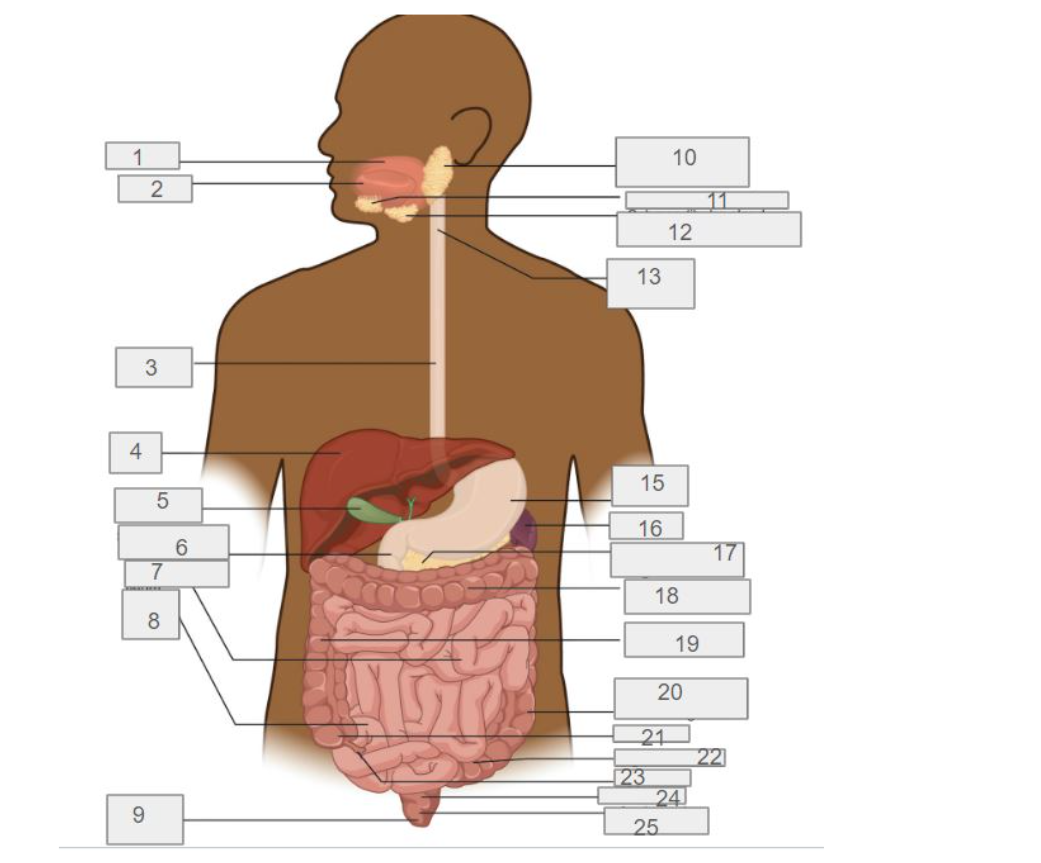
2
tongue
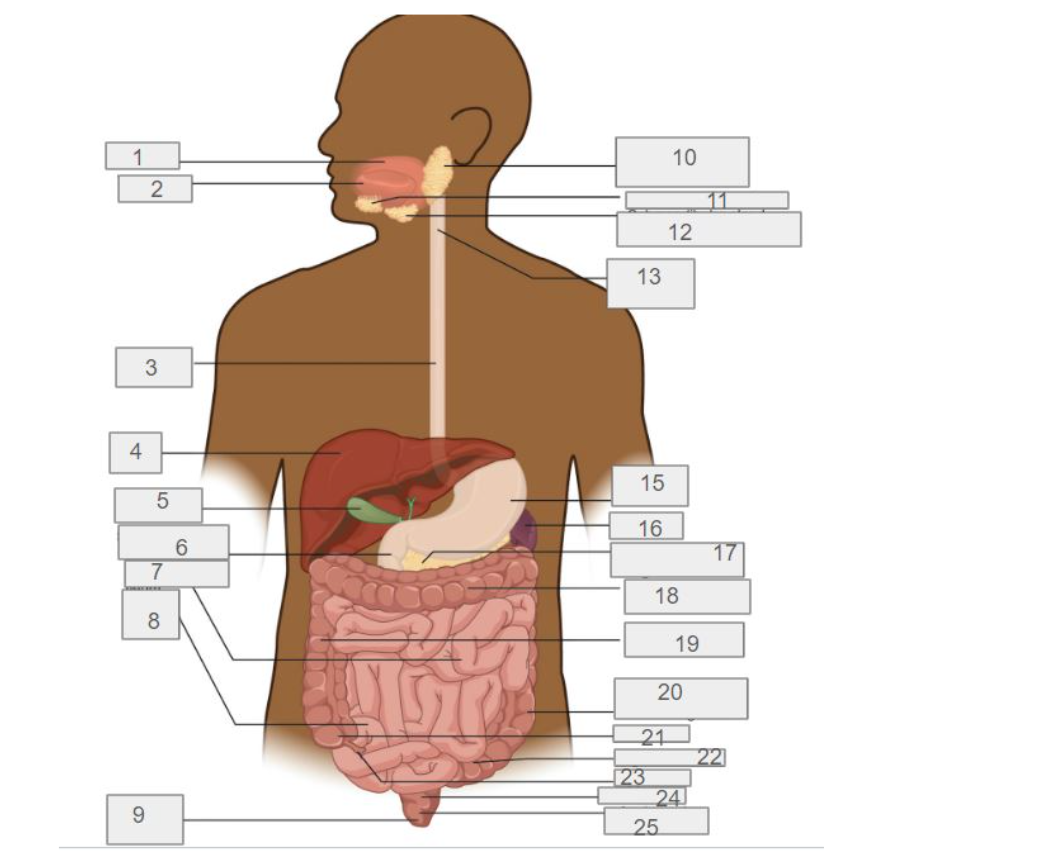
25
anal cavity
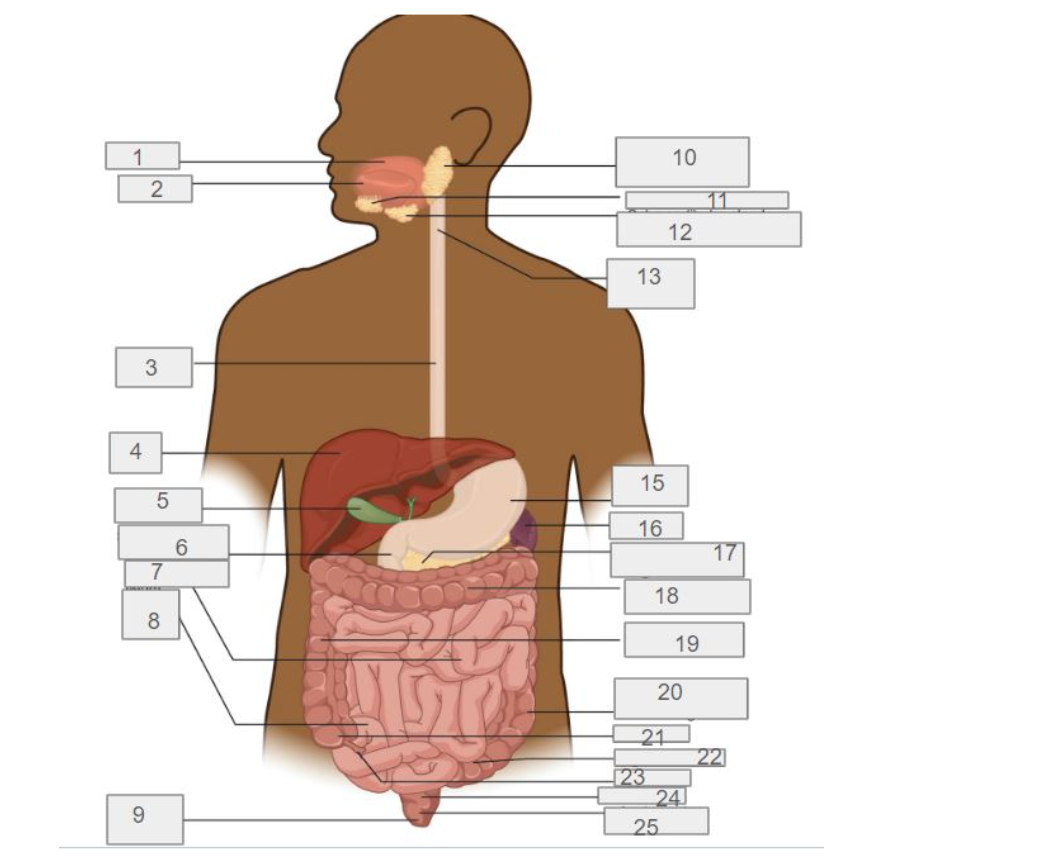
3
esophagus
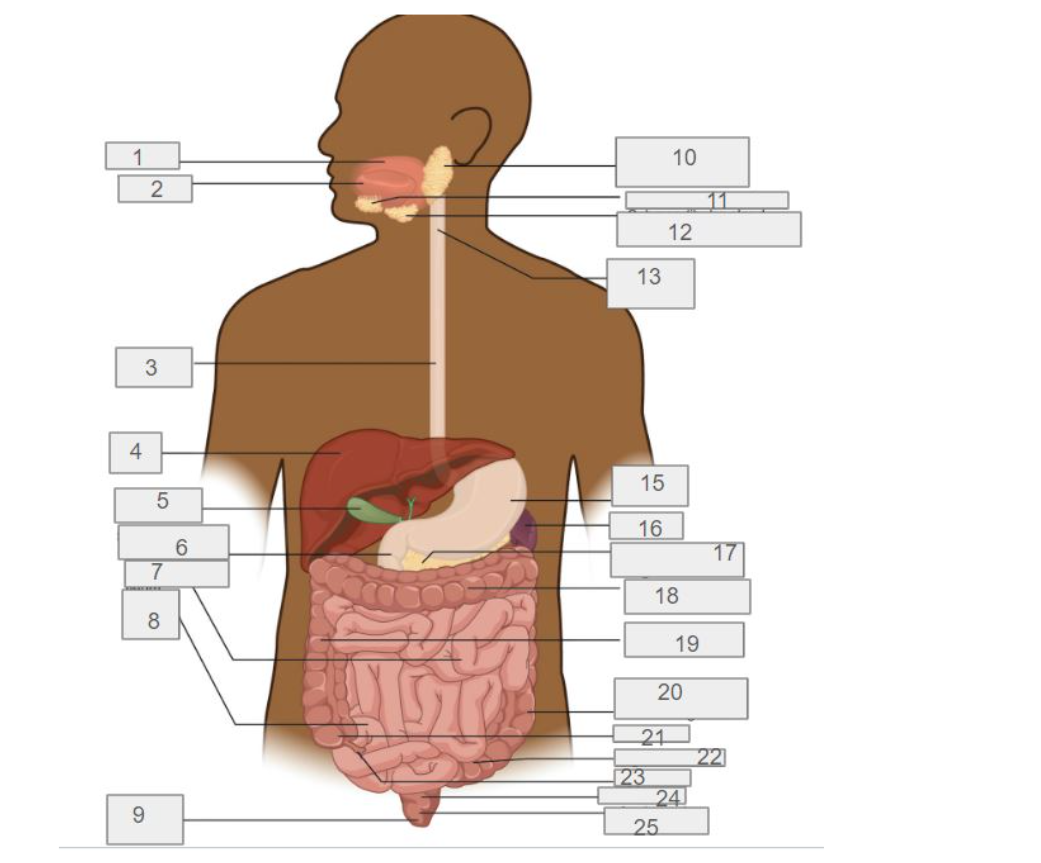
19
ascending colon
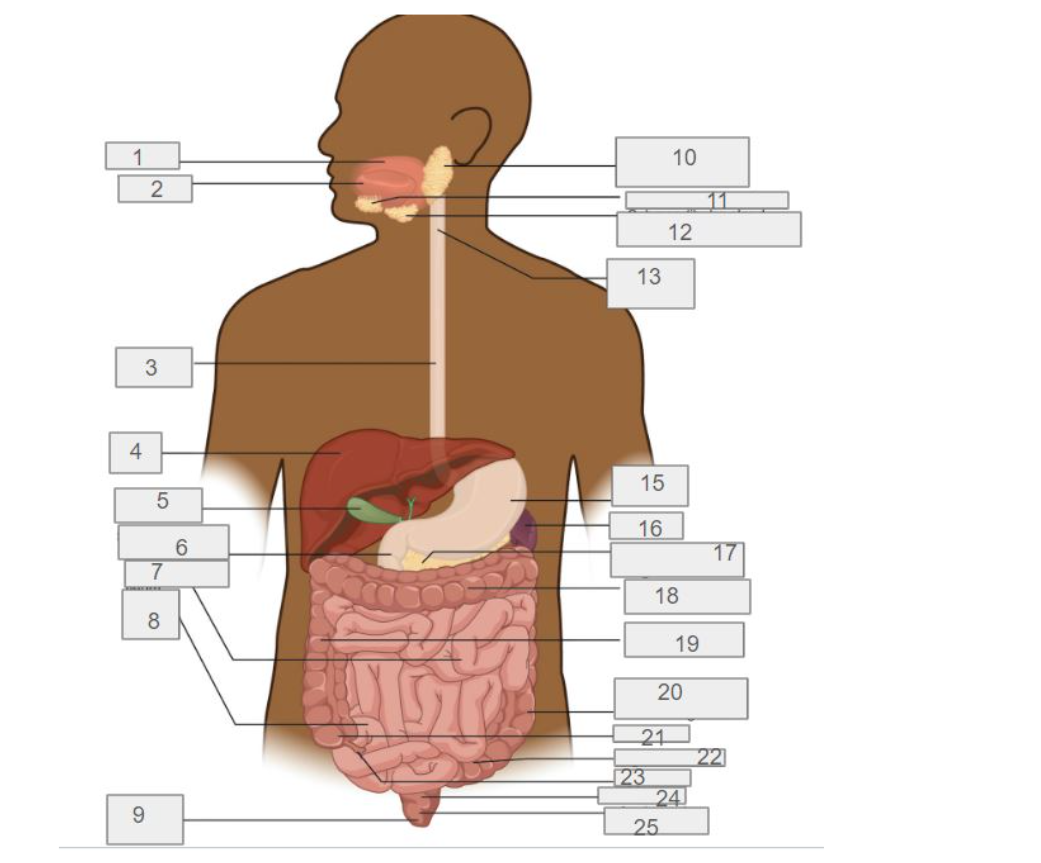
17
pancreas
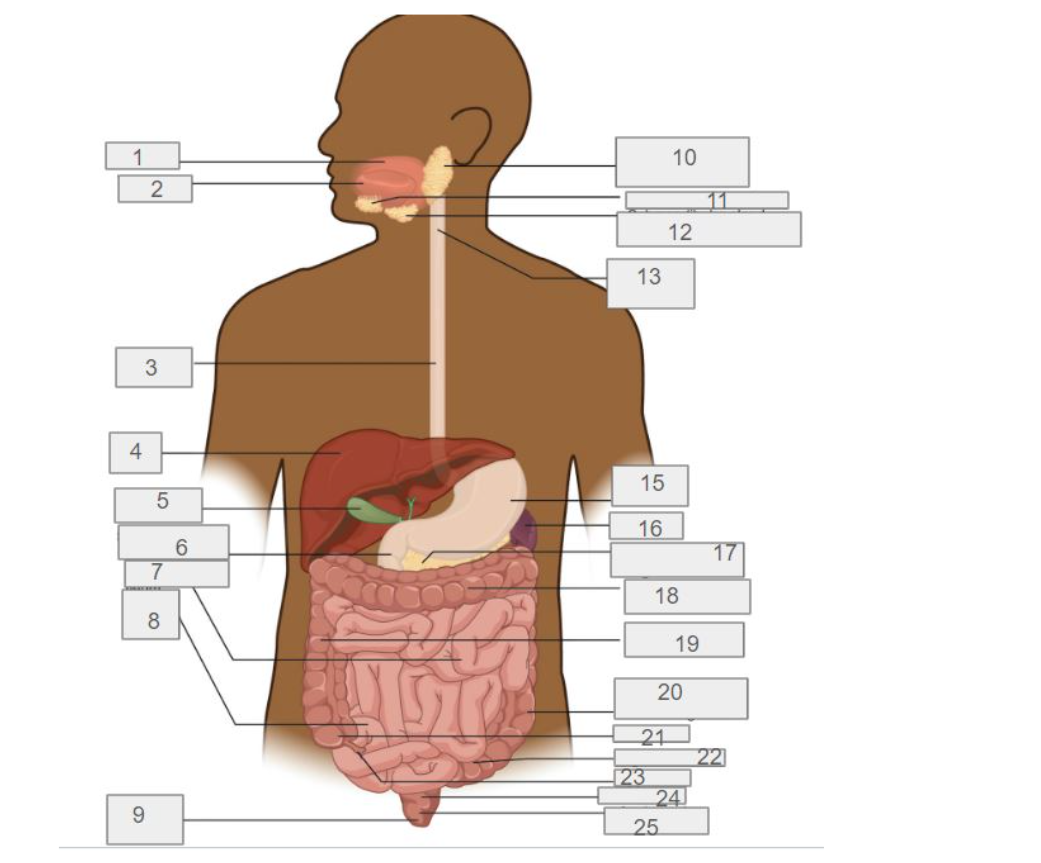
6
duodenum
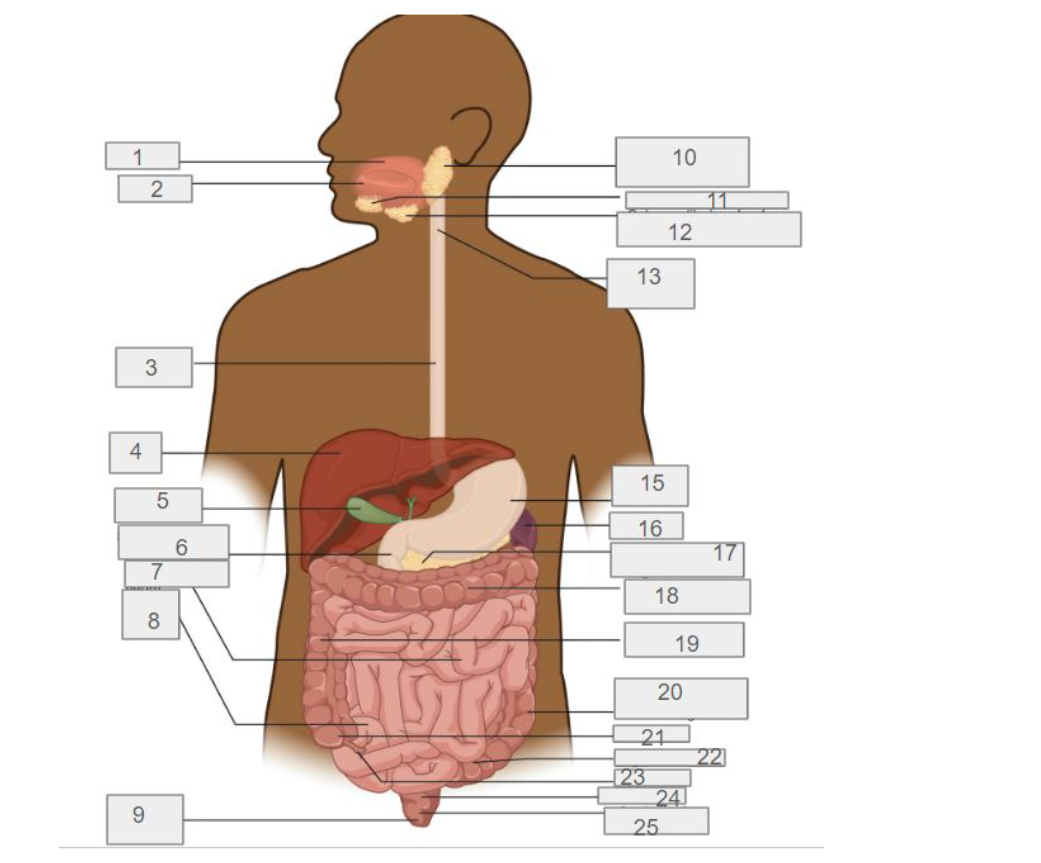
20
descending colon
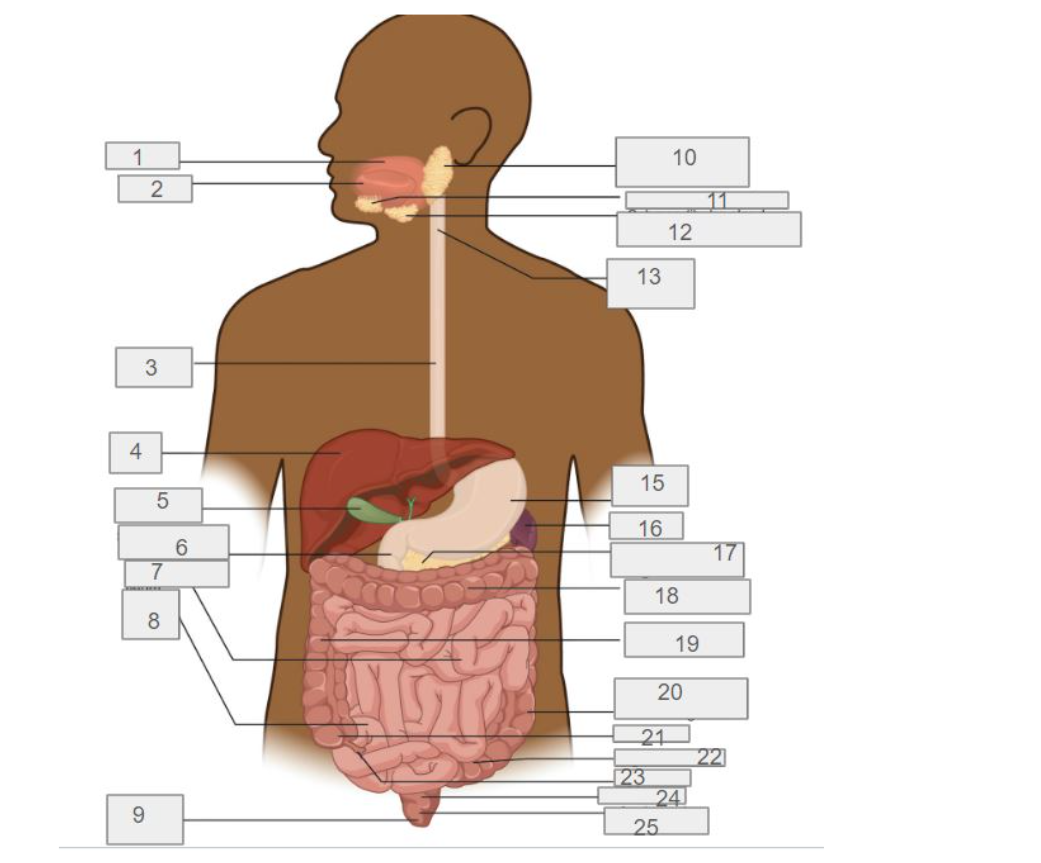
15
stomach
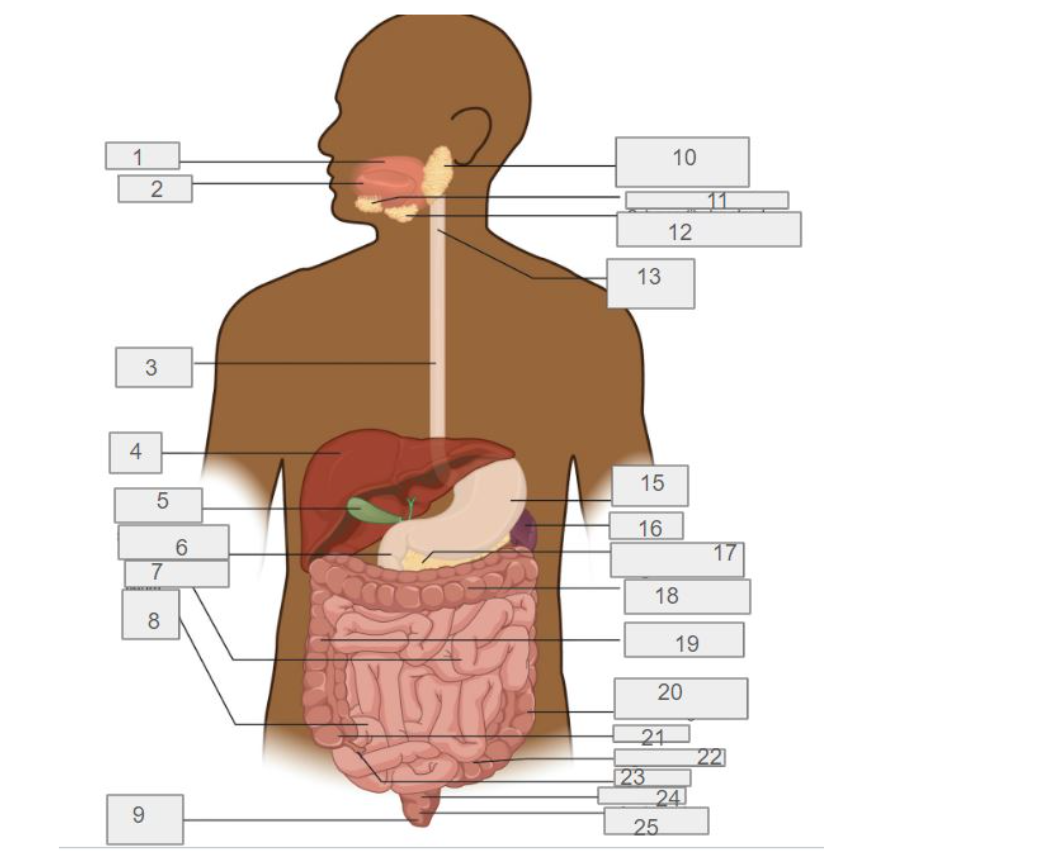
23
appendix
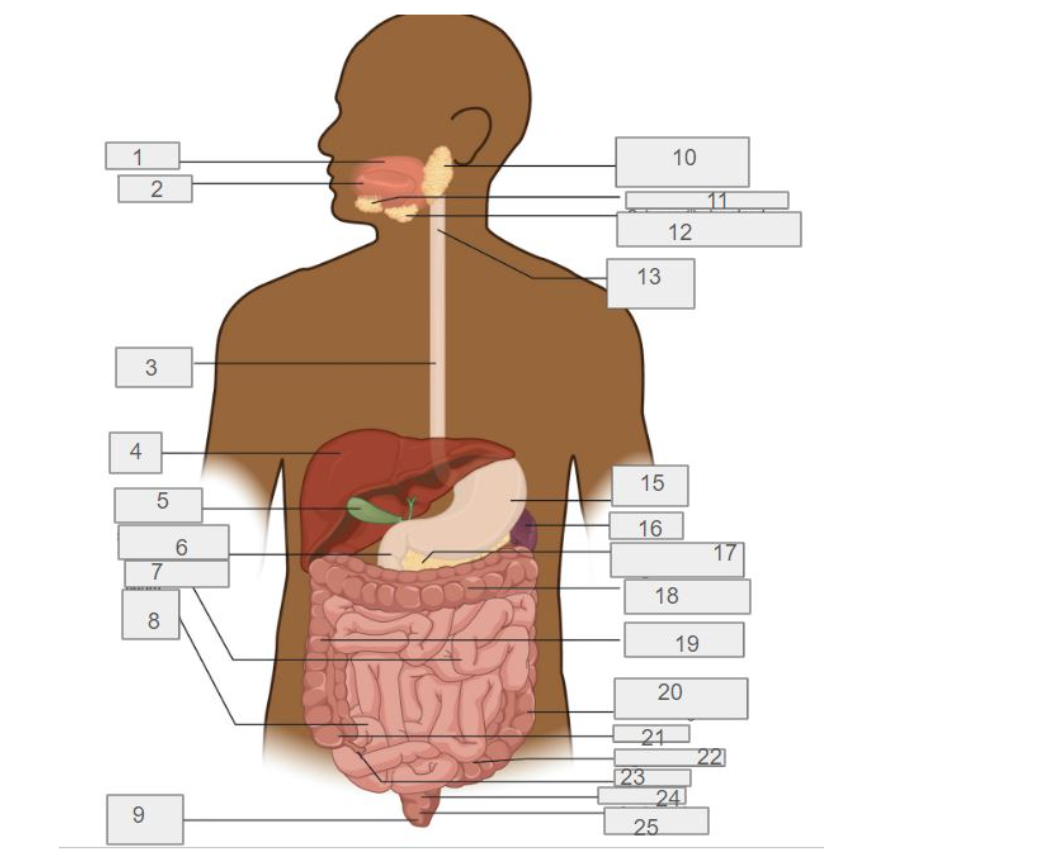
1
mouth
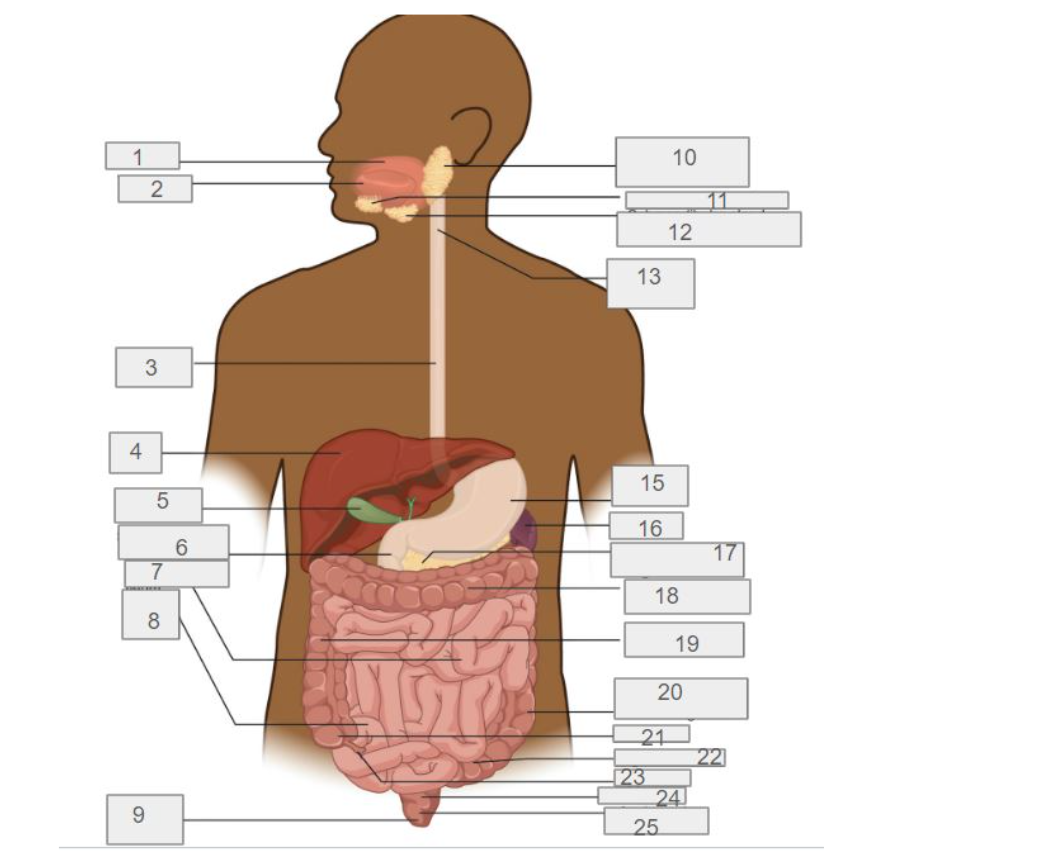
22
sigmoid colon
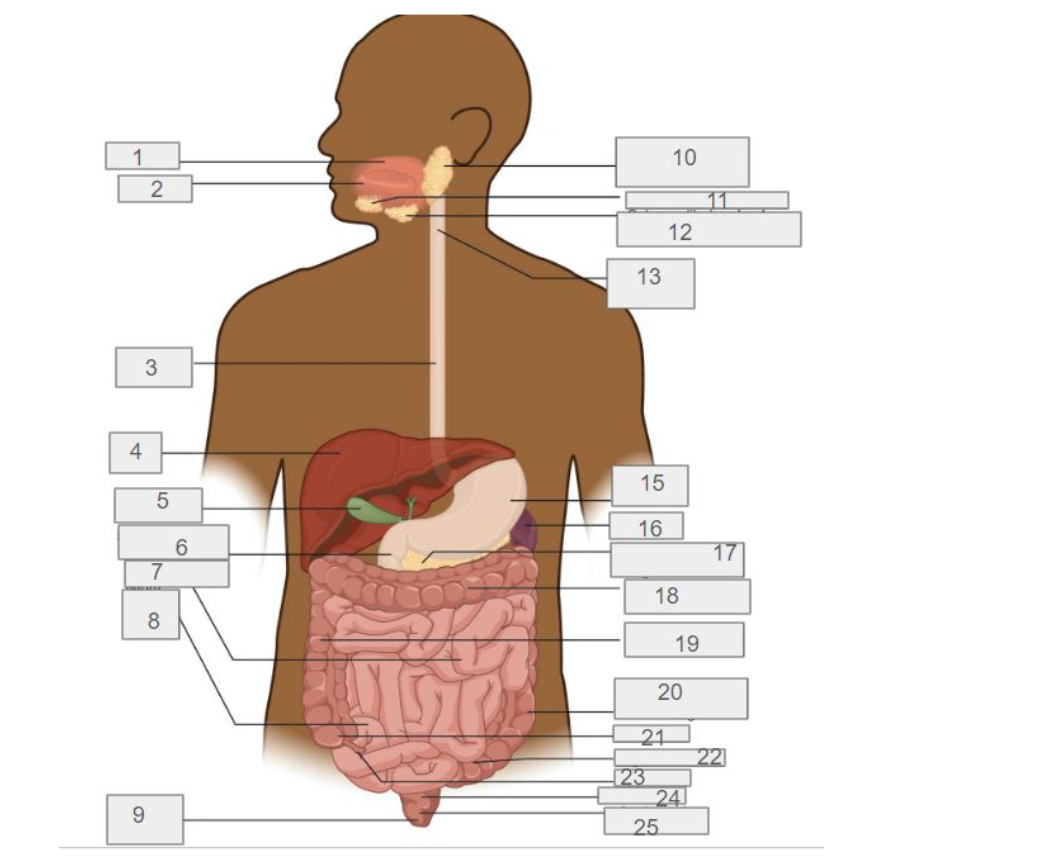
10
parotid gland
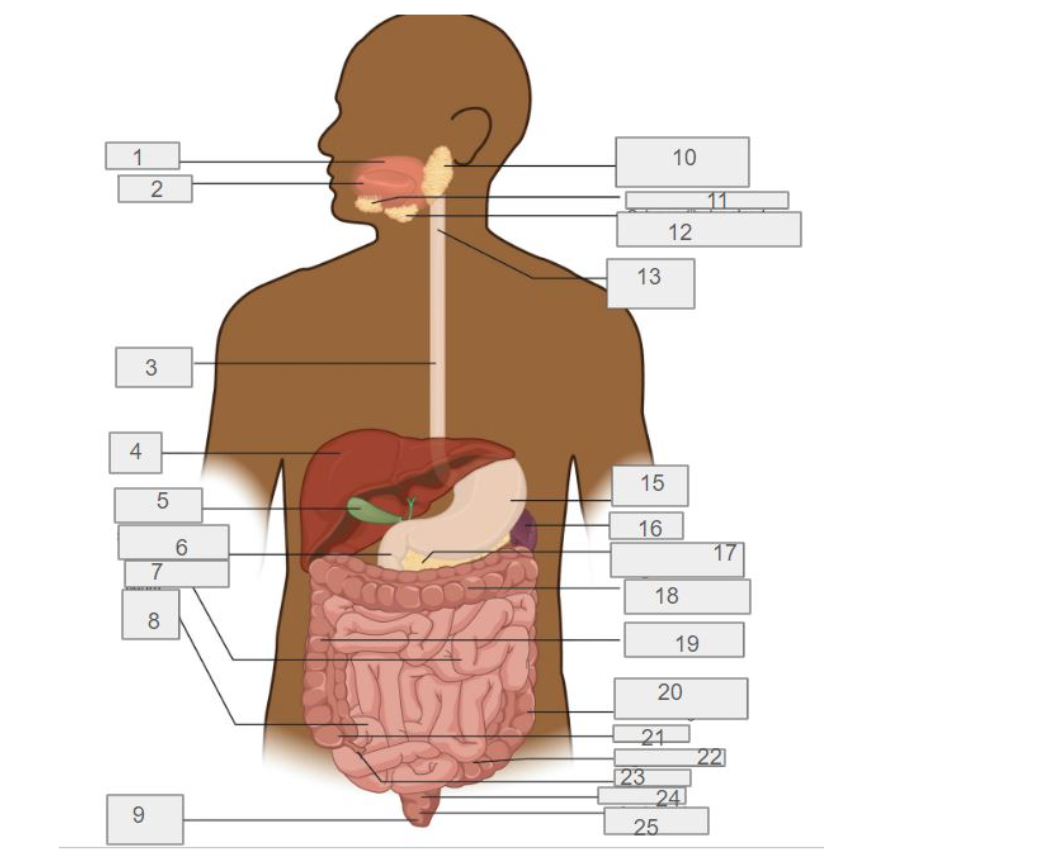
16
spleen
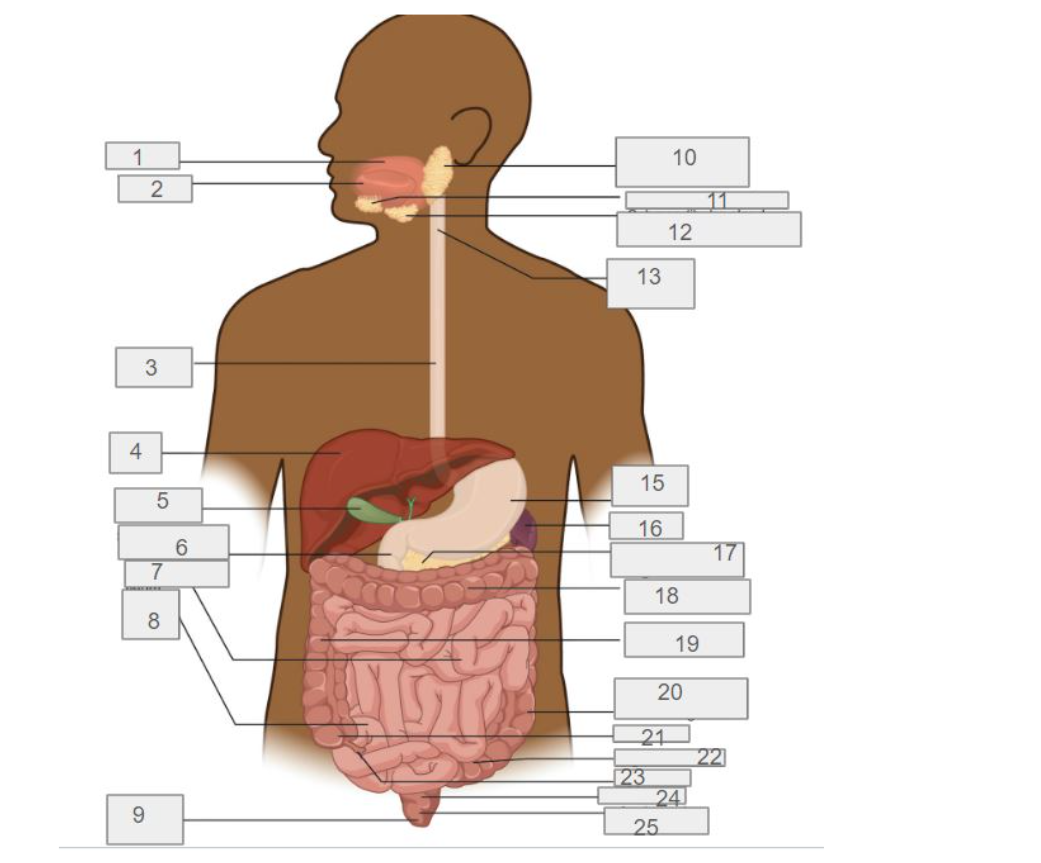
11
sublingual gland
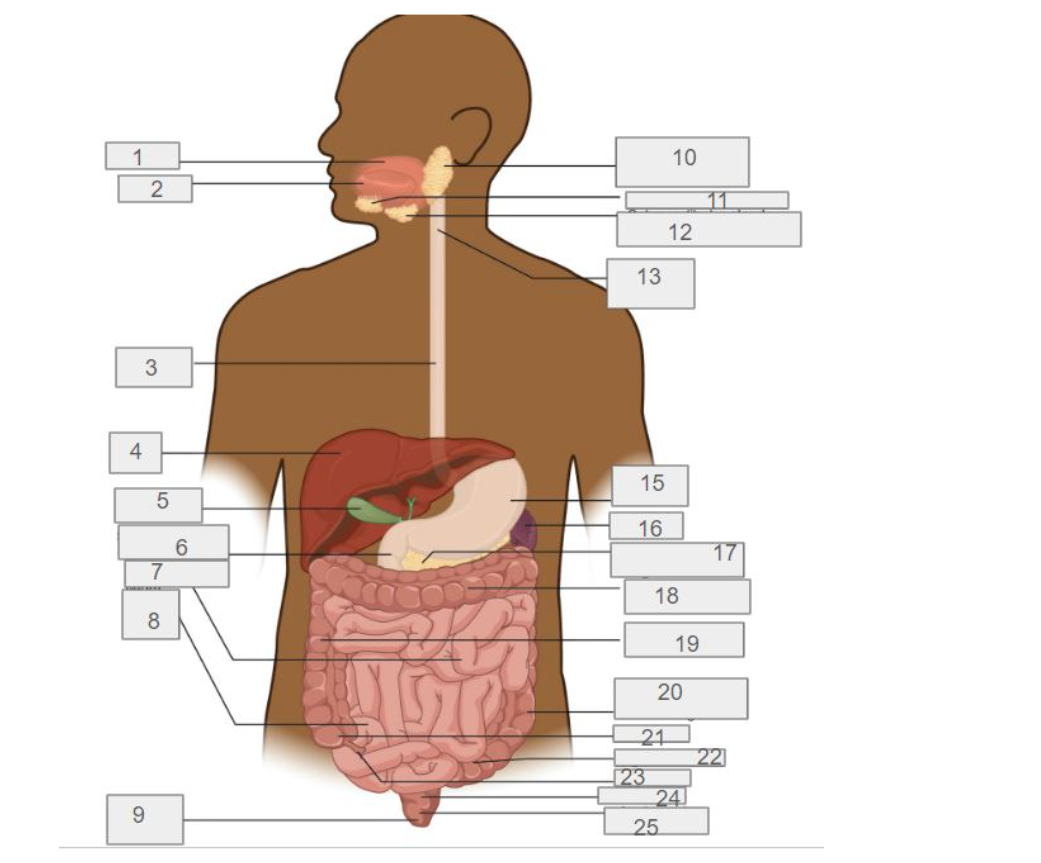
21
cecum
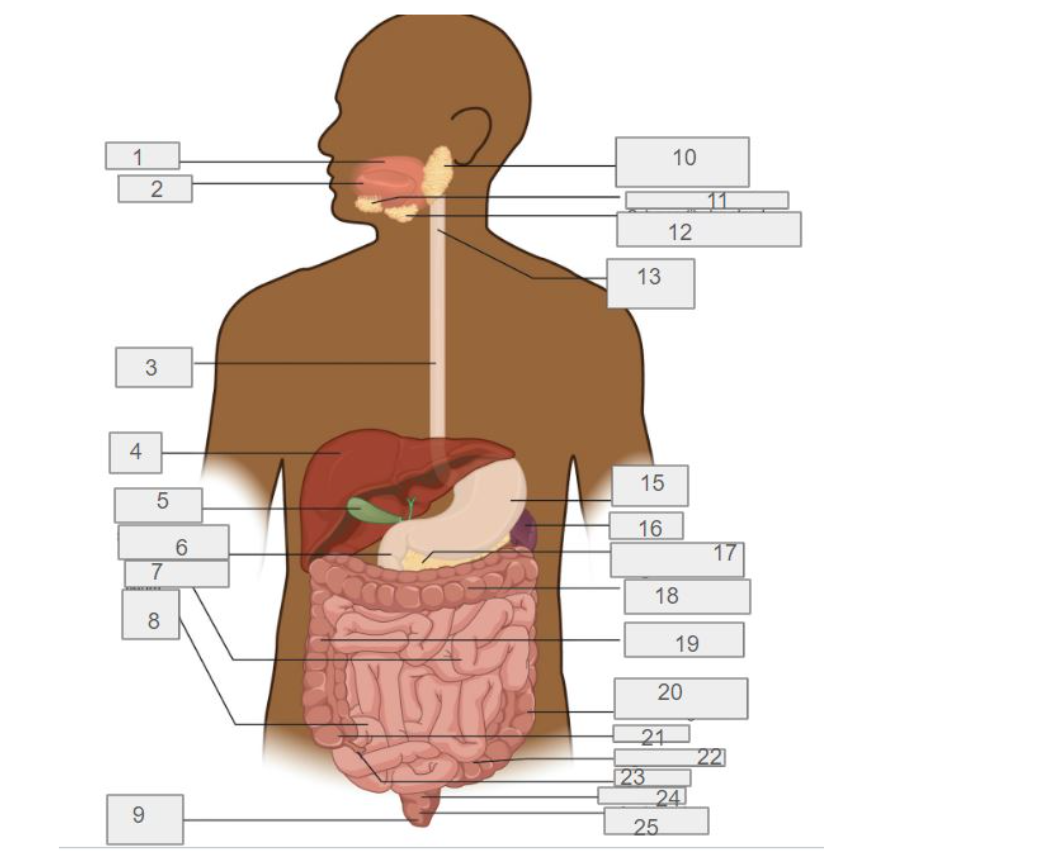
24
rectum
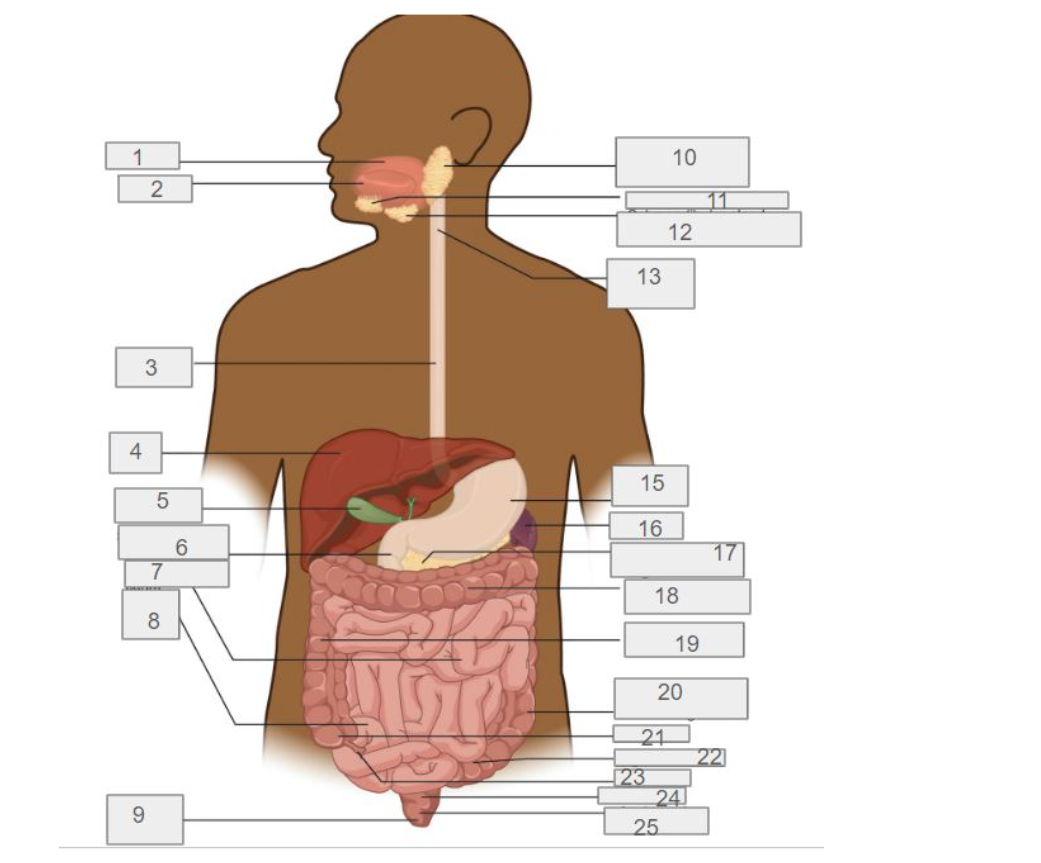
18
transverse colon
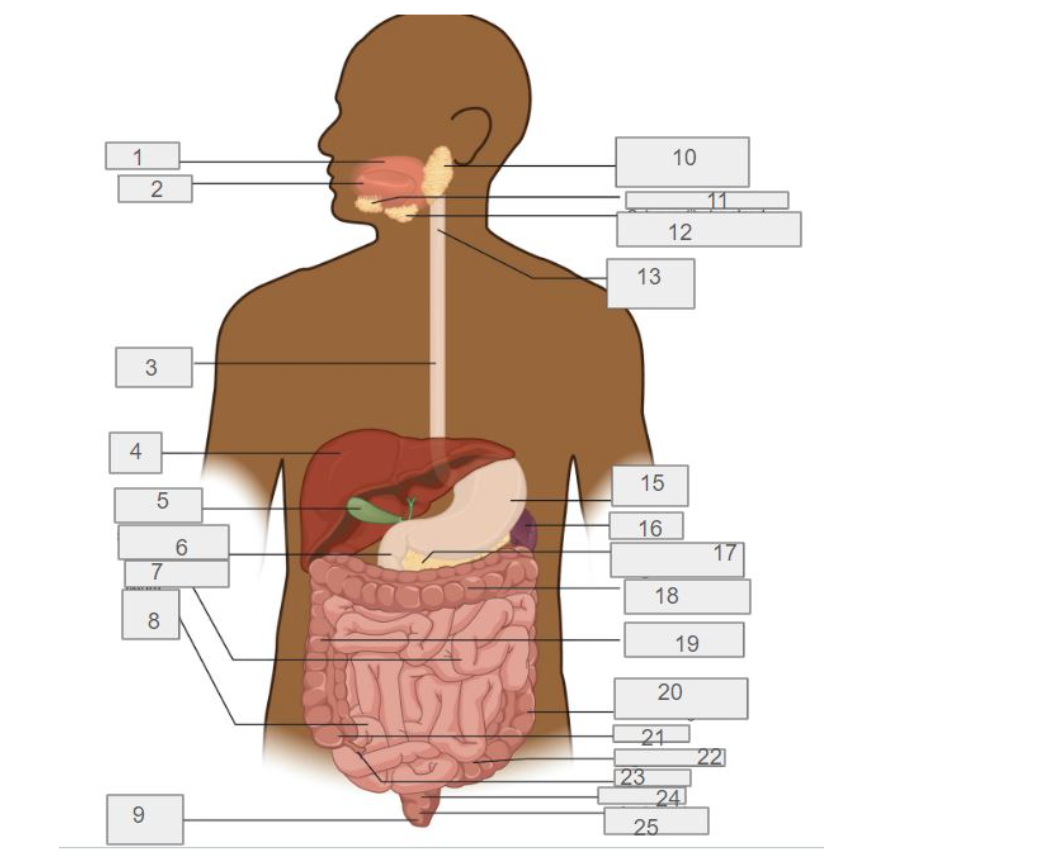
7
jejunum
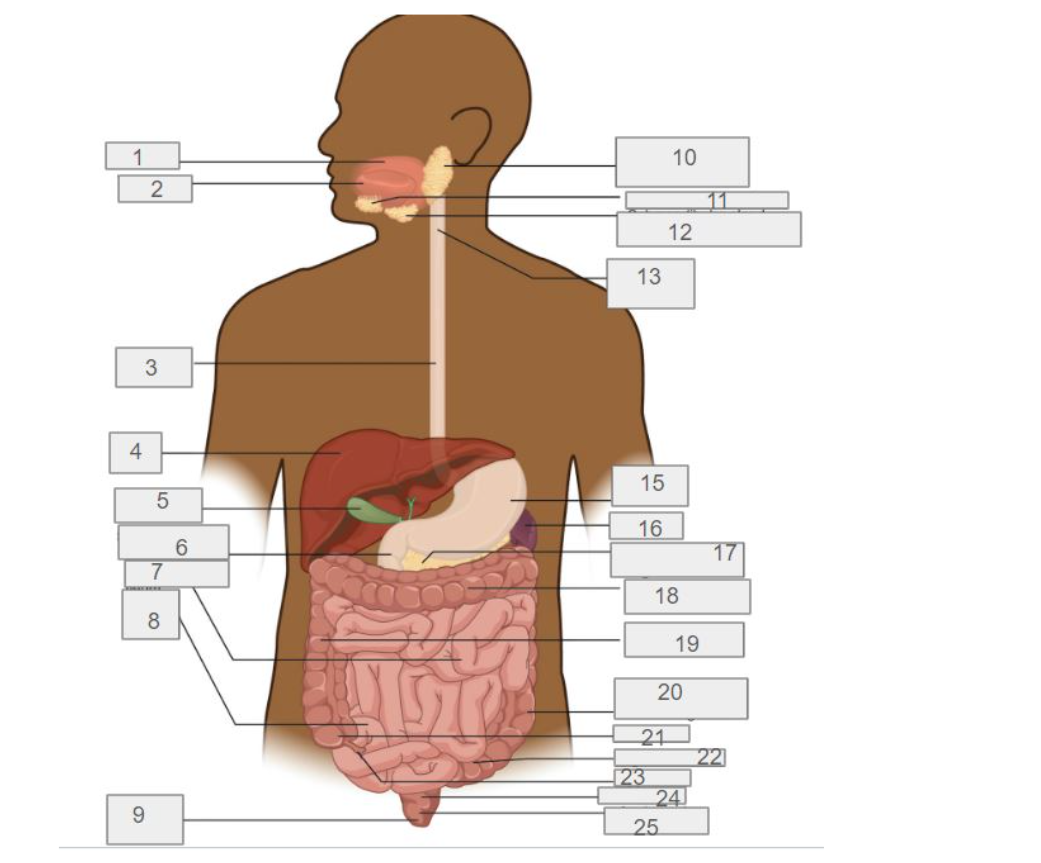
9
anus
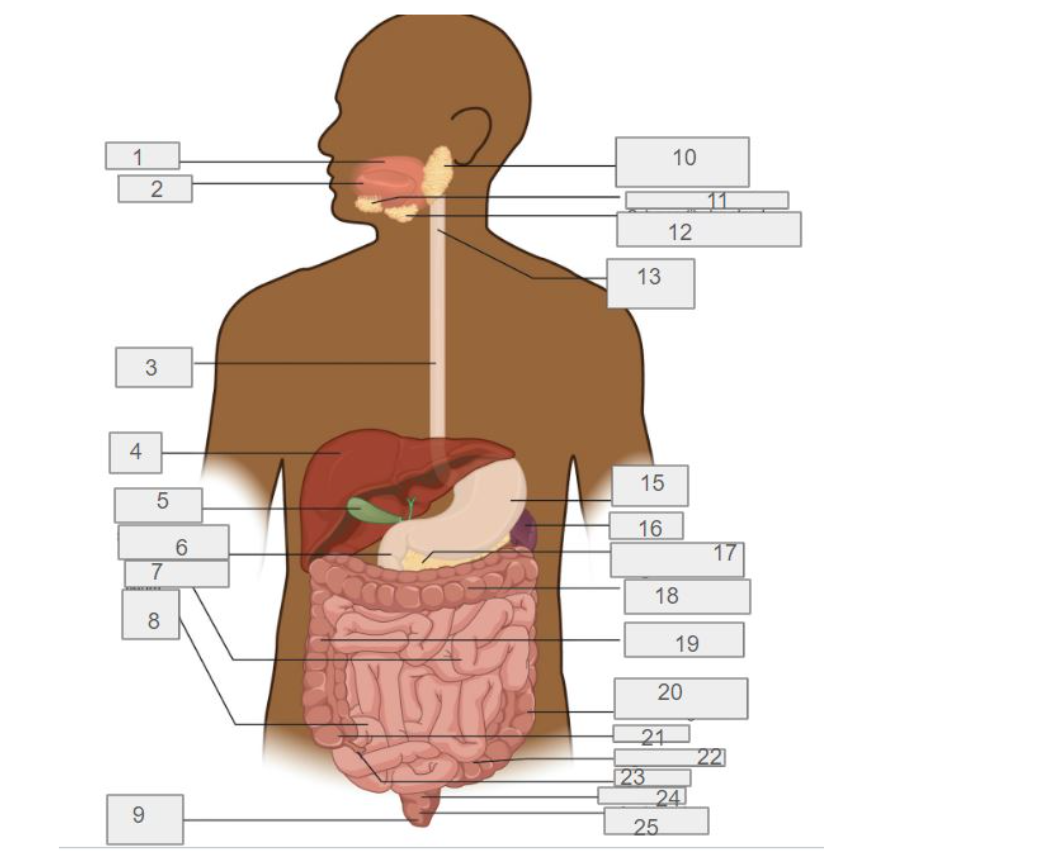
8
ileum
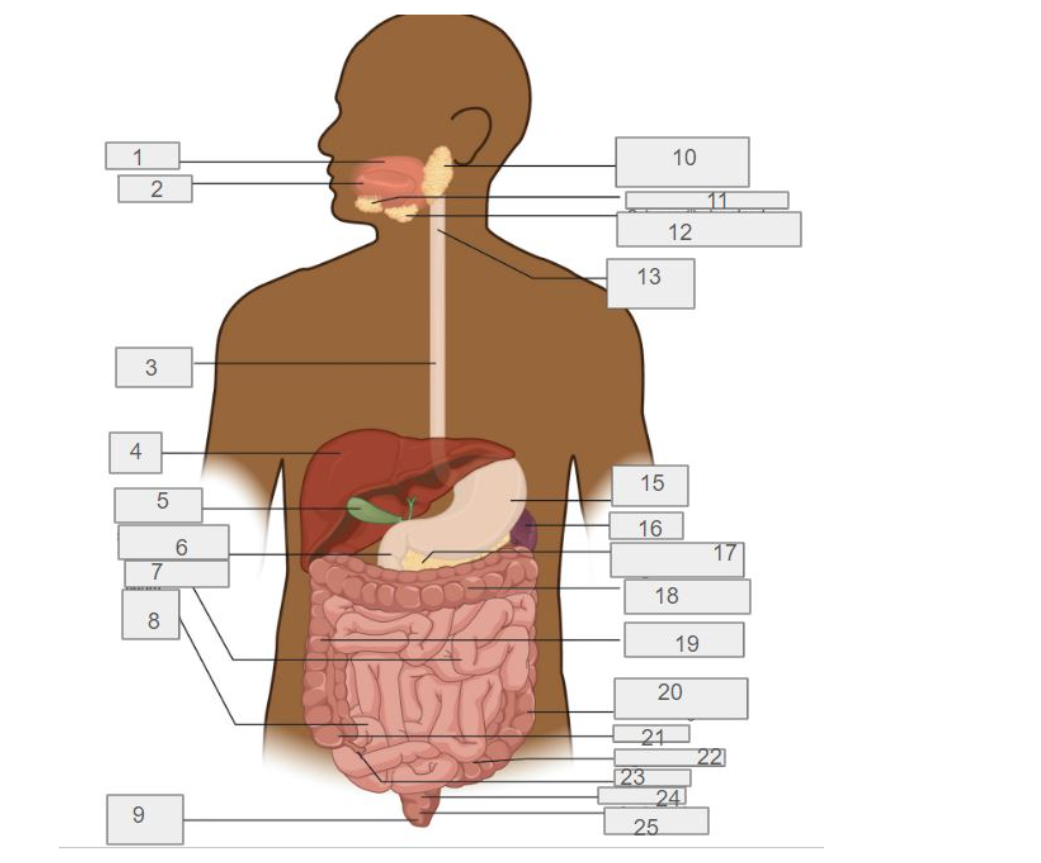
13
pharynx
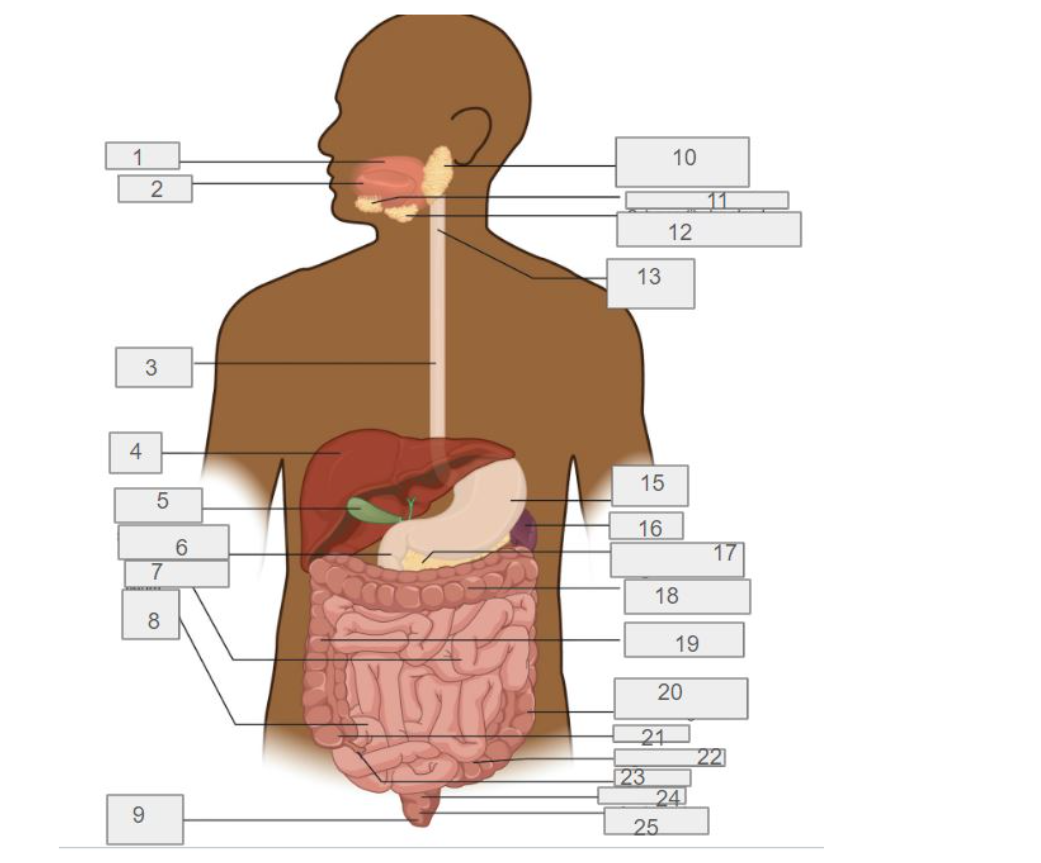
12
submandibular gland
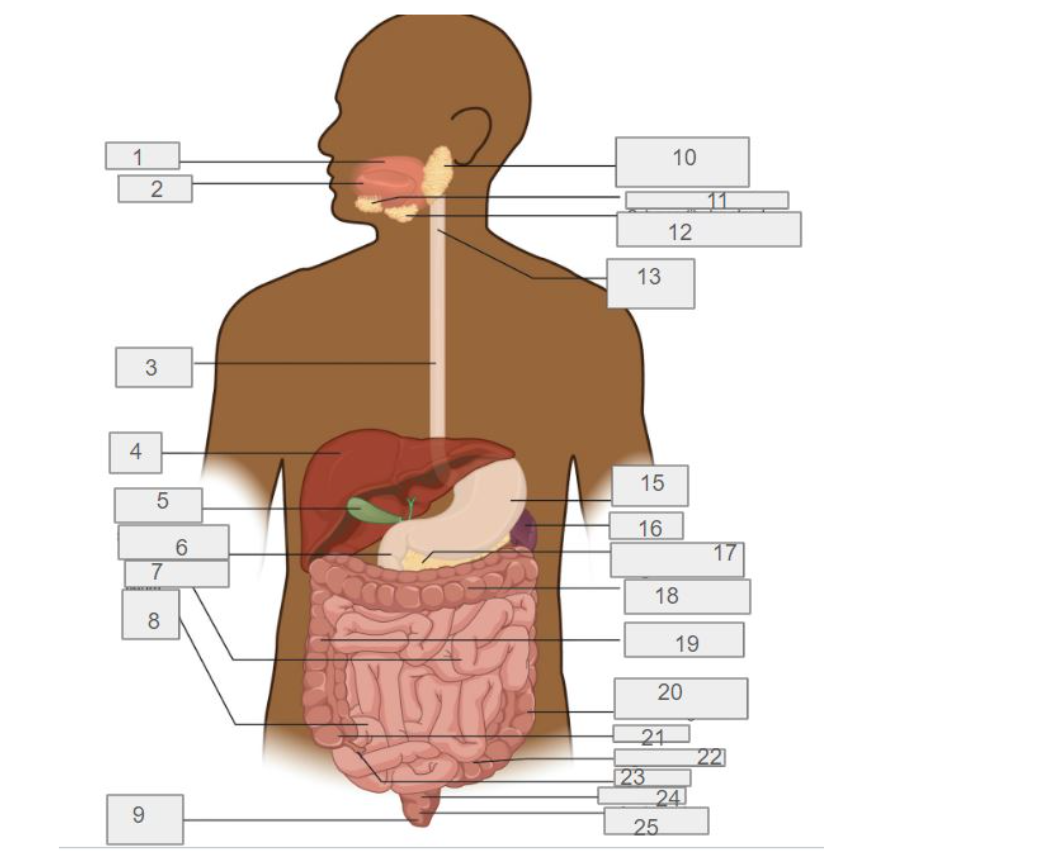
4
liver
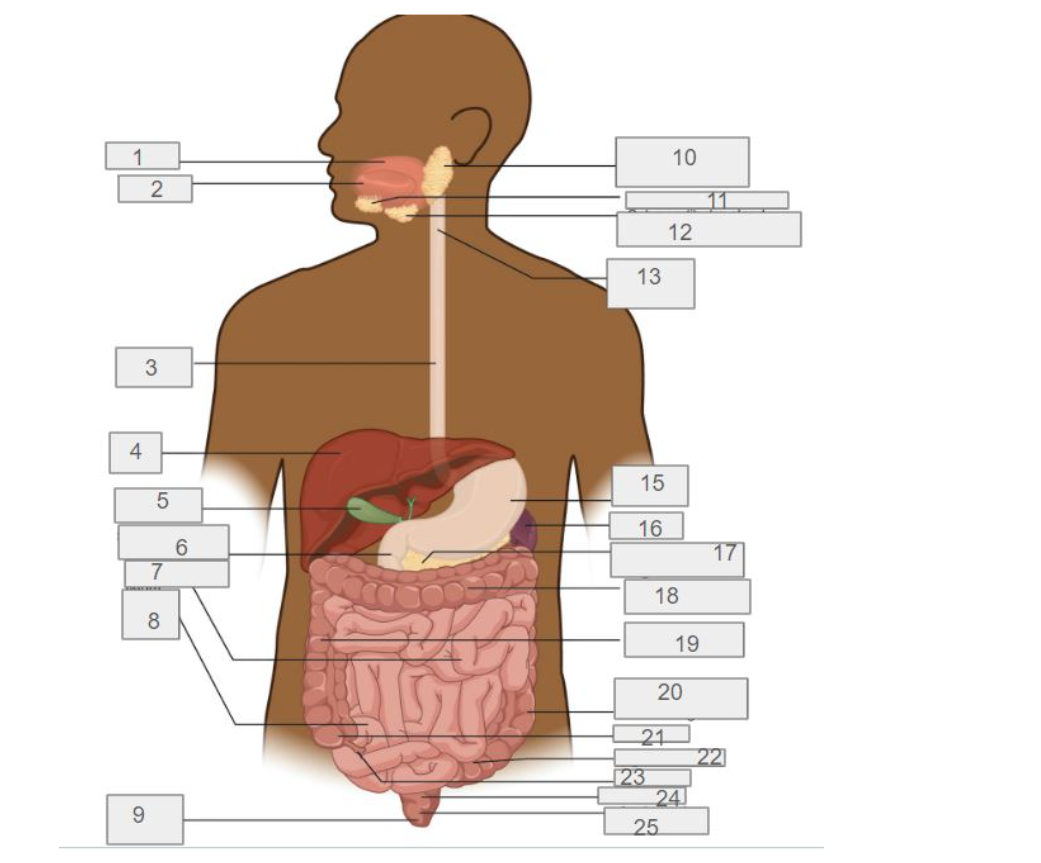
5
gallbladder