Ortho 4 - Cephalometric Analyses (Dr. Salam/Dr. Suri)
 Call Kai
 Learn
Learn Practice Test
 Spaced Repetition
 Match
Match Flashcards
 Knowt Play
1/89

There's no tags or description
Looks like no tags are added yet.
Name | Mastery | Learn | Test | Matching | Spaced | Call with Kai |
|---|
No analytics yet
Send a link to your students to track their progress
90 Terms
Tweed Analysis (1946)
What type of analysis...
- Promoted cephalometrics for diagnosis
- Emphasis on facial esthetics
- Focus on incisor position
- Stressed uprighting teeth over basal bone
- Popularized extraction
25°
According to Tweed's Analysis, the ideal measurement of the Frankford Mandibular Angle is ___ degrees
65°
According to Tweed's Analysis, the ideal measurement of the Frankford Mandibular Incisor Angle is ___ degrees
90°
According to Tweed's Analysis, the ideal measurement of the Incisor Mandibular Plane Angle is ___ degrees
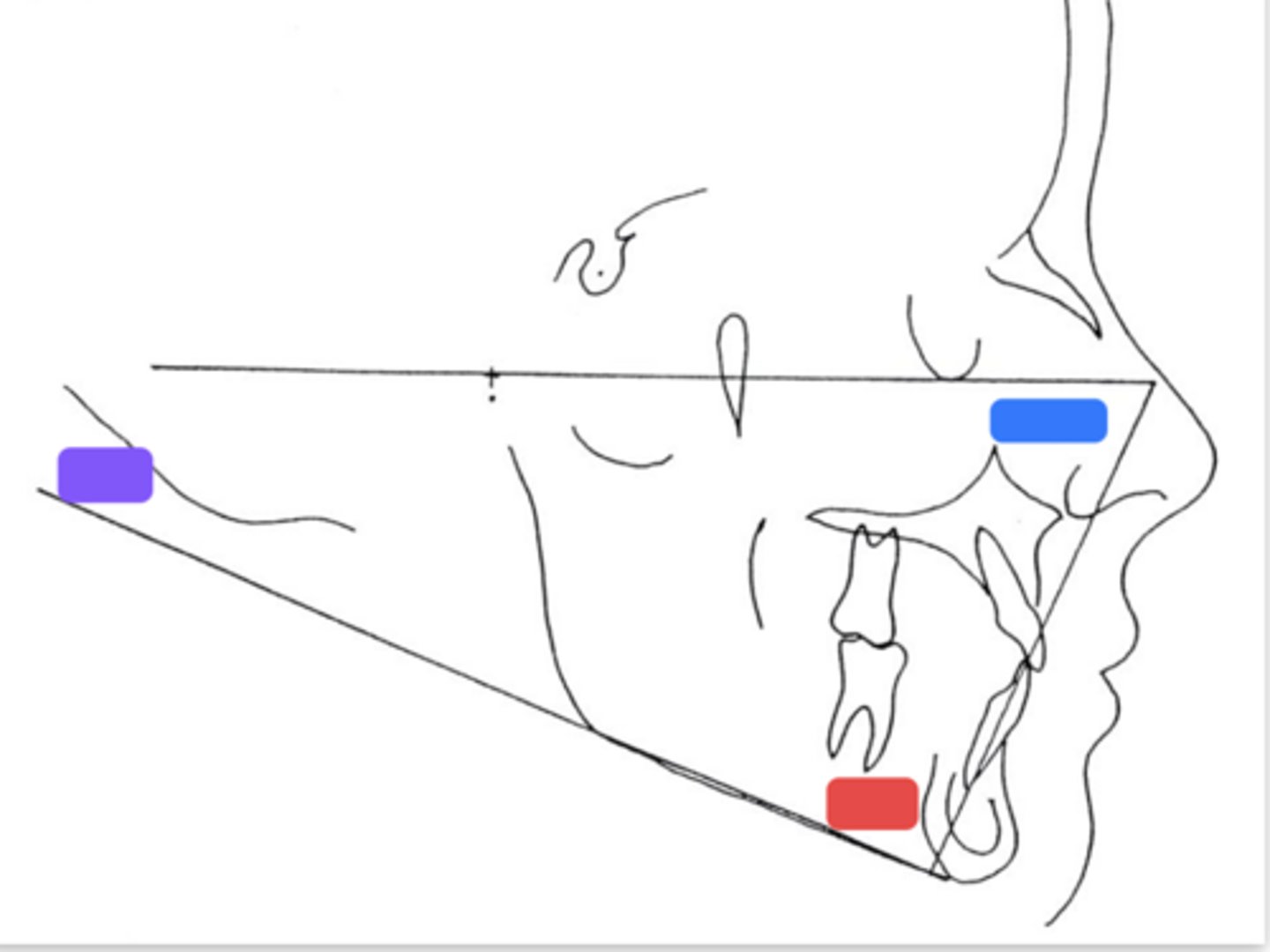
Frankford Mandibular Angle (FMA)
What is the angle indicated at the purple box?
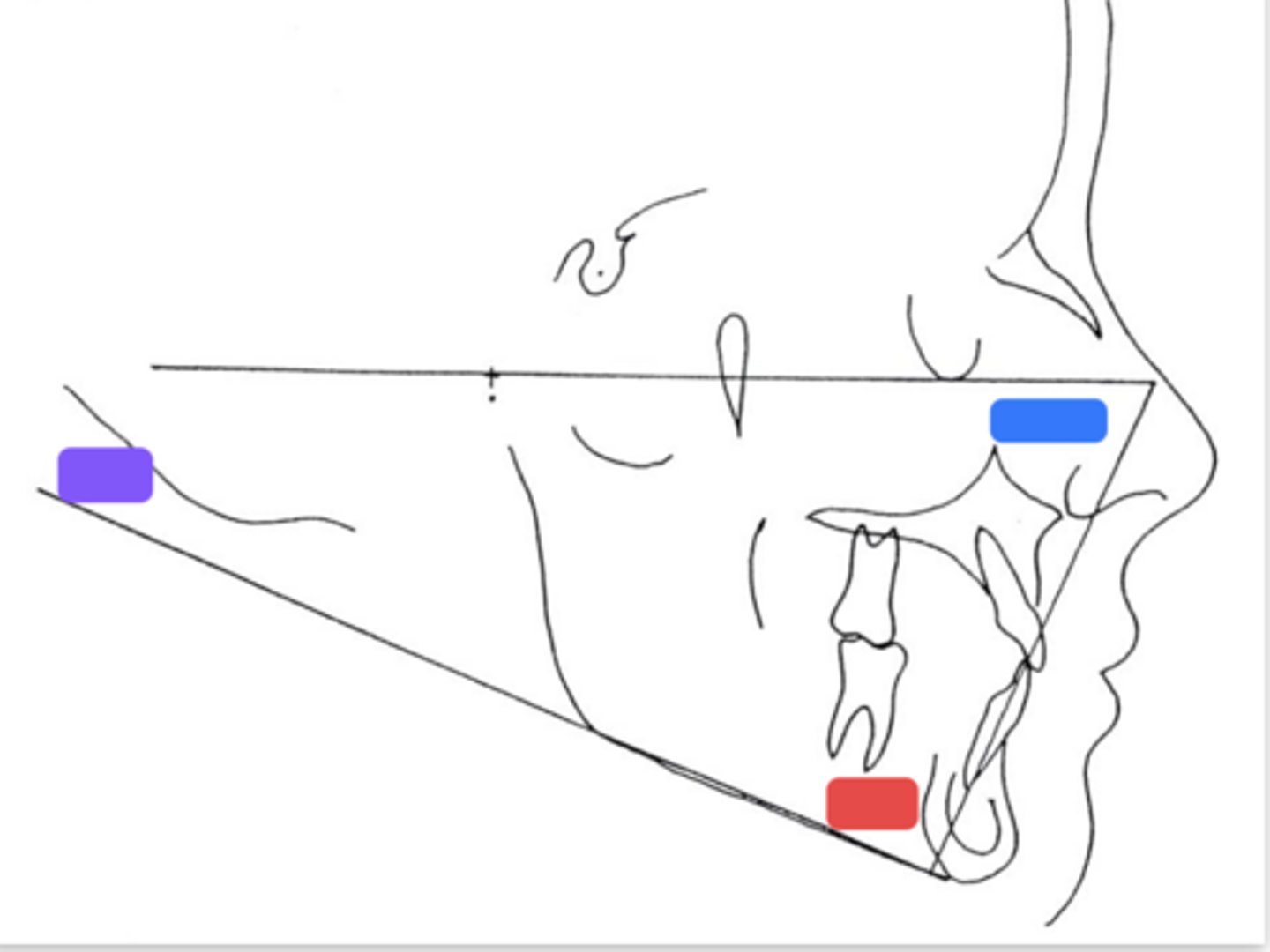
Incisor Mandibular Plane Angle (IMPA)
What is the angle indicated at the red box?
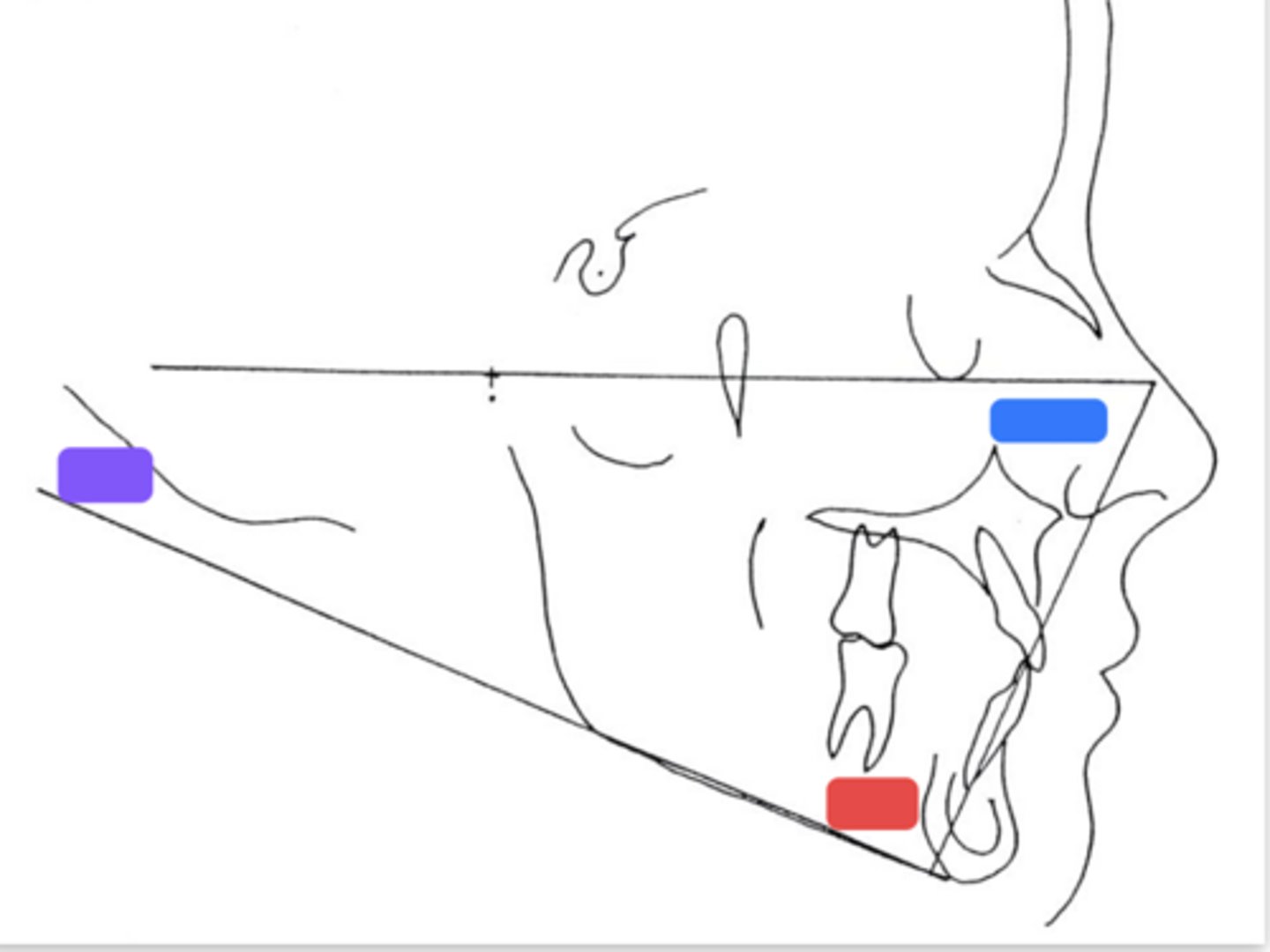
Frankford Mandibular Incisor Angle (FMIA)
What is the angle indicated at the blue box?
Upright
In order to get a 90 degree angle for the Incisor mandibular angle, the lower incisors must be positioned ______ on the basal bone
Frankfort Horizontal (Porion-Orbitale plane)
What cranial reference plane did Downs use as the basis for his cephalometric analysis?
87.8°
According to Down's Analysis, what is the mean measurement of the Facial Angle?
- Frankfort horizontal
- Facial Plane (N-Pog)
According to Down's Analysis, what two landmarks make up the facial angle?
Class III (advanced chin)
The facial angle in Downs analysis is greater than the normal mean of 87.8°. This finding is most consistent with what occlusion?
Class II (retruded chin)
The facial angle in Downs analysis is less than the normal mean of 87.8°. This finding is most consistent with what occlusion?
0°
According to Down's Analysis, what is the mean measurement of the Angle of Convexity?
Negative
According to Down's Analysis, if the Angle of Convexity is negative, what is the occlusion?
Class II
According to Down's Analysis, if the Angle of Convexity is positive, what is the occlusion?
- Nasion
- Point A
- Pogonion
According to Down's Analysis, what landmarks make up the Angle of Convexity?
- Frankfort Horizontal
- Sella-Gnathion line
According to Downs, the Y-axis in cephalometric analysis is formed by the angle between what?
Direction of facial growth
The Y-axis is primarily used as an indicator of what, according to Downs?
59.4°
According to Downs, what is the normal value for the Y-axis angle?
Increased vertical growth pattern
A patient has a Y-axis angle >60°, what does this finding most likely indicate, according to Downs?
Relates jaws to face
What is the AB to Facial Plane measurement used for?
-4.6°
According to Downs, what is the normal value for the AB to facial plane?
Class II
An AB to Facial Plane angle of -10° would most likely indicate what occlusion?
Class III
An AB to Facial Plane angle of +2° would most likely indicate what occlusion?
- Gonion
- Mention
According to Downs, what structures do you use for the mandibular plane?
21.9°
According to Downs, what is the normal value for the mandibular plane angle?
Five dental measurements used to evaluate the relationship of the dentition to the skeletal pattern
What are the following, according to Downs?
- The cant of the occlusal plane
- The axial inclination of the lower incisors to the occlusal plane
- The axial inclination of the lower incisors to the mandibular plane
- The axial inclination of the lower and upper incisors to each other
- The amount of protrusion of upper incisors
- Frankfort Horizontal
- Plane of occlusion
According to Downs, what structures do you use for the Cant of Occlusal plane?
9.3°
According to Downs, what is the mean value for the Cant of Occlusal plane?
Steep occlusal plane
According to Downs, what does a larger angle of Cant of Occlusal plane indicate?
Axial Inclination of Upper and Lower incisors
According to Downs, what does the following indicate: U1/L1?
135.4°
According to Downs, what is the mean value for the axial inclination of upper and lower incisors?
More retroclined incisors
According to Downs, what does a larger angle for the axial inclination of upper and lower incisors indicate?
Axial Inclination of Mandibular Incisor to Mandibular Plane
According to Downs, what does the following indicate: L1 / Go-Mn?
91.4°
According to Downs, what is the mean value for the axial inclination of mandibular incisor to the mandibular plane?
More proclined incisors
According to Downs, what does a larger angle for the axial inclination of mandibular incisor to the mandibular plane indicate?
Axial Inclination of Lower Incisors to the Occlusal Plane
According to Downs, what does the following indicate: L1 / Occ?
104.5°
According to Downs, what is the mean value for the Axial Inclination of Lower Incisors to the Occlusal Plane?
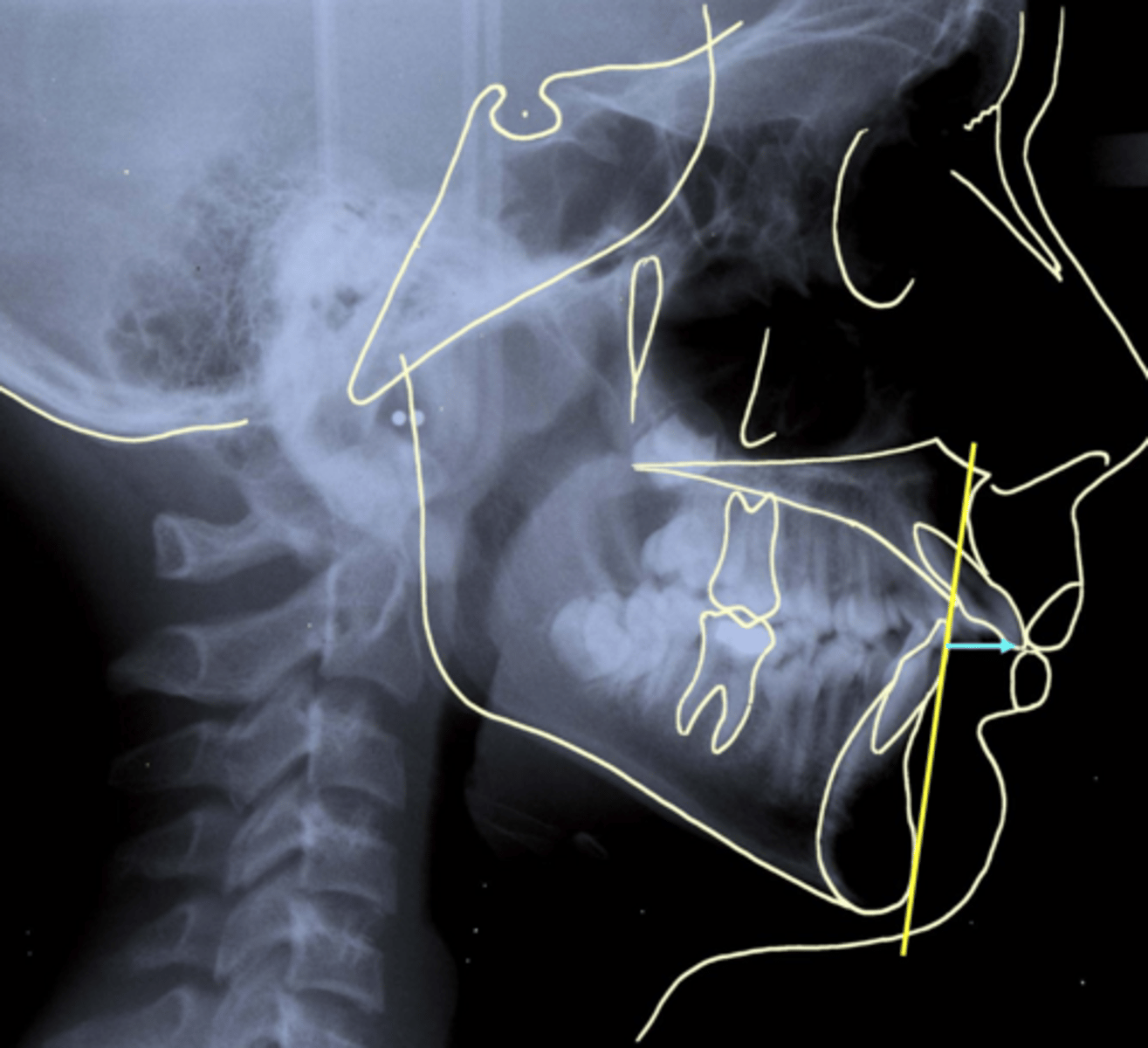
Protrusion of the maxillary central incisor
According to Downs, what does the following indicate: U1---A-Pg?
2.7mm
According to Downs, what is the mean value for the protrusion of the maxillary central incisor?
Upper incisors are anteriorly positioned
According to Downs, if the protrusion of the maxillary central incisor is >5mm, what does this indicate?
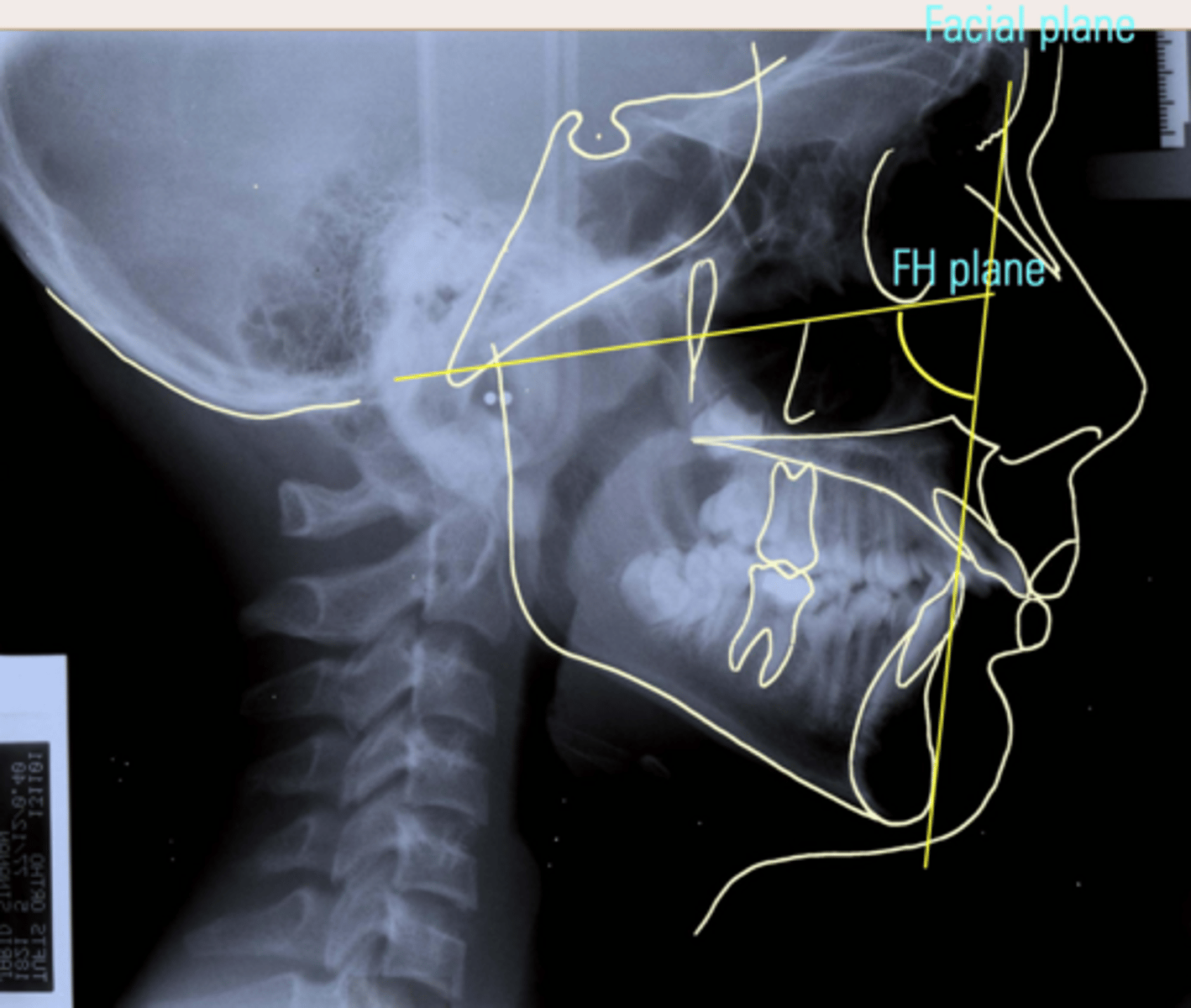
Facial Angle (88°‚
ID the measurement being taken:
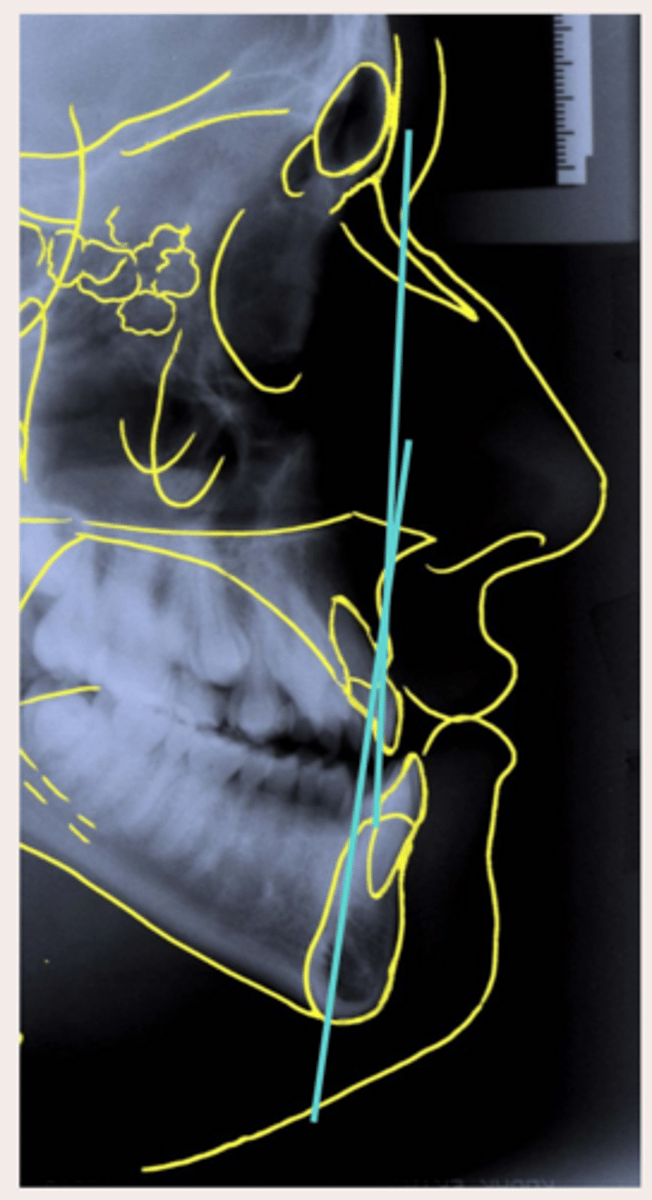
Negative Angle of Convexity
ID the measurement being taken:
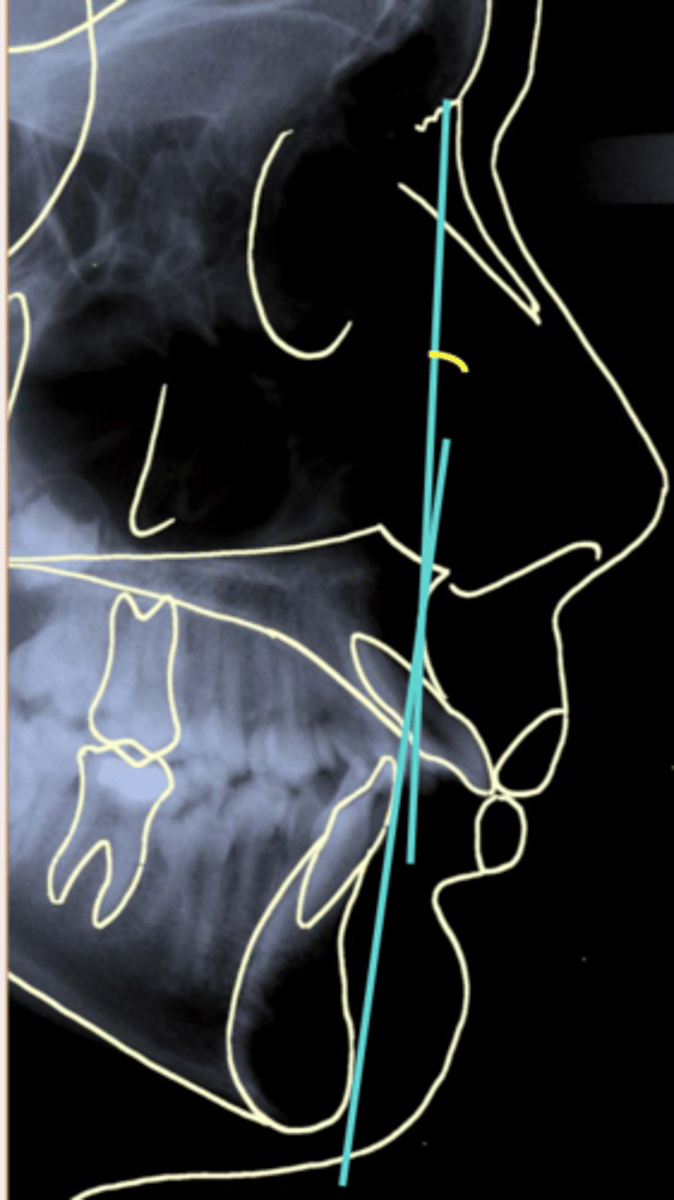
Positive Angle of Convexity
ID the measurement being taken:
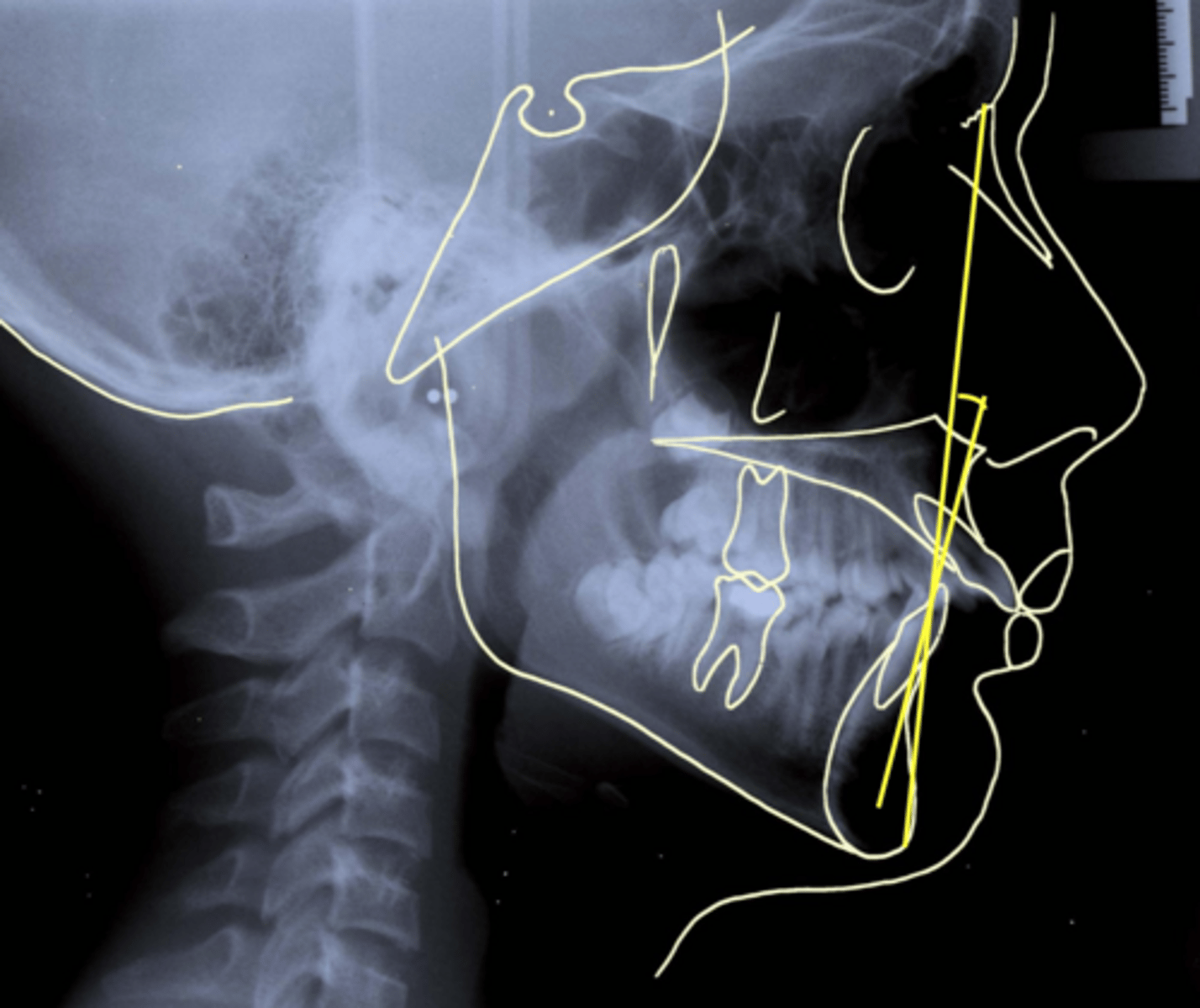
AB Plane Angle (-4.6°)
ID the measurement being taken:
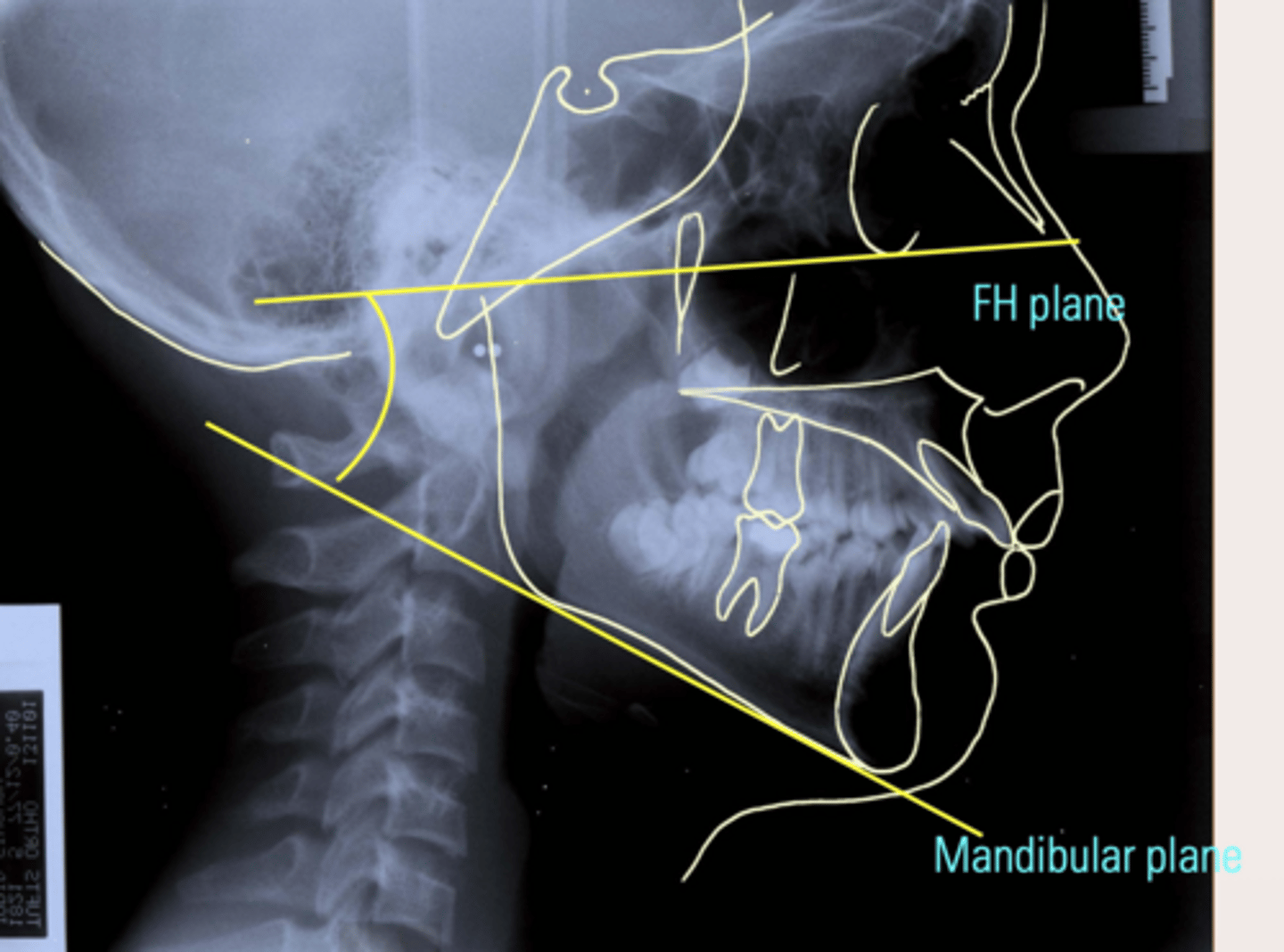
Mandibular plane angle (22°)
ID the measurement being taken:
Angle of Y-axis (60°)
ID the measurement being taken:
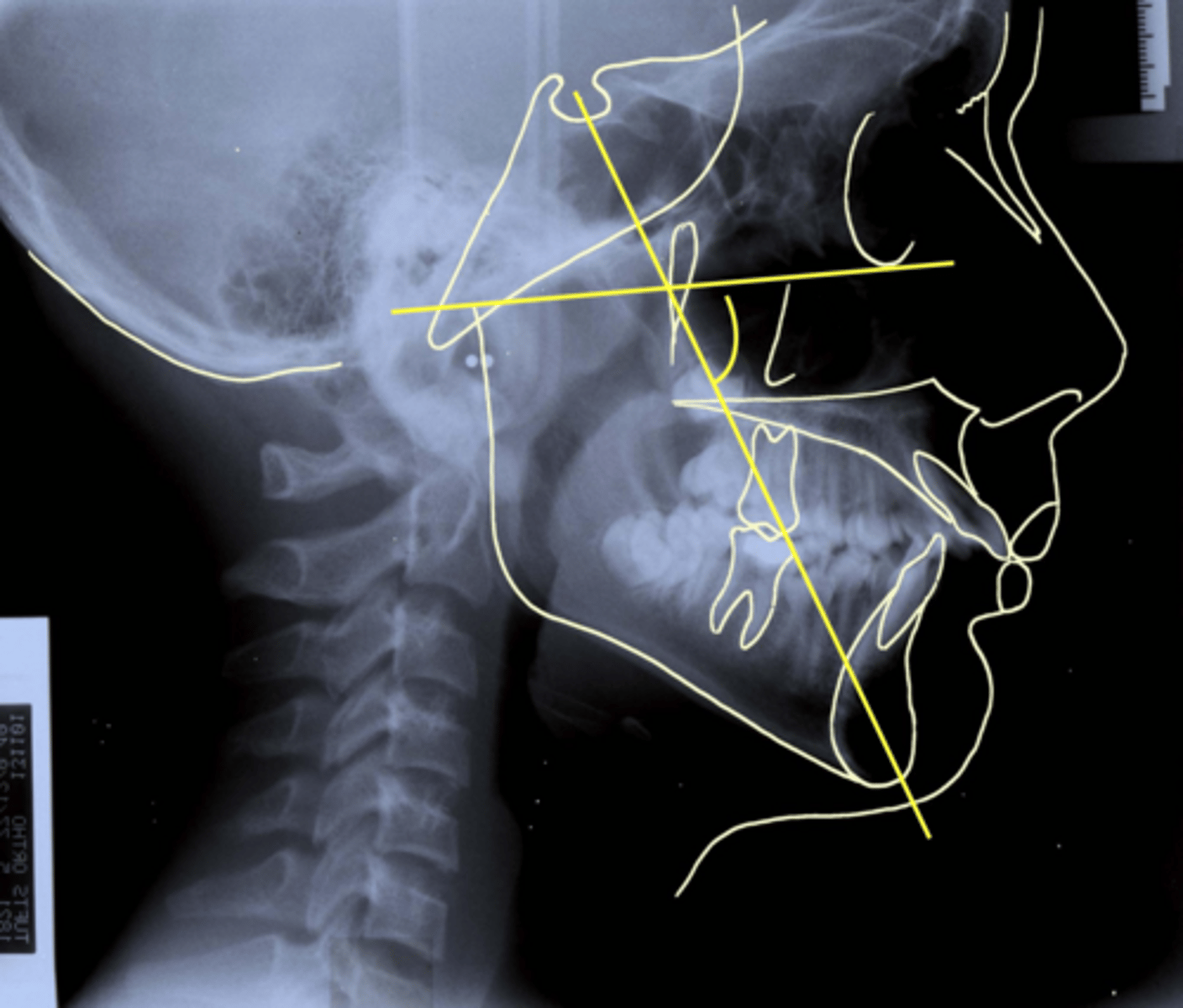
Cant of Occlusal plane (9.3°)
ID the measurement being taken by the red lines:
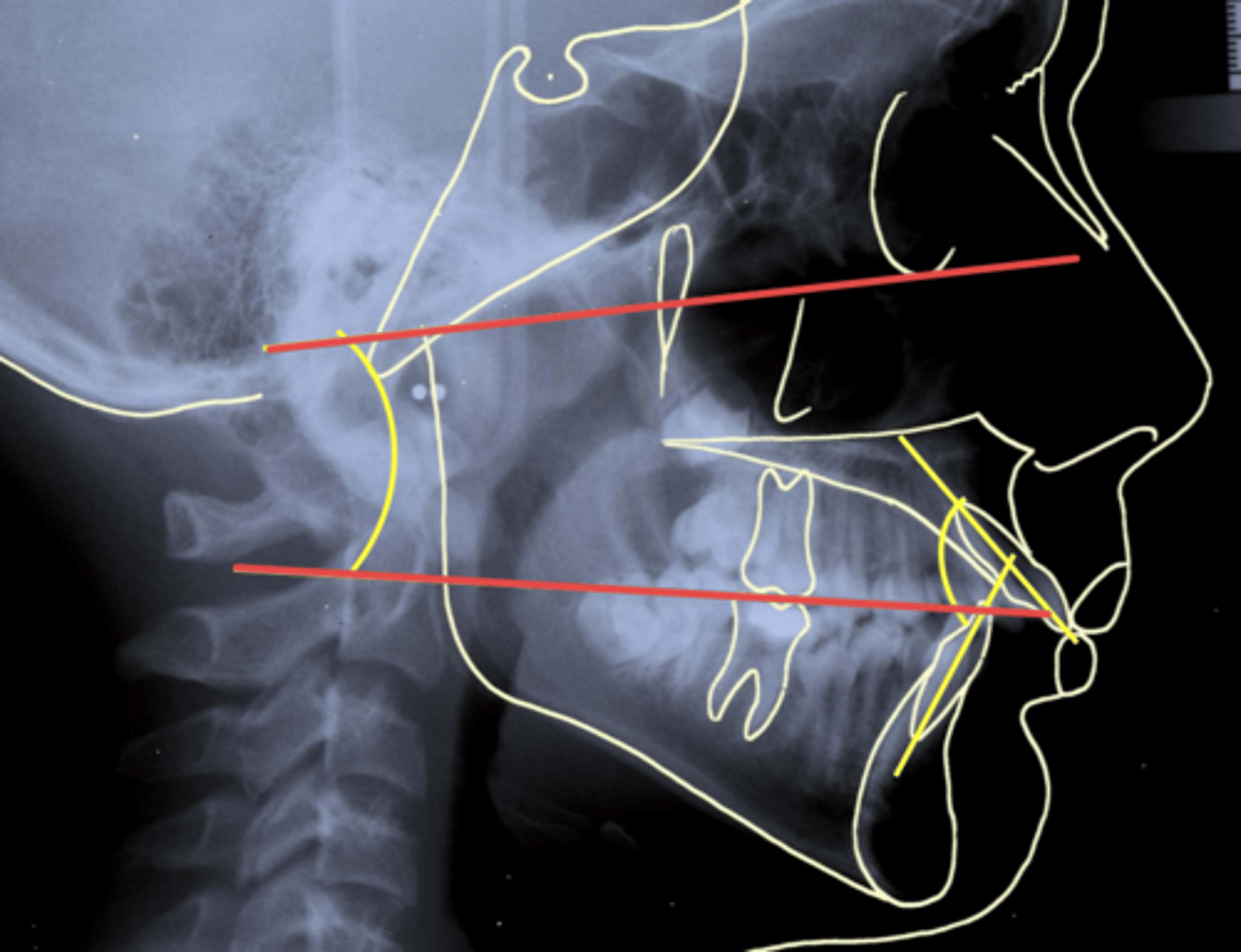
Interincisal angle (135°)
ID the measurement being taken by the red lines:
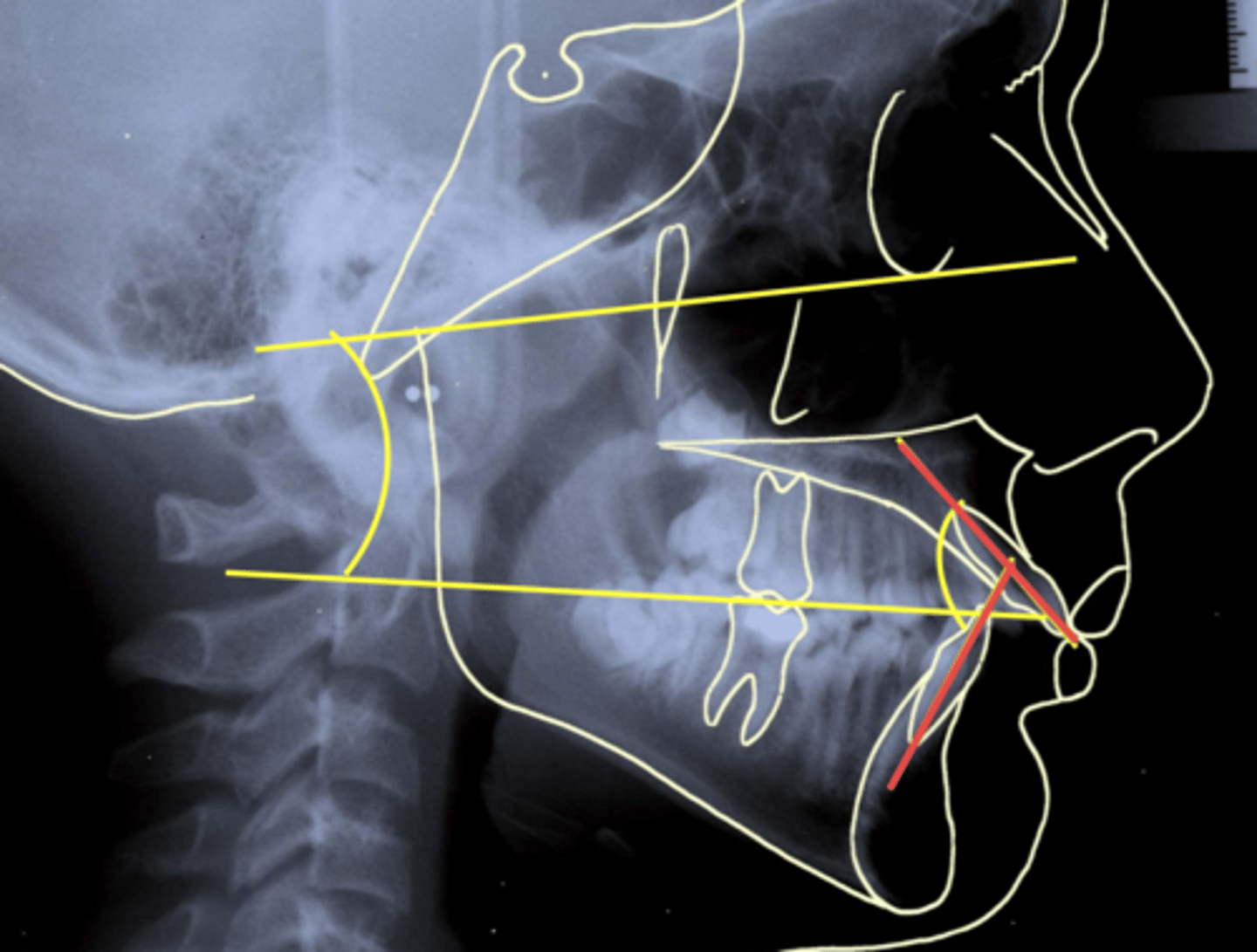
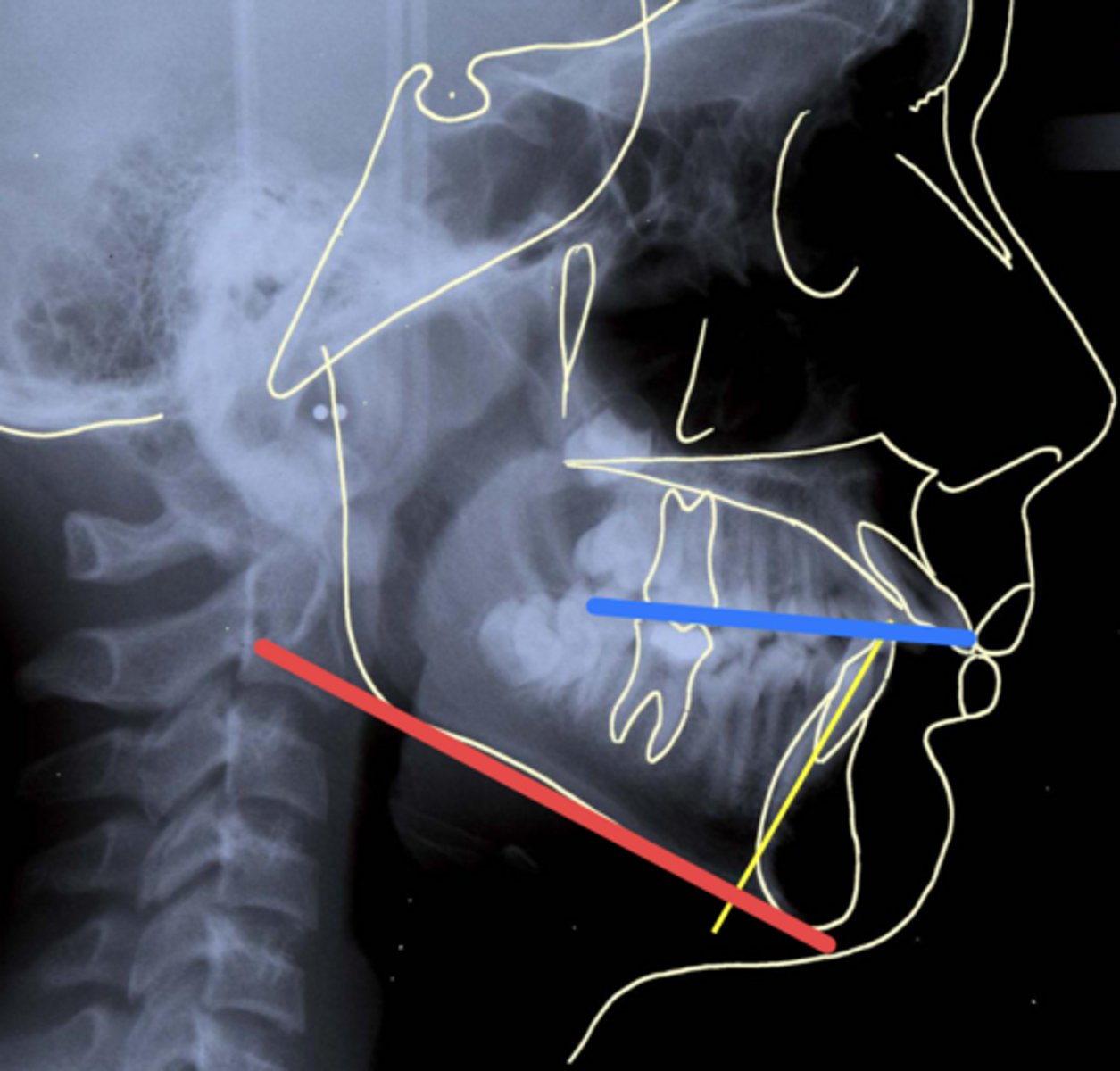
Occlusal plane (93.5° to110°)
ID the measurement being taken with the blue and yellow line:
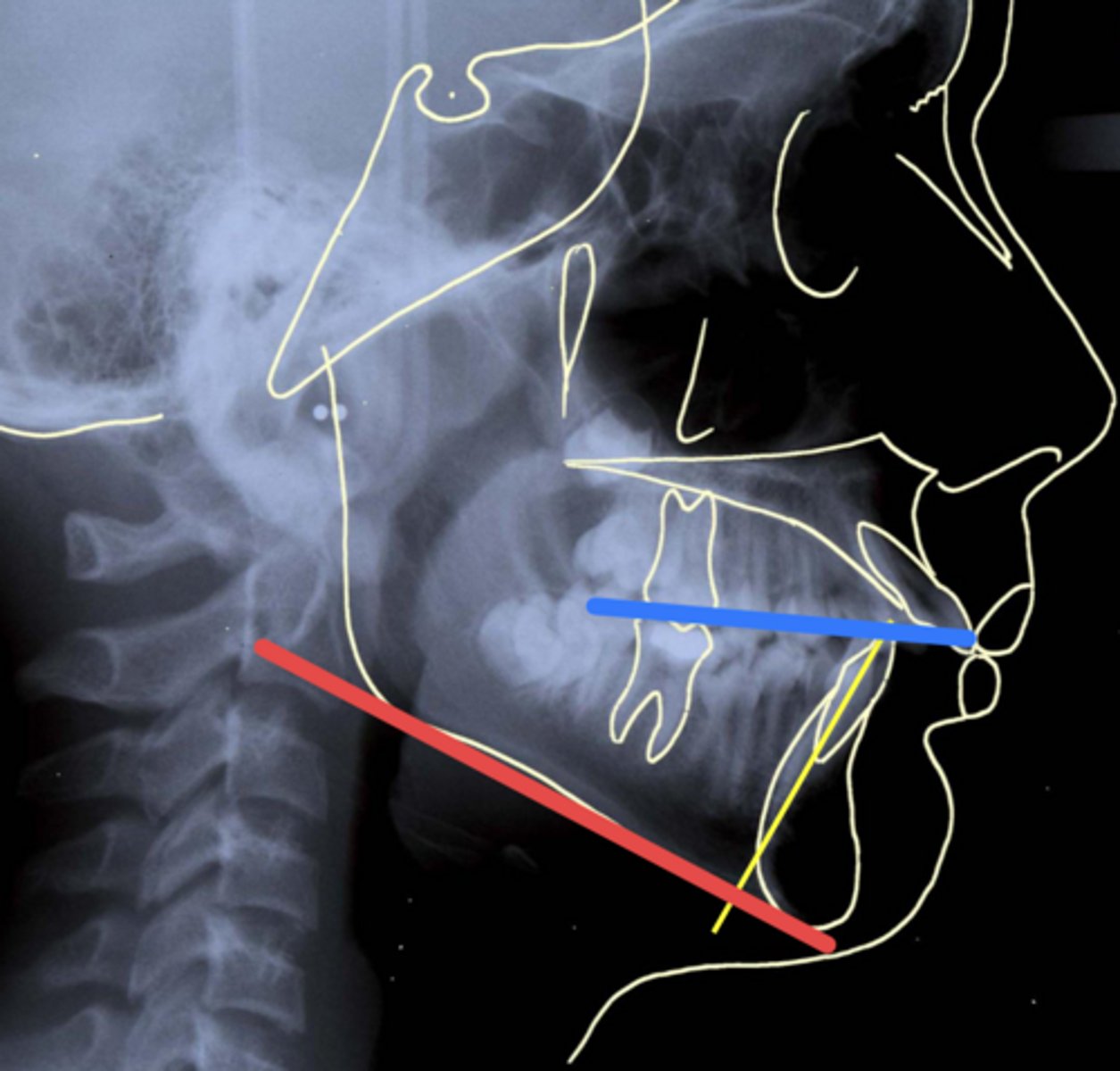
Mandibular plane (83° to 98°)
ID the measurement being taken with the red and yellow line:
Upper incisor to A-Pog plane (2-3 mm)
ID the measurement being taken:
Steiner Analysis (1953)
What type of analysis...
- Based on a very small sample size
- Includes some measurements from Reidel
- Major contribution: use of anterior cranial base
- Widely used analysis
82°
Steiner determined that the relationship between the cranial base and Point A (SNA)was ____ degrees
80°
Steiner determined that the relationship between the cranial base and Point B (SNA)was ____ degrees
2°
Steiner determined that the relationship between the maxilla and the mandible (determined by point A and point B to the sella-nasion line) was ___ degrees
- Sella
- Nasion
Steiner rejected the Frankford Horizontal Plane and used a reference plane formed by what two structures?
32°
Steiner determined that the Mandibular plane is at _____ degrees
14°
According to Steiner, what is the norm of the occlusal plane orientation (Occ Pl-SN)?
93°
(This mandibular plane is slightly flatter than Downs'; incisor may appear to be more proclined)
According to Steiner, what is the norm of the inclination of Lower Incisors?
23mm
According to Steiner, what is the norm of the L6-NB (lower molar to apical base)?
25°, 4mm
According to Steiner, what is the norm of the L1-NB (lower incisors to apical base)?
4mm & 25º (4/25)
Steiner determined that the relationship between the mandibular incisor's long axis and the NB line was __ mm away and ___ degrees
27mm
According to Steiner, what is the norm of the U6-NA (lhow far forward upper molar is)?
22°, 4mm
According to Steiner, what is the norm of the U1-NA (upper incisors to basal bone)?
4mm & 22º (4/22)
Steiner determined that the relationship between the maxillary incisor's long axis and the NA line was __ mm away and ___ degrees
130°
According to Steiner, what is the norm of the interincisal angle?
Increases the ANB angle
According to Steiner analysis, what effect does an upward (superior) displacement of Point A (maxilla) have on the ANB angle?
Decreases the ANB angle
According to Steiner, what effect does a longer midface (superior displacement of Nasion) have on the ANB angle?
Decreases the ANB angle
According to Steiner, what effect does a longer cranial base have on the ANB angle?
Appear more class III
According to Steiner, what effect does a longer cranial base have on the occlusion?
Appear more class II
According to Steiner, what effect does a shorter cranial base have on the occlusion?
S
The lips in a well-balanced face, according to Steiner, should touch a line extending from the soft tissue contour of the chin to the middle of an ____ formed by the lower border of the nose and upper lip.
- Nasion
- Sella
- Gnathion
Steiner used what 3 points to determine the Y-growth axis?
65°
Steiner determined that the Y-growth axis grows at _____ degrees
- Orbitale
- Sella
- Gnathion
W B Downs used what 3 points to determine the Y-growth axis?
Class II
Steiner determined that the relationship between the maxilla and the mandible (determined by point A and point B to the sella-nasion line) was 2 degrees. If the relationship was greater than +2, the patient presented a _________ occlusion
Class III
Steiner determined that the relationship between the maxilla and the mandible (determined by point A and point B to the sella-nasion line) was 2 degrees. If the relationship was less than +2 (or negative), the patient presented a _________ occlusion
Sella
ID the landmark:
The center of sella turcica
Nasion
ID the landmark:
The most anterior point on the frontonasal suture
Point A
ID the landmark:
Deepest point on the anterior curvature of the premaxilla
Point B
ID the landmark:
The point at the deepest concavity on the mandibular symphysis
U6
ID the landmark:
The most mesial point on the crown of the upper first molar
L6
ID the landmark:
The most mesial point on the crown of the lower first molar
E point
ID the landmark:
Projection of posterior point of condyle onto SN
L point
ID the landmark:
Projection of pogonion onto SN
Gonion
ID the landmark:
The most posterior and inferior point on the posterior of the ramus
Gnathion
ID the landmark:
The most anterior and inferior point on the symphysis
Occlusal plane
ID the landmark:
The line connecting the contact point between the molars with the point bisecting the incisors