OCTH 222: Wrist Bony Anatomy and Arthrokinematics
 Call Kai
 Learn
Learn Practice Test
 Spaced Repetition
 Match
Match Flashcards
 Knowt Play
1/58

There's no tags or description
Looks like no tags are added yet.
Name | Mastery | Learn | Test | Matching | Spaced | Call with Kai |
|---|
No analytics yet
Send a link to your students to track their progress
59 Terms
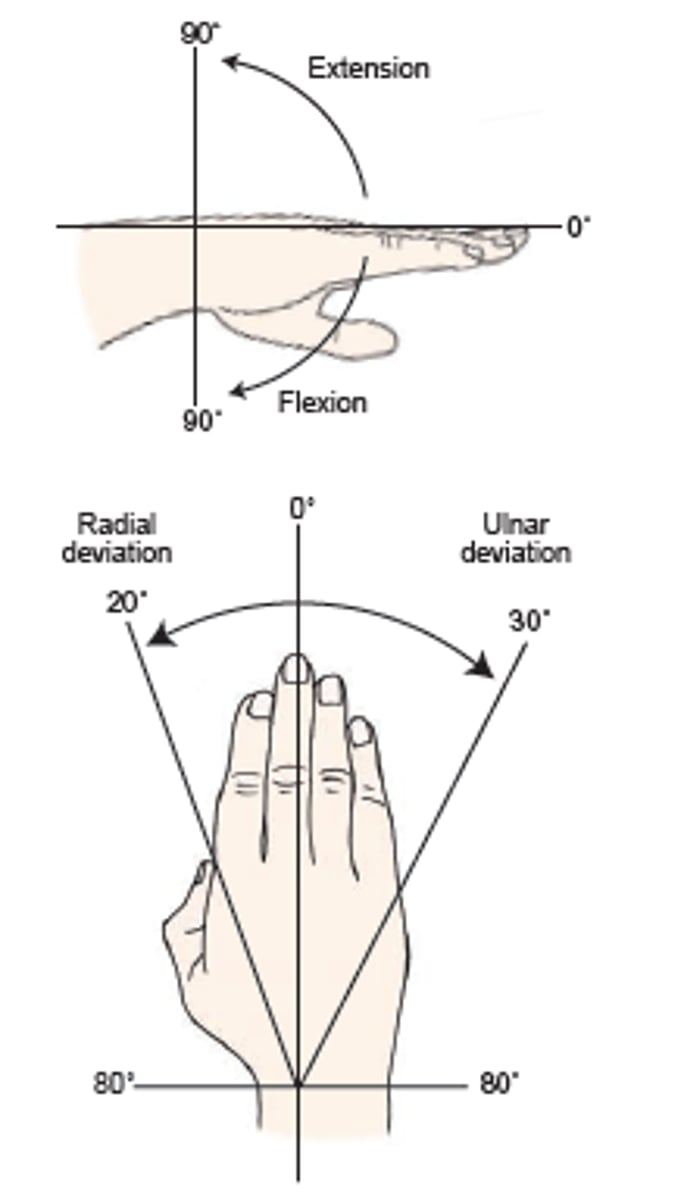
Normal Wrist ROM
- flexion 0-80
- extension 0-70
- Radial Dev 0-20
- Ulnar Dev 30-40
Pronation
turning the palm downward
Supination
movement that turns the palm up
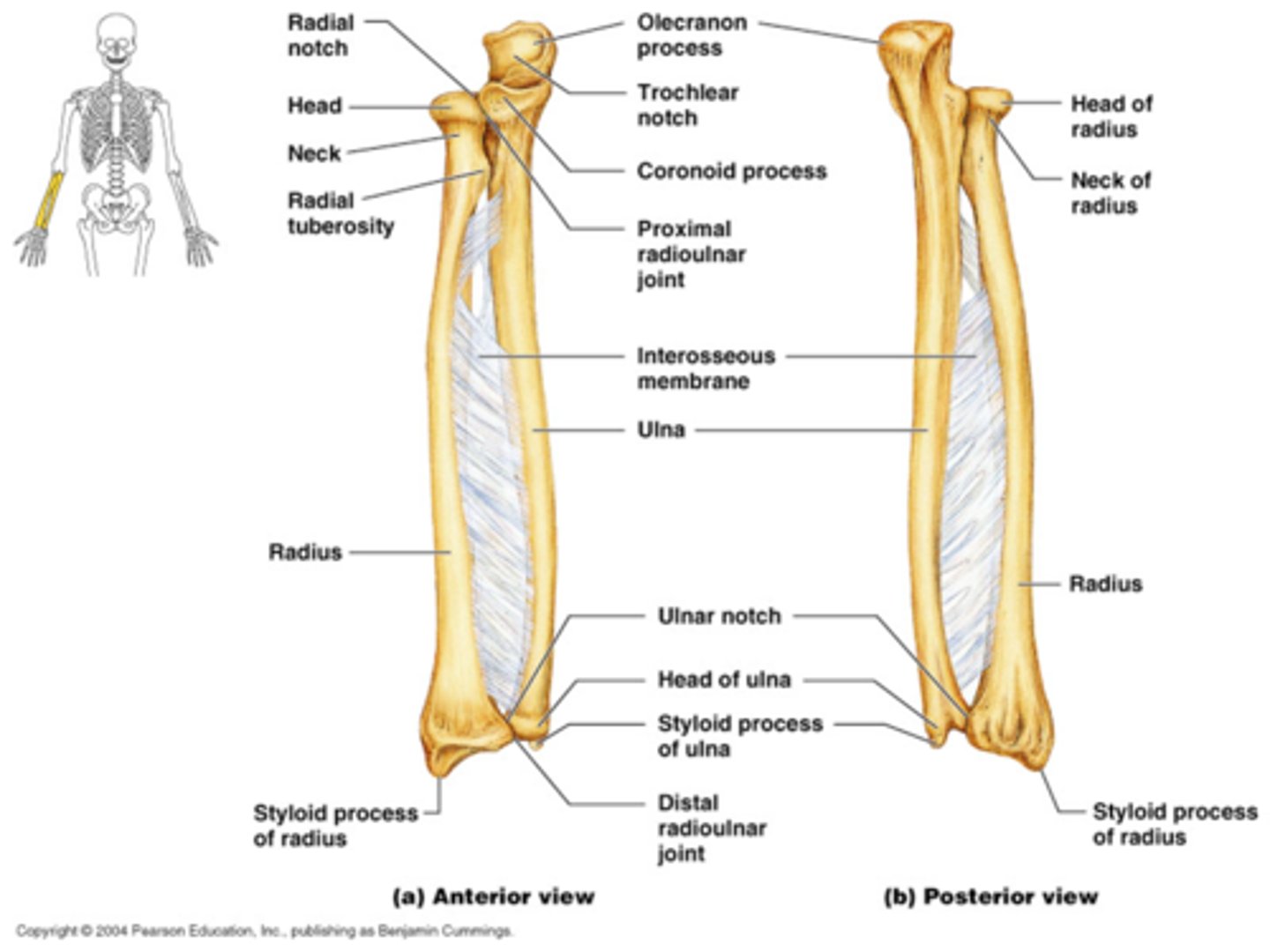
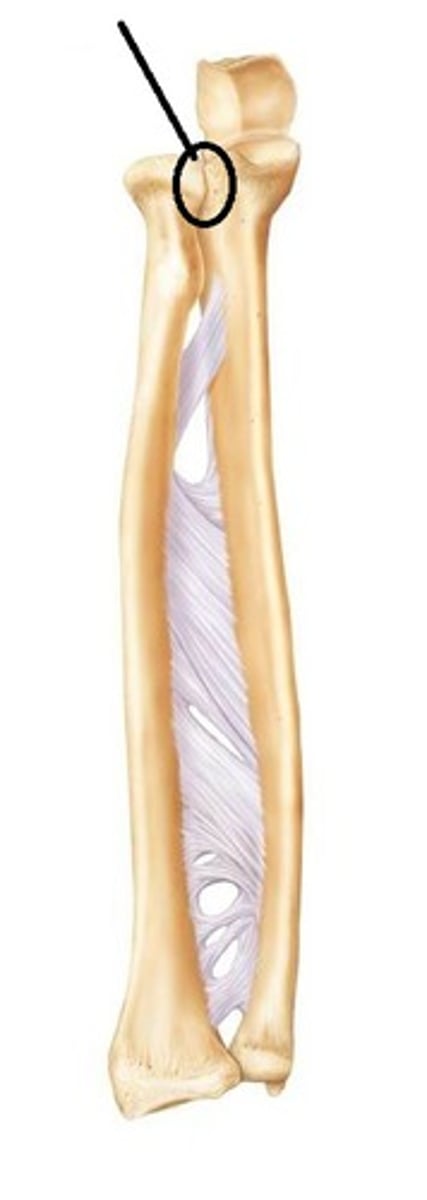
Proximal radioulnar joint (PRUJ)
articulation between head of radius and radial notch of ulna; uniaxial pivot joint that allows for rotation of radius during pronation/supination of forearm
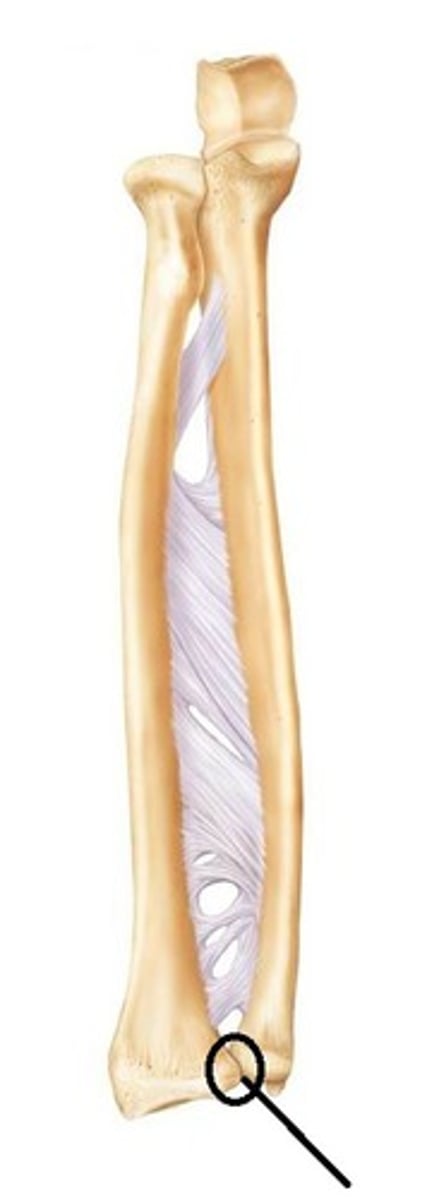
distal radioulnar joint (DRUJ)
articulation between the head of the ulna and the ulnar notch of the radius
Distal radius articulates with the distal ulna at the ulnar
notch
Ulnar notch is a depression on the surface of the distal radius
At the wrist ____ axial load is at the Radius and _____ axial load is at the Ulna
80%; 20%
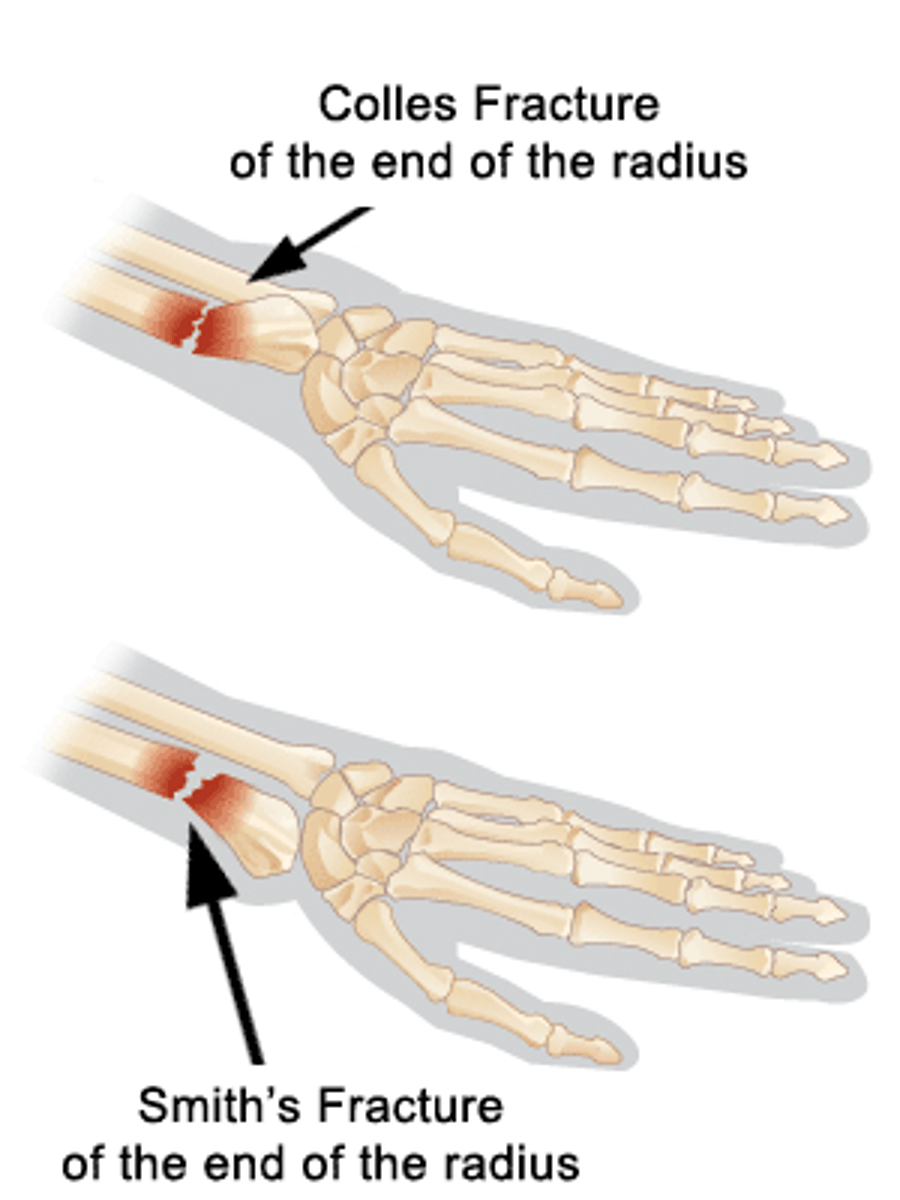
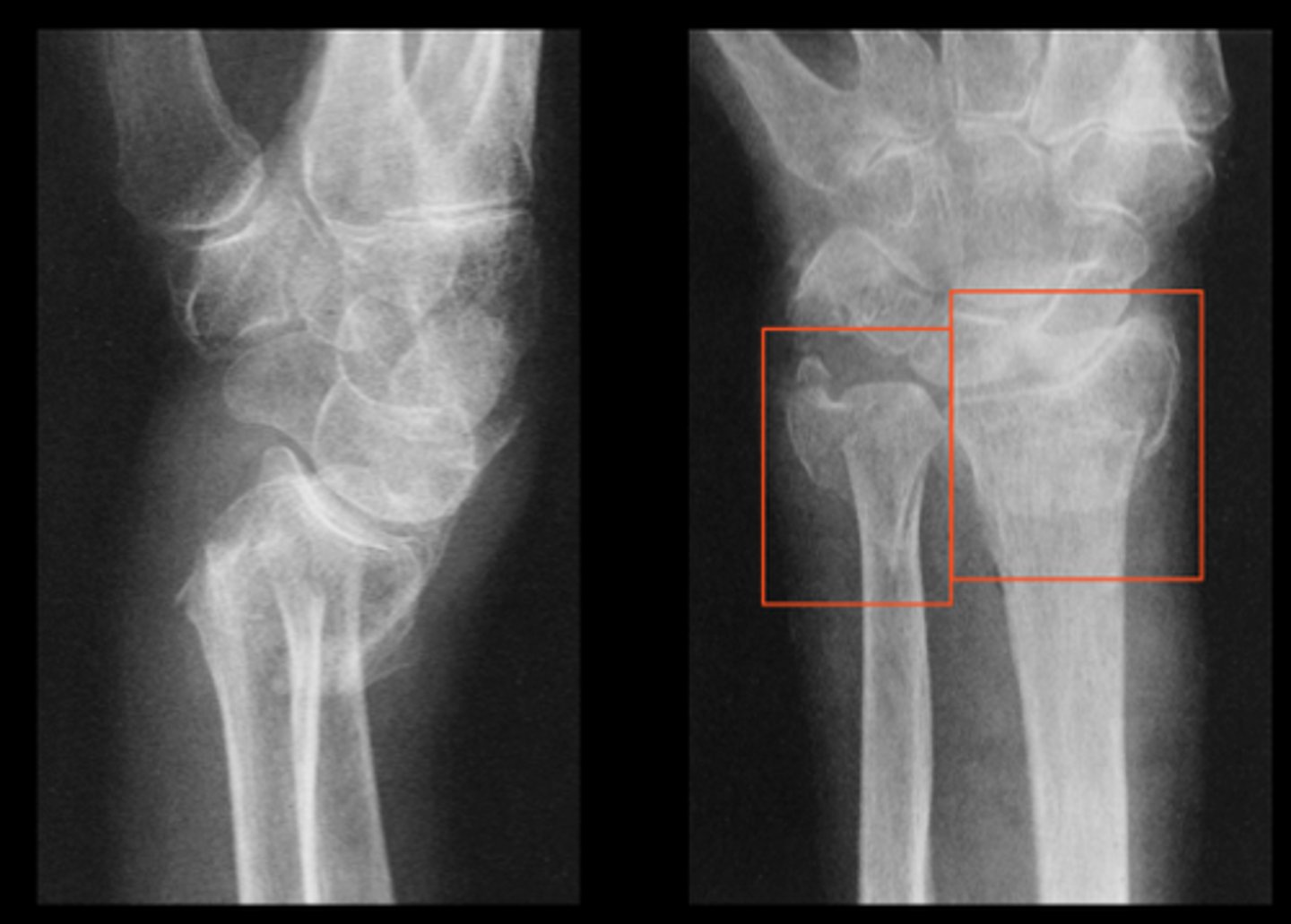
Colles fracture
distal radius is broken by falling onto an outstretched hand
Most common form of wrist
fracture from FOOSH injury
Distal radius displaced dorsally
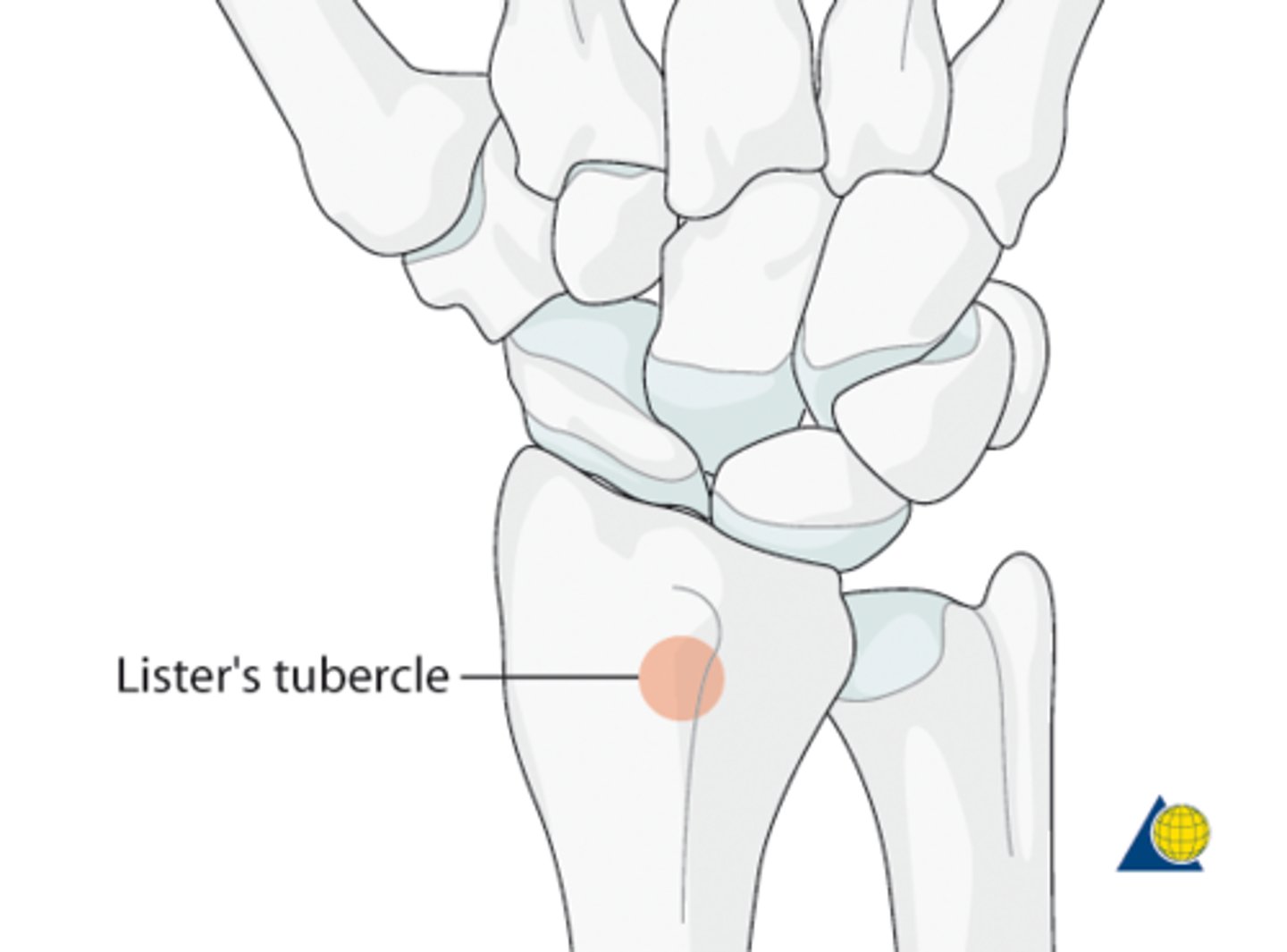
Lister's tubercle
Bony landmark marking the separation
between the wrist extensor tendons
(ECRB/L) and the long thumb extensor
(EPL)
- Also acts as a pulley for the extensor pollicis
longus (EPL) tendon
Outer layer of the Wrist Joint Capsule
fibrous and attaches to radius, ulna and carpal bones
Inner layer of the Wrist Joint Capsule
synovial membrane secreting synovial fluid to lubricate the joint
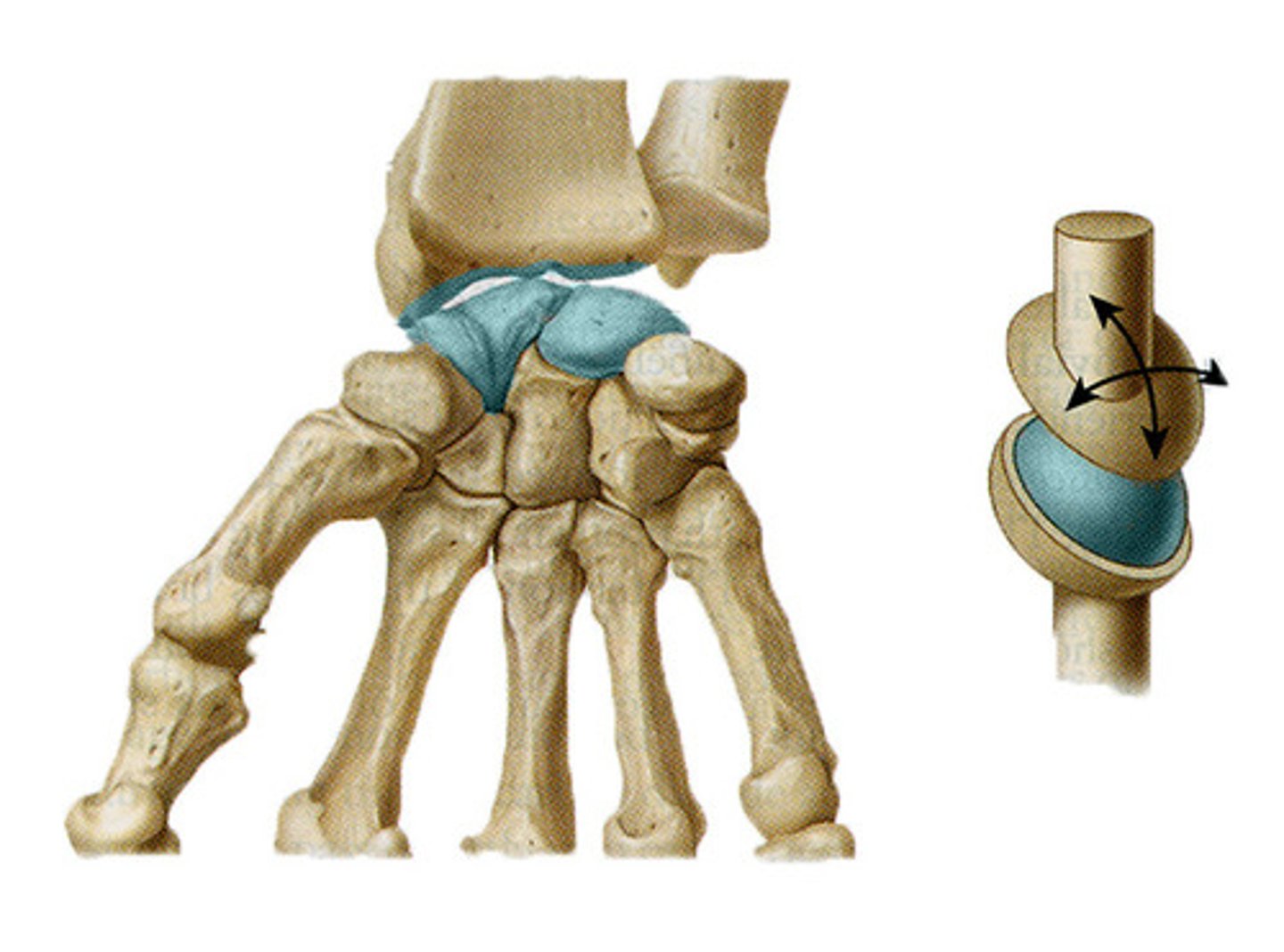
Radiocarpal Joint
Articulation between distal radius and the carpus
Joint type: Condyloid joint
Arthrokinematics: Convex-on-Concave
Bones involved: Distal radius, Scaphoid and
Lunate
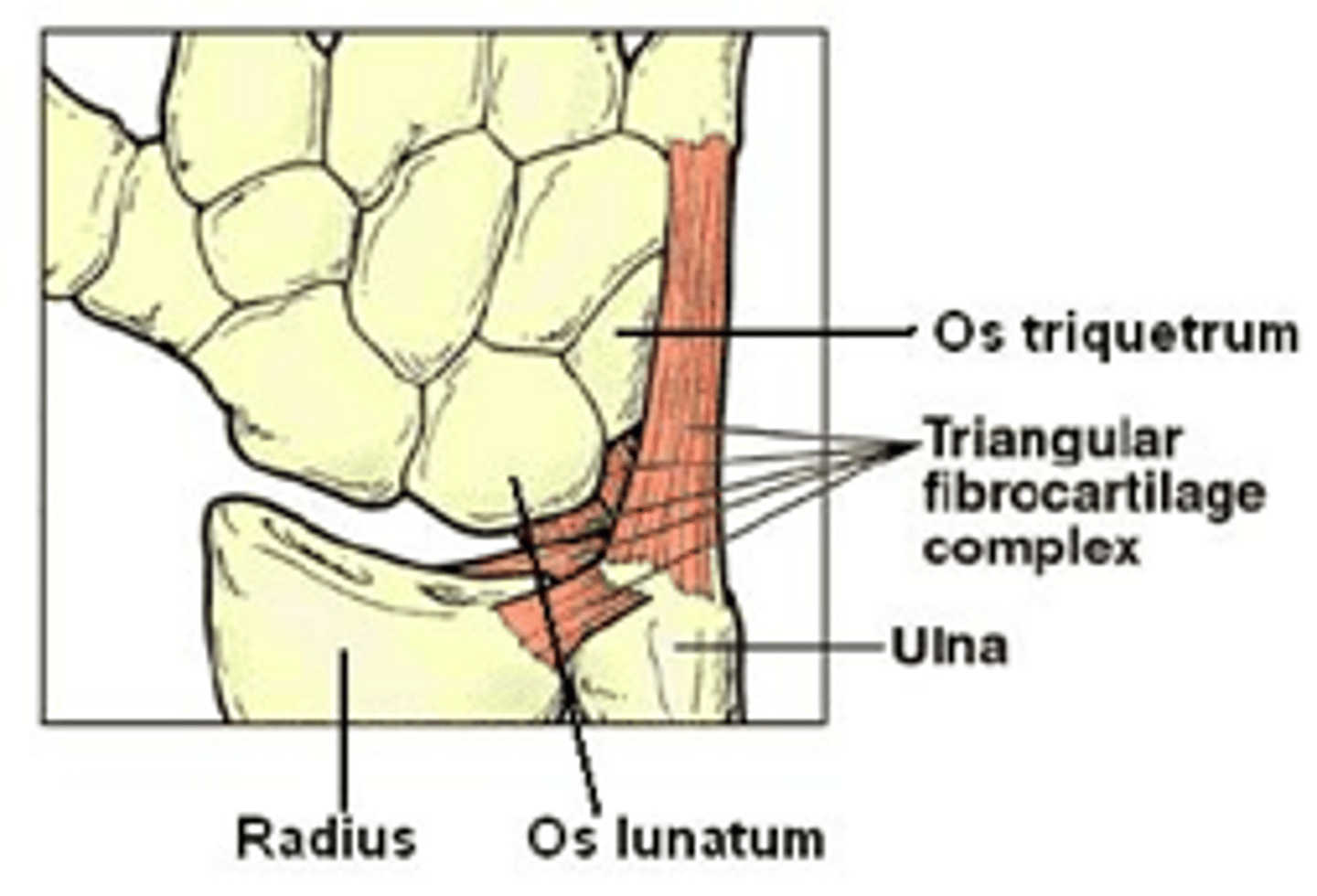
The Distal ulna does NOT directly articulate with the carpus because it connects to the carpus via a fibrocartilaginous wafer called the:
Triangular disk
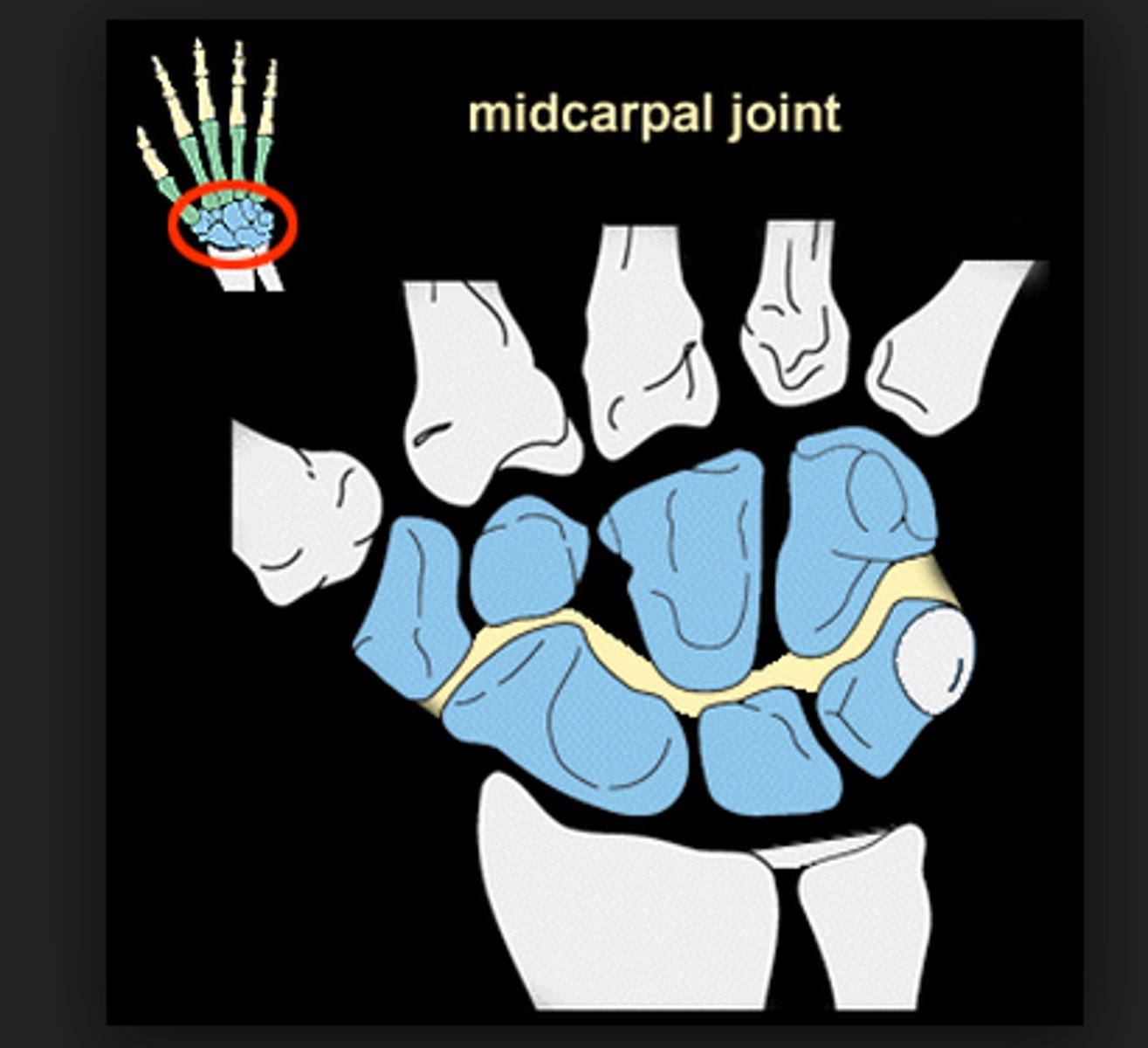
midcarpal joint
Articulation between the proximal and distal carpal rows
Convex-on-concave joint mechanics
Joint type: Condyloid joint
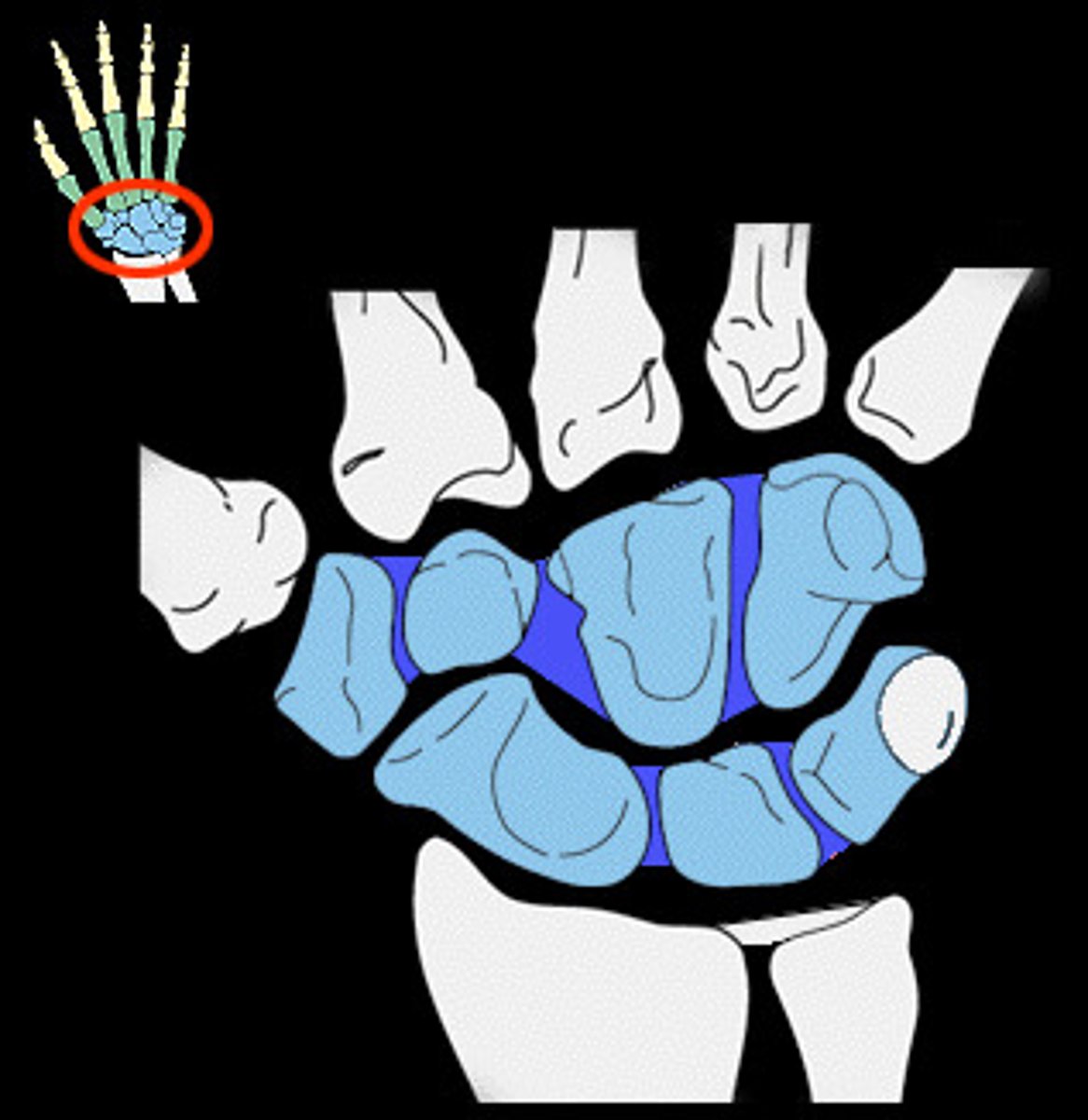
intercarpal joints
between adjacent carpals within each row
In wrist flexion and extension, the radiocarpal joint contributes ____% of the movement and the midcarpal joint contributes ___% of the movement
50%;50%
If a patient had surgery to remove the proximal carpal row, how much ROM should they expect to regain after surgery?
About half
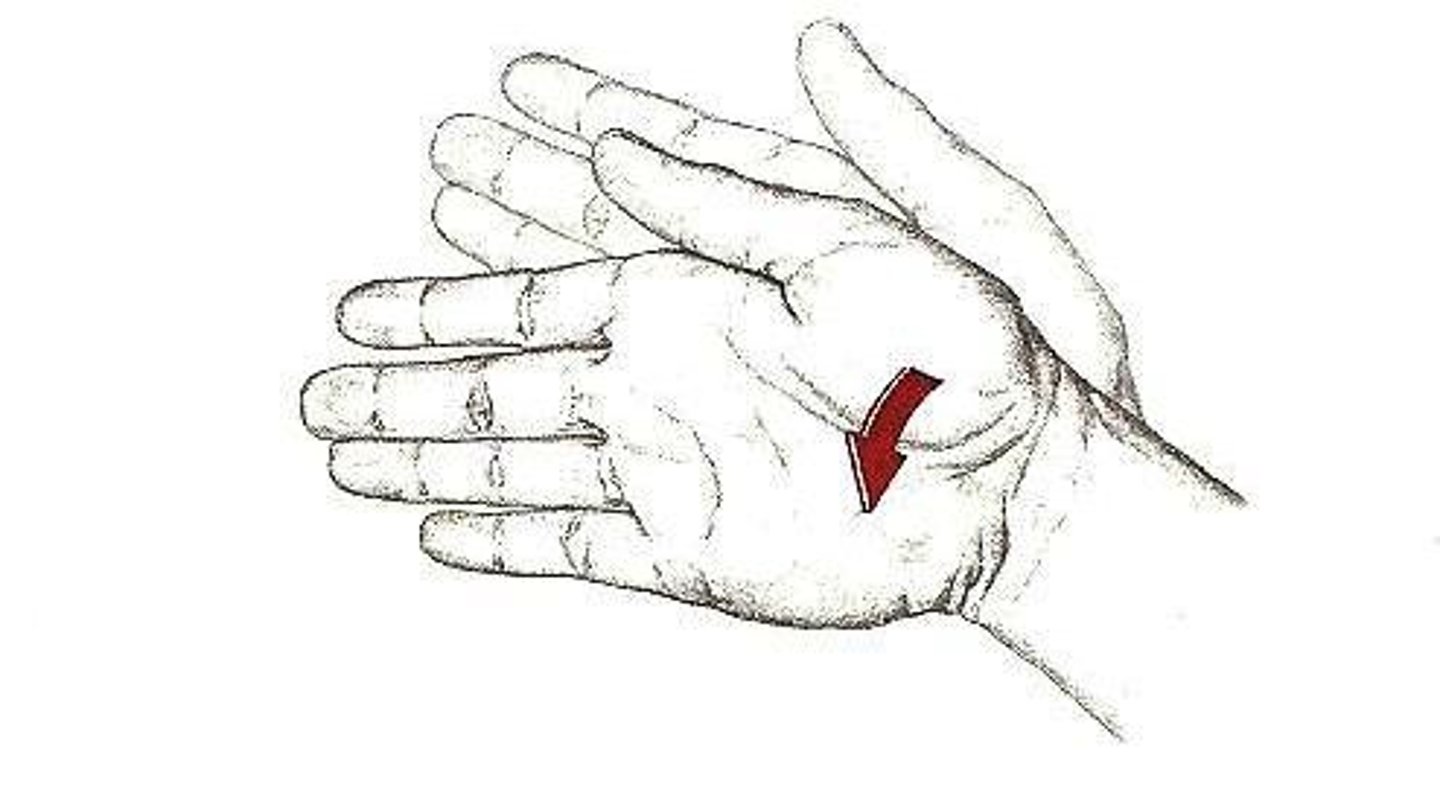
Ulnar deviation
Carpal rows roll ulnarly and side radially
Radiocarpal joint motion > midcarpal joint motion
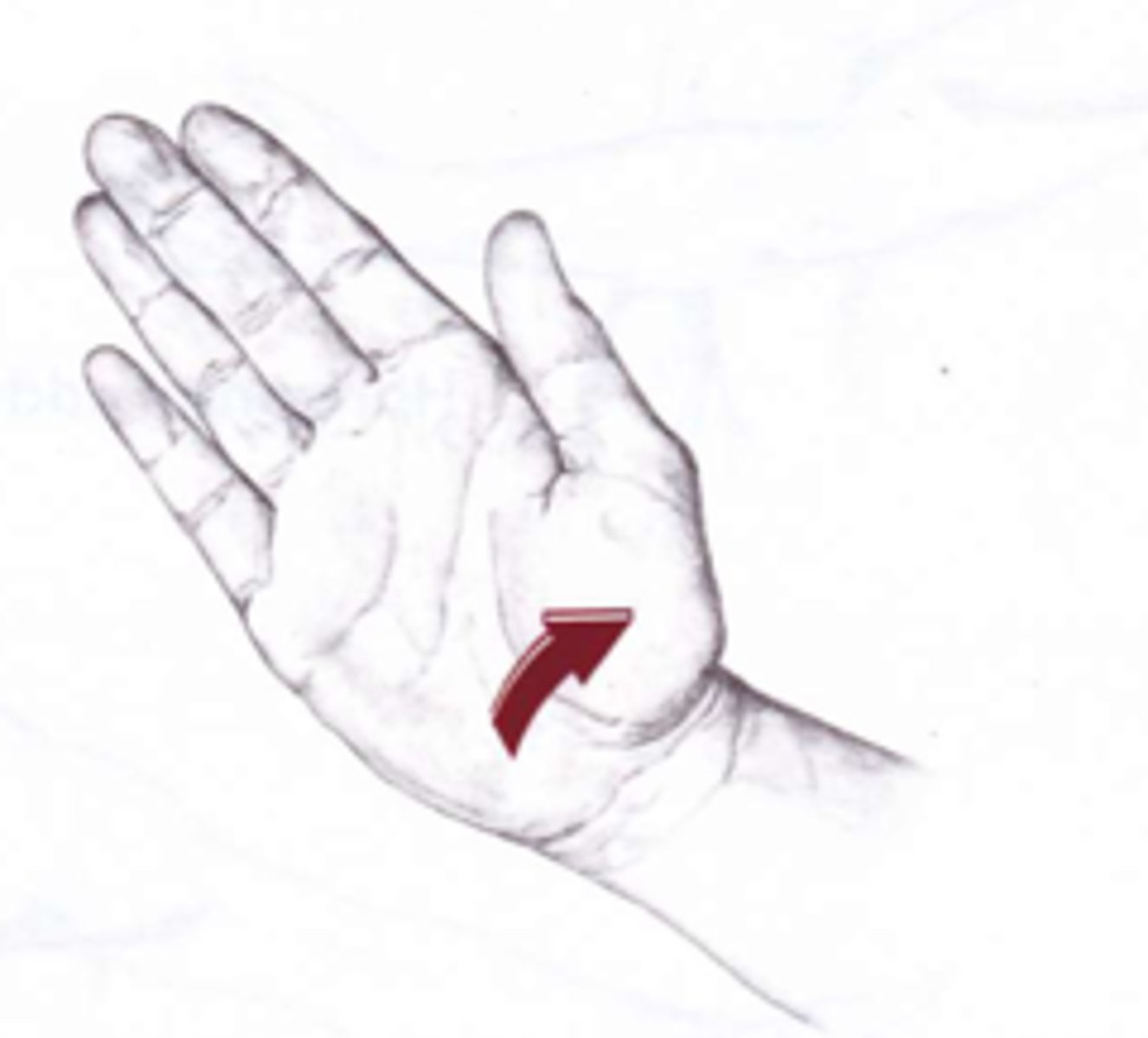
Radial deviation
More limited than ulnar deviation due
to presence of the radial styloid
- Carpal rows roll radially and side ulnarly
- Midcarpal joint motion > radiocarpal joint motion
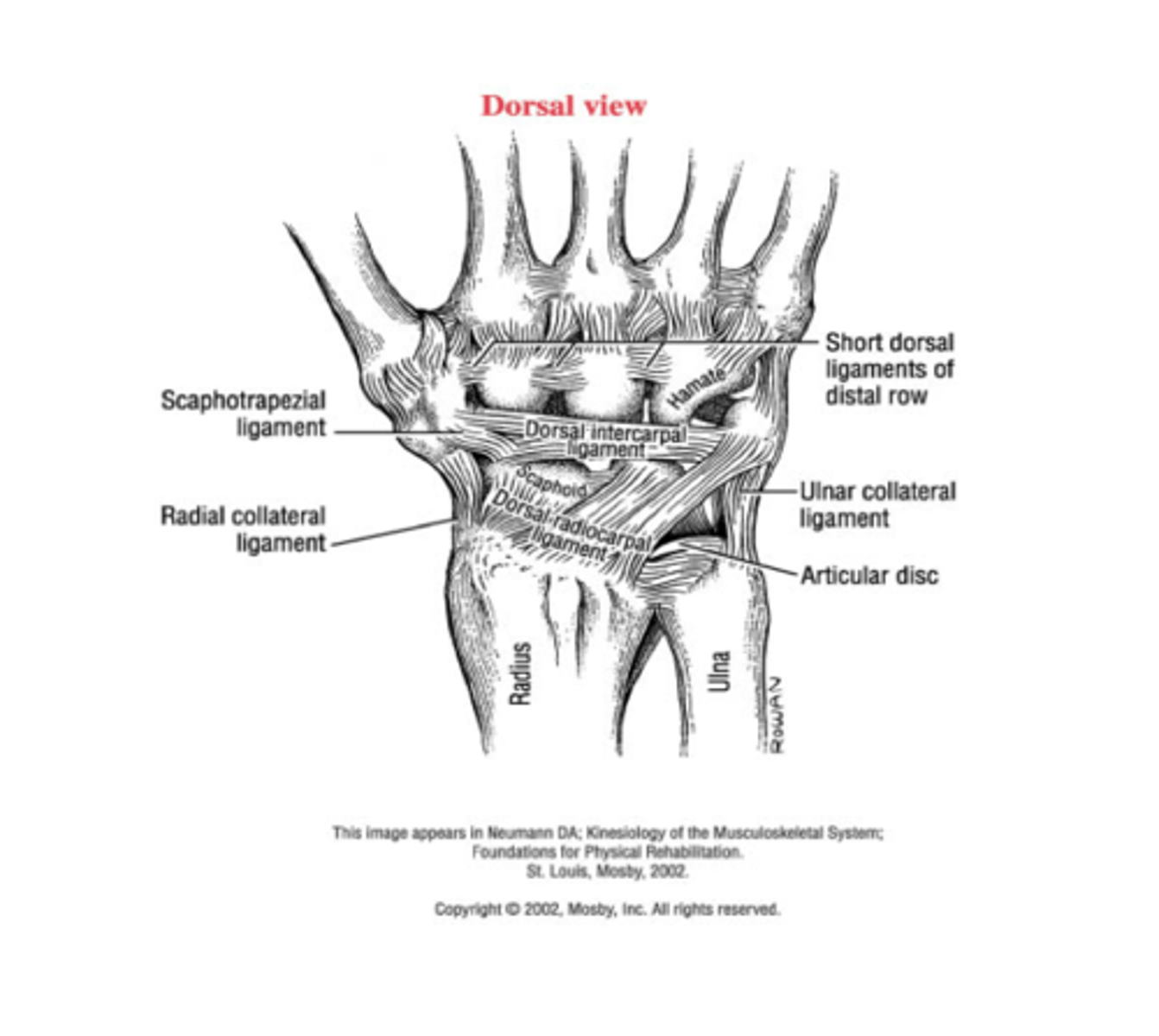
Dorsal intercarpal ligament
Courses horizontally from triquetrum to lunate, scaphoid, and trapezium
Work together to form a lateral V shape diagonally across the dorsal wrist connecting the
radius, scaphoid and triquetrum
Provides dorsal stabilization to the carpus, especially the scaphoid
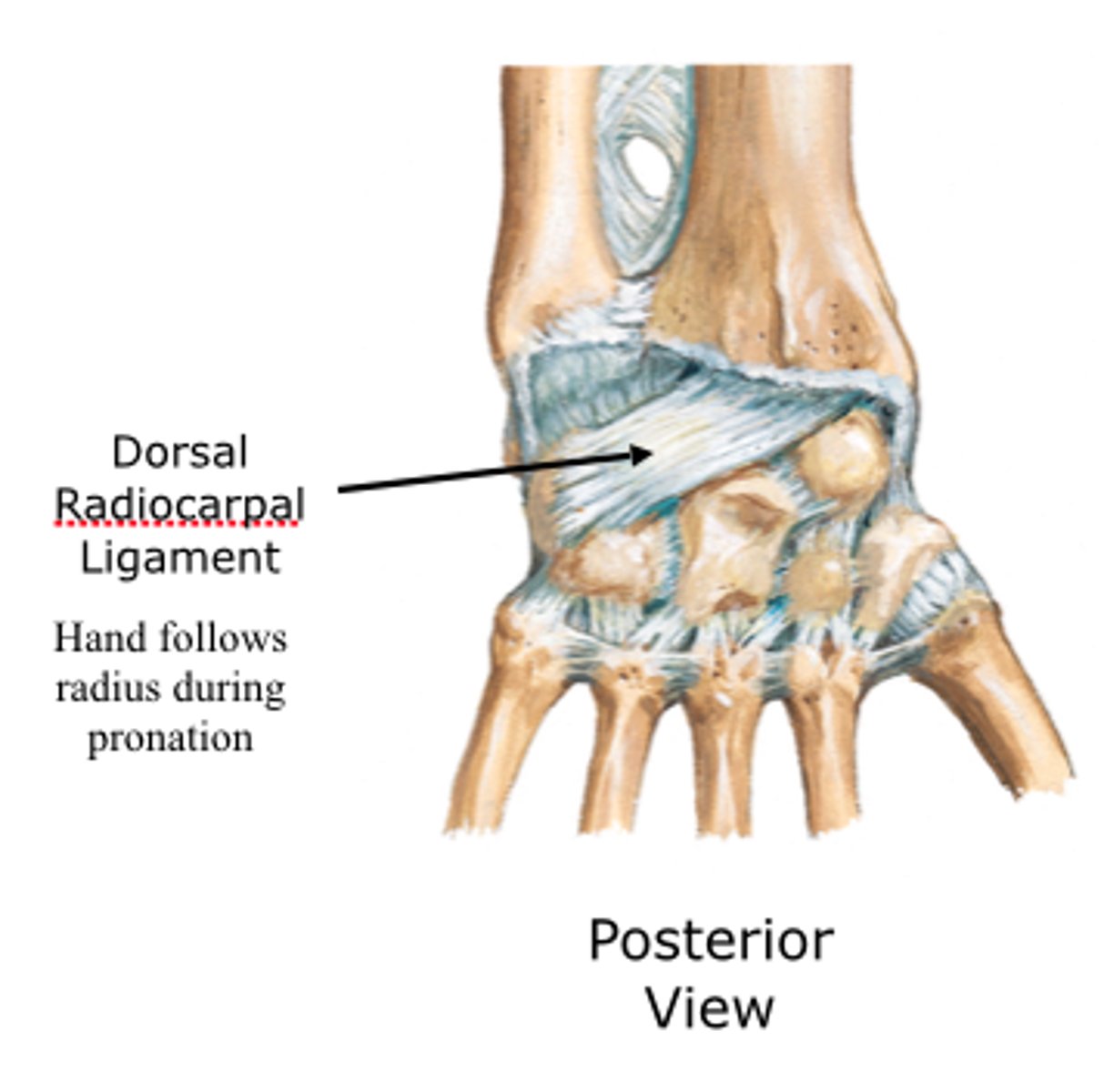
dorsal radiocarpal ligament
Connects radius to posterior scaphoid and lunate
Work together to form a lateral V shape diagonally across the dorsal wrist connecting the radius, scaphoid and triquetrum
Provides dorsal stabilization to the carpus, especially the scaphoid
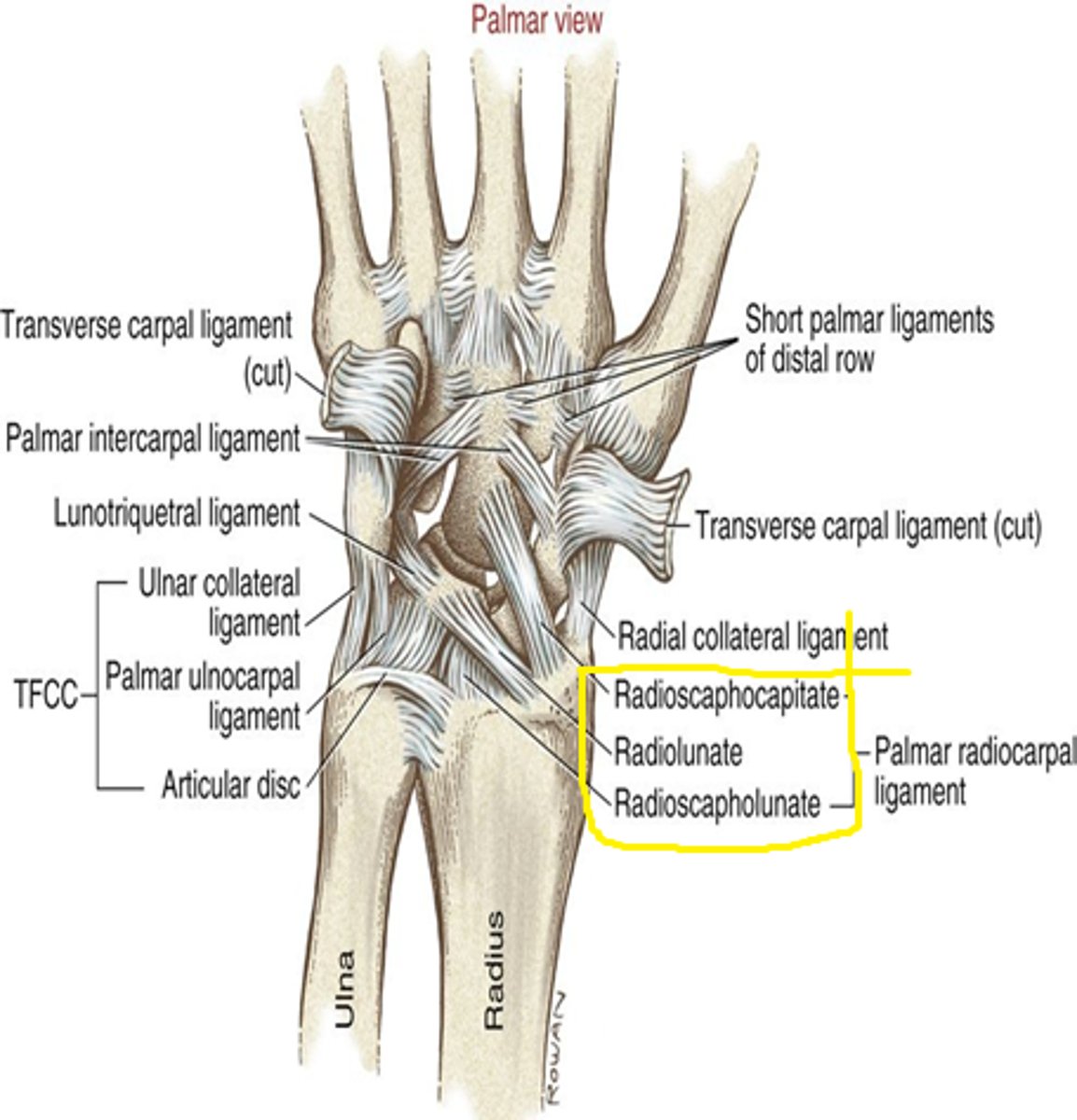
palmar radiocarpal ligament
ligament running from the anterior surface of the distal radius to the anterior surface of the carpal bones
Thick 'sling-like' ligament complex that covers almost the entire volar joint capsules of the
radiocarpal and midcarpal joints
Tightens in wrist extension
radial collateral ligament
Connects scaphoid to radial styloid
Limits ulnar deviation
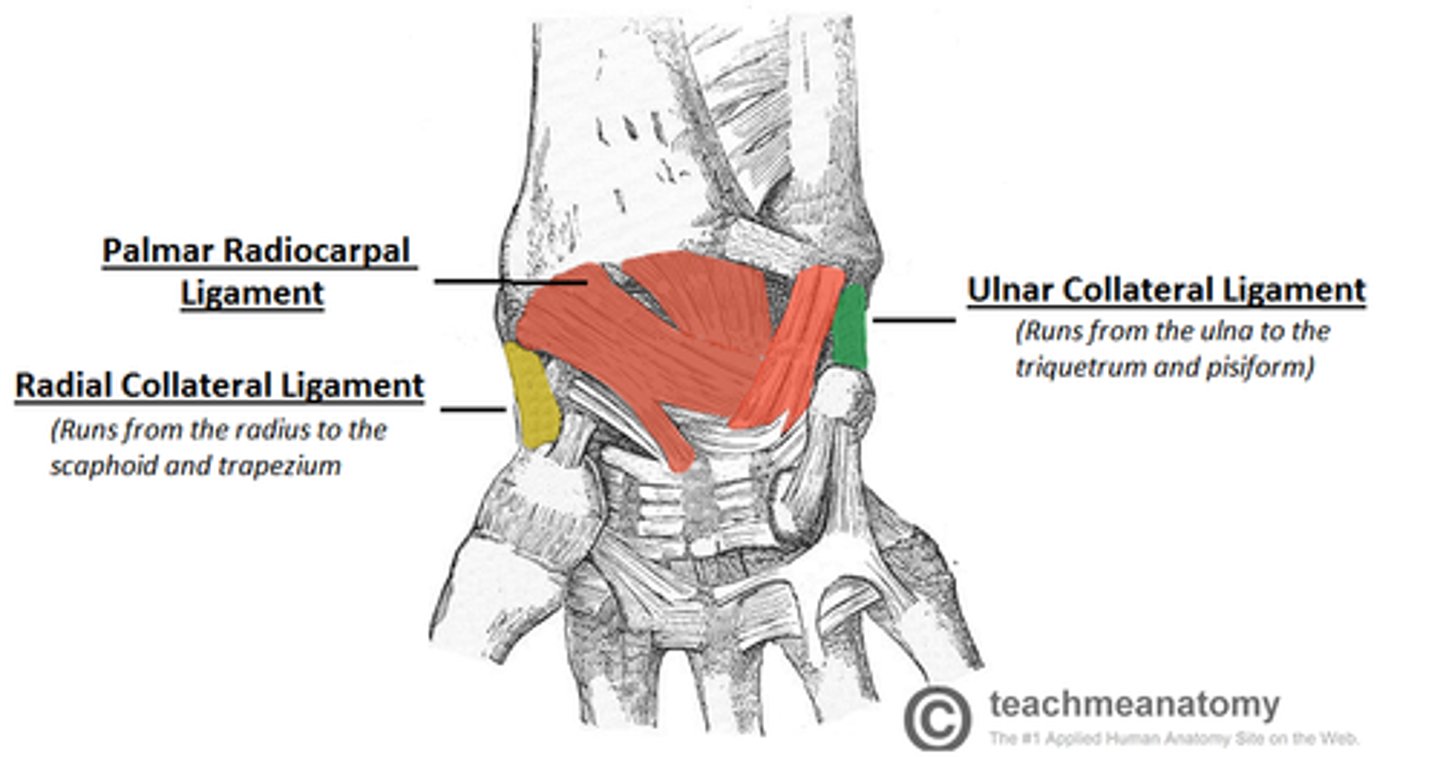
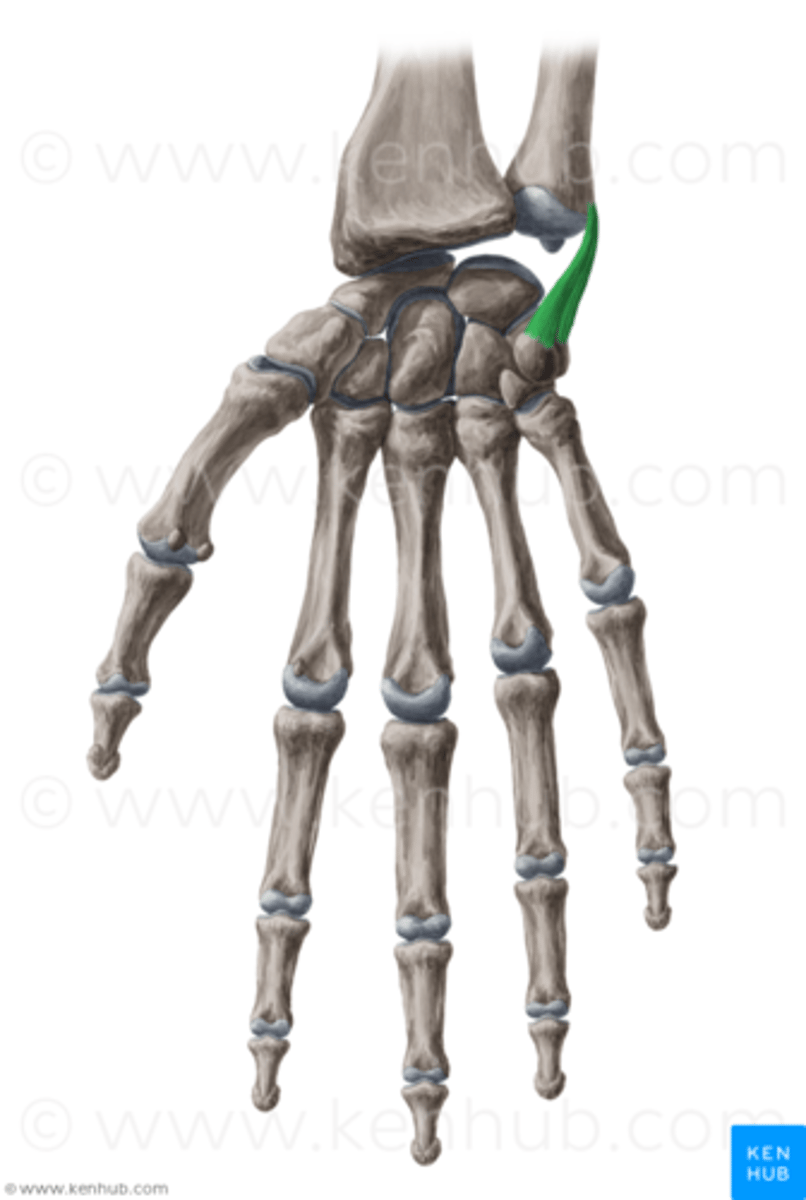
ulnar collateral ligament
Connects triquetrum to ulnar styloid
Limits radial deviation
Palmar radiocarpal ligaments are much ________ and _________ than its dorsal counterpart
thicker; stronger
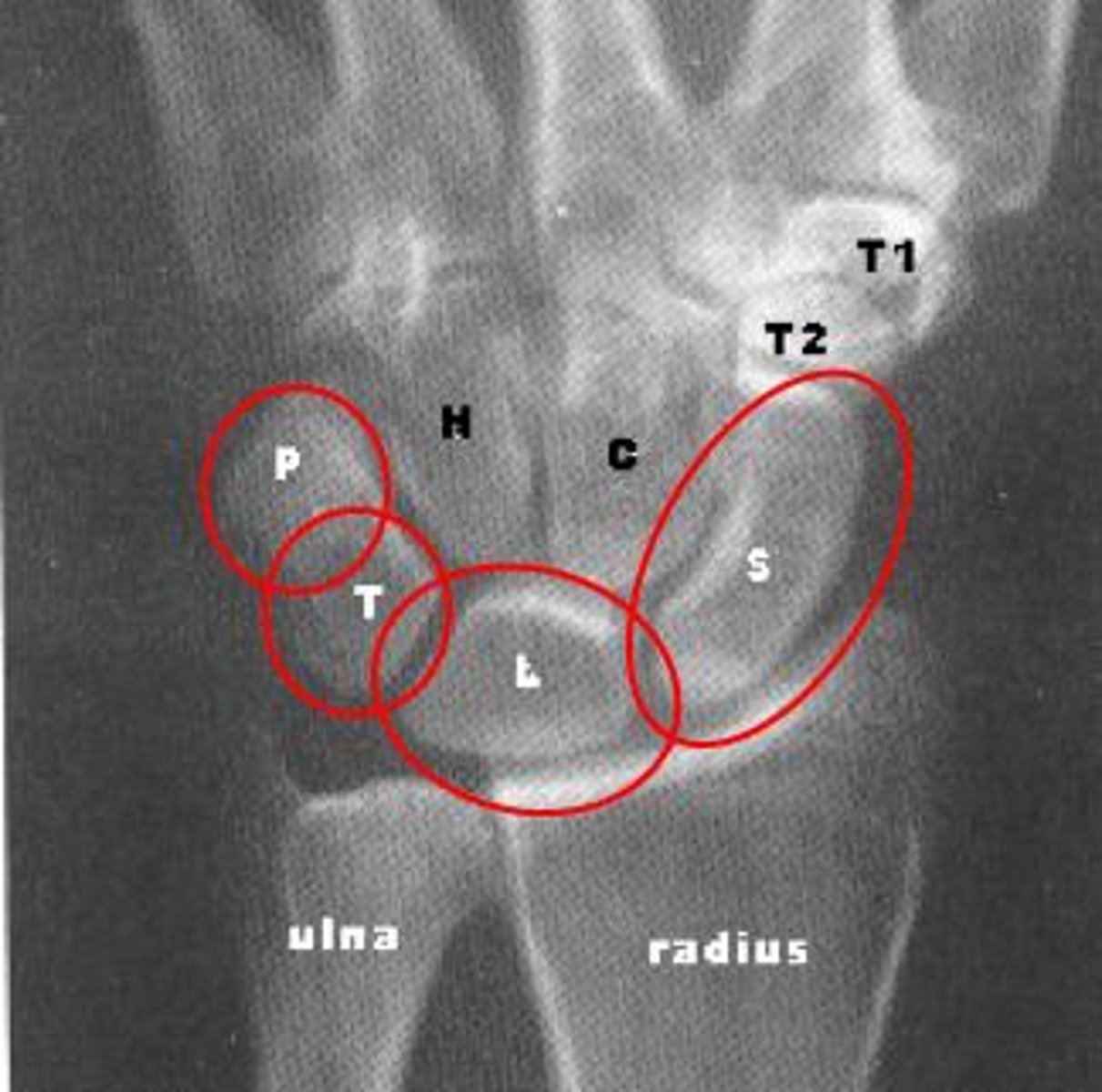
proximal row of carpals
No direct tendon attachments
• Acts as an intercalated segment
• Highly mobile → prone to instability
lateral to medial: scaphoid, lunate, triquetrum, pisiform
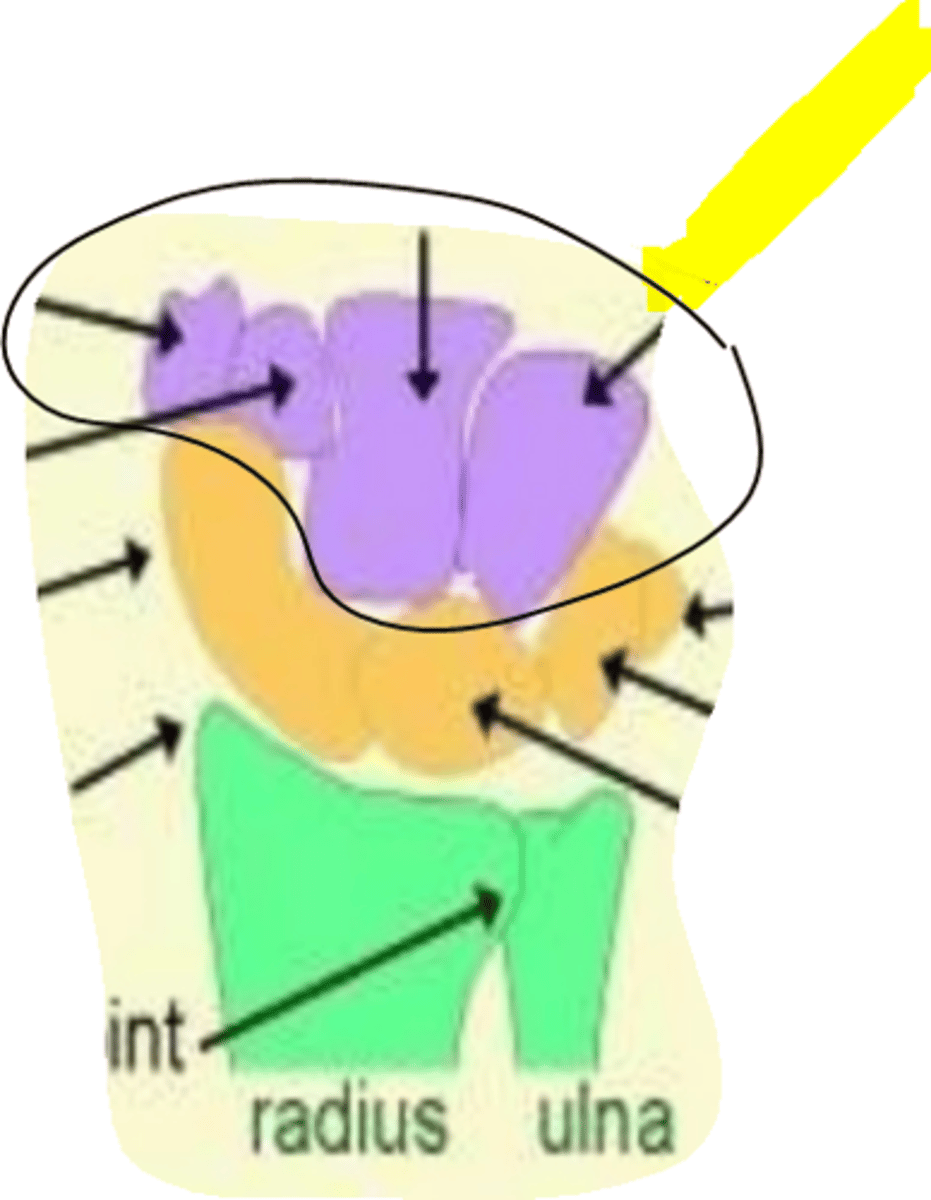
distal row of carpals
Strong ligamentous connections
• Moves as a rigid unit
• Provides stability for grip and load transfer
Includes: Trapezium, Trapezoid, Capitate, Hamate
Intrinsic Interosseous Wrist Ligaments
Wrist ligaments that ORIGINATE and ATTACH to the carpus
Key ligaments: Scapolunate (SL) ligament and Lunotriquetral (LT ligament
Proximal row carpal bones exhibit more ______________ compared to the
distal carpal row.
intercarpal motion
The _______ carpal row functions more as a single kinematic
unit.
distal
Proximal interosseous carpal ligaments are ______ prone to injury
more
Scapholunate (SL) ligament
connects scaphoid and lunate
Dorsal fibers more important
Lunotriquetral (LT) ligament
connects lunate and triquetrum
Volar fibers more important
In radial deviation, what occurs within the proximal carpal row?
Scaphoid flexes and Triquetrum extends
In ulnar deviation, what occurs within the proximal carpal row?
Scaphoid extends and Triquetrum flexes
Scapholunate (SL) dissociation
FOOSH resulting in SL ligament tear
Lunate follows triquetrum into extension
Capitate collapses into the empty space between the scaphoid and lunate
Scapholunate advanced collapse (SLAC) wrist \
Results in dorsally displaced lunate
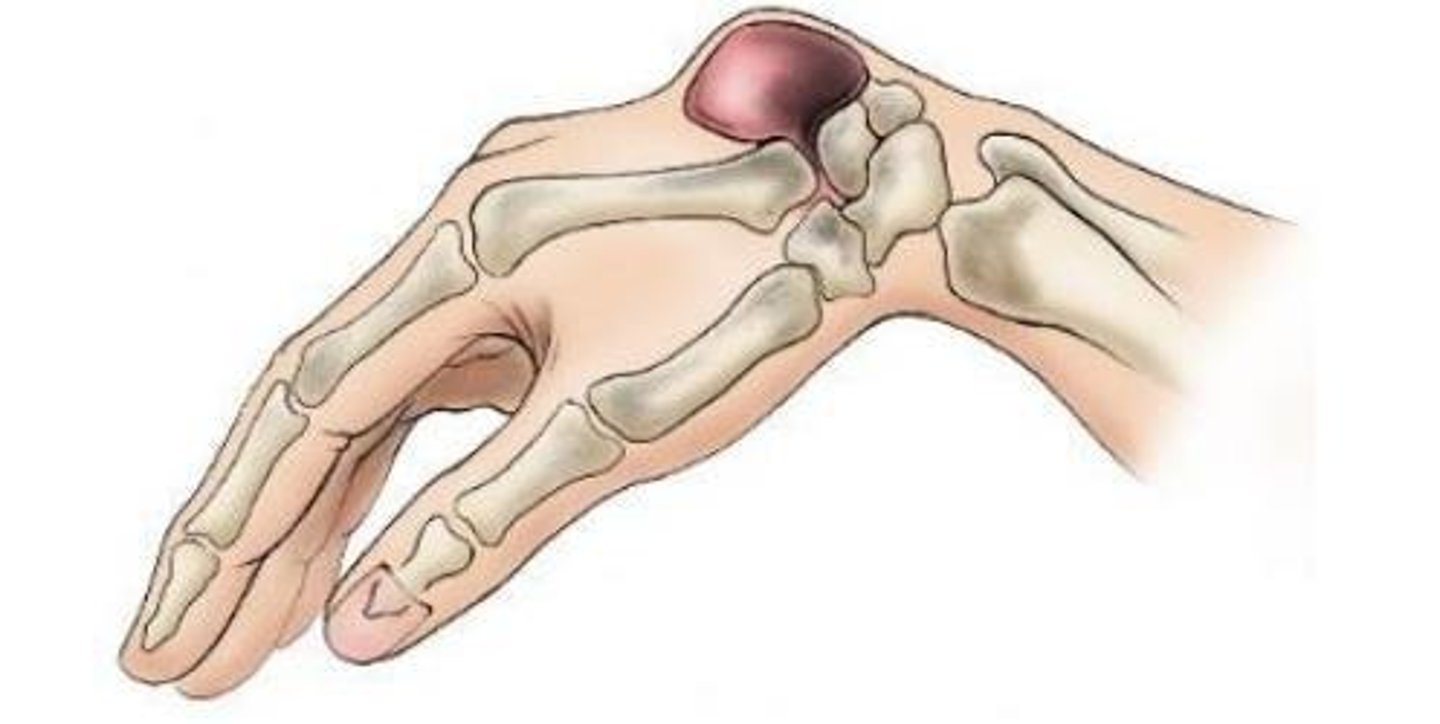
Dorsal Ganglion Cyst
Aka the "Bible bump"
Multifactorial pathogenesis: tissue stress, degeneration, underlying joint conditions
Originate from the dorsal wrist joint capsule fibers or dorsal fibers of the SL ligament
Presentation: Dorsal wrist pain when weightbearing in wrist extension
Triangular Fibtrocartilage Complex (TFCC)
Complex of ligaments and fibrocartilage that occupies the
space between the distal ulna and the carpus
What are the 2 primary functions of the TFCC?
1. Main stabilizer of the DRUJ
2. Absorbs impact from axial load
through the distal ulna
What are the 4 key components if the TFCC?
Triangular disk
Radioulnar ligaments (volar and dorsal)
Ulnocarpal ligaments
Extensor carpi ulnaris (ECU) tendon sheath
Extensor carpi ulnaris (ECU) tendon sheath
This fibro-osseous sheath blends its fibers with the TFCC fibers providing dynamic stabilization to the TFCC
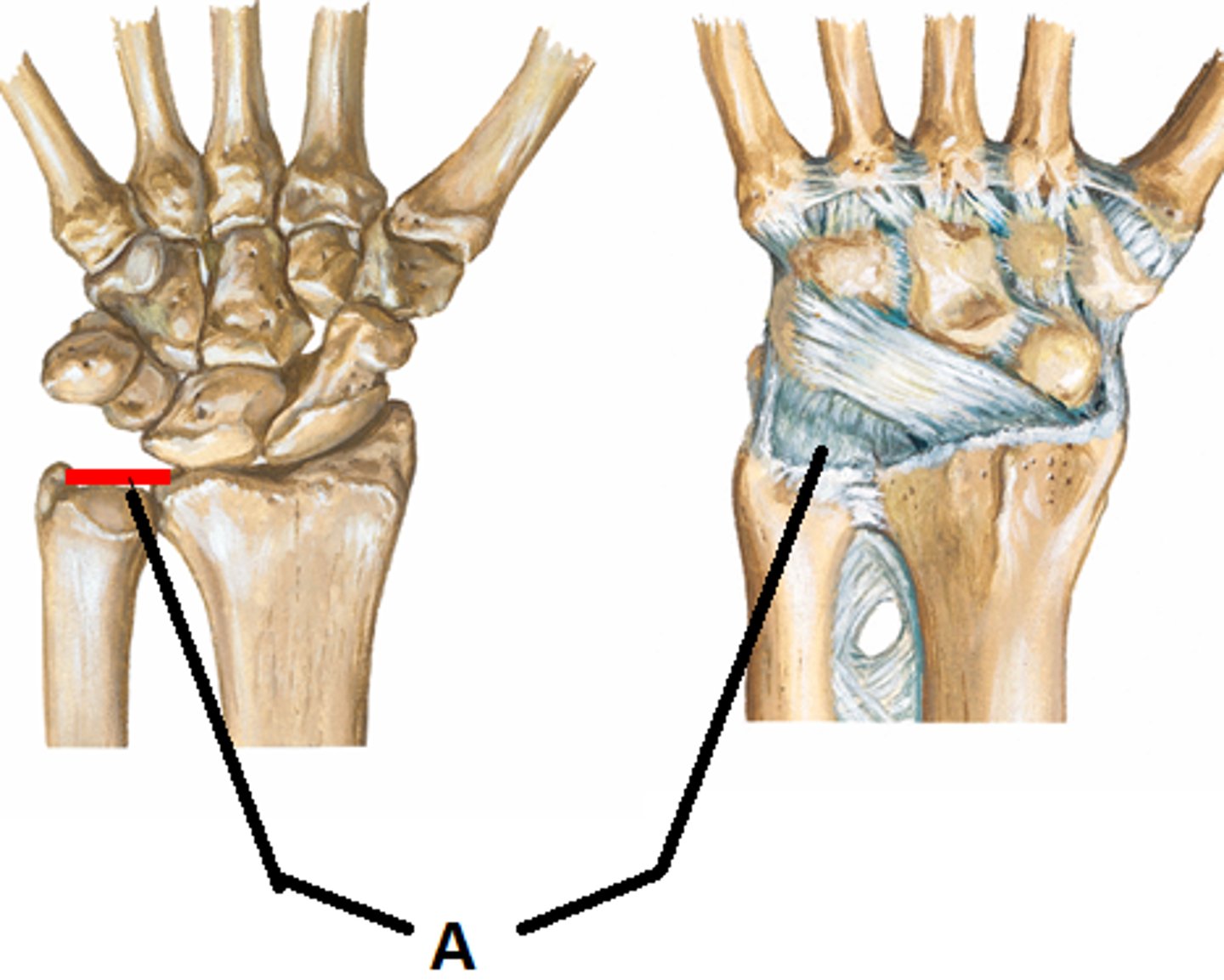
Traingular Articular Disc
The TFC portion of the
TFCC
Avascular
Looks like a 'trampoline'
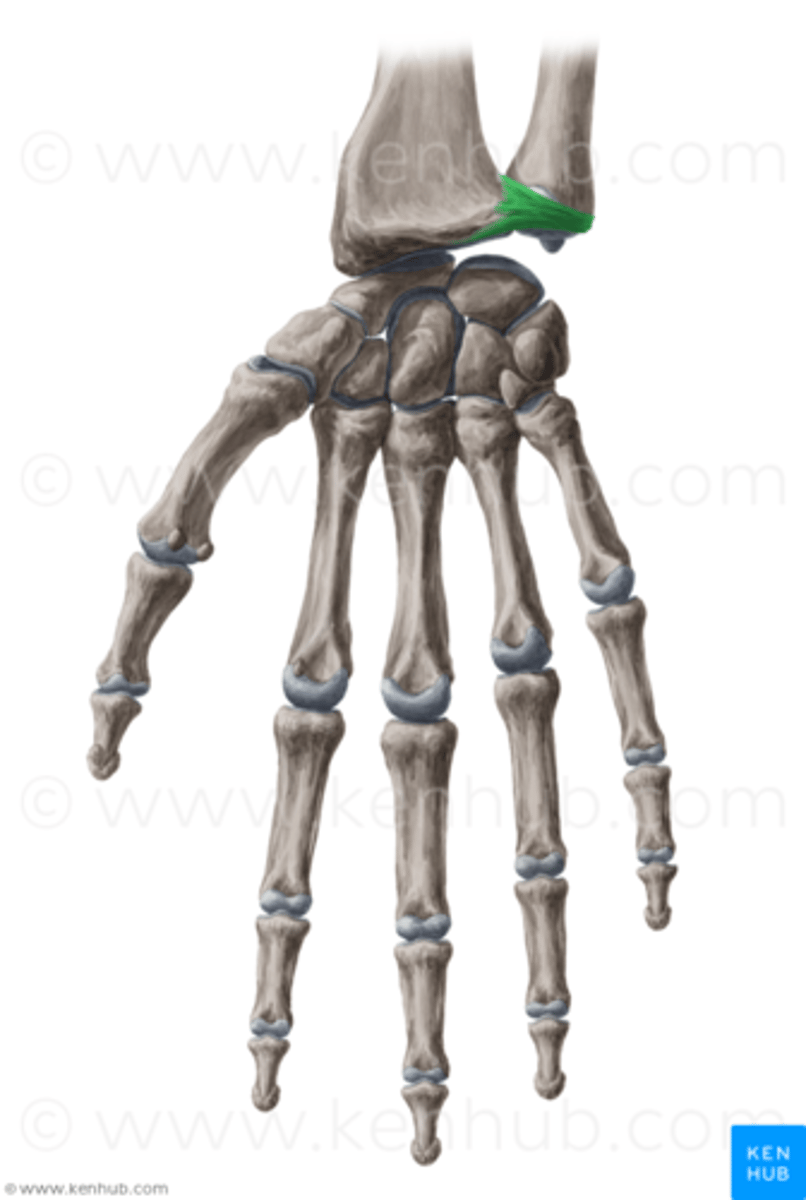
Radioulnar Ligami
Function like the reins of a horse-drawn
carriage to stabilize the DRUJ
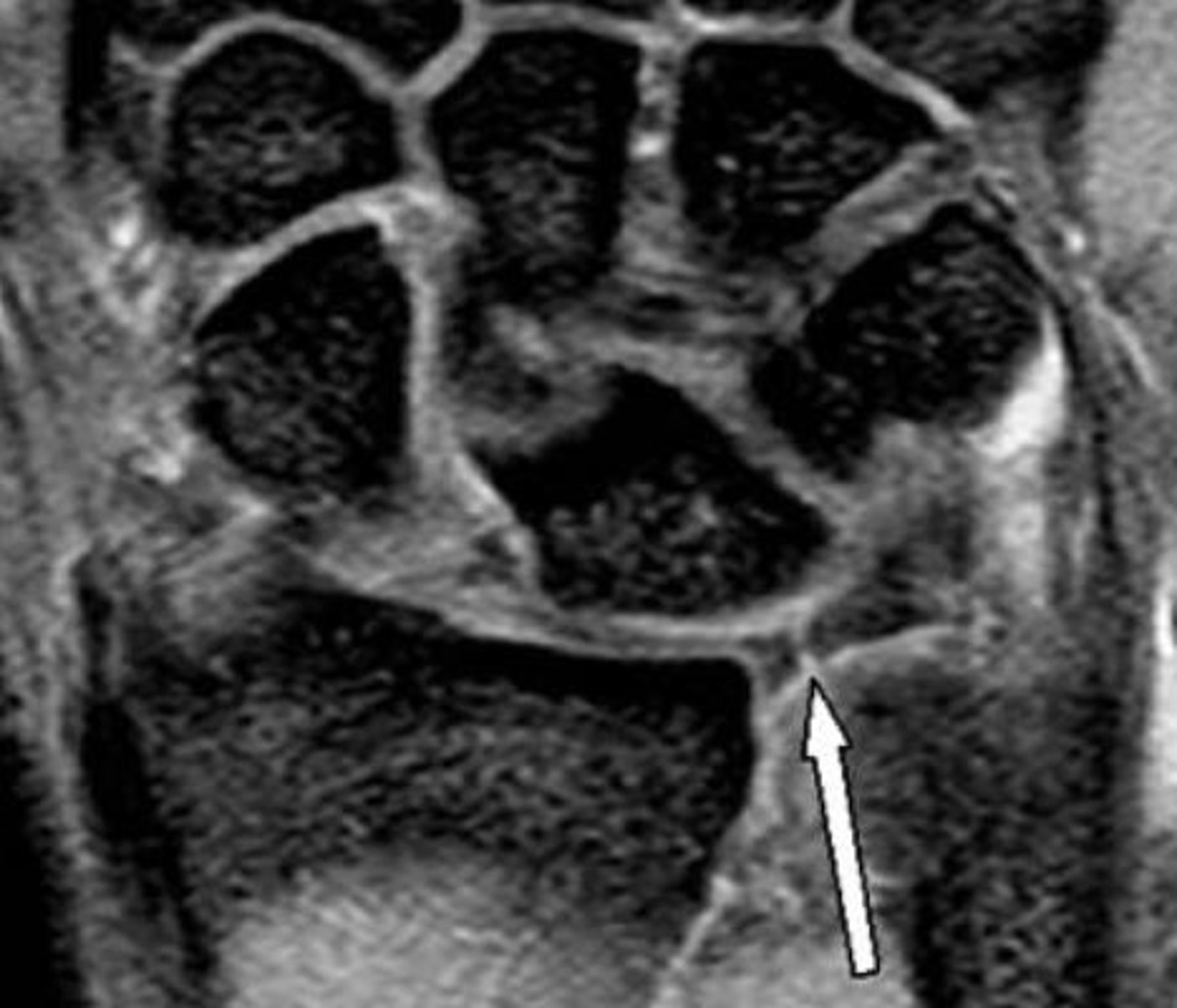
Which position is more unstable for the
TFCC? Pronation or supination?
Pronation
TFCC Tear
Due to the complexity of the TFCC and nearby ulnar wrist structures, the ulnar wrist is commonly referred to as the "black box of the wrist".
Mechanism of injury:
Trauma on the ulnar side of the wrist through fall or
weightbearing
Presentation and management:
- Ulnar-sided wrist pain exacerbated by weightbearing on
extended wrist or forearm rotation
- Diagnosis is made through a combination of clinical exams
and imaging
- Surgery is recommended for unstable traumatic tears
- Splinting and therapy is recommended for painful but stable
tears
Scaphoid
carpal bone, closest to the radius, the "some" in the acronym Some Lovers Try Positions That They Can't Handle
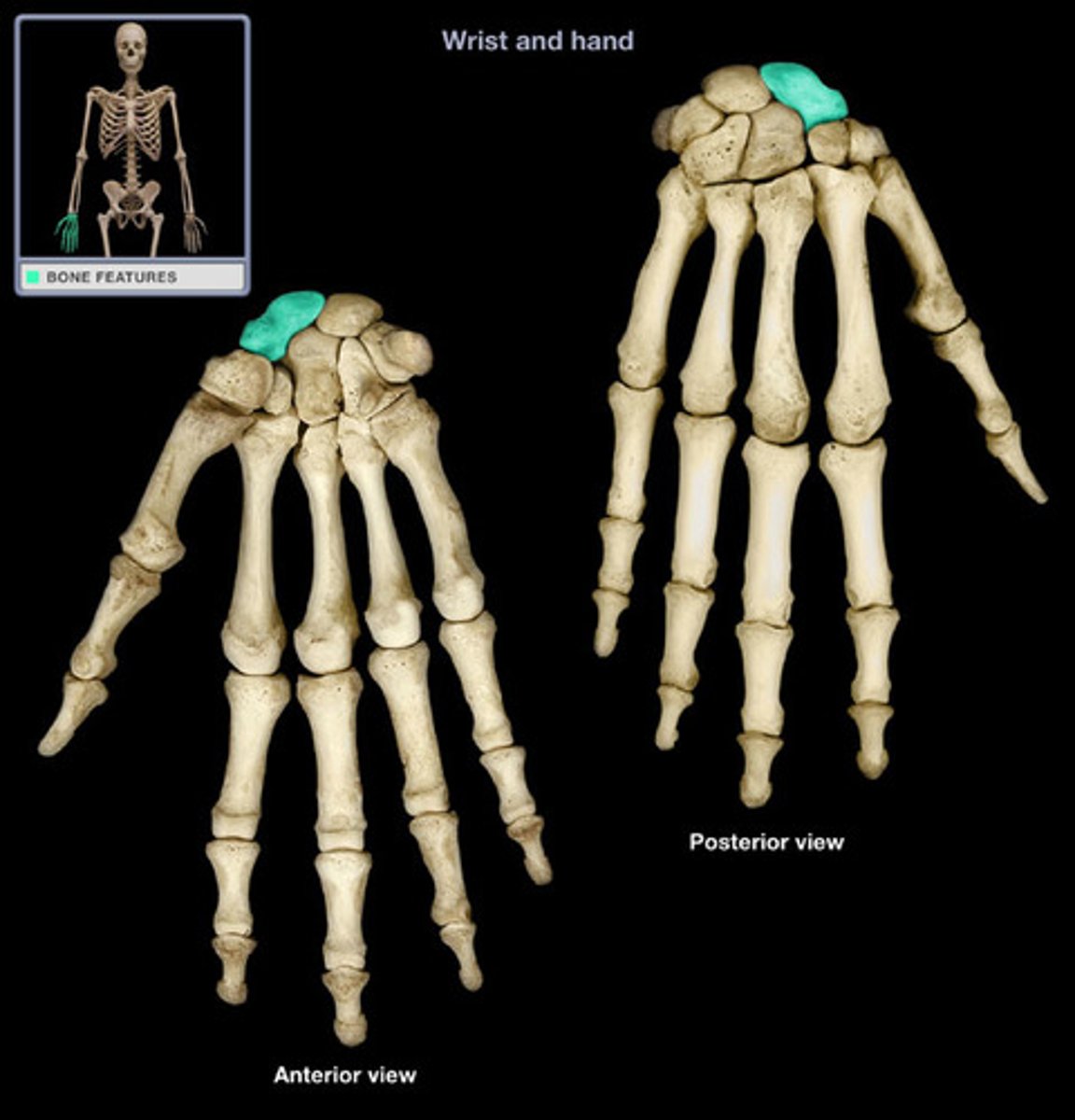
Lunate
carpal bone that's shaped like a crescent moon, "lovers" in the acronym Some Lovers Try Positions That They Can't Handle
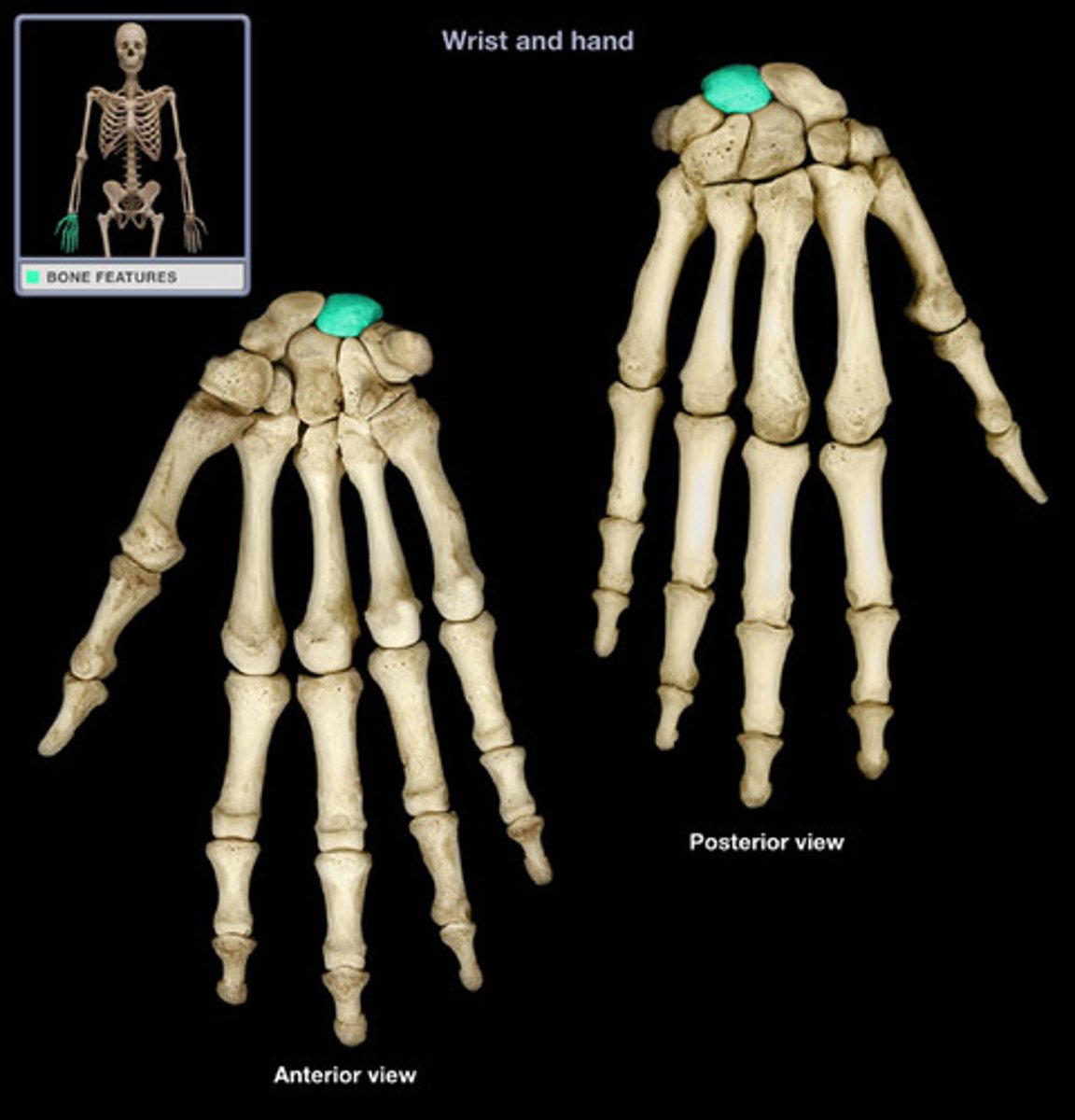
Triquetrum
the "try" in the acronym Some Lovers Try Positions That They Can't Handle, Pisiform is often attached to this carpal bone
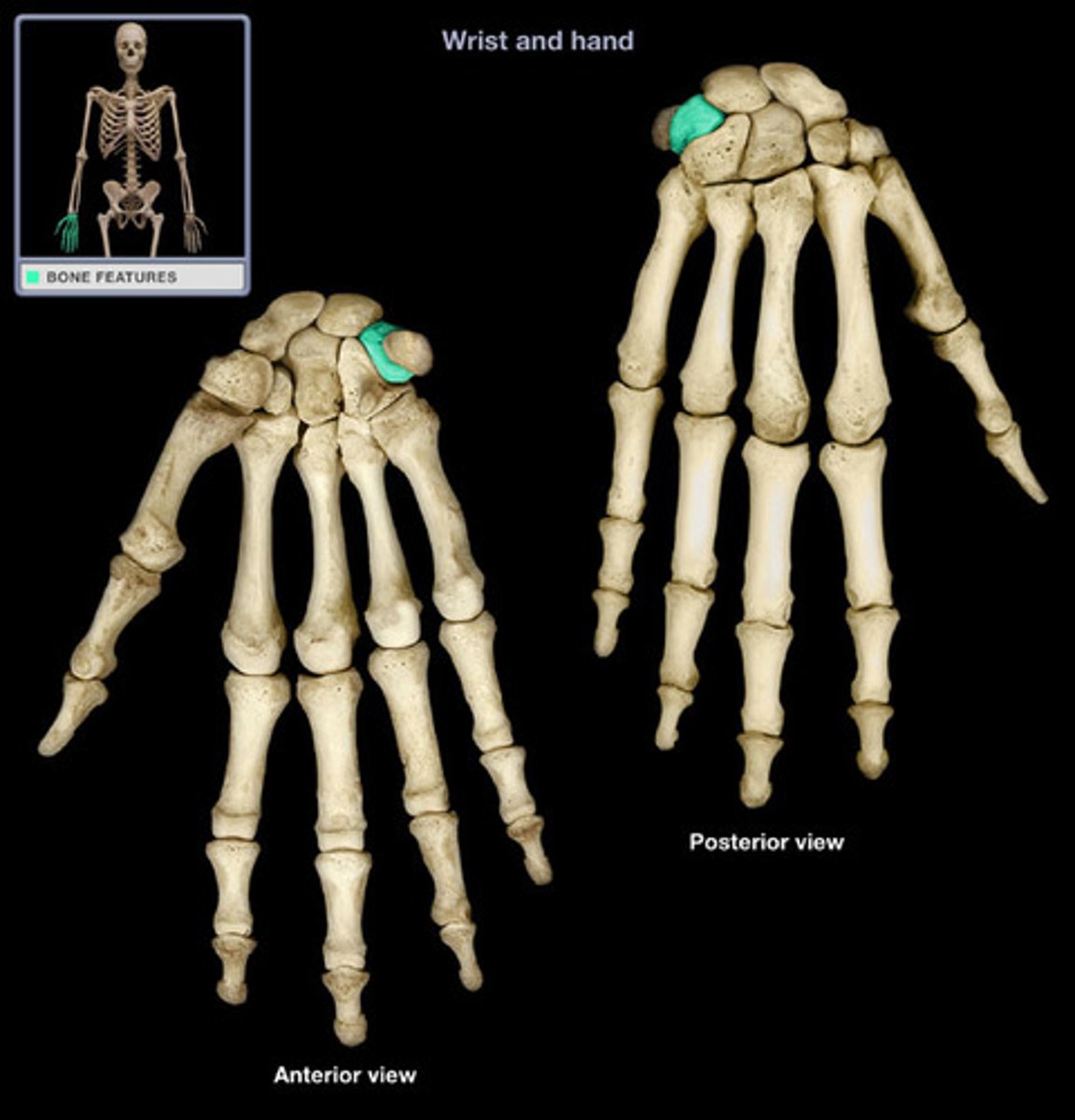
Pisiform
Pea-shaped bone often shown attached to the triquetrum
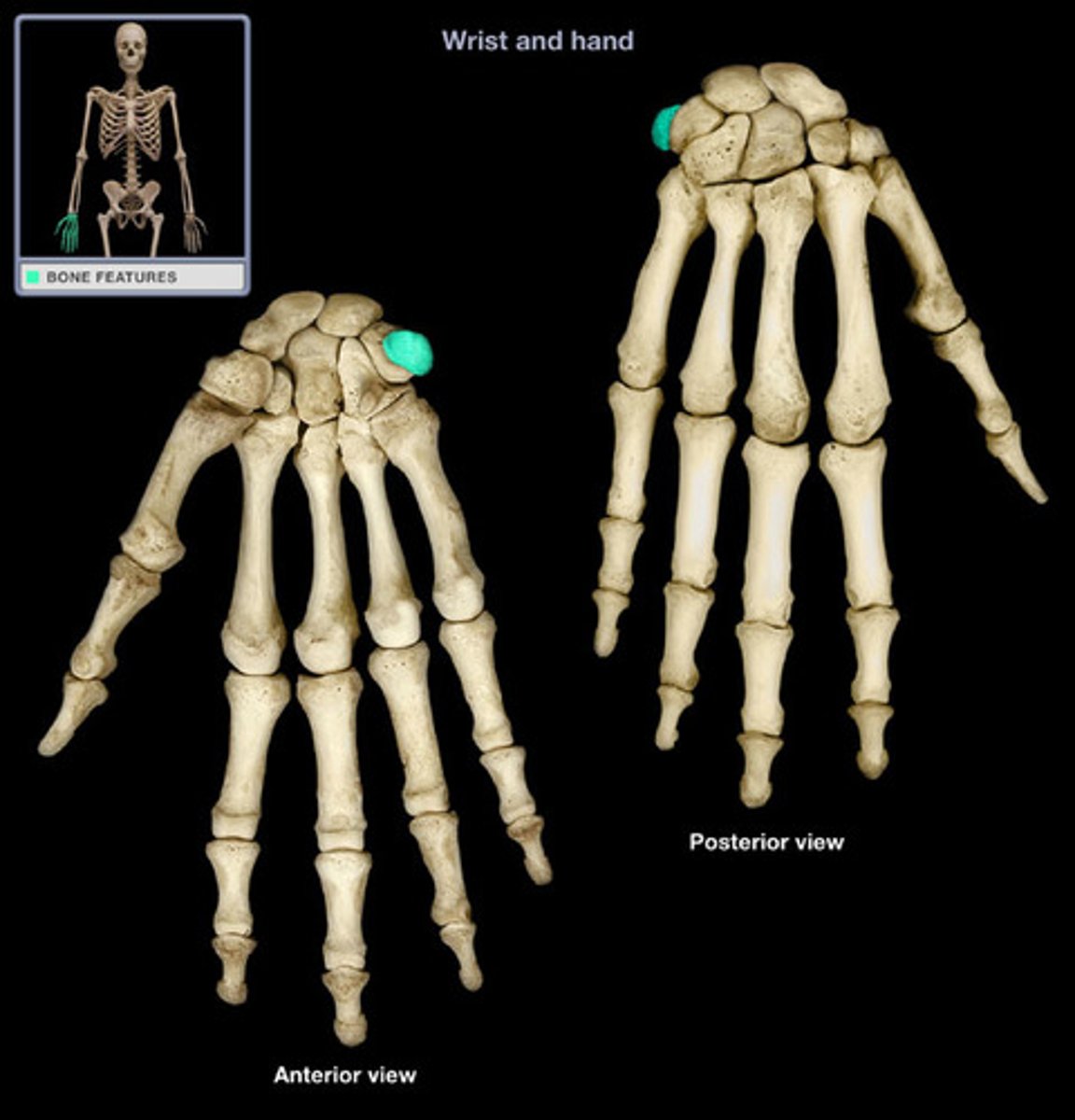
Trapezium
carpal bone that is closest to the the thumb, the "that" in the acronym Some Lovers Try Positions That They Can't Handle
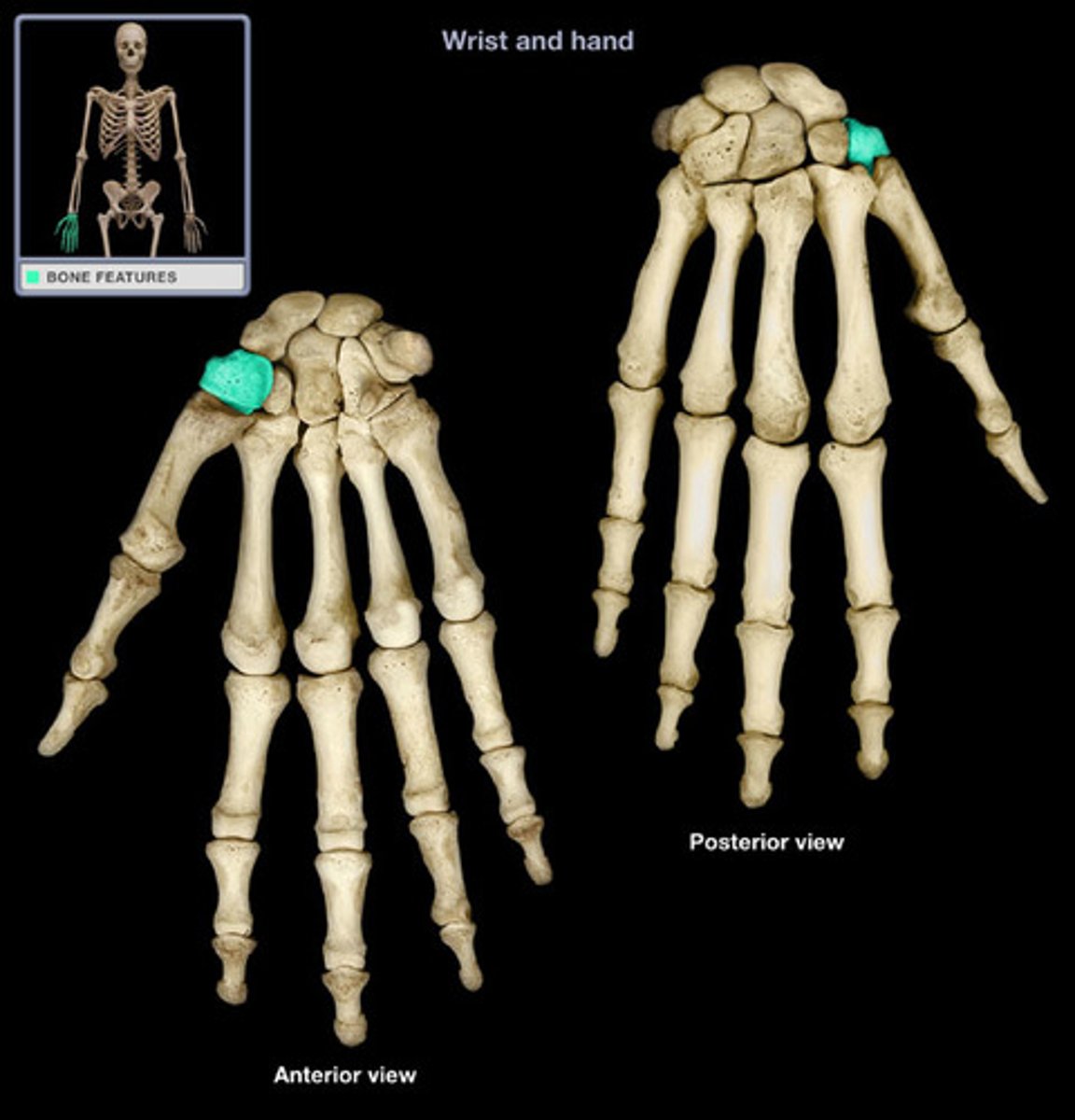
Trapezoid
thumb side of the hand, "they" in the acronym Some Lovers Try Positions That They Can't Handle
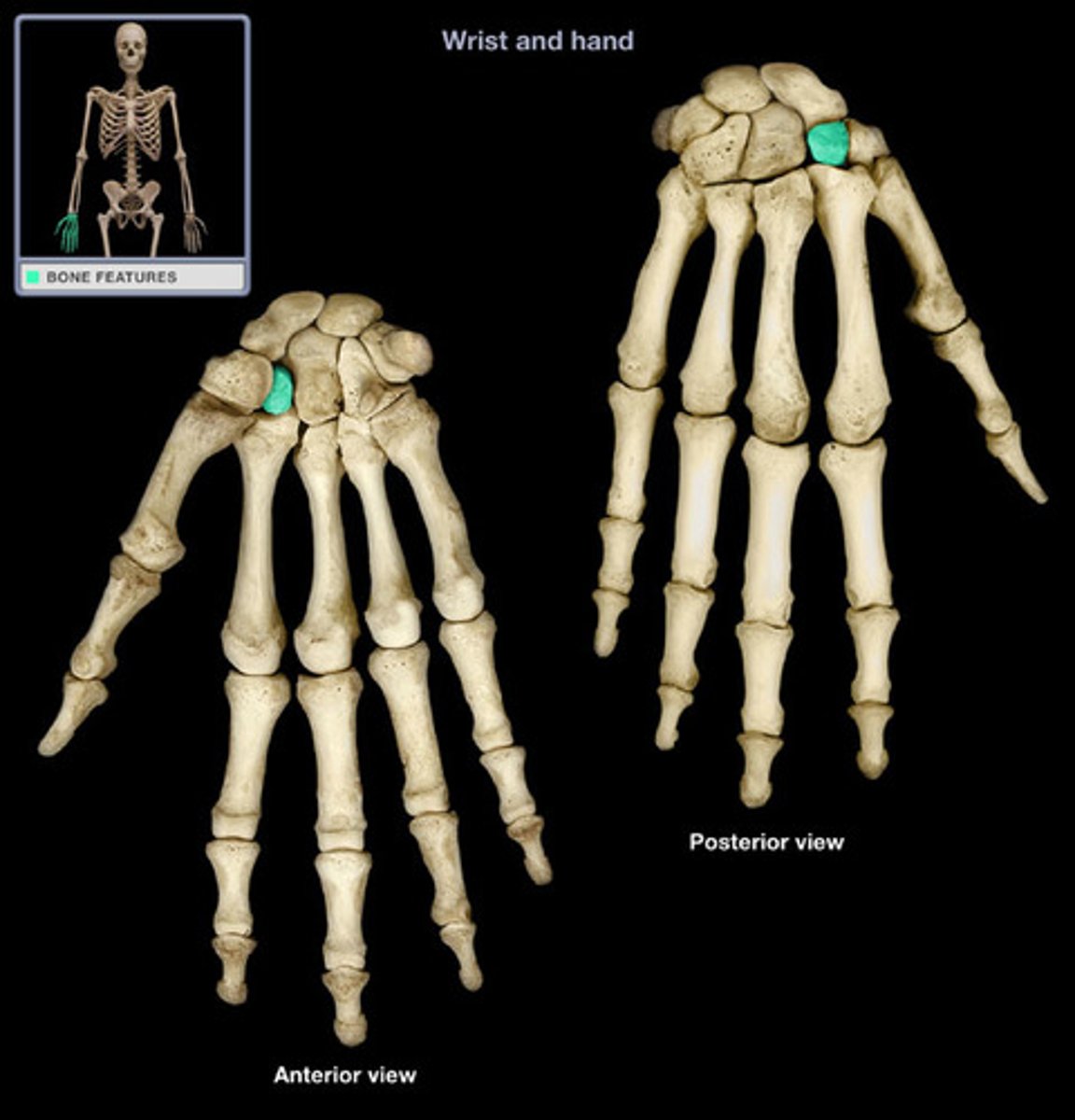
Capitate
carpal bone, the "capital" in the center of the hand, "can't" in the acronym Some Lovers Try Positions That They Can't Handle
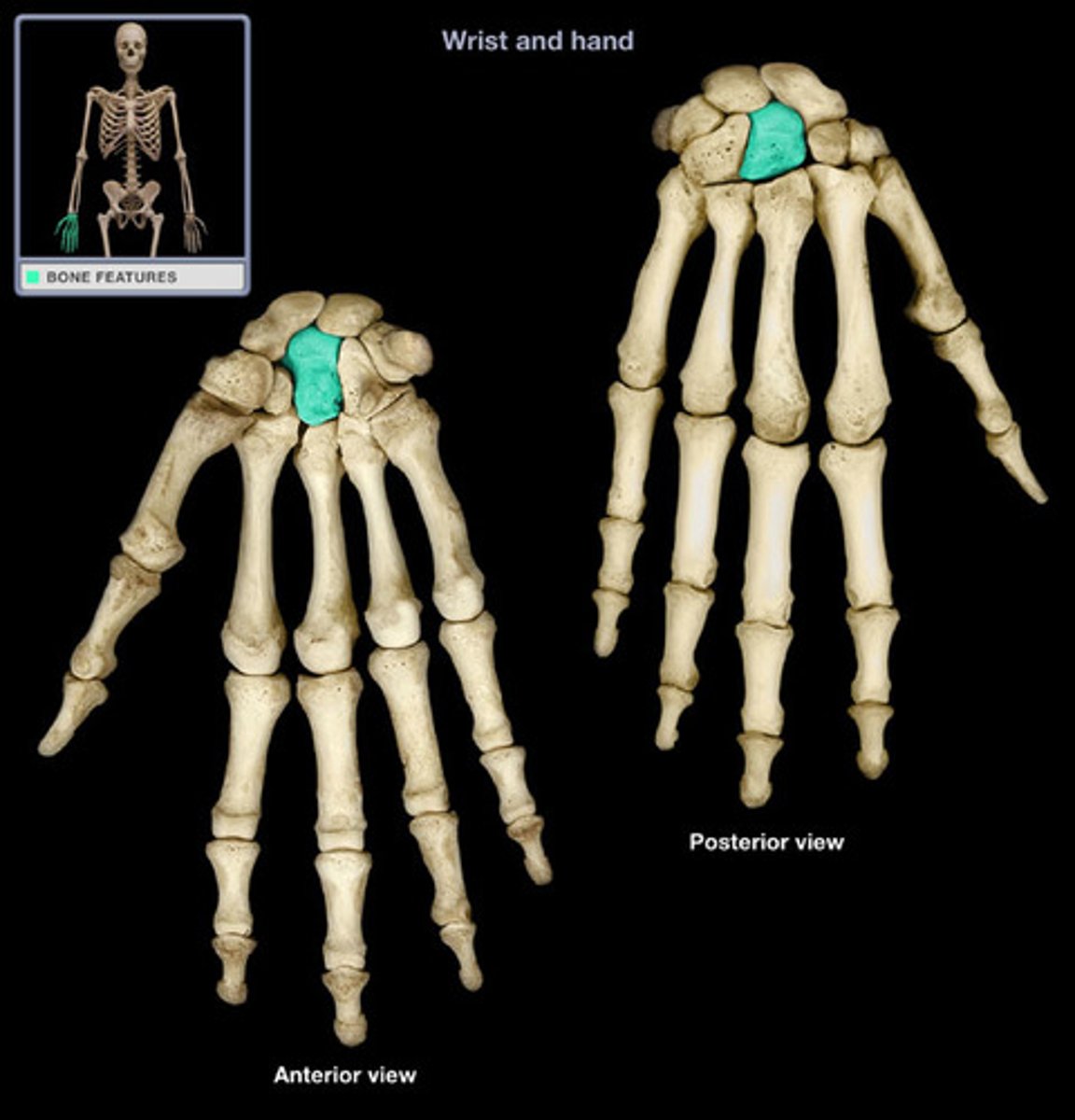
Hamate
carpal bone towards the pinky side, has a projection that sort of looks like a ham bone
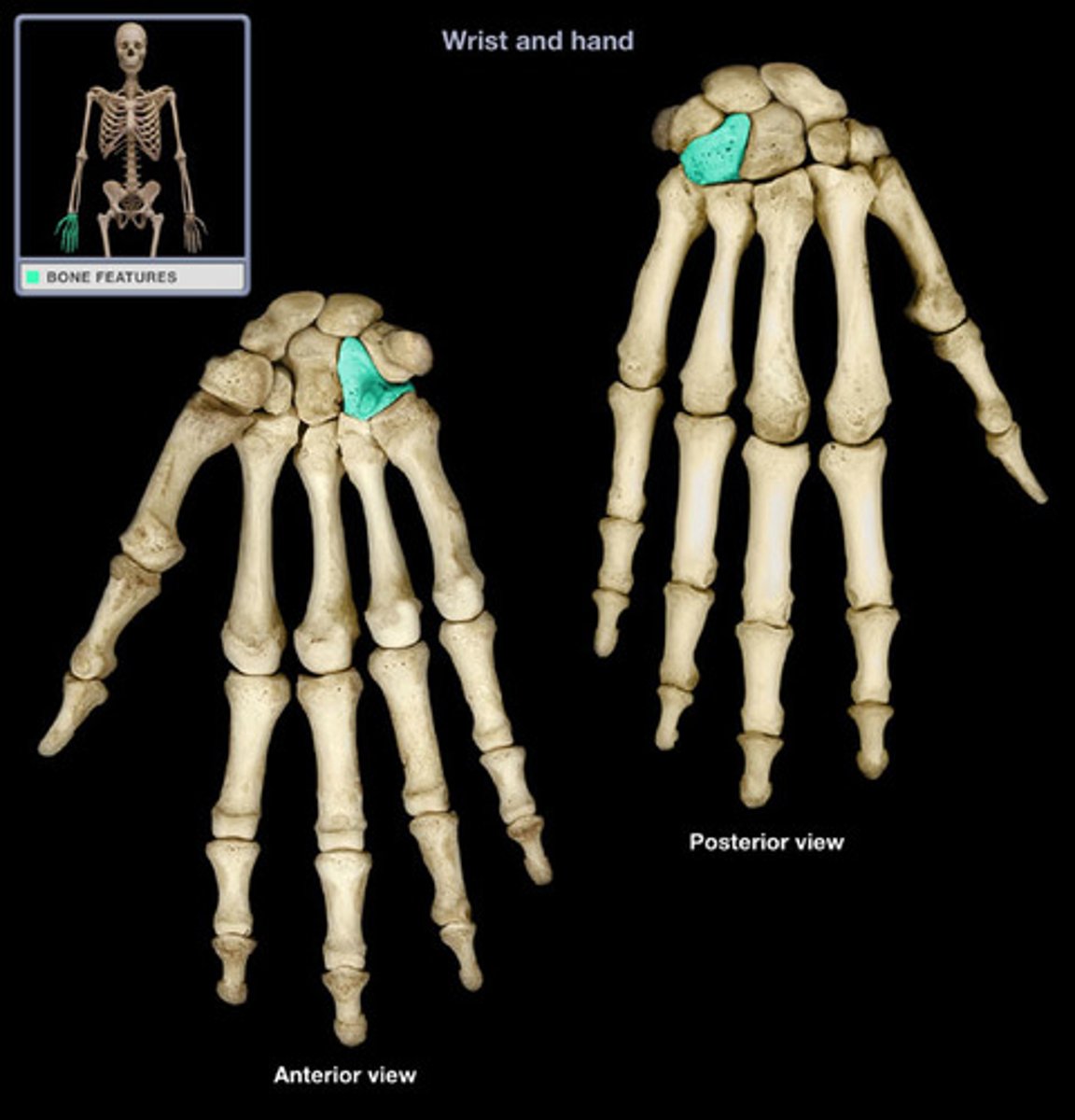
Radius
lateral bone of the forearm, in line with the thumb
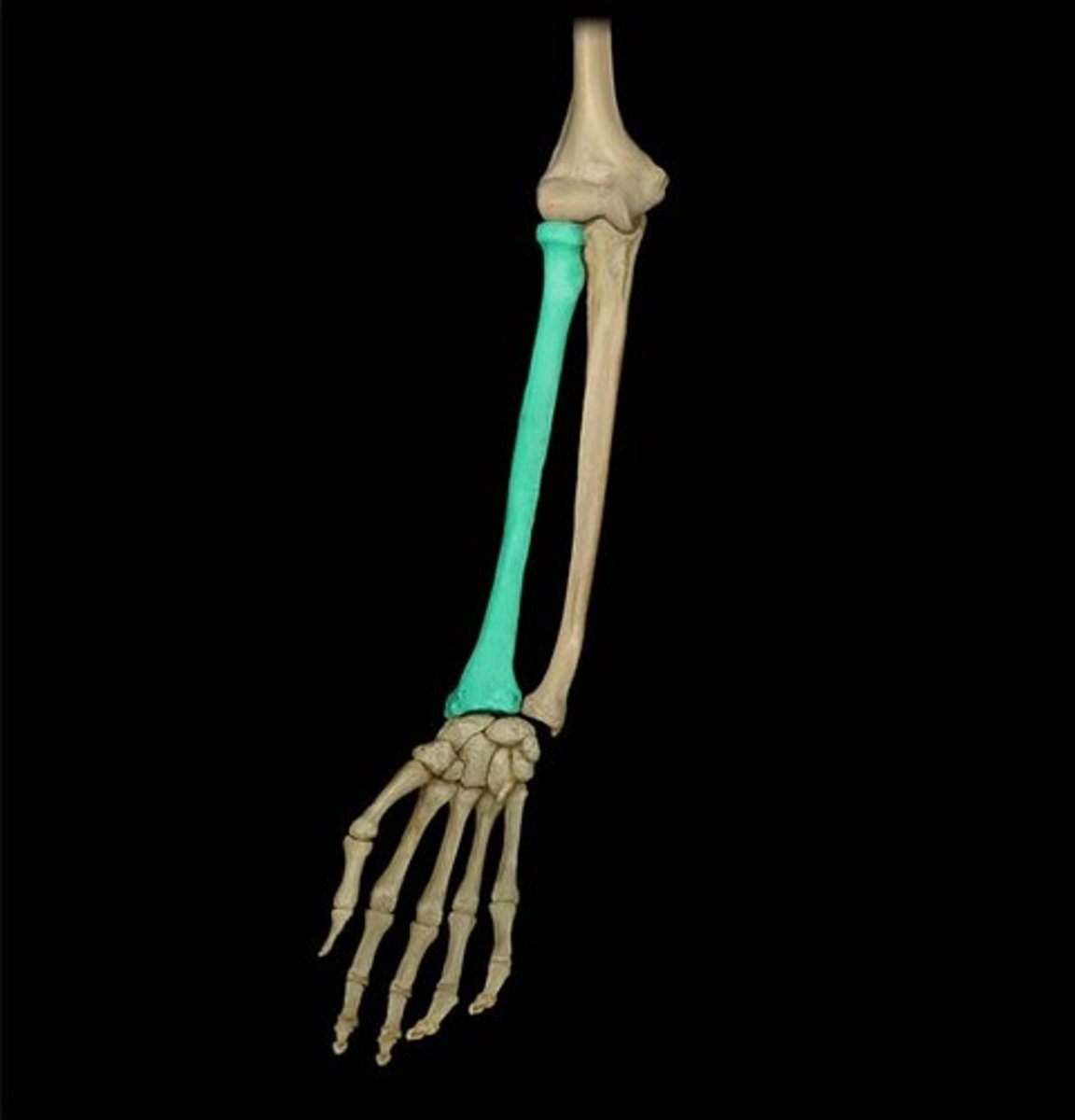
Distal radius
insertion of pronator quadratus
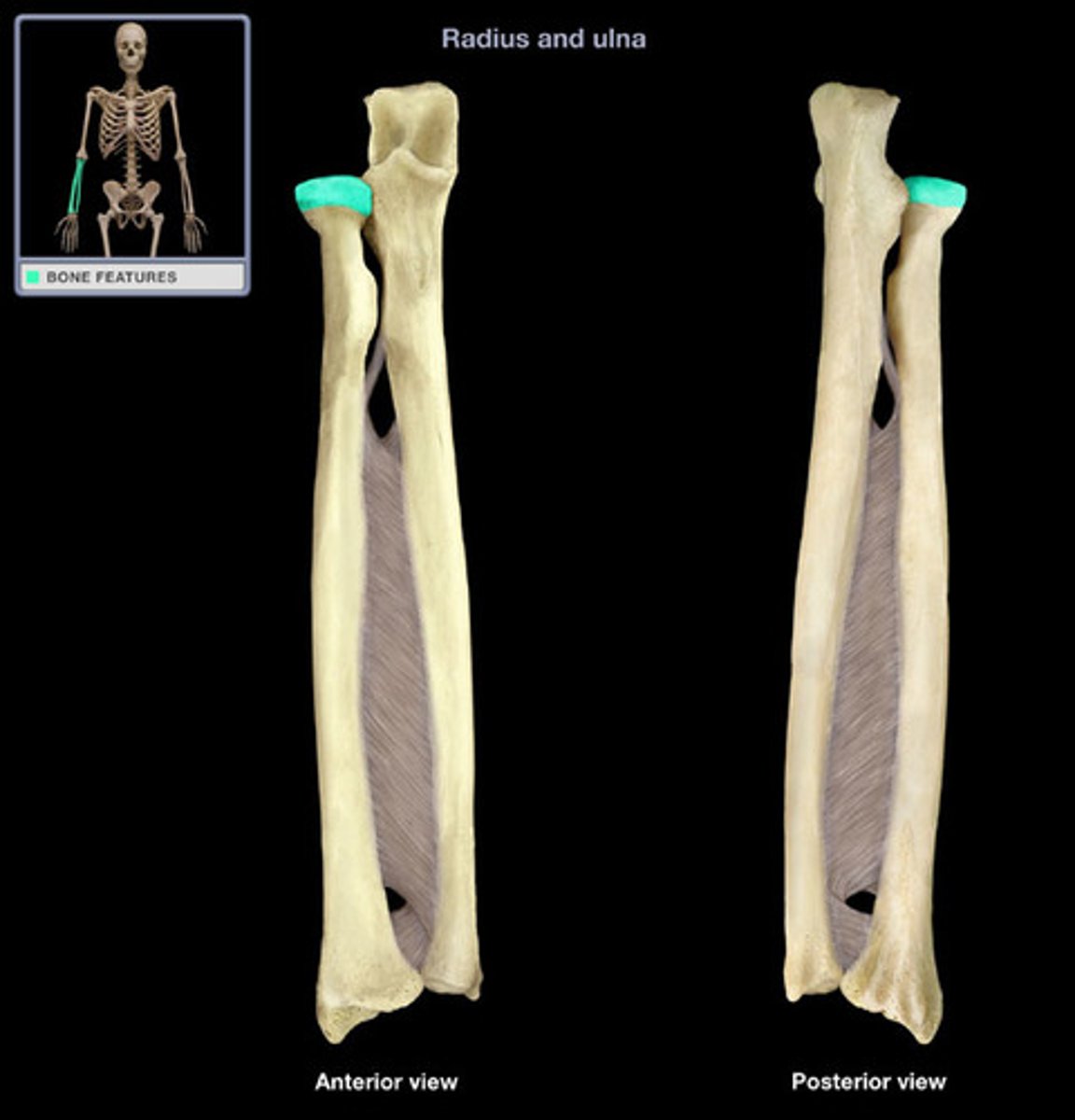
Radial head
articulates with capitulum of humerus, proximal
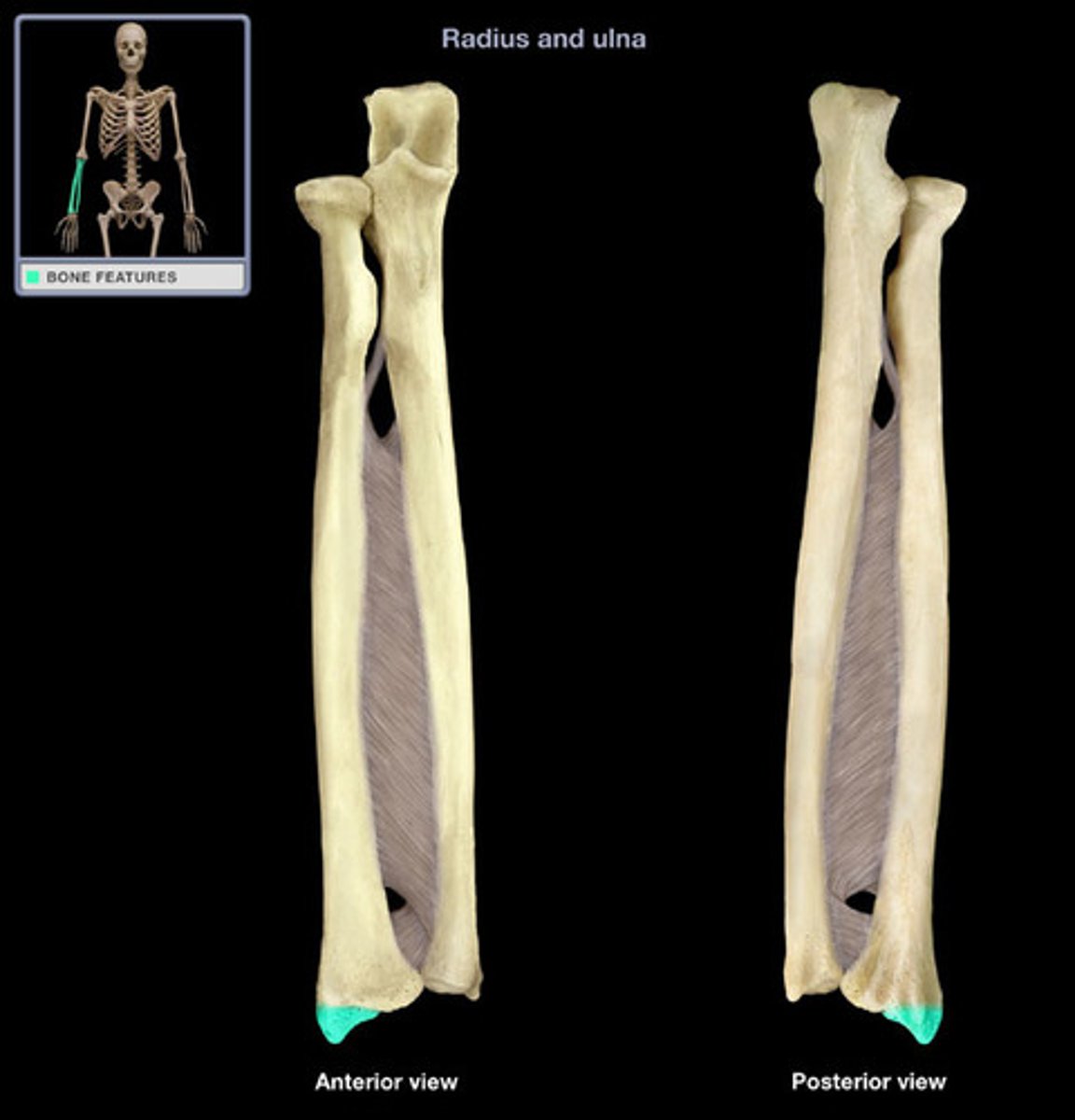
radial styloid process
the pointed structure at the distal end of the radius
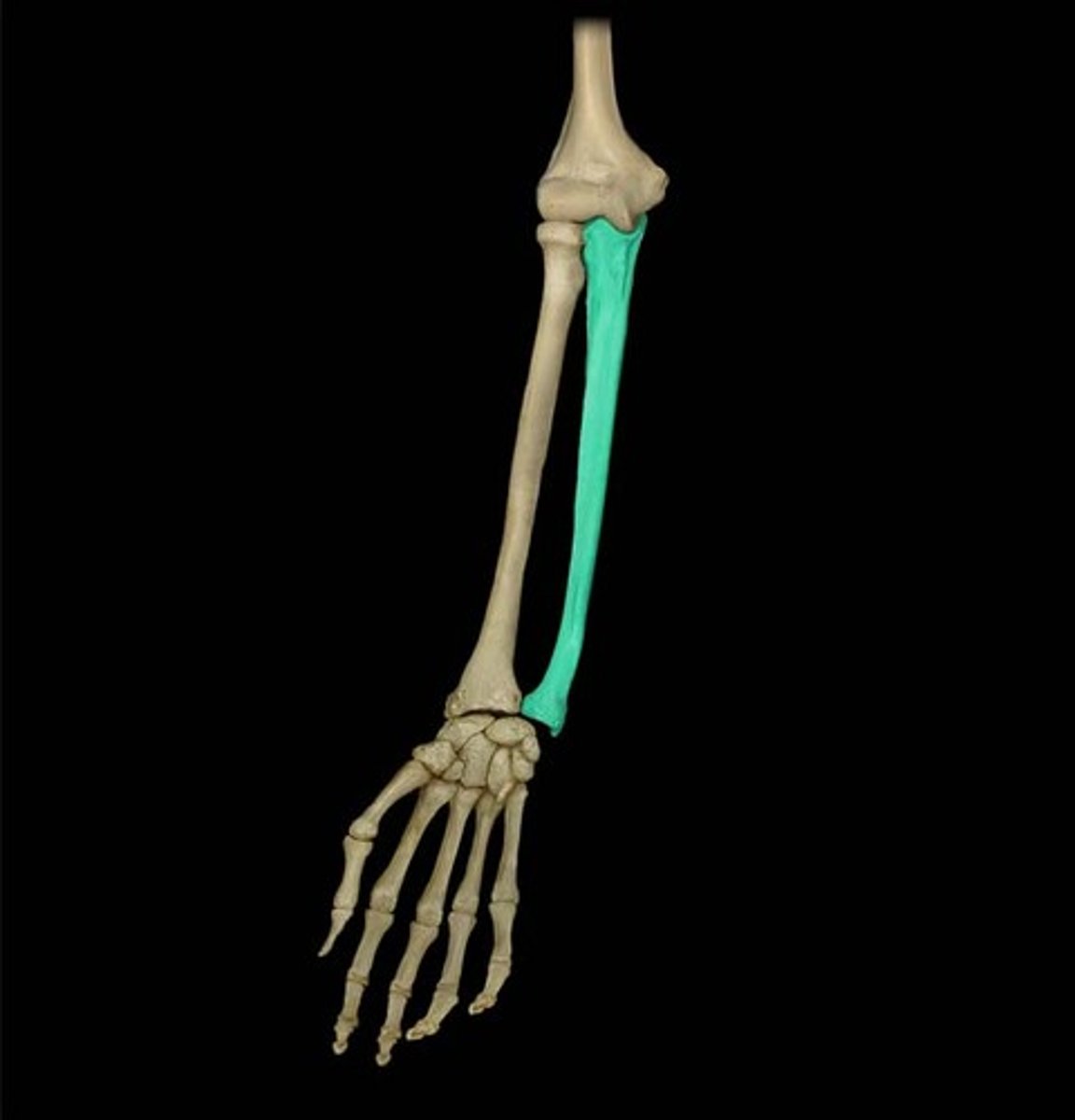
Ulna
Inner and larger bone of the forearm, attached to the wrist and located on the side of the little finger.
Ulnar styloid process
distal pointed projection; located medial to the head of the ulna
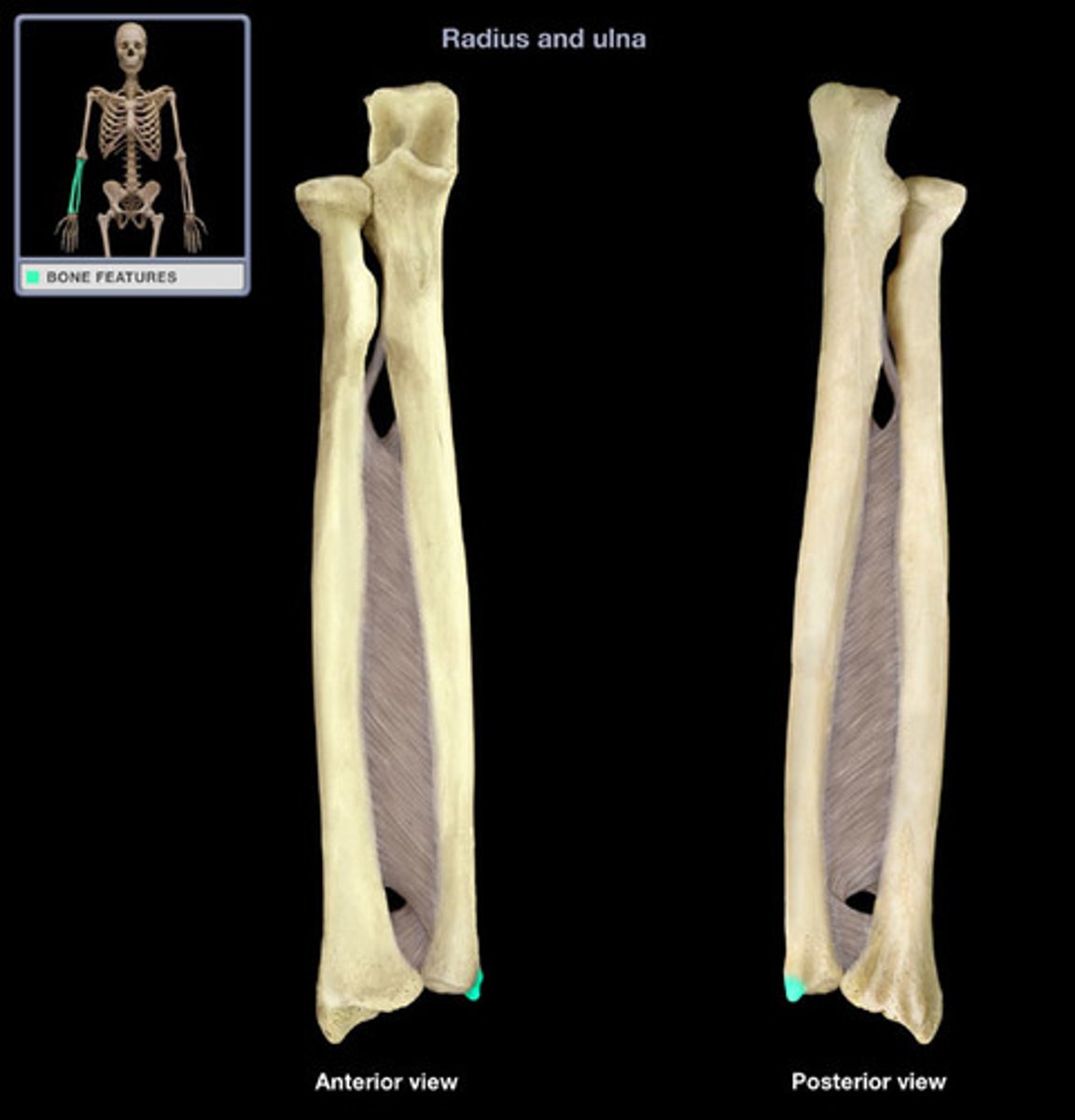
Ulnar head
distal end of ulna