T13 - MOVEMENT CONTINUUM
 Call Kai
 Learn
Learn Practice Test
 Spaced Repetition
 Match
Match Flashcards
 Knowt Play
1/17

There's no tags or description
Looks like no tags are added yet.
Name | Mastery | Learn | Test | Matching | Spaced | Call with Kai |
|---|
No analytics yet
Send a link to your students to track their progress
18 Terms
3 categories of movement
physical activity
sedentary behaviour
sleep
MET
metabolic equivalent unit
energy exuded at rest
stages of the movement continuum (L to R)
sleep
sedentary behhaviours
light physical activity
moderate physical activity
vigorous physical activity
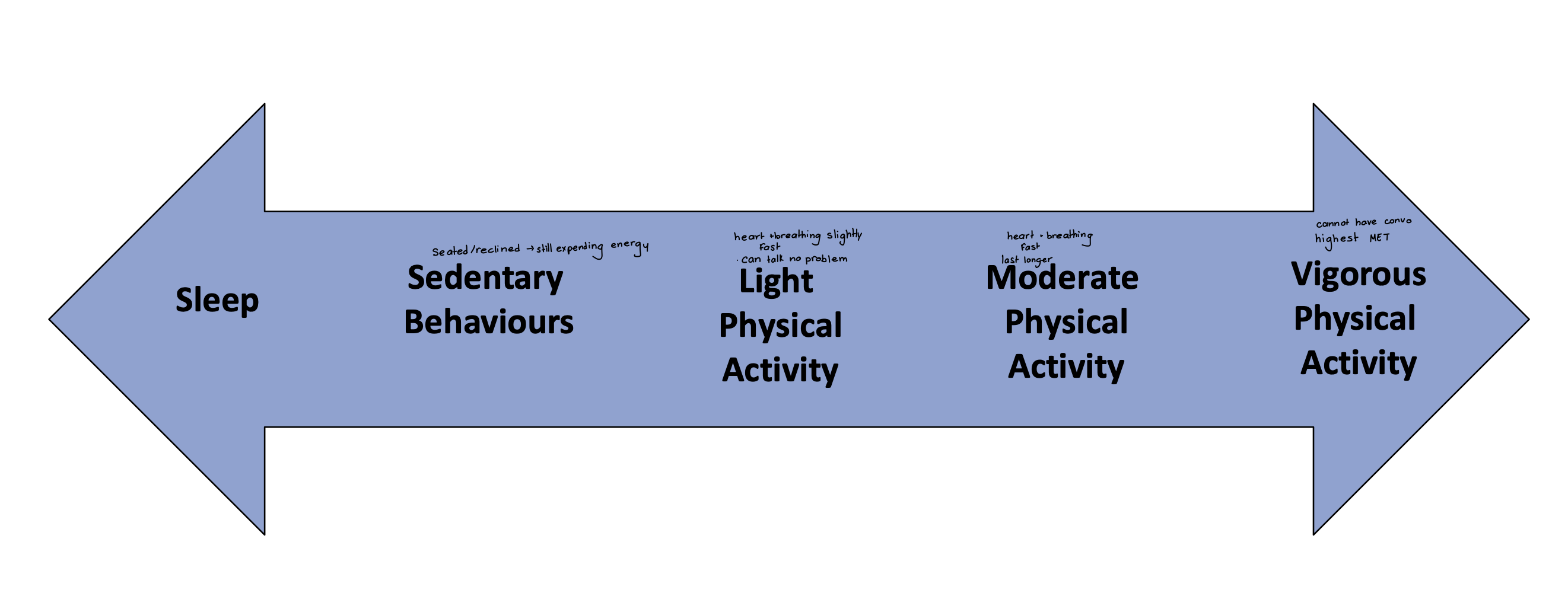
light activity
3 mets
standing, cooking, playing with pets, grooming
moderate
3-6 mets
gardening, horse grooming, patient care
vigorous
>6
rugby, squash, tennis, running, moving furniture
why is it important to look at each movement type?
recognition that major movements differentially impact physiological and physical health
need to distinguish each to better understand their relationship
physical activity
bodily movement produced by the skeletal muscles
result in a metabolic rate over resting energy expenditure
physical inactivity
insufficient physical activity level
to meet physical activity recommendations
sedentary behaviour
waking behavior characterized as energy expenditure
<1.5 METS
sitting, reclining or lying position
still expending energy
screen time
time spent on screen-based behaviours
while being sedentary or physically active
physical inactivity vs. sedentary behaviour (3)
measurement of sedentary behaviour
unique physiology of sedentary behaviour
unique nature of sedentary behaviour
sleep
good quality sleep is essential for healthy functioning and development
silo vs. integrated guidelines
assuming movement is its own silo is misleading
implies they are unrelated to each other
grade for movement behaviours? - physical activity
d+ youth
f adults
grade for movement behaviours? - sedentary time
d youth
f adults
grade for movement behaviours? - sleep
b- youth
b- adults
grade for movement behaviours? - integrated guidelines
f youth
inconclusive adults