Pulmonary Function Testing and Inhaler Techniques for Respiratory Care
 Call Kai
 Learn
Learn Practice Test
 Spaced Repetition
 Match
Match Flashcards
 Knowt Play
1/25

There's no tags or description
Looks like no tags are added yet.
Name | Mastery | Learn | Test | Matching | Spaced | Call with Kai |
|---|
No analytics yet
Send a link to your students to track their progress
26 Terms
What is pulmonary function testing?
A test that measures how well you are breathing.
What is spirometry?
A type of pulmonary function test that measures how much and how fast air moves in and out of the lungs.
Describe the general process of spirometry testing.
The patient breathes normally, then blows into a mouthpiece as hard and fast as possible after taking a deep breath.
What does a spirometer measure?
Lung volumes, including Thoracic Gas Volume (TGV), Functional Residual Capacity (FRC), Total Lung Capacity (TLC), and others.
What is the purpose of the shutter during spirometry testing?
To close for a second while the patient breathes normally, allowing for accurate measurement.
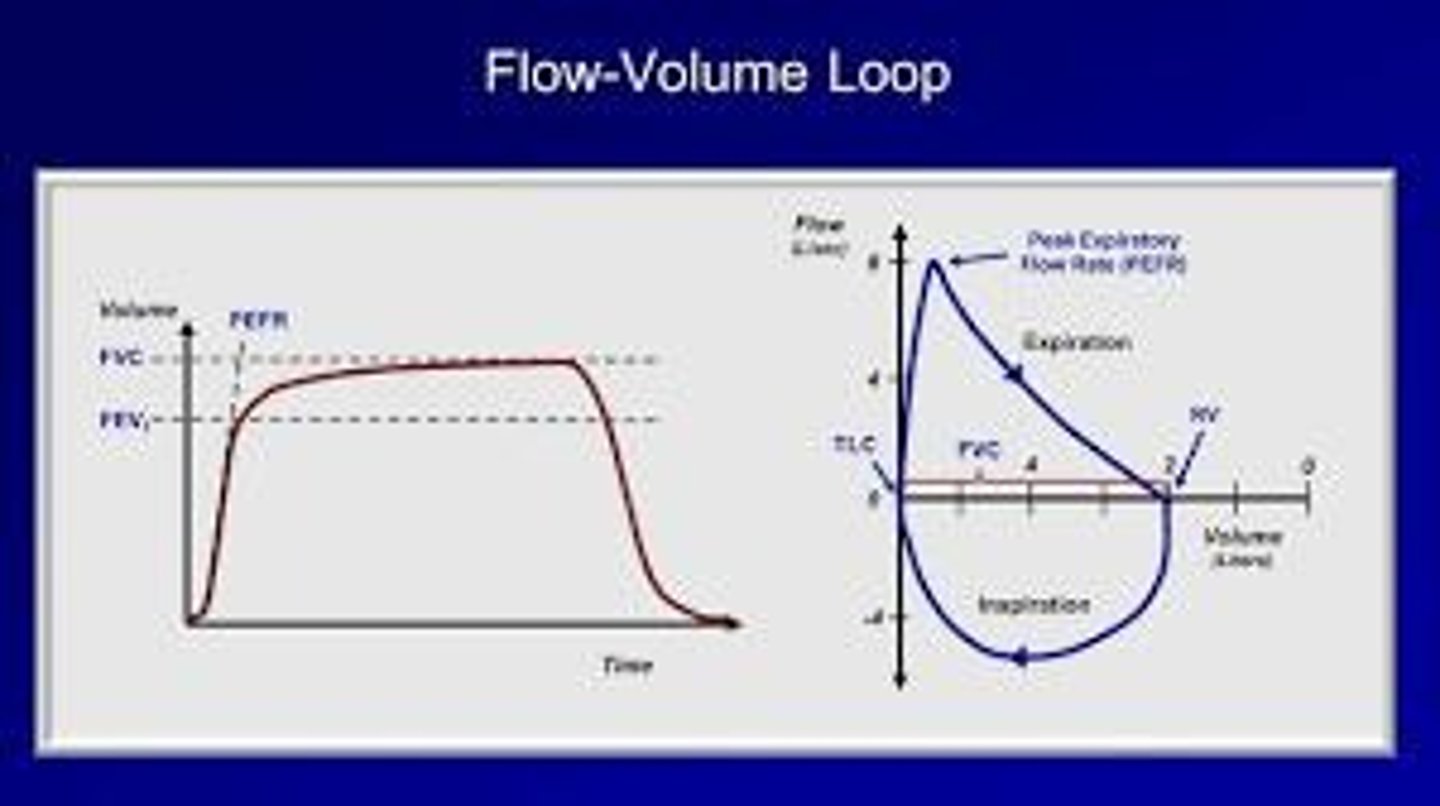
What is the significance of the flow-rate vs volume graph in spirometry?
It visually represents the results of the spirometry test, showing airflow and lung capacity.
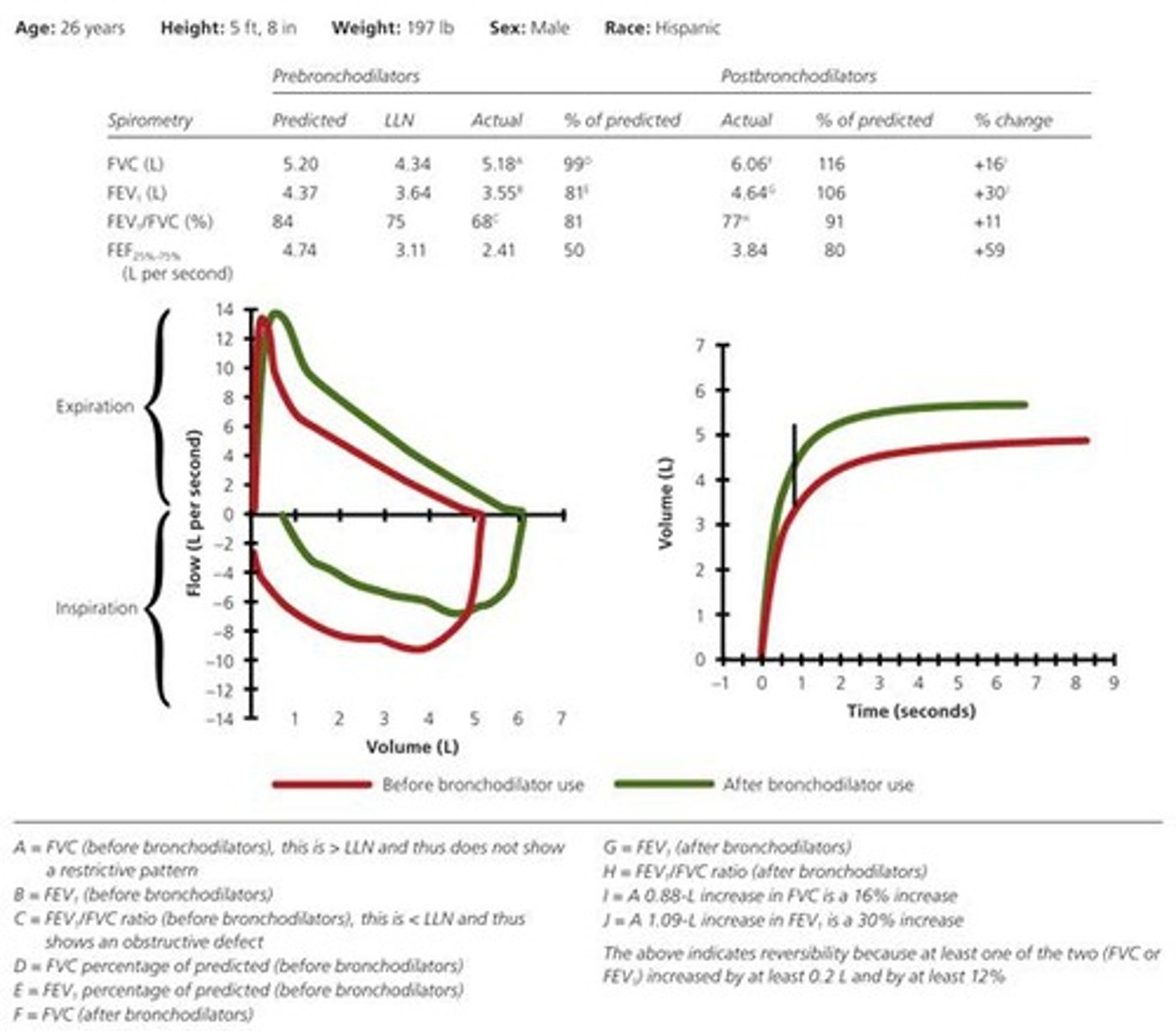
What is an obstructive defect in pulmonary function?
A condition where airflow is limited, often seen in asthma and COPD.
What indicates reversibility in obstructive defects?
A significant improvement in airflow after bronchodilator treatment.
What are common errors when using inhalers?
Not shaking the inhaler, not priming it, incorrect positioning, and not holding the breath after inhalation.
What are the advantages of metered dose inhalers (MDIs)?
They are portable, have a short treatment time, and do not require coordination of breathing and actuation.
What are the disadvantages of MDIs?
They can have high pharyngeal deposition, and determining remaining doses can be difficult.
What is a dry powder inhaler (DPI)?
An inhaler that requires a moderate to high inspiratory flow and does not use propellants.
What is a common error when using dry powder inhalers?
Insufficient inspiratory flow, which can lead to ineffective medication delivery.
What is the first step in using a metered dose inhaler?
Remove the cap and shake the inhaler to ensure consistent delivery of the dose.
What should a patient do before inhaling from an MDI?
Breathe out fully to ensure the lungs are empty.
Why is it important to hold the breath after inhalation?
To allow the medication to settle in the lungs for better absorption.

What is the role of a spacer with an MDI?
To enhance medication delivery and reduce the need for coordination during inhalation.
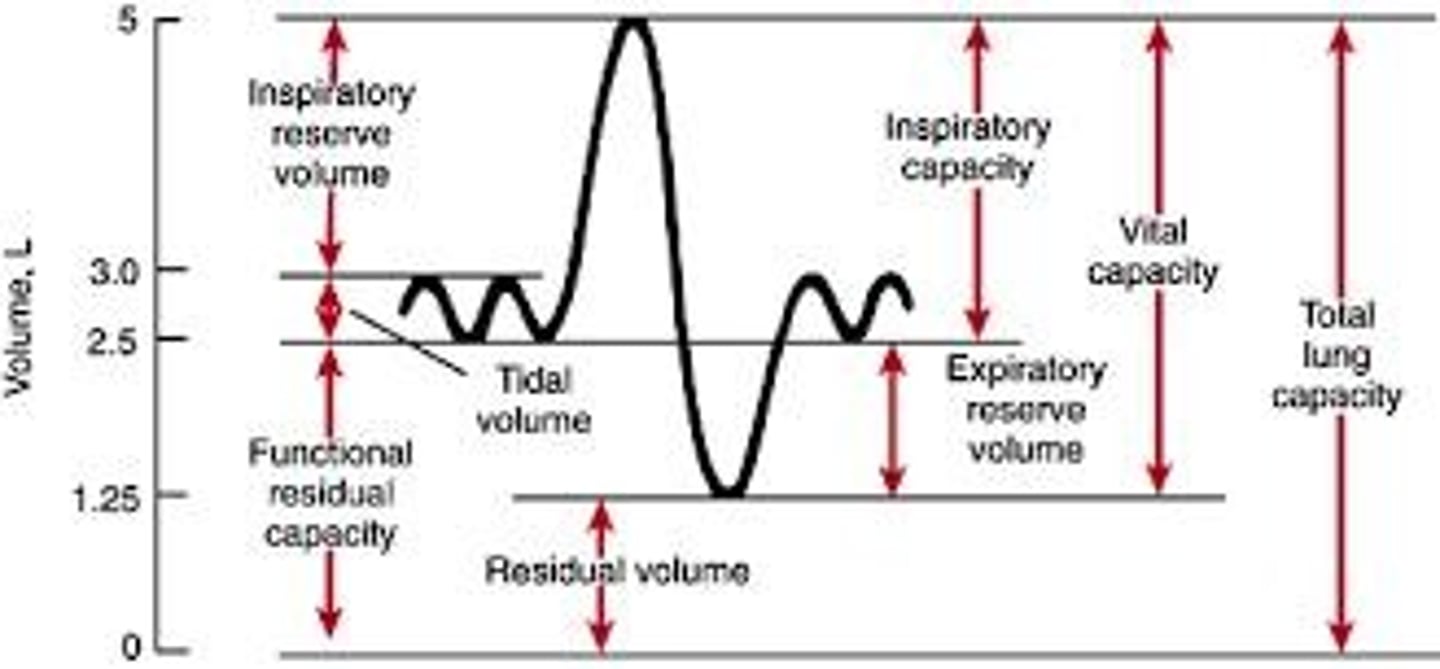
What lung volumes are measured during spirometry?
Expiratory reserve volume (ERV), inspiratory capacity (IC), inspiratory reserve volume (IRV), and residual volume (RV).
What does FEV1 stand for?
Forced Expiratory Volume in one second, a key measurement in spirometry.
What does the term 'airways resistance' refer to?
The resistance to airflow in the respiratory tract, measured during pulmonary function tests.
What is the purpose of a flow-volume curve in spirometry?
To visualize airflow patterns and identify obstructive or restrictive lung diseases.
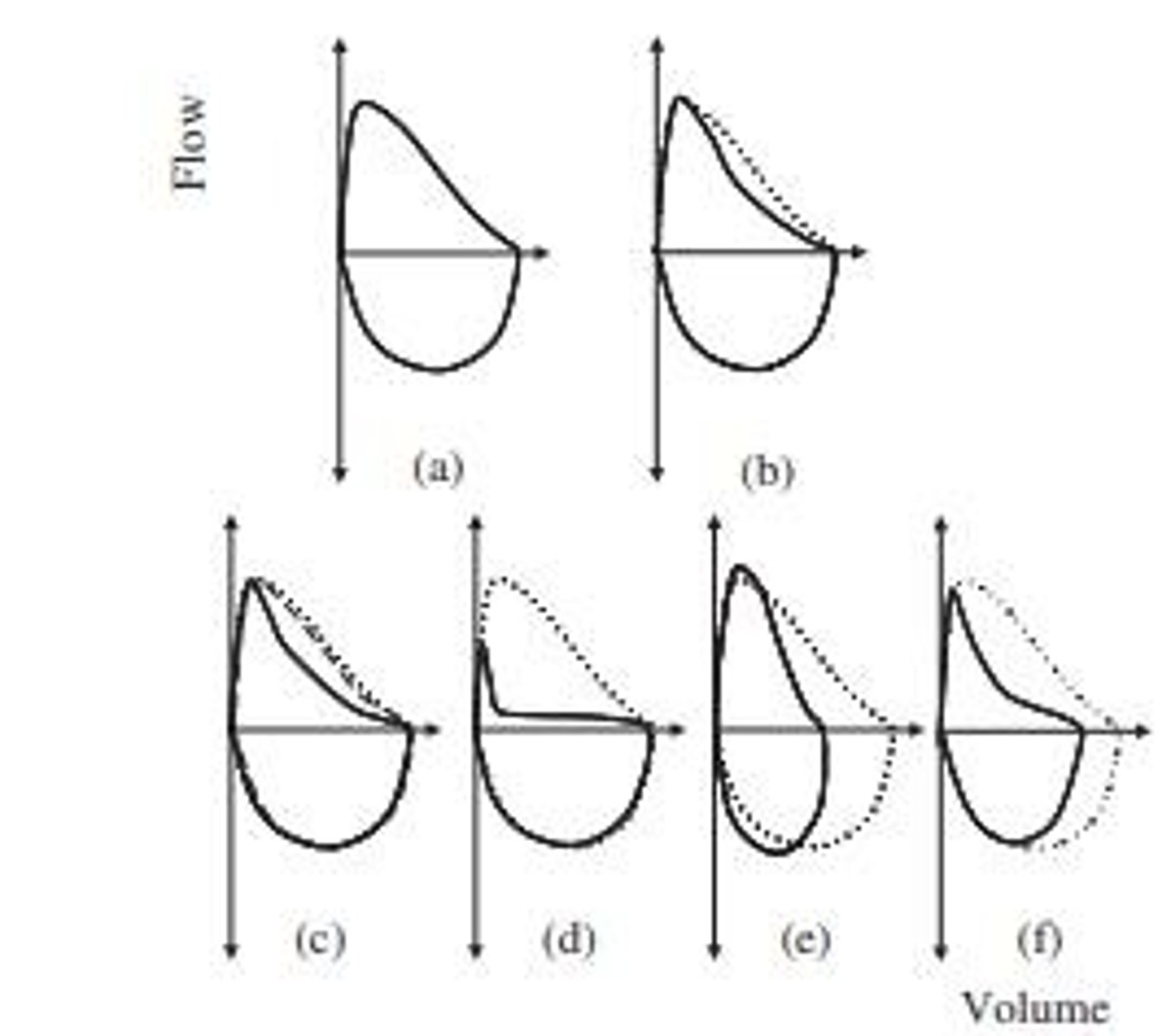
What does a concave expiratory limb in a flow-volume curve indicate?
Airflow obstruction, often seen in conditions like asthma.
What is the significance of measuring static lung volumes?
It helps determine the presence of obstructive or restrictive ventilatory patterns.
What is the typical pattern seen with restrictive lung disease on a flow-volume curve?
The curve appears compressed along the volume axis without concavity.
What is the importance of repeatability in spirometry tests?
To ensure accuracy and reliability of the test results.
What is the role of a computerized sensor in spirometry?
To calculate and graph the results of the spirometry test.