CGS Lecture 13
 View linked note
 Call Kai
 Learn
Learn Practice Test
 Spaced Repetition
 Match
Match Flashcards
 Knowt Play
1/36

There's no tags or description
Looks like no tags are added yet.
Name | Mastery | Learn | Test | Matching | Spaced | Call with Kai | Chat |
|---|
No analytics yet
Send a link to your students to track their progress
37 Terms
Rods and cones in the eye turn…
photons into neurochemical reactions
Rods
Photoreceptor cells in the eye that are responsible for vision at low light levels
How do rods operate?
Mixes all colors in the wavelength to tell you there’s a certain amount of light out there
What are rods sensitive to? (2)
Most sensitive to green light, high light sensitivity (sensitive even to the smallest amount of light)
Rods are too sensitive to operating during… because….
Sunlight because their not contributing since they’re all responding at max/as fast as they can fire
What is the 1 type of rod?
“Black and white” vision
Cones
Photoreceptor cells in the eye that are responsible for color vision and high spatial acuity
What are cone sensitive to?
Are differentially sensitive to wavelengths, low light sensitivity (needs a lot of light to operate)
What are the 3 types of cones?
long wavelength cone, red
medium wavelength cone, green
short wavelength cone, blue
Cones are not useful at… because…
Night because you can’t see color in low light
Are there more rods or cones?
Rods
Binocular vision
Seeing 2 pictures of the same thing with your 2 eyes
Stereopsis
Taking 2 pictures of the same thing from a slightly different perspective
Ganglion cells
Neurons that transmit information from the retina to the brain via the optic nerve. Axons of the ganglion cells form the optic nerve.
What is the purpose of ganglion cells?
To pool all the information and send it to the brain, output
What are the 2 parallel processing streams (visual systems)?
Magnocellular and parvocellular streams (both ganglion cells)
Magnocellular stream (big ganglion cells) and what lobe it goes to
Cellular stream responsible for processing strong contrast between light and dark and spatial orientation (“where” vision). Goes to the parietal lobe
Magnocellular cells like when (2) and respond well to (1)
things are moving across the retina, there is a strong contrast between light and dark, and respond well to signals changing in depth
Parvocellular system (small ganglion cells) and what lobe it goes to
Cellular system responsible for color perception and object recognition (“what” vision). Goes to the temporal lobe
Parvocellular cells like when (3)
things are in a certain form (like when a line is oriented in a certain way for them to respond), color (some cells only respond to specific colors in light), and signals are changing in depth
Temporal lobe is where… (3)
Languages, concepts, and autobiographical memory is
Where is the sensory motor cortex?
Parietal lobe
The dorsal stream is known as the _____ pathway
"where" pathway
The ventral stream is known as the _____ pathway
“what” pathway
Surface perception
The 3D representation of scenes that allows the visual system to parse objects and recognize/identify them.
What are 4 performance factors that can affect perception?
knowledge and experience (how much you know about the subject matter), principles of perceptual organization (grouping things together accurately), attention (registering things), and expectations (knowing what you are looking for)
Gestalt psychology was pioneered by who?
Max Wertheimer
Gestalt psychology
The whole is greater than the sum of it’s parts
What are the 2 types of cues?
Monocular and Pictorial
Monocular cue
Visual cues that help people perceive depth using only one eye
Pictorial cue
Features that add depth and distance to an image
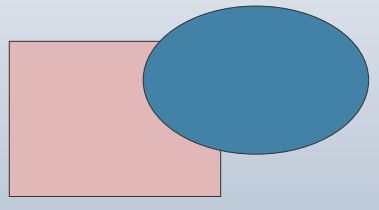
Occlusion (monocular cue)
An illusion where one object appears to hide or block another object.
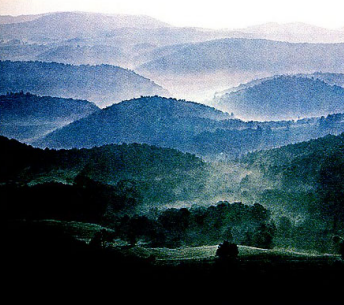
Atmospheric Perspective (monocular cue)
Contours that are further away in an image are blurred
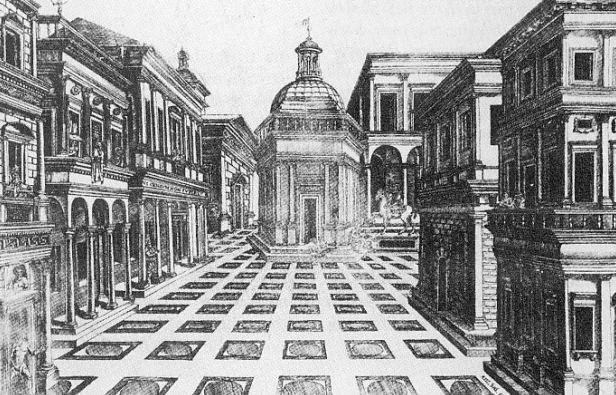
Linear Perspective (monocular cue)
The brain's ability to discern between different angles found in architectural structures.
Size and Distance approach (monocular cue)
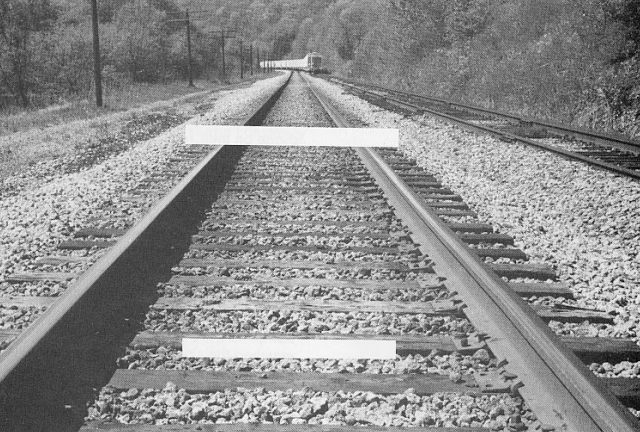
The perception that objects farther away appear larger, even if they have the same size as closer objects.