International Trade Theory and Policy: Foundations, Advantages, and Barriers
 Call Kai
 Learn
Learn Practice Test
 Spaced Repetition
 Match
Match Flashcards
 Knowt Play
1/36

There's no tags or description
Looks like no tags are added yet.
Name | Mastery | Learn | Test | Matching | Spaced | Call with Kai |
|---|
No analytics yet
Send a link to your students to track their progress
37 Terms
What is the primary purpose of the United Nations?
Collective security
What role does the UN General Assembly (UNGA) serve?
A forum for all member states to discuss international issues
What are the three main functions of the UN Security Council?
1. Identifying threats to peace 2. Peace enforcement 3. Peacekeeping
How many votes are needed to enact a substantive resolution in the Security Council?
A 'yes' vote from at least 9 of the 15 council members and no negative vote from any P5 members
What is the definition of trade?
The transfer of goods and services from one entity to another, often in exchange for money
What are two benefits of trade for producers?
1. Selling to new markets and expanding business 2. Increasing efficiency
What benefit does trade provide for consumers?
Cheaper goods
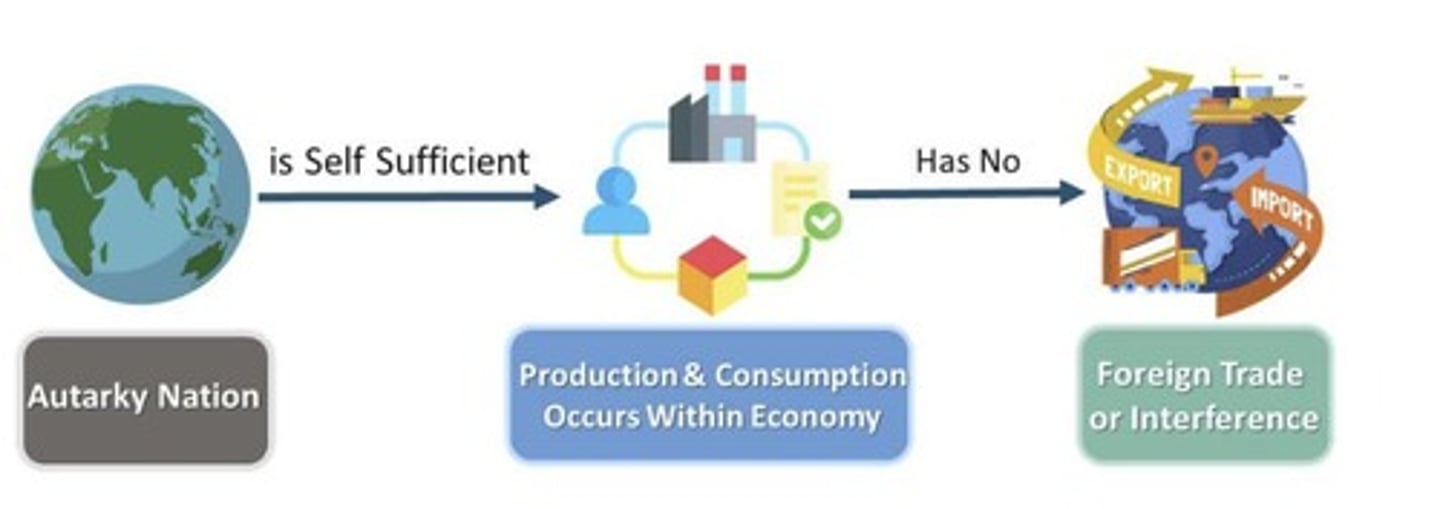
What is 'autarky'?
A policy of self-sufficiency where a state produces everything at a lower cost than available elsewhere
What is specialization in the context of trade?
The division of labor allowing diverse segments of society to focus on different economic activities
What is absolute advantage?
The ability of a country or firm to produce more of a particular good or service than others using the same resources
Who has the absolute advantage in making sandwiches and lemonade, Alice or Bob?
Alice has an absolute advantage in both tasks
What is the opportunity cost for Alice to make 1 sandwich?
2 glasses of lemonade
What is the opportunity cost for Bob to make 1 sandwich?
1 glass of lemonade
Who has a comparative advantage in making sandwiches?
Bob has a comparative advantage in making sandwiches
What does comparative advantage mean?
The ability to produce a good or service more efficiently at a lower opportunity cost than another country or firm
What does the Heckscher-Ohlin trade theory explain?
A country's comparative advantage and its trade patterns based on its abundant factor of production
What does the principle of comparative advantage suggest?
Countries should produce and export what they do best with low opportunity costs
What is the best situation for Alice and Bob's production?
Alice making lemonade and Bob making sandwiches
What are factors of production?
Resources essential for economic activity.
What does 'land' refer to in factors of production?
Agriculture and natural resources.
What is meant by 'labor' in economic terms?
Usually refers to unskilled labor.
What does 'capital' encompass in the context of production?
Human capital (skills, knowledge, experience) and capital for investment (money, equipment, etc.).
What is the Heckscher-Ohlin trade theory?
A theory stating that a country will export goods that use its abundant resources and import goods that use its scarce resources.
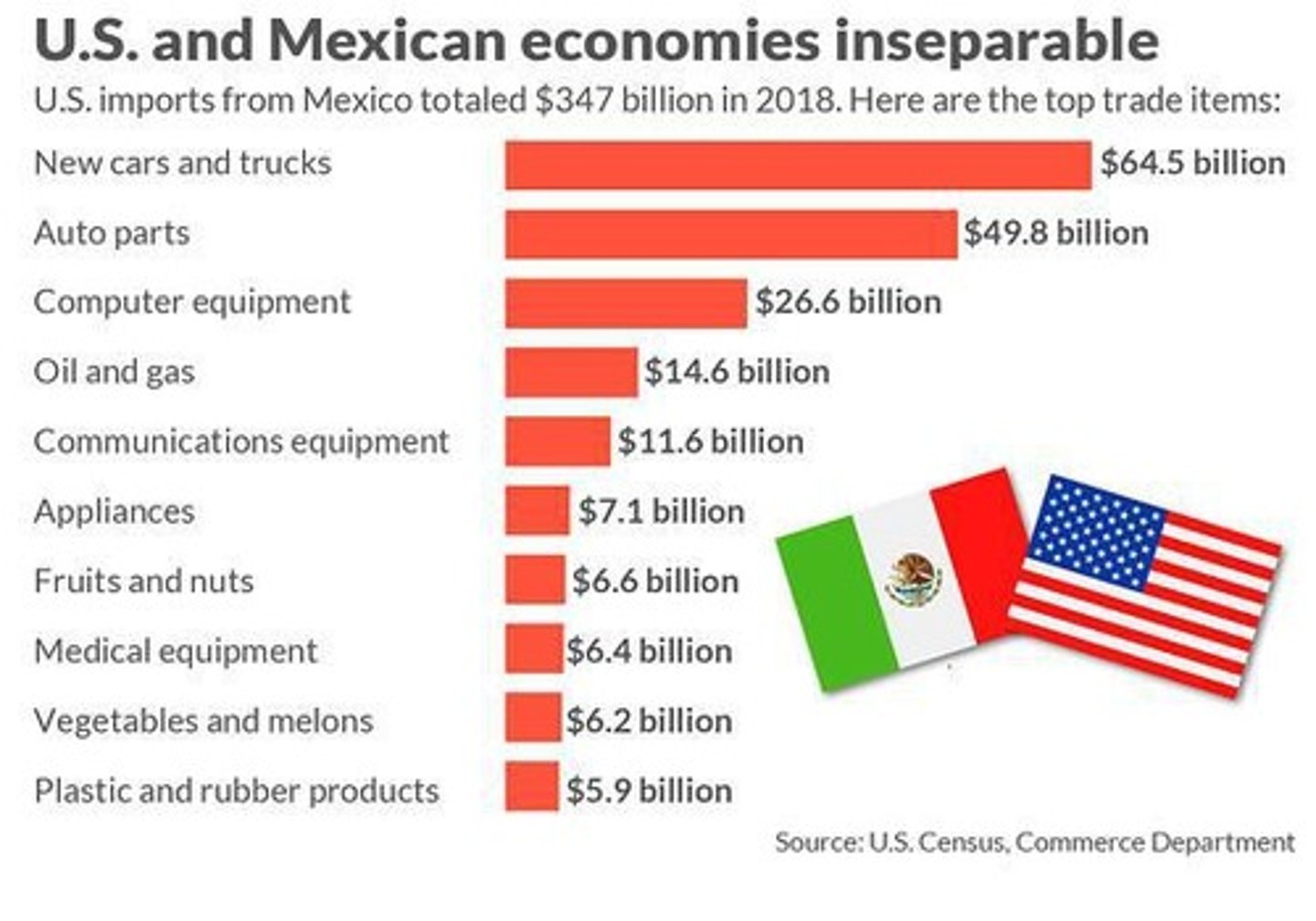
Give an example of the Heckscher-Ohlin trade theory involving the U.S. and Mexico.
The U.S. exports capital-intensive products to Mexico, while Mexico exports labor-intensive products to the U.S.
How have the factor endowments of the U.S. changed over time?
In the 19th century, the U.S. exported raw materials and farm goods; today, it exports capital and skilled labor-intensive goods.
What are trade barriers?
Government limitations on the international exchange of goods.
What are tariffs?
Taxes imposed on imports.
What are non-tariff barriers?
Barriers to trade that do not involve taxes, such as quotas and subsidies.
What is a quota in terms of trade barriers?
A limit on the volume of goods allowed to be imported.
What role do trade barriers play in protecting domestic industries?
They protect sectors from foreign competition and can reflect domestic political interests.
How do trade barriers benefit owners of scarce factors of production?
They protect industries that cannot compete globally, allowing them to charge higher prices.
What is the impact of free trade on owners of abundant factors of production?
They benefit from expanded market share and increased income through exports.
What was the 'Japanning of America' in the 1980s?
A situation where imported Japanese cars took market share from U.S. automakers, prompting legal action to protect the industry.
What trade barriers were imposed by the U.S. on AI chip exports?
Restrictions aimed at preventing the rise of China's military and economy in AI and quantum computing.
What was President Trump's approach to tariffs in 2025?
He set a baseline tariff to gain negotiating power, which was later challenged in court.
What are the foundations of trade theory mentioned in the notes?
Absolute advantage, comparative advantage, and Heckscher-Ohlin trade theory.
Why do countries impose trade barriers?
To protect domestic industries, especially those important for national security, and to gain negotiating power.