herpetology chapter 4 pt 2 (exam 1)
5.0(1)
Studied by 19 people Call Kai
 Learn
Learn Practice Test
 Spaced Repetition
 Match
Match Flashcards
 Knowt Play
Card Sorting
1/35

Earn XP
Description and Tags
Last updated 4:15 PM on 2/11/24
Name | Mastery | Learn | Test | Matching | Spaced | Call with Kai | Chat |
|---|
No analytics yet
Send a link to your students to track their progress
36 Terms
1
New cards
what is the only remaining member of the rhynchocephalia and where is it found
sphenodontidae (spheonodon punctatus)
\
tuatara
\
new zealand
\
tuatara
\
new zealand
2
New cards
anatomical differences between rhychocephalians and modern squamates (9)
1. akinetic skull (vs kinetic)
2. lower temporal bar (lizards don’t have)
3. no streptostylic quadrate
4. teeth are large, acrodont (attached to top of jaw), heterodonty (teeth different shapes)
5. teeth on palatine bones
6. bony down growths of premaxilla
7. ucinate processes on ribs
8. gastralia (abdominal ribs)
9. pineal eye (associated with gland in brain)
3
New cards
relationship among the major clades
1. gekkota
2. scincomorpha
3. lacertoidea
4. amphisbaenia
5. amguimorpha
6. iguania (2)
4
New cards
2 groups of the inguania
1. acrodonta
2. pleurodonta
5
New cards
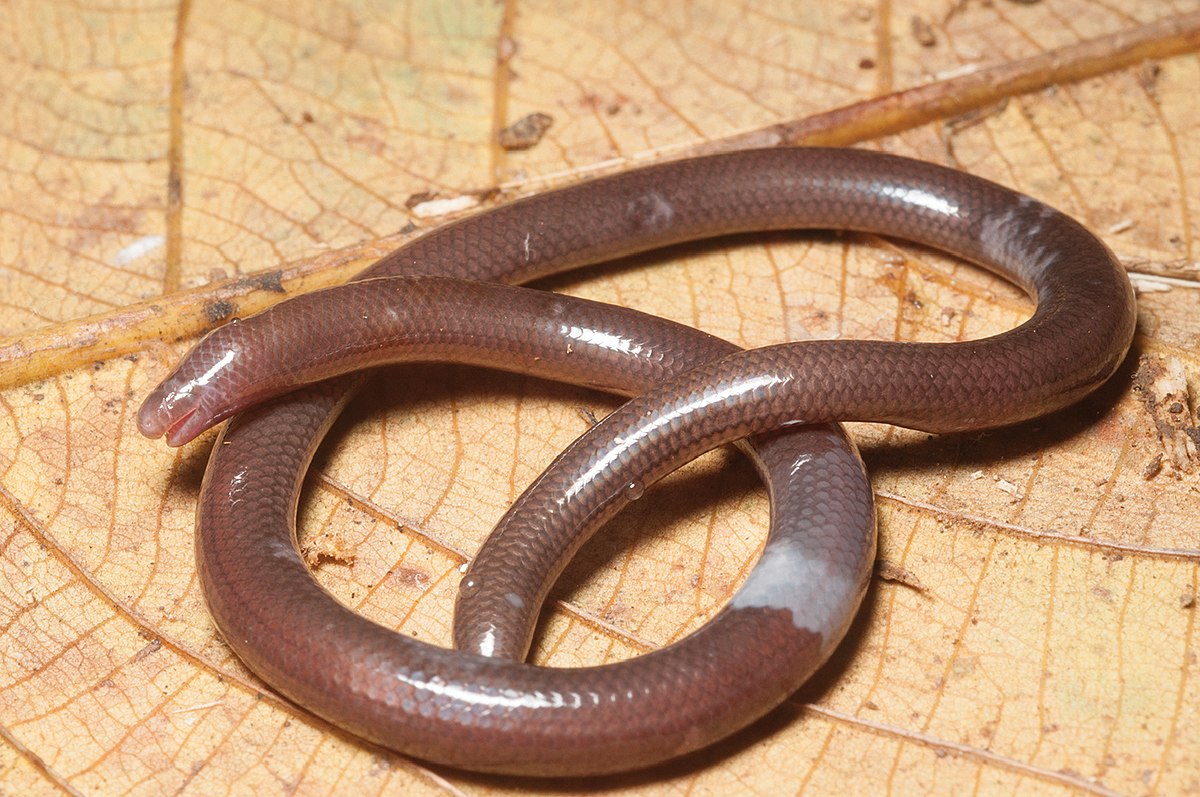
defining features of dibamidae (4)
blind skinks (basal family)
\
1. burrowers with vestigial eyes covered by scales
2. lack external ear openings
3. both ends of body are blunt
4. males have small, flaplike hindlimbs and females are limbless
\
1. burrowers with vestigial eyes covered by scales
2. lack external ear openings
3. both ends of body are blunt
4. males have small, flaplike hindlimbs and females are limbless
6
New cards
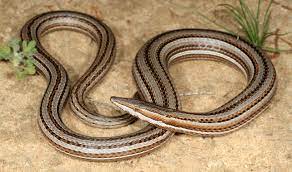
defining features of pygopodidae (3)
flap-footed lizards (gekkota)
\
1. snakelike without forelimbs and hindlimbs reduced to scaly flaps
2. eyes covered by immovable spectacle
3. long, autotomic tail
\
1. snakelike without forelimbs and hindlimbs reduced to scaly flaps
2. eyes covered by immovable spectacle
3. long, autotomic tail
7
New cards
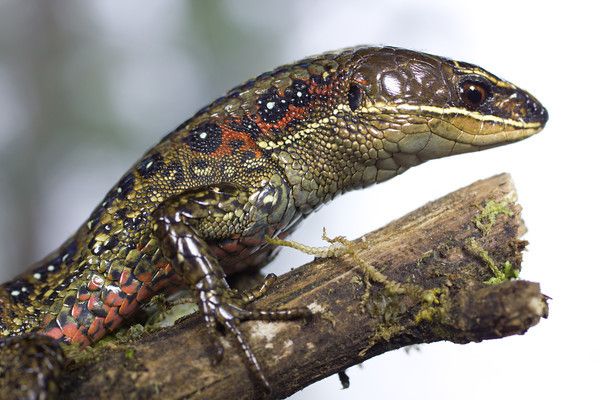
defining features of gekkonidae (2)
spectacled geckos (gekkota)
\
1. second largest lizard family
2. about 10% of them lay eggs in communal nest
\
1. second largest lizard family
2. about 10% of them lay eggs in communal nest
8
New cards
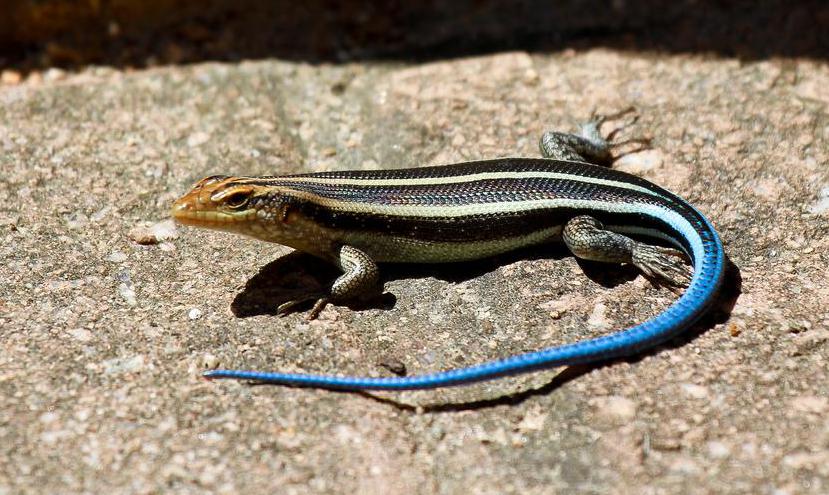
defining features of scincidae (5)
skinks (scincomorpha)
\
1. largest and most morphologically diverse family of lizards (1,600 species)
2. viviparity
3. limb reduction has evolved among skinks more often than in any other lizard family
4. smooth, shiny cycloid scales underlain by osteoderms
5. osteoderms made of multiple bones
\
1. largest and most morphologically diverse family of lizards (1,600 species)
2. viviparity
3. limb reduction has evolved among skinks more often than in any other lizard family
4. smooth, shiny cycloid scales underlain by osteoderms
5. osteoderms made of multiple bones
9
New cards
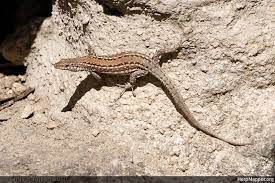
defining features of lacertidae (3)
wall lizards and relatives (lacertoidea)
\
1. diurnal active terrestrial and rock dwelling species
2. one species (zootoca vivipara)
3. lives farther north than any other reptile
\
1. diurnal active terrestrial and rock dwelling species
2. one species (zootoca vivipara)
3. lives farther north than any other reptile
10
New cards
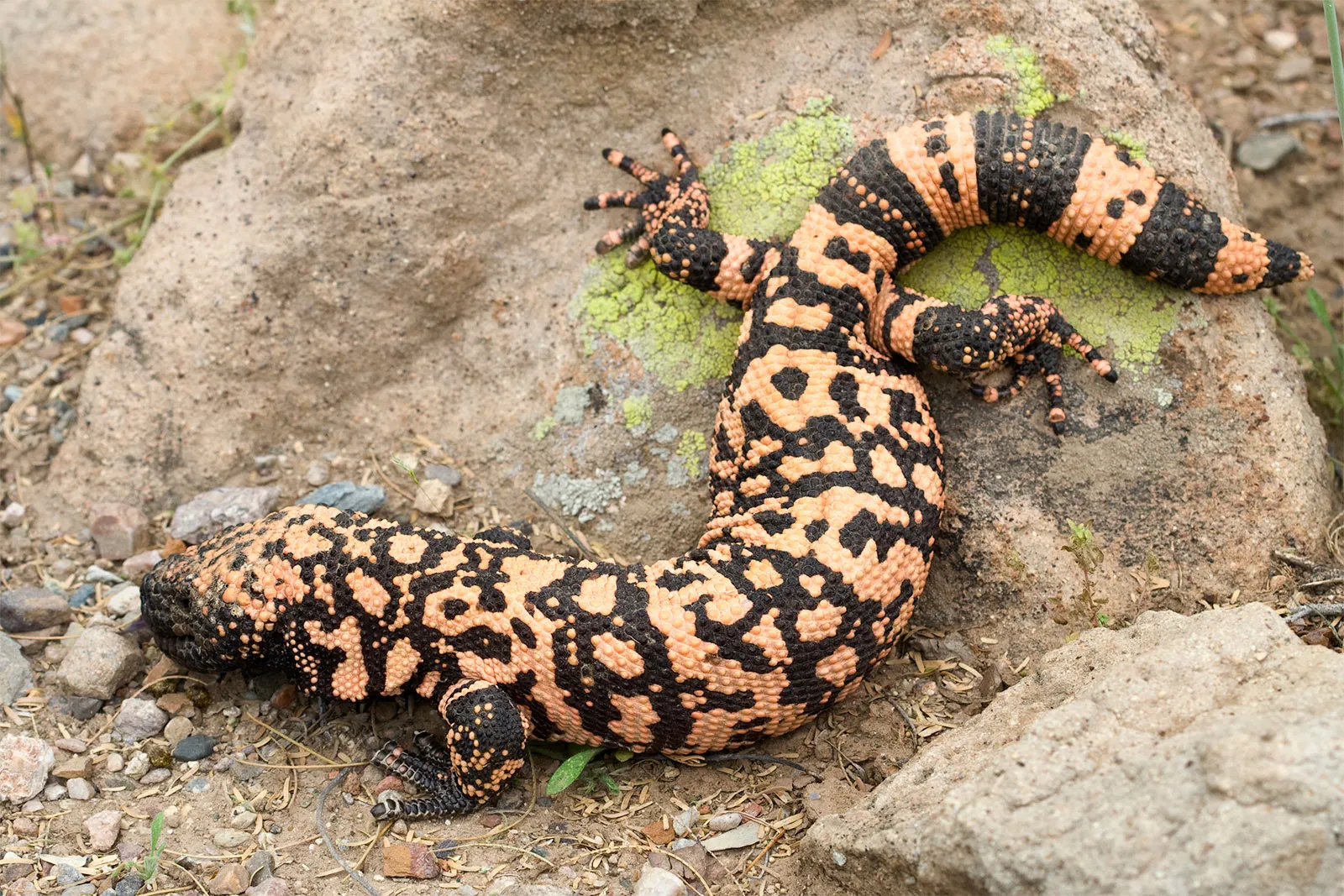
defining features of helodermatidae (2)
gila monster and mexican beaded lizard (anguimorpha)
\
1. short, blunt tails used for fat storage
2. heloderma venomous, venom glands are non-muscularized, located in the tissue alongside the mandible
\
1. short, blunt tails used for fat storage
2. heloderma venomous, venom glands are non-muscularized, located in the tissue alongside the mandible
11
New cards
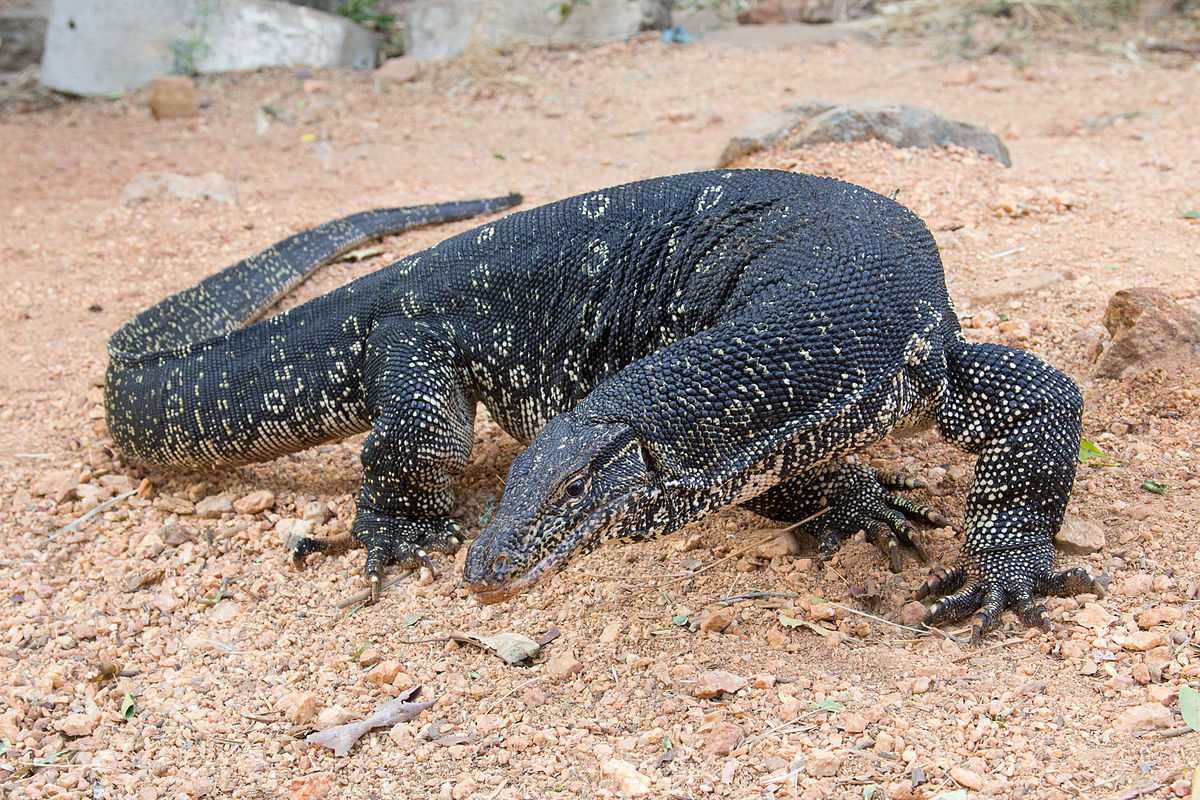
defining features of varanidae (4)
monitors and goannas (anguimorpha)
\
1. greatest body size range of any lizard family
2. active lifestyle
3. lungs of varanids are large and more complex
4. use throat muscles to help ventilate lungs
\
1. greatest body size range of any lizard family
2. active lifestyle
3. lungs of varanids are large and more complex
4. use throat muscles to help ventilate lungs
12
New cards
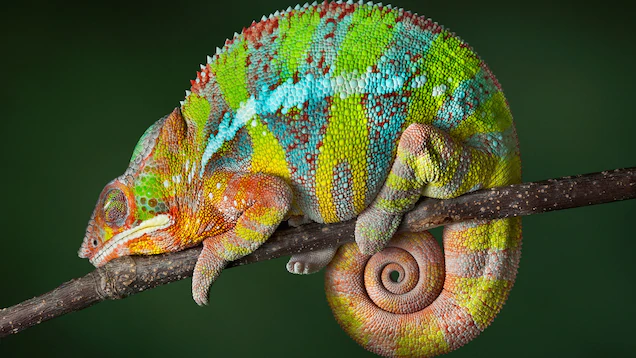
defining features of chamaeleonidae (6)
chameleons (acrodonta)
\
1. devlopment of casques, horns, and crests on heads
2. laterally compressed body
3. can change colors
4. zygodactylous feet
5. prehensile tail (in aboreal species)
6. projectile tongue and independently moving eyes
\
1. devlopment of casques, horns, and crests on heads
2. laterally compressed body
3. can change colors
4. zygodactylous feet
5. prehensile tail (in aboreal species)
6. projectile tongue and independently moving eyes
13
New cards
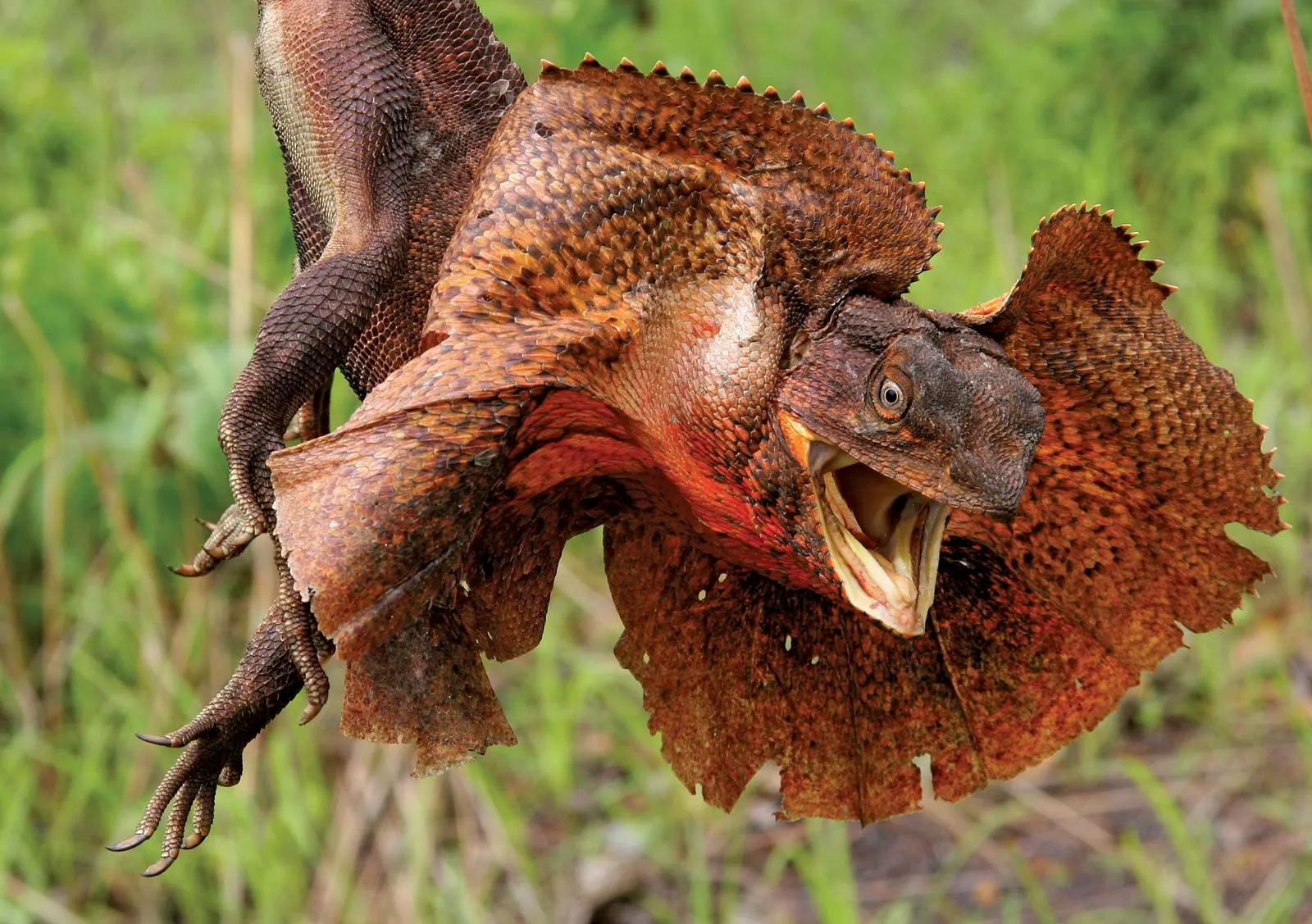
defining features of agamidae (3)
dragons and relatives (acrodonta)
\
1. extensive crests, frills, or spines
2. draco: only extant lizard species capable of true gliding flight
3. many species live in dense colonies (well developed social hierarchy and territories)
\
1. extensive crests, frills, or spines
2. draco: only extant lizard species capable of true gliding flight
3. many species live in dense colonies (well developed social hierarchy and territories)
14
New cards
defining features of dactyloidae (3)
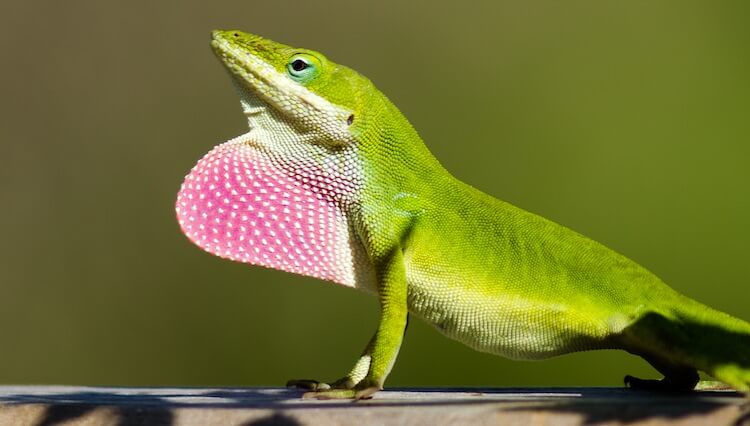
anoles (pleurodonta)
\
1. extraordinarily diverse
2. subdigital lamellae bearing setae
3. brightly colored dewlaps (throat patch)
\
1. extraordinarily diverse
2. subdigital lamellae bearing setae
3. brightly colored dewlaps (throat patch)
15
New cards
which family has the widest range of body sizes
varinidae
16
New cards
traits of the axillary skeleton (4_
1. cervical vertebrae (ribs)
2. atlas and axis (1st two cervical vertebrae)
3. thoracic and lumbar vertebrae generally have paired ribs on either side
4. coccygeal vertebrae possess ventral haemal arches
17
New cards
single occipital condyle
how the skull articulates with the atlas cervical vertebra
18
New cards
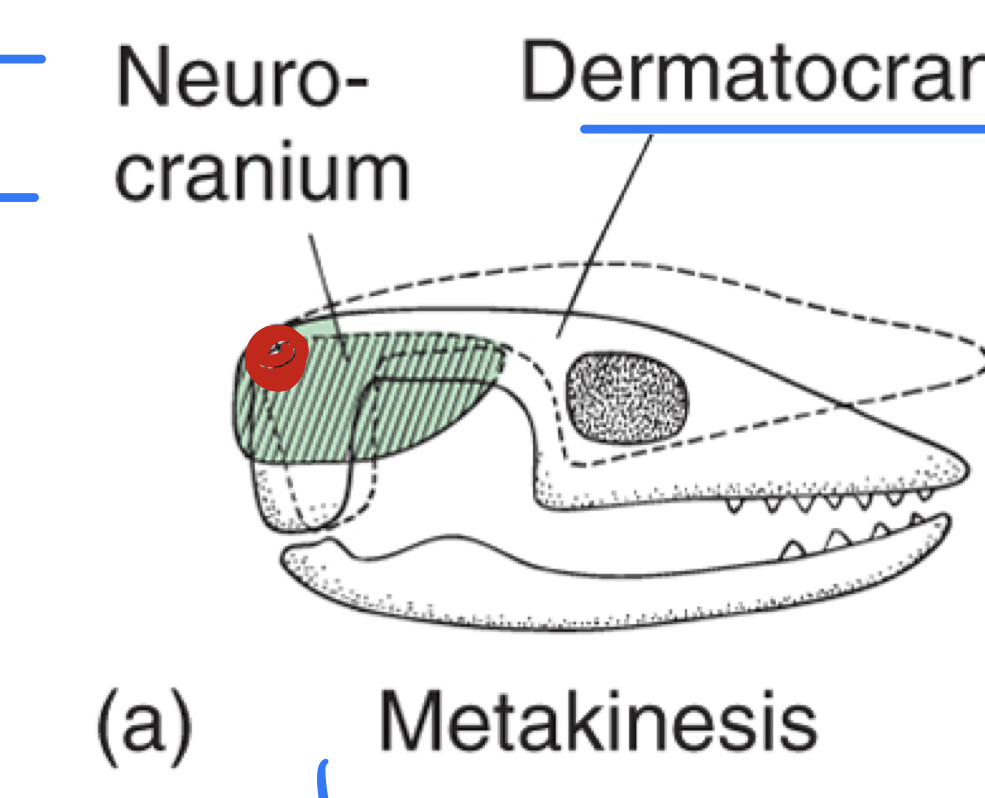
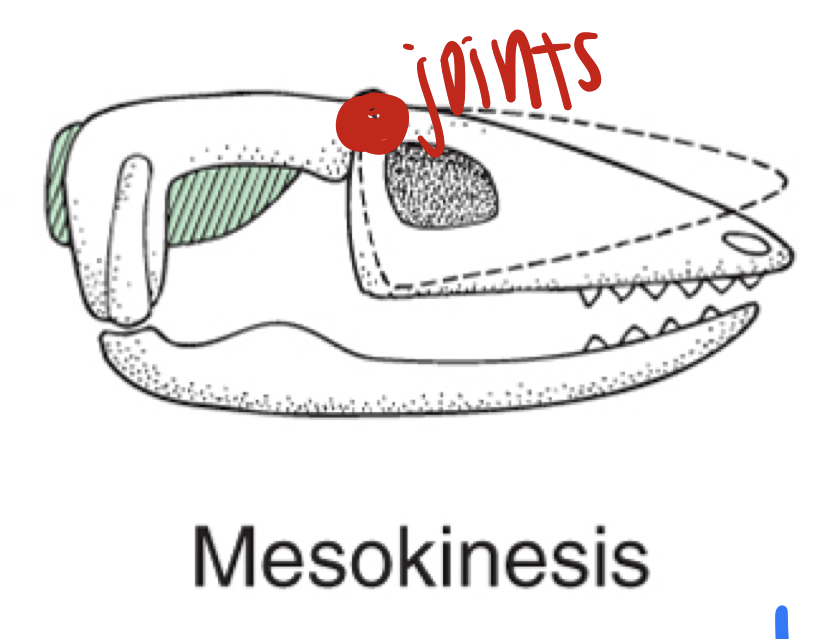
3 types of cranial kinesis
parts of the skull are mobile
\
1. metakinesis
2. mesokinesis
3. streptostyly
\
1. metakinesis
2. mesokinesis
3. streptostyly
19
New cards
metakinesis
20
New cards
mesokinesis
21
New cards
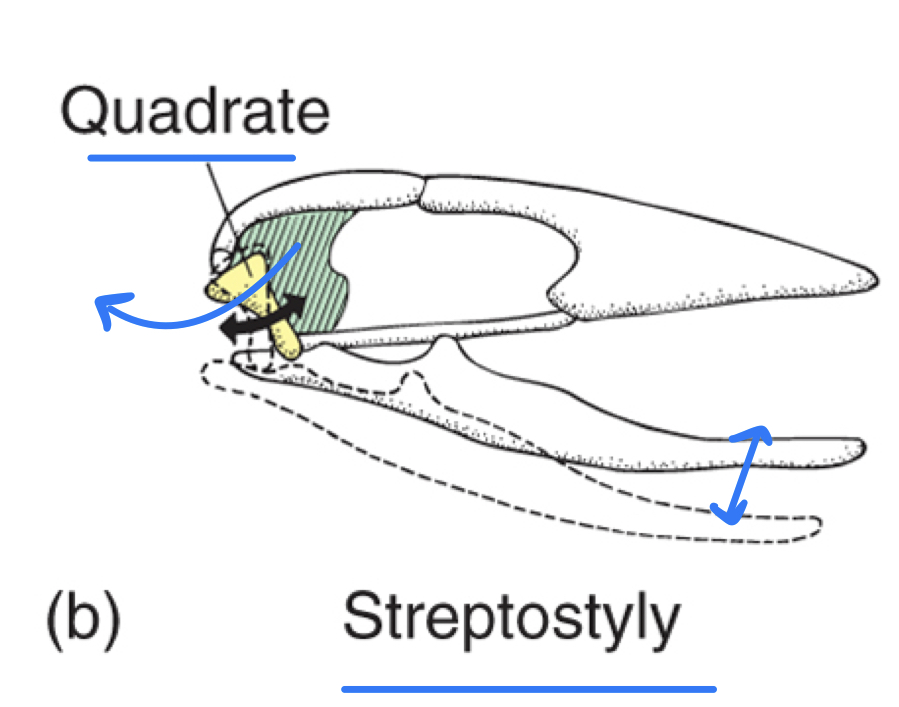
streptostyly
rotate so lower jaw can move laterally
22
New cards
modified diapsid skull
no lower temporal bar
23
New cards
2 types of tooth attachment
1. acrodont
2. pleurodont
24
New cards
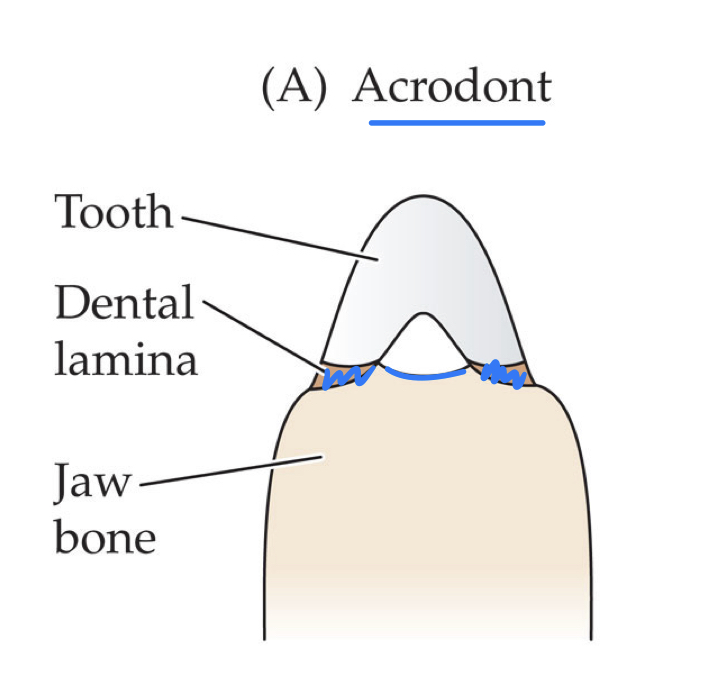
acrodont (2)
1. agamidae
2. chamaeleonidae
25
New cards
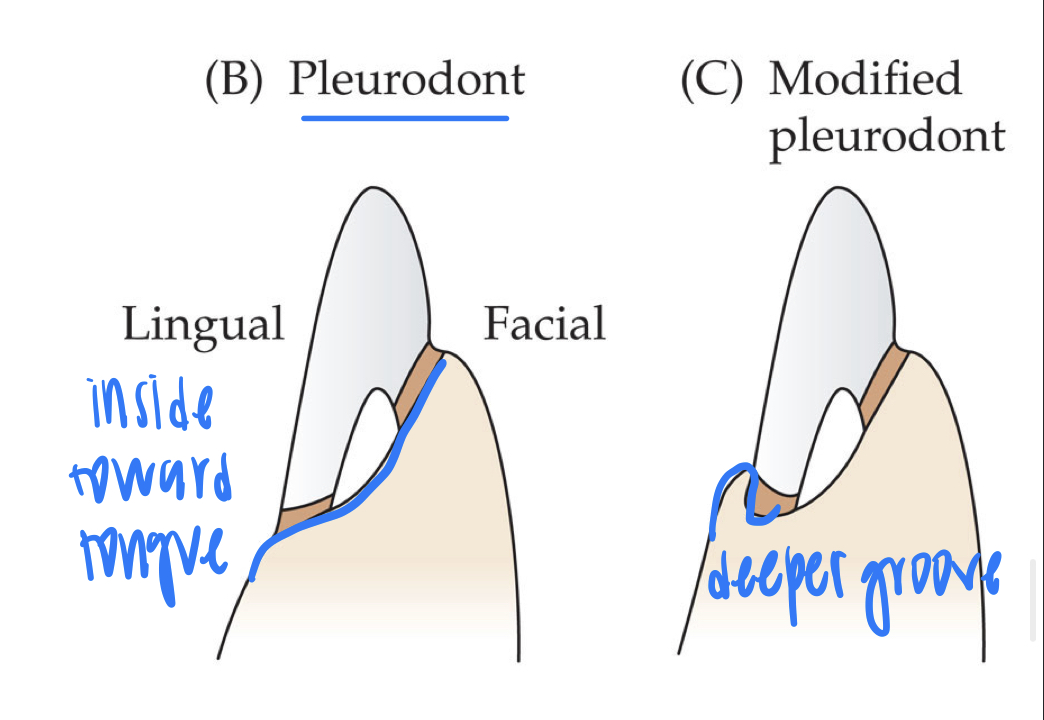
pleurodont
most lizards
26
New cards
vomeronasal organ
jacobson’s organ
\
tongue extension captures odor particles from air
\
tongue retraction where odor particles mix with fluids in mouth and are taken to ducts to go to vomeronasal organ
\
tongue extension captures odor particles from air
\
tongue retraction where odor particles mix with fluids in mouth and are taken to ducts to go to vomeronasal organ
27
New cards
which families have various kinds of ornaments (3)
1. agamidae (frills)
2. corytophanidae (casque/helmet)
3. dactyloidae (dewlap)
28
New cards
what is intravertebral tail autonomy
vertebrae that have fracture planes
\
break in between vertebrae
\
do not grow back
\
break in between vertebrae
\
do not grow back
29
New cards
how do gecko toe pads work
stick like magnets to surface (not wet)
30
New cards
what is zygodactyly in chameleons
unequal distribution of digits
\
forelimbs: 2 toes out, 3 toes in
\
hindlimbs: 3 toes out, 2 toes in
\
forelimbs: 2 toes out, 3 toes in
\
hindlimbs: 3 toes out, 2 toes in
31
New cards
limb reduction in lizards
common
32
New cards
details about amphisbaenia (10)
1. mostly limbless lizards
2. lack pectoral girdle elements but have vestige of pectoral girdle
3. right lung reduced
4. body annulated
5. two body annuli per vertebra
6. elongate
7. all species burrow (body adaptations)
8. brain entirely surrounded by frontal bones
9. head shape varies (shovel, spade shaped, rounded, keeled)
10. skin can move independently of underlying trunk
33
New cards
which lizard families produce venom (2)
1. gila monsters
2. monitor lizards
34
New cards
what are hemipenes
2 peni
\
inside vent
\
grooves (spermatica) in sulcus
\
inside vent
\
grooves (spermatica) in sulcus
35
New cards
are lizards mostly oviparous or viviparous
oviparous
36
New cards
what types of sex determination are found in lizards (2)
1. genetic (ZW, XY)
2. temperature dependent